




Abstract
We examine the job situation of women living in rural Salamanca, Spain, using principal coordinates analysis to identify the profile of these women (specifically, those with declared vs. undeclared jobs) and explore what they believe would improve their employment situations. Four well-differentiated groups were identified: two groups included rural women with ‘regular’ jobs and two groups included women with ‘irregular’ jobs, where ‘irregular’ work is defined as work that involves a decrease in taxes destined for the Social Security system. These women were differentiated based on their marital status and the job sector in which they worked. Women with an ‘irregular’ employment status stated that they would prefer to work in a ‘regular’ job with a job contract and make contributions to the Social Security system in accordance with the true number of hours they work. Such a job situation guarantees access to all available social benefits.
In Spain, the problem of unemployment continues to be a burden, particularly in rural areas and particularly for women. Changes in the economic, social and productive structure in rural areas have significantly influenced the employment opportunities for rural women. The women who remain in rural areas constitute the basic generational support that allows the rural environment to survive. These women typically possess a low level of education, are subject to poor working conditions and experiences difficulties in accessing the job market (Mondejar et al., 2009). To date, however, the unique challenges of these women have not been analysed in depth.
Rural women currently work, study and raise families. But their situations are more complex than those of urban women: day-care centres are not available and their educational opportunities usually require them to travel some distance from their family homes. Thus, balancing their family life with their jobs and/or studies is difficult. Socioeconomic indicators also suggest that rural people are significantly disadvantaged compared with their urban counterparts. For instance, through no fault of their own, their access to education and employment is restricted and hence the need for sensitive policies to increase the social inclusion of young people in rural areas is quite evident (Alston and Kent, 2009). It is clear from the literature that, when compared with urban women, both farming and non-farming rural women occupy an inferior economic position and are subject to considerable disadvantages in the labour force. Rural women work long hours and many of their labour activities cannot be described as contributing to ‘economically active employment’. They work as unpaid and self-employed on-farm and non-farm labourers, as entrepreneurs, traders, etc. In spite of the increasing awareness of women’s roles in rural development, appreciation of the economic and social value of women’s roles in rural development in Spain falls far short of what it should be (Mondejar et al., 2009; Novo-Corti, 2014). Here, we explore the importance of understanding the job situation and profiles of rural women, and identifying what they require in order to improve their socio-economic conditions so that they can join the regular job market. In this case, ‘regular’ is defined as a job in which a person contributes to the Social Security system based on the number of hours he or she works. It was this specific situation that motivated our interest in studying this group of women.
We used information collected from questionnaires completed by 772 women living in 144 municipalities in the province of Salamanca (Spain) using a multi-step sampling process in which the final step was a snowball that allowed us to obtain a multivariate characterisation of rural working women. The data collection period for the study extended from June 2009 until June 2010.
The analysis confirms that many of these women must balance family work, traditionally assigned to women, and a gainful occupation, which in many cases is defined as ‘family support work’ and therefore is unprotected. Most of these women believed that it was more difficult for them to find a job than for men; their positions were less stable than those of men, and their situation was more complex than that of urban women. The underlying idea of this study is original and represents a new contribution to the scientific literature because it is the first study to use principal coordinates analysis (PCO) to compare socio-economic and labour profiles between rural women holding undeclared jobs and those holding declared jobs. We believe that these results may provide the basis for further research focused on the job situation faced by rural women in different areas of society. The social and economic participation of these rural women is often relegated to a secondary status and hence it is necessary to highlight their demands with a view of improving their employment status.
Job situation of women in rural areas
During the past several decades rural and agricultural sectors of Spain have undergone significant transformations with respect to economic and productive aspects related to the crisis of the lifestyles typical of traditional agrarian economies and societies (Buckwell, 2006; Organisation for Economic Co-operation and Development [OECD], 2006). Women all over the world have played significant roles in agriculture, and the Autonomous Community of Castilla y Leon (Spain) is no exception. Moreno (2003) studied the job market for women in Extremadura and Castilla y Leon and found that rural women are making great efforts to re-enter a job market in which the services sector is the main driving force of economic development in rural settings.
Rural women and their families have traditionally been linked to agricultural activities. According to the Ministry for Rural Affairs, 750,000 rural women in Spain dedicate a significant fraction of their time to agricultural activities as family labourers. However, such work is not included in the available statistical information and does not generate social benefits. The concept of ‘rural women’ is not synonymous with that of ‘women farmers’, although the latter do constitute a considerable percentage of all women who live and work in rural settings.
García-Ferrando (1977) reported that the increasing presence of women in agricultural work, wage discrimination, the inadequate professional training of rural women and the limited protection offered to them by Social Security are aspects that further marginalise rural women. The job profiles of rural women change significantly when they reach the critical age of being able to start a family. Their employment becomes more local and tied to family business, and consequently they are less likely to constitute part of the wage-earning population. This transformation is related to a considerable increase in the precariousness of their employment, in the sense of such employment being both temporary and irregular (Camarero et al., 2009).
Rural economies have been affected by the processes of globalisation, which have led to the restructuring and decline of the agricultural sector, the growth of the services sector and an increasing emphasis on technology. The constant process of depopulation that has gradually been taking place in a large number of rural villages – primarily caused by the continuous transfer of human resources involved in agricultural activities to the industrial sector and, more recently, towards the services sector of urban areas – is generating progressive demographic and economic decline in rural areas. Women, especially young women, have played a key role in this rural exodus. According to Gómez and Rico (2005), the female population in rural settings is ageing progressively not only because women have a longer life expectancy than men but also because most young women migrate to cities in search of educational and job opportunities. Women leave their villages in greater numbers than men, leaving behind a very male-dominated countryside. However, many of these women would in fact be very willing to return to a rural setting if the personal and professional opportunities for development were available in such areas. According to a study by Sampedro and Camarero (2007), rural businesswomen typically have family duties, a low level of education, and they run small businesses (mainly commerce, agriculture and catering). This situation has led them, especially younger women, to abandon their villages in search of the personal and professional recognition available in urban areas. Nevertheless, many women believe they must adhere to their family responsibilities and decide to stay in their villages. In light of the facts noted above we were prompted to conduct a study addressing the type of activities and employment conditions faced by rural women today. Owing to the highly volatile economic situation that has beleaguered Spain in the last few years, jobs are few and far between and difficult to access. It is therefore essential to improve rural women’s skills and their competitiveness in the labour market via capacity-building initiatives (European Commission, 2012).
In many rural areas in Spain, male dominance has limited the development of employment and education opportunities for women. Women with higher levels of education tend to emigrate more but at the same time women with low educational levels emigrate at much higher rates compared with men with equivalent levels of education. This fact suggests that, in terms of employment, remaining in rural areas places women with low educational levels at a disadvantage compared with their male counterparts. Although the expansion of women’s activities, job opportunities and their involvement in non-agricultural activities is noteworthy (Sampedro, 1996), job opportunities for women in rural areas remain limited. Younger women seeking new opportunities leave agricultural communities because these only offer limited working options (Whatmore, 1990). Sampedro and Camarero (2007) have suggested that while the original models of rural development that focused on the professional nature of agriculture failed in the sense that they did not recognise identities and individual projects within the exploitation of agricultural possibilities by families, thereby condoning the uprooting of young people and women, the new models of development are failing by not taking into account the strengths that family roles and strategies offer in the configuration of enterprising initiatives and the rational use of resources in favour of equal opportunities.
Sorokin and Zimmerman (1929) noted an over-migration of rural women caused by (a) the large numbers of jobs available in cities requiring what is typically considered ‘women’s work’, (b) a lack of employment and social integration of rural women outside the matrimonial job environment and (c) the inheritance system of agrarian property, which favours males. The processes that have contributed most to modifying gender relations in rural areas are the modernisation of the agrarian sector as well as the paralysis resulting from the demographic and socioeconomic decline of rural areas, which eventually gave rise to the so-called ‘rural renaissance’ (Kayser, 1990).
Gálvez and Matus (2012) pointed out that unemployment and a lack of cultural possibilities are the main problems involved in living in a Spanish rural area. Unemployment rates are typically high in most rural regions, but they are often higher for women than for men. However, the unemployment figures do not reveal the full number of women seeking work; they only reveal those who are registered as being unemployed. Many women who do not receive benefits or who do not register as unemployed because there are no job opportunities are not included in unemployment statistics.
In addition, rural women are more burdened with household chores and family duties compared with urban women (Bealer et al., 1965; Sabaté, 2004). For instance, they look after the house and elderly family members, and also help with the family agricultural business, despite the fact that they are often not the owners. In many cases, rural women have performed and continue to perform ‘hidden’ work that is not recognised either socially or in monetary terms. Even though they work in agriculture, commerce or catering, only 10% of women in the European Union own their own businesses (Jong, 2013).
Thus, taking all of this information into account, the main objectives of this study are as follows: (1) to determine the job situation of rural women in Salamanca, Spain, (2) to identify the socioeconomic profiles of these women (specifically those with declared vs. undeclared jobs) and (3) to identify women’s requests regarding improvements in their employment situation.
Material and methods
Study design
This cross-sectional study includes information that was collected via a self-administered questionnaire. The study was conducted in two stages. First, the questionnaire was developed based on information from in-depth interviews and focus groups, and, second, the questionnaire was completed by women selected by the multistage sampling.
During the first step, we conducted in-depth interviews and focus groups to design the questionnaire. Four discussion groups were held to understand this phenomenon from different perspectives. Each group was coordinated by two people (a moderator and an observer) and included 5–7 experts on the subject of women’s work in rural communities. The group participants, of various ages and professions, belonged to one of the following organisations or groups: the Women’s Job Network of the regional government of Castilla y Leon, social welfare groups, the Red Cross, women’s associations, unions and investigators from the University of Salamanca (Spain).
Since in-depth interviews can reveal the actual experience of rural women and help define problem areas, 20 in-depth interviews were conducted with women in irregular or regular work situations.
Female irregular workers were defined as individuals who paid nothing into the national accounts system or paid fewer taxes than they should have given their jobs. The interviews were conducted using a fixed script that included the following questions: What sectors have the highest levels of irregular female employment? What measures do you think would improve the conditions of employment of rural women? What are your current working conditions? Have you signed an employment contract? Are you registered with Social Security? What measures do you think the administration should take to improve rural women’s access to the regular labour market?
The information that we obtained was then used to construct the questionnaire for the quantitative analysis. The final questionnaire included 50 items addressing sociodemographic characteristics, training and qualifications, employment situations and jobs, the effect of job ‘irregularity’ on women’s employment and personal experience. The last six items on the questionnaire were answered only by women in an ‘irregular’ employment situation.
In the second step, we used a multistage sampling to select rural women to participate in the survey. The questionnaires were sent by mail and self-administered. We performed a sampling stratified by districts and size of the municipalities (up to 500 inhabitants, between 500 and 2000 inhabitants and between 2000 and 10,000 inhabitants) (García, 1998).
The sampling was performed in a two-stage process:
In the first stage, the entire population was divided into strata with sample sizes proportional to the strata size. To define the strata we used a multivariate ordination method, HJ-Biplot (Galindo, 1986) on social characteristics data published by Fundación La Caixa (2004).
The second stage involved snowball sampling inside each stratum. In studies such as this one, many groups are often ‘hidden’, that is, no sampling frame exists for them. Because the behaviours in which they engage are either illegal or illicit, they generally prefer not to participate in surveillance data collection activities (Heckathorn, 2002). In social science research, snowball sampling is a technique for developing a research sample in which the existing study subjects recruit future subjects from among their acquaintances. This sampling technique is often used in hidden populations that are difficult for researchers to access. Although sample members are not selected from a sampling frame and snowball samples are subject to numerous biases, it is possible to make asymptotically unbiased estimates from snowball samples under certain conditions. This type of sampling also allows researchers to make estimates about the social network connecting the hidden population and study its main characteristics.
Subjects and data
In the first phase, 25 subjects were selected and divided into four discussion groups. In the second phase, the questionnaires were sent to 892 women in 144 municipalities within the province of Salamanca (Spain). Salamanca is in Castilla y Leon, a rural area with one of the higher rurality indices within the European Union. This study is the first of its kind in this autonomous community. Our study was characterised by a response rate of 81%; 772 working women between the ages of 16 and 64 years, employed ‘regularly’ or ‘irregularly’, were included in the study. The data collection period for the study extended from June 2009 until June 2010.
We approached the definition of irregular employment from a legal point of view and used two possible definitions to distinguish it from regular employment. The OECD (1980) considers irregular employment to encompass work that fails to meet some aspect of employment legislation, including illegal work. The European Commission (1998) restricts this broad definition, stating that it includes any form of legally paid work that is not declared to the corresponding authorities but not criminal activities such as drug trafficking, smuggling or work that is not necessary to declare to the authorities.
According to the Economic and Social Council (1999), the concept of irregular employment is based on behaviours that result in a decline in the collection of social contributions (Social Security) or taxes.
Statistical methodology
We expressed qualitative variables based on their frequency distribution. We used the chi-squared test to analyse the association of independent qualitative variables among subgroups. We separated the women into groups with similar characteristics using PCO (Gower, 1966). The coordinates that we obtained concerning the first two dimensions of PCO were used in a cluster analysis (K-means) to distribute each of the women into the correct group.
Principal coordinates analysis
The aim of this technique is to obtain a summarised representation of the similarities among individuals in a low-dimensional space in which the Euclidean distances between points estimate the original dissimilarities.
PCO (principal coordinates analysis) and PCA (principal component analysis) are different methods, but they are quite similar; both can represent observations in a space with fewer dimensions. PCA searches for patterns in the variables and it reduces variable dimensionality by an eigen analysis of a correlation or covariance matrix. PCO searches for similarities between cases; it is a method for exploring and visualising similarities or dissimilarities of data and it analyses a distance matrix. PCO applied to a matrix of Euclidean distances between observations (calculated after the standardisation of the columns using the unbiased standard deviation) leads to the same results as PCA based on the correlation matrix.
Results
Sample description
Practical limitations made it necessary to use conventional criteria of the population size of municipalities as indicative of the rural nature of the territory. Of the women included in the study, 23.2% lived in municipalities with fewer than 500 inhabitants (strictly rural) (1.4% of the women lived in villages with fewer than 100 inhabitants, and 21.6% lived in villages with 100–500 inhabitants), 34.88% of the women lived in areas of in municipalities with 501–2000 inhabitants (intermediate rurality) and 42% of the women lived in municipalities with 2001–10,000 inhabitants (lax rurality).
Of the 772 rural working women included in the study, 44.6% worked in an ‘irregular’ job situation and 55.4% worked in a ‘regular’ job situation.
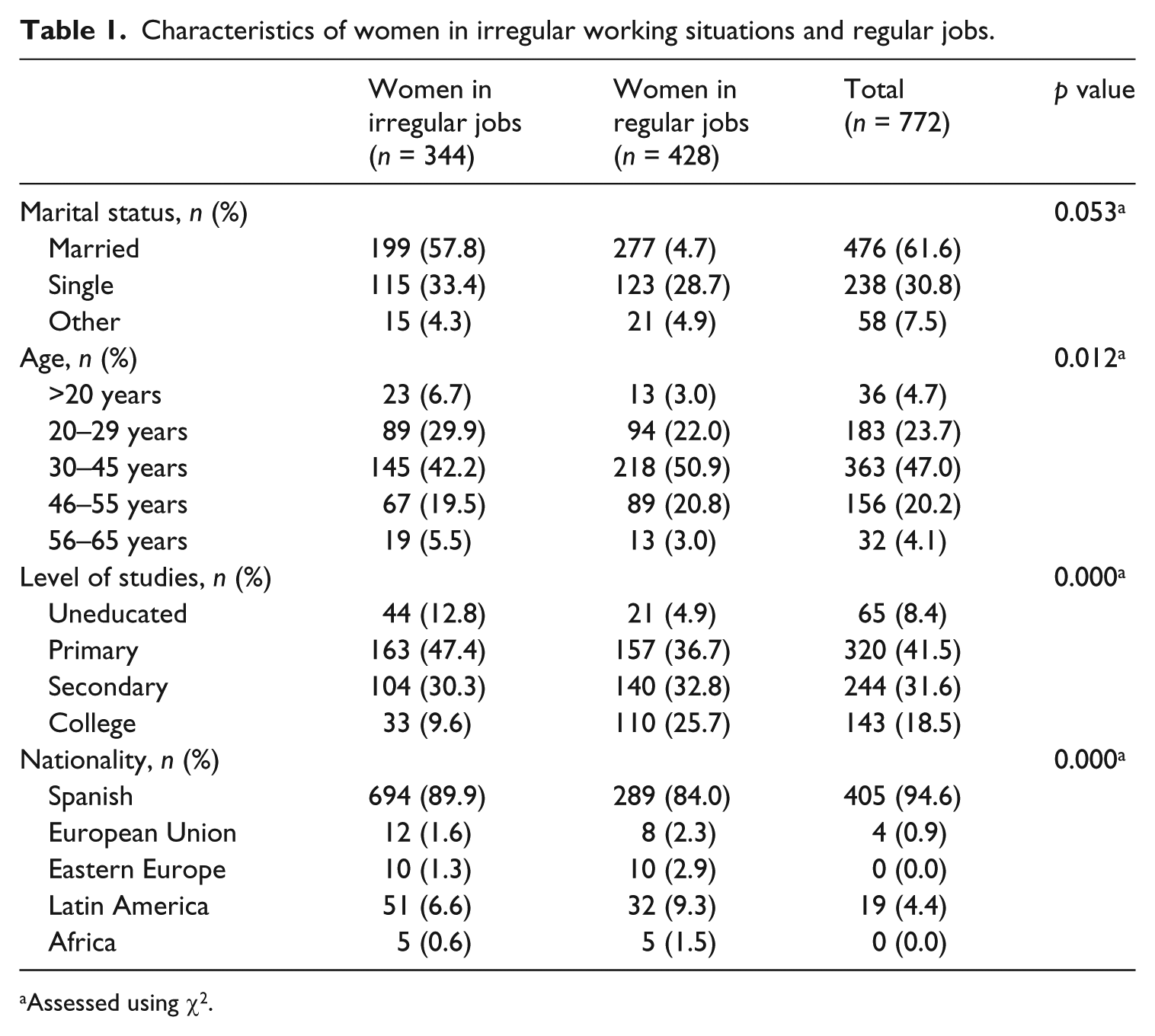
There were more married or cohabiting women (61.6%) than single women, a situation also related to the higher mean age of rural working women. Forty-seven per cent of the rural women were between the ages of 30 and 45, 28% were younger than 30, and 24% were older than 45. In general, women in an ‘irregular’ employment situation were younger than women in a ‘regular’ job situation in the same employment sector. Of these rural women, 8.4% had no education, 41.5% had completed primary studies, 31.6% had a secondary education and 18.5% had some type of higher education. Ninety per cent of the women were Spanish, and 10% were immigrants from other countries, mainly from Latin America (see Table 1).
Characteristics of women in irregular working situations and regular jobs.
Assessed using χ2.
The dream of every Spanish person is to own a home. However, owning a home requires a regular cash flow and a certain degree of job stability. According to the results of the questionnaire, we can draw the following conclusions:
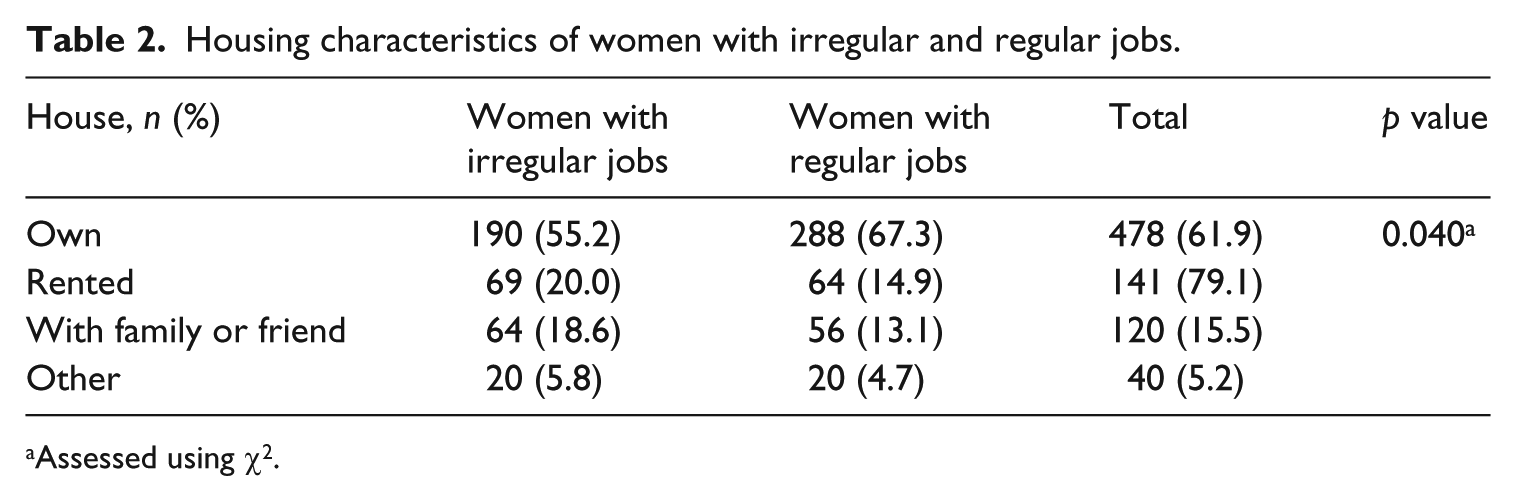
Fewer women in an ‘irregular’ employment situation owned their own home compared with women in a ‘regular’ employment situation (55.2% versus 67.3%, p = 0.040). This finding suggests that employment regularity facilitates home ownership.
Twenty per cent of the women with ‘irregular’ employment were renting their dwellings compared with 15% of women with ‘regular’ employment.
Of the women with ‘irregular’ employment, 18.6% lived with relatives or friends. Most of these women were young and not yet independent. Only 13.1% of the women with ‘regular’ employment lived with friends or relatives (see Table 2).
Housing characteristics of women with irregular and regular jobs.
Assessed using χ2.
Employment characteristics of rural working women
Among the women in an ‘irregular’ employment situation, 55.8% did not have a written contract and 20.9% simply had a verbal agreement with their employer.
Of the women participating in the study, 8.5% worked as ‘family help’ in family-run enterprises or businesses. It should be noted that the term ‘family help’ is somewhat confusing since it represents the only category of unpaid workers who are considered, for statistical purposes, to be ‘active’. These women work in a family environment and are not paid on a regular basis. Their work is not defined by a proper contract framework nor is it recompensed at the same level as regular work. Barthez (1982) pointed out that the actual designation of ‘help’ implicitly suggests the non-mercantile nature of the work performed. ‘Help’ does not imply an exchange of money but suggests a dependent relationship, and the term ‘family’ underlines the unpaid nature of the work.
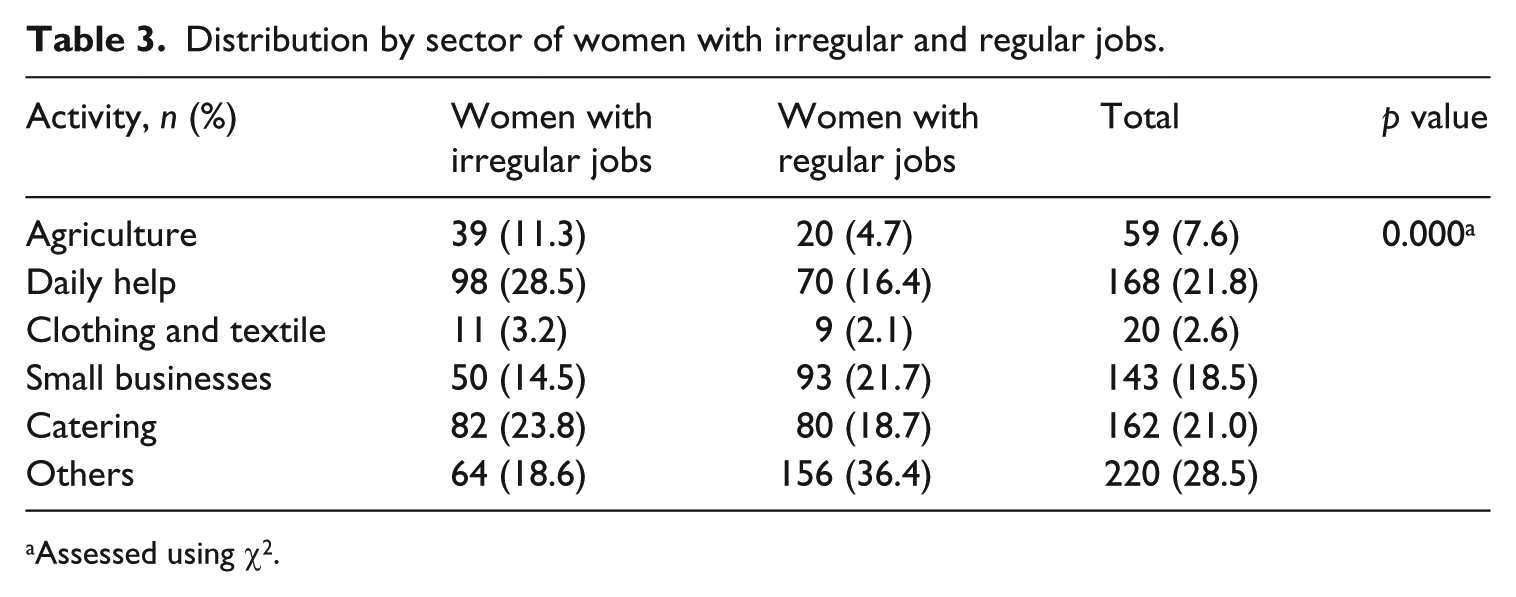
The women participating in the study (working in either a ‘regular’ or an ‘irregular’ situation) worked in one of the following sectors: agriculture (7.6%), clothing, textile, footwear and woodworking industries (2.6%), commerce (18.5%), catering (21.0%), daily help in other people’s homes (21.8%) and other (28.5%). The ‘other’ sector was characterised by women working as professionals in the education, health or service sectors. Most of the rural women with an ‘irregular’ job worked in the daily help or catering sectors. We attribute this fact to the importance of these sectors as a source of earnings in this province (see Table 3).
Distribution by sector of women with irregular and regular jobs.
Assessed using χ2.
Salary is undoubtedly an important factor when characterising the quality of a given job, although, as pointed out by the European Commission (2010), it is not the only factor. Other factors include schedule flexibility, absence of discrimination, human relationships and the capacity to make decisions, among others.
Figure 1 shows the distribution of women with ‘regular’ and irregular’ jobs according to their monthly earnings.
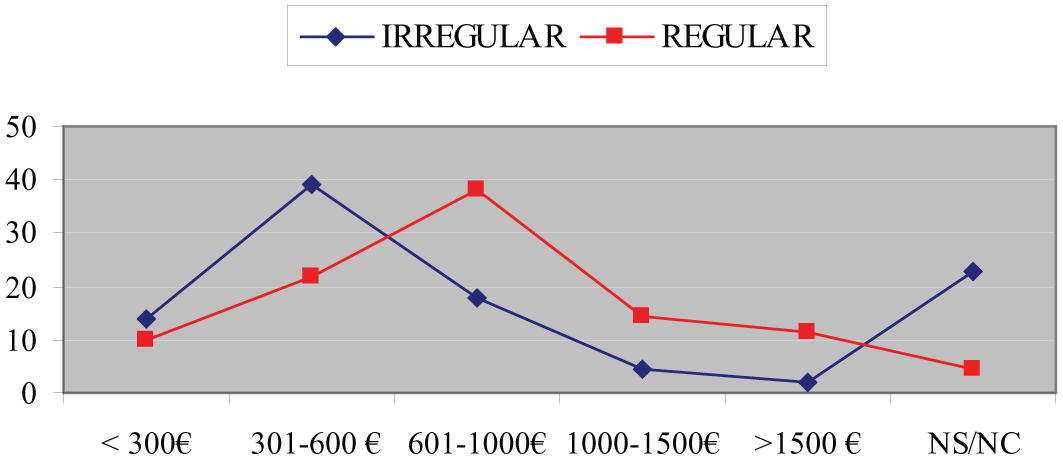
Distribution of rural working women (‘regular’ and ‘irregular’) according to their monthly earnings.
Thirty-nine per cent of the women with ‘irregular’ jobs and 22% of women with ‘regular’ jobs had monthly earnings between €300 and €600. Of the women with irregular jobs, 17.7% earned between €600 and €1000 per month; 37.6% of women with ‘regular’ jobs had earnings in this bracket.
The results of the study show that these rural working women are mature, often managing their own small family businesses (commerce, catering or agriculture). The low level of professional training, salaries and Social Security contributions are drawbacks of rural employment opportunities.
Search for groups based on multivariate methods
We used multivariate analysis (PCO) to identify groups of rural women with similar characteristics using the following categorical variables: type of employment situation, family help, type of municipality, nationality, job description, marital status, education, age, earnings, Social Security contributions and possession of a job contract.
Groups
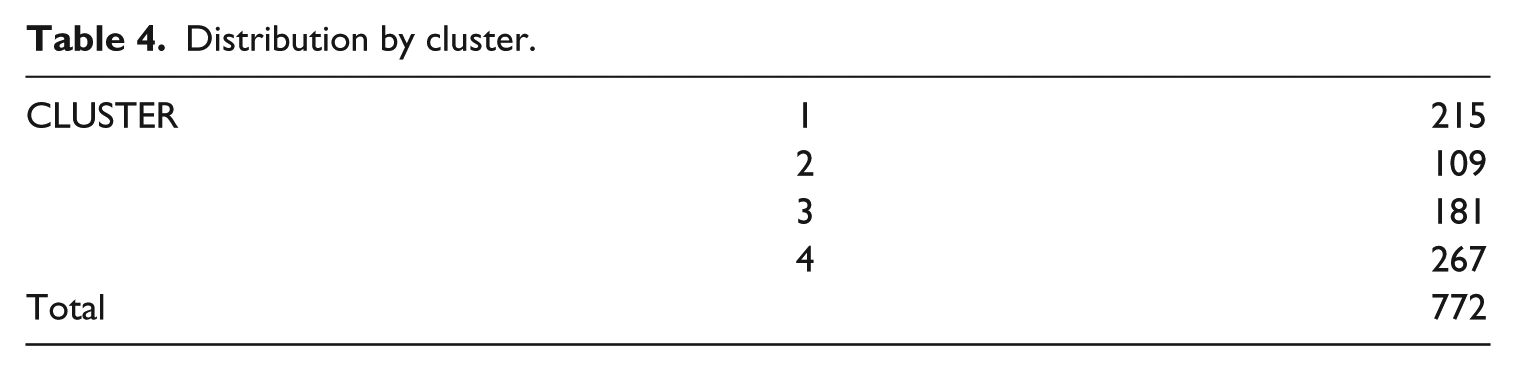
The coordinates obtained concerning the first two dimensions of the PCO were used in a cluster analysis (K-means) to place each of the women into the proper group. Table 4 lists the total number of women in each cluster.
Distribution by cluster.
Characterisation of the clusters
We determined the most relevant characteristics of the clusters generated in the previous step. We analysed the contingency tables resulting from crossing the ‘cluster’ variable (with its four categories) with each of the other variables in the study. The association contrasts were performed using the chi-squared test. We then analysed the frequency distribution tables with the corresponding distribution of frequencies and percentages with respect to the cluster.
When defining the clusters it is necessary to bear in mind one fact: when a variable (and/or category of the variable) characterises a group it is not implied that the characteristic is exhibited by the group in the pure state. In other words, there could be another woman with that characteristic in one of the other groups, but there are significant differences in the proportion of women with that characteristic in each group. For example, if we were to say that group 2 is characterised by immigrant women we would not be saying that all of the women in group 2 are immigrants but that most of them are, and the percentage of immigrant women in group 2 is significantly higher than the percentage of immigrant women in the other groups.
To characterise each cluster we considered the most significant variables: employment situation, job sector, marital status, nationality, age and education.
Cluster–employment situation relationship: Table 5 lists the clusters of women according to their employment situation (regular vs. irregular).
PCO clusters and employment situation.
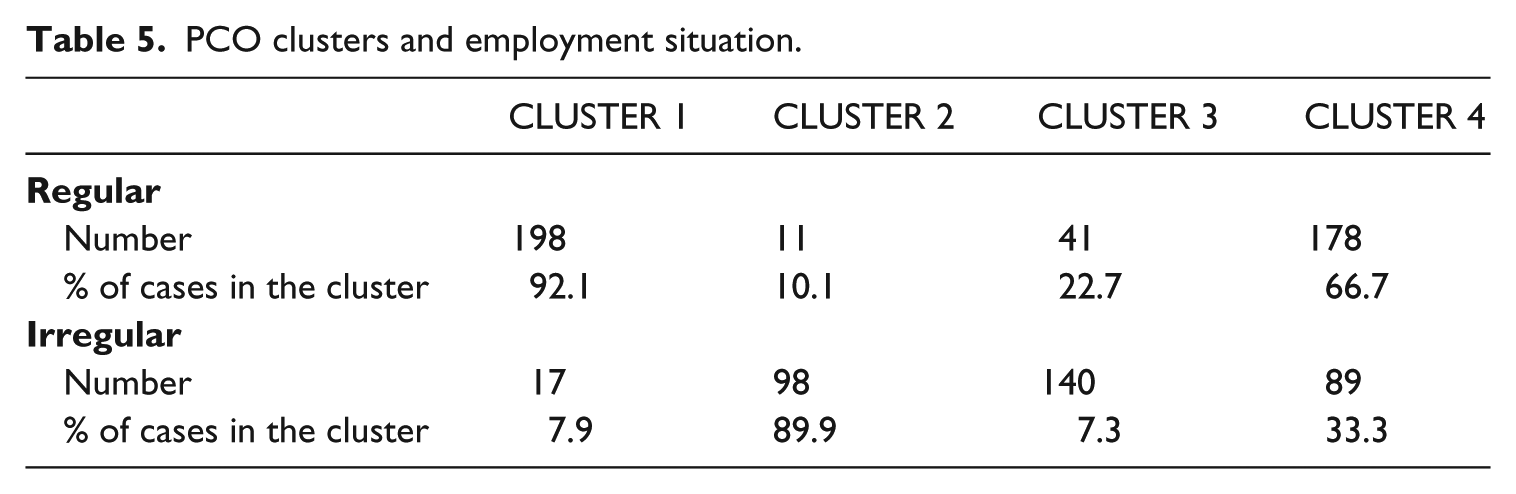
Most of the women in clusters 1 and 4 had ‘regular’ jobs; most of the women in clusters 2 and 3 had ‘irregular’ jobs.
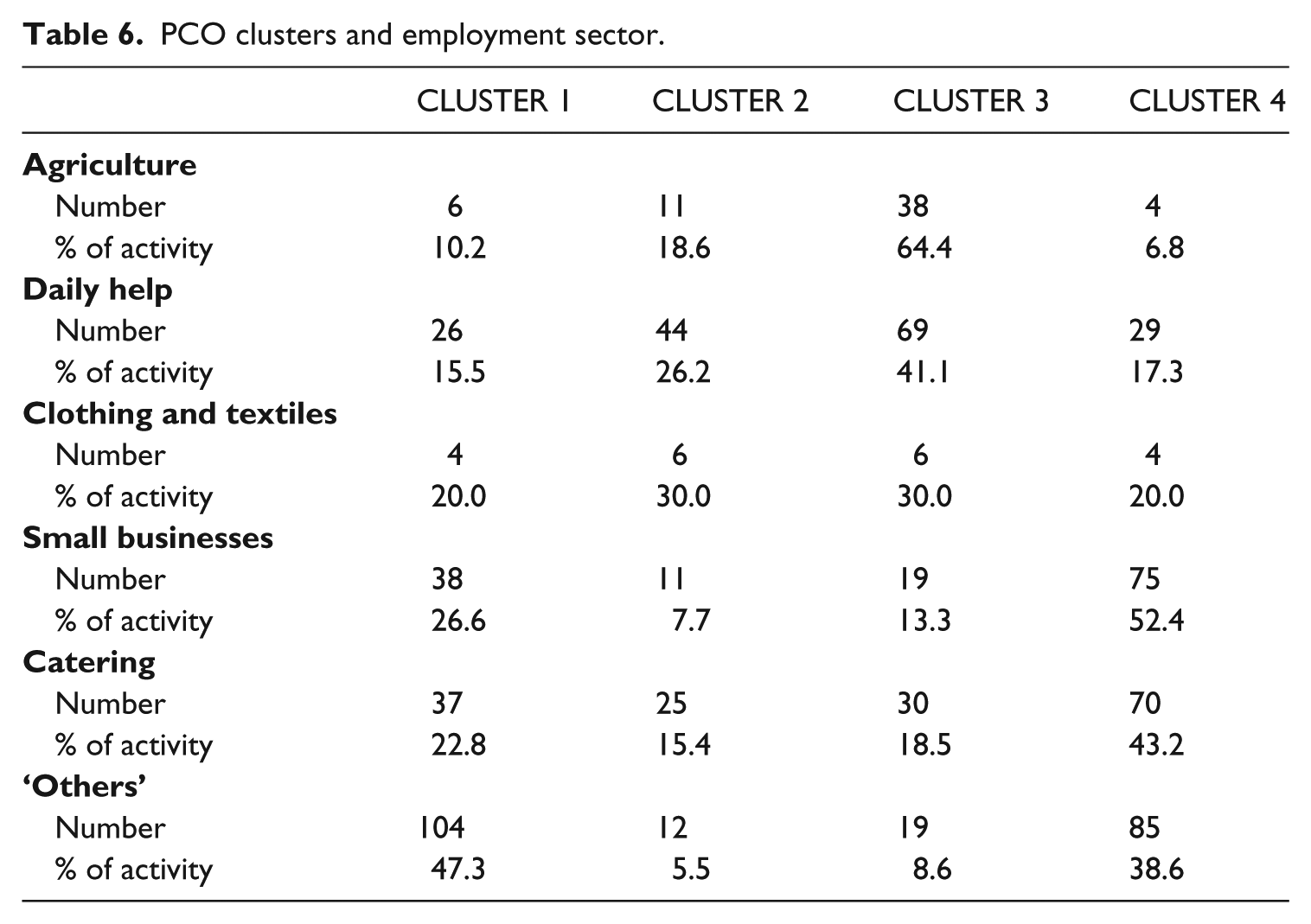
Cluster–employment sector relationship: Table 6 lists the following:
Of the women in cluster 1, 47.3% worked in an ‘other’ sector in a ‘regular’ employment situation.
In cluster 2, 26.2% of the women provided daily help and 30.0% worked in the clothing and textile sectors in an ‘irregular’ employment situation.
In cluster 3, most of the women worked in an ‘irregular’ employment situation; 64.4% worked in the agricultural sector and 41.1% provided daily help.
In cluster 4, 52.4% of the women worked in small businesses, 43.1% worked in the catering sector and 38.6% worked in an ‘other’ sector.
PCO clusters and employment sector.
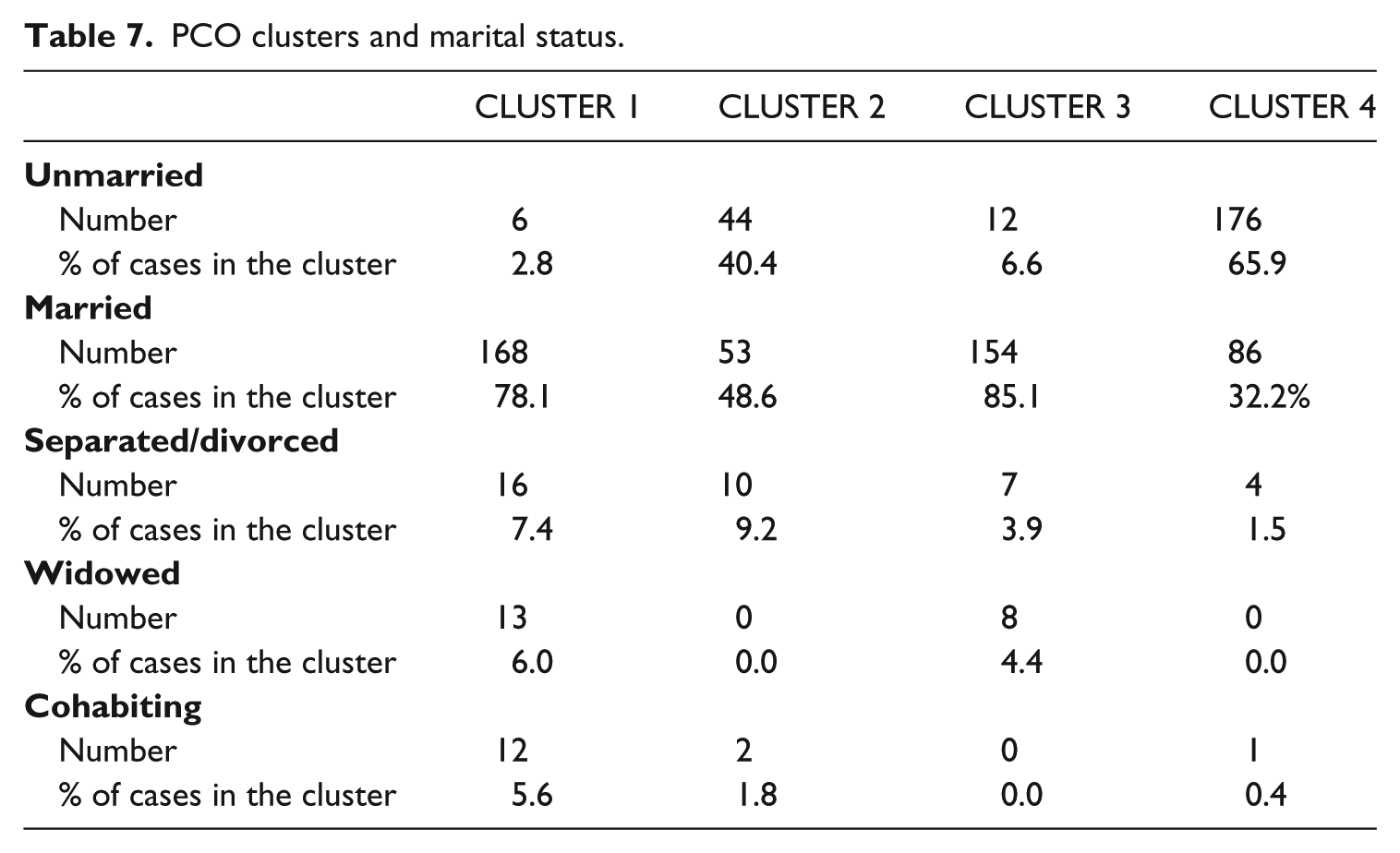
Cluster–marital status relationship: As shown in Table 7, the percentages of married women in clusters 1, 3 and 4 were 78.1, 85.1 and 65.9%, respectively.
PCO clusters and marital status.
Cluster–level of education relationship: As shown in Table 8 most of the women in clusters 1, 2 and 3 had completed only primary studies. In contrast, 64.5% of the women in cluster 4 had studied at university. It is notable that approximately half of the women in this study had only a primary-level education or none at all.
PCO clusters and level of studies.

Based on the results described above, we can characterise the clusters as follows:
In
In
Demands and measures requested by rural working women to improve employment
Eighty-four per cent of the women in an ‘irregular’ job situation stated that if they could choose they would prefer to work in ‘regular’ employment with a salary in accordance with unionised agreements, a job contract and a Social Security contribution based on the true number of hours they worked to guarantee access to all available Social Security benefits.
Most of these women believed that, compared with men, they had greater difficulty finding work, had less stable positions, received less pay and had fewer opportunities for upward mobility.
The improvements most frequently requested by these women were access to Social Security benefits (requested by 81.5%), help finding a job (66.8%) and help from the administration in caring for dependents (day-care centres for children, residences for the elderly, etc.; see Figure 2).
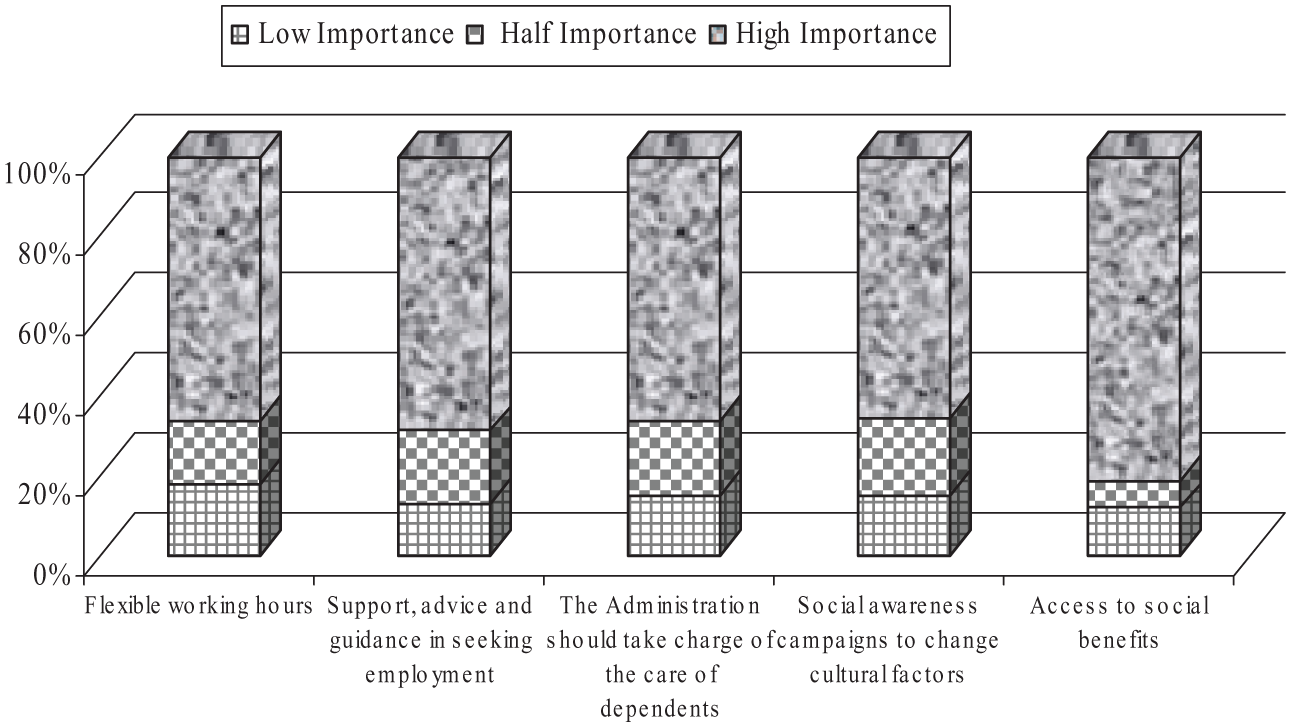
Demands directed at the administration by women in ‘irregular’ job situations regarding access to ‘regular’ work.
In Figure 3, we show the main measures that rural working women in an ‘irregular’ job position believe would help them obtain ‘regular’ work.
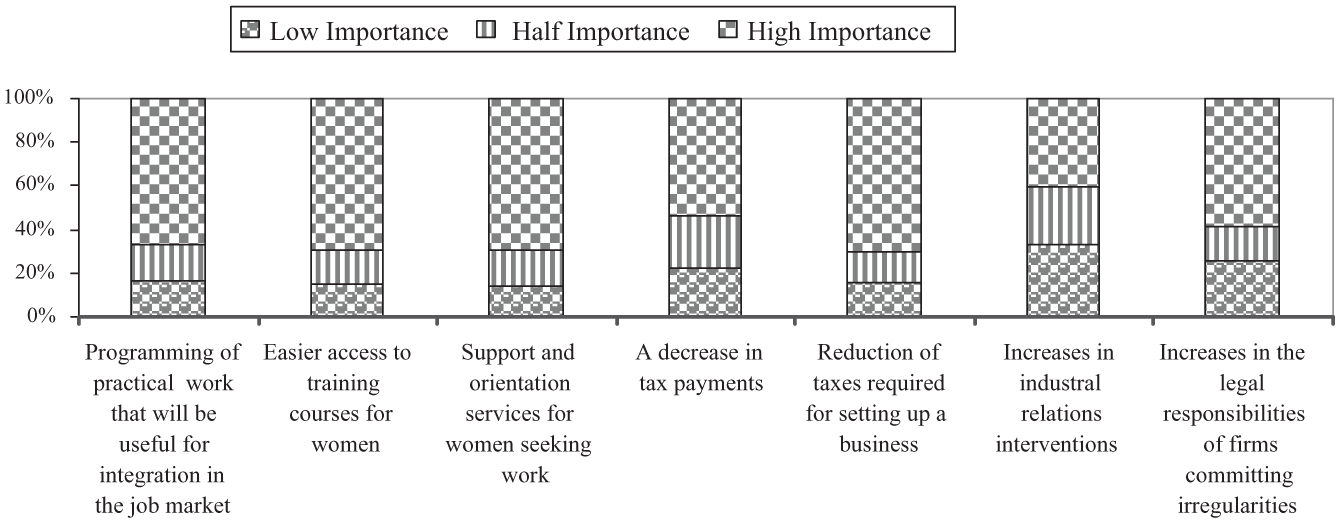
Measures to favour access to the ‘regular’ job market.
The most important measures are described below:
A reduction in taxes for setting up a business was desired by 84.7% of women. In the rural setting, the number of women who choose self-employment is increasing. However, the impediments to balancing professional and family life for working women (self-employed or not) are greater than in cities because less infrastructure and social services are available in rural areas. This fact remains true even though the average age of rural populations has been increasing for the last several years, increasing the need for such services.
Help for women seeking work was desired by 69.7% of the women.
Improved access to education and job training was frequently requested.
The government should adopt policies designed to expand rural services, strengthen tax collection and the administrative capacity of municipal councils, use ‘market indicators’ to increase the efficiency and capacity of public agencies to respond to the pertinent needs, increase the demand for rural services by means of the generation of jobs and higher wages, and mitigate the migration of the rural population to small- and medium-sized cities.
Summary and discussion
The results obtained in this study identify four well-differentiated clusters of rural working women by using PCO to obtain a multivariate characterisation of these women:
Two clusters were comprised of women in ‘regular’ employment: one comprised mature women with a low level of education; the other encompassed young women who had decided to finish their studies and seek work.
The other two clusters were composed of women with ‘irregular’ work situations: These groups included Spanish women and immigrants who worked as home help or in the clothing or textile sectors as well as Spanish women working in agriculture.
Few studies have focused on the job situation of women in rural areas of Spain. The literature that we reviewed revealed that almost 6 million women live in rural areas (Fademur, 2014), and their situation varies depending on the specific places in which they live. Cabo et al. (2005) studied women in irregular employment and identified five profiles of women working in irregular conditions. These authors also provided an initial estimate of the number of women with irregular jobs in Spain. Although Cabo et al. (2005) did not focus specifically on women living in rural areas, the results of our study are consistent with theirs in that we also observed that women with irregular employment need more governmental support for the care of dependents. This demand is central and may be the most important. Unlike the study of Miedes (2007), who found that unskilled labourers working in strawberry fields were mostly female foreigners, our results indicate that female foreign workers are not employed in rural areas but are rather employed in the textile industry.
Tradition and a lack of opportunities make it very difficult for these unskilled women to secure a job in the rural market. Díaz (2011) reported that young women who remained in rural areas of Asturias (Spain) had a low level of education and faced poorer working conditions. We found that women in clusters 1–3 completed their primary education; only the women in cluster 4 had studied at the university level. Accordingly, it is to be expected that the women in clusters 1–3 will face special difficulties in accessing the labour market.
Any improvement in the social and economic conditions of these rural women must necessarily depend on the general economic situation of the country. The rural economy requires a developed production infrastructure. In the short term, the government should develop policies that will encourage rural women to start up individual businesses or generate their own income. To facilitate employment and, more importantly, increase the social status of rural women, their representatives should occupy positions in high-level bodies of administrative and economic management and in the management of public, cooperative and other informal organisations. The government should also create training schools to teach special business skills to rural women so that fewer women need to work in irregular employment conditions. The Social Security system offers many benefits. For instance, women working in ‘regular’ jobs have access to health services, protection against unemployment and pensions when they retire.
In contrast, women who do not pay into the Social Security system do not contribute to the general growth and development of the country and, consequently, they do not benefit from the aforementioned services. In summary, if a person is not enrolled in the system for Social Security, that person has no social and health support whatsoever.
In conclusion, our study summarises the socioeconomic profiles of rural women and recent relevant initiatives aimed at improving the conditions of rural women. Our work also suggests future directions for policy and research to advance the employment situation of rural women. The results of our study furthermore indicate that rural women are willing to join the ‘regular’ labour market. Most of these women believe that, compared with men, they have greater difficulty finding work, have less stable positions, receive less pay and have reduced chances of upward mobility. In short, this study has highlighted some of the challenges that face rural women in the 21st century.
Footnotes
Funding
This research received no specific grant from any funding agency in the public, commercial, or not-for-profit sectors.