




Abstract
This study seeks to understand how cultural value orientation – specifically individualism/collectivism – influence the relationship between ethical leadership and employee behaviour. Social cognitive theory was used to explain how cultural value orientations change the social learning process associated with ethical leadership. Using matched multi-source sample data from managers and subordinates of a South African multinational operating in several African countries, supplemented with objective performance data, ethical leadership was found to be positively related to both in- and out-of-role performance. However, horizontal collectivism positively moderated the relationship between ethical leadership and organizational citizenship behaviour, while horizontal individualism and vertical collectivism negatively moderated it. Leadership research and theory will benefit from a greater emphasis on follower characteristics, as differences in the cultural value orientations of employees affect the effectiveness of ethical leadership. Awareness of this difference also stands to benefit organizations.
Keywords
Introduction
In response to various scandals there has been significant scholarly interest in ethical leadership (Brown and Mitchell, 2010; Brown and Trevino, 2006; Den Hartog, 2015; Eisenbeiss and Giessner, 2012). Studies have investigated the relationship between ethical leadership and employee outcomes, some including mediation variables (Bedi et al., 2015; Den Hartog, 2015). However, little attention has been directed at the impact of followers’ situational or contextual influences on the relationship between ethical leadership and employee outcomes (Stouten et al., 2012). Eisenbeiss (2012: 805) recognized the need for research on how follower behaviour can influence the impact of ethical leadership and called for cross-cultural study of the relationship between ethical leadership and employee outcomes. A similar call followed from Den Hartog (2015). How people with different cultural values react to ethical leadership seems highly relevant to global organizations that face pressure to assert ethical leadership throughout the organization and where employees with varied cultural value orientations are working together. It is known that although ethical leadership is endorsed across cultures, different cultural orientations may differently affect how followers interpret and respond to ethical leadership (Resick et al., 2006, 2011).
This study examines vertical and horizontal individualism-collectivism to establish how ethical leadership functions under these different cultural value orientations. Cultural value orientations are individually held cultural values and beliefs and are expected to play an important role in how employees react to aspects of their work (Kirkman et al., 2006). Individualism-collectivism is the most widely researched cultural dimension and Euwema et al. (2007) found that individualism-collectivism moderated the relationship between supportive leadership and group organizational citizenship behaviour as well as the relationship between directive leadership and group organizational citizenship behaviour. It is similarly plausible that individualism-collectivism may also moderate the relationship between ethical leadership and employee outcomes. Organizational citizenship behaviour (OCB) and employee task performance have been postulated to be positively influenced by ethical leadership (Piccolo et al., 2010). OCB draws on Chester Barnard’s concept of the ‘willingness to cooperate’ (Barnard, 1938) and includes individual behaviour that is discretionary, but promotes the effective functioning of the organization as defined by Organ (1988: 4). Furthermore, OCB and performance are both associated with effective leadership. However, it is not understood how culture interacts with ethical leadership and how culture will affect the relationships with OCB and performance. Given that ethical leadership aspires to improving ethical behaviour throughout the organization, this question begs answering.
The setting for the study is Africa. Africa is a useful context for theory development as it is not only understudied, but also characterized by very different types of business relationships (Barnard et al., 2017). All middle management level managers working for a South African multinational corporation across multiple African countries were surveyed to obtain a sample of 352 with diverse cultural value orientations. Measurements were obtained from three different sources and were also time separated. Managers were asked to assess the organizational citizenship behaviour of their employees, while employees were asked to assess the ethical leadership of their managers. Performance measures were drawn from the company’s quantitative performance management system.
This research advances scholarship on ethical leadership by demonstrating its cultural boundedness. In addition, leadership research and specifically ethical leadership in Africa has been significantly underrepresented in the literature. By using a sample spanning several African countries and empirically demonstrating the effect of cultural value orientations on ethical leadership, this study contributes towards addressing this dearth in research as well as calls by George et al. (2016) for research that improves understanding of cultural differences that complicates leadership in the African context and understanding of processes and mechanisms that can strengthen internal governance of organizations.
Theory and hypotheses
Ethical leadership
Brown et al. (2005: 119) defined ethical leadership as ‘the demonstration of normatively appropriate conduct through personal actions and interpersonal relationships, and the promotion of such conduct to followers through two-way communication, reinforcement and decision-making’. This definition has been widely cited by authors, among other Bavik et al. (2017), Kalshoven et al. (2011), Mayer et al. (2009) and Wang et al. (2017). Brown et al. (2005) recognized that the construct of ethical leadership incorporates elements of both transactional (reward and punishment) and transformational (idealized influence) leadership through the underlying mechanisms of social learning (Bandura, 1977) as well as social exchange (Blau, 1964). These mechanisms have since been discussed by numerous authors (Den Hartog, 2015). Resick et al. (2011) found some variation in ethical leadership across cultures but convergence regarding the importance of leader character. Immediate supervisory level leaders work closely with subordinates and therefore are more likely to be ethical role models who can influence employee attitudes and behaviour (Grojean et al., 2004). Thus, the individual follower level of analysis was chosen to investigate the relationship between ethical leadership and follower behaviour.
Ethical leadership and employee OCB
By demonstrating concern for others ethical leaders emphasize the importance of group members’ welfare, providing the influence that develop group norms that stimulate employees to help each other (Ehrhart and Naumann, 2004). Mayer et al. (2009) found a positive relationship between ethical leadership and OCB at top management and supervisory group-level and Kalshoven et al. (2011) at the individual level. Piccolo et al. (2010) found a positive relationship between ethical leadership and OCB that was mediated by effort. Resick et al. (2013) found that the relationship was mediated by moral equity judgements. In contrast Khokar and Zia-ur-Rehman (2017) did not find a significant relationship between ethical leadership and OCB, thus emphasizing the need and benefit of replication by confirming results under different circumstances and within different contexts. Against this theoretical background involving ethical leadership and OCB for the purpose of replication and as a base hypothesis that will be built upon in subsequent hypotheses the following hypothesis is posited:
Ethical leadership and employee performance
Piccolo et al. (2010) examined the roles of task significance, autonomy, and effort in the relationship between ethical leadership and task performance. They found that ethical leadership increases task significance, which in turn results in improved performance. Brown and Trevino (2006) proposed social exchange theory (Blau, 1964) and social learning theory (Bandura, 1977) as theoretical frameworks for explaining the relationship between ethical leadership and follower behaviours. According to social exchange theory, exchanges between managers and employees can vary from low-quality economic exchanges based just on employment contracts to high-quality social exchanges based on trust and respect (Hassan et al., 2013). The latter may lead to stronger commitment and improved performance from the subordinate (Gerstner and Day, 1997). Managers displaying ethical leadership provide support and other tangible and intangible benefits to employees. Ethical leaders are also viewed as moral persons who are honest and principled decision makers who care about the greater good of employees and society (Brown and Trevino, 2006). This leader behaviour is expected to result in strong leader-member exchange relationships in which employees feel obligated to reciprocate through stronger job performance (Bedi et al., 2015). Social exchange mechanisms are thus expected to influence subordinate performance through the lenses of trust and reciprocity that encourages employee commitment (Blau, 1964). Mo and Shi (2017) empirically demonstrated that the ethical leadership and employee task performance relationship was mediated by trust in the leaders.
According to social learning theory (Bandura, 1977), individuals learn standards of behaviour vicariously. Through direct modelling and verbal persuasion employees become more confident in their abilities, strengthening their motivation. Self-efficacy is enhanced through affective arousal and enactive mastery, two key mechanisms in social learning theory (Bandura, 1977). Zhu et al. (2004) argued that ethical leaders’ caring behaviour and consideration of employees’ developmental needs should facilitate growth and confidence in employees’ job-related skills, thereby enhancing their efficacy beliefs. Eden and Aviram (1993) empirically demonstrated that credible sources of feedback, associated with ethical leadership, can improve self-efficacy. Higher self-efficacy provides employees with the necessary self-belief to drive higher performance by influencing individuals’ choice, effort and persistence (Bandura, 1977).
In terms of empirical evidence, Kim and Brymer (2011) established an indirect relationship between ethical leadership and the competitive performance of firms via several mediators, including among others extra effort and affective organizational commitments. Wang et al. (2017) followed Eisenbeiss’s (2012) multidimensional conceptualization of ethical leadership and found that employees’ perception of fairness influence in-role behaviour of employees by creating positive collective identity. In the light of the preceding theoretical arguments and limited empirical evidence, the following hypothesis is proposed:
Ethical leadership and the context of cultural value orientations
A significant body of research examined how the meaning of leadership varies across cultures (Dickson et al., 2012; Gelfand et al., 2007; Kirkman et al., 2006) yet little attention has thus far been given specifically to the influence of culture on ethical leadership. Wang et al. (2017) found that collectivistic orientation positively moderated the relationship between ethical leadership and interactional justice. Jung and Avolio (1999) illustrated that leadership can be perceived differently and result in different effects on performance, depending on the cultural orientation of followers. The GLOBE project reported that ratings of transformational leadership were associated with organizational-level collectivism (Gelfand et al., 2004). Kirkman et al. (2009) demonstrated the moderating effect of power distance orientation on the relationship between transformational leadership and OCB, and argued that cultural value orientations, play an important role in how employees react to aspects of their work and should be considered when studying reactions to leadership. Therefore, cultural value orientations can reasonably be expected to similarly moderate the relationships between ethical leadership and employee behaviours.
Social cognitive theory (Bandura, 1999, 2002) builds on the social learning model to conceptualize and integrate the situation/disposition distinction and is proposed as a theoretical framework for understanding and predicting the effects of follower cultural value orientations on the relationship between ethical leadership and employee behaviour outcomes. Social cognitive theory aims to explain psychosocial functioning from the angle of internal personal factors, behavioural patterns, and environmental events that all interact as determinants and influence one another bidirectionally (Bandura, 1999). Social cognitive theory distinguishes three modes of agency: direct personal agency, proxy agency that relies on others to act on one’s behalf, and collective agency exercised through a group (Wood and Bandura, 1989). The agentic capabilities that form the psychosocial systems through which experiences are filtered (Bandura, 2002), are determined by cultivated identities, values, and belief structures that make up the cultural orientation and change the relative patterning of the inherent capacities.
Individualism-collectivism and ethical leadership
The concepts individualism and collectivism have a long scholarly history (Hoftstede, 1980; Triandis, 1995). This paper uses the conceptualization of Triandis and Gelfand (1998) who suggested that the crossing of individualism and collectivism with hierarchy produces four distinct dimensions for individuals: horizontal collectivism (HC), vertical collectivism (VC), horizontal individualism (HI), and vertical individualism (VI). Vertical collectivism perceives the self as a part of the collective and accepts inequalities within the collective whereas horizontal collectivism perceives the self as part of the collective, but view members as equal. Vertical individualism considers the individual as autonomous and accepts levels of inequality. Horizontal individualism considers the individual as autonomous but there is an emphasis on equality. Shavitt et al. (2006) argue in favour of the distinction between vertical and horizontal forms of individualism and collectivism when studying cultural value orientations and noted that at the individual level the four classifications are properly termed horizontal and vertical allocentrism/idiocentrism but following these authors, the same HI, VI, HC and VC terminology will be used in this study to maintain consistency with most of the literature.
In the horizontal-individualism cultural orientation people are highly self-reliant and want to be unique and distinct from groups, but they believe in equality and are not motivated to be distinguished or to attain high status (Triandis and Gelfand, 1998). The strong sense of self-reliance and drive to express their own uniqueness is expected to reflect as high levels of personal efficacy. With reference to social cognitive theory, the relatively high perceived personal-efficacy of horizontal-individualist individuals creates a lower propensity to replicate credible role model behaviour because this is not necessarily seen as desirable behaviour by the horizontal-individualist (Wood and Bandura, 1989). Therefore, the social learning mechanism is expected to be weaker for horizontal-individualists. People also tend to associate themselves with various social categories according to social identity theory (Ashforth and Mael, 1989) and the literature suggests four key principles associated with identification. Although people with horizontal-individualism orientation subscribe to a framework of everyone being equal, their social identity is typically low (Shavitt et al., 2006) and consequently they are expected to have relatively low levels of collective efficacy suggesting a lower propensity to engage in OCB. The social identity lens also supports individual efforts to achieve objectives. The agentic influence on the underlying social learning process is driven by the higher weighting towards direct personal agency and lower weighting towards collective or proxy agency as well as the lower social identity associated with horizontal-individualism. This means that the social exchange mechanism and the social learning process driving the relationship between ethical leadership and employee OCB will be weaker for horizontal-individualism individuals, suggesting the following hypothesis:
Horizontal-collectivism is characterized as a cultural pattern in which the individual sees the self as an aspect of a group and the same as the self of others (Singelis et al., 1995). The self is merged with the group members and all the group members are seen as very similar to each other. In the horizontal-collectivism cultural orientation, the self is interdependent and equality is the essence of this cultural value. The emphasis on common goals with others and interdependence means that horizontal-collectivist individuals have a willingness and desire to cooperate (Kim et al., 2004). There is a strong desire to maintain benevolent relationships with others and act socially appropriately (Shavitt et al., 2006). Horizontal-collectivist individuals are therefore expected to have strong social identities with specific groups and their work group is a particularly likely one (Singelis et al., 1995). Individuals with high organizational identification tend to be greater contributors to their workgroup (van Knippenberg et al., 2004). The strong sense of common goals with the rest of the group and desire to maintain benevolent relationships as well as feelings towards social identity are expected to be reflected in strong collective efficacy in horizontal-collectivists (Bandura, 2002). Horizontal-collectivist individuals may still have significant self-efficacy. The manager’s appropriate ethical behaviour as well as fair and considerate treatment of followers make them attractive role models for horizontal-collectivist individuals (Ashforth and Mael, 1989). Therefore, horizontal-collectivists are expected to replicate the credible role model’s ethical leadership behaviour through amplified social learning processes. The horizontal-collectivist’s collective efficacy bias and feeling of social identity towards the group influences them such that behaviour is to the benefit of the group.
Bavik et al. (2017) as well as Gerpott et al. (2017) reasoned that the effect of ethical leadership is mediated by follower moral identity. Horizontal-collectivists’ orientation towards social identity with the group suggests that they are likely to develop relatively stronger moral identities in response to ethical leadership and this will be even more pronounced when the leader is perceived as prototypically with the group according to the social identity model of leadership effectiveness (Gerpott et al. 2017; Giessner et al., 2009). Ullrich et al. (2009) found that group identification was such a strong effect that it over shadowed fairness. Meleady and Crisp (2017) argued that organizational identification is an important predictor of workplace behaviour and found that organizational identification is positively related to employee OCB. The bias towards collective efficacy and expected strong social identity with the group, associated with horizontal-collectivism, is also expected to create a strong social exchange relationship with an ethical leader representing a positive role model. Thus, further reinforcing the horizontal-collectivist’s feeling of obligation towards group prosocial behaviour. Strong affinity with the group and collective efficacy translates into horizontal-collectivists readily participating in collective agency through OCB towards other members of the group. The amplified feeling of prosocial obligation should strengthen the positive relationship between ethical leadership and employee OCB, leading to the following hypothesis:
Vertical-individualism is characterized as a cultural pattern in which the self is postulated as autonomous and independent and the self is different from the self of others (Singelis et al., 1995). Individuals view each other as different, and inequality is the essence of this cultural value orientation. Competition is an important aspect of this cultural orientation because people want to become distinguished and acquire status to differentiate them from others (Kim et al., 2004). Vertical-individualist individuals further differentiate and distinguish themselves from others through public display of their success and status. In their pursuit of power and status vertical-individualists often demonstrate a disregard for social norms but are likely to engage in impression management and self-deceptive enhancement to project themselves more favourably and attractively to others (Shavitt et al., 2006). Vertical-individualists have strong personal efficacy and a low bias towards collective efficacy except where working as a group will benefit the vertical-individualist and assist him or her in achieving personal objectives. Vertical-individualists typically have a low level of social identity with the group except as above when it helps them to achieve personal goals. The overriding desire to be competitive and advance themselves to achieve power and prestige means that the vertical-individualist can be expected to behave selfishly. Even if an ethical leader is perceived as a positive role model it is unlikely that a strong social exchange relationship will be established and consequently a strong feeling of obligation to help group members is not expected. However, if the individual perceives that by demonstrating OCB this will be viewed favourably by the manager and could lead to better performance reviews or promotion, as is likely when the manager displays ethical leadership, this could strengthen the positive relationship between ethical leadership and employee OCB. Based on the vertical-individualist’s focus on personal objectives and desire to be competitive we expect the agentic influences of relatively low social identity with the group and low collective efficacy to negatively impact the social learning process. Hence the following hypothesis is proposed:
Vertical-Collectivism is characterized as a cultural pattern in which the individual views the self as an aspect of a group, but the members of the group differ from each other with some members having more status than others. The self is interdependent yet different from the self of others (Singelis et al., 1995). Inequality is accepted in this cultural pattern and people do not see each other as the same. People emphasize the importance of status and hierarchy thus inequality is the essence of the vertical-collectivism cultural value orientation (Triandis and Gelfand, 1998). Despite the acceptance of inequality, serving and sacrificing for the group is an important aspect of vertical-collectivism (Shavitt et al., 2006). Hence, on the one hand vertical-collectivist people believe that individuals in the same group must be treated on a group membership basis, but on the other hand they stress the values of hierarchy (Singelis et al., 1995). In terms of hierarchy, rank and prestige are often determined by age, seniority, loyalty and contribution to the group, or some combination of these factors (Kim et al., 2004). Vertical-collectivist people believe that individuals in the group should be treated differently on the basis of the above factors.
The acceptance of hierarchy implies that individuals are likely to hold aspirations to move up in status through loyalty and contributions to the group (Kim et al., 2004). However, to achieve this they must hold self-efficacy beliefs that they can in fact influence this since one of the central self-regulating mechanisms that governs motivation and performance, in social cognitive theory, works through people’s beliefs in their personal efficacy (Wood and Bandura, 1989). The strong group orientation implies inherent collective efficacy as well as significant social identity with the group (Shavitt et al., 2006). Vertical-collectivists are expected to have a balanced blend of personal-efficacy and collective efficacy with personal-efficacy increasing as the individual rises in the hierarchy. Although vertical-collectivism oriented employees have a strong desire for harmony and a tendency to conform, individuals want to maintain and protect their in-group status. Their self-efficacy acts as an agentic influence that supports the social learning process through role modelling. Social identity with the group suggests that they are also likely to respond to the fair and considerate ethical leadership treatment with prosocial behaviour. However, despite the positive role model of an ethical leader, the social exchange obligation will not necessarily extend to prosocial behaviour towards all fellow employees, especially if their status is considered different, because vertical-collectivists want to maintain their perceived advantage or even gain more of an advantage over other employees. This suggests that the relationship between ethical leadership and employee OCB will most likely be dampened, leading to the following hypothesis:
Individualism-collectivism and the relationship between ethical leadership and task performance
Horizontal-individualist employees have a strong sense of self-reliance and drive to express their own uniqueness, reflected as relatively high personal efficacy (Triandis and Gelfand, 1998). With reference to social cognitive theory, this higher personal-efficacy results in a lower propensity to replicate credible role model behaviour (Wood and Bandura, 1989). The social cognitive theory’s agentic influence is driven by higher direct personal agency and lower collective or proxy agency as well as lower social identity. Therefore, the social learning process earlier postulated to create the positive relationship between ethical leadership and task performance can be expected to be weakened for horizontal-individualist employees.
With the strong sense of self-reliance and individual identity horizontal-individualists are expected to not develop such strong leader-member exchange relationships (Van Knippenberg et al., 2007) thus weakening the social exchange process postulated to create the positive relationship between ethical leadership and task performance.
Thus, both the social exchange process and the social learning process are expected to be weaker for horizontal-individualists employees suggesting the following hypothesis:
Horizontal-collectivist employees share high levels of social identity towards their work group due to their inherently strong group association (Singelis et al., 1995). The self is merged with the group and they may thus be more committed to behaviour in favour of the organization in response to ethical leadership (Jung and Avolio, 1999). This higher level of social identity can be expected to strengthen the social exchange relationship with the ethical leader and thus strengthen the postulated positive relationship between ethical leadership and employee task performance.
Horizontal-collectivist individuals see the self as an aspect of a group. The self is merged with the group and members are likely to respond favourably to ethical leadership by feeling identified with the organization and gaining self-efficacy through the social learning mechanism. Their strong social identity and mangers’ fair and considerate treatment of followers make them eager followers of role models (Ashforth and Mael, 1989) reinforcing the social learning process. Ethical leadership also emphasizes the importance of subordinating individual needs to group norms and goals (Brown et al., 2005). The interdependence with others means that they have a willingness and desire to cooperate (Kim et al., 2004). Horizontal-collectivist employees, with a combination of self-efficacy and collective efficacy, are likely to respond favourably to ethical leadership in terms of a motivational influence related to task performance. Horizontal-collectivist individuals are also likely to utilize proxy agency to achieve performance goals – that is work together as a team, suggesting the following hypothesis:
The horizontal dimensions of individualism and collectivism emphasize the distinction between a self-reliant orientation (horizontal-individualism) and a co-operative orientation (horizontal-collectivism), which as discussed above is expected to impact the relationship between ethical leadership and employee task performance by virtue of such employees responding differently to ethical leadership. The distinction between the vertical dimensions of individualism and collectivism arises from an achievement orientation (vertical-individualism) and a dutiful orientation (vertical-collectivism). Both the achievement and dutiful orientations are expected to respond similarly to the social learning process associated with ethical leadership. The one based on expecting reward for performing and the other to avoid punishment for not performing. Reasonable expectations considering that rewarding compliance and punishing non-compliance is a core characteristic of ethical leadership. Therefore, the vertical dimensions are not expected to moderate the relationship between ethical leadership and employee task performance.
The conceptual model indicating all hypothesized relationships is illustrated in Figure 1.
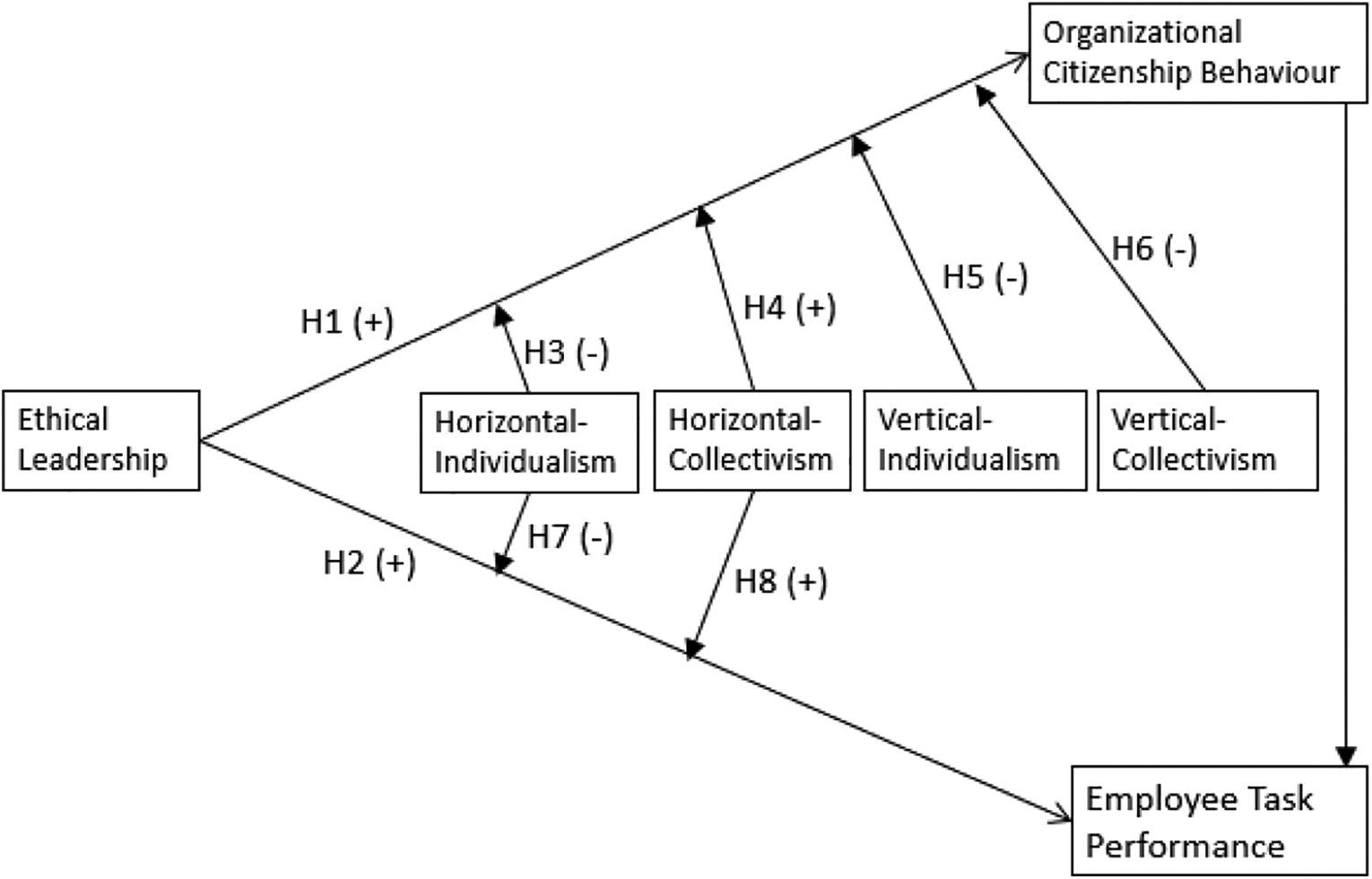
Conceptual model of hypothesized relationships.
Methods
Data and sample
A South African multinational enterprise in the service industry was selected for the survey research. The enterprise was operating 108 facilities, in South Africa, Kenya, Mozambique, Nigeria, Tanzania, Zambia, Seychelles and the United Arab Emirates. The South African home base represents a large part of the employee population, but South Africa is known for its cultural diversity as noted by the GLOBE study (House et al., 2004). The sub-Saharan African sample brings a new context to ethical leadership studies by testing measurement scales and relationships previously mostly studied in Chinese and Western-based developed markets.
The leisure service industry was selected because the issue of ethical leadership is considered highly relevant in a service industry. Additionally, the leisure service industry depends less on standardized processes and is more dynamic requiring frequent and close managerial leadership interaction. People have many opportunities to make decisions and demonstrate behaviour influenced by their superior. A service industry organization is also expected to have a relatively short time frame for leadership impact, but not too short to nullify the impact of leadership, as could be the case in, for example, internet related industries where people move frequently, and companies change rapidly. On the other hand, manufacturing and mining where there is almost no change and where processes are standardized would also not be desirable.
Survey questionnaires were electronically distributed to 924 employees, comprising all the employees reporting to the selected middle management level in all the countries in which the host operated. Survey questionnaires were also sent to the middle managers themselves, asking them to rate their reporting employees’ organizational citizenship behaviour. Cases that had one of the sources missing were eliminated from the data set. Cases with tenure of less than 1 year or with reporting relationships of less than 1 year were also eliminated from the data set because there had not been enough time for the leadership style of the manager to have had an impact on the employee’s behaviour. This resulted in a reduced sample size of 352 cases with complete data records. The demographics of the final sample was not significantly different from the sample population. All the departments participated. Gender distribution was 51.4% female and 48.6% male. The age distribution was near normal from 23 years to 60 years with 41 as median. Most of the sample had been employed by the company for more than 8 years with a median of 7.2 years, which was to be expected considering that many of the employees are managers themselves. The period of reporting to their manager varied from at least 1 year to greater than 10 years with the median at 3.6 years. The sample did not have sufficient power to detect a small effect but more than enough to detect a medium effect and in between (Cohen, 1992). The dominant business language in the host enterprise is English and all the managers are required to be proficient in English. No issues about understanding the questionnaires were raised by respondents. The research was conducted in a single enterprise to control for the effect of organizational corporate culture. To overcome potential concerns related to sensitivity of the data, suitable assurance was given that the data would be treated confidentially.
Measurements
Apart from employee performance, all the study variables were measured using previously published measurement scales, developed for the individual level of analysis, with standardized response options on a 7-point Likert-type scale.
Ethical leadership
The widely used 10-item Ethical Leadership Scale (ELS) (Brown et al., 2005) was used to measure ethical leadership (Kalshoven et al., 2011; Kim and Brymer, 2011; Loi et al., 2012; Mayer et al., 2009; Neubert et al., 2009; Piccolo et al., 2010; Wang et al., 2017). Despite the criticism of the ELS by Kalshoven et al. (2011) and Yukl et al. (2013), the ELS measurement scale remains one of the most widely-used and validated measures of ethical leadership (Bedi et al., 2015: 3) and is designed to be used at the individual level. It is also a unidimensional measure that makes it more suitable for analysis to detect moderation and using the same measurement scale as in other studies makes the results comparable.
Organizational citizenship behaviour
Supervisor ratings by the focal middle manager of participating employees were used to measure OCB. The 24-item OCB measure by Podsakoff et al. (1990) used in the study has demonstrated a high level of cross-cultural construct validity and reliability in a wide variety of culturally distinct countries (Lam et al., 1999). The measure has been used at an individual level of analysis by among others Kirkman et al. (2009), Konovsky and Pugh (1994), and Wang et al. (2005).
Employee task performance
The individual employee’s latest performance score from the company performance management system was used as a measure of employee task performance. The same performance measuring system is used across the whole enterprise and results in a percentage score between 0 and 100. The score is based on quantitative performance indicators related to the employee’s area of responsibility and is used to reward employees in terms of the company annual incentive scheme and to assign annual salary increases. The performance criteria included business unit profitability. Using actual company performance data is considered a strength of the study because prior research has shown that objective performance and subjective performance ratings cannot be equated (Bommer et al., 1995).
Individualism and collectivism
The vertical and horizontal individualism and collectivism scale of Singelis et al. (1995) was used since this specifically targets the individual level of analysis. This scale was revalidated by Triandis and Gelfand (1998) and Li and Aksoy (2007) confirmed that the four-dimensional model of vertical and horizontal collectivism-individualism provided a better model fit to their data than a two-factor model. Li and Aksov also demonstrated measurement equivalence over different culture groups.
Control variables
The following demographic control variables were included: age – to test whether an effect is simply related to maturity of the individual; gender – to check whether there is a significant behavioural difference between male and female respondents, organizational tenure – to ascertain whether the behavioural effect is simply related to time in the business rather than leadership effect; time with manager – employees reporting to the manager for less than a year were filtered from the sample because it was assumed that the manager would not have had enough time for his or her leadership to have made an impact on the employee’s behaviour.
Common method variance
To control for common method variance, procedural recommendations by Podsakoff et al. (2012) were applied. (a) Measures of predictor and criterion variables were all obtained from different sources. OCB was measured from supervisor ratings. Task performance was the company generated objective performance score for each individual employee. Ethical leadership was measured by employee ratings. Cultural value orientations were measured from employee self-ratings. (b) Temporal separation was used in surveys. The cultural value measure and ethical leadership measure, both from the employees, was separated in time. (c) Attempted to reduce social desirability bias. Great emphasis was placed on the confidentiality of the individual responses. The researcher was independent from the organization and the survey was administered by a third party. (d) Ensured construct validity. Previously published measurement scales were used for all variables to achieve content validity. Convergent validity was established by reviewing the factor loadings for all the constructs as well as the reliability of the construct. Some items from the original individualism-collectivism scales (Singelis et al., 1995) had to be eliminated because they did not exhibit adequate loading on the factor. A few items with factor loadings below 0.5 were retained provided that the items contributed to increased reliability, had significant loadings, and did not cause problems with residuals or model fit, similar to the research of Singelis et al. (1995). Reliability was confirmed with coefficient alpha > 0.7 for all but the horizontal individualism scale which was only slightly below. To assess discriminant validity the Average Variance Extracted (AVE) estimate for each member of every pair of constructs was compared with the square of the correlation estimate between these two constructs. All the AVE estimates were greater than the squared correlation estimates thus supporting discriminant validity (Hair et al., 2010). Nomological validity was examined by considering the correlations between the factors in the measurement model and all the significant correlations made theoretical sense. (e) Common latent factor (CLF) technique applied to measurements which were self-reported by the employee (ethical leadership and vertical and horizontal individualism-collectivism). A common latent factor which loaded on each of the observed variables was added to the measurement model as suggested by Podsakoff et al. (2012). A few of the observed variables loaded statistically significantly on the common latent factor. Since they were all associated with repeated measurement items from the same construct the relevant error residuals were allowed to covary (Kline, 2011) and in the revised model, the previously statistically significant loadings on the common latent factor became not significant, confirming that a systematic common method bias in the measurements was not a cause for concern. The common latent factor was therefore not retained in the measurement model.
Data analysis
The cultural value orientations were measured as continuous variables, because Singelis et al. (1995) argue that culture value orientation is not purely one or the other and individuals can never be defined by a set of polar opposites. Rather, the defining attributes of culture value orientations are best thought of as a continuum and individual orientation may vary within a range. The individual cultural values exhibit near normal distribution (see Table 1) with good variance. Consequently, the continuous variable interaction approach was used in the analysis (Little et al., 2007). Significant loss of information would have occurred if the single peak distributions were to be categorized. In the model both the moderator variable and the predictor variable were modelled as main effects and the product included as an interaction term. Mean centring the variables, by transforming from raw-score scaling to deviation-score scaling, were used to minimize the collinearity impact from correlation between the resulting product term and the first-order variables (Little et al., 2007).
Results
Measurement validity
The AMOS version 24 Structural Equation Modelling (SEM) software (Arbuckle, 2014) was used to perform confirmatory factor analyses.
The goodness-of-fit for the measurement model was considered acceptable (χ2 [1555] = 2349.33, p < .01, RMSEA = .038, CFI = .936, TLI = .932) given the model characteristics of more than 30 observed variables and sample of more than 250 (Hair et al., 2010; Kenny and McCoach, 2003). The measurement model standardized residuals were examined for potentially problem pairs with values >|4| as suggested by Hair et al. (2010: 711). There were no item pairs with large residuals, supporting an adequate model fit.
Structural model analysis and hypotheses testing
The item-level indicators were collapsed into factor scores at the level of the main research constructs by using the AMOS program impute capability (Arbuckle, 1983). The estimated factor scores are weighted combinations of the item-level indicator scores per respondent thus incorporating the measurement error directly in the analysis (Kline, 2011). The correlation matrix, tolerance and variance inflation factors (VIF) for the predictor and moderator variables were examined and did not suggest significant collinearity. Mahalanobis and Cook’s distance (Cook and Weisberg, 1980) calculations found no influential observations that may have undue effects on estimators. The zero-order correlations and descriptive statistics for the model variables are presented in Table 1 with coefficient alpha indicated in parenthesis along the diagonal. Performance is measured on a 0–10 scale and not on a 7-point scale like the other variables.
Descriptive statistics and correlations.
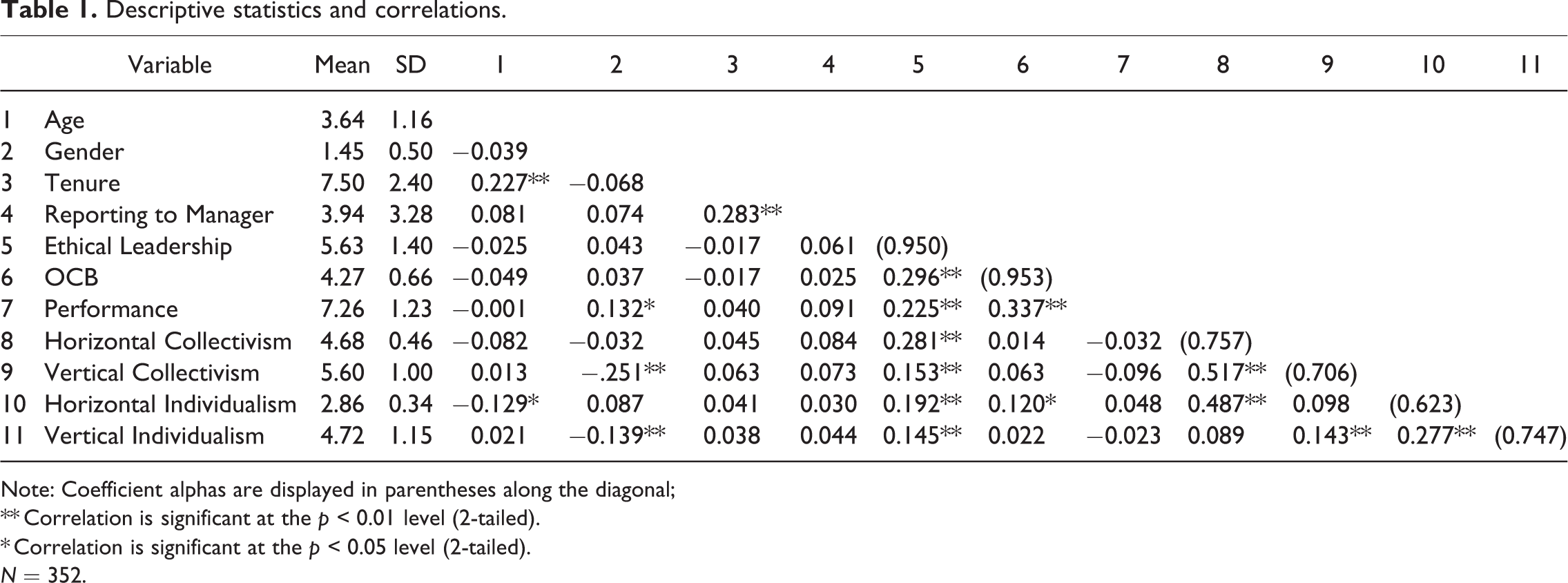
Note: Coefficient alphas are displayed in parentheses along the diagonal;
** Correlation is significant at the p < 0.01 level (2-tailed).
* Correlation is significant at the p < 0.05 level (2-tailed).
N = 352.
A series of structural equation models were used to test the hypotheses. Model 1 relates ethical leadership to OCB and performance without the interaction terms. The control variables of employee age, tenure with the company, and period of reporting to manager were added to the model to account for the potential influences of these three control variables. The control variables were allowed to covary based on the rationale that it is reasonable to expect a relationship between age and tenure because an employee must be older to have had a longer tenure. Similarly, age is expected to be related to the time spent reporting to a manager and the time spent reporting to a manager can be expected to be related to the tenure with the business. None of the control variables had significant relationships with the criterion variables. The disturbance terms for OCB and task performance were allowed to covary as per Piccolo et al. (2010) because these variables are related and the relationship is expected to extend beyond their mutual association with effort.
The hypothesized positive relationship between ethical leadership and OCB (Hypothesis 1) is supported by the positive path coefficient (β = .294, p < .001). Variations in ethical leadership explained 8.8% of the variance observed in OCB. This is a small to medium effect size (f2 = 0.096) (Cohen, 1992: 157). A positive relationship between Ethical leadership and performance (Hypothesis 2) is supported by the positive path coefficient (β = .221, p < .001). Ethical leadership explained 5.5% of the variance observed in performance. This is a small effect size (f2 = 0.05).
In Model 2, the moderator variables as well as the interaction terms were added to the model to test the hypothesized moderation effects. The interaction terms are product terms formed from ethical leadership and the individualism-collectivism moderators (Baron and Kenny, 1986). The moderator hypothesis is supported if the interaction path (Predictor × Moderator → Criterion Variable) is significant. The main effects for the predictor and moderator may also be significant but these are not directly relevant conceptually to testing the moderator hypothesis (Baron and Kenny, 1986). The goodness-of-fit for Model 2 was good (χ2 [40] = 46.39, p = .226, RMSEA = .021, CFI = .991, TLI = .980). Compared to Model 1, Model 2 explained a higher percentage of variance for each of the two criterion variables, suggesting that the interaction terms contributed to the improved prediction quality of Model 2.
The hypothesis testing results from Model 2 are indicated in Table 2. The regression coefficient for the interaction term of ethical leadership and horizontal-individualism on OCB (β = −.162; p = .032), is significant supporting negative moderation of the relationship between ethical leadership and OCB by horizontal-individualism (Hypothesis 3). Positive moderation of the relationship between ethical leadership and OCB by horizontal-collectivism (Hypothesis 4) is supported by the significant regression coefficient (β = .224; p = .007). The regression coefficient for the interaction term of ethical leadership and vertical-individualism on OCB (β = .0.038; p = .554) is not statistically significant thus Hypothesis 5 is not supported. The significant negative regression coefficient for the interaction term of ethical leadership and vertical-collectivism on OCB (β = −.185, p = .008) supports the negative moderation of the relationship between ethical leadership and OCB by vertical-collectivism (Hypothesis 6).
Hypotheses testing results.
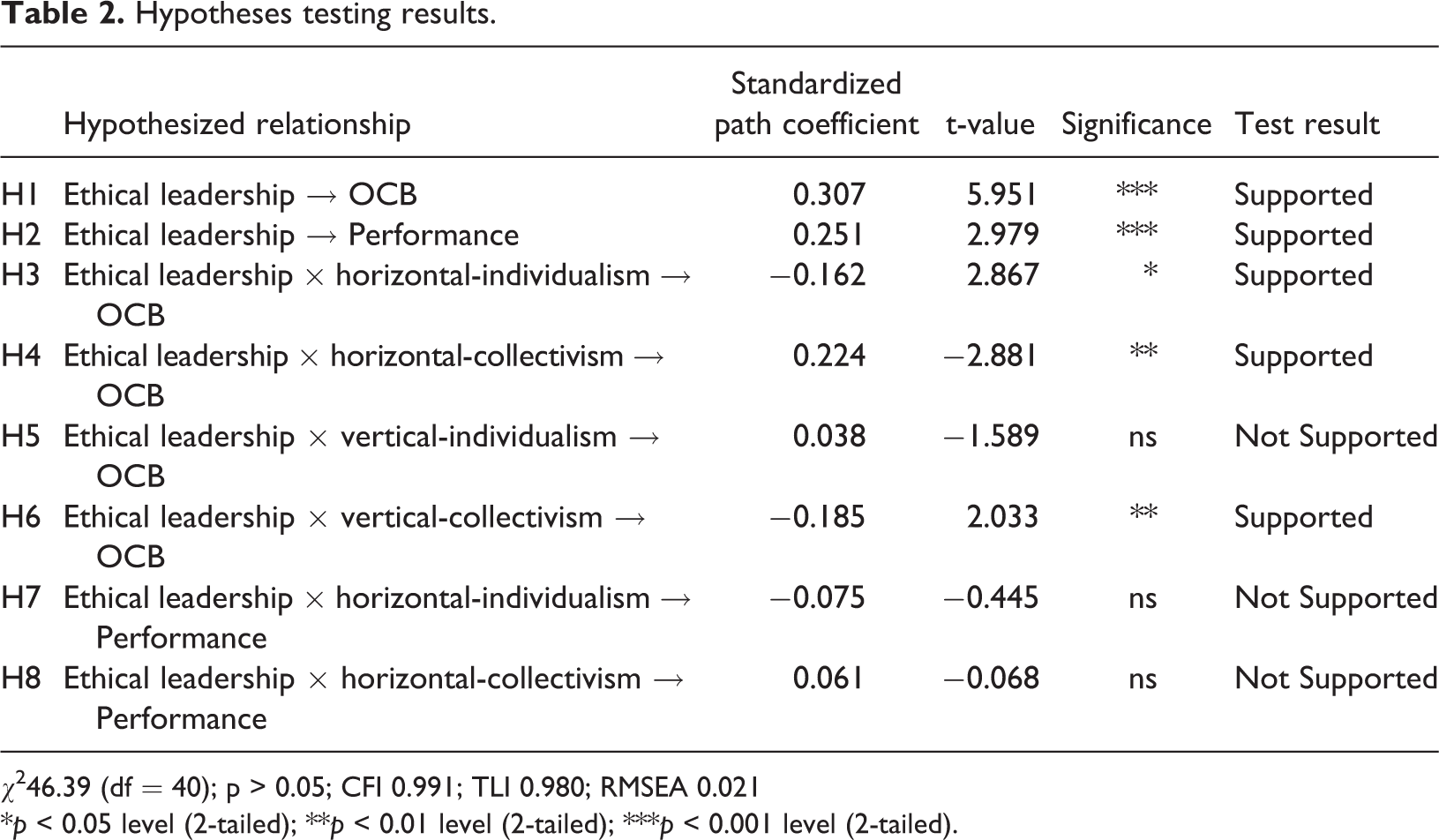
χ246.39 (df = 40); p > 0.05; CFI 0.991; TLI 0.980; RMSEA 0.021
*p < 0.05 level (2-tailed); **p < 0.01 level (2-tailed); ***p < 0.001 level (2-tailed).
The direct relationship between ethical leadership and performance was not significantly moderated by any of the moderator variables, Model 2 explained an additional 6.6% of the variance in OCB compared to Model 1 due to the impact of the three statistically significant moderators. This is a medium effect size (f2 = 0.17) based on total OCB R2 (Cohen, 1992). The correlation coefficients and standardized regression coefficients for this study are comparable with other studies (Bedi et al., 2015; Kalshoven et al., 2011; Mayer et al., 2009), but the R2 is noticeably higher for this study.
McClelland and Judd (1993) discussed the statistical difficulties of detecting interactions and moderator effects with continuous variable moderation, in non-experimental field studies, due to the reduction in model error as a result of adding the product term. Evans (1985) concluded that moderator effects are so difficult to detect in field studies that even those explaining as little as 1% of the total variance should be considered important. Chaplin (1991) reviewed social science literature and reported that field study interactions typically accounted for about 1%–3% of the variance. It should be noted that most of these studies used regression analysis to detect interaction. Kenny and Judd (1984) showed that by using structural equation models, that take measurement error into account, some of the problems associated with detecting interaction in field studies could be ameliorated because the proportion of variance that is common to multiple indicators of a given construct is estimated and the structural relationships between latent constructs are corrected for measurement error.
The interaction effects for horizontal-individualism and horizontal-collectivism are plotted using Aiken and West’s (1991) procedure in Figure 2 and Figure 3 and indicate that for low horizontal-collectivism and high horizontal-individualism the influence of ethical leadership on OCB is virtually eliminated by the cultural moderation. This may explain why Khokhar and Zia-ur-Rehman (2017) failed to detect a significant relationship between ethical leadership and OCB. Based on national culture dimensions, their sample from Pakistan can be expected to be mostly vertical-collectivist orientated (Hofstede, 1983).
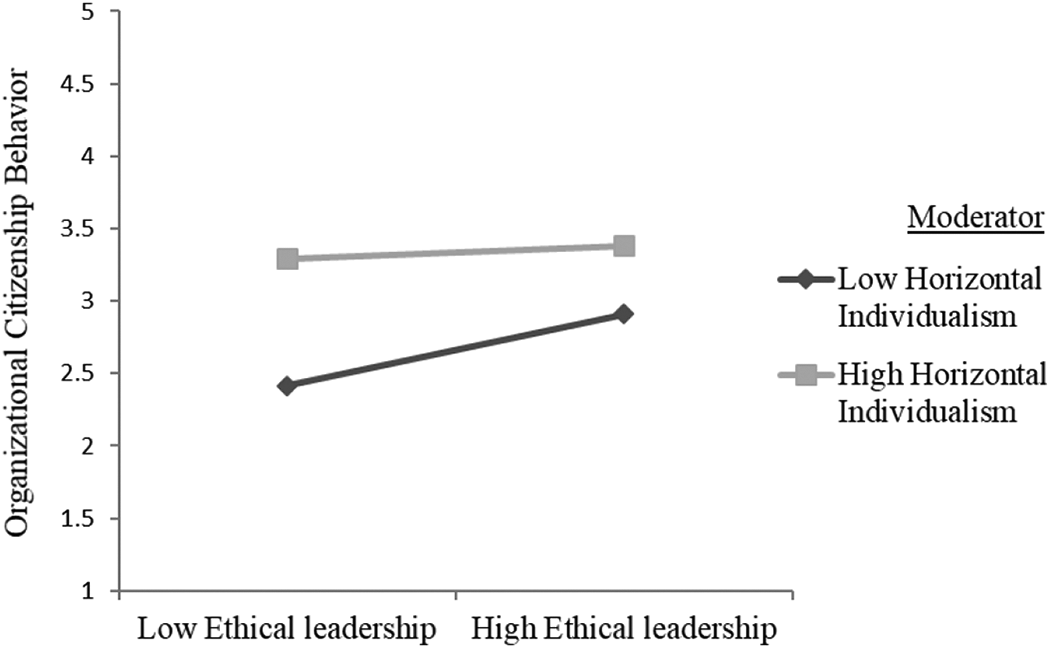
Horizontal individualism dampens the relationship between ethical leadership and OCB.
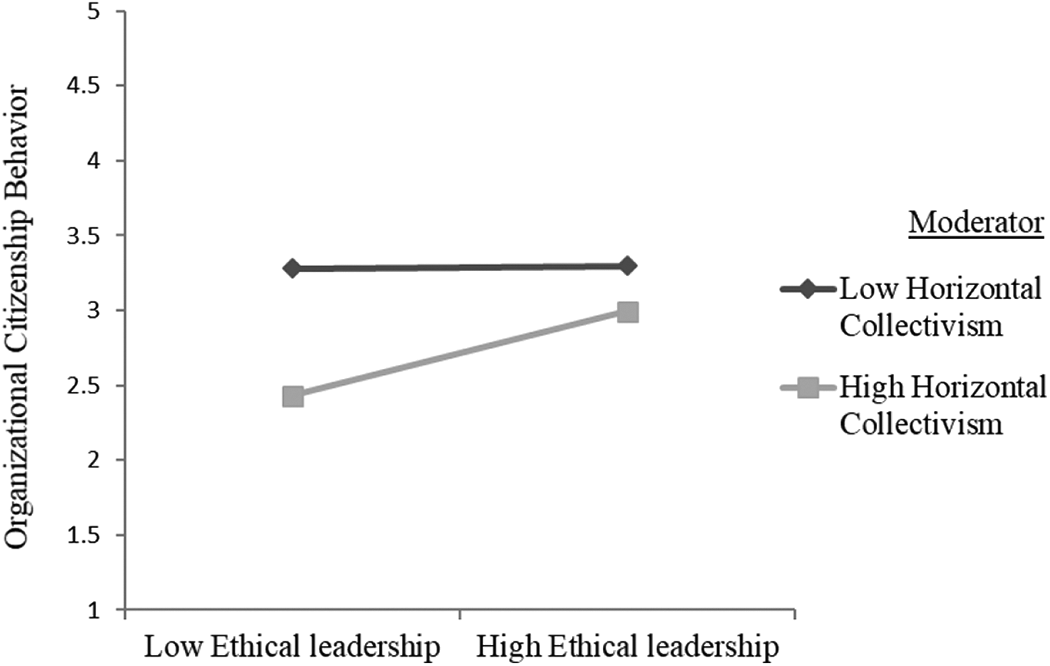
Horizontal Collectivism strengthens the relationship between ethical leadership and OCB.
Discussion
This study is among the first to examine the effects of cultural value orientations on the relationship between ethical leadership and behaviour outcome variables. The positive relationship between ethical leadership and OCB was found to be positively moderated by horizontal-collectivism and negatively moderated by horizontal-individualism and vertical-collectivism. Vertical-individualism had no moderating effect on the relationship between ethical leadership and OCB with the competing drive to achieve cancelling the hypothesized effect. The direct relationship between ethical leadership and employee task performance was not moderated by either horizontal-individualism or horizontal-collectivism value orientations. This may be because the sample did not have sufficient power to detect a small interaction effect.
Theoretical contribution and implications
This research aimed to advance the literature on ethical leadership by investigating the moderating effect of horizontal and vertical individualism-collectivism orientation of employees on the relationship between ethical leadership and employee outcomes. Individual level cultural value orientations of followers have previously been postulated as important to the effect of leadership (Kirkman et al., 2009). This study has empirically shown that individual level cultural value orientations can indeed change the effect of specifically ethical leadership on follower behaviour. Therefore, followers matter, and individual level cultural value orientation should be used to include the follower context in leadership research going forward as advocated by Avolio (2007).
Published studies of ethical leadership beyond western samples have been rare (Bedi et al., 2015). The African dataset extends the empirical validation of the positive relationships between ethical leadership and OCB and between ethical leadership and task performance. This study thus adds to ethical leadership scholarship by validating constructs and relationships in an African emerging market context. The study further demonstrates that ethical leadership is also valid in the African context.
Importantly the study contributes to ethical leadership scholarship by applying social cognitive theory as a theoretical framework to explain and predict how ethical leadership is influenced by different follower agentic influences associated with cultural value orientations. Although Bandura (2002) postulated that social cognitive theory is well suited to elucidate human behaviour in diverse cultural milieus, there has been limited application thereof in leadership research. This research takes a leap forward in using social cognitive theory as a basis for including follower characteristics in leadership theory. The key agentic influences, that determine how the individual will respond to ethical leadership, depend on the characteristics of the cultural value orientation of the employee. The relative strength of the individual’s inclination towards social identity with the group and propensity towards collective rather than personal agency emerged as key drivers that modify the underlying social learning mechanism for ethical leadership.
The research also demonstrated that the horizontal and vertical individualism-collectivism constructs are distinct and found in non-western emerging markets such as in Africa, confirming and extending earlier work by Li and Aksoy (2007), Singelis et al. (1995) and Triandis and Gelfand (1998). The vertical-horizontal distinction proved important to the conceptualization of the individualism-collectivism construct and it is suggested that this finding changes the face of scholarship going forward in that future research operationalization involving the individualism-collectivism cultural dimension at the individual level of analysis should use the horizontal-vertical conceptualization. The fact that vertical-collectivism and horizontal-collectivism moderate the relationship between ethical leadership and OCB in opposite directions confirm that consolidating vertical and horizontal collectivism into a single construct can be expected to produce misleading conclusions.
Practical management contribution and implications
The research confirmed strong positive relationships between ethical leadership and OCB, as well as between ethical leadership and task performance. Thus, ethical leadership should be considered an effective form of leadership as predicted by Yukl (2012). When leaders display ethical leadership by behaving with integrity and acting fairly and considerately towards followers, employees respond by performing tasks that are beneficial to the organization, even beyond their work responsibilities, as well as improving their own task performance. This study supports the finding by Wang et al. (2017) that treating employees with dignity and respect can enhance firm performance. Ethical leadership is not just the right thing to do from a governance point of view but is also likely to improve employee performance for both in role and beyond role behaviour.
Organizations need to be aware that there will be differences in the cultural value orientations of employees and the differences will most likely be more pronounced for organizations that operate in different countries. Followers’ cultural value orientations will affect the influence of ethical leadership differently depending on the individual follower’s orientation.
Cultural value orientations are deep rooted and individuals may not even be aware of their cultural value orientations. This means that cultural value orientations cannot easily be changed if at all. Organizations need to work with the diversity of cultural orientations among their staff. By understanding what role these cultural value orientations play in responding to leadership and potentially other aspects of the orientation, messaging can be adjusted to hit the appropriate motivational triggers. The ethical leadership approach should therefore be adjusted by positioning messages and behaviour such that an enhanced sense of social identity is created with individuals who have horizontal-individualist orientations, because their inherently low level of social identity weakens the social learning effect of ethical leadership. For vertical-collectivist oriented employees the perception of hierarchy needs to be de-emphasized. The findings from this research can be used to guide organizations on how to coach and develop leaders to take the impact of culture differences into account in the process of establishing more effective ethical leadership in their organizations.
Limitations and future research
This study has several strengths but also some limitations. First, even though the research design used independent sources at different time slots for collecting the predictor and criterion variables, the research design is limited in that causality cannot be inferred, contrary to the claim by Wang et al. (2017). Future experimental or longitudinal research designs would be beneficial. Second, the sample did not have enough respondents from each country to do a multilevel country analysis. This might add additional insights, but the research was not intended to be cross-cultural. The design specifically targeted cultural values at the individual level of analysis to align with the individual level of leadership analysis. Third, another limitation of the study is that it only deals with one cultural dimension. This is nevertheless an important step forward in developing and validating an understanding of the impact of individual cultural values on the effect of ethical leadership. Future studies should investigate further cultural value orientations such as power distance orientation. There may well be different agentic influences at play for this orientation. Fourth, and finally the study deals with only one company, in one industry sector, thus limiting generalization to other business sectors. This was intentionally done to control for organizational climate, but future research could include organizational climate as a measure and explicitly control for it.
Introducing social cognitive theory’s agentic influence arguments to explain the impact of cultural value orientations on the relationships between ethical leadership and employee outcomes opens interesting new research directions. This study relied on norms about the strength of collective and personal efficacy as well as social identity with the group typically associated with the specific culture value construct. These norms were based on literature characterizing the cultural orientations. However, future research that additionally measure and explicitly include these variables in the structural equation models will be useful to empirically confirm the explanation mechanism with moderated mediation models similar to that used by Gerpott et al. (2017). Such studies have the potential to substantially advance the understanding of how individual level cultural values actually affect leadership mechanisms and will be a useful contribution in our modern diverse globalized world.
Cultural orientation of the leader may also play a role and future research should explore this further. It might be interesting to investigate other follower characteristics such as maturity in future research, especially with millenniums entering the work environment and presenting different characteristics. Additionally, the effect of cultural value orientations on the relationship between ethical leadership and other outcome variables such as ethical climate will be of interest.
Conclusion
This research set out to answer the question: what is the effect of follower vertical and horizontal individualism-collectivism on the relationship between ethical leadership and employee outcomes, specifically, OCB and task performance. Social cognitive theory’s agentic influence (Bandura, 2002) was invoked to explain how an individual with horizontal-individualist, horizontal-collectivist, vertical-individualist and vertical-collectivist orientations can be expected to react differently to ethical leadership. The agentic influence associated with the particular individualist-collectivist orientations’ inherent strength of social identity with the group and propensity towards collective agency modify the social learning and social exchange mechanisms thereby changing the strength of the ethical leadership effect on the employee’s behaviour.
The research also confirmed that ethical leadership has the potential to impact enterprise performance through the positive relationships with employee OCB and employee task performance. By encouraging leaders to step up from being moral persons and be moral managers as well, ethical leadership can improve individual performance. If ethical leadership were to be widely practiced in an enterprise, there exists an opportunity for aggregation of individual performance to enhance overall enterprise performance. However, to achieve this in a multinational enterprise, with a culturally diverse employee base, the cultural value orientations of individuals need to be considered and the effect that these cultural orientations are likely to have on the effectiveness of ethical leadership needs to be taken account of by coaching leaders to modify their rendition of ethical leadership.
Footnotes
Acknowledgements
The author acknowledges the guidance provided by John Verster during the project as well as the helpful feedback and comments from Helena Barnard on drafts of this article.
Declaration of conflicting interests
The author(s) declared no potential conflicts of interest with respect to the research, authorship, and/or publication of this article.
Funding
The author(s) received no financial support for the research, authorship, and/or publication of this article.

Informed consent
Informed consent was obtained from all individual participants in the study.