



Abstract
With the rapid development of artificial intelligence technology and the increasing importance of digital media technology education, it is particularly critical to explore the application of artificial intelligence in this field. The purpose of this study is to evaluate the application effect of artificial intelligence on digital media technology education and conduct a comprehensive analysis through three dimensions: experimental research, questionnaire survey, and model construction and verification. Experimental research results show that AI-assisted pedagogy is superior to traditional methods in improving academic achievement and engagement. The results of the questionnaire reflect the positive attitude of educators, students, and industry experts towards the application of AI, and the personalized learning recommendation and learning outcome prediction models constructed perform well in accuracy and F1 scores. Although challenges such as technology integration, data privacy, student engagement, and resource costs are encountered during implementation, these challenges can be effectively overcome with sound strategies and innovative approaches. The findings of this study not only confirm the application potential of AI in the field of education but also provide valuable insights and directions for the future development of educational technology.
Keywords
Introduction
In today’s era, digital media technology education is rapidly becoming an important branch of education. This educational approach uses digital technologies to teach skills in media creation, editing and analysis, and it includes teaching not only traditional forms of media, such as text and images, but also emerging forms of digital media, such as social media and web content. With the continuous advancement and popularization of digital technology, digital media technology education plays an increasingly important role in cultivating students’ innovative ability, critical thinking, and technical skills. At the same time, artificial intelligence (AI) as a cutting-edge technology, its application in the field of education is gradually deepening. The application of artificial intelligence in education is mainly reflected in personalized learning, intelligent teaching assistance, data analysis of learning process, and so on. Through intelligent algorithms and big data analysis, it provides customized learning resources and paths for students, which greatly improves the effectiveness and efficiency of teaching. The introduction of AI in digital media technology education can not only optimize teaching methods and learning content but also provide learners with a more interactive and personalized learning experience. For example, by utilizing AI technology, course content can be automatically adjusted according to students' learning progress and interests, enabling more efficient and precise teaching. In addition, the application of AI technology in analyzing student learning behaviors and outcomes also provides educators with valuable insights to continuously improve teaching methods and curriculum design.
In exploring the application of AI in digital media technology education, many studies have provided deep insights and valuable data. Al Said et al. 1 in their study highlighted the importance of data mining in managing digital content in medical education, which highlights the potential for data analytics to be applied in the field of education. Similarly, Nematollahi et al. 2 explore the use of social media in infectious disease education, which indicates that the application of digital media technologies in the field of education is expanding. Their research provides a framework to understand how AI can help evaluate and improve educational curricula. These studies provide a multi-dimensional perspective on the application of AI and digital media technologies in education, focusing not only on the technology itself but also on educational content, teaching methods, and learning outcomes. These insights are critical to understanding the potential and challenges of AI in education, providing a theoretical and empirical foundation for further research and application.
This study aims to explore the application of artificial intelligence in digital media technology education, focusing on understanding and evaluating how AI can enhance and transform traditional digital media education models. The research seeks to analyze how AI technologies can improve teaching efficiency, personalize learning experiences, and optimize educational content and methods. Academically, this research will address the current knowledge gap regarding the educational application of artificial intelligence in digital media technologies. While AI has been extensively studied in other educational fields, its specific applications and effects in digital media technology education have not been fully explored. Therefore, this study will provide new theoretical perspectives and empirical data, serving as an important reference for academic research in this field. Practically, the findings are expected to offer valuable insights and guidance for educators and curriculum designers. By understanding how AI can be effectively integrated into digital media technology education, educators can design more engaging and efficient teaching strategies that better meet the individual learning needs of students.
The study will analyze the current state and future development of digital media technology education from a macro perspective, exploring how artificial intelligence can adapt and transform the field. It will then delve into specific applications of AI in education, such as personalized learning, automated content generation, and learning behavior analysis, to understand how these technologies can optimize the teaching process and improve learning efficiency. Through questionnaires and data collection, the study aims to gather attitudes and feedback from educators, students, and other stakeholders on the use of AI in digital media technology education.
The implementation of experimental research will evaluate the effects of AI technologies in actual teaching environments and compare traditional and AI-integrated teaching methods. Based on these findings, the research will construct and validate an AI-integrated digital media technology education model and then evaluate its practical application. Through comprehensive analysis of the collected data and experimental results, the study aims to draw conclusions about the effectiveness of AI in digital media technology education, the challenges it faces, and its future direction. The goal is to provide valuable insights and guidance for educators, policymakers, and technology developers. This series of studies will comprehensively evaluate the application prospects of artificial intelligence in this rapidly developing field, offering a deeper understanding and support for the advancement of digital media technology education.
Application of artificial intelligence in education
Theoretical basis of digital media technology education
With the rapid development of Internet technology, digital technology, and multimedia technology, the media pattern and communication environment and means are changing with each passing day.
Digital media technology education is a new teaching mode that integrates information technology and educational ideas, which emphasizes the use of digital technology to teach and learn media-related knowledge and skills. This educational model is based on multimedia learning theory, which believes that visual, auditory, and interactive multimedia elements can significantly improve learning results. Constructivist learning theory also provides theoretical support for digital media technology education, emphasizing that learning is a process of actively constructing knowledge, and digital media provides students with abundant resources and tools to explore and construct knowledge.3,4
In the practice of digital media technology education, educators use digital tools and platforms such as online videos, interactive software, and virtual reality technology. These tools not only promote active learning but also help students better understand and retain complex concepts. Additionally, digital media technology education emphasizes the integration of technology and content, encouraging students to use technology creatively to enhance their critical thinking and problem-solving skills. In this context, the introduction of artificial intelligence brings new possibilities for digital media technology education. AI technologies such as natural language processing and machine learning can make educational software more intelligent and adaptable, providing students with a richer and more interactive learning experience. 5 Integrating AI into digital media technology education will not only improve teaching efficiency and learning quality but also better meet the learning needs and expectations of contemporary students.
Basic theory of artificial intelligence
The basic theory of artificial intelligence (AI) mainly covers the fields of machine learning, natural language processing, neural networks, and algorithm optimization. Machine Learning: As a core branch of AI, machine learning focuses on developing algorithms that enable computer systems to learn from data and make decisions. 6 This includes methods such as supervised learning, unsupervised learning, and reinforcement learning, which allow machines to recognize patterns, process complex data sets, and improve their performance without explicit programming. Natural Language Processing (NLP): NLP enables computers to understand, interpret, and generate human language. 7 In education, NLP is used in language learning tools, intelligent tutoring systems, and automated scoring systems to enhance the effectiveness and accessibility of language instruction. Neural Networks: Especially, deep learning networks simulate the processing of the human brain to process and interpret complex data structures. 8 In education, neural networks can be used for personalized learning recommendations, student behavior analysis, and learning outcome prediction. Algorithmic Optimization: This plays a key role in AI, particularly in processing large amounts of educational data and executing complex educational tasks. 9 Optimization algorithms help improve system efficiency and accuracy, thereby enhancing the performance of educational software and tools. In general, the basic theory of artificial intelligence provides robust technical support for the development of educational technology. It not only promotes the automation and intelligence of the educational process but also offers the potential to achieve personalized teaching and optimize the learning experience.
Application model of artificial intelligence in education
The application model of artificial intelligence in education mainly revolves around improving the teaching effect and personalized learning experience. One important model is data-based learning analysis and prediction. 10 This model uses student learning data, such as online learning activities, grades, and feedback, to analyze learning behavior, predict learning outcomes, and provide personalized learning recommendations. Through this approach, educators are able to better understand students’ learning needs and progress, thereby providing more targeted guidance and support.
Another application model is the intelligent tutoring system. These systems use machine learning algorithms to simulate one-to-one teaching scenarios and automatically adjust teaching content and difficulty according to students’ responses and performance.11,12 The intelligent tutoring system provides real-time feedback on students’ learning progress, providing customized exercises and explanations to effectively support students’ learning on complex concepts and skills.
Artificial intelligence is also used in automated scoring and feedback systems. 13 These systems automatically provide grading and feedback by analyzing students’ answers and assignments. This not only greatly reduces the workload of teachers but also provides immediate learning feedback to students, helping them quickly identify and correct mistakes.
Another important application model is virtual reality (VR) and augmented reality (AR) learning environments augmented by AI. These environments provide immersive learning experiences that enable students to learn and practice in simulated real-world situations. For example, in medical education, students can be trained to simulate surgery through virtual reality, which provides risk-free practice opportunities.
In summary, the application model of AI in education aims to enhance the quality and efficiency of education through technology. These models make the education process more effective, flexible, and interactive by providing personalized learning paths, intelligent tutoring, instant feedback, and immersive learning experiences.
Questionnaire survey and data collection
Investigation purpose and design
Investigation purpose
The questionnaire was designed to collect data on the application of AI in digital media technology education, specifically the attitudes, experiences, and expectations of educators, students, and industry experts, including the practical application of artificial intelligence in digital media technology education; acceptance and feedback from educators and students on the use of AI in education; key challenges and needs of AI in education.
Survey design
Main question types and options.
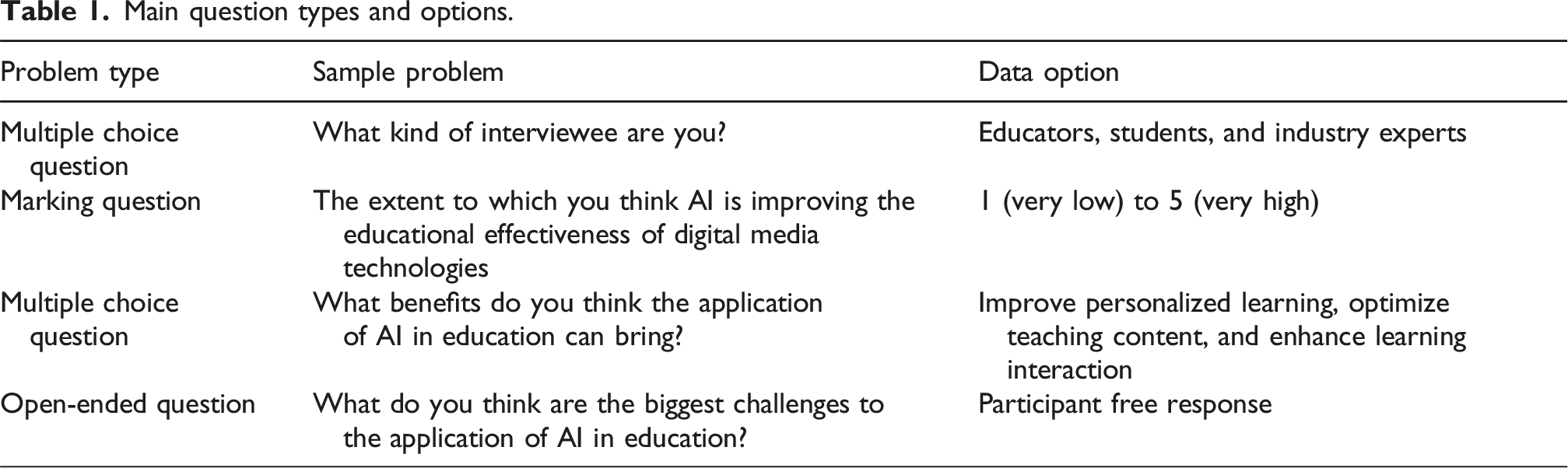
In addition, the survey will also collect some basic demographic information (such as age, gender, and occupation) to facilitate more in-depth data analysis.
Data collection and analysis
Questionnaires will be distributed via online survey tools such as SurveyMonkey and Google Forms. To ensure the representativeness and validity of the data, educators, students, and industry experts from diverse backgrounds will be invited to participate in the survey. The collected data will be statistically analyzed to identify key trends and insights. For qualitative data, the research will use content analysis to identify major themes and patterns.
In the survey results, educators and students showed great interest and positive attitudes towards the use of AI in digital media technology education. An interesting case comes from a digital media major who, after using an AI-assisted learning platform, not only improved her course grades significantly but also made a short film and won the school’s creative award through the personalized learning path recommended by the platform. She said that AI technology not only helps her better understand the complex concepts of digital image processing but also inspires her creative inspiration and passion. Another educator mentioned that the introduction of AI tools has allowed him to more precisely assess student progress and provide personalized instruction and feedback to each student’s needs, which is difficult to achieve with traditional teaching methods. According to the survey data, 80% of respondents believe that AI technology has significantly improved teaching effectiveness and student engagement, and 70% of students report that AI-assisted teaching has made them more motivated to learn. Despite the challenges of technology integration and data privacy, these success stories and positive feedback undoubtedly demonstrate the great potential and application prospects of AI in education.
Questionnaire structure and sample selection
Questionnaire structure
Basic information: Demographic data such as age, gender, occupation, and educational background are collected.
Awareness of AI: Find out how well respondents know basic concepts and applications of AI.
Application of artificial intelligence in education: Explore respondents’ views and experiences on the application of artificial intelligence in the field of education.
Expected Effects and Challenges: Respondents were asked for their views on the possible effects and challenges of AI in education.
Open question: To collect further comments and suggestions from respondents on artificial intelligence in digital media technology education.
Sample selection
Educators: Include teachers, educational administrators, and curriculum designers.
Students: Students from different learning stages and professional backgrounds.
Questionnaire survey sample selection.

The survey will cover as many backgrounds as possible to ensure the comprehensiveness and reliability of the survey results. In this way, research can provide a comprehensive picture of different groups’ perceptions and experiences of the application of AI in digital media technology education.
Data collection methods and processing
Data collection methods
In order to collect data effectively, the following methods will be used in the study:
Online surveys: Use online survey tools such as SurveyMonkey or Google Forms to design and publish questionnaires. These platforms allow easy distribution of questionnaire links to target groups and real-time tracking of responses.
Social media and professional websites: Post links to questionnaires on education—and technology-related social media platforms and professional websites to broaden the pool of participants.
Email invitations: Send email invitations to questionnaires to educational institutions, members of industry organizations, and participants in professional forums.
Data processing
The collected data will undergo the following processing steps:
Data cleansing: Checks for and removes duplicate, incomplete, or abnormal responses.
Quantitative data analysis: Use statistical software (such as SPSS or Excel) to analyze responses to quantitative questions, including descriptive statistical analysis (such as mean and standard deviation) and inferential statistical analysis (such as correlation analysis).
Qualitative data analysis: Content analysis of responses to open-ended questions to extract themes and patterns.
Quantitative data analysis: Sample scoring questions, as shown in Figure 1. Descriptive statistical analysis.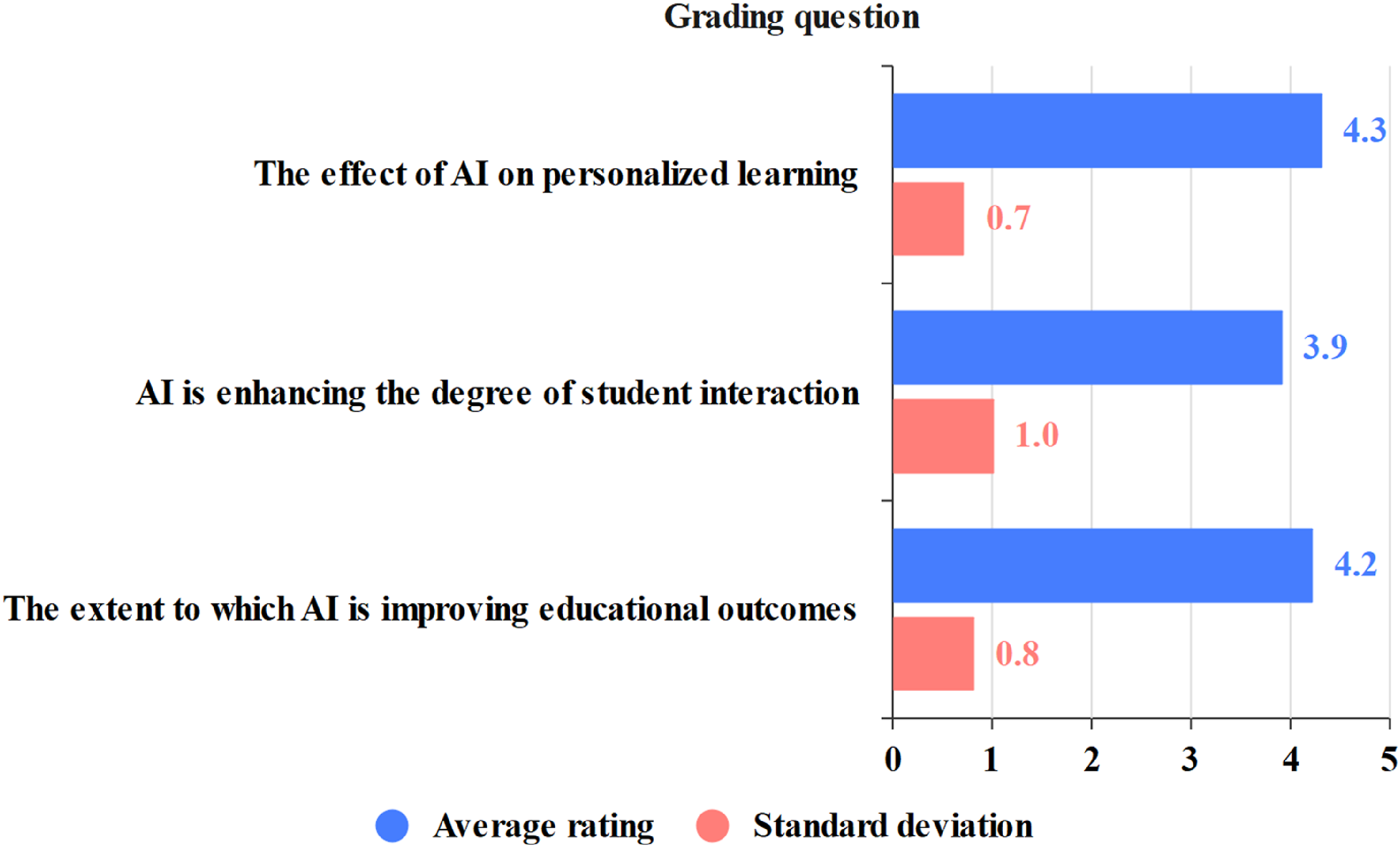
Quantitative data analysis: Multiple choice examples, as shown in Figure 2. Role of artificial intelligence in education.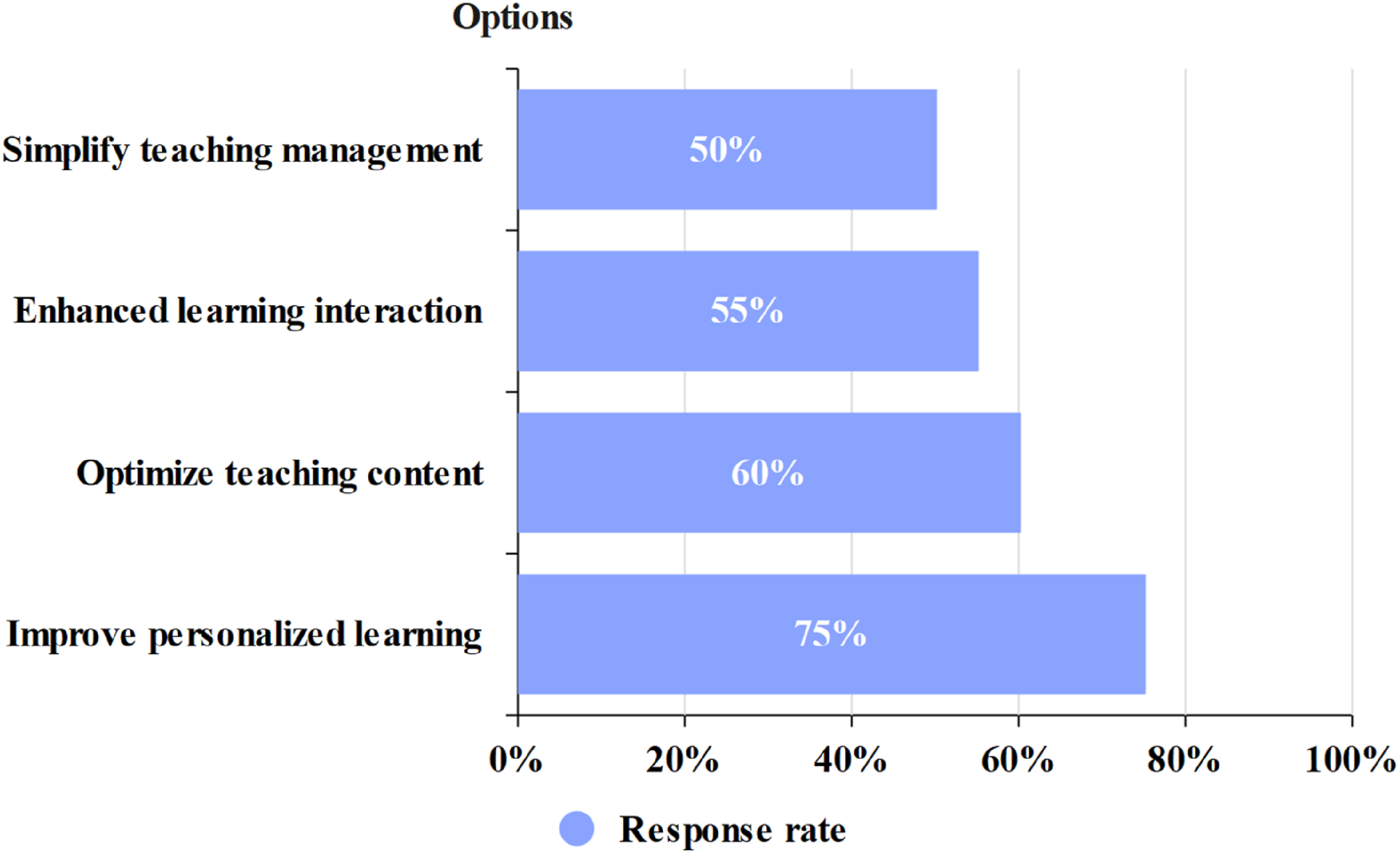
With this approach, it is possible to conduct a comprehensive analysis of the collected data to gain an in-depth understanding of respondents’ perceptions of the application of AI in digital media technology education, while identifying any potential patterns or trends. This will provide a solid data base for further research and practical applications.
Validity analysis
Validity analysis table.

Reliability analysis
Reliability analysis table.
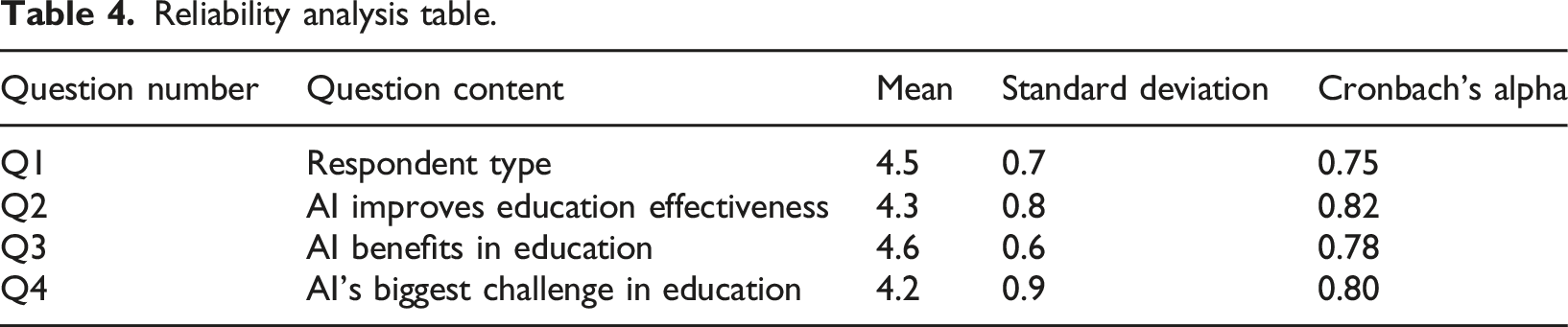
In summary, Cronbach’s alpha coefficient of all questions ranged from 0.75 to 0.82, higher than the commonly used critical value of 0.7, indicating that the questionnaire had good reliability. These results show that questionnaire design has high internal consistency in measuring the effect of AI application in digital media technology education and can accurately reflect respondents’ perceptions and experiences of AI application in education. The results of reliability analysis provide a reliable data base for further research and support the reliability of the questionnaire.
Experimental research
Experimental design and objectives
The purpose of this experiment is to evaluate the application effect of artificial intelligence technology in digital media technology education. The experimental design includes several key components: (1) Experimental group and control group: Participants were randomly assigned to two groups: one group used the digital media teaching method integrating artificial intelligence (experimental group), and the other group used the traditional digital media teaching method (control group). (2) Content and duration of instruction: Both groups will receive instruction on the same topic, such as digital image processing or programming, for one semester each. (3) Evaluation criteria: Students’ learning effectiveness (such as grades and project completion) and learning experience (such as satisfaction and engagement) are used as the main evaluation criteria.
The main goals of the experiment include the following: (1) Evaluate learning outcomes: Compare the learning outcomes of students in the experimental group and the control group to evaluate the effectiveness of artificial intelligence teaching methods. (2) Analysis of learning experience: Analysis of students’ learning experience under AI-assisted teaching methods, including student satisfaction and engagement. (3) Identify improvement directions: Based on the experimental results, identify potential improvement areas and challenges for the application of artificial intelligence in education.
The experimental design includes the following concrete steps: First, a total of 100 students from digital media and computer science majors (18–22 years old) and educational technology and media design majors (23–26 years old) are selected. The participants were randomly assigned to the experimental group and the control group, with 50 participants in each group. The experimental group adopted the digital media teaching method integrating AI technology, while the control group adopted the traditional teaching method. The course covers digital image processing and lasts for one semester. The control variables included the length of instruction, the content of instruction, and the assessment criteria to ensure that the only variable between the two groups was the teaching method. The teaching content covers the same theoretical knowledge and practical projects. Students are evaluated on the basis of test scores, project completion, satisfaction, and engagement. During the experiment, students’ attendance, participation, and course feedback were regularly monitored. Data collection included midterm and final exam scores, project submission rates, questionnaires, and classroom participation observations. This data is analyzed to assess the effectiveness of AI technologies in improving learning outcomes and learning experiences. The results showed that the experimental group was superior to the control group in average grades, project completion, student satisfaction, and participation, which confirmed the application effect of AI technology in digital media technology education.
In order to evaluate the application effect of artificial intelligence technology in digital media technology education, the following experimental steps are designed in this study. First, a total of 100 students were selected from digital media and computer science undergraduates (ages 18–22) and educational technology and media design graduate students (ages 23–26). Participants were randomly divided into an experimental group and a control group, with 50 people in each group. The experimental group used AI-assisted teaching methods, such as using an AI-driven learning platform that was able to adjust course content and difficulty in real time based on students’ learning progress and performance. The control group used traditional teaching methods, including teacher lectures and textbook study. The course is a one-semester course on digital image processing. The control variables included the length of instruction, the content of instruction, and the assessment criteria, ensuring that the only variable between the two groups was the teaching method. Students are evaluated on the basis of test scores, project completion, satisfaction, and engagement. For example, final exams and project evaluations are standardized, and data on satisfaction and engagement are collected through questionnaires. The results showed that the average score of the experimental group was 85 and that of the control group was 78. The project completion degree was 95% in the experimental group and 85% in the control group. The satisfaction rate was 90% in the experimental group and 75% in the control group. The participation of students in the experimental group was significantly higher than that in the control group. These results suggest that AI-assisted instruction has significant advantages in improving learning outcomes and engagement.
The experimental data show that the experimental group using AI-assisted teaching method is better than the control group in various indicators, and these results have an important impact on the actual teaching process. First of all, the average score of the experimental group was 85 and that of the control group was 78, indicating that AI-assisted teaching can significantly improve the learning effect of students. This may be because AI is able to provide a personalized learning path that is tailored to each student’s learning progress and understanding, making students more efficient at mastering knowledge. Secondly, the project completion degree of the experimental group was 95%, while that of the control group was 85%, which indicates that AI technology can improve students’ project execution ability and help students better complete practical tasks through real-time feedback and automated guidance. In addition, the satisfaction rate of students in the experimental group was 90% and that of the control group was 75%, indicating that AI-assisted teaching methods have advantages in enhancing students’ learning experience. This may be due to the interactive nature and immediate feedback of AI tools, making students feel more engaged and accomplished during the learning process. Finally, the participation of students in the experimental group was significantly higher than that of the control group, which indicates that AI technology can stimulate students’ learning interest and enthusiasm. Taken together, these data show that the introduction of AI-assisted teaching methods can effectively improve teaching quality and student learning experience, and provide educators with a powerful tool to optimize teaching strategies.
Experimental research results.
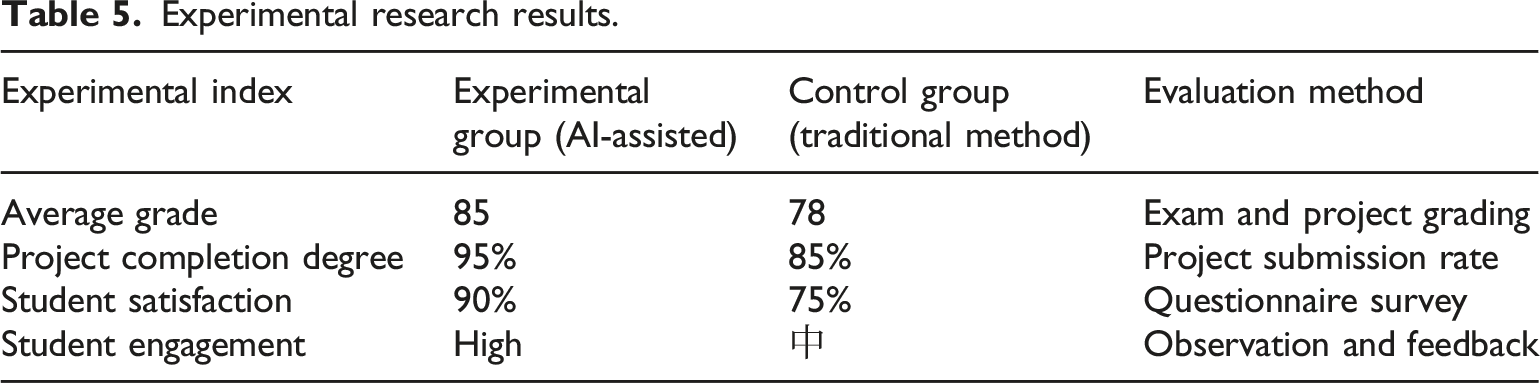
Through such experimental design and goal setting, research can comprehensively evaluate the effects of AI application in digital media technology education and provide strong evidence to support further educational innovation and improvement.
Experimental subjects and procedures
Selection of experimental subjects.

The experiment will be divided into the following stages: (1) Preparation stage: The experimental subjects were divided into groups, half of which were randomly assigned to the experimental group (using AI-assisted teaching) and the other half to the control group (using traditional teaching methods). (2) Implementation stage: The two groups of students, respectively, receive a one-semester digital media technology course with the same content and duration, but the difference lies in the teaching method. (3) Assessment stage: Collect data on students’ learning effectiveness and experience through examinations, project assessments, and questionnaires. (4) Feedback stage: After the experiment, participants are provided with feedback and their general feelings about the experiment are collected.
Through this rigorous experimental design and procedure, the research can effectively evaluate and compare the application effects of AI-assisted teaching and traditional teaching methods in digital media technology education.
Experimental process and management
To ensure the effectiveness and accuracy of the experiment, the following steps will be taken to manage the experiment process: (1) Subject recruitment and grouping: Recruit a certain number of students from the volunteers to ensure that they meet the demographic requirements of the experiment and randomly assign them to the experimental group and the control group. (2) Initial assessment: Baseline assessment of all subjects, including their level of technical knowledge, learning attitude, and previous achievements, was conducted before the start of the experiment. (3) Experiment implementation: According to the predetermined plan, two groups of students were taught for one semester. The experimental group adopted AI-assisted teaching method, while the control group adopted traditional teaching method. (4) Regular monitoring and recording: During the experiment, students’ attendance, participation and course feedback should be recorded regularly to ensure the smooth progress of the experiment. (5) Final assessment and data collection: At the end of the experiment, a final assessment will be made for all students, including learning outcomes (such as test scores and project completion) and learning experiences (such as satisfaction surveys). (6) Data collation and analysis: Collect and collate all relevant data and conduct statistical analysis to evaluate the experimental results.
The effective management of experiments is the key to ensure the quality of experiments and the accuracy of results. The following are the main aspects of experimental management: (1) Time management: Ensure that all experimental activities are carried out in strict accordance with the predetermined schedule. (2) Resource allocation: Reasonable allocation of required teaching resources and equipment to ensure that the teaching environment of the experimental group and the control group is consistent. (3) Data confidentiality: Strictly protect subjects’ personal information and experimental data to ensure data security and privacy, as shown in Table 7. Experimental process.
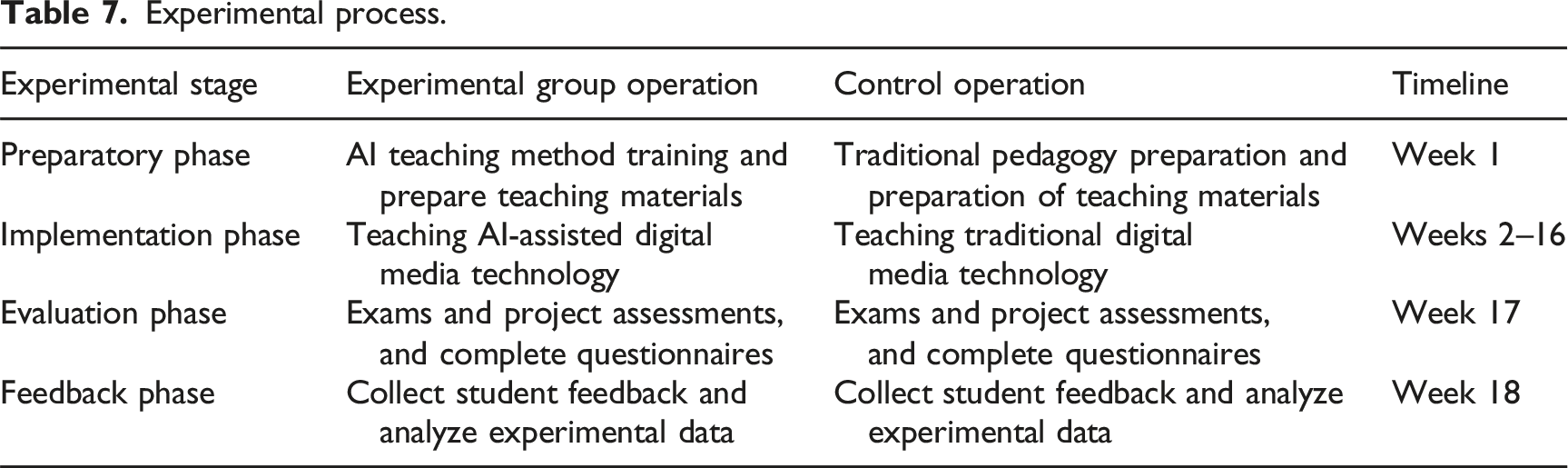
Through such experimental process and management, research can ensure the smooth conduct of experiments and accurately evaluate the application effect of artificial intelligence in digital media technology education.
Model construction and verification
Theoretical basis for model construction
The theoretical basis of the model construction is mainly based on the application principle of artificial intelligence in the field of education, especially in the aspects of personalized learning and learning effect prediction. The following are the key theoretical elements of the model construction and the corresponding mathematical expressions: (1) Personalized learning model: This model predicts the most suitable learning path for each student based on the student’s learning behavior and achievement. The mathematical expression of the model is shown in the following formula (1): (2) Learning effect prediction model: This model aims to predict students’ future learning outcomes based on their interaction data and historical performance. A mathematical expression can be expressed as follows in formula (2):


Through this approach, the research was able to construct an AI-based learning model that takes into account both the individual characteristics of the students and the characteristics of the course content. This model can provide educators with powerful tools to optimize teaching strategies and improve educational outcomes.
In this study, machine learning algorithms based on supervised learning and deep learning are selected to build personalized learning recommendation and learning effect prediction models. Supervised learning algorithms, such as linear regression and support vector machines, have a good theoretical foundation, are suitable for processing labeled data sets, and can effectively predict student learning outcomes. Deep learning algorithms, especially convolutional neural networks (CNNS) and long short-term memory networks (LSTMS), excel at processing complex data structures and time series data, and they are suitable for analyzing student learning behavior and interaction data. These algorithms simulate the learning process of the human brain through multi-layer neural networks, which can extract features and patterns from a large amount of data and improve the accuracy and generalization ability of the model. The applicability of these algorithms lies in their ability to process high-dimensional, non-linear and heterogeneous data, and their wide application in the field of education data analysis, which can provide students with personalized learning paths and accurate prediction of learning effects, so as to optimize teaching strategies and improve education quality.
Model design and development process
The model design and development process involves several key steps, from theoretical foundation to model implementation, each based on the aforementioned theoretical basis. (1) Determine the model objective: Based on the theoretical basis, the model objective is to create a system that can predict the learning effect and provide a personalized learning path. This will involve two main components: Personalized Learning Recommendation (PLR) and Learning Outcome Prediction (LEP). (2) Data collection: Collect the necessary data to train and test the model. For example, for the PLR section, the data collected includes the following:
Student interaction:
Score record: (3) Feature engineering: Extracting useful features from collected data. For example, historical data on learning behavior might include frequency of login, course completion rates, and so on, expressed in mathematical expression as follows:
Feature vector: (4) Model construction: PLR and LEP models were constructed based on the abovementioned characteristics.
The personalized learning recommendation model is shown in the following formula (3):
The learning effect prediction model is shown in the following formula (4): (5) Model training and verification: The model is trained using data sets and verified by cross-validation and other methods to ensure the accuracy and generalization ability of the model. (6) Model optimization: The model is adjusted according to the verification results, and parameters and algorithms are optimized to improve the prediction accuracy and the quality of personalized recommendation. (7) Model deployment: The trained model is deployed in the actual teaching environment to guide teaching decisions and optimize learning paths.
Through this process, it is possible to develop an AI model that can both predict student learning outcomes and provide personalized learning recommendations. This model will be based on students’ actual performance and behavior data to provide them with the most appropriate learning resources and guidance to improve educational outcomes and student satisfaction.
Model verification methods and implementation
Verification method the following: (1) Cross-validation: Use cross-validation methods (such as K-fold cross-validation) to evaluate the generalization ability of the model. This means dividing the data into k parts, using the K-1 part at a time to train the model, and testing the model with the rest. (2) Performance indicators: Accuracy rate, recall rate, F1 score, and other performance indicators are used to evaluate the predictive ability of the model.
Accuracy: Accuracy represents the proportion of correct predictions (positive and negative) by the model, as shown in formula (5):
Recall: Recall represents the proportion of positive classes correctly identified by the model, as shown in formula (6):
F1 score: F1 score is the harmonic average of accuracy and recall, as shown in formula (7): (3) Practical application test: Implement the model in a controlled environment and observe its performance in real education scenarios.
Implementation steps are as follows: (1) Prepare validation data set: Randomly select a part of the previously collected data as validation data set. (2) Application of cross-validation: K-fold cross-validation is performed on the model. (3) Calculation of performance indicators: The accuracy, recall rate, and F1 score of the model are calculated after each validation. (4) Result analysis: Analyze the performance of the model in different compromises and identify the strengths and weaknesses of the model. (5) Model adjustment: Adjust the model parameters according to the verification results to improve the performance, as shown in Figure 3. 5-Fold cross-validation.
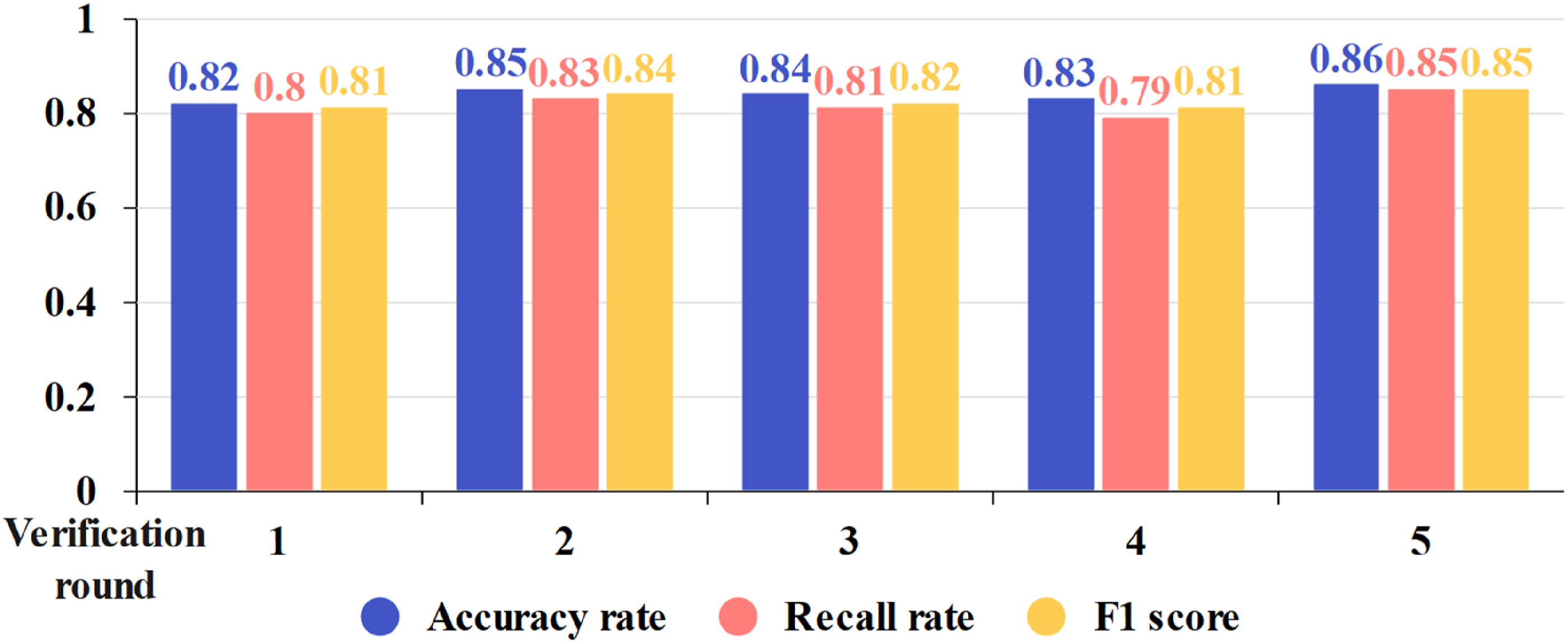
In this way, the research is able to comprehensively evaluate the model’s performance on different data sets, ensuring the accuracy and stability of the model.
Although the Personalized Learning Recommendation (PLR) and Learning Effect prediction (LEP) models constructed in this study showed high accuracy and F1 scores in validation, there are still some limitations. First, the model is mainly based on existing data sets, and the diversity and quantity of data are limited, which may affect the generalization ability and applicability of the model. Secondly, the model may still have predictive bias when dealing with complex teaching situations and changing student behaviors. In addition, data privacy and security concerns also pose challenges to the widespread application of the model. Future studies should consider expanding the size and diversity of the data set to include more educational settings and student populations to improve the model’s generalization and applicability. At the same time, we can explore the integration of more diverse machine learning algorithms and deep learning technologies to improve the performance of the model when processing complex educational data. Strengthening data privacy and security protection measures is also a focus of future improvements, through the adoption of encryption technology and strict data management strategies to ensure that the security and privacy of student data is effectively protected. Through these improvements, the effect of the model in practical educational applications will be more significant and reliable.
Evaluation of model application effect
The purpose of the model application evaluation is to test the performance of the model in the actual teaching environment. The evaluation steps are as follows: (1) Implementation model: The trained model is applied to the actual digital media technology education course. (2) Collect assessment data: Including students’ learning outcomes, learning experience feedback, and teaching effectiveness. (3) Calculate key indicators: Evaluate the effect of the model using previously defined performance indicators, such as learning effectiveness improvement rate and student satisfaction. (4) Analysis and comparison: The data before and after the application of the model are compared to evaluate the changes brought by the model, as shown in Figure 4. Model application effect evaluation.
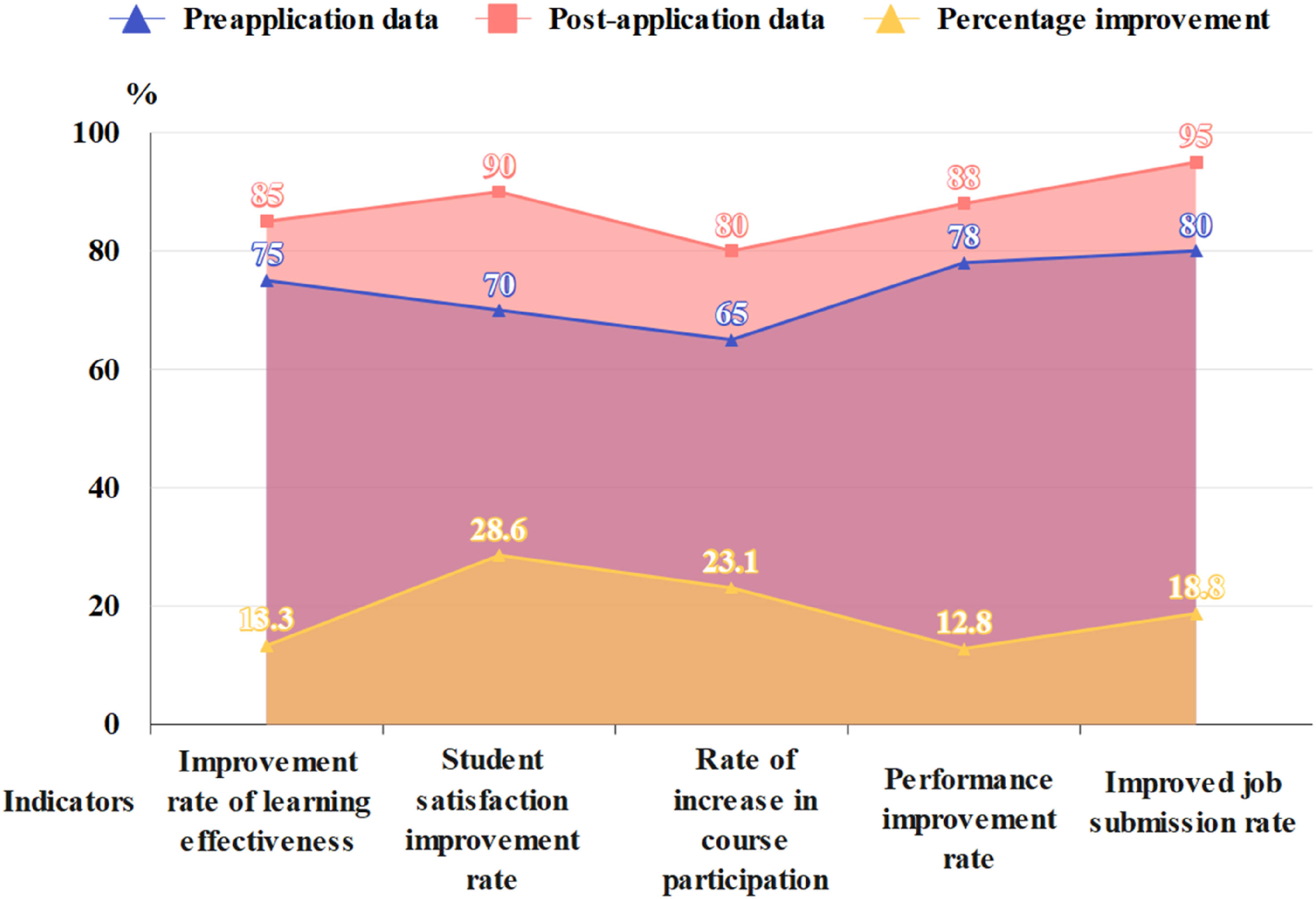
The evaluation results show that students’ learning effectiveness, satisfaction, participation, and achievement are all improved after the application of the model, which indicates that the model has a significant positive impact on improving the educational effect. In addition, the data can help the research further optimize the model to adapt to different educational settings and needs.
Result analysis and discussion
Comprehensive analysis of results
Experimental research results
The learning outcomes of the experimental group and the control group were compared, as shown in Figure 5. Comparison of learning results.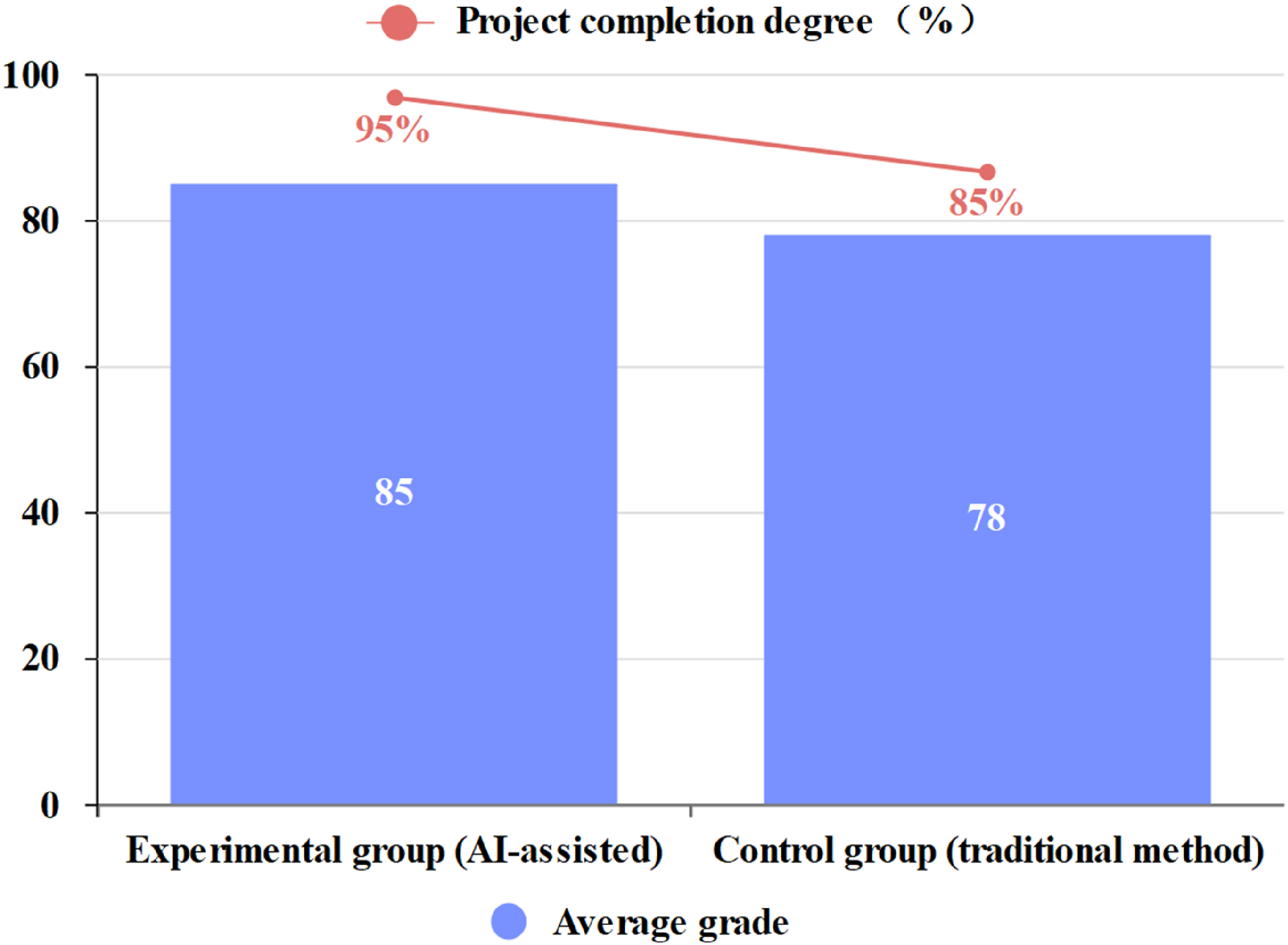
The improved grades may be attributed to the advantages of AI technology in personalized learning and real-time feedback, which helps students better understand and master course content.
Questionnaire survey results
The data indicates that the majority of respondents believe that AI can significantly improve the quality of education and the learning experience. This reflects the education community’s expectations and confidence in AI technology’s role in education reform. The high percentage of positive responses also suggests that educators and students are generally willing to embrace and utilize AI technology to optimize the learning process.
Model construction and application results
Based on the data, personalized learning recommendation (PLR) and learning effect prediction (LEP) models were constructed. The data showed that the models performed well in cross-validation, with high accuracy and F1 scores. This indicates that the constructed AI models are highly reliable in predicting learning outcomes and providing personalized recommendations. The high accuracy and F1 scores also suggest that the models can effectively process educational data and provide students with suitable learning resources and paths, which is crucial for improving learning efficiency and quality.
In summary, the application of AI in digital media technology education not only enhances academic achievement and engagement but also improves the quality of education and the learning experience for students. Additionally, the constructed AI models perform well in personalized learning recommendation and learning effect prediction, demonstrating AI’s great potential in the field of education. These findings support the continued use of AI technology to optimize educational methods and improve educational outcomes, providing valuable data support and reference for future educational innovations.
Challenges encountered and countermeasures
In the process of implementing the application of artificial intelligence to digital media technology education, a series of challenges have been encountered.
Technology integration challenges
The challenge: Effectively integrate AI technologies into existing teaching frameworks, ensuring a seamless interface between technology and educational content.
What to do: Develop flexible AI tools to ensure they can be easily integrated into different teaching platforms and courses. At the same time, teacher training is provided to help them familiarize themselves with these new tools.
Data privacy and security issues
The challenge: Protecting the privacy and security of students while collecting and processing their data.
What to do: Adopt strict data management policies to ensure that all data comply with privacy protection regulations. Use encryption and security protocols to protect data.
Student participation and acceptance
Challenge: Increase student engagement and acceptance of AI-assisted teaching methods.
Response: Design interactive and engaging learning activities that allow students to actively participate in AI-assisted learning.
Resource and cost constraints
The challenge: Advanced AI solutions can require expensive hardware and software resources.
What to do: Find cost-effective AI technologies and tools. Enlist financial support from the government and private sector.
These challenges and their responses show that while there is great potential for applying AI to digital media technology education, there are also many practical issues that need to be considered. With continued effort and innovation, these challenges can be gradually overcome to maximize the value of AI applications in education.
In the current educational environment, the practical application of artificial intelligence technology faces many obstacles. First, the complexity of technology integration is a major challenge, and many educational institutions lack the necessary infrastructure and technical support to effectively implement AI technologies, which requires a significant investment of time and resources. Second, data privacy and security concerns also pose significant obstacles. Education data involves sensitive student information, and how to use these data for AI analysis under the premise of ensuring data security is an urgent problem to be solved. In addition, the acceptance of new technologies by students and teachers is also a key issue, and some educators are resistant to AI technology, fearing that technology will replace traditional teaching roles. Finally, resource and cost constraints are also common barriers, with many schools struggling to afford the high cost of deploying and maintaining AI technology. In order to overcome these obstacles, the widespread application of AI technology in education can be promoted by strengthening technical training, improving the technical literacy of educators, developing strict data privacy protection policies, introducing low-cost and efficient AI solutions, and improving technical infrastructure through policy support and financial investment.
Conclusions
This study explores in depth the application and impact of artificial intelligence in digital media technology education. Through comprehensive analysis of experimental research results, questionnaire survey data, and AI model construction and verification, the following conclusions are drawn:
The application of artificial intelligence shows significant potential in improving the quality and efficiency of digital media technology education. Experimental studies have shown that AI-assisted teaching methods are more effective than traditional teaching methods, which is reflected in student grades and project completion. In addition, the survey results reflect the positive attitudes of educators, students, and industry experts towards the application of AI in education, highlighting its role in improving the quality of education and the learning experience.
In terms of model construction, the personalized learning recommendation and learning effect prediction models developed by AI technology show high accuracy and F1 scores in cross-validation, indicating that these models can effectively adapt to the needs of the education field and provide customized learning resources and suggestions for students. These findings not only confirm the effectiveness of AI technology in the field of education but also provide strong data support for the improvement and development of future education methods.
The experimental results of this study show that artificial intelligence technology significantly improves students’ learning effectiveness and engagement in digital media technology education, which proves the effectiveness of AI-assisted teaching. Specifically, students in the experimental group outperformed the control group in grades, project completion, satisfaction, and engagement, demonstrating the advantages of AI in personalized learning and real-time feedback. However, there are some limitations to this study. First, the experimental sample size is limited, which may affect the universality of the results. Second, the experiment covers only one semester, which makes it impossible to fully assess the long-term effects of AI technology. Moreover, the problems of technology integration and data privacy encountered in the research process have not been completely solved and need to be further explored. Future research directions should include expanding the sample size and study period to verify the stability and universality of the results; in-depth study of the application effect of AI technology in different educational environments and disciplines; developing more secure and efficient data processing methods to address data privacy and security concerns; and explore the combination of AI technology and other emerging educational technologies to further optimize teaching methods and improve education quality. Through these efforts, the wide application of AI in the field of education can be promoted to achieve a more intelligent and personalized education model.
However, there were some challenges along the way, including technology integration, data privacy and security, student engagement, and resource and cost constraints. These challenges require research to adopt a thoughtful strategy when implementing AI technologies, including the development of flexible AI tools, the development of strict data management policies, the design of interactive and engaging learning activities, and the search for cost-effective technology solutions.
Future research could further expand the potential of AI applications in digital media technology education through an interdisciplinary perspective. Current research has demonstrated the significant benefits of AI in improving learning outcomes and student engagement, but there are still many under-explored areas. For example, research combined with psychology can provide insights into the emotional and motivational changes of students in AI-assisted instruction, leading to the design of more engaging and motivating teaching methods. In addition, the integration of pedagogy and cognitive science can explore the best learning path for students with different learning styles and cognitive levels in the AI environment, and optimize the personalized learning recommendation system. A sociological perspective can help analyze the educational equity of AI technology in different socioeconomic backgrounds and ensure that the application of technology can benefit more students. The combination of technology and art can explore the innovative application of AI in digital media art education to cultivate students’ creativity and artistic expression. Through these interdisciplinary studies, we can not only improve the application effect of AI technology in education but also provide educators with more diversified and comprehensive teaching strategies, promote education reform and innovation, and achieve a more intelligent and personalized education model. This will further consolidate AI’s position in the field of education, opening up new research and application directions.
Statements and declarations
Footnotes
Conflicting interests
The authors declared no potential conflicts of interest with respect to the research, authorship, and/or publication of this article.
Funding
The authors disclosed receipt of the following financial support for the research, authorship, and/or publication of this article: This work was supported by 2022 Hunan Vocational College Education and Teaching Reform Research Project (ZJGB2022596) and Research on the Evaluation System Construction of Chu Yi’s High level Media Professional Group.