



Abstract
With the advancement and widespread adoption of cloud computing technology, its application in the educational sector has deepened, showcasing unique advantages in the sharing of art education resources particularly. The essence of Chinese traditional culture, calligraphy education, is in urgent need of innovation and dissemination through modern technological means. However, existing research on the application of cloud computing in art education, especially in the sharing of calligraphy education resources, remains insufficient, with a lack of targeted demand modeling and resource-sharing mechanism studies. This study explores user needs on art education resource-sharing platforms through regression analysis, constructing demand modeling to provide a scientific, data-driven resource allocation scheme. Furthermore, in response to the specific requirements for sharing art education resources under a cloud computing environment, this research employs matching theory to propose a sharing mechanism aimed at optimizing resource allocation and enhancing efficiency. Through these investigations, not only is the application research of cloud computing in the field of art education enriched, but also theoretical support and implementation strategies for the practice of art education resource sharing are also provided. Research on the art education resource sharing mechanism based on matching theory has led to the development of a modeling method that precisely captures user needs and behavioral patterns. The model has been optimized to enhance its applicability in scenarios involving art education. Empirical results demonstrate the superiority of this model in several areas, namely, the satisfaction in resource sharing, the resource sharing rate, and the social utility. Notably, the model also exhibits significant advantages in computational efficiency. These findings provide a scientific basis and practical tools for resource sharing in the realm of art education.
Keywords
Introduction
With the rapid development of information technology, cloud computing, as an emerging computing paradigm, is gradually transforming the landscape of the education industry.1–3 In the realm of art education, particularly in calligraphy education, the demand for resource sharing is increasingly growing. Calligraphy education, a significant component of Chinese traditional culture, often features regionally specific and unique teaching resources. Traditional methods of education resource sharing are frequently constrained by spatial and temporal limitations, failing to meet the broad and diversified needs for learning and teaching.4–6 The advent of cloud computing has provided unprecedented convenience and efficiency in the storage, management, and remote access of calligraphy education resources, enabling the teaching and dissemination of calligraphic art to transcend physical boundaries and foster cultural heritage and innovation.7,8
Against this backdrop, investigating the application strategies and facing challenges of cloud computing in the sharing of art education resources holds significant research importance. Sharing art education resources can not only enhance teaching quality and learning efficiency but also promote educational equity, achieving optimal allocation of resources.9,10 Cloud computing, as the technological foundation supporting resource sharing, with its characteristics of speed, convenience, and economy, offers new possibilities for the popularization and development of art education. 11 Thus, an in-depth study of the application of cloud computing in art education is necessitated not only by technological advancement but also by the imperative requirements of educational reform and development.
However, existing research primarily focuses on the technology of cloud computing itself and its application in the general field of education, with relatively less exploration on the issue of resource sharing in the domain of art education, particularly calligraphy education. 12 Current methods often overlook the uniqueness of art education, such as considerations for aesthetic appreciation and personalized learning needs, and the special requirements for the digital preservation and display of artworks. Therefore, there is a need to develop resource-sharing models and mechanisms suited to the characteristics of art education to overcome the shortcomings of traditional methods.13,14
This study aims to fill this research gap by first conducting demand modeling for art education resource-sharing platforms based on regression analysis, accurately capturing and analyzing the needs and behavior patterns of art education users, and thereby providing a scientific basis for the design and optimization of resource-sharing platforms. Secondly, this study delves into the exploration of resource-sharing mechanisms based on matching theory in a cloud computing environment, aimed at achieving optimal matching of resource sharing, enhancing resource utilization efficiency, and improving user experience. The effectiveness of the art education resource sharing mechanism, based on matching theory, was primarily validated through experimental investigation. The experiments are twofold: initially, demand modeling methods based on regression analysis were employed to study the needs and behavior patterns of art education users, thereby establishing a scientific foundation for the design of resource sharing platforms. Subsequently, the study of social utility focuses on satisfaction and resource sharing rate as core indicators, comparing the efficacy of the methods presented in this study with those of traditional multi-tenant architecture mechanisms. The comparison, including the number of iterations, illustrates the efficiency of the proposed method during the resource matching process. Variations in the number of resource demanders and providers were also taken into consideration in the experiments to assess the stability and adaptability of the model, examining the performance advantages of the proposed method under different conditions. These research efforts not only possess theoretical innovation but also hold significant value in guiding the practical implementation of art education resource sharing, contributing to the effective integration and utilization of art education resources and promoting the in-depth development of art education and its digital transformation.
The innovation of this study is manifested in several key aspects. Firstly, a demand modeling method based on regression analysis precisely analyzes the needs and behavior patterns of art education users. This provides a scientific basis for the design of resource sharing platforms, thereby enhancing the precision and efficiency of resource allocation. Secondly, the research method includes an analysis of social utility to evaluate the differences in efficacy between various resource sharing mechanisms, further demonstrating the advantages of the proposed method in resource matching. Lastly, experimental results indicate that the mechanism proposed in this study either surpasses or is at least equivalent to traditional multi-tenant architecture mechanisms in terms of resource sharing satisfaction, resource sharing rate, and social utility, while also offering higher computational efficiency and more stable performance.
Demand modeling for art education resource sharing platforms based on regression analysis
In the modeling process, the demands and behavioral patterns of art education users were initially captured and analyzed precisely using regression analysis-based methods. This involves the collection and organization of user demand data, followed by the application of regression techniques to construct a demand model, aiming to understand the users’ needs for art education resources. Subsequently, considering the factors affecting social utility, empirical studies were conducted focusing on core indicators such as user satisfaction with resource sharing and the rate of resource sharing. By comparing experimental results, the differences between the method of this study and traditional multi-tenant architecture mechanisms were analyzed. The efficacy and efficiency of the model were evaluated, along with its performance in scenarios where the numbers of resource demanders and providers varied.
Analysis of the resource sharing process on platforms
Resource acquisition
Figure 1 depicts the resource sharing mechanism of art education resource platforms. In the cloud computing environment of art education resource sharing platforms, resource acquisition is identified as a critical step, encompassing the collection of art education-related teaching materials, lesson plans, and video tutorials from various channels. Unlike the collection and aggregation of knowledge on other types of sharing platforms, the acquisition of art education resources places greater emphasis on the digitization of artworks, the documentation of teaching experiences, and the integration of art theories. These resources may be acquired through contributions from art education institutions themselves, personal submissions by artists and teachers, or collaborations with professional art education websites and databases. Resource sharing mechanism of art education resource platforms.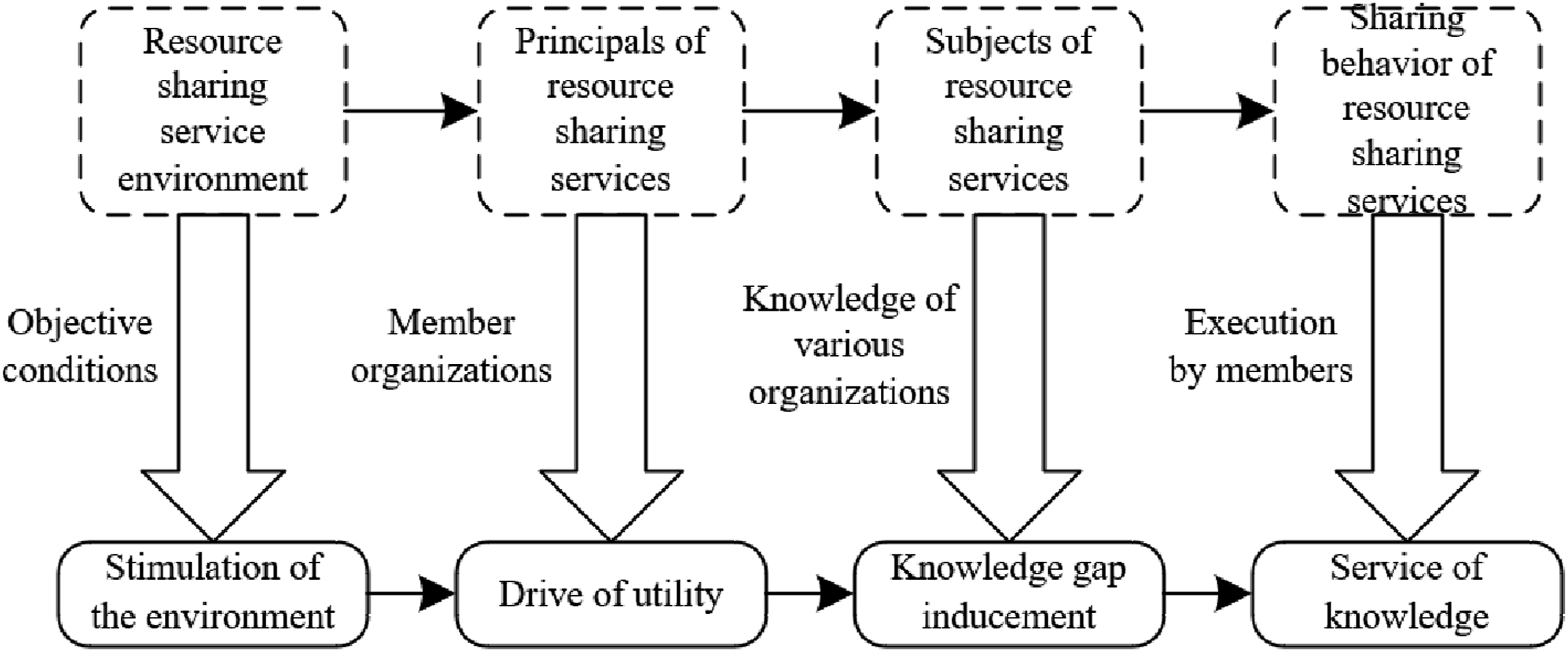
Resource storage
The storage of art education resources necessitates the handling of a vast amount of multimedia content, including but not limited to images, audio, videos, and complex interactive modules. To accommodate these diverse types of resources, art education resource sharing platforms based on cloud computing not only require the adoption of distributed storage solutions to meet the demands of high concurrency access and massive data storage but also need specifically designed metadata management systems to optimize the retrieval and invocation of resources. Compared to the complexity of knowledge storage on other types of sharing platforms, art education resource sharing platforms are more oriented towards efficient multimedia data management and the provision of stable data support, ensuring that users can quickly access high-quality art education resources.
Resource push
For cloud computing-based art education resource sharing platforms, resource push is a process characterized by precision and personalization. Through the analysis of users’ behavior patterns, preference settings, and their teaching or learning needs, intelligent algorithms are employed to filter the most suitable content from a vast array of resources and push them to users at appropriate times. This process, akin to the technology-driven and efficiency-oriented knowledge push on other types of sharing platforms, differs in its emphasis on content specificity and the cultural-artistic attributes, placing greater emphasis on enhancing user experience and teaching effectiveness.
Resource innovation
Innovation in the resources of the art education field is manifested not only in the exploration of new teaching methods and art forms but also includes stimulating users’ creative thinking and collaborative spirit through the resource sharing platform. Leveraging the powerful computing capabilities of cloud computing, the platform supports complex data analysis and model building, thereby providing personalized innovative path suggestions for users. Compared to other types of sharing platforms, art education resource sharing platforms focus more on improving the quality and breadth of art education, encouraging user participation in the innovation process, and collectively advancing the development of art education.
Platform resource demand modeling
Figure 2 presents the top-level structure model for art education resource sharing. In constructing a cloud computing-based platform for sharing art education resources, demand modeling is identified as a crucial step. This is attributed to the diverse and specific needs of stakeholders in art education, including educational institutions, artists, and students. Compared to other sharing platforms, an art education resource sharing platform places greater emphasis on the creativity of content, educational value, and the interactive experience of users. To ensure the platform effectively serves these unique demands and optimizes the categorization, storage, retrieval, and personalized recommendation of resources, demand modeling is utilized to identify and prioritize functional requirements. This involves employing appropriate analytical methods to process user feedback, engagement, and outcome data, thereby gaining insights into which functionalities are core and have the greatest impact on user satisfaction. Such modeling aids in focusing on functionalities that will have the most significant influence on the rate and efficiency of art education resource sharing from the initial design phase, while also reducing development complexity and costs, ensuring the platform’s healthy operation and long-term development. Top-level structure model of art education resource sharing.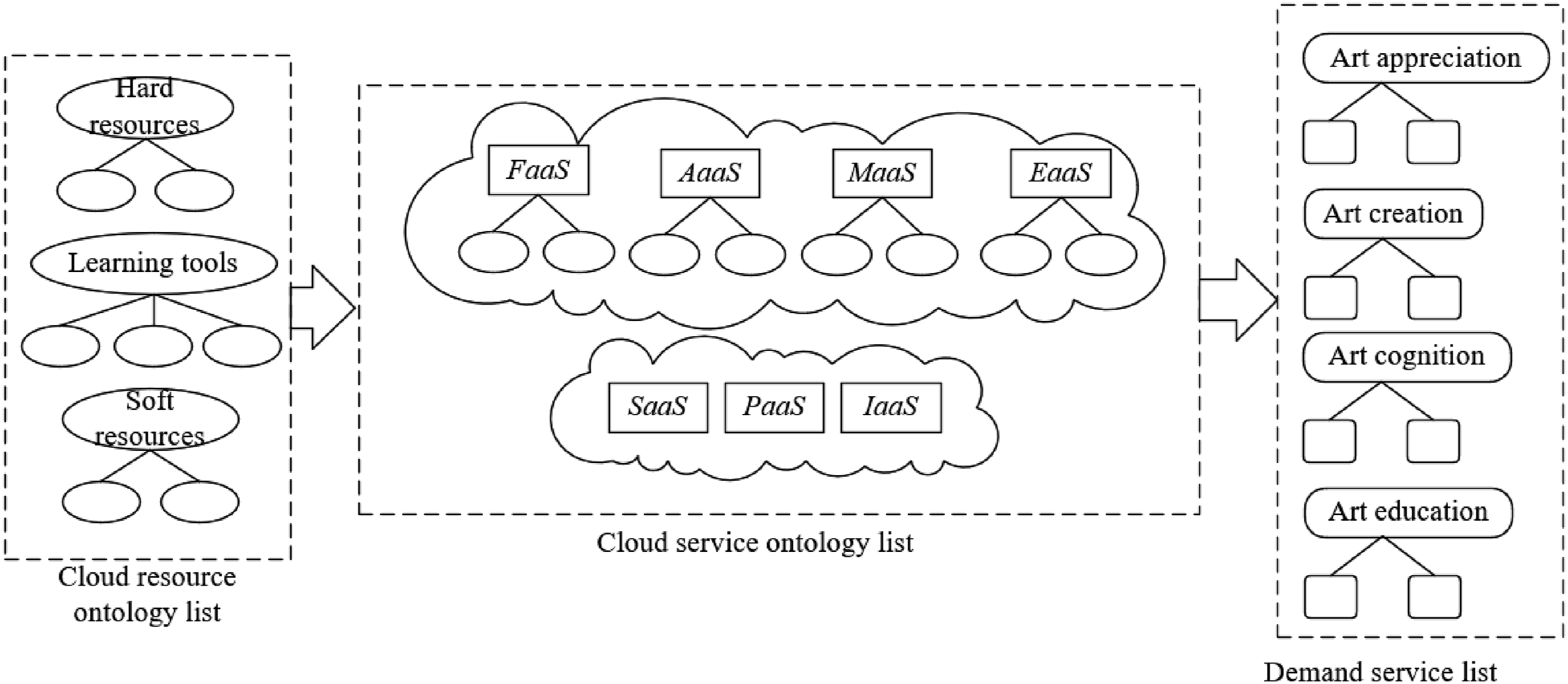
This study opts for regression analysis for demand modeling of the cloud computing-based art education resource sharing platform, due to the complexity of variables involved in the field of art education. These variables include, but are not limited to, the diversity of teaching content, personalization of creative expression, interactive display of artworks, and the subjectivity of user experience. Unlike the direct, technical demands of other forms of sharing, functional requirements for an art education resource sharing platform must place greater emphasis on users’ aesthetic experiences and educational outcomes. Through regression analysis, user behavior data and platform usage data can be quantitatively analyzed to identify functionalities that significantly enhance user satisfaction and educational outcomes. Figure 3 illustrates the art education resource data model. Art education resource data model.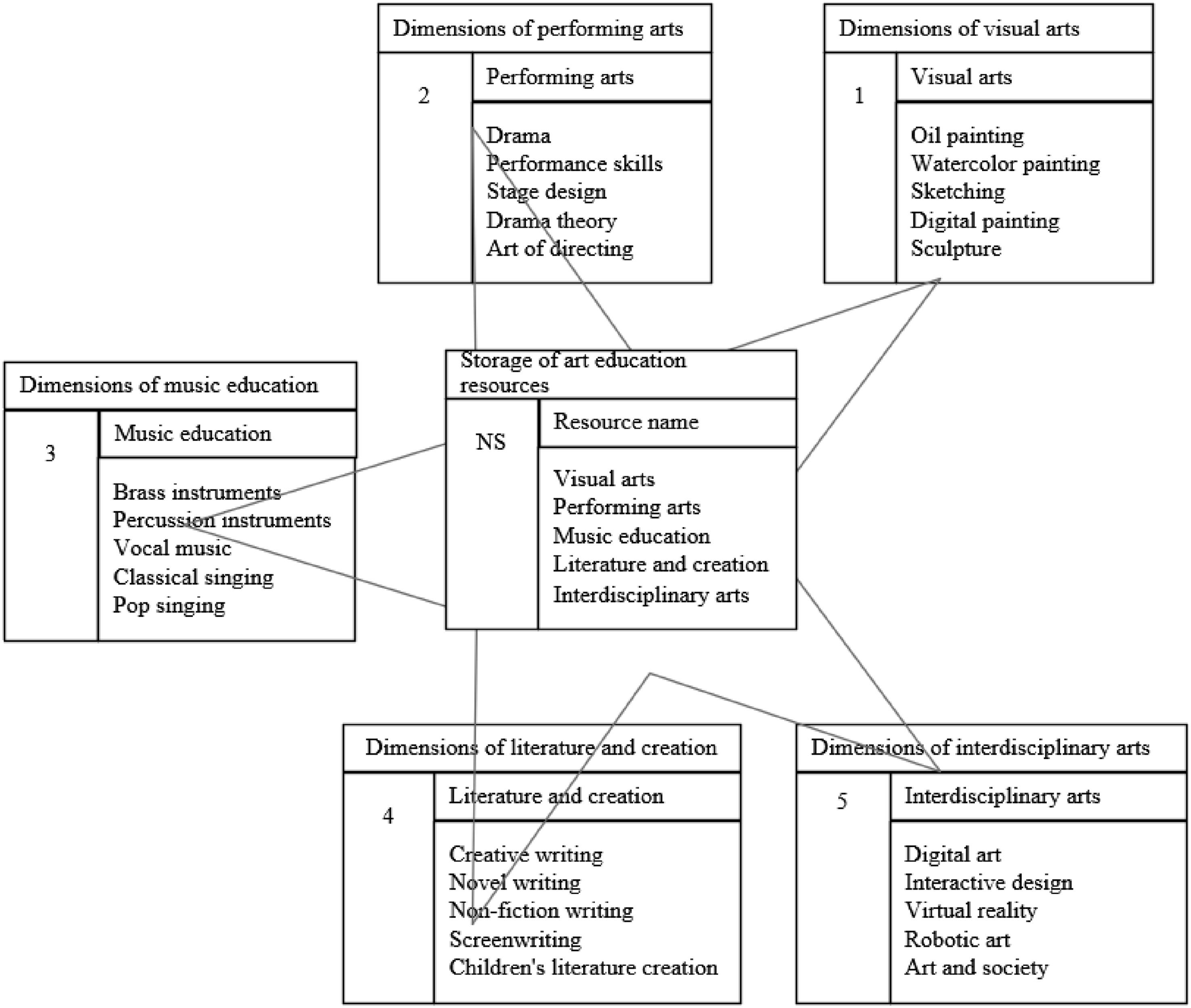
In the field of art education, functional items may include the display effects of multimedia art content, the convenience of interactive teaching tools, the accuracy of personalized recommendation algorithms, and the digital preservation quality of artworks, all of which are key factors influencing user satisfaction. These functional items are defined as independent variables a1, a2, …, a
l
, and by quantifying their effects, a predictive model can be established. Let the dependent variable b be the satisfaction, and through regression analysis, the impact of each functional item on user satisfaction, denoted as R (B|A), is estimated. Assuming this impact follows a linear relationship, thus forming the regression equation b = R (B|A) = d (a). Here, d (a) represents the regression of b on a, and b = d (a) is the regression equation of B on A. The principle of demand extraction involves determining d (a), necessitating the initial setting of B and d (a), where it is assumed that B follows a normal distribution F(B) = δ2. In this process, the correlation coefficient e evaluates the strength of the linear relationship between the functional items and satisfaction. Optimizing this model enables a deeper understanding of which functionalities are crucial for enhancing user satisfaction on an art education resource sharing platform, thereby guiding the platform’s design and improvement to meet specific needs within the field of art education and enhance overall educational outcomes. The expression for the correlation coefficient e is as follows:

First, the relationship between platform satisfaction b and various functions a1, a2, …, a
l
of the platform needs to be confirmed. Given the diversity of art education resources and the subjectivity of user experience, it is presumed that these functionalities are linearly related to satisfaction, as specifically reflected in the following equation:


After establishing the l-variate linear regression equation, the model’s overall effectiveness needs to be tested. The F-test is a method used to assess whether the independent variables a1, a2, …, a l in the model have a statistically significant explanatory power for the dependent variable b. If the F-test results indicate the model is effective, the impact of each independent variable on satisfaction can be further analyzed. By conducting an F-test on the model as a whole, we can determine whether the multivariate linear regression model effectively reflects the relationship between user satisfaction on the art education resource sharing platform and its various functions.
Specifically, this study first constructs a table of sums of squares and degrees of freedom, which is the first step in conducting the model’s F-test. This table decomposes the total sum of squares T
b
into the regression sum of squares TT
E
and the residual sum of squares TR
R
. Their relationship is given by the following equation:

The allocation of degrees of freedom is as follows: the total degrees of freedom (fd
b
) is v-1 (where v is the sample size), the regression degrees of freedom (fd
E
) is l (where l is the number of independent variables), and the residual degrees of freedom (fd
R
) is v-l-1. In addition, fd
b
is composed of fd
E
and fd
R
, with the relationship expressed as follows:

It is assumed that the total variation of the dependent variable b is represented by TT
b
= Σ(b-b-)2, the variation caused by the comprehensive linear impact of multiple independent variables on the dependent variable is represented by TT
E
= Σ(b^-b-)2, and the variation caused by other factors is represented by TT
R
= Σ(b-b^)2. With l representing the number of independent variables and v representing the actual number of data groups, the formulas for calculating each sum of squares are as follows:



The formulas for calculating each degree of freedom are as follows:



LT
E
can be viewed as the average amount of variation explained by the model per degree of freedom, while LT
R
is considered the average amount of variation per degree of freedom that the model fails to explain. Within the context of an art education resource sharing platform, the model’s overall goodness of fit can be assessed by comparing the magnitudes of LT
E
and LT
R
. A larger average amount of explained variation relative to the average amount of unexplained variation indicates that the model possesses better explanatory power.

The purpose of conducting an F-test is to examine whether the partial regression coefficients α
U
of all independent variables are simultaneously zero, indicating whether at least one independent variable significantly impacts the dependent variable b. This is achieved by calculating the F statistic, defined as F = LT
E
/LT
R
. If the calculated F-value exceeds the critical F-value (from the F distribution table), the null hypothesis (that all α
U
are simultaneously zero) is rejected, signifying that at least one independent variable significantly contributes to the model. In the context of an art education resource sharing platform, this implies that at least one cloud computing feature significantly enhances user satisfaction. Under the assumption that H holds, the following condition is illustrated:

When modeling the demand for a cloud computing-based art education resource sharing platform, the F-test is initially used to determine whether, as a whole, cloud computing functionalities have a significant linear impact on platform user satisfaction. Although the significance of the F-test indicates that at least one independent variable importantly affects the dependent variable, it does not specify which cloud computing features have a significant linear relationship with user satisfaction and which do not. To gain a deeper understanding of which specific cloud computing functionalities significantly influence user satisfaction on the art education resource sharing platform, a t-test on the partial regression coefficients of each independent variable is required. This test, by setting the null hypothesis H0: α U = 0 (indicating the ith independent variable has no significant effect on the dependent variable) and the alternative hypothesis H1: α U ≠0 (indicating the ith independent variable has a significant effect), determines whether each feature should be retained in the model.
It is hypothesized that the standard error of the partial regression coefficients is represented by T
yu
= Tb-12...l* (z
uu
)1/2, where the standard error of deviation from regression is given by Tb-12...l = [Σ (b-b^)2]1/2/v-l-1 = (LT
e
)1/2, and the principal diagonal elements of Z = X−1 are denoted by z
uu
:

In constructing the regression model for an art education resource sharing platform, emphasis may be more likely placed on factors such as tools for generating creative content, the aesthetic design of the interface, and the capability to handle multimedia materials. If the t-test results for certain functionalities are not significant, this indicates a lack of a strong connection between these functionalities and user satisfaction. Such functionalities might need to be excluded or re-evaluated to iteratively optimize the model. This process continues until the relationship between all functionalities retained in the model and user satisfaction is significant, ensuring the accuracy of demand modeling and the high quality of the user experience on the final platform.
In terms of model optimization, several factors, such as resource quality and teaching applicability, were incorporated into this study. Given the unique characteristics of art education scenarios, the design and optimization of the model consider the particularities of art education resources to ensure that the resource sharing platform is more suitable for art education practices. During the optimization process, adjustments may be made to the model’s parameter settings and algorithm selection to enhance the model’s accuracy and adaptability.
Mechanism for sharing art education resources based on matching theory in a cloud computing environment
Cloud computing platforms play a crucial role in the dissemination and innovation of cultural heritage. Through these platforms, art education resources can be more broadly disseminated and shared, facilitating communication and collaboration between different cultures. Additionally, cloud computing provides robust computational and storage capabilities that support innovative practices in art education, thereby advancing the development and progress of the field. In the cloud computing environment, the sharing of art education resources faces challenges related to resource allocation and optimization of utilization, particularly in efficiently matching limited teaching resources such as tutorials, courseware, and videos with a broad distribution of resource demanders such as students, teachers, and art enthusiasts. Unlike other types of resource sharing, art education resource sharing places a greater emphasis on the quality of content and its educational applicability, and its task offloading involves not only computational intensity but may also include demands for large-scale data storage and high-speed content transmission. To this end, this study models the art education resource sharing issue as a one-to-many game problem based on matching theory, aiming to explore an efficient mechanism for resource allocation. The main contributions of this research are (a) proposing a matching model for art education resource sharing applicable to the cloud computing environment, tailored to the characteristics of art education resources; (b) designing a distributed algorithm for dynamically pairing resources and demanders in a stable and effective manner. Figure 4 illustrates a resource-sharing cloud scenario that includes multiple resource providers and demanders. Resource-sharing cloud scenario including multiple resource providers and demanders.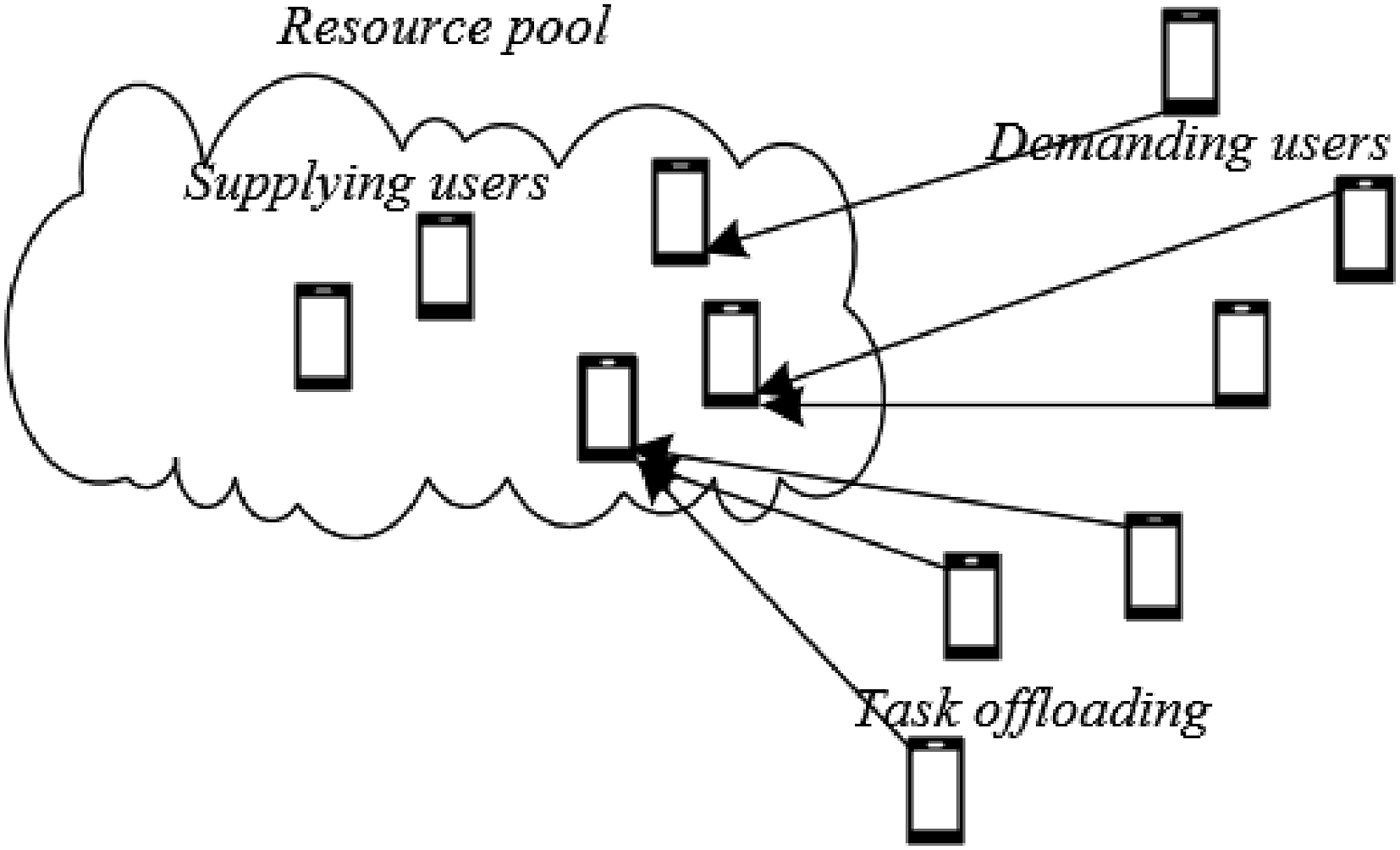
System model
In the cloud computing environment, the application scenario for sharing art education resources involves multiple demanders and providers. In this scenario, the demander group needs to offload educational content, teaching applications, and processing tasks to the capable provider group. To analyze deeply and generate valuable insights, this study also employs a quasi-static scenario, where, within a certain timeframe, it is assumed that the participating user group and resource providers remain stable. For art education resource sharing in a cloud computing environment, a system model has been established focusing on three core aspects: the utility of resource demanders, the cost to resource providers, and the maximization of the overall social utility of the art education cloud sharing. These three core aspects, respectively, ensure the speed and quality of resource acquisition, the cost of service operation and maintenance, and a comprehensive consideration of fairness, efficiency, and satisfaction in resource allocation. Therefore, this research focuses more on the educational value of resources, the stability of transmission, and the convenience of use, as well as how to optimize resource allocation through matching theory, achieving the best balance between educational quality and resource utilization efficiency. This provides a comprehensive and adaptable system model for cloud computing resource sharing in the art education environment.
Utility and cost model
Modeling from the perspective of resource demanders’ utility first necessitates defining the types of resources sought in the art education cloud, including computing power, storage space, and specific artistic content. The utility model must consider the acquisition time, cost, quality, and convenience of access to resources. For instance, students may prioritize the accessibility of resources and the quality of educational content, whereas researchers might focus more on the processing speed of computational tasks and data storage capabilities. After quantifying the impact of these factors on demanders' satisfaction, this study integrates them to form a multidimensional utility function. Assuming the utility level of resource demander u is represented by q
u
>0, the idle resource capacity of provider k is denoted by B
k
, and the social relationship strength between resource demander u and provider k is represented by β
k
u
, and the following utility function for resource demanders is defined:

For modeling the cost to resource providers, the key is to quantify the cost of providing resources and potential benefits. This includes direct operational costs such as electricity consumption, maintenance costs, and hardware depreciation, as well as indirect costs like the risk of service interruption and the probability of system overload. The cost model for resource providers needs to consider cost variations under different service levels and how to optimize resource allocation to reduce total costs. When resource provider k serves resource demander u, the computational cost is represented by z
k
u
(b
u
), the cost level of provider k is denoted by n
k
, and the amount of computing resources required by the demander to offload tasks is represented by β
u
j
= β
k
u
,b
u
, thus defined as follows:

When the price of a unit of computing resource is represented by o, the benefit generated by u providing services to k can be calculated through the following equation:

The average benefit per unit resource can then be calculated through the equation below:

Further derivation leads to the following expression:

Social utility
In terms of social utility within the art education cloud sharing context, the model necessitates balancing individual users’ needs with the optimization of overall resource allocation. The social utility function is typically a composite reflection of the utility of resource demanders and the cost to resource providers, with the goal of identifying a resource allocation strategy that maximizes societal welfare. This requires the model to consider not only the optimization issues of individuals but also the fairness, sustainability, and overall efficiency of resource distribution. The steps to construct the social utility model include establishing a global utility function that incorporates the utility and cost of all participants, and finding the resource allocation scheme that maximizes this function through an optimization algorithm. The function expression is as follows:

To meet the demands of resource demanders, the following two constraints can be further obtained:


Therefore, the ultimate goal of this study is the maximization of the overall social utility in the art education cloud sharing context, which is as follows:

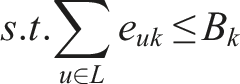

In addition to demand modeling based on regression analysis and the study of social utility, user experience design is crucial within the research. The design of the user interface and the interactivity of art education resource sharing platforms play a significant role in enhancing user satisfaction and improving platform usability. By collecting user feedback and integrating it with analyses of user behavior patterns, the user experience on the platforms can be continuously optimized to better meet users’ needs and expectations, thereby further enhancing the efficiency and effectiveness of resource sharing.
In cloud computing platforms, data security and privacy protection are of paramount importance. This study focuses on how to ensure the security and privacy of user data during storage, transmission, and processing. The adoption of encryption techniques and access management, along with the establishment of robust privacy policies and compliance mechanisms, are essential to prevent unauthorized access or misuse of user information. These aspects are critical in the development of cloud computing platforms and must be rigorously addressed.
Experimental results and analysis
The experimental results depicted in Figure 5 demonstrate that the user satisfaction of the art education resource sharing platform has improved in the majority of cases after adopting a modeling approach based on regression analysis. The data reveal that prior to modeling, the satisfaction was distributed between 0.22 and 0.96, with several demands exhibiting satisfaction below 0.5, indicating significant room for improvement. After modeling, the minimum satisfaction increased to 0.34, and the satisfaction for most demands rose, particularly for demands 1, 2, 7, 9, 10, 13, 19, and 30, where the improvement was notably pronounced. For instance, the satisfaction for demand 1 increased from 0.64 to 0.73, and for demand 19 from 0.96 to 0.98, showing that user needs were better met after modeling. The analysis concludes that regression analysis helped clarify the relationship between user needs and satisfaction, enabling the resource sharing platform to adjust and optimize its services more precisely to meet user needs. Especially for those demands where satisfaction significantly increased, this indicates the method’s strong capability in identifying key needs and implementing targeted improvements. Furthermore, the general increase in satisfaction after modeling indicates that this approach has positively impacted the overall service quality of the platform. User satisfaction with resource sharing considering user needs.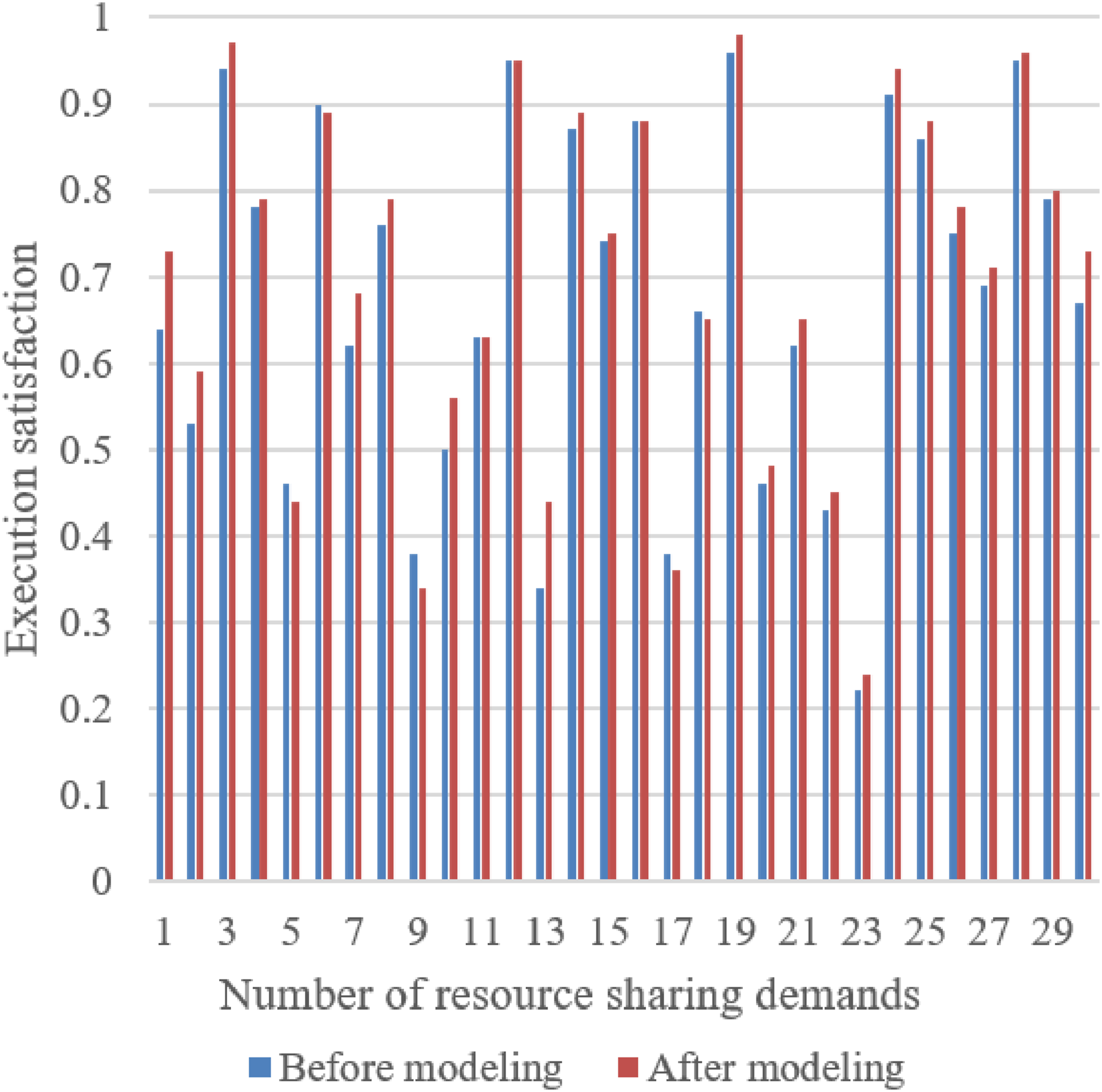
The experimental results depicted in Figure 6 illustrate the varying trends and characteristics in the resource sharing rate over time across different resource sharing modules. Module 1 focuses on the fairness of resource allocation, Module 2 on the efficiency of resource allocation, and Module 3 on the satisfaction of resource allocation. It can be observed from the figure that Module 1 experiences significant fluctuations throughout the time series, starting at 0 and gradually increasing to near or above 0.9, followed by fluctuations, reflecting the dynamic adjustments in resource allocation fairness and changes in user needs. Module 2, in contrast, presents a distinctly different trend, with the resource sharing rate rapidly reaching 1 at the start and maintaining this level throughout the time series, indicating that resource allocation efficiency is quickly optimized to the best state and sustained. For Module 3, the resource sharing rate also demonstrates high stability, remaining above 0.94 for the most part and even reaching 1 on multiple occasions, reflecting a high level and stability of resource allocation satisfaction. Resource sharing rates across different resource sharing modules.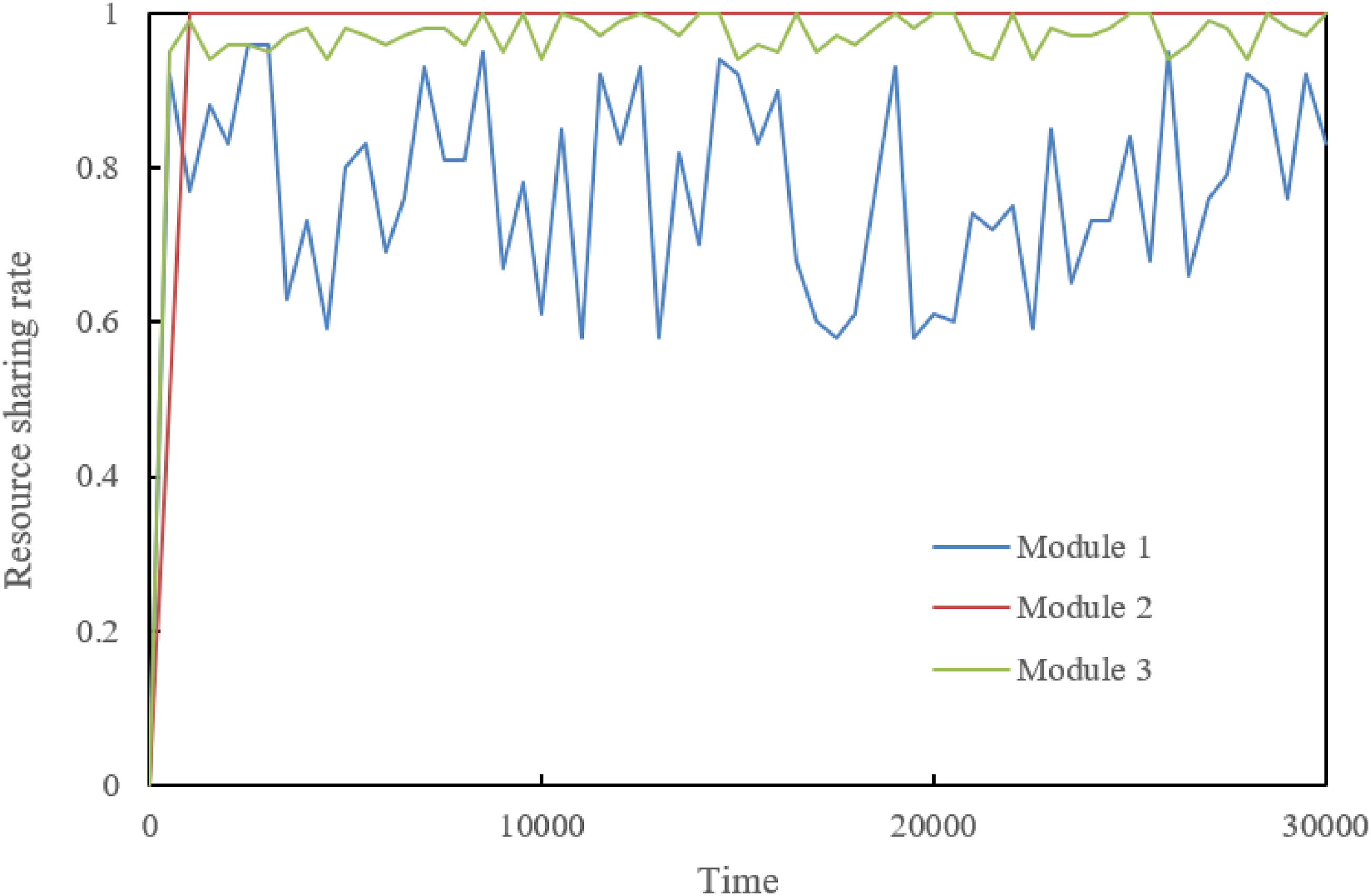
The data from Figure 7 show that the resource sharing rate for Module 1 exhibits significant fluctuations but with an overall upward trend. This reflects the art education resource sharing platform’s continuous adjustments in resource allocation over time to meet users’ needs and achieve fairness. The fluctuations in the sharing rate may be attributed to the platform’s attempts to satisfy the dynamic demands of different users, thus effectively balancing the fairness of resource allocation. Especially in the later stages, the resource sharing rate often exceeds 0.9, indicating a significant improvement in the fairness of resource allocation through strategy adjustments. The data for Module 2 demonstrate a rapid increase in the resource sharing rate to 1 in the initial stages, followed by fluctuations but maintaining a high level overall. This suggests that after rapid optimization in the early stages, resource allocation efficiency has entered a relatively stable state of high-efficiency operation. Meanwhile, the resource sharing rate for Module 3 not only fluctuates considerably throughout the time series but also reaches highs of above 0.9, indicating that despite fluctuations in user satisfaction due to various factors, the platform can still meet user needs to a certain extent and achieve high satisfaction. Resource sharing rates by module proportions.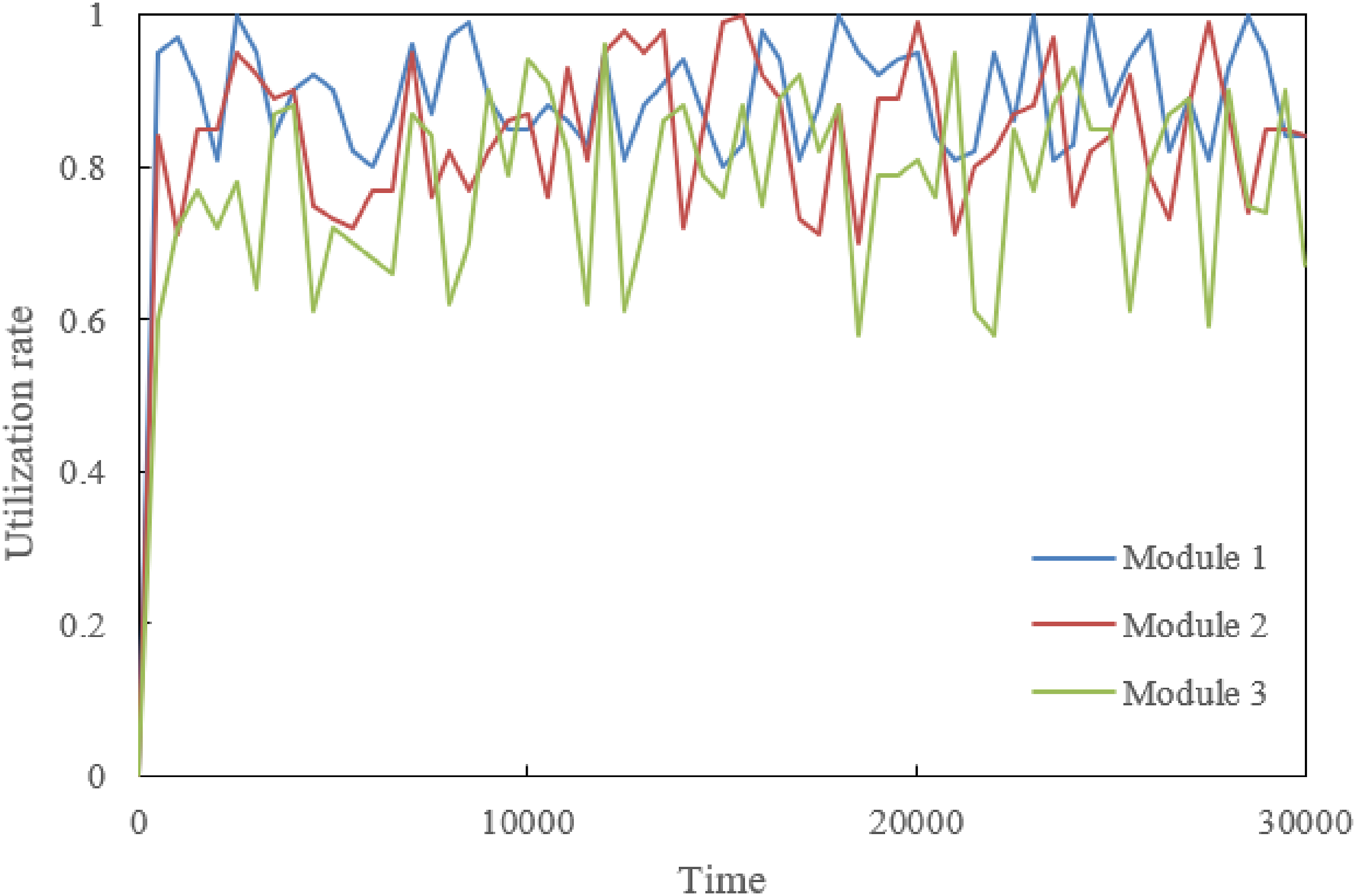
Comparing the resource sharing rate data of the three modules, it can be concluded that the art education resource sharing platform’s demand modeling method based on regression analysis can effectively guide resource allocation strategies. In Module 1, regression analysis aids the platform in dynamically adjusting the fairness of resource allocation, allowing for optimization according to changes in user demands. The sustained high efficiency in Module 2 indicates that the regression model can predict and adjust strategies to achieve optimal resource allocation efficiency, ensuring the efficient use of resources. Although Module 3 is influenced by fluctuations in satisfaction, overall, it still manages to adjust resource allocation through regression analysis to enhance user satisfaction.
Based on the data provided in Figure 8, it is observed that as the number of resource demanders increases, the social utility of both methods shows an upward trend. However, the method proposed in this study consistently yields slightly higher social utility values at each level of demander quantity than the multi-tenant architecture mechanism. For instance, with two resource demanders, the social utility of the method presented here is 18, while that of the multi-tenant architecture mechanism is 16; when the number of resource demanders increases to six, the social utility of the proposed method and the multi-tenant architecture mechanism reach 54 and 52.5, respectively. A similar pattern is also evident in the comparison of social utility concerning the number of resource providers, where the method proposed in this study maintains a slight lead or parity compared to the multi-tenant architecture mechanism as the number of providers increases from two to six, demonstrating a more stable upward trend. These results indicate that as the number of participants increases, the method proposed in this study can enhance social utility more effectively. Comparative social utility of two methods as the number of resource demanders and providers changes.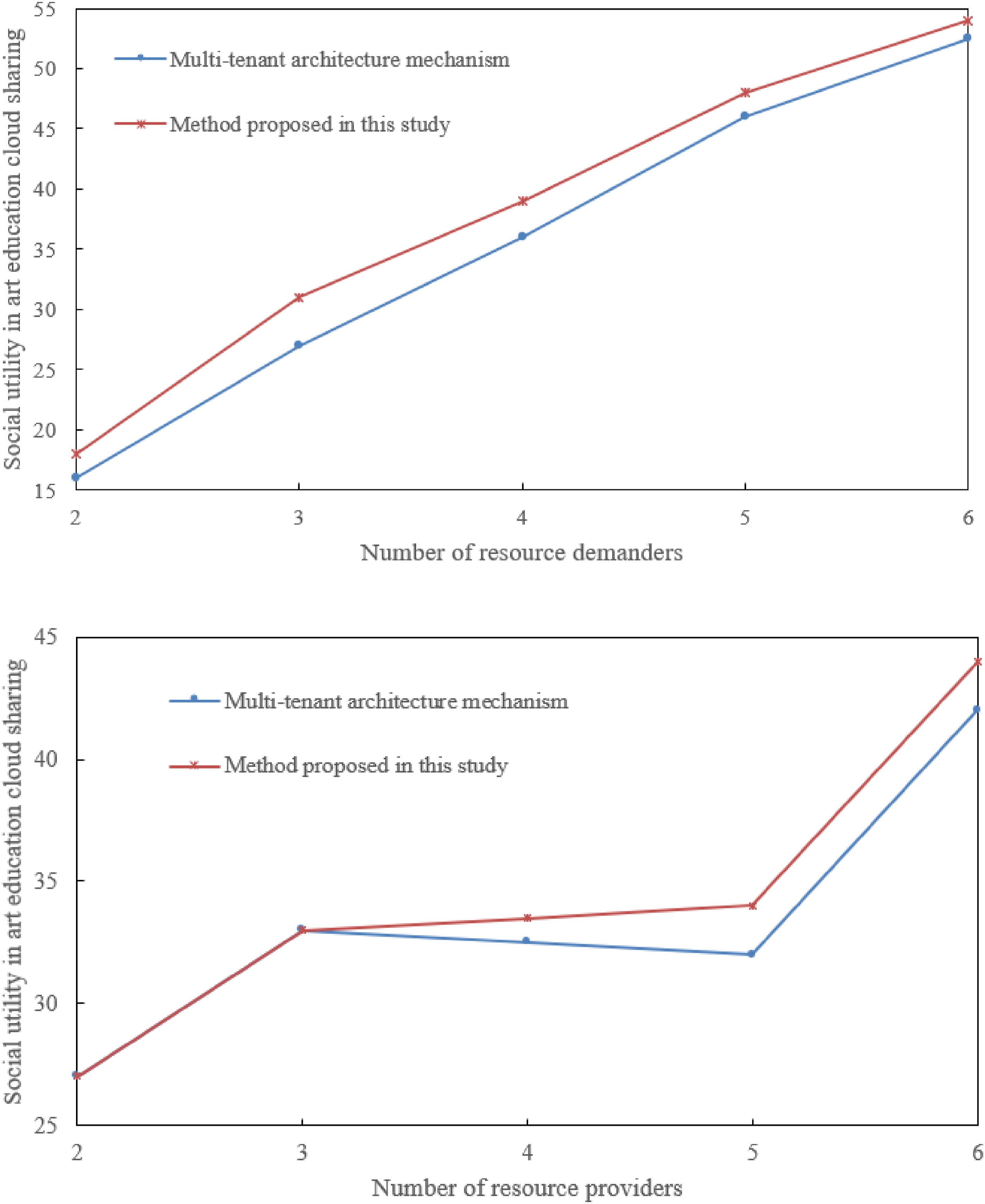
From the data provided in Figure 9, it can be observed that as the number of resource demanders increases, the number of iterations required by the multi-tenant architecture mechanism shows exponential growth. For example, the iteration count grows from 0 to 4000 as the number of demanders increases from 2 to 6. In contrast, the iteration count for the method proposed in this study exhibits a linear trend, with the count only increasing from 0 to 200 as the number of demanders grows from 2 to 6. Similarly, on the resource provider side, the iteration count for the multi-tenant architecture mechanism also shows a higher rate of increase, growing from 0 to 1300, while the growth for the method proposed in this study is more gradual, increasing from 0 to 200. This indicates that the method proposed in this study requires fewer iterations to handle increasing numbers of resource demanders and providers, thus offering a clear advantage in computational efficiency compared to the multi-tenant architecture mechanism. Comparison of iteration counts between two methods as the number of resource demanders and providers changes.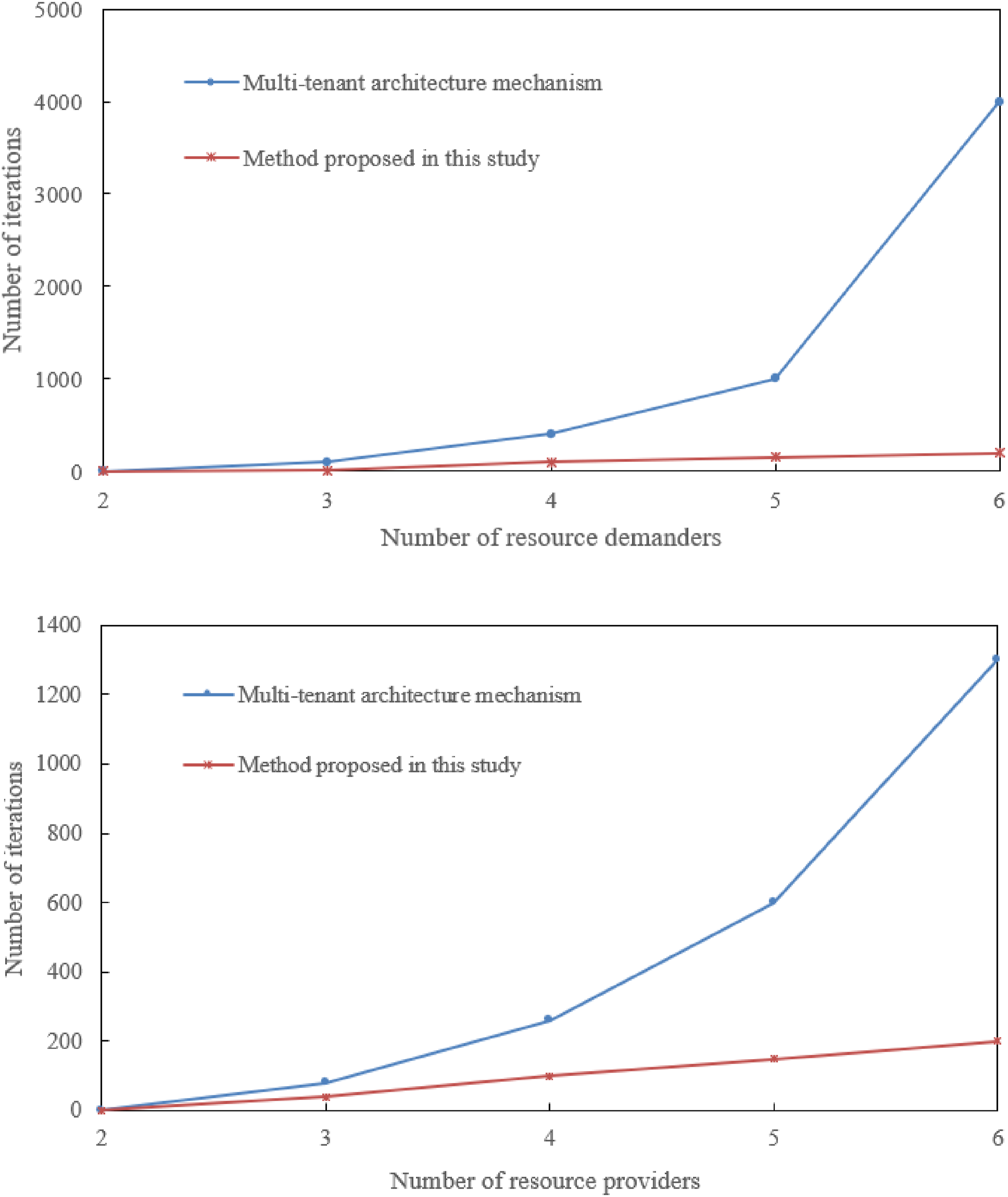
Based on the data presented in Figure 10, a comparative analysis of social utility changes under different social relationship scopes for the two mechanisms is conducted. Within the (0.7, 0.9) social relationship range, as the number of resource demanders increases, the social utility of the method proposed in this study grows from 44 to 120, whereas the social utility of the multi-tenant architecture mechanism increases from 42 to 110. Although the social utility of both mechanisms rises with an increase in the number of resource demanders, the method proposed here consistently exceeds the multi-tenant architecture mechanism at each data point, exhibiting superior social utility. Within the (0.5, 0.7) range, the growth trend of the method proposed in this study from 16 to 22 also displays linear growth, while the social utility of the multi-tenant architecture mechanism decreases at certain points, indicating the robustness of the proposed method even in lower social relationship ranges. For resource providers within the (0.7, 0.9) social relationship range, the social utility of the proposed method increases from 85 to 91, whereas the multi-tenant architecture mechanism shows a more gradual growth trend, from 83 to 86. In the (0.5, 0.7) range, the proposed method also exhibits stable growth, from 30 to 36, compared to the multi-tenant architecture mechanism’s increase from 28 to 32, once again demonstrating better social utility performance. Trend of social utility as the number of resource demanders and providers changes.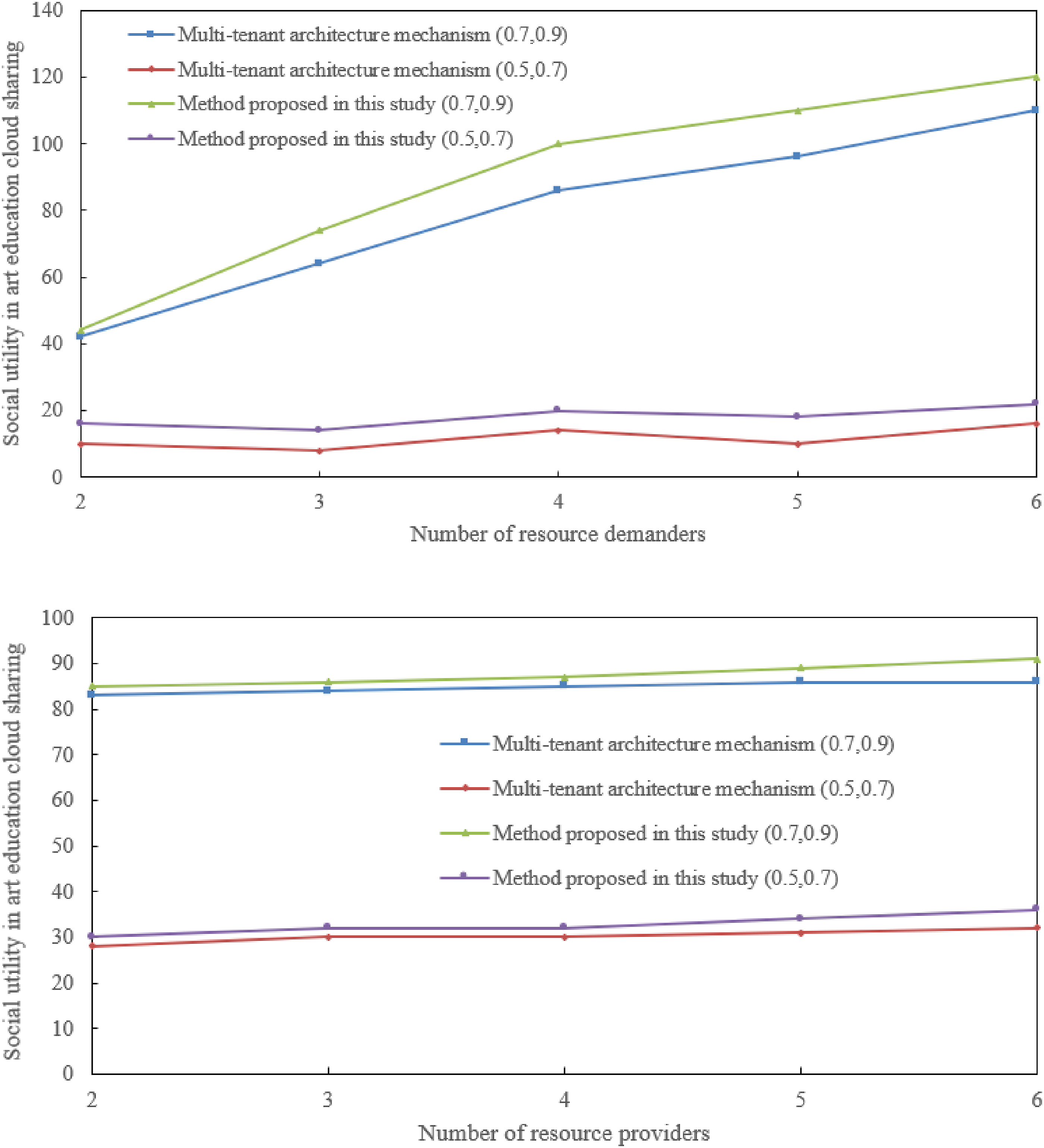
The comparison with other models primarily revolves around those related to art education resource sharing. The models selected for this study are representative and have been widely applied in relevant fields. By comparing experimental results, the advantages and shortcomings of the model proposed in this study relative to others were assessed, further validating the effectiveness and practicality of the proposed method.
These experimental data reveal that the art education resource sharing mechanism based on matching theory proposed in this study not only shows better results in social utility compared to the multi-tenant architecture mechanism but also features a more stable and predictable growth trend, especially within lower social relationship ranges. Even within the tighter social relationship range of (0.7, 0.9), the proposed method maintains its advantage. This stability and higher social utility reflect the proposed method’s optimization capability in matching resource demanders and providers. It enhances the overall resource utilization by accurately pairing demand with supply, reducing unnecessary resource wastage, and thereby enhancing the user experience. Consequently, these results support the effectiveness of the proposed method in optimizing art education resource sharing in a cloud computing environment, proving its practical value in improving resource matching efficiency and social utility.
In the practical application of the model within art education resource sharing platforms or systems, its effectiveness was evaluated through field trials or simulation operations. Combined with case study analyses, the application effects of the model in various scenarios were explored, thereby enhancing the understanding of its advantages and limitations in practical use.
Conclusion
This study primarily explores the mechanism of art education resource sharing within a cloud computing environment based on matching theory. Initially, through a demand modeling method grounded in regression analysis, the needs and behavioral patterns of art education users were accurately captured and analyzed, providing a scientific basis for the design and optimization of the resource sharing platform. This process not only enhanced the understanding of user behavior but also increased the precision of resource allocation. Furthermore, the study examined social utility, focusing on user demand-based resource sharing satisfaction and the resource sharing rate as core indicators, conducting an empirical analysis of the differences in utility between the proposed method and traditional multi-tenant architecture mechanisms. Through comparing the number of iterations, the efficiency of the proposed method in the resource matching process was demonstrated.
The findings indicate that the mechanism proposed in this study surpasses or is at least equivalent to traditional multi-tenant architecture mechanisms in aspects such as resource sharing satisfaction, the rate of resource sharing, and social utility. Especially when considering changes in the numbers of resource demanders and providers, the proposed method displayed higher social utility and more stable performance. Moreover, compared to multi-tenant architecture mechanisms, the proposed method typically requires fewer iterations to achieve optimal matching, demonstrating its computational efficiency advantage.
However, the limitations of this study should also be acknowledged. For instance, the empirical analysis might be limited to specific datasets and environmental settings, while real-world user behavior and demands could be more complex and variable. Additionally, the applicability and scalability of the proposed method in different application scenarios and scale effects require further exploration and validation. Future research directions could include (a) extending and deepening the understanding of user behavior patterns and needs, applying more complex models to capture diverse user characteristics; (b) testing and validating the effectiveness of the proposed method in a broader range of application scenarios to ensure its wide applicability.
Statements and declarations
Footnotes
Conflicting interests
The author declared no potential conflicts of interest with respect to the research, authorship, and/or publication of this article.
Funding
The author received no financial support for the research, authorship, and/or publication of this article.