



Abstract
This article describes results of a systematic review of social marketing physical activity interventions targeting adults 60 years and over. Thirty-four articles covering seven social marketing interventions were identified following systematic literature review procedures. None of the identified interventions gave evidence that they addressed all six social marketing benchmark criteria; three interventions addressed five social marketing benchmark criteria and a further three interventions addressed four social marketing benchmark criteria. Four interventions reported positive behavior change, and no negative behavioral changes were reported among all seven social marketing interventions. Previous research shows that social marketing interventions employing all six benchmark criteria offer greater potential to change behaviors, yet none of the interventions in this review used all of the benchmark criteria. Audience segmentation and exchange were used by only three interventions.
Introduction
Physical inactivity among an increasingly aging population is a key concern in research focused on health and aging. A lack of physical activity is the main cause of chronic diseases such as cardiovascular diseases, cancer, and diabetes, and problems associated with physical inactivity contribute to the death of 3.2 million people each year (Dumith, Hallal, Reis, & Kohl, 2011; World Health Organization [WHO], 2015a). Globally, one in four adults are insufficiently active (WHO, 2015b), and overwhelming evidence points toward a decline in physical activity with age for all (Sallis, 2000) and in particular among seniors (Sun, Norman, & While, 2013; Milanović et al., 2013). Despite the remarkable improvements in life expectancy, the levels of chronic health conditions are increasing, while the level of physical activity among seniors is decreasing, especially in industrialized countries (Taylor, 2013). Further compounding the present scenario is the elderly population who are over 60 is predicted to increase globally to 2 billion in 2050 (WHO, 2015c). Many of the chronic conditions plaguing aging populations are preventable through regular physical activity. Yet, seniors represent the most sedentary segment of the adult population, and in many countries, 30–80% of people belonging to this group are physically inactive (Van der Bij, Laurant, & Wensing, 2002; King, Rejeski, & Buchner, 1998). Increasing physical activity levels has been suggested as key to improving health in a globally aging population (Taylor, 2013; Paterson, Jones, & Rice, 2007). Identification of characteristics of effective physical activity interventions is first needed as an important platform to understand how to design effective interventions to target this population.
One behavioral change approach that can be used to increase physical activity among targeted populations is social marketing (Stead, Gordon, Angus, & McDermott, 2007). Social marketing applies commercial marketing concepts and techniques to achieve voluntary behavior change for a social good (Kotler & Zaltman, 1971). Social marketing has been used to combat a wide range of public health issues and advocate positive behavioral change including increase in physical activity levels (Stead et al., 2007) and reduction in the use of alcohol, tobacco, and illicit drugs (Kubacki, Rundle-Thiele, Pang, & Buyucek, 2015; Eagle, Dahl, Hill, Spotwood, & Tapp, 2013; Stead et al., 2007). Social marketing has also been employed to target different groups within society, for example, children aged between 3 and 5 years (Bellows, Davies, Anderson, & Kennedy, 2013; Johnson, Bellows, Beckstrom, & Anderson, 2007), undergraduate students (Thompson, Heley, Oster-Aaland, Stastny, & Crawford, 2013), young married couples (Purdy, 2011), and 20–54 years old adults (Maitland, Rosenburg, Shilton, Bauman, Giles-Corti, Henley, & Barnes, 2010). In the case of physical activity, differing age-groups present a unique set of challenges when designing social marketing interventions due to diverse physical activity recommendations (WHO, 2015b) for children, teenagers, and people over the age of 60. There are a growing number of social marketing interventions targeting children (e.g., Huhman, Bauman, & Bowles, 2008; Swinburn et al., 2011) and seniors (Russell & Oakland, 2007). While a systematic review of social marketing interventions targeting children to increase physical activity is available (Kubacki, Rundle-Thiele, Lahtinen, & Parkinson, 2015), to date evidence for social marketing interventions targeting seniors to become more physically active has not been synthesized. This article responds to this gap and aims to provide a systematic review of social marketing physical activity interventions targeting adults aged 60 years and over.
Method
Search Strategy
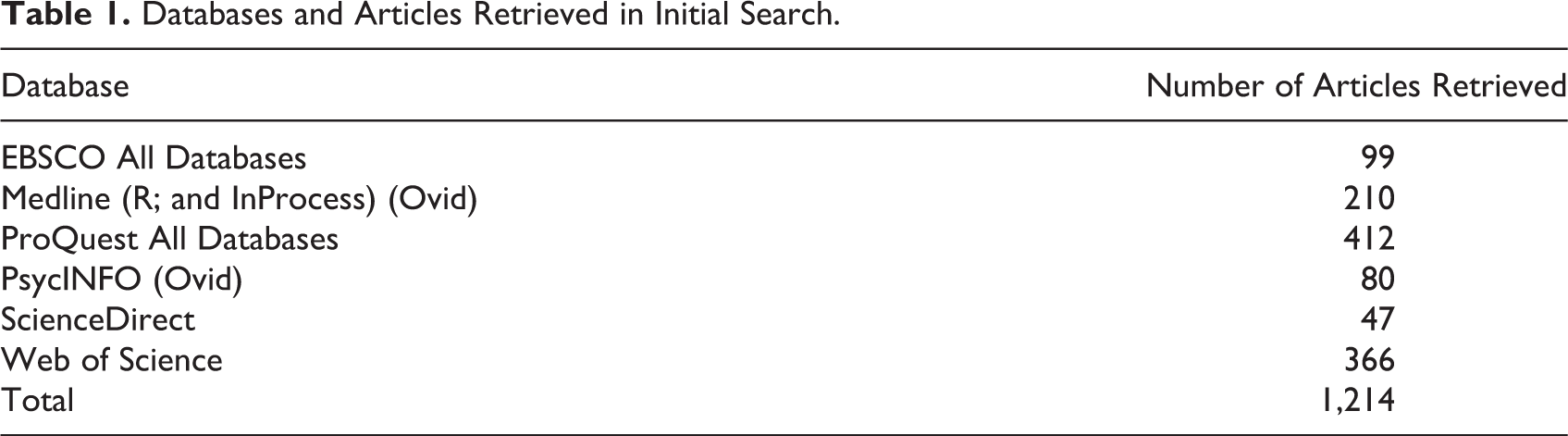
Following the systematic literature review procedures outlined in Carins and Rundle-Thiele (2014), a search was conducted to identify social marketing interventions published in peer-reviewed journals before January 2015, which aim to increase physical activity among adults aged 60 years and over. As there is no universally accepted age to define seniors, the United Nations’ cutoff of 60 years old was used (WHO, 2015d). Six databases (Table 1) were searched to identify 1,214 sources using the following terms: physical+activit* or exercis* AND intervention* or Randomi#ed Controlled Trial or evaluation or trial or campaign* or program* or study or studies AND social marketing. The use of # in database searches indicates that both British (s) and American (z) versions are included, and therefore no articles are missed due to spelling differences, while the use of * allows for singular or plural word forms to be identified. The variance of records between databases can be attributed to the size and the specializations of each database and how closely they relate to the search terms. ProQuest, for example, is made up of 20 databases.
Databases and Articles Retrieved in Initial Search.
Inclusion and Exclusion Criteria
All downloaded records were collated using Endnote X7.1. As multiple databases include the same journals, duplicate records had to be removed, reducing the number of unique articles to 477. Next, unqualified records including newspaper articles and conference papers were removed. Titles and abstracts were then reviewed and records were excluded as follows: formative research, papers not identifying as social marketing, review/conceptual papers, interventions targeting children and adults under the age of 60 only, and interventions not targeting physical activity.
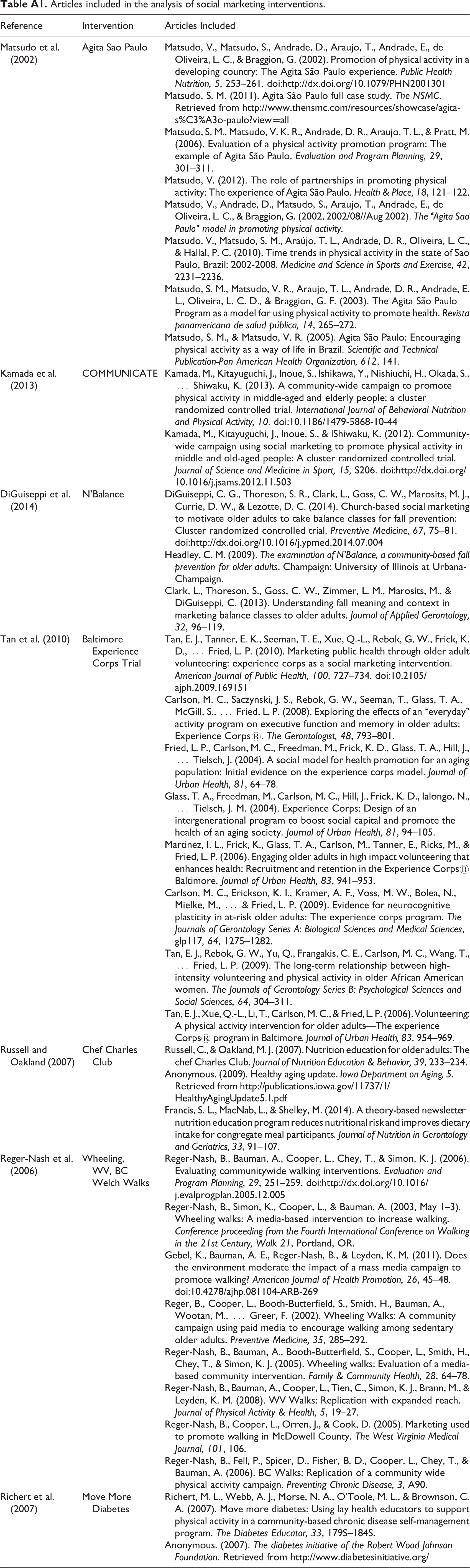
A total of 12 articles remained following the application of exclusion criteria. The remaining 12 articles included evaluations of social marketing interventions that aimed to increase physical activity among people aged 60 years and over. Backward and forward searching using authors’ names and websites, intervention names, Google Scholar, “Publish or Perish,” university library, and reference lists was next completed. A total of 22 new articles providing additional information about the identified interventions were uncovered in backward and forward searching. In total, 34 articles were included in the analysis covering seven social marketing interventions. Figure 1 summarizes the literature search process, and the full list of 34 papers for each social marketing intervention can be found in Appendix. Consistent with the procedures outlined in Carins and Rundle-Thiele (2014), all interventions included in this article self-identified as social marketing interventions.
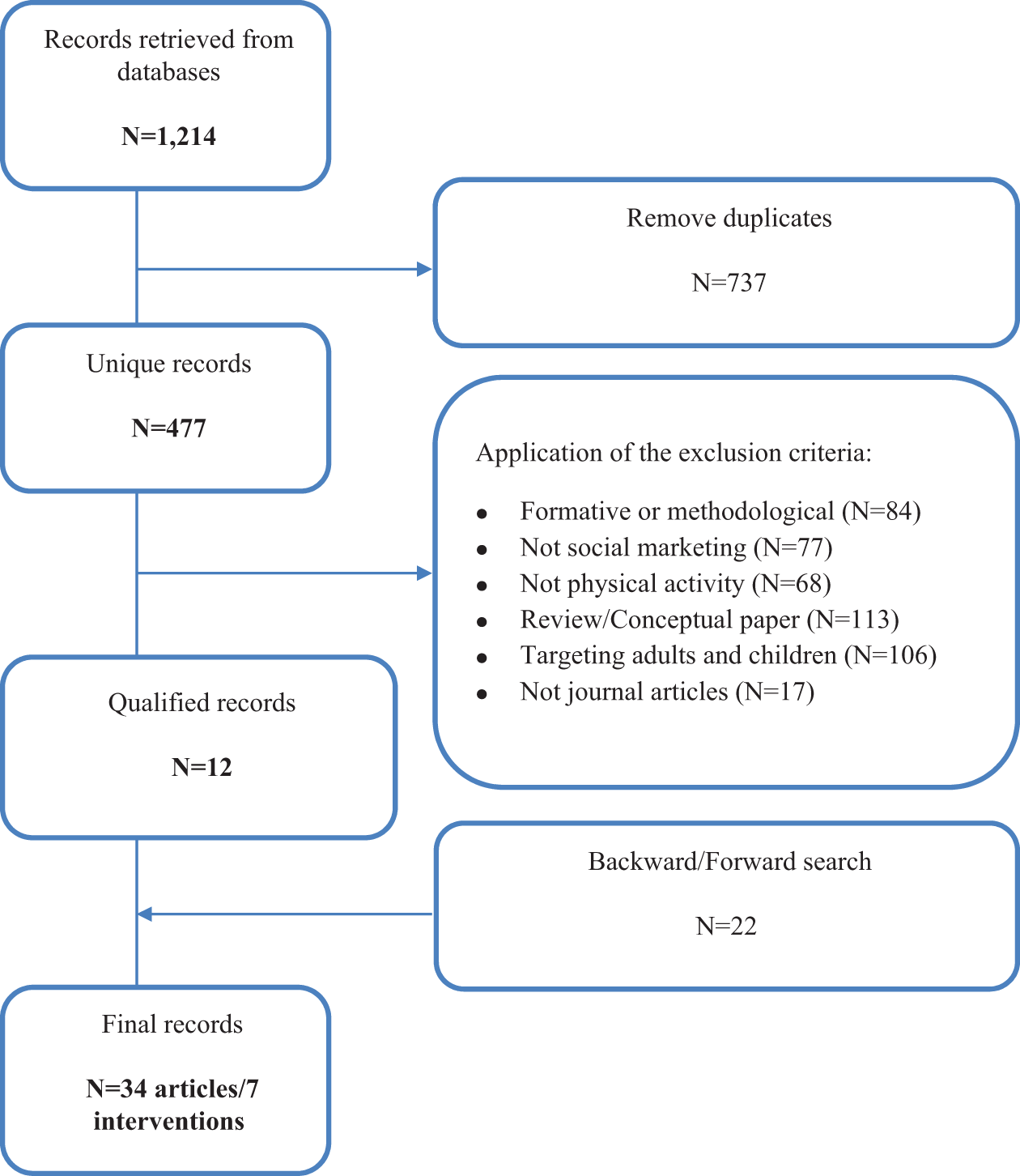
Flowchart of the literature search process.
Data Extraction
Previous reviews of social marketing interventions have adopted Andreasen's benchmark criteria as a framework to classify interventions (see Carins & Rundle-Thiele, 2014; Kubacki, Rundle-Thiele, Pang, et al., 2015; Kubacki, Rundle-Thiele, Lahtinen, et al., 2015; Stead et al., 2007). Alternative social marketing criteria have been introduced by Lefebvre and Flora (1988), French and Blair-Stevens (2006), and Robinson-Maynard, Meaton, and Lowry (2013), however, they do not offer mutually exclusive criteria for categorization purposes (Kubacki, Rundle-Thiele, Pang, et al., 2015). Selected articles were analyzed to identify potential evidence of each of Andreasen's (2002) six social marketing benchmark criteria: the aim to change behaviors (and factors known to influence behavior change in the longer term), distinct formative research to inform the intervention, market segmentation to identify homogenous groups within heterogeneous populations, clearly identified exchange, the use of marketing mix, and consideration of competition reported. Further analysis was also completed to identify all intervention outcomes and results reported in the articles. All identified relevant excerpts were reviewed by four social marketing researchers.
Review
Each intervention was analyzed to determine its target audience(s) (see Table 2) and the outcomes. The main goal of social marketing is behavior change (Coffman, 2002). Although all identified social marketing interventions included adults who are over 60 years old within their target audience, they were carried out across a more diverse range of contexts and often included different outcome measures. We were hence unable to follow standard meta-analytical procedures and focused on identifying whether positive, negative, or no effects were observed, without attempting to determine the effect sizes. Four interventions (see Table 2) reported positive behavioral outcomes (Matsudo et al., 2002; Reger-Nash, Bauman, Cooper, Chey, & Simon, 2006; Russell & Oakland, 2007; Tan et al., 2010). Three of those interventions reported an increase in physical activity, for example, an increased frequency of walking (Tan et al., 2010; see Table 2). No negative behavioral changes were reported for the seven social marketing interventions.
Assessment of the Use of Andreasen's Social Marketing Benchmark Criteria (SMBC) in Social Marketing Interventions.
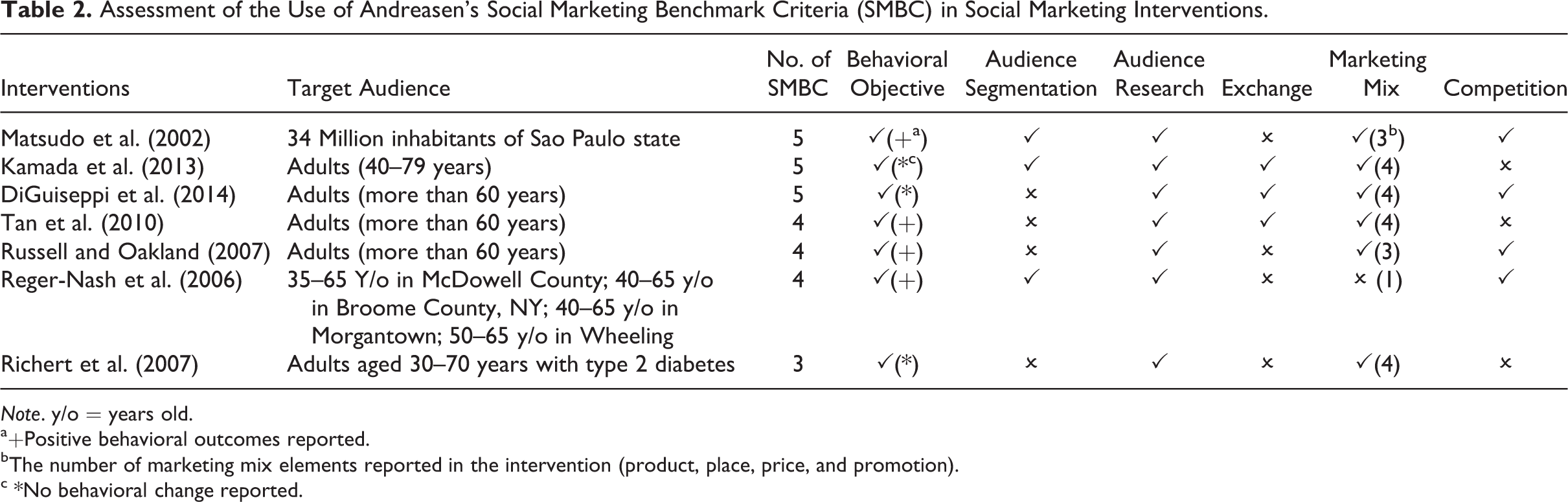
Note. y/o = years old.
a+Positive behavioral outcomes reported. bThe number of marketing mix elements reported in the intervention (product, place, price, and promotion). c *No behavioral change reported.
Andreasen's (2002) Benchmark Criteria
Table 2 presents the assessment of each of the seven social marketing interventions against Andreasen's (2002) six social marketing benchmark criteria. None of the interventions gave evidence that they addressed all six benchmark criteria. Three interventions (DiGuiseppi et al., 2014; Kamada et al., 2013; Matsudo et al., 2002) addressed five social marketing benchmark criteria, and a further three interventions (Reger-Nash et al., 2006; Russell & Oakland, 2007; Tan et al., 2010) provided clear evidence of the use of four social marketing benchmark criteria. One intervention reported the use of three benchmark criteria (Richert, Webb, Morse, O’Toole, & Brownson, 2007). The number of social marketing benchmark criteria within each intervention observed in the current review exceeds the levels observed in Kubacki, Rundle-Thiele, Pang, and Buyucek (2015) and Kubacki, Rundle-Thiele, Lahtinen, and Parkinson (2015), suggesting more complete use of social marketing benchmark criteria in social marketing interventions targeting seniors. Among the interventions, the two most common benchmark criteria that were lacking were audience segmentation and exchange. Consistent with the previous literature reviews (Carins & Rundle-Thiele, 2014; Kubacki, Rundle-Thiele, Pang, et al., 2015; Kubacki, Rundle-Thiele, Lahtinen, et al., 2015), if evidence of at least two of the marketing mix elements (product, place, price, or promotion) was reported in an intervention, the intervention was classified as using a marketing mix.
Behavioral objective
Behavior change can be found in all social marketing benchmark criteria frameworks (Andreasen, 2002; French & Blair-Stevens, 2006), and it is fundamental to evaluating intervention success. French and Blair-Stevens (2006) stated that social marketing must have “a clear focus on behaviour, based on a strong behavioural analysis, with specific behaviour goals” (p. 1). All interventions analyzed for this article stated a specific behavioral aim for their intervention, and four of seven interventions which aimed to change behavior achieved at least some positive behavioral outcomes (Table 2). As suggested by the benchmark criteria, all of the interventions did target specific behaviors, for example, Matsudo et al. (2002), Russell and Oakland (2007), and Reger-Nash, Bauman, Cooper, Chey, and Simon (2006), all aimed to promote at least 30 min of daily moderate physical activity.
Segmentation
Careful segmentation of target audiences is necessary to identify homogenous groups within a heterogeneous population (Evers, Jones, Caputi, & Iverson, 2013). Theoretically, application of a full segmentation process can “ensure maximum efficiency and effectiveness in the use of scarce resources” (Andreasen, 2002, p. 104). Segmentation is based on the principle understanding that populations are typically heterogeneous and that groups with similar needs and wants can be identified. Segmentation can be based on one or more of demographic, psychographic, geographic, behavioral, and epidemiological factors.
In this review, only 1 intervention reported the use of segmentation within a senior audience (Kamada et al., 2013). Kamada et al. (2013) targeted two segments of women 60–79 years of age, offering different types of physical activities adapted to the needs and abilities of each group. The first segment consisted of women who had an interest in but were either not engaged in or insufficiently engaged in regular walking behavior and who had low back or knee pain, and the second segment was comprised of women who engaged in flexibility and/or muscle-strengthening activities, either occasionally or daily, and who had low back or knee pain.
One intervention targeted seniors as one group within a larger population study (among several other segments). The intervention reported in Matsudo et al. (2002) was a multilevel, community-wide intervention aimed at all inhabitants of the Sao Paulo state in Brazil. People over 60 years old were one of the main segments along with students and workers. The intervention targeted the three segments and developed programs and materials specifically for each group. The final intervention that reported the use of segmentation was Reger-Nash et al. (2006) who created supplementary advertisements for the African American community by featuring African American actors to appeal to the regional minority population. Both interventions delivered positive behavioral outcomes (Matsudo et al., 2002; Reger-Nash et al., 2006).
Formative research
Formative research is essential to any social marketing intervention (Andreasen, 2002) providing an opportunity for the social marketer to learn about the target audience and how to best design an intervention to meet the needs and wants of the targeted audience(s).
All interventions reported the use of formative research, and five interventions used more than two formative research methods. The most common formative research methods observed were focus groups that were used in four interventions (DiGuiseppi et al., 2014; Richert et al., 2007; Reger-Nash et al., 2006; Russell & Oakland, 2007). Surveys, secondary research, interviews, and use of a pilot trial were reported in two interventions each, and observations were used once (DiGuiseppi et al., 2014). For example, DiGuiseppi et al. (2014) also used group interviews with stakeholders, key informant interviews, and focus groups with church members older than 60 years of age. Reger-Nash et al. (2006) conducted the most comprehensive formative research including community focus groups with 30 regular walkers and 34 insufficiently active targeted population members to identify beliefs about regular moderate-intensity walking, followed by a survey of 411 regular walkers and irregularly active participants aged 50–65 years from the target community.
Exchange
According to French and Blair-Stevens (2006), in the context of social marketing exchange describes something that a person has to give up in order to get the proposed benefit of the intervention. In this review, exchange was treated as “direct exchange,” meaning that there is something tangible or intangible that needs to be given up simultaneously to get a direct benefit. For example, exchange may include behaviors that have to be given up to perform the desired behavior. Over time, performing an exchange or multiple exchanges is expected to lead to the desired behavior. Understanding what the alternatives are to the desired behavior can provide insight into what would represent a valuable exchange to the target audience. Similar to commercial marketing, social marketers must know the behaviors that are competing with the behavioral aim of an intervention.
In this review, three interventions included clear evidence of exchange. In DiGuiseppi et al. (2014), participants paid a US$20 course fee to attend balance classes for fall prevention; Kamada et al. (2013) offered pedometers and two types of demonstration materials, videos and DVDs, to engage participants in aerobic, flexibility, and muscle-strengthening activities. Pedometers were either sold or rented by participants and demonstration materials were available for rent. In the case of Tan et al. (2010), participants contributed on average 22 hr a week of volunteering and received a stipend (US$150–US$200 per month) for 15 hr a week of volunteer time. Volunteering required participants to engage in physical, social, and cognitive activities.
Marketing mix
Social marketing campaigns involve the use of multiple strategies, including the 4Ps of the traditional marketing mix: product, price, place, and promotion (Evers, 2013). In this review, four interventions employed the entire marketing mix and two interventions used three elements of the marketing mix (see Tables 2 and 3). The number of marketing mix elements observed in the current review exceeds levels observed in Kubacki, Rundle-Thiele, Pang, et al. (2015) and Kubacki, Rundle-Thiele, Lahtinen, et al. (2015), suggesting more complete use of marketing mix in social marketing interventions targeting seniors. All of the interventions used the promotional aspect of the marketing mix, and one intervention relied solely on promotions to achieve their aims (Reger-Nash et al., 2006).
Marketing Mix.

Product
Product is the bundle of benefits (can be both tangible and intangible) that the target audience receives during the exchange. Six of the interventions reported using products (DiGuiseppi et al., 2014; Kamada et al., 2013; Matsudo et al., 2002; Richert et al., 2007; Russell & Oakland, 2007; Tan et al., 2010). Five of the six interventions offered intangible products such as events (Matsudo et al., 2002), education programs (Kamada et al., 2013; Russell & Oakland, 2007), volunteering program with physical activities (Tan et al., 2010), and balance classes (DiGuiseppi et al., 2014), and two interventions offered tangible products such as pedometers, videotapes, and DVDs on flexibility and muscle-strengthening activities (Kamada et al., 2013) and walking trail maps (Richert et al., 2007).
Promotion
Evidence of promotion was identified in all seven interventions. The social marketing interventions in this review used a wide range of promotional tools to raise awareness, to enforce a particular message, or to promote social marketing activities. The most commonly used tools were either printed materials including pamphlets, posters, flyers, and newsletters (n = 5) or public service announcements including TV programs, radio broadcast, and newspaper advertisements (n = 4). Three interventions created websites, and another three also considered the use of word of mouth as a promotion. Several promotion tools specific to the target audience were also identified in this review. For example, Russell and Oakland (2007) provided Snack & Act Bingo game and food sampling to encourage the behavior change, and Matsudo et al. (2002) created various educational materials that were developed for three segments including students, workers, and elderly. Reger-Nash et al. (2006) was the only interventions that relied solely on promotion activities and therefore can be classified as social advertising (Carins & Rundle-Thiele, 2014).
Place
Place as a location where the target audience enters into an exchange was identified in six interventions, and five of them had multiple place settings. This was where the product was available for the behavior change to take place. The two most common places were work sites and churches (DiGuiseppi et al., 2014; Matsudo et al., 2002; Richert et al., 2007).
Price
Adoption costs in social marketing may be monetary or nonmonetary in nature, including time, effort, and energy required to perform the behavior, perceived psychological risks and losses, monetary costs, and physical discomforts that may be associated with the behavior (Lee & Kotler 2011). Price as the cost or sacrifice exchanged for the product was explicitly identified in four interventions and included time and psychological costs. It is important to note that price was the least mentioned component of 4Ps marketing mix. Three interventions stated the financial cost. For example, Kamada et al. (2013) identified loan or purchase cost for pedometers and visual materials such as videos and DVDs, and DiGuiseppi et al. (2014) mentioned a US$20 course fee as a price for the class. In the case of Tan et al. (2010), the associated cost of volunteering (or opportunity cost of not being able to perform paid work during volunteer time) was stated as a cost. Time was also mentioned in Richert, Webb, Morse, O’Toole, and Brownson (2007).
Competition
Andreasen's (2002) social marketing benchmark criteria require recognizing and addressing the competition of the behavior targeted by an intervention. The social marketer has to understand what other behaviors are competing for the chosen target audience's time and attention in order to develop strategies that minimize the impact of the competition (Andreasen, 2002).
Four interventions identified in this review mentioned competition to their desired behaviors, three interventions reported other organizations or campaigns as competitors, and one intervention (DiGuiseppi et al., 2014) identified other recreational facilities that offer exercise programs as competitors.
Conclusion
The aim of this article was to provide a systematic review of social marketing physical activity interventions targeting adults aged 60 years and over. Seven social marketing interventions were identified in the study, and four reported positive behavioral change. While no negative behavioral outcomes were reported in the remaining three interventions, positive outcomes in known behavioral change precursors were reported, namely, knowledge, awareness, and self-efficacy. The results indicate that two of the benchmark criteria, namely, behavioral objectives and formative research, are well utilized in physical activity social marketing interventions targeting adults aged 60 years and over. Only one intervention relied solely on promotion activities, while the remaining interventions offered good examples of utilization of a full marketing mix. Consistent with earlier studies indicating that behavior change is more likely when more of the marketing mix is used (Carins & Rundle-Thiele, 2014), the results of the current study provide further evidence that application of more of the social marketing benchmark criteria as proposed by Andreasen (2002) may lead to positive behavioral change outcomes. The evidence suggests that social marketing is effective in increasing physical activity among adults aged 60 years old and older indicating that employment of social marketing together with other change disciplines such as education and public health is warranted in future. This article contributes to the growing evidence base indicating the effectiveness of social marketing interventions across a wide range of social issues (Carins & Rundle-Thiele, 2014; Kubacki, Rundle-Thiele, Pang, et al., 2015; Stead et al., 2007) and target audiences (Kubacki, Rundle-Thiele, Lahtinen, et al., 2015).
Previous research indicates that social marketing interventions employing all six benchmark criteria offer greater potential to change behaviors (Carins & Rundle-Thiele, 2014), yet none of the interventions in this review used all six of the Andreasen's (2002) benchmark criteria. Specifically, reported use of audience segmentation and exchange was low with only three of the seven interventions employing these criteria in each case. Consistent with earlier reviews (Carins & Rundle-Thiele, 2014; Kubacki, Rundle-Thiele, Pang, et al., 2015; Kubacki, Rundle-Thiele, Lahtinen, et al., 2015), considerable opportunity exists to empirically examine the role that exchange and segmentation may offer to further enhance intervention success (Andreasen, 2002, p. 104). Further, although promotion was used in all seven social marketing interventions, five of the interventions offered intangible products and only two provided tangible products such as pedometers and walking maps. There is an opportunity for future social marketing interventions to provide more tangible products that directly facilitate behavior change by offering a bundle of benefits that the target audience will willingly exchange money for thereby increasing program sustainability over time. Finally, only seven interventions were identified, suggesting a need for more social marketing interventions targeting people aged 60 and older to be developed, given that prevention is cheaper than cure (Goetzel, 2009). As the number of people over 60 is predicted to increase to 2 billion in 2050 (WHO, 2015c), and a large proportion of seniors remain insufficiently physically active, targeted interventions can assist to prevent many of the negative health conditions associated with physical inactivity.
This study has several important limitations. First, it only includes studies that self-identified as social marketing and therefore excludes public health, health promotion, education, and community-based interventions that may use some of the social marketing tools and techniques. Combating physical inactivity among seniors will require an orchestrated multidisciplinary effort, and therefore a systematic review including all approaches is warranted. Second, five of the seven interventions were carried out in the United States. There is a need for more research reporting the effectiveness of social marketing interventions targeting seniors in other countries to better understand the effectiveness of social marketing outside the United States and in a non-Western context. Third, social marketers should consider a unified and consistent approach in reporting intervention outcomes to enable meta-analysis to be undertaken. Finally, the analysis presented in this article is limited by the information provided in sources identified in the search process.
Footnotes
Appendix
Articles included in the analysis of social marketing interventions.
| Reference | Intervention | Articles Included |
|---|---|---|
| Matsudo et al. (2002) | Agita Sao Paulo | Matsudo, V., Matsudo, S., Andrade, D., Araujo, T., Andrade, E., de Oliveira, L. C., & Braggion, G. (2002). Promotion of physical activity in a developing country: The Agita São Paulo experience. Public Health Nutrition, 5, 253–261. doi:https://dx-doi-org.web.bisu.edu.cn/10.1079/PHN2001301 Matsudo, S. M. (2011). Agita São Paulo full case study. The NSMC. Retrieved from http://www.thensmc.com/resources/showcase/agita-s%C3%A3o-paulo?view=all Matsudo, S. M., Matsudo, V. K. R., Andrade, D. R., Araujo, T. L., & Pratt, M. (2006). Evaluation of a physical activity promotion program: The example of Agita São Paulo. Evaluation and Program Planning, 29, 301–311. Matsudo, V. (2012). The role of partnerships in promoting physical activity: The experience of Agita São Paulo. Health & Place, 18, 121–122. Matsudo, V., Andrade, D., Matsudo, S., Araujo, T., Andrade, E., de Oliveira, L. C., & Braggion, G. (2002, 2002/08//Aug 2002). The “Agita Sao Paulo” model in promoting physical activity. Matsudo, V., Matsudo, S. M., Araújo, T. L., Andrade, D. R., Oliveira, L. C., & Hallal, P. C. (2010). Time trends in physical activity in the state of Sao Paulo, Brazil: 2002-2008. Medicine and Science in Sports and Exercise, 42, 2231–2236. Matsudo, S. M., Matsudo, V. R., Araujo, T. L., Andrade, D. R., Andrade, E. L., Oliveira, L. C. D., & Braggion, G. F. (2003). The Agita São Paulo Program as a model for using physical activity to promote health. Revista panamericana de salud pública, 14, 265–272. Matsudo, S. M., & Matsudo, V. R. (2005). Agita São Paulo: Encouraging physical activity as a way of life in Brazil. Scientific and Technical Publication-Pan American Health Organization, 612, 141. |
| Kamada et al. (2013) | COMMUNICATE | Kamada, M., Kitayuguchi, J., Inoue, S., Ishikawa, Y., Nishiuchi, H., Okada, S., … Shiwaku, K. (2013). A community-wide campaign to promote physical activity in middle-aged and elderly people: a cluster randomized controlled trial. International Journal of Behavioral Nutrition and Physical Activity, 10. doi:10.1186/1479-5868-10-44 Kamada, M., Kitayuguchi, J., Inoue, S., & lShiwaku, K. (2012). Community-wide campaign using social marketing to promote physical activity in middle and old-aged people: A cluster randomized controlled trial. Journal of Science and Medicine in Sport, 15, S206. doi:https://dx-doi-org.web.bisu.edu.cn/10.1016/j.jsams.2012.11.503 |
| DiGuiseppi et al. (2014) | N'Balance | DiGuiseppi, C. G., Thoreson, S. R., Clark, L., Goss, C. W., Marosits, M. J., Currie, D. W., & Lezotte, D. C. (2014). Church-based social marketing to motivate older adults to take balance classes for fall prevention: Cluster randomized controlled trial. Preventive Medicine, 67, 75–81. doi:https://dx-doi-org.web.bisu.edu.cn/10.1016/j.ypmed.2014.07.004 Headley, C. M. (2009). The examination of N’Balance, a community-based fall prevention for older adults. Champaign: University of Illinois at Urbana-Champaign. Clark, L., Thoreson, S., Goss, C. W., Zimmer, L. M., Marosits, M., & DiGuiseppi, C. (2013). Understanding fall meaning and context in marketing balance classes to older adults. Journal of Applied Gerontology, 32, 96–119. |
| Tan et al. (2010) | Baltimore Experience Corps Trial | Tan, E. J., Tanner, E. K., Seeman, T. E., Xue, Q.-L., Rebok, G. W., Frick, K. D., … Fried, L. P. (2010). Marketing public health through older adult volunteering: experience corps as a social marketing intervention. American Journal of Public Health, 100, 727–734. doi:10.2105/ajph.2009.169151 Carlson, M. C., Saczynski, J. S., Rebok, G. W., Seeman, T., Glass, T. A., McGill, S., … Fried, L. P. (2008). Exploring the effects of an “everyday” activity program on executive function and memory in older adults: Experience Corps®. The Gerontologist, 48, 793–801. Fried, L. P., Carlson, M. C., Freedman, M., Frick, K. D., Glass, T. A., Hill, J., … Tielsch, J. (2004). A social model for health promotion for an aging population: Initial evidence on the experience corps model. Journal of Urban Health, 81, 64–78. Glass, T. A., Freedman, M., Carlson, M. C., Hill, J., Frick, K. D., Ialongo, N., … Tielsch, J. M. (2004). Experience Corps: Design of an intergenerational program to boost social capital and promote the health of an aging society. Journal of Urban Health, 81, 94–105. Martinez, I. L., Frick, K., Glass, T. A., Carlson, M., Tanner, E., Ricks, M., & Fried, L. P. (2006). Engaging older adults in high impact volunteering that enhances health: Recruitment and retention in the Experience Corps® Baltimore. Journal of Urban Health, 83, 941–953. Carlson, M. C., Erickson, K. I., Kramer, A. F., Voss, M. W., Bolea, N., Mielke, M., … & Fried, L. P. (2009). Evidence for neurocognitive plasticity in at-risk older adults: The experience corps program. The Journals of Gerontology Series A: Biological Sciences and Medical Sciences, glp117, 64, 1275–1282. Tan, E. J., Rebok, G. W., Yu, Q., Frangakis, C. E., Carlson, M. C., Wang, T., … Fried, L. P. (2009). The long-term relationship between high-intensity volunteering and physical activity in older African American women. The Journals of Gerontology Series B: Psychological Sciences and Social Sciences, 64, 304–311. Tan, E. J., Xue, Q.-L., Li, T., Carlson, M. C., & Fried, L. P. (2006). Volunteering: A physical activity intervention for older adults—The experience Corps® program in Baltimore. Journal of Urban Health, 83, 954–969. |
| Russell and Oakland (2007) | Chef Charles Club | Russell, C., & Oakland, M. J. (2007). Nutrition education for older adults: The chef Charles Club. Journal of Nutrition Education & Behavior, 39, 233–234. Anonymous. (2009). Healthy aging update. Iowa Department on Aging, 5. Retrieved from http://publications.iowa.gov/11737/1/HealthyAgingUpdate5.1.pdf Francis, S. L., MacNab, L., & Shelley, M. (2014). A theory-based newsletter nutrition education program reduces nutritional risk and improves dietary intake for congregate meal participants. Journal of Nutrition in Gerontology and Geriatrics, 33, 91–107. |
| Reger-Nash et al. (2006) | Wheeling, WV, BC Welch Walks | Reger-Nash, B., Bauman, A., Cooper, L., Chey, T., & Simon, K. J. (2006). Evaluating communitywide walking interventions. Evaluation and Program Planning, 29, 251–259. doi:https://dx-doi-org.web.bisu.edu.cn/10.1016/j.evalprogplan.2005.12.005 Reger-Nash, B., Simon, K., Cooper, L., & Bauman, A. (2003, May 1–3). Wheeling walks: A media-based intervention to increase walking. Conference proceeding from the Fourth International Conference on Walking in the 21st Century, Walk 21, Portland, OR. Gebel, K., Bauman, A. E., Reger-Nash, B., & Leyden, K. M. (2011). Does the environment moderate the impact of a mass media campaign to promote walking? American Journal of Health Promotion, 26, 45–48. doi:10.4278/ajhp.081104-ARB-269 Reger, B., Cooper, L., Booth-Butterfield, S., Smith, H., Bauman, A., Wootan, M., … Greer, F. (2002). Wheeling Walks: A community campaign using paid media to encourage walking among sedentary older adults. Preventive Medicine, 35, 285–292. Reger-Nash, B., Bauman, A., Booth-Butterfield, S., Cooper, L., Smith, H., Chey, T., & Simon, K. J. (2005). Wheeling walks: Evaluation of a media-based community intervention. Family & Community Health, 28, 64–78. Reger-Nash, B., Bauman, A., Cooper, L., Tien, C., Simon, K. J., Brann, M., & Leyden, K. M. (2008). WV Walks: Replication with expanded reach. Journal of Physical Activity & Health, 5, 19–27. Reger-Nash, B., Cooper, L., Orren, J., & Cook, D. (2005). Marketing used to promote walking in McDowell County. The West Virginia Medical Journal, 101, 106. Reger-Nash, B., Fell, P., Spicer, D., Fisher, B. D., Cooper, L., Chey, T., & Bauman, A. (2006). BC Walks: Replication of a community wide physical activity campaign. Preventing Chronic Disease, 3, A90. |
| Richert et al. (2007) | Move More Diabetes | Richert, M. L., Webb, A. J., Morse, N. A., O’Toole, M. L., & Brownson, C. A. (2007). Move more diabetes: Using lay health educators to support physical activity in a community-based chronic disease self-management program. The Diabetes Educator, 33, 179S–184S. Anonymous. (2007). The diabetes initiative of the Robert Wood Johnson Foundation. Retrieved from http://www.diabetesinitiative.org/ |
Authors’ Note
The funders played no role in study design, collection, analysis, interpretation of data, or in the decision to submit the paper for publication. They accept no responsibility for contents.
Declaration of Conflicting Interests
The author(s) declared no potential conflicts of interest with respect to the research, authorship, and/or publication of this article.
Funding
The author(s) disclosed receipt of the following financial support for the research, authorship, and/or publication of this article: The early search work that focused on adults and physical activity and on which this article was based was funded by Victorian Health Promotion Foundation (VicHealth). This base served as an important platform for the current study. The evidence synthesis on which this article was based was funded by Population & Social Health Research Program, Menzies Health Institute Queensland.