



Abstract
This systematic review investigated the prevalence of prison-based interpersonal harm by type of victimization (physical and sexual) and sex, along with the heterogeneity among studies using meta-regression. Using Preferred Reporting Items for Systematic Reviews and the Meta-Analysis guidelines, 24 articles met the selection criteria. Study quality was assessed using the Joana Briggs Institute (20.8% deemed low quality, 33.3% moderate, and 45.9% high). Searches were conducted in Criminal Justice Abstracts, PsycINFO, PubMed, and Web of Science. The 24 articles comprised 36 separate samples inclusive of 23,967 incarcerated individuals. The random-effects pooled prevalence estimate of prison-based physical victimization was 18.8%, with slightly higher rates for females (20.3%) than males (18.1%). For sexual victimization, the pooled prevalence estimate was 12.4%, with higher rates among females (15.3%) than males (9.7%). For females, younger individuals reported higher rates of physical and sexual victimization and studies using smaller samples had higher rates of physical victimization. Rates of physical and sexual victimization for men were higher if perpetrators included residents and staff, the recall period was since admission, data was collected using self-administered surveys, and in low-quality studies (sexual victimization only). Rates of prison-based interpersonal harm, while high, varied significantly by type of victimization, sex, and study methodology. High heterogeneity will be reduced only if future studies adhere to best methodological practices in defining and collecting data on interpersonal harm and consistently test risk and prevention factors instrumental to prevention efforts. Study limitations include the exclusion of unpublished and non-English-language studies, small sample sizes for female studies, and methodological “noise” within the literature that reduce predictive precision.
Introduction
Nearly 11 million people are held in penal institutions worldwide (Walmsley & Helen, 2021). Females represent 7% of the global prison population and their proportion is rising in most countries (Walmsley, 2017). Globally, the U.S. incarcerates the largest number of people at approximately 2.1 million, followed by China (1.7 million) and Brazil (0.8 million). Interpersonal harm (inclusive of physical, sexual, and/or emotional victimization perpetrated by other prison residents or correctional staff) is not uncommon during incarceration. In fact, it is a preventable public health problem (Wolff, 2022). Over the past 20 years, researchers have increasingly focused on interpersonal safety inside prisons (Wooldredge, 2020), in part because of public concern about prison rape (Gaes & Goldberg, 2004). Yet, even with legislative action like the Prison Rape Elimination Act in the United States (Smith, 2020), prison-based interpersonal harm continues despite efforts by prison administrators to improve safety conditions for incarcerated persons (Auty et al., 2017). Interpersonal harm raises public health concerns because of its impact on physical, mental, and emotional health of incarcerated people (Wolff, 2022; Wolff et al., 2009), most of whom will return to the community (Li, 2018). These concerns are especially elevated for incarcerated people because they are more likely to have experienced trauma in childhood (Dalsklev et al., 2021; Wolff et al., 2020, 2021) and adulthood while living in the community (Caravaca-Sánchez & Wolff, 2018; Karlsson & Zielinski, 2020).
Rates of interpersonal harm are higher in prisons than in communities (Wolff et al., 2009). According to studies conducted in the United States, rates of prison-based physical victimization range from 13.0% to 28.4% (Lahm, 2009; Listwan et al., 2014) compared to 2.9% and 3.8% of males and females, respectively, victims of physical violence among the general population in the United States (Smith et al., 2018). Sexual victimization rates in prisons are lower, ranging from 0.9% to 12.3% (Kerbs & Jolley, 2007; Listwan et al., 2014), but are still higher than the 2.4% and 1.6% for females and males, respectively, estimated for the general population (Smith et al., 2018). Due to methodological differences (e.g., operationalization of victimization, modes of data collection), the prevalence rates of interpersonal harm estimated for prison populations vary widely across studies (Gaes & Goldberg, 2004; Jones & Pratt, 2008; Wolff, Jing, & Bachman, 2008).
To our knowledge, the largest study designed to estimate rates of physical and sexual victimization was conducted in the United States (Wolff et al., 2009, 2021) enrolling a total of 6,964 males from 12 adult prisons and 564 women from one prison (the population of prisons within a single state prison system). This large-scale study found that 35.3% and 10.3% of male residents reported an event of physical or sexual victimization perpetrated by another resident or staff member, respectively, during the past 6 months while incarcerated (Wolff et al., 2009). Wolff et al. (2021) reported that 24.0% and 24.5% of females reported being harmed physically or sexually, respectively, by another resident or staff member during the past 6 months while incarcerated.
Interpersonal harm can have serious and enduring health and mental health consequences (Rivara et al., 2019). Prison-based victimization, including physical and sexual victimization, has been found to be positively associated with a range of negative outcomes among males and females including mental health disorders (e.g., depression or anxiety) (Azimi et al., 2021), substance use (Teasdale et al., 2016), and suicide attempts (Caravaca-Sánchez, Barry, et al., 2021; Sánchez et al., 2018). This is again concerning because behavioral health problems are densely concentrated among correctional samples worldwide (Baranyi et al., 2018; Facer-Irwin et al., 2019; Mundt et al., 2018; Zhong et al., 2021), elevating public health concerns because of prevalent but preventable prison-based harm.
The Current Review
Two systematic reviews of prison-based interpersonal harm have been conducted. Schenk and Fremouw (2012) reviewed 20 studies of prison violence (including also verbal and property victimization) published from 1990 to 2011 exploring the characteristics of incarcerated people who are more likely to perpetrate violent acts while incarcerated. Overall, they found that men who engaged in prison-based violence were younger, convicted of nonviolent offenses, and had lower social support. This review excluded studies of incarcerated females. More recently, Steiner and colleagues (2017) conducted a systematic review of 16 prison-based victimization studies (6 inclusive of incarcerated women) published between 1980 and 2014 exploring the characteristics of victims. These studies empirically tested a disparate array of possible associations between individual and prison-level attributes and prison-based victimization (including property victimization). Only a few of these individual and prison attributes were found to be statistically and consistently significant. In general, mental illness, prior victimization, younger age, and higher education levels elevated the risk of victimization. More strained relations between residents and staff also elevated the risk of prison-based victimization.
While the literature on prison-based interpersonal harm has been advancing, much remains unknown about the prevalence of prison-based victimization by type and sex and what accounts for the heterogeneity across the studies. The aim of the present study is to conduct a systematic review and meta-analysis of the prison-based prevalence studies published worldwide from 1990 to 2021 to (a) estimate the pooled prevalence of prison interpersonal harm by type of victimization; (b) compare pooled prevalence of prison-based interpersonal harm by type of victimization and sex; and (c) assess the heterogeneity among studies using meta-regression. Evaluating the literature in this way helps to better understand and improve the social utility of the evidence-base to inform prevention practices and policies.
Method
Search Strategy
The search set was publications in peer-reviewed journals from January 1, 1990, through October 31, 2021, that estimated the prevalence of prison-based physical or sexual victimization among incarcerated males and females. The search was conducted at the end of 2021.
Searches were performed using the following databases: Criminal Justice Abstracts, PsycINFO, PubMed, and Web of Science. Additional studies were identified by examining the reference lists of relevant articles and from general searches (using the same key words that we used for the four databases) on Google, Google Scholar, and ResearchGate. The literature search for each database was conducted using a combination of terms: offender “or” criminal “or” prisoner “or” inmate “and” prison “or” incarcerated “and” victimization “or” violence “or” assault “or” abuse “or” physical “or” sexual. Searches were restricted to English language abstracts.
This combination of searches resulted in the identification of 861 potentially relevant records. After duplicate records were removed, 246 records remained and were screened using inclusion/exclusion criteria. This involved reviewing titles and abstracts of all articles for relevance to prison victimization. Full-text copies were reviewed if relevance could not be determined based on abstract information.
Inclusion/Exclusion Criteria
Inclusion criteria were (a) studies presenting primary data related to sexual or physical victimization of incarcerated individuals (referred to as “residents”) during incarceration, (b) published in English language peer-reviewed journals, and (c) samples drawn from the general prison population in separate units of male or female prisons. Exclusion criteria included cases where it was not possible to calculate prison victimization rates because different types of victimization (e.g., physical and sexual victimization) were collapsed into a single prevalence rate (Kuo, 2020; Kuo et al., 2014; Pérez et al., 2010; Van Voorhis, 1993), a sample was divided into or focused on specific subgroups (e.g., based on race or age) (Jenness et al., 2019; Klatt et al., 2016; Wooldredge & Steiner, 2012), or the study either was not published in a peer-reviewed journal (Beck & Harrison, 2007; Beck & Johnson, 2012; Butler & Milner, 2003; Rantala, 2018), was non-empirical (e.g., a literature review about the topic) (Hensley & Tewksbury, 2002; Karlsson & Zielinski, 2020; Steiner et al., 2017), measured vicarious victimization (Daquin et al., 2016; Saum et al., 1995) or emotional victimization only (Kerley et al., 2009), blended male and female samples (Banbury, 2004; Daquin & Daigle, 2018), or focused on individuals incarcerated in jails (Grosholz & Semenza, 2021). Authors were contacted by email if studies combined males and females into a single category (Banbury, 2004; Daquin & Daigle, 2018; Wooldredge & Steiner, 2014) as the current review focuses on prevalence of victimization estimates by sex.
Reporting of Prevalence Rates
Victimization histories of incarcerated people have been delineated by: childhood victimization (in the community and under juvenile justice supervision), adulthood victimization prior to incarceration, and victimization during incarceration. Some of the screened articles reported rates of physical or sexual victimization: (a) exclusively during childhood (Caravaca-Sánchez et al., 2019; Driessen et al., 2006; Johnson et al., 2006; Tripodi & Pettus-Davis, 2013); (b) during childhood and adulthood but exclusively prior to incarceration (Tripodi & Pettus-Davis, 2013; Wolff & Shi, 2012); (c) during childhood and during imprisonment (Caravaca-Sánchez & Wolff, 2016; Walsh et al., 2012); and (d) during childhood and adulthood prior to prison and during incarceration (Caravaca-Sánchez & Wolff, 2018; Wolff et al., 2009). For this study, reported victimization rates were disentangled to include only adulthood victimization that occurred while incarcerated in prisons. For example, Walsh et al. (2012) explored prison-based sexual victimization using a sample of 170 females. Approximately one in four participants were victims of sexual victimization since incarceration, although roughly half of the sample also reported sexual victimization during childhood. Only the prison-based sexual victimization (24.2%) was included in our analysis.
Some authors report prevalence rates of victimization disaggregated by type of perpetrator (staff or resident) and an overall (inclusive) victimization estimate. In these cases, the overall prevalence rate for the specific type of victimization was included. For instance, Wolff et al. (2009) reported prevalence of physical victimization among males during the past 6 months while incarcerated by perpetrator: 20.7% resident-on-resident and 25.2% staff-on-resident. The overall (inclusive) rate (35.3%) was included in the review as it best measures the rate of physical victimization during incarceration.
Duplicate Samples
Several of the identified articles reanalyzed a single, unique sample. In these cases, the most recently published article based on the unique sample was selected for inclusion. For example, novel studies conducted in the United States (e.g., Struckman-Johnson & Struckman-Johnson, 2000, 2002) explored prison-based rates of sexual victimization among incarcerated males and females. This review included the most recent paper published based on a single sample of males and females (Struckman-Johnson & Struckman-Johnson, 2006). Lahm (2008, 2009) published two articles exploring physical victimization since incarceration among a sample of 1,054 males in 30 prisons, only the most recent version published in 2009 was included. Similarly, Wolff et al. (2006, 2007) estimated rates of physical or sexual victimization during the past 6 months among 6,964 males and 564 females. The most recent papers were included in the current review (Wolff et al., 2009, 2021). Duplicate samples were also found outside of the United States. For instance, in Spain, Caravaca-Sánchez and Wolff (2018, 2019) collected data from 2,484 males and 225 females housed in eight facilities and explored rates of physical and sexual victimization in prison. Exclusively, the 2019 article (Caravaca-Sánchez et al., 2019) was included in the current review. Based on the criterion of unique samples, six studies (Caravaca-Sánchez & Wolff, 2016; Lahm, 2008; Struckman-Johnson & Struckman-Johnson, 2000, 2002; Wolff et al., 2006, 2007) were excluded from the current review.
Further, some authors used the same sample but reported findings on a subset of the larger sample. For example, Caravaca-Sánchez et al. (2014) reported rates of prison-based physical victimization using a subsample of 270 males from a larger sample of 2,740 that was reported in a study by Caravaca-Sánchez et al. (2019). In such a case, only the study based on the full sample was included. In the United States, studies conducted by Wolff and colleagues compared prison physical (Blitz et al., 2008) and sexual (Wolff et al., 2007) victimization for males and females with mental disorders to those without mental disorders in a state prison system. One year later, the same authors published an article reporting data of physical and sexual victimization by race/ethnicity (non-Hispanic White, African American, and Hispanic) (Wolff, Shi, & Blitz, 2008). However, data for the whole sample was published later (Wolff et al., 2009) and such data was included in the current review. Similarly, Wooldredge and Steiner (2012) explored differences in physical victimization between non-White Latinos and African Americans, and 2 years later they published another article reporting physical victimization for the full sample (Wooldredge & Steiner, 2014); only the later article was included in the current review.
Data Extraction
A standardized form was used to extract the relevant data. Specifically, information was extracted on the authors, years of publication, countries, sample sizes, response rates (this information was either computed or provided by the authors when it was not available in the original manuscript), residents’ average age, number of enrolled prisons, type of victimization (physical or sexual), timeframe for measuring prison victimization, mode(s) of data collection, prevalence of victimization (%), and number of people who reported victimization (n). When this information was not available, the number of people victimized during incarceration was calculated based on the reported proportions and sample sizes (this information might not be perfectly accurate when there was missing data at the item level). The first author conducted the initial data extraction. In case of uncertainty, the other two authors were consulted. The data extracted from the identified articles were subdivided into four groups according to the type of prison-based victimization: (a) physical victimization among males, (b) physical victimization among females, (c) sexual victimization among males, and (d) sexual victimization among females.
Study Selection
The current review was conducted following the Preferred Reporting Items for Systematic Reviews and the Meta-Analysis (PRISMA) guidelines (Moher et al., 2009) to screen and identify relevant papers on prison-based victimization. An initial selection based on the title and abstract was compiled using Mendeley software. The results are summarized in the PRISMA diagram (Figure 1). As shown, our review resulted in 24 studies measuring prison-based victimization that met the inclusion criteria. From these 24 studies, a total of 36 subgroups were obtained: 12 (Appendix A) and 5 (Appendix B) studies reporting physical prison-based victimization for males and females, respectively, and 10 (Appendix C) and 9 (Appendix D) reporting prison-based sexual victimization for males and females, respectively. When prevalence estimates were reported separately for males and females, they were treated as different samples in the statistical analyses. As a consequence, the number of samples (n = 36) is greater than the number of studies (n = 24).
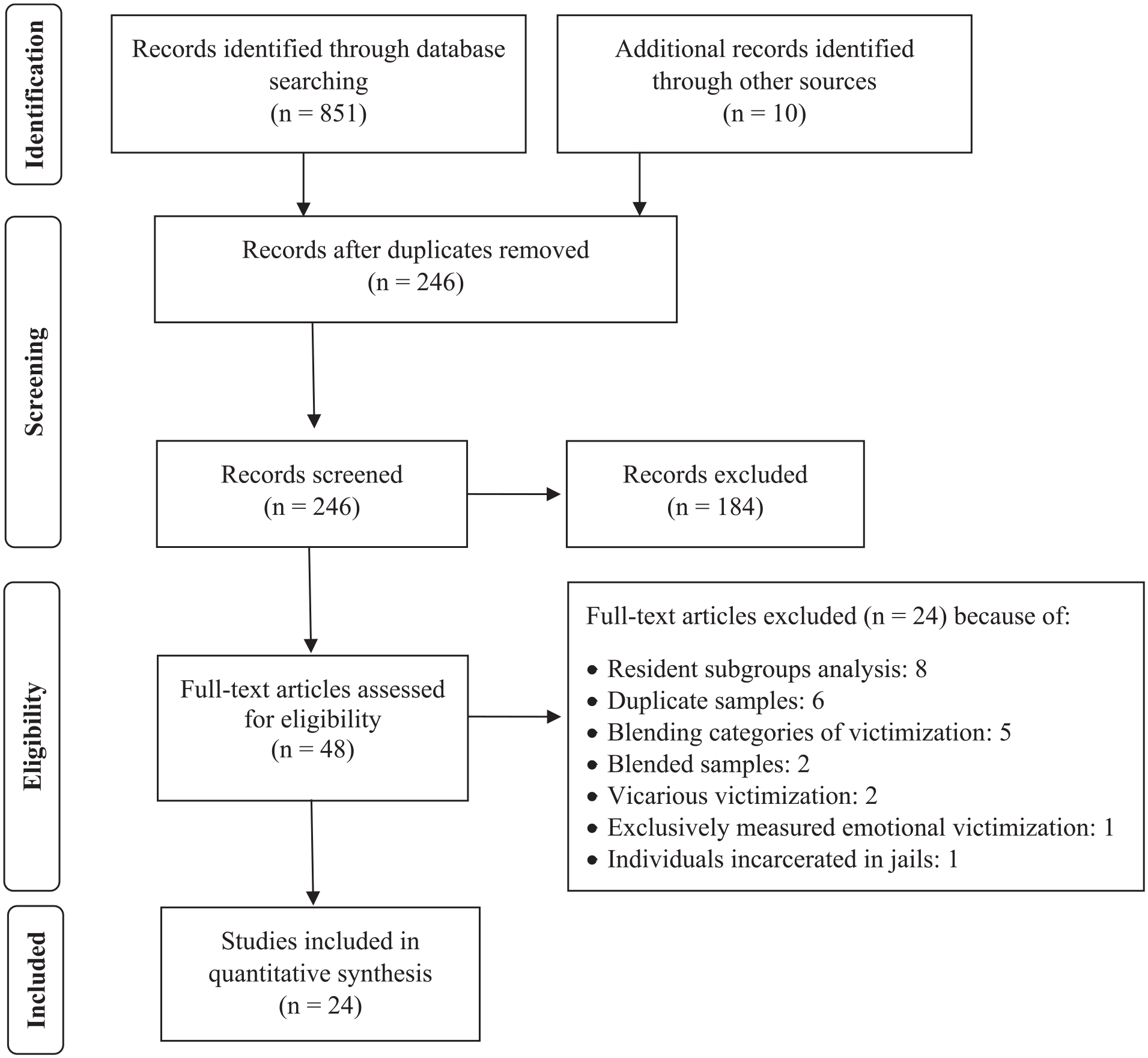
Systematic literature search flow of finding relevant studies on the prevalence of prison-based victimization.
Quality of Included Studies
Study quality was assessed using the Joana Briggs Institute (JBI) critical appraisal tool for prevalence studies (Munn et al., 2014). The JBI tool has been used to evaluate studies in systematic meta-analysis of incarcerated samples (Carter et al., 2022; Fazel et al., 2017). The JBI tool uses nine criteria items appraising study methods, results, and overall study details. Example items include “adequate sample size,” “valid and reliable measures for outcomes,” and “adequate response rate” with four response options: “yes,” “no,” “unclear,” and “not applicable.” Each of the nine items receives a quality score of 0 (indicator not present or met or unclear) or 1 (indicator applicable and met). All 24 studies in our final sample were assessed independently by the three authors. In cases of interrater discrepancies, the mode from all three ratings was used. The total quality score for each study is the sum of the individual item scores. Consistent with a recent systematic review (Cao et al., 2021), the total quality scores were classified into three mutually exclusive categories: “low quality” (a score ≤3; n = 5; 20.8%), “moderate quality” (a score between 4 and 6; n = 8; 33.3%), and “high quality” (a score ≥7; n = 11; 45.9%) (See Appendix E for supporting information). In the current review, quality scores ranged from 3 to 9, with a mean score of 5.75 (SD = 2.11). The interrater reliability was 77% (95% confidence interval [CI] [59–88]).
Data Analysis
A random effects model was used to determine pooled prevalence rates and 95% CI for each group. The Cochran’s Q test (Cochran, 1954) was used, with a significance level of p < .10, to assess the presence of heterogeneity as recommended by the Cochrane Handbook (Higgins et al., 2008). Heterogeneity was quantified by using I2 statistics (Higgins et al., 2008), which shows the amount of heterogeneity, ranging from 0% to 100%, with larger values indicating higher heterogeneity. I2 values ≥75% indicate high heterogeneity (Higgins et al., 2008). The studies included in our analysis had high heterogeneity (see Figures 2 and 3).
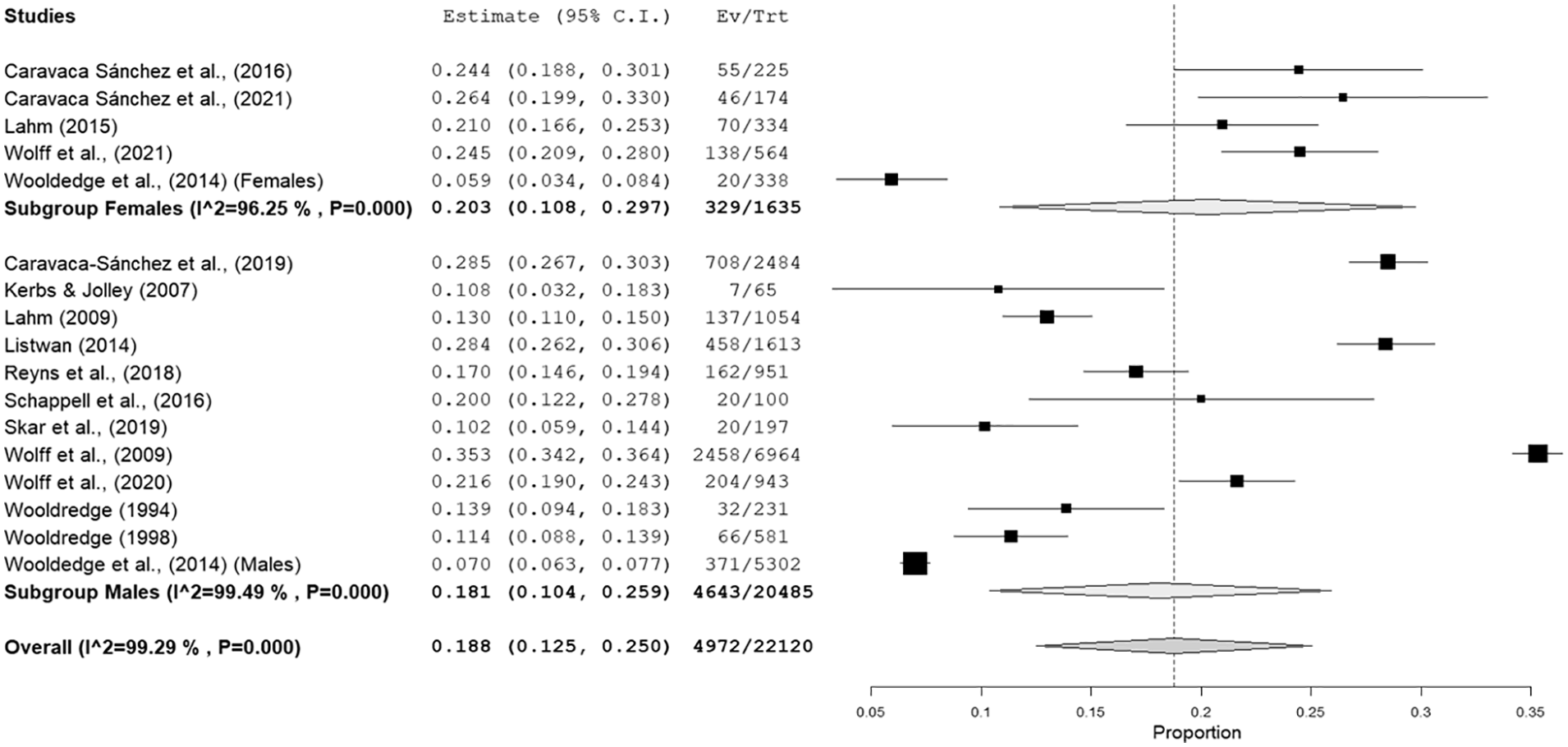
Meta-analysis of the prevalence of physical victimization during incarceration by sex (females vs. males). Ev refers to the number of individuals who reported victimization and Trt is the sample size for each study. Black boxes represent study estimates; their size is proportional to the respective analytical weight. Lines through the boxes represent the 95% CIs around the study estimates. The diamonds represent the mean estimate and its 95% CIs. The vertical dashed line indicates the mean estimate. CI = confidence interval.
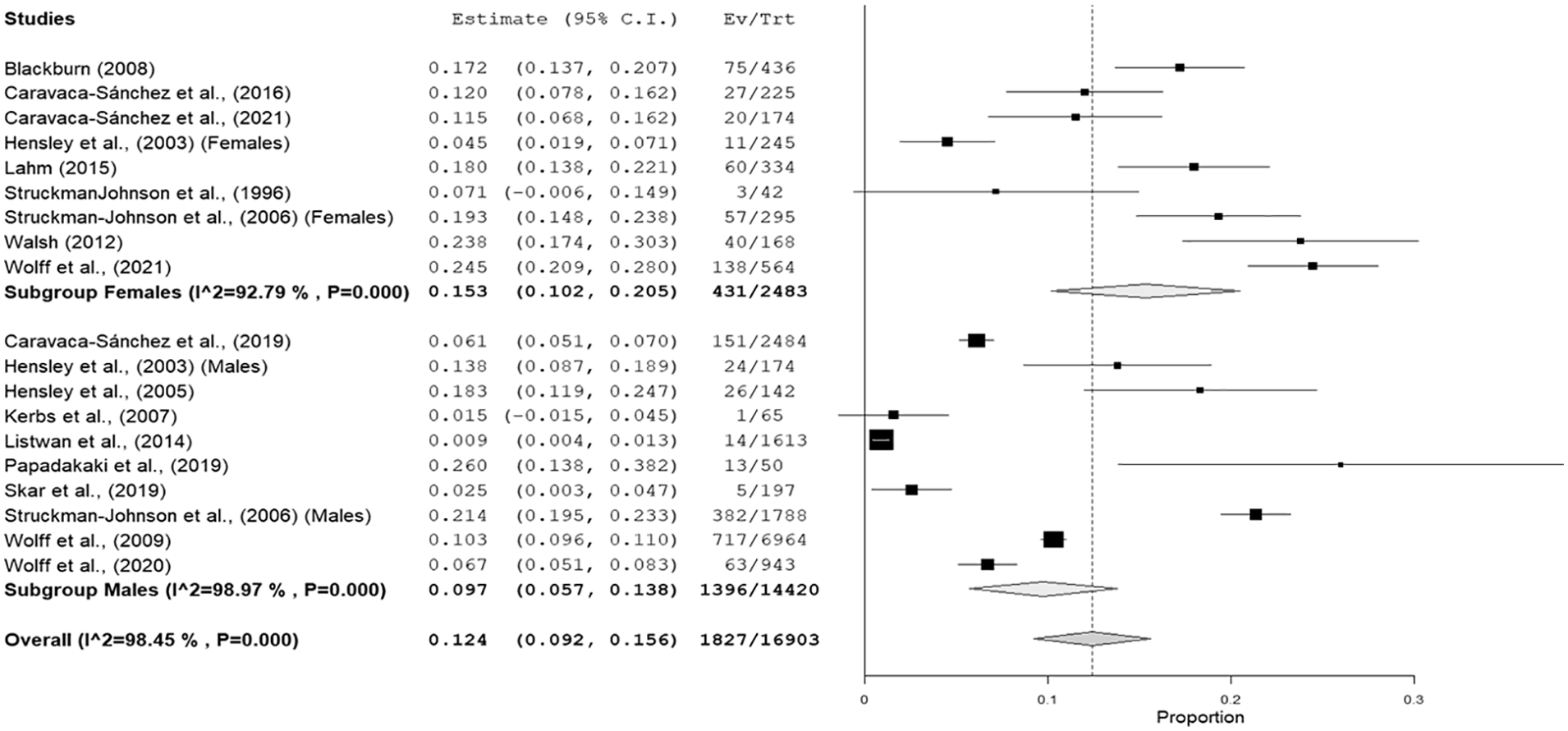
Meta-analysis of the prevalence of sexual victimization during incarceration by sex (females vs. males). Ev refers to the number of individuals who reported victimization and Trt is the sample size for each study. Black boxes represent study estimates; their size is proportional to the respective analytical weight. Lines through the boxes represent the 95% CIs around the study estimates. The diamonds represent the mean estimate and its 95% CIs. The vertical dashed line indicates the mean estimate. CI = confidence interval.
Random-effects models were computed, in which the estimated size of the prevalence rate is proportional to the respective analytical weight for all studies included in the meta-analysis (Borenstein et al., 2007). Both the sources of heterogeneity by subgroup and meta-regression analyses used continuous (with the exception of subgroup analyses), dichotomous, and ordinal variables. Continuous variables were used for sample size, response rates, average age, number of prisons enrolled, and number of items used for measuring victimization. The following were analyzed as dichotomous: geographical location (U.S. studies [coded as 0] vs. rest of the world [coded as 1]), data collection mode (self-administered survey [coded as 0] vs. interviewer-administered [coded as 1]), and definition of perpetrator (resident only [coded as 0] vs. resident or staff [coded as 1]). The ordinal variables included: period for measuring victimization (since admission [coded as 0] vs. past year [coded as 1], past 6 months [coded as 2], and past 3 months [coded as 3]), and quality assessment (low [coded as 0], moderate [coded as 1] and high [coded as 2]. In line with previous studies, subgroup analysis or sensitivity analysis was performed to explore heterogeneity reporting effect sizes and 95% CIs (Li et al., 2021). We conducted all statistical analyses using the “OpenMeta Analyst” software (version 3.1) for Windows (Brown University, 2018).
Results
Description of Included Studies
The systematic literature search returned 246 distinct records, of which 48 full texts were assessed (see Figure 1 for flow chart of screening process). We identified a total of 24 cross-sectional studies (supporting information, Appendix F) including data on 23,967 incarcerated individuals, 21,146 (88.2%) males and 2,821 (11.8%) females, based on 36 separate samples. Of the 24 included studies, 14 investigated male-only samples and 8 female-only samples. Two studies sampled both males and females but analyzed them separately. Regarding victimization type, six studies explored physical victimization only and eight explored sexual victimization only. Ten studies explored physical and sexual victimization separately. In terms of perpetrator type, the distribution was nearly balanced, with 13 studies measuring resident-on-resident victimization and 11 measuring victimization inclusive of another resident or a staff member.
For 10 of the 24 studies, the reflection period for prison victimization was “since admission.” Defined periods were used in the remaining 14 studies: in the “past year” was used in 3 studies, 1 “past 6 months” in 7, and “past 3 months” in 4 (see Appendix G for supporting information). 18 surveys were self-administered. Specifically, 16 studies used paper-and-pencil surveys and 2 used Audio-Computer-Administered Self-Interviewing (A-CASI) (Wolff et al., 2009, 2021). The other six studies administer the surveys using face-to-face interviews. The vast majority of the included studies (n = 17) were conducted in the United States, with the remaining seven studies conducted in European countries (n = 6, Spain, Greece, and Kosovo) and Asia (n = 1, South Korea).
Physical Victimization
For the full sample, the overall pooled prevalence estimate of prison-based physical victimization was 18.8% (95% CI [12.5–25.0%]), with very high levels of heterogeneity among studies (I2 = 99.3%; p < .001) (see Table 1 and Figure 2). For females only, there were five studies reporting any prison-based physical victimization comprising a sample of 1,635 females (mean age: 36.9; SD = 0.8 years). The pooled prevalence of prison-based physical victimization for females was 20.3% (95% CI [10.8–29.7%]), ranging from 5.9% (95% CI [3.4–8.4%]) (Wooldredge & Steiner, 2014) to 26.4% (95% CI [19.9–33.0%]) (Caravaca-Sánchez, Vidovic, et al., 2021). Heterogeneity was very high (I2 = 96.3%; p < .001). Among males, 12 studies measuring physical victimization in prison enrolled 20,485 individuals (mean age: 37.0; SD = 7.2 years). The pooled prevalence estimate for males was 18.1% (95% CI [10.4–25.9%]), with individual study estimates ranging from 7.0% (95% CI [6.3–7.7%]) (Wooldredge & Steiner, 2014) to 35.3% (95% CI [34.2–36.4%]) (Wolff et al., 2009), with very high heterogeneity (I2 = 99.5%; p < .001).
Pooled Prevalences for Prison-Based Physical and Sexual Victimization.
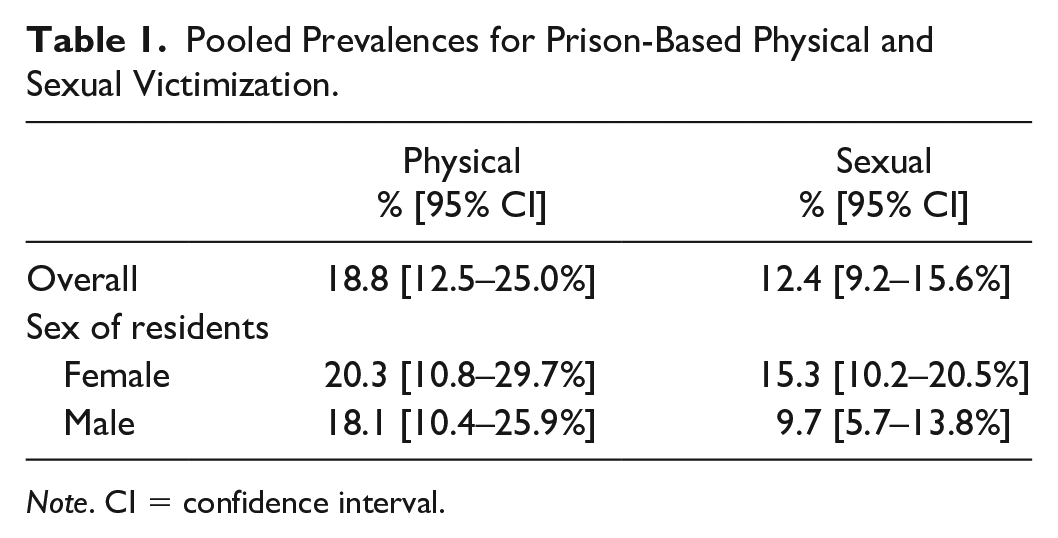
Note. CI = confidence interval.
Sexual Victimization
For males and females combined, the overall pooled prevalence estimate of sexual victimization was 12.4% (95% CI [9.2–15.6%]), with very high levels of heterogeneity (I2 = 98.5%; p < .001) (see Table 1 and Figure 3). The nine studies reporting prevalence estimates for prison-based sexual victimization among females included 2,483 individuals (mean age: 36.7; SD = 1.5 years). The random effects pooled prevalence rate equaled 15.3% (95% CI [10.2–20.5%]), ranging from 4.5% (95% CI [1.9–7.1%]) (Hensley et al., 2003) to 24.5% (95% CI [20.9–28.0%]) (Wolff et al., 2021) and showing high heterogeneity (I2 = 92.8%; p < .001). Among males, 10 studies were identified with a total of 14,420 male residents (mean age: 36.7; SD = 7.5 years). The random effects pooled prevalence rate was 9.7% (95% CI [5.7–13.8%]), ranging from 0.9% (95% CI [0.04–1.3%]) (Listwan et al., 2014) to 26.0% (95% CI [13.8–38.2%]) (Papadakaki et al., 2019), with very high heterogeneity (I2 = 99.0%; p < .001).
Sensitivity Analysis
In order of assess the robustness of the meta-analysis, we conducted four sensitivity analyses (physical and sexual victimization for females and males) by excluding the studies one by one in each step and then generating meta-analysis results based on the remaining studies. The meta-analysis results are consistent for physical and sexual victimization during incarceration for females and males (See Appendix H).
Subgroup Analysis
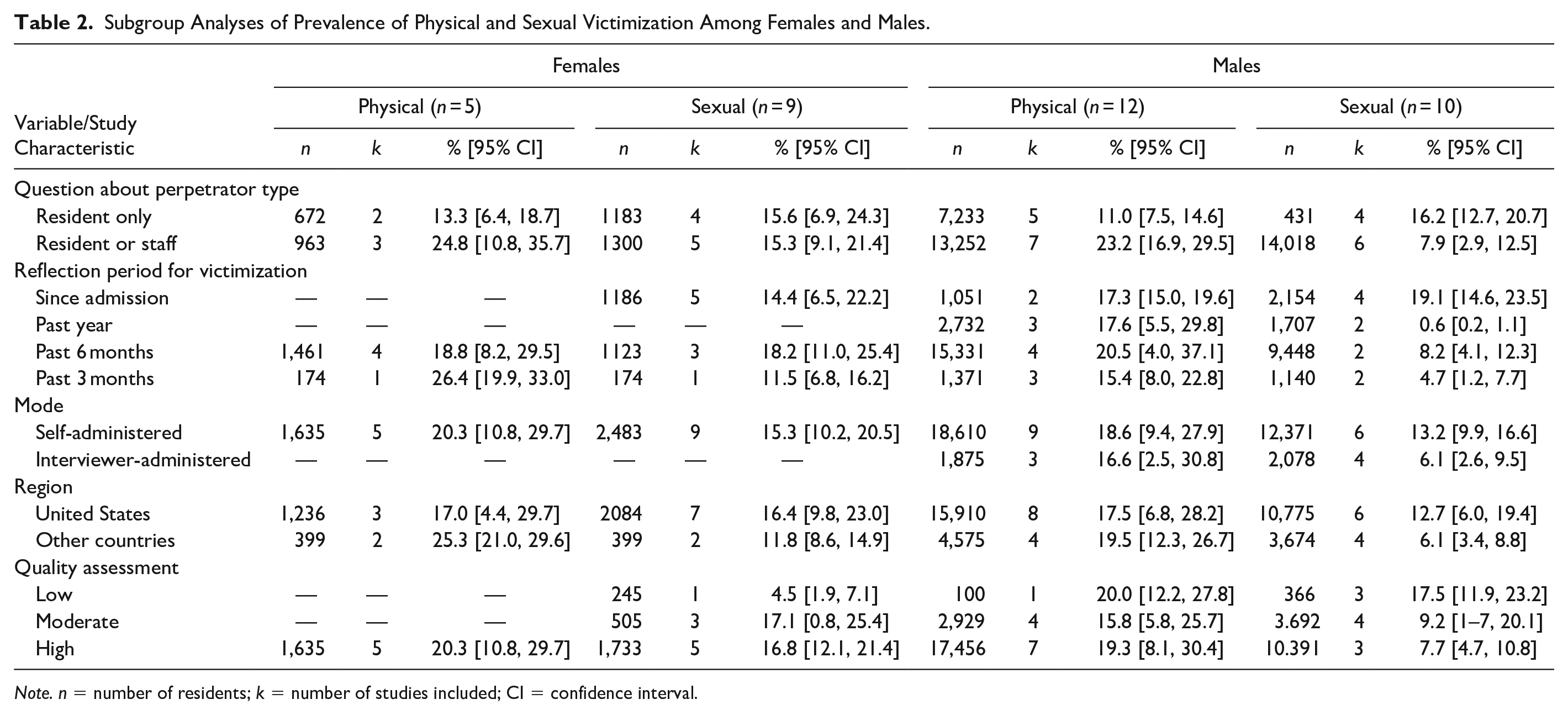
Using subgroup analysis, we investigated possible explanations for between-study variation in physical and sexual victimization rates for males and females (Table 2). For females, higher rates of physical victimization were found by perpetrator type, either resident-on-resident or staff-on-resident perpetrator (24.8%; 95% CI [10.8, 35.7%]), during the past 3 months (26.4%; 95% CI [19.9, 33.0%]), and in countries other than the United States (25.3%; 95% CI [21.0, 29.6%]). For prison-based sexual victimization, rates were higher for females during the past 6 months (18.2%; 95% CI [11.0, 25.4%]) and in the United States (16.4%; 95% CI [9.8, 23.0%]). Compared to studies assessed as low quality, studies with moderate (17.1%; 95% CI [0.8, 25.4%]) and high (16.8%; 95% CI [12.1, 21.4%]) quality scores had higher rates of sexual victimization. However, these subgroup (including physical and sexual victimization) analyses had overlapping CIs.
Subgroup Analyses of Prevalence of Physical and Sexual Victimization Among Females and Males.
Note. n = number of residents; k = number of studies included; CI = confidence interval.
For males, physical victimization rates were relatively higher for the following attributes: resident or staff perpetrator (23.2%; 95% CI [16.9, 29.5%]), victimization recall over the past 6 months (20.5%; 95% CI [4.0, 37.1%]), questionnaire was self-administered (18.6%; 95% CI [9.4, 27.9%]), study was conducted outside the United States (19.5%; 95% CI [12.3, 26.7%]), and low-quality studies (20.0%; 95% CI [12.2, 27.8%]) (overlapping Cis in all cases except for perpetrator type). For sexual victimization reported by male residents, the rate was marginally higher for studies conducted in the United States (12.7%; 95% CI [6.0, 19.4%]) relative to other countries, although CIs overlapped. Rates were also relatively higher for resident-on-resident perpetrator (16.2%; 95% CI [12.7, 20.7%]), victimization recall since admission to prison (19.1%; 95% CI [14.6, 23.5%]), self-administered questionnaires (13.2%; 95% CI [9.9, 16.6%]), and low-quality studies (17.5%; 95% CI [11.9, 23.2%]).
Meta-Regression Analysis
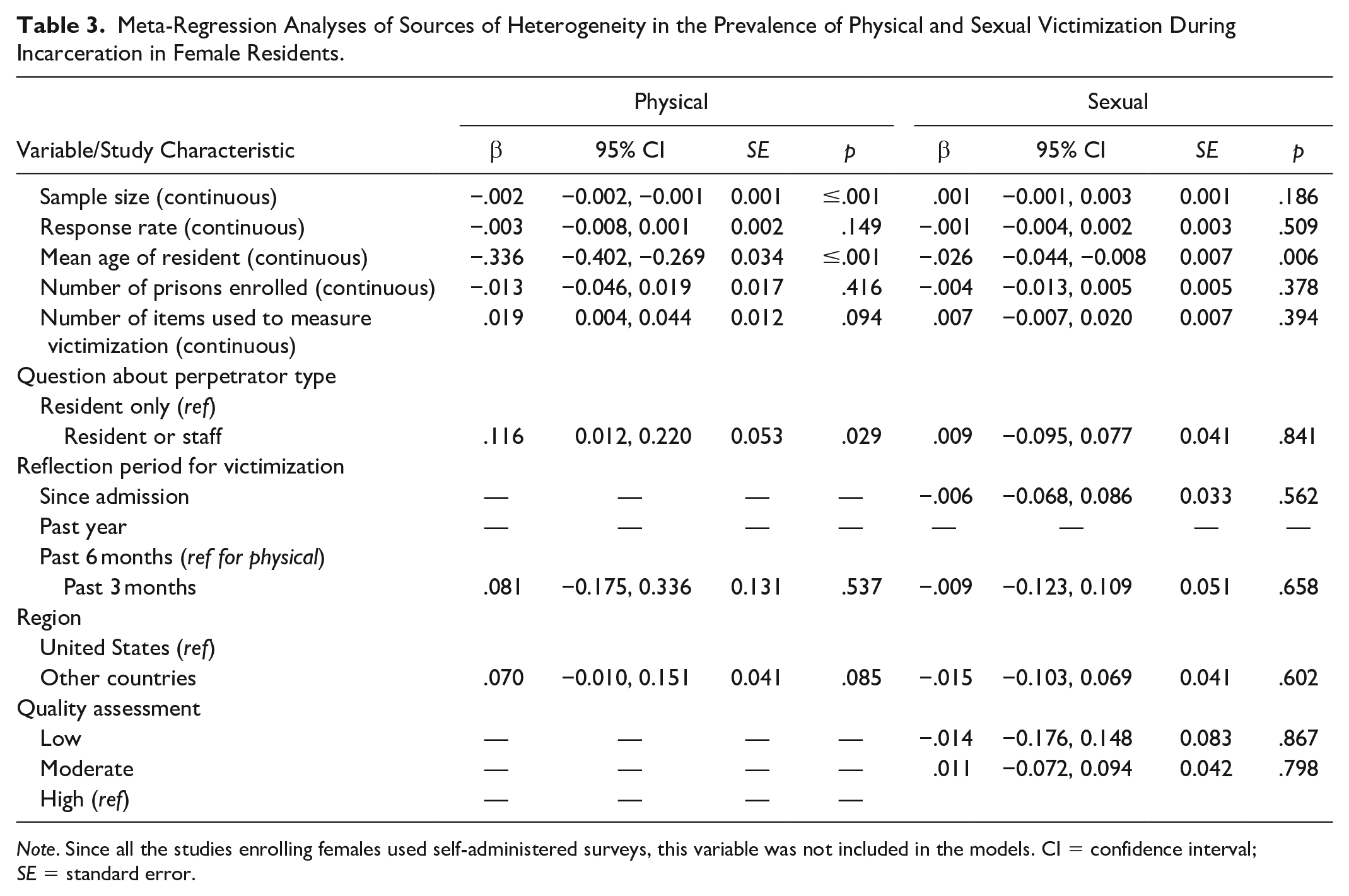
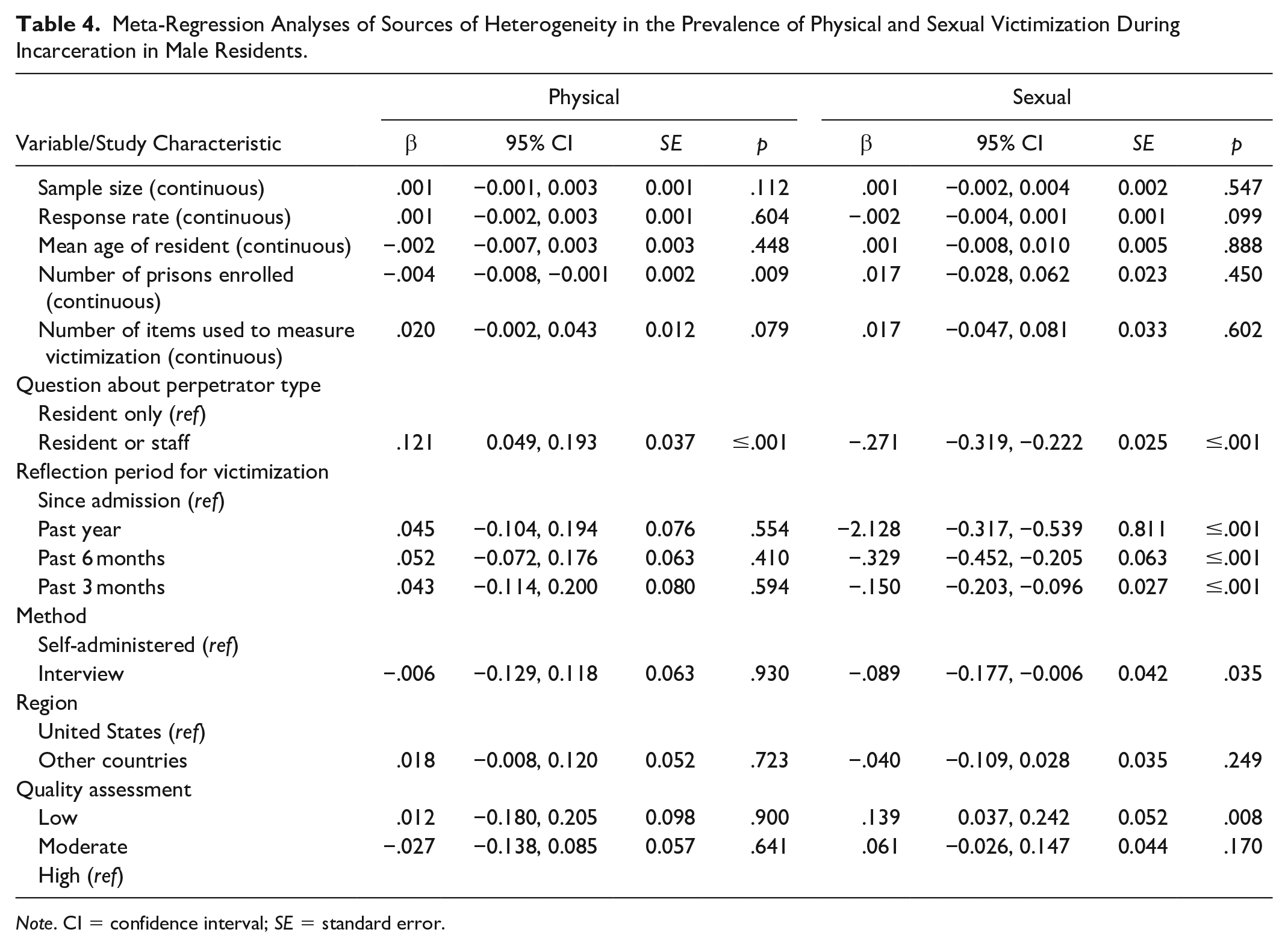
The results of the meta-regression analysis for females and males are provided in Tables 3 and 4, respectively. Among females, rates of prison-based physical victimization were higher when studies had smaller sample sizes (β = −.002, 95% CI [−0.002, −0.001], SE = 0.001, p ≤ .001), residents were younger (β = −.336, 95% CI [−0.402, −0.269], SE = 0.034, p ≤ .001), and when the perpetrator included resident or staff (β = .116, 95% CI [0.012, 0.220], SE = 0.053, p = .029). Sexual victimization rates were higher among younger incarcerated females (β = −.026, 95% CI = −0.044, −0.008, SE = 0.007 p = .006).
Meta-Regression Analyses of Sources of Heterogeneity in the Prevalence of Physical and Sexual Victimization During Incarceration in Female Residents.
Note. Since all the studies enrolling females used self-administered surveys, this variable was not included in the models. CI = confidence interval; SE = standard error.
For males (Table 4), higher rates of physical victimization were found when fewer prisons were enrolled in the study (β = −.004, 95%% CI [−0.008, −0.001], SE = 0.002, p = .009) and when the perpetrator included resident or staff (β = .121, 95% CI [0.049, 0.193], SE = 0.037, p ≤ .001). In contrast, sexual victimization rates were lower when the perpetrator included resident or staff (β = −.271, 95% CI [−0.319, −0.222], SE = 0.025, p ≤ .001). Rates of victimization were lower for all timeframes other than “since admission”: past year (β = −2.218, 95% CI [−0.317, −0.539], SE = 0.811, p ≤ .001), past 6 months (β = −.329, 95% CI [−0.452, −0.205], SE = 0.063, p ≤ .001) and past 3 months (β = −.150, 95% CI [−0.203, −0.096], SE = 0.027, p ≤ .001). Rates were also lower when the data was collected using face-to-face interviews (β = −.089, 95% CI [−0.177, −0.006], SE = 0.042, p = .035), but higher among low quality studies (β = .139, 95% CI [0.037, 0.242], SE = 0.052, p = .008).
Meta-Regression Analyses of Sources of Heterogeneity in the Prevalence of Physical and Sexual Victimization During Incarceration in Male Residents.
Note. CI = confidence interval; SE = standard error.
Discussion
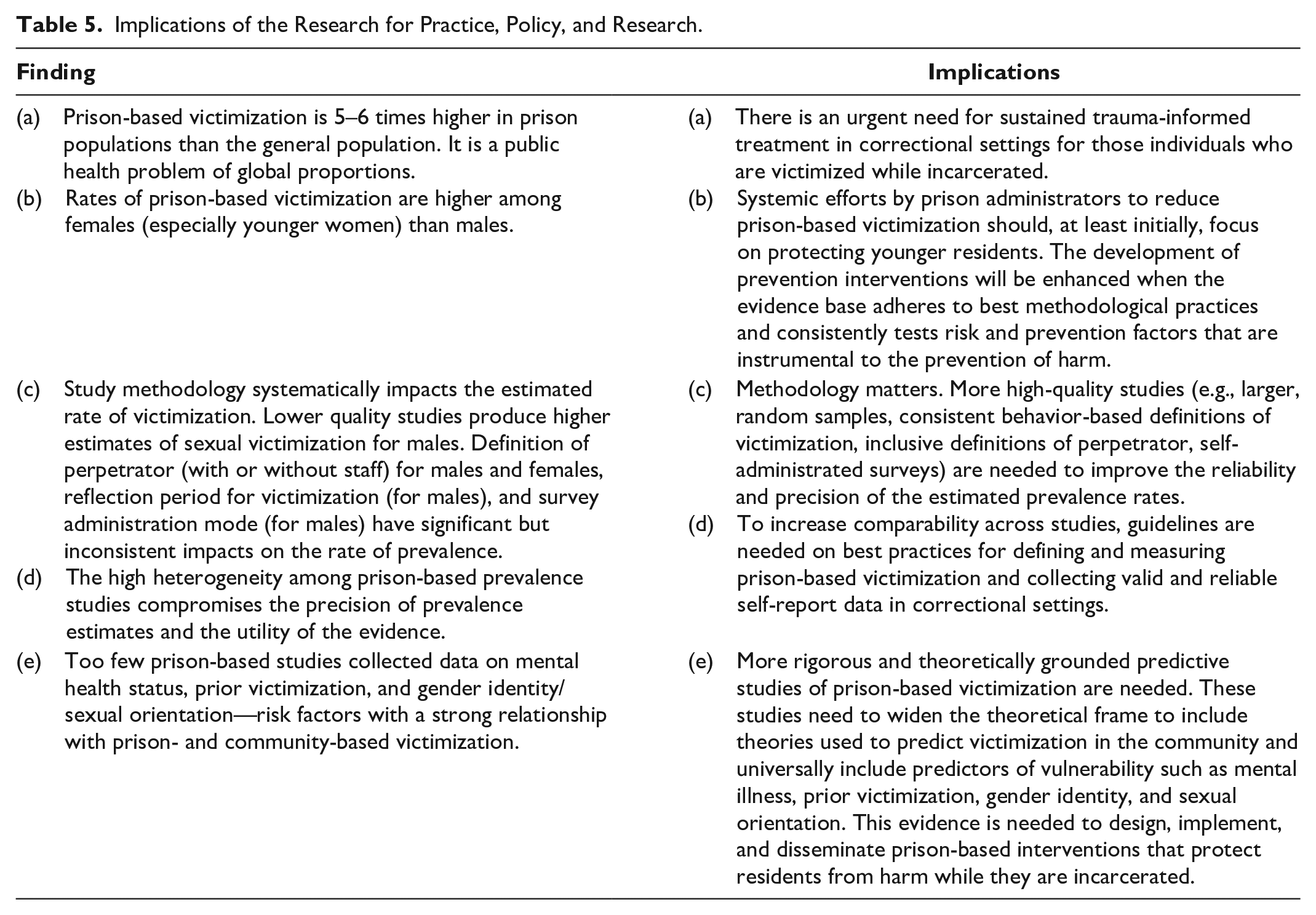
To our knowledge, this is the first systematic review of the prevalence of prison-based physical and sexual victimization that includes a sufficient number of samples to perform data synthesis, meta-analyses, and a quantitative assessment of sources of heterogeneity between studies. The overall evidence presented herein is based on 36 samples enrolling nearly 24,000 males and females residing in prisons located in eight countries. Several findings are noteworthy. First, a significant proportion of individuals reported being victimized while incarcerated, with rates of prison-based physical victimization (18.8%) estimated higher than sexual victimization (12.4%) among males and females. Second, the prevalence of prison-based victimization is higher among females than males. Specifically, compared to their male counterparts, female prison residents have prevalence rates of physical and sexual victimization that are, respectively, 12 and 58% higher. Third, and although these differences were not significant in the regression analyses, male and female prison residents in other countries reported higher physical victimization rates than their counterparts in the United States. Yet, rates of sexual victimization were higher among incarcerated males and females in the United States than their peers in other countries. Table 5 summarizes our findings and provides implications of the review for practice, policy, and research.
Implications of the Research for Practice, Policy, and Research.
Our pooled estimates of in-prison victimization are based on peer-reviewed studies that drew their samples from pools of residents residing in a selected subset or a full sample of prisons within state correctional systems. Excluded from our sample were three surveys of sexual victimization within national/regional prison systems. These surveys were excluded from our sample because the findings were not published in peer-reviewed journals. But it is useful to compare these global system estimates to our pooled estimates based on studies of individual prisons or state prison systems. The most comprehensive and methodologically sophisticated national survey of prison-based sexual victimization was conducted by the U.S. Bureau of Justice Statistics (BJS) in 2007 (prison sample; Beck & Harrison, 2007), 2008 (sample of former state prison residents; Beck & Johnson, 2012), and 2011–2012 (prison sample; Beck et al., 2013). Depending on the sample (current or former prison residents), the U.S. national prevalence estimates for prison-based sexual victimization ranged from 4.0% (2011–2012 sample) to 9.6% (2008 sample). In Australia, two regional surveys of sexual violence were conducted. These surveys probed sexual assault in prisons located in New South Wales and Queensland in 2006 (Richters et al., 2008) through 2008 (Butler et al., 2010). Overall, 2.7% of prison residents reported having been sexually assaulted since they were incarcerated and 8.6 and 11.0% of people incarcerated in New South Wales and Queensland, respectively, reported that they had been threatened with sexual assault. These national/regional estimates, also characterized by methodological variation, are lower than our pooled prevalence rate of 12.4%. The deviation between the U.S. national estimate and our pooled rate is likely driven in part by methodological “noise” (the majority of studies in our sample did not adhere to best practices in victimization data collection methodology; the study with the closest methodological parity estimated a sexual victimization rate for a state correctional system at 10.3% (Wolff et al., 2009) and in part by inter-prison variation in sexual victimization rates. Significant variation in the prevalence of sexual victimization has been found across prisons in each of the prison resident surveys conducted by the BJS. In the 2011–2012 BJS survey, among the 233 prisons surveyed, 11 male prisons and one female prison were classified as high-rate prisons for resident-on-resident sexual violence, whereas 8 male and four female prisons were designated as high-rate prisons for staff sexual misconduct (Beck et al., 2013). Similar inter-prison variation in rates of sexual victimization (Wolff et al., 2006) and physical victimization (Wolff et al., 2007) were found within a single state correctional system.
Despite substantial differences in the methodologies across the included studies, our quantitative analysis reveals high rates of prison-based victimization for incarcerated males and females relative to levels of victimization reported in the general population. For instance, based on U.S. community samples, the prevalence of sexual victimization was estimated at 2.0% (Smith et al., 2018). Comparing our pooled prison-based estimates to these community-based rates, the point prevalence for prison-based sexual victimization was 6 times larger. Similarly, prison-based rates of physical victimization were approximately 5 times larger than comparable rates for the general population in United States (Smith et al., 2018). The human toll associated with these elevated prevalence rates is staggering. Of the nearly 11 million people incarcerated in prisons worldwide (Walmsley & Helen, 2021), we estimate that 2 million experienced physical victimization and 1.3 million experienced sexual victimization while they were incarcerated. That translates into nearly 145,000 incarcerated females who experienced physical victimization and 109,000 who experienced sexual victimization based on a current custodial worldwide population of 714,000 (Walmsley, 2017).
Several sources of heterogeneity among studies were identified and their impact on rates of physical or sexual victimization were consistent with the literature. Specifically, females and younger aged residents (among females) had significantly higher rates of physical and sexual victimization, consistent with previous reviews (Steiner et al., 2017; Wolff, 2022). New to the literature is our finding that the estimated prevalence rates of physical victimization for females was higher in studies using smaller sample sizes, while rates for males were higher in studies including fewer prisons, controlling for other methodological differences.
The way victimization was measured also significantly influenced the estimated rate of prison-based sexual and physical victimization (Wolff, Jing, & Bachman, 2008). First, as would be expected, the shorter the period of reflection (e.g., 3 months) for exposure to victimization in prison, the lower the estimated prevalence of victimization. For example, for males, sexual victimization was estimated in 19.1% since admission (an undefined reflection period) declining significantly to 4.7% when measured over the past 3 months. The reflection time pattern, however, was not linear or consistent across types of victimization and sex in part because of small sample sizes. Second, sexual victimization rates for males doubled in studies that collected data using self-administered surveys compared to studies using personal interviews (13.2 and 6.1%, respectively). This finding is consistent with the survey research literature that highlights the importance of data collection mode(s) on data quality. Self-administered surveys have been shown to produce higher estimates of victimization (Laaksonen & Heiskanen, 2014), and with less social desirability bias (Krumpal, 2013). Although self-administered interviews might be less affected by measurement error (e.g., reduced social desirability bias, absence of interviewer effects), they often produce lower response rates, which can increase nonresponse error. They can also limit participation of groups with low literacy or technology use levels, further increasing the risk of nonresponse error. Further research is needed to explore potential differences within self-administered modes (e.g., paper-and-pencil, CASI, A-CASI) and their impact on victimization rates (see, e.g., Wolff et al., 2015). Third, there was a positive correlation between the quality of the study and the estimated prevalence rate. For example, relative to low quality studies, rates of prison-based sexual victimization among female residents estimated by high quality studies were almost 4 times larger. Paradoxically, among males, rates of sexual victimization were over nearly 2 times higher among low quality studies, compared with high quality ones. Finally, rates of physical victimization were statistically higher in studies that defined perpetrators inclusive of residents or correctional staff compared to those studies that omitted correctional staff as potential perpetrators or did not specify who the perpetrator was. Oddly, sexual victimization rates for males were lower in studies that more inclusively defined perpetrators to include correctional staff. This result reflects the impact of a single study where the victimization question did not specifically define perpetrator as staff or resident (it was implied) and sexual victimization was defined narrowly as “sexual assault” (Listwan et al., 2014). In this study, less than 1% of respondents reported being sexually assaulted, although 23% reported witnessing a sexual assault. Based on this evidence, to improve the precision of future prevalence estimates, researchers estimating prison-based rates of victimization should delimit the reflection period to a specific time period (e.g., 3, 6, and 12 months), use self-administered questionnaires, and use an inclusive and explicit definition of perpetrators and victimization.
Some limitations warrant discussion. First, some of the analyses for incarcerated females were based on fewer than 10 studies and should be interpreted with caution (Thompson & Higgins, 2002). Regarding the analysis of sex, the number of studies estimating prison-based physical victimization for males (n = 9) was almost double that for females (n = 5). Thus, the comparison of pooled prevalence estimates between males and females should be interpreted as preliminary, with greater weight given to the ranges. Second, although we employed a rigorous search strategy that included four major databases (Criminal Justice Abstracts, PsycINFO, PubMed, and Web of Science) and scanned reference lists of relevant studies and reviews (e.g., Hensley & Tewksbury, 2002; Steiner et al., 2017; Wooldredge, 2020), it is important to note that our exclusion of non-English language studies might have missed additional studies. Further, our review included only articles published in peer-review journals. The authors are aware that this exclusion criterion has resulted in the omission of relevant research such as grey literature (dissertations or conference proceedings) or government documents from the United States (Beck et al., 2013; Beck & Harrison, 2007; Beck & Johnson, 2012) or Australia (Butler et al.; 2010; Richters et al., 2008). These exclusion and inclusion criteria are consistent with standard practices but the sample of studies would have been larger if a more inclusive search strategy had been employed, increasing the analytic power of the analysis but potentially the heterogeneity across the studies. This is an area for future investigation. Third, the questions about victimization varied among studies, with some using summary terms like “physically assaulted” (Listwan et al., 2014) or “sexually assaulted” (Caravaca-Sánchez et al., 2019) to query victimization, while others framed questions around behaviors, such as being “hit, kicked, punched” or “forced to have oral sex” (Wolff, Jing, & Bachman, 2008). This type of variation was not controlled for in our analysis. Statistical heterogeneity was investigated using the methodology from previous systematic reviews among incarcerated samples (Favril et al., 2020; Fazel et al., 2017) but more research is warranted on the impact of the definition of victimization on estimated rates of prevalence (Wolff et al., 2008, 2022). Fourth, testing for associations between risk and protection factors and prison-based victimization was sharply limited by data availability. This literature also is characterized by significant heterogeneity in terms of sample size and composition (blending males and females, blending perpetrator types), measurement of the dependent variable (victimization), and model specification (inclusion of different mixes of personal- and prison-attributes or attributes measured differently across studies). Most of the attributes tested in the 16 studies reviewed by Steiner et al. (2017) were either not significantly associated with victimization or the significance or direction of the association was inconsistent. Some factors found to be significant such as age, race, education, type of offense (e.g., violent), and number of times in prison (Steiner et al., 2017) may be too global to strategically improve resident classification systems in an effort to prevent victimization. For this reason, more recent research has focused on mental illnesses and prior victimization, factors known to increase the risk of victimization in the community (Ports et al., 2016; Teplin et al., 2005). For example, several studies have found previous victimization exposure (e.g., childhood victimization or adulthood prior to prison) to be a strong predictor of prison-based victimization among females and males (Caravaca-Sánchez & Wolff, 2016, 2018; Wolff et al., 2007, 2009, 2021; Wood, 2013; Wood & Buttaro, 2013). Prior victimization and mental illness, however, were tested only in a minority of the studies included in our sample. There is also growing evidence indicating that sexual orientation and gender identity are risk factors for abuse within prisons (Beck et al., 2013; Jenness, 2021). Future prison-based victimization prevalence studies need to more closely investigate the extent to which LGBTQ+ status elevates the risk of harm for physical and sexual victimization by other residents and correctional staff. The inconsistency across the studies regarding attributes of the individual and prison used to predict victimization limits systematic analysis (Wolff, 2022). There is simply not enough useful information across the predictive studies to examine factors that could be used instrumentally to prevent or reduce prison-based victimization. More consistency in the selection and measurement of instrumental risk and protective predictors in future studies will improve the range and quality of future meta-analytic reviews and the utility of the evidence to inform prevention strategies. Fifth, our study focused exclusively on prison-based physical and sexual victimization reflecting the definition of victimization in the majority of prison-based studies. Yet there is emerging evidence showing that emotional victimization, inclusive of bullying and harassment, and property theft are commonplace in prison (Listwan et al., 2014; Wooldredge & Steiner, 2012). Using a more inclusive definition of victimization will provide a more realistic and accurate portrayal of prison-based victimization. Sixth, the studies included in our sample did not collect information about the characteristics of the perpetrators, which limited our ability to explore variation in victimization by the sex of the perpetrator. Future studies would benefit from collecting information from the victims about the characteristics of those who did the harming. Further, research on victimization has historically assumed that victims are only victims, never perpetrators. Future research should relax this assumption by asking residents parallel questions about the perpetration of sexual and physical violence. For example, in the past 6 months, have you ever “slapped, hit, kicked, or bit” another resident. To prevent victimization, more information is needed about the motivation and characteristics of those who do the harming. Interventions designed to prevent prison-based victimization will be more effective when they reflect an understanding of victimization from the perspectives of the wounded and the wounding. Lastly, in line with prior systematic reviews and meta-analysis conducted among incarcerated samples (Carter et al., 2022; Fazel et al., 2017), study quality was assessed using the JBI critical appraisal tool, a global assessment tool. Other critical assessment tools might have given a more nuanced understanding of the heterogeneity in quality of the studies (Crowe et al., 2012) and should be considered in future studies. The last limitation, related to all the above limitations, is the high, unexplained heterogeneity across the studies that limits the precision of the meta-analytic results and poses interpretive challenges. Although we tested several methodological characteristics as possible sources of between-study heterogeneity, other moderators were not considered, such as sentencing policies and prison regimes. Also, predictive uncertainties persist because known methodological heterogeneity across the studies in data and study design attributes remain uncontrolled. This limitation, however, is common in prevalence studies (Migliavaca et al., 2022), with the median heterogeneity estimated at 96.9% (based on a review of 134 published studies). Still, taken together, our results should be interpreted with caution, focusing not just on the average pooled estimates but also at the dispersion around the estimate. It should also signal the need for future studies to conform to best practices when collecting harm data and designing prison-based harm studies.
Conclusion
Victimization is commonplace inside prisons around the world and it is a preventable public health problem. Our systematic review shows elevated rates of prison-based victimization, as well as significant variation in prevalence rates by type of victimization, sex, and study methodology. Methodological heterogeneity, in particular, is compromising the utility of science to inform best practices in correctional settings. Specifically, our ability to identify risk and protective factors to advance interventions to better protect incarcerated people is constrained by the lack of consistent specification of predictor models across studies. Robust evidence to guide protective interventions will only be available when individual studies collect data in ways that increase precision (e.g., a defined reflection period, self-administered survey modes) and about attributes that have been found to consistently predict victimization in a small number of high-quality studies, particularly mental illness and prior victimization. In the meantime, the evidence shows that, at a minimum, efforts should focus on protecting younger residents. This evidence also tells us that, in the absence of stopping prison-based victimization, there is an urgent need for sustained trauma-informed treatment for those individuals who are victimized by other residents and correctional staff while they are incarcerated. This is a public health problem of global proportions.
Supplemental Material
sj-docx-1-tva-10.1177_15248380221130358 – Supplemental material for The Prevalence of Prison-based Physical and Sexual Victimization in Males and Females: A Systematic Review and Meta-Analysis
Supplemental material, sj-docx-1-tva-10.1177_15248380221130358 for The Prevalence of Prison-based Physical and Sexual Victimization in Males and Females: A Systematic Review and Meta-Analysis by Francisco Caravaca-Sánchez, Eva Aizpurua and Nancy Wolff in Trauma, Violence, & Abuse
Footnotes
Declaration of Conflicting Interests
The author(s) declared no potential conflicts of interest with respect to the research, authorship, and/or publication of this article.
Funding
The author(s) received no financial support for the research, authorship, and/or publication of this article.

Supplemental Material
Supplemental material for this article is available online.
Notes
Author Biographies
References
Supplementary Material
Please find the following supplemental material available below.
For Open Access articles published under a Creative Commons License, all supplemental material carries the same license as the article it is associated with.
For non-Open Access articles published, all supplemental material carries a non-exclusive license, and permission requests for re-use of supplemental material or any part of supplemental material shall be sent directly to the copyright owner as specified in the copyright notice associated with the article.
