




Abstract
As members of democratic institutions, state legislators must frequently collaborate with each other to achieve their varied goals. Given the increased attention to questions of polarization and gridlock, scholars should be particularly interested in understanding legislator decisions to collaborate across party lines. This article is primarily concerned with how institutional arrangements—specifically term limits—structure legislators’ decisions to cosponsor bills with partisan opponents. Using data on bill cosponsorship from 41 states (82 chambers), we demonstrate that term limits reduce bipartisan cosponsorship even when controlling for average legislative tenure. We argue that term limits accomplish this by altering the incentives that legislators face. In addition, we demonstrate that the effect of term limits depends on the level of legislative professionalization. When professionalization is high, the negative effect of term limits on bipartisan cosponsorship is particularly pronounced.
Keywords
As members of democratic institutions, state legislators must frequently collaborate with each other to achieve their varied goals. Due to this fundamental need for collaboration, scholars of legislatures should be concerned with how legislators make decisions to collaborate. Specifically, given growing worries over polarization (see Bonica et al. 2013), we are interested in understanding legislators’ cosponsorship decisions—an area of research scholars have only just begun to explore (Desposato, Kearney, and Crisp 2011; Harbridge 2015). This article is primarily concerned with how institutional arrangements structure legislators’ collaborative decisions in cosponsorship. One such institution that has received significant scholarly and popular attention is legislative term limits.
Term limits remain a popular governmental reform (Saad 2013), yet their effects on legislative collaboration are not clear. Previous work suggests that they should reduce the overall amount of collaboration (Kirkland 2014) and dissuade legislators from working across the aisle (Cain and Levin 1999; Sarbaugh-Thompson et al. 2006). We build on existing work to develop a theory where term limits alter legislator incentives in such a way that makes it less likely that they will collaborate across the aisle in cosponsoring legislation, particularly among legislators in more professionalized institutions.
Assessing the effects of term limits in regard to bipartisan cosponsorship activity is important for understanding the effectiveness of the reform at achieving its intended goals. The term limits movement is and was strongly motivated by discontent with the functioning of legislatures and career legislators (Fund 1990; Petracca 1991; Will 1992). Proponents have sought to limit terms as a solution for dealing with the “entrenched micromanaging monsters” that are responsible for “institutional paralysis” (Fund 1990). We argue that examining bill cosponsorship patterns is an understudied way of examining polarization (also see Harbridge 2015) and can inform the literature’s understanding of how term limits affect legislative behavior. Polarization can contribute to gridlock (Binder 1999), which may further bolster antilegislature attitudes (see Hibbing and Theiss-Morse 1995). Therefore, if term limits reduce bipartisanship to an even greater extent, as we suspect, the reform stands in direct opposition to proponents’ original motivations.
Using an original dataset on bill cosponsorship from 41 states, we find that term limits do, in fact, negatively affect the rates of bipartisan bill cosponsorship in a substantively important manner. 1 Furthermore, the level of legislative professionalization conditions the effects of term limits, providing compelling evidence for the assertion that term limits generally reduce what professionalization encourages (Kousser 2005, 203). Our findings represent a significant step toward understanding the concrete effects of term limits on legislative behavior in the states.
Legislative Collaboration
Legislative collaboration may take several shapes, but bill cosponsorship is the most directly measurable and potentially consequential form. Interviews and surveys attempting to understand relationships cannot directly indicate how consequential these connections actually are for legislative behavior. Thus, cosponsorship presents itself as a more concrete measure of legislative collaboration. In line with previous research, we assume cosponsorship decisions reflect an active decision to engage in meaningful and strategic collaboration with other legislators (Fowler 2006; Kirkland 2011; 2014). Cosponsorship activity can help clarify a legislator’s message and issue priorities (Koger 2003). Thus, the “wrong” cosponsorship decision by a legislator could be advertised by potential challengers or the media when positions are inconsistent with the legislator’s constituency (Desposato, Kearney, and Crisp 2011, 536).
Importantly, cosponsorship is not a substitute for an ideal point estimate (Desposato, Kearney, and Crisp 2011) nor does it capture leadership influence as all bills do not receive floor attention. What it does capture, however, are members’ individual interests and the level of substantive agreement on policy (Harbridge 2015, 27, 47) at the beginning stages of the collaborative policymaking process. As such, the frequency of bipartisan cosponsorship coalitions only suggests the potential for bipartisanship at later stages of the policymaking process (Harbridge 2015, 8), but it is still an important aspect of legislative collaboration nonetheless.
Literature
Political science research on cosponsorship is fairly well explored at the congressional level (see Campbell 1982; Desposato, Kearney, and Crisp 2011; Harbridge 2015; Kessler and Krehbiel 1996; Krehbiel 1995; Rocca and Gordon 2010; Wilson and Young 1997; Woon 2008), yet lacking in the states. Cosponsorship is significantly influenced by institutional and political forces (Schiller 1995); thus, it is reasonable to assume varied state contexts will affect these patterns as well. Similar to Congress, some have shown considerations such as district proximity and shared demographics also affect state legislators’ cosponsorship activity (Barnello and Bratton 2007; Bratton and Rouse 2011).
The comparative state literature on legislative collaboration and the effects of term limits is sparse—especially as it relates to cosponsorship. Of the studies that have been done on collaboration, many only examine one or a handful of states (see Sarbaugh-Thompson et al. 2006) and rely on perceptual evidence of collaboration derived from elite surveys (Carey et al. 2006), none of which focuses on cosponsorship activity. Yet, their findings provide some evidence for Cain and Levin’s (1999) supposition that term limits decrease collegiality among members, even though the evidence is far from definitive. Overall, these studies provide good reason to suspect that term limits may negatively affect rates of collaborative bipartisan activity.
Recent research by Kirkland (2014) provides a more comprehensive analysis of state legislative collaboration using cross-sectional cosponsorship data from 49 states. His results suggest term limits have little notable effect, showing the variable fails to be a statistically significant predictor of the efficiency or bipartisanship of cosponsorship networks, while they do appear to reduce the overall presence of cosponsorship. Although we cannot be certain, we suspect that Kirkland’s null findings in this regard are, at least in part, the result the dependent variable he chooses. Party network modularity—Kirkland’s (2014) measure of bipartisan cosponsorship—is particularly sensitive to differences in network size and connectivity (Fortunato and Barthelemy 2006; Good, de Montjoye, and Clauset 2010) and, therefore, might not be appropriate for comparisons among state legislatures where these characteristics vary significantly. Kirkland’s analysis suggests collaborative behavior is primarily shaped by chamber size, theorizing that larger chambers obscure the preferences of other legislators and lead members to rely on party cues. Relationships in large chambers, as a consequence, become polarized (Kirkland 2014, 182). Although Kirkland’s argument regarding chamber size is a plausible explanation of his findings, we find the failure to register statistically significant effects for other institutional arrangements—especially term limits—surprising given neoinstitutional insights on how institutions shape the behavior of those working within them (see, for example, McCubbins and Sullivan 1987).
Term Limits, Institutional Capabilities, and Incentive Structures
Term limits might affect collaborative structures through two potential causal mechanisms: by reducing institutional capabilities or by altering incentives for legislators. 2 The research on term limits reflects both of these arguments. One side argues that term limits hinder institutional capabilities, such as legislator learning and institutional memory (see Hibbing 1991). According to this research, term limits operate to weaken the institution’s governing ability relative to other branches of government (Baker and Hedge 2013; Carey et al. 2006; Jewell and Whicker 1994; Miller, Nicholson-Crotty, and Nicholson-Crotty 2011). We might expect the dynamics of legislative relationships under this conceptualization to be driven largely by the leadership because the less-experienced rank and file are not able to handle the legislative workload (see Kousser 2005).
Furthermore, legislators with little experience necessarily have fewer interactions with other members. It would make sense in this context for legislators to limit their collaborative efforts to other members with whom they are more confident in their policy agreement. Because party can serve as an excellent heuristic in signaling policy agreement, we would expect for less-experienced legislators to collaborate primarily with other party members (see Sarbaugh-Thompson et al. 2006). If shortened tenure is contributing to a less effective legislature (see Miquel and Snyder 2006), then the negative effects of limits should be operating through reductions in institutional capabilities (i.e., legislative experience/tenure). However, work that examines the effects of legislative tenure has produced mixed results. Although Miquel and Snyder (2006) do find that tenure contributes to legislative efficiency, an earlier study by Squire (1998) finds no effects attributable to tenure directly.
Alternatively, scholars have argued that because term limits necessarily shorten legislators’ time horizons, they fundamentally change how members behave (Carey et al. 2006; Sarbaugh-Thompson et al. 2006). We argue that the shortening of time horizons deters bipartisan collaboration by heightening political career uncertainty and discouraging compromise in the policymaking process, and that this behavior should be especially prominent in more professionalized legislatures. Therefore, engaging in partisan cosponsorship is a dual strategy, serving both the term limited legislator’s political career prospects as well as their personal policy goals.
Electoral and Career Incentives
In terms of electoral considerations, the literature largely considers partisan legislative behavior to be the result of the electoral need to gain and maintain support among partisan voters (Aldrich 1995; Cox and McCubbins 1993; Poole and Rosenthal 1997). As Trubowitz and Mellow (2005, 435) note, legislators “tend to avoid taking policy positions that might antagonize party activists, campaign contributors, and core supporters.” Term limited legislators are generally no less career oriented than non-term limited ones (Carey et al. 2006; Herrick and Thomas 2005), so electoral considerations might be particularly salient as they attempt to stay within or consider future electoral prospects outside of the chamber. This is particularly true for professionalized legislatures, where (like Congress) seats are more highly valued and, as such, tend to attract more challengers (Hogan 2004; 2008).
We can draw a parallel from the redistricting literature, where scholars have shown that legislators position themselves through roll-call votes, bill introductions, and bill cosponsorships to respond to new constituencies after redistricting (Boatright 2004; Hayes, Hibbing, and Sulkin 2010). Similarly, these kinds of electoral considerations should be more pressing in term limited states because of the career uncertainty that accompanies mandatory removal from the chamber. This uncertainty largely stems from term limited incumbents being forced to forfeit their incumbency status and all of the electoral benefits that accompany it, leading legislators to position themselves toward potential future donors and supporters for a different elected office. Career uncertainty induces a risk averse mentality that is conducive to partisan behavior because of the electoral advantages it may bestow.
Bipartisanship is a risky electoral strategy as it involves a trade-off between potential punishment by partisans and attracting independents and moderates (Fenno 1978; Fiorina 1974; Jacobs and Shapiro 2000; Trubowitz and Mellow 2005). Some have shown, for instance, that voters tend to equate bipartisanship as a policy loss for their own party (Harbridge, Malhotra, and Harrison 2014), and that roll-call vote extremism is rewarded in terms of electoral margins in more professionalized legislatures (Birkhead 2015).
However, recent research by Harbridge (2015) argues that, at least in the U.S. House, legislators turn to bipartisan cosponsorship to counter the declining responsiveness in roll-call voting behavior. This is particularly true for members from districts that are not as well sorted in terms of partisanship (167–8). Fearing constituent retribution, legislators appear to be aware of the risks involved in implementing a pure partisan strategy. Yet, term limited state legislators tend to become less beholden to constituent concerns than nonlimited members (Carey et al. 2006). Because term limits loosen the bond between the representative and their constituency, countering partisan roll-call votes with bipartisan cosponsorship behavior becomes less necessary. As a result, the instinct to become more partisan in cosponsorship in a term limited legislature is more likely to be the product of a legislator’s concern over future campaign contributors and possible challengers than constituents.
Policy Incentives
Although reelection may be the primary and most proximate goal for most legislators (Mayhew 1974), legislators are also concerned with policy (Fenno 1977). Partisan legislative behavior best serves term limited legislators’ policy goals for two reasons. First, term limited legislators tend to be more concerned with the direction of policy than non-term limited legislators (Herrick and Thomas 2005). If term limited legislators are strong advocates for particular issues, it is less likely that they would want to compromise on their policies with the other party.
Second, long-term relationship building loses much of its utility if legislators are forced out of the chamber after relatively short periods of time. As a result of the devaluing of these relationships, legislators are much less likely to put effort into their development. Partisanship, as well as other shared features, should serve as excellent cues for finding collaborative partners under these conditions. Sarbaugh-Thompson et al. (2006) show some indication of this when they find that legislators tend to have far fewer “friendships” with opposing party members in term limited states than non-term limited ones.
Term Limits and Professionalization
A higher level of legislative professionalism is key to increasing uncertainty among term limited members. In general, professionalization encourages a long-term perspective for legislators because it makes the chambers attractive for careers. As such, legislators in highly professionalized bodies should be more likely to build collaborative relationships across the aisle in the early stages of policy making than members of less professional institutions. Professionalization provides the incentive for legislators to think about long-term relationship building, knowing that at some point in their career, they may have to approach the other party for support on a bill.
However, term limited states with high levels of professionalization should induce even less bipartisan cosponsorship than what term limits will produce on their own. Given the resources of professionalization to make policy (higher salaries, larger staffs, etc.), truncated time in office, and loosened connection to constituent and district concerns, a professionalized legislature becomes fertile ground for term limited legislators to focus more heavily on their own personal political aspirations and policy goals. Partisanship may be a more promising electoral strategy that appeals to potential future donors as voter and district concerns decline (Carey et al. 2006). In other words, while professionalization increases individual incentives to maintain office, term limits heighten future political career uncertainty and reduce the connection to voters. These considerations should combine to produce very limited incentives for bipartisan cosponsorship patterns.
It should be noted that although members of professionalized legislatures may be rewarded for taking partisan roll-call positions (Birkhead 2015), it is not clear whether this extends to partisan cosponsorship behavior. As Harbridge (2015, 167–8) notes, increasingly partisan voting patterns in the House have been followed by bipartisan cosponsorship patterns that are more responsive to constituents. Based on our previous discussion, however, we would not expect the behavior that Harbridge finds to extend to professionalized, term limited contexts. Under term limits, members have fewer reasons to respond to constituents via bipartisan cosponsorship. Shortened time horizons alter how legislators interact with their voters and district needs, making them more inclined to act according to their individual conscience (Carey et al. 2006, 119). While the decrease in tenure may affect bipartisan cosponsorship, we expect the incentives to follow a more partisan, individualistic path are especially strong in professionalized legislatures with term limits and will show up even with controls for tenure.
Some scholars argue the incentives brought on by term limits result in certain partisan advantages in professionalized legislatures (Fiorina 1994; Hall 2014; Meinke and Hasecke 2003), but these studies only consider incentives in terms of who chooses to run. Our analysis focuses on why we may expect term limits in professionalized legislatures to structure internal legislative action among members—not external considerations.
Hypotheses
We argue that the effect of term limits on bipartisan collaboration exceeds the indirect effects attributable to tenure and operates primarily through changes to incentives. Although the reduction in experience associated with term limits might affect bipartisan cosponsorship, the effects of term limits should still be present even when considering different levels of tenure. In other words, although we concede that a reduction in tenure might make it more difficult for legislators to cosponsor across the aisle, truncated time horizons remove any incentive to do so. Therefore, we expect that the negative effects of term limits should be perceptible in and above those related to tenure directly:
We also expect these effects of term limits on member behavior to be conditioned by legislative professionalization:
H2a articulates our expectation that term limits have a negative effect on bipartisan bill cosponsorship, but that this effect is especially pronounced when the chamber is sufficiently professionalized so that legislators have very strong incentives to seek a political career. In these contexts, the added uncertainty induced by term limits makes bipartisan cosponsorship a less attractive option. Hypothesis 2b articulates the same expectation but for the effect of professionalization:
H2b expects for professionalization to increase the incentives for cooperation across the aisle, but only in non-term limited states where they incentivize legislative careers and long-term relationship building. Here, the pattern of bipartisanship should be similar to what Harbridge (2015) found in the House of Representatives. As roll-call votes polarize, members of professionalized bodies should increasingly turn to cosponsorship to advertise their willingness to work with the other party. In term limited states, we expect for professionalization to have a negative effect on bipartisan collaboration as legislators have a weakened electoral connection to constituents and seek out the least risky behavior for future donors to see (i.e., partisanship).
Work by Kousser (2005) provides some evidence that term limits appear to have undone what professionalization has encouraged. Although professional legislatures tend to produce innovative and creative public policy, the imposition of term limits significantly decreases this ability (202). Kousser’s conclusions about the effects of term limits, however, extend beyond the evidence proffered by his data. In particular, he surmises term limit laws “reduce the personal ties that form across party lines and guarantee that opposing partisans will not be part of each other’s futures” (207). While certainly suggestive, Kousser’s analysis of legislator “batting averages” does not directly speak to this claim. Our hypotheses, while articulated differently, are reflective of Kousser’s general point. In the following section, we describe our explicit tests of our contentions.
Data and Method
To test our hypotheses, we use state-level bill cosponsorship data from 82 legislative chambers (41 states) for 2011. We obtained cosponsorship data from LegiScan, a third-party service that scrapes state legislative websites for bill information. This service provides bill searches and status monitoring for interested parties outside of the legislature. To ensure the validity of the sponsorship data, we compared a sample of bill-level LegiScan data from each state with actual reports of sponsorship from the state’s legislative website. This process revealed that LegiScan was highly accurate in the majority of states and that inaccuracies in the LegiScan data are primarily due to the formatting of state legislative websites. The most common problem was that some websites limit their reporting of sponsors to one (AR, CO, MT, and TN) or two (MO, NM, and UT) members. Furthermore, in Nebraska and Idaho, bill cosponsorship is not reported on the website at all. In all, we eliminated 9 states from the analysis due to incomplete or unreliable data, leaving us with 41 states and 82 chambers. 3
However, because we are primarily concerned with bipartisan bill cosponsorship, we also require the partisan identification of the legislators who are sponsoring bills. The party of the legislator was hand coded from state legislative websites when available. Unfortunately, states do not always archive information on legislators from previous sessions on their websites. In these instances, we relied on legislator information from the website Ballotpedia.org.
Using these legislator attributes, we were able to construct two dependent variables relating to bipartisan cosponsorship in the 82 legislative chambers. The two measures that we use in this analysis are the proportion of bills receiving bipartisan cosponsorship as well as the average party cosponsorship margin. 4 The proportion considers any bill with at least one sponsor from each of the two major parties as receiving bipartisan cosponsorship and gives us the general proclivity of partisans to cross the aisle when developing or rounding up support for legislation. The average party cosponsorship margin is calculated as the following:
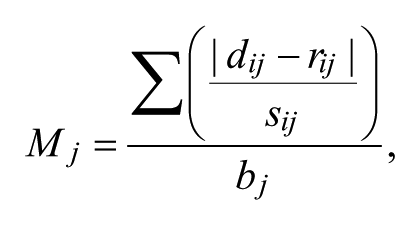
where j indexes the state chambers, i indexes the bills, d and r correspond to the number of Democratic and Republican cosponsors, respectively, s is the total number of sponsors, and b is the total number of bills. The measure calculates margins of individual bills as proportions of the total sponsors, and then averages this across bills for each chamber. In cases where a bill is only cosponsored by one party, the party margin will equal 1. If both parties sponsor a bill at the exact same rate, the margin will equal 0. The average party cosponsorship margin, therefore, not only provides information on bipartisan cosponsorship, but also indicates the average degree of bipartisanship at the bill level. Lower values for this margin represent more balanced bipartisanship on average, while higher values indicate less balanced or—in the case of a perfect 1—no bipartisanship at all. 5
Figure 1 shows a scatterplot of these two variables across the 82 upper and lower chambers for 2011. The solid lines in the graphs display the kernel density of the variable while the postal abbreviations display the values for each state chamber. On average across both chambers, about 33% of bills received bipartisan cosponsorship ranging from 87% in the Pennsylvania lower chamber to 0% in the Kansas upper chamber. 6 The average party cosponsorship margin has a mean of .79 across both chambers with a minimum of .39 and a maximum of 1.
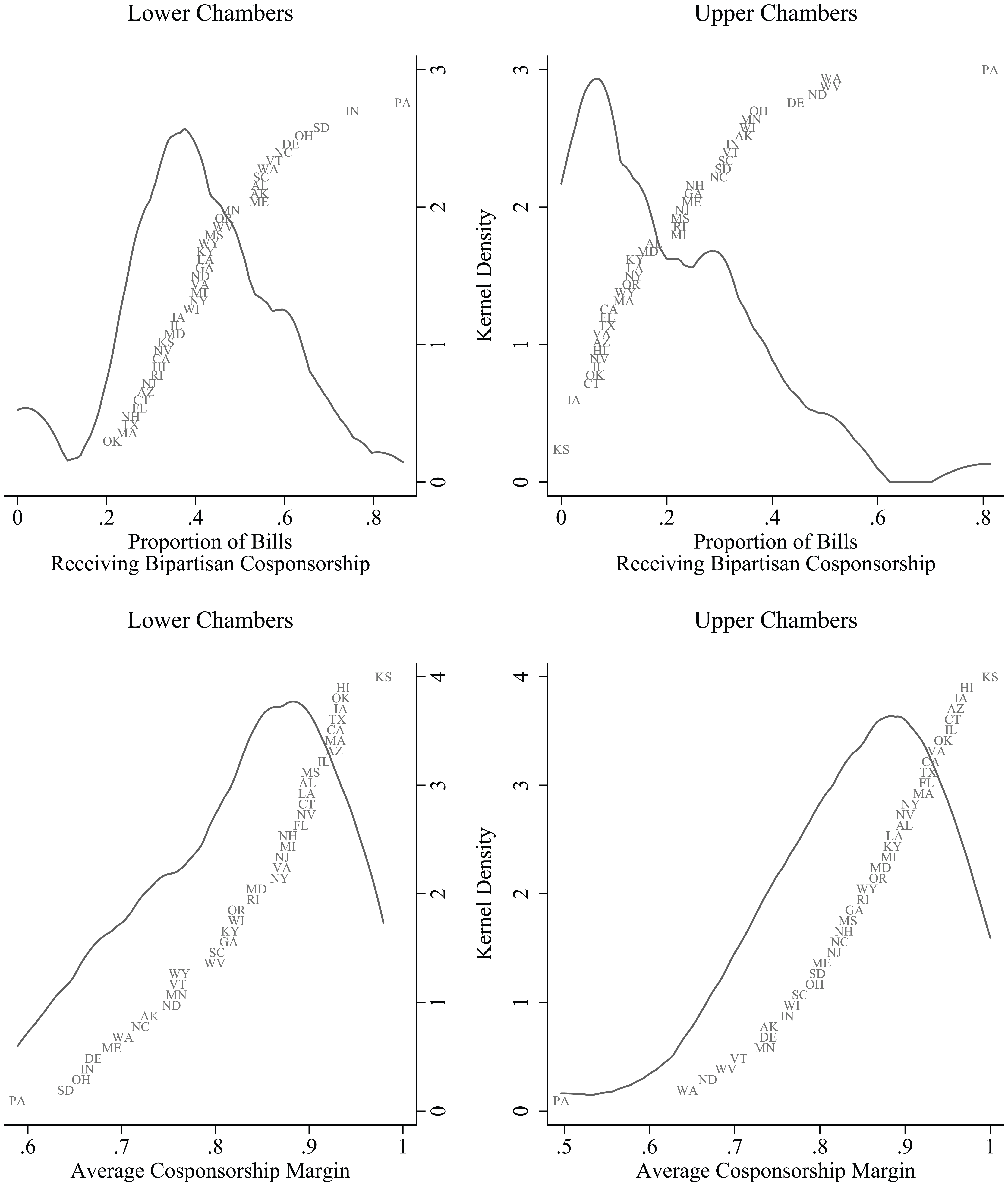
Distribution of the dependent variables.
In addition to data on bill sponsorship, we also required information on state legislative term limits, legislative professionalization, and legislator tenure in office. Data on term limits across the states were obtained from the National Conference on State Legislatures’ website. A simple dichotomous variable was constructed to indicate the presence of term limits. Although previous work on term limits has argued against the use of a binary indicator, the concerns raised are significantly less pronounced for our analysis. Sarbaugh-Thompson (2010) argues that a binary indicator for term limits conceals a significant amount of variation in term limit laws and confuses the effects of term limits and direct democracy. Sarbaugh-Thompson’s solution is to create a continuous measure of the effectiveness of term limits in reducing tenure. Our project, however, is explicitly concerned with differentiating between tenure and nontenure related effects of term limits. A measure of term limits that includes tenure as a component will obfuscate any potential effects not related to tenure. Rather, we choose to control for tenure explicitly in the model to differentiate between these potential causes. Furthermore, while the correlation between term limits and direct democracy is rather strong (.59 in our data and .64 in Sarbaugh-Thompson’s), we also control for direct democracy mechanisms in our models. As direct democracy is positively correlated with the presence of term limits, we expect that including direct democracy in our models will result in a tougher test of our hypotheses. 7
For legislative professionalization, we rely on the Squire index as calculated in Squire (2012) for 2009. Although these values do not correspond exactly to the same time period, changes in professionalization tend to be slow and incremental, so the 2009 values should adequately approximate contemporaneous levels of professionalism.
Because term limits not only condition the incentives that legislators face but also, by definition, reduce member tenure in the chamber, in testing our first hypothesis, it is important to control for any potential effects attributable to tenure directly. 8 Legislator tenure was coded manually from state legislature websites and Ballotpedia.org. For this variable, we recorded the number of years since the legislator was elected to the chamber for their current stint in the legislature. We then averaged these values across chambers. We also include the square and cube of average tenure in anticipation of nonlinear effects. 9
It is also possible that term limits affect legislative behavior by increasing electoral party competition. The effects of higher electoral party competition, however, should be positively related to bipartisan collaboration as legislators position themselves as moderates (see Harbridge 2015). We control for this using Holbrook and Van Dunk’s (1993) electoral party competition scores as computed by Klarner (2013). 10
We also gathered data for a number of control variables. First, we control for the number of seats in the chamber and the partisan seat margin using data from the Book of the States. The size of the chamber in seats was shown to strongly affect cosponsorship patterns in the states (Kirkland 2014). The partisan seat margin, measured as the absolute value of the number of Democrats minus the number of Republicans, should also contribute to the opportunities for cosponsorship. The more balanced the partisan division of seats, the more opportunities there should be to work across the aisle. When the margin is smaller, we would expect more opportunities for cosponsorship as the chamber is less dominated by one party.
The number of bills introduced in the chamber is added as a control, which should also establish opportunity for cosponsorship. The number of bills were obtained from the LegiScan data and do not include resolutions. The degree of party polarization in the state legislature should also have an effect on bipartisan bill cosponsorship. If the parties are farther apart ideologically, it becomes less likely that they will be able to find common ground on which to collaborate. Accordingly, we include a control for party polarization developed by Shor and McCarty (2011). 11 Unfortunately, this measure of party polarization is not available for all states in 2011; therefore, we construct a three-year average (2010–12) with the data available.
Our models also consider the effects of direct democracy on legislative behavior. Gerber (1996; 1998) and Lupia and Matsusaka (2004) argue that by threatening to remove control of the legislative process from legislators, direct democracy pressures members to pursue policy more in line with public opinion. Similarly, the presence of the initiative or referenda is hypothesized to exert pressure on legislators to develop proposals with broad appeal to avoid the possibility of their legislation becoming the target of initiative or referenda efforts. Legislators seek to demonstrate the value of their bills by showing that they are capable of receiving bipartisan support in the legislature. We expect the presence of direct democracy mechanisms to have a positive effect on bipartisan cosponsorship and a negative one on the average cosponsorship margin. We, therefore, include two dichotomous variables indicating the presence of the initiative and the referenda as coded from the Initiative and Referendum Institute’s website (iandrinstitute.org).
We also consider the effects of partisan control of government outside of the specific chamber in question. We include three dichotomous indicators for various forms of divided government. Divided government can occur in two ways, either through separate party control of the legislative chambers or separate party control of the legislative and executive branches. We include an indicator for each of these cases in isolation (“Divided Legislature” and “Opposition Governor”) and a third (“Out Chamber”) for the cases where both conditions are found in combination. Although we do not have specific expectations regarding the effects of the form of divided government, we do expect that under divided government generally, there are more incentives to work across the aisle as, at some point, the other party will likely control the policymaking process.
Finally, we control for the “naïve probability” of bipartisan cosponsorship based solely on chamber size and the size of the party caucuses. As Kirkland (2014) notes, we must control for the amount of bipartisanship we would expect simply due to the configuration of the chamber. We can conceptualize this “naïve probability” as the number of possible bipartisan cosponsorship configurations divided by the total possible cosponsorship configurations. 12
We test our hypotheses using a series of ordinary least squares (OLS) models with heteroscedasticity-consistent standard errors. 13 Our initial models are purely additive, and meant to test the first hypotheses regarding the effects of term limits. Our final models consider the interaction between term limits and professionalization. From these models, we estimate quantities of interest along with simulated predictions to assess the validity of our claims.
Results
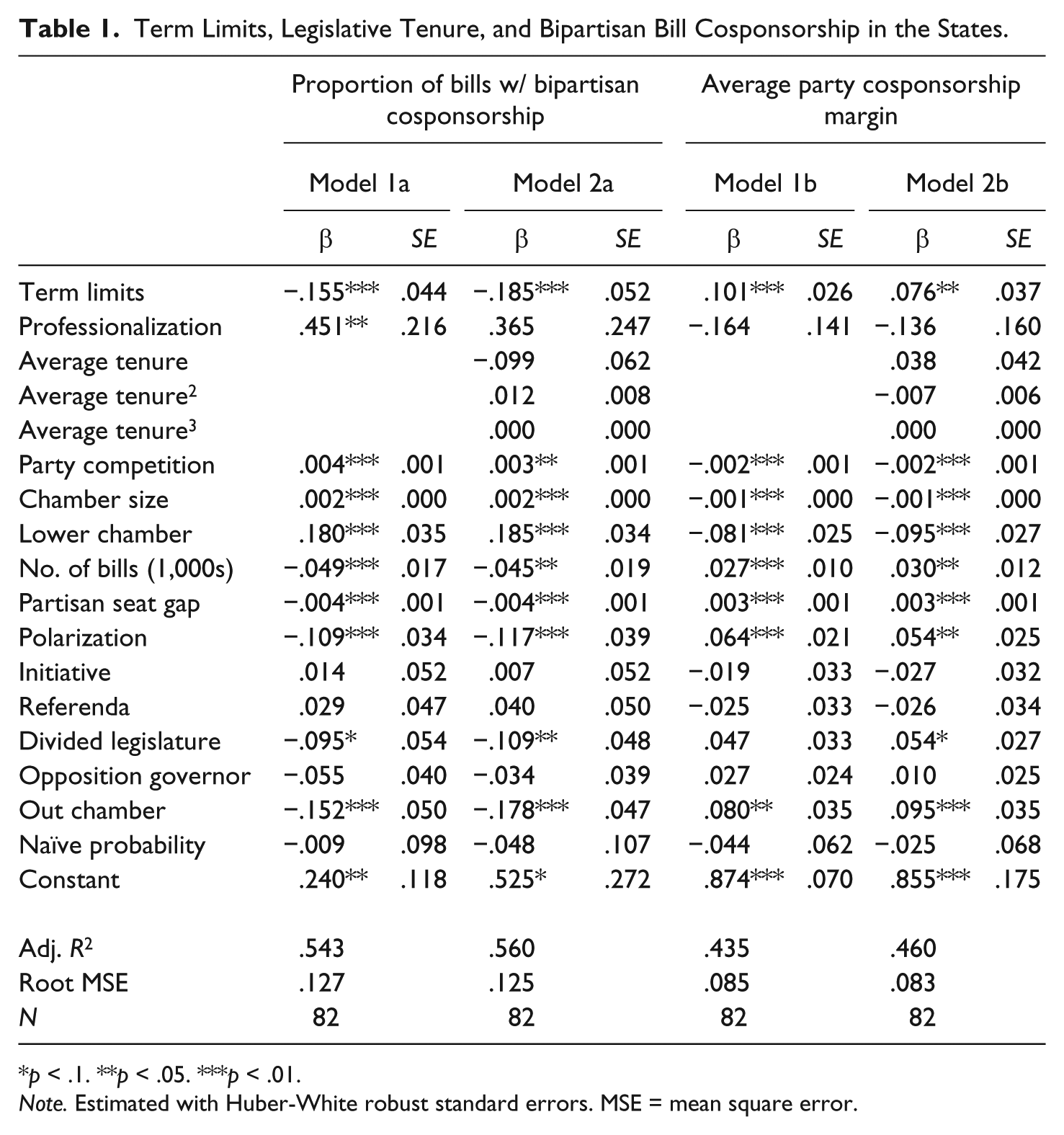
Table 1 presents the estimates from our initial OLS regressions. Models 1a and 1b examine the effects of term limits without a control for tenure on the proportion of bills receiving bipartisan cosponsorship and the average party cosponsorship margin, respectively. As expected, the presence of term limits has a negative effect on the proportion and a positive effect on the margin. All else equal, the presence of term limits reduces the proportion of bills receiving bipartisan cosponsorship by .155, which corresponds to approximately three-quarters of a standard deviation. Furthermore, term limits increase the average cosponsorship margin by .101 (the standard deviation of the margin is .114), indicating that the partisan cosponsorship balance is much lower in term limited states.
Term Limits, Legislative Tenure, and Bipartisan Bill Cosponsorship in the States.
p < .1. **p < .05. ***p < .01.
Note. Estimated with Huber-White robust standard errors. MSE = mean square error.
In addition, Model 1a indicates that legislative professionalization has a positive effect on the proportion of bills receiving bipartisan cosponsorship (significant at the p < .1 level). A 1 standard deviation increase in professionalization (+.13) corresponds to an increase in the proportion of approximately .059. Although the professionalization coefficient in Model 1b does not reach traditional levels of significance, it is signed in the expected direction.
Models 1a and 1b also indicate that a number of other factors affect the tendency of legislators to cosponsor legislation across the aisle. As expected, electoral party competition has a positive effect on the proportion and a negative effect on the margin. An increase in party competition of 1 standard deviation (+11.52) corresponds to an increase in the proportion of .046 and a reduction in the margin of .023.
The number of seats in the chamber has a positive and statistically significant effect on bipartisan cosponsorship. An increase in chamber size of 10 seats corresponds to an increase in the proportion of bills receiving bipartisan cosponsorship of .02, while reducing the average party cosponsorship margin by .01. In addition, lower chambers appear to have higher levels of bipartisanship than upper chambers, even controlling for their larger memberships.
Somewhat unexpectedly, the number of bills actually reduces the tendency for bipartisan cosponsorship. This effect, however, is quite small; corresponding to a decrease of only .049 in the proportion of bills receiving bipartisan cosponsorship for every 1,000 additional bills introduced. It is possible that some states might have many more bills introduced because of the tendency among legislators not to collaborate, and, thus, they miss the opportunity to both consolidate legislation and cosponsor.
Both the partisan seat gap and the degree of party polarization have the expected effects on bipartisan bill cosponsorship. The more significant the gap between the parties in terms of both seats and ideology, the smaller the proportion of bills receiving bipartisan cosponsorship and the larger the average cosponsorship margin. An increase in the partisan seat gap of 10 seats corresponds to a decrease in the proportion of .04 and an increase in the margin of .03. Similarly, an increase in party polarization of 1 standard deviation (.053) corresponds to a decrease of approximately .055 in the proportion and an increase of .032 in the margin.
The divided government results are rather more surprising. Against our expectations, divided control of the legislative chambers in isolation and in combination with an opposition governor appear to have a negative effect on bipartisan cosponsorship. Furthermore, the effect is quite substantial, whereby divided chamber control of the legislature in isolation results in a reduction to the proportion of bills with bipartisan cosponsorship of .095. In combination with an opposition governor, the negative effect becomes more pronounced, reducing the proportion by .152. The presence of an opposition governor in isolation, however, does not appear to have any discernible effects. In terms of the margin (Model 1b), we only see a statistically significant effect for the combination.
It is possible that this unexpected finding results from control of the opposing chamber emboldening the minority party, leading them to introduce many more minority-party-only proposals than we would otherwise expect. 14 It might also be that legislators anticipate mandatory bipartisan collaboration in conference committee and, thus, pursue it less often at the sponsorship phase. These questions, however, are beyond the scope of this project; we simply note these findings as being of theoretical interest and encourage scholars to investigate them in the future.
In total, these results provide strong support for the argument that term limits decrease the tendency of legislators to cosponsor bills with members of the opposing party. Furthermore, there is some indication from Model 1a that professionalization plays a role in bipartisan bill cosponsorship. Although Models 1a and 1b indicate that term limits reduce the tendency among legislators to cross the aisle in cosponsoring legislation, our contention in our first hypothesis, while encompassing this finding, is more specific. We argue that term limits operate through alterations to incentive structures. As noted above, term limits also reduce the amount of legislative experience in the chamber. It is not unreasonable to argue that it is this reduction in experience that results in less bipartisan bill cosponsorship and not a change to incentives. To account for this possibility, we introduce controls for average tenure into our previously estimated models.
Models 2a and 2b in Table 1 include our controls for tenure. In these models, we find that, not only do term limits maintain their direction and statistical significance, but in Model 2a, the magnitude of the coefficient increases compared with the initial models. Given these new estimates, imposing term limits reduces the proportion of bills receiving bipartisan cosponsorship by .185 while increasing the cosponsorship margin by .076 when we take average tenure into account. In addition, the tenure variables do not perform particularly well. In Model 2a, they are jointly significant, yet in Model 2b, they are not. Given these findings, we are more confident in the effects of term limits, and we can reject the alternative hypothesis that the term limits effect operates entirely through a reduction in experience.
The Interactive Effect between Term Limits and Professionalization
The second hypothesis argues that the effects of term limits and professionalization are contingent on each other. Specifically, we expect for term limits to have a negative effect on bipartisan bill cosponsorship, and for this effect to be more pronounced when the level of professionalization is high (H2a). In states with very low levels of professionalization, the effects of term limits should be quite small or could even go unnoticed entirely as there are already few incentives for bipartisan collaboration. Similarly, we also expect professionalization to have a positive effect in non-term limited states and a negative one in term limited states (H2b).
Figure 2 shows the bivariate relationship between professionalization and bipartisan bill cosponsorship in term limited and non-term limited states. It is immediately apparent that the relationship between these variables is very different in term limited states than non-term limited ones as indicated by the opposing slopes of the fitted lines. The results in Figure 2 are generally supportive of the second hypothesis, yet we cannot say for certain that the pattern observed is attributable to the variables being considered without instituting adequate controls. Furthermore, Figure 2 does not give us a good sense of the effects of term limits at varying levels of professionalization. Therefore, we turn to our interaction Models 3a and 3b in Table 2.
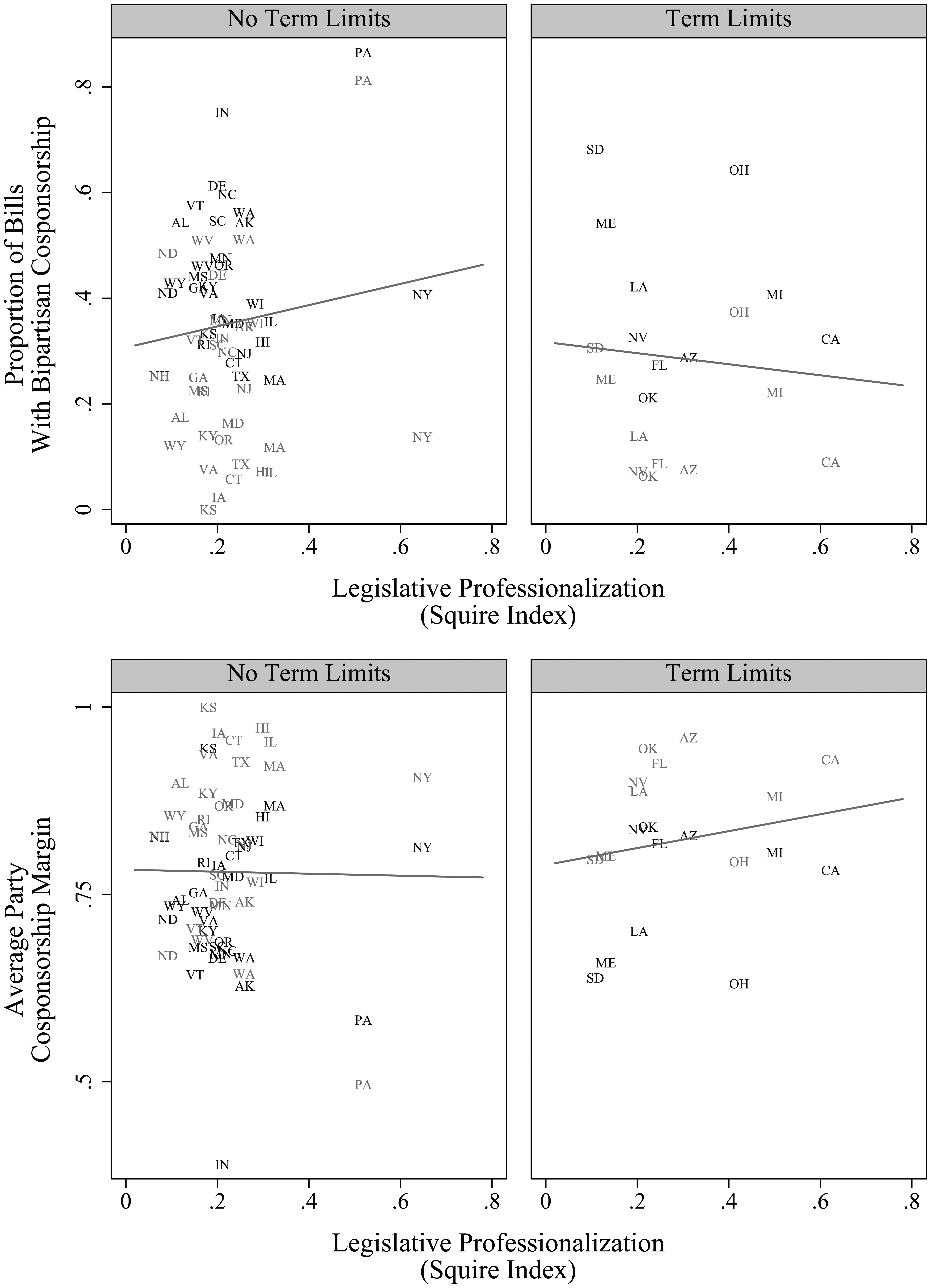
Professionalization and bipartisan cosponsorship in term limited and non-term limited states.
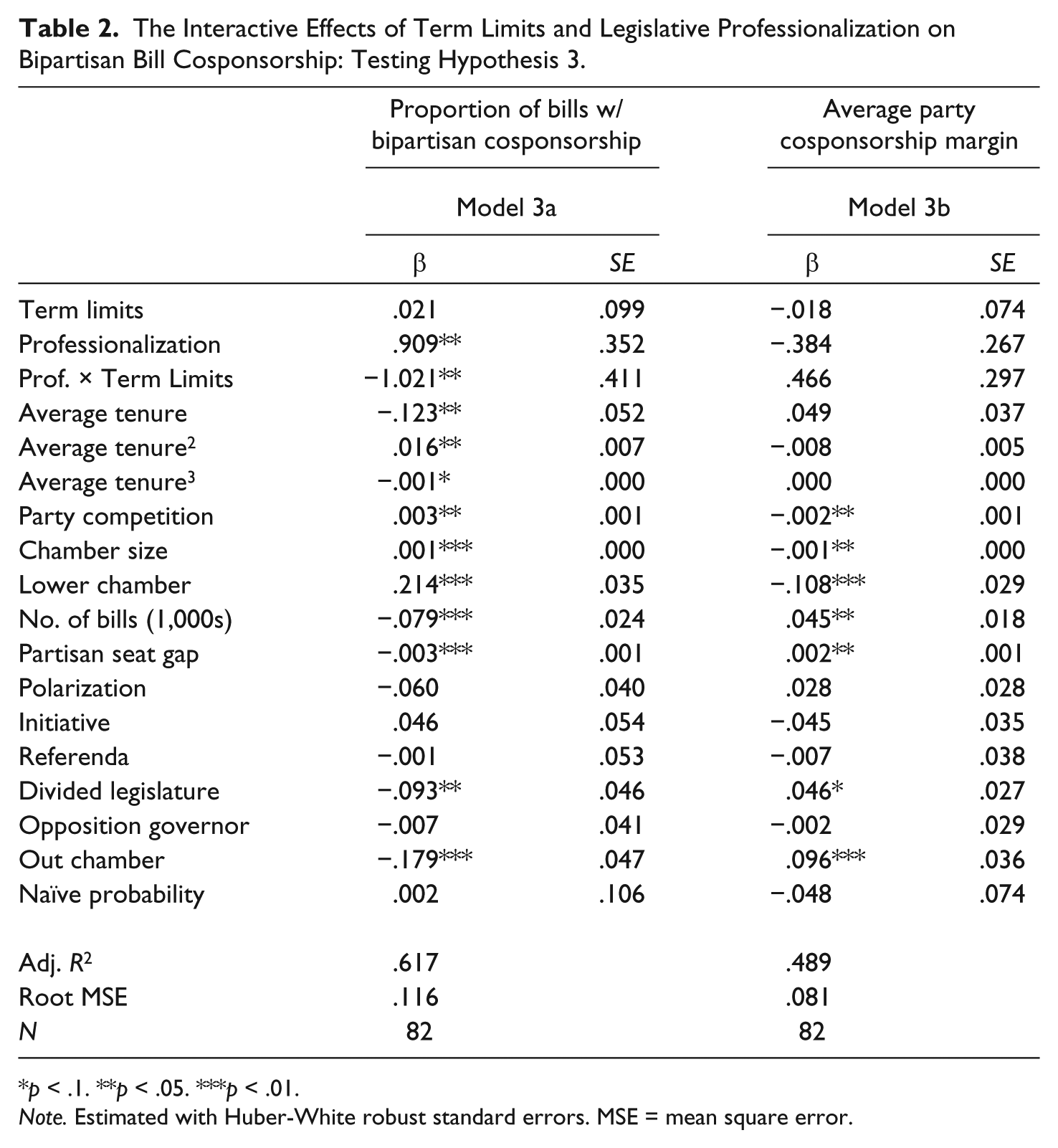
The Interactive Effects of Term Limits and Legislative Professionalization on Bipartisan Bill Cosponsorship: Testing Hypothesis 3.
p < .1. **p < .05. ***p < .01.
Note. Estimated with Huber-White robust standard errors. MSE = mean square error.
In Model 3a, the coefficient on the interaction term is signed as expected and statistically significant at traditional levels. Although the interaction term in Model 3b does not reach traditional levels of statistical significance, it is signed in the expected direction and produces a T-score of 1.57 with only 82 observations. Furthermore, the inclusion of the interaction significantly improves the fit of both models. For the proportion of bills receiving bipartisan cosponsorship, the addition of the interaction increased the adjusted R2 from .560 to .617, while the margins model increased from .460 to .489.
To more fully assess the effects of the interaction between term limits and legislative professionalization, we would benefit from a presentation of the results that allows us to interpret the effects of one variable across ranges of the other (Brambor, Clark, and Golder 2006). Figure 3 presents the marginal effects of term limits for both Models 2a and 2b and supports the contention in H2a that term limits have a negative impact on bipartisan cosponsorship conditional on the level of legislative professionalization in the chamber.
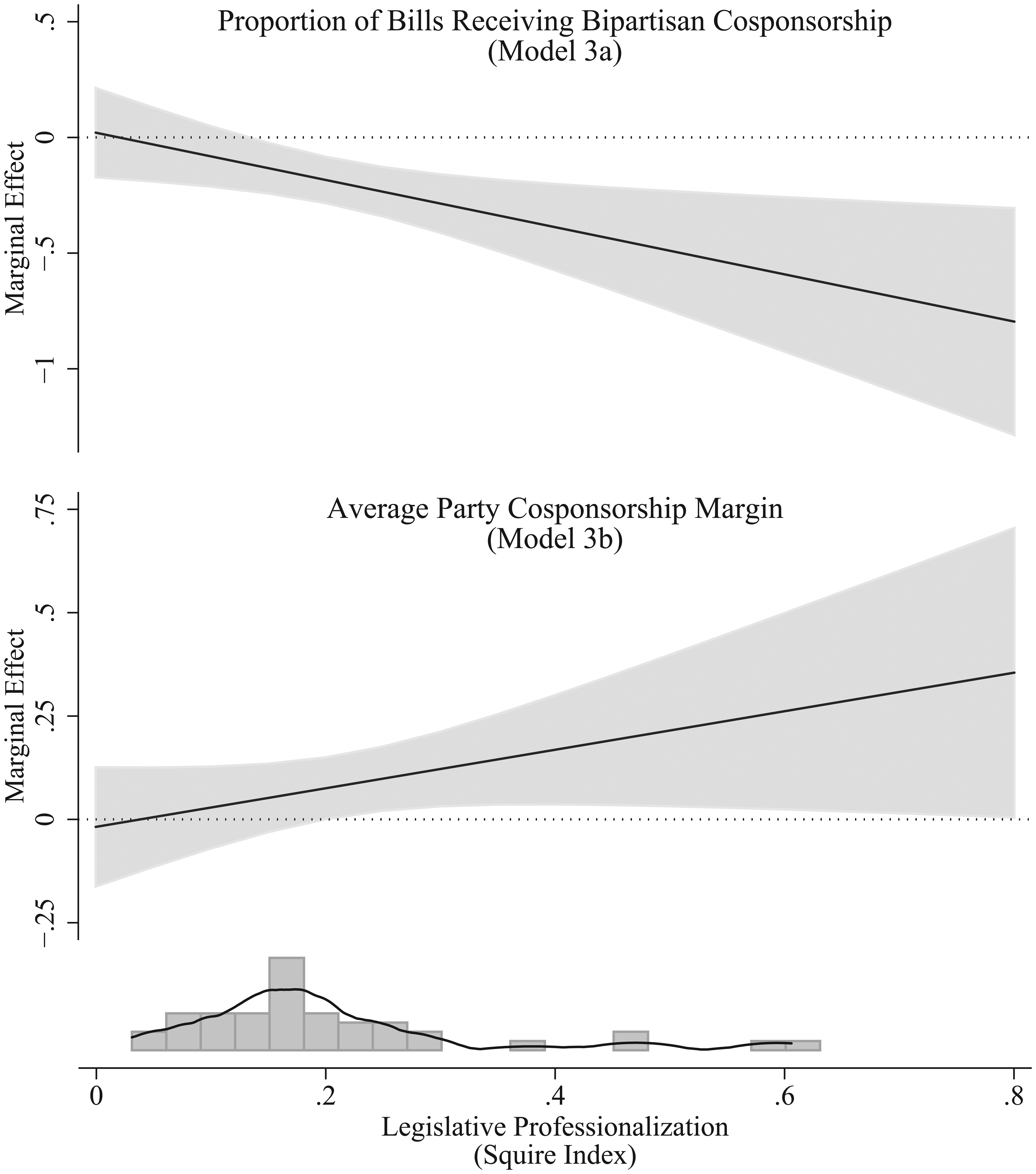
Marginal effects of term limits on bipartisan cosponsorship at differing levels of legislative professionalization.
The top portion of Figure 3 clearly shows that at low levels of professionalization (up to approximately .135), the effect of term limits is statistically indistinguishable from 0. However, once we move to values of professionalization higher than .135, we find that term limits exert a statistically significant and increasingly negative effect. Furthermore, the margins at the extreme values of professionalization are statistically different from each other at the .05 level. We see a similar, yet inverted, pattern for the average party cosponsorship margin. In this case, the effect becomes statistically significant and positive when professionalization is greater than .195.
Table 3 presents the marginal effects for professionalization in term limited and non-term limited states for Models 3a and 3b. Professionalization has a significant positive effect on the proportion of bills receiving bipartisan cosponsorship in non-term limited states as expected in H2b. While the sign on the marginal effect for professionalization in term limited states is negative, as anticipated, it fails to reach traditional levels of statistical significance. In term limited states, professionalization has no discernible effects in either model. Although it may be possible that we are incorrect in the specification of our theory, it is also possible that our sample of term limited chambers is simply too small to discern the effects of professionalization in those states.
Marginal Effects of Professionalization in Term Limited and Non-Term Limited States.

p < .1. **p < .05. ***p < .01.
In states without term limits, however, a 1 standard deviation increase in professionalization yields an increase in the proportion of bills receiving bipartisan cosponsorship of about .118. In addition, the results from Model 3a in Table 3 demonstrate that the marginal effects of professionalization in term limited and non-term limited states are statistically different from each other at the .05 level. The cosponsorship margin of Model 3b produces a similar pattern of marginal effects for professionalization yet they fail to reach tradition levels of statistical significance. It is important to note, however, that the interaction models include a significant amount of multicollinearity (mean variance inflation factor [VIF] = 72.82) due to the correlations among the interaction terms as well as the terms of the cubic polynomial for average tenure. Although this will not bias our coefficients, it does inflate our standard errors and reduce our certainty (Wooldridge 2009, 96–9). Because our models are prone to producing Type II errors, they represent particularly hard tests of our contentions. As such, we are not entirely discouraged by the statistically insignificant results from Model 3b that, nonetheless, demonstrate coefficients consistent in direction with our hypotheses.
Although the inclusion of the interaction generally improves the fit of our models, it also alters the estimates for some of our control variables. The effects of party competition, chamber size, the number of bills, the partisan seat gap, and divided legislatures remain largely unchanged from Models 2a and 2b. The measure of polarization, while maintaining the expected sign, is no longer statistically significant.
The most significant change, however, occurs with the tenure controls. In both Models 3a and 3b, the average tenure variables are jointly significant (p < .01 for Model 3a and p < .05 for Model 3b). This suggests that when we take the interaction between professionalization and term limits into account, average tenure does have an effect on bipartisan bill cosponsorship as term limits simultaneously operate via incentives. The marginal effects of tenure are displayed in Figure 4 and indicate that tenure has a negative and statistically significant effect on the proportion of bills receiving bipartisan cosponsorship at relatively low levels of average tenure (below 5 years), a small positive and statistically significant effect at moderate levels, and an insignificant effect at higher levels.
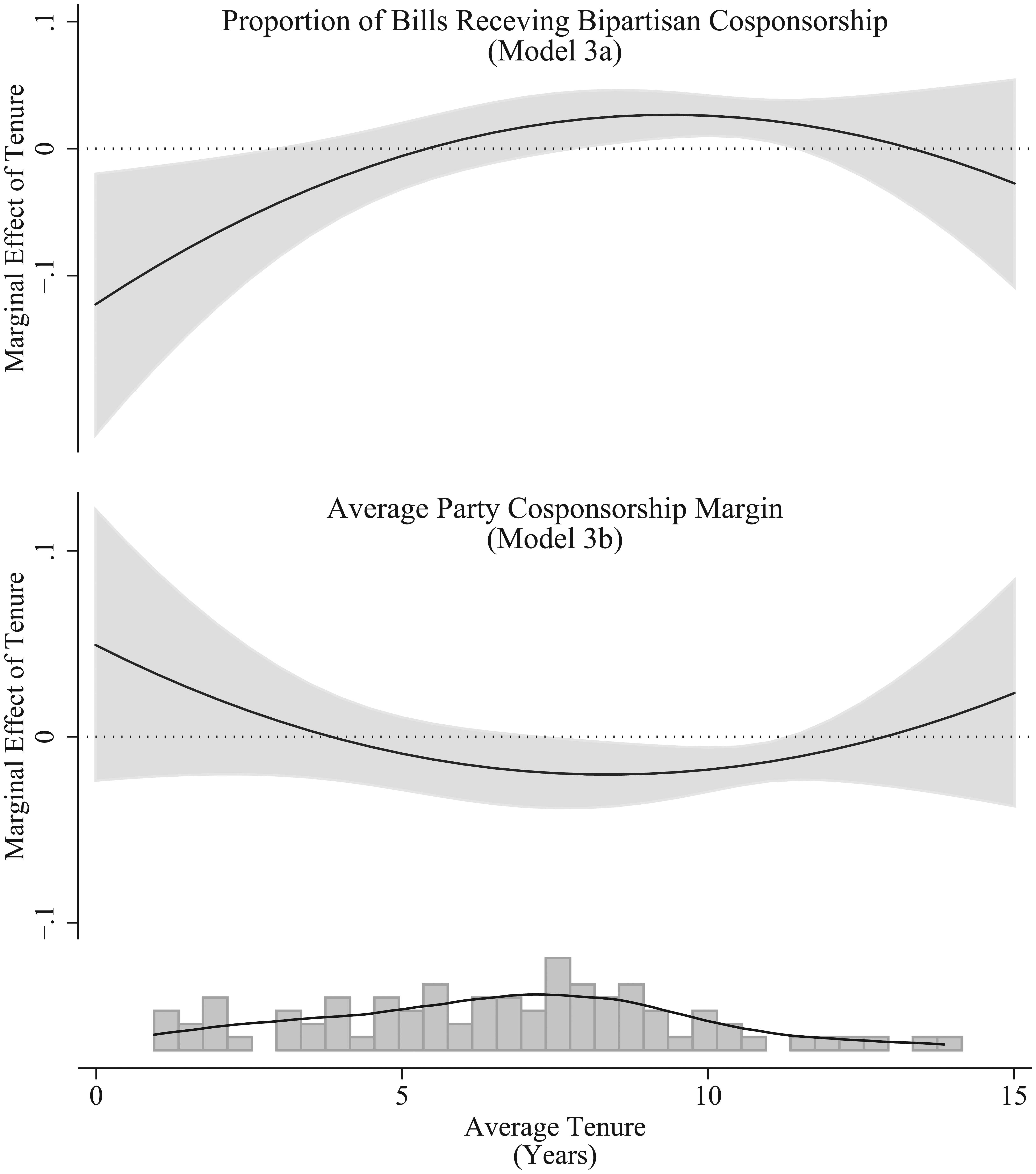
Marginal effects of average tenure on the proportion of bills with bipartisan cosponsorship and the average party cosponsorship margin.
In total, Models 3a and 3b provide us with evidence supporting our conditional hypotheses. Our analysis demonstrates that term limits reduce bipartisan collaboration to increasing degrees as the level of legislative professionalization increases. Professionalization has a positive effect on bipartisan collaboration, but only in non-term limited states. While the effects of professionalization in term limited states fail to reach traditional levels of statistical significance, they are in the predicted direction. In all, our findings support our contention that both term limits and professionalization shape the incentive structures that legislators face in different ways. Term limits induce a great deal of career uncertainty while professionalization makes careers in office very attractive. When both of these incentive structures are active, legislators have little reason to resort to bipartisan collaboration.
To demonstrate the real-world consequences of these findings, we turn to the substantive effects of the three variables of concern: term limits, legislative professionalization, and average tenure. The combined effects of term limits and professionalization in Models 3a and 3b are shown in Figure 5. All else equal, the degree of professionalization can have a strong and meaningful effect on the proportion of bills receiving bipartisan cosponsorship as well as the average cosponsorship margin. However, as previously noted, the effect is virtually nonexistent in non-term limited states, as is apparent by the flatter slopes. In addition, the prediction lines in Figure 5 are bold over the ranges where the predictions for term limited and non-term limited states have nonoverlapping confidence intervals. This shows us that—all else equal—the predicted levels of bipartisan cosponsorship for term limited and non-term limited states are indistinguishable from each other at low levels of professionalization where fewer incentives to pursue reelection exist. As these incentives grow, the predictions move apart and become statistically independent as predicted by our theory. Although the same pattern emerges for the margins, the confidence intervals overlap across the entire range of professionalization.

Substantive effects of term limits and professionalization: Models 3a and 3b.
Figure 6 displays the substantive effects of tenure. The dynamics identified by the marginal effect of tenure play out in the curve in the left panel of the figure; at low values of tenure, we expect greater proportions of bills to receive bipartisan cosponsorship than at moderate and high values of tenure. The lesser effect of tenure in Model 3b is made apparent by the much flatter curve in the right panel of Figure 6. While we still expect for more bipartisan cosponsorship at low values of tenure in Model 3b, the difference is much less substantial than in Model 3a.
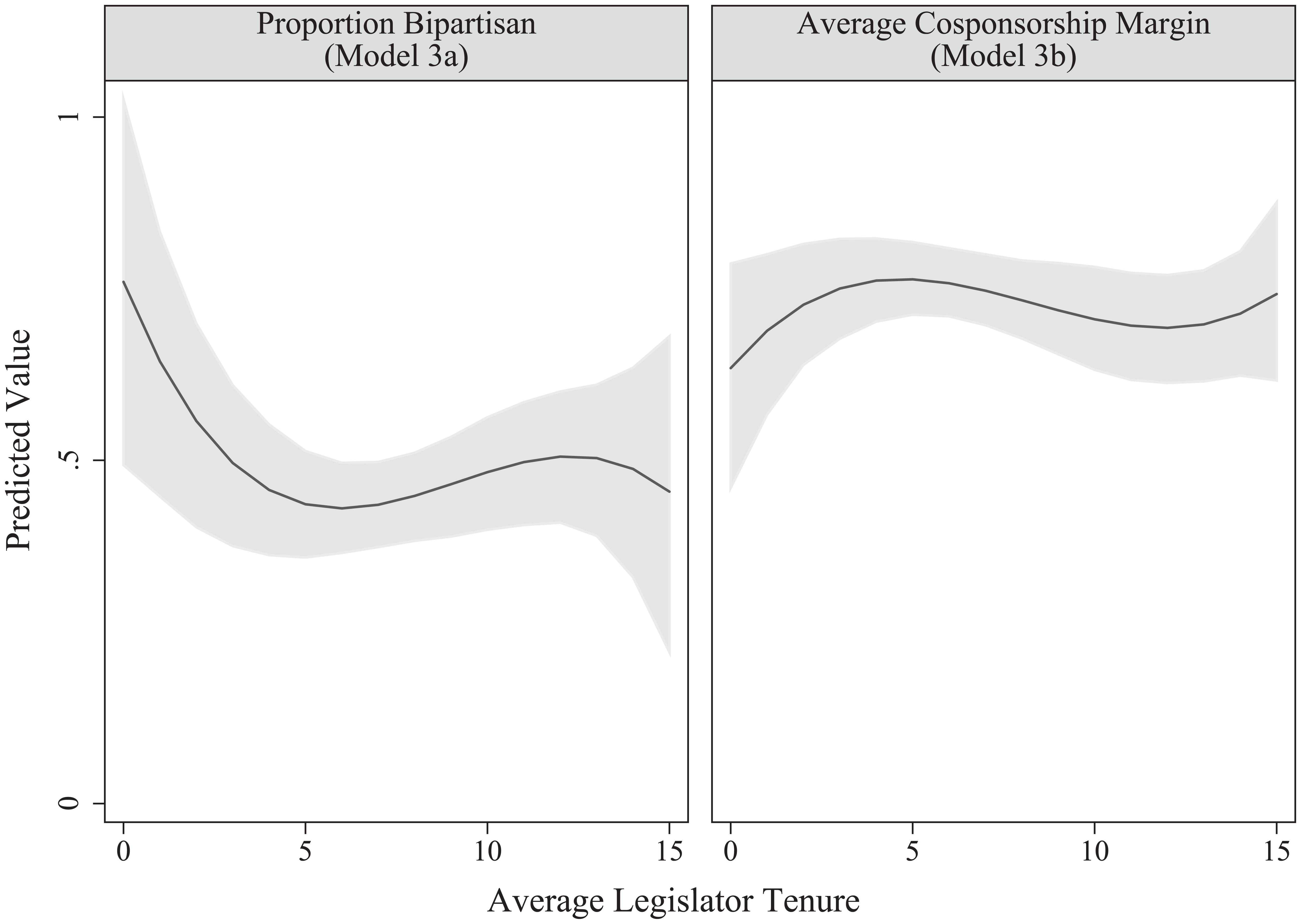
Substantive effects of average tenure: Models 4a and 4b.
Finally, we conclude our analysis by looking at the substantive effects across states. Figure 7 provides a series of maps that demonstrate the aggregate effects of simulating changes to term limits and professionalization across all states. The observed values map in the center of the figure (Map 5) provides the spatial distribution of the proportion of bills receiving bipartisan cosponsorship, while the eight predicted values maps demonstrate the effects of altering our key variables of term limits and professionalization. As is apparent, the national environment most conducive to bipartisan bill cosponsorship is found in Map 1 and represents the scenario where we eliminate term limits while increasing professionalization across the board. This is the only scenario where, on average, we see more than 60% bipartisan cosponsorship across the states. In addition, the scenarios with the lowest average levels of bipartisan cosponsorship are those either with no term limits and low professionalization or all term limits with high professionalization—16% and 17% bipartisan, respectively.

Aggregate effects of term limits and professionalization on the percentage of bills receiving bipartisan cosponsorship.
Perhaps most interesting, however, is the incredible similarity between Maps 6 and 8. This similarity indicates that, to a large extent, imposing term limits on all states has a similar aggregate effect to decreasing professionalization in all states by 2 standard deviations. In other words, as Thad Kousser has already articulated, term limits and professionalization “can be expected to have countervailing effects on the ways that lawmaking bodies work” (Kousser 2005, 6). It is also important to note that average legislative tenure is held at its observed value for all maps in Figure 7. Therefore, differences in these predictions attributed to term limits cannot be the result of term limits’ tenure reducing properties, but rather from the way they change incentives for behavior.
Discussion and Conclusion
The results of this analysis suggest that legislative term limits fundamentally alter the incentive structures for establishing collaborative legislative relationships. We provide more concrete evidence for the supposition that term limits foster increasingly partisan relations within legislatures. We find support for Squire’s (1998) speculation that the reduction in tenure caused by term limits would only minimally affect the processing of legislation. We do, however, find that term limits alter incentives in a way that affects legislative behavior.
Furthermore, term limited states with relatively high levels of professionalization should expect even lower levels of bipartisan collaboration than those with low levels of professionalization. This is a finding that is not easily explained when we consider tenure reduction to be the primary causal mechanism by which term limits have an effect on legislator behavior. Increasing professionalization should increase the degree of bipartisanship regardless of the level of tenure. In fact, it would make sense for professionalization to have a stronger positive effect at low levels of tenure to compensate for the lack of experience. However, we find evidence for the opposite when we interact term limits with legislative professionalization. We argue that this is because professionalization provides incentives for maintaining public office that induce a strong focus on career considerations, while term limits make bipartisanship a relatively unattractive electoral or policymaking strategy.
Not only did our findings show that term limits have an effect beyond simply reducing tenure in the chamber, they also indicated that alterations to incentives might be the primary means by which term limits shape legislative behavior. In both models that include term limits and tenure variables, term limits account for almost twice as much variation in the dependent variable as the tenure controls. 15 This largely conforms to Squire’s (1998) expectations that forced reduction in tenure caused by term limits should only have a minimal impact on legislative behavior. Although the results of our models appear quite robust, we must note that the generalizability of our conclusion is weakened by the exclusion of nine states (17 chambers). In addition, cosponsorship analyses only suggest the possibility of bipartisanship further in the legislative process. Nevertheless, we find the evidence presented here quite compelling and encourage scholars to pursue means of expanding this path of investigation.
Further work discerning between the tenure and incentive related effects of term limits would benefit from an individual level analysis, capable of comparing several different configurations of term limits, legislative resources (professionalization), and experience (tenure). Such an analysis would help us to understand how veterans and newcomers in both term limited and non-term limited states differ in their behavior. Furthermore, it would be informative to track the behavior of legislators over their careers in both term limited and non-term limited states to determine the differential effects of experience in these different contexts.
Our analysis also has real-world implications for the state of the term limits debate. One of the most common claims made by term limit advocates is that restraining tenure will lead to more “civic-minded” politicians (Will 1992). In addition, it is not uncommon for term limit proponents to allude to careerism as a primary obstacle to civic-mindedness. 16 Yet, our results indicate term limits may be imposing precisely the opposite effect—term limited legislators are less likely to engage in bipartisan collaboration. While non-term limited, professionalized legislatures tend to produce more bipartisan sponsored legislation, term limits sharply decrease the motivation to reach out to members of the opposite party. When members are more concerned about not crossing party lines, they could encourage the same gridlock (Binder 1999) that sparks public frustration and leads to increased support for term limits. In other words, term limit reforms may be exacerbating the same concerns that led to their original implementation.
Footnotes
Acknowledgements
The authors would like to thank Peverill Squire, Antoine Yoshinaka, L. Marvin Overby, Craig Volden, JoyAnna Hopper Laron Williams, Amanda Murdie and the editors and anonymous reviewers for their extremely helpful feedback. A previous version of this paper was presented at the 2015 meeting of the Midwest Political Science Association in Chicago, IL.
Declaration of Conflicting Interests
The author(s) declared no potential conflicts of interest with respect to the research, authorship, and/or publication of this article.
Funding
The author(s) received no financial support for the research, authorship, and/or publication of this article.