



Abstract
Though considerable research has been conducted on ethical leadership, we still know very little about the antecedents to ethical leadership perceptions. Drawing primarily from social learning theory, we propose a process model by which leader Machiavellianism affects ethical leadership, which is then hypothesized to influence psychological empowerment. In addition, we propose that team member role performance and organization-directed organizational citizenship behavior will be consequences of psychological empowerment. Drawing from a sample of 242 employees reporting to 82 leaders, our findings broadly demonstrate support for our hypotheses and advance our understanding of both antecedents and outcomes of ethical leadership. We discuss the theoretical implications of our findings, along with the practical insights, limitations, and future research opportunities.
Introduction
Due to a series of corporate scandals in the early 2000s, leadership researchers recognized the need to focus more on the role of leader ethics in scholarly work (Sims, 2009; Zona et al., 2013). This shift in focus has given rise to the emergence of leadership concepts such as ethical leadership (Brown et al., 2005). As evidence of the growing importance of the ethical leadership concept, there have recently been four meta-analyses published on the topic (Bedi et al., 2016; Hoch et al., 2018; Ng & Feldman, 2015; Peng & Kim, 2020). During this same general time period, there has been a renewed focus on Machiavellianism, which garnered considerable attention in the 1970s and 1980s but interest had since waned (Dahling et al., 2009). With its focus on a willingness to manipulate others for personal gain (Christie & Geis, 1970), Machiavellianism is a natural fit in trying to understand who is or is not going to engage in ethical behavior in the workplace. Indeed, research has demonstrated that those higher on Machiavellianism are more likely to engage in counterproductive behaviors (O’Boyle et al., 2012) and unethical behaviors (Greenbaum et al., 2017), while also experiencing interpersonal difficulties (Muris et al., 2017).
Though research on ethical leadership and Machiavellianism has independently flourished in recent years, there has been little research that has integrated the two concepts into empirical work. We feel that this is a worthy endeavor for four main reasons. First, Brown and Treviño (2006) posited that ethical leadership would be negatively related to Machiavellianism but other research has questioned that proposition. For example, Den Hartog and Belschak (2012) found support for leader Machiavellianism as a moderator of the relationship between ethical leadership and work engagement. They did not find a significant relationship between Machiavellianism and ethical leadership and speculated that Machiavellian leaders may be able to disguise their manipulative ways through impression management. Because of the ambiguity around this relationship and the limited research on it, we feel it is important to attempt to provide some clarity. We draw from the work of Brown and Treviño (2006) and social learning theory to suggest that the lack of trust in others and manipulative behavior demonstrated by Machiavellian leaders runs counter to the theoretical foundations of ethical leadership.
Second, a key question related to ethical leadership is “whether the likelihood of an individual being perceived as an ethical leader among subordinates can be predicted using his or her personal characteristics” (Walumbwa & Schaubroeck, 2009, p. 1275). The majority of the research that has been conducted on dispositional antecedents of ethical leadership has examined the Big Five personality traits (e.g., Kalshoven et al., 2011; Walumbwa & Schaubroeck, 2009). Though exploring traits that are generally seen as socially desirable, such as conscientiousness or core self-evaluations (Ahn et al., 2018), is insightful, our knowledge of the dispositional antecedents of ethical leadership is still somewhat limited unless we explore a broader range of personality variables. By exploring Machiavellianism as an antecedent, we expand our knowledge of the dispositional antecedents of ethical leadership, while also expanding the dispositional research into the “dark traits” (Smith et al., 2018).
Third, despite the emerging research on Machiavellian employees, considerably less research has focused on the impact of Machiavellian leaders (Belschak et al., 2018). This is a surprising limitation of the Machiavellianism literature given that the direct leader is seen as the face of the organization (Levinson, 1965) and is often the primary source of social information for employees (Zohar & Luria, 2005). This also limits our understanding of their impact on follower motivation (Dahling et al., 2012). We contribute to the leadership literature by examining a research model that explores the role of Machiavellianism on ethical leadership perceptions and employee motivation as conceptualized by psychological empowerment. Psychological empowerment is an intrinsically motivated orientation toward work that is encompassed in the four cognitions of meaning, competence, self-determination, and impact (Conger & Kanungo, 1988; Spreitzer, 1995; Thomas & Velthouse, 1990). As noted by Seibert et al. (2011) “closer integration of leadership and psychological empowerment theories appears to be an important development meriting further investigation” (p. 998). We answer this call by integrating psychological empowerment into our model, allowing further insight into the impact Machiavellian leaders may have on follower motivation.
Finally, we draw from role theory and research on psychological empowerment to examine team member role performance and organization-directed citizenship behavior as distal outcomes of leader Machiavellianism. As noted by Seibert et al. (2011), “a key objective of empowerment is to release the potential within employees to make a positive change in their work roles” (p. 985). Furthermore, in their development of the ethical leadership construct, Brown and Treviño (2006) noted that prosocial behaviors should result as followers attempt to emulate the behaviors of their leaders. Ethical leaders create an ethical culture that enable followers to take on additional roles without fear of having it held against them or being exploited (Peng & Kim, 2020). One role that has emerged in virtually every organization is one in which employees are required to work effectively with others in groups and teams. Team member role performance is the extent to which employees are able to work well with others for firm success (Welbourne et al., 1998). We included team member role performance because of the continued reliance on team-oriented work that occurs throughout most organizations (Kozlowski & Bell, 2013; Morgeson et al., 2010). As noted in a recent survey of organizational leaders, 91% of respondents suggested teams are a key part of organizational success (Martin & Bal, 2015). Given the dynamism present in most workplaces, this reliance on teams will likely be sustained for the foreseeable future and understanding how organizations can facilitate improved performance in this area is both of theoretical and practical relevance. Our full conceptual model is presented in Figure 1.
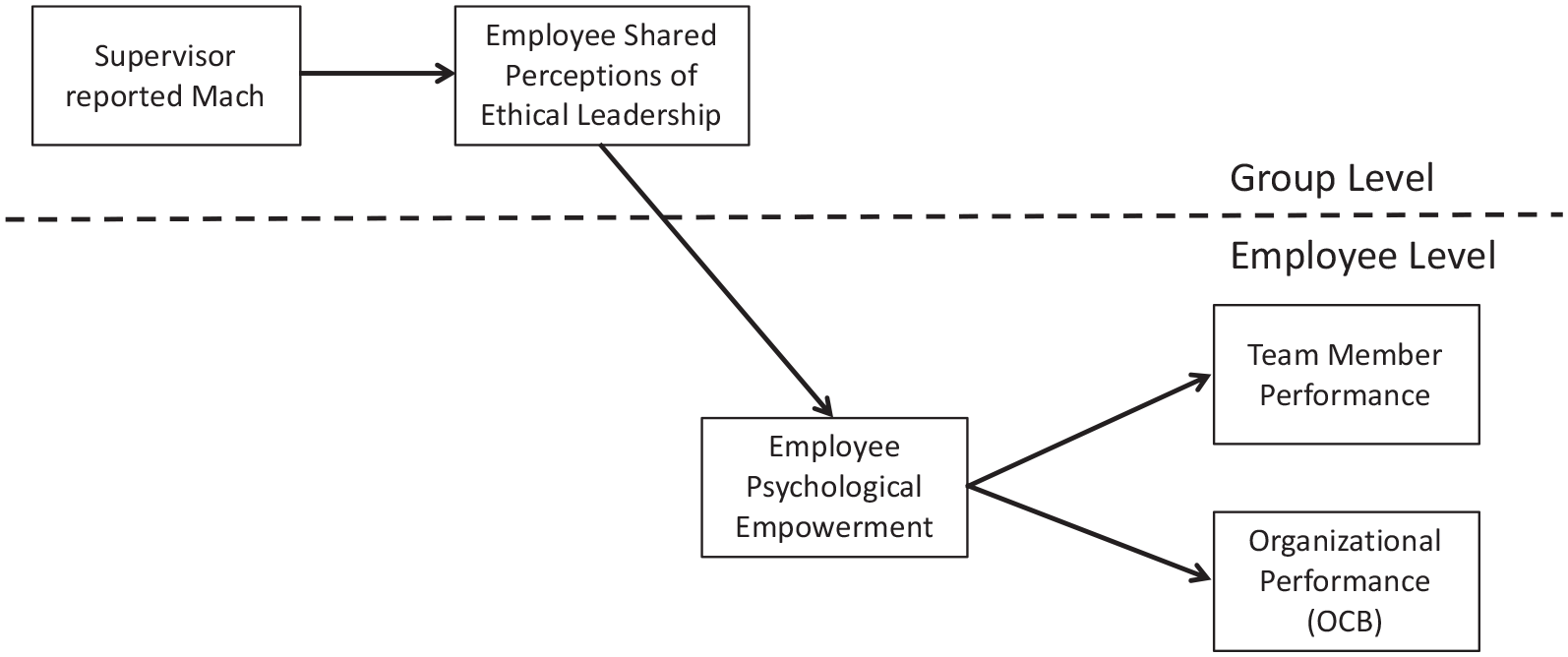
Conceptual model.
Hypothesis Development
Consistent with past research on ethical leadership, we draw primarily from social learning theory for our hypothesis development. Social learning theory suggests that people learn appropriate behaviors and attitudes by observing the actions of others while at work (Bandura, 1977, 1986). As individuals witness behavioral cues in their environment, their subsequent perceptions and behavioral intentions are affected by these cues. The tenets of social learning theory are particularly relevant as it pertains to organizational leaders. Indeed, Brown et al. (2005) drew from social learning theory to develop the conceptualization of ethical leadership utilized in this study. They defined ethical leadership as “the demonstration of normatively appropriate conduct through personal actions and interpersonal relationships, and the promotion of such conduct to followers through two-way communication, reinforcement, and decision-making” (Brown et al., 2005, p. 120).
Ethical leadership represents an approach that is characterized by demonstrating high moral standards and showing a level of respect and trust in others that then motivates followers to develop attitudes and behaviors that affect organizational success (Brown & Treviño, 2006). Ethical leadership highlights both being a moral person and a moral manager. As a moral person, ethical leaders treat others with fairness, are trustworthy and responsible (Riggio et al., 2010). As a moral manager, ethical leaders try to emulate ethical behaviors through role modeling of appropriate behaviors and communicating the importance of ethical behavior (Brown et al., 2005). Ethical leadership has been shown to affect employee performance (Walumbwa et al., 2012), along with job satisfaction, organizational commitment, and reduced turnover intentions (Bedi et al., 2016; Ng & Feldman, 2015).
Machiavellianism and Ethical Leadership
Despite the vast literature on ethical leadership, we still know very little about its antecedents (Brown & Mitchell, 2010). To our knowledge, there have been just a handful of studies that have explored these antecedents. Mayer et al. (2012) found that moral identity symbolization and internalization were antecedents to ethical leadership perceptions. Brown and Treviño (2014) identified the presence of role models as important antecedents to being an ethical leader. However, relevant to our research, the majority of the research that has explored dispositional antecedents to ethical leadership have studied the Big Five traits of personality (Kalshoven et al., 2011; Walumbwa & Schaubroeck, 2009; Xu et al., 2011). This is a limitation of the ethical leadership literature given that research that integrates “dark personality” traits and leadership has seen increased attention in recent years (Smith et al., 2018). Furthermore, as noted previously, the relationship between Machiavellianism and ethical leadership was proposed by Brown and Treviño (2006) in early development of the ethical leadership concept.
Machiavellianism is a trait-like variable in which one possesses a cynical worldview, a tendency to behave in unethical ways, and a willingness to manipulate others for personal gain (Christie & Geis, 1970). We draw from the work of Dahling et al. (2009) and conceptualize Machiavellianism as having four underlying facets: distrust of others, desire for status, desire for control, and amoral manipulation. Distrust of others is defined as “a cynical outlook on the motivations and intentions of others with a concern for the negative implications that those intentions have for the self” (Dahling et al., 2009, p. 227). Desire for status is a desire to accumulate external indicators of success while desire for control represents a need to maintain dominance in interpersonal situations in order to minimize the power held by others (Dahling et al., 2009). Finally, amoral manipulation is a “willingness to disregard standards of morality and see value in behaviors that benefit the self at the expense of others” (Dahling et al., 2009. p. 228).
We expect that leader Machiavellianism will have a direct negative impact on ethical leadership perceptions held by employees. Brown and Treviño (2006) proposed that Machiavellian leaders, in contrast with ethical leaders, motivate others through manipulation for their own self-gain. Furthermore, another key facet of Machiavellianism is distrust of others, which is reflected in a cynical view for the motivation and intentions of others (Dahling et al., 2009). In contrast to this, ethical leaders place an emphasis on trust, integrity, and treating others with fairness (Den Hartog, 2015). Conceptually, the world view of a Machiavellian runs counter to that of the ethical leader. From an empirical perspective, research has clearly suggested that those higher on Machiavellianism are likely to engage in behaviors that would not be consistent with ethical leadership. For example, Greenbaum et al. (2017) found that all four facets of Machiavellianism were significantly correlated with unethical behaviors. More broadly, Machiavellianism has been associated with a wide range of negative workplace behaviors, including theft, sabotage and cheating (Dahling et al., 2012). Finally, a recent meta-analysis found that high Machiavellian individuals are more prone to interpersonal difficulties, antisocial tactics, and erratic behavior (Muris et al., 2017).
From a social learning theory perspective, ethical leadership perceptions held by followers are likely to be shaped as employees operate within their social context and observe the behaviors of their leaders (Bandura, 1977, 1986). A key element of social learning theory is the vicarious learning that takes places as behaviors are role modeled in the workplace. As such, follower perceptions of their leader will in part be shaped through this vicarious learning process as they witness leader behaviors. As previously discussed, Machiavellian leaders are more prone to engage in unethical behavior (e.g., Greenbaum et al, 2017), show little concern for others (Dahling et al., 2009; Deluga, 2001), and be deceitful in interpersonal relationships (Christie & Geis, 1970). These behaviors will certainly be observed by their followers and are not representative of the behavioral tendencies that followers expect from an ethical leader. This presents a fundamental tension between these two concepts both conceptually and theoretically. Thus, we posit the following:
Ethical Leadership and Psychological Empowerment
We include psychological empowerment in our research model, in part, to further explore the motivational processes by which ethical leadership affects important outcomes at work. As noted by Ng and Feldman (2015), though we know much about the outcomes of ethical leadership, “we know much less about the mediating psychological processes through which EL elicits these effects” (p. 948). Recent research has begun to uncover these processes. For example, Peng and Kim (2020) explored four mediators in the ethical leadership-work outcomes relationship that included trust in the leader, LMX, ethical culture, and organizational identification. This is important research that advances our understanding of how ethical leadership affects work outcomes but does not include a motivational variable in the model. We included psychological empowerment to capture intrinsic motivation.
Psychological empowerment is an intrinsic motivational state composed of four underlying facets: meaning, competence, self-determination, and impact (Spreitzer, 1995). Meaning captures the extent to which the employees work role aligns with personal values and ideals (Hackman & Oldham, 1980). Competence refers to the beliefs one holds that he or she is capable of successfully performing one’s job responsibilities (Bandura, 1986; Lawler, 1973). Self-determination is the sense that one has autonomy and control over how to carry out job tasks (Deci et al., 1989). Finally, impact is the belief that the tasks associated with one’s job can influence important outcomes in the work unit (Abramson et al., 1978; Ashforth & Mael, 1989).
Social learning theory not only highlights the behavioral role modeling of leaders but also involves a cognitive process by which the leader’s behavior provides information to help make sense of the social context (Dust et al., 2018). Ethical leaders are characterized as both moral people and moral managers (Brown & Treviño, 2006). As a moral person, ethical leaders are fair, honest, treat others with respect, and act with integrity (Brown et al., 2005). As a moral manager, they are likely to highlight the importance of these elements to their employees as they carry out their work and make note of the ways in which the employees work provides value to the organization. Thus, to the extent that employees feel an alignment of their own values to the work that they are doing, driven by their leader’s articulation of these principles, they are more likely to find meaning in their work. Additionally, while serving as a role model of ethical behavior (Brown & Treviño, 2006), the ethical leader demonstrates that doing things the “right way” is expected of others, creating a focus on the importance of values (Treviño et al., 2003). Demirtas et al. (2017) provide support for this assertion as they found that ethical leadership positively affected meaningful work.
Ethical leaders also engage in an ongoing dialogue with their followers to listen to their ideas and offer feedback (Treviño et al., 2000; Treviño et al., 2003), thus providing followers with important information that enhances the extent to which they feel their work has a broader impact on organizational objectives. Indeed, Piccolo et al. (2010) found that ethical leadership was significantly related to task significance, which captures a sense of impact in one’s work (Hackman & Oldham, 1980). Fehr et al. (2015) recently suggested that a foundation of ethical leadership is the cultivation of follower self-determination. Ethical leaders model ethical decision making and, through this role modeling, encourage followers to make critical decisions and take responsibility for those decisions (Walumbwa et al., 2012). This requires that followers think about the long-term consequences of their decisions, giving them a greater sense of control of their work (Dust et al., 2018). In support of this relationship, Piccolo et al. (2010) found a positive relationship between ethical leadership and job autonomy.
Finally, ethical leaders treat followers with respect and fairness not only because they are moral people but because as a moral manager, it is the right thing to do (Brown et al., 2005). This concern for the well-being of followers is likely to lead to the leader being concerned with the development needs of followers (Fehr et al., 2015; Zhu et al., 2004). This development of competence may come through the role modeling of appropriate behaviors or the follower feeling they can speak up and ask questions (Brown et al., 2005). Support for this relationship has been demonstrated in past research as ethical leadership has been shown to impact self-efficacy (e.g., Bedi et al., 2016; Walumbwa et al., 2012).
The previous sections provide conceptual and empirical support for ethical leadership and its role in shaping the four facets of psychological empowerment. Consistent with past research (e.g., Seibert et al., 2011; Spreitzer, 1995), psychological empowerment is a construct composed of these four dimensions and we expect that ethical leadership will have a positive relationship with psychological empowerment. Several previous studies have reported a significant relationship between ethical leadership and psychological empowerment (e.g., Duan et al., 2018; Dust et al., 2018; Zhu, 2008; Zhu et al., 2004).
The integration of the research model of our study suggests that the influence of leader Machiavellianism on psychological empowerment will occur indirectly through employee perceptions of ethical leadership. We expect that the mechanism by which leader Machiavellianism affects psychological empowerment is through ethical leadership perceptions held by followers. Machiavellian leader distrust of others will lead to lower levels of trust in the leader–follower relationship, a cornerstone of ethical leadership. The lack of trust that is foundational to ethical leadership is likely to affect the sense of self-determination that followers feel in that they may not feel safe to engage in autonomous actions. Leaders higher on desire for status may engage in behaviors that highlight their own contributions, while minimizing the contributions of followers. Furthermore, they are more likely to undermine their followers for their own personal gain. This is likely to be seen as unethical behavior in the eyes of followers and minimizing the impact they feel their work has. In considering the development of Hypotheses 1 and 2 and the arguments above, we posit the following:
Psychological Empowerment and Work Outcomes
Drawing from role theory, Welbourne et al. (1998) developed a theory-based measure of performance. Role theory suggests that individuals take on many roles within a social context and that organizations are composed of interdependent behaviors of those holding various roles (Katz & Kahn, 1978). Indeed, researchers of organizations have long proposed that job performance be measured by various roles and behaviors consistent with those roles (Ilgen & Hollenbeck, 1992). For our study, we include two measures of role performance: team member role performance and organization-directed organizational citizenship behavior (OCB).
As previously discussed, the use of groups and teams is prevalent in organizations. It is difficult to imagine a workplace where working well with others is not valued by leadership and the organization. As noted by Welbourne et al. (1998), “teamwork has been a critical component of organizational performance for years” (p. 543). Employees who take on this important role and are high-performing team members are able to effectively collaborate with colleagues and share information with others for the betterment of their organization. In our study, we explore the relationship between psychological empowerment and team member role performance, defined as the extent to which an employee works with colleagues and team members for the benefit of the firm (Welbourne et al., 1998). As noted by Spreitzer (2008), empowered employees are likely to take a more active orientation toward their work, which should also affect their ability and motivation to respond to the needs of coworkers.
Though we are aware of no study that has empirically examined the relationship between team member role performance and psychological empowerment, there is empirical and conceptual evidence to support the relationship. The facet of competence is expected to provide employees the confidence to provide assistance to coworkers and share the knowledge that they feel they possess (Griffin et al., 2007). Self-determination should provide employees with the sense of freedom to feel they can do what is required to make sure the team is successful, including stepping outside of their assigned job role to assist others. Finally, employees who experience high levels of impact feel they can influence things at work (Ashforth & Mael, 1989), thus giving them the intrinsic motivation to ensure that their coworkers have the information and assistance needed to perform their work. Empirically, Chen et al. (2007) found that psychological empowerment was positively related to a broader measure of role performance. Seibert et al. (2011) found that team empowerment was related to team performance in their meta-analysis. Though this was at the group level, they did suggest that there is identical homology across levels for the empowerment construct. Based on the evidence presented above, we believe that team member performance will positively relate to psychological empowerment.
We also expect that psychological empowerment will be related to organization-directed OCB, defined as going above the call of duty on behalf of the organization (Organ, 1988; Welbourne et al., 1998). The relationship between psychological empowerment and OCB is well established, as Seibert et al. (2011) found that empowerment was positively related to OCB. For specific facets, meaningfulness should lead to higher OCB because the valuation encourages a sense of connection to the organization (Eby & Dobbins, 1997) and higher levels of citizenship behaviors (Moorman & Blakely, 1995; Van Dyne et al., 2000). Competence and impact also encourage OCB because these employees high on these facets should recognize themselves as more capable to achieve positive outcomes in their work if they put forth the effort and to feel their efforts will have an influence on the organization (Spreitzer, 1995). Considering all of the evidence provided in the previous paragraphs, we put forth the following hypothesis.
Our integrated research model proposes that the impact of ethical leadership on the outcomes in our study will occur indirectly through psychological empowerment. We can draw from self-determination theory (SDT) to support this indirect effect hypothesis (Ryan & Deci, 2000). SDT suggests that as followers experience autonomy, competence, and relatedness, they will develop a sense of intrinsic motivation at work (Gagné & Deci, 2005). Given that autonomy and competence are key elements of psychological empowerment, it is theoretically consistent with SDT to posit that employees experiencing higher levels of psychological empowerment will experience the intrinsic motivation necessary to engage in both team member and organization-member role performance. Therefore, we posit the following:
Method
Procedure and Sample
The participants in this study were recruited by undergraduate students who attended a university in the Mid-Atlantic region of the United States. The students were provided with the opportunity to earn extra credit for recruiting participants and were asked to recruit three employees and the supervisor to whom all three employees reported. Also known as the snowball technique, this data collection process has been utilized in past studies (e.g., Gosserand & Diefendorff, 2005; Grant & Mayer, 2009; Mayer et al., 2009). Student-recruited sampling has increased in recent years and there is some initial evidence that this sampling technique results in sample characteristics and effect sizes that are similar to more traditional data collection techniques (Wheeler et al., 2014). Furthermore, it may be that this technique allows for greater generalization of the results since participants often come from a broad array of industries (Demerouti & Rispens, 2014; Frieder et al., 2015).
For each recruited participant, the students were asked to provide company names, telephone numbers, and email addresses to the researchers. Students were told that the researchers would reach out to a random sample of potential participants to verify their willingness to participate. All survey links were sent to participants via email. The employee survey and the first of the two supervisor surveys were sent at the same time. Supervisors were asked to assign a number to each employee and inform the employee of that number. The employees provided the student name that recruited them, along with the supervisor assigned number. The same employee number was provided by the supervisor when evaluating performance, along with the recruiting students name, so that we could link surveys across time but maintain anonymity. The supervisor provided their response to the scale on Machiavellianism, while the employees provided responses to measures for ethical leadership and psychological empowerment. The second survey, which was filled out only by the supervisor and contained the measures for performance, was sent approximately 2 weeks after the initial surveys.
The final recruited sample consisted of 267 full-time employees who reported to 91 supervisors. However, 25 of the participants either did not provide completed data or we did not receive performance ratings from their supervisor, resulting in a final sample of 242 employees who reported to 82 unique supervisors. However, 59% of the recruited employees were female and the average age was 33.71 years (SD = 12.08). The average organizational tenure among the employees was 6.38 years (SD = 7.36) and the average tenure with their current supervisor was 2.88 years (SD = 2.90). 60.3% of the employees were Caucasian, 26.0% were African American, 3.7% were Hispanic, 5.0% were Asian, and the remaining 5.0% were “other.” For the supervisors, 60% of them were female, the average age was 42.52 years (SD = 11.29), 70.7% were Caucasian, 27.3% were African American, and 2.1% reported being “other.” The average organizational tenure of the supervisors was 10.31 years (SD = 8.56).
Measures
Leader Machiavellianism
Supervisors reported on their own Machiavellianism utilizing the 16-item scale by Dahling et al. (2009). This scale has four facets that make up the Machiavellianism construct: Amoral manipulation (five items; “I am willing to be unethical if I believe it will help me succeed”), desire for status (three items; “Status is a good sign of success in life”), desire for control (three items; “I enjoy having control over people”), and distrust of others (five items; “People are only motivated by personal gain”). Each item was assessed on a 5-point Likert-type scale (1 = strongly disagree; 5 = strongly agree). The overall scale demonstrated acceptable reliability (α = .85).
Ethical Leadership
Employees assessed their direct manager on the 10-item ethical leadership scale developed by Brown et al. (2005) utilizing a 5-point Likert-type scale (1 = strongly disagree; 5 = strongly agree). A sample item from the scale is “Conducts his or her life in an ethical manner.” The scale demonstrated acceptable reliability with α = .94.
Psychological Empowerment
Employees completed the 12-item version of the psychological empowerment scale as developed by Spreitzer (1995). Each item was answered on a 7-point Likert-type scale (1 = strongly disagree; 7 = strongly agree). Past research has shown that psychological empowerment is a higher order construct that is composed of four underlying factors: competence (“I am confident about my ability to do my job”), self-determination (“I have significant autonomy in determining how I do my job”), impact (“My impact on what happens in my department is large”), and meaning (“The work that I do is important to me”). We used the higher order factor of psychological empowerment in all analysis and the overall scale demonstrated acceptable reliability (α = .89).
Team Member Role Performance
Supervisors evaluated team member role performance on a four-item scale developed by Welbourne et al. (1998). The items were anchored on a 5-point scale (1 = needs much improvement; 5 = excellent) indicating how well the follower performed in this role. A sample item is “working as part of a team or work group” and the scale demonstrated acceptable internal consistency (α = .91).
Organization-Directed OCB
Supervisors evaluated organization-directed citizenship behavior on a four-item scale developed by Welbourne et al. (1998). The items were anchored on a 5-point scale (1 = needs much improvement; 5 = excellent). A sample item includes “doing things that help others when it’s not part of his or her job” and the scale demonstrated acceptable internal consistency (α = .91).
Control Variables
Employee age and tenure were included as control variables, since each has been shown to be related to psychological empowerment (Seibert et al., 2011). These control variables were also modeled onto both outcome variables. Also, leader age, ethnicity and gender were included since each has been shown to be related to Machiavellianism (Dahling et al., 2009).
Results
Means, standard deviations, and bivariate correlations of the supervisor- and employee-level variables are presented in Table 1. The correlations are all in the expected directions and magnitude, though the correlation between team member role performance and organization-directed OCB is high at 0.75. To assess the discriminant validity of these two constructs, we calculated average variance extracted (AVE; Fornell & Larcker, 1981). The AVE values for team member role performance and organization-directed OCB were 0.72 and 0.73, respectively. According to Hair et al. (2014), discriminant validity is demonstrated when the AVE of both constructs is greater than the squared correlation between those two constructs. The squared correlation value in this case is 0.56, so evidence is supportive of these two constructs demonstrating discriminant validity.
Means, Standard Deviations, and Correlations.
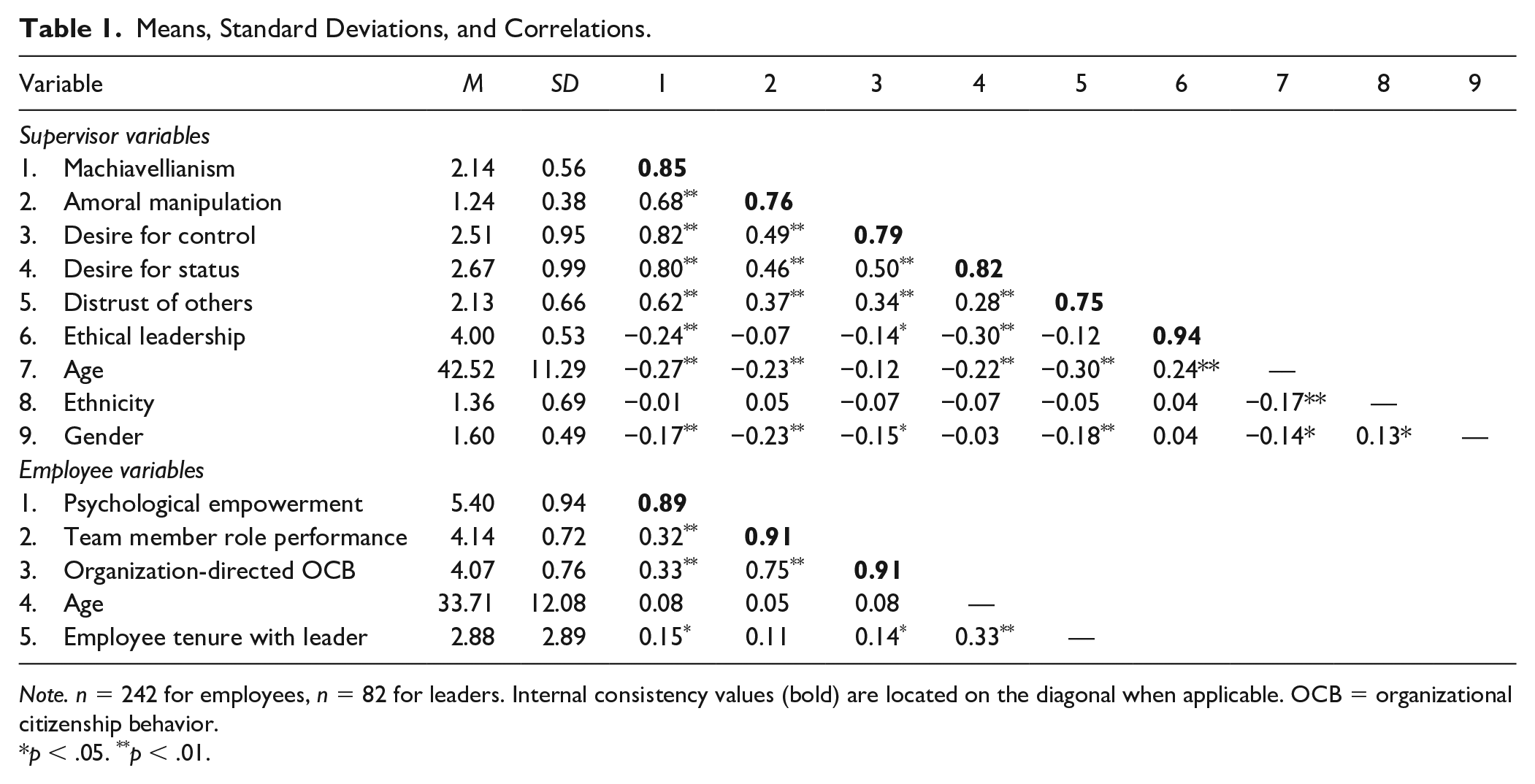
Note. n = 242 for employees, n = 82 for leaders. Internal consistency values (bold) are located on the diagonal when applicable. OCB = organizational citizenship behavior.
p < .05. **p < .01.
Confirmatory Factor Analysis and Data Aggregation
The employees in our sample are nested within leaders, which may result in group-level effects on ethical leadership perceptions and performance ratings. Indeed, the ICC (1) values for ethical leadership (.38), team member role performance (.35), and organization-directed OCB (.42) suggest group-level effects. Therefore, we conducted a multilevel CFA to assess the dimensionality of our study variables. We tested a measurement model with the items from leader Machiavellianism and ratings of performance, along with employee perceptions of ethical leadership and psychological empowerment. We modeled psychological empowerment and Machiavellianism as higher order constructs, as supported by prior research (Dahling et al., 2009; Seibert et al., 2011). We modeled psychological empowerment at the individual level and both Machiavellianism and ethical leadership at the group level. Both performance variables were modeled at both the individual and group levels.
We utilized MPlus 8 to conduct our CFAs (Muthen & Muthen, 1998/2017). Our measurement model fit the data well, χ2 = 1271. 94 (689 degrees of freedom [df]), comparative fit index (CFI) = .91, root mean square approximation (RMSEA) = .06, within-level (Level 1) standardized root mean square residual (SRMRwithin) = .07, and between-level (Level 2) SRMR (SRMRbetween) = .08. We tested a number of alternative models. For example, because of the high correlation between the two outcome variables, we tested a model that combined the performance scales into a single factor. We also tested models that conceptualized leader Machiavellianism and psychological empowerment as multidimensional constructs rather than higher order factors. Our conceptual model provided better fit to the data than these alternatives, therefore, we used our theorized conceptual model to test our hypotheses. Prior to hypothesis testing, we aggregated ethical leadership to the group level. The results of a one-way analysis of variance (ANOVA) showed that ethical leadership mean levels differed across groups, F(81, 160) = 2.67, p < .01. As discussed previously, ICC(1) for ethical leadership was .38 and ICC(2) was .62. Finally, rwg(j) for ethical leadership was 0.64. Though rwg(j) falls below the general rule of thumb of 0.70 (Bliese, 2000), the data generally supports aggregation to the group level for ethical leadership.
Hypothesis Testing
We conducted our alternative model testing and hypothesis tests with Mplus 8 (Muthen & Muthen, 1998/2017) with multilevel path analysis in which we use the manifest variables in estimation and consistent with recommendations by Preacher et al. (2010). This technique allows for the calculation of both direct and indirect effects simultaneously. In our analysis, we used maximum likelihood with robust standard errors for the coefficient estimates. We allowed organization-directed OCB and team performance to correlate at both levels, which accounts for the possibility of unmodeled common predictors (Colquitt et al., 2012). The control variables were included as well, with employee tenure and age with fixed effects to psychological empowerment and the two study outcomes and leader age, ethnicity, and gender with fixed effects on Machiavellianism and ethical leadership.
The fit statistics for our theoretical model fit the data well, with χ2 = 30.84 (13 df), CFI = .94, RMSEA = .08, SRMRwithin = .02 and SRMRbetween = .17. We tested an alternative model that allowed for a direct path from Machiavellianism to psychological empowerment but that model did not significantly improve model fit, Δχ2 = 1.39, 1 df; χ2 = 29.45 (13 df), CFI = .94, RMSEA = .08, SRMRwithin = .02 and SRMRbetween = .16). In this model, the direct effect of Machiavellianism on psychological empowerment was not significant (γ = .12, p = .28). We also tested an alternative model that allowed ethical leadership to have a direct path with both team member role performance and organization-directed OCB. This model did fit the data significantly better than our theoretical model, with χ2 = 1.99 (3 df), CFI = .99, RMSEA = .01, SRMRwithin = .01 and SRMRbetween = .03. We therefore used the better fitting model that allowed both direct and indirect effects of ethical leadership on our study outcomes in assessing hypotheses.
Hypothesis 1 posited that leader reported Machiavellianism would be negatively related to employee perceptions of ethical leadership. Results from our analysis dem-onstrated support for this hypothesis as Machiavellianism was negatively related to ethical leadership (γ = −.23, p < .05). Hypothesis 2 indicated that employee perceptions of ethical leadership would be positively related to psychological empowerment and this hypothesis also found support (γ = .44, p < .01). Hypothesis 3 integrated Hypotheses 1 and 2 and suggested that leader Machiavellianism would negatively impact employee perceptions of psychological empowerment indirectly through ethical leadership. To test the indirect effects, we estimated the confidence intervals (CI) and the results of this analysis showed that the indirect effect of Machiavellianism on psychological empowerment through ethical leadership was negative and significant, as hypothesized (−.10, 95% CI [−.203, −.006]).
Psychological empowerment was hypothesized to positively impact both team member role performance and organization-directed citizenship behavior. This hypothesis was fully supported as psychological empowerment was positively related to team member role performance (γ = .19, p < .01) and organization-directed citizenship behavior (γ = .18, p < .01). Finally, Hypothesis 5 posited that employee perceptions of ethical leadership would have a positive indirect effect on both outcomes through psychological empowerment. This hypothesis was supported as the indirect effect of ethical leadership on team member role performance (.084, 95% CI [.007, .160]) and organization-directed citizenship behavior (.078, 95% CI [.003, .152]) were both significant. Table 2 shows the results of the multilevel path analysis, including the significant direct effects of ethical leadership on both work outcomes.
Multilevel Path Analysis Results.
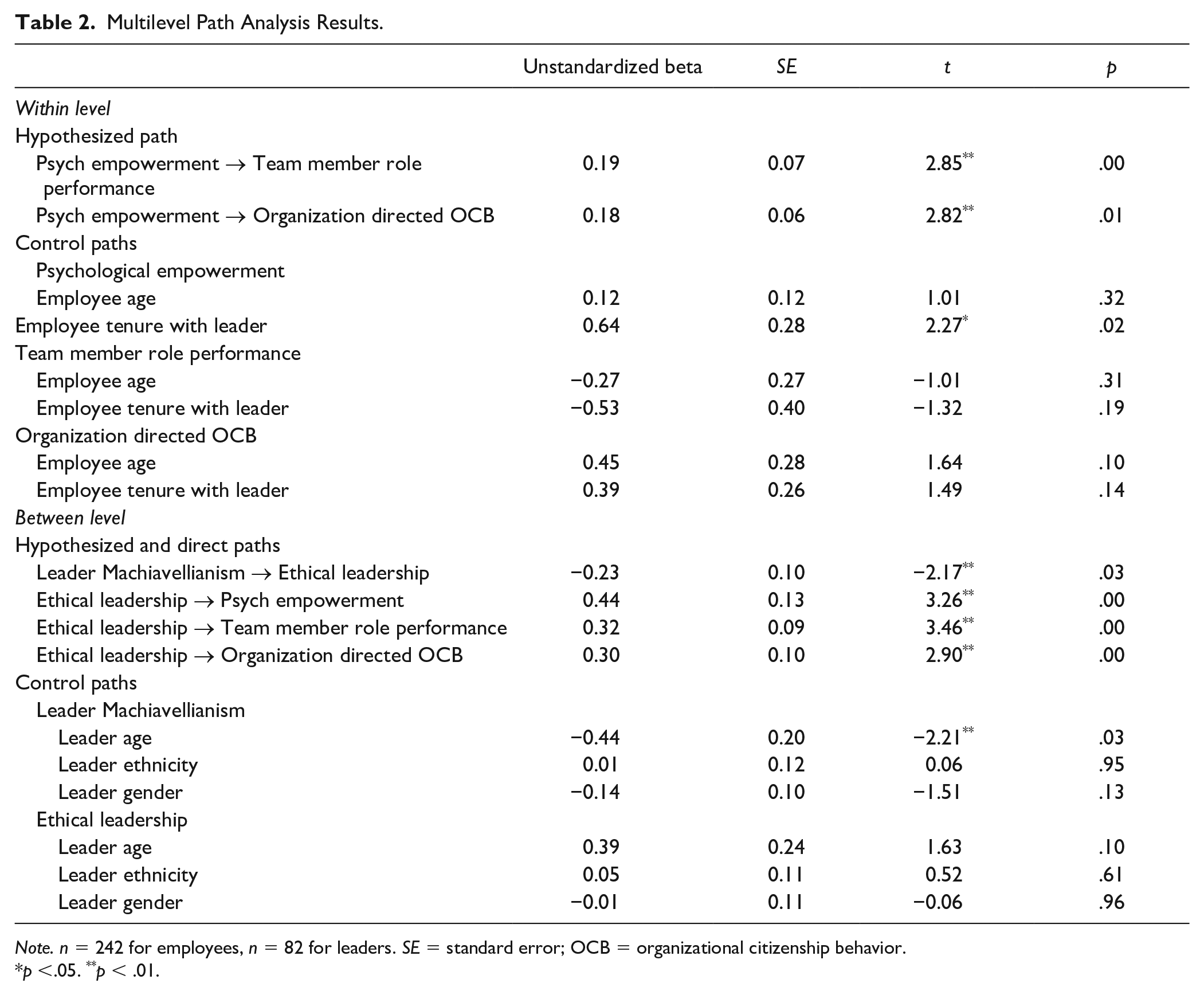
Note. n = 242 for employees, n = 82 for leaders. SE = standard error; OCB = organizational citizenship behavior.
p <.05. **p < .01.
Finally, we tested an alternative model that allowed for the four underlying facets of Machiavellianism to have a direct relationship with ethical leadership. The purpose here was to assess which specific facet or facets account for the effects on ethical leadership. The model fit the data well, χ2 = 24.82 (12 df), CFI = .97, RMSEA = .04, SRMRwithin = .05 and SRMRbetween = .07. As can be seen in Table 3, only desire for status significantly predicted ethical leadership perceptions (γ = −.18, p < .05) when all four facets are accounted for in the same model.
Alternative Model Multilevel Path Analysis Results.
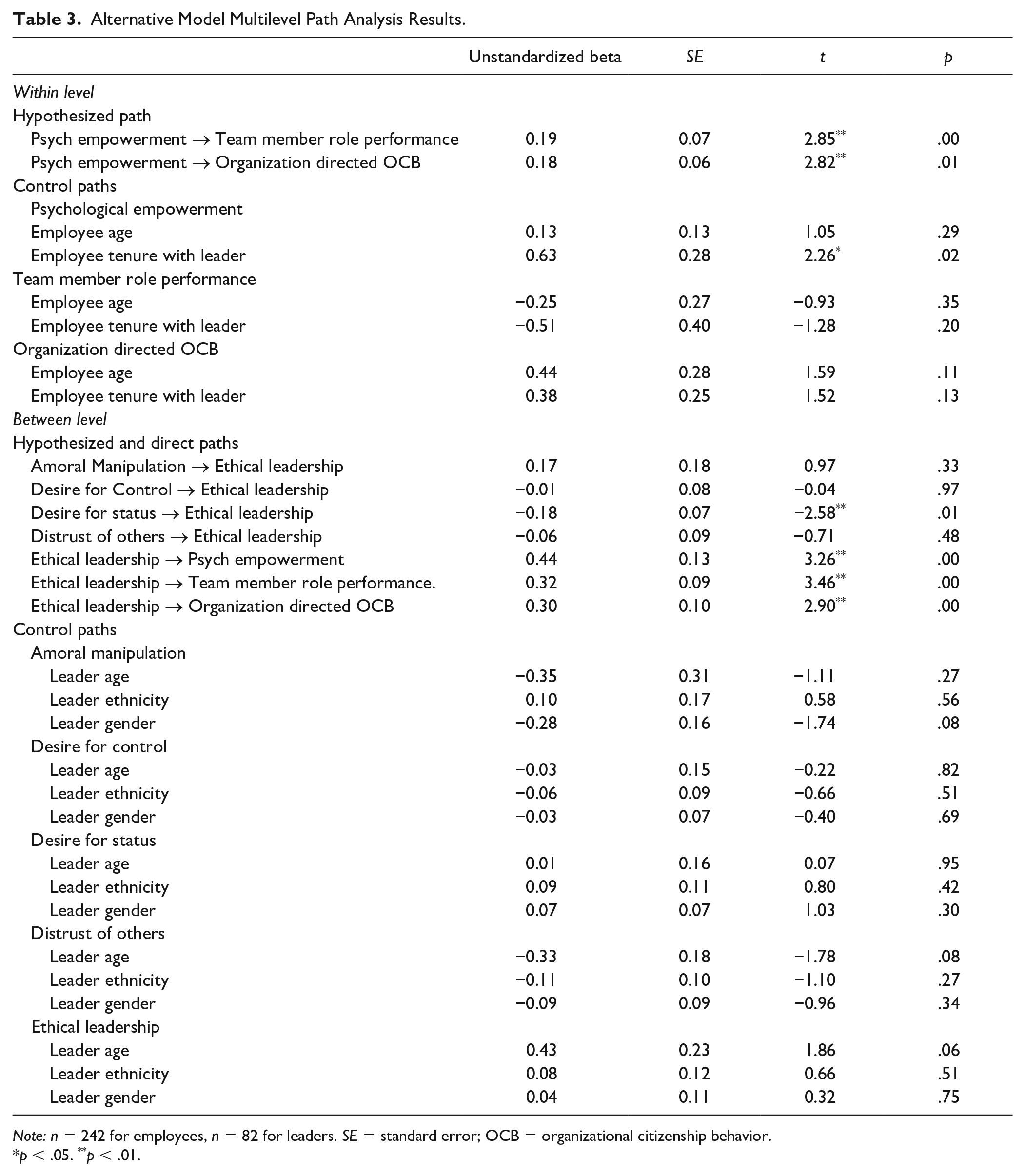
Note: n = 242 for employees, n = 82 for leaders. SE = standard error; OCB = organizational citizenship behavior.
p < .05. **p < .01.
Discussion
The present study contributes to the Machiavellianism and ethical leadership literatures by casting leader Machiavellianism as an antecedent to employee perceptions of ethical leadership. The relationship between these two concepts has been posited, but we know of no study that has empirically demonstrated support for it. Overall, our findings support the propositions of our theoretically derived research model. Leader Machiavellianism demonstrated a negative and significant relationship with employee perceptions of ethical leadership, while also negatively affecting psychological empowerment indirectly through ethical leadership. Ethical leadership was positively related to psychological empowerment directly, in addition to indirectly and directly impacting both team member role performance and organization-directed OCB. We next discuss the theoretical contribution of these findings.
Theoretical Contributions
We believe our finding that leader Machiavellianism is negatively related to employee perceptions of ethical leadership is an important contribution to the Machiavellianism and ethical leadership literatures. Specifically, we make three unique contributions through our research. First, as discussed previously, research on Machiavellian leadership is fairly limited (Dahling et al., 2012). Furthermore, Brown and Treviño (2006) proposed that leader Machiavellianism would be negatively related to ethical leadership, yet we are aware of no study that explicitly explored Machiavellianism as an antecedent to ethical leadership. Conceptually, ethical leaders place an emphasis on fairness and trust and this behavior runs contrary to the worldview held by Machiavellians, who are manipulative and skeptical of others. However, researchers have suggested that because of their manipulative ways, those high on Machiavellianism may be able to mask their true nature (Den Hartog & Belschak, 2012). If they were able to “hide” their true nature, Machiavellian leaders may be able to demonstrate normatively appropriate behaviors in ethical situations. Our findings provide evidence contrary to this assertion since leader Machiavellianism was significantly and negatively related to perceptions of ethical leadership. With their increased tendency to engage in unethical behaviors (Dahling et al, 2012) and to experience interpersonal difficulties (Muris et al., 2017), Machiavellian leaders are likely to engage in behaviors that run counter to those of ethical leaders. From a social learning theory perspective, it is likely that over time followers are able to pick up on these tendencies, which then negatively affect their perceptions of the leaders ethical behavior.
To explore which facets of Machiavellianism might be more impactful on ethical leadership perceptions, we conducted a supplemental analysis that allowed all four facets to influence ethical leadership. In this analysis, desire for status was the lone facet that significantly and negatively predicted ethical leadership perceptions. This is an interesting finding but perhaps not surprising given the nature of this facet. Leaders high on desire for status are likely to pursue external goals such as wealth and power and define their success on the ability to accomplish these goals (Dahling et al., 2009). The focus on extrinsic goals and the accumulation of external indicators of success is inconsistent with ethical leadership, which is characterized by “engaging in ongoing behaviors that are evaluated by followers as normatively appropriate, and that suggest altruistic (rather than selfish) motivation” (Brown et al. 2005, p. 120). Desire for status, with its focus on external markers of success rather than personal development and growth, may be perceived by followers as selfish and inappropriate behavior and therefore not aligned with the behavior of an ethical leader. It is also likely the most outwardly noticeable and overt characteristic of leaders high on Machiavellianism, compared with other facets that may not be as salient to followers.
Second, the changing nature of work has necessitated a change in the way that work is conducted, with employees being asked to be more proactive in their work roles (Griffin et al., 2007). One way to encourage these proactive behaviors is to empower employees and give them control over their work (Spreitzer, 1995). Considerable research exists that shows that those high in Machiavellianism are more likely to engage in unethical behavior but far less has been conducted on how Machiavellian leaders affect employee motivation. Our findings demonstrate an indirect negative association of leadership Machiavellianism on psychological empowerment through employee perceptions of ethical leadership. With employees expected to be more empowered and proactive, the results of our study suggest that this is less likely to occur when followers work for leaders higher on Machiavellianism. This is particularly problematic because leader behavior impacts all employees who report to that leader, thus creating the potential for all direct reports to feel less empowered and for organizations to reap fewer benefits associated with psychological empowerment (Seibert et al., 2011).
Finally, in response to the changes in the nature of the workplace, organizations have responded by turning to team-oriented work (Kozlowski & Bell, 2013). We know of no study that has explored the process by which ethical leadership affects team member role performance but our results suggest that team member role performance is positively influenced both directly and indirectly, through psychological empowerment, by ethical leadership. This suggests that employees are more likely to collaborate and work well with others when being led by ethical leaders. In addition, we also found that ethical leadership positively influenced organization-directed OCB directly and indirectly through psychological empowerment.
These results are builds on recent work by Peng and Kim (2020) in which they explored a number of mediating variables in the ethical leadership–work outcomes relationship, such as LMX, ethical culture, and organizational identification. Our research extends their findings by exploring the role of psychological empowerment, a motivational variable, in facilitating the relationship between ethical leadership and work outcomes. Our results also provide support for the findings of Peng and Kim’s (2020) work as the best fitting model to our data includes a direct path from ethical leadership to the work outcomes. This suggests that there are other mechanisms through which ethical leadership affects performance at work beyond psychological empowerment. When our study is considered along with that of Peng and Kim (2020), a more holistic picture begins to emerge of the processes by which ethical leadership influences important outcomes at work. Future research should continue to explore alternative mechanisms by which ethical leadership does lead to improved performance (Ng & Feldman, 2015).
Practical Implications
The research in this article demonstrates that organizations need to be cognizant of the negative impact that a Machiavellian leader can impose on employees, teams and ultimately, to the organization. Through the results of this study we contend that organizations may find value from investing in recruiting practices, training, and leadership programs that promote ethical behavior and also identify those leaders who are higher in Machiavellianism. From a selection process, organizations may want to implement interview and survey techniques that can identify Machiavellian characteristics during the recruiting process. We do not contend that organizations should uniformly remove all applicants who have Machiavellian tendencies but these employees and leaders may need additional training to be aware of the potential downsides to their natural inclinations and the impact they have on followers. Our results also suggest those leaders who are perceived as being more ethical have more empowered employees and are likely to have better performers. In regard to training, leadership development efforts could be designed to specifically identify the characteristics of ethical behavior and highlight the importance of role modeling these behaviors to followers. Leaders are the face of the organization for most employees and any efforts made to highlight this to emerging leaders may pay dividends through motivated employees who are willing to perform to the best of their ability on behalf of those leaders and the organization.
Limitations and Future Research Directions
As with all research efforts, ours is not without limitations that must be acknowledged. First, though we did have multisource data collection from both supervisors and employees, the employees reported both variables (ethical leadership and psychological empowerment) at approximately the same time as supervisors reported their Machiavellianism. Our data is, therefore, cross-sectional in nature and this limits our ability to make any assertions of causality from our results. Though we do feel that our results contribute to the literature and are based on strong theory, we would encourage future research to explore these relationships in longitudinal research efforts.
Second, though the snowballing sampling technique has been utilized in numerous studies (Gosserand & Diefendorff, 2005; Grant & Mayer, 2009; Tepper, 1995), there are limitations to note. The technique allows for the collection of data from multiple organizations, which might increase generalizability, but it also suffers from decreased control over exactly who is taking a particular survey. Though we did attempt to alleviate this concern by following up with participants, we cannot be certain that all participants are who they claim to be. Future research could be conducted all within the same organization and this could provide a greater level of control over the data collection process. On a related note, our study includes only up to three employees who reported to a single supervisor, potentially excluding other employees who might report to the same supervisor. Though it was often the employee who recruited the supervisor to participate in the study, it may be the case that supervisors who were asked to recruit employees only asked those who the supervisor knew might respond positively to the potential questions on our survey. Future research efforts could include all employees who report to a single supervisor to ensure that the nature of our empirical findings are replicated in such a sample.
Finally, we did not control for social desirability in our study. We are aware of only one study that has included measures of social desirability with the Dahling et al. (2009) scale (i.e., Dubbelt et al., 2015) and they did find a weak, negative correlation. We cannot rule out the possibility that leaders may have been concerned with social desirability when answering the Machiavellianism scale. We encourage future research to more explicitly explore the role of social desirability when utilizing the scale developed by Dahling et al. (2009).
Conclusion
Our work contributes to the both the Machiavellian leadership literature and ethical leadership literature by integrating the two concepts into our research model. Our results show that leader Machiavellianism has a negative impact directly on perceptions of ethical leadership and a negative indirect effect on psychological empowerment, which ultimately affects team member role performance and organization-directed OCB. We present one of the few studies that explores leader Machiavellianism and ethical leadership and hope that this research effort can be a starting point for future endeavors that advance our findings.
Footnotes
Declaration of Conflicting Interests
The author(s) declared no potential conflicts of interest with respect to the research, authorship, and/or publication of this article.
Funding
The author(s) received no financial support for the research, authorship, and/or publication of this article.
