




Abstract
Introduction
The Coronavirus disease of 2019 (COVID-19) pandemic has imposed several challenges leading to the shortage of medications due to the disruption of their supply chains. Among others, patients using psychotropics encountered difficulties finding their medication despite the efforts of investing in local production. Encouraging patients to use generic drugs can be an effective strategy to ensure sustainable access to medication.
Objectives
This study aimed to describe the consumption of psychotropic medications during the COVID-19 pandemic and the willingness together with the reasons for using generic drugs. It also assessed the association between generic drugs and the general characteristics of the patients.
Design
A cross-sectional study was performed over a period of 4 months (July–October 2021) targeting 128 patients using psychotropic drugs.
Results
The sample included more women than men with a mean age of 38 years. Antidepressants were the psychotropic medications mostly consumed followed by anti-anxiety medications. Almost 13% of the patients started using psychotropics either through self-prescription or a friend’s advice and 73.4% used generic drugs. Fear of dependence, unavailability of the brand drug, and pharmacist’s recommendation were the main reported reasons for using generic drugs.
Conclusion
During the COVID-19 pandemic, the consumption of psychotropics increased due to new prescriptions and self-medication. No differences were noted between using generics and the characteristics of the patients in contrast to previous studies which support the implementation of generic prescription and substitution policies.
Introduction
To ensure access to medicines, many governments encourage prescribing generic drugs or substituting to generics after initial therapy with a brand drug.1,2 Such policies can potentially lower the health care cost for both patients and the public health sector since generic drugs are 30%–80% cheaper.2,3 The 90% confidence interval of generic-drug-to-brand-drug ratios for some pharmacokinetic parameters (maximum concentration and area under the curve) should lie between 80% and 125% of those of the brand. 4 Comparable clinical outcomes were observed when using brands or their generic counterparts suggesting comparable effectiveness. 5 Research showed that after 12 months switch from brands to generics, patients had similar outpatient visits, admission to the hospital, and discontinuation of the medication. 6
In Lebanon, the prescription of generics is low despite the good knowledge of doctors. 7 Older physicians and those with more years of practice had higher acceptance to substitute to generics after initial treatment with a brand drug. 8 The ministry of public health in Lebanon promoted the use of generic by implementing the unified medical prescription that allows pharmacists to substitute to generic drugs without referring to the doctors. 9 Nevertheless, the Coronavirus disease of 2019 (COVID-19) pandemic has imposed several challenges leading to the shortage of medications due to the disruption of their supply chains. 10 Among others, patients using psychotropics encountered difficulties finding their medication despite the efforts of investing in local production. 11 The pandemic itself also negatively affected the mental health of people and health professionals which necessitate an excessive need to access psychotropics. 12 Furthermore, the lack of healthcare professionals, hospital beds, and prioritization of patients have delayed the diagnosis of new patients together with the management of those previously diagnosed. 13
Encouraging patients for using generic drugs is crucial since the COVID-19 pandemic had several negative outcomes due to job losses, 14 shortage of medication and the need for sustainable supply chains. 15 Avoiding the discontinuation of medication in chronic patients namely those using psychotropics is essential to prevent the deterioration of their mental health. 16 Assessing the characteristics of patients that used generic drugs can help target specific groups in order to promote generic drug use and clarify the associated misconceptions. This study aims to evaluate (i) the consumption of psychotropic medications during the COVID-19 pandemic, (ii) the willingness and reasons for using generic drugs, and (iii) the association between having used a generic alternative for the psychotropic drug and the general characteristics of the patients.
Methods
Study design
In order to achieve the intended objectives, a cross-sectional study was performed over a period of 4 months (July–October 2021) targeting patients using psychotropic drugs during the study period.
Study sample
One hundred twenty-eight patients using psychotropic drugs were invited to participate in the study with no preferences based on race or ethnicity. Lebanese adult patients residing in Lebanon during the interview period were included. However, those refusing to participate in the study or those with severe mental problems making them unable to adequately answer the survey were excluded.
Data collection
Data were collected using a uniform survey given to the patients if they answered with “Yes” to the question: Are you currently using psychotropic drugs? The survey was developed after an extensive literature review taking into consideration two experts’ opinions. Data completion took an average of 10 min per participant and the questionnaire was available in Arabic (the official language in Lebanon).
General characteristics of the participants
The survey included questions about the general characteristics of the participants (age, sex, marital status (single, married and divorced/widowed), governorate of residence, level of education (<middle school, high school and university or more)). Participants were also asked about their household arrangements (alone, with family, or with medical assistance). Information about the employment status (employed or unemployed) and the type of health coverage (public, private insurance, or none) was collected as well in this part.
Lifestyle habits of the participants
This section collected information about participants’ smoking status (cigarettes or Nargileh) and whether active or passive. Nargileh is also called shisha or waterpipe and is considered a common type of smoking in Lebanon. Moreover, this part collected participants’ drinking habits (alcohol and caffeine consumption) and their physical activity status.
Medical and medication history of the participants
The presence of comorbidities such as diabetes, hypertension, dyslipidemia, cardiovascular diseases, mental disorders, cancer, peptic ulcer, and respiratory diseases was collected in this part (multiple answers were allowed). The name of the psychotropic drug(s) previously or currently taken by the participants was also collected and was then classified into four types of drugs: (i) antipsychotics (typical or atypical), (ii) antidepressants (TriCyclic Antidepressants, Selective serotonin reuptake inhibitors, Serotonin and norepinephrine reuptake inhibitors), (iii) anti-anxiety drugs (Benzodiazepines) and (iv) mood stabilizers (lithium, anticonvulsants). Furthermore, patients were asked about who prescribed the psychotropic drug for them which was stratified into four options (a physician, pharmacist, family or friends, or self-prescription). Afterward, they were asked three close-ended questions: (1) if they used a generic drug for their psychotropic medication; (2) if they encountered additional side effects using the generic; (3) the reasons for using the generic drug (fear of dependence, unavailability of the brand drug, the inefficacy of the brand or pharmacist’s advice).
Statistical analysis
Statistical analyses were performed using Statistical Package for Social Sciences (SPSS Inc., Chicago, Illinois) Version 27. The age of patients is presented using means and standard deviations while categorical variables are presented using frequencies and percentages. A bivariate analysis was conducted taking the general characteristics of the participants as independent variables and using a generic drug as the dependent variable. The Chi-square/Fisher exact test was used to compare percentages between associate categorical variables. A p-value < .05 was considered statistically significant.
Ethical considerations
This study used a survey for data collection without any type of invasive procedures or intervention. The study protocol, consent form, and survey were reviewed and approved by the institutional review board of the faculty of pharmacy of the Lebanese University. Data were completely anonymous and non-identifiable; storage of data follow-up university general data protection regulation guidelines and written informed consent was obtained from each participant. They were also informed that they could withdraw their participation at any point during the interview. Findings were considered for research purposes only and no financial incentives were provided.
Results
General characteristics of the participants
Distribution of the general characteristics of the patients.

Results are given in terms of frequency (percentage) or Mean
Lifestyle habits of the participants
Medical history of the study sample before and during the COVID-19 pandemic.
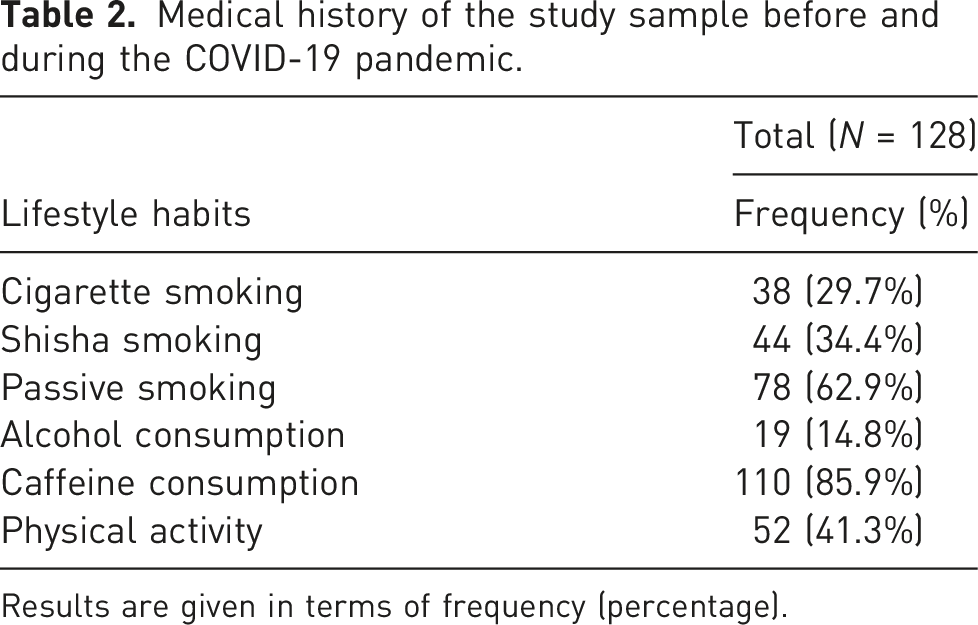
Results are given in terms of frequency (percentage).
Medical and medication history of the patients
Medical and medication history of the patients.

Results are given in terms of frequency (percentage).
Figure 1 illustrates the reasons why patients used the generic of their psychotropic medication. Almost 30% of the patients reported that they used the generic due to the fear of dependence on the brand while 25.5% used it because of the unavailability of the brand and as a result of a pharmacist’s advice respectively. Only 19.2% reported that the inefficacy of the brand was their reason to switch to its generic counterpart. Reasons for using the generic of the psychotropic medication.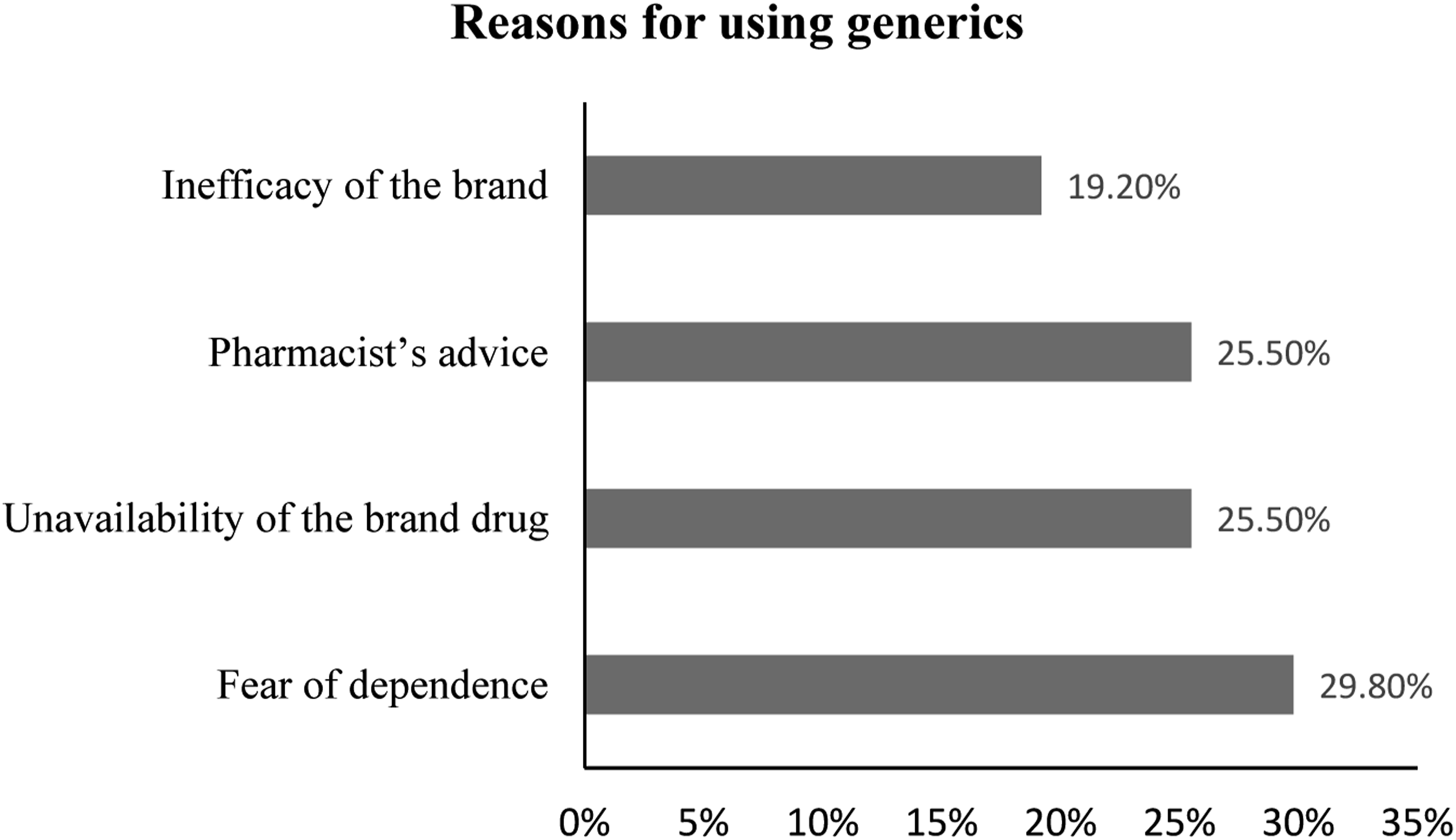
Association between having used generic medication for the psychotropic drug and the general characteristics of the patients
Association between having used generic medication for the psychotropic drug and the general characteristics of the patients.

Results are given in terms of frequency (percentage).
Discussion
The present study aimed to assess the consumption pattern of generic alternatives for psychotropic medications during the COVID-19 pandemic in a sample of Lebanese patients and the reasons for using them. One hundred twenty-eight patients using psychotropic drugs were recruited. More women consumed psychotropic drugs than men. This finding was also noted in a cross-sectional survey performed in Lebanon in 2022 highlighting the impact of lockdowns and other associated stressors during the pandemic on depression and anxiety among patients. 17 The mean age of the patients was approximately 38 years slightly higher than the one in the previously mentioned study 17 and in a cross-sectional study evaluating the factors associated with depression in the Lebanese population. 18 This can be explained by the fact of the concurrence of the COVID-19 pandemic with the data collection period, and as result, a higher risk of job losses and psychological problems mainly affecting this age group. 19
The majority of the sample reported living alone, previously shown to be associated with a higher risk of depressive symptoms. 20 Moreover, previous research reported a detrimental effect of the pandemic namely being quarantined or living alone which might increase the risk of developing psychiatric symptoms. 21 Around 70% of the patients were employed which can eliminate the risk of financial distress due to unemployment and therefore, the possibility of purchasing the medications. Nevertheless, employed patients have less time to access pharmacies, especially with the limited opening hours of drugstores and the long waiting lines during the pandemic. 22
Around 30% of the participants were cigarette smokers and 14.8% were alcohol drinkers. Findings from a study conducted in 2010 reported that smoking was significantly associated with an elevated level of psychological disorders, particularly among women with no direct effect of drinking. 23 As regards their medical history, most of the patients had other comorbidities such as hypertension, dyslipidemia, cardiovascular diseases, or peptic ulcer disease emphasizing the need for other medications than psychotropic drugs which might have affected their acceptance of using generics. Antidepressants were the psychotropic medications mostly consumed followed by anti-anxiety medications. These findings are consistent with those of a population-based cohort study carried out in Canada highlighting the significant association between the emergence of the pandemic and the increased use of psychotropic medication. 24
Almost 13% of the patients started using psychotropics either through self-prescription or a friend’s advice. This percentage is considered high since psychotropics can have serious adverse events and drug interactions and require medical follow-up. 25 In our sample, 73.4% of patients used generic alternatives during the COVID-19 pandemic. The use of generic drugs by most patients during the pandemic can be due to several reasons such as shortage of medication, low-cost of generics, and recommendations from a healthcare professional 26 which can open a window of opportunity to promote patients’ attitudes and willingness to buy generic drugs even after the pandemic. 27 Fear of dependence was the main reported reason for using generic drugs. Research showed that patients with psychiatric disorders had fears of addiction and substance abuse which could be a possible explanation to substitute to a generic alternative. 28 Other reasons such as the unavailability of the brand medication or pharmacists’ recommendations were also reported and could be associated with the fact that most brand drugs in Lebanon are imported 11 and therefore, patients and healthcare providers found the substitution to generic drugs as a possible safe replacement. Interestingly, no significant differences were noted between using generic drugs and the patient’s general characteristics in contrast to previous reports.29,30 This finding is encouraging and allows for targeting patients using psychotropics to advance generic use and duly lower the overall health cost. Nevertheless, medical attention and follow-up are required especially for drugs with a narrow therapeutic index.
This study has limitations. The small sample size can affect the generalizability of the findings to other patients. Moreover, the shortage of medications may affect the persistence of patients’ perception regarding the use of generics after the COVID-19 pandemic. Nevertheless, the present study has also strengths. To our knowledge, this is the first study evaluating patients’ willingness to use generic alternatives for psychotropic medications. Furthermore, recall bias was reduced given that participants filled out the survey at their time and place preferences.
Conclusion
The use of generic drugs can be a possible strategy to secure sustainable access to psychotropic medications. During the COVID-19 pandemic, the consumption of psychotropics increased due to new prescriptions and self-medication. Fear of dependence, unavailability of the brand drug, and pharmacists’ substitution were the main reported reasons for using generics. Interestingly, no differences were noted between using generics and the characteristics of the patients in contrast to previous studies. These findings support generic prescription and substitution policies through the engagement of doctors, pharmacists, and patients.
Footnotes
Declaration of conflicting interests
The author(s) declared no potential conflicts of interest with respect to the research, authorship, and/or publication of this article.
Funding
The author(s) received no financial support for the research, authorship, and/or publication of this article.
