



Abstract
The use of unapproved anti-human immunodeficiency virus (HIV) drugs for its treatment and prevention has recently increased in Japan. Our research group investigated generic drugs of the Truvada combination tablet (TVD) that have not been approved in Japan, and reported differences in the pharmaceutical properties of their formulations. We also demonstrated that the pharmaceutical excipients in generic drugs may differ from those in TVD, and showed that some pharmaceutical excipients may affect epithelial cell barrier function. The present study investigated differences in the effects of TVD and its generic drugs (Generic A and Generic B) on epithelial cell barrier function. No significant differences were observed in epithelial cell barrier function following exposure to TVD, Generic A, and Generic B. However, significant increases in the mRNA levels of ABCB1 and Occludin, which regulate the epithelial cell barrier, were detected following exposure to Generic B. Therefore, the administration of Generic B for a longer duration or at a higher concentration may lead to changes in epithelial barrier function. Since the treatment and prevention of HIV requires the long-term (chronic) administration of drugs, the drugs used may change, such as from a brand-name drug to a generic drug and also from one generic drug to another. The present results suggest that the effects of brand-name and generic drugs, such as on intestinal epithelial barrier function, may differ with changes in the drugs being administered.
Keywords
Introduction
Pharmaceuticals are developed worldwide and many generic drugs are produced. Due to recent developments in logistics, pharmaceuticals are exported to and used in many countries. Therefore, drugs that have not yet been approved for use in some countries may be administered to patients, such as anti-human immunodeficiency virus (HIV) drugs in Japan.
Approximately 39.0 million people were living with HIV at the end of 2022. An estimated 0.7% of adults aged 15–49 years worldwide are living with HIV; however, the burden of this epidemic continues to markedly vary between countries and regions. The WHO African Region remains the most severely affected with nearly 1 in every 25 adults (3.2%) living with HIV, which accounts for more than two-thirds of people living with HIV worldwide. 1
In 2022, 632 new HIV infections were reported in Japan, of which 527 were Japanese nationals. The most common route of infection was homosexual sexual contact, accounting for 70.0% of cases. Although new HIV infections continue to occur, this number has been decreasing in Japan each year since its peak at 1,600 in 2013. 2 This reduction has been attributed to the appropriate treatment and prevention of HIV in Japan. Since its introduction in 2010, 3 pre-exposure prophylaxis (PrEP) is considered to have made the largest contribution to the decrease in the number of new HIV infections.
However, PrEP is not approved in Japan and, thus, generic drugs sold overseas are imported and used by patients or prescribed by their doctors. Although these generic drugs have a proven track record of use worldwide, data on the bioequivalence of generic drugs in Japanese individuals and the pharmaceutical excipients used in their formulations are not available.
The pharmaceutical excipients that form a pharmaceutical are generally considered to have no effect on the pharmacological efficacy of the active compound. Our research group investigated the effects of more than 20 pharmaceutical excipients on the membrane permeation of some compounds, which were the substrates for each permeation route, and demonstrated that many excipients affected the membrane permeation of compounds through both paracellular and transcellular pathways within the range of expected clinical doses.4–7 Furthermore, they were shown to affect major drug transporters, such as P-glycoprotein (P-gp) and breast cancer resistance protein (BCRP).8–10 Therefore, differences in the pharmaceutical excipients contained in tablets may affect gastrointestinal epithelial barrier function.
Our research group previously reported significant differences in the initial rate of dissolution, dissolution behavior, and the membrane permeability of emtricitabine (FTC) and tenofovir disoproxil fumarate (TDF), the active compounds of the Truvada combination tablet (TVD), a typical anti-HIV drug. Therefore, the physical properties of TVD and its generic drugs do not necessarily match due to differences in their excipients. 11
Since anti-HIV drugs require long-term use, it is important to clarify whether the ingredients in tablets affect gastrointestinal barrier function. Therefore, the present study investigated differences in the effects of TVD and its generic drugs on gastrointestinal epithelial barrier function.
Materials and methods
Materials
TVD was purchased from Gilead Sciences, Inc. (CA, USA). Generic A and Generic B tablets were purchased from Roy Union Ltd (Kowloon, Hong Kong). 5-Carboxyfluorescein (5-CF) and Rhodamine 123 (Rho123) were purchased from Sigma Aldrich Co., Ltd (Tokyo, Japan). All other reagents were of analytical grade or higher.
Cell culture
Caco-2 cells were obtained from the Riken Cell Bank (Ibaraki, Japan) and kept in a humidified incubator at 37°C with 5% CO2. Caco-2 cells were maintained in DMEM-High glucose (Fujifilm Wako, Osaka, Japan) supplemented with 10% fetal bovine serum, 1% non-essential amino acids, 1% L-glutamine, 100 U/mL of penicillin, 100 μg/mL of streptomycin, and 250 ng/mL of amphotericin B between passages 13 - 17.
Anti-HIV drug solution
A dissolution test was conducted on each tablet using a 2nd fluid (pH 6.8) for the dissolution test (360 min), 11 and the supernatant of the test liquid was collected after the test. Test solutions were diluted 4 times with DMEM and then used in experiments.
Measurement of transepithelial electrical resistance (TEER)
Caco-2 cell monolayers (between passage numbers 13-17) were seeded on a Transwell insert (PET membrane, pore size of 0.4 μm) (Corning Inc., NY, USA) and cultured for 14–21 days. The integrity of cell monolayers was assessed by measuring TEER using a Millicell ERS testing device (Millipore Corporation, MA, USA). After confirming the integrity of monolayers (TEER >400 Ωcm2), the culture medium was replaced with fresh DMEM. Following an exchange to fresh DMEM containing an anti-HIV drug, TEER was measured after 0, 24, 48, 72, and 96 h.
Membrane permeation experiments using transwell inserts
The transport of 5-CF and Rho123 across Caco-2 cell monolayers was examined using our previously described method. 12 Caco-2 cell monolayers (between passage numbers 13-17) were seeded onto transwell inserts (PET membrane, pore size of 0.4 μm) (Corning Inc., NY, USA). The integrity of cell monolayers was evaluated prior to the transport analysis by measuring TEER with a Millicell ERS testing device (Millipore Corporation, MA, USA). Monolayers with >400 Ωcm2 TEER were used in membrane permeation experiments. Monolayers were washed twice using Hanks’ Balanced Salt Solution (HBSS; pH 7.4) and then incubated in HBSS for 10 min. HBSS containing Rho123 (10 μM) or 5-CF (10 μM) was added to the apical side of the inserts (1.0 mL), while HBSS was added to the basal side (2.0 mL). One hundred microliters was withdrawn from the basal side after 0, 15, 30, 45, 60, 90, and 120 min, and an equal volume of pre-warmed HBSS was then added.
RNA extraction and cDNA synthesis
Total RNA isolation was performed using TRIzol reagent (Thermo Fisher Scientific K.K., Tokyo, Japan) and cDNA synthesis was performed using the ReverTra Ace qPCR RT kit (TOYOBO Co., Ltd, Tokyo, Japan).
Real-time RT-PCR
Sequences of primers used for real-time RT-PCR.

Western blotting
Caco-2 cells were seeded on 12-well plates (1.0 × 10⁵ cells/well), incubated until confluent, treated with TVD, Generic A, or Generic B, and then incubated for 48 and 96 h. Cells were lysed with Laemmli Sample Buffer (Sigma Aldrich Co., Ltd, Tokyo, Japan). Proteins were separated by SDS-PAGE and transferred onto PVDF membranes. Membranes were blocked in 5% skim milk and incubated with primary antibodies (Claudin-4: Claudin-4 Rabbit pAb, Bioss Antibodies; Claudin-7: Claudin-7 Rabbit pAb, Bioss Antibodies; Occludin: Occludin Rabbit pAb, ABclonal; MUC1: MUC1 Rabbit pAb, Bioss Antibodies; P-gp: P-Glycoprotein antibody [C219], GeneTex; β-actin: Beta Actin Mouse Monoclonal antibody, ProteinTech). PVDF membranes were then incubated with the secondary antibody and reacted with a chemiluminescent reagent (Pierce ECL Western Blotting Substrate, Thermo Scientific). Protein bands were visualized on ChemiDoc touch (Bio-Rad), and each protein expression level was normalized by β-actin.
Statistical analysis
All results are expressed as the mean ± standard deviation (SD). The significance of differences between groups was analyzed using Tukey’t test. p < .05 was considered to be significant.
Results
Comparison of effects of TVD, Generic A, and Generic B on physical epithelial barrier function
In the present study, we dissolved each of the tablets for 360 min with the 2nd dissolution test, and the solution that was obtained following dissolution was used as the anti-HIV drug. The dissolution rates of FTC and TDF in the test solutions were as follows: TVD (FTC: 105.31 ± 3.84%, TDF: 76.96 ± 3.62%), Generic A (FTC: 103.85 ± 0.75%, TDF: 77.72 ± 0.73%), and Generic B (FTC: 93.26 ± 5.98%, TDF: 76.11 ± 4.77%), with no significant differences in their concentrations. 11
When Caco-2 cells were exposed to each anti-HIV drug for up to 96 h, no significant decrease was observed in TEER, an indicator of the physical barrier. The behavior of Generic A was similar to that of TVD; however, TEER was significantly higher with Generic B than with TVD and Generic A. This effect was noted from 24 h after exposure and persisted for at least 96 h (Figure 1(a)). On the other hand, no effect was observed on the membrane permeability of 5-CF, which is a substance that is permeable to the paracellular route, and no significant difference was observed between TVD and Generic A or B (Figure 1(b)). Effects of anti-HIV drugs on TEER of Caco-2 cell monolayers (a) and the amounts of 5-CF that permeate these monolayers (b). Results represent means and S.D. (n = 4–6). *p < .05 significantly different from TVD.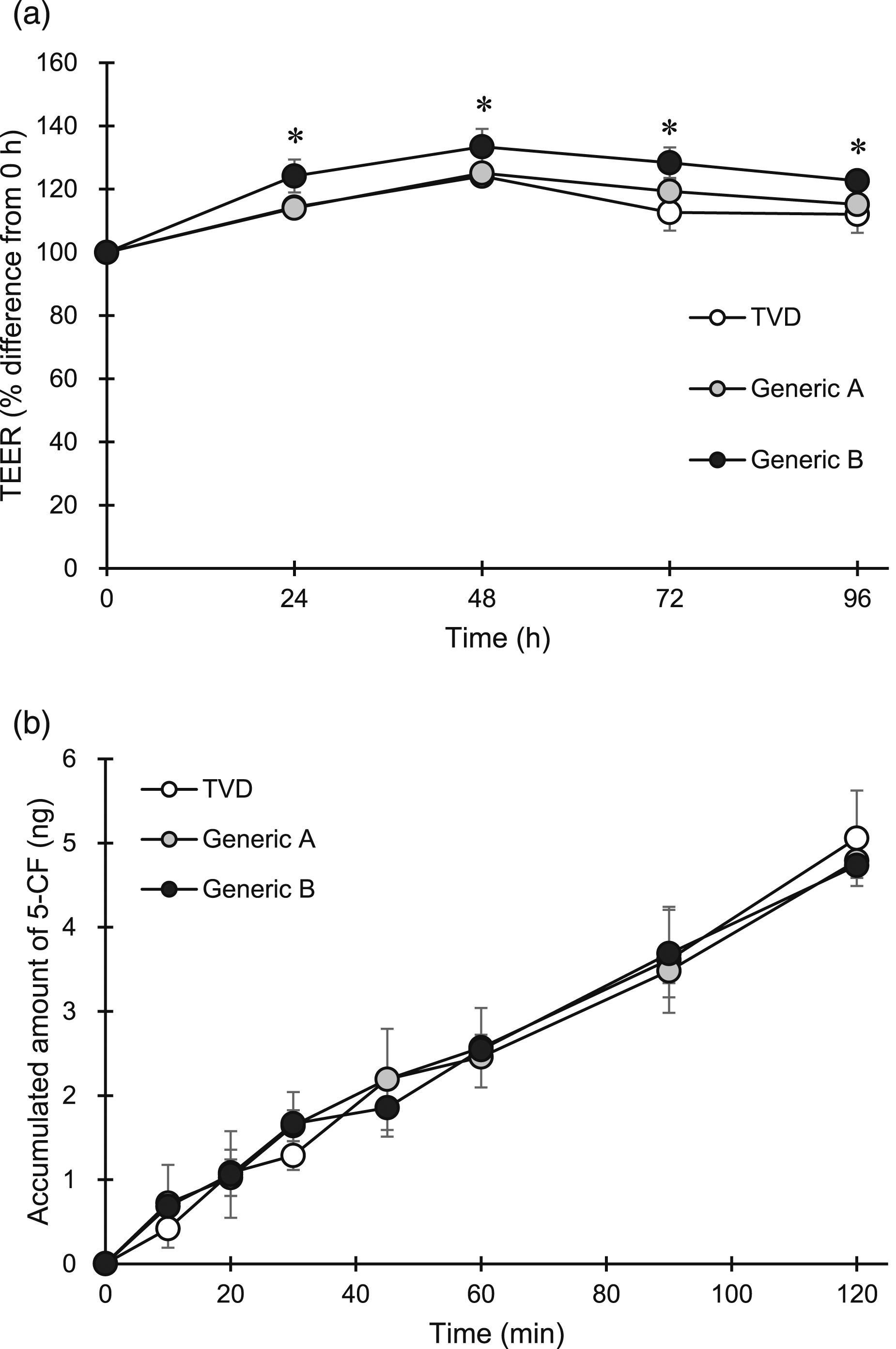
Comparison of effects of TVD and Generic A and B on mRNA expression levels of regulators of the physical epithelial barrier
The effects of the 3 anti-HIV drugs on the mRNA expression of constituents of tight junctions (TJ), indicators of physical barriers, were examined. The exposure times for anti-HIV drugs were set at 48 and 96 h. No significant differences were observed in the effects of TVD and Generic A and B on the mRNA expression levels of CLDN1, CLDN4, CLDN7, and MARVELD2. On the other hand, Occludin mRNA levels were significantly higher after exposure to Generic A and B than to TVD (Figure 2). Effects of anti-HIV drugs on the mRNA expression of physical barrier regulators in Caco-2 cell monolayers. (a) CLDN1, (b) CLDN4, (c) CLDN7, (d) Occludin, and (e) MARVELD2. Results represent means and S.D. (n = 3). *p < .05 significantly different from TVD.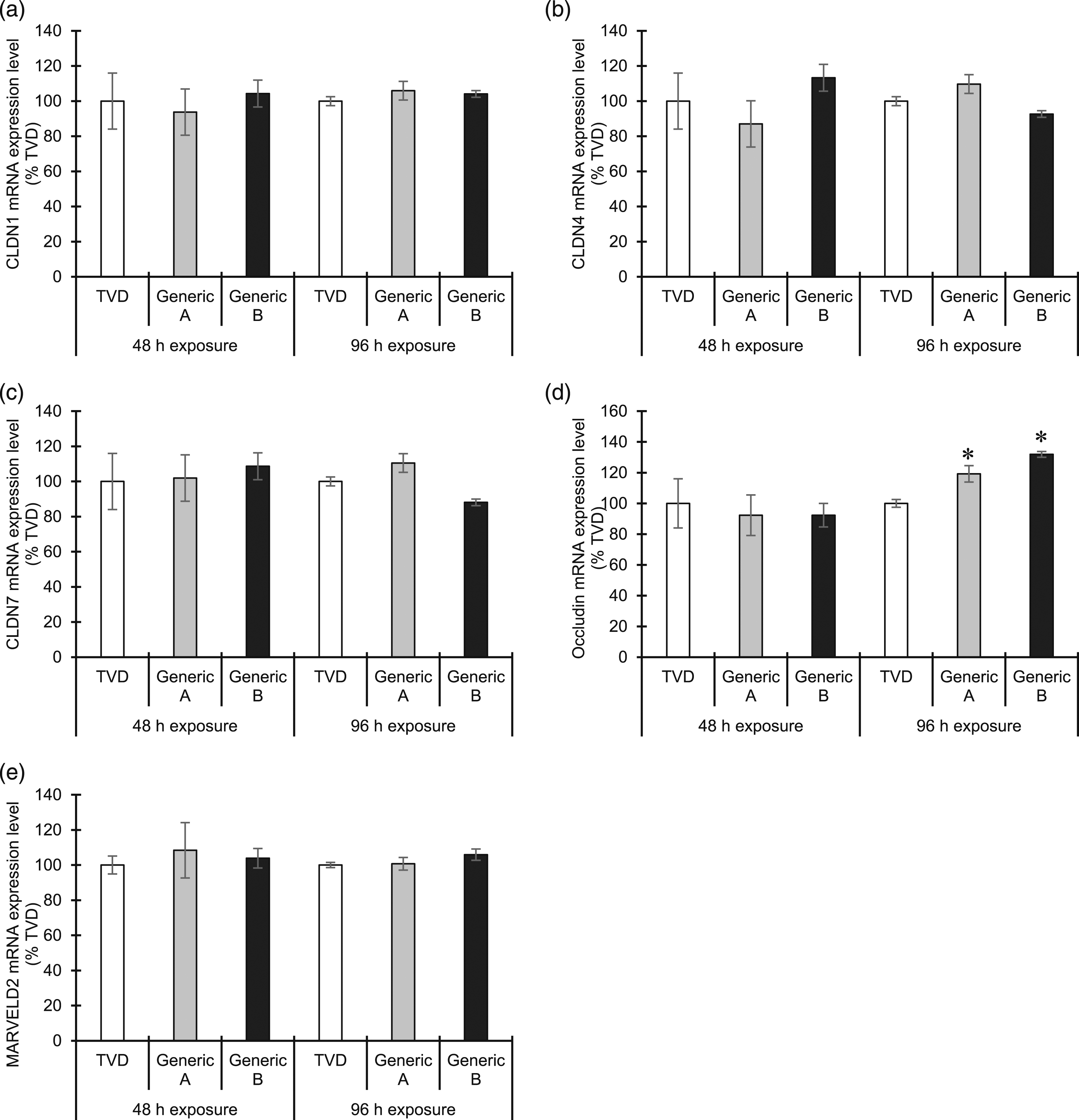
Comparison of effects of TVD and Generic A and B on protein expression levels of regulators of the physical epithelial barrier
The effects of the 3 anti-HIV drugs on the protein expression levels of constituents of TJ and the unstirred water layer (UWL), which are indicators of physical barriers, were then assessed. Exposure to each of the anti-HIV drugs did not significantly affect the protein expression of constituents of TJ and UWL. The protein expression levels of Claudin-4 and Claudin-7 were slightly lower after 48 h of exposure to Generic A and B than to TVD (Figure 3(b) and (c)). In contrast, after 96 h of exposure, the protein expression levels of Claudin-4 and MUC1 were slightly higher with Generic A and B than with TVD (Figure 3(b) and (e)). Effects of anti-HIV drugs on the protein expression of physical barrier regulators in Caco-2 cell monolayers. (a) A typical band for Western blotting, (b) CLDN4, (c) CLDN7, (d) Occludin, and (e) MUC1. Results represent means and S.D. (n = 4). *p < .05 significantly different from TVD.
Comparison of effects of TVD and Generic A and B on the biological epithelial barrier
We focused on P-gp, an efflux transporter, as a biological barrier. Using Caco-2 cells exposed to the 3 anti-HIV drugs for 96 h, we examined changes in the membrane permeability of Rho123, a typical substrate for P-gp. The results obtained showed that although the behavior of Generic A was similar to that of TVD, the amount of Rho123 that permeated through the membrane was larger following exposure to Generic B than to TVD and Generic A (Figure 4(a)). Furthermore, no significant changes were observed in the protein expression level of P-gp following exposure to the 3 anti-HIV drugs (Figure 4(c)); however, the mRNA levels of ABCB1, which encodes P-gp, were higher following exposure to Generic B than to TVD, with a significant increase being observed after 96 h (Figure 4(b)). Effects of anti-HIV drugs on the amount of Rho123 that permeates Caco-2 cell monolayers. (a), The mRNA expression of ABCB1 and protein expression of P-gp (b) in Caco-2 cell monolayers. Results represent means and S.D. (n = 3–6). *p < .05 significantly different from TVD. †p < .05 significantly different between Generic A and B.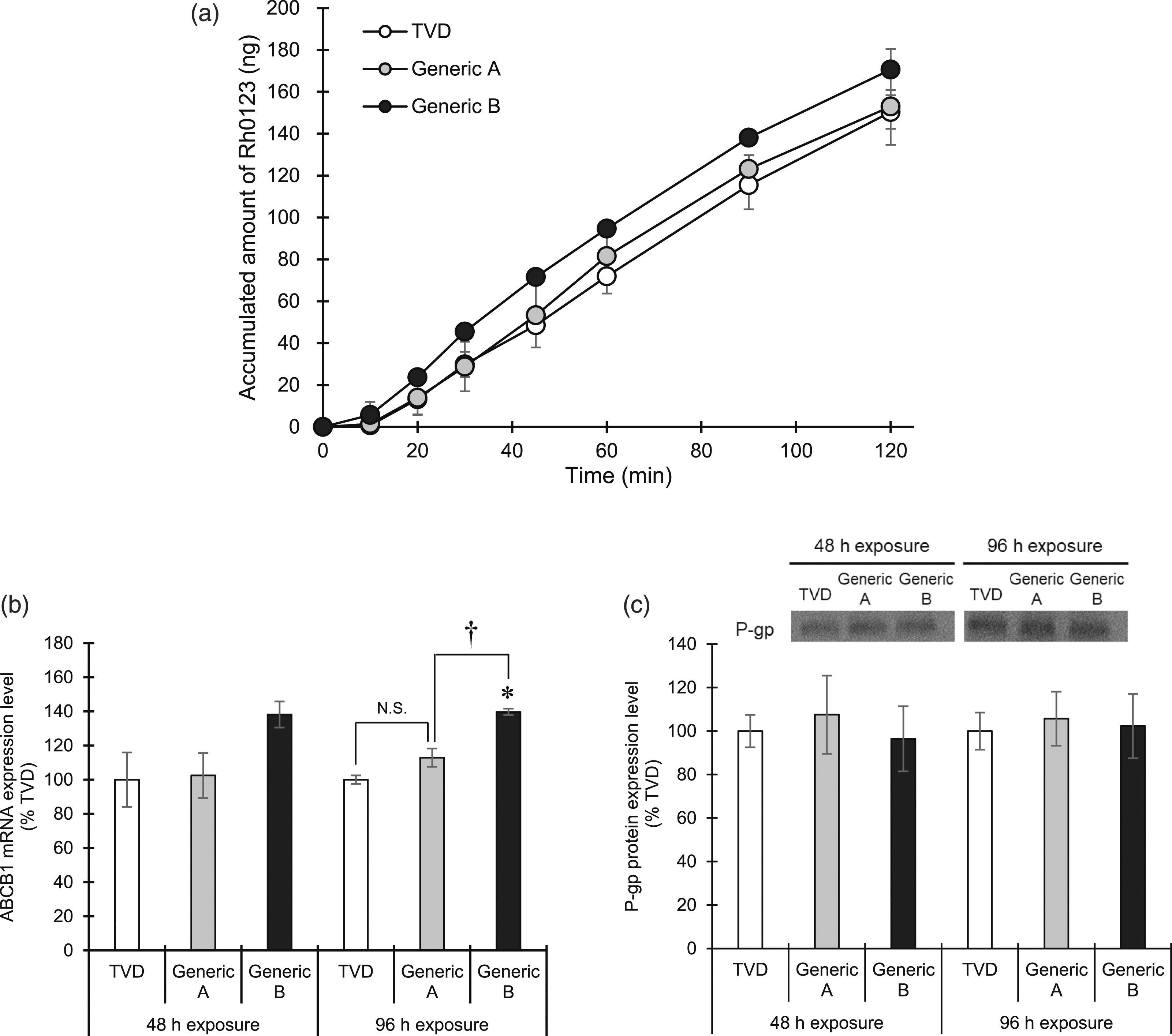
Discussion
TVD contains croscarmellose sodium, lactose hydrate, magnesium stearate, cellulose, partially pregelatinized starch, Food Blue No.2 (indigo carmine), titanium oxide, and triacetin as pharmaceutical excipients. 13 The generic drugs examined in the present study (Generic A and B) were the same as those used in our previous study. 11 Generic A is similar to TVD in terms of its appearance, elution behavior, and membrane permeability of the active substance. The tablet size of Generic B is smaller than those of TVD and Generic A, and based on the significantly different parameters detected, the physical properties of Generic B may differ from those of TVD. To ensure safety, further studies are needed to clarify whether these generic drugs, the tablets of which may have different physical properties to TVD, exert different effects on the gastrointestinal epithelial cell barrier those of the brand-name drug (TVD).
The gastrointestinal epithelial cell barrier is broadly classified into physical and biological barriers. Physical barriers include TJ, which are responsible for adhesion between cells, and UWL near cells. Biological barriers include efflux transporters (ABC transporters), such as P-gp, and drug-metabolizing enzymes, including CYP.
Although physical barrier function was not affected by exposure to the 3 anti-HIV drugs (data not shown), TEER, a functional index of the physical barrier, was significantly higher following exposure to Generic B than to TVD and Generic A (Figure 1(a)). It is difficult to evaluate this change at the functional level since the effect indicates barrier improvement rather than impairment; nonetheless, we demonstrated that Generic B had a different effect on TJ than TVD. However, Generic B did not significantly affect the expression of any physical barrier regulators. For example, Occludin mRNA expression levels were significantly higher after exposure to Generic A and B than to TVD, while Claudin-4 and MUC1 protein expression levels were slightly higher (Figure 2 and 3). It currently remains unclear whether these differences are due to pharmaceutical excipients and the mechanisms responsible for these changes have not yet been elucidated because of the lack of information on the additives included in Generic A and B. Pharmaceutical excipients are generally considered to not have an impact on the pharmacological effects of the active component of a drug; however, we previously demonstrated that some pharmaceutical excipients affected TJ. 4 Interestingly, pharmaceutical additives that alter the permeation of drugs through membranes contains croscarmellose sodium and magnesium stearate, which are used in TVD. Croscarmellose sodium, a disintegrant, does not damage membranes, whereas magnesium stearate, a lubricant, exerts a surfactant effect; therefore, it may affect the membrane surface. 14 Furthermore, sucrose laurate.15,16 and labrasol, 17 which are not present in TVD, have been shown to change TJ. However, in the present study, no significant differences were observed in the membrane permeability of 5-CF, a substance that is permeable to the paracellular route, between TVD and its generic drugs (Figure 1(b)). In other words, the results obtained herein confirmed that there was effect on TJ that was unique to generic drugs and also no significant differences between TVD and its generic drugs. These results indicate that the pharmaceutical excipients in Generic A and B did not affect physical barrier, similar to the those in TVD. However, since the expression of some constituents of TJ was increased by the exposure to Generic A and B, further studies are needed to establish whether these differences occur under other study conditions.
In the present study, we focused on P-gp as a biological barrier and examined the effects of anti-HIV drugs on its function based on changes in the membrane permeability of Rho123, a typical substrate for P-gp. We previously identified croscarmellose sodium, lactose hydrate, magnesium stearate, and ethyl cellulose as pharmaceutical excipients that affect the membrane permeability of Rho123. 6 Furthermore, microcrystalline cellulose, Crospovidone. 18 Polysorbate 20. 19 and Polysorbate 80. 20 have been shown to inhibit P-gp; therefore, some pharmaceutical excipients affect P-gp. TVD and Generic A exerted similar effects on the membrane permeability of Rho123 and the physical barrier, indicating that the physical properties of the tablets themselves are equivalent. On the other hand, the membrane permeability of Rho123 was slightly higher with Generic B than with TVD and Generic A (Figure 4(a)). It currently remains unclear whether changes in the membrane permeability of Rho123 following exposure to the above-mentioned pharmaceutical excipients were due to P-gp. Therefore, we cannot directly attribute the changes observed in the membrane permeability of Rho123 following exposure to the 3 anti-HIV drugs to P-gp. On the other hand, no significant changes were noted in P-gp protein expression levels between TVD and Generic A or B under 48- and 96-h exposure conditions (Figure 4(c)), whereas ABCB1 mRNA expression levels slightly increased with Generic A and B and only Generic B significantly increased its expression over that with TVD after 96 h (Figure 4(b)). These results also showed that changes in P-gp protein expression levels may occur with longer exposure times to generic drugs and at higher concentrations. Since previous studies reported the effects of pharmaceutical additives on the expression and function of P-gp and the efflux transporter BCRP.8–10 further research is required on anti-HIV drugs.
Conclusion
HIV involves long-term (chronic) treatment and PrEP requires chronic administration; therefore, the drugs used may change, such as from a brand-name drug to a generic drug and also from one generic drug to another. The present results suggest that the effects of brand-name and generic drugs, such as on intestinal epithelial barrier function, may differ with changes in the drugs administered. Each country has its own regulatory framework for drug development; however, since pharmaceuticals are used worldwide, the disclosure of ingredients, such as pharmaceutical excipients in pharmaceuticals, is essential for safe pharmaceutical use.
Footnotes
Acknowledgements
The authors thank Mr Aoi Kato, Miss Ami Onsui, and Miss Mariya Kawagoe for their technical assistance.
Author contributions
Y.T. and T.F. designed the research. Y.T., Y.N., M.I., and S.Y. performed the research. Y.T., Y.A., T.F., T.K., J.M., and T.N. analyzed the data. Y.T., Y.A., and T.F. wrote the manuscript.
Declaration of conflicting interests
The author(s) declared no potential conflicts of interest with respect to the research, authorship, and/or publication of this article.
Funding
The author(s) disclosed receipt of the following financial support for the research, authorship, and/or publication of this article: This work was supported by in part by a Nihon Pharmaceutical University Research Grant (2021).
Ethical statement

Data Availability Statement
The data underlying this article are available in the article and in its online supplementary material.