



Abstract
Background
Delayed cord clamping (DCC) and placental transfusion techniques have been associated with improved neonatal outcomes, including enhanced haemodynamic stability and increased haemoglobin levels. Physiological cord clamping (PCC) also ensures a smoother cardiovascular transition at birth by maintaining placental circulation until the neonate establishes independent respiration. However, the optimal timing for clamping in cases of delayed cord clamping remains unclear. This pilot study aims to evaluate the feasibility and safety of delayed cord clamping with ex-utero transfusion (DCC-ET), after Doppler-confirmed cessation of umbilical blood flow in elective caesarean deliveries.
Methods
A prospective, single-arm pilot feasibility study was conducted on women undergoing elective caesarean sections at term. The DCC technique used in this study, delayed cord clamping with ex-utero transfusion (DCC-ET), is a modification of the methods previously described in literature. Following delivery, the uterine incision was inspected, and bleeding points were secured without urgency to clamp the cord. The placenta was allowed to separate spontaneously and was removed with controlled cord traction. The newborn remained attached to the placenta, which was elevated approximately 30 cm above the baby to facilitate ex-utero transfusion. Cord clamping was performed only after complete cessation of umbilical blood flow, confirmed by Doppler assessment at a fixed point 10 cm from the cord insertion. Maternal-neonatal outcomes, including Apgar scores, haemoglobin levels, neonatal intensive care unit admissions, maternal blood loss, and any adverse events, were recorded.
Results
A total of 40 women were included. The DCC-ET procedure was successfully completed in all cases. The mean time to umbilical cord blood flow cessation, and umbilical cord clamping was 6.60 ± 1.91 minutes post-delivery. Compared to the 1-minute DCC group, maternal blood loss was significantly lower, and postoperative haemoglobin drop was less in the DCC-ET group. Residual placental blood volume was markedly reduced (11.40 ± 2.56 mL vs 45.91 ± 13.01 mL; p = 0.001). Neonatal haematocrit at 48–72 hours was significantly higher in the DCC-ET group (61.25 ± 2.39% vs 55.81 ± 5.41%; p = 0.001), with no increase in neonatal hypothermia or adverse outcomes. Cord separation occurred earlier in the DCC-ET group. Apgar scores and phototherapy requirements were comparable between groups. No significant postpartum haemorrhage or maternal complications were observed.
Conclusion
The present pilot study demonstrates that DCC-ET is a feasible and safe procedure during elective caesarean deliveries. The protocol was successfully implemented in the majority of cases, with no increase in maternal or neonatal complications and acceptable integration into routine clinical practice. Doppler assessment of umbilical blood flow provided a practical method to individualize cord clamping timing, although variability in time to flow cessation between participants highlighted the need for a physiology-guided, rather than time-based, approach. Further randomized controlled trials are required to compare this combined method with standard delayed cord clamping and isolated ex-utero transfusion to better understand potential additional benefits and to refine best practices for neonatal transition.
Keywords
Introduction
Delayed cord clamping (DCC) and placental transfusion techniques have been associated with improved neonatal outcomes, including enhanced haemodynamic stability and increased haemoglobin levels.1,2 Physiologically based cord clamping (PCC) is a method of umbilical cord management that delays clamping until the newborn’s lungs have aerated, pulmonary gas exchange has begun, and pulmonary blood flow has increased. This approach ensures a smoother cardiovascular transition at birth by maintaining placental circulation until the neonate establishes independent respiration. It is particularly helpful as it helps the neonate in adjusting to the extra-uterine environment.1,2 It has been mainly studied in pre-term neonates where, while receiving support, including for those needing resuscitation, the umbilical cord is clamped only after the baby is stabilized. 3 Delayed umbilical cord clamping (DCC) has been widely advocated for its benefits in improving neonatal iron stores and reducing anaemia in infancy. 4 While multiple studies support physiologically based cord clamping methods in pre-term births needing stabilization, limited data exist on its feasibility and safety in elective caesarean sections. The optimal timing of clamping, particularly after complete cessation of blood flow as confirmed by Doppler ultrasonography, warrants investigation. This pilot study, the DCC-ET-Caesar Study, evaluates the feasibility and safety of DCC after Doppler-confirmed cessation of umbilical blood flow in term elective caesarean deliveries. Should the technique prove feasible and safe, a randomized controlled trial would be essential to evaluate the impact of this approach on clinical outcomes.
Methods
This was a prospective, single-arm pilot feasibility study conducted to evaluate the safety, feasibility, and preliminary outcomes of physiology-guided delayed cord clamping with ex-utero transfusion (DCC-ET) in term elective cesarean deliveries. Additionally, an exploratory comparison was made with a historical cohort of neonates delivered via elective cesarean section at the same institution, where a time-based delayed cord clamping protocol (approximately 60 seconds) was routinely practiced. The primary outcome was the feasibility of the DCC-ET protocol, defined by successful completion of the procedure without protocol deviation, the ability to perform continuous Doppler monitoring throughout, the absence of maternal or neonatal complications directly related to the procedure, and the acceptability of the technique by the clinical team. Secondary outcomes included neonatal haemoglobin and haematocrit levels at 48–72 hours of life, residual placental blood volume (RPBV), neonatal temperature at initial assessment, cord separation time, and maternal and neonatal adverse outcomes such as postpartum haemorrhage, need for neonatal resuscitation beyond initial stimulation, hypothermia, and NICU admissions.
Ethical approval from the institutional Ethical Committee was taken, vide reference no. AIIMS/BBN/IEC/MAY/2024/431-R. The study was registered in the Clinical Trial Registry of India, ref no. CTRI/2024/07/070137 [Registered on: 07/07/2024]. Eligible participants included women undergoing elective caesarean sections at ≥37 weeks’ gestation with singleton pregnancies. Exclusion criteria included multiple gestation, fetuses with prenatally detected major or minor anomalies, and emergency caesarean deliveries. The technique of delayed cord clamping utilized in this study, that is, delayed cord clamping with ex-utero transfusion (DCC-ET), is a modification of the method used by Welsh et al
5
and Landau et al.
6
After the delivery of the baby, a thorough inspection of the uterine incision was done to check for any bleeding sinuses or lacerations, or any extensions in the incision that needed immediate repair. All the bleeding points were duly secured, without prioritizing rapid cord clamping. All mothers received oxytocin (10 IU) administered intravenously immediately after the delivery of the anterior shoulder, as per standard clinical protocol for active management of the third stage of labour. The placenta was allowed to separate on its own, and when the signs of placental separation were evident, controlled cord traction was done to complete the placental removal. The newborn was handed over to the neonatal resuscitation team, still attached to the placenta through the umbilical cord. The placenta was kept at least 30 cm above higher level of the baby, to complete the process of placental transfusion. Due care was taken for routine care and continuous assessment of babies. Also, care was taken to avoid trauma to the placenta or cord insertion site of the newborn. Umbilical blood flow was assessed using colour Doppler and pulsed-wave Doppler ultrasound at an arbitrary fixed point approximately 10 cm from the neonatal cord insertion. Both umbilical arterial and venous flows were individually interrogated and identified based on their characteristic pulsatile (arterial) and continuous (venous) waveforms. The procedure involved intermittent Doppler assessments until complete cessation of either arterial or venous flow was confirmed. While arterial and venous flow presence or absence was recorded, the direction of flow (towards or away from the placenta) was not specifically monitored in this study (Figures 1 and 2). The umbilical cord was clamped only after complete cessation of arterial or venous flow at this point. The time interval between the uterine incision, delivery of the baby, clamping of the cord, and delivery of the placenta was measured with the help of stop stopwatch by a separate nursing team who were not involved in the study, and the duration of cord clamping was recorded by them. This timing commenced from the delivery of the last part of the fetus until the first clamp was applied to the cord. Schematic diagram to show the steps of DCC-ET followed in the present pilot study. The technique of DCC-ET used for the current study. (a) Waiting for the spontaneous placental separation f/b controlled cord traction, the neonate was handed over to the neonatal resuscitation team still attached to the placenta; (b) weighing the placenta, immediately after its delivery; (c), (d) placental transfusion and its assessment by Doppler; (e) the ultrasound machine equipped with Doppler used for the present study; (f) clamping of the cord by neonatology team, after Doppler-confirmed cessation of blood flow in umbilical cord; (g) weighing the placenta after cord clamping and completion of placental transfusion; (h) and (i) measurement of residual placental blood volume (RPBV).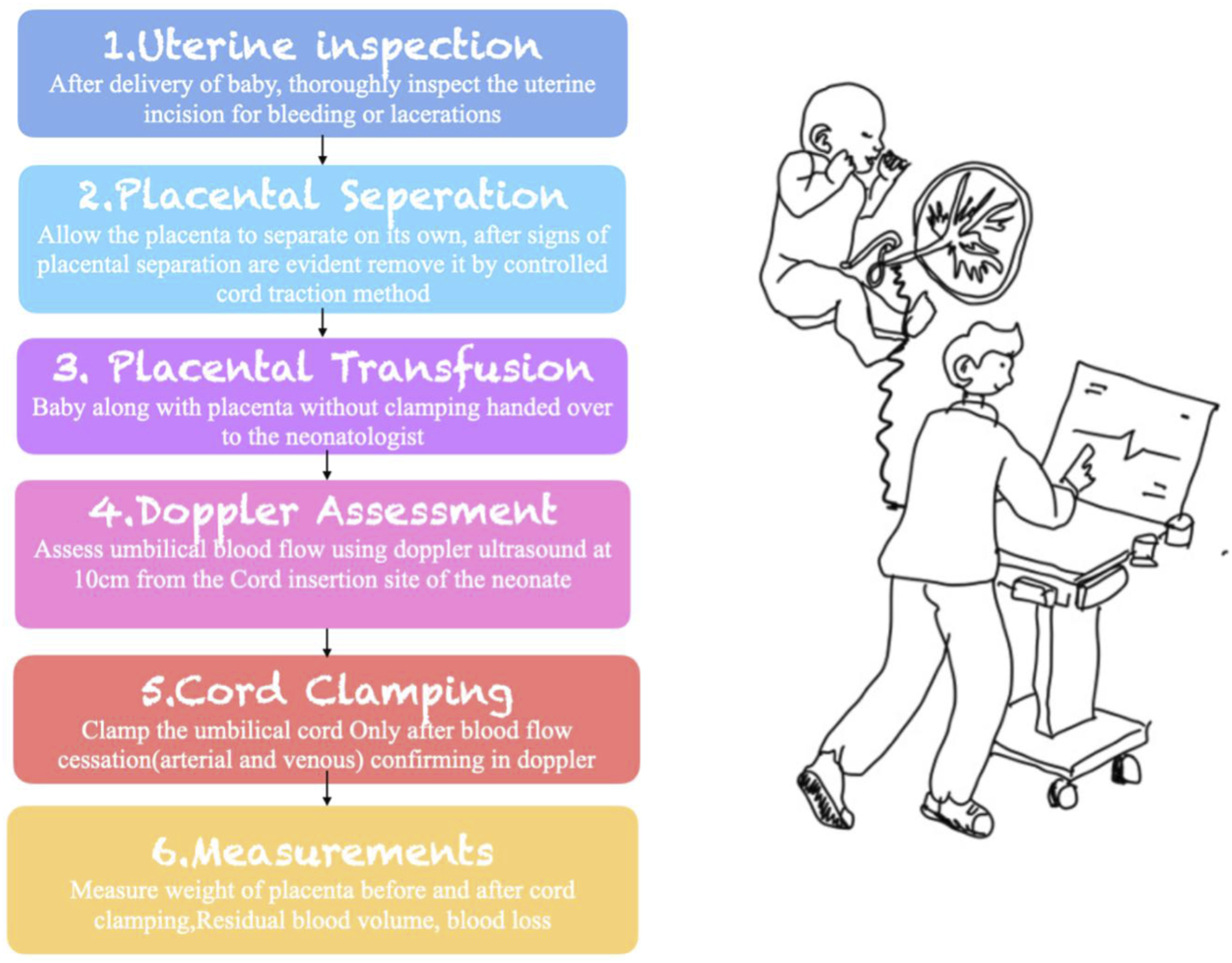
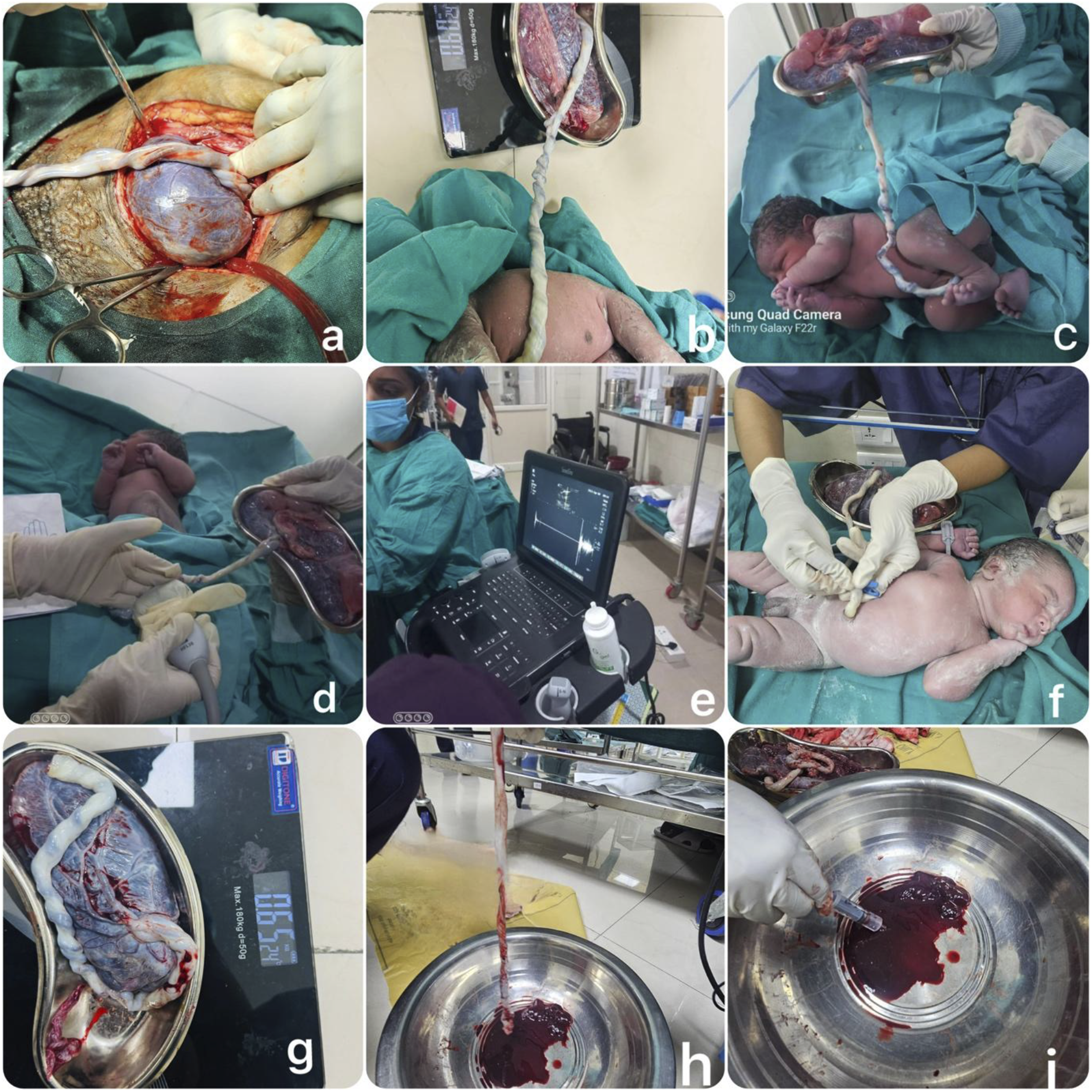
The placenta was weighed twice, once immediately after spontaneous detachment and once after cord clamping following ex-utero transfusion. To minimize the inclusion of maternal blood in the measurement, the placenta was gently rinsed with sterile saline to remove excess blood clots and allowed to drain for approximately 30 seconds on a sterile, non-absorbent surface. During ex-utero transfusion, the placenta was held using sterile, rigid, non-absorbent trays to prevent fluid transfer to any cloth or gauze. Care was taken to avoid compression or trauma to the placenta that might artificially displace blood. Both measurements were taken using the same calibrated digital scale. Residual placental blood volume was measured immediately after cord clamping and placental separation. The placenta was placed in a sterile kidney tray, and residual blood was allowed to drain passively without applying external pressure. The collected blood was then measured using a sterile syringe to ensure precise volume estimation (Figure 2). This measurement was completed within 5 minutes of cord clamping to minimize clot formation and ensure accuracy. Cord separation time was recorded based on follow-up telephone interviews with the mothers, who were asked to report the day on which the umbilical cord stump spontaneously detached. This data point was collected to evaluate whether the technique of delayed cord clamping with ex-utero transfusion had any impact on the timing of cord detachment, which may have clinical relevance for neonatal care and infection monitoring. Neonatal parameters, including Apgar scores and vitals, were recorded. The decision of admission to the NICU was made by neonatology consultant as per unit policy. Neonatal axillary temperature was measured using a calibrated digital thermometer within the first 10 minutes after delivery, immediately following initial neonatal assessment by the resuscitation team. According to our institutional protocol, neonatal hypothermia is defined as an axillary temperature less than 36.5°C, in line with the World Health Organization (WHO) classification. Maternal parameters, such as estimated blood loss and postpartum complications, were also assessed by a separate obstetric team who did not involve in the study.
Feasibility in this study was defined by the following parameters 1 : successful completion of the delayed cord clamping with ex-utero transfusion (DCC-ET) procedure without interruption or protocol deviation 2 ; the ability to perform umbilical blood flow monitoring using Doppler throughout the procedure without significant technical difficulty 3 ; the absence of maternal or neonatal adverse events directly related to the procedure, such as cord rupture, uterine atony, or neonatal haemodynamic instability; and 4 acceptability of the protocol by the clinical team, assessed informally through staff feedback regarding the ease of implementation and integration into routine caesarean workflows.
Statistical analysis was performed using SPSS version 21 software (SPSS Inc., Chicago, IL, USA). Continuous variables were tested for normality using the Shapiro-Wilk test and presented as mean with standard deviation for normally distributed data or median with interquartile range for non-normally distributed data. Descriptive statistics were used to summarize maternal, neonatal, and placental characteristics. For comparison, we utilized a historical cohort of term elective caesarean deliveries conducted at our centre over the preceding 12 months. In this cohort, standard time-based delayed cord clamping (approximately 60 seconds) was practiced without ex-utero transfusion. Comparison between the study cohort and the historical cohort was conducted using the independent samples t-test for normally distributed continuous variables and the Mann-Whitney U test for non-normally distributed variables. Categorical variables were compared using the Chi-square test or Fisher’s exact test as appropriate. A p-value of less than 0.05 was considered statistically significant, and 95% confidence intervals were reported where applicable.
Results
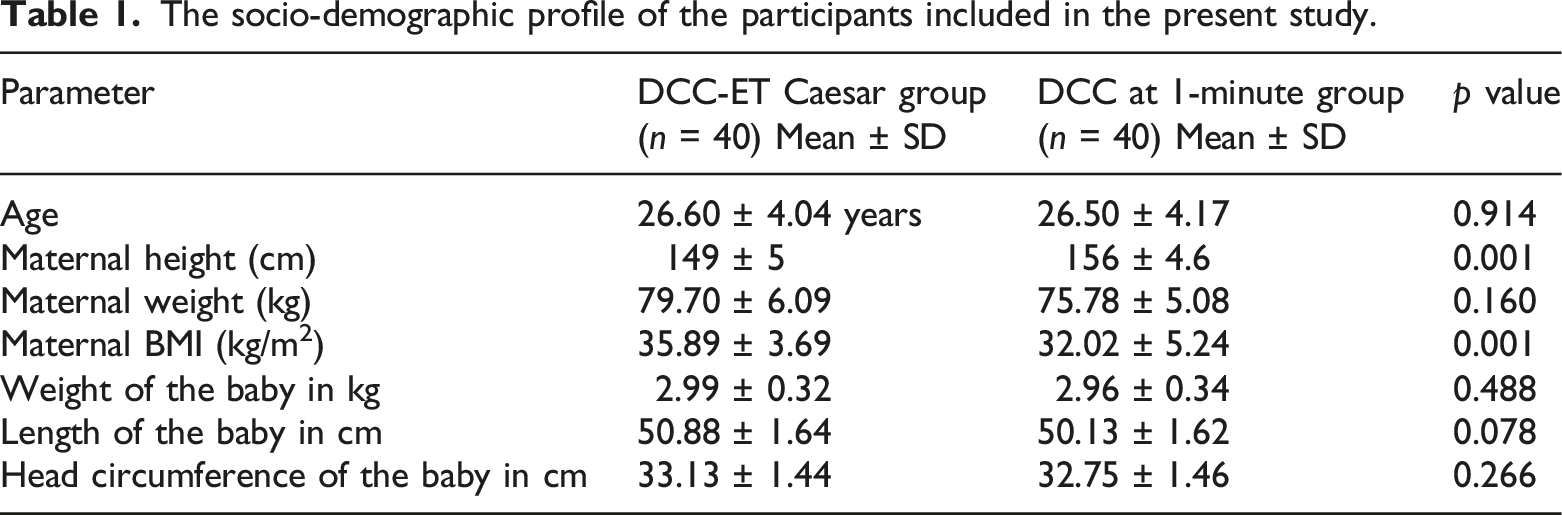
The socio-demographic profile of the participants included in the present study.
Post-delivery maternal and neonatal parameters.
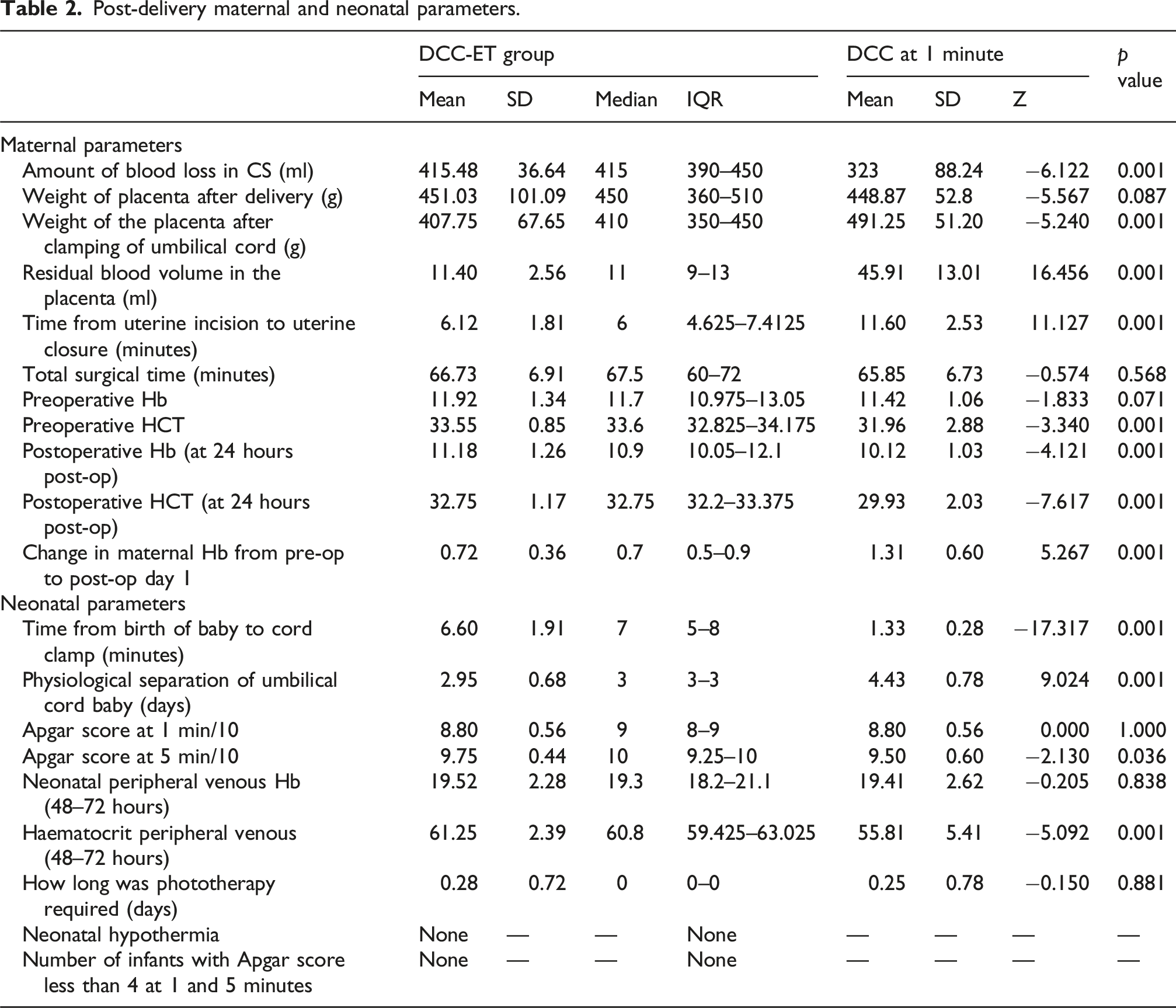
In terms of its feasibility, we found that DCC-ET until complete cessation of umbilical cord blood flow, as confirmed by Doppler, is a feasible approach. No maternal or neonatal adverse events were noted in relation to the procedure. Specifically, no cases of cord rupture, uterine atony requiring additional intervention, or neonatal haemodynamic instability were observed. Monitoring via Doppler was practical and provided an objective assessment of cord circulation status. No significant adverse maternal or neonatal outcomes were observed with this approach. Neonates exhibited stable transitional circulation, with no increased incidence of polycythaemia, hyperbilirubinemia requiring treatment, or haemodynamic instability. Maternal outcomes, including postpartum haemorrhage rates, were comparable to standard DCC protocols. Overall, this method of DCC appears to be both feasible and safe, warranting further large-scale studies to validate its clinical benefits.
Discussion
This study explores the feasibility and safety of delayed cord clamping with ex-utero transfusion (DCC-ET) after physiologic placental separation and complete cessation of umbilical cord blood flow, as confirmed by Doppler. In this study, we used a two-phase approach to delayed cord clamping. The first phase involved standard delayed cord clamping with the placenta still attached to the uterus while the newborn remained in utero or was handed over to the neonatal team with the cord intact. The second phase, ex-utero transfusion, was initiated after placental separation and delivery. The placenta was elevated approximately 30 cm above the neonate to facilitate continued placental transfusion until cessation of umbilical blood flow was confirmed by Doppler. The rationale for combining both phases was to maximize placental transfusion time while allowing adequate opportunity for surgical inspection and haemostasis, which is critical during caesarean deliveries. We believe this combined method may offer additional advantages by ensuring a longer and potentially more complete placental transfusion compared to either method alone. However, this pilot study was not designed to compare the efficacy of the combined method against standard delayed cord clamping or ex-utero transfusion in isolation. Future randomized controlled trials are planned to directly assess and compare these approaches.
Traditional DCC practices recommend waiting for a fixed duration (typically 30–60 seconds to a few minutes),7–13 whereas this approach individualizes clamping based on objective haemodynamic parameters, potentially optimizing neonatal transitional circulation. Our findings suggest that waiting for complete cessation of blood flow, rather than relying on a predefined time frame, is a feasible and safe strategy. The use of Doppler ultrasonography provided a clear, non-invasive method to confirm cessation, allowing a standardized approach to determining the ideal clamping time. While this method required additional monitoring, it did not introduce significant delays that would interfere with standard delivery room practices. The variation in time until blood flow cessation across neonates highlights the individual nature of placental transfusion, reinforcing the need for a physiologic, rather than time-based, approach.14–16 Although the interquartile range for the present study was 5–8 minutes, in one neonate we found that flow was still evident till 11 minutes and 30 seconds. The potential benefits of enhanced neonatal iron stores and improved haematological parameters support further investigation through larger randomized trials. The approach of DCC-ET allows for an uninterrupted placental transfusion, ensuring the baby receives the full benefit of its residual blood supply.
In our hospital, the recorded rates of neonatal adverse outcomes (including the need for resuscitation beyond initial stimulation, neonatal intensive care unit [NICU] admission, and hypothermia) following standard elective caesarean sections with time-based DCC are approximately 5% for NICU admissions, 2% for need for advanced resuscitation, and 4% for neonatal hypothermia. Maternal adverse outcomes (such as postpartum haemorrhage, surgical site infection, and uterine atony) occur in approximately 3–4 % of elective caesarean deliveries. In our study cohort using delayed cord clamping with ex-utero transfusion (DCC-ET), there were no observed increases in these adverse outcomes compared to the hospital’s routine rates. No significant maternal or neonatal complications were observed with this strategy. Neonates tolerated the extended DCC period well, with no increased incidence of adverse outcomes such as polycythaemia or hyperbilirubinemia requiring phototherapy. Haemodynamic stability was maintained, suggesting that allowing complete cessation of cord blood flow does not impose risks of over-transfusion. Maternal safety was also preserved, with no observed increase in postpartum haemorrhage rates compared to conventional DCC protocols. In corroboration with few studies, this reassures that waiting for physiologic cessation of blood flow does not prolong the third stage of labour to a clinically concerning extent.17,18
Clinical implications
This study supports the potential for Doppler-confirmed cessation of blood flow as an evidence-based approach to optimize DCC. While current guidelines for DCC says 1–3 minutes, incorporating real-time assessment of umbilical circulation may provide the maximum time for ensuring maximal placental transfusion and physiological adaptation.19,20 Further large-scale, randomized trials are needed to validate these findings and assess long-term neonatal outcomes. By refining DCC protocols to align with physiologic processes, this approach may enhance the benefits of placental transfusion while maintaining safety for both mother and newborn.
While we did encounter some variability in implementing the protocol, this was actually an expected physiological variation inherent to individualized, event-based cord clamping. Specifically, the time required for complete cessation of umbilical blood flow varied significantly between participants. This variation reflects differences in placental transfusion rates, onset of neonatal breathing, and individual umbilical cord characteristics. These differences highlight the importance of a flexible, physiology-guided approach to cord clamping, as a uniform, fixed clamping time may not accommodate the natural variability in neonatal transition. Clinically, the lack of a precise, universally accepted method to confirm cessation whether through palpation, visual inspection, or Doppler ultrasound leads to inconsistencies in practice. Continuous monitoring with Doppler ultrasound required specialized equipment and trained personnel, making it resource-intensive. While Doppler ultrasonography provided valuable insights into umbilical blood flow dynamics in this pilot study, we acknowledge its limited feasibility in routine clinical practice, particularly in low-resource settings or where operator expertise may be lacking. To improve clinical applicability, future studies should explore the integration of more accessible physiological markers, such as neonatal respiration, oxygen saturation, and heart rate, which can be easily monitored in diverse healthcare environments. These parameters could serve as practical, event-based triggers for cord clamping decisions, enhancing the generalizability and utility of this approach. Incorporating these markers alongside Doppler findings in a larger randomized controlled trial could help establish evidence-based, widely implementable protocols for optimal cord clamping timing. Although, all attempts were taken to ensure that either the principal investigator or one of the co-investigators were present in the operating room, for all patients who consented for physiologic cord clamping, it was difficult to implement in all. Therefore, even if they provided consent, we excluded such patients. The operating environment limited the duration for observation, as prolonged delays in cord clamping could interfere with standard surgical protocols. Some mothers expressed concerns regarding prolonged cord clamping and its potential effects, highlighting the need for better pre-procedure counselling.
Limitations
This study had several limitations. First, the small sample size limits the statistical power and generalizability of the findings. Larger studies are needed to validate the feasibility and safety of this technique across different populations and clinical settings. Second, the use of Doppler ultrasonography to assess umbilical blood flow is operator-dependent and requires specific training, which may limit its applicability, particularly in low-resource settings or where access to skilled personnel is restricted. Third, the study did not assess long-term neonatal outcomes, which are essential to fully evaluate the potential benefits and risks of delayed cord clamping with ex-utero transfusion. Fourth, the study design lacked randomization and blinding, which introduces potential biases in outcome assessment and limits the strength of causal inferences. Additionally, the time to placental detachment was not recorded, which may impact the reproducibility of the procedure in other clinical environments. Future studies should address these limitations through larger randomized controlled trials with standardized training protocols, inclusion of long-term follow-up, and the use of more universally accessible physiological markers. The investigators plan to conduct a randomized controlled trial, with larger sample size, to further study the long term implications, as well as to compare the outcomes with patients undergoing immediate or delayed cord clamping, as per the recommended guidelines.
Conclusion
The present pilot study demonstrates that delayed cord clamping with ex-utero transfusion (DCC-ET) is a feasible and safe procedure during elective caesarean deliveries. The protocol was successfully implemented in majority of cases, with no increase in maternal or neonatal complications and acceptable integration into routine clinical practice. Doppler assessment of umbilical blood flow provided a practical method to individualize cord clamping timing, although variability in time to flow cessation between participants highlighted the need for a physiology-guided, rather than time-based, approach. Further randomized controlled trials are required to compare this combined method with standard delayed cord clamping and isolated ex-utero transfusion to better understand potential additional benefits and to refine best practices for neonatal transition.
Footnotes
ORCID iDs

Ethical approval
Ethical approval has been taken from the Institutional Ethics committee vide reference no. AIIMS/BBN/IEC/MAY/2024/431-R.
Informed consent
Informed consent was taken from each of the study participants.
Author contributions
All authors have accepted responsibility for the entire content of this manuscript and approved its submission.
Funding
The authors disclosed receipt of the following financial support for the research, authorship, and/or publication of this article: A financial support has been received for the present article, from the Department of Health Research (DHR), Ministry of Health and family welfare, Government of India as a part of MD/MS thesis program (2024 Batch) (Award no. HRD/DHR-ICMR/PG-2024/1192).
Declaration of conflicting interests
The authors declared no potential conflicts of interest with respect to the research, authorship, and/or publication of this article.
Use of large language models,AI,and machine learning tools
ChatGPT (OpenAI) was used for language editing. The scientific content and interpretations are the responsibility of the authors.