



Abstract
Although cool brands are increasingly popular in the marketplace, there is scant research examining generational differences in consumers’ coolness perceptions. To address this gap, the present research investigates consumers’ perceived coolness of hotels and the consequent brand attitudes among four generations of consumers. Our findings suggest that perceived coolness of a hotel brand varies across generations. Baby Boomers’ perceptions of cool hotels are different from younger generations including Gen Z, Millennials, and Gen X. However, all generations show positive attitudes toward hotel brands that they recognize as cool due to perceived autonomy. This research contributes to the hospitality literature on hotel branding. Managerial implications for hospitality marketers are discussed.
Introduction
One way for brands to stand out in today’s competitive and cluttered marketplace is to be cool. Apple’s iconic cool image has helped the company to go far ahead of its competitors (Wolk, 2017). Gray Goose may or may not be the world’s best tasting vodka, yet it successfully maintains its cool brand image (Kerner & Pressman, 2007). Among luxury hotels, W is renowned as a cool hotel brand and thus has become a favorite among millennials (Maude, 2017). Being cool is a key defining term for boutique and lifestyle hotels (Jones et al., 2013), and many big hotel companies are adding more cool brands to their portfolios, such as The Unbound Collection by Hyatt and The Curio Collection by Hilton (“Hotel Brands Add to Collections,” 2020; Rauch, 2019).
Marketers pursue coolness because cool brands sell. Coolness is a positive attribute desired by consumers (Kerner & Pressman, 2007). Moreover, coolness signifies the ultimate point of difference among increasingly homogeneous products (Grossman, 2003; Kerner & Pressman, 2007). Consumers buy and use products not only for their functional benefits but also for their symbolic meaning (Bellezza & Keinan, 2014; Leigh & Gabel, 1992). Consuming cool products can enhance an individual’s social image. A cool brand may thus create buzz in social media and help spread positive word-of-mouth. For example, consumers tend to share photos of cool restaurants online to self-promote and to look cool (Apaolaza et al., 2021). As electronic word-of-mouth plays a critical role in hospitality marketing, industry practitioners need to understand what drives consumers’ coolness perceptions (Litvin et al., 2018).
The purpose of this study is to examine generational differences in perceived coolness of hotel brands. Coolness is socially constructed (Warren & Campbell, 2014), and therefore, consumers with similar backgrounds and interests should agree what is more or less cool in a given context (Leland, 2004). Coolness perceptions are shared among peer groups and they might differ across generations (Danesi, 1994; Runyan et al., 2013). Accordingly, we propose that what younger people (i.e., Gen X, Millennials, and Gen Z) consider to be a cool brand is different from their older counterparts (i.e., Baby Boomers). Prior research suggests that autonomous people and brands deviating from the norm tend to be considered as cool (Frank, 1997; Heath & Potter, 2004; Smith & Wylie, 2004; Warren & Campbell, 2014). We further argue that autonomy (i.e., a willingness to follow one’s own path regardless of the norm) drives coolness perceptions (i.e., a shared positive view held by a group) across the four generations. We hypothesize that even though generations might disagree what makes a hotel brand cool, they all will exhibit favorable attitudes toward their cool brands.
We address a call to better understand the dynamic and context-specific nature of coolness perceptions (Mohiuddin et al., 2016). A generation’s shared view of coolness is molded in their adolescence (Bird & Tapp, 2008; Machniak, 2014). Coolness contains esthetic meanings associated with the up-to-date technology which differs from generation to generation (Kohlenberger, 2015; Moore, 2004). Our context of hotel brands is highly suitable for examining consumers’ coolness perceptions as prior research suggests that coolness can make an interchangeable product or brand fantastically valuable (Grossman, 2003, p. 2). We investigated consumers’ reactions to two types of hotel brands: six niche cool brands with exciting aesthetics and three standard, mature brands. Increasingly, hotel guests seek coolness (Bogicevic et al., 2021; C. R. Liu et al., 2020; SiteMinder, 2019). A deeper understanding of what drives different generations’ coolness perceptions is crucial for effective marketing communications (Nancarrow et al., 2002).
Literature Review
What Is Coolness?
When consumers describe a brand as “cool,” they are often expressing their general liking of the brand (Belk et al., 2010). Cool brands such as Apple dominate the marketplace. Although there is little doubt about coolness having a positive impact on consumer behavior (Frank, 1997; Heath & Potter, 2004; Pountain & Robbins, 2000), there is scant research examining what makes a brand cool (Warren & Campbell, 2014). Even consumers who chase coolness may not be able to clearly tell what makes the brand cool. As Kerner and Pressman (2007) state, “All across the psychographic spectrum everyone wants it, even if they can’t define what ‘cool’ actually is” (p. xii). Coolness is associated with a set of shared meanings or behavioral standards within a peer group (Gerber & Geiman, 2012; O’Donnell & Wardlow, 2000; Runyan et al., 2013). Brands that are associated with such shared meanings tend to be perceived as cool brands (Warren et al., 2019). However, shared meanings may differ from generation to generation (Danesi, 1994; Runyan et al., 2013) and from context to context (S. Q. Liu & Mattila, 2019; Warren & Campbell, 2014). Such dynamic nature of coolness makes it difficult to define it conceptually.
Previous research has attempted to capture the shared meanings embedded in coolness. Read et al. (2012) find that people consider things that are slightly bad, but not very bad, cool. Sundar et al. (2014) demonstrate that coolness in technological products is subcultural, attractive, and original. Coolness is linked to other attributes such as being original or unique (Kerner & Pressman, 2007; Levy, 2006). Warren et al. (2019) identify a set of characteristics typically associated with cool brands, including being extraordinary, aesthetically appealing, energetic, high status, rebellious, original, authentic, subcultural, iconic, and popular.
It should be noted that perceived coolness (i.e., the extent to which a brand is cool) is different from the higher-order, multi-dimensional construct of brand coolness (i.e., what characteristics are associated with brands that are considered cool). Moreover, the measurement models for coolness as a multi-dimensional construct are often reflective rather than formative, as they are manifestations of the latent construct of coolness rather than formative measures that define it (Sundar et al., 2014; Warren et al., 2019). As our research focuses on the level of coolness perceived in hotel brands, the measurement of the manifestations of brand coolness does not fit our research purpose. Prior research suggests that coolness perceptions should be operationalized via consensual measurements that directly ask consumers the extent to which they consider something as cool (Amabile, 1982; Warren & Campbell, 2014).
Despite the continuing interest in coolness in the marketing field, a clear working definition of coolness is lacking (Dar-Nimrod et al., 2012; Kerner & Pressman, 2007; Warren & Campbell, 2014). This is because coolness perceptions are subjective and dynamic (Rahman, 2013; Warren & Campbell, 2014), thus difficult to define. Brands that are considered cool can differ across individual consumers and across peer groups (O’Donnell & Wardlow, 2000; Runyan et al., 2013). Although coolness is subjective, it is also obvious that people can easily recognize a cool brand when they see it (Belk et al., 2010; Leland, 2004; Sundar et al., 2014; Warren & Campbell, 2014). Coolness perceptions are shared among the social community (Gerber & Geiman, 2012; O’Donnell & Wardlow, 2000; Runyan et al., 2013). Therefore, typical cool hotel brands nominated by the media, such as the W (Maude, 2017) and Moxy (Nieset, 2015), can serve as the foundation for gauging consumers’ perceptions of cool hotel brands.
Warren and Campbell (2014) identify coolness by the following characteristics: (a) It is socially constructed, (b) it is subjective and changing over time, (c) it is a positive quality, and (d) it is more than merely being good. Because coolness is socially constructed, brands may only be cool to the extent to which others in the same social group (e.g., generational group) evaluate them as cool. Coolness changes over time, indicating that one generation’s coolness perceptions can be shaped by the time and environment in which they were born and grew up. Therefore, we propose that generational cohorts have different perceptions of what constitutes a cool brand.
Generations
Coolness used to be associated with younger people (Danesi, 1994; Evans, 1989). Thus, it is not surprising that the majority of research related to coolness focuses on younger generations like Millennials/Gen Y (e.g., Ferguson, 2011; Francis et al., 2015). As our understanding of coolness has evolved, it is evident that “cool crosses cultures, age groups, socio-economic classes and national boundaries” (Nancarrow & Nancarrow, 2007, p. 129). Marketing communications based on coolness should target not only the youth segment but also the mature market like Baby Boomers (Bird & Tapp, 2008). In this article, we examine brand coolness perceptions of four generations of U.S. consumers: Baby Boomers born between 1946 and 1964, Gen X born between 1965 and 1982, Millennials/Gen Y born between 1983 and 1995, and Gen Z who were born since 1996.
Coolness perceptions are socially constructed; consequently, each generation may have different opinions on what is cool. For example, a brand that Gen Z considers cool might not look cool in Baby Boomers’ eyes. The four generations differ in terms of many attributes such as beliefs, values, and brand preferences (Berkup, 2014; McCrindle & Wolfinger, 2009; Targamadze, 2016; Veiga-Neto et al., 2018; Williams & Page, 2011). In this article, we contrast coolness perceptions of Baby Boomers with their younger cohorts.
Baby Boomers are distinct from the other comparatively younger generational groups in that they were the least affected by current technology (e.g., the internet, social media) in their adolescence (Roberts, 2018). The pioneering technological innovation during the times when Baby Boomers grew up was color TV, while Gen X experienced the essential change brought by personal computers and are largely influenced by the internet (Jackson et al., 2011; Ordun, 2015). A generation’s perceptions of what it means to be cool are molded in their adolescence (Bird & Tapp, 2008; Machniak, 2014). Coolness contains esthetic meanings which are associated with up-to-date technology (Kohlenberger, 2015; Moore, 2004). Hotel branding inherently involves esthetics, which is an important attribute contributing to consumers’ coolness perceptions (Runyan et al., 2013). Therefore, Baby Boomers may have different perceptions regarding cool hotel brands. Furthermore, coolness reflects rebellion (Bird & Tapp, 2008; Moore, 2004). Baby Boomers are less rebelling compared with younger generation cohorts, such as Gen X (Reynolds, 2012). We hence argue that cool brands displaying nonconfirmity are cooler to younger generations than to Baby Boomers. Conversely, we do not expect differences in consumers’ coolness perceptions of mature brands.
Autonomy
Although it remains unclear what makes a brand cool, a common theme emerging from the coolness literature is that cool things tend to be different from the rest of the pack. As the key factor leading to perceived coolness, autonomy refers to “a willingness to pursue one’s own course irrespective of the norms, beliefs and expectations of others” (Warren & Campbell, 2014, p. 544). This attribute is consistent with previous research revealing that coolness implicates being unique, different from the crowd, and nonconforming. Southgate (2003) suggests that being cool involves looking for a way to be different. Similarly, Smith and Wylie (2004) find that products that help people stand apart from the crowd are considered cool. Mohiuddin et al. (2016) identified deviating from norm as a core characteristic of coolness. Previous research also indicates that nonconformity (Frank, 1997; Heath & Potter, 2004) and an unwillingness to follow trends (MacAdams, 2001) are associated with coolness perceptions. Despite the different terminology, past research shows that at the heart of coolness is autonomy reflecting nonconformity (Warren & Campbell, 2014).
Brands can display autonomy when their products or services are different from the market norms. Creative brands such as Apple diverge from the norm in a way that makes their products seem novel (Moreau & Dahl, 2005). Boutique hotels like the Rough Luxe Hotel in London utilize unique decoration and design to stand out from competitors (Aggett, 2007; Jones et al., 2013; T. Wang et al., 2015). Perceived autonomy helps to build a cool brand image, which stimulates positive consumer responses such as brand attitudes and word-of-mouth intention (Kerner & Pressman, 2007). The Swedish Icehotel is so well-known that it contributes to the national image of Sweden as a cool country (Pinto, 2016).
In sum, consumers tend to like cool brands that show autonomy (Belk et al., 2010; Warren & Campbell, 2014; Warren et al., 2019). Although the extent of coolness perceived in a brand may be a function of a generation, all generations like cool brands (Kerner & Pressman, 2007). Brand attitudes refer to a consumer’s overall evaluation of the brand (Faircloth et al., 2001; Keller, 2003). We further argue that autonomy drives coolness perceptions, which in turn generate positive brand attitudes (see Figure 1 for our conceptual model).

The Indirect Effect of Autonomy on Brand Attitude Through Coolness Perceptions.
Method
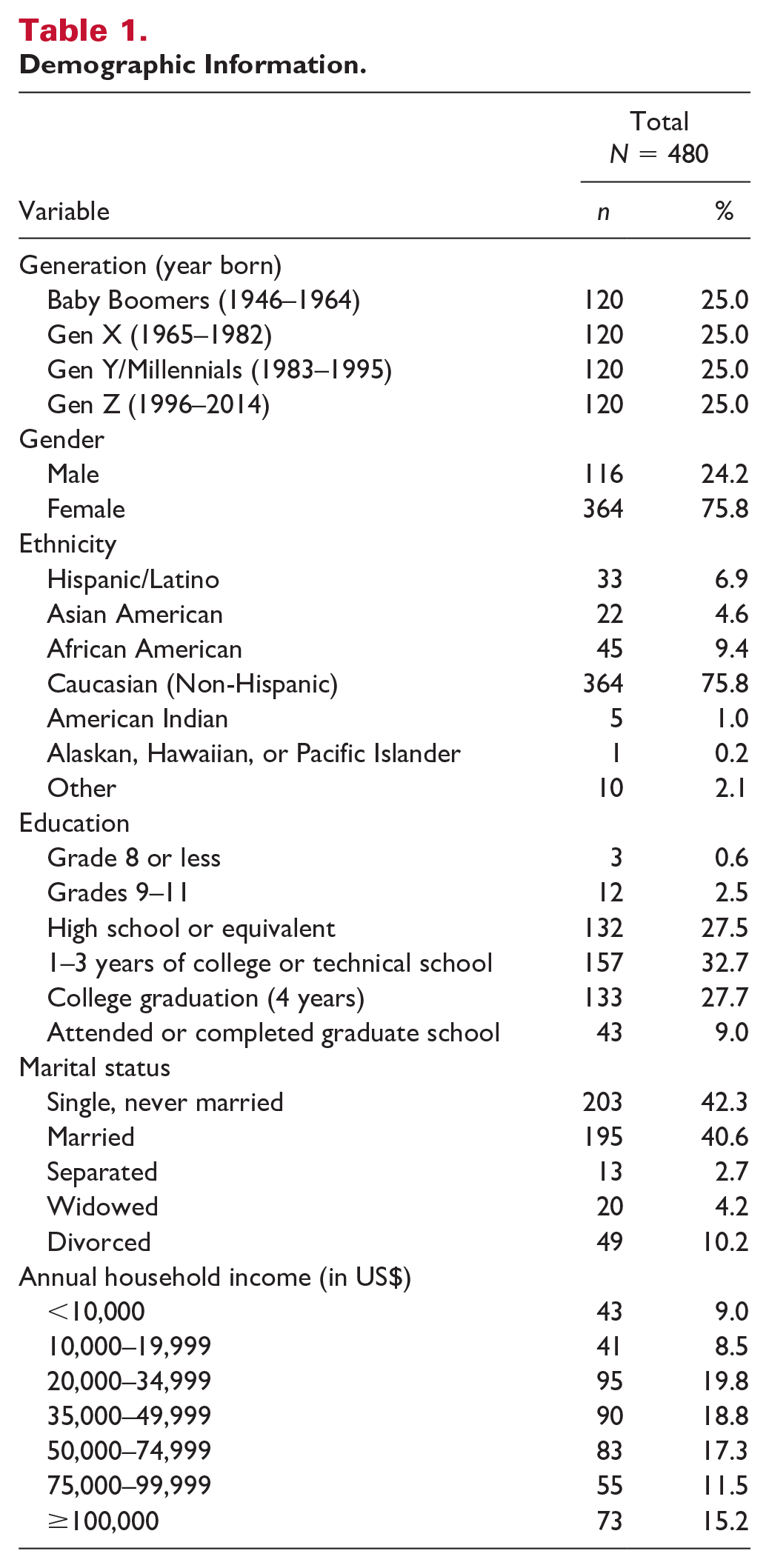
Participants were exposed to pictures representing nine hotel brands. Two pictures of each brand were shown, one for the public area and one for the guest room. The order of the pictures was randomized. The list of the nine brands included six cool hotel brands (Nieset, 2015) and three standard hotel brands. Participants were not shown any brand names or information that would help them to identify the brand. A total of 480 participants from a Qualtrics panel participated in the study. They were prescreened for their generational cohort, thus resulting in 120 participants across the four generations (Gen Z, Millennials, Gen X, and Baby Boomers). The demographic profiles of the participants are shown in Table 1. The majority are female (75.8%), are Caucasian (75.8%), have attended college (69.4%), are or used to be married (57.7%), and earn US$35,000 or more per year (62.7%).
Demographic Information.
Measures
After examining each hotel’s pictures, participants evaluated the brand on coolness and autonomy, and then reported their attitude toward the brand. Coolness was measured with three items: “How cool or uncool do you consider this brand?” “How cool or uncool would your friends consider this brand?” and “Is this brand hip?” (Cronbach’s α ≥ .937 for the nine hotel brands), adapted from Warren and Campbell (2014). Autonomy was captured by asking participants whether the brand is different in a good or bad way (1 = bad, 7 = good), adapted from Warren and Campbell (2014). Finally, we captured participants’ attitude toward the brand with a three-item scale (dislike/like, unfavorable/favorable, and bad/good; Cronbach’s α ≥ .970 for the nine hotel brands). 1 All the measures involved 7-point scales. Table 2 shows the overall correlations between key variables.
Correlation Table.
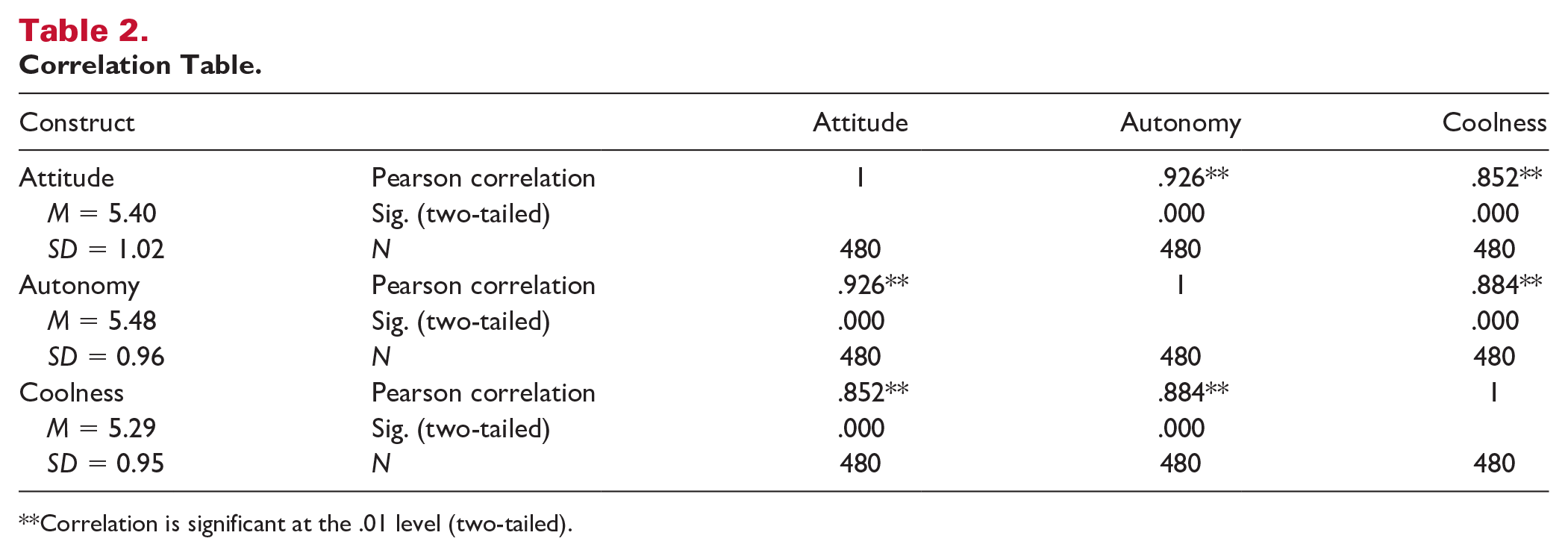
Correlation is significant at the .01 level (two-tailed).
Results
Generations and Perceived Coolness
We performed a mixed-design analysis of variance (ANOVA) to determine if generation influenced perceived coolness of different hotel brands. The data were analyzed in a 9 (brand: 6 cool brands and 3 standard brands) × 4 (generation: Gen Z, Millennials, Gen X, and Boomers) mixed-design ANOVA, with brand as a within-subjects factor and generation as a between-subjects factor. The ANOVA results shown in Table 3 indicate a significant main effect for brand and generation. More importantly, the interaction effect between generation and brand is also significant.
The 4 × 9 Mixed-Design ANOVA for Coolness Perceptions.

Note. ANOVA = analysis of variance.
A series of one-way ANOVAs testing generational differences in brand evaluation on coolness show that participants’ responses to cool brands (Brands 1–6) differed significantly (p < .05) among generations while their responses to mature brands (Brands 7–9) did not. Table 4 shows the cell means and pair-wise comparisons. An examination of the cell means indicates that Boomers perceived the cool brands (Brands 1–6) to be less cool compared with their counterparts of the other generations. However, the coolness perceptions of the three standard brands (Brands 7–9) did not differ across generations. These results support Hypothesis 1.
Coolness Means Comparison Between Generations.
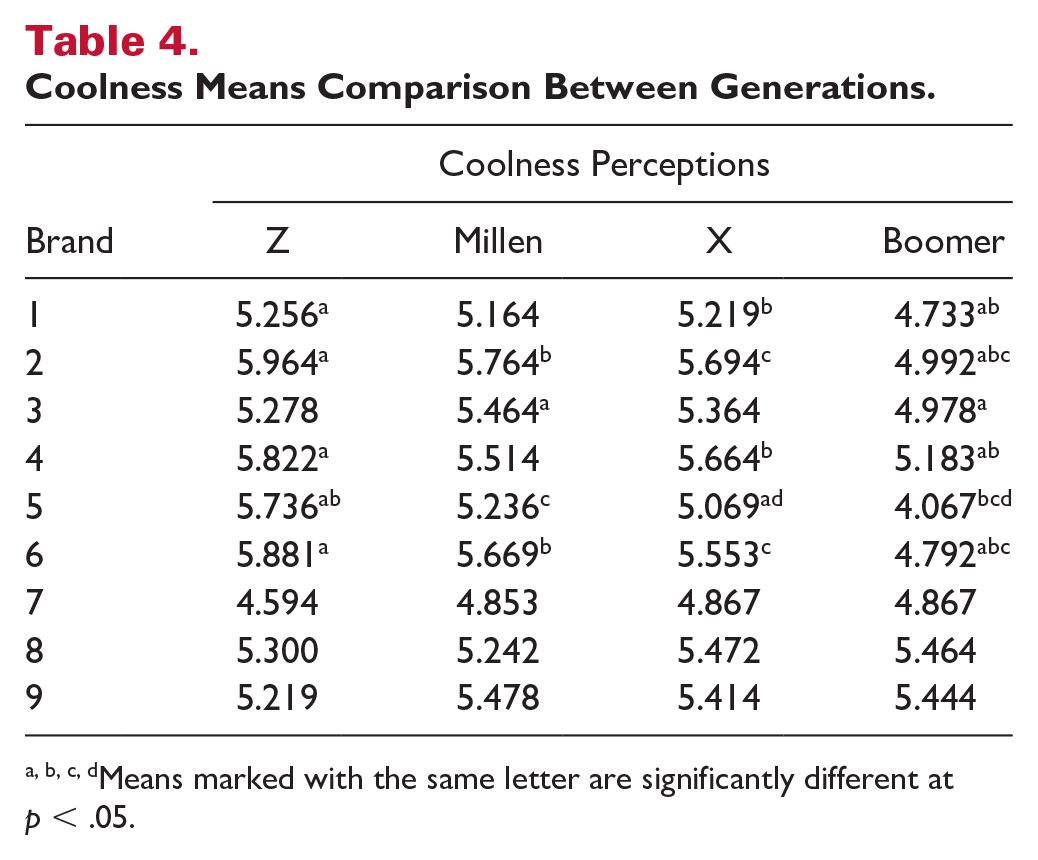
Means marked with the same letter are significantly different at p < .05.
Coolness Mediates the Effect of Autonomy on Brand Attitudes
To test the hypothesis that autonomy drives brand attitudes through coolness for all generations, we conducted a moderated mediation analysis using the bootstrapping approach (Hayes, 2017; Model 8; number of bootstrap samples = 10,000). In the model, the averaged autonomy score of all nine hotel brands was specified as the independent variable, the averaged coolness perception was the mediator, averaged brand attitude was the dependent variable, and generation was specified as the moderator to test whether the mediation path holds for all generations as we predicted. Bootstrapping results presented in Table 5 indicates that the autonomy → coolness → attitude mediation process was significant for all generations and that generation did not moderate the mediation effects. These results demonstrate that perceived autonomy enhanced brand attitudes through heightened coolness perceptions across the four generational cohorts. Hence, Hypothesis 2 is also supported.
Indirect Effects of Autonomy on Brand Attitudes via Coolness.

Note. CI = confidence interval; Z = Gen Z; Y = Millennial; X = Gen X; BB = Baby Boomer.
Discussion
Consumers like cool brands; yet there is scant research on what makes brands cool (Warren & Campbell, 2014; Warren et al., 2019). To address the dynamic nature of coolness perceptions, we examined consumer perceptions of cool hotel brands across four generational cohorts (Gen X, Millennials, Gen Z, and Baby Boomers). Our findings indicate that Baby Boomers’ perceptions of cool hotel brands are different from the other generational cohorts. Specifically, Baby Boomers perceived the selected cool hotel brands to be less cool compared with their younger counterparts. However, all generations show positive attitudes toward brands that they perceive as cool due to perceived autonomy.
This study makes several theoretical contributions. First, our findings are congruent with the coolness literature suggesting that coolness is socially constructed (Leland, 2004). Coolness is not inherent to a brand (Pountain & Robbins, 2000). Instead, brands may only be cool upon validation by a peer audience (Belk et al., 2010), similar to other socially constructed perceptions such as status (Hollander, 1958). This study adds to this stream of literature by examining coolness perceptions of hotel brands across four generational groups. Our findings show that the generation influences consumers’ coolness perceptions. More importantly, our results provide evidence against the assumption that favorable attitudes toward cool brands are unique to young consumers (e.g., Ferguson, 2011; Francis et al., 2015). The findings show that all generations like cool hotel brands although they may perceive different elements as cool.
Second, previous research suggests that one of the key factors driving coolness perceptions is autonomy reflecting nonconformity (Warren & Campbell, 2014). Warren and Campbell (2014) demonstrate that autonomy can influence consumers’ choices of songs through perceived coolness. Warren et al. (2019) find that positive autonomy is a prototypical characteristic of cool brands. Our results further show that autonomy drives coolness perceptions, therefore promoting brand attitudes. As coolness is dynamic and context specific (Warren & Campbell, 2014), the impact of coolness may vary across product categories. We extend the investigation of coolness to the context of hotel branding and reveal that perceived autonomy leads to favorable brand attitudes through heightened perceived coolness.
This study offers important practical implications to hoteliers. First, our results suggest that all generational cohorts like cool hotel brands. However, consumers perceive the strength of cool hotel brands differently across generations. Consequently, hotel brand managers should pay close attention to how to portray cool to their target groups because coolness perceptions are not necessarily shared across generational groups. For example, previous research suggests that hotel features like cool technology (e.g., virtual reality devices) and cool design (e.g., historical aspects) contribute to a cool brand image, hence appealing to hotel guests (Bogicevic et al., 2021; T. Wang et al., 2015). However, such cool appeals may depend on the generation. Hotel technology that Gen Y considers cool may not seem cool to Baby Boomers, while historical aspects might be cool for Baby Boomers but not for younger generations. We urge hotel managers to implement cool features in accordance with the coolness perceptions of the cohort of their target consumers.
Second, given the rise in intergenerational travel (Losada et al., 2016; Organisation for Economic Co-Operation and Development, 2014), it might be worthwhile to create cool places within the hotel to appeal to different generations. For example, a hip bar might attract the younger generations while a cool gym might be appealing to Baby Boomers. Hospitality marketers should pay attention to how they communicate coolness across different channels with different generational audiences.
To accentuate the coolness perception of a hotel, marketers should employ advertising that demonstrates how consumers may express their individuality within a cool hotel brand. Similarly, positioning strategies that situate a hotel as nonconforming compared with other hotel choices will likely tap into the autonomy that consumers seek to affirm in their travel purchases.
Finally, a hotel brand’s reputation is contingent on its employees (John & Edmund, 2003; Tran et al., 2015). To create a cool hotel brand, managers should take coolness into consideration when hiring and training employees. For example, employees should know the hippest places in town to recommend to guests (Strannegård & Strannegård, 2012). Or, non-standardized employee appearances might add to the coolness factor.
As any research, this study has some limitations. First, we used a picture-based stimuli and measured consumer attitudes toward hypothetical hotel brands. To overcome such limitations, future research in the field is warranted. Second, our results demonstrate that coolness may not necessarily translate across generations. How this affects intergenerational travel needs to be further investigated. As group decisions are common among hotel consumers (Stone, 2016), future research is encouraged to examine how different coolness perceptions influence group preferences when more than one generation is involved. Third, the six cool hotel brands used in this study might be particularly appealing to the younger generations, such as Gen Y. This is consistent with the long-held assumption that coolness is somehow related to young generations (e.g., Ferguson, 2011; Francis et al., 2015). Our findings suggest that cool hotel brands demonstrating autonomy appeal to all generations despite that they have different opinions on what constitutes such coolness. Future research should extend beyond the boundary of young consumers and explore the elements comprising cool hotels in the eyes of Baby Boomers. Forth, coolness is associated with desirable quality (Kerner & Pressman, 2007; Levy, 2006; Sundar et al., 2014; Warren & Campbell, 2014). Perceived quality of a hotel may depend on the financial affordability of the consumer. Future research should examine how financial affordability and consumers’ socioeconomic status influence their coolness perceptions of hotel brands. Forth, the majority of the study sample was female, which might influence the generalizability of the findings due to gender differences in consumers’ coolness perceptions (Kiefer & Wang, 2016). Future research should examine how gender might influence consumer responses to cool hotel brands. Finally, the present research examines cool hotel brands from the consumer’s perspective. Prior research on internal branding indicates that a cool hotel brand may affect the employee-brand fit for different generations (Gursoy et al., 2008; King et al., 2017; Lee et al., 2014; Y. C. Wang et al., 2019). Follow-up studies can examine the success of cool hotel brands in engaging and supporting hotel employees.
Footnotes
Declaration of Conflicting Interests
The author(s) declared no potential conflicts of interest with respect to the research, authorship, or publication of this article.
Funding
The author(s) disclosed receipt of the following financial support for the research, authorship, or publication of this article: The authors thank the Marriott Foundation for funding this research.
