




Abstract
Introduction:
Advancements in biomedical research depend on the quality and availability of biological samples. Despite their sophisticated storage capabilities, biobanks face significant challenges in sample management, with stored specimens often remaining unused and researchers struggling to access the required samples.
Objectives:
To analyze the challenges in biospecimen access and traceability, evaluate existing solutions, and propose a framework for integrated sample management in global research collaboration.
Methods:
A scoping review was conducted across PubMed, Scopus, and Web of Science databases, supplemented by grey literature (2004–2024). The analysis included an examination of Biobank Information Management Systems and an evaluation of sample management systems, tracking technologies, and governance frameworks.
Results:
The analysis revealed fragmented management systems, with at least 38 different biobanking software solutions offering limited interoperability. Proprietary systems and vendor lock-ins create significant barriers to data sharing. Sample tracking shows the evolution from manual to digital systems; however, cross-institutional tracking remains challenging. Reproducibility issues account for significant challenges in research, whereas inefficient resource utilization persists, with 67% of biobanks citing underutilization as a major concern.
Conclusions:
Addressing biobank sample access and traceability requires a shift from an institution-centric to an ecosystem-wide approach. Its success depends on integrating technological solutions such as Blockchain, the Internet of Things, and artificial intelligence with governance frameworks while ensuring alignment with stakeholder needs. Future developments should focus on implementing integrated traceability systems that support transparent and accountable sample management across the global research ecosystem.
Keywords
Introduction
Advancements in biomedical research are linked to the availability and quality of biological samples. These specimens serve as the foundation for breakthrough discoveries, from understanding the basic cellular mechanisms to developing personalized therapeutic approaches.1,2 The emergence of precision medicine has further elevated the strategic importance of high-quality biospecimens, making them indispensable for biomedical research.2–4 The COVID-19 pandemic has demonstrated the critical importance of biological samples in global research efforts, as laboratories require reliable access to validated specimens for diagnostic development and therapeutic research. 5
However, despite their advanced storage and processing capabilities, biobanks face challenges in terms of sample management and utilization. Studies have revealed that a significant portion of stored samples remain unused,6,7 while paradoxically, researchers have reported difficulties in accessing specific sample types. 8 This contradiction points to fundamental inefficiencies in the current biobanking ecosystem, particularly in terms of sample tracking and resource optimization.
Previous research has made significant contributions to improving sample management. Studies have advanced the standardization of storage protocols and quality management systems, 9 whereas initiatives such as the Bioresource Research Impact Factor6,10 have provided valuable tools for recognizing the impact of biological resources on health research. In addition, the shift towards customer-focused biobanking practices 11 has been instrumental in addressing user needs.
Despite these remarkable achievements, current solutions remain fragmented and localized. This study poses that biospecimen traceability is a systemic challenge that requires a comprehensive, integrated approach. The success of biomedical research today depends not only on collecting and storing samples but also on the ability to track, trace, and utilize them effectively on a global scale. This study proposes a holistic framework for understanding these challenges and serves as a foundation for integrated solutions that can help biospecimen management in the era of globalized research.
Methods
Review
A scoping review was conducted to map the status of biospecimen management and traceability systems for biobanking. The primary objective was to identify, synthesize, and evaluate existing frameworks, practices, challenges, and opportunities within the field, providing a comprehensive overview of the literature. This approach emphasizes the role of integrated sample traceability systems in addressing the complexities of global research collaborations. The review included systematic searches across multidisciplinary databases, such as PubMed, Scopus, and Web of Science, supplemented by grey literature sources, including organizational white papers and reports from biobanking consortia. Keywords and phrases, including “biobanking,” “biospecimen management,” “traceability,” “data integration,” and “precision medicine,” were employed, with Boolean operators and filters applied to refine the results to peer-reviewed articles, reports, and conference proceedings published between 2004 and 2024. Articles that did not explicitly address issues related to the use of common data models, data dictionaries, or data translation and integration in the context of biobanking, biospecimen management, traceability, data integration, or precision medicine were excluded. Articles published in languages other than English were also excluded.
Analysis of technology and governance
To supplement the literature review, a focused analysis was conducted to explore how technological and governance solutions address the biobank traceability challenges.
Technological analysis
We reviewed existing Biobank Information Management Systems to evaluate their capabilities in sample tracking. Available documentation of these systems was analyzed to gather information on features such as tracking mechanisms, organizational types (academic or vendor), associated costs, and the migration processes they support. The analysis also examined the use of innovative technologies in biobank management.
Governance analysis
The governance aspect was examined by extracting key themes from a review of relevant literature. Searching terms like “biobank governance” helped identify challenges and opportunities. Particular attention has been paid to governance models that align with technological advancements, especially decentralized systems, for their potential to improve accountability, ensure ethical compliance, and foster stakeholder trust.
Current Landscape and Challenges
The current landscape presents several challenges (Table 1), which impede sample traceability and hinder integrated approaches in global research. The following subsections examine these barriers in detail.
Current Landscape and Challenges in Biospecimen Management
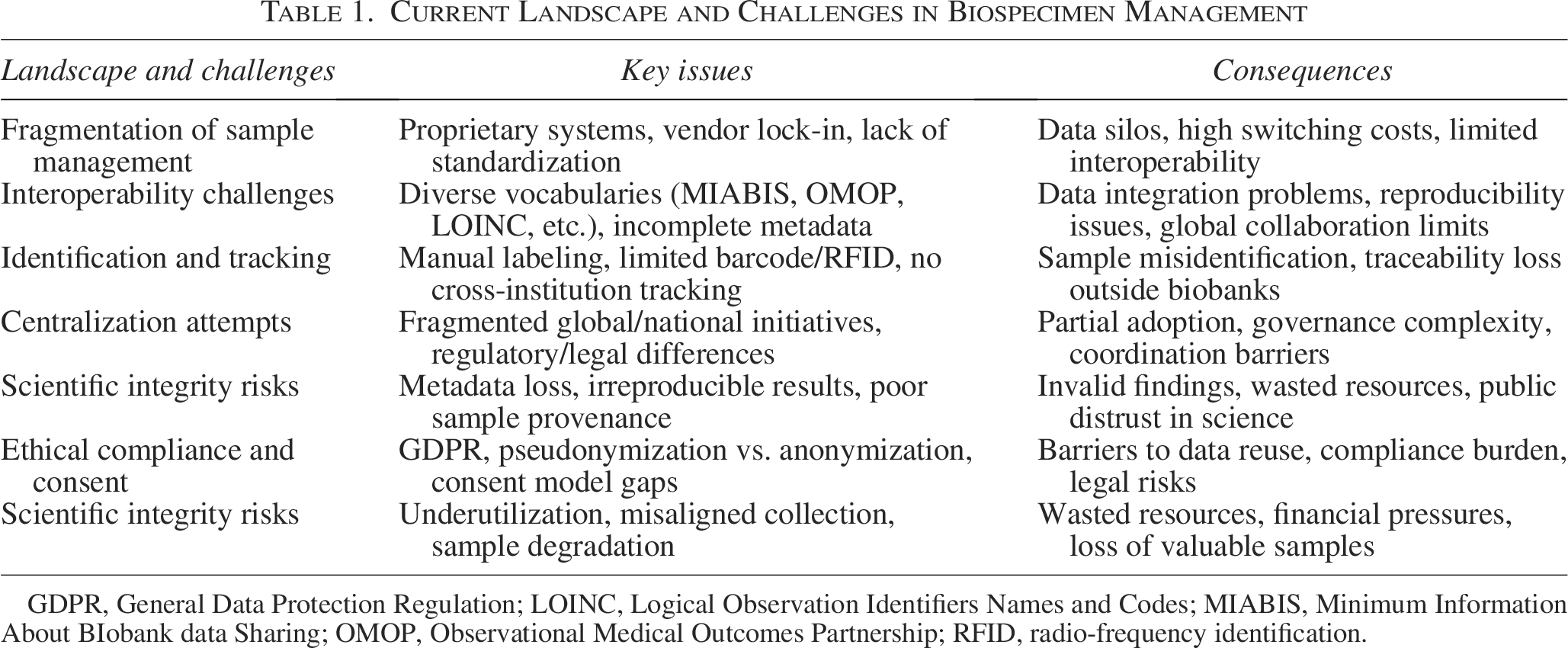
GDPR, General Data Protection Regulation; LOINC, Logical Observation Identifiers Names and Codes; MIABIS, Minimum Information About BIobank data Sharing; OMOP, Observational Medical Outcomes Partnership; RFID, radio-frequency identification.
The fragmentation of sample management systems
Proprietary systems and vendor lock-in
The proliferation of Laboratory Information Management Systems (LIMS) in the biobanking sector has created a fragmented landscape that significantly impedes efficient sample management and data sharing. A comprehensive analysis of biobanking software solutions revealed multiple challenges across the three key dimensions. First, the diversity of available systems ranges from commercial products to open-source solutions with varying levels of functionality and interoperability. 12 For instance, a market analysis identified at least 38 biobanking software systems, and a published analysis highlighted that only eight specifically addressed the regulatory requirements of the German market. 13 Second, this fragmentation extends beyond software diversity to affect core biobanking operations from sample acquisition and storage to data management and sharing. 14 The lack of standardization affects multiple aspects, including master data management, workflow definitions, sample property tracking, and integration with clinical and research data systems. Third, while modern biobanking requires integration with various data sources (clinical, genomic, and imaging) to support translational medicine, many current systems operate in silos with different standards and governance structures, creating barriers to effective data sharing and collaborative research.
The proprietary nature of these systems creates what is known in information systems as “digital silos”—isolated repositories of sample information trapped within vendor-specific ecosystems. This isolation manifests in multiple ways. First, vendors typically implement proprietary data models and workflows that differ significantly from industry standards, which make data migration between systems challenging. Published sources15,16 suggest that migration costs can range significantly, with implementation expenses often reaching hundreds of thousands of dollars or more, depending on the complexity and customization required. These high switching costs effectively lock institutions into their chosen systems, even when those systems no longer meet their evolving needs, often because these platforms are no longer actively supported or developed.
This is where academic and open-source solutions have emerged, offering viable alternatives to proprietary systems. Prominent open-source solutions such as the Advanced Tissue Management application, 17 with over 19 years of community use, and OpenSpecimen, 18 which evolved from caTissue, demonstrate the potential of these platforms to provide affordable, flexible, and customizable options for biobanking. Open-source platforms allow institutions to retain greater control over their data and workflows, making them particularly appealing to academic- and research-focused organizations. However, they also present drawbacks, including limited technical support, dependence on community-driven maintenance, and risk of discontinued updates.13,14 Institutions adopting these solutions often bear the responsibility of managing technical issues themselves, which can be a challenge for smaller organizations with limited IT resources. 14
Interoperability challenges
The lack of interoperability between sample management systems represents a fundamental barrier to effective biospecimen utilization in modern research contexts. Despite significant efforts to establish common data standards, practical implementation remains challenging. Current management systems, which are often based on proprietary databases and local identifiers, lack interoperability and long-term tracking capability. 19
The interoperability challenge manifests across multiple layers of biobank operations. At a fundamental level, the diversity of biological samples and associated data types, including genomic data, clinical records, and imaging data, create significant data heterogeneity challenges. 20 Different biobanks may adhere to varying data standards, terminology, and annotation protocols, leading to inconsistencies in data representations that complicate integration. Without detailed information on the provenance and processing of samples, researchers cannot accurately reproduce experimental conditions. 14
The impact of these interoperability issues extends beyond technical inconvenience and affects research outcomes and international collaborations. Data entry errors, inconsistencies in data annotation, and discrepancies between different data sources can introduce inaccuracies and biases into datasets. 20 Differences between management systems create barriers to the efficient exchange of samples and associated information, limiting the potential for large multicenter studies and slowing the pace of scientific discovery. 19 Recent initiatives have focused on developing integrated data commons approaches to address these challenges, enabling better standardization and sharing of biobank resources while maintaining proper governance. 14
Models such as MIABIS (Minimum Information About BIobank data Sharing), 21 OMOP (Observational Medical Outcomes Partnership), 22 and LOINC (Logical Observation Identifiers Names and Codes) 23 provide structured frameworks that enhance data sharing capabilities while maintaining consistency across institutions. However, mapping between different data models presents significant challenges. Research shows this transformation often results in unavoidable loss of data granularity and precision. 24
Research examining cross-border sharing has identified concerns regarding data harmonization on a global scale, particularly in avoiding potential biases in genomic studies that utilize samples from diverse populations. 25 This also reflects broader issues with regional reporting guidelines, as biobanks often adopt local data structures and protocols from their existing health research systems. This reflects broader issues with regional reporting guidelines, as biobanks often adopt local data structures and protocols from their existing health research systems. As a result, both regional and international interoperability remain challenging. 26 The technical integration issues are further complicated by incomplete metadata, resulting in loss of contextual information needed for proper sample interpretation. 23
Identification and tracking limitations
The challenge of sample identification and tracking is a significant obstacle in modern biomedical research because biobanks manage increasingly large and complex sample collections. Identification methods have evolved through three generations.
Manual labeling and paper-based tracking
The early methods of sample identification relied heavily on handwritten labels and basic manual tracking systems. According to the International Society for Biological and Environmental Repositories (ISBER) Informatics Survey, as of 2012, 24% of biobanks still use handwritten labels on storage tubes, a notable improvement from 39% in 2010. 27 Although manual labeling offers simplicity and requires minimal technology, it poses risks, including susceptibility to human error, degradation of paper labels under extreme storage conditions, and challenges in ensuring consistent sample identification. Despite these limitations, manual systems remain practical in low-resource settings or as backups when technology fails.
Barcode systems: Enhanced accuracy and efficiency
The integration of barcode systems has led to a significant shift in sample tracking and management, thereby offering improved accuracy and operational efficiency. Barcodes, both linear and 2D, became widespread, with the 2012 ISBER survey reporting their use in 51% and 40% of the biobanks, respectively. 27 This technology allows for faster identification and reduces human error compared with manual systems. Institutions, such as the Karolinska Institute Biobank in Sweden, have adopted comprehensive barcode-based tracking systems, significantly improving sample traceability. However, barcode systems are not without limitations: labels can degrade over time, particularly in ultra-low-temperature storage, and scanning often requires line-of-sight access, which can be cumbersome in frost-covered environments. 28
Direct tube labeling: Mitigating physical label risks
Direct tube labeling technologies have emerged to address the challenges of label degradation. These methods, which involve printing barcodes or other identifiers directly onto a tube, reduce the risk of label peeling or smudging under extreme storage conditions. Although these solutions offer improved durability, they depend on proprietary technologies and equipment. Reliance on specific manufacturers for printing and reading equipment may lead to compatibility issues and higher costs, particularly for institutions with limited budgets.
Advanced tracking: Radio-frequency identification and integrated digital systems
The latest advancements in sample tracking include radio-frequency identification (RFID) and integrated digital systems. RFID technology allows non-line-of-sight scanning, which is particularly advantageous in cryogenic storage, where frost accumulation can obscure traditional labels. Systems such as those implemented in the Prostate Cancer Research Consortium (PCRC) biobank support dynamic information storage on tags, automated identifier allocation, and enhanced security through data encryption. 28 These features enable the seamless tracking of samples across multiple processing stages and locations, addressing many challenges faced by earlier systems. However, the implementation of RFID technology requires significant investment, standardization, and robust protocols to manage complex workflows and ensure compatibility across biobanks. 29
Beyond the biobank: An open question
While these systems focus primarily on identifying and tracking samples within the controlled environment of a biobank, a critical question remains unanswered: What happens when samples leave the biobank? For example, how can identifiers remain intact and universally traceable when samples are transferred to external laboratories, research institutions, or other facilities? Current systems often fail to ensure seamless tracking across organizational boundaries, creating gaps in traceability that can undermine research integrity and data reliability. Addressing this challenge requires interoperable identification standards and collaborative frameworks that extend beyond individual biobanks, thus enabling end-to-end traceability throughout the lifecycle of a sample.
The evolution of sample identification and tracking systems demonstrates the ongoing efforts of the biobanking community to meet the modern research demands. Although manual methods and paper-based systems still have a place in certain contexts, advancements in barcoding, direct tube labeling, and RFID technology have resulted in transformative capabilities. Integrating these systems into a cohesive and standardized framework is essential to address emerging challenges and ensure the seamless tracking of samples not only within biobanks but also across the broader research ecosystem.
Attempts at centralization
The history of centralization attempts in biospecimen management provides valuable insights into the challenges of creating unified sample management systems. Over the past two decades, efforts have evolved into three broad categories: national initiatives, regional networks, and international consortia. Each approach highlights the specific challenges and advancements in biobanking landscapes.
The first approach, beginning in the late 1990s and the early 2000s, was characterized by national centralization efforts. Initiatives such as the Chernobyl Tissue Bank (1999), 30 supported by international organizations, have highlighted the potential of centralized biobanks in addressing region-specific health issues. Around the same time, Estonia launched its national biobank (2000), 30 followed by the UK Biobank (2002), 31 which became one of the largest repositories for global health and genetic data. Other early examples include Biobank Japan (2003) 32 and Canada’s CARTaGENE (2007) 30 which evolved into the Canadian Partnership for Tomorrow Project. 33 Initiatives such as the Canadian Tumor Repository Network (CTRNet) 34 provide support for standardizing biospecimen collection and annotation and creating a cohesive network of tumor biobanks to advance cancer research.
As biobanking matured, focus shifted to regional networks to foster collaboration and resource sharing across countries. The EuroBiobank (2003) 30 was one of the first networks dedicated to research on rare diseases, connecting biobanks across Europe and beyond. In 2013, the BBMRI-ERIC 35 emerged as a large-scale infrastructure to harmonize biobanking efforts across Europe. The Human Heredity and Health in Africa (H3Africa) initiative was established to drive new research into the genetic and environmental basis for human diseases relevant to Africans, as well as to build the capacity for genomic research on the continent.36,37 These networks emphasize interoperability and standardization and address challenges in ethical frameworks, legal compliance, and cross-border data sharing.
In recent years, biobanking efforts have become increasingly more global. Initiatives such as the Global Biobank Meta-Analysis Initiative 25 form a collaborative network of 23 biobanks across four continents, representing over 2.2 million consented individuals with genetic data linked to electronic health records, enabling comprehensive large-scale genetic studies. Similarly, the International Rare Diseases Research Consortium gathers nearly 60 member organizations across 20 countries, establishes policies and guidelines for global biobanking practices, and emphasizes sample sharing, harmonization, and sustainability. 38 This global collaboration trend is further exemplified by multiple coordinated initiatives, including the Public Population Project in Genomics and Society (P3G), ELSI 2.0, the Human Variome Project, the 1000 Genomes Project, the International Collaboration for Clinical Genomics, and the International Cancer Genome Consortium. These initiatives are united under the Global Alliance for Genomics & Health, which operates as a network similar to the World Wide Web Consortium, facilitating responsible genome data sharing through a federated approach while addressing technical, regulatory, and ethical challenges inherent in sharing genomic data. 39
These projects face a wide range of challenges, including infrastructure, data management, ethics, and regulatory frameworks, which complicate their establishment and sustainability. On the infrastructure front, biobanks struggle to manage industrial-scale sample processing and automated tracking systems 31 and to ensure financial sustainability and long-term funding. 32 Ethical and legal considerations further intensify these complexities, with issues such as balancing open access to data while protecting participant privacy across jurisdictions.30,40 Regulatory hurdles, including fragmented privacy laws and misaligned ethics review processes, 40 create additional barriers, particularly in an international context. Data management present their own challenges, requiring harmonization of information from diverse sources, 31 rigorous quality control across collection sites, 30 and standardization of collection methods to ensure sample validity. 32 Moreover, technical challenges such as ensuring security in cloud computing environments and addressing limitations in anonymization techniques 40 exacerbate these operational burdens. Finally, consent and governance frameworks remain insufficiently developed, with limitations in traditional consent models and an absence of a global privacy governance framework. 40 Together, these challenges highlight the multifaceted and interconnected difficulties faced by the global biobanks.
Impact on scientific integrity
Reproducibility crisis and sample provenance
The reproducibility crisis in biomedical research represents a fundamental challenge for scientific progress, with sample traceability emerging as a critical contributing factor.
A comprehensive global analysis estimated that irreproducible preclinical research costs research enterprises approximately $28 billion annually in the United States alone, with similar proportional impacts observed across other major research nations. 41 The analysis revealed that problematic biological reagents and reference materials accounted for 36% of these cases, highlighting the critical role of traceability in ensuring validation, handling, and reproducibility. 41
This situation is compounded by the structural challenges within the research community. The survey revealed that 72% of biomedical researchers acknowledge the existence of a reproducibility crisis, with 27% describing it as “significant.” 42 This survey of 1630 researchers revealed that publication pressure is identified as the most frequent contributor to irreproducibility, with 62% of respondents indicating it “always” or “very often” contributes. 42
A broader perspective has been documented, 43 with an emphasis the critical importance of complete metadata accompanying public omics studies. The analysis showed that only 65% of the clinical phenotypes were shared in publications and/or public repositories, highlighting a significant gap in documentation essential for reproducibility. Notably, they found that 45.7% of the total data was lost between publication and sharing in public repositories.
Reproducibility is a global concern, and data from Canada has highlighted the scale of this issue. Only 16% of Canadian research institutions have implemented procedures to support reproducibility, whereas 67% feel that their institutions prioritize novel research over replication. 44 In addition, 83% of researchers reported that securing funding for replication studies was significantly more difficult than securing funding for novel research. 44 This calls for a coordinated approach between researchers, institutions, funding bodies, and publishers to improve the quality and reproducibility of biomedical research.
This challenge extends beyond simple documentation to a complex network of sample sharing and processing. The provenance of biological samples and associated data requires comprehensive and precise documentation of preanalytical conditions, analytical procedures, and data processing to assess the validity of research results. 45 Currently, information on sample and data provenance is often sparse, incomplete, or incoherent. Without a uniform framework, information is typically provided only within organizations and is not interoperable. This highlights the urgent need for the trustworthy documentation of data lineages and specimens, particularly given the serious impact of irreproducible or flawed scientific results on health, economics, and political decisions.
Ethical compliance and consent management
Informed consent represents a cornerstone principle in medical research ethics, fundamentally rooted in respect for individual autonomy and codified in the Declaration of Helsinki and subsequent regulatory frameworks. 46 However, modern biomedical research, characterized by extensive data collection, storage, and sharing capabilities, has begun to challenge the traditional concept of informed consent, particularly in biobanking, where obtaining specific informed consent for all future research uses is often impractical. 46
The landscape of ethical compliance and consent management has become increasingly complex with the advent of new privacy regulations, particularly the European Union’s General Data Protection Regulation (GDPR). Ethical data sharing must balance several key principles: equitable access and ethical conduct that protect individual privacy, while respecting the imperative to improve public health and efficiency in improving research quality and value. 47
A fundamental challenge lies in the treatment of “pseudonymous” versus “anonymous” data. Under the GDPR’s interpretation, data that have been pseudonymized (i.e., key-coded) but can potentially be re-identified must be treated as personal data, requiring full compliance with data protection requirements. 48 This represents a significant departure from previous approaches and has imposed new compliance obstacles on routine banking and secondary uses of key-coded personal data.
Quality and accessibility are fundamental to ethical data management, requiring qualified researchers and harmonized collection methods for reliable research comparisons. The research community needs frameworks that combine ethical principles with practical implementation strategies, building on the seven principles of quality, accessibility, responsibility, security, transparency, accountability, and integrity. 47 These principles must align with regulations while advancing scientific knowledge, with any modifications to consent requiring not only principled justification but also transparent communication with participants to uphold their trust and autonomy. 49 Success depends on the continued dialogue between stakeholders to develop solutions that serve both scientific progress and participant protection.
Operational challenges in scientific collaboration
Resource management inefficiencies
The current landscape of biospecimen management reveals profound inefficiencies in physical resource utilization, affecting both sample storage and research capabilities. While early biobanks were primarily established to address specific needs of research projects, larger biobanks have evolved to study populations and particular diseases. 35 However, this growth has posed significant challenges for efficient management and utilization of these valuable resources.
One of the most significant issues is the underutilization of the stored samples. Many biobanks report that their collections are not being used to their full potential, leading to unnecessary storage costs and missed research opportunities. 50 Several factors contribute to this underutilization. First, inadequate data management systems prevent researchers from locating or requesting samples. Without robust systems to organize and provide metadata, samples remain underused, despite their availability. 51 Second, researchers often lack awareness of the resources available in the biobanks. One study found that 67% of biobanks cited underutilization as a major challenge, with 53% reporting that they collected more samples than they had released to researchers. 51 This indicates a disconnection between the biobank activities and the needs of the research community. Finally, restrictive access policies, while necessary to ensure ethical use, can further limit researchers’ ability to utilize these resources. Policies must strike a balance between protecting samples and promoting accessibility. 7
Another inefficiency arises from the mismatch between the collected samples and research needs. Biobanks may prioritize collecting specific types of samples without consulting the broader research community or failing to update collections to align with emerging scientific trends. This misalignment leads to the accumulation of unused samples, highlighting the need for regular assessments and dynamic collection strategies that reflect evolving research priorities. 52
Financial constraints also play a critical role in resource management inefficiencies. Limited funding restricts the ability of biobanks to maintain and promote their collection effectively. Economic sustainability is a pressing concern, particularly as the costs of storage, temperature control, and preservation escalate. 51 The burden of maintaining large collections without proportional utilization exacerbates financial pressures. 53
In addition to financial and logistical inefficiencies, degradation of sample quality over time poses a serious problem. Biological samples are susceptible to degradation, particularly when not stored under optimal conditions. This degradation can compromise the integrity of the research material, leading to wastage of valuable resources. The implementation of standardized protocols for sample handling and storage is critical to ensure the longevity and usability of biobanks. 6
These inefficiencies underscore the need for strategic improvement in the management and utilization of biobank resources. Enhancing data systems, aligning collections with research demands, balancing ethical considerations with accessibility, and adopting standardized storage protocols are crucial steps in addressing the challenges of physical resource utilization and ensuring the long-term viability of biobanks.
Governance in biobanking
As explained in previous sections, biobanks are drivers of science, research, and medical innovation but also imply numerous risks, such as ethics, consent, privacy, security, and the control of data from the biobank, which is more broadly a matter of governance. Early authors in the governance biobank literature initiated a dialogue about ethical, legal, and social issues, addressing the complexity of biobank governance from various perspectives, including the interaction between biobanks, society, and politics, as well as different levels of analysis and rationalities. 54 For instance, transparency, accountability, and oversight mechanisms have been suggested as essential components for creating trustworthiness within a network of biobanks. 55 In addition, the need for collaboration and harmonization of guidelines has been highlighted to address ethical challenges, with new regulations proposed as a potential solution. 56
Research demonstrates that governance models fundamentally shape the effectiveness of sample sharing and tracking systems in biobanking networks.57,58 Transparent governance structures, including access committees and standardized request protocols, enable equitable and traceable sample distribution while maintaining accountability through obligations for result sharing and restrictions on further distribution. 57 Studies reveal that unclear governance arrangements regarding sample ownership and authority directly hinder sharing practices, while explicit governance frameworks facilitate both sharing and comprehensive tracking.59,60
The need for global governance frameworks necessarily implies technical harmonization and interoperability requirements, as effective international collaboration depends on standardized tracking systems and compatible data exchange protocols. 58 Global governance frameworks that harmonize policies and implement standardized tracking systems are increasingly recognized as necessary to support international collaboration and ensure responsible sample management across institutional boundaries. 58 Governance structures must balance accessibility with oversight to optimize utilization while maintaining integrity for sustainable biobanking operations. 61
In addition, research on biobank governance increasingly acknowledges the evolution of the international utilization of biobanks, which is enabled by technical advancement not only in medical technology but also in information, communication, and transportation technology, which facilitates the transmission and transportation of biomedical data and samples. 62 This resonates with the need for global coordination in medical research, as exemplified by COVID research highlighting collaboration among several laboratories and data centers worldwide. 63 Therefore, governance adds an additional layer of challenges and opportunities to enhance the traceability of biospecimens.
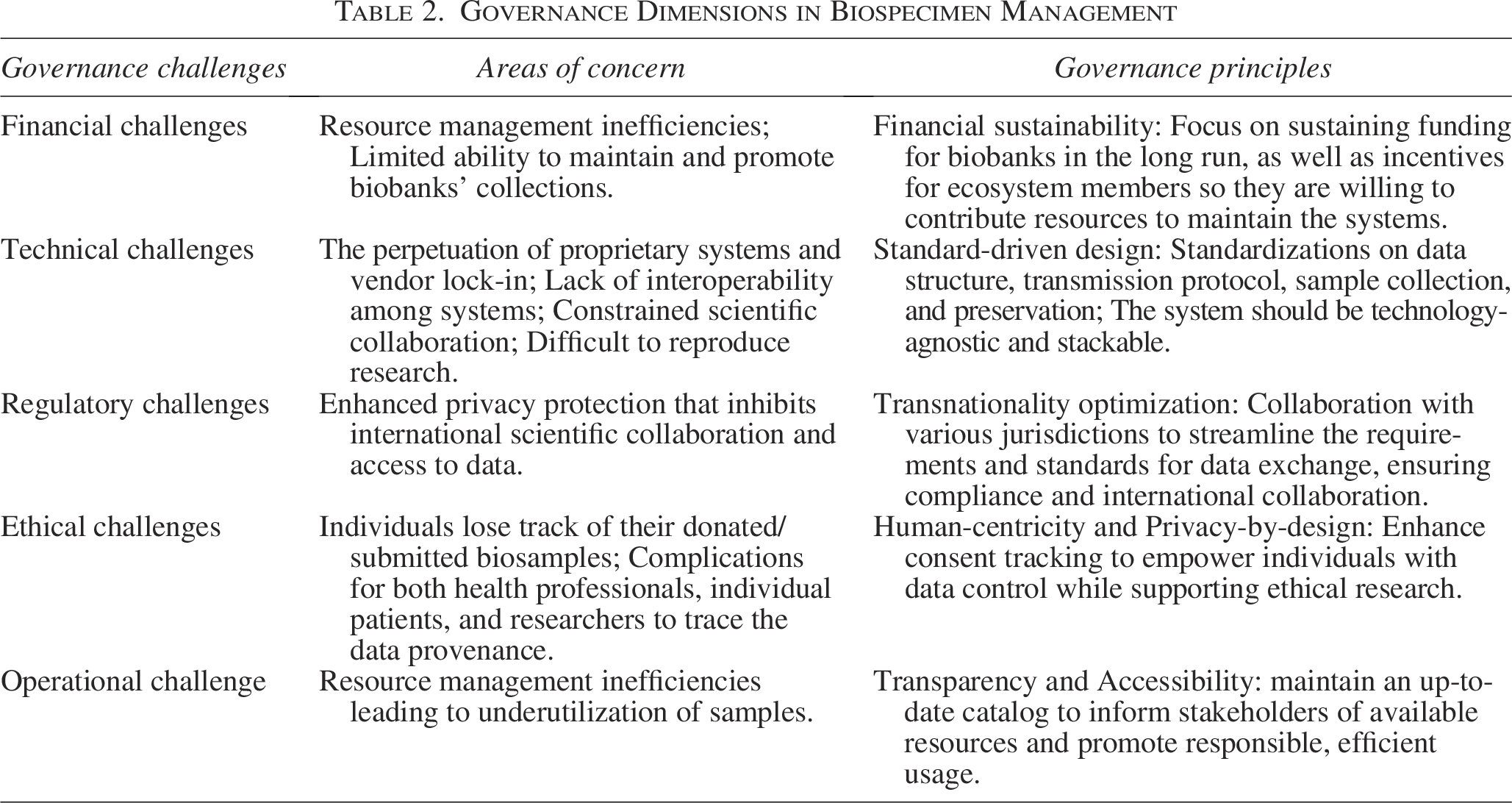
Biobank challenges can be categorized into five interconnected dimensions (Table 2), highlighting how multiple factors contribute to common problems. To address these multifaceted challenges, five governance principles are proposed.
Governance Dimensions in Biospecimen Management
Discussion
These findings highlight the critical need for an integrated approach to biobank sample traceability that addresses both technological capabilities and governance frameworks. Our analysis reveals that while significant advances have been made in standardization through initiatives such as ISBER Best Practices and certification programs such as CTRNet and ISO 20387, 64 the fundamental challenge of tracking samples beyond institutional boundaries persists. This limitation has far-reaching implications for research integrity, regulatory compliance, and patient trust.
The complexity of modern biobanking networks demands solutions that extend beyond the traditional sample management systems. Our investigation demonstrated that successful sample traceability requires a paradigm shift from institution-centric to ecosystem-wide approaches. This shift necessitates careful consideration of diverse stakeholder needs, from biobank managers and researchers to regulatory bodies and the patients themselves. The current fragmentation of sample management systems, which is partly addressed by the existing standards, continues to impede efficient collaboration and comprehensive sample tracking.
A notable analysis from our research is the importance of working backward from stakeholder needs rather than from technological capabilities. This user-centric approach reveals that while advanced technologies offer powerful tools for sample tracking, their effectiveness depends on how well they address specific pain points in the biobanking ecosystem. The success of any traceability solution is ultimately measured by its ability to meet the practical needs of biobank operators, researchers, and regulatory bodies while maintaining participant trust and research integrity. The interplay between technology and governance has emerged as a crucial factor in developing effective traceability solutions.
Technology
Our analysis revealed that technological solutions for biobank sample traceability must be approached as an integrated ecosystem rather than an isolated tool. Blockchain technology has emerged as a foundational component, owing to its inherent ability to create immutable, transparent records of sample movements and usage. The decentralized nature of blockchain addresses the core challenge of tracking samples across institutional boundaries, whereas smart contracts enable automated enforcement of usage agreements and consent parameters. The capacity of this technology to maintain an unalterable chain of custody aligns particularly well with stringent requirements for sample providence verification. 65
However, blockchain alone may not address all traceability challenges. The integration of Internet of Things (IoT) technologies is essential for bridging the gap between digital records and physical sample handling.66,67 IoT-enabled monitoring systems provide real-time tracking of environmental conditions and sample locations, creating a continuous digital thread that validates the appropriate sample handling. This physical-digital integration represents an important advancement over traditional management systems, which often lack real-time verification capabilities.
Artificial intelligence, particularly natural language processing (NLP), addresses another important aspect of sample traceability: data quality and standardization. 68 The ability to automatically extract and standardize metadata from clinical records and consent forms significantly reduces manual data entry errors while ensuring consistent annotation across institutions. These records and forms play an important role in biobanking processes by serving as foundational sources of patient and sample information, as well as documenting participant consent for use in research. This automated approach to data management has become increasingly valuable as sample-sharing networks grow in complexity and scale. 69
The effectiveness of these technologies depends heavily on their integration into the existing biobank infrastructure. Our findings indicate that successful implementation requires careful attention to interoperability with current LIMS and the consideration of varying technological capabilities across institutions. The challenge lies not in the individual technologies themselves but in creating a cohesive system that seamlessly connects physical sample handling with digital tracking and verification mechanisms.
Governance
Governance in biobank management requires a multidimensional approach that integrates global collaboration, technical innovation, and adaptability to address complex challenges faced by biobank networks. Global collaboration is particularly important, as life science research inherently relies on international cooperation. 70 Although some countries and regions have developed centralized biobank governance models, these unilateral approaches risk perpetuating data silos, resulting in isolated datasets of increasing size. A more sustainable solution involves fostering global collaboration to establish universal standards and protocols, 56 enhancing interoperability among subsystems, and upholding ethical principles, such as informed consent and privacy.
Historically, research on biobank governance has primarily focused on socio-political and ethical dimensions with less emphasis on technical solutions. 54 However, we argue that technology is a critical enabler of social dimension. Emerging technologies such as blockchain have transformed governance approaches. 71 Traditional centralized governance models, in which a single organization controls data, are now complemented by decentralized systems that enable transparent, secure, and collaborative data sharing. Blockchain is recognized as a socio-technical system that enhances traceability and accountability,72,73 offering promising solutions for overcoming governance and technical barriers in biobank management.
Governance frameworks must be adaptive and multidimensional to effectively integrate global collaboration and technological innovation. Biobanks operate as complex interconnected networks wherein seamless operations depend on a multitude of factors. 54 Governance frameworks must highlight the fundamental dimensions of effective governance—ethical, cultural, and social—and adapt to diverse contexts, accounting for factors such as variations in private sector involvement in health research, which may differ significantly between regions. In addition, there is a need for greater research on the perspectives of participants and stakeholders to develop inclusive and effective governance mechanisms.
Conclusion
This study demonstrated that addressing biobank sample traceability requires a comprehensive approach that combines technological innovation with governance frameworks.
The integration of blockchain, IoT, and artificial intelligence technologies offers promising solutions to the long-standing challenges in sample tracking and verification. However, the success of these solutions critically depends on their alignment with stakeholder needs and operational realities.
Our analysis highlights the importance of shifting from institution-centric to ecosystem-wide approaches to sample management. This paradigm shift necessitates a careful consideration of both technological capabilities and governance structures that can support networks of sample sharing and usage.
Our assessment of biobank system interoperability relied primarily on published documentation rather than empirical integration testing, limiting insight into real-world implementation challenges. Although comprehensive, the scoping methodology may not have captured all relevant literature in this rapidly evolving field. In addition, we did not conduct practical compatibility testing between different systems, which would provide more definitive evidence of integration capabilities and constraints.
Future research should adopt a dual-track approach addressing both technological innovation and governance frameworks (Fig. 1). The first focuses on decentralized governance, investigating how distributed decision-making models can address current biobank fragmentation. This includes empirical studies on stakeholder needs across different contexts, development of adaptive governance models for diverse regulatory environments, and investigation of trust mechanisms in multi-institutional sample sharing. The second focuses on technologies that enable comprehensive sample tracking throughout the research ecosystem. Key priorities include assessing blockchain/IoT/AI integration in real-world scenarios, developing interoperability standards for cross-institutional tracking systems, and ensuring privacy compliance with regulations such as GDPR while maintaining sample traceability.
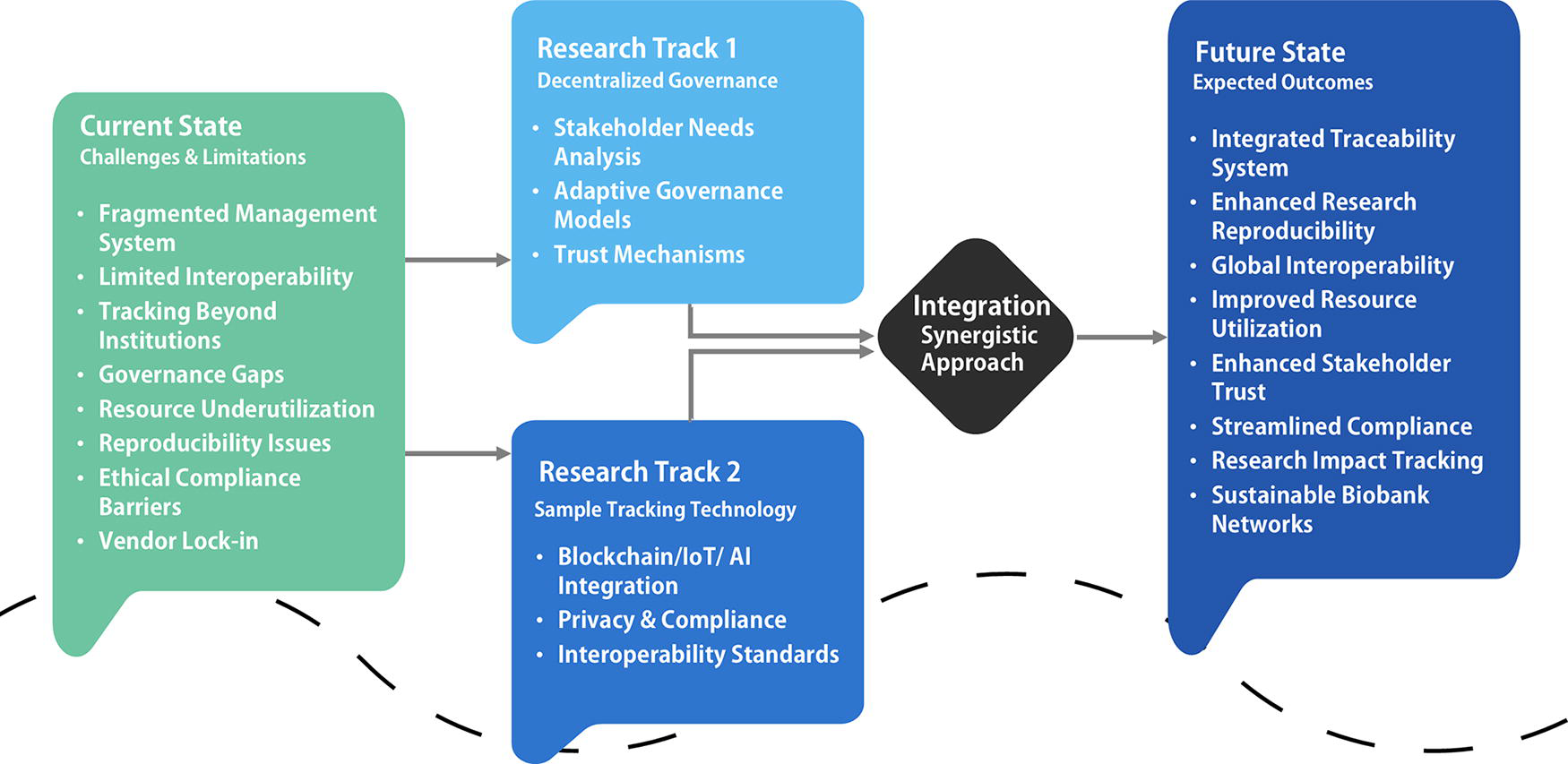
Dual-track research roadmap for integrated biobank sample traceability.
In addition, attention must be paid to measuring the impact of these solutions on research reproducibility, regulatory compliance, and stakeholder trust. The findings presented here provide a roadmap for developing next-generation sample traceability systems that can meet the complex demands of modern biobanking while ensuring transparency, accountability, and trust across the research ecosystem.
Authors’ Contributions
The listed authors meet the criteria for authorship of the work, and all contributed sufficiently to the elaboration of the study. S.I.S. drafted the article, while T.N.-P. and M.F. completed the discussion on governance. A.-M.M.-M. provided guidance throughout the project and reviewed the article. K.Z. performed a critical review of the article. All authors actively participated in discussions that shaped the development of this article.
Footnotes
Author Disclosure Statement
No competing financial interests exist.
Funding Information
This study did not receive any specific grant from funding agencies in the public, commercial, or not-for-profit sectors.