



Abstract
There has been an increasing level of interest in female entrepreneurship across the world in recent times. Female entrepreneurship represents a significant aspect of economic growth, particularly in developing countries, leading to job opportunities, socio-economic growth, prospects of innovation, poverty reduction, etc. Nevertheless, despite the growing awareness of its prominence, the research in this area has received limited attention in the entrepreneurship literature. While traditional cultural norms have been inclined to hinder Saudi women’s engagement in entrepreneurship, this country has seen several successful female entrepreneurs. However, although the Saudi government is creating more programmes to encourage women to become entrepreneurs, only a few have taken advantage of this initiative. Moreover, only a limited number of research studies have analysed the impact of the key factors influencing female entrepreneurs’ intention to start their own ventures. Therefore, the purpose of this research is to identify the constructs that affect Saudi female students’ intentions to start a new business after professional degree programmes. The paper proposes an integrated model of the theory of planned behaviour and an entrepreneurship event model, validated with data collected from one of the larger Saudi public universities.
Introduction
Entrepreneurship refers to the practice of setting up a new venture or reviving an existing business to take advantage of new opportunities (Tripathi & Singh, 2017). Nowadays, entrepreneurship is a universally hailed process of innovation that rallies both individuals and resources (AlMunajjed, 2019; El Chaarani & Raimi, 2022). Women have considerably improved their contributions to the growth of the economy and job creation in the last few years (Chatterjee et al., 2018; Laudano et al., 2019). Female entrepreneurship is considered one of the powerful engines that drives employment creation and empowerment and stimulates economic growth and development (Ribeiro-Soriano, 2017). Although females have started to show considerable interest in entrepreneurial activities, many developing countries and cultures still lack seeing improved growth across several female entrepreneurs largely due to a lack of education and training provided to females compared to males interested to start up a new business (Meyer & Hamilton, 2020). The previous research also suggests that women are relatively less motivated towards starting a new business than their male counterparts. This could be due to various reasons such as a belief that entrepreneurship is male dominated, a lack of training and education to females and general lack of confidence among females about succeeding in a business (Davidson, 2013; Mehtap et al., 2017).
Despite women’s impact on the world economy, research on female entrepreneurship is relatively less than the research on entrepreneurship in general (Welsh et al., 2014). The research on female entrepreneurship constitutes less than 10% of all studies in the field of entrepreneurship (Brush & Cooper, 2012). However, recent research interest on female entrepreneurship has spurred various studies in the Middle East with most of the studies focusing on the identification of entrepreneurial traits and challenges faced (Caputo et al., 2016; Mehtap et al., 2017). Moreover, although Saudi female involvement in the labour market reached only 19.5%, their joblessness rate was 30.9% by 2018. The female entrepreneurship index record of 2015 indicates that the United States, Australia and the UK are the top three countries for female entrepreneurs whereas Saudi Arabia stands at the 49th position out of 77 countries across the world. Saudi female entrepreneurs still face various challenges, and cultural and social barriers that stopped them from joining the labour market (AlMunajjed, 2019). For example, before planning to start up their own businesses, they face issues such as lack of proper entrepreneurial education and training, lack of institutional and family support and issues in acquiring financial resources, which may discourage them to initiate their establishments (Chitsike, 2000).
The annual country report from 2020–2021 reveals that the overall entrepreneurial activity in Saudi Arabia rose by 24%, compared to its growth in 2019 even when an adverse impact on businesses was obviously due to COVID-19. Despite all the hindrances, Saudi Arabia recorded a remarkable 65% increase in business ownership over the last three years with more than 90% of the overall adults considered entrepreneurship as a suitable career choice and one-third of Saudis consider starting up their own venture in the next three years (MBSC Education, 2022). Prior studies have revealed that women entrepreneurs in the traditional and patriarchal societies of the Arab world experience bigger obstacles than their male counterparts (Al-Dajani & Marlow, 2010). For example, negative beliefs, attitudes and behaviour in the Arab region in general and specifically in Saudi Arabia are disadvantaging business start-ups among female entrepreneurs (Fallatah, 2012). Prior research has stressed the lack of studies focusing on the factors that affect women’s entrepreneurial intentions in developing countries in general and Saudi Arabia in particular (Mehtap et al., 2017; Vrontis et al., 2022).
Realistically, females’ involvement in the labour market is the topmost priority of Saudi Arabia’s national development plan, and several different public and personal initiatives take place to inspire women’s involvement in such a market. For example, the Prince Mohammed Bin Salman Foundation is promoting entrepreneurship among young women. Similarly, the non-profit-making centenary fund offers financial loans to young females to set up their own projects in Saudi Arabia. Likewise, an initiative from King Abdulaziz City for Science and Technology endorses a commercial culture and training for young female graduates. Moreover, Effat University has established a research centre and initiated a plan to train young females in developing their entrepreneurial skills. Similarly, other institutions, such as Dar Al-Hekma University, Princess Nourah Bint Abdul Rahman University and King Salman Institute for Entrepreneurship, have come up with several different scholarships and programmes to educate women on entrepreneurial skills and capabilities (AlMunajjed, 2019). Also, Saudi 2030 vision document has very specifically and strategically introduced and planned to take women to new stages of governance and monetary enablement (Kinninmont, 2017). However, this vision cannot be seen rewarding without undertaking research and understanding what the young generation of women in Saudi Arabia wants and what could influence them to become a job giver than a job seeker. Realizing the lack of empirical research in the field of female entrepreneurship in the Saudi context and the real challenge faced regarding understanding the mood of the young female graduate undertaking their business and entrepreneurial degrees in this region, this study seeks to answer the following research questions (RQs):
This study aims to understand the influence of factors that lead to Saudi Arabia’s female university graduates’ intentions and actual behaviour to start up their new business. To fulfil the aim, this study aims to develop a research model based on the two well-known underpinning theories, that is, theory of planned behaviour (TPB) and entrepreneurial event model (EEM) to understand the selected factors and their influence on entrepreneurial intentions and behaviour.
This research has multi-fold implications for theory and practice. First, this is the first empirical research that provides a comprehensive review of the literature on female entrepreneurship and highlights the avenues for future studies. Second, it considers varieties of different constructs derived from TPB and EEM and supplemented with some other context-specific constructs, such as entrepreneurship education, entrepreneurial knowledge, perceived social support, self-efficacy, innovation and benevolence, to understand young female students’ entrepreneurial intentions and behaviour. Third, based on the significance of these factors on entrepreneurial intentions and behaviour, this research provides implications not only to the educational institutions for promoting such education and training programmes under the curriculum but also offers policy implications to government and other state and private sector institutions for taking appropriate steps to encourage professional female students so that they could take a route to be an entrepreneur in the future and fulfil the aspirations of the King to make Saudi Arabia a centre of entrepreneurial excellence and women empowerment.
Literature Review
Relevant studies on female entrepreneurship will be reviewed to understand the development of literature on this topic and allocate the research gaps accordingly. To get all possible studies on female entrepreneurship, the keyword ‘female entrepreneurship’ OR ‘female entrepreneur’ was searched through the Scopus database across the article title, abstract and keywords, and 1,169 results were obtained. As not all those studies were directly relevant to this research, further restriction on the search query was applied by adding the keyword ‘intention’ into it. This resulted in a total of 47 articles, of which full access was obtained for 30 empirical papers, which have discussed the factors influencing female entrepreneurs’ intention to set up a new business venture. These articles made a basis for me to undertake a review and highlight the research gaps.
For example, Yordanova and Tarrazon (2010) aimed to understand gender differences in entrepreneurial intentions. The research used TPB, feminist theory and institutional theory to develop the proposed model. The results indicated that Bulgarian female university students had lower entrepreneurial intentions than men. Majumdar and Varadarajan (2013) investigated whether the intentions of entrepreneurship were different for male and female students in the UAE. The research studied first-year business students from a Women’s College in the UAE. The findings indicated that male and female students had an equally strong inclination to become future entrepreneurs. However, female students showed higher risk-taking behaviour than male students, which was just opposite to the past research findings where female graduates were more conservative towards risk-taking than males.
Welsh et al. (2014) examined the foundations of comprehension and assistance for Saudi Arabia’s female business persons while starting their businesses. The findings indicated that women are the key across most (55%) of female-dominated businesses. The statistics also showed that 70% of females possess higher than 51% of the businesses whereas 41% initiated the business by their own. The results also highlighted that Saudi Arabian entrepreneurs are very educated, obtained huge family and friends’ support and considered themselves great in entrepreneurship skills and innovation such as dealing with people, idea generation and product innovation, general management and organizational skills.
Kurczewska and Bialek (2014) aimed to examine whether the link between entrepreneurial intentions and self-efficacy depends on gender. The findings indicate that the degree of entrepreneurial intentions is gender specific where men showed higher intentions towards venture creation than women. The findings also showed that entrepreneurial self-efficacy was not linked to gender whereas self-efficacy is not a key factor determining entrepreneurial intentions.
Alonso-Galicia et al. (2015) analysed the role of gender on Spanish academic perceptions relating to commercialization of their research results. The findings highlighted that the impact of close social groups was considered differently by men and women specifically the support received for attitude and perceived behaviour control over the formation of entrepreneurial intentions (EI). El Assar and Said (2015) examined the tourism female students’ intentions to engage in entrepreneurship. The findings indicated that students’ subjective norms and intentions towards self-employment improved towards the end of the tourism programme which was not the case before starting the programme.
Fernandez-Perez et al. (2015) observed the role of social networks and their impacts on Spanish academics’ EI. The findings indicated that there is a difference between male and female academics in term of their conception of support from business and financial networks and the use of resources to initiate a new venture. Giotopoulos et al. (2017) examined the high-level entrepreneurship in European countries before and after the financial crisis in 2008. The results indicated that the business opportunities were perceived to have a noticeable impact on high-quality entrepreneurship during an economic crisis. The results also indicated that gender differences also had a strong effect on entrepreneurs’ high growth intentions during the crisis period, and female entrepreneurs suffer more during the time of crisis. Modarresi et al. (2016) aimed to find out the intrinsic and extrinsic motivations of female entrepreneurs owning and managing home-based businesses in Iran. The results indicated that women are largely influenced by intrinsic motivations such as the need for achievement and independence, proving competency and sociocultural issues. Nonetheless, they are also influenced to a certain level using extrinsic motivations such as financial issues, popularity, positive feedback and the problems of working at home. Similarly, Venugopal (2016) examined the factors influencing the growth intentions of female entrepreneurs in India. The findings established the significance of their abilities and the significant role of family support as a moderating role between their attitude to grow and growth intentions.
Mehtap et al. (2017) aimed to assess Jordanian female business students’ perception towards the sociocultural barriers to entrepreneurship. Based on a sample of 254 women students from two Jordanian universities, the findings revealed that a strong supportive education system may reduce the perceived potential barriers to entrepreneurship. Mylonas et al. (2017) studied the effect of creativity on female EI. The findings indicated creativity as an important construct to influence entrepreneurial intentions and found family background being more conducive to entrepreneurial undertakings.
Aleidi and Chandran (2018) proposed a model that extends the TPB with technological factors to understand women’s EI in the Saudi context. The research is conceptual in nature and expected to be validated with the data gathered to analyse the effect of several constructs on women’s entrepreneurial intentions. Ferri et al. (2018) assessed EI of Italian female students. The findings indicated that social pressure and perceived behavioural control (PCB) influenced their entrepreneurial intention. Similarly, Laudano et al. (2018) aimed to understand how business institutions can expedite female entrepreneurship by analysing mental and conservational factors and personality characteristics that reassure to generate intentions for starting a business. The findings indicated that entrepreneurial universities significantly influenced entrepreneurial attitude and intentions among women both in Italy and Albania. Moreover, the demand for independence was found to be a significant factor for the Italian sample whereas the demand for achievement was found important for the Albanian sample.
de Castro Krakauer et al. (2018) examined the influence of Brazilian women’s entrepreneurial profile on their motivation to start up a business. The findings revealed that behavioural categories that most influence Brazilian women’s entrepreneurial profile were planning, recognizing opportunities, sociability and leadership. The hypothesis between women’s entrepreneurial profile positively influencing their intentions was also confirmed. van Ewijk and Belghiti-Mahut (2019) explored how gender differences towards entrepreneurial intentions change when entrepreneurial education is taken into consideration. Using data from the UAE universities, the findings revealed the negative impact of gender stereotypes on female students’ EI regardless of the course type.
Prabha Devi et al. (2019) analysed the female entrepreneurs’ attitude towards entrepreneurship and assessed the effect of entrepreneurial orientation and desirability on students’ entrepreneurial intentions. Their results highlighted that entrepreneurship education played an important role for the female students having on predisposition to entrepreneurship as their career goal. Khan (2019) explored the dynamics that promote entrepreneurial attitudes among females in the MENA (i.e., a group of countries located in and around the Middle East and North Africa (i.e., MENA)) countries. The results signified that the government and entrepreneurial training were the important factors for women to become an entrepreneur. Muhammad et al. (2019) examined the impact of Muslim society marriages, that is, forced, arranged or love marriages on women entrepreneurship. The study revealed that women with all these types of marriages were active in the entrepreneurial process.
Anwar et al. (2020) examined the phenomenon of EI among female university students in India. The outcomes implied entrepreneurial attitude, PCB, social norm and entrepreneurial education on their intentions to start up a business. Onalan and Magda (2020) analysed the influence of motivational persistence on intolerance to uncertainty for businesswomen versus non-businesswomen in Turkey. The findings highlighted that businesswomen had higher motivational persistence of following existing and long-term goals and attempting to achieve unreachable goals than non-entrepreneurs. Meyer and Hamilton (2020) aimed to explore the differences across the different entrepreneurial factors between South African female entrepreneurs with some degree of training with those who did not have such training. The findings revealed that external motivation, intention to grow the business, entrepreneurship training and education and business growth factors returned statistically significant values. Shabsough et al. (2021) observed the moderating role of social networking on the relationship between sticky floor perception (i.e., an imperceptible obstacle that stops females from progressing beyond a specific position in their organizations) and EI of women entrepreneurs. The results revealed social networking yields a stronger positive relationship with EI among those women showing a high sticky floor perception. Yoopetch (2020) examined the antecedents impacting EI. The results identified that attitude towards risk-taking, self-efficacy, subjective norm and empowerment were found significantly influence EI of the women in the hospitality industry.
Bhatti et al. (2021) aimed to evaluate the difference between psychological attributes before and after an entrepreneurial education and training programme and the influence of psychological attributes on EI among female students in Saudi Arabia. The results identified that entrepreneurial training and training programmes play a significant role to considerably enhance the level of psychological attributes and EI of female students. Moreover, they also discovered that such psychological attributes including training retention, self-confidence, tolerance of ambiguity, innovativeness and achievement motivation positively impacted EI. Lose and Kwahene (2021) reviewed the literature on entrepreneurship and revealed that gender was the most prominent demographical variable, and it was established that males appeared to be inclined to engage more in entrepreneurship than females even though female entrepreneurship is on the rise. Sandhu et al. (2021) proposed entrepreneurship education, participation in business seminars at the universities and female students’ engagement in the activities of innovation and development centre may promote Emirati female graduate students’ EI. The findings also highlighted that all three types of education activities resulted in improving their EI. Shahin et al. (2021) examined the EI of secondary school female students in Australia. The results showed that soft-skills development specifically in the areas of creative thinking, risk-taking, problem-solving and leadership development as a key construct influencing young female students’ entrepreneurial attitudes.
The review of all available literature on female entrepreneurship indicates that they have used several different empirical studies to understand their intentions to start a business. However, there is a scarcity of research in the crucial factors rooted in the underlying theoretical models, and some more relevant contextual constructs including innovation and perceived social support to propose a research model that could assess the females’ entrepreneurial intentions for those who are attending the public universities at various diploma, undergraduate and postgraduate courses. In other words, it has been seen that theories, such as the TPB and the EEM, have been used independently to propose research models across different studies, but there has not been any effort made to integrate these models along with the relevant set of additional constructs used as per the context of this research. Hence, to fill in the research gaps emerging from the literature, this research will plan to propose a unique and relevant research model to understand female graduate students’ intentions to start up their new entrepreneurial venture. The details of the proposed research model are provided in the next section.
Theoretical Background, Proposed Conceptual Model and Hypotheses
The prior research studies have largely used only a few research models including TPB (e.g., Aleidi & Chandran 2018; Alonso-Galicia et al., 2015) and EEM (e.g., Fitzsimmons & Douglas, 2011; Griffiths et al., 2009) to understand the individuals’ entrepreneurial intentions and behaviour. However, some other studies (e.g., Alferaih, 2017; Schlaegel & Koenig, 2014) have advocated the integration of both TPB and EEM to get improved results and better performance of the integrated model. This paper will review the individual models and propose a research model that would be better fit for the given research context and an integrated model of both the TPB and EEM.
TPB is one of the most widely researched cognitive models, which asserted that the individual’s attitude, subjective norm and PCB influence the intentions which eventually form the overall behaviour (Ajzen, 1991). Attitude towards behaviour indicates the degree to which a person has a favourable or unfavourable evaluation of the issue or behaviour in question. Another important construct of the TPB is the subjective norm, which indicates the pressure exerted on the individuals by their referent others, such as friends, family and colleagues, whether to perform a certain behaviour or not. Finally, the third construct PCB indicates the perceived ease or difficulty in performing the behaviour in question. This model posits that an individual’s intentions to perform certain behaviour intensifies with their perceived ability and people start entrepreneurial activities if they believe they have enough capability to start a venture, and their such activity is socially accepted as well (Kirby & Ibrahim, 2011). Several studies (e.g., Ezeh et al., 2019; Gieure et al., 2019) have proposed and empirically tested this model to assess an individual’s intentions to start up a new business.
EEM is another empirical model that has been examined very extensively across the entrepreneurial literature. It also comprises the three core constructs including perceived feasibility, perceived desirability and propensity to act, and all these variables influence entrepreneurial intentions (Shapero & Sokol, 1982). Perceived feasibility is described as the degree to which a person is confident in starting up a business and assumes that becoming a businessperson is a feasible course of action for him or her. Similarly, perceived desirability is defined as the degree to which a person prefers to start up a new business considering proper action. Finally, the propensity to act is considered an individual’s predilections and susceptibility to initiate a new business considering a relevant action (Devonish et al., 2010).
Other studies have proposed the TPB-EEM–based integrated research model to assess the individual’s intention to start up a new venture. For example, Alferaih (2017) performed a meta-analysis of 123 studies and proposed the TPB-EEM–based integrated research model as the ideal model to examine individual’s entrepreneurial intentions. Later that model was also tested using the primary data, and Sharahiley (2020) found that the integrated model performed much better than the individual models, and its exploratory power was found much higher than individual models. Based on the meta-analysis of 98 studies with 123 samples, Schlaegel and Koenig (2014) also proposed an integrated model of TPB and EEM and showed the additional exploratory power of the model through that process.
Considering prior evidence and robustness of the model combining the TPB and EEM, this research also proposes an integrated model underlying these individual models. The proposed model includes all the core constructs from the TPB (i.e., attitude, PCB and subjective norm) whereas it also includes the two core constructs of the EEM such as perceived feasibility and perceived desirability. In addition, it also includes external constructs such as innovativeness and perceived social support to influence EB. The key rationale behind the selection of innovativeness and perceived social support is largely derived from the context of this research. For example, prior research has posited that women entrepreneurs have 5% more likelihood of innovativeness in comparison to men (GEM Report, 2017). Therefore, it is relevant to see if the innovativeness has worked out in the emerging entrepreneurial ecosystem in Saudi Arabia where the government is flexible enough to provide all possible support to female entrepreneurs to ensure the economic growth of the country. The inclusion of perceived social support as an additional construct is largely motivated by the cultural perspective to understand whether female entrepreneurs get the expected level of societal sustenance (Younis et al., 2020). The proposed research model contains nine constructs, eight direct hypotheses and four mediation hypotheses. The proposed research model is illustrated in Figure 1 with the appropriate direct hypotheses.

Direct Hypotheses
Perceived Feasibility→Entrepreneurial Intention
Perceived feasibility is defined as person’s insight into the possible upcoming circumstances, which are associated with starting a new business (Shapero & Sokol, 1982). Additionally, it is linked to the level to which a person feels confident that he would be able to feasibly become an entrepreneur (Schlaegel & Koenig, 2014). Various other studies have also supported the influence of perceived feasibility on entrepreneurial intention through their meta-analytic evaluation (e.g., Alferaih, 2017; Schlaegel & Koenig, 2014) as well as empirical validation (e.g., Guerrero et al., 2008). Therefore, the above discussion leads to the formulation of the following hypothesis:
H1: Perceived feasibility positively influences entrepreneurial intention.
Perceived Desirability→Entrepreneurial Intention
Perceived desirability is defined as the individual’s desire to initiate a new venture (Schlaegel & Koenig, 2014; Sharahiley, 2020). The extant research has adequately supported the significant relationship of perceived desirability onto individual’s entrepreneurial intention (e.g., Urban & Kujinga, 2017). Therefore, the following hypothesis is proposed:
H2. Perceived desirability has a positive impact on entrepreneurial intention.
Attitude→Entrepreneurial Intention
Attitude is defined as the degree to which a person adapts a confirmatory or contrary assessment of starting a new business (Autio et al., 2001). The previous study has argued that more an individual shows positive attitude to initiate a business stronger they intent to start it on their own (Prabha Devi et al., 2019). The previous study has also confirmed attitude as a key predictor of intention in areas such as consumer behaviour, marketing, information systems, psychology (Ajzen, 1991). Therefore, I propose:
H3: Attitude positively influences individual’s entrepreneurial intention.
Subjective Norm→Entrepreneurial Intention
Subjective norm combines the positive or negative judgement of individual’s referent others such as family, relatives, friends or colleagues who might affect the concerned individual’s decision to start their own business stressing the concept that a positive opinion of someone from individual’s close group might reinforce their entrepreneurial spirit while a negative opinion might deteriorate it (Anwar & Saleem, 2019; Bazan et al., 2019). Previous research has revealed that women showed a higher level of subjective norm towards entrepreneurial intention than their male counterparts (Karimi et al., 2013). Therefore, we hypothesize:
H4: Subjective norm significantly influences entrepreneurial intention.
Innovativeness→Entrepreneurial Behaviour
Innovativeness is found as a key factor in the literature on entrepreneurship (Alferaih, 2017). Entrepreneurs are innovators, and innovation is considered a particular tool for entrepreneurs to apply their novel ideas for flourishing in their businesses. The concept that businesswomen are more innovative than non-businesswomen has been supported by various empirical studies (Gürol & Atsan, 2006). Therefore, it is hypothesized that:
H5. Innovativeness positively influences individual’s EB.
Perceived Social Support→Entrepreneurial Behaviour
Perceived social support is defined as how society can support individuals fulfil their social mission (Younis et al., 2020). It provides a sense of acceptability that they are being appreciated and valued by the society and hence plays an important role towards individual’s behaviour to become a successful entrepreneur (Xiongfei et al., 2019). Therefore, I hypothesize:
H6: Perceived social support positively influences individual’s EB.
Perceived Behavioural Control→Entrepreneurial Behaviour
Perceived behavioural control is defined as individual’s feelings of self-efficacy or ability to perform a certain behaviour (Anggadwita & Dhewanto, 2015). Ajzen (1991) argued that individual’s behaviour is controlled not only by themselves but also by some external control forces such as the availability of resources, opportunities and specific skills. It is a belief on whether any factors may support or stop a person to perform a behaviour. Therefore, I hypothesize:
H7: Perceived behavioural control significantly influences individual’s EB.
Entrepreneurial Intention→Entrepreneurial Behaviour
Not several empirical research studies (e.g., Cooke & Sheeran, 2004) have reinforced the influence of entrepreneurial intentions on individual’s behaviour to initiate a venture. However, such papers that have analysed this relationship have found it highly significant. This paper also argues that women’s higher intention to initiate a business reflects in the form of their actual behaviour. Therefore, the following hypothesis is proposed:
H8. Entrepreneurial intention has a significant impact on EB.
Research Methodology
Sample and Data
The data were collected from women students in the various professional business and entrepreneurial courses at the diploma, undergraduate and postgraduate courses from some public and private institutions in the Kingdom. As the research explores the factors influencing female graduates’ intention to initiate a business, I have collected data from the female students studying the business and entrepreneurship related courses at various higher education institutions both private and public in Saudi Arabia. The selection of the female respondents was based on my convenience as I have had personal connections across the selected institutions. The questionnaire consisted of a total of 36 questions (see Appendix 1) relating to nine constructs on the Likert scale of 1–7, where ‘1’ represents ‘strongly disagree’ and ‘7’ as ‘strongly agree’. Moreover, the questionnaire also constituted a total of nine questions relating to the demographic traits of respondents. I contacted the teaching members of staff at the various institutions in Saudi Arabia based on my wider personal contacts, and all the teachers were provided with the link to the online questionnaire to be forwarded to the students of specialized courses in business, engineering and entrepreneurship at both the undergraduate and postgraduate levels. All the questions in the questionnaire were marked as mandatory.
The questionnaire link was distributed to students by their respective teachers, and their responses were recorded in my repository. Overall, a total of 631 questionnaire links were sent out to the students of different cohorts and I received 482 responses in about three weeks’ time between the second to the last week of January 2022. The questionnaires were manually screened to check if they were filled in properly and I found that there were 53 such questionnaires which were filled in using the same option throughout for each question and hence the responses were discarded from the final repository. At the end, 429 valid responses made the basis of analysing the data.
Construct Operationalization
This research adapted the existing scale inherited from various prior studies to operationalize the constructs and collecting data using them. A total of nine constructs were operationalized, and their appropriate measures were used to evaluate to measure the consolidated constructs. The core constructs (i.e., attitude, subjective norms and perceived behavioural control) were used from TPB whereas the key constructs such as perceived feasibility and perceived desirability were used from EEM. In addition, I also used the key mediating and dependent variables such as EI and EB from TPB itself. I also used the additional variables alongside these integrated models including innovativeness and perceived social support and looked at their impacts on EB. We have derived the measures for EIs from the studies of Malebana (2014) and Linan (2008) as they already worded them exactly per the concerned literature context. The items for the core constructs of TPB and the key dependent variables (i.e., EI and EB) were derived from Ajzen (1991) whereas the core constructs of the EEM were taken from Krueger (1993). Moreover, I have inherited the four items of innovativeness and three items of perceived social support from the studies of Gurel et al. (2010) and Hockerts (2017), respectively (see Appendix 1 for all different items).
Respondents’ Demographic Characteristics
As mentioned above, a total of 429 valid responses were gathered for the final analysis, which constituted all female students with some sort of entrepreneurial knowledge and experience. As regards their age, most of the participants were noticed to be within the age group of 20–25 years (243, 56.64%), 18–20 years (i.e., 90, 20.98%), followed by 25–30 years (i.e., 49, 11.42%), and 30 years and above (i.e., 47, 10.96%). For their education, most of the respondents were undertaking their undergraduate degree (i.e., 359, 83.68%), followed by postgraduate degree (i.e., 58, 13.52%) and whereas the lowest number of respondents (i.e., 12, 2.80%) were undertaking their diploma degree. As far as their type of professional education was concerned a large majority of them were undertaking their business and management related courses (i.e., 284, 66.2%) whereas the remaining 145 (i.e., 33.80%) were enrolled for entrepreneurial related specialized course.
Descriptive Statistics
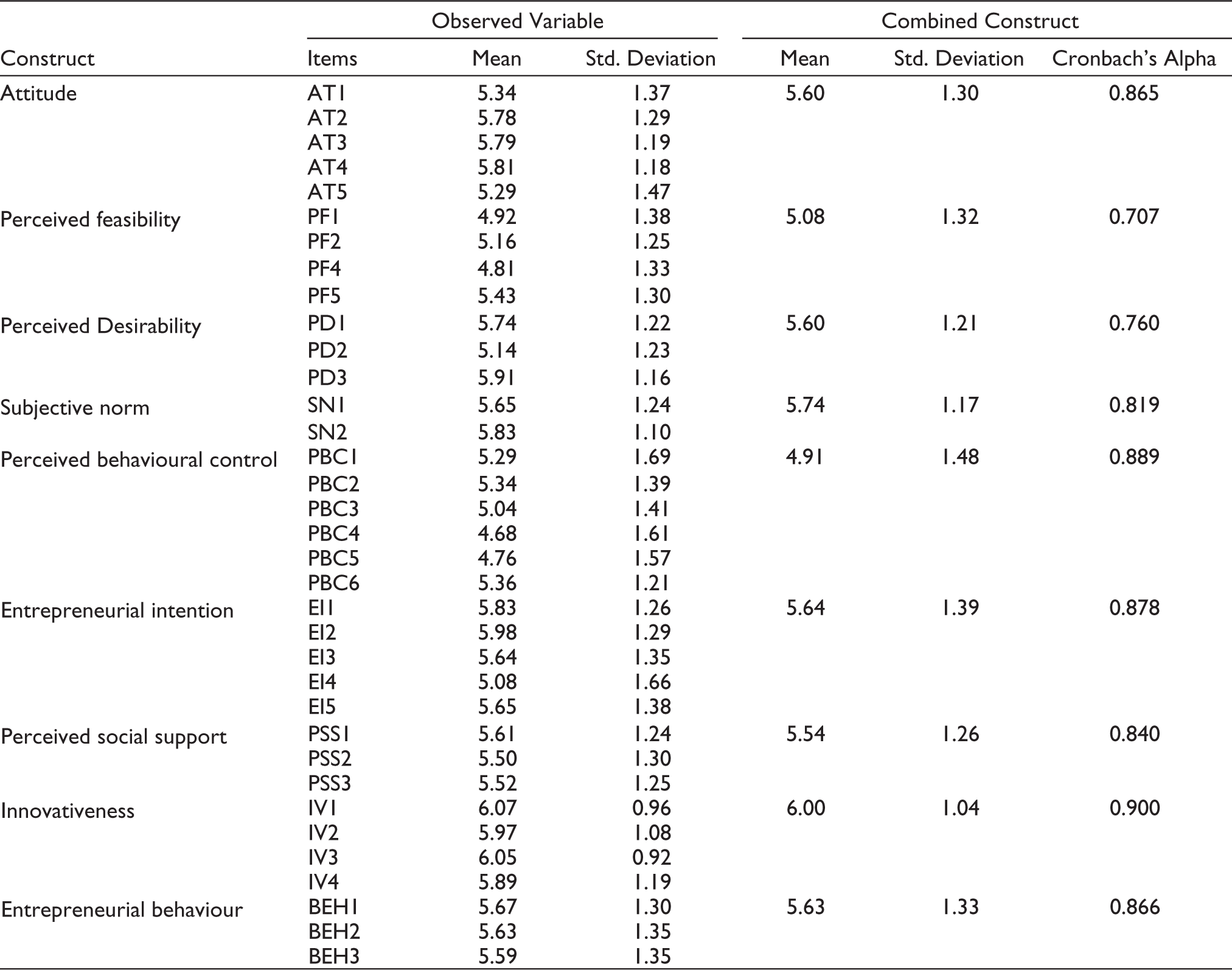
I will analyse the various indicators for explanatory values of constructs used for the conceptual model. Table 1 provides the mean, standard deviation, Cronbach’s alpha, composite reliability and average variance extracted (AVE) for each such construct that has been used for the research model used in this paper. The mean for each construct as more than five on a Likert scale of [1–7] indicates that respondents have favourably responded to the questions relating to all these constructs. The relatively smaller values around an average of ‘1.25’ for standard deviation for items and consolidated constructs also indicate that responses have not much fluctuated while responding to questions relating to these constructs and were mainly considered convergent in nature. Reliability analysis of all nine constructs was performed using Cronbach’s alpha. These values indicate the internal uniformity assessing the same variable (Hair et al., 1992). The alpha values for all these constructs were found to exceed the minimal threshold of 0.70 conforming to the internal consistency of items for every variable and are considered at the satisfactory level for each one of them (Hair et al., 1992; Nunnaly, 1978).
Descriptive Statistics.
Data Analysis and Results
The results were analysed using AMOS 25.0 by first assessing normality and common method bias followed by assessing the model performance using measurement model (also known as confirmatory factor analysis) and structural model.
Assessment of Normality and Common Method Bias
The data set confirmed the normal distribution used for analysis as Skewness and Kurtosis values were considered within the permissible range of ±2 for each measurement item of each construct (Hair et al., 2010). Common method bias can appear where data for both independent and dependent variables are captured by the same response method (Kock et al., 2021). As the data for all constructs were collected from the same respondents therefore it is appropriate to analyse its biasness using common method bias approach (Podsakoff et al., 2012). I used Harman’s single-factor test to address this issue. Common method biasness in the data is said to be present if all the primary constructs included in one factor account for more than 50% variance (Podsakoff, 2003). The loading of all possible items on a single factor indicated an overall variance of 29.34%, which is below the expected level of 50% mark. Hence, the instrument showed no signs of bias in the data set.
Measurement Model
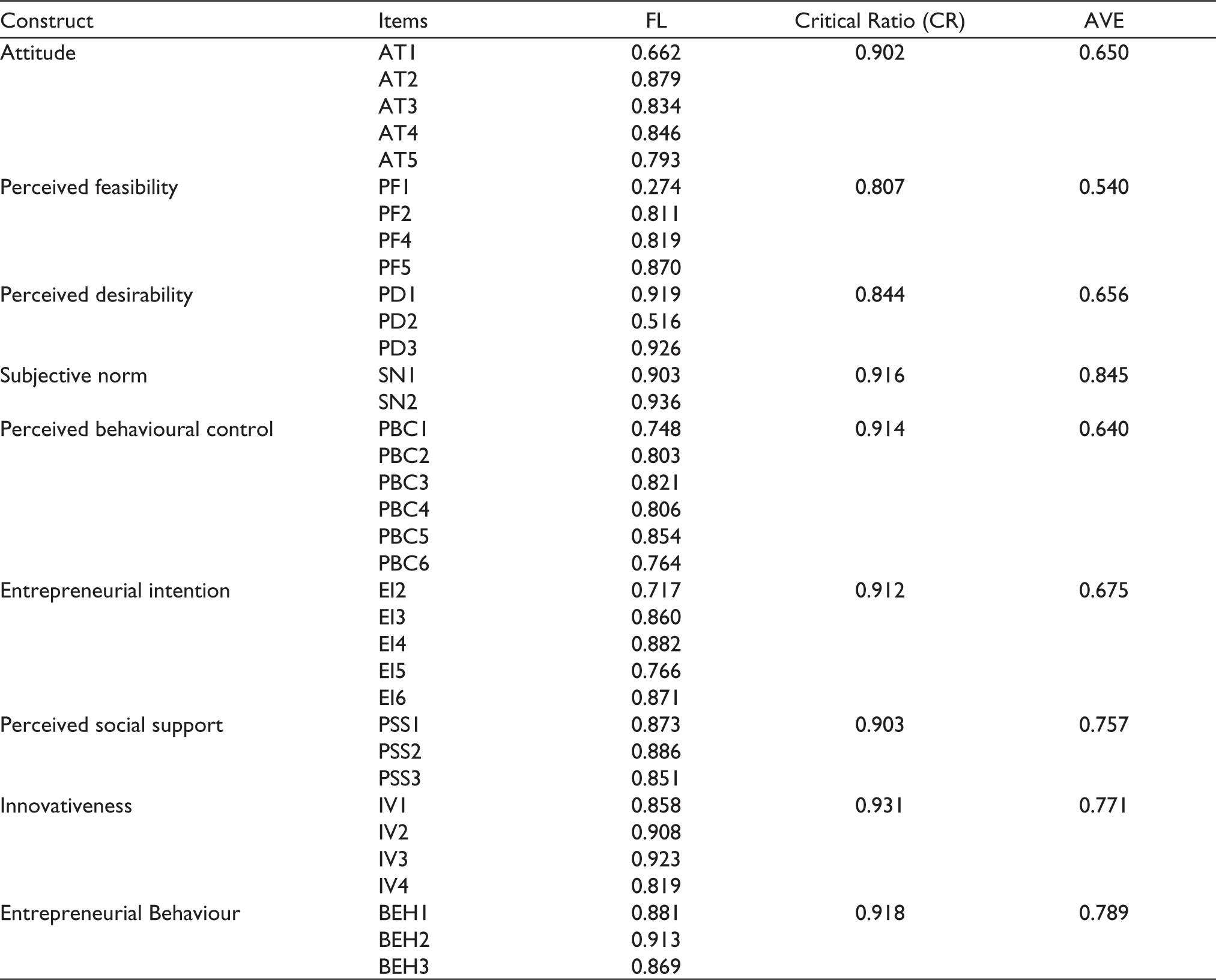
The confirmatory factor analysis (CFA) was performed using convergent as well as discriminant validity. The CFA (see Table 2) shows that all the designated measures for have loaded favourably (i.e., factor loadings for each construct were found to be higher than the minimal threshold value of 0.50) on their respective constructs and therefore provide a conclusive empirical indication for their validity. Like Cronbach’s alpha values for the given set of constructs, the composite reliability values were also found to be greater than the minimal threshold values for all the constructs. Similarly, the AVE values assess the deviation explained by the latent variables on their random measurement errors (Netemeyer et al., 1990) and were instituted between 0.540 and0.845, which is clearly greater than the expected level of AVE estimates of 0.50, which also indicates an acceptable range of validity for all the constructs used for the data analysis through the suggested research model (Netemeyer et al., 2003).
Confirmatory Factor Analysis.
Discriminant validity was examined according to the recommendations given by Anderson and Gerbing (1988). To comply with the discriminant validity requirements, the correlation values for the latent constructs should be less than the square root (SQRT) of their AVEs, which are included across the diagonals in the correlation table (see Table 3). Table 3 provides discriminant validity, which indicates that correlation values between a pair of constructs were less than the values presented as the SQRT of AVEs across diagonals. For example, the highest correlation between any pair of constructs in Table 3 is found between attitude and EB (i.e., 0.723), and this value is found to be less than the SQRT of AVE values for both AT and BEH (i.e., 0.806 for AT and 0.888 for BEH) of these constructs. This condition was satisfied for every single pair of variables presented in Table 3, which implies that the discriminant validity recommendations for all scales are met.
Discriminant Validity.
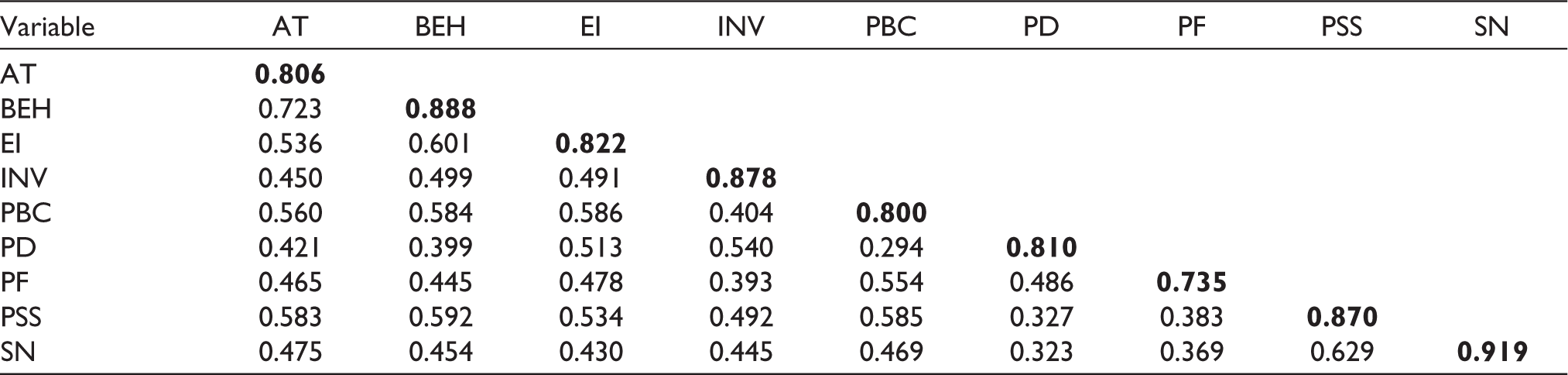
1SQRT of AVE on diagonals in bold. All correlation values are significant at **P < 0.01.
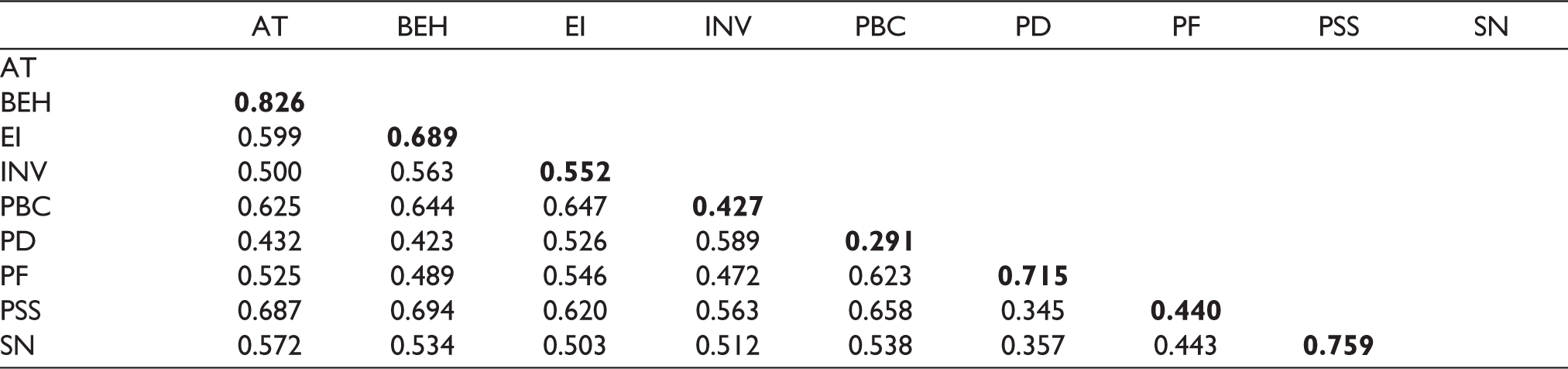
There has been a recent critique that the Fornell and Larcker (1981) criterion does not reliably identify the lack of discriminant validity in common research situations (Henseler et al., 2015). Based on this criticism, the authors suggested an alternate approach based on multitrait–multimethod matrix to assess discriminant validity also known as Heterotrait–Monotrait (HTMT) ratio of correlations. Henseler et al. (2015) further continued to show the better performance of this method according to a Monte Carlo simulation study. In fact, we have also assessed the constructs’ discriminant validity through the HTMT technique, and the results are demonstrated in Table 4. As per the requirements, if the HTMT value is greater than 0.85 (as a criterion) (Kline, 2015) or 0.90 (Gold et al., 2001) (as a statistical test), then there is a problem with discriminant validity. However, the values of HTMT presented in Table 4 do not show any such values of HTMT crossing that range. Hence, it indicates that the discriminant validity of all the constructs has been ascertained.
Discriminant Validity HTMT.
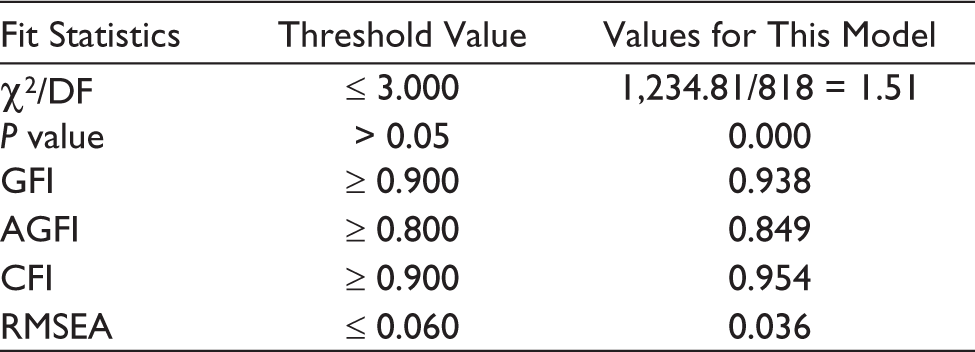
The key fit indices including normed Chi-Square/degree of freedom (χ2/DF), GFI, AGFI, CFI and RMSEA were all validated to evaluate the model fit of the CFA model. CFI is one of the most reliable indicators with strongest fit indices (Anderson & Gerbing, 1988). RMSEA analyses the inconsistency for each degree of freedom. The threshold value for CFI is 0.90 whereas it is 0.80 for AGFI (Chin & Todd, 1995; Hoyle, 1995). Likewise, RMSEA value of less than 0.06 is considered as a good fit between the hypothesized model and observed data (Hu & Bentler, 1999). Table 5 shows the fit index indicators (i.e., χ2/DF = 1.51, GFI = 0.938, AGFI = 0.849, CFI = 0.954 and RMSEA = 0.036) for the measurement model and found them well within the suggested threshold values and hence presented a standard and acceptable measurement model (Bagozzi & Yi, 1988).
Structural Model
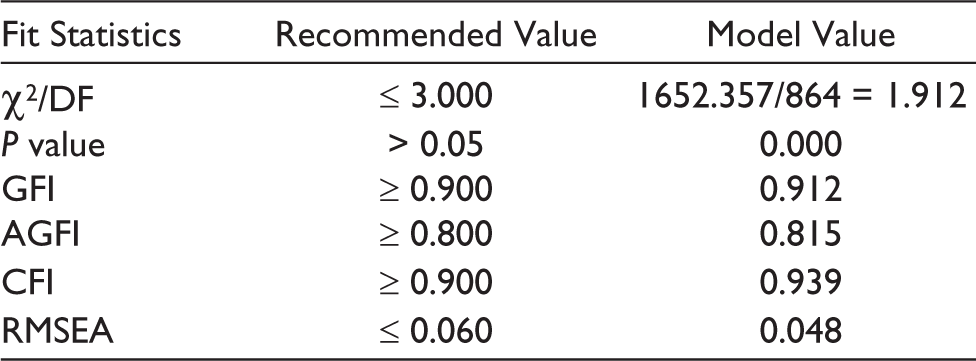
After validating the measurement model, the next step is to assess the structural model. The fit indices for the structural model are presented in Table 5. For example, the Chi-square by degree of freedom (χ2/DF) value was found to be 1,652.357/864 = 1.912 with the P value less than 0.001. This indicates that χ2/DF value lies well within the proposed range of [1–3] as recommended by Chin and Todd (1995). Furthermore, the other fit indices such as GFI, AGFI and CFI were also found as 0.912, 0.815 and 0.939, respectively. These values were also found well beyond the expected optimal threshold values (Chin & Todd, 1995; Hoyle, 1995). Finally, RMSEA value of 0.048 was also discovered to be less than 0.06 as endorsed by Browne and Cudeck (1993). All these values of the fit index clearly highlight that the suggested structural model presented in Table 6 rightly fits with the data.
Measurement Model Fit Indicators.
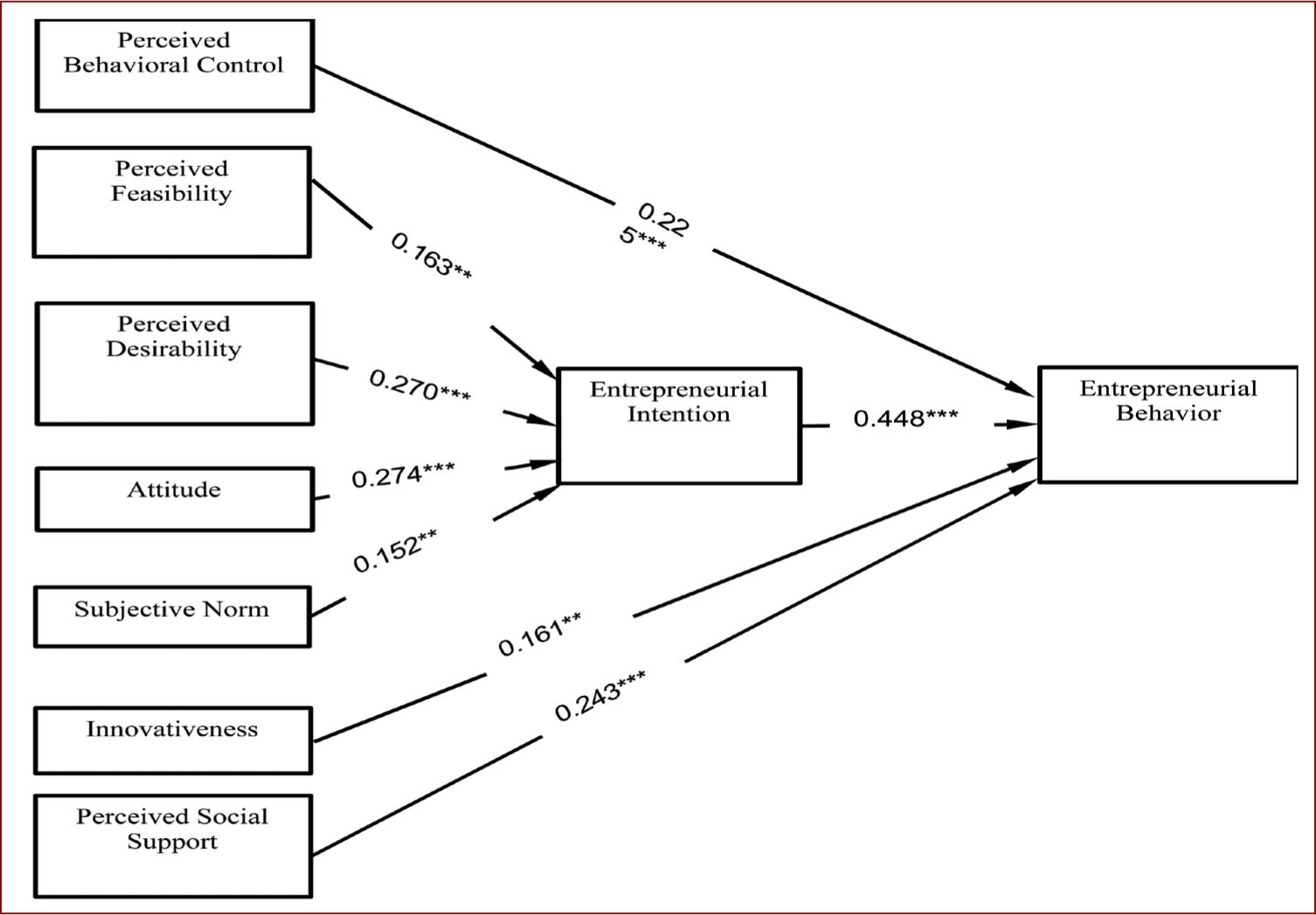
To validate this model, I used AMOS 25.0 to analyse the causal relationships for the hypothesized relationships. Table 7 presents the significance levels of various relationships at p at <0.05, P < 0.01 and <0.001. The β-values for the relationships of all the constructs to entrepreneurial intention including perceived feasibility (β = 0.163, P < 0.010), perceived desirability (β = 0.270, P < 0.001), attitude (β = 0.274, P < 0.001) and subjective norm (β = 0.152, P = 0.012) whereas innovation (β = 0.161, p = 0.005), perceived social support (β =0.243, P < 0.001), PCB (β = 0.225, P < 0.001) as well as entrepreneurial intention (β = 0.448, P < 0.001) on EB were found significant.
Model Fit Summary for the Structural Model.
The validated model shown in Figure 2 shows a variance of 74% on entrepreneurial intention, which is at par or even higher than the variance presented on entrepreneurial intention by any other alternative models validated by the originating studies or other empirical studies understanding individuals’ intention to initiate a venture (Prabha Devi et al., 2019; Guerrero et al., 2008). Moreover, the model also presented a relatively decent variance of 46% on EB exerted by PCB, innovation, perceived social support and entrepreneurial intention. Relatively higher variances explained by the model for the given data set on entrepreneurial intention and EB, which signify that this model is a better alternative model to analyse the female students’ intentions to initiate a new venture and their EB than the previous research models such as TPB, EEM and integrated TPB-EEM models.
Path Coefficients and Hypotheses Testing.
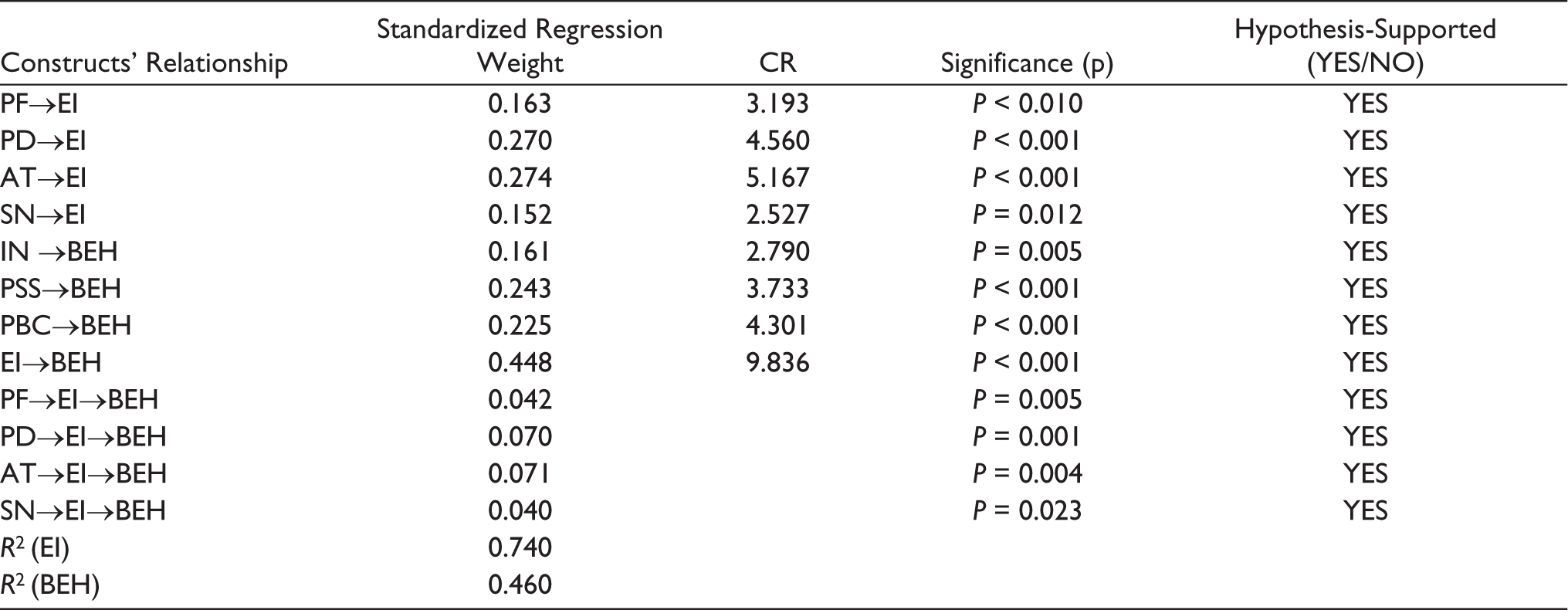
The indirect influence of perceived feasibility (β = 0.042, P = 0.005), perceived desirability (β = 0.070, P = 0.001), attitude (β = 0.071, P = 0.004) and subjective norm (β = 0.040, P = 0.023) on to EI via entrepreneurial intention was also found significant, which signify the significant indirect relationships of all these antecedents on EB.
Discussion
This study proposed an integrated TPB-EEM–based extended model to understand the female students’ EI and EB. The proposed model, a combination of TPB and EEM, is extended further with some more relevant constructs including innovativeness and perceived social support to make it a unique and simple model to assess the female entrepreneurs’ intentions and behaviour to start a business. All the direct relationships hypothesized in the proposed model were supported by the data gathered from the female students pursuing the business and other professional courses from one of the largest public universities in Saudi Arabia. The validated research model hypothesized four constructs (i.e., attitude, subjective norm, perceived feasibility and perceived desirability) influencing female students’ intentions to start a business whereas the other four antecedents (i.e., PCB, innovativeness, perceived social support and entrepreneurial intention) were hypothesized and supported for their direct influence on EB.
Although several studies (e.g., Anwar et al., 2020; Bazan et al., 2019; Roy et al., 2017) have been conducted with an aim to comprehend the individuals’ entrepreneurial intention and behaviour in the past when authors have applied the basic models of TPB, EEM and their integration and their further extensions on various contextual conditions and relevant factors, this study is unique by considering the female entrepreneurial aspect, which remains almost unnoticed in the patriarchal society like Saudi Arabia. By doing this, this research endeavours to validate the research model and discusses how the core constructs of the TPB and EEM and contextual constructs used in this research act similarly or differently in comparison to their performance on the entrepreneurial literature in different contexts.
For example, hypothesis H1 is satisfied (β = 0.163, P < 0.010) where female students’ perceived feasibility significantly influences their intentions to start a new business. The significant link between perceived feasibility and entrepreneurial intention clearly signifies the female students’ confidence that their confidence to become an entrepreneur helps them to think positively about their intention to become an entrepreneur. This level of confidence and authority comes into them largely as knowledge and professional training that they receive to think independently about starting a business on their own. The previous literature has contended that a greater level of feasibility also tends to exhibit higher entrepreneurial potential (Krueger, 1993).
However, a relatively weaker level of significance of perceived feasibility on EI also indicates that Saudi Arabian females face several different restrictions which are so very deeply rooted in their culture that most of them are not sure in their abilities and not even considered about their degree of success by taking a root of building their career by initiating their businesses (Basaffar et al., 2018). Similarly, hypothesis H2 (β = 0.270, P < 0.001) which implies the positive link of perceived desirability on to entrepreneurial intention was also recognized to be significant. This relatively stronger path coefficient indicates that female students’ desire to initiate a business that led them to intend positively about it. This seems obvious as the higher level of desirability provides them with the impetus to overcome whatever problems they encountered to develop strategies for success.
A significant impact of attitude on entrepreneurial intention (H3: β = 0.274, P < 0.001) indicates that their attitude positively influences their intentions to start a business. The potential reason for the improved attitude among women students could be also due to higher education on entrepreneurship (Anwar et al., 2020). Considering the higher risks involved in starting a business, female students’ positive beliefs could lead them to initiate new businesses (Yoopetch, 2020). Similarly, hypothesis H4 (β = 0.152, P = 0.012) providing a significant relationship between subjective norm and EI was considered significant. The influence of this relationship indicates that family members, relatives, colleagues, friends, etc. also influence female students’ intention to start their own businesses. In other words, the positive opinion of the reference group might strengthen female students’ entrepreneurial spirit to start a business (Prabha Devi et al., 2019). The significant influence of innovativeness (i.e., hypothesis H5: β = 0.161, P = 0.005) on EB indicates that using an innovative way of starting a business significantly affects the way young female students would like their time, money and efforts to be spent in starting a new business.
The significant influence of innovativeness on female students’ EB indicates that as a majority of such students have had an experience of a job or running a business before or during the time, they pursue their professional courses and their innovative ideas to start such businesses would directly influence the way they want to run their businesses (Sharahiley, 2020). The significant influence (i.e., β = 0.243, P < 0.001) of perceived social support on EB through hypothesis H6 indicates that the female students would require a significant level of social support they observe while deciding to carry out a specific behaviour (Fini et al., 2012).
The significant impact of PCB (β = 0.225, P < 0.001) on EB is a key indicator that a person is confident about his/her skills and hence shows a positive behaviour towards starting a business. Finally, the significant influence of entrepreneurial intention (β = 0.448, P < 0.001) on female students’ behaviour indicates if they are serious, determined and have firm intent to start a business that will translate into their actual commitment to invest money, time and effort to make them successful.
Theoretical Contributions
While working on this research to comprehend the constructs influencing female entrepreneurs’ intentions and behaviour in the Saudi context, this paper contributes to the existing knowledge in multiple ways. First, only a handful of literature review is available on female entrepreneurship in general and in the Arab world, even though women are at the centre of economic development in developing countries along with in the MENA region (Armuña et al., 2020). Therefore, this effort to undertake this kind of empirical research in the context of the Arab world is an important contribution to entrepreneurial literature. Second, this is the first empirical research on female entrepreneurship that has also reviewed all possible prior studies on female entrepreneurship to understand the current state of this literature and allocate the research gap to enrich this research a step forward. Third, although the prior research has proposed a number of different research models, which were largely grounded on the TPB, the EEM or integration of both, however, the conceptual model for this study provides not only a unique and novel combination of the core constructs of TPB as well as the EEM but also integrated the external constructs such as innovativeness and perceived social support, which hold the key significance in the Arab culture in general and has a deep-rooted consequence when it comes for the participation of females in building their own avenues and take independent decisions. Finally, the variances explained by the model on EI and EB as 74% and 46%, respectively not only indicate proficiency of the suggested model and the selection of the relevant key predictors but also suggest the balance and parsimony of the model.
Implications for Practice
This study will also offer key narratives to the policymakers to go beyond measures to address a few key challenges of female entrepreneurship in Saudi Arabia. For example, a relatively decent influence of attitude on entrepreneurial intention indicates that the concerned ministries in the Kingdom should promote experiential learning on a few professional courses on business and entrepreneurship to motivate them to take the entrepreneurial root and start their own ventures rather than depending upon grabbing government jobs. This is not only helping the government to create more and better opportunity for those female students but also creating several vacancies in the private sector and will lessen their burden towards providing employment to other job seekers. In other words, the current government as well as private institutions should prepare them for more practical education and bring key entrepreneurs and industrialists to enhance their professional understanding and exposure so that they could feel confident about starting a business right after they graduated from the university (Anwar et al., 2020). A significant influence of subjective norms on entrepreneurial intention indicates that there is a need of motivating female students by their family, friends at the personal level, whereas positive word-of-mouth from the successful female entrepreneur in the region can also play a significant role in boosting female students’ capabilities, knowledge and confidence and could show them the way of success to start their own business. Similarly, the positive impact of PBC on EB indicates that the government and the policymakers should think of providing adequate monetary support to interested female students to help them start their business to use their capability to the optimal level. The government could offer the female students as the intern at various sectors, such as commerce, education and health, during the project time so that they could feel even more confident when they use their skills in developing more opportunities in these sectors.
A relatively decent and positive influence of perceived desirability on EI indicates that female students’ individual choices of initiating a business could be maintained if the educational institutions offer some of the most attractive and practical programmes on business and entrepreneurship to the students that could include seminars, including some practical exercises that could resolve students’ reluctance to consider entrepreneurship as a career, arranging some career booster programmes along with enhancing their theoretical understanding of the subject, etc. (Esfandiar et al., 2019). Similarly, a weaker though significant influence of perceived feasibility on EI indicates that the government should come out with flexible regulations for early career entrepreneur to promote their efforts. The entrepreneurial ecosystem should be such that budding entrepreneurs should get opportunity to grow and learn from the experienced players in this trade. Moreover, the government should also confirm that the by-products produced by such starting businesses are consumed by the local and international markets (Sharahiley, 2020). A relatively weak but significant influence of innovativeness on EB indicates that the government should create a constructive working environment and easier laws for partner and alliance relationship of emerging entrepreneurs with the established players so that they get sufficient support from them during the time they need it the most. In response, the government can support the existing entrepreneurial firms in their ambition to spread their domestic and international markets. Finally, the positive influence of perceived social support on EB indicates that the government should offer all support required to female entrepreneurs for them to resolve societal problems. The government should make female entrepreneurs all the relevant pros and cons to start a business and assist them to be relieved from emotional difficulties during the time of burnout, job stress and between financial stress and job well-being.
Limitations and Future Research Scope
First, this research only explores the factors influencing female entrepreneurs’ intentions and behaviour. Therefore, the findings of this research should be generalized with an appropriate caution to implement this study’s findings to a mixed sample of males and females or only male respondents. Second, the data for this research were obtained from female students at some selected universities in Saudi Arabia based on convenience sampling. Future researchers should gather data from students at some universities outside of the country to get a generalized sample, which will help them understand what the wider opinion of female students is pursuing various business courses at the various levels. Third, this research collects data using a cross-sectional approach. Future researchers should collect data from junior professionals and when they are about to complete their education to see the difference between their opinion to become an entrepreneur. Fourth, this research has not used any moderating variables for the proposed research model. The moderators such as entrepreneurial education, entrepreneurial knowledge and prior entrepreneurial experience to see how some of these relationships perform with the same data can be the further future research avenue. Finally, the researchers should also undertake some more detailed literature review, weight and meta-analysis (Alalwan et al., 2016; Alryalat et al., 2017; Dwivedi et al., 2017a, 2017b, 2021; Ismagilova et al., 2020; Janssen et al., 2019; Patil et al., 2017; Rana et al., 2011, 2014) of the factors used in entrepreneurial intentions and EB.
Conclusions
This study explores the constructs influencing female students’ intentions and behaviour to initiate their ventures in Saudi Arabia. Using the data collected from one of the largest public institutions in Saudi Arabia, this study suggested and validated a research model that is grounded on the theoretical underpinning of the two basic models including the TPB and the EEM. The paper used two additional variables including innovativeness and perceived social support along the integrated TPB-EEM–based model. Eight different hypotheses were formulated and all of them were found significant on entrepreneurial intentions and behaviour. The paper draws several theoretical as well as practical implications, which were novel and value adding to the current knowledge on entrepreneurship but also drew some implications for educational institutions, government, and policymaking that would help them to shape up an improved education programme, provide focused support to the females pursuing business and professional education or recently graduated from the universities and help them to become a successful entrepreneur.
Footnotes
Appendix
Measures for the Selected Constructs for the Proposed Research Model.
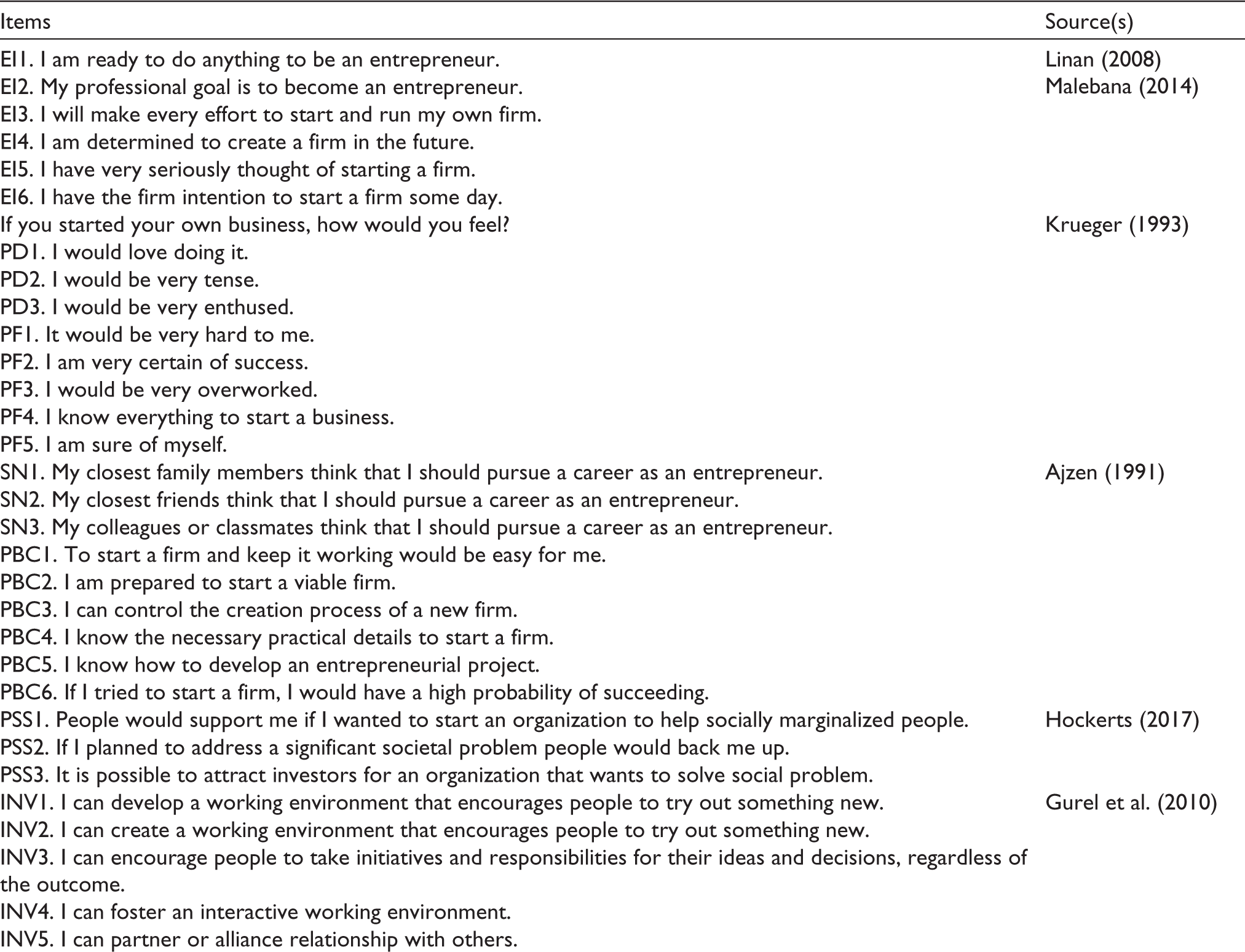

| Items | Source(s) |
| EI1. I am ready to do anything to be an entrepreneur. | Linan (2008) Malebana (2014) |
| EI2. My professional goal is to become an entrepreneur. | |
| EI3. I will make every effort to start and run my own firm. | |
| EI4. I am determined to create a firm in the future. | |
| EI5. I have very seriously thought of starting a firm. | |
| EI6. I have the firm intention to start a firm some day. | |
| If you started your own business, how would you feel? | Krueger (1993) |
| PD1. I would love doing it. | |
| PD2. I would be very tense. | |
| PD3. I would be very enthused. | |
| PF1. It would be very hard to me. | |
| PF2. I am very certain of success. | |
| PF3. I would be very overworked. | |
| PF4. I know everything to start a business. | |
| PF5. I am sure of myself. | |
| SN1. My closest family members think that I should pursue a career as an entrepreneur. | Ajzen (1991) |
| SN2. My closest friends think that I should pursue a career as an entrepreneur. | |
| SN3. My colleagues or classmates think that I should pursue a career as an entrepreneur. | |
| PBC1. To start a firm and keep it working would be easy for me. | |
| PBC2. I am prepared to start a viable firm. | |
| PBC3. I can control the creation process of a new firm. | |
| PBC4. I know the necessary practical details to start a firm. | |
| PBC5. I know how to develop an entrepreneurial project. | |
| PBC6. If I tried to start a firm, I would have a high probability of succeeding. | |
| PSS1. People would support me if I wanted to start an organization to help socially marginalized people. | Hockerts (2017) |
| PSS2. If I planned to address a significant societal problem people would back me up. | |
| PSS3. It is possible to attract investors for an organization that wants to solve social problem. | |
| INV1. I can develop a working environment that encourages people to try out something new. | Gurel et al. (2010) |
| INV2. I can create a working environment that encourages people to try out something new. | |
| INV3. I can encourage people to take initiatives and responsibilities for their ideas and decisions, regardless of the outcome. | |
| INV4. I can foster an interactive working environment. | |
| INV5. I can partner or alliance relationship with others. | |
| AT1. Being an entrepreneur implies more advantages than disadvantages to me. | Ajzen (1991) |
| AT2. A career as entrepreneur is attractive for me. | |
| AT3. If I had the opportunity and resources, I would like to start a firm. | |
| AT4. Being an entrepreneur would entail greater satisfaction for me. | |
| AT5. Among various options, I would rather be an entrepreneur. | |
| BEH1. I would put in great efforts at starting a business in the future. | Ajzen (1991) |
| BEH2. I would put in adequate time at starting a business in the future. | |
| BEH3. I would put in enough money at starting a business in the future. |
Ethics approval
The questionnaire and methodology for this study were approved by the Research Ethics committee (HA-O1-R-088) at Majmaah University (Ethics approval number: MUREC-Mar ch.t7 I COM-2021 t3O-).
Declaration of Conflicting Interests
The author declared no potential conflicts of interest with respect to the research, authorship and/or publication of this article.
Funding
The author received no financial support for the research, authorship and/or publication of this article.