



Abstract
This study aims at investigating the effect of both positive and negative electronic word of mouth (eWOM) on online consumer buying behaviour, customer satisfaction, and customer loyalty. A conceptual model is developed and tested with the data collected from 652 respondents from a developing country. After checking the psychometric properties of the survey instrument, hierarchical regression was performed to test the hypothesized relationships. The results indicate that (a) positive eWOM has a positive effect and negative eWOM has a significant negative effect on online consumer buying behaviour, (b) online buying behaviour is positively associated with customer satisfaction, which, in turn, is related to customer loyalty, and (c) trust in information moderates the relationship between (a) positive eWOM and online buying behaviour, and (b) negative eWOM online buying behaviour. The findings also suggest that trust in the product increases the strength of the positive effect of online buying behaviour and customer satisfaction. The theoretical contribution of this article stems from highlighting the importance of trust in information and trust in products in strengthening the relationship between eWOM and online buying behaviour. The conceptual model developed and tested in this study provides valuable insights into the effects of both positive and negative eWOM on customer satisfaction and loyalty. The study recommends that e-retailers identify the most appropriate platforms where the potential buyers interact with others and exchange reviews and comments that may profoundly affect online buying behaviour.
Keywords
Introduction
The proliferation of the internet during the last two decades has resulted in the phenomenal growth of e-commerce (Akram et al., 2018; Bhaiswar et al., 2021; Ganesh et al., 2010; Madhu et al., 2023; Parsons, 2002; Patel et al., 2023; Venkatakrishnan et al., 2023). The convenience and accessibility offered by online shopping platforms have transformed how people buy goods and services (Goel et al., 2022; Wolfinbarger & Gilly, 2001). Though online buying came into vogue sometime around the early 2000s, there has been a paradigmatic shift of consumers to online due to recently-hit pandemic (Donthu & Gustafsson, 2020), apart from other factors such as technological advancements, improved internet infrastructure, and the growth of e-commerce platforms (Chamakiotis et al., 2021; Dwivedi et al., 2020; Rehman et al., 2019; Shirish et al., 2021). Most importantly, the increase in social media has resulted in the escalating significance of electronic word of mouth (eWOM) in influencing consumer behaviour (Abdul et al., 2022; Hao et al., 2010; Lee et al., 2009; Zarrad & Debabi, 2015).
Starting with a seminal article by Katz and Lazarfeld (1955) on word of mouth (WOM), and subsequent eWOM, extant research reported the significant influence of both WOM and eWOM on consumer behaviour (Dwivedi et al., 2020; Ganesh et al., 2010; Venkatakrishnan et al., 2023; Verma & Singh, 2019). Consumers interact with each other through a variety of social media networks (such as Facebook, WhatsApp, and YouTube) and gain information about the products and services offered by e-retailers (Fang et al., 2018). The study focuses on online consumer buying behaviour in India, with its massive population ranking first in the world, boasting over 690 million internet users (Petrosyan, 2023).
Initially, social media emerged as a source for sharing personal content such as photos, videos, and information among friends and acquaintances. Gradually, social media has become an essential tool for exchanging ideas, viewpoints, preferences, and criticisms about products and services through eWOM. Several researchers empirically found that eWOM significantly influences consumer decision-making (Huete-Alcocer, 2017). The information transmitted through eWOM (both positive and negative) affects consumer behaviour (Bickart & Schindler, 2001; Wang & Breda, 2023). eWOM provides a wealth of first-hand knowledge related to the experiences of product quality, trust in the e-retailer, after-sales services, etc., which helps consumers make purchase decisions. While positive eWOM creates a positive vibe and encourages consumers to engage in buying behaviour, negative eWOM discourages them. The power of personal experiences shared through eWOM also goes beyond simple reviews and includes the stories and emotions conveyed through online narratives, which may influence the consumers to buy. The user-generated content thus plays a vital role in consumer decision-making.
Rationale for the Study
The rationale behind this study is grounded in four pivotal factors. First, the existing literature offers a substantial wealth of studies that have reported various insights into eWOM and its impact on online buying intentions (Abdul et al., 2022; Jha, 2019; Roy et al., 2018; Sardar et al., 2021). Several meta-analytic studies conducted earlier focused mainly on the effect of eWOM on sales (e.g., 26 studies by Floyd et al., 2014; 51 studies by You et al., 2015). However, there appears to be a shortage of research that delves explicitly into the influence of eWOM on customer satisfaction and loyalty. Second, the polarity of eWOM encompasses both positive and negative aspects. A recently conducted bibliometric analysis of 746 articles (covering 2000–2020) revealed several significant gaps in the research (Bhaiswar et al., 2021). One of the gaps was to explore the combined impact of these two (positive-and-negative eWOM) valences on online purchasing behaviour. Third, the available research is fragmented, failing to yield comprehensive insights into the true essence of eWOM. This study aims to unravel the intricate mechanisms at play by examining how positive and negative eWOM shape consumer perceptions, purchase intentions, and buying behaviour. Lastly, while studies on eWOM have predominantly focused on developing nations, research is scarce concerning eWOM in India. This study aims to bridge this gap by shedding light on eWOM’s role within the Indian landscape. Hence, a substantial portion of past research has been conducted to explore the intricate connection between eWOM and consumer purchase intentions. Extensive literature reveals that there has been a substantial body of research dwelling into how eWOM and its relationship with social media influence consumer behaviour. However, an essential aspect left relatively unexamined is the impact of consumers’ perceptions regarding the valence of eWOM on both customer satisfaction and loyalty. This study seeks to address this gap by investigating the underlying implications of customers’ sentiments towards the valence of eWOM on their level of trust in information and products. Consequently, this study aims to answer the following research questions (RQs):
RQ1: How do positive eWOM and negative eWOM influence online buying behaviour? RQ2: How does trust in information moderate the relationship between positive and negative eWOM on online buying behaviour? RQ3: How does trust in the product moderate the effects of online consumer behaviour and customer satisfaction?
This research makes five significant contributions to the growing literature on online buying by answering the above questions. First, this study adds to the literature by investigating positive and negative eWOM effects on consumer buying behaviour. While previous studies have primarily focused on the impact of eWOM on consumer behaviour, this study recognizes the need to understand how both positive and negative eWOM can influence online purchasing decisions. Second, this research corroborates the findings from other studies about the positive association between online buying behaviour and customer satisfaction. Third, this study aligns with previous literature that customer satisfaction precedes customer loyalty. Fourth, trust in information and trust in products are moderators in the relationship between positive and negative eWOM online buying behaviour and customer satisfaction, respectively. Fifth, the findings from this comprehensive model developed and tested, the first of its kind, particularly in India during the post-COVID period, provide valuable insights to both consumers and e-retailers. In sum, by investigating the effects of both types of eWOM, this study seeks to provide a comprehensive understanding of how eWOM shapes consumer perceptions and behaviours. The findings of this study will contribute to the existing body of knowledge on eWOM and online buying.
Variables in the Study
Positive-and-Negative eWOM
Social media users share information about the ownership characteristics of products and services with others (Bansal & Voyer, 2000; Harrison-Walker, 2001). In addition, the social media behaviour of users depends on psychological and demographic factors (Bhandari & Bansal, 2018), Depending on their experiences, the informal communication about the products and services can be positive or negative. Positive statements about the brands’ offerings from e-retailers will likely motivate potential customers to make purchase decisions. In contrast, the negative eWOM may demotivate the consumers to buy the products (Abdul et al., 2022). The e-retailers are cognizant of the informal communication between individuals through various social media platforms (blogs, consumer forums). User-generated content is vital in consumer purchase decisions (Sözer, 2019). Thus, when shared publicly, both positive and negative eWOM statements about the brands and their offerings and services influence consumer behaviour in different ways (Chetioui et al., 2021; Thurau & Walsh, 2003; Wu et al., 2017).
Trust in Information
While individuals share their experiences through social media platforms, how others react largely depends on whether the information is trustworthy (Casais et al., 2020). When individuals search for information from various sources, apart from the quantity of data, they consider the quality of information before making purchase decisions (Keen et al., 2000; Kim et al., 2008). Several studies documented that trust in communication on social networking sites (SNS) plays a vital role in consumer behaviour (Casais et al., 2020; Chu et al., 2020). The user-generated information from the referent groups helps consumers because the personal views, stories, and experiences expressed in social media platforms factor into consumer decision-making (Aggarwal & Gour, 2020; Miltgen et al., 2016). The trustworthiness and credibility of consumers’ information reduce the scepticism associated with purchase decisions (Miltgen & Smith, 2015).
Trust in the Product
Consumer trust in the product has been extensively studied in marketing literature (Buttner & Goritz, 2008; Davis et al., 2021; Hong & Cho, 2011; Kim et al., 2008). Consumer trust in the product is built on the expectations of buyers than sellers will act in a reliable, ethical, and socially appropriate manner, fulfilling their commitments and not taking advantage of the buyer’s vulnerability and dependence (Gefen et al., 2003). Consumers’ perspectives on trustworthiness greatly influence their final purchasing decisions (Gupta et al., 2009). In the online context, trust becomes even more crucial as consumers perceive higher risks in e-commerce due to the inability to physically examine products (Li et al., 2014; Shukla & Mishra, 2022). Trust plays a significant role in shaping online purchasing intentions (Hong & Cho, 2011) and shopping decisions (Buttner & Goritz, 2008). One recent study reported that consumers fear tendencies to rely on social media (Verma et al., 2023). To overcome the fear, organizations need to build customer loyalty and establishing strong, long-lasting relationships between buyers and sellers (Santos & Fernandes, 2008). Customer loyalty and trust largely depends on e-service quality of products (Singh et al., 2023). Conversely, a lack of trust poses a major barrier to online transactions (Urban et al., 2009). Negative experiences and deception can lead to negative attitudes, a loss of trust in the seller, and a shift towards alternative options to fulfil consumer needs (Lee, 2014). Online buying and repeated purchases largely depend on the trust that company delivers about the product purchased by consumers. When companies do not deliver the product as promised (e.g., low-quality product) consumers shy away from buying from that e-retailer. In addition, breach of trust by companies about the product may prompt the consumers to send messages to others through social media (negative eWOM). On the contrary, the greater the trust, the more likely that consumers engage in online shopping and also recommend to others about the product or service (Wang & Breda, 2023). For example, if consumers order goods online, they expect the same quality as advertised and displayed on e-shopping website and also expect the product to be delivered on time (Davis et al., 2021).
Customer Satisfaction
Customer satisfaction is defined as ‘a judgment that a product/service feature or the product or service itself provided (or is providing) a pleasurable level of consumption-related fulfilment, including levels of under- or over-fulfilment’ (Oliver, 2014, p. 8). Post-purchase evaluation by customers enables them to see whether they are satisfied with the product or service. Customer satisfaction is a primary dependent variable in research as the success of any company depends on how satisfied the customers are (Ba & Johansson, 2008; Kumar, 2016; Park & Lee, 2009; Rahman et al., 2018; Suchánek & Králová, 2019). Customer satisfaction plays a significant role in competitive e-commerce environments as it influences customer retention and acquisition of new customers (Tandon et al., 2017). Customer satisfaction level significantly impacts two specific purchasing behaviours: repurchase intentions and eWOM recommendations (Oliver, 1980; Ranaweera & Prabhu, 2003).
Customer Loyalty
Customer satisfaction is a precursor to customer loyalty (Al-dweeri et al., 2019; Jones & Taylor, 2007). In marketing literature, customer loyalty is measured in terms of the customers’ repeated repurchase behaviour (Sharma & Bahl, 2018). Loyalty is also expressed through positive recommendations of products and services to other potential customers (Sirdeshmukh et al., 2002; Upamannyu et al., 2021). Customer loyalty is reflected in repeat purchases of products and services, and loyal customers bring sustained competitive advantage to firms (Callarisa et al., 2012; Picon et al., 2014). Literature review reveals that several studies support the positive association of customer satisfaction with customer loyalty (Serra-Cantallops et al., 2018; Tu et al., 2012; Wilkins et al., 2010). Some researchers found that customer trust is a key antecedent to customer loyalty (Martínez & Rodríguez del Bosque, 2015).
Hypotheses Development
Positive-and-Negative eWOM and Online Buying Behaviour
Most research suggests that social earned media, such as recommendations and discussions on social media, can significantly impact consumer actions more than paid and traditional earned media (Patel et al., 2023). Information received from social sources, like online communities, can be more influential in shaping consumer opinions and triggering purchasing behaviour (Trusov et al., 2009). A positive relationship exists between social earned media and online buying behaviour, with significant effects on sales, primarily through online community activity. Over time, the cumulative impact of social earned media activity leads to a substantial long-term effect on sales (Stephen & Galak, 2002). When consumers are exposed to positive eWOM messages about a product or service, they are more likely to have a higher intention to share that positive message with others compared to when they are exposed to negative messages (Sözer, 2019). On the other hand, negative eWOM discourages customers from engaging in online shopping (Nadarajan et al., 2017). As the online community represents a credible source of the voice of consumers, any negative reporting by members through discussion threads may have a negative impact on consumer intention to buy products. To sum up, extant research reported that eWOM is a precursor to purchase intention (Bigne et al., 2016; Ladhari & Michaud 2015). While positive online reviews encourage consumers to make use of service or purchase products (Mauri & Minazzi, 2013), and negative reviews demotivates them to engage in purchasing (Abdul et al., 2022). Thus, based on available empirical evidence and logos, we offer the following hypotheses:
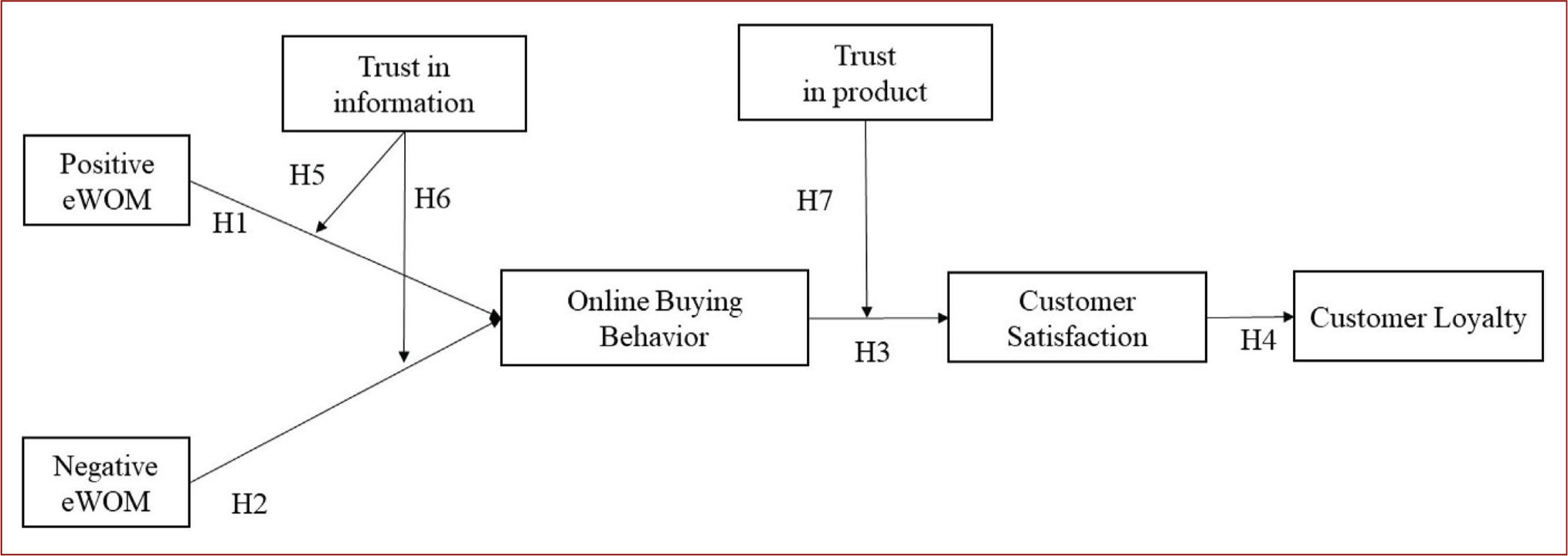
H1: Positive eWOM is positively related to online buying. H2: Negative eWOM is negatively related to online buying.
Online Consumer Buying Behaviour and Customer Satisfaction
Extant research reported a positive association between online buying and customer satisfaction and repurchasing intention (Goel et al., 2022; Tandon et al., 2017). In a recent conducted on 625 customers from India, researchers documented that e-buying has significantly influenced customer satisfaction (Madhu et al., 2023). Another study of 556 respondents from three metropolitan cities in India found that online consumer behaviour positively related to customer satisfaction (Davis et al., 2021). Several studies conducted during the pre-pandemic (COVID-19) period also documented a positive relationship between e-buying behaviour and customer satisfaction (Kumar, 2016; Park & Lee, 2009; Rahman et al., 2018). Thus, based on abundant empirical evidence, we offer the following hypothesis:
H3: Online buying behaviour is positively related to customer satisfaction.
Customer Satisfaction and Customer Loyalty
Customer loyalty is defined as ‘a deeply held commitment to rebuild and re-patronize a preferred product or service in the future despite situational influences and marketing efforts having the potential to cause switching behaviours’ (Oliver, 1999; p. 33). Satisfaction is a precursor to loyalty (Park et al., 2017; Su et al., 2017). When satisfied with a product or service, customers are more likely to become loyal customers and make repeated purchases. Positive experiences increase trust and confidence in the brand, encouraging customers to return for future transactions (Goel et al., 2022). A recently conducted meta-analytic study by Mittal et al. (2023) found that customer satisfaction results in customer retention, positive WOM, and increased spending. Thus, based on prior research and logos, we offer the following hypothesis:
H4: Customer satisfaction is positively related to customer loyalty.
Trust in Information as a First Moderator
Trust is essential in internet-based consumer behaviour, particularly in virtual networks where face-to-face interaction is absent. Building trust is critical as it can positively impact consumers’ intentions to shop online and encourage them to engage in more frequent shopping behaviours (Chen et al., 2015; Schlosser et al., 2006; Zhao et al., 2019). Prior studies highlight that positive eWOM can contribute to establishing trust among online shoppers, which affects their purchase intentions (Wang et al., 2009; Zhou et al., 2018). A study focusing on consumer attitudes toward online shopping found that trust acts as a mediator in the relationship between eWOM and attitudes toward online shopping (Lebdaoui & Chetioui, 2020). A positive relationship exists between trust in information consumers provide on SNS and online purchases. When consumers trust the information provided in SNS, they are more likely to perceive it as reliable and accurate and show increased engagement in online shopping activities (Ranganathan & Ganapathy, 2002). Thus, based on available scant research, we offer the following hypotheses.
H5: Trust in information moderates the relationship between positive eWOM and online buying behaviour such that at higher (lower) levels of trust, the relationship between positive eWOM and online buying behaviour is stronger (weaker).
H6: Trust in information moderates the relationship between the negative eWOM and online buying behaviour such that at higher (lower) levels of trust, the relationship between negative eWOM and online buying behaviour is weaker (stronger).
Trust in the Product as a Second Moderator
Trust has been extensively studied across various fields, including economics, management, technology, social contexts, consumer behaviour, and psychology (Kim et al., 2008; Qalati et al., 2021). It is built on the expectations of buyers that sellers will act in a reliable, ethical, and socially appropriate manner, fulfilling their commitments and not taking advantage of the buyer’s vulnerability and dependence (Gefen et al., 2003). Consumers’ perspectives on trustworthiness greatly influence their final purchasing decisions (Gupta et al., 2009). In the online context, trust becomes even more crucial as consumers perceive higher risks in e-commerce due to the inability to examine products (Li et al., 2014). Trust plays a significant role in shaping online purchasing intentions (Hong & Cho, 2011) and shopping decisions (Buttner & Goritz, 2008). It is also crucial to building customer loyalty and establishing solid and long-lasting relationships between buyers and sellers (Santos & Fernandes, 2008). Conversely, a lack of trust poses a significant barrier to online transactions (Urban et al., 2009). Negative experiences and deception can lead to negative attitudes, a loss of trust in the seller, and a shift towards alternative options to fulfil consumer needs (Lee, 2014). Based on the above arguments we offer the following hypothesis.
H7: Trust in product moderate the relationship between the online buying behaviour and customer satisfaction.
The conceptual model is presented in Figure 1.
The Conceptual Model.
Method
Sample
In this study, a survey instrument was developed based on the established measures, and the data were collected from the consumers in two prominent regions in southern India: Kanyakumari and Coimbatore. Since there is no fixed list of online buyers, we used snowball non-probability sampling and sought the help of the respondents to identify some of their known people who are chronic users of online buyers. A qualifying question was asked in the survey if they engage in online buying. If the answer is ‘No’, they are not asked to continue the study. Though according to Krejcie and Morgan (1970), the minimum required sample size is 384, and the total number of respondents in this study (652 > 384) met the criteria. We tested the non-response bias by comparing the first one hundred respondents with the last one hundred and found that there are no significant differences between these two groups about the study variables.
Demographic Profile of the Respondents
The sample consists of 268 (41.1%) males and 384 (58.9%) female respondents. The demographic profile consisting of age, educational qualification, occupation, frequency of use of social media, frequency of buying, and experience of buying online was mentioned in Table 1.
Demographic Profile.

Measures
Independent and dependent variables were measured using Likert-five-point scale (‘1’ representing ‘strongly disagree’; and ‘5’ representing ‘strongly agree’). The measurement of these variables was derived from existing literature.
eWOM has two valences: positive and negative. The positive eWOM was measured with six items adapted from Goyette et al. (2010) and the sample items are read as ‘Many online reviews recommended to use this company website’. The reliability coefficient for positive eWOM was 0.91. Negative eWOM was measured using three items adapted from Goyette et al. (2010). The sample item reads as ‘Most reviews say mostly negative things about this product to others’. The reliability coefficient of negative eWOM was 0.94.
Online buying behaviour was measured using five items adapted from Rahi and Ghani (2019). The sample items read ‘I frequently buy products online’. The reliability coefficient Cronbach alpha for online buying behaviour was 0.92.
Customer satisfaction was measured using five items adapted from (Devaraj et al., 2002; Hernandez et al., 2009; Maditinos & Theodoridis, 2010). The sample items read ‘I’m satisfied with the product selection provide by online sellers’. The reliability coefficient Cronbach alpha for customer satisfaction was 0.91.
Customer Loyalty was measured using five items adapted from (Chang & Chen, 2009; Eid, 2011). The sample items read ‘I will continuously purchase from the retailer in the nearest future’. The reliability coefficient Cronbach alpha for customer loyalty was 0.93.
Trust in information was measured using seven items adapted from (McKnight et al., 2002; Mohd Suki & Mohd Suki, 2020). The sample items read ‘The social networking sites provide correct information about the item that I want to purchase’. The reliability coefficient Cronbach alpha for trust in information was 0.97.
Trust in the product was measured using four items adapted from Rahi and Ghani (2019). The sample items read ‘The product I purchased is trustworthy’. The reliability coefficient Cronbach alpha for trust in the product was 0.96.
Analysis
Confirmatory Factor Analysis (CFA)
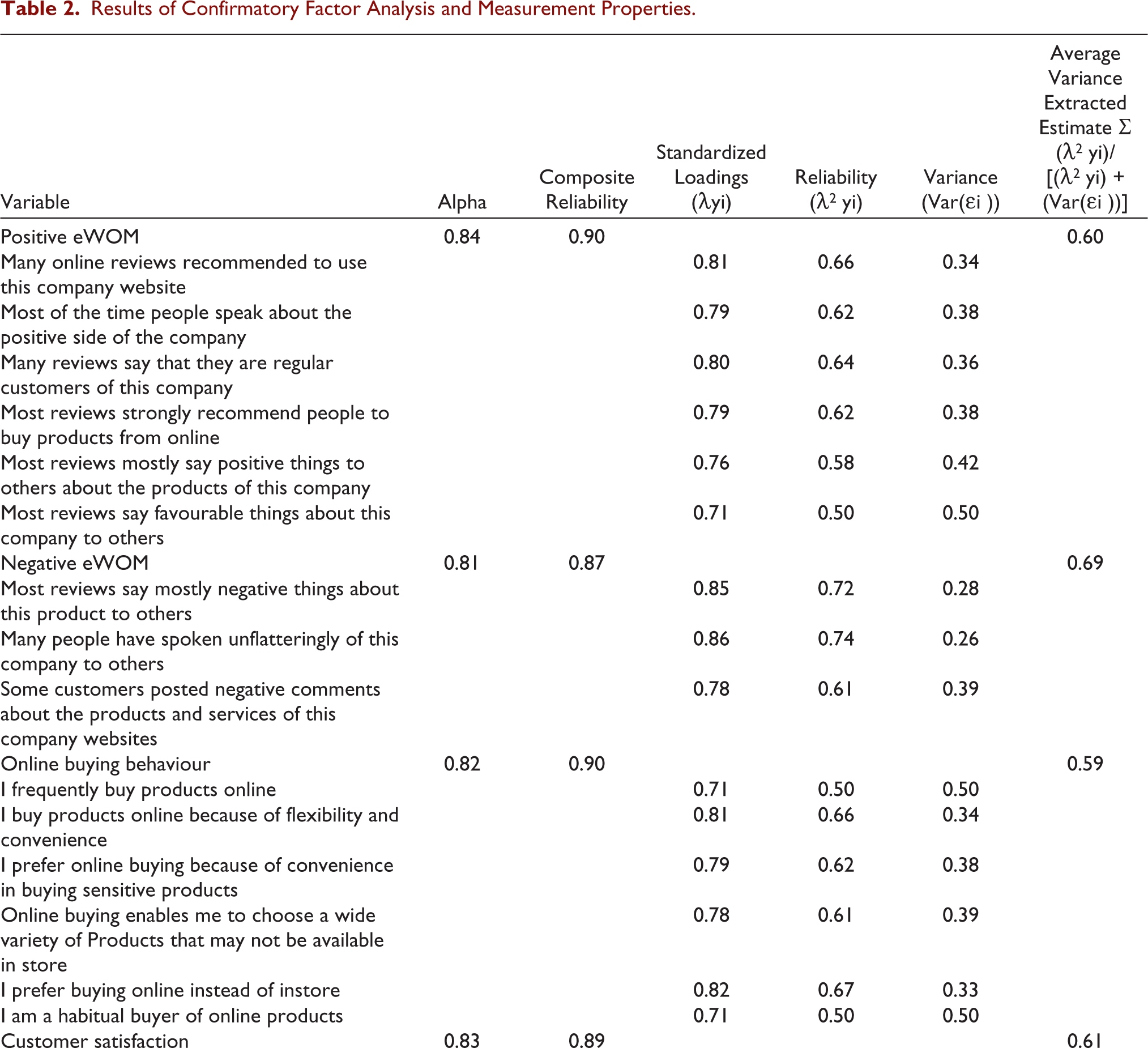
Following the recommendation of Anderson and Gerbing (1988), we first tested the measurement model by performing CFA, and presented the results in Table 2.
As can be seen from the Table 2, the factor loadings of all the indicators exceeded the acceptable levels (Hair et al., 2018). The reliability coefficients (Cronbach’s alphas) were over 0.70, the composite reliability (CR) values were within the threshold levels, and the average variance extracted (AVE) estimates exceeded the minimum acceptable levels of 0.50 (Montgomery et al., 2021; Nunnally, 1994). These values vouch for construct validity.
Descriptive Statistics: Correlation, Reliability and Validity Discriminant Validity
The descriptive statistics (mean, standard deviation and Zero-order correlations) are mentioned in Table 3. Our analysis of descriptive statistics suggests that the correlations between the variables were less than 0.8, and hence multicollinearity is not a problem (Tsui et al., 1995). We also performed additional tests of multicollinearity by observing the variance inflation factor (VIF) for each of the variables and found that these values were less than 5, indicating that multicollinearity is not a problem with the data (Hair et al., 2018). The results of VIF values were mentioned in Table 4.
Results of Confirmatory Factor Analysis and Measurement Properties.

Descriptive Statistics: Correlation, Reliability, and Validity Discriminant Validity
The descriptive statistics (mean, standard deviation, and Zero-order correlations) are mentioned in Table 3. Our analysis of descriptive statistics suggests that the correlations between the variables were less than 0.8, and hence multicollinearity is not a problem (Tsui et al., 1995). We also performed additional tests of multicollinearity by observing the VIF for each of the variables and found that these values were less than 5, indicating that multicollinearity is not a problem with the data (Hair et al., 2018). The results of VIF values were mentioned in Table 4.
Descriptive Statistics: Means, Standard Deviations, and Zero-Order Correlations (Fornell–Larcker Criterion: Discriminant Validity).

Inner VIF Values.

Hypothesis Testing
We performed hierarchical regression to test the hypothesized relationships.
Table 5 shows the testing the H1, H2, H5 and H6.
As shown in model 1 of Table 5, the control variables were entered into the equation. The results show that control variables gender, position, and frequency of buying were significant whereas age, education, and experience of buying were not significant. We entered the control variables so that the regression coefficients for the main variables will not be inflated.
Hierarchical Regression Results of Testing H1, H2, H5 and H6.
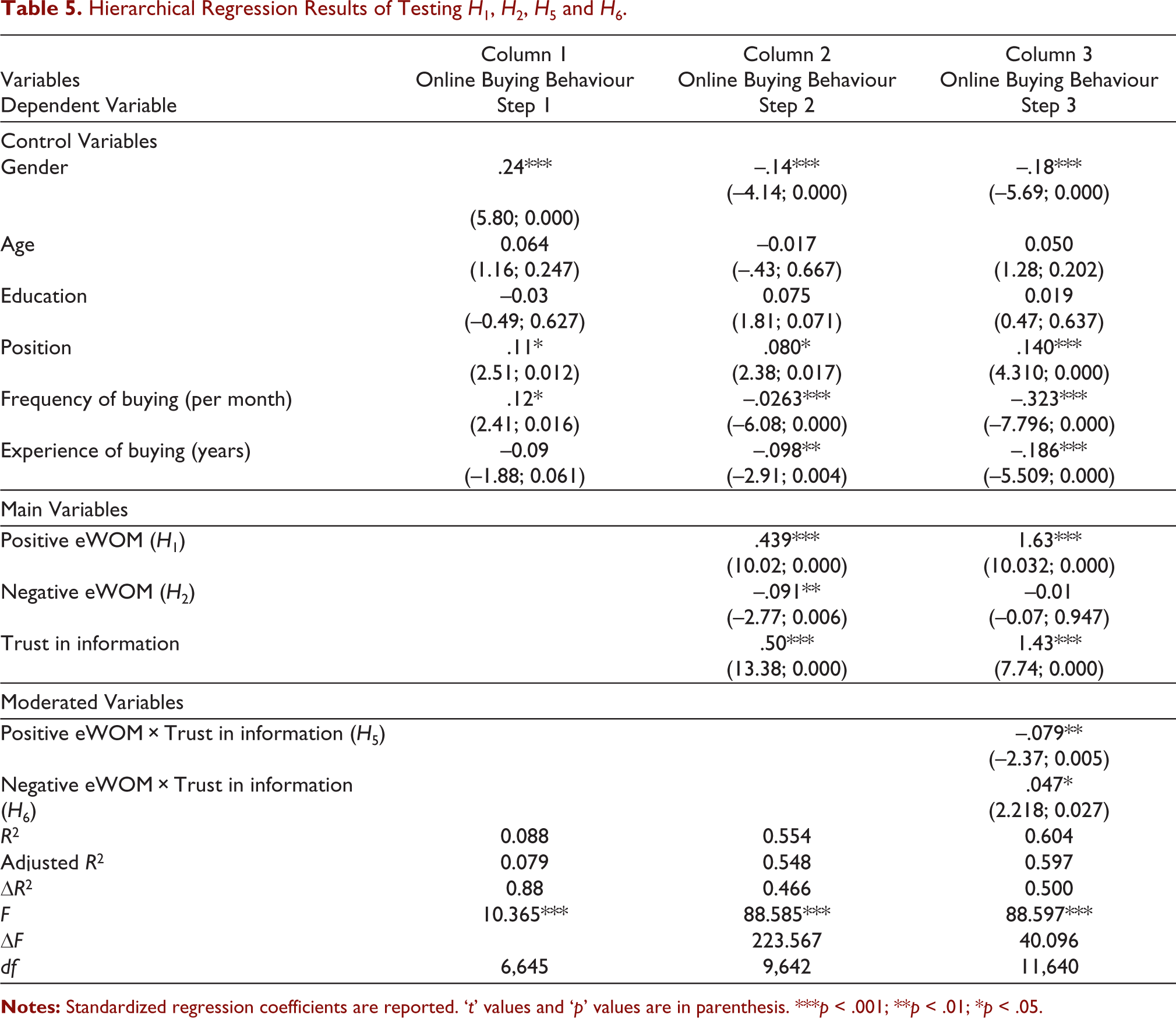
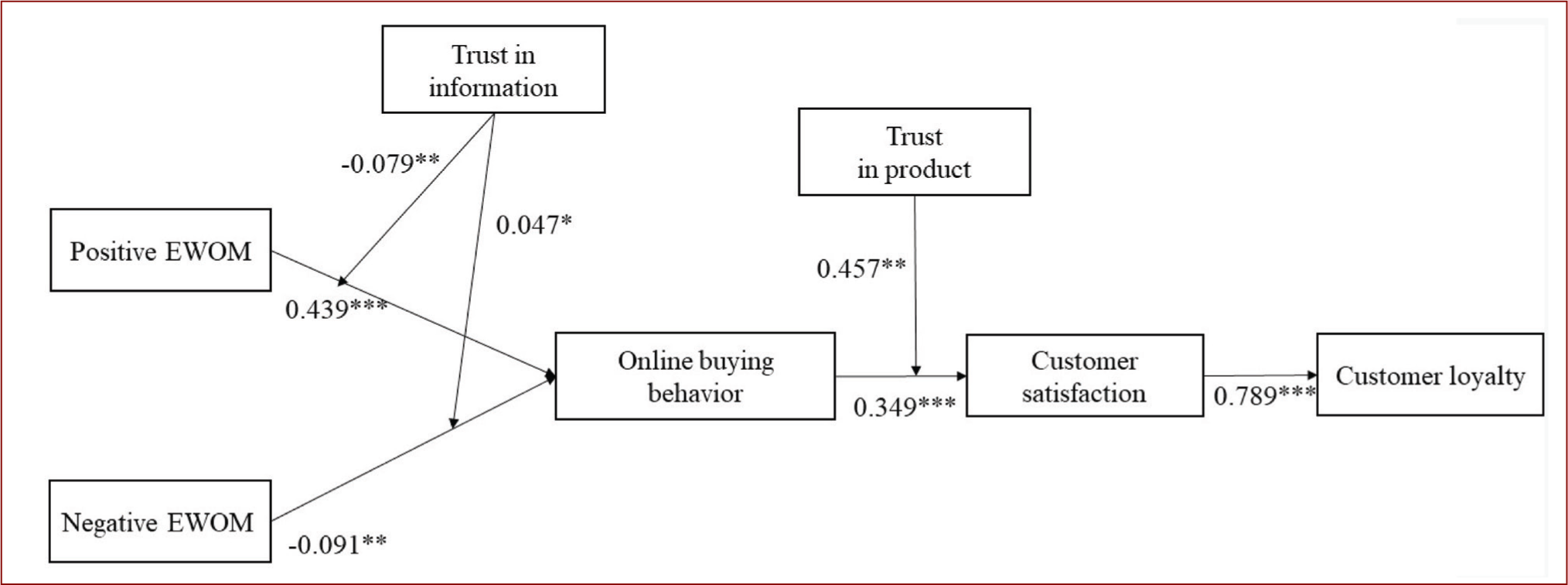
To test H1 and H2, we entered main variables into the equation (column 2, Table 5). The beta coefficients of positive eWOM (β = 0.439, p < .000), and negative eWOM (β = –0.09, p < .01) were significant, thus supporting H1 and H2. The main effects model was significant and explained 55.4% variance in the online buying behaviour because of positive and negative eWOM [R2 = 0.554; adjusted R2 = 0.548; F (9,642) = 88.58; p < .001; ∆F = 223.56].
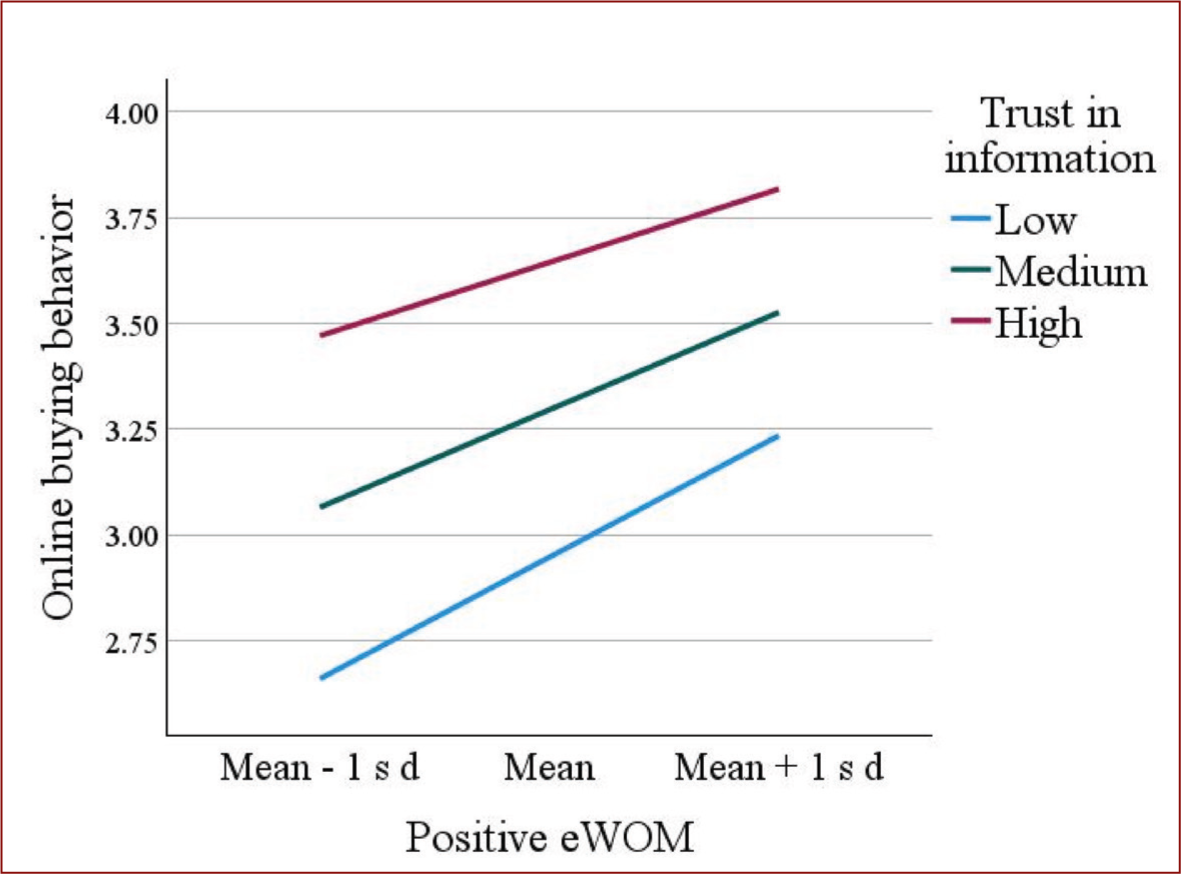
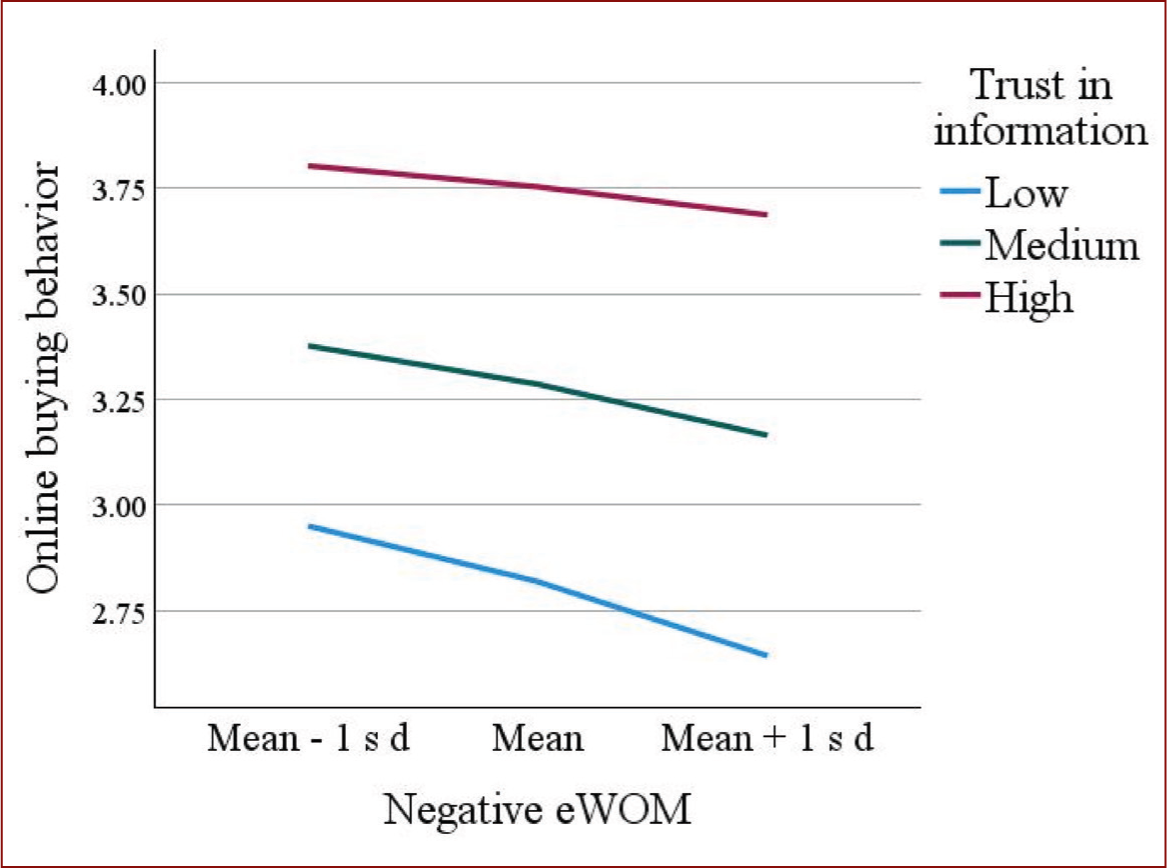
To test moderation hypotheses H5 and H6, we entered moderating variables, that is, trust in information in step 3 (column 3; Table 5). The regression coefficient of interaction term was significant (β positive eWOM × Trust in information = –0.079; p < .001), thus supporting H5 that trust in information acts as a moderator in the relationship between positive eWOM and online buying behaviour. The regression coefficient of interaction (β negative eWOM× trust in information = 0.047; p < .05, thus supporting H5 that trust in information acts as a moderator in the relationship between negative eWOM and online buying behaviour. The model was significant and explained 60.4% variance in online buying behaviour because of main and interaction variables [R2 = 0.604; adjusted R2 = 0.597; F (11,640) = 88.597, p < .001; Δ R2 = 0.50; ΔF = 40.096, p < .001].
Hierarchical regression results of customer satisfaction as dependent variable are presented in Table 6.
Hierarchical Regression Results of Testing H3, H7 and H4.
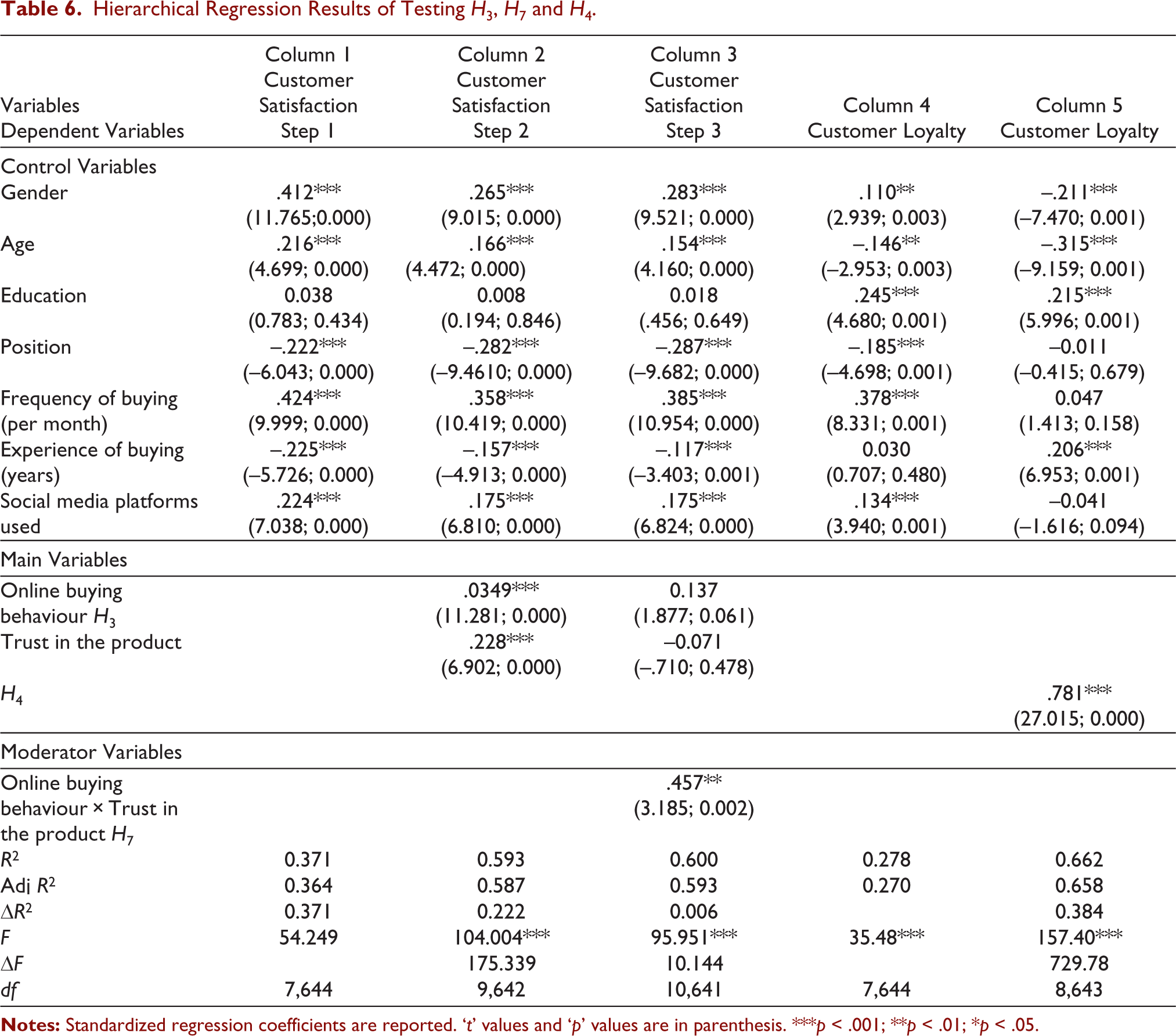
After entering the control variables in the first step, we entered the main variables in the second step (Column 2, Table 6). The regression coefficient of online buying behaviour on customer satisfaction was significant (β = 0.349, p < .001), thus supporting H3. As shown in column 5 (Table 6), the regression coefficient of customer satisfaction on customer loyalty was significant (β = 0.781, p < .001), thus supporting H4.
The results of moderation hypothesis (H7), as shown in Column 3 (Table 6) show that the regression coefficient of interaction term was significant (β online buying behaviour × Trust in product = 0.457; p = .002), thus supporting H7 that trust in the product acts as a moderator in the relationship between online buying behaviour and customer satisfaction.
The moderation effects are presented in Figures 2–4.
Figure 2 shows the moderation effect of trust in information in the relationship between positive WOM and online buying behaviour. As can be seen in Figure 2, at higher levels of trust in information are associated with stronger relationship between positive eWOM and online buying behaviour. When online buying behaviour increases from ‘low’ to ‘high’, then positive WOM is higher at high level of trust in information than at low levels of trust in information. These curves render support to H5.
Figure 3 shows the moderation effect of trust in information in the relationship between negative eWOM mouth and online buying behaviour. As can be seen in Figure 3, at low levels of trust in information are associated with weaker relationship between eWOM and online buying behaviour. When online buying behaviour decreases from ‘low’ to ‘high’, then negative eWOM is higher at high level of trust in information than at low levels of trust in information. These curves render support to H6.
Figure 4 shows the moderation effect of trust in the product in the relationship between online buying behaviour and customer satisfaction. As can be seen in Figure 3, at higher levels of trust in the product are associated with stronger relationship online buying behaviour and customer satisfaction. When customer satisfaction increases from ‘low’ to ‘high’, then online buying behaviour is higher at high level of trust in the product than at low levels of trust in information. These curves render support to H7.
Trust in Information Moderates Between Positive eWOM and Online Buying Behaviour.
Trust in Information Moderates Between Negative eWOM and Online Buying Behaviour.
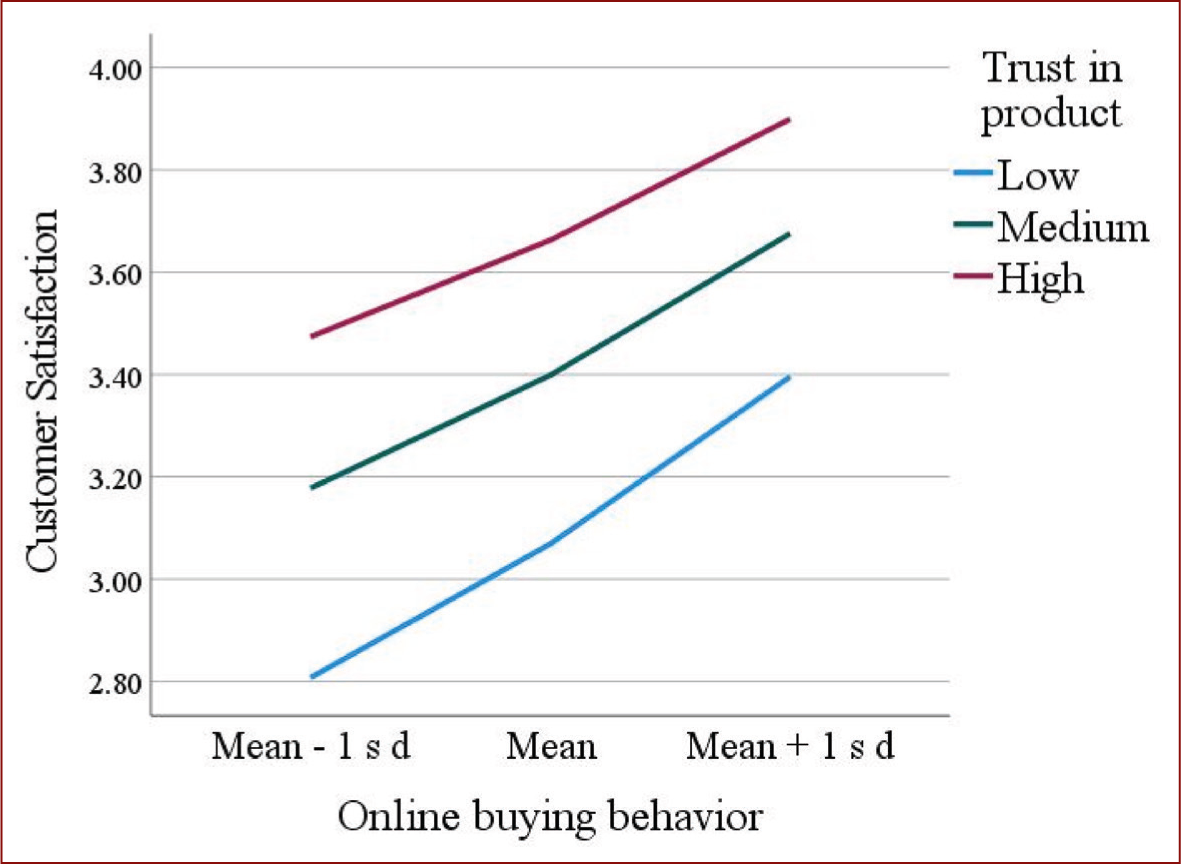
Trust in Product Moderates Between Online Buying Behaviour and Customer Satisfaction.
R2 and Adjusted R2; Q2 and Effect Size
Q2 the lesser is the deviation in estimated and original values. Hair et al. (2018) recommended Q2 predictive indices of 0.02 (small), 0.15 (Medium) and 0.35 (large). The Q2 values for Need for Achievement showed that medium Effect. The Q2 value for online buying behaviour (0.032), customer satisfaction (0.43) and customer loyalty (0.50) showing the larger effect size. The R2 and Adjusted R2, and Q2 and effect size were mentioned in Table 7.
R² and Adjusted R²; Q² and Effect Size.

Summary of the Results of Hypotheses Testing.

The summary of results of hypotheses testing is presented in Table 8.
The empirical model was presented in Figure 5.
Discussion
In this research, a modest attempt is made to explore the influence of positive and negative eWOM on consumer buying behaviour. A conceptual model was developed, and the hypothesized relationship was tested after verifying the psychometric properties using the Smart PLS of structured equation modelling. Data was collected from 652 respondents from a developing country (India), and the hypotheses were tested by hierarchical regression.
First, the results indicate that positive eWOM is positively and significantly related to consumer buying behaviour (H1), which is consistent with the findings from the literature (Patel et al., 2023; Sözer, 2019; Stephen & Galak, 2002). Second, we found that negative eWOM has a significantly negative association with consumer buying behaviour (H2), corroborating a limited number of previous studies (Kang et al., 2016; Nadarajan et al., 2017). Since online communities provide credible information (both positive and negative), the effect of the eWOM on consumer buying behaviour is self-explanatory. However, our findings provide empirical evidence of the positive and negative influence of eWOM on consumer buying behaviour. Third, the results supported the moderating effect of trust in information in the relationship between positive eWOM and online buying behaviour (H5). At higher levels of trust in information, positive eWOM resulted in higher consumer buying behaviour and vice versa. These results are consistent with the intuitive logic and available scant research (Lebdaoui & Chetioui, 2020; Wang et al., 2009; Zhao et al., 2019). Fourth, the moderating effect of trust in information in the relationship between negative eWOM and consumer buying behaviour (H6) has been supported in this study. Though few studies were available to vouch for this relationship, some evidence can be found in limited studies (Ranganathan & Ganapathy, 2002). It is expected that at higher levels of trust in information, the relationship between negative eWOM and consumer buying behaviour is harmful and more visible than when the trust in information is low.
The fifth key finding in this study is the positive association of online buying behaviour with customer satisfaction (H3), which aligns with the extant research reported in the literature (Goel et al., 2022; Madhu et al., 2023; Tandon et al., 2017). It is logically intuitive that consumer buying behaviour is a precursor to customer satisfaction. Sixth, trust in product strengths the positive relationship between consumer online buying behaviour and customer satisfaction (H7) found support in this research. As previous studies found trust as an essential variable that influences customer buying behaviour and satisfaction (Gefen et al., 2003; Kim et al., 2008; Qalati et al., 2021), the results from this study can be understandable.
Seventh, customer’s repurchase intention and loyalty are primarily influenced by the level of customer satisfaction (H4) found support in this study. Several studies in the past vouch for this positive relationship between customer satisfaction and loyalty (Mittal et al., 2023; Park et al., 2017; Su et al., 2017). All the hypothesized relationships were supported, and the conceptual model was validated.
Theoretical Implications
These results significantly affect theory and practice about online buying and eWOM. First, the conceptual model extends the literature on online buying behaviour. As consumer behaviour has undergone phenomenal metamorphosis during and post-pandemic, the increase in online buying has been substantial worldwide. In this process, the voice generated by online communities plays a vital role in influencing consumer buying behaviour. As the online market becomes increasingly competitive, present-day consumers rely on the opinions of peers, family, friends, and other online communities before making purchase decisions. Though traditional advertising by companies has its role to play, the user-generated information through eWOM provides first-hand information about the products and services rendered by e-retailers. Some of the significant contributions of this study include: (a) positive-and-negative eWOM have significant roles to play in online consumer behaviour, (b) trust in information strengthens the positive effect of eWOM on online buying behaviour and deepens the negative effect of eWOM on online buying behaviour, (c) online consumer buying behaviour is significantly associated with customer satisfaction, (d) trust in product strengths the positive relationship between online buying behaviour and customer satisfaction, and (e) customer loyalty largely depends on customer satisfaction. This study adds to the existing theory on eWOM and online buying behaviour by unfolding the two sides of eWOM in a single study. Prior researchers have studied the effects of eWOM independently (some studies focused on positive impact and some reflections on negative implications), and rarely do we find a study that takes both positive and negative eWOM in explaining online buying behaviour. Therefore, this study unites the scattered research on eWOM, which contributes significantly to the theory, particularly related to online buying behaviour.
Practical Implications
The findings from this research have several implications for e-retailing companies and practicing managers. As present-day consumers rely on the voice of consumers transmitted through eWOM before making purchase decisions, e-retailers need to be cognizant of their social media postings regarding their products and services. Further, e-retailers do not have any control over the information spread through social media; they must offer a quality product and service so that consumers write positive reports. Since negative eWOM shies away the customers, the e-retailers need to focus on negative feedback from the customers and address their concerns. Second, the findings from this study recommend that e-retailers understand consumer behaviour while advertising products and services through websites. Third, as trust in information plays a vital role in influencing consumer behaviour, providing accurate information about the products and services they offer is essential. Any breach of trust results in customer loss and decreased sales. In the competitive landscape, e-retailers must devise effective strategies to attract and retain customers. To address this challenge, retailers must focus on enhancing their brand’s visibility and popularity. Brand recognition plays a pivotal role in encouraging repeat purchases. Prompting customers to discuss a brand, regardless of whether their comments are positive or negative, is a crucial driver of a brand’s success.
Furthermore, retailers must invest significantly in providing accurate and helpful information and maintaining high product quality. These factors foster trust, another essential aspect of customer engagement. Quality products and transparent information lead to positive reviews, comments, likes, and posts, generating substantial traffic and sales. Ultimately, the study emphasizes that the pathway to success for retailers lies in aligning with the modern consumer’s preference for electronic word-of-mouth communication. By nurturing positive interactions and experiences, online retailers can generate a solid customer base and ensure a sustainable income stream.
Limitations and Suggestions for Future Research
The study findings should be interpreted in light of some limitations. First, as with any survey-based study, common method variance is an inherent problem in this study. However, as explained in the results section, we have taken adequate care to minimize the common method variance. Second, in this cross-sectional study, we did not classify customers (e.g., baby boomers and millennials). We included heterogeneous groups, which may be a limitation because customer behaviour may differ depending on demographics. However, we have used these as control variables to tease out the effect of demographic variables. Third, though over 600 respondents are a perfect sample size, it is always better to have much larger samples from various parts of the country instead of focusing only on southern India. Fourth, our study did not consider other important variables, such as risk-taking behaviour, personality characteristics, and promotions offered by e-retailers, which may profoundly affect consumer buying behaviour. Fifth, our study focused only on developing countries, and hence, the results may be generalizable across other developing nations.
This research provides various avenues for future research. First, large samples may be involved in testing hypothesized relationships as conceptualized in this study. Second, a cross-country comparison may be made by future researchers to investigate any differences in consumer behaviour based on different regions. Third, studies may consider comparing various developing countries about the variables in this research. Fourth, future researchers may add variables such as risk-taking, Big-Five personality, and customer co-creation in their studies. Fourth, to increase generalizability, future researchers may compare consumers’ online behaviour in developed versus developing countries.
Conclusion
The conceptual model constructed on the notion that most customers use SNS for online purchasing provides valuable insights to both e-retailers and potential customers. Though online buying has been in vogue for the last two decades, the recently hit global pandemic has significantly transformed consumer behaviour, compelling a large portion of the population to shift towards online platforms. The proliferation of technology, particularly the widespread use of mobile phones, has created a scenario where individuals are increasingly engrossed in digital interactions, often using these while making online buying. Social media provides opportunities for e-retailers to gain unprecedented insights into consumer behaviour through comments and interactions on social platforms. Marketers can now tap into a wealth of information about buying patterns and preferences shared publicly by consumers. By strategically harnessing this data, marketers can formulate highly targeted strategies that resonate with consumers’ evolving purchasing habits. Since eWOM plays a vital role in consumer behaviour, e-retailers need to identify the social networking platforms where the consumers exchange their views and experiences and strategize to market their products.
Footnotes
Declaration of Conflicting Interests
The authors declared no potential conflicts of interest with respect to the research, authorship and/or publication of this article.
Funding
The authors received no financial support for the research, authorship and/or publication of this article.