



Abstract
Background
Patient activated rapid response (PARR) services allow patients and family members to escalate care in hospital without agreement by their primary care team.
Methods
This paper explores the evidence base for PARR and examines the experience of a sample of patients to identify barriers and opportunities for PARR. These are then used to develop a framework for the measurement of PARR that can be applied to quantify clinical impact and develop new research.
Results
The observed number of escalation events by patients and family members is small. Interviews with patients suggested concerns of patients in undermining staff and difficulties to recall the mechanics of escalation during periods of acute illness. The Quadruple aim could be used as a framework to quantify impact: In a functioning PARR system earlier recognition of illness can be facilitated by patients and this should lead to 1. a reduction in cardiac arrests and preventable deaths, 2. timely admission to critical care with shorter (cheaper) length of stay, 3. better patient engagement and Patient Reported Experience measures and 4. flatter hierarchies with higher staff satisfaction.
Conclusion
PARR services are in the early stages of implementation. We present a framework to measure improvement of services and research.
Keywords
Anatomy of a recurring problem
Inquiry after inquiry into healthcare scandals in the UK has had a consistent theme in addition to the many and varied failings which led to avoidable harm to patients. This theme is the failure to listen to and act on the concerns expressed by patients or their families/loved ones. This was a major theme of the public inquiry into Mid Staffordshire NHS Foundation Trust, which was reported in 2013. 1 Since then, there have been other notable inquiries into large-scale scandals, with maternity care disproportionately represented amongst them. The inquiry into maternity services at Morecambe Bay reported in 2015. 2 The inquiry into maternity services at Shrewsbury and Telford NHS Hospital Trust (henceforth called ‘Ockenden’ after its author Donna Ockenden) published its final report in 2022. 3
Ockenden like many other similar events share characteristics that are stressed every time that they are reported, but at policy level and at the level of organisational strategy seem to rarely lead to changes that can be felt by patients and those close to them.
In Ockenden as so many times before one of the overwhelming findings was that mothers and families raised concerns repeatedly both during clinical care and following adverse events, but their justified concerns were not heard, not responded to and as a result avoidable harm occurred.
Staff in Ockenden did not feel that they could trust families, there was possibly a behaviour towards patients that assumed a superiority of trained healthcare professionals. Dysfunctional teams meant that concerns were not discussed in an open manner. Staff in the maternity units did therefore not feel that they could respond to patients.
Donna Ockenden was so concerned about the urgency of some of the actions she concluded were necessary to protect mothers and babies nationally, that she published an interim report in 2020 4 with a list of recommended immediate actions. For once there was a specific attempt to address the recurring problem of failing to act on the concerns of mothers or their families. Under Essential Action 2, ‘Listening to Women and Families’
she identifies the following: “Maternity services must ensure that women and their families are listened to with their voices heard”
“Trusts must create an independent senior advocate role which reports to both the Trust and the Local Maternity Service Boards.
The advocate must be available to families attending follow up meetings with clinicians where concerns about maternity or neonatal care are discussed, particularly where there has been an adverse outcome.”
Whilst this proposal is perhaps unique in maternity care, this was not the first attempt to find a systemic solution to this problem. It has long been argued that institutional blindness is common during adverse events and a fresh pair of eyes and someone from beyond the clinical team will often find it easier to see what is happening, identify risk and facilitate solutions that protect patients and staff alike.
This gave rise to interest in what has become known as patient and family activated rapid response systems. This is a service that allows patients and families to raise the alarm beyond the parent team and bring in this ‘fresh pair of eyes’ and someone with a lot of experience in the management of patients with critical illness.
Although the roll out of patient and family activated response has been slow and isolated, at least in the UK, thanks to Ockenden, there is an opportunity to design the role of the proposed ‘independent senior advocates’ in maternity as such a service. Unfortunately, the wording of this particular immediate action conflates the potential for patient (mother) or family activated response to help prevent harm from occurring in the first place, with the also crucially important availability of independent advocacy for women/families who have already been affected adverse events.
This manuscript sets out to describe patient and family activated rapid response, its origins, variations in service and importantly a framework of metrics to monitor effectiveness and efficiency.
Principles of care of deteriorating patients
We have previously outlined in this journal the principles of safe care for patients at risk of catastrophic deterioration in hospital 5 (Figure 1): Safety critical information needs to be recorded. Staff needs to recognise abnormalities in a timely fashion, report those to someone: Vital signs like blood pressure, heart rate, temperature and speed of breathing are regularly monitored against set criteria (Early Warning Scores or similar), abnormalities are reported to a practitioner or team who responds in a timely fashion. This part of the system is called afferent limb. Responders are usually senior nurses or doctors with experience in the treatment of critically ill patients. This is called the efferent limb of the RRS. Then the process needs to be repeated.
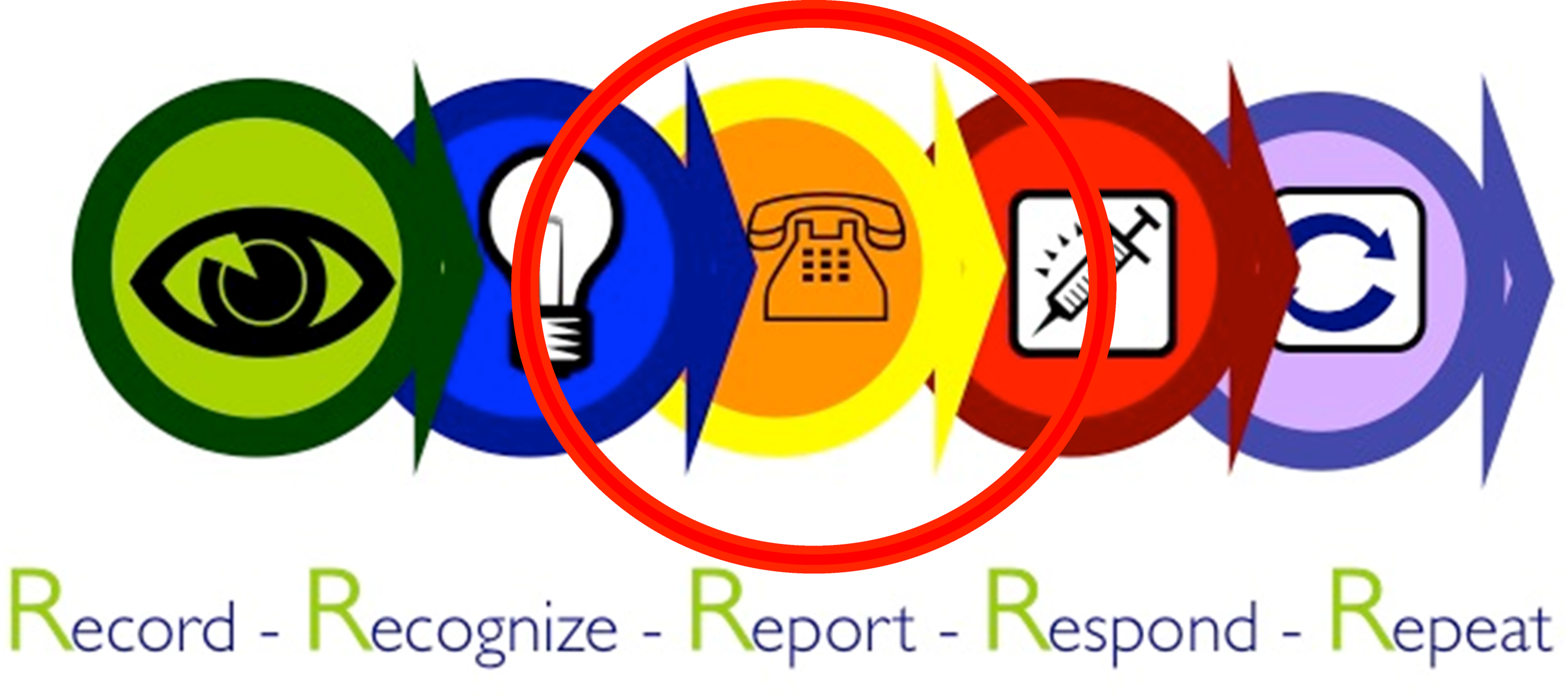
Principles of Rapid Response Systems. The whole ‘chain of survival’ is usually delivered by health care professionals. Patient Activated Rapid Response allows patients to recognise and report abnormalities in their healthcare status. The red circle indicates that recognition and reporting of abnormalities can be supported by patients.
Internationally these types of services are variably labelled as Rapid Response Systems, Critical Care Outreach Services and Medical Emergency. While there is good evidence for clinical impact, 6 there is also a strong body of evidence that documents that failure to escalate (often labelled in the literature as ‘afferent limb failure’) is not uncommon.7,8
Patient activated rapid response
As outlined above there is strong evidence that even when patients or carers report concerns to their primary healthcare teams, appropriate escalation can at times be delayed or not forthcoming at all leading to adverse patient outcomes. Subsequently, the role of the patient and their family has been increasingly recognised as a key contributor in recognising and responding to patient deterioration. 9
The International Society for Rapid Response Systems has recommended to report PARR as part of institutional quality metrics including the number of calls from patients and families as a proportion of the overall number of calls. 10
There is a caveat in that critically ill and deteriorating patients might be too sick to express concerns, whereas family and friends are much more likely to raise awareness of possible deterioration. Not only do they know patients best, they appreciate what is normal for them and what is abnormal behaviour and they are also more invested in ensuring that the patient gets the best possible outcome. 11
Patient activated response systems or patient and family activated escalation systems allow patient or family members to trigger an escalation in care outside of the parent team that is looking after the patient on the ward and independent of the consent of the healthcare professional caring for the individual (Figure 1).
For most models of PARR alarms are raised by patients and family members through a dedicated telephone number for the Rapid Response Team of indirectly through a switchboard/operator function. This escalation results in the attendance of an individual, or team of individuals who are capable of assessing the patient, initiate therapeutic interventions and involve health professional with advanced life support skills if needed. 9
PARR has been established in response to adverse events in a number of health systems. The adverse events did often affect children (Ryan's Rule, 12 The Lewis Blackman Act 13 ) or resulted from a generic insight that patients’ voices had to be supported especially if coming from disadvantaged communities such as ‘Kōrero mai’ (‘Speak to Me’) 14 in New Zealand.
The evidence for impact of involving patients and family in activating RRS is still emerging. 15 Epidemiological research suggests that in hospitals that are using PARR numbers of calls by patients and family members are small, even in systems with a long establish tradition or a legal requirement.9,16 Calls are more often from families and friends than from patients. The literature suggests that most calls by patients and families raise justified clinical concerns about deterioration. The second most common underlying reason for calls is a breakdown in communication with the patient's primary team. Prior to implementation concerns about ‘nuisance’ calls are common, but these seem rarer in clinical practice.
How would we know if PARR works?
The literature on Patient Activated Rapid Response focuses predominantly on feasibility and qualitative data reflecting the experience of patients and clinicians.11,16
While the concept democratises escalation of care and potentially lowers the hierarchy gradient between patients, families, and staff it is less clear how this translates into changes in organisational culture or indeed clinical outcomes: From our understanding of the literature there are no published studies evidencing effectiveness through reduction in the number of preventable deaths, cardiac arrests or intensive care admissions.
Data on patient satisfaction and staff satisfaction is limited to qualitative studies.
While the availability of the service can clearly be life saving for individual patients and a major reassurance for families it is not known whether the service model is effective, efficient, equitable, or value for money.
Exploring PARR with patients
As part of an expansion of a local PARR the authors undertook a service evaluation in April 2023 at a University affiliated district general hospital in Bangor. The service had been available to patients discharged from Intensive Care for 12 months and to patients from a single ward for four months
We used an epistemological approach where we empathised with the patient's world and tried to understand the reasons how they experience their hospital stay and the PARR. It was our hope to appreciate everyday patient experiences in all their complexity and in the context of an acute hospital admission. 17
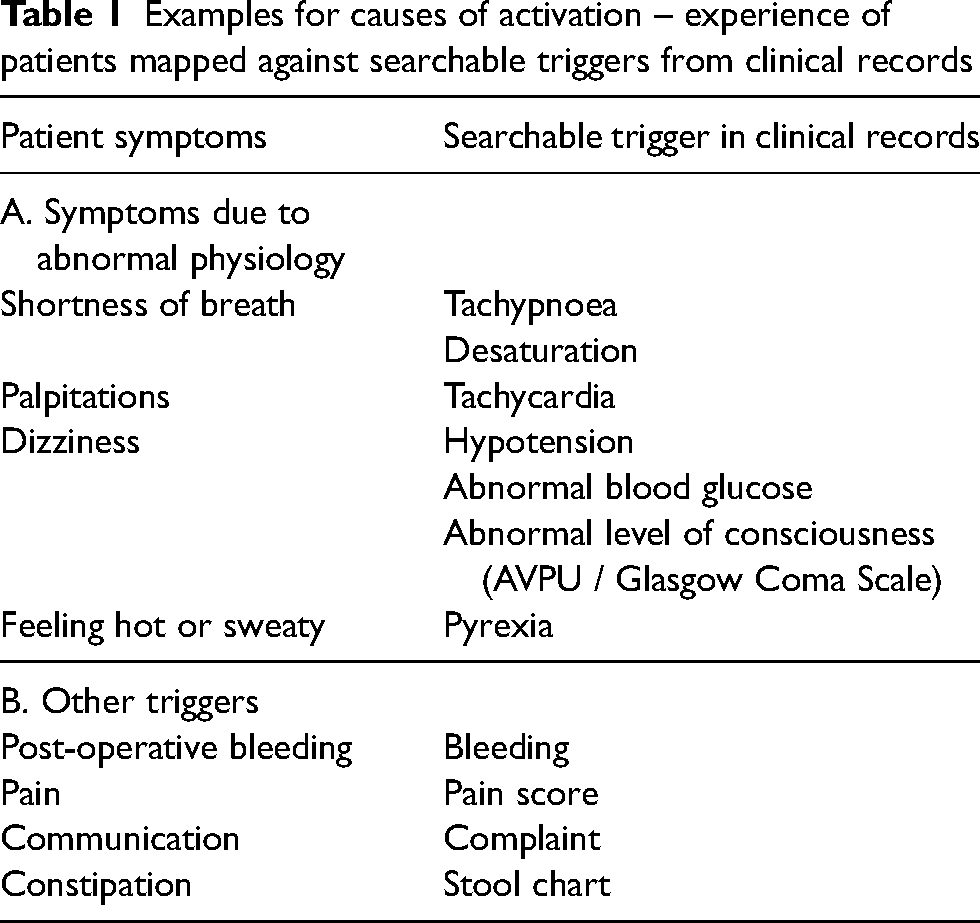
We undertook semi-structured interviews with a small group of inpatients who had received a leaflet with information about the RRS following a discharge from the intensive care unit (ICU) to a medical or surgical ward. Questions were grouped around four broad categories for calling a Rapid Response 15 : clinical deterioration, communication breakdown, concerns related to care and error. Information from the patients’ clinical records was extracted to provide clinical context. This allowed us insight into the patient experience and helped our understanding of factors that might improve the functioning of the system. Patient's notes were used to label and classify when patients could have used the PARR. We used an iterative list of potential or likely opportunities for patient concern and escalation based around data that could be retrospectively retrieved from records such as significant physiological abnormalities such as values of the National Early Warning Score (NEWS) ≥ 3, pain scores ≥ 4, excessive bleeding and raised temperature ≥ 38°C (Table 1).
Examples for causes of activation – experience of patients mapped against searchable triggers from clinical records
The data from interviews was supplemented with information from clinical records of patients who had received information about PARR and had recently been discharged from hospital and information from previous calls that had been logged in a unit data base.
Only one person out of the interviewed patients had used the RRS: It was a relative who had activated the PARR. The relative was a staff member who knew how to use the system.
Insights
A thematic analysis according to the approach from Braun and Clarke 18 was used to analyse the interviews. The following themes were identified:
Feeling safe: Having a system available like the RRS did make patients feel safer. All interviewed patients voiced that the presence of the system did make them feel ‘more heard’. It gave them a reassurance, even when they were not using it, to know that either they or a relative could use it. They appreciated the ability to give their input into their own care.
Understanding the function of PARR: Interviewed patients who remembered getting the leaflet, understood that the RRS might be helpful if they were concerned about their care. One patient linked his knowledge about his care to his good understanding of the medication he needed. Despite the lack of use of the RRS, some patients could not imagine any reasons not to use the system, except for the fact that they did not feel sick. In fact, reasons such as feeling unsafe, being unsure of how things (in terms of care) are going and needing more care, were volunteered by patients, when asked in what situations they would use the system.
Trust in nurses: Every interviewed patient except for one indicated that they had a good relationship with their ward-team and with their family. Some mentioned being able to ask questions and getting satisfactory answers, while emphasising that the health care professionals are the experts: ‘The nurses are brilliant.’
Concern about safety: Thoughts were expressed about the difficult working conditions of nurses and their ability to still being able to take good care of patients. When asked to explain the ‘difficult conditions’, a patient mentioned the fact that (non-)surgical patients and noisy patients with dementia were amongst the patients on this surgical ward. This had an impact on the patient's perception of safety. The patient stated: “Safety aspects at the hospital scare me, mostly due to the conditions the nurses have to work in. … It raises concern because different patients are mixed on the wards.”
Protecting the nurses: When asked why they would not be using the RRS one patient stated: “I don’t want to fail the nurses.” The patient repeatedly said that he didn’t want to come across as being unpolite when calling. The patient also mentioned not wanting to be a burden, since the nurses already were very busy with their work.
Mental status post-ICU: Patients expressed a need of spreading more awareness around rapid response systems and their use. In the current practice, patients are informed about the RRS during their discharge from the ICU to the ward. Transition from Intensive Care was reported as stressful and confusing for patients. This might affect their ability of processing information they receive: One patient couldn’t recall getting the information because at the time of discharge, he was delirious and confused. His family had not mentioned anything about getting the leaflet either.
Timing of information: A need for receiving information early during the course of an admission was expressed as follows: “It would be more helpful to get the information beforehand, such as in preop (pre-operative clinic).” Another patient suggested inclusion in admission information: “This will make it easier for the patients to use the system, because they will understand that it is a ‘normal’ thing to do.”
Towards a framework for evaluating patient activated rapid response
The challenge of measuring effectiveness and efficiency of PARR is in analogy to early studies on Rapid Response Systems: reduction in adverse outcomes becomes only measurable at system level if number of adverse events are well reported, the number of preventable events is significant, and the service is used. The dose of callouts to rapid response teams, the Medical Emergency Team ‘MET dose’ 19 needed to be raised as a necessary condition for demonstrating impact.
Callouts of Rapid Response teams are usually in response to either significant abnormalities in physiology such as vital sign recordings or concern of staff. From this a framework for metric for PARR could be derived: In a perfectly working system escalation would occur every time physiological parameters deteriorate or either the patient or staff member is concerned about other aspects of care (Figure 2).
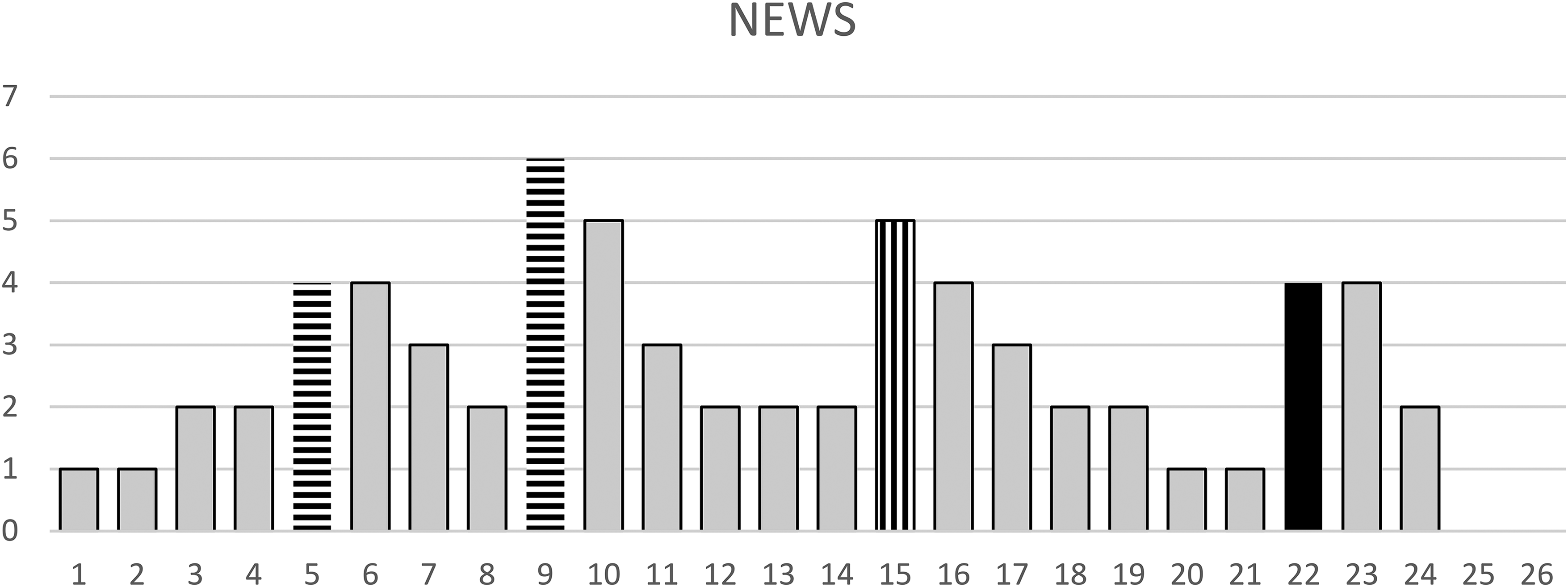
Case study: Opportunities for escalation through abnormal Early Warning Scores. A patient reaches a new elevated NEWS score on 4 occasions. Activation of the RRT by nurses are highlighted in horizontal stripes, activation by the patient in vertical stripes and failure to activate in solid black.
The effectiveness of the overall system could then be described as the number of actual escalations divided by the number of escalation opportunities: In the example below a patient triggers with abnormal vital signs four times during a 24 h period, on two occasions staff activates the RRT, on one occasion the patient activates, on one occasions nobody activates. This would mean that 75% of opportunities for escalation were used, but the patient used only half of the opportunities where staff did not escalate. In a healthcare system with flat hierarchies and trust of patients in the system this number of ‘failure to escalate’ opportunities should be low.
Metrics for PARR can further be analysed in the broader context of the Quadruple Aim 20 : In the context of failure to rescue a PARR needs to be measured against outcomes of population health, patient satisfaction, staff satisfaction and cost per unit of care (Figure 3). It would be the expectation of the authors that the number of cardiac arrests would be reduced, costs from delayed admission to Intensive Care would be drop and patient satisfaction and measures of patient reported outcomes (PROMS) would improve. While flatter hierarchies can improve staff wellbeing and organisational performance 21 it is expected that a transition to a model with more shared decision making 22 could – like most change - at least initially increase staff anxiety and insecurities.
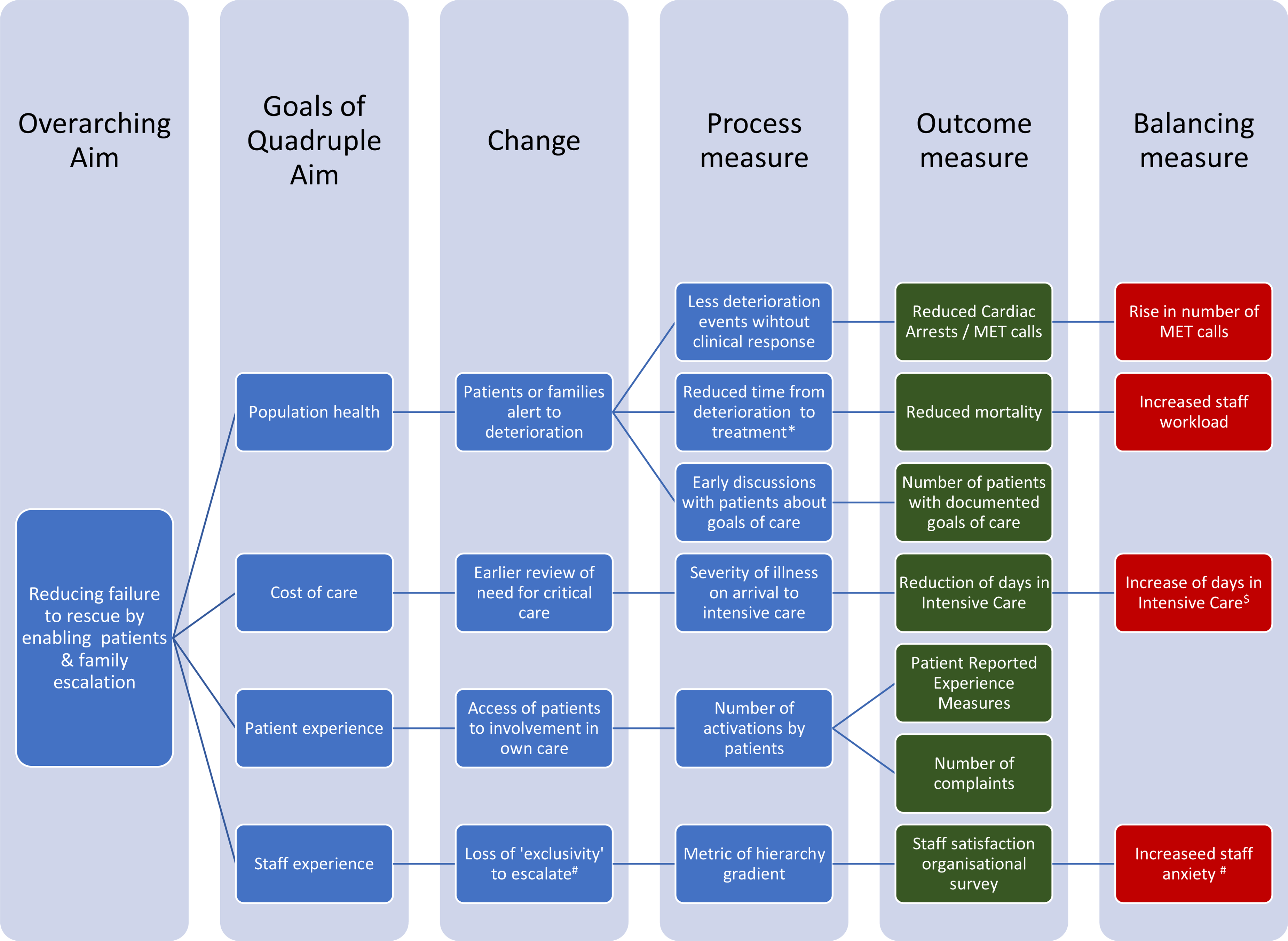
Prevention of Deterioration and PARR mapped against the quadruple aim. *Time to treatment is a metric derived from the international consensus conference 23 and can include time to admission to intensive care (‘Score-2-Door’ time). 24 MET: Medical Emergency Team calls – urgent calls of a team to deteriorating patients. $Usage of Intensive Care might increase with more escalation events. #Staff anxiety is a balancing measure. While some staff might cherish the support from patients others might feel threatened.
Discussion
In this paper, we have outlined the rational and functioning of PARR based on the experience from services in the US, UK, Australia, and New Zealand. Our exploration with patients identified important barriers to the function of PARR:
Some of the patients were sick, and probably still delirious: despite documented evidence that they were informed about the service they had no recollection.
Patients were concerned of undermining nursing staff: even if patients are willing to describe failure in care in personal conversation, they reported that escalating through a patient activated rapid response call could feel like undermining of the nursing staff. This requires further exploration into the optimum design of the system.
Research into the implementation of safety intervention is thin on data about health literacy of both staff and patients, 25 while health needs are usually biggest in patients with low health literacy: Patients and families have often a clear feeling that signs and symptoms that they experience are not good, but they might lack the ability to translate this into actionable clinical data for healthcare professionals. Any intervention does therefore need to be tested against metrics of health literacy and adapted to allow the largest possible number of patients equitable access.
PARR would appear to be a feasible response to the challenges identified by Ockenden 3 and other inquiries. Beyond the clinical feasibility an ethical imperative of equitable access to escalation in and out of hospital would seem a strong argument for the implementation. Optimising communication with patients, families and clinicians would seem central to optimise the impact of PARR.
Behavioural psychology has identified a number of barriers and enablers to changes in behaviour. In order to increase impact of the service a number of mechanisms were suggested by interviewed patients and would seem feasible for future testing:
Choice of messenger: asking staff in pre-operative clinics or the nurse who welcomes a patient onto the ward relaying information about availability of the service might be more effective than a member of a rapid response team or administrative staff. Normalisation: it is important for the framing of the intervention that it is clear for patients that ‘this is the way we work here.’ Asking patients to test the service and run through a scenario in the way that airlines perform the safety briefings on board of passenger planes might be one way of ‘normalising’ PARR. Standardisation: A national number in analogy to ‘999’ for emergency calls in all hospitals or a country would facilitate promotion of the service and spread. As one patient representative articulated:
“Everybody should be allowed to call for help – even in hospital”
Conclusions
Patient activated Rapid Response (PARR) is an intervention with international examples that might represent a solution to findings from a number of recent UK inquiries. Current challenges to effectiveness of PARR might stem from the trust of patients in the system and their ability to activate it during times of acute illness.
PARR should be considered in areas of care such as maternity care (as per the Ockenden inquiry): The authors would suggest a distinction between preventative measures like PARR and restorative or learning measures such as investigations where patient/family empowerment may require fully independent advocacy.
While the International Society for Rapid Response Systems has recommended to report PARR as part of institutional quality metrics further refinement might be required to drive clinical impact and design of future research.
Footnotes
Declaration of conflicting interests
The authors declared no potential conflicts of interest with respect to the research, authorship, and/or publication of this article.
Funding
The authors received no financial support for the research, authorship, and/or publication of this article.