



Abstract
Analyses that reveal how treatment effects vary allow researchers, practitioners, and policymakers to better understand the efficacy of educational interventions. In practice, however, standard statistical methods for addressing heterogeneous treatment effects (HTE) fail to address the HTE that may exist within outcome measures. In this study, we present a novel application of the explanatory item response model (EIRM) for assessing what we term “item-level” HTE (IL-HTE), in which a unique treatment effect is estimated for each item in an assessment. Results from data simulation reveal that when IL-HTE is present but ignored in the model, standard errors can be underestimated and false positive rates can increase. We then apply the EIRM to assess the impact of a literacy intervention focused on promoting transfer in reading comprehension on a digital assessment delivered online to approximately 8,000 third-grade students. We demonstrate that allowing for IL-HTE can reveal treatment effects at the item-level masked by a null average treatment effect, and the EIRM can thus provide fine-grained information for researchers and policymakers on the potentially heterogeneous causal effects of educational interventions.
Keywords
Analyses that explore heterogeneous treatment effects (HTE) are increasingly becoming standard in education research, as understanding how and why treatment effects vary is critical for the translation of academic research to the implementation of educational interventions (Schochet et al., 2014, p. 1). Traditional methodological approaches to HTE such as subgroup analysis, moderation (i.e., statistical interaction), reweighting for generalization, mediation, instrumental variables estimation, and quantile regression all provide critical insight into the potentially varying impacts of an educational intervention but ignore the most fine-grained perspective on how treatment effects may vary within an outcome measure itself. In this study, we aim to expand the analyst’s HTE tool kit by proposing and testing a novel application of the explanatory item response model (EIRM; De Boeck & Wilson, 2004) for assessing what we term “item-level” HTEs (IL-HTE). That is, treatment effects may differ not just between demographic subgroups or according to some baseline characteristic such as pretest scores, as in traditional HTE analysis, but across the various items of an outcome measure, such as an educational assessment, manifested by treatment effects that vary at the item level. This methodological gap can be addressed with the EIRM because it models individual item responses directly rather than as a single summary value such as a sum score or IRT-based ability estimate, thereby allowing researchers to assess the presence of IL-HTE and to quantify its explained and unexplained sources.
The EIRM has been applied primarily to psychometric research questions such as the relationship between person or item characteristics and item response patterns (see, e.g., Kim et al., 2010, which uses an EIRM to assess the predictors of letter-sound acquisition in an observational study). However, the EIRM has seen less application in causal inference contexts despite its theoretical appeal and its ability to combine measurement (i.e., psychometric) and explanatory (i.e., regression) models into a single computational procedure (Briggs, 2008; Christensen, 2006; Rabbitt, 2018; Zwinderman, 1991), and we are aware of no methodological or empirical studies to date that employ the EIRM to explore IL-HTE. By explicitly modeling IL-HTE using the novel approach presented in this study, and in some cases, uncovering statistically significant item-level treatment effects masked by a null average treatment effect (ATE), the EIRM allows researchers to gain more fine-grained insight into the efficacy of educational interventions. This fine-grained insight in turn allows researchers to contextualize and interpret impact analyses in ways that are more actionable for practitioners and policymakers and ultimately supports the goal of more targeted diagnosis and intervention to support student learning outcomes.
This study introduces a general approach for conducting IL-HTE analysis within the context of a large-scale, cluster-Randomized controlled trial = RCT (cluster-RCT) that involved third-grade students from every K–5 elementary school in one of the largest school districts in the United States (k = 110 schools and n = 7,797 students). The RCT tests the efficacy of the Model of Reading Engagement (MORE) intervention, which emphasizes thematic lessons that provide an intellectual framework for building domain knowledge to help third-grade students connect new learning to a general schema and to transfer their learning to novel reading comprehension tasks (see Kim et al., 2021; Kim et al., 2022, for a detailed description of MORE and prior research results). In the MORE intervention, the general schema for the concept of systems (i.e., how systems function properly) were introduced through a 12-day science lesson sequence focused on the topic of human body systems. All schools implemented the 12-day lesson sequence on human body systems and were randomly assigned to implement two additional lessons that involved either a double dose of science vocabulary and concepts through a read aloud text on the human body system and stem cells (control) or social studies extension lessons on collaborative systems focused on how leaders worked together in the Apollo 11 moon mission (treatment). That is, the RCT aimed to test the hypothesis that students could leverage the general schema for system through repeated exposure to a science topic (i.e., human body systems) and brief exposure to social studies topic (i.e., collaborative systems) while reading unfamiliar science and social studies passages to demonstrate learning on an online reading comprehension assessment.
The online assessment included three reading comprehension passages and was administered electronically to all third graders in the study. Following the intervention implementation, we provided superintendents, principals, and teachers with detailed item- and passage-level information from the assessment. Here, we extend the descriptive analyses provided to participants by statistically evaluating IL-HTE to assess potential transfer effects on reading comprehension, thus illustrating how a novel application of the EIRM can provide immediate, fine-grained, population-level evidence of causal impact and can potentially help decision-makers diagnose and intervene to support students before the administration of the end-of-grade three reading test, used for high-stakes accountability purposes (i.e., threat of grade retention and required summer school). The full assessment is available in the Online Supplemental Materials (OSMs).
Methodologically, we pursue two aims. First, a data simulation to assess the performance of the EIRM in the presence of IL-HTE and the related conceptual issues that arise, and second, an application of the EIRM to empirical educational assessment data from the MORE intervention. A replication tool kit is available from the authors for researchers interested in replicating or extending the simulation or the analysis of the assessment data.
The EIRM
Because the statistical theory underlying the EIRM has been described extensively in prior literature, we provide only a brief review here. Readers interested in further details about the EIRM are directed to Wilson et al. (2008) for a short introduction, De Boeck et al. (2016) for a recent review, and De Boeck and Wilson (2004) for a book-length treatment. For a detailed review of generalized linear mixed models (GLMMs), of which the EIRM is a special case, see Stroup (2012). For a practical introduction to fitting the EIRM in R with the lme4 package, see De Boeck et al. (2011).
The EIRM is a cross-classified multilevel logistic regression model, in which item responses are nested within the cross-classification of persons and items. In its simplest form with random effects for persons and items, it can be expressed as

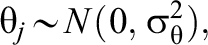
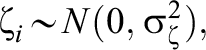
in which the log-odds of a correct response to item i for person j is a function of the average log odds of a correct response (
An important modeling choice when employing the EIRM is the distinction between fixed and random effects for items and persons. In the IRT and EIRM contexts, persons are almost always modeled as random effects, that is, as normally distributed with mean zero and an unknown variance, but analysts may choose between fixed and random effects for the assessment items (De Boeck, 2008). Random effects allow for the estimation of the distributions of item easiness or student abilities. When referencing, for example, item easiness against the standard deviation (SD) of student ability, we can better understand the range of difficulties of the items on the test.
In base form, the EIRM with random person and item effects is called a “doubly descriptive” model (Wilson et al., 2008, p. 95) as it solely provides estimates of the variances of both persons and items without any variables to explain systematic differences in person ability or item easiness. The EIRM becomes “person explanatory” or “item explanatory” when predictors at the person or item level are added to the model or “doubly explanatory” when both person and item-level predictors are included. As such, the EIRM can address research questions at the person level (e.g., do older students have systematically higher probabilities of a correct response) or at the item level (e.g., are items that assess phonological awareness systematically more difficult than items that assess vocabulary), or both (e.g., do male–female performance gaps depend on item type).
The EIRM can also be used to model differential item functioning (DIF; De Boeck et al., 2011, pp. 18–19; Randall et al., 2011), that is, the phenomenon of respondents at the same level of the latent trait demonstrating different response probabilities for a specific item or cluster of items (American Educational Research Association, 2014). Prior EIRM-based DIF analyses have demonstrated gender-based DIF in math assessments (Kan & Bulut, 2014), DIF for students with disabilities (Randall et al., 2011), or “instructional sensitivity” in longitudinal contexts (Naumann et al., 2014), among others. In the context of this study, IL-HTE can be conceptualized as uniform DIF, in that each residual item treatment effect represents differential performance between the treated and control groups above and beyond individual student ability (
Modeling Item-Level HTEs
We can model IL-HTE by introducing an interaction between item and treatment assignment in an EIRM through a random slope term. To illustrate, consider the following two models, presented in reduced form:
Model 1—Constant Treatment Effect:

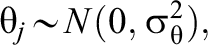
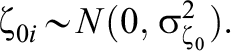
Model 2—IL-HTE:

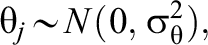
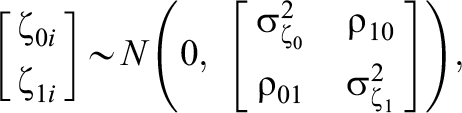
in which
The difference between Models 1 and 2 is the random slope,
While IL-HTE could in principle be modeled with the combination of item fixed effects and treatment by item interaction terms, the fully fixed effects approach is suboptimal for our purposes for several reasons. First, the effects of item characteristics are not estimable when fixed item effects are used because, as item-level covariates, they would be collinear with the item indicators. Second, for a fully fixed effects model, an additional treatment-by-item interaction term would be needed for each item, adding complexity to the model, whereas the random effects model includes a single variance component for the treatment effect (i.e., the random slope) and is therefore more parsimonious. (One could use a fixed-intercept, random slope formation where the item effects were fixed, but the interaction terms were random, as described in Bloom et al. [2017]; we do not study this possibility here.) Third, the random effects approach provides a direct parameter estimate of the degree of IL-HTE present in the data through variance of the treatment coefficient, a parameter of interest that has no analogue in fixed effects analysis. Fourth, shrinkage provides more stable estimates of the individual item difficulties and item-level treatment effects, an especially important benefit unless dataset sizes are very large. Last, and most important for our purposes, the random effects parameterization better matches our focus on IL-HTE as it explicitly models items as a source of variability due to taking the test items as being (possibly literally) drawn from a pool of potential items.
That is, at a conceptual level, an item fixed effect model does not take the variability of which items are included on a test into account, and therefore the associated uncertainty estimates will be relative to the test-specific estimand of the true ATE across the items in the realized test, rather than across the (possibly hypothetical) population of items that could have been on the test. In other words, when IL-HTE is present, a given draw of items will have its own finite sample ATE that differs from that of the population of items due to sampling error. For example, if the test happens to include items that are more sensitive to the treatment than other items that might have been included, the test-specific estimand would be larger, the point estimate of average treatment impact would tend to be larger, and the fixed-effect estimated standard errors (SEs) would reflect estimation uncertainty relative to the test-specific estimand, not the population average estimand. In contrast, the random slope model that allows for IL-HTE would target the mean treatment effect in the population of items from which a test is (hypothetically) constructed, and the associated uncertainty estimates would incorporate the additional uncertainty of which items are selected for a test administration. The contrast between finite sample and population average estimands in the EIRM is analogous to fixed and random effect estimators for ATEs in multisite trials (Chan & Hedges, 2022; Miratrix et al., 2021, p. 280) or meta-analysis (Skrondal & Rabe-Hesketh, 2004, Chapter 9).
Importantly, the constant effect model, with item random intercepts but no random slopes, directly corresponds to the item fixed effect model. In fact, as shown in Miratrix et al. (2021), the constant effect model estimates a precision-weighted estimand of the item-level ATEs, but so long as each student takes the same test, and all items have equal numbers of observations, the precision-weighted point estimate of the ATE will exactly coincide with that of the fixed-effect model. In other words, ignoring IL-HTE provides inference for the test-specific ATE and ignores any additional uncertainty due to whether the selected test items are representative. If there is substantial IL-HTE, ignoring such uncertainty could be misleading as we generally are interested in the underlying construct being measured, not whether treatment happened to impact students as measured by the specific items selected. Consider, for example, that if researchers could somehow a priori select those items known to be more sensitive to the treatment, they would obtain a larger measured treatment impact as an artifact of the selected items, rather than a truly more effective treatment.
Overall, we argue that item random effects with a randomly varying treatment coefficient are generally the more appropriate choice for modeling IL-HTE. A fixed effect or constant effect model would be preferred when only the finite sample ATE across the specific items of the administered test is of interest, such as when the assessment has a fixed set of items across replications, and these items are viewed as fully encompassing the scope of what is being measured.
Monte Carlo Simulation
To illustrate the ability of the EIRM to account for IL-HTE, we first conduct a simulation comparing our two base modeling approaches across a range of contexts. We generate data from our IL-HTE model with normally distributed error terms and no correlation between item easiness and item-level treatment impact. We fixed the number of subjects at 500 and the number of items at 20 and explored the combination of two varying simulation factors: (1) the ATE size on the logit scale (0 and 0.4) and (2) the SD of item-level treatment effects (0 for no HTE, 0.2 for moderate HTE, and 0.4 for high HTE). Thus, we employed a 2
Empirical Assessment Data
For our empirical application, we examine the intention-to-treat impact of the MORE intervention on third-grade reading comprehension from a cluster-RCT. Our data, collected in the 2021–2022 school year, consist of 110 schools randomly assigned to treatment and control from a large urban district in the southeastern United States (N = 7,797 students). We examine dichotomous (correct/incorrect) student responses on a researcher-designed reading comprehension assessment containing 30 multiple-choice items based on three reading passages representing varying degrees of transfer from the MORE curriculum, and all students received the same set of items. The assessment was administered online at the end of the MORE intervention, but prior to the high-stakes end-of-year state test.
In this study, learning transfer was conceptualized along a continuum from near transfer to far transfer (Barnett & Ceci, 2002). Accordingly, we developed a transfer assessment of science content reading comprehension to measure third graders’ ability to comprehend texts about topics related to the schema for how living systems function properly and how leaders in social systems support scientific innovations. In particular, the MORE science lessons delivered to all students focused on the specific topic of the skeletal, muscular, and nervous systems of the human body. The social studies extension lessons provided only to treatment students discussed the development of the Apollo 11 Moon Mission. Transfer was defined by the number of explicitly taught domain specific vocabulary words contained in each passage, in that the near-transfer passage contained seven explicitly taught vocabulary words, mid contained four, and far contained none. The three reading passage topics included scientists studying monkey hearts (near transfer; seven taught vocabulary words), the exploration of Mars (mid transfer; four taught vocabulary words), and the search for the Titanic (far transfer; no taught vocabulary words). Thus, we predicted that the near transfer passage would be relatively easier than the mid and far transfer passages for all students due to the presence of fewer untaught vocabulary words.
The primary substantive research aim of this analysis was to understand whether students could leverage the general schema for system in comprehending novel passages related to social studies topics after learning about various human body systems. Thus, we hypothesized that control students, who received a double dose of science lessons, and treatment students, who received two social studies extension lessons, would perform equally well on the near transfer items with only science concepts. Furthermore, if treatment students could successfully leverage their general schema for system developed through the social studies extension lessons while reading the mid and far transfer passages, we hypothesized that treatment students would potentially outperform control students on mid and far transfer items. While findings from a previous RCT involving a similarly structured assessment with second-grade students demonstrated the largest treatment effects on the near transfer items among students who were assigned to receive MORE lessons compared to business-as-usual controls (Kim et al., 2022), we hypothesized that the intervention impacts of this study be instead most pronounced on the mid and far transfer passages, because these passages contained social studies concepts that only treatment students were exposed to. Furthermore, because the topic of the mid transfer passage (i.e., the exploration of Mars) was closely conceptually related to the content of the social studies extension read aloud lessons provided to the treatment students (i.e., the Apollo 11 Moon Mission), we predicted the largest treatment effects on the mid transfer passage.
The psychometric properties of the assessment, including IRT item characteristic curve plots, exploratory factor analysis (EFA) scree plots, confirmatory factor analysis (CFA) fit statistics, and additional descriptive statistics, are presented in the OSMs. One item was removed due to poor functioning (i.e., a negative discrimination parameter) in a two-parameter logistic (2PL) IRT analysis, resulting in 29 items retained for the analyses presented here. Internal consistency was estimated at 0.80, and EFA provided strong evidence of unidimensionality, with the first factor explaining far more total variance than subsequent factors, and fit statistics for the unidimensional CFA model were strong (Comparative Fit Index = 0.94, Tucker-Lewis Index = 0.94, root mean square error of approximation = 0.031, and standardized root mean squared residual = 0.025), suggesting that the application of the unidimensional EIRM is justifiable.
We fit four EIRMs to the data, modeling the probability of correct response to item i for student j in school k, presented below in reduced form:
Model 1—MORE Assessment EIRM 1, No IL-HTE:

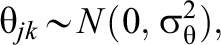
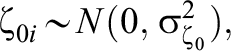
Model 2—MORE Assessment EIRM 2, Randomly Varying IL-HTE:

Model 3—MORE Assessment EIRM 3, Systematically and Randomly Varying IL-HTE:

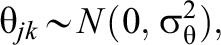
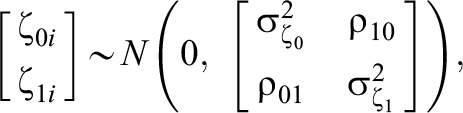
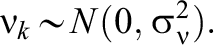
Model 4—MORE Assessment EIRM 4, Systematically Varying IL-HTE:

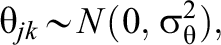
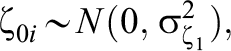
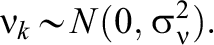
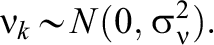
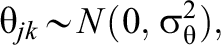
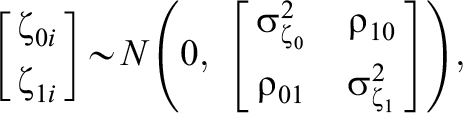
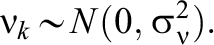
All EIRM parameters are interpreted analogously to those of the simulation models described earlier, with addition of the subscript k indexing school membership, a random intercept for school (
Results
Monte Carlo Simulation
The results of the simulation reveal first that the point estimates for ATEs for the constant (i.e., finite sample) and IL-HTE (i.e., population) models are nearly identical (r = 0.999) and that the bias associated with the treatment effect parameter
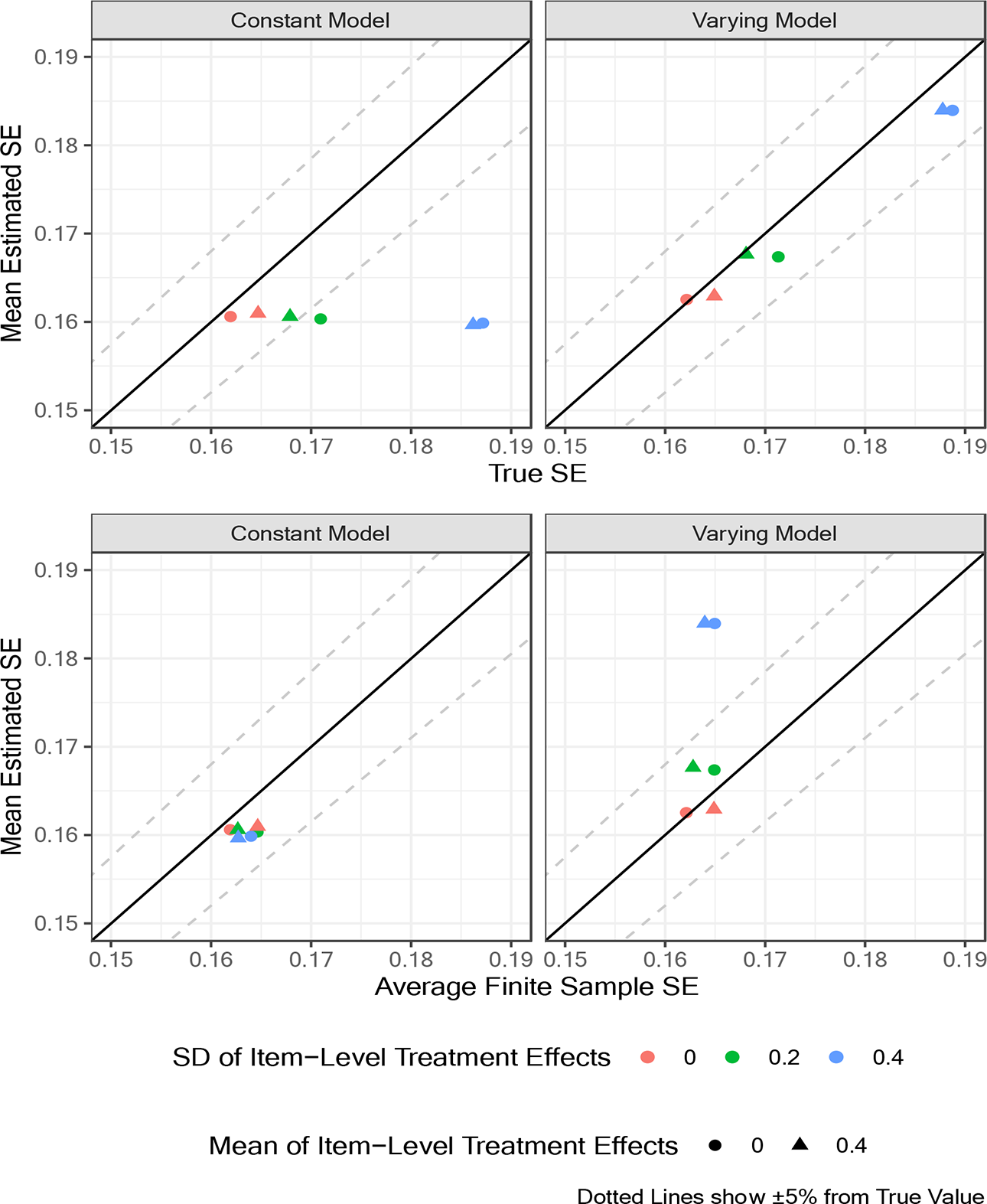
Comparison of estimated and true standard errors of explanatory item response models with and without item-level heterogeneous treatment effects. Top: Item population estimand. Bottom: Test-specific (i.e., finite sample) estimand.
However, when we instead compare the average estimated SEs to the SD of the point estimates with respect to the finite sample ATEs (equivalent to the true finite-sample SEs averaged across the different sets of simulated test items), as shown in the bottom panel of Figure 1, we clearly observe that the estimated SE of the constant treatment effect EIRM is better calibrated, regardless of the level of IL-HTE. Therefore, the choice to allow IL-HTE in an EIRM is both a statistical issue that can be investigated empirically, and a substantive concern regarding whether to view the test being used as a representative sample of an item bank describing the latent construct of interest, and researchers should consider what estimand they intend to target when selecting a modeling strategy.
Proceeding under the assumption that the ATE in the population of items is the estimand of interest, the practical effect of ignoring IL-HTE when it is present is depicted in Figure 2, which provides the estimated false positive rates for each estimation method at each level of IL-HTE. The false positive rate increases for the constant effect EIRM as IL-HTE rises, whereas the false positive rates are indistinguishable from the nominal value of 5% when the treatment effect is allowed to vary at the item level, indicating that ignoring potential IL-HTE provides unrealistically precise estimates of ATEs, with systematically underestimated SEs and invalid hypothesis tests. These findings are consistent with prior simulation studies on the importance of including random coefficients in mixed-effects models more generally (Bell et al., 2019, pp. 1062–1065). Finally, though the simulation models are simpler than the empirical models, supplementary analyses in the OSM indicate that the pattern of findings is essentially identical when the data generating process is based on a cluster randomized trial that includes a student-level pretest covariate, an item-level predictor, and HTE at the cluster level (though SE calibration appears worse for all models in the cluster randomized context), suggesting that the general pattern of results presented here is likely to generalize to other data analytic settings.
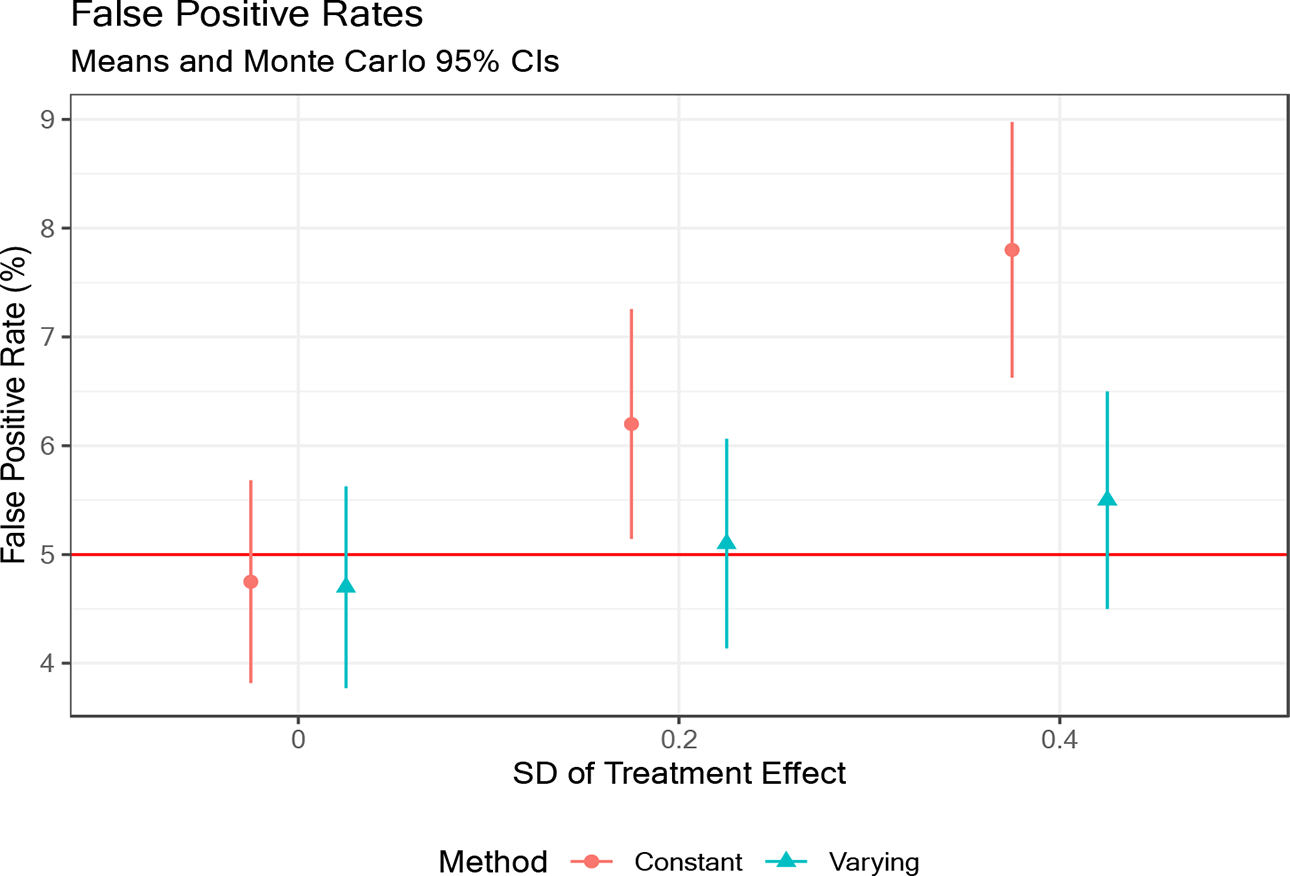
Comparison of false positive rates by method based on the true level of item-level heterogeneous treatment effects. Note. Confidence intervals for the false positive rates were calculated using the standard formula for the standard error of a proportion,
Application to Empirical MORE Assessment Data
The results of the four EIRMs applied to the MORE intervention data are summarized in Table 1. Model 1 shows that the average MORE treatment effect across all reading comprehension items (assuming that item-level treatment effects are constant, i.e., the finite sample ATE) is positive but not statistically significant (
Results of Explanatory Item Response Models Fitted to the Model of Reading Engagement Reading Comprehension Assessment Data
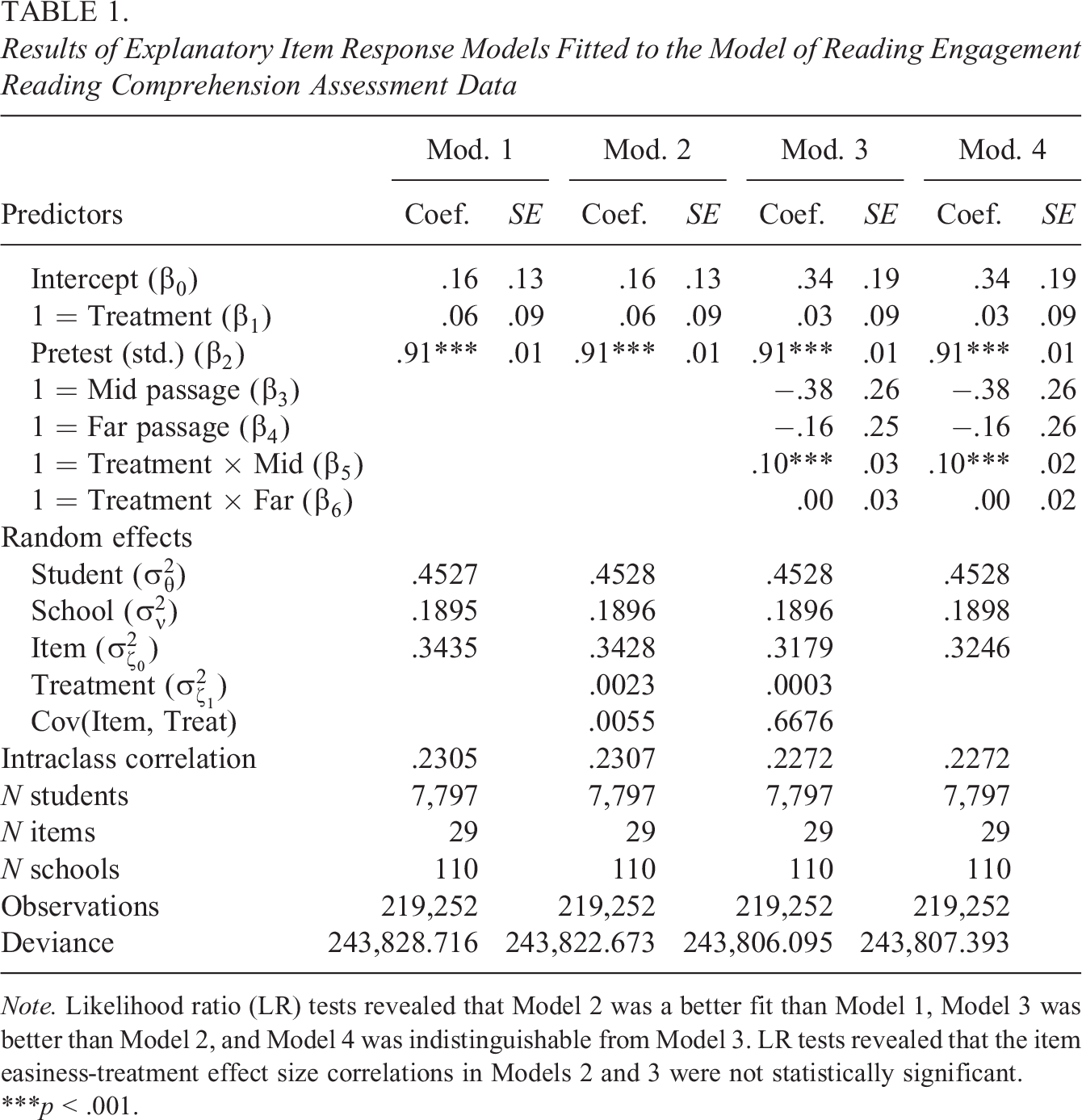
Note. Likelihood ratio (LR) tests revealed that Model 2 was a better fit than Model 1, Model 3 was better than Model 2, and Model 4 was indistinguishable from Model 3. LR tests revealed that the item easiness-treatment effect size correlations in Models 2 and 3 were not statistically significant.
***p < .001.
Model 3 tests the hypothesis that item easiness and treatment effects systematically depend on the passage type by including both passage main effects and treatment by passage-type interaction terms. The main effects of passage type in Model 3 confirm that the mid and far transfer passages were slightly more difficult than the near transfer passage (for control students), as expected, but these differences are not statistically significant. Results show that while the treatment effects on the near and far transfer reading passages are not distinguishable from zero, items from the mid transfer passage show a significantly larger ATE than the other passage types (
Finally, and with the caveats about cross-model comparisons of variance components in the logistic context in mind (Hox et al., 2017, pp. 121–128), we see that when comparing Model 2 to Model 3, the main effects for passage type (
A visualization of the randomly varying item-level treatment effects of Model 2 are displayed in the top panel of Figure 3, in which the dashed red line shows the ATE, and the points show item-specific treatment effects and 95% confidence intervals on the logit scale and are color coded by passage type. Forecasting the results of Models 3 and 4, we can see that the mid transfer item-level treatment effects (green points) are concentrated on the high end of the treatment effect distribution. The bottom panel shows the population average probabilities of a correct response as a function of subtest passage type and treatment status based on Model 4, confirming that the average treatment-control difference is largest on the mid transfer passage on the probability scale.

Model-implied item- and subtest-level treatment effects. Top: Randomly varying item-level treatment effects color coded by subtest passage derived from Model 2. Bottom: Population average probabilities of correct response by subtest passage type and treatment status derived from Model 4. Note. The confidence intervals of the random slope residuals were calculated using the normal approximation of ±1.96 times the posterior standard error. This figure should be taken as somewhat approximate, as due to the shrinkage of the empirical Bayes estimate, coverage is not guaranteed. Under a fully Bayesian model, these could be interpreted as posterior intervals; given a large sample size, this approximation will generally be good. When the potentially outlying item Mid-2 is removed from the analysis as a sensitivity check, we find that the treatment by mid transfer passage interaction effect is slightly smaller in magnitude but still statistically significant in Models 3 and 4, but the random slope for treatment is no longer significant in Model 2.
Discussion
Solely examining the average effect of an educational intervention may provide an incomplete picture of the efficacy of that intervention. A traditional statistical approach to examining HTE such as moderation or quantile regression attempts to explain variation in treatment effects as a function of person-level characteristics, as in moderation analysis, or the location of a subject in the conditional outcome distribution, as in quantile regression. While such methods are widely used and highly valuable, they ignore the potential HTE that may exist within an outcome measure itself. In contrast, the EIRM provides the ability to explore HTE from a new perspective, namely, the item level. Because the EIRM models all individual item responses directly, researchers can empirically estimate how much IL-HTE exists in the data by specifying a randomly varying item-level treatment effect in the model. Researchers can subsequently explore to what extent treatment by item-characteristic interactions systematically explain the IL-HTE, and conversely, to what extent IL-HTE remains unexplained. Furthermore, the estimates of the correlation between item easiness and treatment effect size may be of substantive interest to practitioners and applied researchers in understanding how an intervention affects student learning outcomes.
The results of this study clearly reveal several practical benefits to using the EIRM to model IL-HTE in practice. First, the simulation results show that even when IL-HTE is not present, allowing for them in the model does not materially affect the point estimates or SEs of the ATE, as (a) the correlation between the point estimates for the two methods was near perfect (r = 0.999), (b) the bias associated with the treatment effect parameter
Limitations and Future Directions
While the potential value of examining IL-HTE through the EIRM is clear, the encouraging results of this study may be tempered by its simplifying assumptions. For example, the EIRM is typically estimated under the constraints of the 1PL or Rasch model, in which all items are equally correlated with the latent trait. While the data generating process of this simulation was based on a 1PL model, a 1PL approach may not be appropriate for educational assessments in which items vary in their discriminations as well as their difficulties. Advances in estimation methods such as profile-likelihood (Jeon & Rabe-Hesketh, 2012) have enabled exploration of the 2PL EIRM that models item discriminations as either fixed quantities to be estimated, as in the mirt (Chalmers, 2012) or PLmixed (Rockwood & Jeon, 2018) R packages and the gllamm Stata program (Skrondal & Rabe-Hesketh, 2004), or as random variables to themselves be explained by the predictors in both frequentist (Cho et al., 2014; Petscher et al., 2020, using Mplus) and Bayesian paradigms (Bürkner, 2019, using R’s brms). However, sensitivity analyses based on a 2PL data generating process presented in the OSM demonstrate that varying item discriminations have no impact on treatment effect bias, false positive rates, or statistical power but do result in slightly less accurate SEs (though still within approximately 5% of their true values). Therefore, the 1PL EIRM appears robust to this type of misspecification, which is an important finding given that the 2PL EIRM has been demonstrated to suffer from accuracy issues (Zhang et al., 2021). Similarly, the same unidimensionality and local independence assumptions of traditional IRT analysis also apply to the EIRM, and as such either the preliminary use of EFA before EIRM analysis (Petscher et al., 2020, pp. 15–16) or the use of the multidimensional EIRM (De Boeck & Wilson, 2014) is recommended. Furthermore, the application of the EIRM to nondichotomous item responses would extend the utility of the EIRM to more diverse assessment contexts (Bulut et al., 2021; Stanke & Bulut, 2019). We also find that the EIRM requires relatively large sample sizes and highly variable treatment effects for meaningful IL-HTE analysis, as additional simulations to determine statistical power presented in the OSM indicate that 80% power for detecting IL-HTE under individual randomization is only achieved with at least 300 subjects, 20 items, and a large treatment effect SD of 0.40 logits, and as such is best suited for the analysis of relatively large data sets. 3
An additional challenge of the application of the EIRM involves the interpretation of the coefficients of the fitted models. In contrast to a more familiar sum score, mean score, or standardized effect size, all but the most statistically literate practitioners are unlikely to have well-developed intuitions for the substantive meaning of treatment effect coefficients on the logit scale or the interpretational subtleties of logistic regression more generally (Mood, 2010), issues that are compounded in the EIRM context by the difference between population-averaged (marginal) and cluster-specific (conditional) effects introduced by the cross-classified person- and item-level random effects of the parameterization (Austin & Merlo, 2017). As such, we suggest the following two approaches to make the EIRM results more interpretable. First, the fitted models can be used to estimate population-averaged response probabilities (e.g., using the ggeffects R package described in Lüdecke, 2018), as depicted earlier in the bottom panel of Figure 3, representing overall treatment-control contrasts on the probability scale that may be more interpretable to stakeholders such as parents, teachers, or school leaders, showing a small but statistically significant treatment effect of 3.1 percentage points on the mid transfer passage items. Similar alternative metrics to facilitate communication to nontechnical audiences include relative percentile ranks, conditional probabilities of a correct response compared to a specified baseline (e.g., 50%), or odds ratios, depending on the intended audience. Second, analysts can convert the EIRM treatment effect coefficient to a Cohen’s d type effect size by the process of “y-standardization” (see Breen et al., 2018 for the single-level case; see Hox et al., 2017, Chapter 6 for the multilevel case), whereby the logit-scale coefficient
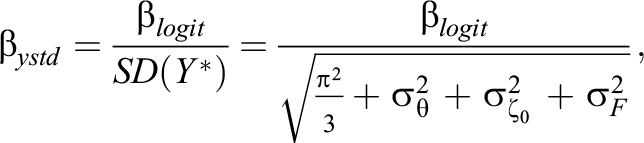
in which
For the IL-HTE EIRM, the random slope associated with the treatment effect implies heteroscedasticity between the treatment and control groups (see Steele, 2008, pp. 29–32), with variances of


Given the unequal variances when IL-HTE is present, we encourage standardizing by the control group to obtain a Glass’s
While adding a layer of procedural complexity for the analyst, y-standardization has the advantage of (a) rendering logit coefficients comparable to those derived from linear regression with standardized continuous outcomes, (b) enabling comparison of multiple models fit to the same data and cross-sample comparisons of effect size (Breen et al., 2018), and (c) enabling the use of the effect size estimates in meta-analysis, contexts in which scale-free generalizability of the estimates is essential.
Conclusion
A principal aim of applied intervention research is to understand how far intervention effects travel. In this study, we leveraged online assessment data from a large-scale RCT to show how the impact of an evidence-based literacy intervention can promote transfer on an assessment of reading comprehension. In doing so, we simultaneously highlight the affordances of online assessments (e.g., low cost and high accuracy at large scale) and the EIRM in identifying on what assessment tasks intervention effects emerge, thus illustrating how large-scale digital assessments can be leveraged to assess learning outcomes at scale across whole school systems. In sum, applying the EIRM to model IL-HTE can reveal a type of treatment impact variation to which other methods are blind. Data analysts can use the EIRM with varying item-level treatment effects to provide more insight for applied researchers by allowing more nuanced inference about the effects of educational interventions on measured outcomes. In turn, more fine-grained findings will allow researchers to make more substantive and policy-relevant claims about intervention impacts, an approach that brings scholars one step closer to understanding for whom, under what conditions, and, crucially, on what assessment tasks an educational intervention works.
Footnotes
Acknowledgments
The authors would like to thank Jackie Relyea, Douglas Mosher, Andrew Ho, and the anonymous reviewers for their helpful comments on this paper.
Declaration of Conflicting Interests
The author(s) declared no potential conflicts of interest with respect to the research, authorship, and/or publication of this article.
Funding
This research was funded by the Chan–Zuckerberg Initiative. The opinions expressed are those of the authors and do not represent the views of the funders.
