



Abstract
BACKGROUND:
Multiple sclerosis (MS) is a complex immune-related disorder of the central nervous system (CNS) in which dysregulation of different classes of T cells are involved. Variants in Ecotropic Viral Integration Site 5 (EVI5) gene has been shown to be significantly associated with MS in different populations.
OBJECTIVES:
However, there is no data regarding relative expression of this gene in peripheral blood of MS patients compared with healthy controls.
METHODS:
In the present study we assessed expression of EVI5 in 50 Iranian MS patients compared with healthy subjects by means of quantitative real time RT-PCR.
RESULTS:
Statistical analyses showed no significant difference in EVI5 relative expression neither between total MS patients and healthy controls nor between age- and sex-based subgroups of patients and controls except for a trend toward significance in patients aged between 30 and 40 years compared with healthy subjects in both sexes (
CONCLUSION:
Future studies are needed to explore the role of EVI5 in the pathogenesis of MS.
The nucleotide sequences of primers and probes as well as the length of the amplified sequence
The nucleotide sequences of primers and probes as well as the length of the amplified sequence
Multiple sclerosis (MS) is a complex immune-related disorder of the central nervous system (CNS) [1]. As a demyelinating inflammatory disorder of the CNS, autoimmune responses to myelin antigens are implicated in this disorder. T helper type 1 (Th1) cells as well as interleukin (IL)-17 producing CD4
Material and methods
Participants
The current study is a case-control study to compare EVI5 expression levels between 50 Iranian RRMS patients and 50 healthy subjects. RRMS has been diagnosed by neurologists according to the revised McDonald criteria [9]. Patients were chosen from the formerly HLA-typed clinically stable MS patients. Regarding the role of HLA-DRB1*15 as an important risk factor for MS [10], we excluded HLA-DRB1*15 positive patients from the study. All of patients were receiving daily injections of IFN-
Sampling and RNA extraction
Five ml of peripheral blood was gathered from all participants in an EDTA tube. Geneall Hybrid-RTM blood RNA extraction Kit (cat No.305-101) was used for total RNA extraction. RNA concentration was assessed by 260/280 nM absorbance using Nanodrop equipment (Thermo Scientific).
cDNA synthesis and quantitative RT-PCR
cDNA was synthesized by using Applied Biosystems High-Capacity cDNA Reverse Transcription Kit (PN: 4375575) based on the manufacturer’s protocol and stored at
Applied Biosystems TaqMan
Demographic and clinical characteristics of RRMS patients and controls
Demographic and clinical characteristics of RRMS patients and controls
EVI5 relative expression in distinct subgroups of MS patients and controls
The results of interaction effects between sex and disease group.
To test the significance of difference in means between 2 groups OpenBUGS 3.2.2 (OpenBUGS Foundation, London, UK) was used to fit two-sample Bayesian t-test. A normal prior distribution was assumed for parameters with 200000 iterations. Bayesian independent T-test is an alternative to a t test, providing much wealthy information about the samples and the difference in means than a simple
Results
In the study 50 patients with RRMS (40 males and 10 females, mean age
Relative expression of EVI5 in patients and healthy subjects
Statistical analyses showed no significant difference in EVI5 relative expression between total MS patients and healthy controls. Furthermore, no significant difference has been found between age- and sex-based subgroups of patients and controls except for a trend toward significance in patients aged between 30 and 40 years compared with healthy subjects in both sexes (
The results of ANCOVA test for controlling the effects of the age and sex
The results of ANCOVA test for controlling the effects of the age and sex
The results of interaction effects between age and disease group.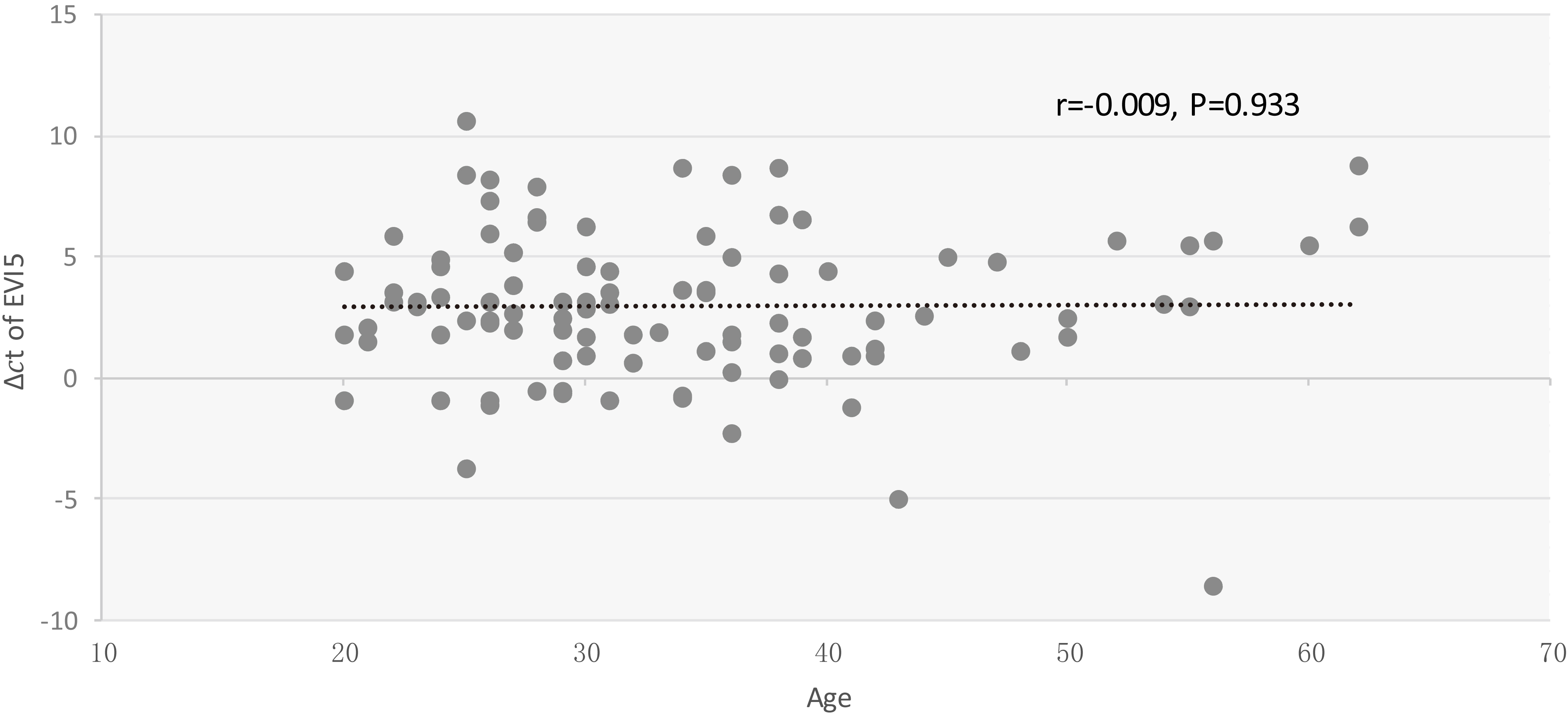
Spearman correlation between EVI5 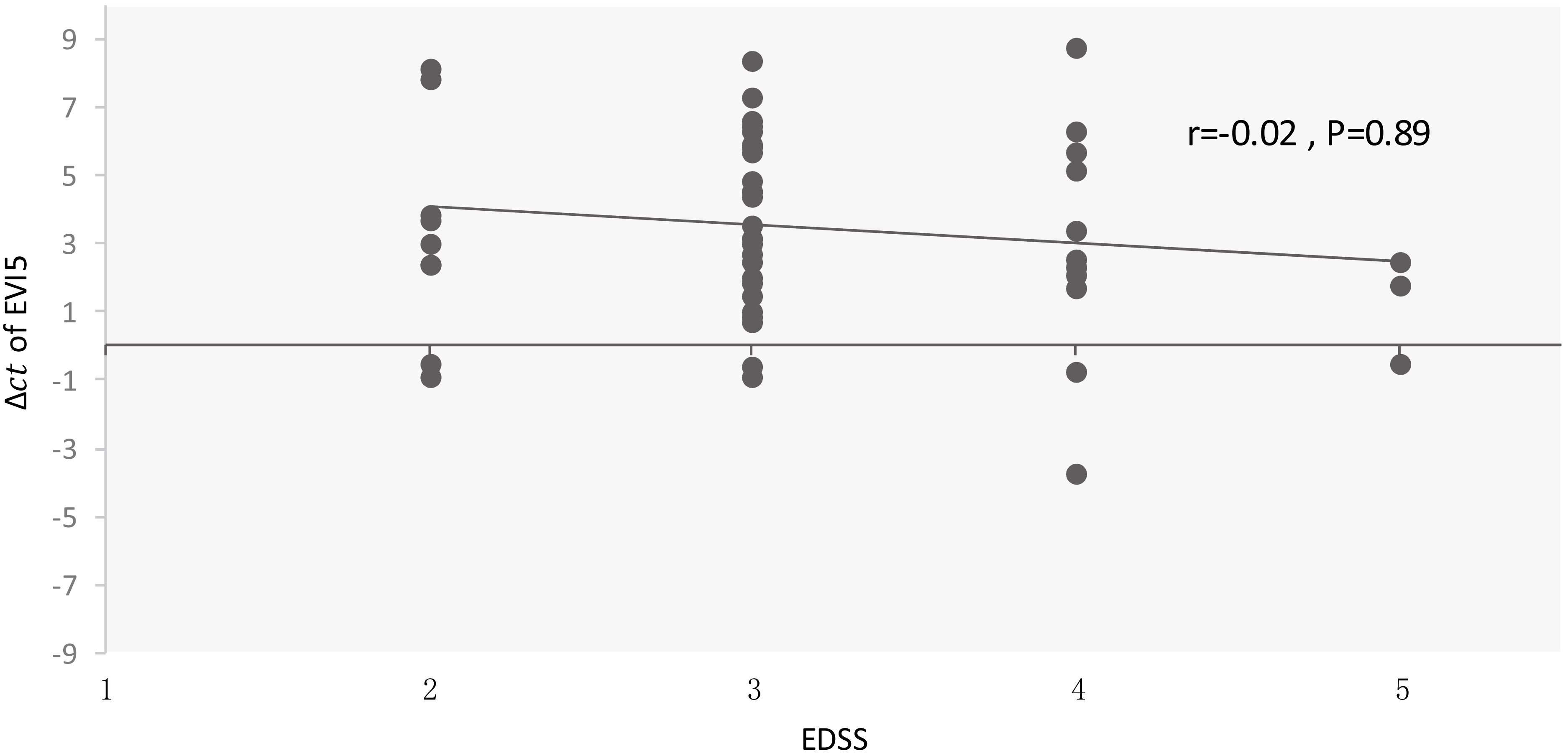
Spearman correlation between EVI5
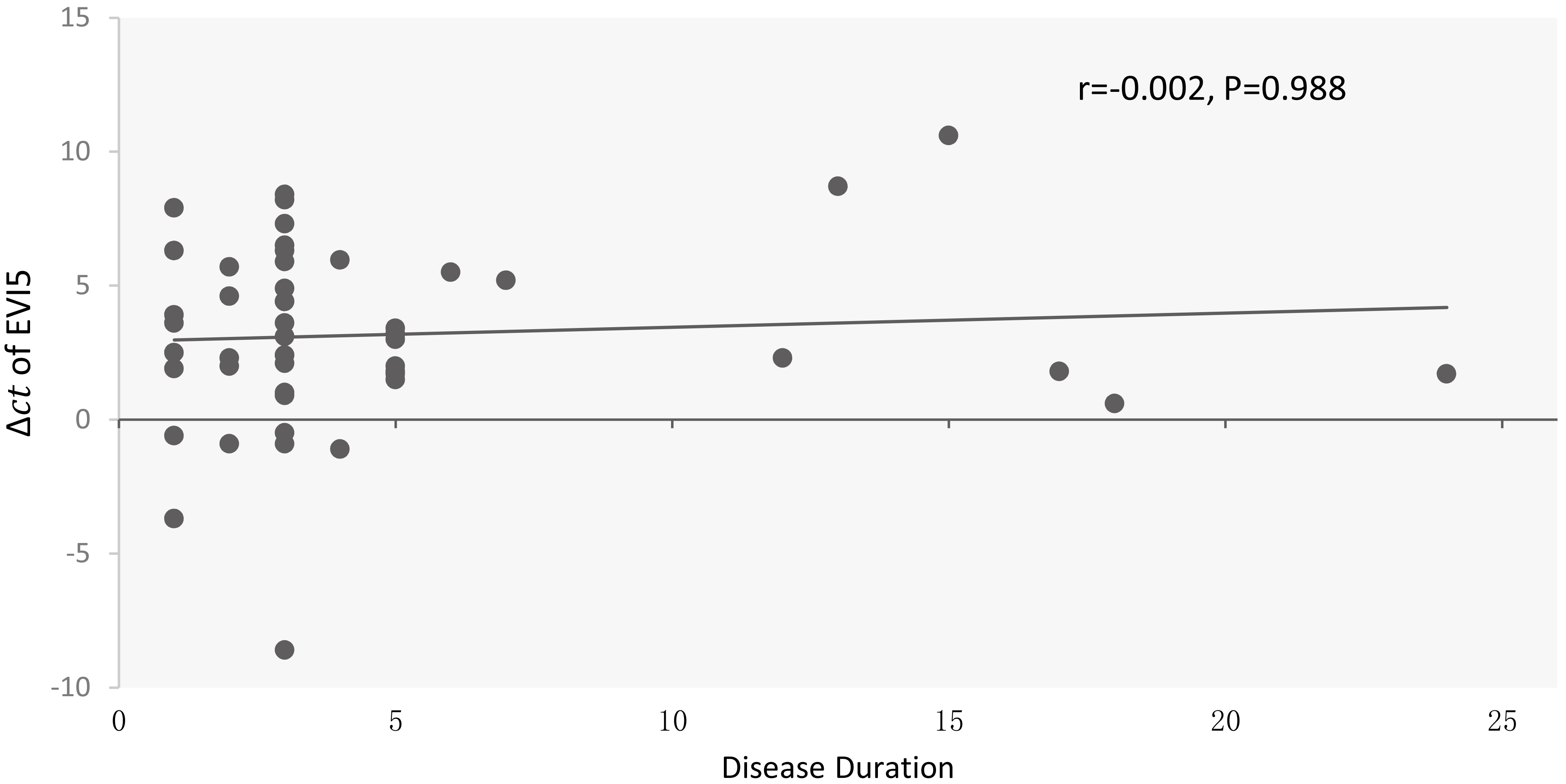
Spearman correlation between EVI5

After using two-way ANCOVA for adjusting the effects of sex and age, there was no statistically significant difference in the values between patient and control groups (
The interaction effects between sex and disease group as well as age and disease group were insignificant, and the direction of effects among two groups was the same. Figures 1 and 2 show the results of interaction effects between sex and disease group as well as age and disease group respectively.
The expression level of EVI5 was evaluated based on the EDSS score among RRMS patients. There was no significant correlation between its expression levels and EDSS (Fig. 3).
EVI5 expression level and disease duration
The expression level of EVI5 was evaluated based on the disease duration among RRMS patients. There was no significant correlation between its expression levels and disease duration (Fig. 4).
EVI5 expression level and age at onset
The expression level of EVI5 was evaluated based on age at onset among RRMS patients. There was no significant correlation between its expression levels and age at onset (Fig. 5).
Discussion
EVI5 has been previously shown to be associated with MS risk with odds ratios even higher than those from the International MS Consortium [3]. However, the study does not confirm whether the underlying allele functions through EVI5 itself [3]. In addition, there had been no data regarding the expression level of EVI5 in MS patients compared with healthy subjects. In the present study, we evaluated the expression level of EVI5 in MS patients compared with healthy controls. However, we did not find either a significant difference in its expression between patients and controls or any correlation between its expression levels and clinical data of patients such as age at onset, disease duration or EDSS. EVI5 has been known as a “modulator of events during cell division”. Its putative role in wound healing has been suggested by the observation that its high levels of expression lead to cell cycle arrest in dedifferentiated cells until they gathered under the wound epidermis [5]. Considering the role of Th17 cells in wound healing on one hand and autoimmune disorders such as MS on the other hand [11], EVI5 might provide the possible link between regulation of Th17 function and these two processes. Although, there are no functional studies regarding the role of EVI5 in MS pathogenesis, the insignificant difference in EVI5 expression between MS patients and controls as revealed by our study, does not rule out the possible role of EVI5 in the pathogenesis of MS as it has been previously shown that activity of EVI5 may be limited by its nuclear and centrosomal localization [12]. So its cellular localization pattern in MS patients might be different from healthy subjects in spite of the similar expressions between two groups. Further evidences for participation of EVI5 in the MS disorder have originated from its shared localization in endosomal structures with proteins encoded by other MS susceptibility genes including signal transducer and activator of transcription 3 (STAT3), tyrosine kinase 2 (Tyk2) and C-type lectin-like domain family 16A (CLEC16A) [13]. In addition, EVI5 as a centrosomal protein has been shown to bind to
Footnotes
Acknowledgments
The current study was supported by a grant from Hamadan University of Medical Sciences (Grant number: 9504221970).
Conflict of interest
The authors declare that they have no conflict of interest.