



Abstract
BACKGROUND AND AIM:
Prostate cancer is the leading cause of death in many countries. It is important to diagnose the disease in the early stages. Current methods detect the disease with low specificity. Examining the expression of genes responsible for disease and their epigenetic regulators are good tools in this regard.
MATERIAL AND METHODS:
In this prospective case-control study, 40 Iranian patients with cancer, 40 Iranian patients with prostate hyperplasia, and 40 control samples were examined. After blood sampling from each individual, RNA extraction and cDNA synthesis, GSTP1, HDAC, DNMT3A, and DNMT3B expressions were measured in three understudy groups using specific primers and Real-Time PCR method.
RESULTS:
A reverse correlation was identified between loss of GSTP1 expression and overexpression of HDAC, DNMT3A, and DNMT3B (
CONCLUSION:
This study showed that the measurement of combined GSTP1 and its epigenetic regulators’ expression could be used as suitable genetic markers for the detection and separation of healthy individuals from prostatic patient groups in the Iranian population. However, a similar study in a larger population of case and control could help us to distinguish between normal, benign, and malignant conditions.
Keywords
Introduction
Prostate cancer is the most common malignancy and second cause of cancerassociated death among the male population of the United States and other developed countries [3]. In Iran, it is the most common cancer and the third cause of death [14]. Diet, smoking, and some other environmental, genetic, and epigenetic factors have significant effects on the developing risk of this particular type of cancer [7, 12]. Epigenetic modifications have crucial roles in pathophysiology of prostate cancer [13]. Histone deacetylases (HDACs) are part of transcriptional co-repressor complexes with influence
Demographic characteristics of the PCa, BPH, and control group participants
Demographic characteristics of the PCa, BPH, and control group participants
on various tumor suppressor genes [10]. HDAC overexpression in cancer cells leads to critical repression in growth suppressor genes activity which promotes cancer cell proliferation [16]. Previous studies have shown the methylation of CpG regions as critical mechanism for gene inactivation by DNA methyltransferase. The new somatic genome changes play essential role in tumor invasion process, growth, and metastasis [6]. There are several isoforms of DNA methyltransferases (DNMTs) from which DNMT3A and DNMT3B are known to be the most recent subtypes [15].
Glutathione S-transferase pi 1 (GSTP1) is a protein-coding gene on chromosome 11q13.2. It belongs to GSTs family, a group of enzymes that act in detoxification by catalyzing the conjugation of endogenous and exogenous substances with glutathione [20]. These enzymes influence cancer cell proliferation and death by interacting with several regulatory kinases and cytoprotective and regulatory functions [13, 17]. It is proposed that GSTP1 methylation show association with tumor development or poor prognosis in a wide range of tumors and it is a suspected epigenetic marker for early prostate cancer diagnosis [13]. Gene methylation leads to GSTP1 expression loss and consequently causes the development of preneoplastic to the malignant phenotype [8, 2]. Therefore, a positive correlation is proposed between GSTP1 promoter hypermethylation, its consequent expression reduction, and PCA etiology but the data still needs to be confirmed.
So far, the evaluation of GSTP1expression level in association with the epigenetic regulators (HDAC, DNMT3A, and DNMT3B) concerning prostate cancer has not been performed in Iran. For this purpose, we examined three metastatic (PCA), BPH, and control groups for the expression of these genes concerning the disease development.
Patients
A total of 40 (60–80 years old) prostatic cancer (Patients without history of prostate surgery, chemotherapyand radiotherapy), 40 benign prostate hyperplasia, and 40 normal individuals (men who were admitted to the medical center with urinary or suprabache problems, they were confirmed for their prostate health by clinical and paraclinical examinations and had no familial history of the PCa or BPH). were enrolled in this research. The participants were matched for age, smoking status, disease history, and some lifestyle patterns (Table 1).
Patients’ clinical history was extracted from their medical records and pathology laboratory. The related peripheral blood samples were provided by Shohadaye Tajrish and Madres hospital (Tehran, Iran). Blood samples of patients were collected in tubes containing Ethylene Diamine Tetra Acetic Acid (EDTA), kept at
All steps of this research have been conducted in accordance with ethical standards.
Informed written consent was completed by understudy individuals.
RNA extraction
As it was previously described [21], total RNA was extracted from 250
cDNA synthesis and quantitative RTPCR
cDNA was synthesized from 2
Primers’ characteristics used for qRT-PCR analysis
Primers’ characteristics used for qRT-PCR analysis
A. Expression of GSTP1 in PCa and BPH samples compared to control samples (CTRL): The results showed a significant decrease in GSTP1 in prostate cancer group compared to control group (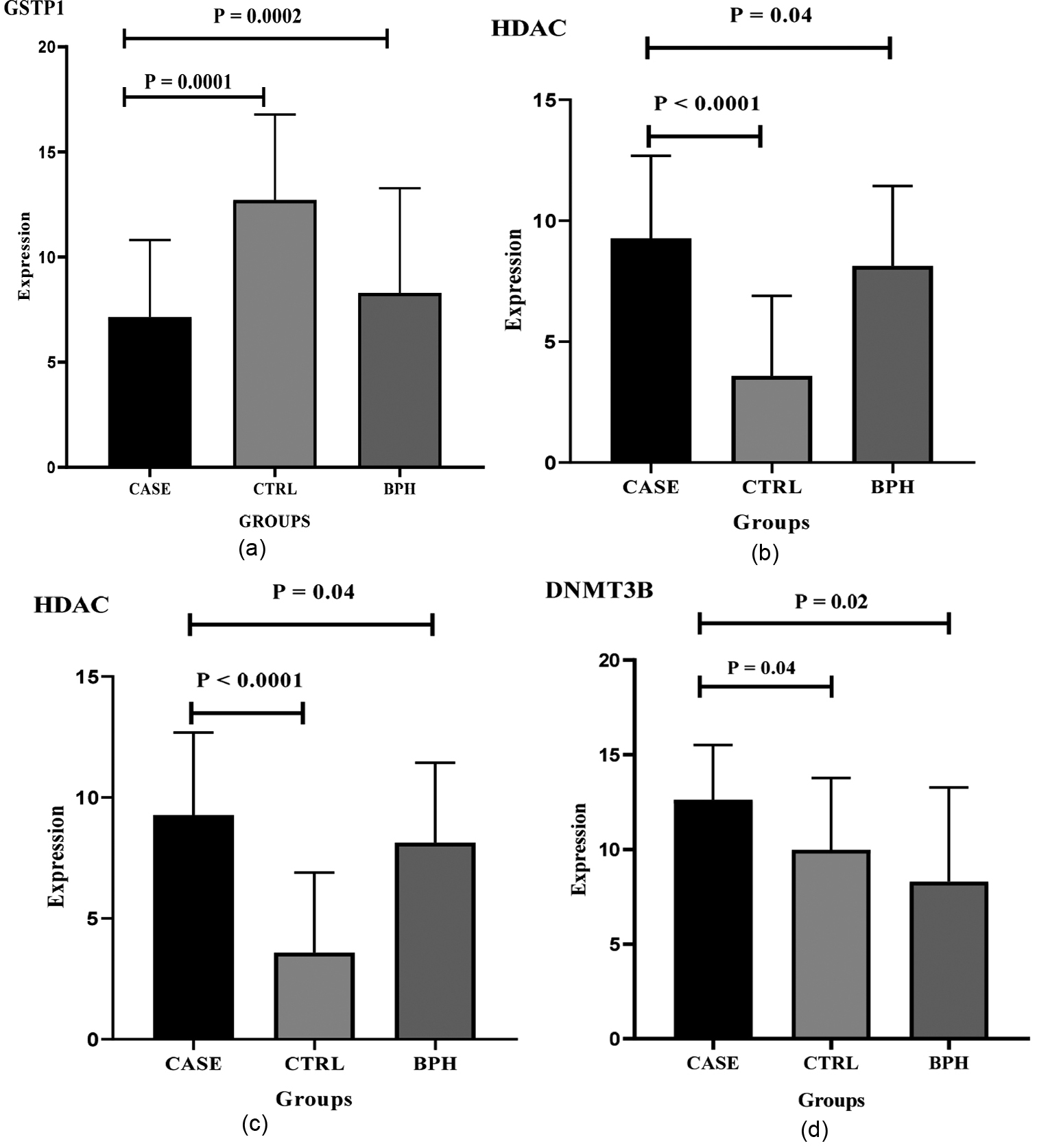
Correlation between the expression of GSTP1 (X-axis) and the epigenetic regulators’ (HDAC, DNMT3a, and DNMT3b) (Y-axis). As is considered, the decrease in GSTP1 expression is in relation with HDAC, DNMT3a and DNMT3b upregulation.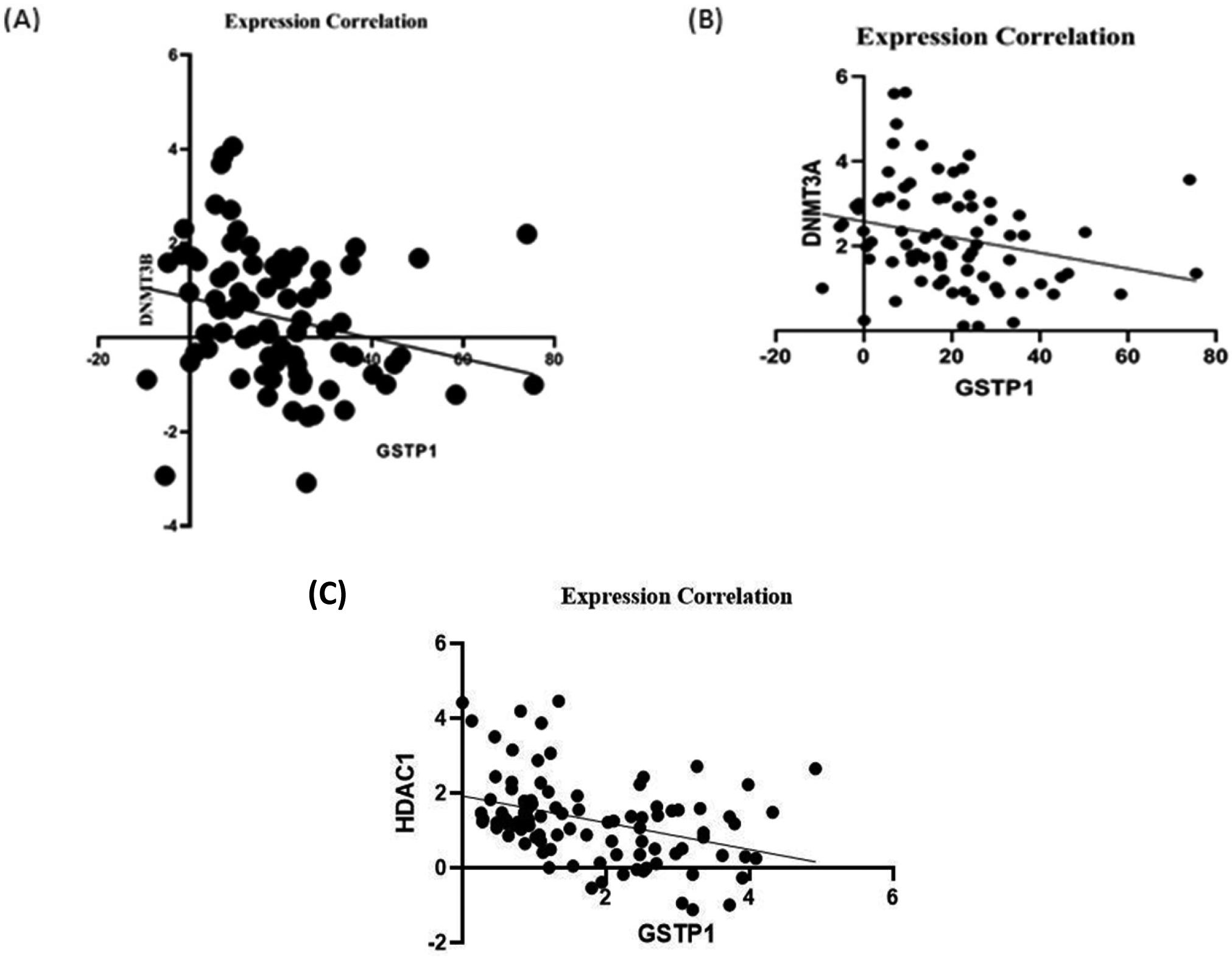
ROC curve analysis of the GSTP1, HDAC, DANMT3a, and DNMT3b. ROC analysis of GSTP1 demonstrated the area under the ROC curve (AUC) of 0.78 (95% CI: 0/68 to 0/88, 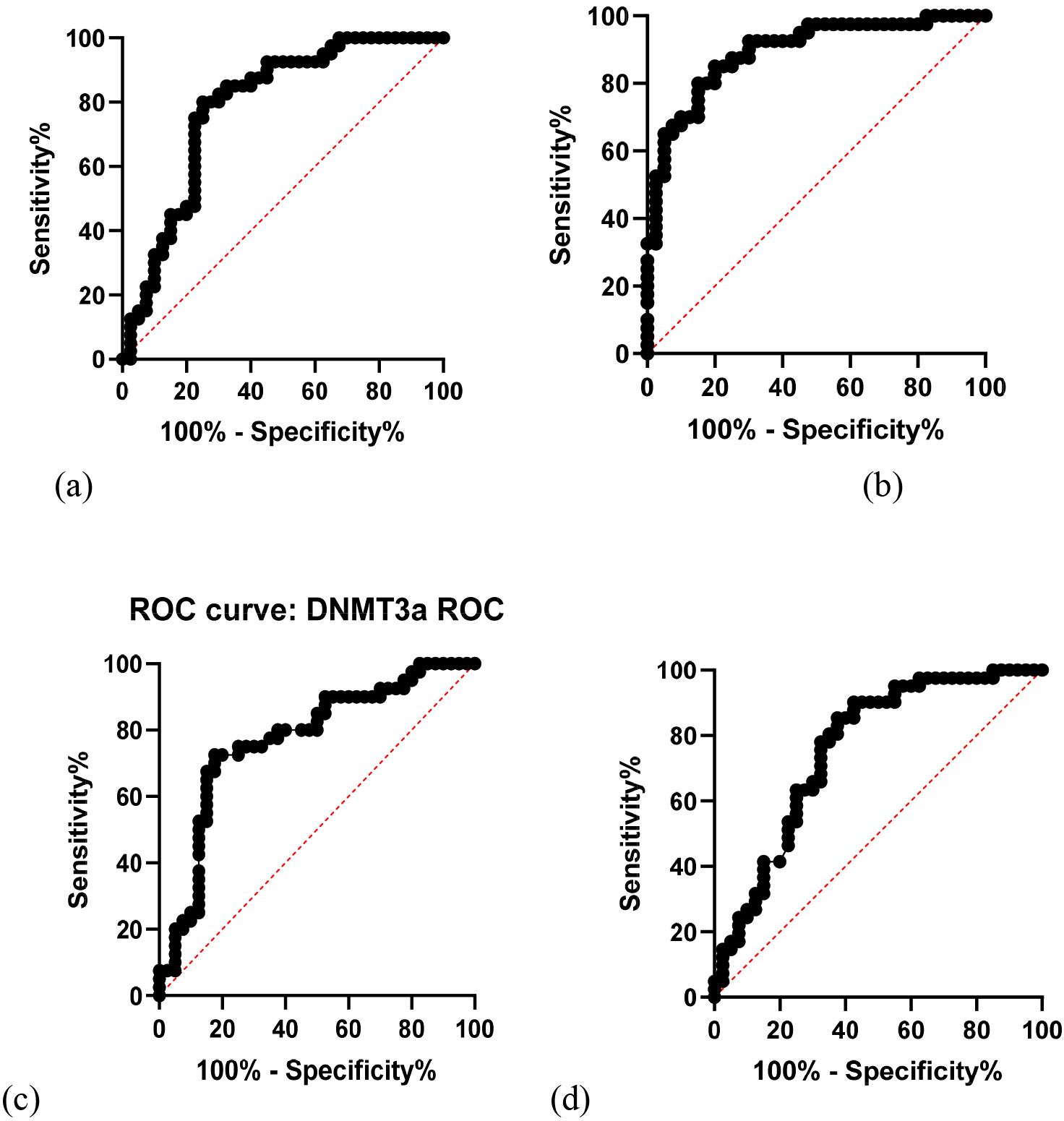
In this study, qPCR data analysis was performed using
Results
Patient dataset
Total of 120 samples belonged to three understudy groups were analyzed in this study. The control group was between 35–45 years old with a mean value of 40 years. The participants’ information including age, smoking status, disease history, and some lifestyle patterns were collected (Table 1).
The aim of this study was to evaluate GSTP1 expression levels and related epigenetic regulators regarding the potential role of the gene as a prognostic marker in prostate cancer, which is the most common men’s malignancy. For this purpose, mRNA expression levels of GSTP1, HDAC, DNMT3a, and DNMT3b genes were assessed in all samples using qRT-PCR. Beta-2-microglobulin was used as a housekeeping gene for normalization the results of qPCR data. Using T/S ratio by the formula: [2
To define whether expression of GSTP1, HDAC, DANMT3A and DNMT3B could be used as a discriminatory means to categorized subjects as healthy or patient, a receiver operating characteristic (ROC) curve was applied (Fig. 3).
Discussion
GSTs are a group of isoenzymes that conjugate glutathione to carcinogens and exogenous drugs and catalyze intracellular detoxification reactions [5]. Among them, the role of p class GST (GSTP1) in cancer has been studied more, and it has been associated with cancer susceptibility and protects DNA from free radical damage [19]. These enzymes may modulate involved signaling pathways in cell proliferation, differentiation, and apoptosis by interacting with many factors such as regulatory kinases [9]. Also, it is proved that the epigenetic changes such as hypermethylation, often lead to tumorigenesis and development of cancers [11]. Different studies have shown the decreased level of GSTP1 gene expression following to promoter hypermethylation, one of numerous reported somatic genome alterations associated with more than 79% of cases of prostate cancer [18, 19]. Therefore, the GSTP1 gene expression is considered as a highly sensitive, specific, and valuable biomarker for the disease detection. Loss of GSTP1 expression following to gene methylation seems to be one of the first events to cause a preneoplastic phenotype to develop into a malignant phenotype. The clinical significance of GSTP1 expression in PCa patients in association with epigenetic markers is not well studied in Iran, yet.
In order to better understand the role of the enzyme in tumorigenesis of prostate cancer, we compared the expression level of this enzyme in three understudy groups of control, BPH. and PCA, respectively.
The correlation of GSTP1 expression with methylation in prostate cancer tissues has been frequently reported [4]. Filippo Martignano et al. using immunohistochemistry (IHC) confirmed that hypermethylation of GSTP1 correlates with its downregulation in malignant glands [13]. This is consistent with our results where significant decrease was considered in GSTP1 gene expression at the level of transcription in PCa patients compared to BPH and control groups. We could find significant lower GSTP1 expression in patients with prostatic tumors than BPH patients (
Histone deacetylases (HDACs) which act as the key regulators of epigenetic processes and cancer development [15] are marked as therapeutic targets for cancer therapy [22]. Inappropriate chromatin deacetylation by HDACs may lead to cellular alterations like cell proliferation, differentiation, and apoptosis which consequently affect the development and/or progression of cancer lesions [1]. In the current study we identified increased expression of HDAC, DNMT3a, and DNMT3b in BPH and cancerous group as disease progressed. These findings confirm that epigenetic factors in different populations including Iranian with different lifestyles could be under the influence of similar genomic and/or physiological backgrounds which provide a similar pattern for the manifestation of prostate disease to cancer. Thus, GSTP1 may be a good target for gene specific diagnosis test and treatment of the disease. Designing and using pharmaceutical compounds that specifically target the upstream regulatory region of the gene, activate chromatin by affecting this gene, and increase its expression in prostate cancer cell lines or in animal model for prostate cancer can be helpful in designing an effective and specific universal medication for better prognosis of the disease in the future.
Conclusion
The results of this study are indicative of the value of the co-analysis of the studied genes’ expression levels as potential prostate cancer biomarkers. A similar study in a larger population of case and control could help us to distinguish between normal, benign, and malignant conditions. Also, similar investigation may help in better evaluation of response to early and targeted therapy. However, more in vivo analysis are needed to validate these results.
Footnotes
Acknowledgments
We would like to sincerely thank all those who helped us in preparation of the samples, including the patients, the nursing staff of Shohadaye Tajrish and Modares hospitals specially Dr. Hossein Dolat and Dr. Amir Hossein Rahaviyan (from Urology department, SBMU) for their valuable support on this project. Also, we heartily appreciate Mr. Hamid Pouresmaeili who kindly reviewed and made fine editions to the manuscript.
Conflict of interest
The authors declare that they have no conflict of interest.