



Abstract



1. Introduction
In the era of knowledge economy, knowledge is a key component in preserving sustainable competitive advantage [1–3]. Knowledge sharing stands as the primary avenue through which employees apply knowledge, foster innovation, and ultimately confer a competitive advantage upon the organization [4, 5]. However, it is still common for employees to withhold knowledge in organizations. Intentionally withholding or concealing information that a coworker has requested is regarded as knowledge hiding [2]. Knowledge hiding can result in a range of adverse effects on organizations and individuals, including a decrease in their ability to thrive at work [6], reducing their own creativity [1] and performance [7, 8], and increasing turnover intention [2]. Significantly, employees appear to be well aware of the potential costs associated with knowledge hiding. They anticipate that their engagement in knowledge hiding will harm their relationships with knowledge seekers and expect targets to retaliate [9, 10]. Nonetheless, employees do hide knowledge in their daily work. Therefore, knowledge hiding is counterproductive in the workplace [11]. Furthermore, knowledge hiding is considered an important ethical issue as it involves the use of deceptive strategies to serve self-interest at the expense of others [2, 12].
Knowledge hiding is such an unethical and counterproductive behavior [2, 11] that it is necessary to explore which factors result in employees making actions. Past research has examined multiple antecedents of knowledge hiding at the individual and organizational levels. Antecedents at the individual level include perceived interpersonal distrust and perceived career insecurity [13], performance-proven goal orientation [14], psychological safety [15], and territoriality [13]. Antecedents at the organizational level encompass time pressure [16], competitive work environment [13], and self-serving leadership [17].
Despite promising advances in existing literature, little is known about the effect of employees’ regulatory focus on knowledge hiding. Thus it is neccessary to explore employees’ knowledge hiding from a personal perspective. Although studies have examined the influence of personal characteristics on knowledge hiding, such as aberrant personality traits [13], few research has explained knowledge hiding in terms of motivational attributes. Regulatory focus belongs to the personal characteristic related to motivational attributes, which have an independent influence on behavior [20]. Regulatory focus theory posits two self-regulatory orientations: promotion focus and prevention focus [18]. These two foci would motivate individuals to choose eagerness or vigilant tactics to pursue their goals [19]. As a result, employees with different regulatory priorities may respond differently to a colleague’s request for knowledge. Therefore, based on regulatory focus theory, this study explores the explanatory mechanism of knowledge hiding from the perspective of motivational attributes.
While employees’ regulatory focus may influence their knowledge hiding behavior, the strength of this influence depends on contextual factors. Previous research has disclosed the important role of situational factors in shaping knowledge hiding [2, 21]. The interactionist perspective views behavior as an outcome of the interplay between individual and situational factors [22, 23]. Based on this point of view, we seek to investigate whether cooperative climate moderates the relationship between employees’ regulatory foci and knowledge hiding. Our study is based on a sample of 320 full-time employees who enrolled in a professional training program at a Chinese university. The results show the relationships between regulatory foci and knowledge hiding and the interactions of regulatory foci and cooperative climate on knowledge hiding.
In summary, this research makes three contributions to the literature. First, we extend research on regulatory focus theory to the knowledge management context. Prior research has linked regulatory focus to task performance, organizational citizenship behaviors, and counterproductive work behaviors [24, 25] rather than exploring the direct effects of regulatory focus on knowledge hiding behaviors. Second, we contribute to the expansion of knowledge hiding research and respond to the call of Arain et al. [26]. Specifically, we examine employee knowledge hiding behavior from the perspective of motivational attributes. Thus, we contribute to existing research by revealing employees’ responses to knowledge hiding due to different motivations. Finally, we introduce cooperative climate as a contextual factor to explore the boundary conditions of regulatory focus on knowledge hiding. Our study reveals the interactionist view that employees’ knowledge hiding behaviors are influenced by the joint effect of individual differences and external environment. Overall, by examining the personal antecedents and contextual cues to knowledge hiding, our study brings important insights for organizations to reduce employee knowledge hiding.
2. Theory and hypotheses
2.1. Regulatory focus theory
Regulatory focus theory suggests that one’s emotion, cognition, and behavior shape self-regulation to fulfill the goals that the individual seeks to pursue and achieve [18, 27]. This theory proposes that human behavior is driven by two self-regulatory orientations: promotion and prevention focus [18]. Promotion focus is driven by the advancement needs of growth, development, and achievement, whereas prevention focus is motivated by safety and security [28]. As the strategies for their goals vary [29, 30], distinct problem-solving methods will be applied depending on promotion focus and prevention focus. Promotion focus is associated with a preference for eagerness related strategic means that aim to “insure hits and insure against errors of omission”, while prevention focus refers to a conservative approach aimed at reducing vulnerability and uncertainty via vigilance strategic means, thus “insure correct rejections and insure against errors of commission” [19].
Importantly, promotion focus and prevention focus represent independent strategic means that are not mutually exclusive and may sometimes coexist [31]. Empirical evidence has demonstrated the conceptually orthogonal nature of these two dimensions of regulatory focus [32]. Therefore, it is possible for people to be high on both promotion and prevention foci, on just one focus, or on neither focus [33].
Not only are promotion focus and prevention focus independent, but these foci are jointly shaped by both internal (dispositional factors) and external influences (situational factors) [29]. Regulatory foci are developed in early childhood when nurture and security needs are particularly salient, as Higgins [18] noted: “Children learn from interactions with their caretakers to regulate themselves in relation to promotion-focus ideals or in relation to prevention-focus oughts.” However, cues within the immediate situational factors such as values, norm, and interpersonal interactions may also influence the emergence of promotion and prevention foci [20, 34]. Thus, strategic preferences are likely to change over time and in response to changing circumstances. The joint influence of dispositional and situational sources gives rise to situation-specific regulatory foci that are more malleable than personality attributes [20] but more stable than temporary moods [18].
2.2. Regulatory foci and knowledge hiding
Knowledge hiding refers to an intentional attempt by an employee to withhold or conceal knowledge when requested by his or her coworkers [1, 2]. It can be divided into three dimensions: playing dumb, evasive hiding, and rationalized hiding [2, 35]. Playing dumb involves the hider pretending not to understand what the seeker’s request is. Evasive hiding refers to offering incorrect information or providing a misleading promise to respond in the future, without actually intending to do so. Rationalized hiding offers a justification for failing to provide the requested knowledge by claiming that they are not able to provide the knowledge or blaming another party. Knowledge hiding involves varying levels of employee deception when faced with coworkers’ requests [36]. Playing dumb and evasive hiding are always accompanied by deception, but rationalized hiding may not be [37]. This counterproductive behavior involving varying degrees of deception brings a series of negative consequences to organizations and employees, such as undermining creativity [1, 36] and reducing performance [7, 8]. However, knowledge hiding is not always a negative behavior [37]. Specifically, rationalized hiding may be motivated by the need to keep knowledge confidential or to protect the feelings of other parties [2]. In rationalized knowledge, the hider is legally and ethically guided and acts to protect knowledge following organizational norms and rules [9]. In this case, rationalized hiding has no harmful impact on the organization. Nevertheless, no matter what strategies the hider uses, the unique characteristic that differs from other concepts (e.g., knowledge sharing, knowledge hoarding, and counterproductive workplace behavior) is the intentional concealment of knowledge requested by seekers [2, 6].
In the research to date, regulatory foci have been found to explore work behaviors, such as counterproductive workplace behavior (CWB), task performance, and organizational citizenship behavior [24, 25]. In addition, Chen et al. introduced regulatory foci as moderators influencing knowledge hiding behavior from a personality standpoint [33]. Nevertheless, the direct correlation between regulatory foci and knowledge hiding remains insufficiently explored. We draw on regulatory focus theory and interactionist perspective as lenses to study regulatory foci associated with knowledge hiding.
2.3. The influence of regulatory foci on knowledge hiding
Promotion focus sensitizes people to the positive stimulus (i.e., gains and non-gains) and directs their attention toward opportunities for achievement and growth [38]. Therefore, individuals with higher promotion focus are more likely to be motivated by their personal aspirations and the desire for progress, seeking to maximize gains, and minimize non-gains. They will feel pleasure and a sense of achievement when striving for their goals [39]. As a result, these employees are willing to seize opportunities, take risks, and devote more time and resources to achieve their goals.
Existing studies have shown that knowledge sharing improves the innovation and performance of individuals, teams, and organizations [40–42]. Thus, when the level of promotion focus is high, employees are sensitive to favorable consequences of knowledge sharing [33, 44]. They are also more likely to believe that knowledge sharing contributes to resource accumulation [5], leading to self-improvement. Although engaging in knowledge sharing may enhance the competitiveness of others and expose one’s own weakness [1], employees with high promotion focus are willing to take risks and put in effort for the possible gains of knowledge sharing. Therefore, when faced with requests from coworkers, those employees tend to share their knowledge. Accordingly, we propose:
H1: Promotion focus is negatively related to knowledge hiding.
In contrast, prevention focus is motivated by safety and security [28]. Employees with higher prevention focus are more sensitive to potential negative outcomes and fear to make mistakes [38, 44]. In addition, they have prominent levels of accountability [27]. People with a high level of prevention focus tend to maintain the status quo and fulfill job obligations in the workplace, avoiding unexpected experiences [24, 45]. Therefore, when asked for knowledge sharing by coworkers, these employees tend to reject the request. Sharing knowledge to coworkers is not seen as their duty and obligation but instead is an unexpected experience that may break the status quo at work [46].
Connelly et al. stated that when employees’ ideas are novel enough, they may protect themselves from criticism or even ridicule through knowledge hiding [2]. Since employees with high prevention focus are afraid of making mistakes, they will use conservative strategies to ensure correct rejection and avoid making mistakes. When faced with a request from a coworker, they will be concerned with the possible negative consequences (e.g., criticism and ridicule) of the information they provide, and consequently engage in knowledge hiding. This behavior will make them feel safe in the workplace. In addition, sharing personal knowledge with coworkers can expose their weaknesses [1], and others may use the knowledge the sharer possesses for their own benefit, resulting in the sharer no longer having a competitive advantage. Therefore, we hypothesize that:
H2: Prevention focus is positively related to knowledge hiding.
2.4. The moderating role of cooperative climate
A cooperative climate is important to promote knowledge sharing inside the organization [1, 47]. This climate is characterized by organizational norms prioritizing collective efforts over individual outcomes [48]. In a cooperative climate, employees tend to collaborate, share knowledge, and mutually improve each other’s performance and learning [49]. Regulatory foci are influenced by a combination of dispositional and situational factors that change over time and are influenced by the environment [29]. We posit that the cooperative climate is among the situational cues. Consequently, there exists an interaction between regulatory focus and cooperative climate that affects knowledge hiding behavior.
When the level of cooperative climate is high, an atmosphere characterized by mutual support, strong cohesion, a sense of teamwork, and high team satisfaction is established. This climate increases employees’ identification with the organization, making employees value collective interests. In this situation, promotion-focused employees realize that cooperation and sharing are beneficial to the collective interest, contribute to overall team capabilities, and enhance knowledge [50]. Subsequently, this promotes personal development and innovation [51]. Therefore, individuals with a high level of promotion focus are less inclined to engage in knowledge hiding when the level of cooperative climate is high. On the contrary, when the level of cooperative climate is low, those employees may prioritize personal gains and losses to a greater extent. In this case, these employees perceive potential personal gains from knowledge hiding, particularly in terms of maintaining individual relative competitiveness, leading to an increased inclination to engage in knowledge hiding. In summary, high levels of cooperative climate will weaken, and a low level of cooperative climate will reinforce the effect of promotion focus on knowledge hiding. Thus, we propose:
H3: Cooperative climate moderates the relationship between promotion focus and knowledge hiding, such that the relationship is stronger when the cooperative climate is low rather than high.
Similarly, based on the interactionist perspective, there is an interaction between cooperative climate and prevention focus affecting knowledge hiding. In a highly cooperative climate, employees characterized by prevention focus tend to collaborate, share knowledge, and value the collective interest more [48, 49]. Even if they are sensitive to the negative outcomes of knowledge sharing, they still care about the collective benefit. Thus, a cooperative climate weakens the positive effect of prevention focus on knowledge hiding. Conversely, in a low level of cooperative climate, employees with high prevention focus place more emphasis on individual interest and ignore collective interest. They tend to adopt conservative vigilance strategies to protect themselves from making mistakes [33]. They will not sacrifice their individual comparative advantage for the sake of collective innovation and performance improvement. It means that employees with higher prevention focus are more likely to engage in knowledge hiding under lower cooperative climate conditions. Therefore, we posit:
H4: Cooperative climate moderates the relationship between prevention focus and knowledge hiding, such that the relationship is stronger when the cooperative climate is low rather than high.
Based on the preceding discussion, we develop the research model shown in Fig. 1.
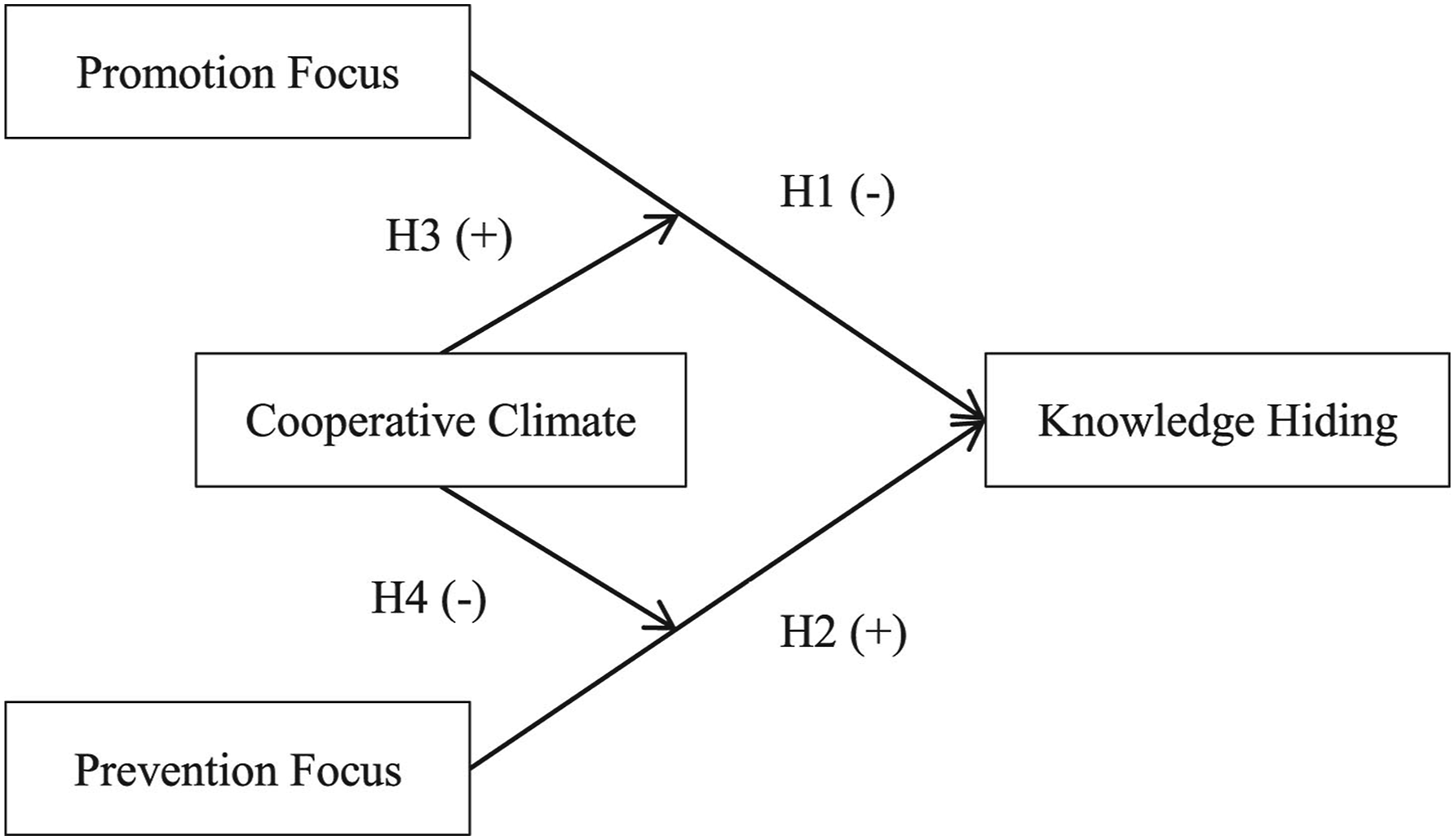
Conceptual model.
3. Method
3.1. Participants and procedures
To test our hypotheses, we collected data from individuals enrolled in a professional training program at a Chinese university. Participants were employed full-time in diverse occupations at the time of the survey. We invited 400 participants to respond to our survey and ensured that participation was voluntary. To reduce common method variance (CMV), we measured the variable at two time points with a one-month interval. Promotion focus, prevention focus, and knowledge hiding were measured at Time 1, and 353 usable surveys were returned. One month later, we measured cooperative climate and demographic variables (Time 2), and 320 usable surveys were returned, representing a response rate of 80.0% . The collected data were matched using unique identifier codes generated by the participants.
The final sample consisted of 120 males (37.5%) and 200 females (62.5%). Their mean age was 30.84 years (SD = 7.97). On average, they had worked for 6.21 years (SD = 6.33) in the company. Concerning their educational backgrounds, 7.8% held three-year college degrees or below, 75.0% held bachelor’s degrees, 15.3% held master’s degrees, and 1.9% held doctoral degrees.
3.2. Measures
Because all the scales in this study were originally developed in English, we translated these scales into Chinese following the back-translation processes to ensure that all the items’ meanings were retained [52]. All items were rated using a 5-point Likert scale from 1 (strongly disagree) to 5 (strongly agree).
3.2.1. Knowledge hiding
We measured knowledge hiding using the 4-item scale developed by Rhee and Choi [53]. Thinking of their experiences at work, participants responded to items such as “I agreed to help him/her but never really intended to,” and “I pretended that I did not know the information.” Cronbach’s coefficient α was 0.75.
3.2.2. Promotion focus
Promotion focus was measured with a 5-point Likert scale of 4 items from Zhou et al. [54] and Lockwood et al. [55]. Sample items included “In general, I am focused on achieving positive outcomes in my life,” and “I typically focus on the successes I hope to achieve in the future.” Cronbach’s coefficient α was 0.62.
3.2.3. Prevention focus
Prevention focus was measured using a 5-point Likert scale adapted from Zhou et al. [54]. We listed three items: “I often worry that I will fail to accomplish my work goals,” “I am anxious that I will fall short of my responsibilities and obligations,” and “I am more orientated towards preventing losses than I am towards achieving gains.” Cronbach’s coefficient α was 0.82.
3.2.4. Cooperative climate
Cooperative climate was measured using the 3-item self-report scale developed by Bogaert et al. [56]. A sample item was “My department is team-oriented; teamwork is strongly valued.” Cronbach’s coefficient α was 0.63.
3.2.5. Control variables
We included employees’ gender (0 = male, 1 = female), age, education (1 = three-year college degrees or below, 2 = bachelor’s degrees, 3 = master’s degrees, 4 = doctoral degrees), job tenure as control variables because these factors have potential influences on employees’ knowledge hiding behaviors [57].
4. Results
4.1Confirmatory factor analysis
To assess the discriminant validity among the study variables, we conducted confirmatory factor analyses (CFAs) using the Lavaan package in the R environment [58]. Thus, we developed four models including a null model (M0), a baseline four-factor model (M1), a three-factor model collapsing promotion focus and prevention focus (M2), and a combination of promotion focus, prevention focus, and cooperative climate (M3). The last model evaluated whether the four constructs represented a single dimension (M4). The results shown in Table 1 indicate that the hypothesized four-factor model fits the data better (χ2 = 218.70, df = 71, CFI = 0.90, IFI = 0.90, SRMR = 0.07) than alternative models. The results support the discriminant validity of four variables.
Confirmatory factor analyses of measurement models
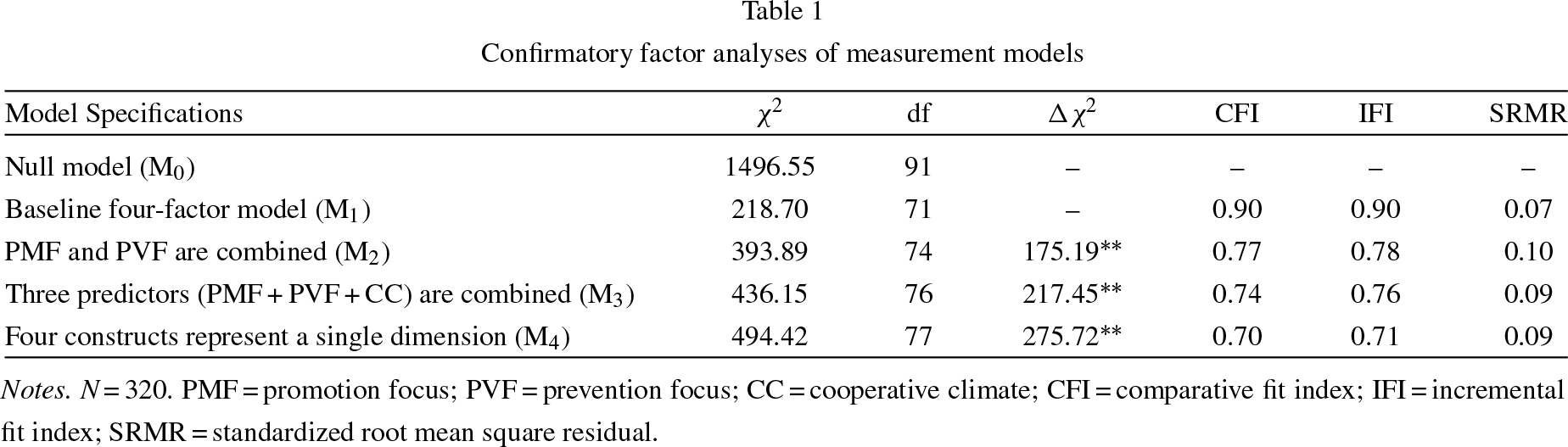
Notes. N = 320. PMF = promotion focus; PVF = prevention focus; CC = cooperative climate; CFI = comparative fit index; IFI = incremental fit index; SRMR = standardized root mean square residual.
4.2. Descriptive statistics
Table 2 provides descriptive statistics for all variables analyzed in this study. The results show that promotion focus is negatively related to knowledge hiding (r=–0.46, p < 0.01), and prevention focus has a positive correlation with knowledge hiding (r = 0.47, p < 0.01). These results preliminarily offer empirical support for our hypotheses.
Descriptive statistics and correlations
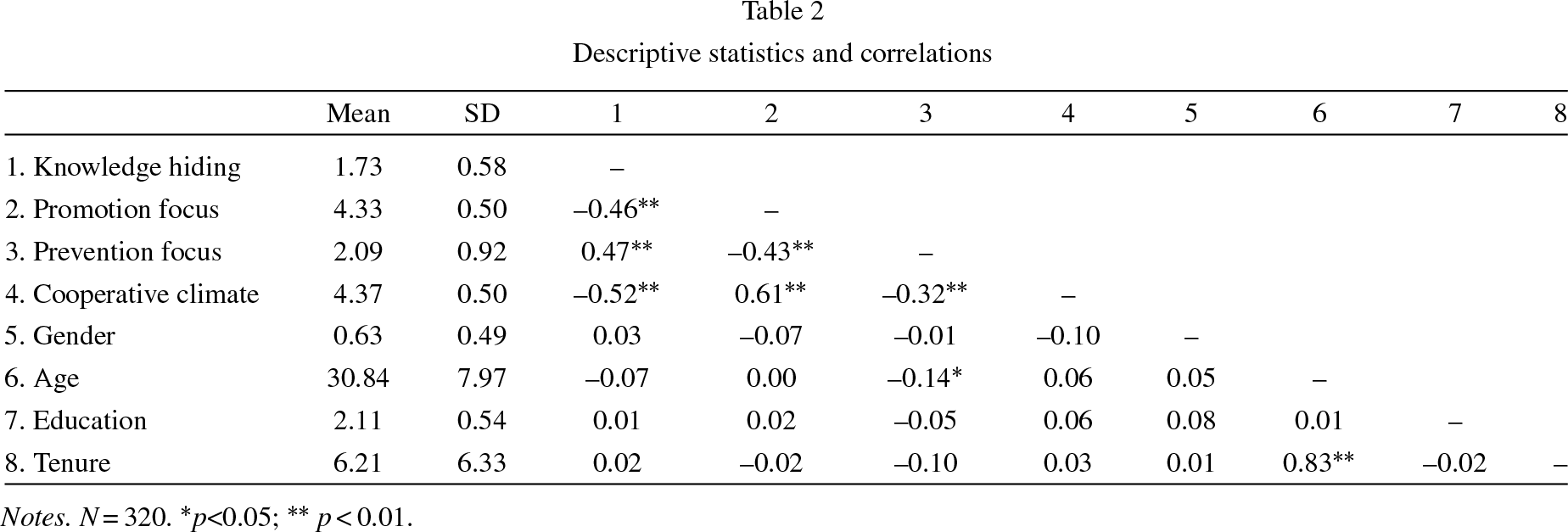
Notes. N = 320. *p<0.05; ** p < 0.01.
4.3. Hypothesis test
Table 3 presents the results of the hierarchical regression analyses. Hypothesis 1 proposes that promotion focus is positively related to knowledge hiding. As shown in Model 0 (Table 3), the relationship between promotion focus and knowledge hiding is significantly negative (β=–0.21, p < 0.01). Thus, Hypothesis 1 is supported. Hypothesis 2 proposes that prevention focus is positively associated with knowledge hiding. The results reveal that prevention focus is positively and significantly linked with knowledge hiding (β=0.33, p < 0.01). Consequently, Hypothesis 2 is supported.
Results of hierarchical multiple regression
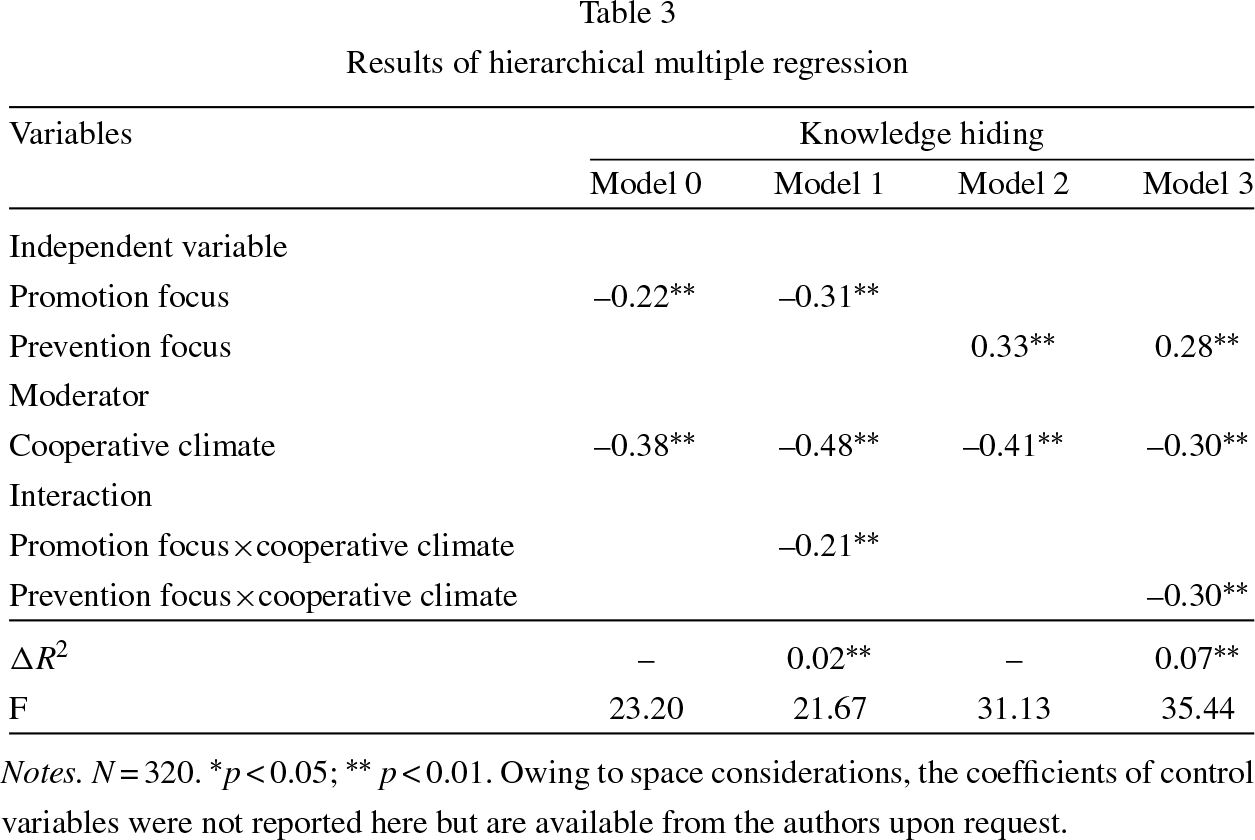
Notes. N = 320. *p < 0.05; ** p < 0.01. Owing to space considerations, the coefficients of control variables were not reported here but are available from the authors upon request.
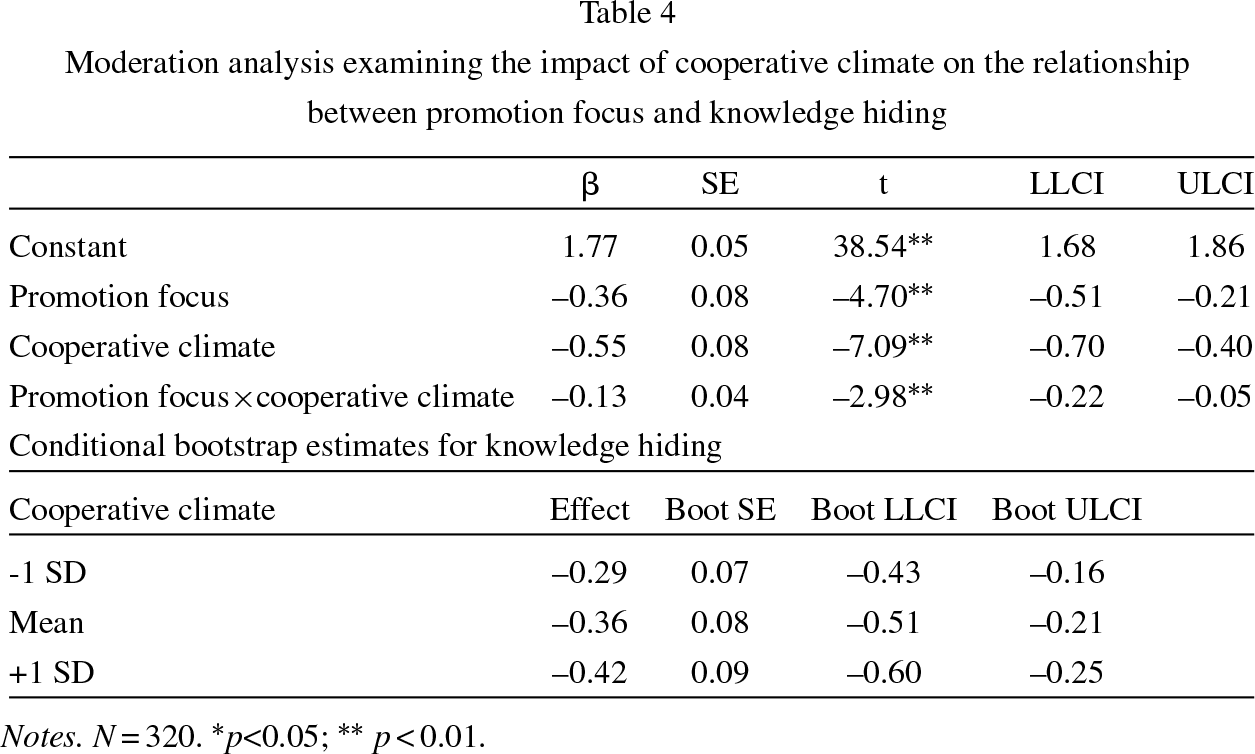
Hypothesis 3 proposes that cooperative climate moderates the relationship between promotion focus and knowledge hiding such that this relationship is stronger when cooperative is lower. As shown in Model 1, the interaction term significantly and negatively predicts the relationship between promotion focus and knowledge hiding (β=–0.20, p < 0.01). Subsequently, we conducted bootstrap analysis to further validate the moderating role of cooperative climate. The results of Table 4 do not contain zero (LLCI=–0.21, ULCI=–0.04) under the 95% confidence interval, indicating that cooperative climate plays a moderating role in the relationship between promotion focus and knowledge hiding. To further examine this interaction, we conducted a simple slope analysis (Aiken & West, 1991). Figure 2 illustrates that promotion focus is a significant negative predictor of knowledge hiding under the condition of low cooperative climate (b=–0.40, t=–4.05, p < 0.01), and the condition of high cooperative climate (b=–0.28, t=–4.55, p < 0.01). Thus, Hypothesis 3 is supported.
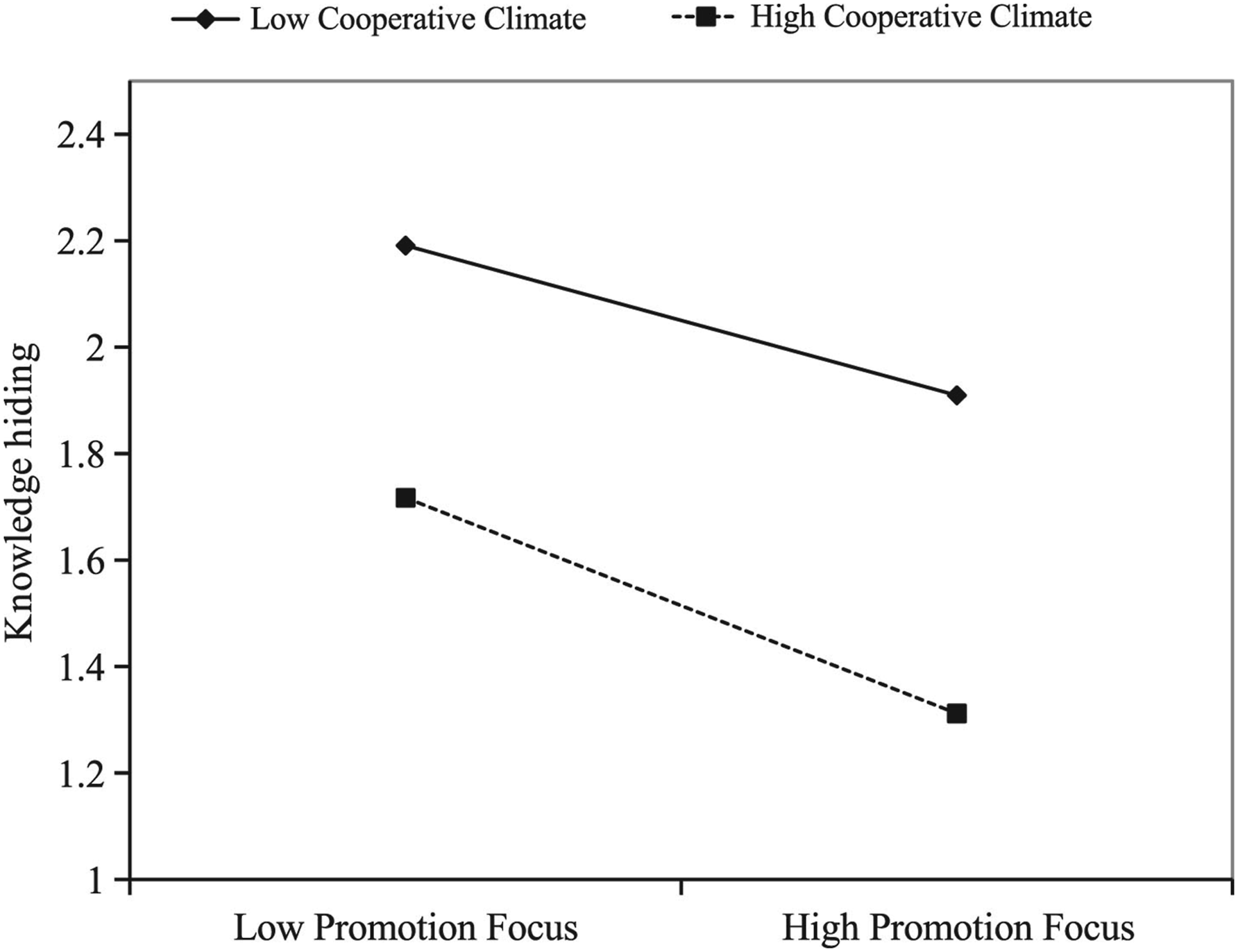
Interaction of promotion focus and cooperative climate on knowledge hiding.
Moderation analysis examining the impact of cooperative climate on the relationship between promotion focus and knowledge hiding
Notes. N = 320. *p<0.05; ** p < 0.01.
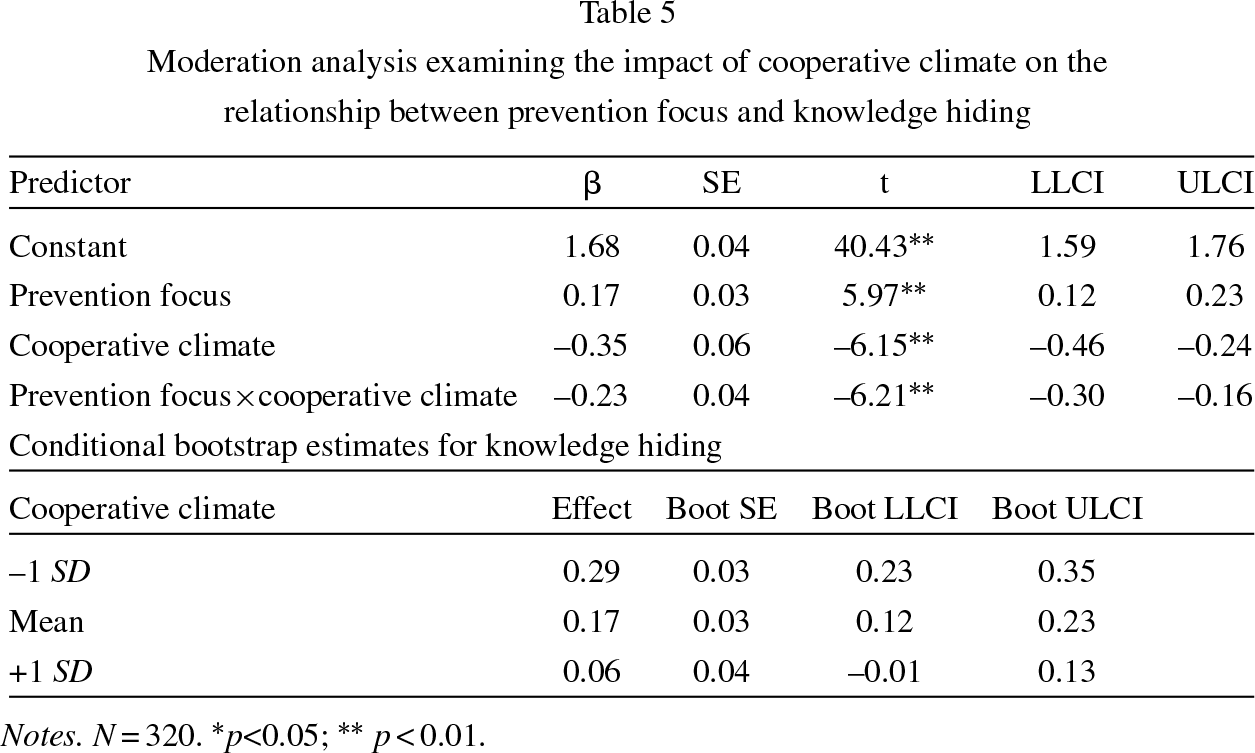
Hypothesis 4 predicts that cooperative climate moderates the relationship between prevention focus and knowledge hiding. The results of Table 3 (Model 3) indicate that the interaction between prevention focus and cooperative climate is negatively associated with knowledge hiding (β=–0.29, p < 0.01). We used the Model 1 of PROCESS macro (Hayes, 2013) to validate this hypothesis. The number of bootstrap samples extracted was 5000, and the bias-corrected confidence intervals were set at 95% . Table 5 presents the results of this moderation analysis and shows that the 95% confidence interval do not contain zero (LLCI = 0.30, ULCI=–0.15). We further conducted a simple slope analysis. As shown in Fig. 3, prevention focus is significantly related to knowledge hiding (b = 0.29, t = 9.09, p < 0.01) when the cooperative climate is low but non-significant (b = 0.06, t = 1.72, n.s.) when the cooperative climate is high. Based on these results, Hypothesis 4 is supported.
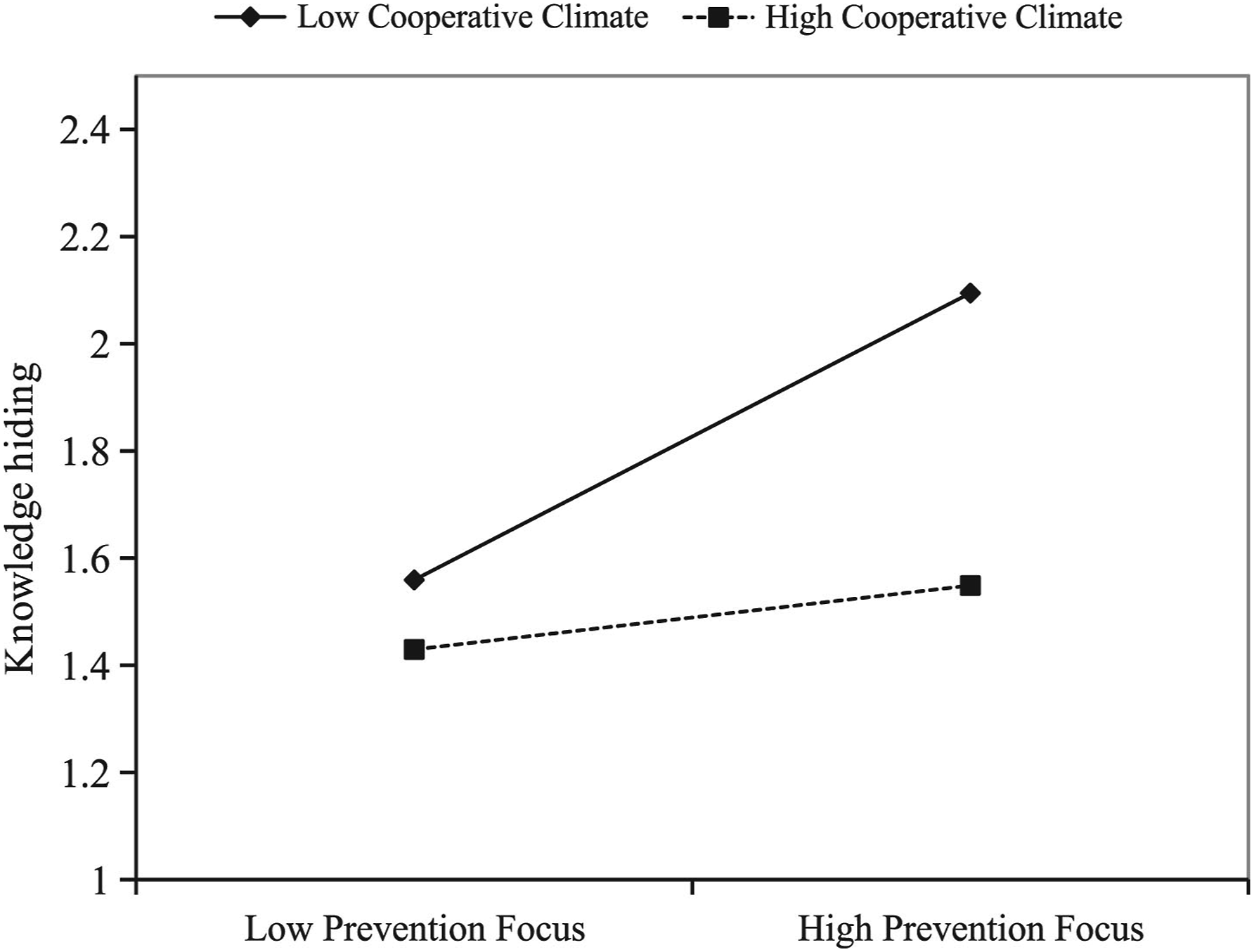
Interaction of prevention focus and cooperative climate on knowledge hiding.
Moderation analysis examining the impact of cooperative climate on the relationship between prevention focus and knowledge hiding
Notes. N = 320. *p<0.05; ** p < 0.01.
5. Discussion
Drawing upon regulatory focus theory and an interactionist perspective, this research examines how regulatory foci influence employees’ knowledge hiding. The results reveal that individuals with a promotion focus are more willing to engage in knowledge hiding, while individuals with a prevention focus are less inclined to withhold knowledge. Moreover, these relationships are moderated by a cooperative climate.
5.1. Theoretical contributions
This research has three theoretical contributions. First, we extend research on regulatory focus theory by investigating its impact on knowledge hiding, thereby filling the research gap. Existing empirical research links regulatory focus to various work-related outcomes such as task performance, organizational citizenship behavior, and counterproductive work behavior [24, 25]. However, limited attention has been directed towards discerning the direct influence of regulatory focus on knowledge hiding. To bridge this gap, our research endeavors to examine the relationship between employees’ regulatory foci and their engagement in knowledge hiding behaviors. This study enriches existing literature on regulatory focus theory, offering a comprehensive understanding of how individual focus orientations relate to knowledge hiding within organizational contexts.
Second, we extend research on knowledge hiding and respond to previous calls by demonstrating the importance of regulatory focus as a motivational attribute that influences employee behavior. This study responds to a call for research that examines employee knowledge hiding from an individual perspective [26]. While prior studies on knowledge hiding have examined individual antecedents such as performance-proven goal orientation [14], psychological safety [15], and aberrant personality traits [13], the significance of motivational attributes in the context of knowledge hiding remains relatively underexplored. Regulatory focus is positioned as a prominent motivational attribute within personal traits, emerging as a potent and direct driver of employee conduct [20, 24]. Acknowledging its potential as a substantial predictor of behavior, regulatory focus assumes a critical stance in steering and shaping employee actions. Our study endeavors to extend the relevant literature by empirically examining the impact of a motivational attribute, regulatory focus, on knowledge hiding behaviors.
Third, the findings related to the cooperative climate extend the literature on the boundary conditions of the link between regulatory focus and knowledge hiding. Our findings indicate that although regulatory focus affects employees’ knowledge hiding, the strength of this effect depends on external situational factors. Interactionism posits that personal factors and situational cues jointly affect individual’s behavior [23], providing key contextual insights into the regulatory focus mechanism of knowledge hiding. In addition, according to regulatory focus theory, an individual’s regulatory focus is shaped by the external environment. By providing situational cues, the mechanisms of regulation foci on knowledge hiding can be more accurately explained. Previous studies have shown that cooperative climate can significantly affect knowledge sharing among employees [1, 47]. Hence, we introduce the cooperative climate as a situational factor into our model. Past research on knowledge hiding emphasized the self-interest perspective, which means that employees want to remain competitive and thus hide knowledge [59, 60]. However, our study reveals an interactionist perspective, suggesting that employees’ knowledge hiding tendencies may be shaped by the external environment, particularly the cooperative climate. Thus, cooperative climate extends the literature on boundary conditions for knowledge hiding.
5.2. Practical implications
Our findings also have important practical implications. First, our findings shed light on the importance of promotion focus and prevention focus as individual difference factors that influence employees’ knowledge hiding in the workplace. In particular, our results suggest that organizations can assess the regulatory focus of their employees during recruitment processes, favoring a larger proportion of employees with high promotion focus. Furthermore, an advantage of regulatory focus relative to personality and self-concept traits is that promotion and prevention foci are somewhat malleable and can be determined by situational cues [29]. This flexibility allows organizations to cultivate a promotion focus among employees by manipulating situational cues, effectively reducing knowledge hiding.
Second, organizations can assign diverse job roles based on individuals’ distinct regulatory foci. Employees with a prevention focus might be better suited for positions that don’t demand extensive knowledge exchange, whereas those with a promotion focus could excel in roles involving information dissemination, thereby enhancing organizational performance.
Third, our research emphasizes the role of a cooperative climate within groups and organizations in mitigating knowledge hiding. In highly cooperative context, employees may be motivated to share knowledge, benefiting their teams and reducing the negative impact of knowledge hiding. Thus, organizations can cultivate a cooperative climate, emphasizing norms favoring teamwork, mutual support, and knowledge sharing. Managers and leaders should actively support collaboration and address behaviors hindering cooperative efforts.
5.3. Limitations and future research
Despite its strengths, this study has limitations that should be noted. First, data collection was conducted through self-reported measures, which may pose a threat to our internal validity because self-report biases are unavoidable. Although we attempted to minimize the risk of self-report through designing a two-stage survey and ensuring participants anonymity, it is still difficult to avoid the biases associated with common method variance because the same participants assessed all variables. However, due to the inherent nature of knowledge hiding, it may be challenging to measure by other-rated scale. This is because supervisors or coworkers may not possess enough insight to assess employees’ intentions for such unethical behavior.
Second, the cross-sectional design results in limited causal relationships. Although we tested the model through time-lagged measures, the characteristics of our study’s correlational designs made causal inferences difficult. Thus, future research could test our theoretical explanation of the relationships between regulatory foci and knowledge hiding with a longitudinal or experimental design to enhance causal inferences and rule out alternative explanations.
Third, the sample of this study was only from China, limiting the generalizability of the findings. Considering the different cultures and the inconsistent explanations of knowledge hiding in different countries or regions, our findings may not be universal around the world. Thus, we encourage future studies to investigate the relationships between regulatory foci and employees’ knowledge hiding with respect to different cultural backgrounds.
Footnotes
Acknowledgments
We acknowledge the financial support from the XJTLU Research Development Fund (RDF-22-01-075).
Author contributions
CONCEPTION: Yuheng Guo and Wangshuai Wang
METHODOLOGY: Yuheng Guo
DATA COLLECTION: Yuheng Guo
INTERPRETATION OR ANALYSIS OF DATA: Yuheng Guo and Wangshuai Wang
PREPARATION OF THE MANUSCRIPT: Yuheng Guo and Jie Li
REVISION FOR IMPORTANT INTELLECTUAL CONTENT: Jie Li
SUPERVISION: Jie Li and Wangshuai Wang