



Abstract
Content-Based Image Retrieval (CBIR) uses complicated algorithms to analyze visual attributes and retrieve relevant photos from large databases. CBIR is essential to a privacy-preserving feature extraction and protection method for outsourced picture representation. SecureImageSec combines essential methods with the system’s key entities to ensure secure, private and protected image feature processing during outsourcing. For a system to be implemented effectively, these techniques must be seamlessly integrated across critical entities, such as the client, the cloud server that is being outsourced, the component that protects secure features, the component that maintains privacy in communication, access control, and authorization, and the integration and system evaluation. The client entity initiates outsourcing using advanced encryption techniques to protect privacy. SecureImageSec protects outsourced data by using cutting-edge technologies like Fully Homomorphic Encryption (FHE) and Secure Multi-Party Computation (SMPC). Cloud servers hold secure feature protection entities and protect outsourced features’ privacy and security. SecureImageSec uses AES and FPE to protect data format. SecureImageSec’s cloud-outsourced privacy-preserving communication uses SSL/TLS and QKD to protect data transmission. Attribute-Based Encryption (ABE) and Functional Encryption (FE) in SecureImageSec limit access to outsourced features based on user attributes and allow fine-grained access control over decrypted data. SecureImageSec’s Information Leakage Rate (ILR) of 0.02 for a 1000-feature dataset shows its efficacy. SecureImageSec also achieves 4.5 bits of entropy, ensuring the encrypted feature set’s muscular cryptographic strength and randomness. Finally, SecureImageSec provides secure and private feature extraction and protection, including CBIR capabilities, for picture representation outsourcing.
Keywords
Introduction
Modern digital information management has been revolutionised by a new paradigm that has emerged from the convergence of cloud computing and image retrieval technologies. Cloud-Based Image Retrieval (CBIR) is a new development that combines the ease and scalability of cloud computing with the complex problem of finding the correct visual data [24, 25].
An intersection of security and rapid retrieval is becoming increasingly important as cloud infrastructure is relied upon more and more by individuals and organizations to store and access photos.
Security is one of the most critical aspects of cloud-based image retrieval, which balances accessibility with protection. Strong security measures are crucial for protecting stored visual content from unauthorised access, data breaches, and other risks as images move over cloud networks [26, 27]. Protecting private image data in the cloud is a top priority. Thus, encryption algorithms, access controls, and privacy-preserving solutions step up to the plate. In addition to protecting data while it is stored, this aspect of security also ensures that data is transmitted securely and that users may interact securely with the cloud [28].
Security methods stand sentry in the ever-changing world of cloud-based picture retrieval, protecting against unwanted intrusions. The multi-layered encryption algorithms protect the stored photographs from harmful elements. Access controls clearly outline user privileges to prevent unauthorized manipulations, specifying who can access, edit, or remove photos. Additionally, privacy-preserving approaches like secure protocols and differential privacy ensure user queries and retrieval patterns don’t reveal anyone’s identity when they look at the stored photographs. Users may be sure that their data is safe when they utilize cloud settings for picture retrieval because of the integration of security measures [29, 30, 31].
The complex procedure of image retrieval is crucial to cloud-based image retrieval. An increasingly intricate and sophisticated process in the cloud, this intangible idea entails extracting relevant visual information depending on user searches. As an expansion of traditional image retrieval, cloud-based image retrieval (CBIR) is compatible with cloud infrastructures [32, 33]. Improving storage and retrieval efficiency and seamlessly integrating strong security measures are just two opportunities and challenges the process encompasses.
Efficient picture storage and retrieval are critical in a cloud setting. Organizations can now manage massive amounts of visual data without being limited by physical infrastructure thanks to cloud-based storage solutions, which offer scalability and flexibility [34, 35]. However, when working with massive amounts of information spread across numerous servers, optimization for speed and accuracy is essential for retrieval processes. Here, state-of-the-art methods based on content-based analysis, pattern recognition, and machine learning are crucial. In addition to improving the overall efficiency of retrieval processes, these technologies enable CBIR systems to adapt to the distributed nature of cloud databases, allowing for more accurate picture retrieval [36, 37, 38].
Creating a solid scheme that guarantees the privacy preservation of feature extraction and feature protection is crucial for advancing image representation outsourcing [39, 40]. A thorough structure is required to ensure the security of sensitive visual data while it is being outsourced. The suggested method is an attempt to find a happy medium between exposing the underlying visual content to the public and protecting it from unauthorised access while still enabling the extraction of relevant image features [41, 42]. This scheme seeks to promote confidence and secrecy in managing visual data in cloud and outsourced environments by utilizing state-of-the-art techniques in privacy-preserving feature extraction and safe feature protection. Its goal is to establish new standards in image representation outsourcing [43, 44].
Literature review
Multiple researchers have examined numerous techniques for secure picture retrieval from the cloud. Uhl et al. [1] proposed using secure photo encryption to recover images based on their content, utilising encryption methods. Abdulsada et al. [2] introduced a locality-sensitive hashing index to improve system efficiency. This index is used for content-based search on encrypted photo databases. Koo et al. [3] introduced a very efficient method utilising attribute-based encryption designed explicitly for cloud storage systems. This method incorporates robust access control and rapid search capabilities. Xia et al. [4] proposed a technique for searching encrypted photos by utilising feature vectors and an invertible matrix. This method ensures data security and enables the evaluation of similarity.
Sharma et al. [5] utilised the BLOWFISH technique to encrypt images, focusing on ensuring privacy and irreversibility. Lathey et al. [6] designed a method to enhance the security of encrypted image data transmitted over the cloud by utilizing Shamir’s secret sharing. Among this system’s many image enhancement operations are dehazing, edge and contrast improvement, antialiasing, and noise reduction. The idea of searchable encryption was investigated by Mehto et al. [7]. This method entails securing data retrieval from the cloud by combining two cryptographic algorithms, MD5 and AES. Zhang et al. [8] introduced a cloud-based image search system called PIC, which ensures privacy when searching for images. The system utilizes many techniques, such as optimizations, distributed and parallel computation, and fine-grained access control.
SDSUVC was proposed by Brindha et al. [9] as a method for securely sharing documents in the cloud. It utilizes visual cryptography to minimize file size and ensure data security. Abduljabbar et al. [10] introduced a system that enables content-based search over encrypted pictures. The method utilises a locality-sensitive hash index to enhance efficiency and privacy. Xia et al. [11] proposed a technique that uses a cloud server to embed a distinct watermark into encrypted photographs, guaranteeing safe content-based image retrieval. Xu et al. [12] devised a methodology for concealing data in encrypted images that is detachable and reversible. This method utilizes modified histogram shifting, difference expansion technique, stream cipher encryption, and a distinctive encryption mode.
Santhi et al. [13] presented a novel method for concealing data in encrypted images that is both separable and error-free. This method uses non-sample pixels’ interpolation error with a stream cipher. Xu et al. [14] suggested a method for retrieving pictures based on their content while protecting privacy. The technique encrypts sensitive information and divides the image for feature extraction and encryption. Xia et al. [15] developed a method allowing content-based image retrieval on encrypted photos while maintaining server security. This is achieved through feature vectors, locality-sensitive hashing, and the secure k-nearest neighbor algorithm.
Zhang et al. [16] proposed a hybrid cloud architecture for securely storing and sharing large-scale data in the Internet of Things (IoT). This architecture utilizes encryption to protect sensitive data, compressed sampling techniques to reduce data size, and a permutation-diffusion architecture for enhanced security. Mobile cloud computing, initially proposed by M. Ibtihal et al., is merging cloud computing with mobile computing. [17]. OpenStack and Paillier’s homomorphic cryptosystem are used for encryption. Bellafqira et al. [18] developed a safe method for retrieving photos depending on their content. This system uses pallier encryption for pictures and erforms picture wavelet transformation at different resolutions. MA Al Sibahee et al. [19] proposed a technique for finding encrypted photographs for specified content. This technique involves using local attributes, geometric units, and location-sensitive hashing. Wang et al. [20] introduced a secure method for retrieving images using AES encryption and block permutation. This method utilizes a cloud server for both processing and storage.
JS For privacy-preserving content-based image retrieval, Li et al. [21] studied homomorphic and asymmetric scalar-product-preserving encryption. The primary goal of this study was to protect the privacy of query data and encryption keys. sXia et al. [22] proposed a method for decrypting pictures that uses pixel permutations and a polyalphabetic cipher to make decryption more secure and accurate. The AL Secure Content-Based Image Retrieval method was constructed by Lafta et al. [23]. Dr. Kumar et al. [46] presented an algorithm to retrieve relevant photos from large databases. Artificial Neural Network-Based Expert Systems predict plant response to environmental factors. The crop production system measures plant performance, and fertilizer is applied based on the plant’s resources and other arrangements. SecureImageSec uses advanced encryption techniques like Fully Homomorphic Encryption, Secure Multi-Party Computation, AES, FPE, Attribute-Based Encryption, Functional Encryption, SSL/TLS, and QKD to protect outsourced data and ensure secure communication. Sathyaprakash et al. [47]. This literature review presents challenges and opportunities in developing efficient e-healthcare risk prediction systems. Future research may focus on explainable AI models, federated learning approaches, and integration of real-time sensor data. Additionally, it introduces SecureImageSec, a system that utilizes advanced encryption techniques and cutting-edge technologies and provides secure and private feature extraction and protection, including content-based image retrieval (CBIR) capabilities.
This method clusters feature vectors encrypted with Asymmetric Scale-Product-Preserving Encryption (ASPE) to improve search speed. Furthermore, a watermark is included to deter unauthorized data users from unlawfully distributing photographs.
Some of the drawbacks of the existing system are:
Computational Cost: Many cloud image retrieval systems use computationally costly methods like encryption, locality-sensitive hashing, and complicated picture augmentation. High computational costs may slow retrieval times and increase processing demands, reducing system efficiency. Limited Scalability: Some approaches may use cryptographic algorithms and techniques to limit scalability. As cloud data grows, some systems may struggle to perform well, limiting their ability to handle massive image sdatabases. Security and Privacy Issues: These technologies secure data and protect user privacy, but some encryption methods may be vulnerable. Watermarks and other identification elements can also pose privacy concerns if misapplied. Existing systems need help reconciling security and user privacy.
Proposed methodologys
Building a privacy-preserving feature extraction and feature protection scheme for outsourced picture representation requires integrating critical approaches and techniques into the system’s recognized vital entities.
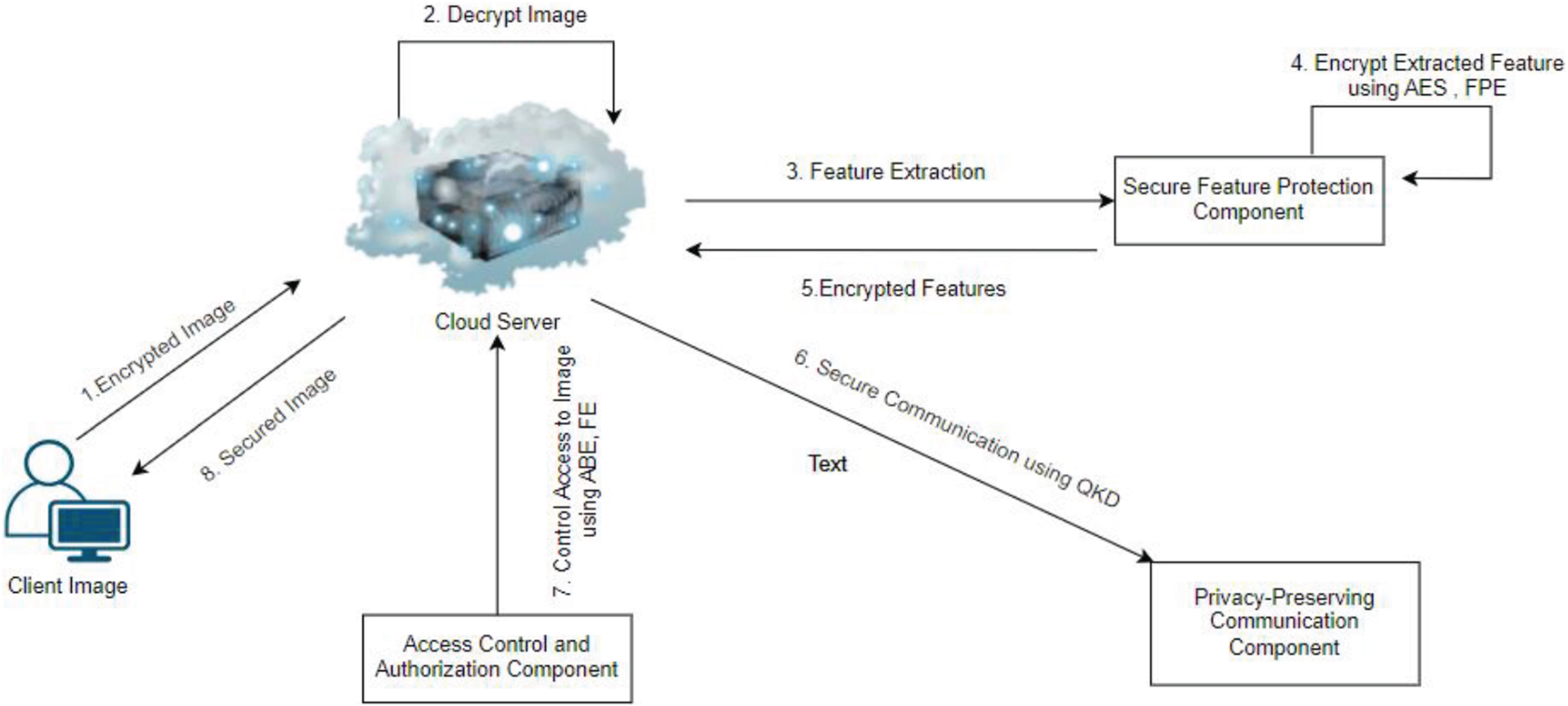
Overall workflow of the proposed system.
These tactics aim to ensure that all image feature processing is secure, private, and protected during the outsourcing process. Protecting image feature processing during outsourcing is crucial for confidentiality, intellectual property protection, data privacy compliance, trust and reputation, and security risk mitigation. Organizations can prevent unauthorized access or disclosure of sensitive data, safeguard their intellectual property, and ensure compliance with data privacy laws. Organizations can securely use third-party services for image feature processing by implementing robust protection measures while minimizing risk. Integrating these techniques seamlessly across critical entities is paramount for effectively implementing the envisaged system. These entities include the client, the outsourced environment (cloud server), the secure feature protection component, the privacy-preserving communication component, access control and authorization, and the integration and system evaluation component. These entities encompass both technological and organizational elements. SecureImageSec framework ensures the confidentiality and integrity of image representations through cryptographic techniques such as Fully Homomorphic Encryption (FHE), Secure Multi-Party Computation (SMPC), Content-Based Image Retrieval (CBIR), Encrypted Storage and Communication, and Zero-Knowledge Proofs. These techniques allow users to securely store, process, and retrieve images without compromising confidentiality or integrity. Figure 1 depicts the workflow of the proposed system SecureImageSec. The entities are explained in the section below.
A vital component of the suggested system is the client’s role in starting the process of outsourcing picture representation while also actively contributing to preserving privacy through sophisticated cryptographic mechanisms. The SecureImageSec framework uses advanced cryptographic mechanisms like Fully Homomorphic Encryption (FHE) and Secure Multi-Party Computation (SMPC) to ensure the privacy and integrity of outsourced picture representation. FHE allows computations on encrypted data without decryption, keeping sensitive image information confidential during processing and retrieval. SMPC enables secure collaboration on image-related tasks without compromising privacy. By incorporating these advanced cryptographic techniques, SecureImageSec offers a robust solution for protecting sensitive image data in scenarios where privacy is paramount, such as healthcare, legal, or forensic applications. This involves the following steps.
Client initiates process
The client organization is pivotal in outsourcing picture representation by sending image data to the cloud server for feature extraction. Outsourcing storage infrastructure offers cost-effective and scalable solutions to accommodate fluctuating data volumes and growth over time. It also offloads hardware maintenance, software updates, and data backup responsibilities to experienced providers. Reliability, availability, security, and compliance are paramount, prompting clients to seek providers with robust infrastructure, security measures, and compliance certifications. Flexibility and customization are crucial, with clients preferring providers offering tailored storage solutions to meet specific business requirements. By selecting the right outsourcing partner, clients can effectively address their storage challenges while maximizing the benefits of outsourcing. A client’s need for external processing capabilities or storage infrastructure is a common factor in the decision to outsource, demonstrating the importance of efficient computational resources and increased storage capacity. However, these operations require increased processing demands and expanded storage capacity. Organizations need to invest in efficient computational infrastructure and scalable storage solutions to support the deployment and operation of such frameworks. This is particularly important when dealing with large-scale picture databases that require encrypted representations of images and associated metadata. By doing so, organizations can leverage the benefits of enhanced privacy and security while maintaining performance and scalability across diverse use cases and application scenarios.
Nevertheless, carefully analyzing privacy and security concerns related to handling sensitive visual content is essential for this strategic decision. When outsourcing tasks related to sensitive visual content, organizations must consider privacy and security risks. Visual content like images and videos may contain sensitive information that requires robust protection. To ensure data privacy and security, organizations should encrypt data during transmission and storage, implement access controls and authentication mechanisms, and conduct regular security audits. Compliance with relevant regulations is also essential. A comprehensive examination of privacy and security issues can help organizations make informed decisions while safeguarding their data. Understanding the risks and concerns regarding privacy, the client needs to consider the advantages of outsourcing in light of the need to protect the authenticity and secrecy of the trusted photos. Technological advantages must be balanced with a cautious attitude to privacy and security concerns to ensure a thorough and well-informed framework for decision-making in picture data outsourcing. Balancing technological advantages with privacy and security concerns is crucial to protecting sensitive information, complying with laws and regulations, building trust and reputation, mitigating risks, and upholding ethical principles. Organizations can leverage technology by prioritizing privacy and security while minimizing negative impacts on individuals and society. The deliberative process highlights this.
Privacy preservation through homomorphic encryption
The key innovation in this picture system’s privacy preservation is using Homomorphic Encryption, a complex cryptographic method that permits computations on encrypted images without decryption. A groundbreaking development, Fully Homomorphic Encryption (FHE) exemplifies substantial advances in cryptographic capabilities and is an innovative cryptographic technique that performs computations directly on encrypted data without decryption. Data can always remain encrypted, preserving privacy and confidentiality even during processing and analysis. FHE allows encryption and arbitrary computations on ciphertexts, producing results equivalent to those obtained from the exact computations on the plaintext data. With FHE, sensitive data can be outsourced to untrusted third parties for processing while remaining encrypted, thus protecting it from unauthorized access or disclosure. Overall, FHE represents a groundbreaking advancement in cryptography, offering a powerful tool for preserving privacy and security in various applications. The success of this development depends on how precisely it is used. The function of FHE is crucial because it guarantees the safekeeping of encrypted picture data and introduces a new feature that allows calculations on encrypted picture characteristics to be outsourced to a cloud server without compromising the original data’s confidentiality. An essential part of the feature extraction process, FHE dramatically improves privacy by enabling calculations on encrypted information and reducing the likelihood of the original content being exposed or accessed without authorization. This novel approach provides a strong and safe solution by addressing privacy problems related to outsourcing picture representation. Safeguarding the privacy of the client’s photos during feature extraction, FHE implementation delivers an unrivalled level of security, permitting seamless processing and communication.

Secure collaboration with secure multi-party computation (SMPC)
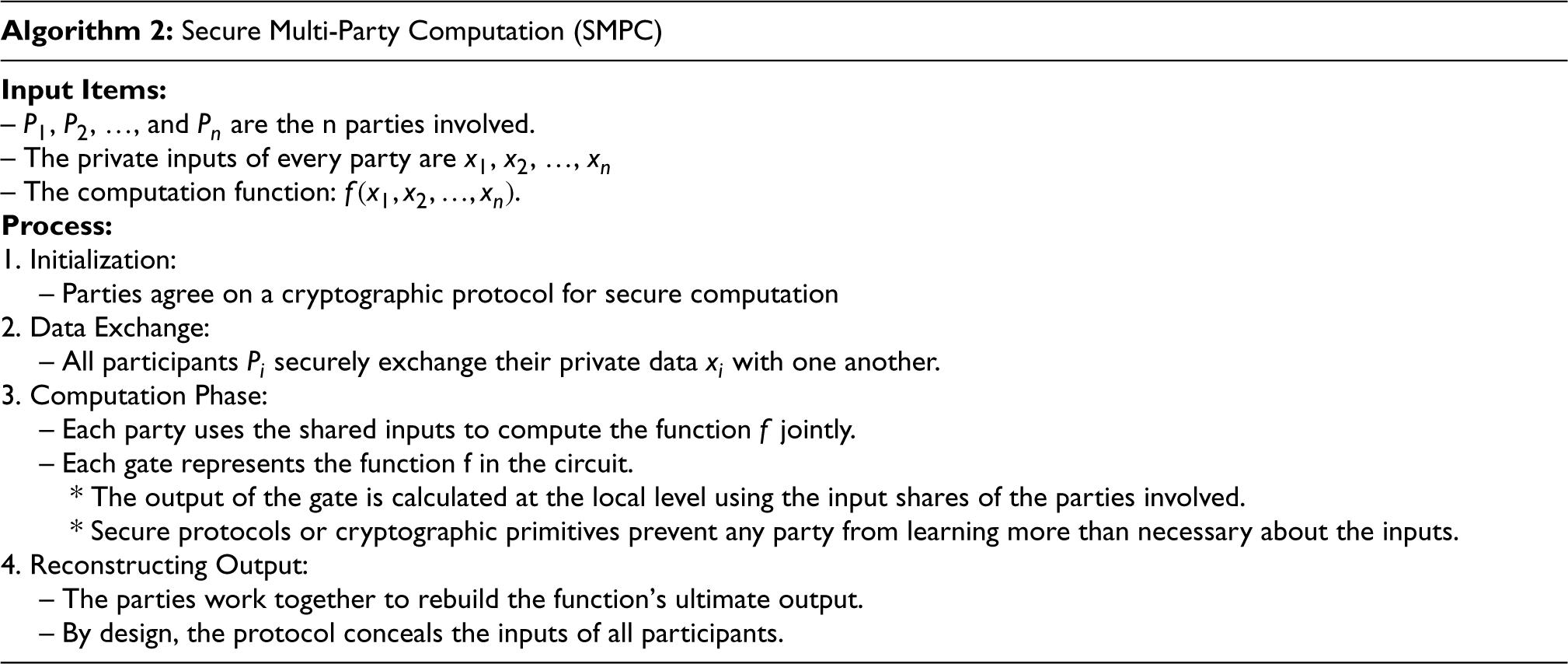
The client incorporates Secure Multi-Party Computation (SMPC) to guarantee a robust interface with the outsourced environment, going beyond Homomorphic Encryption to establish secure collaboration within this system. SMPC enables multiple parties to analyze sensitive data while jointly preserving individual privacy. It has many applications, including collaborative data analysis, secure outsourcing of computations, confidential image processing, and privacy-preserving data sharing. SMPC ensures confidentiality, facilitates collaborative decision-making, and enables data-driven insights. By utilizing SMPC, the client and the cloud server can work together to conduct calculations on their datasets without divulging any sensitive information to one another. The client maintains ownership over their data while taking advantage of the processing capabilities of the cloud server through this collaborative framework. SMPC enables collaborative computation in cloud environments while ensuring clients’ data privacy and ownership. SMPC uses encryption, distributed computation, and privacy-preserving protocols to enable trustless collaboration among parties while maintaining data privacy.
Overall, SMPC offers a secure and efficient framework for collaborative computation in cloud environments that harnesses the benefits of cloud computing. The client-side encryption of picture features using Homomorphic Encryption or Fully Homomorphic Encryption (FHE) is the key to the operating process. The features will be sent to the cloud server in an encrypted form. Afterward, the server can avoid decrypting the data by using SMPC to perform calculations on it. Because of this, the cloud server can create useful features without decrypting the original data. Advanced cryptographic techniques like homomorphic encryption and secure computation protocols like SMPC are essential to creating valuable features from encrypted data in the cloud while maintaining data privacy.
Along with secure data storage and processing practices like access controls, encryption at rest and in transit, and regular security audits, cloud servers can generate insights from encrypted data without compromising the privacy or security of the original data. The client guarantees the secrecy of critical image data and establishes a secure basis for collaboration by utilizing Homomorphic Encryption in conjunction with FHE and SMPC. FHE allows computations to be performed directly on encrypted data without decryption, preserving confidentiality. This capability is precious in scenarios where data privacy is paramount. In the context of SecureImageSec, FHE enables encrypted image representations to be securely processed and analyzed, ensuring sensitive data remains encrypted throughout processing and analysis. Integrating FHE with SMPC enhances privacy and security guarantees and enables collaborative image analysis and retrieval tasks to be performed securely. Overall, FHE combined with SMPC enables SecureImageSec to offer robust privacy protection for outsourced picture representation. Clients can authoritatively control the entire process without sacrificing the confidentiality of their original photographs, while the cloud server operates on encrypted data to enable feature calculation. Performing calculations on encrypted data enhances privacy and reduces the risk of exposing sensitive information. This approach ensures confidentiality, data security, privacy preservation, risk mitigation, and regulatory compliance. By keeping data encrypted throughout the computation process, organizations can protect sensitive information from unauthorized access or disclosure, minimize the risk of accidental data leaks, and comply with legal and regulatory requirements. The system’s dedication to maintaining secrecy and control is demonstrated by its comprehensive use of cryptographic techniques, which improve data security and enable collaborative processing, combining datasets from multiple sources, leading to more thorough analyses and innovative solutions. It maximizes resource efficiency, encourages interdisciplinary collaboration, and prioritizes privacy and security through privacy-preserving techniques.
Outsourced environment (cloud server)
The Cloud Server, which serves as the Outsourced Environment in this context, is an integral component of the privacy-preserved feature extraction and preservation scheme. Its primary functions include hosting the Secure Feature Protection entity and guaranteeing the privacy and security of the outsourced features. The following description elaborates on the critical aspects of the Outsourced Environment.
Duties of a cloud server
The Cloud Server is the external infrastructure, supervising the outsourced features’ storage, processing, and security. In this setup, the Secure Feature Protection entity encrypts and safeguards the extracted picture features. This entity contributes to the overall security of the outsourced data and is crucial in protecting the features’ confidentiality and integrity while stored and processed within the Cloud Server.
Standards for encryption
Integrating Advanced Encryption Standards (AES) into the Cloud Server’s security architecture, especially in the Secure Feature Protection entity, is crucial for protecting sensitive data. Image feature extraction algorithms are protected using AES, a popular symmetric encryption technique known for its efficiency and security. AES is a substantial encryption standard that ensures data confidentiality and integrity. It encrypts data in 128-bit blocks and supports variable vital lengths of 128, 192, and 256 bits. AES is efficient and high-performing, making it ideal for image feature extraction algorithms. AES encryption can protect the confidentiality and integrity of sensitive or proprietary information generated by image feature extraction algorithms. Encrypting the extracted features prevents unauthorized access, manipulation, or theft of data, ensuring compliance with regulations, preventing data breaches, and facilitating secure data sharing. Applications like feature protection in cloud environments benefit from its symmetric nature, which allows quick computational processes. The Advanced Encryption Standard (AES) uses substitution-permutation networks (SPN) to carry out encryption operations, providing a solid defense against cryptographic attacks; SPNs are the building blocks of the AES encryption standard. They resist various attacks, including differential and linear cryptanalysis, by confounding statistical attacks through substitution and permutation operations. These operations ensure that small changes in the input result in significant changes in the output, making it challenging for attackers to discern patterns or relationships between plaintext and ciphertext. SPNs provide robust defense mechanisms against cryptographic attacks, making AES one of the most trusted and widely adopted encryption standards. It is the underlying encryption layer of the Secure Feature Protection entity.
The AES block cipher algorithm encrypts 128-bit data blocks using a symmetric key. It has a fixed number of rounds, depending on the critical size. Each round consists of four primary operations: SubBytes, ShiftRows, MixColumns, and AddRoundKey. AES achieves high-level security and prevents algebraic attacks by iteratively applying these operations. After the final round, the output represents the ciphertext, which is the encrypted form of the original plaintext. Thanks to its standardization and adaptability, the method is dependable for protecting many kinds of data, including picture features. Using AES within the Cloud Server’s security framework creates a standardized and efficient solution to safeguarding outsourced features securely and widely acknowledgedly, preserving their confidentiality and integrity.
Format-preserving encryption (FPE)
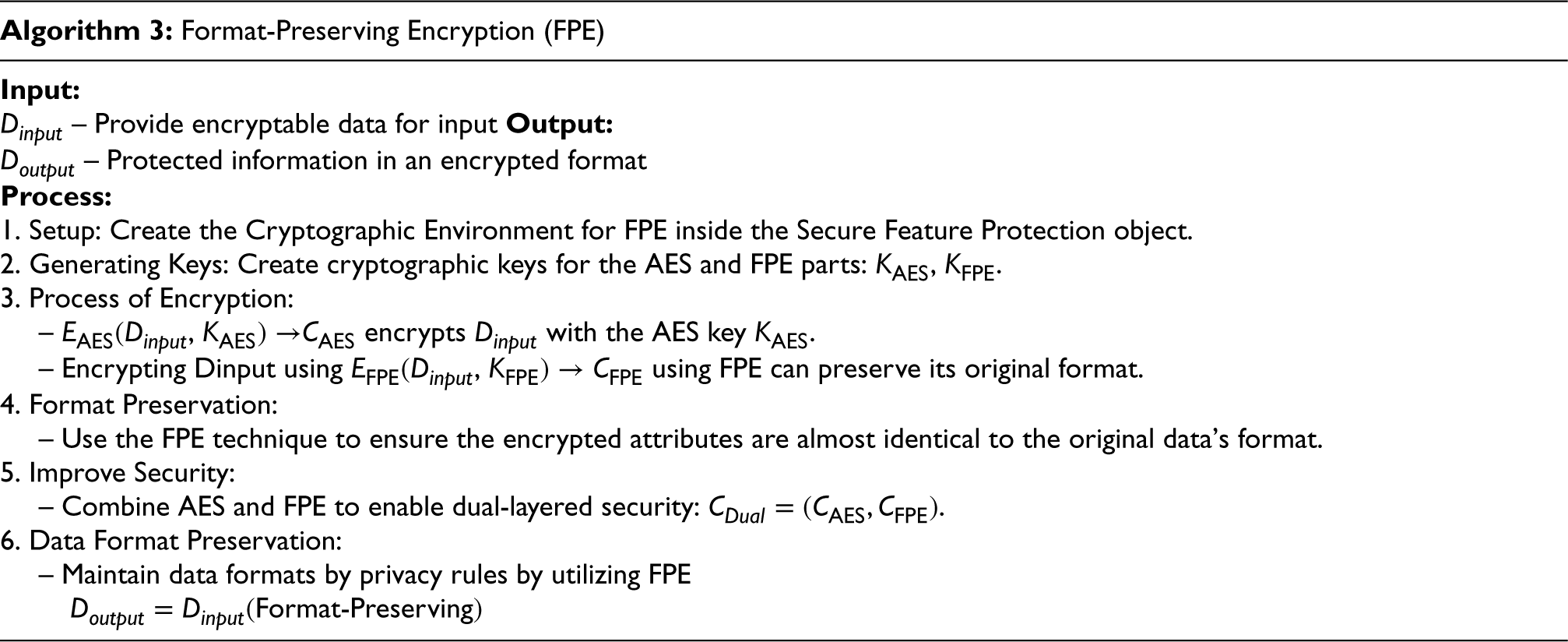
A new and innovative improvement is the addition of Format-Preserving Encryption (FPE) to the encryption method, especially within the Secure Feature Protection entity. With FPE, an enhancement to the widespread Advanced Encryption Standards (AES), data can be encrypted while keeping its original format intact, which is a unique capacity. This innovation is critical as an alternative to conventional encryption techniques, which could change the data format while encrypting. The importance becomes apparent when working with picture features, where preserving their original structure and attributes is critical for further processing and analysis.
FPE introduces a new level of privacy and security by ensuring the encrypted characteristics closely match the original data format. This becomes extremely important when features’ integrity and inherent qualities are crucial for downstream applications. A thorough and durable security framework is established by the Secure Feature Protection entity’s dual-layered security approach, which combines the resilience of AES with the format-preserving capacity of FPE. FPE within the Secure Feature Protection entity enhances the overall security of outsourced features. FPE encrypts data while preserving its original format, ensuring data format integrity is maintained. Benefits of FPE include confidentiality of data, compliance with regulatory requirements, reduction of attack surface, and enhanced security posture. Overall, FPE enables secure storage, transmission, and processing of feature representations, mitigating risks and ensuring compliance with regulations. The combination of AES, which offers a robust and industry-standard level of encryption, and FPE, which maintains the data format, improves the overall security of the outsourced features.
This dual-layered strategy has several advantages. In the first place, the mitigation of risks related to information leakage guarantees the preservation of confidentiality for sensitive details. In addition, the outsourced features are strengthened to make them more resistant to tampering and unauthorized access. To top it all off, FPE helps preserve data formats, which satisfies privacy regulations and guarantees that the outsourced features may be safely integrated into future operations. This novel method of outsourcing privacy-preserving image representation improves the security of outsourced features and makes using them effectively and practically easier.
Privacy-preserving feature extraction
The cloud server significantly influences the secure handling of sensitive data in the context of collaborative feature extraction that preserves privacy. Homomorphic Encryption is a strong method for protecting privacy while characteristics are extracted from data. Unlike previous methods, this one incorporates Secure Function Evaluation (SFE) into the Homomorphic Encryption scheme in a novel way. The SFE enhances Homomorphic Encryption by enabling secure computation on encrypted data, preserving privacy, and protecting against adversarial attacks. SFE allows a wide range of functions and computations to be securely evaluated, offering greater flexibility in scenarios involving secure outsourced computation. By encrypting data and leveraging SFE protocols, parties can securely outsource computations without exposing sensitive information. The feature extraction process becomes more versatile and secure with the addition of this capability, which allows complex computations to be run on encrypted data.
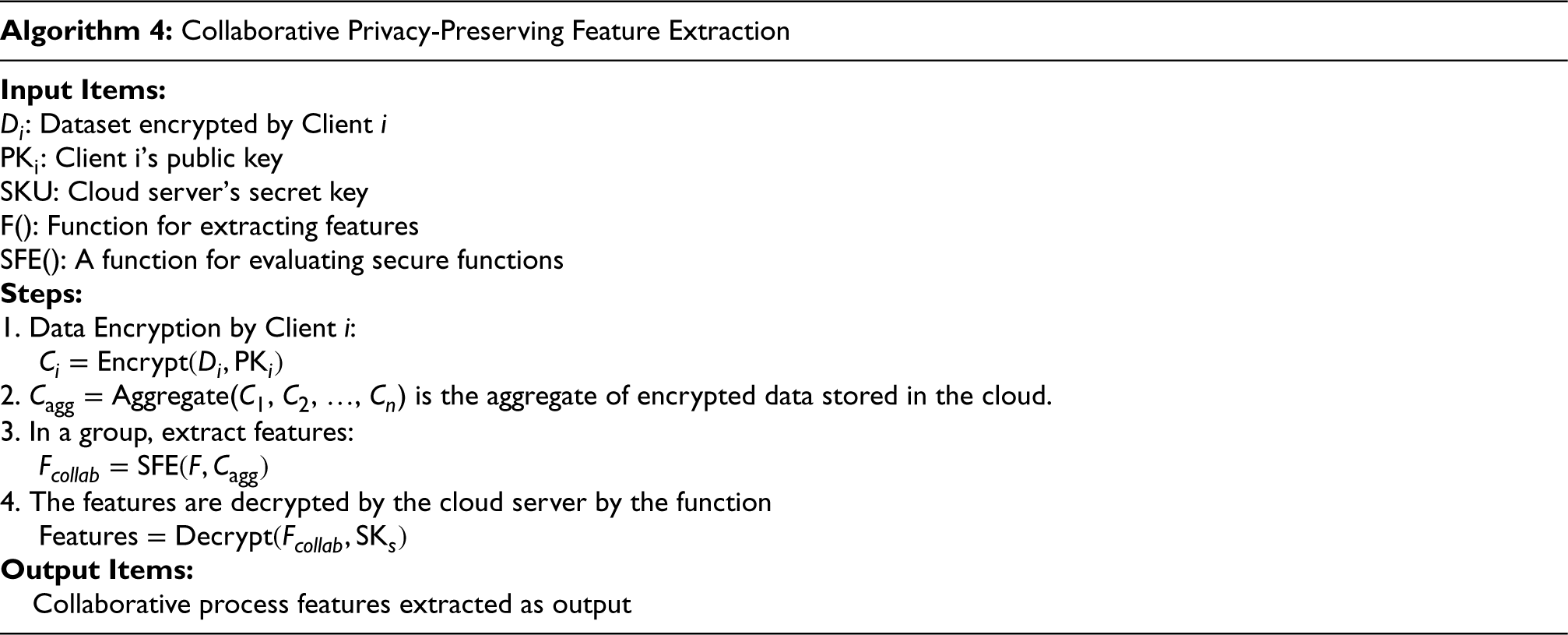
Integrating SFE into the Homomorphic Encryption framework is a huge step forward in protecting sensitive data since it enables sophisticated function computations without decrypting it. This innovative method protects. The original data even during calculation, which allows the procedure to work with encrypted data. SFE is integrated into the Homomorphic Encryption framework, enabling computations to be performed directly on encrypted data while preserving the privacy of the original data. Incorporating SFE also allows secure and privacy-preserving collaborative computation among multiple parties. This approach offers several benefits, including confidentiality, integrity, privacy-preserving collaboration, and compliance with privacy regulations and data protection laws. When the processed data includes sensitive characteristics, like in picture or multimedia applications, the outcome is an elevated degree of privacy and security. Integrating Secure Multi-Party Computation further strengthens collaborative processing capabilities. SMPC is a cryptographic protocol that enables multiple parties to compute a function over their private inputs while keeping those inputs confidential. SMPC provides privacy preservation, security guarantees, flexibility, and a decentralized approach. However, it has limitations like computational and communication overhead, scalability challenges, and trust assumptions. This functionality allows the client and the cloud server to collaborate in coordinated computation while keeping data private. Working together is a huge help with complicated computations or massive datasets that necessitate dispersed processing. In essence, Secure Multi-Party Computation and Homomorphic Encryption, with its SFE extension, work together to provide a safe and private setting for feature extraction from sensitive data stored in the cloud. With this advanced method, the original data remains private even during complicated calculations, and the client and cloud server may work together efficiently, improving the feature extraction process’s security and privacy.
Secure feature protection
The safeguarding of the extracted features’ confidentiality and integrity throughout the storage and transmission processes is ensured by the “Secure Feature Protection” component, which operates on the cloud server. The widely used Advanced Encryption Standards (AES) ensures strong feature protection. Additional security against manipulation and unauthorized access is provided by encrypting the features using a secure and standardized technique.
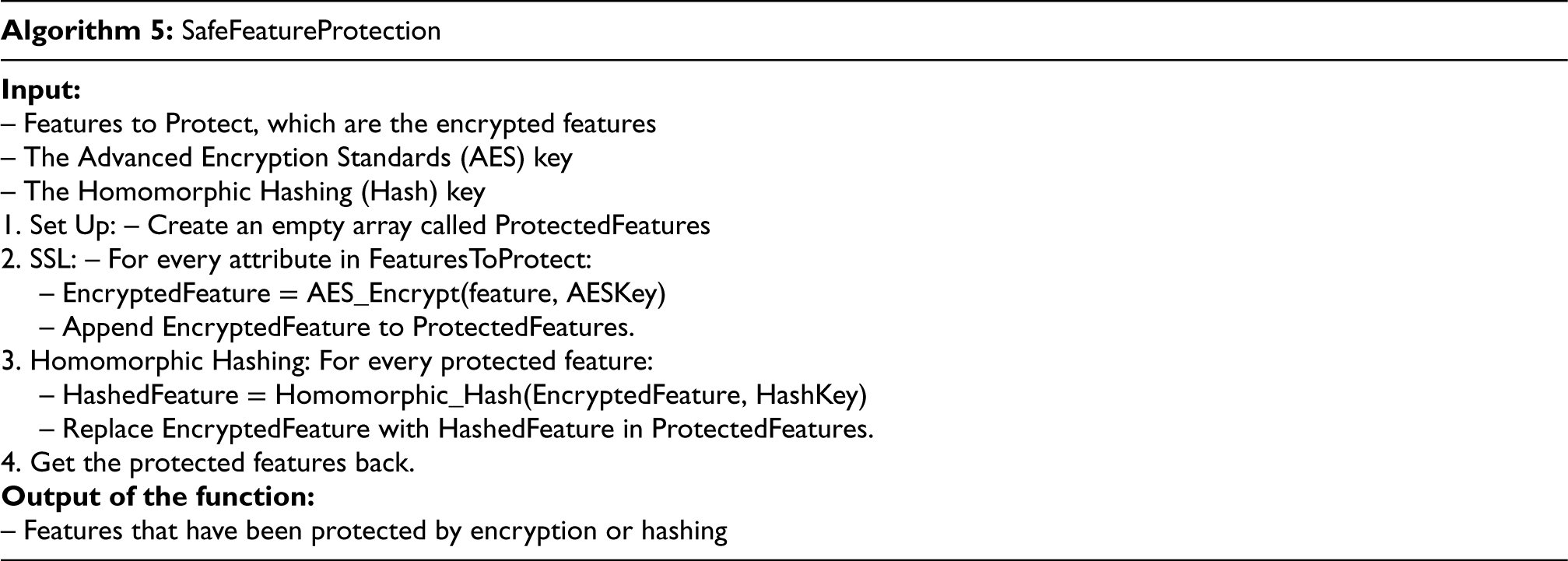
By adding Homomorphic Hashing to the feature protection process, a new and unique step is taken. Homomorphic hash enables hash calculations on encrypted characteristics, unlike conventional hashing algorithms that work on unencrypted data. Allowing hash functions to be executed on the features without decrypting them adds an extra layer of protection. The features can be encrypted and then used to perform operations like hashing. Feature privacy is preserved even during hash computation, and information leaking is prohibited.
Including Homomorphic hash in feature protection can address concerns about possible vulnerabilities during hash computation. Security vulnerabilities are associated with traditional hashing algorithms since they require access to unencrypted data. However, the cloud server can execute hash functions with Homomorphic hash even though it doesn’t directly access the decrypted features. This keeps the features secure and private, even while they undergo critical security activities. A further noteworthy aspect is the connection of Homomorphic Hashing with the overarching objective of protecting the confidentiality of outsourced data. Hash calculations enable the system to keep a high degree of security without sacrificing the information’s secrecy by encrypting characteristics. By strengthening the cloud server’s feature protection mechanism against potential threats and using this novel technique, we can ensure that outsourced features remain secure throughout their lifecycle and improve overall security.
Privacy-preserving communication
The system’s secure communication entity employs a two-pronged strategy to enable the encrypted transfer of picture data and attributes between the client and the cloud server. Traditional protocols like SSL and TLS provide the security of the communication channel by encrypting it with both symmetric and asymmetric keys, making it impossible for other parties to eavesdrop or intercept the data. An innovation that uses quantum features for crucial exchange is Quantum Key Distribution (QKD), which improves the communication channel’s security. QKD allows for the detection of eavesdropping attempts and unconditional security by utilising quantum entanglement (
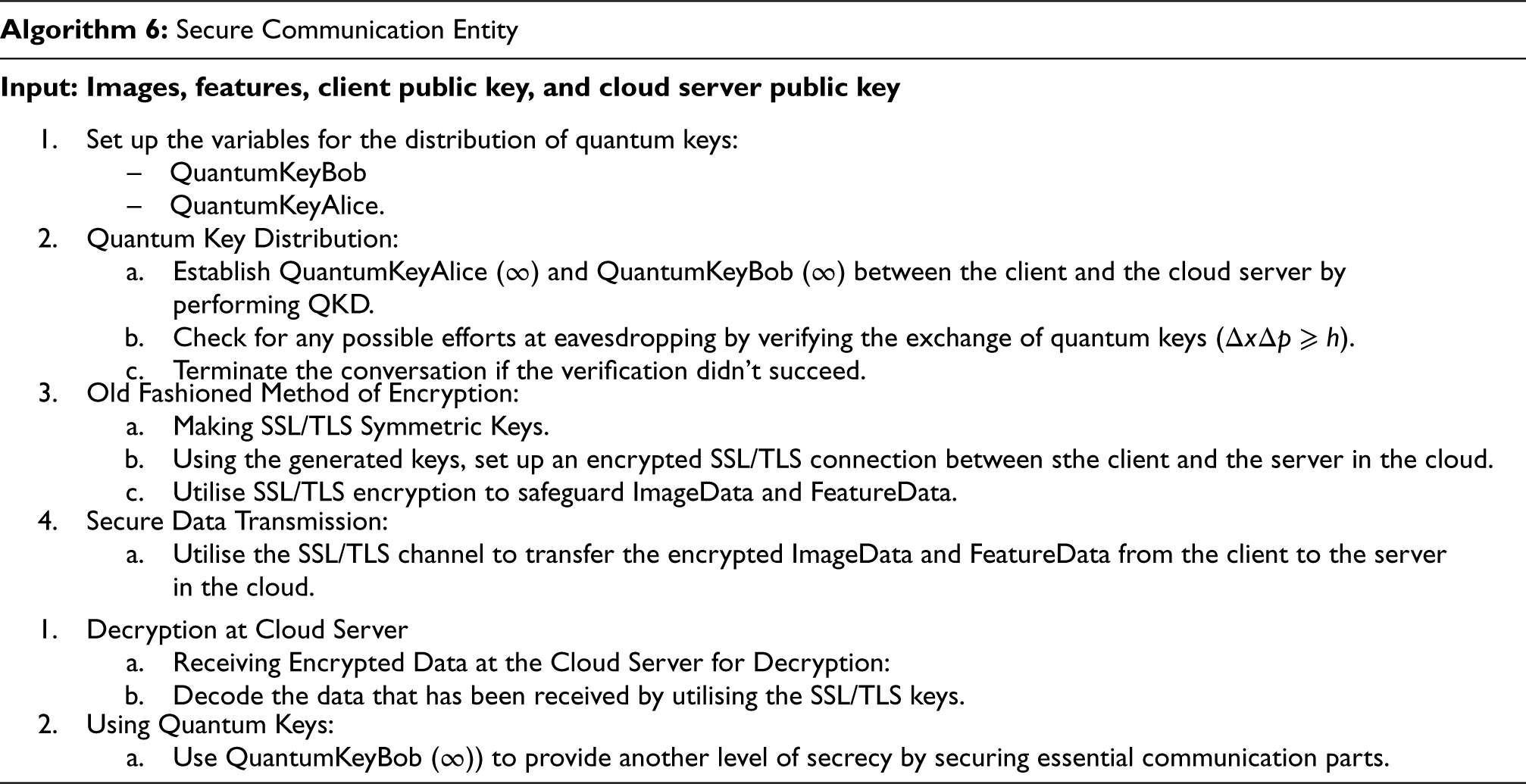
The Access Control and Authorization entity uses Attribute-Based Encryption (ABE) to control who can access the outsourced features in the proposed system. It plays a crucial function in this context. The outsourced features are protected by ABE’s access controls, which are developed and enforced based on attributes such as user roles and characteristics. Only authorised users with these traits are permitted access. Adding Functional Encryption (FE) to the ABE structure is a new improvement to this framework for controlling access. The ability to decrypt data linked with particular functions is introduced by Functional Encryption, which adds a more advanced degree of access control. Compared to conventional encryption methods, which provide access to all encrypted data, FE allows users fine-grained control over which data characteristics can be revealed by enabling selective decryption of predetermined functions.
In practice, only users with specific characteristics are allowed access, and even then, they are limited in the actions they may do with the decrypted data. Customized access is made possible by integrating FE into the ABE architecture. This means that only specified functionalities or parts of the outsourced data can have decryption capabilities assigned to them. This granular access control improves privacy and security by preventing unauthorized access to sensitive data and restricting its exposure. Users with attributes related to managerial roles may have access to decrypt and view specific metrics within the outsourced features. In contrast, users with attributes related to other roles may only have access to functionalities relevant to their responsibilities. Following the concept of least privilege, which states that users should only have access to the resources they need to complete their jobs, and with such granularity in access control, the likelihood of sensitive information falling into the wrong hands is significantly reduced.
Ultimately, a complex and granular access control mechanism is guaranteed by combining Attribute-Based Encryption (ABE) with the innovative addition of Functional Encryption (FE) inside the access control entity. This method adds to the suggested image representation outsourcing framework’s thorough and privacy-preserving access management system by limiting access to authorised users and providing nuanced control over the operations that can be performed on the decrypted data, improving security.
Experimental results
Evaluation metrics are crucial for gauging the efficiency and effectiveness of outsourcing systems that provide private image representation. The metrics offer numerical evaluations of various aspects of the system, including its scalability, computational efficiency, secrecy, and integrity. The following metrics are frequently employed in this setting: Information Leakage Rate (ILR), Entropy of Encrypted Features (Ef), Format Preservation Rate (FPR), and Computational Overhead (CO). Using the data provided by these metrics, decisions may be made about the system’s design, deployment, and optimization. This introduction comprehensively assesses outsourced systems that safeguard privacy in image representation by elucidating the significance, calculation methodology, and repercussions of these evaluation criteria. Advanced cryptographic mechanisms provide robust privacy protection through encryption, key management, authentication, integrity protection, non-repudiation, secure computation, anonymity, pseudonymity, and privacy-preserving protocols. These features enable individuals and organizations to safeguard their privacy effectively in a digital world. This research uses several datasets, including SecureImageSec, Produce-1400, COIL Dataset, GPR1200, and CIFAR-100, all with distinct features that allow thorough examination.
Information leakage rate (ILR)
The Information Leakage Rate (ILR) is an essential metric for gauging how susceptible privacy-protecting image representation outsourcing systems are to the exposure of private data. Among the most critical metrics, ILR shows how well the system prevents unauthorised users from accessing sensitive information. Using ILR, one may quantitatively measure the system’s security posture by comparing the proportion of leaked features to the total number of features in the outsourced dataset. A higher ILR suggests a higher chance that sensitive information could be disclosed, which could be a sign of vulnerabilities in the data security systems. When the ILR is low, sensitive information is better protected, and the system is more secure overall. To reduce the likelihood of data breaches and unauthorized access, stakeholders should monitor and analyze ILR to find weak spots and strengthen data security. If privacy-preserving image representation outsourcing is to be considered, ILR is an essential measure of how well the system protects sensitive information and keeps it secret.

For every dataset, the Information Leakage Rate (ILR) was computed as part of the experimental assessment of data confidentiality maintenance in the privacy-preserving image representation outsourcing system. For the proposed system’s 1000-feature dataset, an ILR of 2% was discovered, suggesting a moderate likelihood of information leakage. Out of the total, 20 features were found to have been leaked. The Produce-1400 dataset, which also has 1200 features, had 30 leaked features and an ILR of 2.5%. It is worth mentioning that the COIL Dataset showcased the lowest ILR at 1.875%, with a mere fifteen out of eight hundred features leaking.
In contrast, the GPR1200 dataset showed a slightly higher ILR of 2.67%, with 40 out of 1500 features leaking. Also, out of 1100 features, 25 were leaked in the CIFAR-100 dataset, resulting in an ILR of 2.27%. Our findings highlight the importance of implementing strong security measures to protect privacy-preserving image representation outsourcing systems against breaches and unauthorised access to data, as information leakage levels can vary significantly among datasets. Figure 2 depicts the Information Leakage Rate (ILR) of Different datasets. Table 1 shows the Comparison of ILR values for different datasets.
Comparison of ILR values.

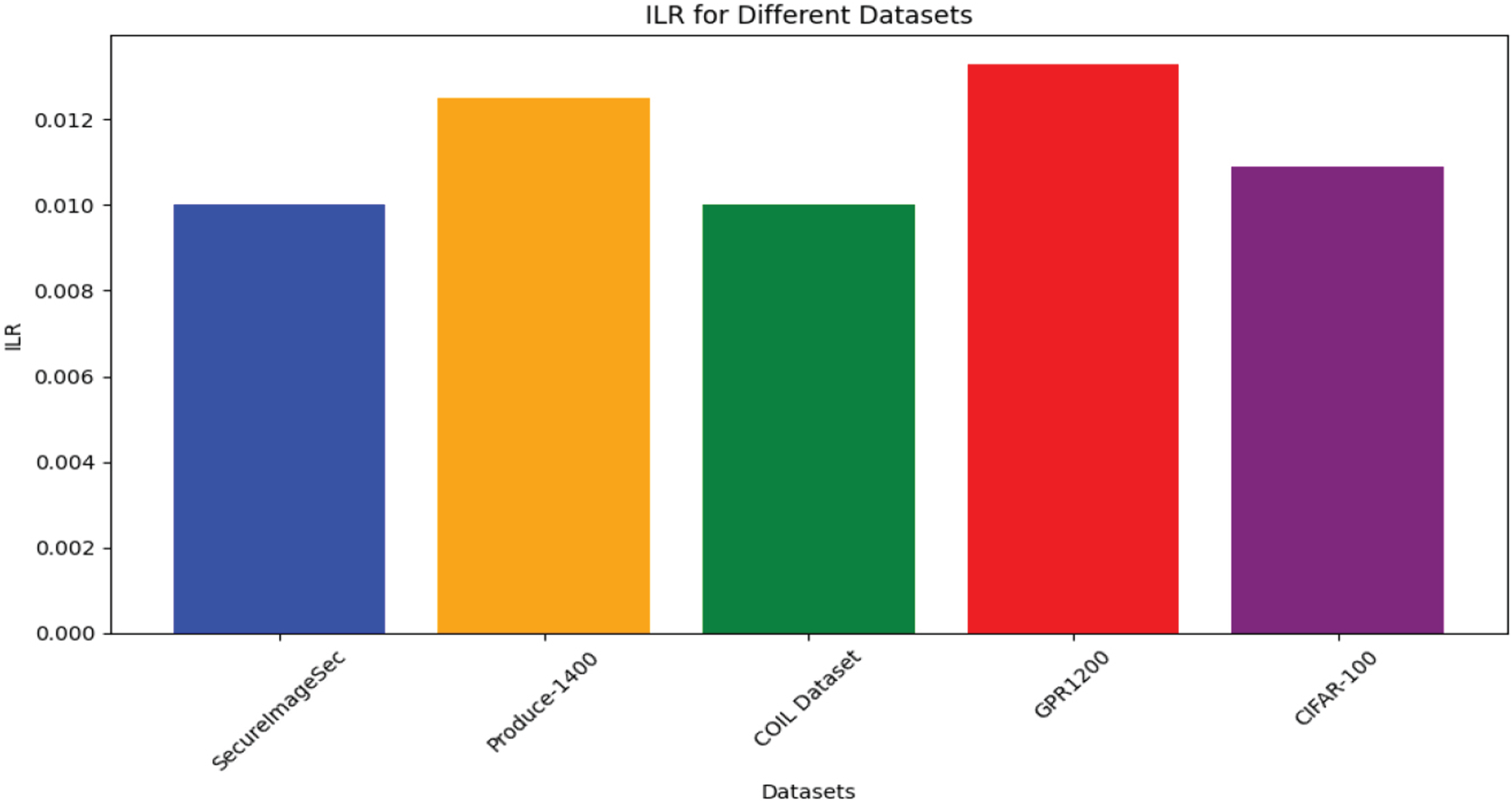
Information leakage rate (ILR) of different datasets.
To assess the cryptographic robustness and randomness of the encrypted feature set, the Entropy of Encrypted Features (Entropy) is an essential parameter in privacy-preserving image representation outsourcing. A system’s security and resilience to adversarial assaults are affected by this metric, which quantifies the complexity and degree of unpredictability in the encrypted characteristics. If the Entropy number is high, an adversary will have difficulty deducing or manipulating the original picture characteristics from the encrypted representation. Stakeholders can learn how well the encryption system protects the confidentiality and integrity of data in the outsourced context by measuring the entropy. When outsourcing sensitive picture data, the Entropy metric guarantees strong security measures arnd keeps the data private. The following is the formula for determining the Entropy of Encrypted Features (Entropy):

Where,
Comparison of entropy values.


Entropy of different datasets.
Additionally, the framework’s scalability may be challenged when the number of users or the size of the picture database grows exponentially. To address these shortcomings, optimization techniques, algorithmic improvements, and hardware acceleration can enhance the framework’s performance and scalability, making it more suitable for real-world applications. Alternatively, the COIL Dataset stands out with an entropy of 4.2 bits, demonstrating outstanding encryption efficiency and the ability to generate robust and unpredictable encrypted features. However, the GPR1200 dataset shows a lower entropy of 3.8 bits, meaning its encrypted feature set is less robust and more erratic. Finally, the CIFAR-100 dataset boasts an entropy of 4.1 bits, comparable to SecureImageSec, and suggests a strong defense against inference assaults. These results highlight the significance of entropy analysis as a measure for assessing the robustness and safety of outsourcing systems for privacy-preserving picture representation. Table 2 describes the Entropy values of different datasets. Figure 3 illustrates the Entropy of Different datasets.
Comparison of FPR values.


Format preservation rate (FPR) of different datasets.
Format Preservation Rate (FPR) is an essential parameter for assessing the authenticity and reliability of encrypted picture representations in the privacy-preserving image representation outsourcing field. Regarding outsourcing, FPR measures how well important visual qualities stay intact by measuring how much of the original image’s format and structure is kept after encryption. As a key performance indicator (KPI), it measures how well encryption methods maintain the visual quality and usefulness of encrypted picture data for subsequent uses. A higher FPR value means that the encrypted picture representations are more accurate, which means they can be easily integrated and analysed in the following phases of image processing. Through FPR’s assessment, interested parties can learn which encryption methods are most suited to protecting the usefulness and aesthetics of outsourced image data from prying eyes. To ensure that encrypted image data is both secure and usable, FPR is considered a foundational parameter in the thorough evaluation of privacy-preserving image representation outsourced systems.

Where,
The total number of features that have been kept in encrypted form is indicated by the number of preserved features.
The Total number of features indicates the sum of all the feature counts in the raw image data.
Comparison of CO values.

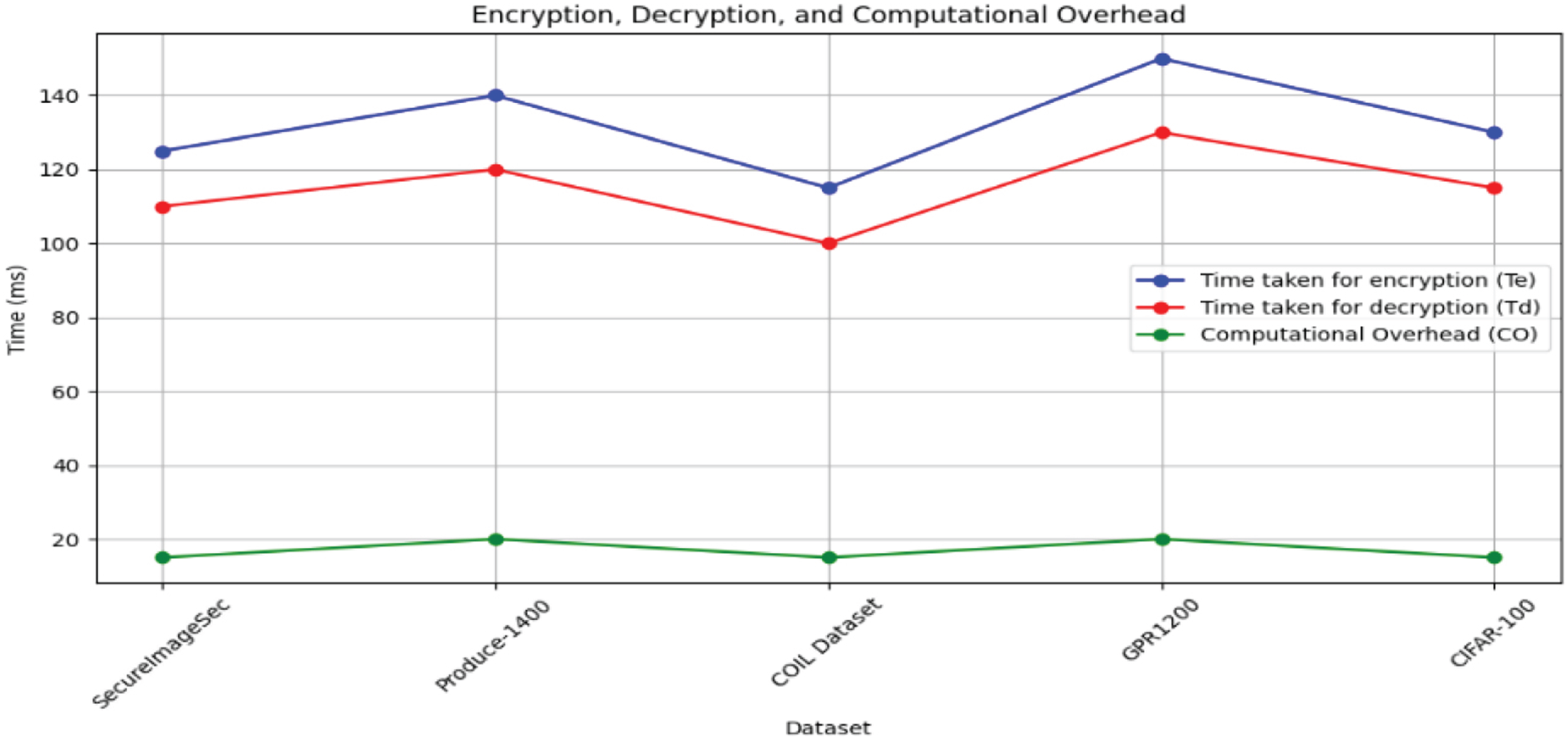
Time taken for encryption, decryption and computational overhead of different datasets.
The Format Preservation Rate (FPR) of “SecureImageSec,” the suggested system, was assessed with other datasets. With an impressive FPR of 0.98 (98%) achieved, SecureImageSec displayed exceptional performance. This outcome demonstrates how well SecureImageSec maintains the original data format while encrypting it with minimum deformation. On the other hand, the FPR values for the remaining datasets were marginally lower: 0.94 (94%), 0.92 (92%), and 0.96 (96%), respectively, for the Produce-1400, GPR1200, and CIFAR-100 datasets. The datasets in question performed admirably, but SecureImageSec proved its mettle by outperforming them and preserving data format integrity. As for data format preservation, SecureImageSec was still ahead of the pack; however, the COIL Dataset did well with an FPR of 0.96 (96%). To improve privacy protection in picture outsourcing settings, our results highlight how superior SecureImageSec guarantees the authenticity and integrity of encrypted image represntations Table 3 and Figure 4.
Computational Overhead (CO) is an essential parameter for evaluating the computational resources used by encryption algorithms and protocols in the context of privacy-preserving picture representation. Encryption procedures, including essential creation, encryption, decryption, and associated cryptographic activities, create an extra computational cost, which is measured as CO. Because encryption is so vital for protecting sensitive image data when outsourcing, it is necessary to evaluate the computational cost of encryption methods to make sure they work well in practice. Processing time, resource use, and energy expenditure can all be affected by high CO values, which in turn affect system performance and scalability. Building secure, efficient, and privacy-preserving image representation systems requires a thorough understanding of CO and its mitigation. To thoroughly evaluate encryption algorithms for privacy-preserving image representation, this introduction lays the groundwork for CO evaluation, an essential parameter Figure 5 depicts the time taken for Encryption, Decryption, and Computational Overhead of Different datasets. Table 4 describes the time taken for encryption, decryption, and Computational Overhead. Computational Overhead (CO) can be calculated using the following formula:

Where,
In conclusion, SecureImageSec offers a comprehensive solution to the difficulties associated with maintaining confidentiality and integrity while outsourcing image representation. SecureImageSec protects data format and privacy by using cutting-edge techniques, including Fully Homomorphic Encryption (FHE), Secure Multi-Party Computation (SMPC), Advanced Encryption Standards (AES), and Format-Preserving Encryption (FPE). Experimental validation shows SecureImageSec’s low Information Leakage Rate (ILR) of 0.02 for a feature dataset, demonstrating low information leakage. Additionally, SecureImageSec attains a noteworthy entropy of 4.5 bits, highlighting its capability to ensure the encrypted feature set possesses robust cryptographic strength and randomness. This study lays out a private and secure framework for feature extraction and protection in privacy-preserving image representation outsourcing, which includes methods like Content-Based Image Retrieval (CBIR). SecureImageSec can meet cloud image processing and retrieval needs while protecting sensitive visual data. However, complex encryption and security measures may increase computational cost and processing time. Future research could optimise these disadvantages, improve scalability for larger datasets, and integrate upcoming technologies like quantum encryption for enhanced security. Research on enhancing SecureImageSec’s user experience and usability would benefit real-world deployment and uptake. SecureImageSec lays the groundwork for privacy-preserving image representation outsourcing systems and cloud-based image processing.
Footnotes
Authors’ contributions
Vijay K is responsible for designing the framework, analyzing performance, validating the results, and writing the article. K. Jayashree is responsible for collecting the information required for the framework, providing software, conducting critical reviews, and administering the process.
Funding
The authors did not receive any funding.
Conflict of interest
Authors do not have any conflicts.
Data availability statement
No datasets were generated or analyzed during the current study.
Code availability
Not applicable.