



Abstract
Integrating renewable energy sources like solar power into the grid necessitates accurate prediction methods to optimize their utilization. This paper proposes a novel approach that combines Convolutional Neural Networks (CNN) with the Ladybug Beetle Optimization (LBO) algorithm to forecast solar power generation efficiently. Many traditional models, for predicting power often struggle with accuracy and efficiency when it comes to computations. To overcome these challenges, we utilize the capabilities of CNN to extract features and recognize patterns from past irradiance data. The CNN structure is skilled at capturing relationships within the input data allowing it to detect patterns that are natural in solar irradiance changes. Additionally, we apply the LBO algorithm inspired by how ladybug beetles search for food to tune the parameters of the CNN model. LBO imitates how ladybug beetles explore to find solutions making it effective in adjusting the hyperparameters of the CNN. This research utilizes a dataset with solar irradiance readings to train and test the proposed CNN-LBO framework. The performance of this model is assessed using evaluation measures, like Mean Absolute Error (MAE), Root Mean Squared Error (RMSE), MAPE, and
Introduction
The rising interest, in energy sources concerns about the environment and goals for energy have sparked a significant focus on solar power as a clean and abundant alternative [1]. Photovoltaic (PV) systems have been widely adopted across commercial and industrial sectors contributing to a more diverse energy mix and reducing reliance on fossil fuels. Grid operators use forecasting to estimate and plan energy output efficiently [2]. Precise solar forecasting allows operators with assets to optimize their device control perception consistently. Solar forecasts remain reliable amidst differences in grid capabilities. These forecasts convert conditions into the plants electricity output helping the solar industry predict plant efficiency under environmental conditions [3, 4, 5].
To seamlessly integrate power into the grid accurate forecasting techniques are vital, for optimizing energy generation, consumption and distribution. Solar power predictions empower grid operators, energy traders and stakeholders to make decisions regarding energy scheduling, resource allocation and ensuring grid stability [6]. Traditional methods, for predicting power often rely on approaches or physical models which may struggle to capture the intricate temporal and spatial dynamics present in solar irradiance patterns. Additionally, these methods may lack the flexibility needed to adapt to changing conditions and face limitations in terms of scalability and computational efficiency [7, 8].
In response to these challenges researchers are increasingly turning to machine learning and optimization techniques to improve the accuracy and efficiency of power prediction models. Convolutional Neural Networks (CNN) a type of deep learning technique has demonstrated capabilities in extracting patterns and spatial relationships from high dimensional data [9, 10]. This quality makes CNN particularly well suited for tasks involving power prediction. Furthermore, nature inspired optimization algorithms have emerged as tools for optimizing machine learning model parameters providing robustness and scalability in optimization processes. An example of such an algorithm is the Ladybug Beetle Optimization (LBO) algorithm, inspired by the foraging behavior of ladybug beetles, in nature. LBO replicates the exploration exploitation balance observed in systems enabling parameter tuning and model optimization [11].
This study introduces a framework that combines CNN with the LBO algorithm for energy solar power prediction. By combining the power of learning to extract features and recognize patterns, with the optimization capabilities of LBO, for refining models our method seeks to improve the precision, validation and computational effectiveness of power prediction systems. This strategy enhances the accuracy of term power forecasts and strengthens the dependability and consistency of integrating solar power into the grid.
The rest of the paper is arranged as follows: Section 2 reviews related work; Section 3 covers materials, methodologies, and the CNN-LBO framework. Section 4 covers the experimental setup, findings, and performance analysis. Section 5 provides the conclusion and directions for future research.
Literature review
Solar power prediction has garnered significant attention from researchers and practitioners due to its critical importance in optimizing solar energy integration into the grid and improving the overall efficiency of renewable energy systems. This section reviews the existing literature on solar power prediction techniques, focusing on deep learning approaches and optimization algorithms [12, 13].
Ozbek et al. [14] presented a supervised neural method with an LSTM deep net – the method aimed to predict the electricity generation of a 1.15MW solar PV power plant one hour ahead. Two distinct data-driven methodologies, adaptive ANFIS and fuzzy c-means with grid partition, were integrated with the recommended deep neural network. Empirical data is used to confirm the accuracy of the data generated by the models. The comparison results showed that the approach described yielded the most favorable results. A multi-stage model is proposed for co-planning wind stations, energy storage systems, and power line construction, including severe weather events [15]. A deep learning model using TLSM systems is outlined for predicting annual peak loads. The proposed model’s MILP method is solved using the Wielders Transform. The effectiveness of the proposed model is evaluated using a customized IEEE RTS experimental configuration.
Weng et al. [16] proposed a wind power time-series architecture with BiLSTM to tackle energy consumption issues. Renewable energy will play a crucial role in the future energy system, particularly by introducing urban energy networks. Renewable power sources such as wind have not significantly contributed to the energy supply owing to their unreliability and instability. The secure running of the power system relies on precisely forecasting wind power generation. The findings are drawn using wind data gathered by the urban energy networks. A technique based on Deep Learning for maximizing and controlling power was suggested by Ashok et al. [17]. These controllers use many control strategies, including monitoring voltages, phases, and frequencies on both sides of the fixed switch to ensure system stability. Establishing a sustainable energy economy via the widespread use of renewable energy sources requires regulatory structures that are effective and efficient. Predictive analysis emphasizes the need for control techniques to establish a reliable and efficient micropower system.
Shekher et al. [18] proposed integrating deep learning models, such as CNN and RNN algorithms, to overcome the gap in power usage predictions. The CNN stack exhibits the best accuracy level among the evaluated models when predicting energy consumption and solar power production. It has an average absolute percentage deviation of 1.71%, a MAE of 0.015%, and a RMSE of 0.23%, respectively. However, in the context of energy generation from wind turbines, the recurrent neural network stands out as the most precise model. The score is 0.070, with a median absolute percentage error of 2.65. Moreover, the MAE and ABE both have a root value of 0.38. The research employed training and validation data on solar power production and wind turbine power generation, which the International Renewable Energy Organization gave.
Wang et al. [19] proposed an advanced hybrid prediction system that incorporates meteorological factors throughout its development. The constraints of single-data dimension prediction are overcome by introducing a feature selection module. This module allows for selecting features and assigning weights to external meteorological parameters during the forecast process. Second, to develop deterministic combinatorial prediction models, both shallow and deep learning models are used flexibly, and multi-objective intelligent optimization procedures are proposed. To successfully satisfy the requirements of a wide variety of consumer information, the module can effectively enhance the diversity of prediction models while simultaneously completely weighing the accuracy and stability of prediction. In conclusion, an interval prediction model is developed in order to further enrich the PV power forecast system from the point of view of uncertainty analysis [20, 21].
This review of literature showcases methods employed in predicting power encompassing traditional techniques, deep learning strategies and optimization algorithms. While conventional approaches offer forecasts, machine learning and deep learning methods enhance precision and scalability. Incorporating optimization algorithms boosts the effectiveness and productivity of models used for forecasting power. The suggested model that merges CNN, with the Ladybug Beetle Optimization algorithm seeks to harness the advantages of learning and nature inspired optimization, for prediction of solar energy.
Materials and methods
In the methodology section the process is detailed for creating the data preprocessing steps introducing a power prediction framework that focuses on energy efficiency using a Convolutional Neural Network (CNN) and the Ladybug Beetle Optimization (LBO) algorithm. This section covers aspects such, as data preprocessing, designing the model architecture optimizing parameters conducting training sessions and evaluating the results.
Data preprocessing
In the power field getting the data ready, for analysis or modeling involves a series of steps like cleaning, transforming and organizing it. This includes filtering out any data points and selecting the important features for estimating loads later on. In 2019 Nova Scotia Community College gathered 23,400 recordings in Halifax during daylight hours with a 10-minute interval between readings. Any data that looks unusual should be removed away to avoid causing issues during model building and potentially leading to overfitting. Outdated assets are left out during the selection process. A good feature selector helps improve prediction accuracy and speeds up the process by focusing on features. It’s important to divide the dataset into training, validation and test sets, for training models and evaluating their performance.
CNN method
This segment delves into the forecasting of power using Convolutional Neural Networks (CNN) which involves employing learning methods to enhance the precision and dependability of solar power prediction. Predicting power is essential, for energy management grid stability and integrating renewable energy sources into the grid. CNN utilizes convolution and pooling as techniques for extracting features within the model. Pooling layers reduce the size of feature maps generated by layers. This reduction aids in simplifying the networks calculations while preserving information. By encapsulating features in each area pooling layers improve the model’s consistency concerning translation and resilience to adjustments. Connected layers amalgamate extracted features from layers and facilitate abstract thinking at a higher level. In power prediction connected layers merge spatial and temporal data to capture intricate temporal dependencies and correlations. The quantity of neurons in layers alongside activation functions determines the networks’ ability to represent nonlinear connections within data sets. The output layer of CNN estimates forthcoming values for power generation over a specified forecast period. Depending on the forecasting objective the output layer could include one neuron, for predicting a value or multiple neurons for predicting time series simultaneously.
Creating a CNN model to predict power involves selecting the network structure adjusting key parameters and using methods, like regularization and optimization to make sure forecasts of solar energy generation are precise and dependable. It’s important to go through a trial-and-error process considering real world scenarios and expert knowledge to guarantee the model works effectively in situations. Depending on the input, the convolutional layers provide output, and a unit centered at
In Eq. (1), * represents the convolutional operator,
Fully connected layers: Prediction mode and a fully connected layer are used to safely identify nodes using the abstractive characteristics extracted from convolutional layers. The outcome of a connected layer is represented by the expression
In this context
Classification model of CNN.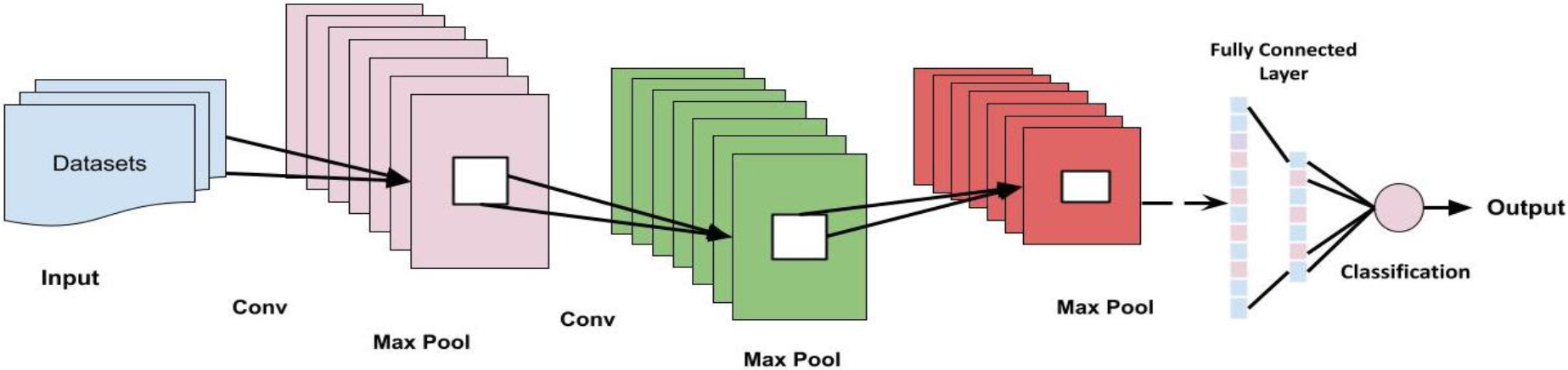
The developed approach integrates new versions of XGBoost and attention processes significantly to improve the CNN model’s performance in classifying solar power datasets. For the classification job described in this technique, the final pre-processed dataset is used to train the CNN model by the architecture shown in Fig. 1.
In this section, Ladybug Beetle Optimization (LBO) [22] was applied after classification using the CNN approach to optimize further the results obtained from the CNN classifier. The LBO is applied to optimize the parameters or hyperparameters of the CNN model to improve its performance further. LBO can optimize parameters such as learning rates, filter sizes, dropout rates, and other architectural parameters of the CNN model. In this case, a uniform random update is made to the ladybug population in the search space. The fitness function is determined by verifying the ladybug population. Also, everyone is escorted in an organized manner to the hot zone. The ladybugs’ ability to migrate from one spot to another is a result of their coordinated nature. Ladybugs create a distinctive signal that they use to follow one another. At this point, the member seen at the beginning may feel the hottest part more than the others. This model incorporates a mutation process to achieve a balance between the exploration and exploitation sectors.
At each stage, the ladybug’s location is refreshed and confirmed. Afterward, the goal function values are utilized to choose the excellent group after fusing the current and existing ladybug positions. The new position is used here to validate and update the next iteration. A whole member of the population is selected using the created model to update the population in all iterations.
The mathematical representation, for the location of the
In this case
In this method the roulette wheel selection process is used to choose
In this case the favourable goal, in the phase is referred to as
Workflow process of the proposed model.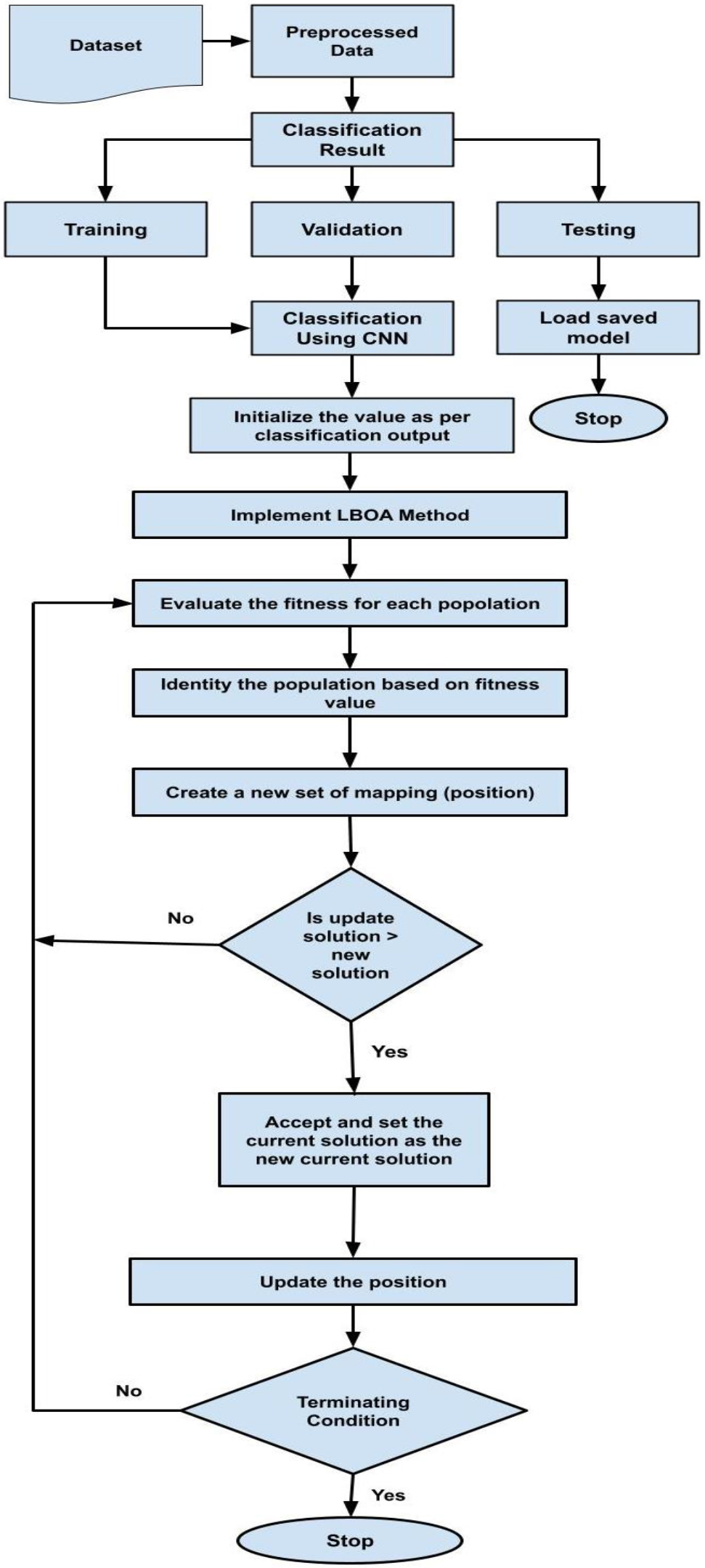
Exploring the unexplored places in the search area of the ladybug population throughout the mutation process might be a challenging task in the updation phase. These programs efficiently accelerate the search operation and also randomly conduct mutation. The number of decision variables, in the
In this scenario the mutation rate is denoted as
In this scenario the term
In this case the phrase
The experimental results are obtained using a MATLAB-developed model and a 2.0 GHz Intel Core i3 CPU with 8 GB of RAM. During 2019 at Nova Scotia Community College (NSCC), 23400 recordings were collected in Halifax during daylight hours with a 10-minute solar interval. The data records are used to apply the suggested model. With a total of 5240 values (3668 for training and 1572 for testing), we analyzed the solar power generation predictions hourly for both the winter and summer seasons. Various matrices, including MPE, RMSE, MAE, and
Simulation parameters of CNN-LBO
Simulation parameters of CNN-LBO
The CNN-LBO model is proposed to analysis using evaluation measures including MPE, RMSE, MAE, and
Solar power prediction has been based on two distinct seasons: winter and summer. The results were analyzed using these seasons. For the purpose of determining the model’s accuracy, only data from a single month is taken into consideration out of the full season. The month of December is regarded as the winter season, whereas May is considered the summer season. Figure 3 presents a comparative examination of the suggested approach on a cold day compared to existing methods. Figure 4 presents a comparative study of several approaches used to determine the proposed method’s performance accuracy throughout the summer.
Tables 2 show the two models’ performance requirements for the winter and summer days, respectively. The data across all performance metrics on both days clearly show that the CNN-LBO model performs the best.
Performance evaluation of both winter and summer day
Comparison analysis of winter day.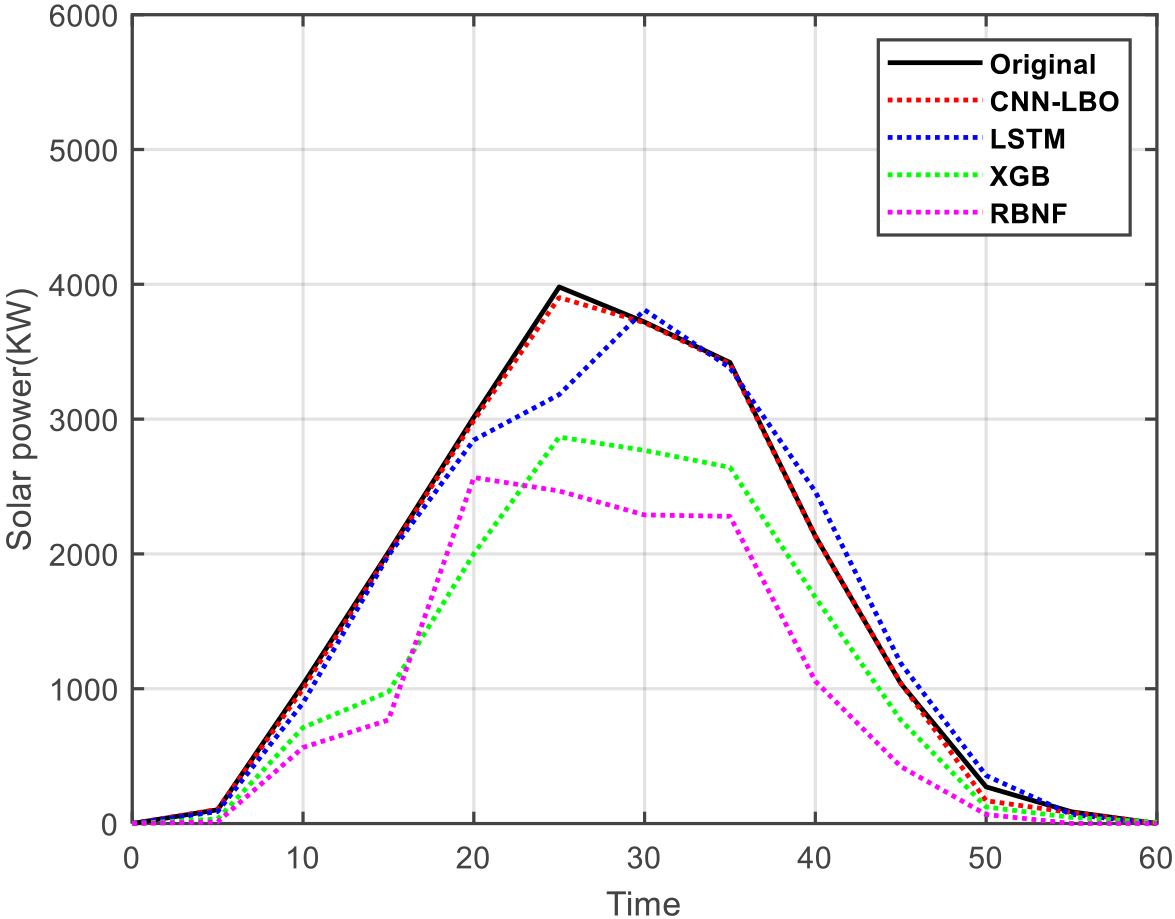
Comparison analysis of summer day.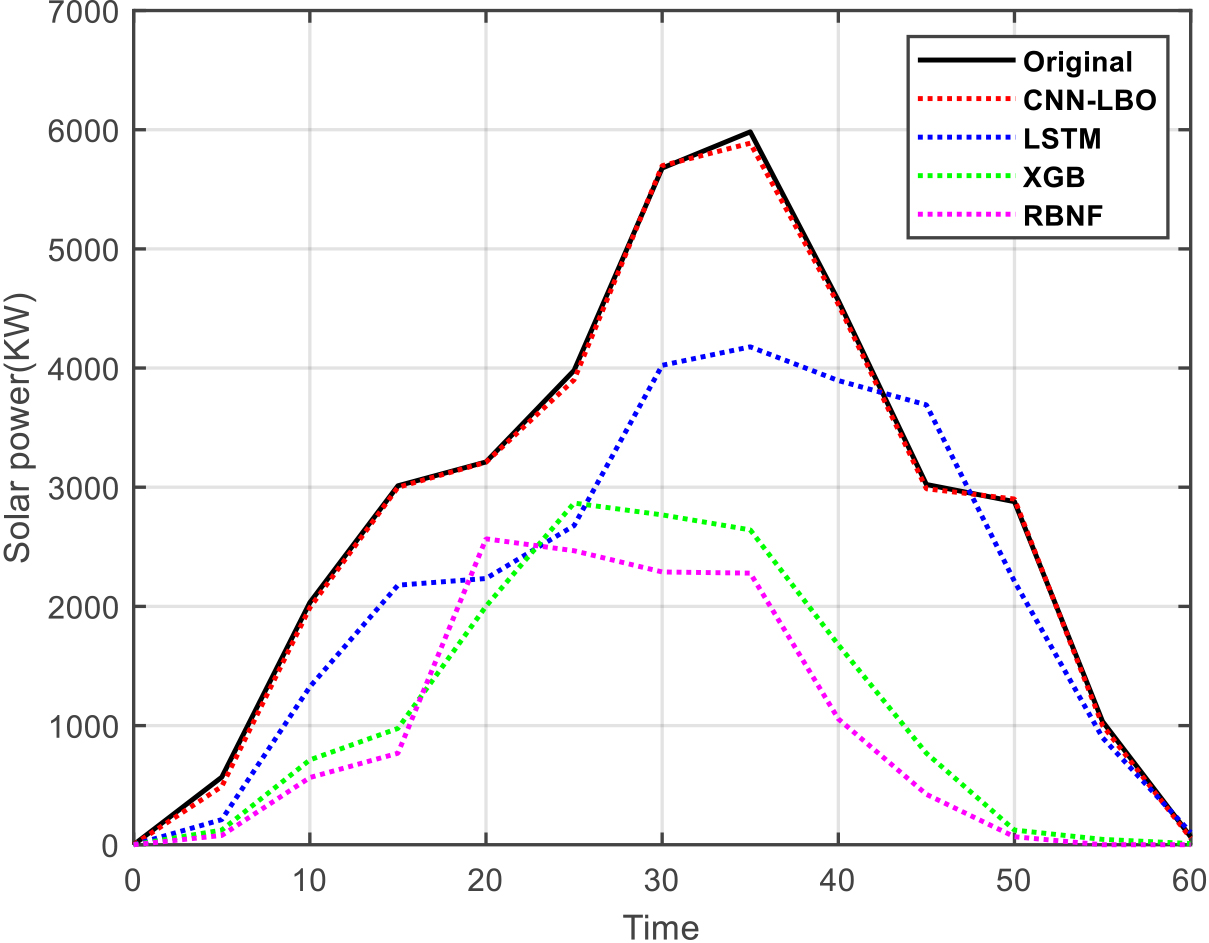
The challenging problem lies in attaining reduced temporal complexity rather than only focusing on enhancing accuracy in classification tasks and reducing error rates for solar forecasting data. Consequently, we compared the time complexity between the proposed model and the baselines – the evaluation of the models’ training and testing durations, which are shown in Table 3. The training and testing times of the Proposed CNN-LBO method were compared with those of the LSTM, XGB, and RBNF methods.
Various methods of training and testing time
The study individual undergo training, followed by a series of experiments done using the dataset. Figures 5 and 6 show the test accuracies of several approaches, together with the training loss and validation loss.
Comparison analysis of training loss.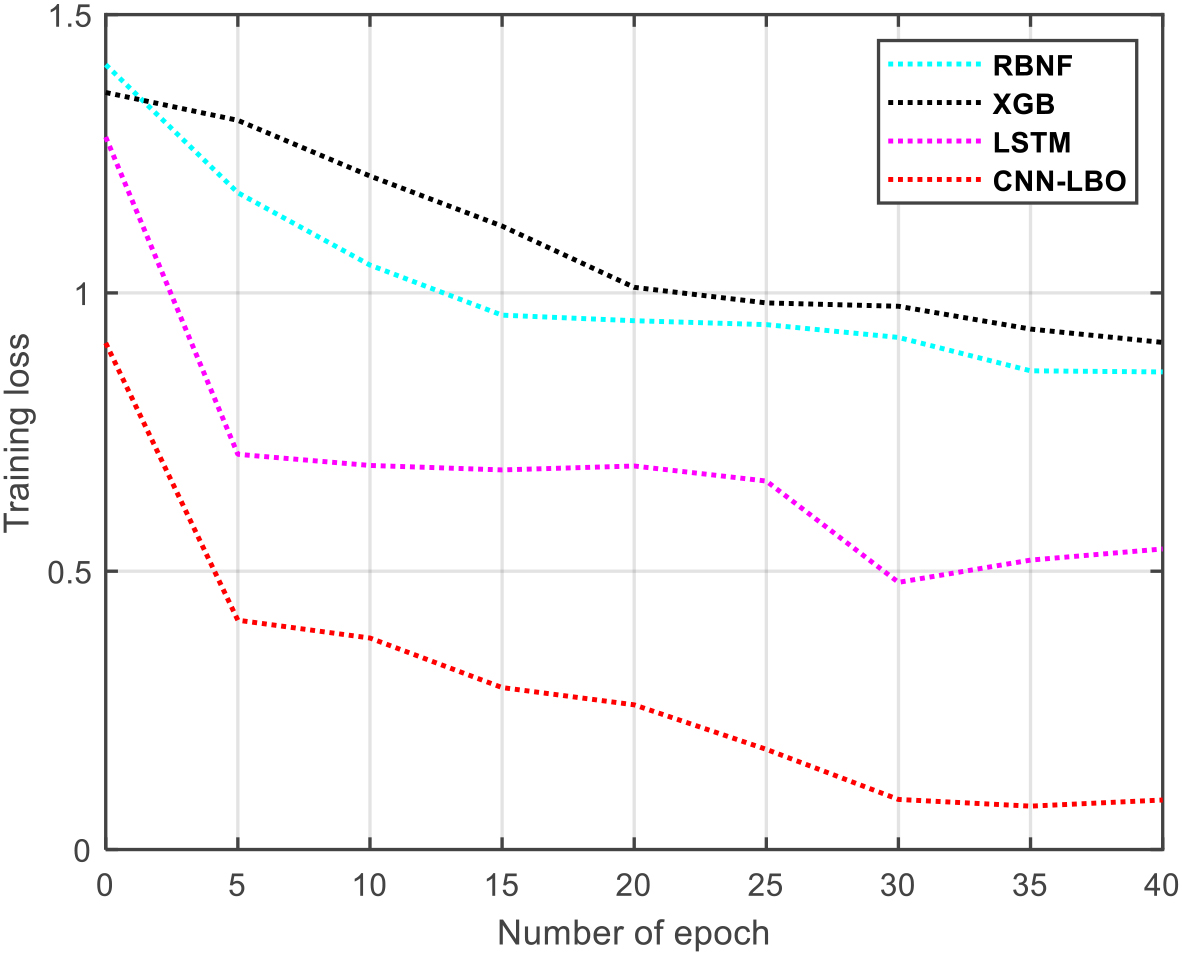
Comparison analysis of validation loss.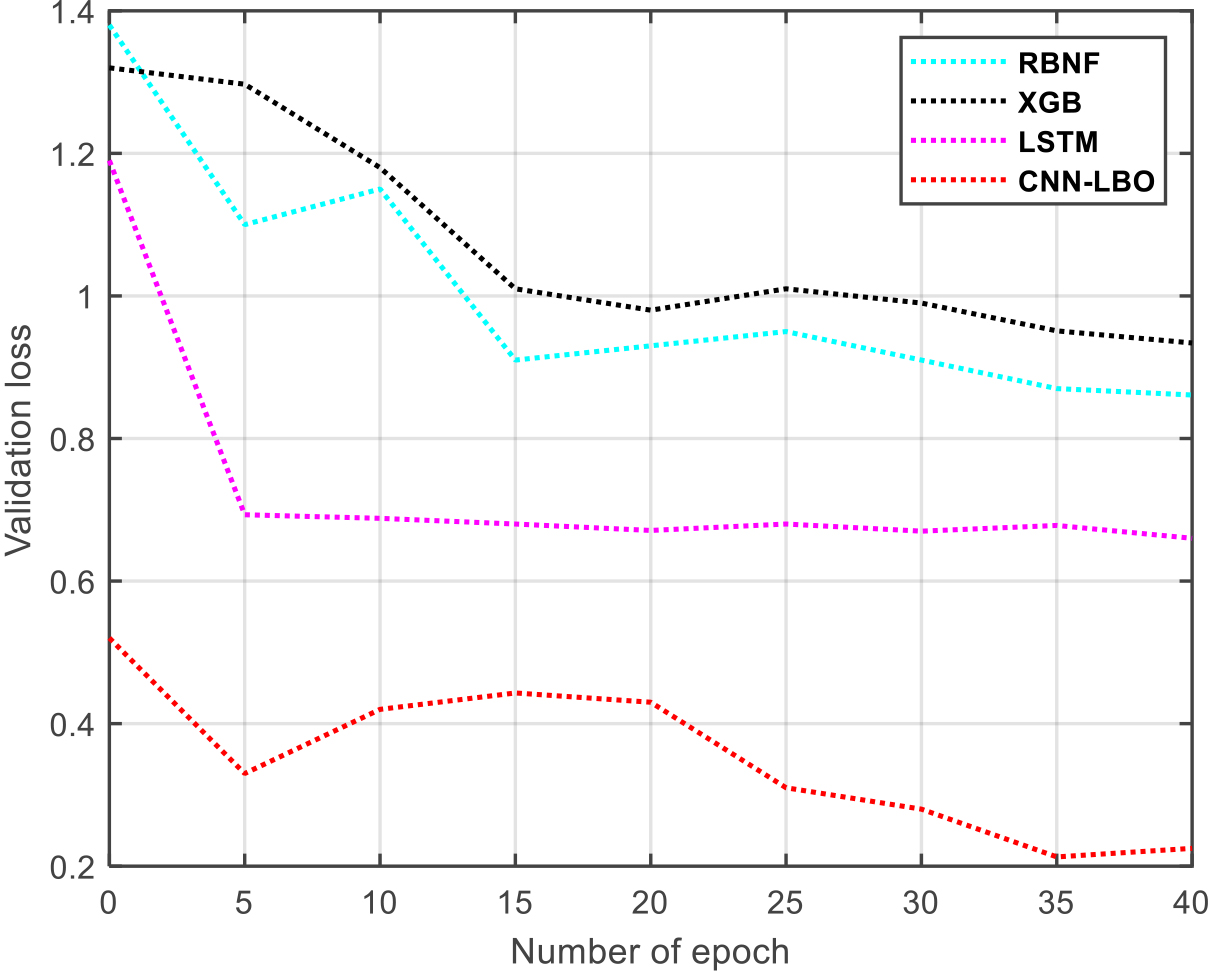
In this paper, the integration of renewable energy sources like solar power into the energy grid necessitates accurate forecasting techniques to optimize energy utilization and grid stability. In this study, we proposed a novel framework for energy-efficient solar power prediction using Convolutional Neural Networks (CNN) and the Ladybug Beetle Optimization (LBO) algorithm. Through the integration of CNN, our framework leverages the representational power of deep learning to extract spatial features and capture temporal dependencies in solar irradiance data effectively. CNN have shown remarkable capabilities in pattern recognition tasks, making them well-suited for analyzing complex solar irradiance dynamics. Furthermore, incorporating the LBO algorithm enables efficient parameter tuning and optimization of the CNN model’s hyperparameters. The proposed model converges to optimal or near-optimal solutions, enhancing the performance and scalability of the solar power prediction. Experimental results demonstrated that the proposed CNN-LBO framework outperforms existing methods in terms of prediction accuracy, MPE, RMSE, MAE, and