



Abstract
With the increase of social development and international communication, more and more Chinese candidates take IELTS test as the basis of study and work. IELTS is more difficult than national CET-4 and CET-6, listening and reading are the process of students “entering” language, they accept it passively; words, writing and translation are students”’ exit “language process, which lays the foundation for” writing “. Writing is a second language and one of the main indicators of students’ ability to use English. It is not only an important way to communicate ideas, emotional expressions and cultural exchanges, but also reflects the language ability, communication ability and thinking level of English. Therefore, English writing ability is an important index of students’ English professional ability and an important aspect of students’ English professional training. This study identified the following research tasks: according to the established measurement and evaluation indicators, the students’ writing ability was evaluated and the students’ writing ability was evaluated.
Introduction
With the increase of social development and international communication, more and more Chinese candidates take IELTS test as the basis of study and work. Because of different cultures and language expressions, students always encounter difficulties in language learning, and they are too focused on terms and expressions. The content of IELTS writing test is different from the requirements of CET-4 and CET-6. The text of IELTS consists of two parts: the first part is graphic text with 150 words. The information in the flow chart is described and analyzed in graphic text, and the information content is summarized and explained in a coherent and detailed way, with emphasis on the students’ ability to describe graphic information. The second part requires students to write documents according to the subject and background, and to present their views and opinions. It tests whether students have the ability to argue. not only to study the vocabulary, grammatical basis and the structure of the article, but also to test the students’ ability to obtain information and think. the writing difficulty rate of IELTS is higher than that of the national level 4 and 6 examinations.
According to the theory of Krashen and Swain, listening and reading are students’ language “input” process, they passively accept, writing is one of the main indicators of students’ ability to learn English, writing is not only an important way to communicate ideas, emotional expressions and cultural exchanges, but also reflects language ability, communication ability and ideological level. Therefore, English writing ability is an important index of students’ English professional ability and an important aspect of students’ English professional training. This study identified the following research tasks: according to the established measurement and evaluation indicators, the students’ writing ability was evaluated and the students’ writing ability was evaluated.
Related work
Along with the development of education in China, the literature [1] thinks that the accuracy and richness of IELTS language and vocabulary is very important to improve the quality of English. Special emphasis was placed on the need to learn how to combine lengthy and short sentences when drafting and replacing synonyms. Literature [2] focuses on the content of the ielts oral writing test. each test details the terms and practices of the relevant subjects. in the process, students gradually acquire knowledge of these subjects, thus expanding their knowledge reserves. According to the literature [3], it is necessary to take a task way in teaching IELTS so that students can acquire a language through language practice, which improves students’ language communication ability. Document [4] enable students to apply communication in IELTS teaching to reduce the influence of their mother tongue and strengthen the logic of language, that is, gradually eliminate students’ fear of English logic in IELTS teaching, and open up students’ written ideas. Enhance their understanding of science. The literature [6] based on the theory of Hanroed and Hasan on connection classification, based on the analysis of IELTS macro structure, analyzes the high standard paradigm of IELTS writing and the low score model of IELTS writing, and concludes that appropriate correlation can improve the consistency of the article. Literature [7] holds that vocabulary plays a key role in IELTS writing. Therefore, teachers should teach IELTS high frequency phrases more, with emphasis on explaining IELTS words and high frequency phrases. Documentation [8] includes many topics related to IELTS works, such as environmental protection, language diversity, family issues and school violence issues, as well as reading background documents from the Cambridge IELTS series, which are very useful to help students write compositions. Students should make them as advanced reading materials and take relevant notes to improve their language expression.
In an evaluation study of IELTS students’ writing ability, through quantitative and qualitative research on English learners, some differences in the implementation of learning strategies between winners and losers were found. Those who succeed adopt more thinking strategies than those who fail, and they pay more attention to the meaning and language form than to the art. Literature [10] focuses on the study of the writing process, including practical cognitive models, writing conceptualization strategies, individual differences between students, and changes in the writing process at different stages. Literature [11] pointed out that writing is an important part of language skills, and the evaluation of students’ writing ability requires scientific standards. By subdividing the writing evaluation criteria, the systematic, true, comprehensive and operable evaluation criteria are determined, which is helpful to improve IELTS students’ writing ability and promote college English writing education. Literature [12] points out that writing evaluation is an important part of writing education and directly affects students’ enthusiasm and attitude. traditional writing assessment methods do not help improve students’ writing skills. in order to explore multiple writing assessment models in both languages, the design and teaching practice of writing assessment models are studied, including diagnostic assessment, self-assessment, peer assessment, group assessment, teacher assessment [13]. Literature points out that feedback is an important part of English writing evaluation. The validity and accuracy of the information received directly affect the capacity building. By analyzing the responses received in the English writing evaluation, we can see the students’ English writing ability in order to improve the effectiveness of the English writing evaluation. Document [14] pointed out that writing evaluation is an important part of English writing process. In view of the rapid development of new technology, the use of big data technology to rebuild writing ability has become a major task in English teaching reform [15, 16]. This new technology provides opportunities and challenges for English writing evaluation methods.
Analysis of composition of students’ IELTS writing ability
English writing ability is an important part of language skills [17]. Reading and writing ability is the ability to write articles. According to different theories, the elements and definitions of English writing ability are defined. As shown in Table 1, they define the elements of English writing ability, see Table 1 for details.
Elements and connotations of sally burgess and katie head writing test ability
Elements and connotations of sally burgess and katie head writing test ability
English writing ability is closely related to skills, and English writing can be divided into thought expression, language use, writing and standards [18–20], as shown in the picture, see Fig. 1 for details.
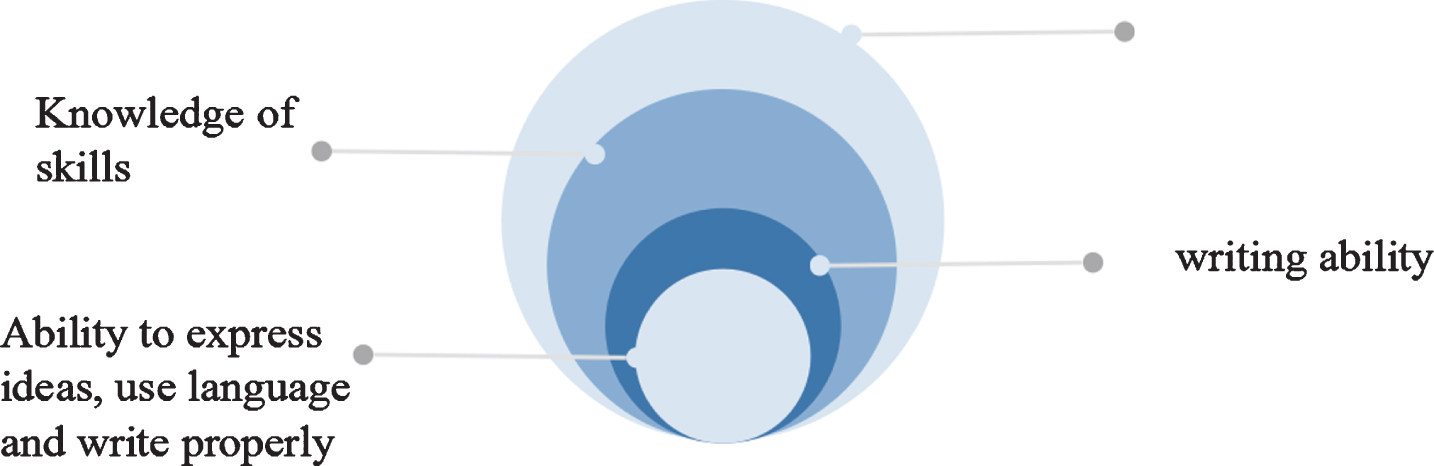
Relationship between students’ academic knowledge and IELTS writing ability.
After the merger, the words “content” and “structure” correspond to the level of thought and expression; the use of grammar at the level of language application should be considered to meet United Nations standards [21, 22]. Therefore, the conclusion of this study is to evaluate three aspects of English “writing” ability: English thought and expression, language use and language standard writing. Therefore, these three aspects will be used as a measure to evaluate students’ writing ability, see Fig. 2 for details.

Theoretical framework.
The assessment tool initially selected in this study was based on Jacob (Jacob) scores [23–25], and the Jacob score table was translated into Chinese as follows, see Table 2 for details.
Jacobs composition scale (Chinese version)
Final evaluation tools, see Table 3–5 for details.:
Final students’ IELTS writing ability assessment tool
Language use
Language use
Circulating neural networks
Sequence data modeling often requires a balance between background features of sequence data, cyclic neural networks, and simple feedback networks, because cyclic neural networks have important advantages in designing output sequences and have an impact on current outputs, see Fig. 3 for details.
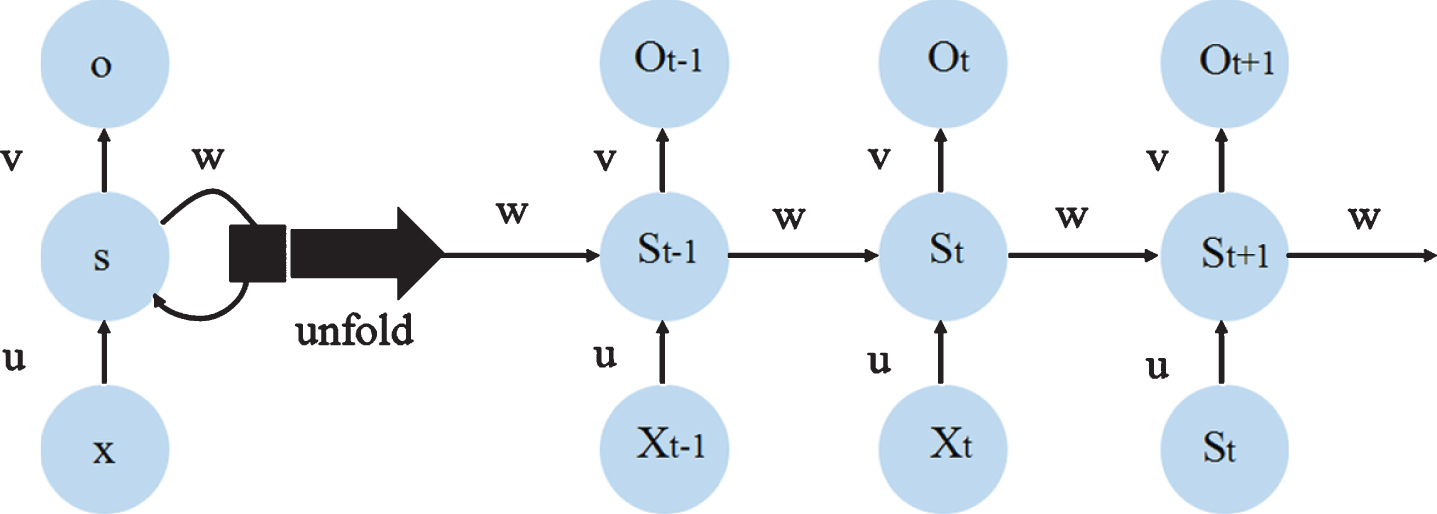
Circulating neural network structure and expansion.
As shown in Fig. 1, the traditional cyclic neural network expands over time, and the hidden layer is correlated by time series. the current hidden layer data comes from the current input and the current hidden layer, as described in 1:
For gradient reverse conduction, the BPTT algorithm is used, as shown in formula (2):
However, when the traditional network processes sequence data, the length of the sequence is often limited because the gradient is lost or exploded when the length of the sequence is longer, so it is difficult to train [26–28]. When updating the weights (i.e., calculating the gradient), it tends to update the gradient in the direction of numerical change at the end of the order, as shown in Table 6, see Table 6 for details.
Forward derivation algorithm LSTM
In a convection network, the main activity is convection operation. in this case, the main function is feature extraction network transmission [29]. the convolution operation shown in Fig. 2, where the input data is the determined core coding obtained in the output section, see Fig. 4 for details.
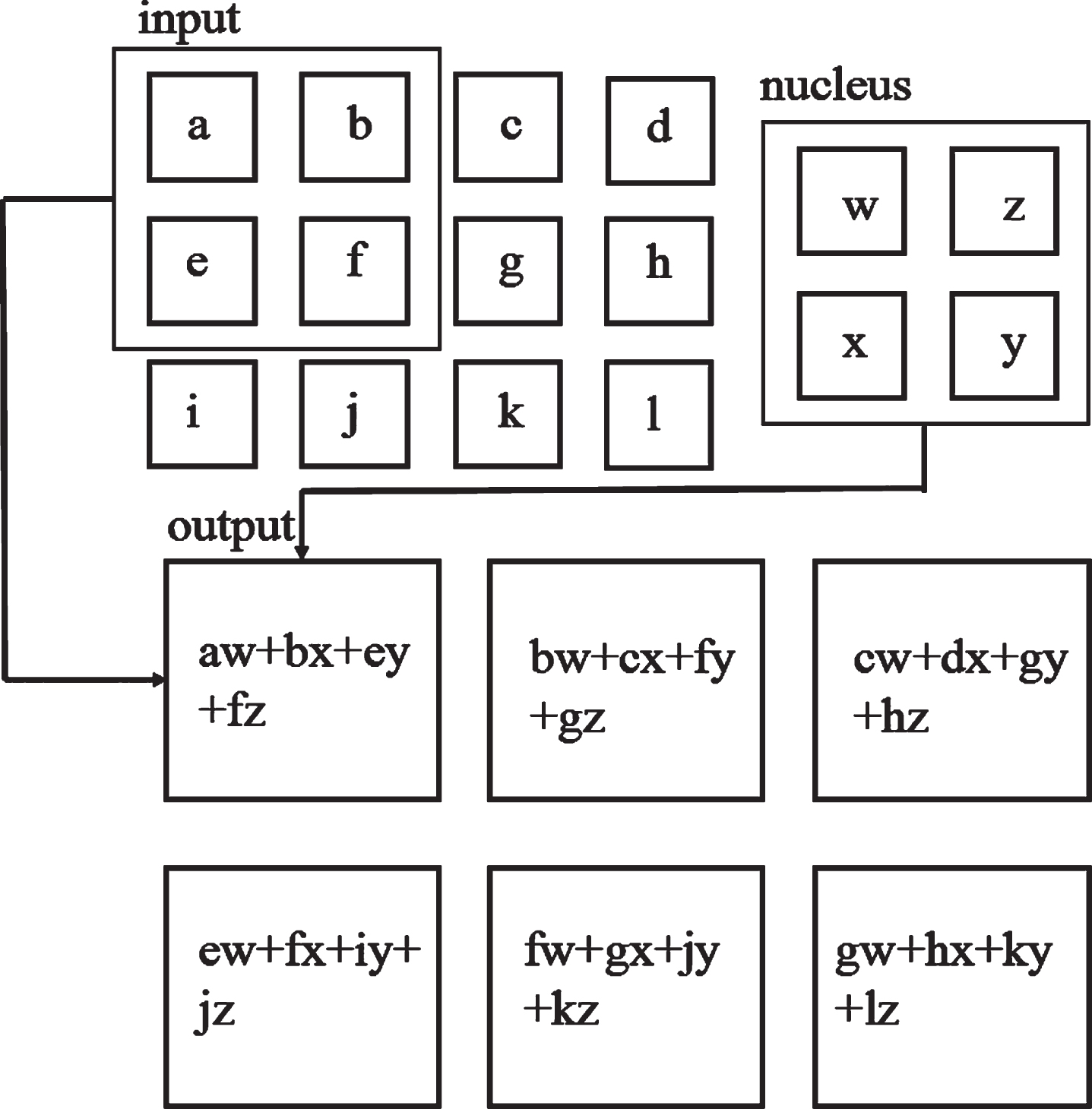
Schematic diagram of convolution operation.
Pooling operations are shown in Fig. 5, see Fig. 5 for details.
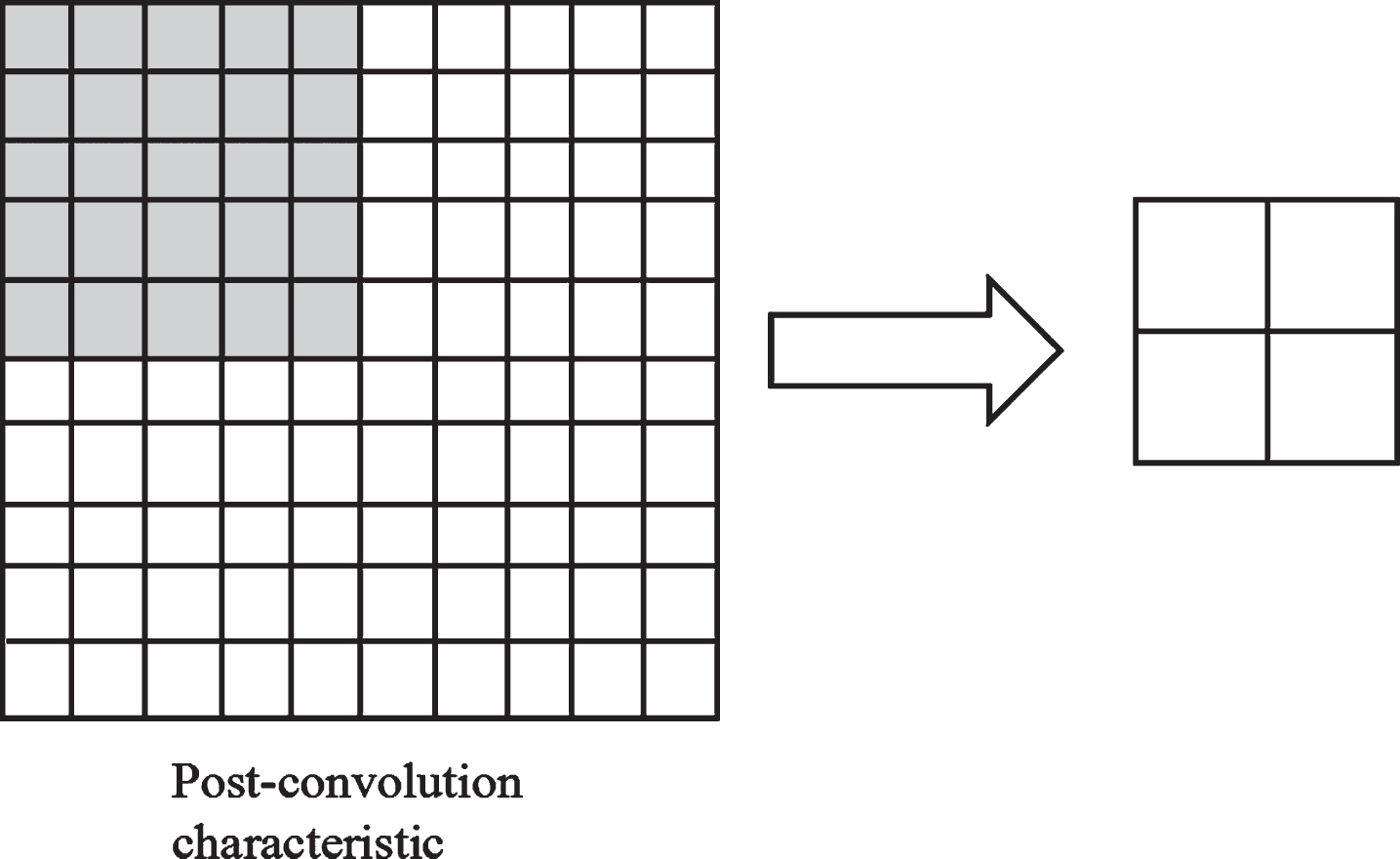
Schematic illustration of pooling operations.
As shown in Fig. 5, the maximum value of a part of the characteristic is selected as the left seal unit size as a seal output; for the average seal, the average value is used as the seal. The sealing operation shows multidimensional features, and at the same time, the output is added. After the collection, a feature bit synthesizes most of the characteristic information close to the collection.
In deep learning patterns, neural networks are layered, meaning that can be extracted from different features. The deeper the network, the more abstract the speech of information. however, as the depth of the network increases, the difficulty increases. At the same time, the calculation of gradient may lead to the diffusion or explosion of the network due to the additional channels entering the network depth. if the surface network is saturated, simply increasing the depth of the network can lead to its degradation. in other words, the new network component needs only a constant, and at this time the depth network is degenerating into a surface network.
Assuming that the initial calculation between the network layers is in Mode 9:
After introducing the residual network, this part of the calculation is shown in formula (10). The
The introduction of a network can increase the depth of the neural network without degrading into a network surface while allowing the transmission of information through the deep layer. Therefore, during the training process, the network is described as a combination of several low-depth networks. As shown in Fig. 6, see Fig. 6 for details.

Of residual network.
Seq2Seq model first encodes the input sequence, and the result is the whole semantic information. Then this part of semantic information is decoded. When encoding, the neural network of the Encode part obtains the semantic vector of the sequence text C, as shown in formulas (11) and (12). The
During decoding, the output Y of the current momenttDepends on previous Y of outputt - 1 S with the overall semantic information C and the previous hidden layer statet - 1as shown in formulas 13 and 14
A Attention mechanism can be used to weigh the semantic information against the weight of the current input in order to obtain semantic information with different weights for different inputs, as shown in formula (15):
Among them, ct The calculations are shown in formulas 16-17.
Adam optimization algorithm is an adaptive method to calculate the learning rate of each parameter. Adam optimization algorithm saves the mean value of the gradient square at the previous time and the mean value of the previous gradient, which is more robust when the gradient is updated. Its algorithm is shown in Table 7, see Table 7 for details.
Adam algorithms
Among them, β attenuation parameters1Generally set to 0.9, attenuation parameter β2 Generally set to 0.999.
Model design
A new measurement model was proposed by the Danish mathematician GeorgRasch in 1960 to measure the underlying psychological characteristics of the subjects. The so-called latent psychological trait is the construction that the test wants to measure. It can be ability, cognitive level, personality trait, attitude, motivation, interest, values and so on. Rasch model is defined as:
The ratio of the ability of the subjects is independent of the characteristics of the test questions, which is called objectivity. Taking the scale as the natural base logarithm, we can get
The measurement results of the two subjects were compared and obtained.
Obviously, the difference of the potential characteristics of the subjects was independent of the characteristics of the test questions. hence Rasch model is an objective scale. However, the value of the two subjects will not change, so the Raschlogit model is also an equidistant scale.
RASCH model has both descriptive and predictive functions.
As for the description, it can clearly explain the relationship between the possible psychological characteristics of the subject and the characteristics of the evidence problem, the differences between the subjects and the psychological problems of the subject. in the Rasch model, the difficulty of testing the problem lies in the probability of the answer. by observing the logical value of the subject, the difference between the two can be clearly explained.
In terms of prediction, it is possible to predict whether candidates with certain abilities are likely to answer a difficult question correctly. The difference between the potential psychophysiological characteristics of the R candidate and the characteristics of the test item is 0.5. If the basic psychological characteristics exceed the characteristics of the test item, the probability of reply exceeds 0.5; when the potential psychological characteristics are lower than the characteristics of the test, the probability of response is less than 0.5.
The evaluation index in the scorecard is an important part of measuring the quality of the evaluation table, Through indicators of consistency, It can identify indicators on the evaluation list that are problematic, The question is what and how they can be modified. Tables 3 to 14 present the proposed indicators for the 15 assessment indicators in the scale. In general, On the basis of the MSQ and ZSTD values in the INFIT and OutFIT proposed adjustment indices, MSQs values between 0.70 and 1 are acceptable. According to this standard, As you can see, Assessment indicators 13 and 17 are above 1.3, ZSTD values exceed 2 per cent; Assessment of ZSTD values for indicators 8,12 and 17 exceeding 2; INFIT values are below –2, Therefore, These assessment indicators have some problems with data compatibility, Improvements are needed at the next review stage. In the scale of the assessment, These data largely reflect and evaluate students’ writing ability, see Table 8 and Figs. 7–9 for details.
Fitting indices of topics in the scale
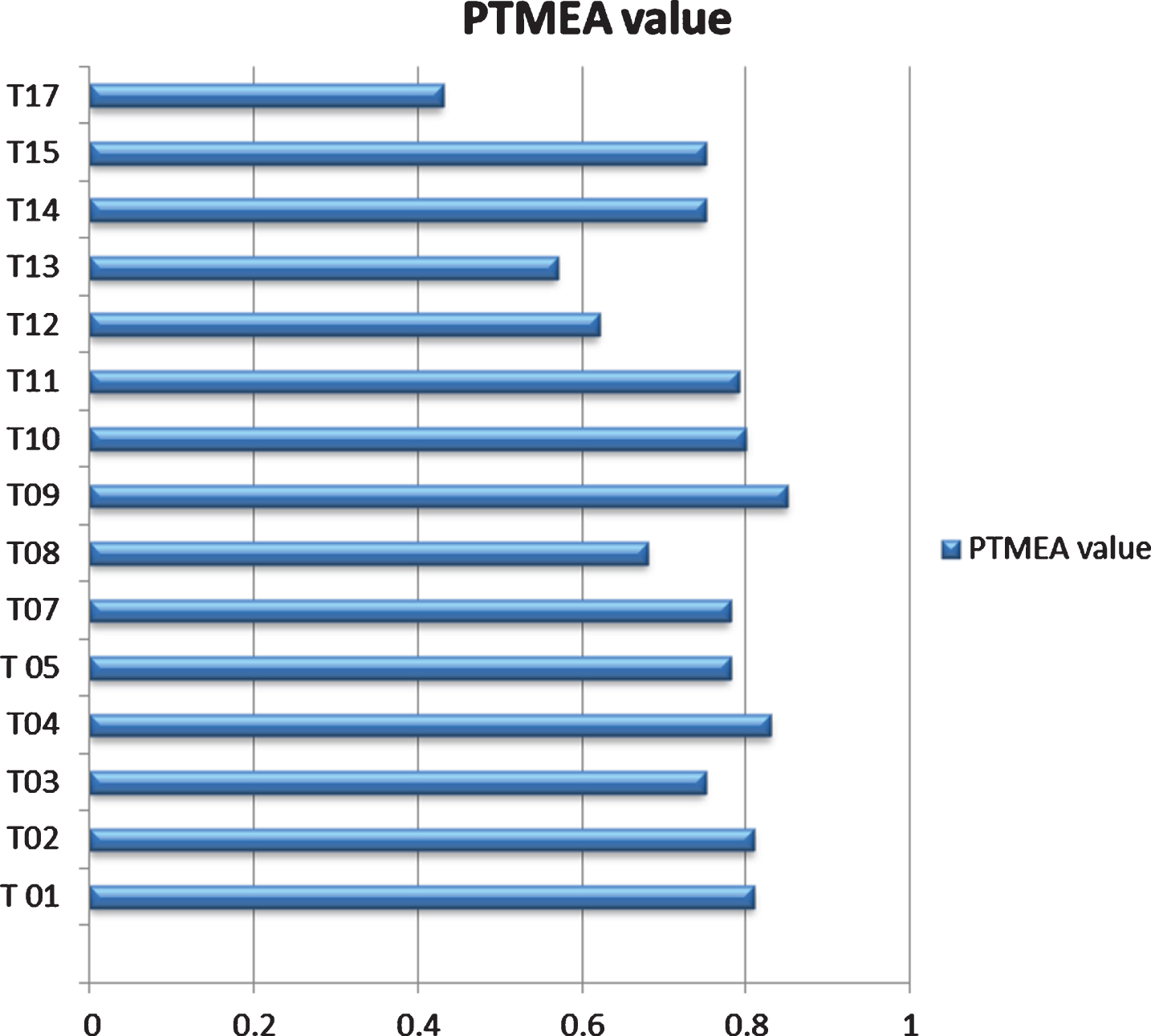
Fitting indices of topics in the scale.
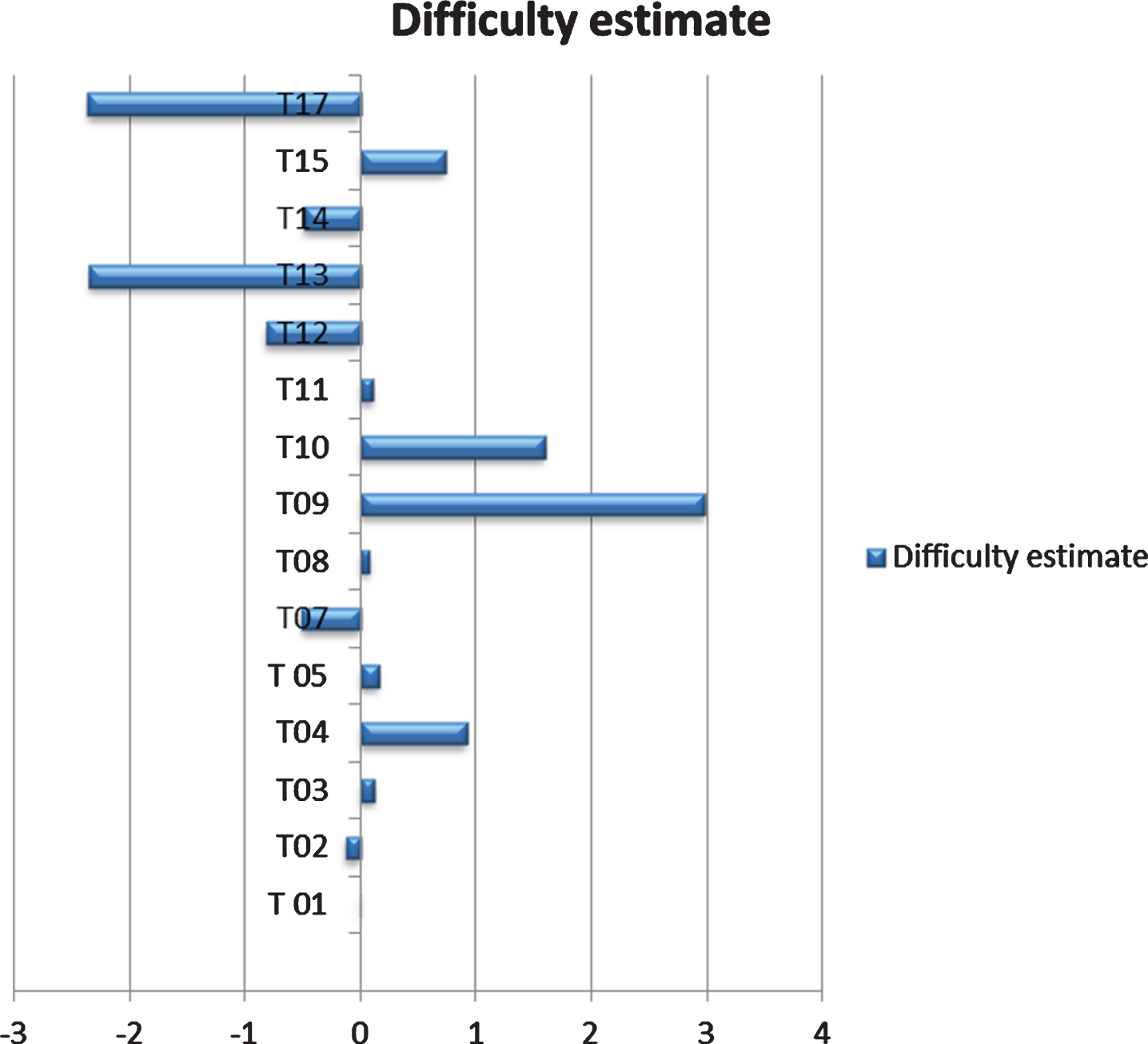
Difficulty estimate.
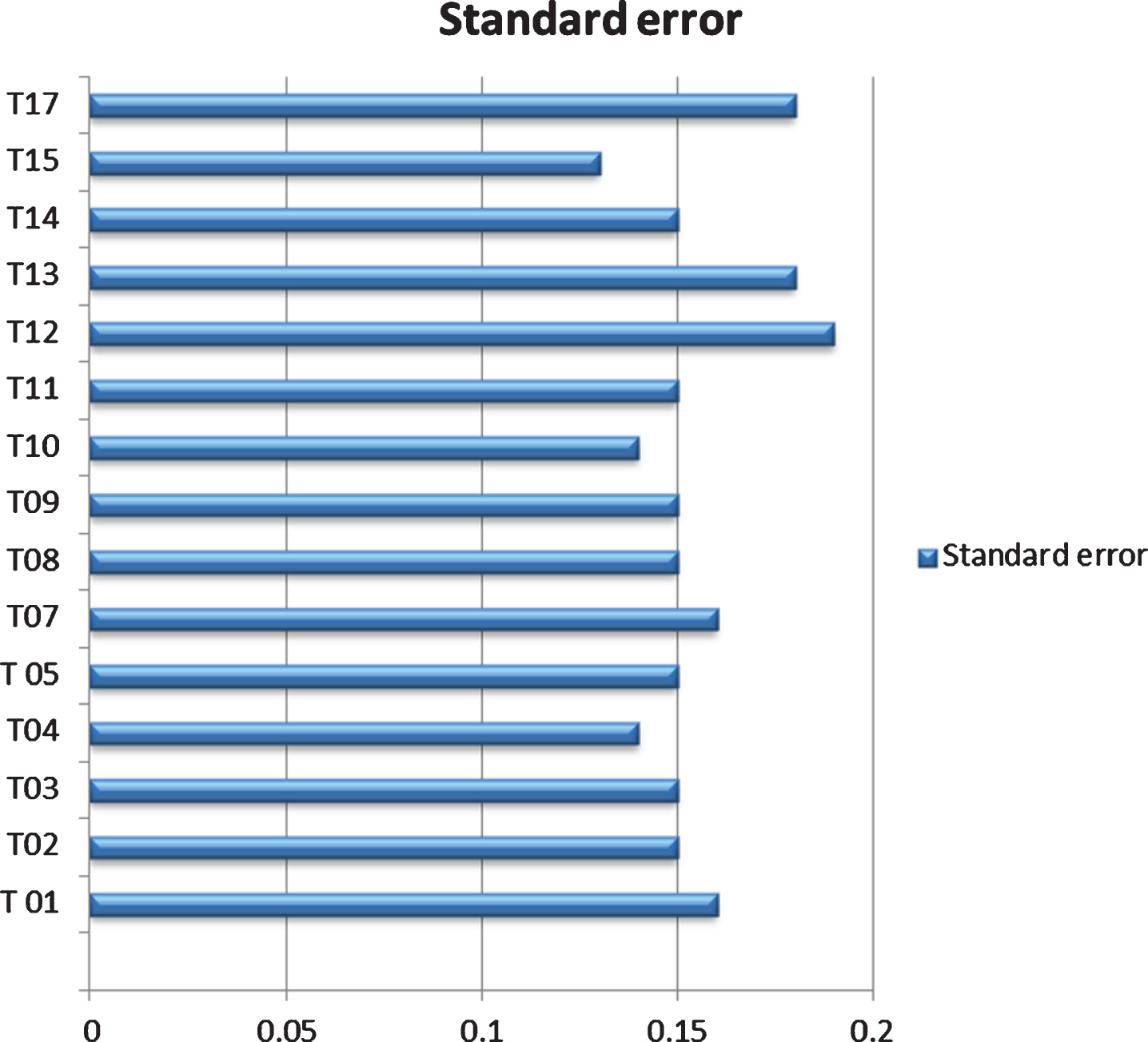
Standard error.
The difference values of the RASCH model are expressed in Logit values and are not easy to replicate and interpret. in order to facilitate users to understand the difficulty and ability of the evaluation indicators, RASCH model provides raw and RASCH values for conversion to help users estimate the tested capacity levels (see Tables 3–9). in english writing ability assessment, the lowest value is 16 points, the RASCH value is –7.38, the highest value is 60 points, and the Rasch score is 8.63 points, see Table 9 for details.
Conversion table of raw and Rasch scores
At different levels
A characteristic high quality sample that embodies the highest evaluation standard of writing ability, which requires the writer to be “clear “,” simple” and “true “. therefore, the writer of high quality sample must have a high level of english expertise, structure and consistency.
In terms of its characteristics and cause analysis, the evaluation criteria of medium-level samples should be partially in line with the English ability of English teachers. The authors of this kind of text are basically able to use a simple, correct and basic vocabulary to understand the order of the text and the use of the article, which will make individual mistakes.
There are three main reasons for poor writing: on the one hand, the author’s own logic is problematic and can not focus on writing; on the other hand, the daily accumulation of English phrases is limited and lack of grammatical skills; on the other hand, the author’s attitude is not good. English professional skills are very low.
Strategies for developing students’ IELTS writing ability
Examination and Conception in IELTS Writing:
According to the written requirements of IELTS, the composition of IELTS usually consists of three paragraphs, and the first paragraph should contain at least three elements: a background phrase that describes the views and phenomena of the topic, as well as opinions and positions. In the process of teaching, teachers should guide students to learn the theme, then read the theme, analyze the main information of the theme, understand the content of the theme, and understand the idea of the theme, so that students can extract and synthesize the information. Improve their thinking ability. Teachers should guide students to develop courses to avoid confusion.
Creation of arguments:
Once the position on this issue is set out in the first paragraph, arguments must be made and arguments must be clear and well documented. To cultivate students’ writing ability, teachers should generally be guided by objective and fair evaluation, explain articles or news related to IELTS topics, such as education, government, economy, culture, etc., and enable students to carry out objective evaluation.
Analysis of the conclusions:
IELTS compositions are usually divided into topics related to debates and reports, that is, debates, which require candidates to resubmit the main arguments on shorter topics and draw partial conclusions on the final purpose of the debates, propose solutions and respond to the issues involved. The topic of the report requires students to analyze the phenomenon, outline its causes, and finally make suggestions. With regard to these two different topics, teachers can teach students how to read national and international media or related social activities in normal classes, so that they can understand the drafting style of English articles and how to deal with social problems.
A Comprehensive teaching method for L2 writing
L2 writing is a complex process of cognition and language transformation, which transcends the simple “writing” and takes into account the factors of language foundation, reading, culture, thinking mode and so on. Reading-debating-writing must be the main form.
The breadth and depth of thought affect the creativity of thought, which can promote students’ learning and produce good learning effect. Language learning includes newspapers, magazines, Internet articles, novel excerpts, songs, speeches and so on. They better reflect the use of English in real life and make the way of reading more abundant. Reading process is a mixed learning process, which helps to motivate students, encourage students to think positively and cultivate students’ perseverance, so that students can transfer the cultivation of thinking ability in class to real life. The real goal is to develop this ability. Normative language is full of individualized thinking, language thinking can not achieve its goal, writing is a custom writing behavior, we must emphasize personal experience life. Students can be allowed to write articles of similar patterns, but its biggest drawback is that it is difficult to shape students’ thoughts.
Therefore, in IELTS teaching, combining teaching methods can make students adapt to the requirements of the examination more quickly. Second language writing teachers need to understand the different writing traditions of other cultures. And work together to understand the different writing methods of different cultures in writing. Teachers and students are urged to communicate with each other and to gain universal recognition in different fields as far as possible. It emphasizes the communication and discussion between teachers and students, and the communication between students is also an effective part of writing practice. Cooperative learning provides students with the opportunity to listen to different opinions and discover the strengths of others. It helps to create responsive ways of thinking.
The ability to write not only refers to the ability to write, but also refers to the ability to change, judge, learn lessons, and so on, which can change the single model of “teacher assessment, student perspective “, while paying attention to the interaction and diversity of practices among the subjects under assessment, and using successive individual review cycles to modify the text to truly reflect and strengthen the universal consciousness of the organizations. Students should recognize the importance of cooperation and benefit from self-assessment. Under the changing background, new ideas are being formed, and students are beginning to realize that they should avoid low-level writing mistakes, pay attention to the training of logic and critical thinking, and improve the level and quality of thinking at the same time. On the other hand, teachers can provide more specific and effective teaching.
Conclusion
Based on the study of machine learning algorithms and neural networks, this study selected and revised English writing ability assessment tools. Based on experience, the reliability and utility of the tool are tested. By using the SPSS21.0 plural statistical tool, the writing ability of IELTS students is evaluated, and the quality test is carried out by using the model. The results show that the overall quality of the evaluation tool is verified when analyzing the rationality of the evaluation index. The research shows that the evaluation index of students’ English writing ability reflects and evaluates their English writing ability to a great extent. The research shows that students’ English writing ability is generally very high, most of their thoughts and expressions meet the relevant standards, but there is a big gap in the use of language. In general, the use of evaluation tools can assess students’ English writing ability, and more specific and effective.