



Abstract
In this paper, a new timing synchronization algorithm for the main synchronous signal (PSS) is proposed for the risk identification of cross-border e-commerce in the Internet of things, aiming at the problems of poor performance of anti frequency bias and high computational complexity of the improved PSS timing synchronization algorithm. Based on the piecewise correlation algorithm, the normalized frequency deviation of PSS sequence is preset. The segmented ones are pre stored at the terminal by using the conjugate symmetry of PSS sequence. The fast correlation of each segment correlation window is realized by combining convolution and overlapping reservation block method. Then, the threshold judgment is made after the time delay accumulation of the correlation values of the segments is made, so as to complete the joint detection of timing synchronization and coarse frequency deviation. The simulation results show that the algorithm can improve the performance of the system anti frequency offset effectively, reduce the complexity of the calculation and show that the timing synchronization conditions of the Internet can be satisfied. At the same time, under the background of the current development of cross-border logistics, this paper reviews the current research status of Transnational E-commerce logistics and Transnational E-commerce logistics risk. By comparing the advantages and disadvantages of various risk assessment methods, neural network and genetic algorithm are selected as the basic risk assessment methods in this paper. Based on the improved PSS timing synchronization algorithm and the Internet of things, the risk indicators of e-commerce logistics transnational will be selected from five risk dimensions: platform risk, customs clearance risk, organizational risk, process risk and environmental risk. Through the comprehensive literature and expert’s opinion, the logistics risk assessment index system of cross-border e-commerce is established.
Keywords
Introduction
At present, there are many researches on timing synchronization of LTE systems, and the methods are relatively mature. However, there are relatively few studies on the timing synchronization algorithm of the primary synchronization signal used to identify the risks of cross-border e-commerce on the Internet of objects. The timing synchronization algorithm of the LTE system includes a maximum likelihood algorithm based on cyclic prefix, a synchronization algorithm based on autocorrelation, and a conventional cross-correlation algorithm based on PSS [1]. The traditional cross-correlation algorithm is optimized, and the complexity is reduced through filtering and down-sampling processing. Using the cyclic shift characteristic of fast Fourier transform, a fast correlation synchronization algorithm in frequency domain is proposed [2, 3]. The above-mentioned timing synchronization algorithms are all susceptible to the influence of carrier frequency deviation [4]. When the Internet of Things is applied to high frequency bands for cross-border e-commerce risk identification, the frequency deviation caused by the oscillator circuits at both ends of the signal transmission and reception is significantly higher than that of the traditional LTE system [5]. At the same time, the data volume of the Internet of Things under the high sampling rate of cross-border e-commerce risk identification is also It is much larger than the LTE system, and the synchronization algorithm in the LTE system cannot be directly applied to the risk identification of the Internet of Things in cross-border e-commerce. The symmetrical characteristics of the PSS sequence in the cross-border e-commerce risk identification of the Internet of Things are used to reduce the number of multiplications, thereby effectively reducing the hardware implementation complexity of the synchronization algorithm [6]. A differential correlation synchronization algorithm with anti-frequency offset capability for the Internet of Things in cross-border e-commerce risk identification is proposed, but the algorithm is extremely susceptible to noise. A segmented correlation algorithm that weakens the cumulative effect of frequency offset is proposed [7]. However, it has the disadvantages of high complexity and limited anti-frequency offset function [8]. The frequency offset is large and cannot meet the rapid synchronization of the Internet of Things in the e-commerce risk identification environment. The rapid development of cross-border e-commerce has promoted the development of cross-border e-commerce logistics. As the current demand continues to increase, the cross-border e-commerce logistics model is continuing to innovate. The number and business of cross-border e-commerce companies have increased sharply, and cross-border e-commerce businesses and their derivatives have increased sharply. Although the demand for cross-border e-commerce markets continues to increase, consumers’ demand for high-quality products is also increasing [9]. Increase, logistics service experience needs continuous optimization, it is necessary to break through the bottleneck of further development [10]. Some scholars believe that the bottlenecks hindering the rapid development of the cross-border e-commerce industry mainly come from three aspects. In the cross-border e-commerce network, the origin of the cross-border e-commerce logistics risks and the difficulty of measuring the diversification of the degree of risk. Based on the cross-border e-commerce management system, there is no uniform self-standard for the operators of the customs clearance management department and related departments [11]. The customs clearance system for goods varies from country to country, and the standards are not consistent. Recently, due to changes in the policy environment such as the trade war with China and the United Kingdom, risks are caused by changes in import and export policies, changes in import and export tariffs, and changes in exchange rates [12]. All these indicate that it is very necessary for cross-border e-commerce companies to conduct cross-border e-commerce risk investigation and risk management [13].
Related work
The literature pointed out that under the environment of big data, China’s e-commerce industry is now developing rapidly, and the economic situation of e-commerce business, compared with the past logistics, the logistics of cross-border e-commerce business contains more content. The literature believes that the problems in the logistics business development process show diversity and complexity. Through cross-border commercial logistics risk research, effective measures are proposed [14, 15]. The literature points out that it is beneficial to promote effective risk avoidance between enterprises in order to achieve the benefits of cooperation; it is helpful to manage unnecessary risk losses, loss of opportunities, and so on [16]. The literature proposes research on restricting the development of cross-border e-commerce logistics [17]. In recent years, through the acquisition and summary of literature, although the logistics of cross-border e-commerce started relatively late, the rapid development of cross-border trade has promoted the active development of industries such as cross-border e-commerce [18]. The segment correlation algorithm proposed in the literature is based on the traditional cross-correlation timing synchronization algorithm. By dividing the correlation window into M segments, the received signal is correlated with the local PSS sequence through the sliding method [19]. Based on the improved PSS timing synchronization algorithm, this paper improves the robustness of timing synchronization to time-frequency offset, which can significantly improve the accuracy of cross-border e-commerce risk identification. It solves the disadvantage of high computational complexity of the traditional PSS timing synchronization algorithm and can meet the fast synchronization requirements of 5 G systems. The improved PSS timing synchronization algorithm performs preset frequency offset processing on the data to improve the inverse frequency offset range of timing synchronization. At the same time, in order to reduce the computational complexity, the influence of different subcarrier intervals on the preset frequency offset performance of 5 G system is avoided. This is an improvement on the traditional PSS timing synchronization algorithm. Improved PSS Timing Synchronization Algorithm.
Traditional algorithm
The traditional cross-correlation algorithm based on the PSS sequence is the most commonly used timing synchronization algorithm for LTE systems, and 5 G systems can also use this algorithm to achieve timing synchronization. The traditional cross-correlation algorithm first performs anti-aliasing filtering and down-sampling processing on the received signal, and then uses the three sets of local PSS sequences generated by the receiving end and the processed data to perform point-by-point sliding correlation. The traditional cross-correlation function expression is as follows:
where k represents the time series, n represents the input parameter, r represents the output parameter, and s represents the scheduling object.
Finally, take the maximum value of the correlation result to complete the timing synchronization, and the measurement function form is as follows.Where k represents the time series and argmax represents the average maximum
Among them, k∧ represents the best PSS timing synchronization position.
The principle of the traditional cross-correlation algorithm is simple, but the point-by-point sliding correlation leads to a high amount of calculation, and the algorithm does not use anti-frequency offset processing, and t synchronization performance will be greatly reduced in an environment with frequency offset.
The anti-frequency offset performance of the traditional cross-correlation algorithm completely relies on the m-sequence that generates the PSS, and the timing synchronization performance will be greatly reduced in a 5 G system with a large frequency offset environment. When only considering frequency offset and noise, the received signal is expressed as z (k) represents the impact of 5 G communication on the PSS operating environment
The result of the difference of the received signal is as follows:
Where w (k) represents the weight value, s
μ (k) represents the environmental factor,
Among them, r
χ (k) is the received signal after differential processing, and w(k) is expanded to:
The local PSS sequence is also differentially processed: su (n) is the result of the nth iteration, and
Among them, s
χ,μ(n) are the local PSS sequence after differential processing. The measurement function is as follows:where k represents the time series and argmax represents the average maximum
The segment correlation algorithm is based on the traditional cross-correlation timing synchronization algorithm, and the correlation function expression is as follows:M represents the upper limit of iteration, and N represents the frequency. Then Formula (8) is used to represent the final result after processing.
The measurement function of the piecewise correlation algorithm is similar to the formula (2). It shortens the length of the effective correlation window by piecewise, which reduces the cumulative influence of the frequency offset to a certain extent, and theoretically, with the increase of the number of pieces M, its timing synchronization anti-frequency offset performance will be stronger. However, too many segments in the segment correlation algorithm will reduce the peak correlation and seriously affect its anti-noise ability. Since the segment correlation algorithm uses a point-by-point sliding correlation method, it still has the disadvantage of high computational complexity and cannot meet the fast synchronization requirements of the 5 G system.
This paper fully considers the synchronization requirements of the 5 G system, improves the segment-related algorithm, and proposes a low-complexity PSS timing synchronization algorithm to improve the robustness of timing synchronization to time-frequency offset.
In the improved algorithm in this paper, firstly, the data is processed with preset frequency offset to improve the anti-frequency offset range of timing synchronization. Since the received data length is much longer than the local PSS sequence, in order to reduce the computational complexity and avoid the impact of the different subcarrier spacing of the 5 G system on the performance of the preset frequency offset, the improved algorithm selection is used to preset the normalized integer frequency of the local 3 sets of PSS sequences. After the frequency offset is preset, the residual frequency offset can be limited within a certain interval, and the influence of the frequency offset on the PSS timing synchronization correlation peak can be reduced. After presetting the frequency offset of the local PSS sequence s
μ(n), the new PSS sequence is obtained as follows:
Among them, ɛ0 represents the preset normalized integer frequency offset, the value is 0, ±1,...,±(W-1)/2, W is a positive odd number, a total of 3 W local PSS sequences with frequency offset can be obtained. When the absolute value of the difference between the actual frequency offset value and the preset frequency offset value ɛ0 is the smallest, the maximum gain output can be obtained, thereby estimating the integer frequency offset ɛ0 and the PSS symbol timing position.
The 5G system data sampling rate is relatively high, and the traditional segmentation algorithm will reduce the correlation if the number of segments is too large. Combining the conjugate symmetry of the PSS sequence, the improved algorithm in this paper determines the number of segments M = 2, then the formula (9) can be rewritten as the following form
The length of both segments is N/2, namely:
The correlation results of the two preceding and following segmented correlation windows are respectively expressed as: C
α (k) represents α correlation, C
β (k) represents β correlation.
Formula (14) is to deal with the final correlation. Combined equations (12) and (13), the local PSS sequence in the original long correlation window can be divided into two segments before and after, and the results of the two correlations are accumulated after a delay of N/2, as follows:
Although the original data of the high sampling rate in the 5 G system is filtered and down-sampled when receiving the signal, the amount of data is reduced, but the amount of calculation is still large, which cannot meet the fast synchronization requirements of the 5 G system. According to the related theory of digital signal processing, this paper proposes a low-complexity correlation method to calculate C α(k) and C β(k). Taking C α(k) as an example, the principle is derived as follows:
According to the definition of linear convolution operation, the linear convolution of
According to formula (15), it can be calculated
The improved PSS algorithm will greatly improve the defects of PSS algorithm.Equation (12) can be written as follows:
The essence of cyclic convolution is the main value inteal after the periodic expansion of linear convolution. When the cyclic convolution length H≥K+N/2-1, cyclic convolution is equivalent to linear convolution, and cyclic convolution can be used to realize linear convolution RH (k) represents the timing of the kth iteration.
Here, “Θ” represents cyclic convolution, and CΘ(k) represents the result of cyclic convolution. It can be seen from the nature of circular convolution that the circular convolution of two sequences is multiplied by Discrete Fourier Transform (DFT) points, and then the inverse Discrete Fourier Transform (Discrete Fourier, IDFT) can be performed.
Both DFT and IDFT in the above-mentioned operation process can be realized by the FFT algorithm. The specific process is as follows: Fill in (h-n/2) zeros at the beginning of the R(k) sequence, and perform the operation according to the following formula.
In practical applications, the data volume of the received signal r(k) is extremely large, and the convolution operation is directly performed according to equation (19). The local PSS sequence needs to be filled with a large number of zeros, which requires a large amount of calculation, and the terminal device does not support excessive FFT Operation. In order to solve the above problems, the improved algorithm in this paper optimizes the FFT correlation method, uses the overlap reservation method to divide the received data into blocks, and realizes the fast correlation of the FFT with two segmented windows. The specific steps are as follows: First, the received data r(k) Divide into T blocks according to a fixed length, and the length of each block is S. When the length of the last block is less than S, add zero to the length of S after it. In order to avoid the occurrence of signal omissions, each adjacent 2 blocks of data are overlapped and reserved. That is, the adjacent 2 blocks of data have N /2 points of overlap, and N /2 zeros are added before the 0th block receives the data.
Each block after overlap reservation processing is represented by rt(k), where t represents the block identifier, t∈ [0, T-1], and the length of each block is extended to L = S+N/2. Subsequently, the two local PSS sequences s α,μ,ɛ0 (n) and s β,μ,ɛ0 (n) are respectively supplemented with S zeros to extend to the length of L, and the value of L is an integer power of 2. Correlate the block rt(k) with the local PSS sequence s α,μ,ɛ0 (n), s β,μ,ɛ0 (n), and use cyclic convolution instead:
Use the FFT method to calculate the circular convolution of each block, the expression is as follows:
The value of the previous (L-N/2) shall be taken as the effective correlation result, namely:
Splicing the effective correlation results Cα, t(k) of each adjacent block can realize continuous fast linear correlation and obtain the correlation suence C
α(k) of the front segment window:
In the same way, by splicing Cβ, t(k), the rear segment window correlation sequence Cβ(k) can be obtained:
The 5G system has the characteristics of flexible configuration of SSB. Multiple consecutive PSS sequences will appear in the synchronous burst set period. The maximum peak point of the correlation result needs to be threshold judged to select the PSS sequence with the strongest signal.
Finally, the values of the correlation sequence C
α(k) and C
β(k) are modulated and squared respectively, and then the results of the two e delayed by N/2 length and accumulated, and the accumulated value is regarded as the final correlation result. The point where the maximum correlation peak exceeds the threshold is regarded as the current PSS timing synchronization point. The timing synchronization measurement function of the improved algorithm in this paper is expressed as:
Based on the above steps, the overall flow of the improved algorithm in this paper is shown in Fig. 1.

The overall process of the improved algorithm in this paper
When the 5 G system searches for the first cell, if the system bandwidth is not clear, the received signal is sampled at a sampling rate of 61.44 MHz (corresponding to u = 0 in this article), and the length of 1.5 frames is 307200. After downsampling, the length K is shortened to 19200. The number of overlapping reserved blocks for each half-frame data is T = 10, the length of each block is 1920, the length of the local PSS sequence is 256, the length of the two PSS sequences before and after is 128, then L = 2048, and the number of frequency offset groups is preset W = 3.
The number of complex multiplication and complex addition of the traditional cross-correlation algorithm is 3kN and 3K(n-1), among which the number of complex multiplication and complex addition of the differential correlation algorithm is 3 N(K + 1)+K and 3K(n-1)), and the number of complex multiplications and complex additions of the peace-related algorithms are 3kN and 3KM (N/m-1), respectively. The improved algorithm in this paper only needs to save the local frequency domain PSS sequence in the terminal in advance, and perform an FFT and 6WIFFT operation for each block correlation. The number of complex multiplication and complex addition of the algorithm are [6W+1)/2] TLLBL+6TWL and (6W+1) TLLBL, respectively.
Only process 5 ms half-frame received data, the specific calculation amount of each algorithm is shown in Table 1. After calculation, the total calculation amount of the improved algorithm in this paper is only about 23.1% of the calculation amount of the traditional segmentation correlation algorithm. The results show that the improved algorithm in this paper can effectively reduce the computational complexity.
Comparison of calculation amount of each algorithm
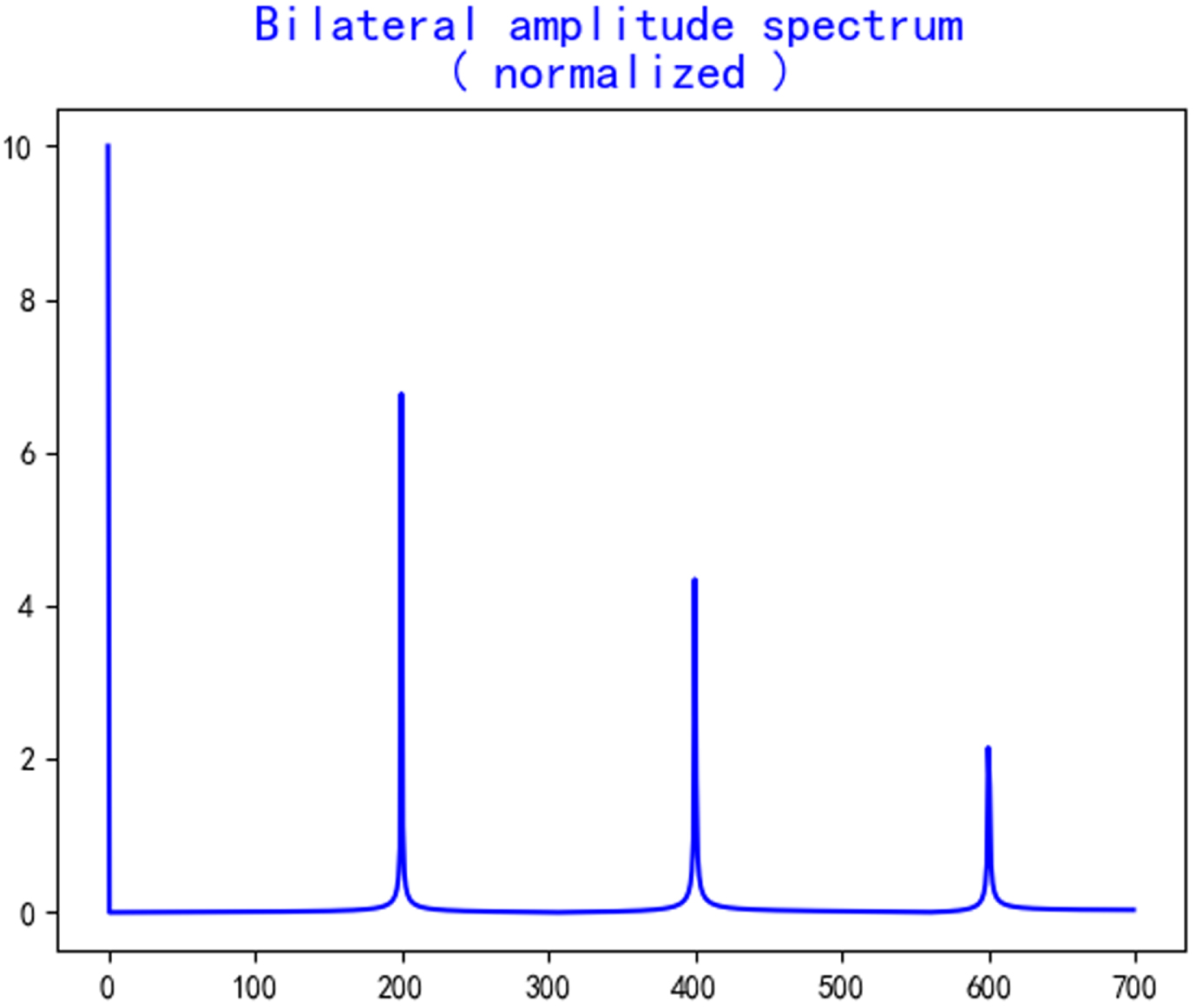
ɛ=0. Correlation peak of 2 algorithms at 6 o’clock.
This paper constructs the PSS timing synchronization simulation model of the 5 G system, and analyzes and compares the performance of the traditional cross-correlation algorithm, differential correlation algorithm, segment correlation algorithm and the improved algorithm in this paper. The simulation environment is set as shown in Table 2.
Simulation environment settings
When evaluating the timing synchronization performance, this paper requires that the PSS timing synchronization position is within the CP range and the ID in the cell group is correct. Only when these two conditions are met can the PSS timing synchronization be determined to be correct.
In an AWGN channel with u = 0 and a signal-to-noise ratio of 5 dB, the correlation results of the segmented correlation algorithm and the improved algorithm in this paper at each sampling point are shown in Figs. 2 and 3 respectively. It can be seen from Fig. 4 that in the half-frame data containing the sync burst set, PSS will be mapped on 4 SSBs. There are 4 obvious correlation peaks in Fig. 2 corresponding to the starting positions of different SSBs. When ɛ=0.6, both the segment correlation algorithm and the improved algorithm in this paper can correctly detect the PSS timing synchronization position. It can be seen from Fig. 3 that when ɛ=1. 5, the timing synchronization position of the traditional segment correlation algorithm is misjudged, but the improved algorithm in this paper still maintains a sharp correlation peak and can correctly detect the timing synchronization position. Verify its correctness.
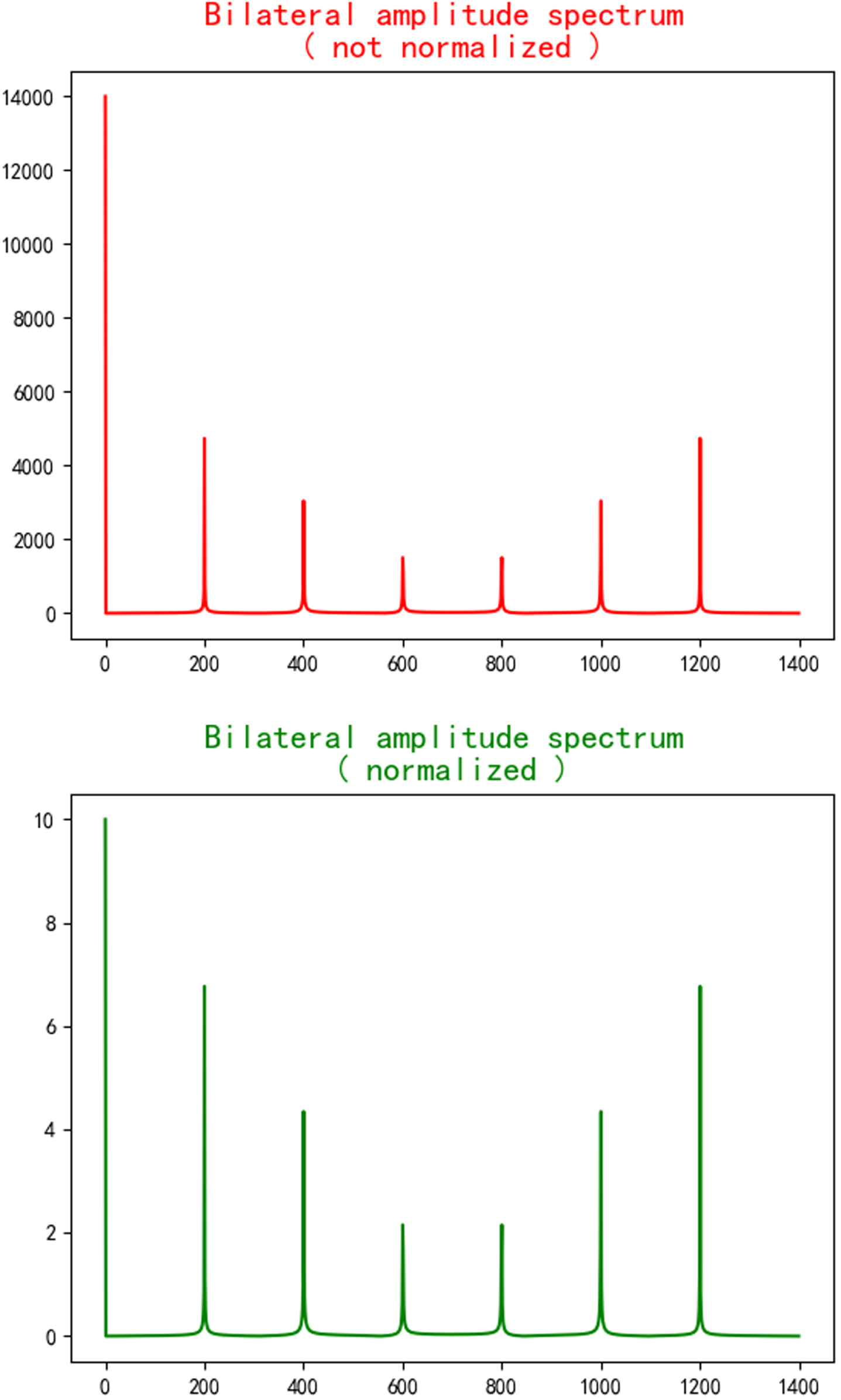
ɛ=1. Correlation peak of 2 algorithms at 5 o’clock.
It can be seen from Fig. 4 that the accuracy of each algorithm decreases as the frequency offset ɛ increases. The traditional cross-correlation algorithm can only resist small frequency offsets. The differential correlation algorithm and the segment correlation algorithm have the ability to resist frequency offset. Improved, when the frequency offset is greater than 1.6, the performance of the above three algorithms all appear to be significantly reduced, and the improved algorithm in this paper still shows good anti-frequency offset ability, and can resist the normalized frequency offset of ɛ=2.2 at the maximum, which is effective Improved anti-frequency deviation performance of timing synchronization.
Figure 5 shows the joint detection accuracy of the timing synchronization of each algorithm and the ID in the cell group when the normalized frequency offset is ɛ=0.6 under the AWGN channel and the EVA70 channel. As shown in the figure, when the frequency offset is 0.6, as the SNR increases, the detection accuracy of each algorithm improves, and the synchronization performance of the AWGN channel is better than that of the EVA70 channel. In the same channel environment, the performance of the differential correlation algorithm is the worst. The traditional cross-correlation algorithm is better than the differential correlation algorithm, and the performance of the peace correlation algorithm (M = 2) is improved by 4 dB. Use conventional cross-correlation algorithms. However, compared with the classification-related algorithms, the performance of the improved algorithm in this paper is improved by about 1.5 dB. In addition, the improved algorithm can achieve 100% synchronization accuracy when the SNR in the AWGN channel is – 10 dB.

Timing synchronization accuracy rate of the four algorithms when SNR = 0 dB.

ɛ=0. 6 o’clock timing synchronization and joint detection accuracy of ID in the cell group.

ɛ=1. 3 Timing synchronization and ID joint detection accuracy rate in the cell group.
Figure 6 shows the joint detection accuracy of timing synchronization and ID in the cell group when the normalized frequency offset is ɛ=1. 3 under the AWGN channel and the EVA70 channel. It can be seen from the figure that when the frequency offset increases to 1.3, the traditional cross-correlation algorithm can no longer be synchronized normally under the AWGN channel and the EVA70 channel. Although the differential correlation algorithm has certain anti-frequency offset ability, its performance at low signal-to-noise ratio Very poor, the detection performance of the subsection correlation algorithm (M = 2) is also affected by the frequency offset, but it is slightly better than the differential correlation algorithm. The improved algorithm in this paper is not greatly affected. When the detection probability is 90% in the EVA70 channel, the improved algorithm in this paper has at least about 8 dB performance improvement compared with the segment correlation algorithm. When the signal-to-noise ratio is – 9 dB, the improved algorithm in this paper the synchronization accuracy rate of more than 90% can still be maintained in the two channel environments. The above results show that the improved algorithm in this paper has good timing synchronization performance in the environment of large frequency deviation and low signal-to-noise ratio.
The results show that the performance of the traditional cross-correlation algorithm, the differential correlation algorithm, the segmented correlation algorithm and the improved algorithm in this paper is quite different. Firstly, the calculation amount is greatly reduced. Secondly, it has good timing synchronization performance in the environment of large frequency offset and low signal-to-noise ratio. The accuracy and accuracy of recognition are greatly improved.
Components of cross-border e-commerce risk identification
Cross-border e-commerce logistics is a complex logistics system including multiple nodes and multiple modules. Regarding risk assessment, we first need to understand the multi-channel risk source and determine the risk on the premise of risk assessment. Second, the company’s comprehensive analysis of the government, country, people, climate, environmental facilities, etc. Through a reasonable and accurate index system for cross-border e-commerce logistics risk assessment, research can be carried out from the whole to the part.
Risk components in cross-border e-commerce logistics
When analyzing and determining the main risk factors of cross-border e-commerce logistics, this paper refers to a large number of domestic and foreign documents, and summarizes the main risks raised by researchers in recent years (Table 3).
Risk factors involved in cross-border logistics at home and abroad in recent years
Risk factors involved in cross-border logistics at home and abroad in recent years
Based on the above-mentioned scholars’ research on various risk factors, combined with Gao Xiang’s analysis of cross-border e-commerce logistics risk sources, as well as most researchers’ research, it is possible to conclude that risks are subdivided through various research links. Investigate and adjust risk factors under specific circumstances to further determine risks.
Based on the cross-border e-commerce platform, this paper will identify and evaluate the risks of each link of cross-border e-commerce. The overall operation process of cross-border e-commerce logistics includes the following contents. Purchasing logistics and transportation goods according to the geographic location of each country. Through various transportation modes, according to different needs of goods, set different transportation needs, deliver goods according to different needs, and collect information according to the order information of the cross-border e-commerce platform. The goods are executed in various ways, and then Delivery is carried out, customers accept the goods, and finally the cross-border e-commerce platform carries out the evaluation and feedback of logistics services. The logistics business of cross-border e-commerce is a trade exchange between two or more countries, and customs clearance procedures are also an important part of logistics. Second, as an excellent medium, cross-border e-commerce platforms not only promote cross-border trade exchanges, but also provide third-party payments to make transactions faster and easier. Therefore, payment information is part of the logistics business of cross-border e-commerce.
Cross-border e-commerce logistics includes nodes of multiple departments and is closely related to cross-border e-commerce platforms, including communication between enterprises under existing lines, information and data transmission on lines, and capital flows. E-commerce logistics crosses the borders of commodities. In order to realize the purpose of commodities from the production site, multiple node operations are required. Moreover, the transportation of goods is far away and the procedures are very troublesome. In particular, logistics operations such as cargo handling, handling, packaging, sorting, circulation, and warehouse storage, occur many times during transportation. According to the similarity of logistics business, in order to prevent cross-border e-commerce logistics from repeatedly identifying risks, unified merger risk identification is implemented. The e-commerce transaction is combined with the cross-border e-commerce logistics process, and the cross-border e-commerce transaction process is shown in Fig. 7 below.
Figure 7 shows the process in which all components involved in the cross-border logistics business are affected and restricted by various factors. According to the application process of cross-border e-commerce logistics, the e-commerce logistics platform, process, organizational structure, customs clearance and environmental risks are segmented to determine reasonable risk factors.

Flow chart of cross-border e-commerce logistics system based on e-commerce platform.
In the process of cross-border e-commerce enterprises’ operations, cross-border e-commerce logistics business involves risk issues arising from multiple logistics activities such as commodity transportation and distribution, warehouse storage, and circulation processing. As a result, the order cannot be completed on time, which may cause economic losses to the enterprise.
Transportation risk. In the cross-border e-commerce logistics system, the cross-border logistics chain covers many suppliers and provides logistics services for global customers. Therefore, complex suppliers and customer groups have increasingly higher requirements for logistics transportation capabilities and risk management capabilities. In the process of transportation and circulation, cross-border logistics includes multiple channels and multiple batches, which takes longer to run. From a management point of view, the longer the transportation of goods, the higher the risk of parts loss and damage. The utilization of facility resources indirectly affects transportation risks, and if the transportation costs are high, corporate risks will also increase. Factors such as the traffic safety of long-distance transportation vehicles and the turnover of transportation equipment have potential risks.
Organizational risks of cross-border e-commerce logistics
The risks of business cooperation. Cross-border e-commerce companies use cross-border e-commerce platforms as media to develop economic cooperation. As a logistics support system for cross-border e-commerce, it unites cross-border e-commerce companies with various enterprises and agencies to create an orderly operation chain of cross-border e-commerce logistics. For a single enterprise change, it may cause changes and risks in the logistics system chain. The cross-border e-commerce logistics system includes commodity supply companies, logistics and transportation companies, customs brokers, insurance companies, e-commerce platforms, customs, governments, banks, and customers. As the market changes and customer requirements change, the cooperation between enterprises is constantly changing. Comprehensive factors determine that the structure of cross-border e-commerce logistics itself is constantly changing, which exists in the form of dynamic changes and is unstable. Therefore, changes in partnerships, etc., lead to risks for enterprises, which will affect the ability and resilience of cross-border e-commerce logistics to resist risks.
Principles for the construction of cross-border e-commerce risk identification and evaluation system
The construction of the cross-border e-commerce logistics risk assessment index system is based on the determination of the overall potential risk factors of the cross-border e-commerce enterprise logistics system application chain and the overall discussion and analysis, so as to obtain a scientific and reasonable risk assessment index system. Therefore, the construction of the risk assessment index system needs to follow the following principles:
The establishment of a logistics risk assessment index system for cross-border e-commerce is based on scientific theories. In order to achieve objective reality, the support of many theories and research methods is needed. The risk assessment of cross-border logistics requires the participation of people from various external industries and is implemented in a variety of environments. Therefore, risk assessment must be carried out from a scientific, objective and reasonable standpoint.
According to the different business activities in each link, it is necessary to decompose the risk elements for cross-border e-commerce logistics. First, collect the risk factors, and then select appropriate indicators according to the principle of integration, which effectively reflects the independence of cross-border e-commerce logistics And non-interference, create the entire risk index system, in this process, fully consider the logistics nodes, through multi-level analysis, select the logistics system that can cover the entire cross-border e-commerce.
The establishment of a cross-border e-commerce logistics risk assessment index system does not target a single enterprise, but has common characteristics, which can be effectively applied to other cross-industry e-commerce companies. When establishing an indexing system, we must consider the availability and effectiveness of indexed data, as well as the identification of the sensitivity of the risk index, to provide more practical value.
The risks of cross-border e-commerce logistics need to be considered both internally and externally. Various external factors in various countries involved in cross-border e-commerce integrated logistics must be considered comprehensively, and the common foundation must be explored while shelving differences. Therefore, the index system must integrate the commonalities of all risk influencing factors.
Construction of cross-border e-commerce risk identification and evaluation system
Selection of cross-border e-commerce logistics risk indicators
The risk assessment index system of cross-border e-commerce logistics is the focus of the whole thesis. The establishment of an index system is a prerequisite for risk assessment, and it is also the result of a comprehensive analysis and interpretation of the overall cross-border e-commerce logistics. A reasonable and meaningful risk assessment system for cross-border e-commerce logistics is constructed through comprehensive measurement. The current research situation of cross-border e-commerce logistics risk assessment indicators is the research basis for selecting risk assessment indicators in this article.
Preliminary construction of cross-border e-commerce logistics risk evaluation index system
The assumptions of this model are as follows: based on customs declaration risks, logistics application platforms, processes, and organizational risks, the evaluation index system shown in Table 4 is constructed.
Preliminary assumptions of cross-border e-commerce logistics risk evaluation index system
Preliminary assumptions of cross-border e-commerce logistics risk evaluation index system
After the above-mentioned indexing system is proposed, it is necessary to further combine the survey with the actual situation based on the cooperation of the project, the investigation and the interview with the experts, and construct an indexing system close to the actual situation. According to the analysis example of enterprise A, this paper shows that enterprise A has matured in the field of cross-border e-commerce. This article will discuss and investigate the project leaders and some of the staff of Enterprise a based on the cooperation of cross-border e-commerce logistics projects. The data obtained from actual interviews and surveys are scientific and reliable, which directly demonstrates the rationality of the cross-border e-commerce risk assessment indicator system. According to the actual survey and interviews with the employees of Company A, the suggestions and adjustments given, among which some quantitative and qualitative indicators of the cross-border e-commerce logistics risk indicator system are selected based on corporate data. Carry on risk assessment to it; you can get the actual index Table 5. The actual indicators of Table 5 can be obtained by using the improved PSS timing synchronization algorithm for risk assessment. The improved PSS timing synchronization algorithm can further filter the secondary factors and highlight the main factors, so as to select the key risk indicators.
Cross-border e-commerce logistics risk indicator system
Cross-border e-commerce logistics risk indicator system
Although China’s cross-border e-commerce industry market is booming, the trade market still needs improvement due to unfair market competition caused by market pressure. This is particularly reflected in the asymmetry of information between enterprises and customers. This is an open e-commerce industry, especially the undesirable phenomenon of low online operating costs, and a large number of counterfeit products flock to the e-commerce trading market. The cross-border use of the Internet of Things technology in e-commerce can not only transfer the original offline payment to the online platform, but also complete the information exchange, instructions, and the original complex operation process. The trouble is that it can also monitor the transaction process of commodity transactions in real time and participate both parties understand the circulation of commodities and resolve the asymmetry of cross-border e-commerce market information.
With the thorough development of e-commerce and the development of the logistics industry with high added value, the nature of cross-border e-commerce has also changed to a certain extent. Now, almost all cross-border e-commerce has adopted international express delivery and international small packaging. These not only have high costs and long logistics cycles, but also have a serious impact on customers’ shopping experience. The Internet of Things is based on RFID technology, combined with existing network technology, database technology, and middleware technology to build a network that can be automatically identified and automatically controlled. This is very convenient for the identification, management and control of commodities in the crossover process. Cross-border logistics is to fundamentally promote the development of global logistics for cross-border e-commerce.
In response to current social and economic development, the Chinese government has proposed guidelines for improving e-commerce, including cross-border e-commerce companies. Now, China has implemented cross-border e-commerce test sites across the country, showing good responses. In the development of the Internet of Things, the Chinese government also advocates a policy of actively promoting industrialization and the integration of information technology. Under such circumstances, cross-border e-commerce companies must actively respond to government plans to further expand their market and global influence.
At present, the number of cross-border e-commerce companies in China is increasing, and the scope of the industry is constantly expanding. Moreover, the special nature of the cross-border e-commerce industry has a close relationship with the logistics industry. However, China’s cross-border logistics field has problems such as high costs, long operating cycles, and susceptibility to policy influences. Therefore, in accordance with the development needs of China’s cross-border e-commerce, the establishment of cross-border logistics channels and overseas warehouses through the Internet of Things technology, and the improvement of global logistics supply chains and overseas logistics service systems are the key to the development of China’s cross-border e-commerce.
Conclusion
This paper analyzes the improved PSS timing synchronization algorithm and the application of IoT in cross-border e-commerce risk identification. Aiming at the problem that traditional timing synchronization algorithm cannot achieve rapid synchronization under the cross-border e-commerce risk identification of the Internet of Things, a segment-based correlation is proposed. Improved timing synchronization algorithm. The algorithm decomposes long correlations into short correlations, converts data into frequency domain, realizes high-speed correlation, and effectively reduces computational complexity. The simulation results show that the improved algorithm in this paper also has high synchronization accuracy in a large frequency offset environment, and meets the performance requirements of IoT synchronization in cross-border e-commerce risk identification. In order to further improve the efficiency of downstream synchronization, we will study an IoT interference synchronization algorithm in multi-cell mode for cross-border e-commerce risk identification. The prosperity and development of the cross-border e-commerce industry is not only an opportunity for the development of cross-border e-commerce logistics, but also a challenge for cross-border e-commerce logistics. Cross-border e-commerce logistics highlights the advantages of online platforms, collecting multiple companies and models, not only providing an excellent platform for the development of logistics enterprises, but also a good platform for cooperation between enterprises. However, the complex interconnected logistics chains of multiple enterprises may increase their risks. Based on the development of cross-border e-commerce logistics, this article will conduct risk assessment research on them. Through the literature review and the theory of cross-border commercial logistics, the problem of risk sources of cross-border logistics is studied, and the logistics system structure of cross-border e-commerce suppliers is analyzed to determine the source of risk.
Footnotes
Acknowledgments
This paper is supported by Hunan Province’s “14th Five Year Plan” Applied Characteristic Disciplines: Applied Economics, Xiangjiaotong 2022-351. It is also supported by Hunan Province Transnational Investment and Management Research Base.
Conflict of interest
The author has declared to have no competing interests.