



Abstract
BACKGROUND:
Studies have demonstrated that upper extremity musculoskeletal disorders (UEMSDs) are highly prevalent among weavers. In Iran, little information is available regarding the prevalence of MSDs and their causal risk factors among hand-woven shoe workers. This cross-sectional study aimed to determine the prevalence of UEMSDs and to identify risk factors associated with UEMSDs symptoms among 586 Iranian hand-woven shoe workers.
METHODS:
The data were collected using the Nordic Musculoskeletal Questionnaire and by direct observation of working postures via the Rapid Upper Limb Assessment (RULA) technique to determine ergonomic risks.
RESULTS:
The prevalence of MSDs symptoms was high among the hand-woven shoe workers. The mean RULA grand score of 6.3 indicated that in most cases the workers’ postures at their workstations needs to be investigated and changed immediately to prevent musculoskeletal injuries. The highest prevalence rates of MSDs were observed in the shoulders, wrists and arms. The result of multiple logistic regression modeling showed that risk factors associated with UEMSD symptoms were job experience, daily working hours, job satisfaction, working posture, work pressure, and discomfort at workstation, as well as individual factors, such as age, gender, BMI, material status, working conditions, education level, and lack of regular sport/physical activities.
CONCLUSIONS:
The findings of the present study emphasize that any interventional program in this industry has to focus on improving working conditions particularly by designing ergonomics-oriented workstations and hand tools.
Introduction
Musculoskeletal disorders (MSDs) are the most common health problem and the main reason for occupational injuries and physical disabilities in the working population in industrial countries [1–5]. In developing countries, work-related injuries are very serious because improper working conditions and lack of preventive programs for work-related accidents lead to a high incidence rate of MSDs in different body regions, particularly lower back, neck, shoulders, forearms, and hands [6–8]. MSDs, particularly in upper extremities, are the most common occupational disorders in western communities and industrial countries and comprise 45% of occupational disorders in Europe [3, 9]. These disorders are associated with a wide range of ergonomic occupational stressors, physiological factors, environmental factors, individual characteristics, clinical factors, and conditions, such as high working speed, injuries resulting from repeated tasks, lack of rest, long working hours, awkward and static postures, exertion of excessive force, overuse of tools, and inappropriate workstations to their size and shape [3, 11–13]. According to epidemiological evidence, the work environment and performance of work could lead to development of upper extremity musculoskeletal disorders (UEMSDs), which become chronic over time and are mostly incurable [7, 15].
Studies have demonstrated that UEMSDs, particularly in hands, arms, elbows, forearms, wrists, shoulders, and neck, are highly prevalent among weavers [8, 16–18]. Additionally, female weavers are more prone to such disorders [19]. In fact, women are faced with more problems regarding income, work conditions, occupation, and social advantages and, consequently, complain about chronic pains in upper extremities 2–5 times more compared to men [8, 21]. Physiological differences between men and women might be due to difference in size, muscular strength, ability to move, and even individual differences [12].
Small-scale industries comprise a high percentage of factories and manufacturing establishments in industrially developing countries [22, 23]. They employ a considerable percentage of workforce and play a significant role in economic development process. Therefore, more attention should be paid to health and safety problems in this sector [24]. In fact, informal workers in small-scale industries are at risk of MSDs, particularly in upper extremities [22, 24].
Hand-woven shoes (Giveh) are produced in small, home-based workshops, which is considered to be among informal industries and plays a key role in economy. Hand-woven shoe is common in many parts of the world, including most southern, central, and western regions of Iran. Such shoes are light and comfortable and have more stability compared to machine-made shoes. Currently, nearly 7000 hand-woven shoemakers work in 1700 workshops in Kurdistan and Kermanshah provinces of western Iran [25]. Hand-woven shoemaking is a difficult and tedious job, performed in sitting position (Fig. 1) and requires prolonged static working [25]. Evidence has indicated the high risk of MSDs among shoe weaving machine workers and hand-woven shoemakers [15, 25–29]. Production of shoes requires severe hand job that is accompanied by high mental pressure for higher efficiency and production of high-quality products [30]. Thus, the risk factors of hand-woven shoemaking industry include static and awkward working postures, exertion of excessive force, repeated movements, long working hours, lack of breaks [25, 29], high contact pressure, low quality of air conditioning, and inappropriate lighting. Hence, reduction of MSDs among the workers in this industry would have a great impact on their quality of life, resulting in increase of their efficiency.
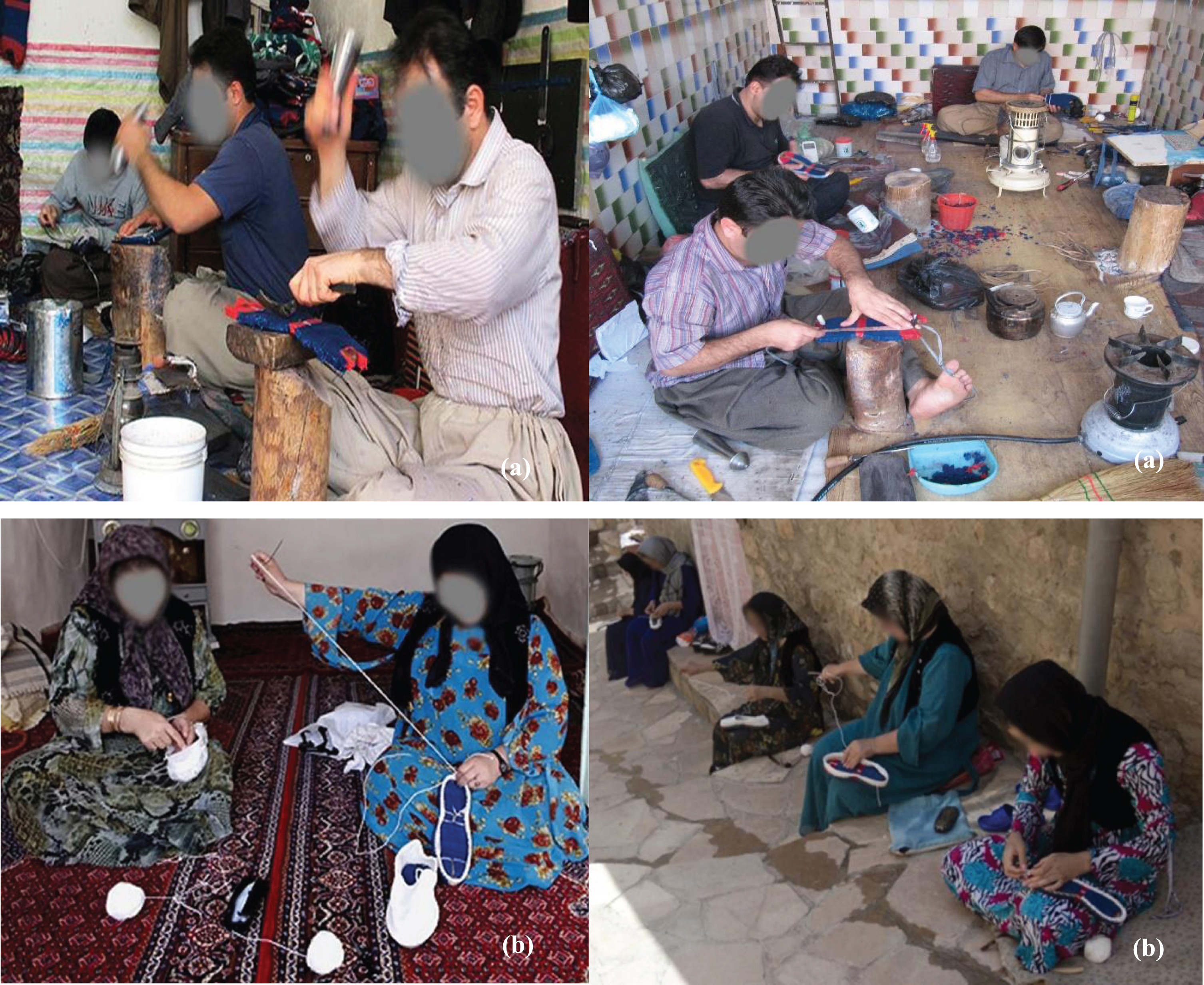
Common postures of hand-woven shoe workers for (a) preparing the sole and (b) weaving the upper part.
In Iran, little information is available regarding the incidence of MSDs and their risk factors among hand-woven shoemakers. The findings of studies in this field would help develop a better understanding of working conditions and occupational risks and plan preventive measures and ergonomic guidelines. These findings can also provide information about working in weaving and other similar industries in other countries, particularly developing ones.
Given the above, the present study aims to a) determine the prevalence of UEMSDs among hand-woven shoemakers, b) investigate ergonomic risks and working postures, c) determine the frequency and intensity of UEMSDs symptoms among hand-woven shoemakers, and d) assess the relationship between MSDs symptoms and individual and work-related factors.
Subjects
The research population of this cross-sectional study included all hand-woven shoemakers working in urban and rural areas of Kurdistan and Kermanshah provinces, western Iran. The data about some hand-woven shoemakers in the study regions were obtained from their Cultural Heritage Organizations [29]. Then, the participants were selected through multi-stage random sampling. In the first stage, 228 workshops out of the 1700 active workshops in the two mentioned provinces were selected randomly using probability proportional to size (PPS) methodology. Overall, 1–7 workers worked in each workshop and a total of 783 workers were selected accordingly. In the second stage, among the workers with at least one year of job experience, 586 ones (240 males and 346 females) were voluntarily enrolled into the study. All subjects read and signed an written informed consent form before the commencement of the study. For those who were illiterate, the aims and procedures of the study were explained by the researcher. If they agreed to partake in the study, they put their fingerprints on the written consent form. The study protocol was approved by the Ethics Committee of Shiraz University of Medical Sciences. Study subjects were not paid for their participation.
Data collection tools
The data were collected using a questionnaire containing two sections: a) demographic features (age, sex, Body Mass Index (BMI), marital status, education level, type of workshop, handedness, smoking habits, and nonwork activity) and occupational factors (job experience, daily working hours, weekly working hours, feeling pressure because of work, comfort at workstation, job satisfaction, and working posture) and b) Nordic Musculoskeletal Questionnaire for upper extremities [31, 32].
The participants were asked to report MSDs symptoms in their upper extremities in the past 12 months (using a body map). They were also asked to report their pain intensity over the past 7 days using a 6-point scale ranging from 0 (no pain) to 5 (intolerable pain). All the workshops were visited and the questionnaires were completed through interview. It should be noted that written informed consents were obtained from all participants before the commencement of the study.
In order to collect the data related to working conditions, posture, and weaving hand tools, photography and videotaping techniques were employed. The videotape of workers’ postures showing their movements during work was recorded. Then, the video was cropped to get snapshots for posture analysis. Besides, working postures were evaluated by direct observation of the workers using RULA method [33]. RULA is a reliable tool for assessment of postural and biomechanical load in upper extremities. The RULA has proven to be a good screening tool [34], with an intra-observer repeatability of 91.7% and an inter-observer repeatability of 94.6% [35]. In this study, RULA score of each posture was recorded for each worker separately.
Data analysis and interpretation
The data were analyzed using SPSS statistical software, version 21. Descriptive statistics and frequency distribution of demographic data, occupational characteristics, and prevalence and intensity of MSDs were presented through number (percentage), range, and mean (SD). T-test analysis was used to examine the difference between the two genders regarding severity of MSD symptoms. Logistic regression analysis was also used to determine the effective individual and occupational factors in the incidence of MSDs symptoms. In this study, MSDs symptoms were considered as the dependent variable [5], and demographic/occupational characteristics and RULA score were the independent variables. Odds ratio (OR) and 95% confidence interval (CI) were estimated in multivariate logistic regression models in order to identify the risk factors of MSDs symptoms. P-value of <0.05 was considered to be statistically significant.
Results
Demographic data
The participants’ demographic and occupational characteristics are presented in Table 1. The participants’ ages ranged from 16 to 72 years (mean = 35.7 years; SD = 11.8 years). In addition, most of the participants were married (65.2%) and their mean of BMI was 25.3 (SD = 4.1 kg/m2; range = 17.3–35.2). Furthermore, the majority of the participants worked at rural workshops. Among the subjects, 39.9% were illiterate and 24.2%, 22.5%, and 13.3% completed primary school and intermediate school, and obtained a diploma and higher degrees, respectively. Also, the majority of participants (84.8%) stated that they did not do nonwork activity during the week.
Individual and occupational characteristics of hand-woven shoe workers (n = 586)
Individual and occupational characteristics of hand-woven shoe workers (n = 586)
The hand-woven shoemakers’ job experience ranged from 1 to 38 years (mean = 13.3 years; SD =8.8 years). In addition, they averagely worked for 8.2 (SD = 1.7) hours a day for a mean of 6.1 (SD = 0.8) days a week. Moreover, 68.8% of the shoemakers were uncomfortable with their workstations, while less than one-third (31.6%) was satisfied with their job. Also, a large proportion of the participants (87.4%) often/very often experienced pressure because of work.
Prevalence of musculoskeletal symptoms
The prevalence and intensity of MSDs symptoms in the participants’ upper extremities are listed in Table 2. A total of 87.7% of the participants (91.6% females and 82.1% males) had experienced some types of MSDs symptoms in one or more regions of their upper extremities during the last 12 months. The most common symptoms were related to shoulders (65.4%) followed by wrists (42.5%), upper arms (41.6%), and hand/fingers (34.6%). Furthermore, the prevalence of the symptoms in upper extremities, except for upper arms, was higher among the females compared to the males.
Musculoskeletal symptoms in both dominant and non-dominant upper extremities by gender (n = 586)
Musculoskeletal symptoms in both dominant and non-dominant upper extremities by gender (n = 586)
aX2 test between male and female subjects (difference is significant at 0.05); b0 = no pain; 5 = unbearable pain.
Based on the results presented in Table 2, pain intensity of 3 and 4 (moderate to severe) were reported in shoulders, upper arms, wrists, and hand/fingers more compared to other regions. Additionally, the mean score of pain intensity in upper arms, wrists, and hands/fingers was 3.5 (moderate pain intensity). The results also showed a significant difference between the male and female participants regarding the intensity of pain in shoulders, wrists, and hand/fingers (p < 0.01).
RULA assessments of working postures
RULA scores (A, B, and grand scores) related to each body region are shown in Table 3. As the table depicts, the score of upper arms was 2 and 3 in most of the participants, indicating slight deflection between 20 and 45 degrees. The score of forearms was also 2 and 3 in most of the shoemakers. This implies that the participants worked with below 60 degrees or above 100 degrees deflection in their elbows far from the body midline. Also, scores of 2 and 3 assigned to wrists indicated more than 15 degrees deflection of wrists in the sagittal plane. Similarly, the score of neck and trunk was 2 and 3 in the majority of the participants, representing 10–20 and >20 degrees deflection in neck and >20 degrees deflection in trunk forwards. Finally, score of legs was 2 in most of the participants, indicating the awkward posture of their legs. The mean of the grand score was found to be 6.35, which represented the need for investigation of the workers’ posture and application of some immediate changes. Besides, none of the shoemakers obtained acceptable scores (1 and 2) indicating inappropriate working conditions, conducive to MSDs injuries.
RULA working posture assessment for the study participants (n = 586)
RULA working posture assessment for the study participants (n = 586)
The results of logistic regression analysis revealed that individual factors, such as age, gender, BMI, type of workshop, and nonwork activity, and occupational factors, such as daily working hours, job experience, feeling pressure because of work, and working posture, were associated with the occurrence of UEMSDs symptoms (Table 4). Other effective factors were found to be feeling of discomfort in workstation, job dissatisfaction, number of days worked per week, marital status, and education level.
Factors with the influence on upper extremity musculoskeletal symptoms among hand-woven shoe makers (n = 586)
Factors with the influence on upper extremity musculoskeletal symptoms among hand-woven shoe makers (n = 586)
aLogistic regression analysis.
This study was one of the first studies on the prevalence of UEMSDs symptoms and its associated risk factors in the hand-woven shoemaking industry in Iran. According to the results, the prevalence of UEMSDs symptoms was high in the study population and individual and occupational risk factors were effective in this regard. These findings are in agreement with those of the relatively similar studies performed on hand-woven shoemakers and weaving machine workers [15, 29].
Demographic data and occupational characteristics
The study population consisted of a majority of female (59.1%), married (65.2%) and low level educated subjects. The mean (SD) age and job experience of the participants were 33.7 (11.8) and 13.3 (8.8) years, respectively. The majority of subjects (61.8%) worked in rural workshops. High prevalence and severity of MSD symptoms were expected in the study population since prolonged daily working hours (8.2 hours in a day), lack of regular physical activities, female gender, awkward working postures and improper workstation design were very common. More than two-third of the study population reported work pressure (often/very often), uncomfortable at workstation, and low job satisfaction (low/moderate) as occupational psychological factors.
Prevalence and severity of musculoskeletal symptoms
The most commonly injured body regions during the last 12 months in the study population were shoulders, wrists, hands, upper arms, and hand/fingers. Almeida and Fernandes (2017) reported that some work-related MSDs were more prevalent among females compared to males [36]. This might be attributed to repetitive tasks and their roles as a worker, housewife, and mother [28, 37]. Our study findings also demonstrated that the prevalence of UEMSDs, except for upper arms, was higher among the females compared to the males. This implies that female hand-woven shoemakers are prone to UEMSDs. On the other hand, the mean intensity of pain in shoulders, wrists, and hands/fingers was higher in the males as compared to that of the females. This result is in line with the study by Dianat and Salimi (2014) [25]. The high prevalence of symptoms in shoulders and wrists in this study is consistent with the results of other studies conducted on similar jobs [4, 39]. Our findings also indicated that in all regions of the upper extremity, except for hand/fingers, with increasing prevalence of musculoskeletal symptoms, pain intensity increased.
RULA assessments
Generally, weaving operation is a repetitive task, which requires workers to work in sitting or crossed-leg position with bent head and neck for a long time. Such occupational activities could result in MSDs due to repeated movements, long working hours without breaks, awkward postures, and job pressure [28]. The results of the present study revealed that poor working posture was an important risk factor of UEMSDs. Consistently, Dianat and Salimi (2014) pointed to the effect of working posture on shoulders among hand-sewn shoemakers [25]. Common inappropriate postures in weaving operation including bent neck and trunk, upper arms flexion, wrists twist as well as using heavy hand tools increase postural stress and consequently risk of injury in upper extremities. According to the study results, the mean RULA grand score of 6.35 (action level = 3) indicated that investigation and corrective changes in the working conditions were required for musculoskeletal injury prevention. This is in agreement of the findings of the study by Dianat and Salimi [25].
Factors associated with musculoskeletal symptoms
In general, long working time is a main factor in development of MSDs symptoms in different working populations [13, 40–42]. Long-term activity in static position can expose individuals to ischemia and hypoxia, eventually resulting in metabolites accumulation and probable injuries to muscular fibers and tendons [43]. The findings of the studies performed by Choobineh et al. (2004) on carpet weavers and by Veisi et al. (2016) on hand-woven shoemakers also showed that long daily working time was among the main associated factors for MSDs occurrence in various body regions [29, 44]. Similarly, Motamedzade and Moghimbeigi (2012) found a significant relationship between daily working time and incidence of MSDs in upper arms and forearms among carpet weavers [13]. Our study results also showed a significant association between working time and MSDs symptoms in shoulders, upper arms, elbows, and forearms (OR: 1.10–1.14). Based on the current study findings, job experience was among the effective factors in the occurrence of symptoms in shoulders, forearms, and wrists (OR: 1.02–1.03). Similarly, Motamedzade and Moghimbeigi (2012) revealed a significant relationship between job experience and incidence of MSDs symptoms in forearms and wrists among female carpet weavers [13]. This relationship was also observed in shoulders and wrists in the study by Dianat and Salimi (2014) and in shoulders, elbows, and wrists in the research by Veisi et al. (2016) [25, 29]. Other studies on different occupations have also noted the significant relationship between job experience and the prevalence of UEMSDs symptoms [6, 44–46]. Furthermore, Ozturk and Esin (2011) reported that feeling pressure because of work was accompanied by musculoskeletal pain in upper extremities among female sewing machine operators [4]. Our study findings also indicated that feeling pressure because of work was considerably associated with the incidence of symptoms in shoulders, wrists, and hand/fingers (OR = 1.95, 1.88, and 2.08, respectively). Additionally, various studies have reported that psychological factors such as high job dissatisfaction and pressure may result in MSDs in different body regions [25, 47]. Accordingly, in our study, uncomfortable feeling in workstation and job dissatisfaction were associated with the incidence of symptoms in shoulders and wrists. Shuval and Donchin (2005) reported MSDs symptoms in neck and shoulders of the workers who felt uncomfortable in their workstations [48]. Sharma and Singh (2014) also found shoulder symptoms among individuals who were not satisfied with their jobs [10]. This is in line with the results of the present study.
In terms of individual variables, gender was found to be an important factor for shoulder and wrist injuries (OR = 2.78 for males and OR = 1.59 for females). This might be due to the fact that males worked for longer time or with different heavy hand tools compared to females. In the same line, Dianat et al. (2015) observed a significant difference between male and female weavers regarding the symptoms of MSDs in wrists [42]. Moreover, a large number of researches have shown a significant relationship between age and UEMSDs symptoms [6, 44–46]. Our study results also demonstrated age as an effective factor in the occurrence of injuries in shoulders, elbows, and forearms (OR = 1.02–1.04). Generally, risk of MSDs increases with age increment. The results of logistic regression analyses indicated that in comparison to single subjects, married subjects were at 76% (OR = 1.76; p = 0.002) and 63% (OR = 1.63; p = 0.006) higher risk of injury to shoulders and wrists, respectively. This is consistent with the results of the research performed by Motamedzade and Moghimbeigi (2012) on female carpet weavers [13].
Based on the findings of the current study, the workers who did regular physical activities throughout the week experienced lower rate of symptoms in their wrists, which was similar to the findings of the study conducted by Dianat et al. (2015) on sewing machine workers [42]. The results also revealed a significant positive relationship between BMI and the incidence of symptoms in shoulders (OR = 1.04). Moreover, Kebede and Tafese (2014) reported a decrease in wrists injuries with increase in education level among sewing machine workers in garment industries [8]. Dianat et al. reported such a decrease in shoulders injuries among hand-sewn shoemakers in 2014 and among sewing machine workers in 2015 [25, 42]. Our study also indicated this relationship in shoulders and wrists, which was in line with the results of the previous studies.
The findings of the present study have several implications. Considering the role of small, informal industries such as home-based industries as the engine for the growth of economy, improvement of working conditions in this sector could have a considerable impact on workers’ efficiency, life quality and the country economic situation. Regarding the high prevalence of UEMSDs among females compared to males, difference between the two genders should be taken into account for implementation of ergonomic preventive programs for these disorders. Development of ergonomic guidelines and interventions for reduction of MSDs and improvement of working posture could also play a role. It seems that programs for improvement of working conditions in this industry should focus on the ergonomic design of workstations, hand tools and work-rest cycle (e.g., limiting working time, increasing the length of breaks in each work shift, and reduced job strain and time pressure).
Limitations
Considering the cross-sectional nature of the study and data collection through self-report, the results should be interpreted with due caution because self-report methodology may suffer from some weak points such as difficulty in recall, denial or deception. Additionally, as the participants in the present study were limited to the currently working employees, the workers that left the jobs due to UEMSDs symptoms were likely to be excluded from the study and healthy worker effect might occur. Therefore, the data might underestimate UEMSDs prevalence in this working population. Besides that, in this study, working postures were subjectively examined using RULA technique. The results of the study could be more conclusive if objective measures were included. Finally, the present study was conducted in West of Iran, while hand-woven shoe workers in other regions of the country might have quite different working conditions.
Conclusion
The findings of this study showed high prevalence and intensity of MSDs symptoms in the hand-woven shoemakers’ upper extremities. Thus, ergonomic interventions are highly essential for working conditions improvement and reduction of such disorders in this job. Moreover, occurrence of UEMSDs was associated with individual factors such as age and marital status, occupational characteristics such as daily working time and job experience, and other variables namely poor working posture, feeling pressure because of work, job dissatisfaction, and uncomfortable at workstation. Furthermore, high RULA scores implied that conducting ergonomic corrective measures for working conditions betterment was necessary. Based on the results, an interventional program in this industry should focus on designing ergonomic workstations and hand tools. Also, the intensity of complaints can be decreased by reducing daily working time and devising a proper work-rest cycle.
Conflict of interest
None to report.
Footnotes
Acknowledgments
This study was financially supported by the Shiraz University of Medical Science (project no. 94-7471). The authors wish to thank the handicrafts centers in Kurdistan and Kermanshah provinces for their cooperation and support. The authors also wish to thank Ms. H. Maghami and Mr. Sh. Ebrahim-Zadeh for their assistance in the data collection.