



Abstract
BACKGROUND:
Activities performed by people in the meat processing industry are very repetitive, time-consuming, dangerous, and require long-term downtime during a shift (forced-static position).
OBJECTIVES:
This study aims to assess the prevalence of musculoskeletal disorders and working conditions among Polish and Iranian workers to fill this research gap.
METHODS:
A comparative analysis of the prevalence of musculoskeletal disorders (MSDs) in developed and developing countries was conducted. After selecting the target factories, data was collected using Nordic and Mental Stress Questionnaires and 3DSSPP software with the participation of 110 meat processing workers, including 55 Iranian and 55 Polish.
RESULTS:
This study showed nearly the same prevalence of MSDs among male Iranian and Polish workers, especially in elbow, wrist/hand, upper back, hip/thigh, and ankle/foot. The overall prevalence of MSDs was relatively high and connected to the lower back (38%, 64%), knee (40%, 24%), neck (24%, 42%), and upper back (24%, 34.5%), among Iranian and Polish workers, respectively. Assessment of logistic regression disclosed that the workplace is considerably associated with the elbow and the ankle/foot musculoskeletal pain, with 2.34 and 3.81 times more likely for the production room, respectively, among Iranian workers.
CONCLUSION:
Age, gender, type of occupation, work experience, smoking, insufficient physical activity, workplace, working postures, and stress level all affected the likelihood of MSDs happening in various body regions in both countries, implying that both individual and work-related (both physical and psychosocial) aspects should be taken into consideration when evaluating and managing such complaints in this workforce.
Introduction
Prevalence of musculoskeletal disorders
Musculoskeletal disorders (MSDs) have been the most prevalent and severe job injuries in the workplace [1]. Short-term and long-term sickness, functional limitation, job incapacity, and lower quality of life are linked to musculoskeletal pain. This has significant economic consequences for individuals as well as communities [2, 3]. Work-related musculoskeletal disorders (WMSDs) have the potential to worsen and cause severe damage to the musculoskeletal structure if left untreated [4]. Financial expenditures associated with musculoskeletal issues are enormous, and this burden is expected to grow in the future [3, 6]. Therefore, in several industrialized and developing countries, the prevention of musculoskeletal pain has become a nationwide emphasis [7]. MSDs are one of the most recent occupational health issues affecting all workers, and the situation has been steadily worsening in recent years. MSDs are prevalent in a wide variety of occupations. As an illustration, nearly 77% of American construction workers reported experiencing at least one musculoskeletal complaint in the preceding 12 months [8]. WMSDs are the most common work-related health disorders, accounting for 59% of all occupational diseases recognized by European statistics in 2005 and more than 10% of all years of disability lost in 2009 [9]. Nevertheless, while several studies have been conducted to examine the prevalence of MSDs in almost every field of employment, with varying degrees of success [10–15], there is a shortage of information regarding the risk factors for MSDs and their similarities/differences among countries. Thus, increased awareness of ergonomic concepts and their application in the meat processing industry has the potential to have a significant influence on both workplace productivity and occupational health and safety. Additionally, the findings from this research can aid in the implementation of prevention measures and the development of standards.
The meat processing industry’s research background
The primary objective of this industry is to manufacture meat for human nutrition. The workflow of processing meat entails slaughtering animals, chopping the meat, inspecting, packaging, and processing [16]. Bacon, ham, and sausage are all examples of common meat products found around the world [17]. The three main steps of dry fermented sausages are ingredient mixing, fermentation, and ripening [18]. The process flow diagram for the manufacture of sausages is depicted in Fig. 1. A typical meat processing worker’s schedule is frequently filled with a chain of related incidents involving butchering, mixing, cutting, packing, and carrying. These processes include the repeated use of muscular effort, rapid work speed, repetitive motions, and non-neutral body postures maintained over time [19, 20]. Given that physical jobs are a risk factor for WMSDs, it is expected that occupations with a high number of awkward postures will have a higher rate of MSDs [21, 22]. The meat industry sector has distinct features that predispose workers to musculoskeletal discomfort and pain. Based on the variety of products, high production volumes, physically demanding jobs, manual handling of raw materials, heavy lifting, and high levels of mental concentration are required [23]. Some studies demonstrate that workers in meat processing are likely to have remarkable risk experience. Numerous injured workers report pain in their tendon regions, arms, forearms, and hands, which is understandable given that these jobs are typically heavy [24]. While some research indicates that workers in these industries are forced to work in awkward positions for extended periods [25–28], comparing the prevalence of MSDs in two countries is challenging due to a paucity of information. To cite an example, while pork meat is consumed in most European countries [29], sheep and cow meat are preferred in Muslim countries like Iran for religious reasons. Although researchers in medical, epidemiological, and ergonomics have emphasized the role of physical, psychosocial, and individual factors, the relationship between MSDs and risk factors and comparisons across countries have not received the same level of attention. Therefore, comparing the prevalence of MSDs and working conditions between two countries with statistical models, biomechanical software, and questionnaires is beneficial for identifying WMSDs and assisting in the identification and organization of meat processing industry sectors, as well as the development of innovative techniques to alleviate such concerns.

The production stages of sausages.
On the basis of the above-mentioned background, this study aimed to address a research gap by determining the incidence of musculoskeletal disorders and working conditions among Iranian and Polish workers. This paper argues that a broader range of MSD risk factors can be different between these two groups of individuals. For this purpose, logistic regression, the Standardized Nordic Questionnaire [30], the Mental Stress Questionnaire (European Foundation for Improvement of Living and Working Conditions), and 3DSSPP software are used. The findings of this research will provide a strategy for reducing MSD prevalence and increasing workplace productivity.
Study area, setting and population
This cross-sectional, descriptive-analytical study was conducted in Iran and Poland. This study chose Rasht (northern Iran) and Cieszyn (southern Poland) for data collection. Rasht is located at longitudes and latitudes between 49° 34’ 59.0052” E, and 37° 16’ 51.0024” N. Cieszyn is located at longitudes and latitudes between 49°45’4.79"N, and between 18°37’55.67"E, respectively (Fig. 2). This study was conducted to determine the prevalence of MSDs and their associated risk factors in two countries. Compression and shear stress (L4-L5) (L5-S1) in inappropriate postures were identified using 3DSSPP software. Figure 3 depicts the research methodology. Working conditions, the number of workers, product variety, environmental conditions, and factory size were all considered while choosing companies in two countries. Thus, a model of 110 workers was picked to take part in this survey, working in the Kampooreh Khazar Meat Products Manufacturing Company in Rasht, Iran, and the Meat Processing Plant Jan Bielesz in Cieszyn, Poland (Fig. 4). A pilot study with a sample of 30 workers was conducted, and the proportion was determined using a 95% confidence interval, 80% power, and two-tailed tests. The sample size was calculated by the G-Power software program to be 110 individuals. All meat processing industry sectors were considered, including butchering, carrying, filling, mixing, and packing. At least a year of work experience was required for participation in the study. Chronic congenital discomfort or injuries incurred in an accident or other causes outside of the workplace were considered for exclusion, as were injuries sustained in an accident or for other reasons outside of the workplace. The workers were invited to participate in the study and gave their written consent while performing their tasks.
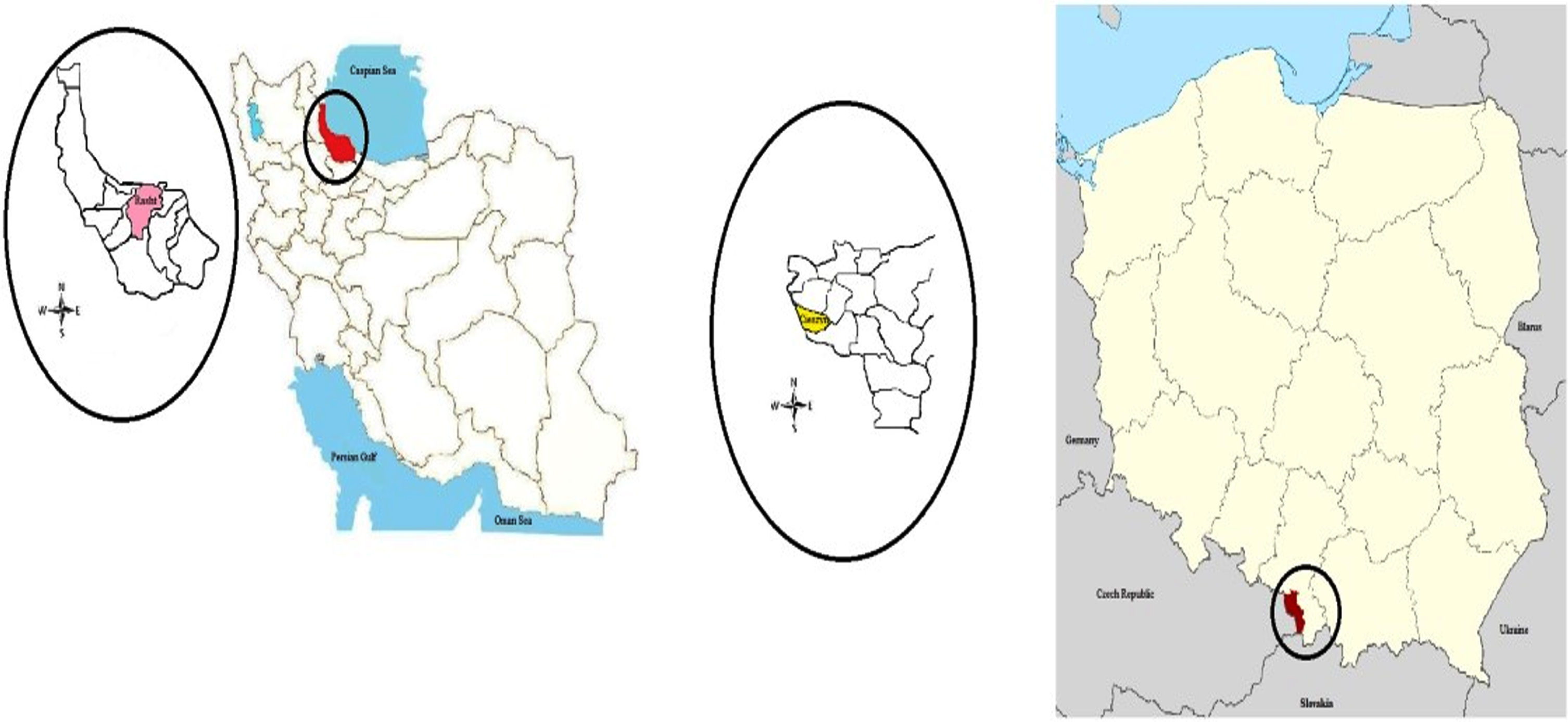
Geographical position of Rasht and Cieszyn.

Methodical process.

Typical working postures of meat processing workes in Iran and Poland.
A questionnaire to collect information from the workers throughout the occupation was used. This questionnaire was divided into three parts. An interview-based survey was used to gather data on a variety of demographic and occupational characteristics. The first part included social demographic information such as age, body mass index (BMI), gender, height, weight, and education. The second part was information about work-related characteristics such as working hours (day), working experience (year), sleeping hours, smoking, workplace, stress level, and sports activity. The third part was the standardized Nordic Musculoskeletal Questionnaire (NMQ) and the Mental Stress Questionnaire (MSQ). NMQ assessed musculoskeletal pain at distinct places in the body region over the last year and last week. This questionnaire divided the nine body areas as standard, and the workers of each job answered the questions with knowledge of the type. Neck pain, shoulder pain, elbow pain, wrist/hand pain, upper and lower back pain, hip/thigh pain, knee pain, and ankle/foot pain were all on the list. The MSQ questionnaire consisted of twenty questions, and participants were divided into three groups based on their level of mental disorder: low, moderate, or high. To encourage individual cooperation and participation, all illiterate and low-literate participants were adequately informed about the study’s objectives, questions were read to them, and questionnaires were completed. The validity of the questionnaire was determined by convening a panel of ten experts. A pilot study was conducted among 20 similar individuals to assess the reliability of the questionnaire. NMQ and MSQ for Iran (CVR > 0.80, CVR > 0.79, CVI > 0.82, CVI > 0.80) and Poland (CVR > 0.78, CVR > 0.79, CVI > 0.83, CVI > 0.85).
Risk assessment methods
Biomechanical modeling software can estimate loads based on body part structures. Various models like LSBM, Hand-Calculation Back Compressive Force, Anybody Modeling System, and the University of Michigan’s 3D Static Strength Prediction Program (3DSSPP) were used in different studies. 3DSSPP is an excellent computer program for developing and modernizing work environments and work techniques [31]. In the present study, the participants completed five tasks, including butchering, carrying, filling, mixing, and packing in the workplace. The 3DSSPP was used to model each task component for each subject in the simulation. The model took into account the weight and height of each individual. According to these anthropometric measurements, the 3DSSPP was then scaled. The photographs were shot from various perspectives, and the final product was picked based on the one with the poorest posture. The Digimizer program was used to increase the accuracy of images shot in varied locations by calculating angles.
Statistical analysis
Statistical data analysis was performed by SPSS/PC version 24 software. Individuals’ social characteristics, including mean, standard deviation (SD), median, and percentage, were calculated. A chi-square test, a t-test, and a variance analysis were used to determine occupational differences. A chi-square test was used to determine the relationship between individual hazard factors and MSDs in the first stage of the investigation. Then, using logistic regression models, odds ratios and their 95% confidence intervals were calculated to analyze and classify MSD-related variables. The Hosmer-Lemeshow test was used to verify the regression models’ assumptions and fit. Statistical significance was established at a level of p < 0.05 for all tests.
Ethics
Members of the Silesian University of Technology’s Ethical Committee gave their approval for the study to be conducted in accordance with ethical principles. The names and details of the workers were avoided in the questionnaire and checklist. Respondents were guaranteed that their information would be kept completely confidential and used specifically for research purposes.
Results
Demographic details
This study includes 110 Iranian and Polish workers working in the Kampooreh Khazar Meat Products Manufacturing Company in Rasht, Iran, and the Meat Processing Plant Jan Bielesz in Cieszyn, Poland. Findings in Table 1 demonstrated the mean age of workers in Iran at 33.7 years [SD = 6.7] and, similarly, the mean age of workers in Poland at 37.9 years [SD = 8.8]. In both countries, the participants’ age ranged mostly between 30–39 years. The majority of Iranian workers had a high level of education, compared to 20% of Polish workers. BMI showed that most workers have an unhealthy BMI of 58%, 29% for Iranian workers, and 49.1%, 21.8% for Polish workers. Iranian workers were all male, and Polish male and female workers were 58.2% and 41.8%, respectively. The average height and weight of Iranian and Polish workers were 176 cm [SD = 4.7], 77 kg [SD = 5.3], 172.2 cm [SD = 8.9], and 75.3 kg [SD = 14.7], respectively.
Participant characteristics
Participant characteristics
In Table 2, most workers have less than ten years of work experience, with Iranians and Poles accounting for 60% and 78.2% of the workforce, respectively. All workers claimed they worked more than eight hours per day in Iran. Conversely, workers in Poland worked less than 9 hours. The majority of workers, 91% of Iranian workers and 67.3% of Polish workers, slept for 6–8 hours. According to the results, the workers’ level of exercise was low at 9% and 20%, among Iranian and Polish workers, respectively.
Work-related characteristics of Iranian and Polish meat processing
Work-related characteristics of Iranian and Polish meat processing
Additionally, smoking rates were approximately 10% higher among Iranian workers than Polish workers. The production sector employed most workers in both countries, with 36.4% and 30.9%, respectively. There was a high stress level among Iranian workers, with 64% reporting severe stress levels; the intense level was 34.5% for Polish workers.
According to the data presented in Table 3, MSDs have been relatively high in the last 12 months. According to the NMQ, the lower back has a higher prevalence of MSDs in both countries; the rate of lower back disorders for men in both countries was 38% and 62%, respectively. Because female workers were employed in the Polish factory, the overall rate was 64%. The second most common MSD complaint among Polish workers was the neck (42%), whereas the most common MSD, a severe complaint among Iranian workers, was related to the knee (40%).
Musculoskeletal disorders among workers in Iran and Poland
Musculoskeletal disorders among workers in Iran and Poland
Tables 4 and 5 examined the aspects linked to the causes of possible risks and their role in the outbreak of pain in various parts of the body (nine areas). According to the findings, Iranian workers had a high rate of MSDs affecting the neck, lower back, knee, upper back, and hip/thigh. Furthermore, MSDs of the neck, shoulder, lower back, knee, and hip/thigh were extremely common among Polish workers. According to the findings of this study, younger Iranian workers (30–39 years old) and Polish workers (40–49 years old) had a higher risk of having musculoskeletal disorders. There was a significant difference between workers in both age groups when it came to the lower body. However, the lower back, knee, hip/thigh, and ankle/foot differed significantly between Iranian and Polish workers (p < 0.01). In both countries, sleeping hours did not correlate with nine different MSDs among meat sector workers. Iranian and Polish workers’ lower back, knee, hip/thigh, and ankle/foot had substantial relationships with work experience (p < 0.05). Exercise and smoking significantly affected Iranian workers’ upper back and elbow (p < 0.01). The only body area in which all smoking groups differed considerably was the knee among Polish workers (p < 0.05). Additionally, the workplace had a significant effect on the elbow, wrist/hand, upper back, hip/thigh, and ankle/foot of both groups of workers. While there was no correlation between body parts and stress levels among Iranian workers, stress levels significantly affected Polish workers’ neck, upper back, and hip/thigh. Similarly, there was no correlation between BMI and education and MSDs in nine areas among Iranian and Polish workers, as shown in Tables 4 and 5.
Related risk factors to MSDs prevalence
Related risk factors to MSDs prevalence
Note: p-value were conducted using chi-square.
Related risk factors to MSDs prevalence
Note: p-value were performed using chi-square.
In Table 6, logistic regression was used to determine the relative importance of various groups. A preliminary chi-square analysis was used to determine which risk factors were significantly associated with MSDs in other regions of the body. The findings established a substantial relationship between lower body parts and age among two groups of workers. Age was positively associated with lower back and knee MSDs, which were 3.89 and 3.91 times more likely among Iranian workers, respectively. Additionally, age was associated with hip/thigh and ankle/foot disorders, which occurred 2.42 and 1.68 times more frequently in Polish workers, respectively. Working experience and smoking were associated with an increased risk of lower back and upper back MSDs among Iranian workers, who were 2.25 and 4.27 times more likely to sustain such injuries, respectively. Workers in Poland were 2.12 times more likely than the general population to suffer an ankle/foot or knee MSD due to their work experience and smoking. The production sector was a significant predictor of the elbow and ankle/foot MSDs among Iranian workers (Odds ratio = 2.34, 3.81). Workplace and stress levels have been linked to wrist/hand, upper back, hip/thigh, and Polish workers. Wrist/hand disorders occurred 2.19 times more frequently in the production sector.
Logistic regression analysis to predict hazardous areas
Logistic regression analysis to predict hazardous areas
Note: Logistic regression was applied to significant factors from chi-squared test.
Conversely, Polish workers who were in the packing room were more affected by upper back pains. Stress was positively correlated with upper back and hip/thigh MSDs, increasing their likelihood by 1.47 and 1.15 times, respectively, among Polish workers. Additionally, the workplace had a significant effect on the elbow, wrist/hand, upper back, hip/thigh, and ankle/feet of both groups of workers. While there was no correlation between body parts and stress levels among Iranian workers, stress levels significantly affected Polish workers’ neck, upper back, and hip/thigh.
Iranian and Polish workers encountered compression and shear forces on the L4-L5 and L5-S1 vertebrae during butchering, carrying, filling, mixing, and packing (Fig. 5). Iranian workers’ compression and shear forces on L4-L5, and L5-S1 were 1161 N, 165 N, 1239 N, and 267 N, respectively, which were more significant than Polish workers. In the carrying sector, only the shear force on L5-S1 exceeded the results from Polish workers, while the compression forces on L4-L5, L5-S1, and shear forces on L4-L5 were 3565 N, 279 N, and 3595 N, respectively, indicating that Polish workers were in the yellow stage of carrying. Conversely, this occurred concerning the filling posture. In mixing and packing postures, compression and shear forces on L4-L5, L5-S1 (2148 N, 357 N, 2370 N, 382 N) and (2528 N, 440 N, 2371 N, 423 N) were higher than on Polish workers (Fig. 6).
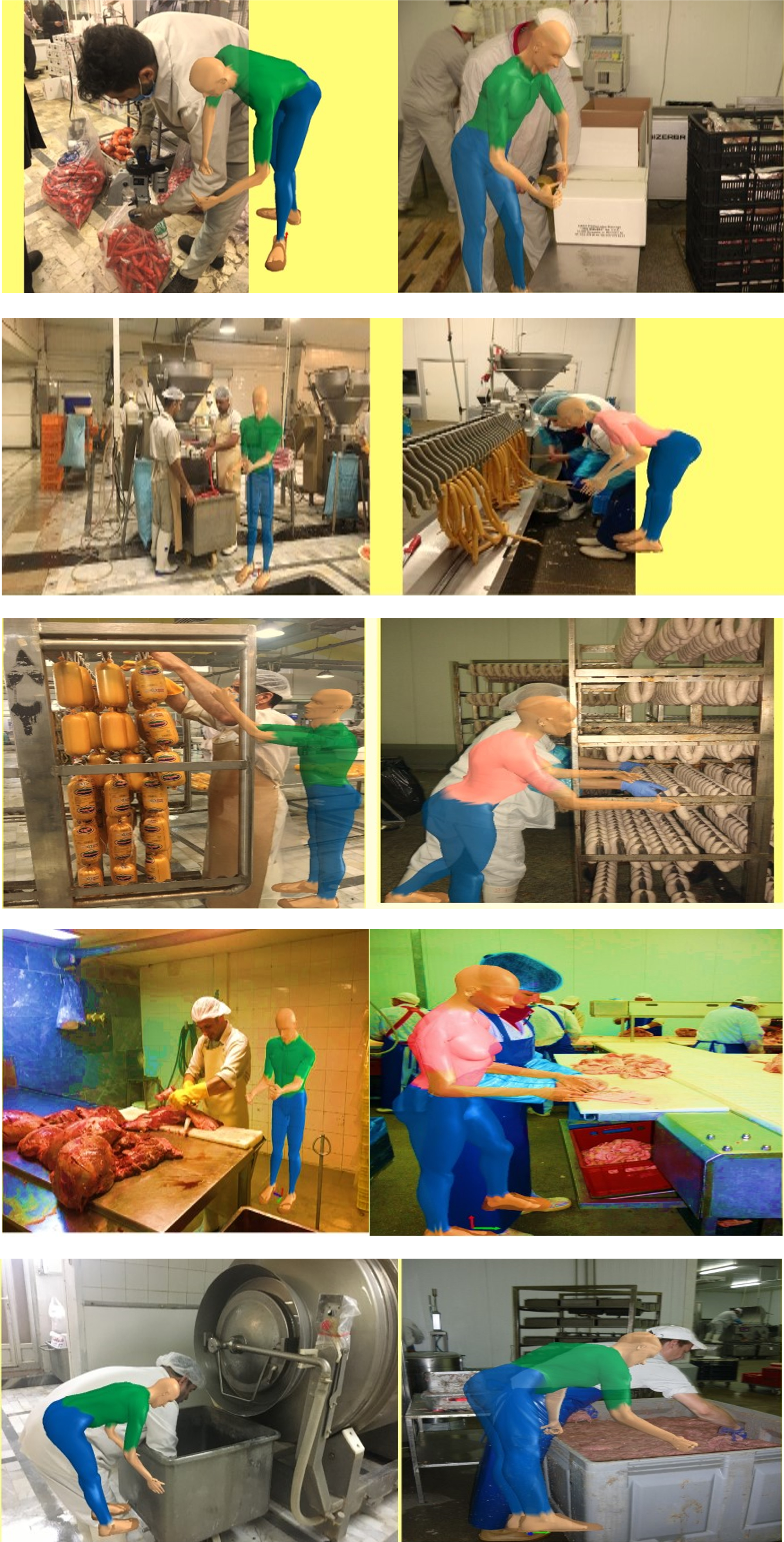
Schematics of the simulated tasks for prediction of spinal loads in different jobs by 3DSSPP software.

Comparing compression and shear forces.
MSDs prevalence
Previous research revealed a relatively high prevalence of MSDs among meat processing workers. Unsurprisingly, surveys have identified MSDs and symptoms of illness or pain as a critical safety issue for meat processing workers. Thus, the purpose of this study was to collect data on MSDs among workers employed at the Kampooreh Khazar Meat Products Manufacturing Company in Rasht, Iran, and the Meat Processing Plant Jan Bielesz in Cieszyn, Poland, over 12 months. Gómez reported that the most commonly affected body regions were the whole spinal part, the shoulder, and the wrist/hand, with a majority of (49.4%), (47.1%), (31.6%), and (29.3%), respectively [12]. A study performed in North East India demonstrated an occurrence of pain in several regions of the body in food processing, and an enormous number of workers mentioned discomfort in the lower back (45.7%), the shoulder (41.1%), and the upper arms (37.1%) [32]. On the other hand, Ilardi et al. found the prevalence of MSDs happened most frequently in the wrist/hand, the shoulder, and the arm/elbow of fish processing industry workers, especially in the bones, with a prevalence of 80%, 60%, and 50%, respectively [33]. Although the frequency of MSD varies by body region among Iranian and Polish workers, the shoulder is a significantly affected area, particularly among female Polish workers. According to a study conducted in Venezuela, MSDs in the shoulder among meat processing workers corroborate the findings [12].
This study showed nearly the prevalence of study among male Iranian and Polish workers, especially in the elbow, the wrist/hand, the upper back, the hip/thigh, and the ankle/foot. Similarly, in some surveys, gender differences were also found. The prevalence of pain in women’s upper bodies, including the shoulder, wrist/hand, and neck, was significantly higher than in men (p < 0.05). This discrepancy can be explained for two reasons. Firstly, there is a tremendous workforce in Iran, and following that, business owners would instead use male workers in physical jobs. Secondly, even though women hold influential positions in various professions, there are still cultural weaknesses in specific fields. Consequently, women are either unemployed or unable to work due to cultural norms. In terms of gender, women are more vulnerable to the health consequences of working long hours in various occupations. For example, a study discovered that female brick molders experienced more difficulty in their hands, lower back, and knees than male brick molders [34].
Bolghanabadi et al. reported a relatively high prevalence among Iranian meat processing workers, with the lower back 69.8%, the knee 65.1%, the upper back 51.2%, and the neck 53.5% [35]. However, the numbers were not similar to the Iranian workers; the order of the influential factors is almost the same. This study is consistent with the more common MSDs of spinal discomfort in meat processing workers (the neck, the upper back, and the lower back) [36]. Nonetheless, the rate of disorders among Polish meat processing workers was higher than those studies. Tappin et al. suggested that the research should consider contextual factors associated with MSDs among meat processing workers and the multifaceted attitudes related to this disorderliness. Economic factors, payment, scheduling systems, job design factors, seasonality, and ecological influences, were considered [10]. Nevertheless, the connection between physical work and mental work was not considered. Some studies have suggested a possible relationship between environmental variables and musculoskeletal pain. Although in this study, variables such as temperature, noise, and diseases, such as COVID-19, were not considered for their association with MSDs, Sormunen et al. reported that there was no relation between temperature and musculoskeletal pain [37]. In Dianat et al. and Alias et al., logistic regression was used to estimate the relationship between risk factors and the prevalence of MSDs in the absence of 3DSSPP software and cross-country comparisons [6, 38]. WRMSDs have a significant influence on psychological and physical function. Psychosocial risk factors have been found to be associated with WRMSDs in a wide range of jobs, including construction workers [39], miners [40], nurses [41], sonographers [42], and this study.
MSDs notable factors
Age
This risk factor was 3.89 and 2.42 times more prevalent in Iranian meat processing workers (40–49 years old) than Polish meat processing workers (40–49 years old). The lower back was 1.12 times more likely to be impacted among Iranian meat processing employees (30–39 years old). The hip/thigh ratio was 1.31 times higher among Polish meat processing workers (aged 50 to 59). Those in the Iranian meat processing industry (40–49) were much more likely to have knee problems, whereas those in the Polish meat processing industry (50–59) were significantly more likely to have ankle/foot problems. Furthermore, the oldest age was consistently the same for both working groups [43]. Studies in both countries showed that, even though other body areas have grown in importance, there was a significant association between age and the lower portion of the body, the lower back, and the knee in Iran. Similarly, in Poland, it was the hip/thigh and the ankle/foot.
Work experience
There is clear evidence that work experience strongly correlates with the occurrence of MSDs [44]. However, none of the nine parts were directly associated with job experience among Iranian workers, except the lower back. Since numerous people in most occupations report this body location experiencing the most significant pain, the relationship between the lower back and the years of work must be considered serious. As in their age, the hip/thigh and the ankle/foot, Polish workers had an essential relationship with work experience. Furthermore, according to Table 6, work experience was significantly related to MSDs in the lower back (p < 0.01) with an odds ratio of 2.25 among meat processing workers. It was considerably related to the ankle/foot MSDs (p < 0.01) with an odds ratio of 2.12 among meat processing workers. Years of experience were associated with the incidence of musculoskeletal discomfort in construction workers.
Smoking
Compelling evidence demonstrates a significant relationship between smoking and the prevalence of MSDs [45], which reports that smokers are likely to have a 5.5 times greater chance of MSDs than non-smokers. According to Table 6, smoking affected the upper back, and the odds ratio was 4.27 among Iranian meat processing workers; smoking also affected the knee. The odds ratio was 3.74 among Polish meat processing workers. Furthermore, approximately 92% and 25% of Iranian and Polish employees, respectively, smoked cigarettes, as did those who reported pain and discomfort in their upper back and knees.
Exercise
Following obesity and immobility, many researchers have stated a significant relationship between musculoskeletal discomfort and sports activity. Herzog et al. presented obesity as a sickness that has become a pandemic in developed countries and has revealed itself at increasing rates in developing countries [46]. Findings from this study revealed that the elbow was significantly associated with exercise among Iranian meat processing workers, which disagrees with a survey from Malaysia [38]. Furthermore, no significant relationship was found between musculoskeletal pain and sports activity among Polish workers.
Workplace
Several hazard factors affecting musculoskeletal discomfort were determined using logistic regression [6, 38]. Assessment of logistic regression disclosed that the workplace was considerably associated with the elbow and the ankle/foot musculoskeletal pain with 2.34 and 3.81 times more likely for the production room, respectively, among Iranian workers. There was also a strong link between the workplace and musculoskeletal discomfort in the wrist/hand and upper back. Polish workers in packing rooms (1.69) and production rooms (2.32) experience these symptoms more frequently. The workplace, on the other hand, is perhaps the most critical source of risk for MSDs. It is easy to diagnose if you work in a dangerous or physically demanding job. In a study of Indian farmers, the majority of individuals (99%) reported pain in various areas of the body, including the lower back (93.8%), shoulder (60.9%), hand (53.6%), and knee (80.9%) [34]. Both 40% and 64% of Iranian and Polish workers reported knee and lower back discomfort, respectively, indicating a possible link between the workplace and MSDs.
Stress level
Many studies have examined the relationship between stress and musculoskeletal pain [47, 49]. Chela-Alvarez et al. reported that mental stress is one of the most notable risk factors, probably related to musculoskeletal disorders [22]. Based on the results of our study, there was no connection between stress and MSDs among Iranian workers; the neck, the upper back, and the hip/thigh were substantially related to stress (p < 0.05). Logistic regression demonstrated that workers under intense pressure have 1.47 times more disorder in the upper back. Furthermore, findings revealed that stress levels are correlated with hip/thigh musculoskeletal pain, with 1.15 times more intensity among Polish workers.
Study implications
Due to WRMSDs’ extensive prevalence among meat processing industry workers, preventing WRMSDs is vital. The findings of this study showed that WRMSDs in meat processing sector employees were shown to be associated with a wide range of physical and psychological variables. Several crucial actions need to be taken to avoid WRMSDs in meat processing industry workers. Significantly more meat industry firms have put ergonomics remedies in place to reduce the risk of MSD-related accidents in their workforces. To make these plans work, the company modified old equipment, changed work habits, and put in place new gadgets. Effective ergonomic intervention may use several mediations or interventions, such as engineering/interface design, training, and selection. According to the findings of this study, meat industry workers most frequently complain of back, knee, neck, and shoulder pain. According to the authors’ research, the following elements were introduced to corporate managers to decrease the impact of pain. Thus, productivity has been increased by reducing absenteeism at work using ergonomic aids [50]. The study’s findings revealed that being older substantially impacts the likelihood of having musculoskeletal diseases. Older workers should be put to work in occupations that are easier for the managers of both factories. Gender was shown to be the most critical element in this research. The study reveals that women are more vulnerable to the health consequences of long hours spent at the workplace. Job rotation was proposed as a solution to this problem. This study also found that smoking and inactivity during the workweek had a negative impact. They encouraged managers to implement stringent policies, such as decreasing employee wages or suspending them from their jobs.
On the other hand, if workers exercise consistently during the week, they will receive benefits such as salary rises or more leave. Mental problems have been linked to musculoskeletal disorders, which is why having a psychologist on staff is essential. The research recommended that managers at both factories look into training programs as well. Additionally, information is shared between the two plants. Workers with low educational levels are a factor in MSDs [51]. A number of the researchers’ recommendations included ergonomic device use, updating one another’s experiences, and sharing information. Three-dimensional simulations using the 3DSSPP program found that the packaging and carrying sectors cause the most significant impact on workers. Managers were advised to consider all relevant factors such as age, gender, physical activity, smoking, work experience, and psychological condition when recruiting personnel in these fields. Iranian packaging workers exhibited more dangerous postures due to a lack of ergonomic equipment and plastic usage. Therefore, managers were advised to use ergonomic equipment (cartons, boxes, and tables) the same way Polish workers did.
Limitations
The present study included various flaws that should serve as a red flag. Because of their hectic schedules and reluctance to complete the survey, respondents filled it out in a hurry, which caused problems with data collection. Moreover, response bias, missing data, and misreading of questions by participants may be a problem with these surveys [39]. The hesitations and prejudices of survey participants had a significant impact on the results of the study. Musculoskeletal pain and mental disorders were discovered with the use of NMQ and MSQ. As a result, some employees may have just provided overly favorable responses, leading to skewed results. Thus, risk variables can be assessed using validated questionnaires in future investigations. The study’s cross-sectional design makes it impossible to determine causality. Regarding biomechanical/physical load model estimation, direct exposure assessment methods, for example, electrogoniometric as well as video-based motion analysis such as OpenSim or AnyBody Software, may be appropriate, even if the 3DSSPP program offered valid posture evaluation. Finally, the findings from the research are based on two companies in two countries. Better outcomes may be achieved by investigating more companies in future studies.
Conclusion
The significant incidence of musculoskeletal complaints among meat processing industry workers, notably in the lower back, upper back, knees, and neck, demonstrates the critical need for ergonomic treatments to enhance workplace circumstances and restrict exposure to MSDs. The significant prevalence of MSDs in the upper and lower bodies indicates that additional attention should be provided to their health and safety. Age, gender, occupation, work experience, smoking, insufficient physical activity, workplace, working postures, and stress level all affected the likelihood of MSDs happening in various body regions, implying that both individual and work-related (both physical and psychosocial) aspects should be taken into consideration when evaluating and managing such complaints in this workforce.
Conflict of interest
The authors have no conflict of interest to disclose.
Footnotes
Acknowledgments
The authors would like to thank Kampooreh Khazar Meat Products Manufacturing Company in Rasht, Iran, and Meat Processing Plant Jan Bielesz in Cieszyn, Poland, and the Silesian University of Technology for providing information for their technical and content-related support during the study performance.