



Abstract
BACKGROUND:
Larger dual screens have been widely used during office work and their biomechanical exposure should be explored.
OBJECTIVE:
To investigate the biomechanical effect of two dual screen layouts on neck-shoulder muscle activity and the variability of head-neck posture in computer users.
METHODS:
A preliminary study of the user-preferred dual screen angles was carried out in V-shaped and L-shaped layouts. Twenty healthy participants aged 19 to 26 years were recruited and assigned to perform reading, typing, and searching tasks for 30 minutes in both workstation layouts. Electromyography was measured at bilateral cervical erector spinae (CES), sternocleidomastoid (SCM), and upper trapezius (UT). The head-neck lateral bending, rotation, and flexion angles were recorded. The visual analog scale (VAS) was used to evaluate visual strain.
RESULTS:
The muscle activity at the left UT and right CES sites when using the V-shaped layout was significantly higher than the L-shaped. There were significant differences in head-neck rotation and flexion angles between the two layouts in reading and typing tasks. In the searching task, there was no significant difference in the head-neck rotation and flexion angles between the two layouts. The visual strain score was significantly higher in the V-shaped layout.
CONCLUSION:
The CES and UT muscles displayed higher levels of activation while using the V-shaped layout in comparison to the L-shaped layout. The head-neck rotation and flexion angles differed due to varied types of work when using V-shaped and L-shaped layouts.
Introduction
The widespread use of computers in the workplace and is now more common to use dual or multiple displays simultaneously while working in the office [1]. Compared with using a single screen, dual screens bring more display areas and help users reduce task completion time by 12% [2], user performance and efficiency improved by 9% [3, 4], and lower cognitive load [5]. A high prevalence of work-related musculoskeletal disorders (WMSDs) was been reported among computer users for static and prolonged postures, at risk for neck and shoulder pain [6–8]. Previous studies have primarily examined the biomechanical effect of using a single-screen display during computer work [9–11]. Potential risks of workstations working from home during the COVID-19 pandemic have been explored [12, 13].
The standard ANSI HFES 100-2007 provides users with detailed parameters of a single-screen display used in computer workstations, such as viewing distance, display height, display tilt angle, and the layout of a keyboard and mouse [14]. With improved display technology and system performance, the screen display size and aspect ratio are becoming more diverse. In a dual screen workstation, a primary screen was placed in the front center and the other one on its right or left side [15]. There is still no standard reference for using dual screens in a computer workstation. With the aspect of computer screen location, user preference of display layout parameters in the workstation demonstrated that viewing distance increased with a larger size of screen displays [16]. Participants choose to position the display lower and farther away from their eyes, with the top of the screen remaining at or almost at eye level. The user-preferred position for single displays and dual displays was the same for the same size of the screen display. The dual monitors’ relative locations are, however, at an angle. According to Shin and Hedge [16], a key component influencing the degree of musculoskeletal pain and discomfort is the horizontal viewing angle, which varies dramatically with different screen display sizes [17].
Neck-shoulder muscle activity and head-neck kinematic characteristics are frequently used as evaluation indicators to assess the biomechanical effects of computer workstations [18]. Szeto and Sham investigated neck muscle activity for three different screen viewing angles, front-on angled left, and angled right. They discovered that neck muscular activity is lowest for front-on-screen viewing [19]. CES and UT muscles have high levels of postural muscle activity in office workers with chronic neck and shoulder discomfort because they are used in a static head and neck position while staring at a computer screen [20, 21]. When comparing a single-monitor screen with dual screens in a computer workstation, head-neck rotations and asymmetrical postures in the head and neck were observed [15, 22], with an increase in range of motion (ROM) of the head-neck rotation angle of 8.4 degrees [18].
Given that this angle has the lowest cumulative discomfort scores when compared to the other angles taken into consideration in the study, Estember et al. recommended that the angle of the dual screen be set at 150 degrees [15]. The horizontal viewing angle will increase with the size and aspect ratio of the display. When using dual screen displays, the ANSI/HFES 100 standard advises that the viewing angle should not be wider than 35 degrees from both sides to prevent excessive head and neck twisting without turning the body. Performing visual tasks when the horizontal viewing angle over 35 deg could cause muscle fatigue due to head and trunk rotation [23].
Compared to single-screen conditions, the mean amplitude of muscle activity in the right Upper Trapezius (UT) was relatively higher in the typing task when using a dual screen workstation [18], whereas additional studies reported significantly lower 50th and 90th percentile amplitudes for the right UT muscle [24]; significantly lower median frequencies for the left UT and bilateral sternocleidomastoid (SCM) muscles [25] and the right SCM muscle showed significantly higher activity when using a dual screen layout [16, 26]. It is feasible that differences in screen layout, type of the task, and task duration in the study potentially lead to differences in muscle activity and movement patterns.
The previous studies utilized screen displays that were smaller than 20 inches in size, displays with aspect ratios mostly at 4 : 3 and 5 : 4. Wide and larger screens were rarely studied. The biomechanical impact in comparison to single and multiple screens has been the topic of prior research. In order to offer computer users a scientific base of reference, the current study will investigate the biomechanical impacts of two dual screen workstation layouts on neck-shoulder muscle activity and head-neck posture variability.
Methods
Experiment design
Two different dual screen layouts, V-shaped and L-shaped, were used in the experiment based on a review of the literature and observations made in office settings. A preliminary session and a formal session made up the experiment. The angles of dual screen displays that people might prefer in the two layouts were tested in a preliminary experiment. On the basis of the findings from the exploratory experiment, a formal study was conducted to examine the impact of dual screen layouts on neck-shoulder muscle activation and head-neck position variability while performing computer tasks.
Dual screen display workstations
Given the widespread use of desktop computers at work, the best-selling displays on Chinese e-commerce platforms were chosen based on the screen display sizes. Two 23.8” LCD screen displays (E2417 H, DELL, with 16 : 9 aspect ratio) were used. The resolution of the display panel was 1920*1080 pixels. To account for variations in stature, a table and one seat-height-adjustable chair were employed in the experiment. In accordance with established ergonomic criteria, the screen display layouts were implemented, including specifications for viewing distance, tilt angle, and display height [14]. A standard keyboard was placed on the table in line with the midline with participants and a mouse was also provided. Two representations of dual screen display workstation configurations were shown as Fig. 1. The two screen displays for the V-shaped were arranged parallel to one another, inward, and at equal angles. The inter-midlines were lined up with those of the participants. One screen for the L-shaped was positioned in front of participants horizontally with aligned midlines, while the other was positioned on the right side according to the chosen angles.
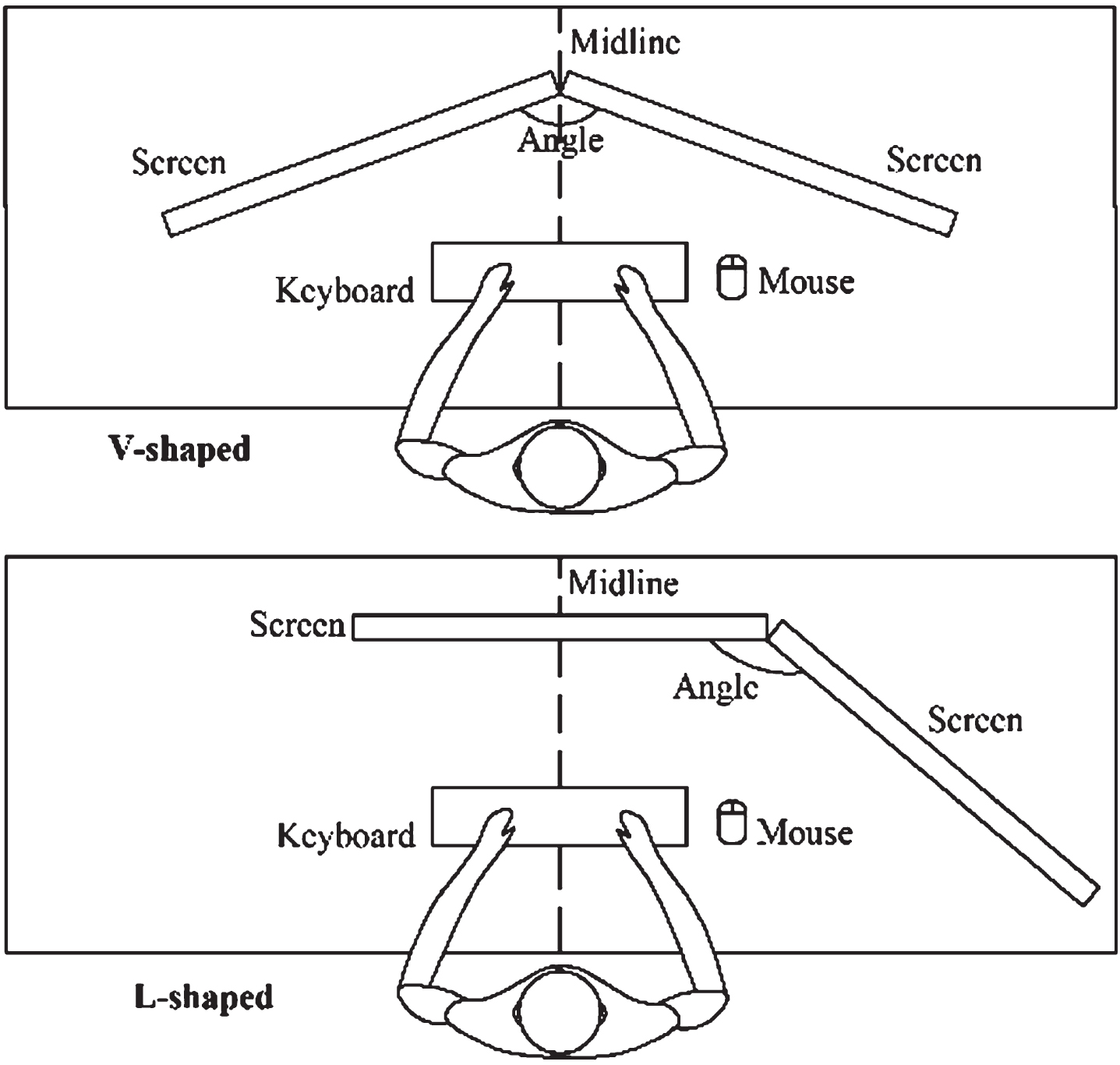
The two workstations with V-shaped and L-shaped dual screen layouts.
Participants
Twenty college students were chosen for the within-subject experiment. Their age was 22.7 (3.2) on average (SD), nine men with a mean (SD) age of 22.1 (2.2), and eleven women with a mean (SD) age of 23.2 (3.9). One of the inclusion criteria required participants to have used computers or laptops for more than a year and an hour per day in order to ensure the completion of computer tasks in the study. Chinese words are typed at a rate of fifty to eighty per minute. People who had neck or shoulder pain and other symptoms within the past three months were not included. They were evaluated for their current neck condition using the Northwick Park neck pain questionnaire [27], and those with scores higher than six were excluded. The order of two layouts was assigned to participants randomly.
Preferred dual screen angles
Following a five-minute familiarization period with the testing workstation layouts, a twenty-minute typing task was provided to each participant. The reference document was shown on the left screen and a blank one on another screen. The font and size of word were setting at Song and 10.5 with a page of 150% to the largest screen. The brightness and contrast of screens were set at the standard mode according to the factory settings. The study was conducted in a typical laboratory room with black curtains to keep out external lights and with energy-saving ceiling lights without dazzle on the screen. Before the short typing task in the familiarization period, before the formal typing task, after the completion of the ten-minute typing task, and after completing the twenty-minute typing task, participants have four chances to modify the angles of dual screen display workstations in both V and L-shaped. Finally, a digital protractor would be used to measure the angles of dual screens, with results shown in Table 1.
Results of preferred dual screen layout angles
Results of preferred dual screen layout angles
The findings indicated that over 140 degrees was the preferred angle among the participants. The final angle difference between the V-shaped and L-shaped was 3.58 deg. The biomechanical effect test would employ angles of 140.27 and 143.85 deg in V-shaped and L-shaped, respectively.
Participants
A prior power analysis was conducted using G*Power [28] indicated that to detect a standardized effect size of f = 0.25 (moderate) [29], with a 5% significance level and 80% power, the minimum sample size required was 20 individuals. Twenty college students participated in the study. The demographic characteristics of the participants were presented in Table 2. One of the inclusion criteria required participants to have used computers or laptops for more than a year and an hour per day in order to ensure the completion of computer tasks in the study. People who had neck or shoulder pain or other symptoms within the past three months were not included. They were evaluated for their current neck condition using the Northwick Park neck pain questionnaire [27], and those with scores higher than six were excluded. Before the experiment, participants were instructed to avoid over-visual strain, performing any neck or upper-limb-demanding work, drinking alcohol, and taking any drugs. Each participant signed informed consent forms that were accepted by the Ningbo University Institutional Review Board, and they were all compensated for their time.
The demographic characteristics of participants
The demographic characteristics of participants
A full-factorial and within-subjects experimental design was used in the study. The independent variables included the layout of dual screen displays and computer task type. The dependent variables include neck and shoulder muscle activity, head-neck kinematic parameters, and subjective perceived visual strain. All subjects need to sign a consent paper after being informed of the experiment’s aim, contents, and procedure. The study was approved by Ningbo University Ethics Committee (No. NBU-2022-135).
Surface electromyography (EMG) data were collected using Biopac M160 system with an EMG module. The EMG data were acquired with a sampling frequency of 2000 Hz. The data were filtered using a band pass of 20 to 500 Hz. To prevent interference from AC current, a 50 Hz notch filter was utilized. To pinpoint each muscle, 15 mm diameter bipolar electrodes were attached to the skin’s surface. In order to lower the skin’s surface impedance, the skin was cleansed with medicinal alcohol and scrubbed with fine sandpaper before electrodes were attached. The electrodes were placed two centimeters distant on the same muscle.
Six muscle sites, including bilaterally on the right and left cervical erector spinae (CES), sternocleidomastoid (SCM), and upper trapezius, were monitored for muscular activity (UT). For the CES muscles, electrodes were placed at 2 cm from the spinous midline of C4 and C5 bilaterally. The electrodes for SCM were placed at the lower one-third on the line between the mastoid process and the medial protuberance of the clavicle bilaterally. The electrodes for UT were placed at the midpoint between C7 and the tip of the acromion. A ground electrode was placed on the spinous process of C7.
Each subject was required to perform a set of trials of maximum voluntary contractions (MVC) for each of the six muscles before the formal tests in order to normalize the EMG data. According to the test procedure outlined in Fedorowich (2015), participants were in a prone position without head support, neck and shoulders in a neutral position. Resistance was applied to the posterior portion of the head as participants performed neck extension of approximately 5°to 10° [30]. For the MVC of the UT muscles, the subject had to perform resisted shoulder elevation against a shoulder strap (connected to a load cell fixed to the floor) using maximal effort. The two sides were tested separately [24]. For the MVC of the SCM muscles, the left and right site was tested separately. To activate the left SCM muscle site, keep neck flexion and rotation to the right shoulder for five seconds while using manual resistance. Keep the neck flexed and rotated to the left shoulder for five seconds with manual resistance, to motivate and acquire the MVC right SCM muscle site [25].
The AcqKowledge5.0 software of Biopac MP160 system was used to process the EMG data. The data were full-wave rectified and smoothed computed with a window of 300 ms following the filtering process. EMG data were exported once every five seconds. All signals were performed normalization by MVC values and the test results were all displayed as a percentage of MVC. The 10th, 50th, and 90th percentile amplitude probability distribution function (APDF) results were processed to represent the low, median, and high levels of muscle activity respectively [19, 21].
Head-neck motion
Inertial sensors were used to capture head-neck movements and examine the variation in postural bending, flexion, and rotation. For data collection, an apparatus consisting of 9 inertial sensors attached to different upper body parts (Xsens MVN Analyze, 22.0, Enschede, the Netherlands) tracked the body segments, position, orientation, and movement [31]. The data was transmitted wirelessly to a computer with the software and human motion could be shown in real-time. The sampling frequency was set at 100 Hz. The body segment movements could be recorded and analyzed.
The subjects needed to wear a suit and inertial sensors were positioned on the upper body parts. After the calibration, the synchronization of EMG and motion capture was performed. The data were analyzed in Xsens MVN Analyze software and exported to Microsoft Excel 2019 to calculate the means and standard deviation of head-neck kinematic parameters. A 100-frame window for every 2000 frames was taken during the 30 min task. The head-neck bending, rotation, and flexion angles could be obtained. To determine posture variability when using dual screen layout, range of motion (ROM) was used in the study, with the difference between the 90th and 10th percentile of the kinematic data [18, 33]. Median angles were used previously in VDU studies to evaluate the effect of different workstation design parameters [18, 33].
Experimental procedures
According to the test results of the preferred dual screen layout, two dual screen workstation layouts, V-shaped with 140.27 (deg) and L-shaped with 143.85 (deg) were utilized in the experiment. The workstation layout, parameters of the screens and experiment environment settings were the same as mentioned in Part 2.2. The two layouts were assigned to participants in a random order. A basic 10 min survey including age, computer or laptop using conditions and time, was performed for each participant. And then when EMG and motion capture instruments were ready, as shown in Fig. 2.
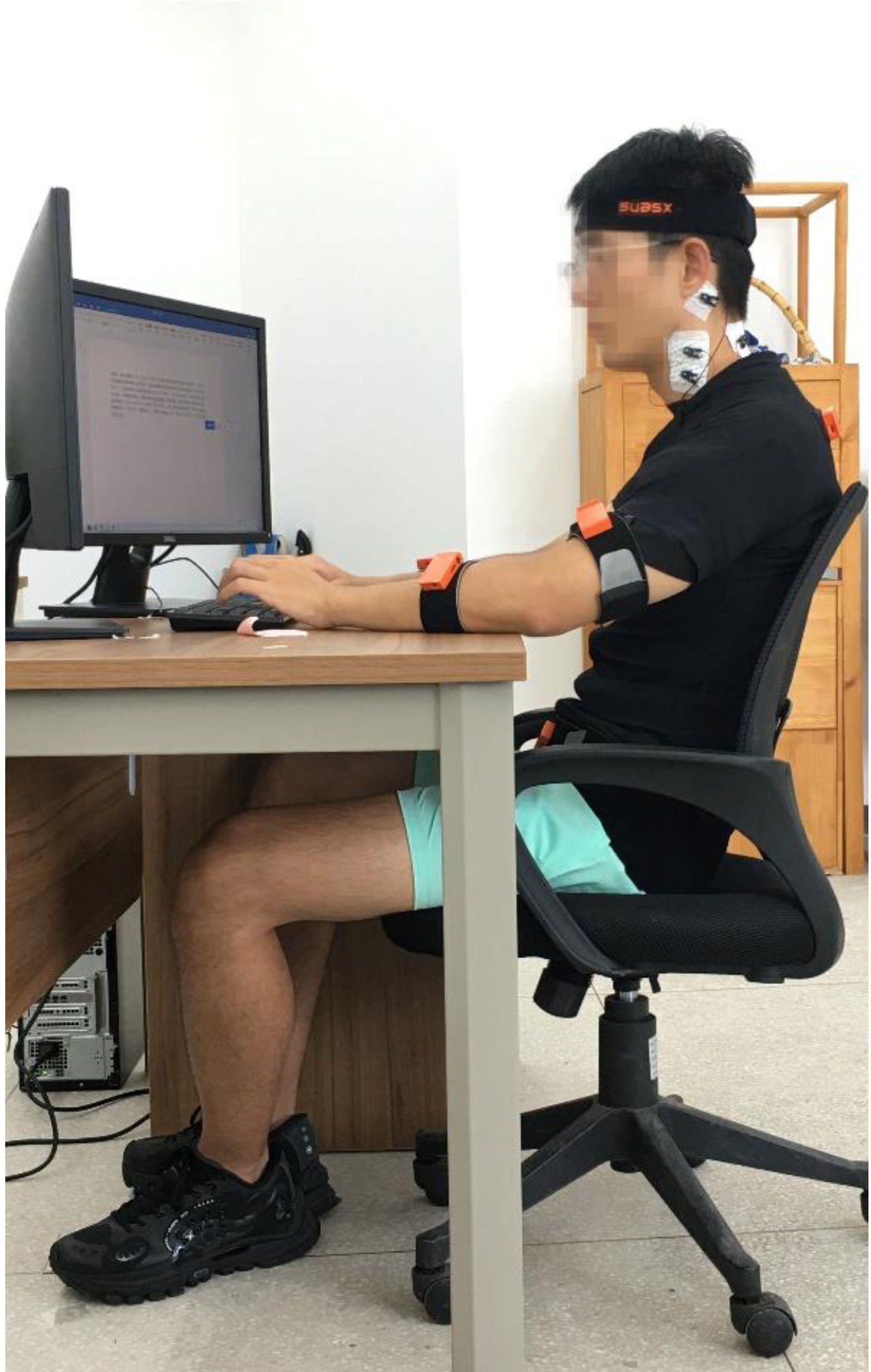
Side view of participant with EMG electrodes and kinematic sensors in dual screens workstation.
All participants were asked to use the V-shaped and L-shaped workstations and to complete three tasks lasting for 30 min, 1) A 5 min reading task. 2)A 10 min typing task. 3) A 15 min searching and finding task, to make a trip plan [24]. In the reading and typing tasks, the reference documents were shown on the left screen. A blank document was set on the right screen in typing task. In the searching task, subjects were asked to search for related information on website pages shown on the left page and a blank word file shown on the right screen. They needed to copy, paste and revise the information to the word file. Baseline subjective perceived visual strain was measured using a visual analog scale (VAS), with 0 meaning no eyestrain and 10 meaning the severest eyestrain. After the start of the test, visual strain ratings were recorded every 5 minutes. For both workstation layouts, there was a 15-minute break in between tests to prevent the effects of continuous fatigue on the results of the experiment.
Tests of normality for data distribution and the homogeneity of variance were performed on the head-neck postural parameters, and it was found that the data did not meet the criteria for parametric tests. Non-parametric Wilcoxon signed-rank tests were used for within-subject comparison of postural data of the V and L-shaped workstation layouts. For each EMG data, 10% thAPDF, 50% thAPDF, and 90% thAPDF, the difference between V-shaped and L-shaped dual screen layouts was examined. All statistical analyses were performed using SPSS (Version 24.0) for Windows 10 (SPSS, Inc., Chicago, IL, USA), and the alpha level was set at 0.05 in all of the analyses.
Results
Electromyography (EMG)
The results on the three percentiles of APDF comparing the V-shaped and L-shaped dual screen layouts are presented in Fig. 3.
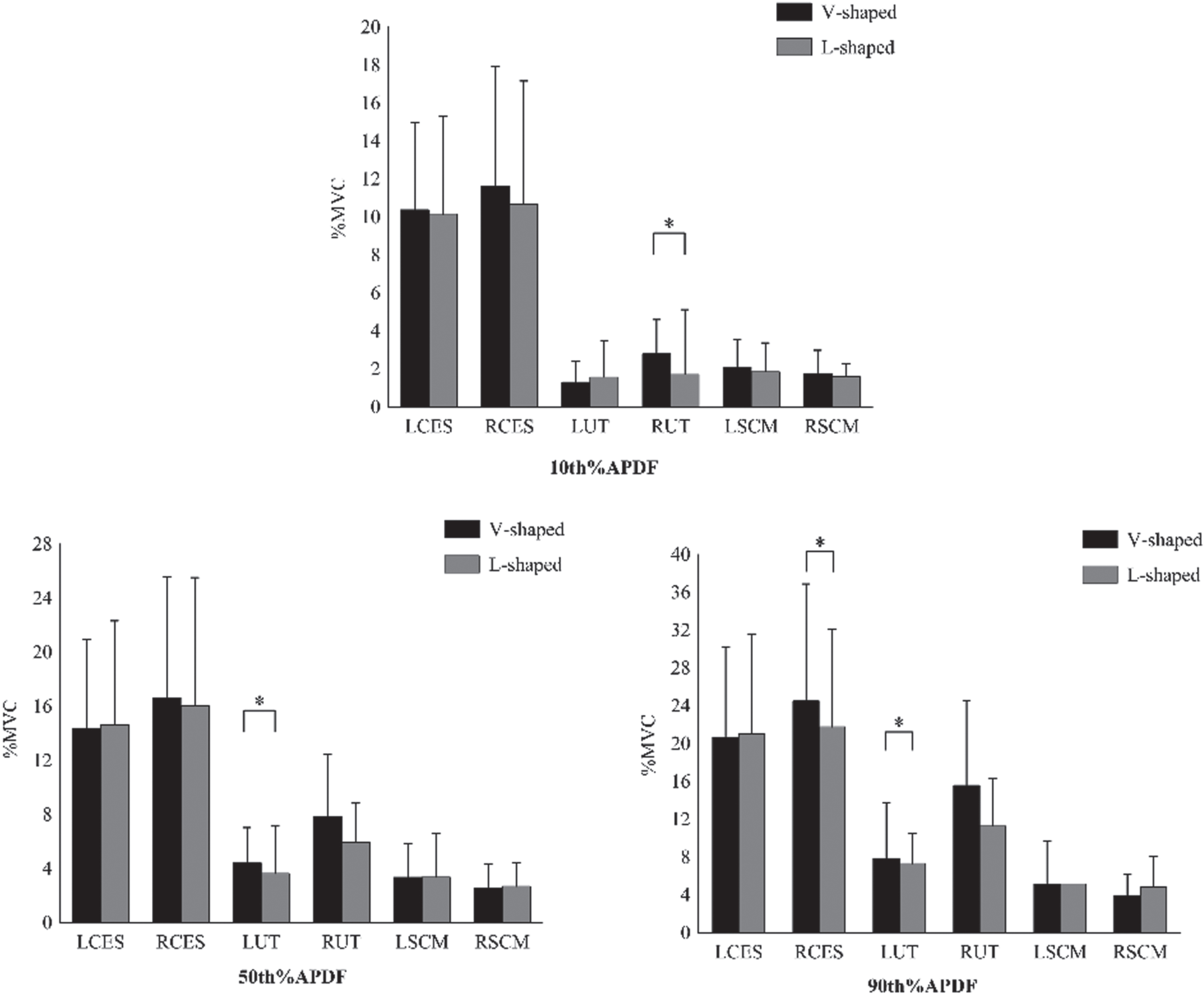
The 10th, 50th and 90th% APDF muscle activities in six muscles comparing V-shaped and L-shaped dual screen layouts.
As shown in Fig. 3, the mean amplitudes of the bilateral CES muscles were higher than the bilateral UT and SCM muscles. The right CES muscle showed a trend for higher amplitudes in the V-shaped layout. The right SCM muscle showed a higher amplitude in the L-shaped layout than in comparison with the V-shaped layout.
As statistical results shown in Table 3, the right UT showed a significant difference between V-shaped and L-shaped dual screen layouts at the 10th % APDF. There were more apparent significant differences in 50th and 90th percentile results, especially for UT and CES muscles. The right CES muscle displayed a significant difference between the two layout conditions at the 90th percentile. Left UT muscle displayed a significant difference between the two layout conditions at the 50th and 90th percentile results.
Summary of statistical analysis results for EMG data comparing the two layouts
*p significant at < .05.
The median and ROM kinematic results of head-neck posture comparing the two dual screen layouts and types of tasks were presented in Figs 4 5. Statistical results were shown as in Table 4.
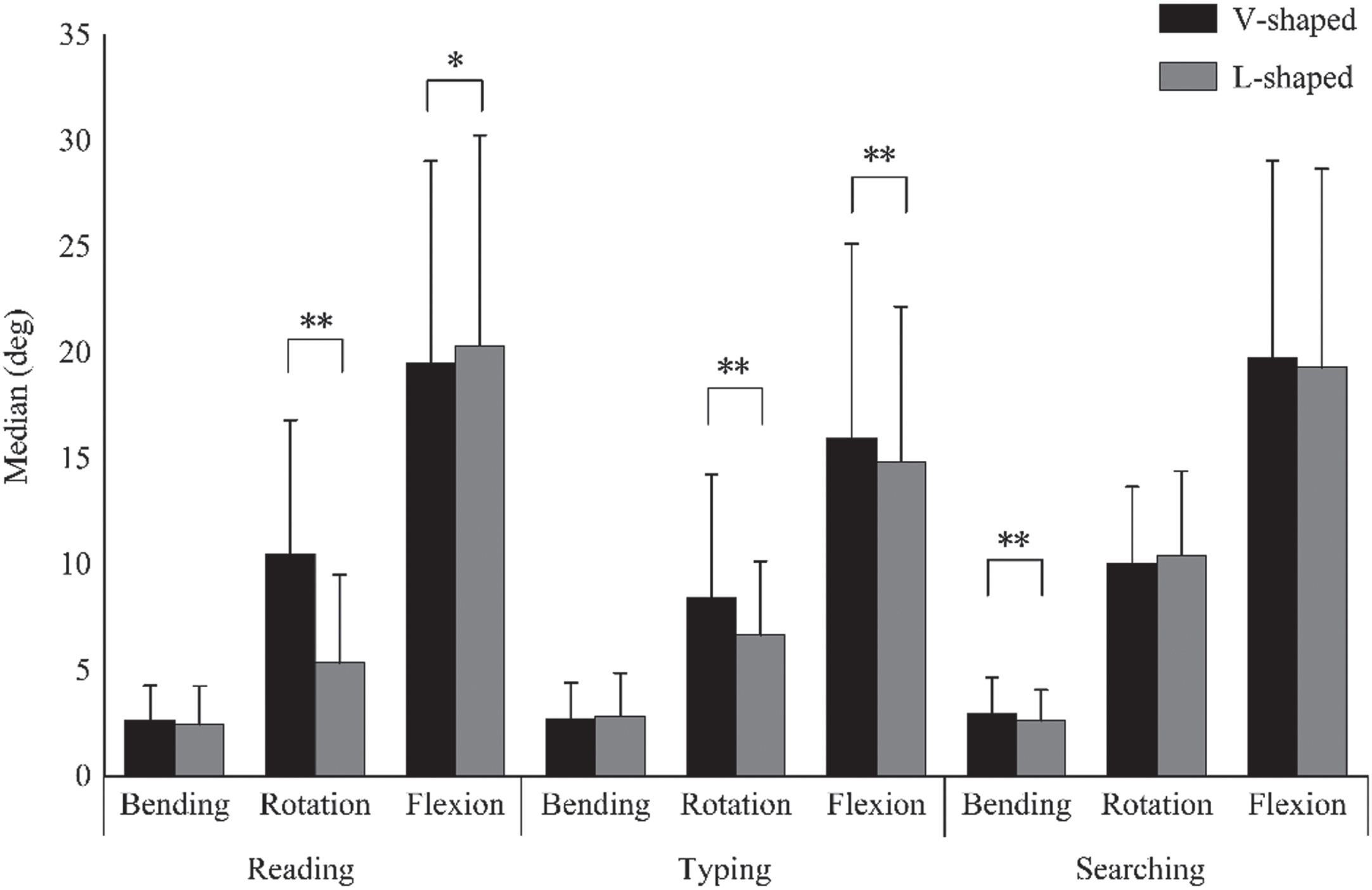
Median of head-neck kinematic parameters when performing three tasks.
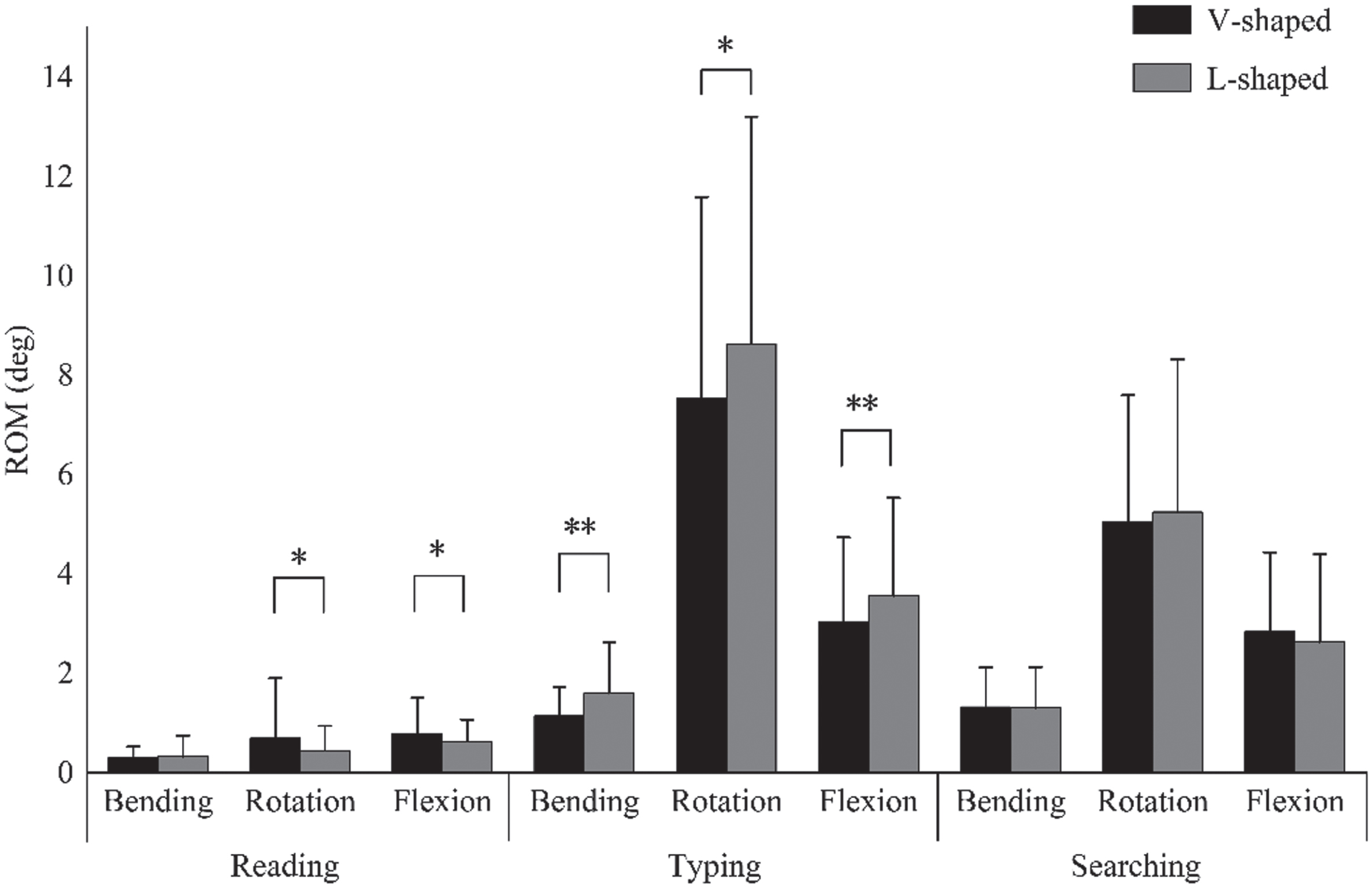
Mean ROM of head-neck kinematic parameters when performing three tasks.
Statistical analysis results for parameters of head-neck kinematics during computer tasks
*p significant at < .05.
The median head-neck flexion, rotation, and bending angles revealed similar trends within the three tasks, as shown in Fig. 4. In both the reading and typing tasks, there were noticeable differences in the head-neck flexion and rotation angles. The head-neck bending angle during the searching task differed significantly between the two dual screen layouts.
The head-neck posture variabilities across the various tasks were depicted in Fig. 5. When using both layouts for the reading task, there were substantial differences in the head-neck rotation and flexion angle variability, and with relatively higher posture variability when using the V-shaped layout. When typing with the L-shaped layout, higher head-neck posture variability was observed, with relatively lower angles and levels of muscular activity activation. The layout showed no significant impact on posture variability in the searching task.
The visual strain score measured at each time point is the variation values following the subtraction of the baseline values, statistical descriptive results as shown in Table 5. Visual strain scores during tasks were shown in Fig. 6. There was a significant difference in visual strain scores between V-shaped and L-shaped workstation layouts (p < .01). Additionally, individuals felt more uncomfortable with a V-shaped layout. For both workstations, visual fatigue increased significantly over time.
Statistical descriptive results for visual strain during computer tasks with a baseline test
Statistical descriptive results for visual strain during computer tasks with a baseline test
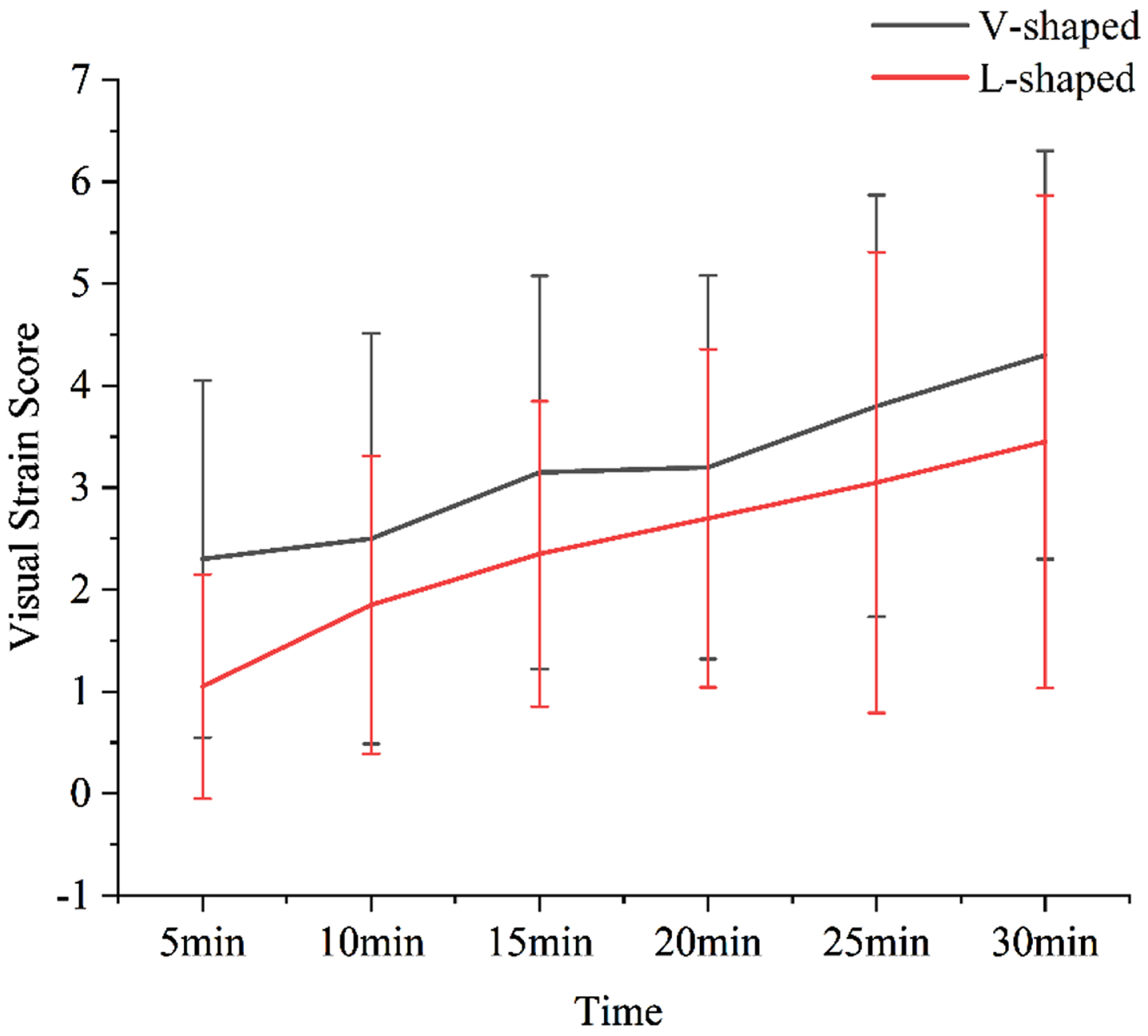
Visual strain score comparing V-shaped and L-shaped layouts during computer tasks.
The current study examined the impact of V-shaped and L-shaped dual screen layouts on head-neck kinematics and neck-shoulder muscle activity. User-preferred angles of adopting a dual screen layout were explored in the preliminary test. According to a prior study by Shin and Hedge (2010), the user-preferred angle of a dual screen layout with two 19-inch screens with a 5 : 4 aspect ratio was 152.3 deg. The dual 23.8-inch screens with a 16 : 9 aspect ratio were used in the current study, and the ultimately measured angles in V-shaped and L-shaped layouts were 140.27 and 143.85 degrees, respectively. It could be seen that with the increasing size of the screen, the angles of dual screens decreased. Naturally, the horizontal viewing angle increases as screen size and aspect ratio increase when using dual screens at the same angles. The angle of the dual screens was adjusted to a lower range in order to prevent a higher frequency of head-neck rotation and an asymmetrical posture. Users can obtain a larger diagonal dimension of the viewing area in the two screens by keeping a neutral head-neck position.
According to the EMG data, the CES and UT muscles displayed significant levels of muscular activity as the three tasks’ duration and intensity increased. For workers with chronic neck and shoulder pain, maintaining a static head-neck posture while using a computer has already been found to be highly connected [20, 21]. The right CES muscle displayed greater amplitudes in the current study than the left CES muscle, a particularly significant difference between the two layouts in the 90th percentile results. It suggested that even when a V-shaped layout is adopted, the participant’s midline being aligned with the workstation’s, it may still lead to asymmetrical head-neck postures. And participants might only need to switch their eyes instead of rotating head and neck. The bilateral dissociative effect on CES muscles indicated in Szeto’s study was also validated, despite the data showing differences in the activation of the left and right CES muscles during dual screen computer work.
The three percentile APDF values on the right UT muscle were higher when using the V-shaped layout by comparing the L-shaped layout. There was a significant difference in the 10th percentile results for the right UT muscle. The variable was considered to be in the inertial period of muscle activation. Participants in the present study were all right-handed and prolonged mouse use may lead to an increase in muscle activity in the right UT muscle site. The same results were also found in related studies about using a single screen [19]. The left UT muscle revealed a significant difference between the two layouts on the 50th and 90th percentile values as time went on. In the L-shaped layout, the kinematic results showed higher head-neck rotation angles, which may need more left UT muscle activation to maintain the static working posture. The editing word document was displayed on the right screen during the typing and searching tasks, and participants may have unintentionally concentrated there because of higher flexion angles and lower rotation angles, as indicated by the mean median kinematic values. No significant difference was shown in bilateral SCM muscle sites when using the two layouts. It could be seen that during all the tasks, the SCM muscles were active in a low level. The reading task lasted only five minutes, while the typing and searching tasks were accompanied by more frequent head-neck motions, which possibly relieved the muscular fatigue compared to a static posture.
According to the head-neck postural kinematic results, the head-neck flexion angles were the largest when performing the three tasks, followed by the rotation angle. The increase in the flexion angle may be due to the fact that many people now spend more time using electronic devices, and improper body posture would easily lead to a severe forward tilt of the head-neck.
Even though the reading task lasted only five minutes in the experiment and the reading material was placed on the same side of the screen, the effect of the angle of the main screen on the head-neck posture could be seen in both layouts. The variability of the head and neck posture was significantly greater in the V-shaped layout. In the typing task, lower head-neck flexion and lateral bending degrees were observed when using the L-shaped layout, with higher posture variability, as the same results with [19], resulting in a lower level of muscle activity activation. In the searching task, there was no statistically significant difference in the head-neck kinematic parameters when using the two layouts, but the parameters were relatively lower when using the V-shaped layout, which is similar to the results obtained by Estember [15].
Visual strain scores significantly increased over time, which was consistent with Zuniga’s findings (2016). In this study, participants who used the V-shaped layout reported considerably higher visual strain scores. What’s more interesting to notice was that the participants continued to prefer the V-shaped layout in post-experimental discussions with them. The visual discomfort was relatively acceptable compared to the discomfort associated with repeated head-neck rotation movements.
One of the limitations of this study is the selection of two monitors that are sold well and widely used in China. Two identical monitors were directly used for the experiment. In the workplace, it was also common to utilize a laptop with an external monitor or an external monitor set up in a vertical way. The variety of dual display settings can be expanded in further studies. The test utilized three types of tasks for 30 minutes. Longer experiment period time could be considered in further research. Gender and task type effects on head-neck kinematics and muscular activities should be investigated. Additionally, various age groups could be used to investigate the biomechanical effect. This will be helpful in giving users instructions and suggestions for using dual screens.
Conclusion
The aim of the study is to determine the biomechanical effect of dual screen layouts. Compared to the L-shaped layout, a higher level of muscle activity at CES and UT was found when using the V-shaped dual screen layout. The head-neck rotation and flexion angles differed due to varied types of works when using V-shaped and L-shaped layouts. The V-shaped and L-shaped layouts showed a significant difference during reading and typing tasks. Particularly, using the L-shaped workstation layout for typing tasks was linked to significantly lower head and neck rotation and flexion angles than the V-shaped, as well as higher postural variability and, thus, relatively less fatigue. The V-shaped layout worked well for the reading task, while there were no discernible differences between the two layouts for the searching task. Participants were more sensitive to head-neck rotation rather than eye fatigue by a preference for a V-shaped layout. Therefore, the issue of more frequent movements with greater postural variability or static posture posing greater risks needs to be investigated in combination with more specific contexts. The results of this study only reflect the existing layout of the situation, such as the choice of screen type and display size. Future research can continue to incorporate dual screen or even multi-screen office scenarios for a more sensible application and more insightful suggestions.
Footnotes
Acknowledgments
The authors would like to thank the Kingfar Research Support Program funded by Kingfar International Inc., for providing ergonomic research support and Xsens equipment for the study.
Conflict of interest
The authors declare that they have no conflict of interest.
Funding
The study was funded by the Science Research Fund of Ningbo University (Grant No. XYW19006), Humanities and Social Science Research Program of the Ministry of Education of China (Grant No. 21YJA760025), and Ministry of Education Science and Technology Industry-University Cooperation and Education Project (Grant No. 202102289021).
Informed consent
All participants signed an informed consent form that was accepted by the Ningbo University Institutional Review Board. All participants were compensated for their time.
Ethical approval
The study was approved by the Ningbo University Ethics Committee (No. NBU-2022-135).