



Abstract
BACKGROUND:
Prevention through Design (PtD) is a safety initiative that increases the ability of eliminating risks before construction. Implementing digital tools for PtD is an innovative way to help identify embedded risk in design phase by automating a process that is currently time consuming and extensively dependent on designers’ experience. However, there is a lack of known digital safety tools available to professionals.
OBJECTIVE:
The aim of this article is to systematically review published research on the development of digital tools for PtD in order to point out existing processes and limitations.
METHODS:
The Preferred Reporting Items for Systematic Reviews and Meta-Analyzes (PRISMA) guidelines were used to search publications in Scopus database. Initially, 148 publications were found, but after applying the filters, thirteen publications were read and included in this review.
RESULTS:
Quantitative results showed few publications and quantitative results detailed the studied digital tools workings and what limitations prevent their full implementation by designers.
CONCLUSION:
Although 53.84% of methods are automatic, existing barriers such as the inability to consider schedule, and to provide a complete database challenge the validity of these tools. Therefore, PtD still poses a research gap for future research on safety matters.
Keywords
Introduction
According to Occupational Safety and Health Administration (OSHA), in 2017, 20.7% that is, one in five worker deaths of worker fatalities in private industry were in construction. It was also reported that the “Fatal Four”, the four main causes of worker deaths are responsible for 59.9% of construction workers deaths, were falls, struck by object, electrocution, and caught-in/between [21]. In Brazil, the Statistical Annual of Accidents at Work of 2017 revealed that most of the cases of permanent disability, 364 reports, occurred in building construction [1]. Although the sector witnessed the many improvements on safety management, a zero-accident vision is still a promise [41, 27]. The high accident rates of AEC (Architecture, Engineering and Construction) results in a poor reputation and may disrupt future innovations towards growth and development of urban spaces [28].
The implementation of Design for Safety (DfS) also known as Prevention through Design (PtD), Safety in Design, Safe Design and Design Risk Management is regarded as a leading strategy against occupational accidents, injuries, and illnesses in construction [22]. Eliminating hazards in planning and design phases prevents risks from occurring on jobsites and the earlier the risks are tackled the greater are the ability to cut them off [10]. Prior researchers have focused on quantifying the impact of design in the extent of risks that may arise during construction, operation and maintenance of a project, that is, the whole lifecycle of a facility. The results of the analysis of 224 accident reports of FACE (Fatality Assessment and Control Evaluation) and the conclusion was that 42% of accidents have to do with design decisions. Studies financed by National Occupational Health & Safety Comission (NOSHC) analyzed statistical data of fatal accidents occurring in 2002 and concluded that 37% of worker deaths were caused by design decisions [8]. Accident reports of Brazil, Canada, United States, Portugal and Singapore and found out that the causes of at least 23.6% of serious and fatal accidents were related to conceptual design, that is, at least 23.6% of accidents at work could have been avoided if safety measures had been taken in conceptual design [3, 24].
Despite the acknowledgements of PtD potential, its real adoption is facing many obstacles. Implementation factors such as designer attitude, designer awareness/knowledge and education regarding DfS, availability of DfS tools, clients’ influence/motivation and legislation are key factors to identify embedded safety risks at the design phase [9, 22]. Furthermore, in general, most DfS tools involve more or less manual interventions, ignore considerable temporal and environmental factors, concentrate only on certain aspects and do not consider the risk aspect of the context [19].
In 1992, the European Union extended the responsibility of worker safety to designers, what was before restricted to constructors, through Council Directive 92/57/EEC “Temporary or Mobile Construction Sites” [16]. Similarly, other countries like Australia, Singapore, South Africa, the US, and China have followed this tendency of defining PtD as a construction obligation [41]. Therefore, the delay in popularizing the adoption of PtD techniques creates the need to develop simple, practical and automated methods that help professionals in this process and make builders aware of the benefits of adopting the technique in reducing the economic and human losses generated by work accidents as well as affecting other aspects of the enterprise such as budget, schedule and quality management. Having said that, the aim of this study is to systematically review published research on the development of digital tools which are able to identify safety risks in designs and to thoroughly examine each of these tools in order to point out existing processes and limitations.
Material and methods
A systematic review is a method for the identification, selection and evaluation of all relevant literature about a researched theme, in order to reach more reliable conclusions and point out gaps to be filled by future research [5]. And due to its standardized and rational process, systematic review is an attractive way to illustrate objectivity and transparency to readers [17]. With that in mind, the following research protocol was defined aiming to successfully fulfil the purpose of the review.
The systematic review was performed according to the Preferred Reporting Items for Systematic Reviews and Meta-Analyzes (PRISMA) guidelines [18]. The articles were selected by filling in the “Title/Abstract/Keyword” field of Scopus database, selected for being one of the most complete and reliable databases, with combinations of keywords shown in Table 1 and the Boolean descriptor “AND” to correctly filter the results.
Research protocol
Research protocol
The inclusion criteria of the systematic review obeyed the following aspects: a defined time range for all publications up to 2019, English or Portuguese languages, publications of the development of a digital method for risk identification in the design phase and review articles on PtD methods in construction to broaden the research field.
Similarly, the excluded articles were: unavailable; theoretical methods that have not yet been developed in practice; digital methods for identifying ergonomic hazards in design phase; digital methods for identifying human errors in design phase; digital methods to improve communication between stakeholders; digital risk identification methods in heavy construction designs; and lastly, digital methods for construction jobsite management and safety planning, which did not propose changes to the conceptual design but rather modifications in safety design such as scaffolding and railing, and in the schedule of construction activities to mitigate the encountered risks.
Initially, the criteria were applied to the titles and abstracts reading, the articles that met the inclusion criteria or that created some doubt about their relevance or not to the studied theme were included and the articles that fit the exclusion criteria were excluded. Then, the same criteria were employed in the complete text reading. During this stage of the methodology, the selected articles had their references analyzed and the studies deemed relevant were included for full reading, following the inclusion and exclusion criteria as well. Finally, the final selection for the systematic review was defined. After reading the texts, the important information was treated and structured in graphs and tables, according to quantitative analysis and qualitative analysis.
The quantitative analysis comprised three graphs related to the number of publications per year, the number of publications per country and the country of origin of the institutions with which the authors are associated. It also comprised a word cloud built with the keywords of the included studies. The qualitative analysis included a table, which details the operation of digital methods, and a graph, which illustrates the limitations of the risk identification systems.
Initially, 110 articles were found in the Scopus database and 38 from other sources, such as citations and references from included publications, totaling 148 initial studies. After the use of the language filters, English and Portuguese, there were 147 studies to be analyzed by the title. By reading all titles, 31 articles did not meet the inclusion criteria. Among the 116 that had their abstracts read, only 50 studies were relevant to the topic, however, four did not have their texts available, totaling 46 articles for full reading. Finally, 33 out of the articles read in full met the exclusion criteria and were discarded, thus resulting in thirteen articles read and included in the systematic review. This process is illustrated in flowchart format in Fig. 1.
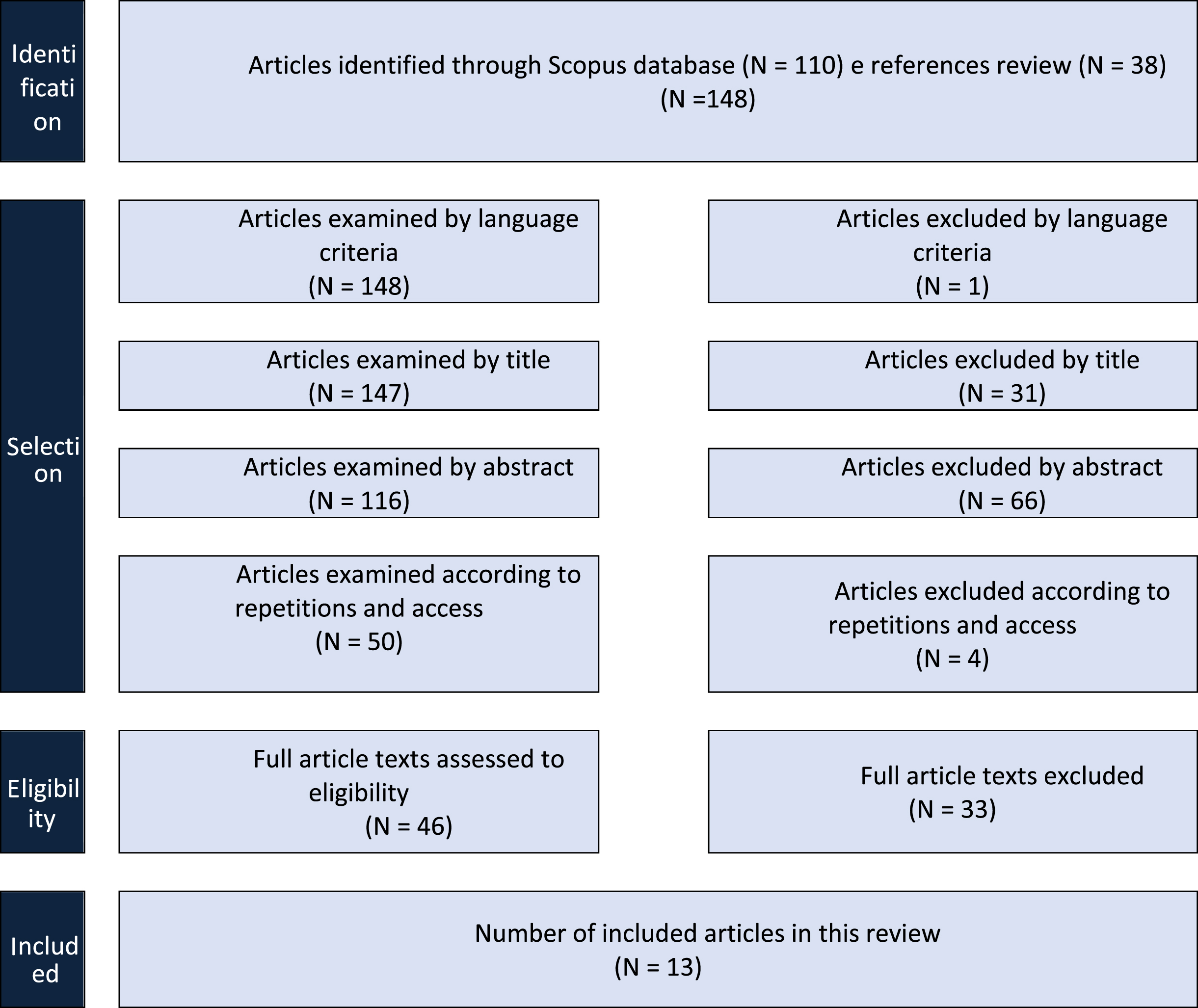
Publication’s selection flow chart.
The reviewed articles quantitative analysis comprised four categories: year of publication, country of publication, nationality of the institutions with which authors are associated and keywords used in the studies, represented by graphs. Thus, the objective was to know the scientific scenario of the subject based on the articles included in the review.
Graph 1 shows the number of articles according to the year of their publication. In addition to the small number of articles found, considering being a topic of high relevance, there is the absence of expressive growth trends, with 2 articles being the maximum of publications in the same year. The thirteen-year period following the first study in 1997 has only 4 published articles. On the other hand, with the exception of 2013 and 2017, there was at least one publication in all years from 2011 to 2019, with over 60% of the publications.
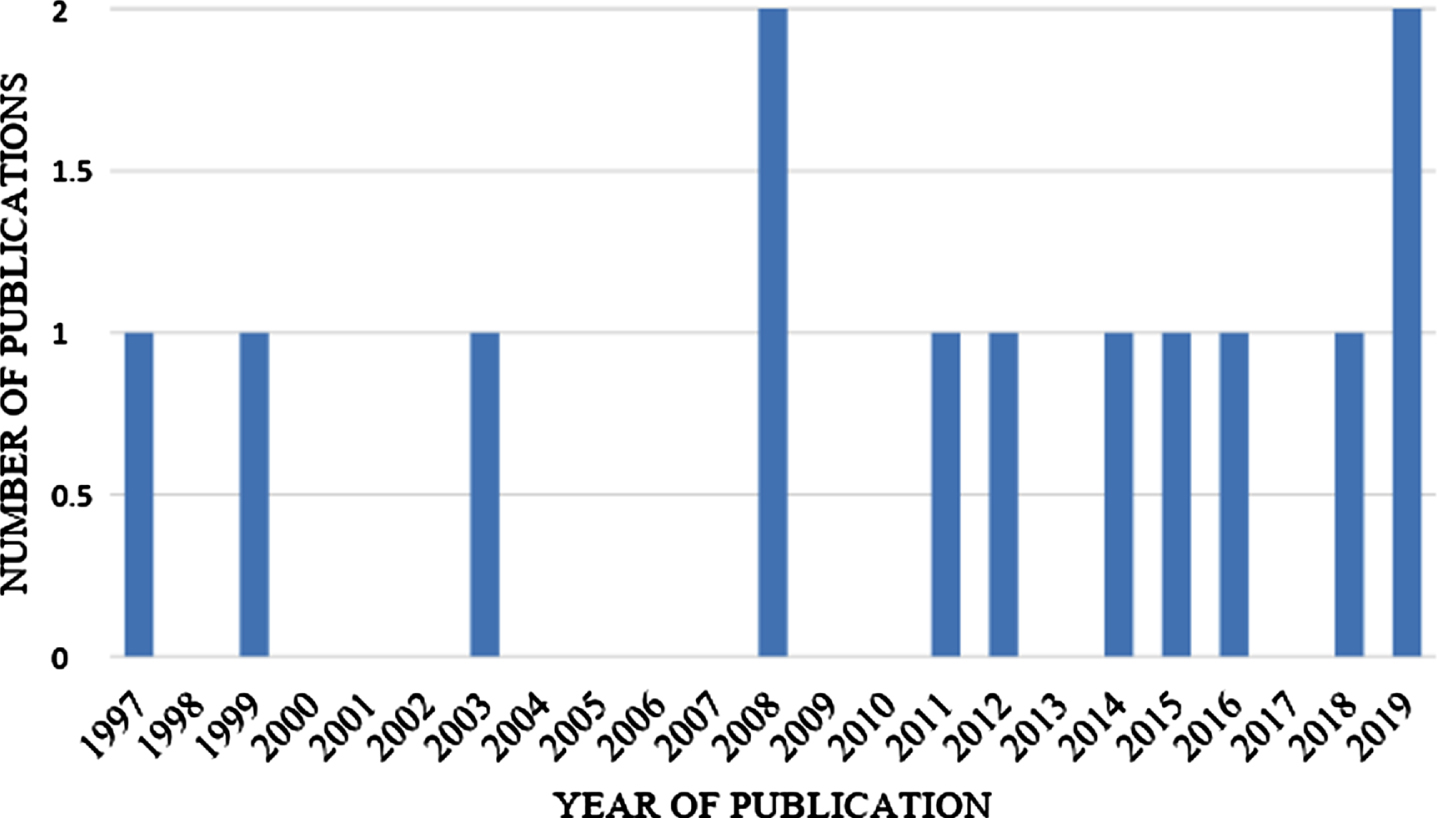
Publications by year.
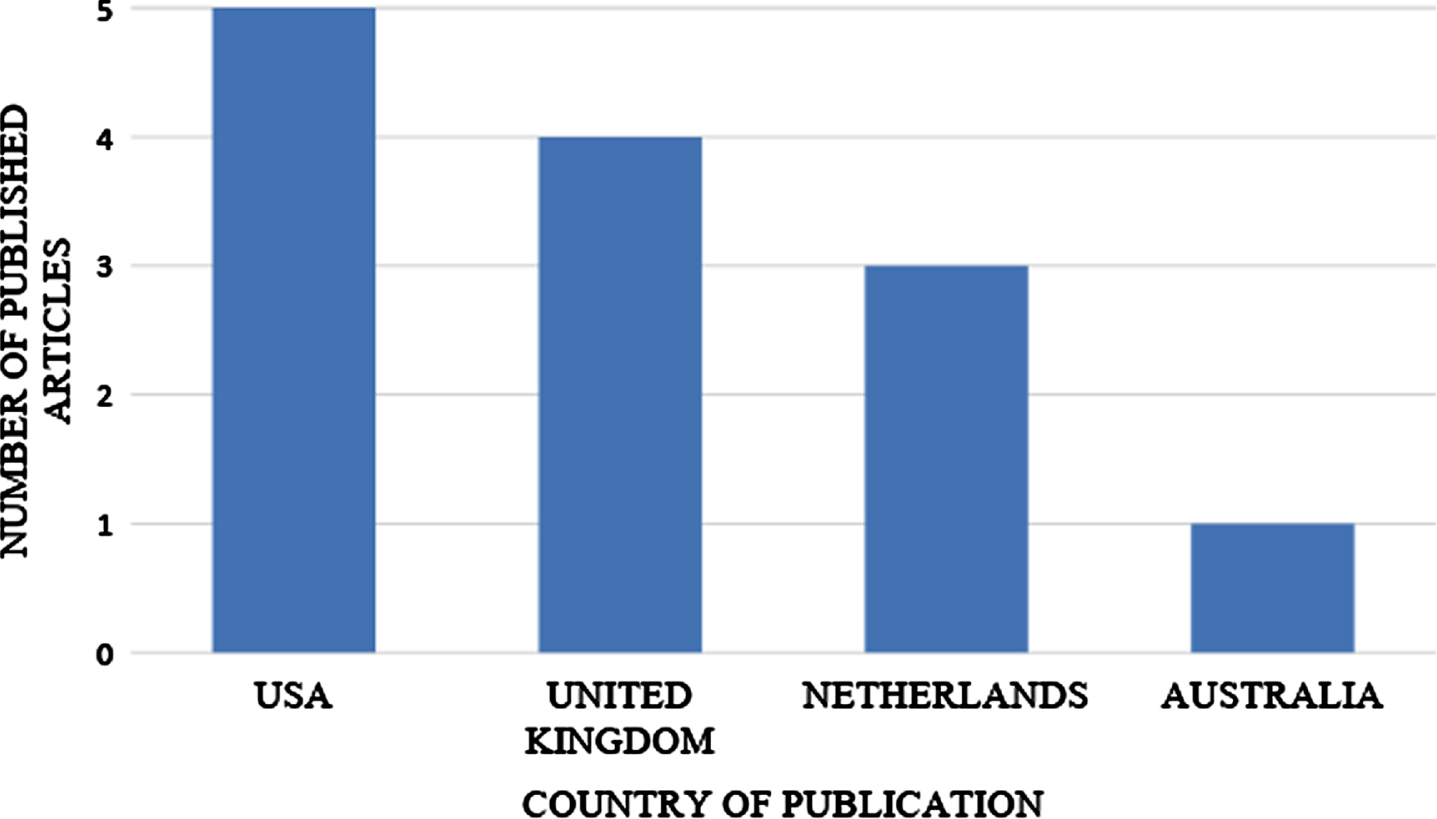
Publications by country.
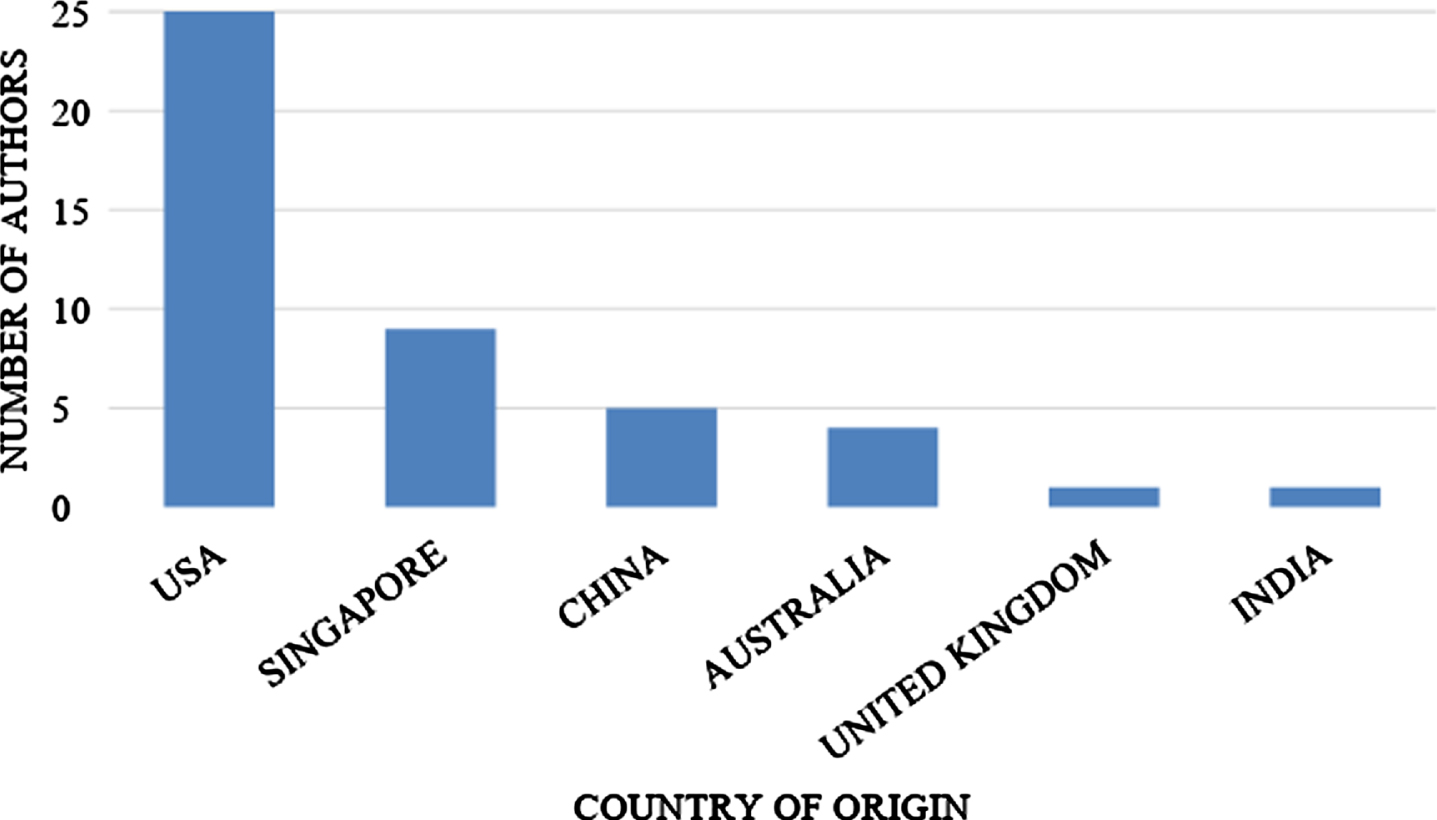
Country of origin of authors’ institutions.
Graph 2 illustrates the number of publications per journal, congress or publisher nationality. The United States stands out in leadership with 38.5% of publications, followed by the United Kingdom with 30.8%, the Netherlands with 23%, and finally Australia with 7.7% of the studies included in the review.
According to Graph 3, around 55.5% of the authors are associated with US institutions, demonstrating the country’s hegemony in innovations in digital methods for PtD. Less significantly, there are Singapore with 20% of authors, China with 11.1%, Australia with 8.9% and finally UK and India with 2.2% each.
Figure 2 was created by the tool available at wordclouds.com and illustrates the keywords chosen by the authors frequency in the thirteen studies included in the systematic review.
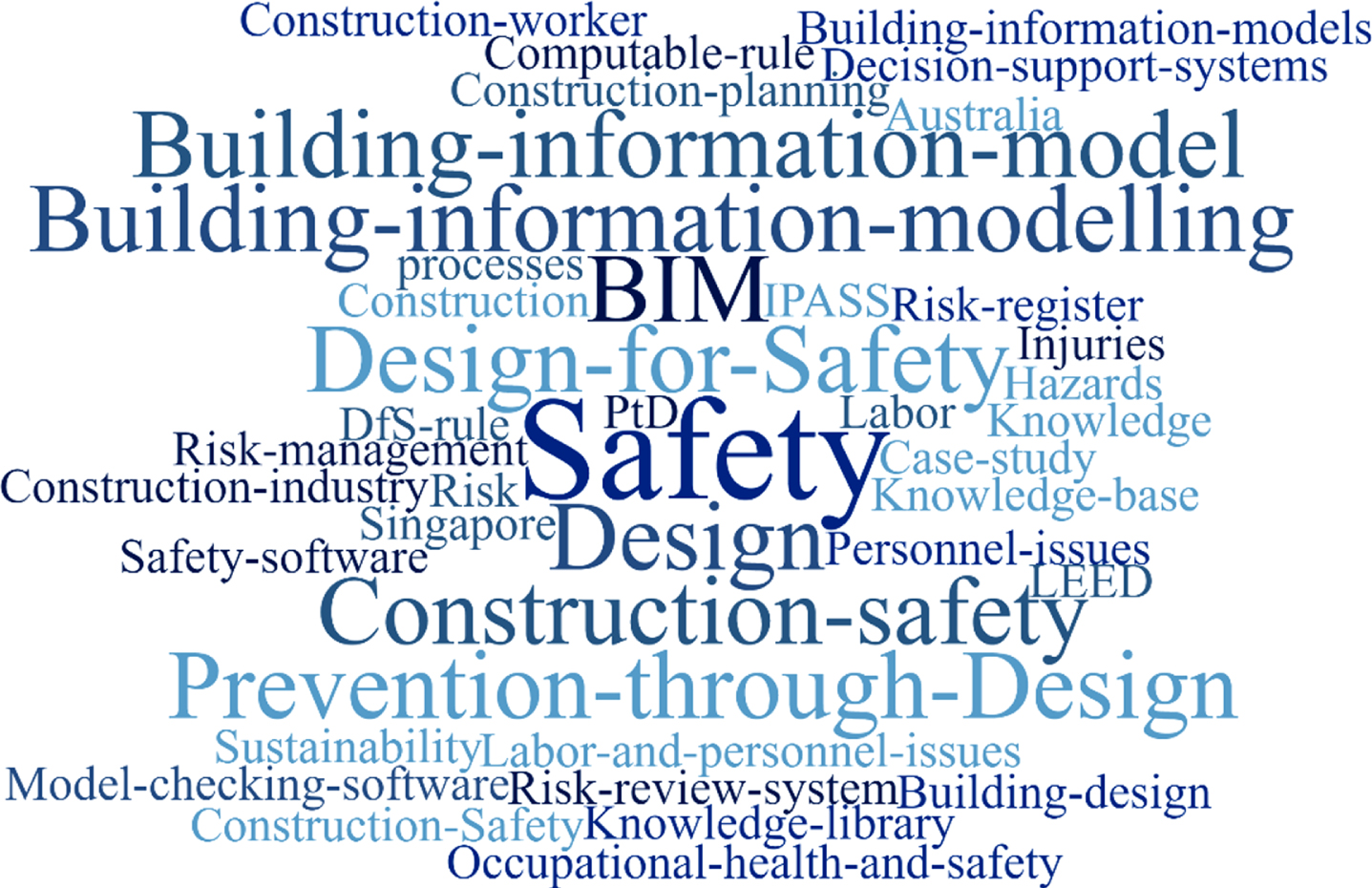
Keywords appearance.
Analysis is based on the size of the words in the picture, which means that the larger the word is, the more often it appears in publications. The most recurring keywords were “Safety”, “Design for Safety”, “Design”, “BIM” and “Construction Safety”, confirming the publications discussion on introducing safety in the design phase of projects through digital methods. Although carried out research did not filter only studies that used BIM technology, it is evident the predominance of this tool in project automation. Terms like “Prevention through Design”, “Building information model” and “Building information modeling” have also been present in more than one publication, but less expressively.
The qualitative results to be presented below have the purpose of going over the thirteen articles of the review. Initially, Table 2 identifies all studied digital methods according to the authors, publication year, method name, employed technology, and operating details such as the use of the IFC (Industry Foundation Class) format, automatic risk identification, preventive measures and the use of multidimensional visualization of the project.
Reviewed publications
Reviewed publications
By observing Table 1, it is found that 53.84% of the methods are digital and capable of automating the identification of risks and safety measures and providing the user with a view greater than 2D. Yet, Asymetrix Websites and Multimedia Toolbook are present in 15.38% of the studies each and Macromedia Flash 8 Professional (Flash) and Macromedia Flash 8 Professional (Flash) in 7.69% of the methods each, totaling 46.16% where the automation does not occur or is done in a deficit way. Still, among the automated methods, 100% use BIM technology. It is also noticeable the wide use of IFC format models in 71.42% of automated methods.
The following Graph 4 shows what limitations digital methods present during their operation, mentioned or not by the authors.
Graph 4 reveals that in 84.62% of the methods the dynamics and temporality of jobsites activities was disregarded. In 69.23%, the difficulty was the development of PtD databases that covered all identifiable risks. Other important difficulties were the high dependence of users’ actions during the operation of digital methods (61.54%) and the validation of the method guaranteed by specialized professionals (46.15%). Finally, the least reported difficulty was the occurrence of technical errors during the validations of the tools.
The present review examined some digital tools that were eventually excluded for not fitting its predetermined aim. Anyway, it was found appropriate to briefly discuss these methods since they convey the great breakthrough PtD technology is currently going through and show other possibilities within the wide field of action for PtD. The following section details the mechanism and the capabilities of improving safety of these digital tools.
PtD may be applied at various stages of a project’s life cycle. However, digital PtD methods that use conceptual design to automatically develop safety planning have been found in the literature, in some cases including the management of construction activities through schedule information, which is called this safety management. Thus, these methods do not alter the conceptual design aiming for safety but they use design to predict and facilitate the planning of safety equipment and procedure prior to construction.
Design-for-safety-process tool that assists designers at identifying safety hazards in construction projects and the suitable safety measures in a virtual reality environment. Case study identified risks at lifting concrete wall formwork during tower crane activities like concrete debris falling down and hitting workers, so it was recommended to clean the formwork of concrete debris before lifting. However, the method was not able to provide conceptual modifications to deal with safety risks [13, 14].
4DCAD-Safety, which is based on the 4D simulation of 3D objects according to the construction scheduling in order to know what, why, where and when safety measures must be provided. For instance, the system is able to create a safety plan that says when and where installing a guardrail to protect workers from falling from an open slab [7]. 4DCAD model was also used by Benjaoran and Bhokha in a rule-based system for identifying working-at-height hazards embedded in models and then planning safety measures. It was demonstrated in the case study how the prototype automated the process as it “added three safety measure activities into the original schedule such as the scaffolding inspections and the guardrails installation and removal activities” [4]. Hammad et al. also used a 4D model to automatically locate physical barriers needed for fall prevention including its duration in the schedule.
An important study was carried out which demonstrated a BIM-based modeling and 4D simulation (3D and schedule) prototype able to automatically check the model, detect fall hazards, install guardrail and cover slab opening and schedule installation and removal of protective safety systems. Afterwards, drew on the safety checking system to apply OSHA’s and German safety regulations for fall protection hazards [25, 26]. Another case study based on Zhang et al. was done by Sulankivi et al. [23] and some limitations were identified like the guardrail representation being not as complex as it is the real one used in the field, which requires more sophisticated 3D model [20].
BIM-safety rule-integrated approach whose reasoning is basically matching a model component parameter code to a safety rule code for unsafe design factors to be identified and rectified automatically [15]. Nevertheless, the platform had not been fully developed. The Italian Construction Health and Safety (H&S) normative text into a code checking-rule in order to verify a construction site safety plan. The case study showed the tool ability to check a BIM-based design and warn the user, for example, about the width of a ramp at the bottom of the excavation not considering a tolerance of 70 cm for workers [11].
Virtual prototyping was the tool for the identification of unsafe factors in the project. These factors could be identified by the managers themselves or automatically by the safety rules integrated. Safety problems produced by site layout, multi-interface, safety screen and scaffolding, plant operation, and construction operation were the focus of that platform [12].
Total-Safety is a construction safety-management tool developed by Carter and Smith and its risk assessment relies on the construction tasks [6]. Accordingly, the designer provides a list of tasks of the method, such as mechanical excavation and cut and bend reinforcement bars, and then the tool shows the user the hazards and hazardous events associated with each task. This method did not qualify for the review because it’s not based on design but on construction events.
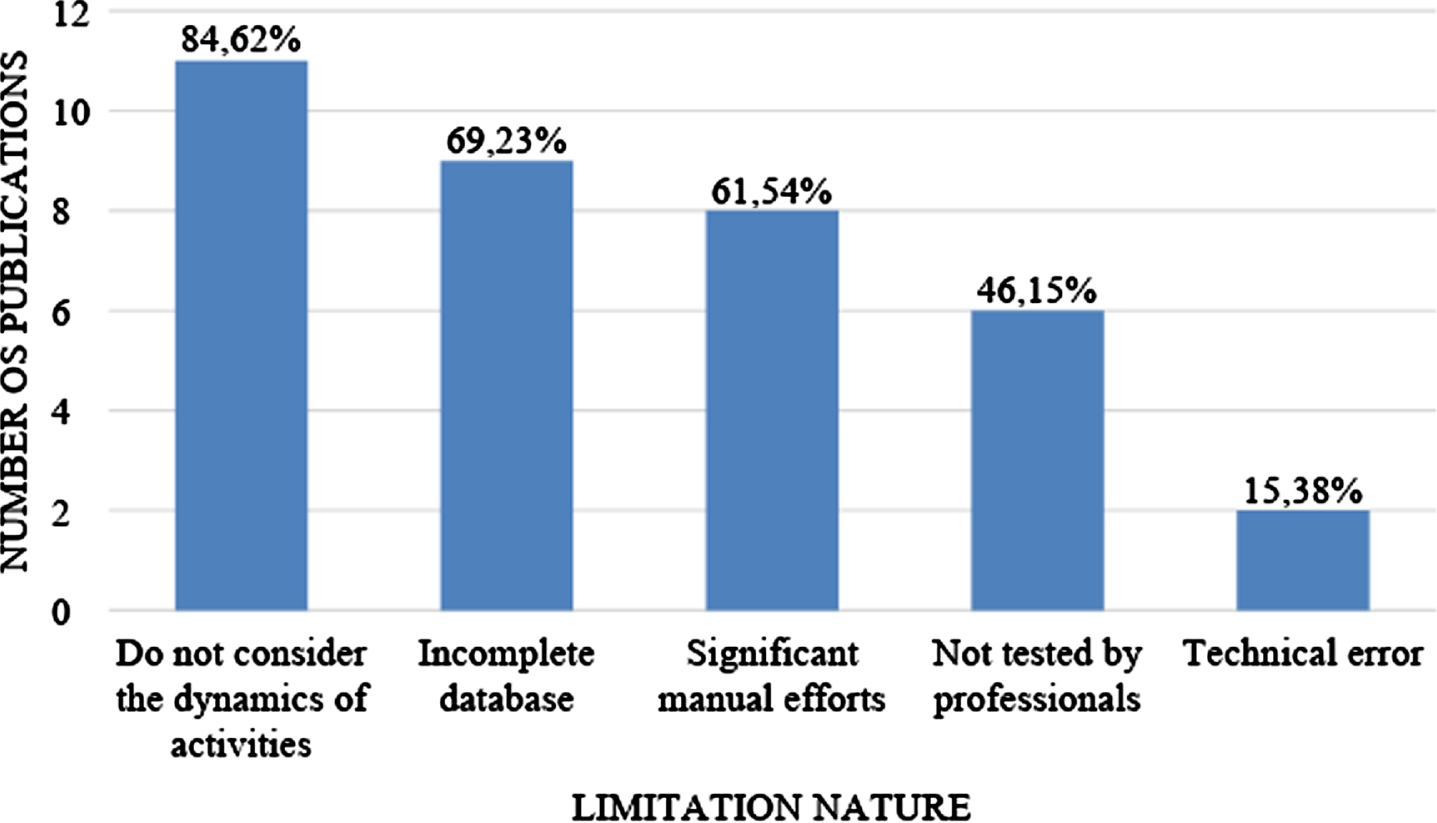
Tools limitations.
Another technology incorporated in construction safety planning tools is Geographic Information Systems (GIS). GIS environment aims to assist the safety planner in examining what, when, where and why safety measures are needed. The safety review is based on answering whether the developed sequence can result in an unsafe construction and the site conditions lead to any predictable hazard and if the answer is affirmative, preventive measures such as placing warning signs, restricting access, providing safety guards, providing guardrails or schedule modifications must be done [2].
The aforementioned studies are really relevant to the theme and show great advances in PtD knowledge, but they do not fulfill this review requirements. Helping designers to preview safety projects such as guardrails is undeniably helpful. However, changing the way designers concept their design from the beginning of the creative process is an even more efficient manner in order not to embed safety problems into a project. Acknowledging the potential of the digital tools described above, it would be a good alternative to further update them with mechanisms that take into account conceptual measures which means enhancing the ability of eliminating risks and providing more autonomy to designers.
Despite the growing discussion of means to reduce the rate of accidents in the construction industry, the scenario of publications of digital methods capable of assisting designers in creating safer designs, still indicates slow scientific advancement in the field. Possibly, the difficulty of designers in incorporating these methods into professional practice and the unpreparedness of educational institutions in raising future professionals able to deal with new technologies slow down the technical advances needed to make them a reality in offices and construction companies. Only fully incorporating these methods into the daily practice of professionals in order to verify their performance in real and complex situations enable the validation of these technologies and change the prototype status carried by current methods.
The United States leads research and publications on digital PtD methods, but new technologies need to be disseminated. Given the plurality of cultures that exist in construction processes across countries, even if effective methods are attractive to designers, a great deal of effort will still be needed to adapt these methods to the laws and construction processes of each place where they will be implemented. Since the use of digital methods is made possible by the use of computational language, translating security rules and guidelines for computer comprehension is a complex, laborious and very specific process.
Going through the various methods, it is possible to initially classify them into two main groups: automated and non-automated. In this review, automated digital methods were thus defined by minimal user interference in the risk and design safety measures identification process, and non-automated ones proved to be totally dependent on users’ actions and choices in the process.
In general, the automated methods developed automatically check design models created in software based on rules stored in safety databases [30, 37–41]. Thus, the methods are able to inform and signal in the model itself which components pose risks and what possible safety measures to be taken. Therefore, the only actions required from users are modeling designs in tools such as Revit, for example, and choosing which safety measures from the suggested options apply to the project. Tools give the user the option to choose which rules to apply in case any specific project component has to be investigated. The advantage of this concept is that even though the risks identification is made by the programs, the user still has the autonomy to customize the process as needed [30, 39].
Still regarding automated methods, it is worth highlighting the roles played by IFC models and multidimensional visualization. According to Davison, “IFC objects can contain information such as structure, geometry, and the three-dimensional description (. . .) and also have other properties, for example, product name, material and cost”, so this format was found the best option for modeling in 71.43% of automated methods, due to its standardized elements and worldwide availability [30, 38–40]. Another benefit is multi-dimensional visualization in 100% of automated methods, allowing the user to dynamically and interactively view project components through commands such as zoom, rotate and walkthrough. In this regard, the environment provided by BIM is the most complete as it allows the user to easily view and identify safety conflicting components, what was previously executed mentally and inefficiently by designers using 2D models [27, 40].
The investigation of non-automated methods identified two main methods. In the first, the user is presented with a list of safety guidelines and, following his own experience, chooses those pertinent to his project. In the second, the user enters information about the components and features of the project and is then informed of the identified safety level, which can be modified provided changes are made to the project. Studies using the first procedure are those described while the methods of work under the second operation description [29, 31–34]. Nevertheless, the heavy dependence on designer’s judgment of non-automated tools functionality not only diminishes professionals’ interest in adopting these methods, but undermines the reliability on to what extent the maximum safety of designs can be assured. Therefore, these methods will be displayed on digital platforms, but still the designer will be reworking to verify the credibility of the presented results.
The numerous shortcomings reported in the publications cast doubt on the real viability of the methods, particularly as regards the extent of identification incorporated risk into the model components. A major feature of construction is the constant jobsites and activities modifications, so a leading limitation in 84.62% of publications is the difficulty in predicting the risks generated by this dynamic. Only the methods of Davison, Teo et al. and Jin et al. take in account the schedule of activities. In addition, Qi et al. and Yuan et al. make it clear that simple identifying risk by using the final construction design may produce the loss of a great deal of risks that arise throughout the construction process suggest their methods improvement by introducing a quantification of risk that arises from the interaction between construction activities [32, 37].
Safety databases of 69.23% of the methods proved to be unsatisfactory as they are only able to identify fall risks [29, 39], fall and falling objects risks [30], sustainable building risks [31], predetermined type of multi-storey building construction risks [32], American standard construction processes risks [37] or due to failures reported by the authors during data collection for the knowledge library [36, 41]. It is still possible that other methods, not previously mentioned, present flaws which are not reported by the authors. Hence, the large number of constraints leads to the understanding that designers will not be interested in incorporating such methods as another step in the creative process of designs unless further assurance of their efficiency is given, after all, projects do not have only one category of embedded risk.
Another limitation, present in 61.54% of the studies, is the excess of demanded users’ manual efforts. In addition to the non-automated methods that naturally constantly require actions from their users, automated method [30], the trained professional should determine an acceptable risk level between 0 and 5 for each rule alone so that any risk below this value is not identified, and should select the security risks and corrective solutions from the PtD by Structured knowledge library. Query Language (SQL), a standardized query language tailored to most databases. Again, failure to automate methods poses a hindrance to incorporating these processes into the standard conceptual design creation procedure [41].
The prototype condition of the methods also prevents the effectiveness of the methods. In fact, it has been reported that 46.15% of the tools have not been tested and approved by professionals, which are the most appropriate individuals to prove their functionality. In addition, there have been no reports that the methods have been incorporated and evaluated for a long period of time or that they are already being used by any professional in the field. Technical errors such as loss of IFC data from models during the export process [40] and too much output information caused by independent execution of the rules were cited in 15.38% of the methods [30]. Thus, it would be inappropriate to say that the methods are ready to have their technologies executed by the designers.
Conclusions
Design decisions made by designers influence the whole life cycle of a construction project so introducing PtD concept at the design phase enhances the chances of eliminating risks. Nevertheless, existing methods for identifying safety problems before construction are manual, time consuming and usually dependent on designers’ knowledge. Thus, this paper reviewed thirteen papers that have developed new technological platforms to help designers in identifying embedded safety risks in design and altering design decisions in order to eliminate risk before construction. Besides the poor number of published research, many constraints of these digital methods were found.
Only 53.84% of the analyzed methods were automatic, that is, were minimally dependent on designers’ abilities or experience. In addition, most methods fail at contemplating schedule and jobsite conditions, providing a robust and trustable safety database and heavily relying on designer’s actions during the checking process. The lack of field experiments or the poor validation reported of the studied tools prevent any label of available and qualified PtD tool. Therefore, not only the prototype status of current digital PtD methods but the amount of improvement that are necessary show that the designers are a long way from having their designs automatically checked for safety interests.
For future research, it is necessary to make some of these methods available to designers from different countries for a long period of time in order to validate them in the real world and to gather feedback about the experiences so concrete directions for following improvements may be ascertained and a worldwide applicable method may be created. It is also important to create new digital methods that take into account jobsite conditions and schedule in the analysis so temporary circumstances are visualized and the risks are considered according to its context. Finally, efforts to build a more complete and easily upgradeable safety database need to be made to enable designers’ greater acceptance to new technologies and to allow the automatic design reviewers to follow new constructions activities and regulations revisions.
Although the technologies and, more important, implementations of PtD digital tools advances on construction have not been happening as fast as they should, the previous researches have consolidated a relevant background that proves the historical need in construction of enhancing safety and the interest of scientists in providing new approaches in this matter. Actually, the lack of studies demonstrates the potential and magnitude that PtD study field still has to give to scientific accomplishments in the next years.
Ethical approval
Not applicable.
Informed consent
Not applicable.
Declaration of interest
Not applicable.
Data availability statements
Among the choices of data declaration templates made available in the manuscript submission requirements, the one that corresponds to the present article is the following: All data, models, and code generated or used during the study appear in the submitted article.
Footnotes
Acknowledgment
The authors would like to thank Occupational Safety and Hygiene Laboratory (LSHT) for the facilities and academic support.
Funding
Own resources.