Juuli LumivaloORCID, Tuure TuunanenORCID, Markus Salo
Abstract
The service-dominant (S-D) logic lens for understanding value co-creation and customers’ interactive roles in the service exchange has emerged as a focal theme of interest among service academics and practitioners. While recent investigations have also focused on the process of value co-destruction—that is, how potential negative outcomes occur—the concept and its distinction from value co-creation remain unclear. This conceptual review synthesizes the concept of value co-destruction and proposes a framework consisting of two interrelated dimensions—actor–actor interaction and individual actor—and their components at three temporal points of the service encounter. We distinguish value co-destruction from other closely related concepts and take steps to integrate the value co-destruction concept into the S-D logic framework and the concept of value co-creation. The proposed integrative framework can help researchers and service practitioners alike to identify, analyze, and rectify the value co-destruction components in the service exchange and, thereby, avoid potential negative outcomes of service interactions. A threefold research agenda is proposed to obtain a more balanced understanding of the two dynamically interrelated concepts of value co-creation and value co-destruction and their application in practice.
Research article
Open accessResearch articleFirst published May, 2024pp. 177-193
Tracey S. DanaherORCID, Peter J. Danaher, Jillian C. Sweeney , [...]
View All
Abstract
In managing a chronic illness, customers have the opportunity to play an active role in their healthcare—by cocreating value. For example, customers can adhere to medical advice, seek out information about their condition(s), manage their diet, and interact with family and friends. Moreover, across an extended treatment period, customers may dynamically adjust their level of value cocreation. In this study, we examine 307 healthcare customers receiving treatment for cancer, with 12 value cocreation activities tracked longitudinally over 4 survey waves. Using a hidden Markov model, we reveal three latent states of customer value cocreation: low, moderate, and high. We then determine which of the 12 value cocreation activities are most strongly associated with transitions among cocreation states. Finally, we show that transitioning to a cocreation state with a higher level of cocreation activity positively correlates with customer and marketing outcomes, including customer quality of life and satisfaction. Our findings show that an increase in six cocreation activities—actively sharing information, compliance with medical requirements, interacting with staff, maintaining a healthy diet, interacting with others who receive treatment, and maintaining a good physical appearance—yields positive gains for both customer and marketing outcomes. In contrast, an increase in emotion regulation negatively affects customer outcomes.
Research article
Open accessResearch articleFirst published May, 2024pp. 194-212
David BourdinORCID, Christina Sichtmann, Vasileios Davvetas
Abstract
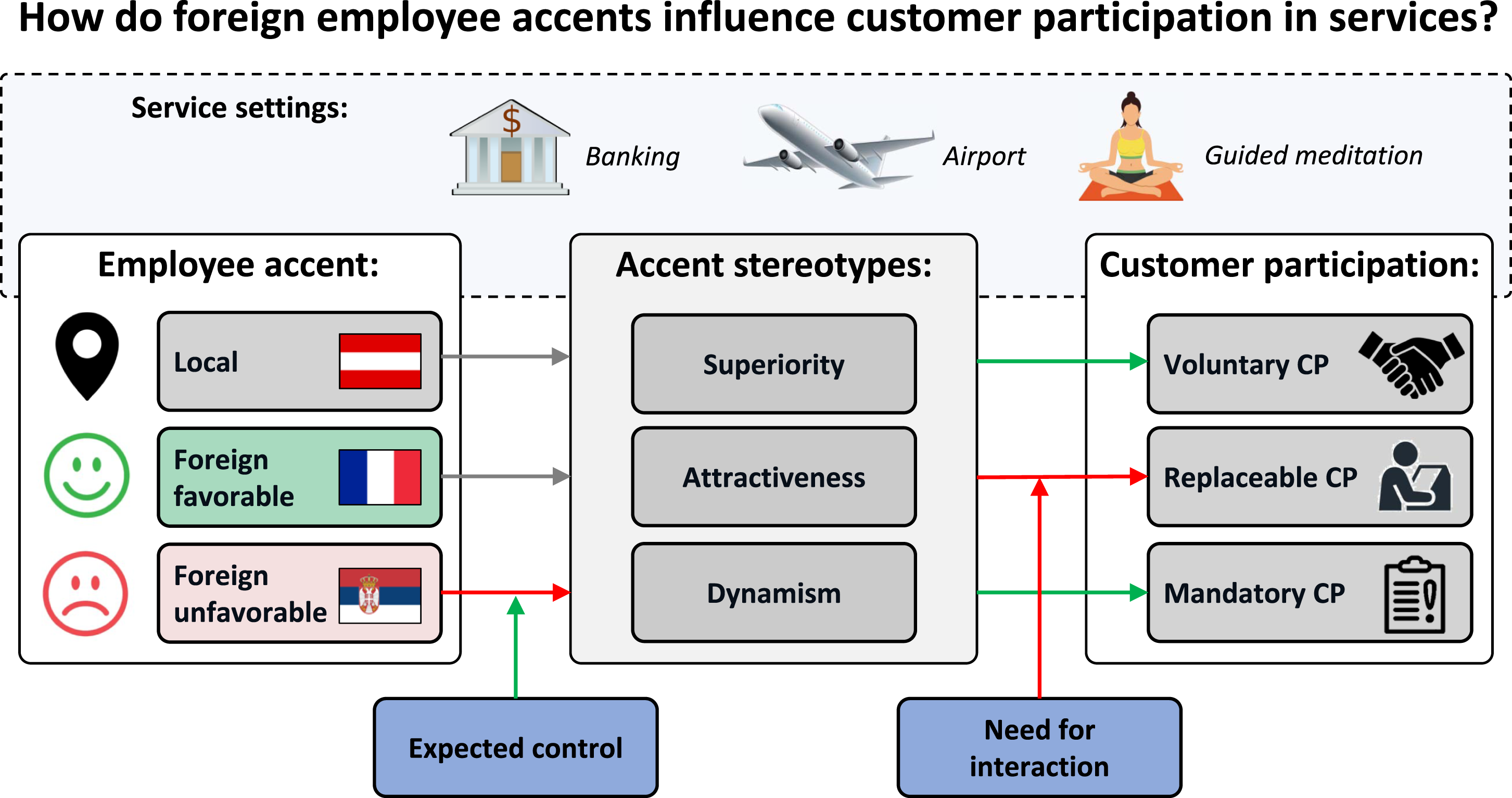
The increase of immigrant employees in services has made intercultural service encounters a commonplace phenomenon. In these encounters, customers frequently use service employees’ accent to infer their ethnic background, often eliciting cultural stereotypes. However, it is still unknown how accent-based stereotyping impacts customer participation (CP), that is, the degree to which customers engage in the service process by contributing effort, knowledge, and information to improve their service experience. Addressing this question in four experimental studies (Ntotal= 1,027), we find that (1) customers contribute less to the service encounter voluntarily when the employee has an unfavorable foreign (compared to a local) accent, (2) the negative effects of unfavorable accents on voluntary CP are stronger than the positive effects of favorable ones, (3) accent-based employee stereotypes (superiority, attractiveness, dynamism) mediate the impact of accents on CP, (4) unfavorable accents impede even participatory tasks mandatory for service completion, and (5) accent effects on CP are dampened for customers with a high need for interaction and can be managerially neutralized through self-service options that offer customers higher control over the service delivery. Our findings inform staffing and training decisions for frontline service roles commonly undertaken by immigrants and assist the design of intercultural service delivery systems.
Research article
Available accessResearch articleFirst published May, 2024pp. 213-230
Despite the popularity of gamification to improve the quality of experience in a variety of services, there is a lack of evidence on its effective integration into service design and the long-term impact of repeated gamified activities on customer experience. Using 10 studies, including behavioral data, survey, field, and laboratory experiments, this research investigates the effects of repeated gamified activities on customer experience quality and behavioral engagement. We examine the phenomenon through the lens of satiation theory, which explains the declining enjoyment for initially pleasurable activities. Supported by this theory, our results show evidence for a negative impact of gamified services that are highly repeated on experience quality and behavioral engagement. Further, we demonstrate strategies to compensate for such satiation by introducing mechanism and reward variety, a recovery period, and a sense of being near-to-winning. This research makes theoretical and managerial contributions by showing the potential backfire effects of gamification when gamified activities are repeated. Furthermore, this paper feeds the ongoing debate on standardization and personalization of service experiences. This paper demonstrates how high exposure to the same service experience can become counterproductive and increase risks of satiation.
Research article
Open accessResearch articleFirst published May, 2024pp. 231-249
Jaylan AzerORCID, Lorena Blasco-Arcas, Matthew AlexanderORCID
Abstract
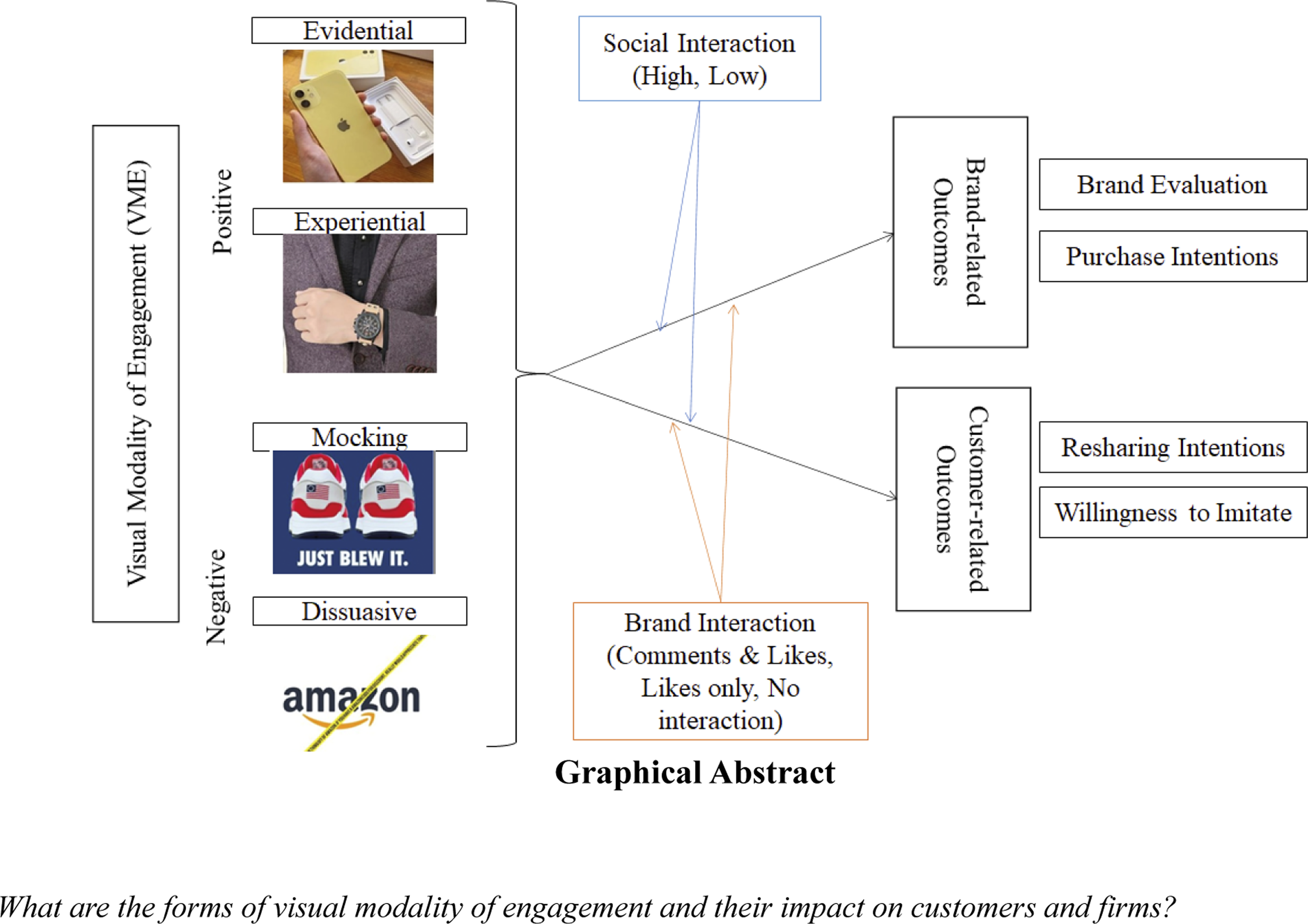
Customers proactively engage with firms’ offerings through behavioral manifestations such as brand-related social media posts, influencing other customers in online networks and, consequently, affecting brand value. With the growth of visually oriented social media platforms, interest has increased in understanding customer engagement behavior (CEB) using visual content. In this paper, we build on CEB, image acts, visual content, and communication theories to conceptualize the Visual Modality of Engagement (VME). Using both field and lab studies, we develop a typology of four distinct positive (experiential, evidential) and negative (mocking, dissuasive) forms of VME and offer empirical evidence revealing they induce different brand-related (purchase intentions, brand evaluation) and other customer-related (willingness to imitate, resharing intentions) outcomes. Additional results also reveal outcomes vary by the interplay of social and brand interactions with the various VME forms. The findings of this research offer guidance to content managers for the development of more effective engagement strategies in social media marketing.
Research article
Available accessResearch articleFirst published May, 2024pp. 250-267
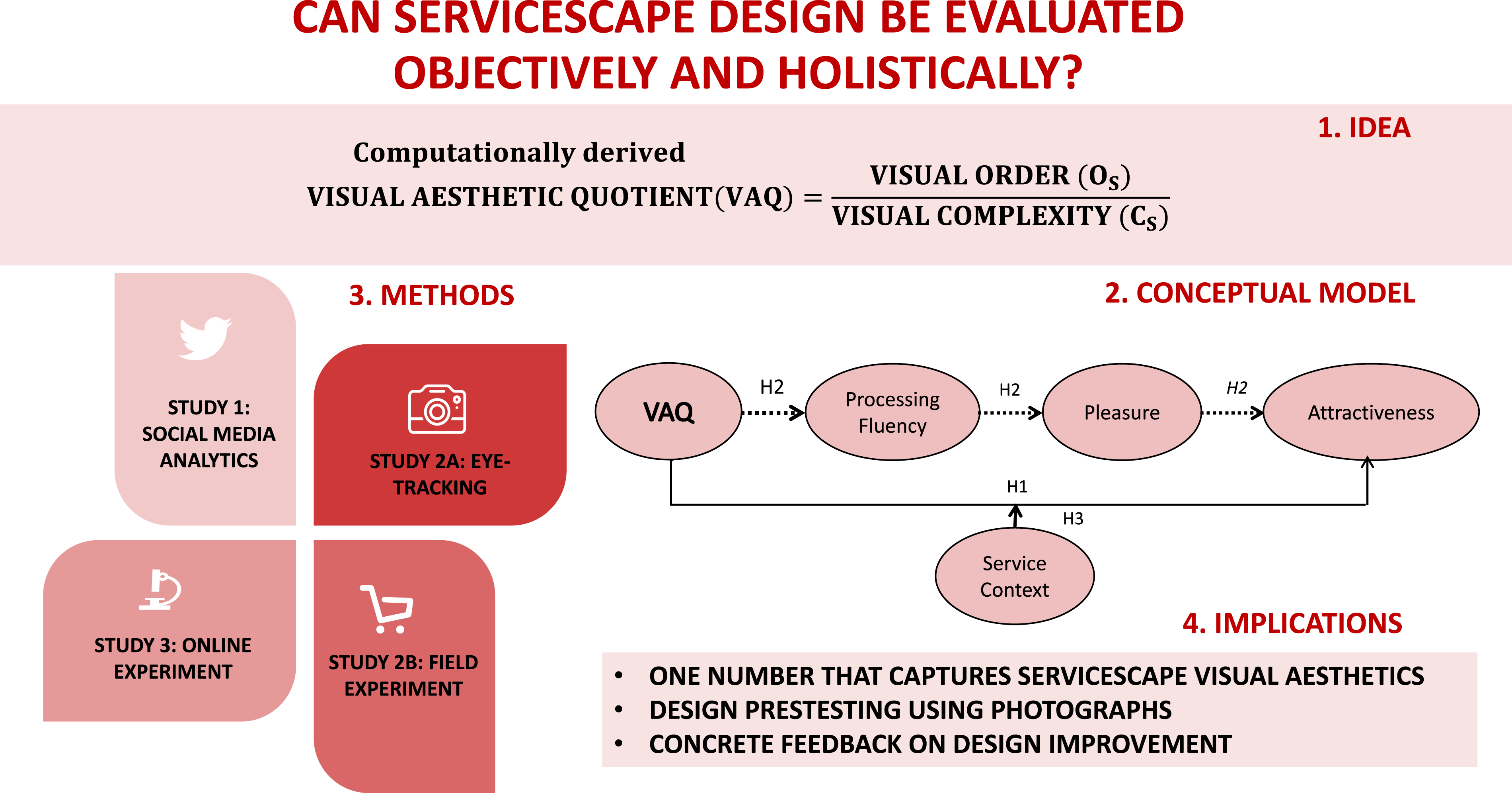
Visual aesthetics play a pivotal role in attracting and retaining customers in service environments. Building on theories of environmental psychology, this study introduces a novel and comprehensive aesthetic measure for evaluating servicescape design, which is called as the “visual aesthetic quotient” (VAQ). This measure is presented as the ratio of the dimensions of order and complexity in servicescape's visual design, and it aims to provide an objective and holistic approach of servicescape design evaluation. In addition, we introduce and validate a pioneering method for quantifying order and complexity objectively using algorithmic models applied to servicescape images. We investigated and established the influence of the VAQ on the perceived attractiveness of servicescapes, developing its role further in this context. The entire approach was comprehensively and rigorously examined using four studies (social media analytics, eye-tracking, a field experiment, and an experimental design), contributing to conceptual advancement and empirical testing. This study provides a novel, computational, objective, and holistic aesthetic measure for effective servicescape design management by validating computational aesthetic measures and establishing their role in influencing servicescape attractiveness; testing the mediation of processing fluency and pleasure; and examining the moderating effects of service context.
Research article
Available accessResearch articleFirst published May, 2024pp. 268-282
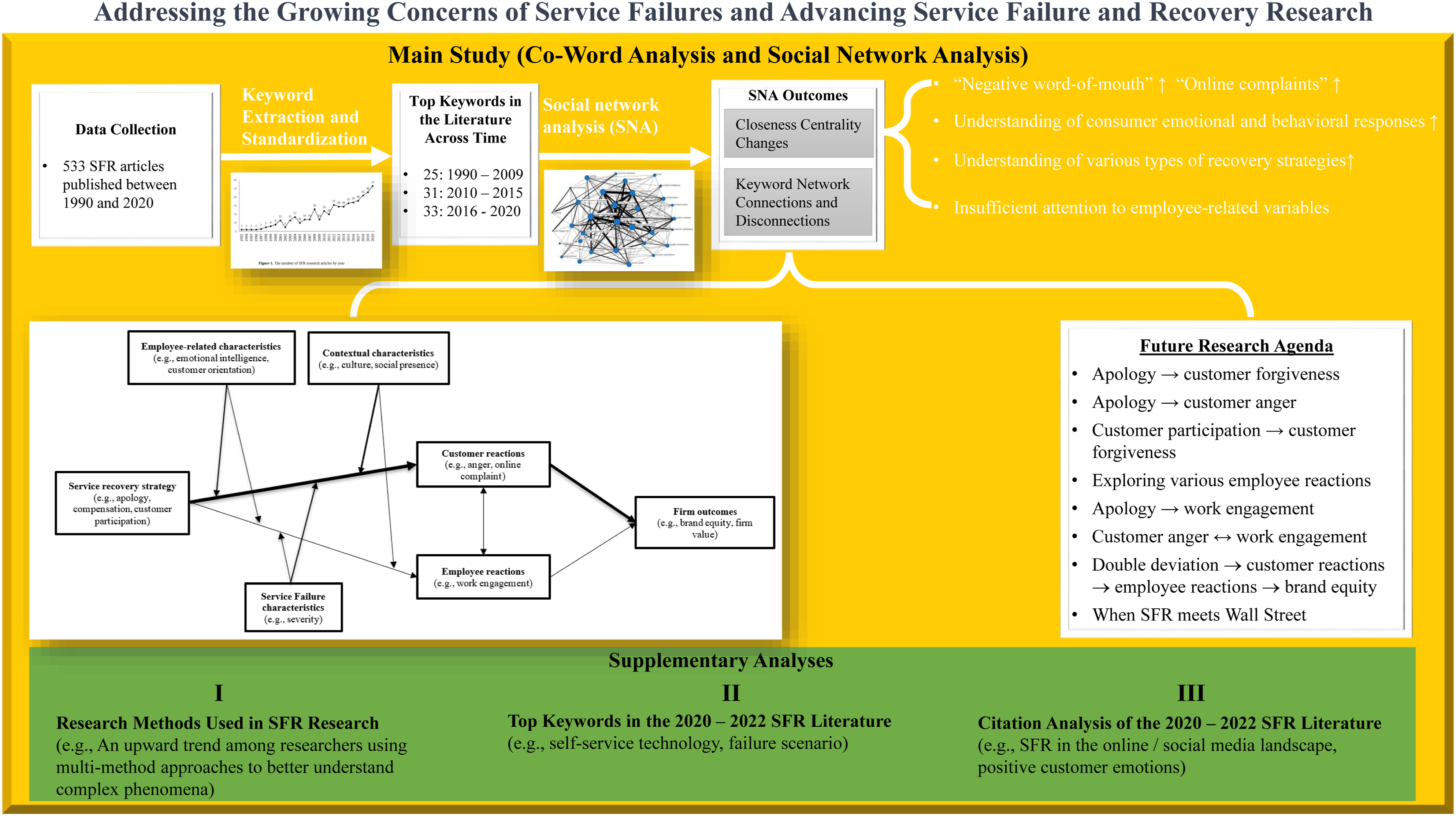
Service failure and recovery (SFR) is a well-established area of research that has made considerable progress over the past 30 years. In this study, we used a combination of text mining, co-word analysis, and social network analysis (SNA) to explore the relationships among keywords in SFR research. We analyzed a dataset of 533 SFR articles published between 1990 and 2020, extracting the most frequently used keywords using text-mining techniques. These keywords were then subjected to co-word analysis and SNA to understand the development of themes and topics in SFR research. By examining changes in network centrality measures, we gained insights into the evolution of research in this field. Furthermore, by identifying gaps or disconnections in the keyword networks, we identified future research opportunities related to the impact of service recovery strategies on customer reactions, employee reactions, and firm outcomes, as well as the relationship between customer and employee responses.
Research article
Open accessResearch articleFirst published May, 2024pp. 283-301
Sadrac CenophatORCID, Martin Eisend, Tomás Bayón , [...]
View All
Abstract
The effectiveness of service recovery initiatives has primarily been explained by exchange theories implicitly assuming that the customer desires beneficial relationships. The present research extends studies in this tradition by emphasizing the crucial role of the customer’s vulnerability. Drawing on crisis theory, we argue that the effectiveness of service recovery initiatives is contingent on customer relationship vulnerability (CRV), which is defined as a customer predisposition to psychological harm in relationships with service firms. The findings show that a full-service recovery is not always possible among vulnerable customers. We discuss the implications for theory and service management practice.