




Abstract
With the widespread application and even misuse of antibiotics, antibiotic resistance genes (ARGs) are extensively present in various environments, from natural environment to fermented foods, posing emerging threat to public and environmental health. The real-time fluorescence quantitative PCR (qPCR) technique is commonly used to detect ARGs of environmental samples such as soil or water. In this study, eight types of pickles were collected from four regions of China and the existence of 13 resistance genes was assessed by qPCR. The results showed that a total of 11 resistance genes were detected in pickles, the blaTEM gene was detected in all samples, and the neo and cat genes were absent. The abundance of resistance genes varied, aada1 (1.09 × 10⁵ to 5.94 × 10⁶ copies/g), blaTEM (1.48 × 10⁵ to 2.2 × 10⁶ copies/g), ermc (1.01 × 10⁵ to 5.35 × 10⁵ copies/g), hyg (1.35 × 10⁵ to 1.93 × 10⁶ copies/g), aadd (4.46 × 10⁵ to 1.60 × 10⁶ copies/g), nat1 (1.04 × 10⁵ to 5.04 × 10⁵ copies/g), nptII (2.17 × 10⁴ to 1.69 × 10⁵ copies/g), sul1 (2.01 × 10⁵ to 4.60 × 10⁵ copies/g), tetl (1.23 × 10⁵ to 6.18 × 10⁵ copies/g), shble (1.68 × 10⁴ copies/g), and stra (4.8 × 10⁴ to 1.9 × 10⁵copies/g). We also discussed the specificity and sensitivity assessment of qPCR applied to ARGs analysis in pickles, verifying the feasibility and validity of the method. Bacteria were isolated and purified from pickles as well and their antimicrobial resistance was studied. This study is of great significance for the risk assessment of resistance genes in pickles. Effective and preventive solutions were proposed to reduce the spread of resistance genes and protect public dietary health.
Introduction
Pickles are a kind of vegetable products made from fresh vegetables and processed using edible salt or brine either with or without additives (Rao et al., 2020). The main fermentation process of pickles involves raw material treatment, brine preparation, jarring and fermentation, and packaging. Through natural microbial fermentation, pickled vegetables possess an aromatic flavor profile and enhanced nutritional properties with extended shelf stability. The worldwide sales of pickles reached 40 billion USD by 2024 and sauerkraut-derived products are expected to grow at a compound annual growth rate of 4.6% during 2024–2029 (MIR, 2024). As a traditional fermented food, pickles could be processed by a variety of methods, resulting in plentiful flavor components.
Nowadays, many microorganisms have resistance from single classes of antibiotics to multidrug or extreme drug. Resistance genes could be transferred from environmental bacteria to food microorganisms which would affect health of human beings. And the spread of antibiotic resistance genes (ARGs) to fermented foods is attracting increasing concerns worldwide. Consequently, after ingestion of fermented foods by humans, ARGs could enter the gut microbiome through Horizontal Gene Transfer (HGT), leading to severe adverse health effects. The acquisition of ARGs by HGT is through gene exchange and recombination, resulting in strong resistance to antibiotics. Plasmids, integrons (In), and transposons (Tn) carrying ARGs in bacteria can undergo HGT between strains irrespective of the same or different species (Martínez et al., 2015). With the continuous increase in the application of antimicrobial drugs, the antimicrobial resistance (AMR) is emerging and spreading rapidly. The negative impacts of AMR have become significantly prominent on a global scale. It is estimated that at least 700,000 people die each year due to infections caused by AMR bacteria throughout the world. By 2050, this number is expected to reach at least 10 million deaths annually, with potential economic losses reaching up to 100 trillion US dollars (Liu et al., 2022).
Lactic acid bacteria (LAB) are important strains in many fermented products and have long been considered safe. However, due to the overuse and misuse of antibiotics, an increasing number of LAB have developed resistance, raising widespread concerns about food safety (Nawaz et al., 2011; Pan et al., 2011; Thumu and Halami, 2012; Zhou et al., 2012). Li analyzed the resistance of 218 isolated different strains from pickles for nine antibiotics through the minimum inhibitory concentration (MIC) method. Their results showed that the pickle isolates were resistant to streptomycin sulfate and ciprofloxacin hydrochloride, ampicillin sodium, and erythromycin, while it is inherent resistance to streptomycin and ciprofloxacin (Li et al., 2021). Nawaz phenotyped antibiotic resistance in yogurt and Jiang shui using MIC method, which showed resistance to penicillin, clindamycin, erythromycin, and tetracycline and detected erythromycin and tetracycline-related resistance genes (Nawaz et al., 2011).
Typically, the main health concern for edible pickles is whether nitrites in them are excessive. Few studies focus on the detection of ARGs in pickles. However, it is vital to study the abundance of ARGs in pickles since it is the directly related index of ARGs. qPCR is adopted for detecting and quantifying pickle samples in pursuit of an accurate quantitative study of ARGs in pickles, as it boasts convenient detection and quick results. This study collected pickles samples from different regions of China and both normal PCR and qPCR strategies were applied to analysis of resistance genes (Table 1). The antibiotics category covers aminoglycoside, macrolide, sulfonamide, β-lactam, and tetracycline. The existing information and the abundance of the ARGs in pickles were studied. This study developed a methodological strategy for the detection of ARGs from pickle food. Specificity and sensitivity assessment was conducted as well, which can be applied to the risk assessment of other fermented foods.
Classification and Character Mode of Antibiotics
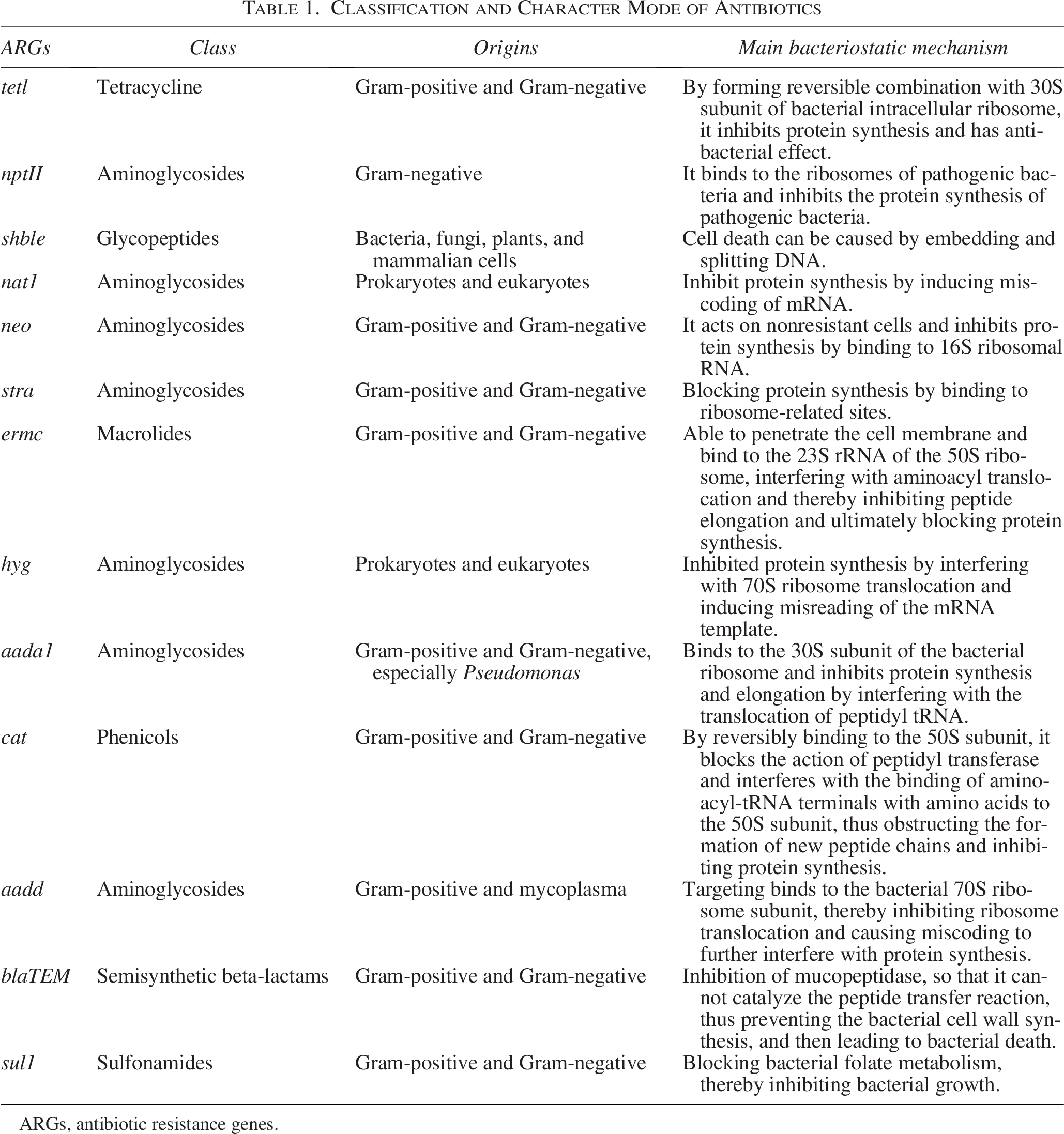
ARGs, antibiotic resistance genes.
Materials and Methods
Sampling
Samples of eight types of pickles were collected from different local markets in China, including Province of Guangdong (GD), Sichuan (SC), Jilin (JL), and Shandong (SD), and the types including pakchoi and cabbage (Table 2). Samples were collected from middle parts in the containers of each pickle type under aseptic conditions in triplicate and stored in a refrigerator (4°C) for no more than 12 h during transport and processed for genomic DNA extraction immediately upon arrival at the laboratory.
Sample Information of Pickles

Extraction of genomic DNA and conventional PCR
In total, 25 g of each sample (10 g of pickle solid and 15 g of liquid mix) was resuspended in 75 mL of phosphate buffered saline and shaken at 37°C for 30 min. Vegetable residues were removed by filtering through a clean and sterilized coarse cotton cloth, and the filtrate was centrifuged at 10,000 × g for 20 min. Precipitates collected for each sample were used for total genomic DNA extraction through the Soil Genomic DNA Extraction Kit (Tiangen, China). DNA concentration was measured by spectrophotometric Nanodrop® 2000 (ThermoFisher) and DNA purity was evaluated using A260/A280 and A260/A230 ratios. DNA samples were stored at −20°C for future use.
Conventional PCR was performed in triplicate with a final reaction volume of 25 μL, consisting of 12.5 μL 2 × Taq Master Mix, 0.5 μL primer (10 μM), 1 μL template DNA, and 10.5 μL ddH2O. The reaction conditions were as follows: reaction at 94°C for 5 min, 94°C for 1 min, 53–61°C (depending on primer size) for 1 min, and 72°C for 2 min for 30 cycles, and finally extension at 72°C for 10 min. The amplification products and their sizes were analyzed by agarose gel electrophoresis.
qPCR quantification assays
Before qPCR testing, the extracted DNA samples were diluted in a series of three ratios (1/10, 1/50, 1/100) and the 10-fold dilution rate showed the lowest relevant interference. Quantification of target ARGs in pickles samples was performed by qPCR system (stepone plus, USA). Seven classes of ARGs were quantified in this research, including tetracycline (tetl), aminoglycosides (nptII, nat1, stra, neo, hyg, aada1, aadd), glycopeptides (shble), Macrolides (ermc), phenicols (cat), semisynthetic beta-lactams (blaTEM), and sulfonamides (sul1). These ARGs are involved in five different resistance mechanisms: antibiotic efflux, antibiotic inactivation, antibiotic target substitution, antibiotic target alteration, and antibiotic target protection. Primers for qPCR of ARGs were selected and designed (Table 3), and the reactions were performed on a 96-well plate containing 12.5 μL of 2 × SYBR green qPCR mixture (Tiangen, China), 1 μL of DNA template, primers 1 and 2 (forward and reverse primers, each 0.5 μL), and 10.5 μL of ddH2O on a 96-well plate with 25 μL for each reaction. The qPCR amplification reaction consisted of 30 s at 95°C (denaturation) followed by 40 amplification cycles of 5 s at 95°C (denaturation) and then 1 min at 60°C (annealing–extension step). A no-template control (NTC) was included in each experiment. Samples were run in three independent biological and technical replicates along with NTC to evaluate the repeatability and reproducibility of the qPCR protocols. All runs were performed on a STEPONE real-time PCR detection system. Melting curves were performed in the temperature range of 60–95°C. When a single peak appeared in the melting curve, it was considered as specific amplification. All target genes were amplified using a two-step method.
Primers for Quantitative PCR
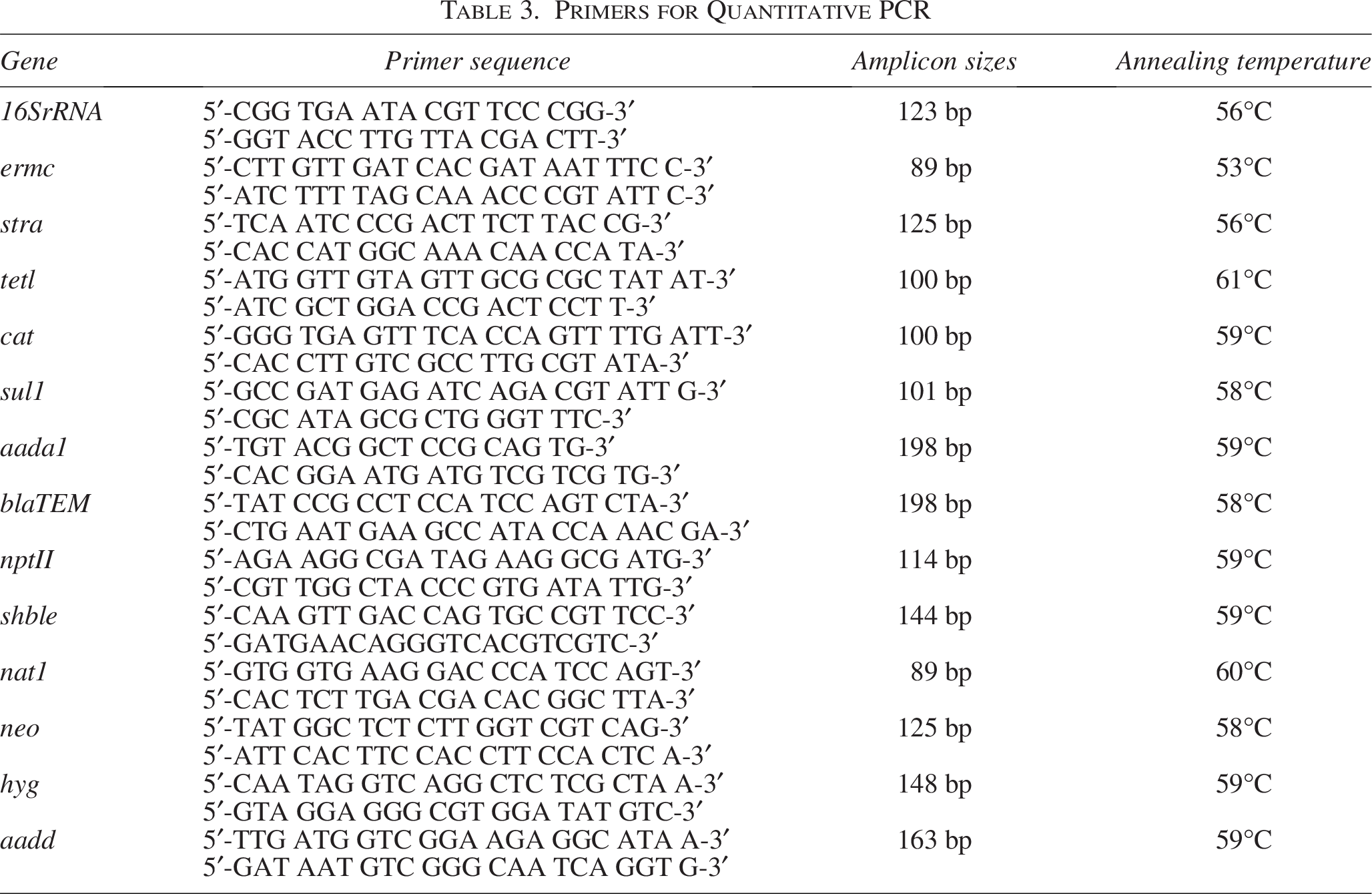
The full gene sequences of ARGs were obtained from NCBI, and the double-stranded DNA was directly synthesized to serve as the standard for absolute quantification. The target fragments were diluted in a fivefold series (10−1, 10−2, 10−3, 10−4, 10−5) and the primers were added to the reaction system described above to construct a standard curve for absolute quantification. The copy number was calculated based on the DNA concentration and base-pair length. A standard curve for absolute quantification was constructed using the logarithm of the copy number as the x-axis and the CT (Cycle threshold) value as the y-axis. Three independent biological and technical replicates were performed to evaluate the reproducibility and repeatability of the qPCR protocol. The hallmarks of the optimized qPCR assays were high amplification efficiency (>90%), good linearity of the standard curve (R2 > 0.980) (Perez-Bou et al., 2024). The copy number per gram of pickle sample was calculated based on the standard curve, with the unit recorded as copies/g. The relative abundance of the target gene was calculated using the formula: Relative Abundance = Target Gene Copy Number/16S rRNA Gene Copy Number (Zhang et al., 2020).
Isolation and identification of strains
Ten grams of pickle sample were added to 90 mL of sterile 0.9% physiological saline. Then the 10−1 diluent was shaken for 30 min to be mixed thoroughly. Tenfold series of dilutions in the range of 10−2 to 10−5 were further prepared. In total, 0.2 mL of the diluent was coated in plates of nutrient agar and MRS (De Man, Rogosa and Sharp medium) agar separately (Banik et al., 2023; Yu et al., 2012). The individual colonies were selected and re-streaked onto related plates and incubated at 37°C for 24 h for 16S rRNA test.
Evaluation of antibiotic resistance and analysis of resistance genes
Bacterial susceptibility testing to antibiotics was carried out by paper diffusion and then the MIC of five antibiotics for each strain was determined by broth dilution method using the standardized LAB susceptibility test medium agar formulation recommended by ISO 10932/IDF 223 (ISO10932/IDF 223.2010), with a mixture of IsoSensitest agar (Oxoid, 90%) and MRS agar (Oxoid, 10%) adjusted to pH 6.7 (Klare et al., 2005).
Individual bacterial DNA was extracted separately and adopted as an independent PCR template to detect ARGs. The PCR reaction system is the same as illustrated in the “Extraction of genomic DNA and conventional PCR” section (Supplementary Table S1).
Statistical analysis
Calculations and plotting were performed using Microsoft Office Excel 2016 and Origin 2017 (Origin Lab Corporation, USA). Partial mapping was done using Biorende. DNA sequences of ARGs were obtained from GenBank DNA database of NCBI (https://www.ncbi.nlm.nih.gov/).
SPSS 22.0 software was used to perform statistical analysis on the measured data, and calculate the average value and standard deviation of each index.
Results
Prospective study of qPCR
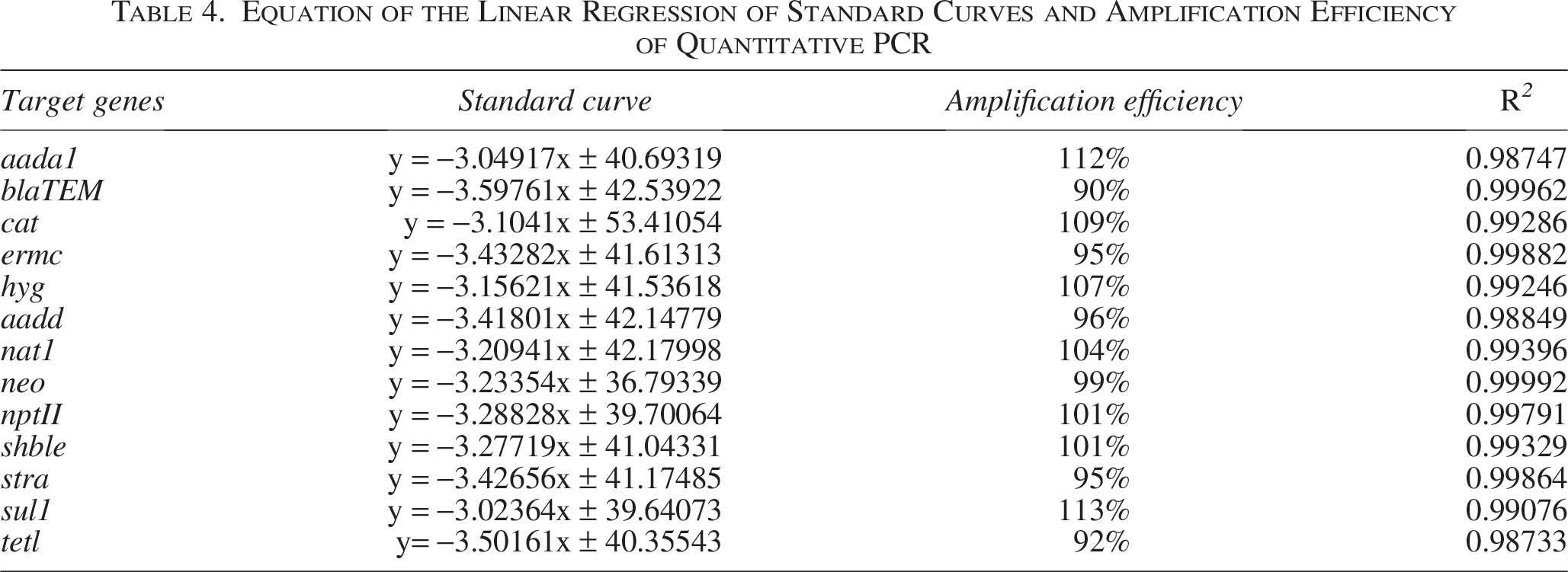
R2 and amplification efficiency (E) are important data for determining qPCR absolute quantitative standard curves. The following amplification efficiency of the target genes was obtained by using the formula (E = 10^(−1/slope) − 1). According to STEPONE software analysis of the dissociation curve, they all showed a single sharp peak with the same Tm value, indicating no nonspecific amplification. The analysis by qPCR studies provided a solid basis for the following abundance calculations (Table 4).
Equation of the Linear Regression of Standard Curves and Amplification Efficiency of Quantitative PCR
ARGs quantification of pickles
qPCR has higher specificity and precision. In this study, we explored the total abundance of ARGs using qPCR for eight types of pickles from four regions in China. Thirteen ARGs were detected in eight samples. The results of qPCR showed that 53 samples out of 104 tests had data of ARGs, and the frequency of detection in pickle samples was 51%. As shown in Figure 1, five resistance genes were present in the highest number, accounting for 75–100% of the samples. They are resistant to ampicillin, tetracycline, sulfamethoxazole (SMZ), erythromycin, and spectinomycin, respectively. The blaTEM gene was prevalent in all samples, the tet-l gene existed in all samples except S6-SC and the sul1 gene was present in all samples except S2-GD. As high as six samples contained the ermc gene which were S1-GD, S2-GD, S3-JL, S4-SC, S5-SC, and S8-LY. Meantime, six samples of S1-GD, S2-GD, S4-SC, S5-SC, S6-SC, and S8-LY possessed the aada1 gene. The abundance of ARGs in all samples is as follows: aada1 (1.09 × 10⁵ to 5.94 × 10⁶ copies/g), blaTEM (1.48 × 10⁵ to 2.2 × 10⁶ copies/g), ermc (1.01 × 10⁵ to 5.35 × 10⁵ copies/), hyg (1.35 × 10⁵ to 1.93 × 10⁶ copies/g), aadd (4.46 × 10⁵ to 1.60 × 10⁶ copies/g), nat1 (1.04 × 10⁵–5.04 × 10⁵ copies/g), neo (0), nptII (2.17 × 10⁴ to 1.69 × 10⁵ copies/g), sul1 (2.01 × 10⁵ to 4.60 × 10⁵ copies/g), and tetl (1.23 × 10⁵ to 6.18 × 10⁵ copies/g). The aada1 gene had the largest span of abundance across samples, and the nat1 and sul1 genes had the smallest span of abundance. The blaTEM gene was present in all samples and generally did not behave in the highest abundance in individual samples. The shble gene was present in only one sample (S1-GD) with an abundance of 1.68 × 10⁴ copies/g. The neo and cat genes were below the limit of quantification or detection.
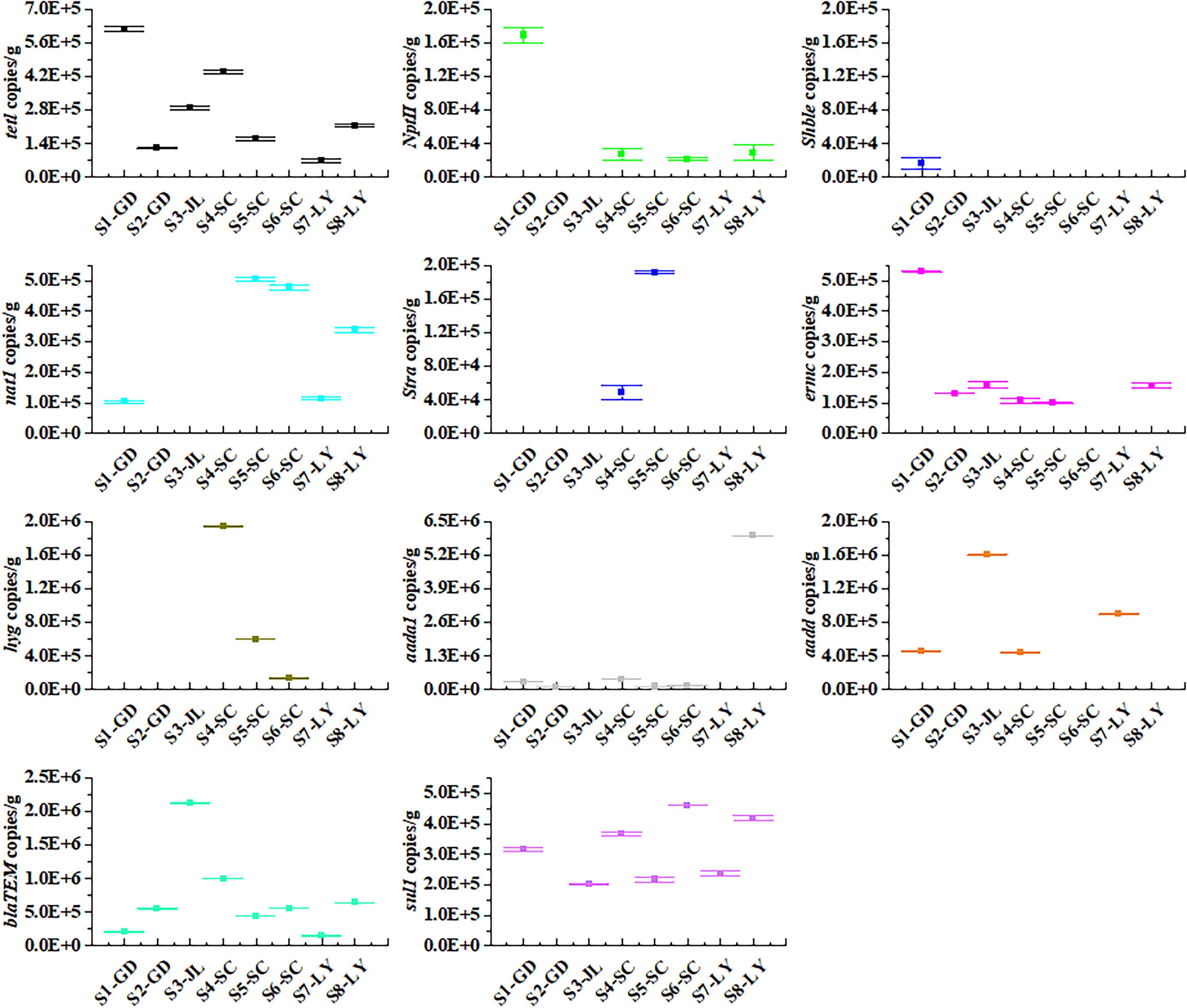
Absolute abundance and distribution of resistance genes in pickle samples according to the Shapiro–Wilk and Kruskal–Wallis tests (p < 0.05) in this study.
Figure 1 shows the results of resistance genes detected in single pickle sample. Among the eight samples, nine resistance genes were detected in S1-GD and S4-SC with seven genes existing in both samples (tetl, nptII, ermc, aada1, aadd, blaTEM, and sul1). There were four targeted ARGs detected in S2-GD with a high gene occurrence frequency in all samples, namely tetl (7 times), ermc (6 times), aada1 (7 times), and blaTEM (8 times) genes. Although S1-GD and S2-GD were both collected from Guangdong, there were apparent differences in the number of ARGs detected. It is speculated to be related to the pickle production process and food safety issues. S1-GD and S4-SC contained the largest number of resistance genes, while S8-SD had the highest abundance of total ARGs with 7.67 × 10⁶ copies/g, followed by S4-SC containing 4.66 × 10⁶ copies/g. It was conjectured that there was a potential contamination of S8-SD during the production of pickle as well as in the fermentation process.
Relative abundance of ARGs in pickle samples
Figure 2 demonstrates the ratio of relative abundance of ARGs in pickle samples, with relative abundance in the range of 10−8 to 10−5. The highest abundance appeared in the aada1 gene (with a relative abundance of 4.56 × 10⁻⁵ gene copies/16S rRNA gene copies) which accounted for 76.8% relative to the total relative abundance of the 13 genes in a sample of S8-SD (Zhang et al., 2020; Zhou et al., 2017). The lowest abundance appeared in the nptII gene of S4-SC accounting for only 0.6% with a relative abundance of 3.14 × 10⁻⁸ gene copies/16S rRNA gene copies. The relative abundance of the tetl gene ranged from 3.84 × 10⁻⁷ to 7.44 × 10⁻⁶ and the ermc gene ranged from 1.34 × 10⁻⁷ to 6.93 × 10⁻⁶ in all the involved samples, both of which ranked the first two in S1-GD with the relative abundance of the tetracycline resistance gene tetl (7.44 × 10⁻⁶) and macrolide resistance gene ermc (6.93 × 10⁻⁶). Both S2-GD and S3-JL had few ARGs detected and low relative abundance of total ARGs. The relative abundance of blaTEM gene in both samples exceeded 50% to 1.73 × 10⁻⁶ and 3.83 × 10⁻⁶ respectively. Nevertheless, the highest relative abundance of the blaTEM gene existed in S8-SD (4.92 × 10⁻⁶). S4-SC had the largest number of resistance genes detected and the stra gene being detected only in two samples of S4-SC and S5-SC. S4-SC had the largest relative abundance of hyg genes at 2.27 × 10⁻⁶ gene copies/16S rRNA gene copies. The ARGs with high relative abundance in S5-SC included hyg gene (6.33 × 10⁻⁶), nat1 gene (5.32 × 10⁻⁶), and blaTEM gene (4.65 × 10⁻⁶). The ARGs with high relative abundance in S6-SC included blaTEM gene (2.97 × 10⁻⁶), nat1 gene (2.52 × 10⁻⁶) and sul1 gene (2.45 × 10⁻⁶). The relative abundance of aadd gene in S7-SD was as high as 1.08 × 10⁻⁵ which accounted for 61.2%. The relative abundance of aada1 gene ranked first in S8-SD. There was a high correlation between absolute abundance and relative abundance. It is feasible and practical to investigate the risk assessment of ARGs based on its absolute and relative abundance by qPCR.

The distribution of each type of ARGs across eight pickle samples. The circular chart is divided into two parts, samples are displayed at the right side and the left side indicates the antibiotics resistance to which these samples confer. The numbers on the outer ring represent the percentage of ARGs in each sample. ARG, antibiotic resistance gene.
Specificity and sensitivity assessment
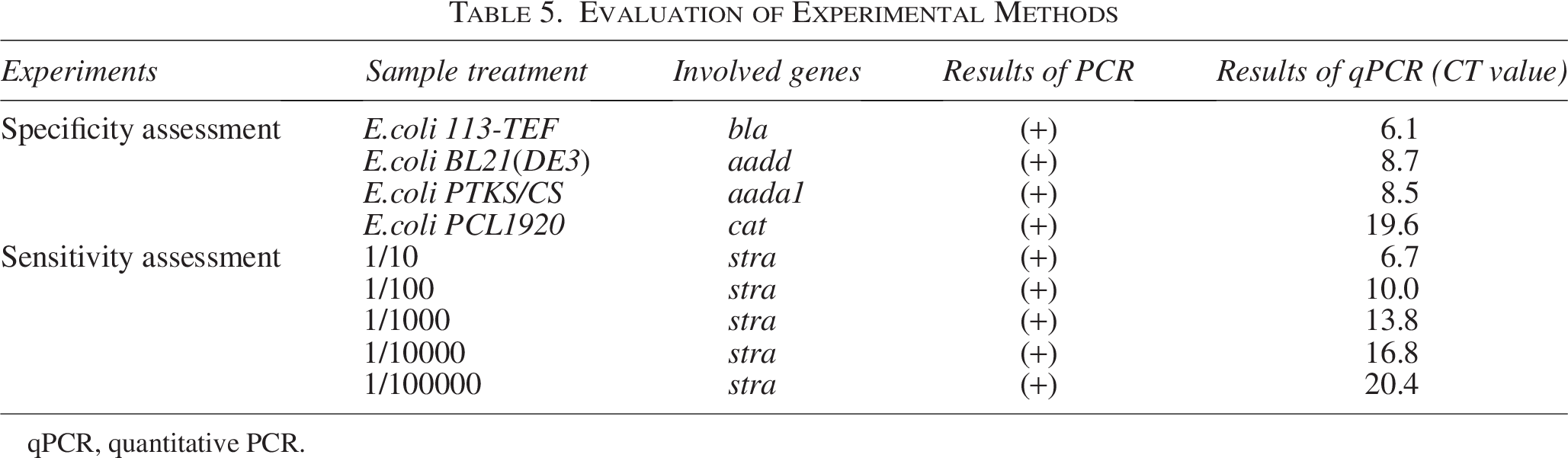
The specificity of the primer sets was tested using genomic DNA templates from the corresponding reference strains carrying ARGs as well as optional synthetic DNA as templates, and computer simulations of primer design using the NCBI database. Four strains with different resistance genes were subjected to PCR as well as qPCR in order to analyze the specificity of the strategies, containing ampicillin resistance, kanamycin resistance, spectacular resistance, and chloramphenicol resistance, respectively. As shown in Table 5, the resistance genes can be detected only with specific positive primers and DNA templates. All the CT values are within 30. It did not show any potential bands of PCR with the negative control as a template.
Evaluation of Experimental Methods
qPCR, quantitative PCR.
In terms of sensitivity, the DNA fragment of stra gene was selected with DNA concentration of 100 μg/mL. Gradient dilution of 10, 102, 103, 104, and 105 were applied as the template for qPCR detection. The CT value could be detected at a maximum of 1,000,000-fold dilution which proved that it could detect the target ARGs at a DNA concentration as low as 1 ng/mL with high sensitivity. The feasibility and validity of the detection method were successfully verified through the evaluation of specificity and sensitivity.
Assessment of antibiotic resistance of isolated strains
A total of 18 strains were isolated from traditional pickle samples, including five species of LAB and seven species of non-LAB. LAB were identified as L. fermentum (n = 3), L. pentosus (n = 1), L. plantarum (n = 3), L. paracasei (n = 1), L. casei (n = 1) after 16S rRNA sequencing. Non-LAB were identified as four species of the genus Bacillus (Bacillus tequilensis, Bacillus cereus, Lysinibacillus macroides, Bacillus subtilis), two species of staphylococci (Staphylococcus epidermidis, Staphylococcus hominis), and one species of actinomycetota (Actinomycetota bacterium).
Antibiotic susceptibility testing was conducted on 18 isolates and 5 antibiotics (corresponding to the resistance genes with the highest abundance validated by the ARGs-qPCR method). The antibiotics included erythromycin, tetracycline, spectinomycin, ampicillin, and SMZ. Additionally, we expanded the number of resistance genes corresponding to the antibiotics referencing (Darby et al, 2023). The results showed that all LAB were highly sensitive to erythromycin and ampicillin, while approximately 50% of non-LAB strains exhibited phenotypic resistance to these two antibiotics. All non-LAB strains and most LAB strains were sensitive to tetracycline, except for two LAB strains (L. plantarum and L. paracasei). Over 60% of the isolates exhibited phenotypic resistance to sulfonamides and spectinomycin (Fig. 3A). The specific MIC results are presented in Supplementary Table S2. PCR technology was used to detect antibiotic-related resistance genes, and the detection rates of resistance genes were as follows: tetw (16.6%), ermc (16.6%), blaTEM (11.1%), aadd (5.5%), tetl (5.5%), tets (5.5%), tetm (5.5%), and sul2 (5.5%). The overall resistance rate of the strains was 38.8%, and no strains were found to carry sul1, ermb, or tetk resistance genes. The distribution of resistance genes in specific strains is shown in the Figure 3B. Some individual isolates contained multidrug-resistant strains, such as L. fermentum, which carried aada1, sul2, tetw, and tetl genes, and S. epidermidis, which carried tetm and ermc genes.
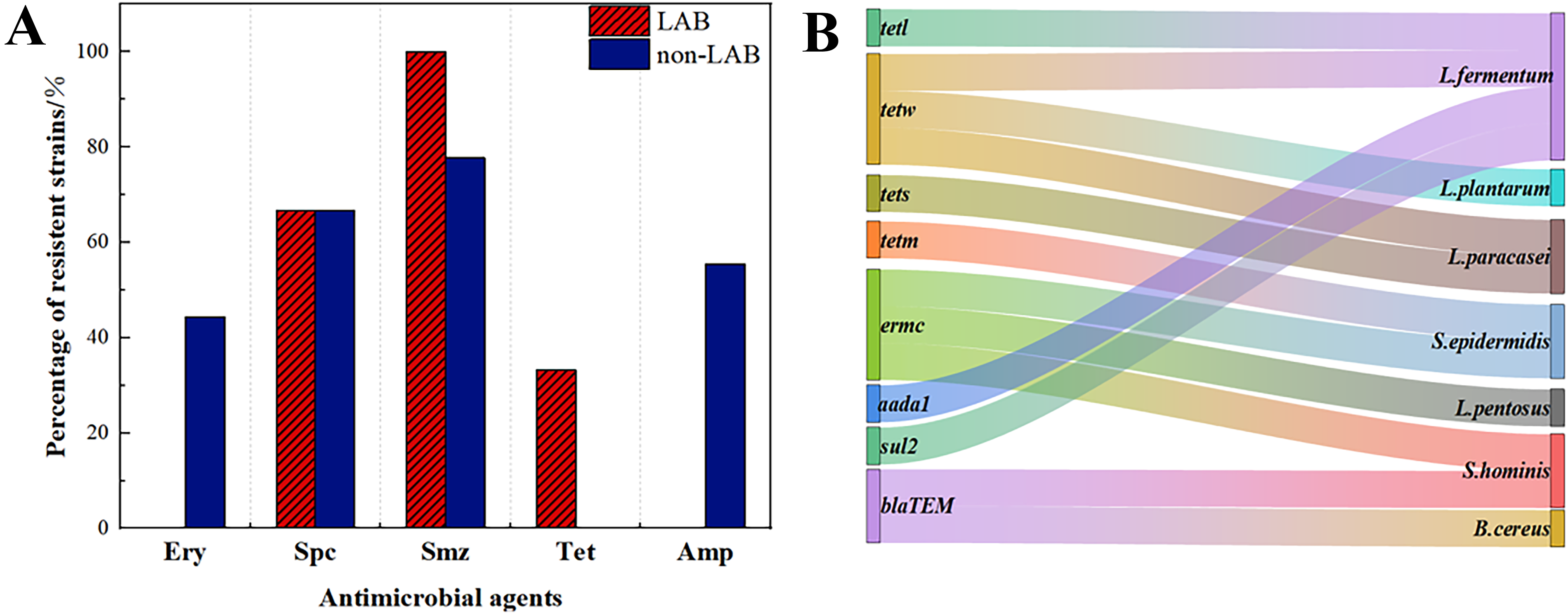
The phenotypic resistance assessment and ARGs of the isolates.
Discussion
Occurrence of ARGs in pickles
AMR is a serious global public health issue that poses a significant threat to human health. With the widespread use of antibiotics, corresponding ARGs have been detected in various environments (Zhang et al., 2020). The main production process of pickles includes raw material treatment, brine preparation, bottling fermentation, and distribution. This may lead to contamination of pickle raw materials during the cultivation stage due to irrigation water, untreated manure, contaminated soil, surrounding dust, and unsanitary farming equipment. Vegetables may be further contaminated during packaging, transportation, storage, and other market operations.
Li characterized the antibiotic resistance of bacteria isolated from traditional Chinese pickles (Li et al., 2021). The aade gene was detected in the first five days, and the aada1 and aade genes were detected on the seventh day. The increase in resistance genes indicates that the pickle environment exerts selective pressure. In this study, the aada1 gene had the highest abundance, both in relative and absolute terms, compared to other resistance genes. Similarly, PerezBou1 found that the aada1 gene was prevalent in all samples from natural and engineered environments related to wastewater treatment (Perez-Bou et al., 2024).
Yin explored the ARGs using high-throughput qPCR and Illumina sequencing of 16S rRNA genes, and identified resistant microorganisms through pure culture (Yin et al., 2022). A total of 205 ARGs, including tetl, aada1, and sul1, were detected in six different fresh vegetables. This consists of our findings of high abundances of aada1, tetl, and sul1 in pickles, with multidrug resistance genes being the most abundant. The main pathogenic bacteria included Pseudomonas, Klebsiella, and Acinetobacter, which carried various ARGs, such as multidrug resistance genes and β-lactam resistance genes. This highlights the risks posed by pathogenic bacteria and ARGs in fresh vegetables to consumers. Fresh vegetables are considered reservoirs of pathogenic bacteria and ARGs, which are emerging environmental pollutants. Kläui isolated a total of 91 antibiotic-resistant bacteria from fresh produce, primarily Enterobacteriaceae and Pseudomonas aeruginosa (Kläui et al., 2024). All P. aeruginosa and 16 Enterobacteriaceae isolates were multidrug-resistant. At least one ARG was detected in 95% of the samples, with sul1, blaTEM, and ermb being the most common. The correlation between sul1 and the fecal marker yccT suggests that fecal contamination may be a source of antibiotic resistance. The abundance of the sul1 gene was significantly high, indicating potential anthropogenic contamination in the production chain of imported produce. Fresh vegetables may serve as a suitable material for transmission of ARGs since they are consumed directly or processed preliminarily during the production of pickles. Additionally, Sun simulated contamination with ciprofloxacin (CIP), oxytetracycline (OTC), SMZ, and tylosin (TY) at 1 mg/kg in soil, and cultivated cabbage, endive, and spinach in these soils (Sun et al., 2021). They proved that the accumulation of antibiotics in soil could transfer ARGs into plants and the type of antibiotic influences the distribution of resistance genes.
Therefore, it is necessary to develop targeted preventive strategies to ensure the safety of fermented foods, including strict adherence to hygiene standards in the pickle production process, step-by-step cleaning, timely disinfection of personnel and fermentation equipment, and strict control of each production stage.
Possible factors for existence and spread of AMR
AMR is a serious threat to global public health, it is urgent to understand the underlying mechanisms of AMR on the concern of health consciousness. In Yasir’s study, ARGs were identified in metagenomes of pickle using DeepARG, and the mechanism of drug resistance was also demonstrated (Yasir et al., 2022). The main mechanisms for drug resistance were summarized in Figure 4A, including alteration of the ability of the drug to penetrate by altering the permeability of the cell membrane, antibiotic inactivation, antibiotic efflux, and antibiotic target protection. Among the 11 ARGs involved in this study, the drug-resistance mechanism of tetm, tets, and tetw belongs to antibiotic target protection; tetl and tetk belong to efflux pump; blaTEM belongs to antibiotic deactivate; ermb, ermc, and aada1 belongs to ribosome modification. Besides, sul1 and sul2 play a role in interfering with the metabolism of folate. It shows the proportion of 11 ARGs categorized by antibiotic resistance mechanisms and the detected proportion of these 11 ARGs in all the isolates (Fig. 4B).

Main mechanisms of antibiotic resistance and the proportion of ARGs in all the isolates.
In this study, different ARGs were found in the same strain of L. fermentum, including tetl, tetw, aada1, and sul1, indicating that L. fermentum was multidrug resistant. Multiresistance can be categorized as cross-resistance and coresistance. Cross-resistance has the potential to occur when different antimicrobial agents attack the same target, initiating a common pathway to cell death, or sharing a common route of access to their respective targets. Coresistance occurs when the genes specifying resistant phenotypes are located together on a mobile genetic element such as a plasmid, transposon, or integron. These two lead to the same end that the development of resistance to one antibacterial agent is accompanied by the appearance of resistance to another agent (John, 2003).
HGT is one of the ways drug resistance spreads. It is expected that pathogens will acquire AR from environmental bacteria (Fig. 5). In addition, HGT is more likely to occur between genetically closely related microorganisms. Once the pathogen acquires ARGs, AR can be further transmitted between the pathogen and the host. In the whole pickle fermentation process, pickling and fermenting last for the longest period and tend to be contaminated most. In addition, unprocessed or minimally processed fresh products may carry ARGs which are affected by humidity, temperature, and pH. Traditional fermented food has gradually become the gene bank of drug-resistance gene transmission, which has become an important hidden danger to food safety.

Transfer of antibiotic resistance genes.
Risk assessment
This study focuses on risk assessment in terms of resistance gene detection, and the study tested a total of eight samples using quantitative risk assessment methods. We found there are different ARGs between different samples. For the detection of ARGs by qPCR, 53 samples were positive in the 104 samples, with a positive probability of 50.9%. Among them, erythromycin, ampicillin, SMZ, tetracycline, and spectinomycin had high abundance of resistance genes. Part of the isolated strains exhibit phenotypic resistance to these five antibiotics, and the presence of corresponding resistance genes has been detected. Figure 6 demonstrates the abundance of ARGs along with its classification of resistance in all the pickles. It is evident that the genes aada1 and blaTEM are prominent compared to other genes.
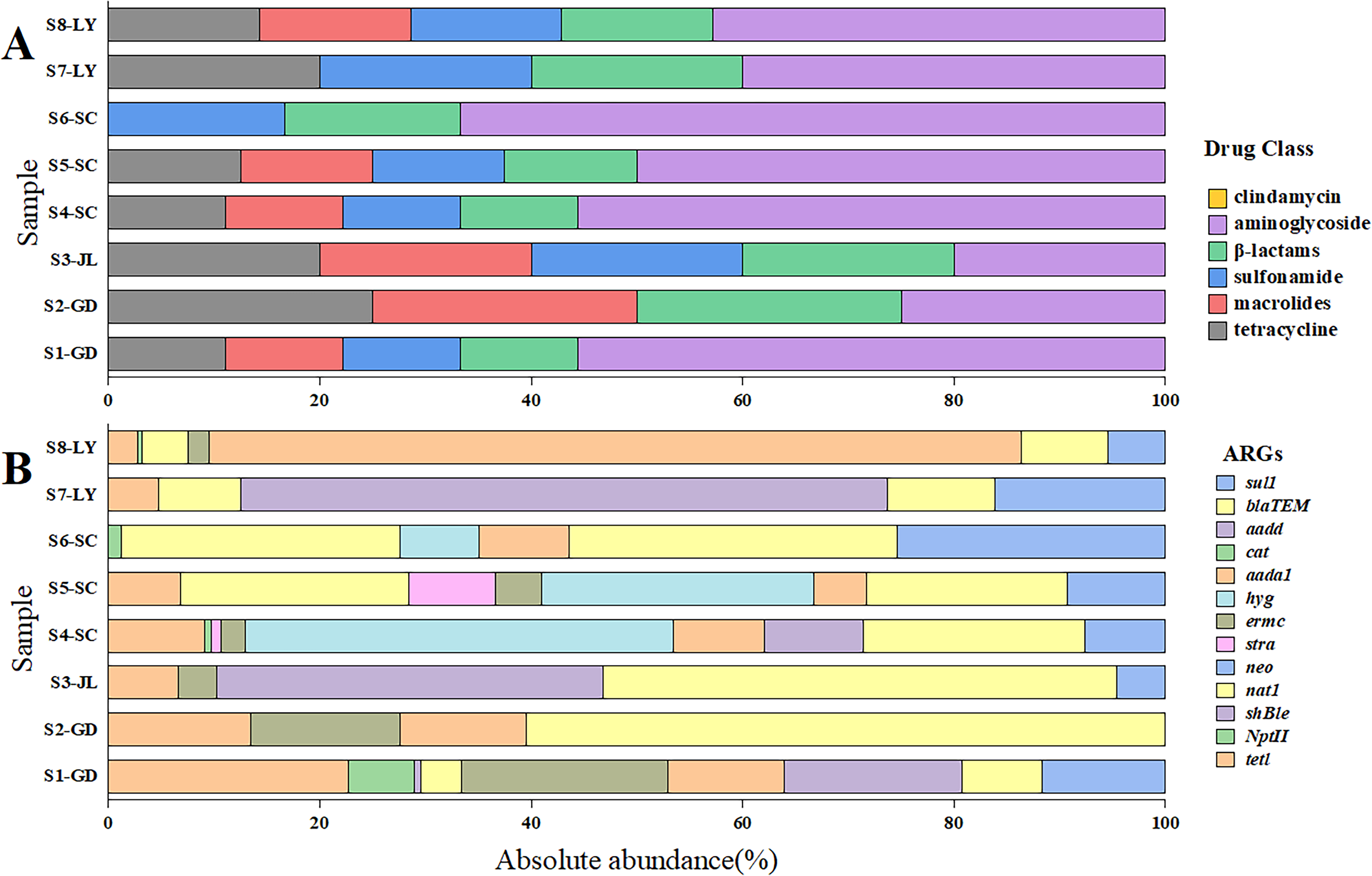
Comparison of the absolute abundance of ARGs along with its classification of resistance in all the samples.
Nowadays, risk assessment of ARGs in pickles and even in fermented foods is rare, but in developing countries, resistance to bacterial infections leads to a significant increase in human morbidity and mortality, and a significant increase in treatment costs (Harnrath et al., 2015). Therefore, it is absolutely necessary to further disseminate the adverse consequences of antibiotic misuse on human health, to disseminate strict food processing and preservation techniques, to mitigate the potential harm caused by the ARGs based on big data from public health surveillance, and to develop risk assessment models.
Conclusions
In this study, different ARGs were detected in pickle samples obtained from Chinese markets. The qPCR technique was adopted to detection of resistance genes in pickle products by determining the relative abundance as well as the absolute abundance of resistance genes. The distribution of ARGs varied by pickle types. The most abundant ARGs in the samples were the aminoglycoside genes. As a sensitive and specific strategy, qPCR can be applied to the detection of ARGs in other fermented foods and for the risk assessment of fermented foods in mass production of the food industry, thus reducing pickle contamination. Furthermore, the AR genes in the pickles might not to be from live bacterial cells since the genomic DNA template was extracted from pickle precipitation in this study. The isolation of drug-resistant bacteria from pickles will be investigated in our further experiment. These ARGs, with the highest abundance including spectinomycin, erythromycin, tetracycline, SMZ, and ampicillin in this study, would be investigated for bacterial resistance phenotyping and screening of resistant bacteria.
Authors’ Contributions
Conceptualization, D.L. and C.G.; Investigation and methodology, D.L. and C.G.; Data curation, D.L. and F.T.; Writing—original draft preparation, D.L.; Writing—review and editing, Y.L., Y.S., and C.G.; Funding acquisition, Y.L. and C.G. All authors have read and agreed to the published version of the manuscript.
Footnotes
Funding Information
This research was supported by the Innovation team of the introduction and education plan for young and innovative talents in Shandong Provincial University (2021QCYY007) and the technical fund of Linyi University (LD-2023-KJ2-001).
Disclosure Statement
No competing financial interests exist.
Supplemental Material
Supplemental Material
References
Supplementary Material
Please find the following supplemental material available below.
For Open Access articles published under a Creative Commons License, all supplemental material carries the same license as the article it is associated with.
For non-Open Access articles published, all supplemental material carries a non-exclusive license, and permission requests for re-use of supplemental material or any part of supplemental material shall be sent directly to the copyright owner as specified in the copyright notice associated with the article.
