



Abstract
Concerns about international terrorism make the stability of failing states central to Western foreign aid policies. This paper explores how donors reduce the volatility of aid to avoid political destabilization of recipient countries. Using a formal model, we show that stability-oriented donors control the risk of conflict, but they never fully eliminate it. Recipient governments can exploit donor preferences for stability through increased rent extraction. As a result, stability-oriented aid reduces the risk of political destabilization only under narrow circumstances. If these conditions are not met, stability aid makes conflict more likely. We present evidence for key predictions of our model.
Introduction
Since the early 2000s, foreign aid has been at the center of Western efforts to stabilize failing states in order to contain the threat of fundamentalist Islam (Boutton and Carter, 2012). Central to this effort is the assumption that aid can indeed generate stability. Scholars have identified important mechanisms through which aid can induce political stability. For example, aid can reduce economic discontent in the population, thus dampening demands for political change (Morrison, 2007). Similarly, non-democratic ruling coalitions can use aid to increase repressive practices, effectively reducing protest activity (Bueno de Mesquita and Smith, 2009). On the other hand, there is empirical evidence that aid can have detrimental effects on stability if there are unexpected severe aid shocks (Nielsen et al., 2011). Shocks and other forms of volatility are a pervasive feature of foreign aid practice (Bulíř and Hamann, 2003, 2007). This raises important doubts about the effectiveness of stability-oriented aid, since recipient governments that depend on aid to preserve political stability should be especially vulnerable to negative aid shocks.
In this paper, we investigate whether and when stability-oriented donors can achieve their policy goals. We use a formal model to analyze aid volatility and donor actions to reduce volatility, and the effects on recipient government policy and political stability. We find that strategic interactions between the donor and recipient government help undermine the donor’s objectives. Recipient governments benefit from aid through both rent extraction and its stability effects. This generates a portentous moral hazard, as stability-oriented aid makes rent extraction politically less costly for recipient governments. We show that, under a broad range of circumstances, this moral hazard is enough to overcome the stability gains from aid, even if a donor optimally controls volatility. This finding has far-reaching normative implications, as aid actually makes conflict more likely compared with situations without a stability-oriented donor.
Our work contributes to the debate on aid and political stability on three fronts. First, we show that stability-oriented donors can use active volatility control and strategic overcommitment of aid to control the risk of conflict. Second, even donors that have the means to fully control volatility and bring the risk of conflict resulting from volatility to zero find it optimal not to do so in equilibrium. Third, stability-oriented aid policies lower the risk of conflict only in a relatively small subset of recipient countries. In these countries, the government has little access to non-tax sources of revenue and the population is relatively well prepared for conflict. In all other countries, aid for stability purposes actually increases the risk of conflict, as recipient governments strategically exploit the donor’s stability motivation to extract higher rents for themselves. This is in contrast to existing models that generally find that aid flows increase regime stability. The difference arises because we account for the stability motivation of donors and the volatility of aid. Volatile aid gives rise to a risk–return tradeoff when governments strategically increase rent extraction to take advantage of donor preferences for stability.
We finish the paper by discussing the empirical implications of our model. We provide some anecdotal and statistical evidence to establish the plausibility of four key predictions.
Civil war, aid, and political stability
The literature that is relevant for stability-oriented donor policies and the political effects of foreign aid falls into two broad categories. The first features theories that relate the redistributive underpinning of domestic politics to political unrest and foreign aid. The second comprises works that deal with donor motivations and the ability of donors to purge volatility from the aid delivery process.
Violent conflict and civil war has received much attention by political scientists (e.g. Buhaug and Lujala, 2005; Fearon and Laitin, 2003; Ross, 2004; Sambanis, 2001) and economists (e.g. Collier and Hoeffler, 1998; Miguel et al., 2004). The majority of works that look at aid and civil war focus on post-conflict situations (e.g. Collier and Hoeffler, 2004; Fearon et al., 2009; Flores and Nooruddin, 2009). However, there is a growing literature that explores the relationship between the onset of violent conflict and foreign aid.
Early efforts to model the relationship between foreign aid and political destabilization treat foreign aid as a source of government rents (Grossman, 1991, 1992) or as directly enhancing the capacity of the government to deter rebellion (Collier and Hoeffler, 2002). These works abstract from the economic underpinnings of political power, with actors being parametric decision-makers and aid being provided exogenously. There is no endogenous explanation for why governments fail to uphold deterrence or do not give side payments to potential rebel groups.
In contrast, Acemoglu and Robinson (2000, 2006) cast politics as a struggle for the redistribution of economic wealth in a two-class society. The ruling class faces a threat of revolution if it provides insufficient transfers to the poor. Civil war can arise in equilibrium, although in some situations the ruling class avoids conflict by introducing democracy as a commitment device for future redistribution. Morrison (2007) builds on this approach to show that foreign aid reduces the threat of conflict, and thus decreases pressures for democratization.
Aid flows themselves constitute another potential source of commitment problems. Arcand and Chauvet (2001) are the first to point to the role of aid uncertainty in violent conflict. Merging the theoretical framework of Grossman with aid volatility, they assert that aid introduces uncertainty about the value of office holding. Nielsen et al. (2011) argue that aid shocks introduce commitment problems as aid-dependent governments are unable to maintain deterrence or make side payments to the population. The authors present robust empirical evidence for this hypothesis.
In our model, we follow Acemoglu and Robinson (2000) and Morrison (2007) and conceptualize the source of violent conflict as struggles over domestic re-distribution. 1 We limit ourselves to the simplest possible game form, an ultimatum game in which the outside option is fighting. It is well understood that in these games bargaining breaks down as a result of incomplete information, commitment problems or issue indivisibility (Fearon, 1995). In line with Arcand and Chauvet (2001) and Nielsen et al. (2011), in our model the source of uncertainty is unexpected aid shocks.
Bueno de Mesquita et al. (2003) model the institutional underpinnings of political power in greater detail. They show that aid increases the value of office-holding (Bueno de Mesquita and Smith, 2009), and causes leaders in non-democracies (small winning coalition systems) to increase payoffs to a small clique of cronies while severely reducing public goods. We consciously do not model this fine-grained level of institutional detail. Instead we focus on the volatility of aid flows and the strategic interactions between a donor and the recipient government.
In our model, the government stays in power and controls rent extraction unless the population challenges it in a successful rebellion. We assume that aid is fungible and we model aid as going directly to the government. 2 We argue that redistributive policy choices are out of the purview of direct donor control. Thus recipient governments can exploit donor preferences for political stability by extracting higher rents, in turn increasing the underlying risk of violent conflict.
Our assumptions that aid goes to the government and is fungible may seem unrealistic. Effectively we only require that donors cannot target aid in a way that completely bypasses the government, that is, we rule out aid with zero fungibility. As long as the government stands to benefit from aid provisions to some extent, even if the donor provides direct transfers to the population, the government has incentives to exploit donor preferences for stability by setting higher rent extraction rates. Two mechanisms make sure of this. First, fungibility implies that aid provisions in one policy realm free up overall government revenue. We focus on the ability of the government to use these resources to increase costly repressive policies. Second, the government might be able to extract rents on at least some direct aid transfers to the population. This means that such transfers are less effective in blunting population incentives to rebel against the government. 3
In reality, we have good reasons to believe that aid is always fungible to some extent. While the larger debate on how foreign aid affects the spending choices of recipient governments across policy sectors remains unsettled (see for example Feyzioglu et al., 1998; Van de Sijpe, 2013), there is evidence of a direct link between foreign aid and military spending in select cases (Feridun, 2014). In addition, donors try to bypass the government to benefit the population (Dietrich, 2013), but the share of aid going to outside groups and not the government can be surprisingly small (Dietrich and Wright, 2012).
The second set of works that are relevant for our model deals with donor motivations and the sources of aid volatility. Providing for political stability in recipient countries has a long pedigree in Western aid policies. Most prominently, strategic concerns drove stability considerations during the Cold War (e.g. Schraeder et al., 1998). The end of the Soviet Union brought an unexpected slew of civil wars. Accordingly, state failure and regional destabilization became a focus of US and European foreign policy. Scholars began to look into the causes of state failure and developed methods to identify fragile states (François and Sud, 2006; Goldstone et al., 2010). The policy reaction included efforts to better target aid towards fragile states. 4
The impetus to pay attention to state failure was reinforced by the 9/11 terrorist attacks. Prevention of regime collapse and terrorist training camps became a policy goal. 5 Despite changing rationales, the empirical record reflects an ongoing stability orientation of Organisation for Economic Co-operation and Development (OECD) aid policies. Covering the years 1960–2001, Licht (2010) shows that OECD donors were more likely to give aid to incumbent leaders if their hold on power was endangered. Throughout this paper, we therefore conceptualize stability concerns as driving the focus of donors on the support of existing governments in power.
We believe that equating stability concerns with government support is legitimate. During the Cold War this nexus was immediate as governments loyal to the Western camp often were challenged by adversaries that proclaimed adherence to Communist principles. With the rise of international terrorism, government collapse has become synonymous with state failure. If they seek stability, Western donors tend to support the incumbent government. The counter-example of the Arab Spring serves to illustrate the point. American and European advocacy for regime change in the affected countries has been tempered throughout by concerns about state failure and the consequent creation of safe havens for radical terrorist groups.
The situation is less settled with regard to the sources of aid volatility. There is a consensus on the negative economic effects (Kharas, 2008; Lensink and Morrissey, 2000) and the pro-cyclical nature of volatility (Bulíř and Hamann, 2003, 2007; Pallage and Robe, 2001). However, only a few works look at the determinants of aid volatility (Desai and Kharas, 2010; Hudson and Mosley, 2008). Recipient-specific factors include natural disasters, population size and per capita wealth. On the aid delivery side, greater donor fragmentation reduces aid volatility, while donor herding has an increasing effect. Only one article looks at donor-specific sources of volatility. Fielding and Mavrotas (2008) find that sectoral aid by the USA and Germany exhibits greater volatility than those of other donors, without offering an explanation for this difference.
Without existing works on the topic, we develop our own theory of the donor-specific mechanisms that cause aid volatility. We argue that volatility in aid distributions stems from two sources. First, government budgets in donor countries are subject to year-to-year shocks in revenue collection, which also affect aid budgets. Since aid programs typical run for between four to five years, short-term budget shortfalls tend to crowd out new commitments in favor of existing commitments. Thus, shocks to government revenue are passed on as lower aid commitments. At the same time, aid flows resulting from existing commitments will be shifted toward the end of their program period, reducing the smoothness of aid flows and increasing volatility of disbursements.
Of course, governments can borrow to compensate for revenue shocks. The degree to which revenue shocks translate into aid volatility depends on the priority that foreign aid enjoys relative to other policy areas. Although aid policies typically only make up a tiny fraction of government spending, offering little savings potential, they have no natural domestic constituency to protect them from spending cuts.
We argue that donor governments who want to isolate aid allocations from overall budget volatility need to spend political capital. It is politically costly to increase government borrowing to compensate for shocks and arguably even more so to shield foreign aid from funding cuts by giving other policy goals lower priority.
The second principal source of aid volatility lies in the institutional structure of the donor country’s policy-making process. In systems with a divided government like the American one, competing power centers have the ability to follow different policy goals. This lack of unified agency means that aid allocations are the result of political bargaining outcomes between the executive and the legislature, which inherently fluctuate. 6 If the government wants to reduce aid volatility, it needs to build political support in the legislature for its goals. As with aid volatility from budget shocks, this means spending political capital.
In contrast, parliamentary systems lend unity of purpose and the purse strings to the government in power. However, there exists potential for slippage between the legislature as political principal and the bureaucracy tasked to implement government policy. For example, German aid officials in the Federal Ministry for Economic Cooperation and Development (BMZ) operate within a spending framework that is fixed by budgetary law. While this framework typically allocates a set amount of money to specific recipient countries for a four to five year period, BMZ officials strategically form “reserves” by allocating less money in early program years. This in turn allows them more discretion down the road, which is used not least to exert leverage vis-à-vis recipient governments. 7 From a recipient country’s perspective, this makes German aid less predictable and more volatile. Similar to a system with divided government, the legislature can reduce this source of volatility by specifying annual spending goals. However, this increase in oversight is politically costly because the head of the BMZ, who is a cabinet minister, will try to preserve the autonomy of his agency.
The two examples show that both in democratic systems with divided government and in parliamentary systems fault lines in the policy process can disrupt aid flows and generate volatility. In both scenarios political principals can exert influence to reduce volatility, but these efforts are politically costly.
Model
To investigate the consequences of stability-oriented aid, we first develop a baseline model in which aid is provided exogenously. That is, there is no stability-oriented donor, and aid flows are simply a parameter in the game. We then build on the baseline model, and allow aid to be provided endogenously by a donor that cares about stability outcomes.
The baseline model features a typical mechanism linking aid volatility to conflict. Figure 1 shows the sequence of play. The non-democratic government
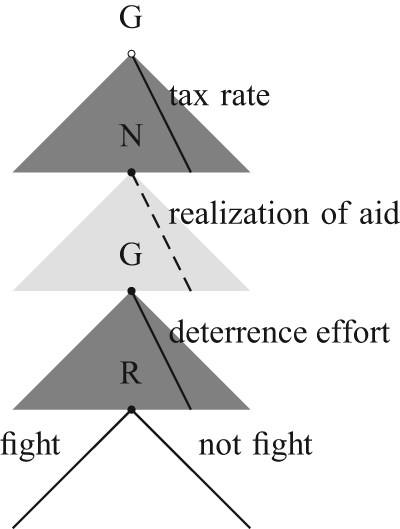
Conflict game, aid exogenous.
We subsume the dynamics that give rise to the government’s commitment problem in its irreversible choice of the extraction rate
We believe that this choice also corresponds well to the reality of extractive institutions in countries with low bureaucratic capacities. For example, Kasara (2007) shows that some African governments rely on patronage and ethnic networks for rent extraction. We argue that extractive institutions built on personalistic ties cannot be changed instantaneously, effectively locking in government policies for longer time periods.
The government’s and population’s payoffs are given by
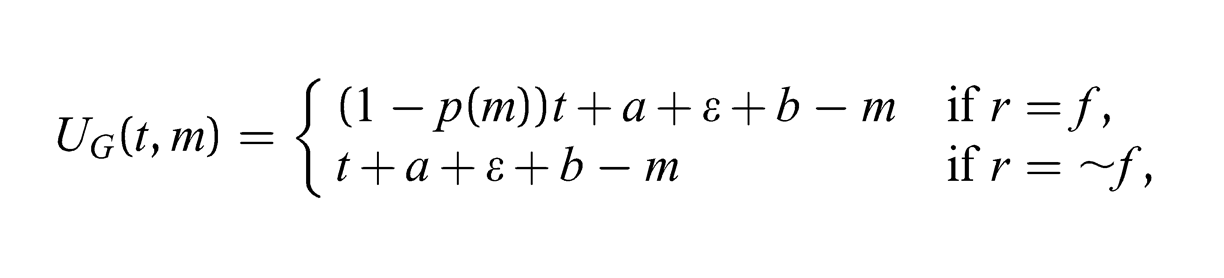

The government and population split an economic pie of size
We obtain the unique solution to the game using backwards induction. 12 The rebels choose not to fight if
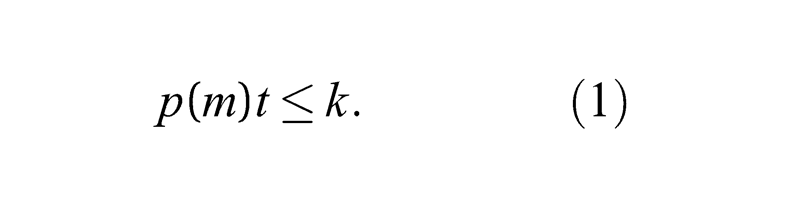
The level of military spending
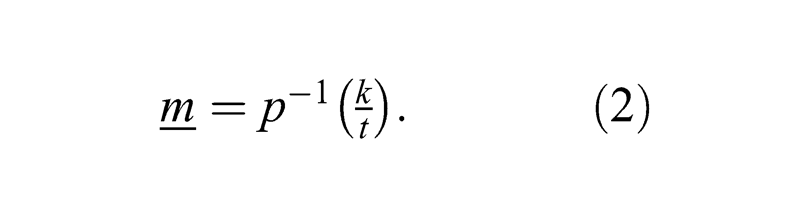
Next, the government decides how much to spend on deterrence. It faces a budget constraint
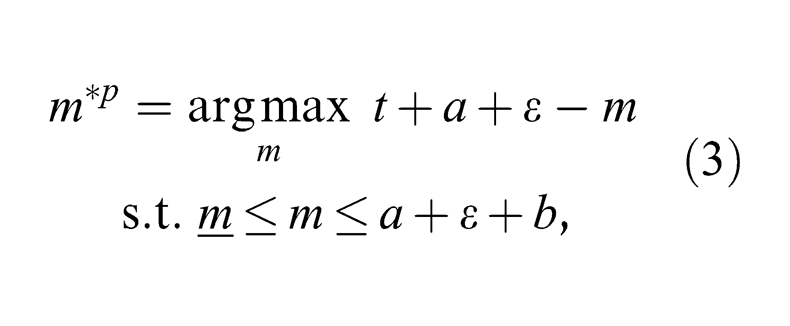
The solution to this optimization problem lies at the lower constraint. Thus the government spends exactly as much as is minimally necessary to keep the peace,
We also have to consider how the government will act if its funds are insufficient to pay for deterrence. Its optimal choice of military spending is given by
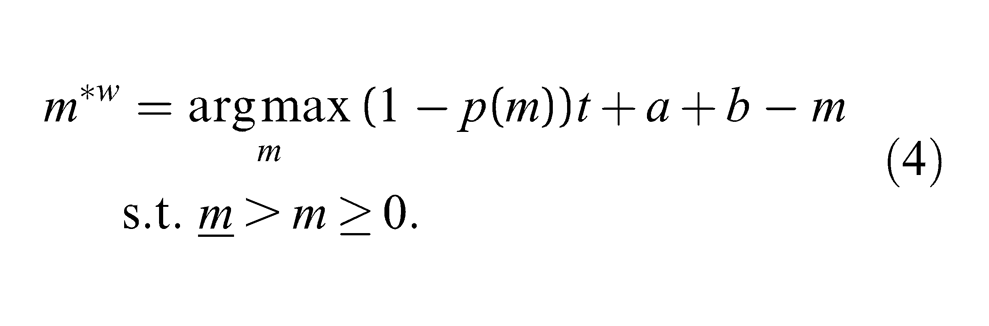
Superscript
Moving up the game tree, aid is provided exogenously. Nature determines the size of the aid shock. The first move belongs to the government, which needs to choose an optimal extraction rate
Conflict arises when the deterrence requirement

The government can always secure for itself a minimum payoff without risking conflict if it keeps extraction rates sufficiently low that it can pay for deterrence out of its endowment
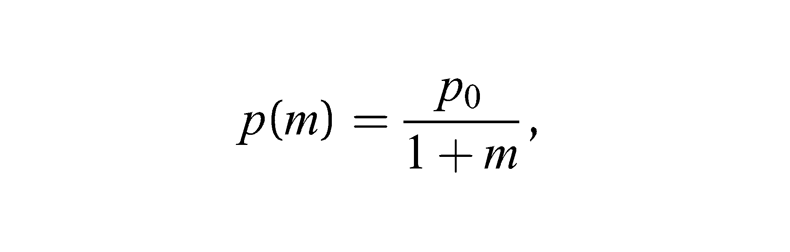
where
If the population is relatively “weak” (
The risk–return tradeoff is reflected in the government’s choice of optimal extraction rate
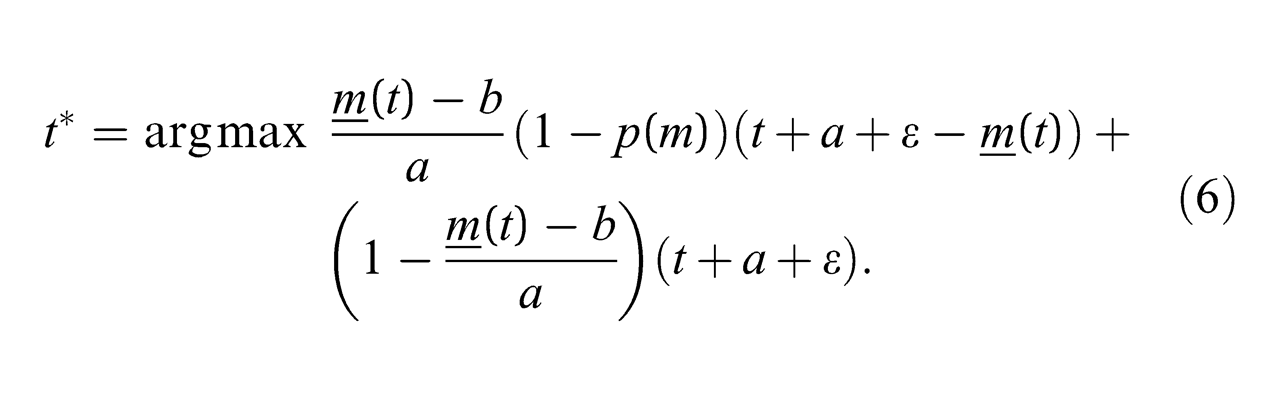
The government maximizes the expected utility from both paths of play, the one leading to peace (with probability q = [(
The resulting optimal extraction rate is

Comparative statics show that
What is the relationship between aid levels and the probability of conflict? Substituting equilibrium taxation and deterrence levels into the probability of conflict, equation (5), we receive the equilibrium ex-ante probability of conflict,

The first derivative of equation (8) with respect to
Larger values of
To explore the consequences of donor preferences for stability, we expand the baseline model and endogenize the decision to provide aid. We model the donor as a single player and allow it to set aid levels. 21 The donor can also spend political capital to reduce aid volatility.
The sequence of moves remains unchanged, except for the donor’s decision to provide aid and control volatility (Figure 2). The donor can spend an amount
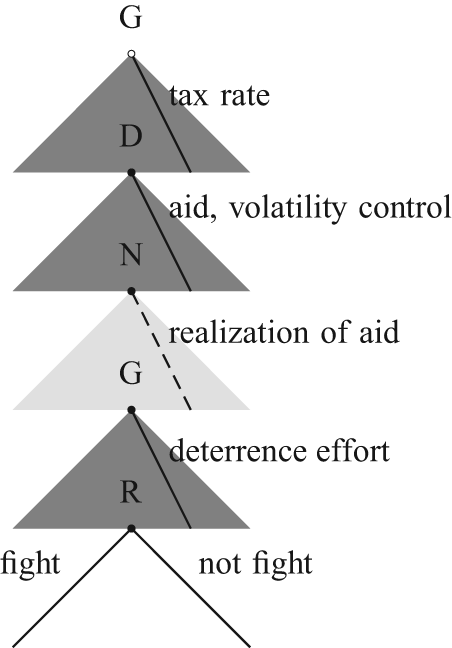
Conflict game, aid endogenous.
The following equations describe the donor’s payoffs.
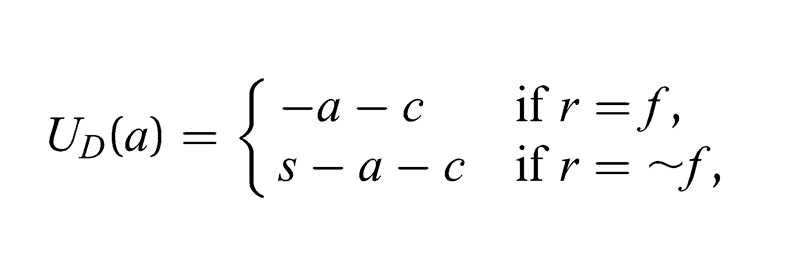
The donor receives utility
We solve the full version of the model using backwards induction. The population’s decision to take up arms and the government’s decision to spend on deterrence are the same as before. Now, the donor has to decide how much aid to provide and how much to control volatility. Since volatility control changes the distribution of the aid shocks

The donor’s only payoff from aid is stability. Therefore it spends nothing on aid and volatility control on a path of play where war or peace are unavoidable (
Substantively more interesting is the situation where conflict occurs with positive probability (

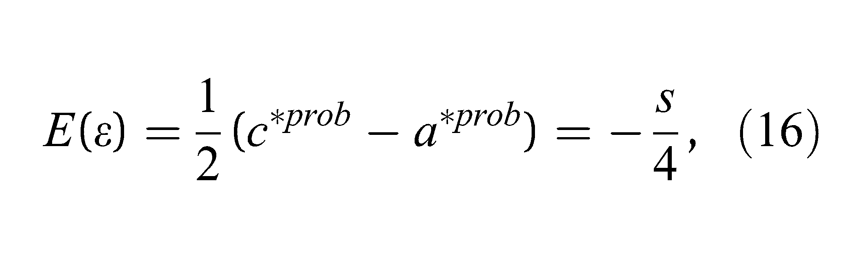
Since the donor solves this in expectation, we need to substitute E(ε) = (c – a)/2 for


Solving equations (11) and (12) for
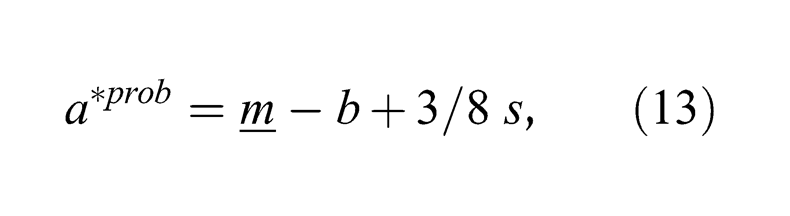

We see that aid
The donor only chooses to provide
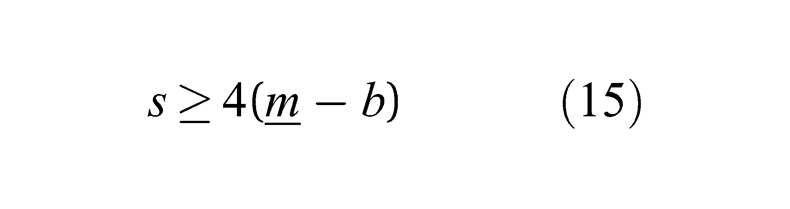
Intuitively, the donor only provides aid if it is sufficiently motivated relative to the costs of securing stability. Higher minimum deterrence levels
Plugging equilibrium aid levels

Thus, the donor keeps the risk of conflict exactly constant. This is in contrast to the baseline model, where aid led to an increased probability of conflict. The donor does not find it optimal to fully eliminate the risk of conflict because aid and volatility control are costly.
Despite the constant risk of conflict, as the donor values stability more, aid becomes more volatile. The expected absolute value and the variance of the error term

The analysis of the donors’ decisions raises two important questions. First, is stability-oriented aid always better than other forms of aid in preventing conflict? Second, given that stability-oriented donors strategically overcommit aid, is stability aid always less volatile than other aid?
We begin with the first question. We need to find out whether the probability of conflict in the baseline model can drop below 1/4. The answer is yes. Conflict can only occur in the baseline model when the population is relatively strong, that is,
This is the worst possible outcome, since stability aid actually worsens the problem that it is intended to solve. It encapsulates the dilemma of donor preferences for stability. Without those preferences, the recipient government would extract rents at self-sustainable levels. Since the donor cannot commit to withhold aid once an unsustainable policy is in place, the recipient government has incentives to institute the destabilizing policies that the donor wishes to prevent.
Stability aid can play a more beneficial role if the population’s cost of fighting decreases to
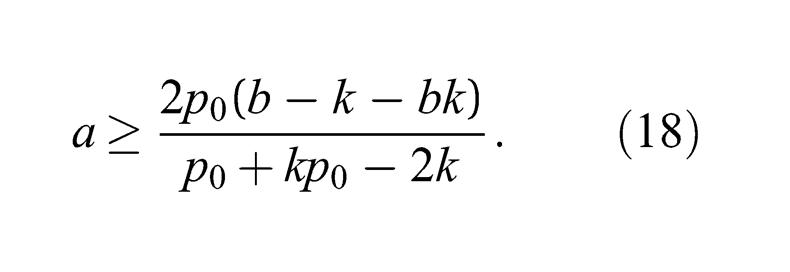
This threshold increases in
Before we can compare aid volatility levels with and without a stability-oriented donor, we have to finish off the model with the government’s choice of the extraction rate
We begin with the first path of play. The government maximizes

The optimal tax rate
On the second path of play, the government is not constrained by the threat of revolution. It simply sets the extraction rate to its natural upper bound,
On the third path of play, the government takes a risky gamble. It raises taxes beyond the point at which it can pay for maintaining peace out of its own budget. Using the same functional form assumption for
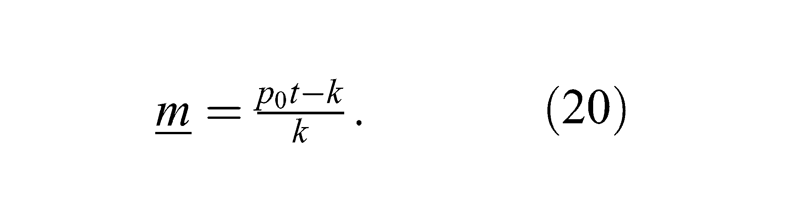
Substituting this value into equilibrium aid (13) and volatility control levels (14), these quantities become
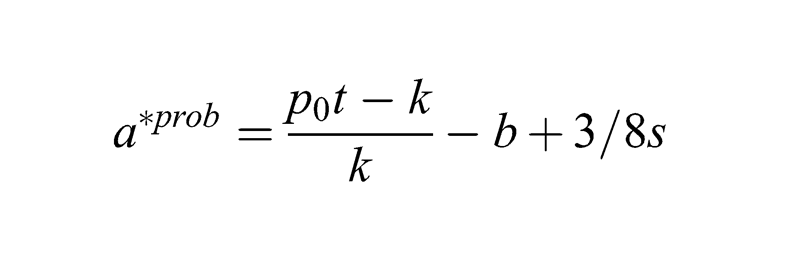
and
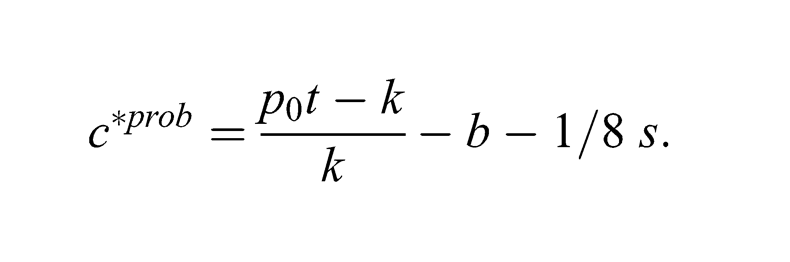
The expected aid shortfall in turn is

Thus, the government’s maximization problem is

As in the baseline model, the government balances the expected utility from rent extraction versus the risk of conflict. The constants 1/4 and 3/4 are the equilibrium probabilities of conflict and peace. The payoff from peace is the rent

and the endowment
The first, lower constraint ensures that
It is straightforward to see that the donor’s utility function (21) is strictly increasing in

We see that the ability of the government to extract rents increases with the donor’s valuation of stability
As before, the government can ensure stability if it sets the extraction rate sufficiently low. The condition for taking the gamble breaks down into two ranges.
28
In the first range, the government is sufficiently well positioned fiscally to enter the gamble even if the donor has no interest in stability. The endowment
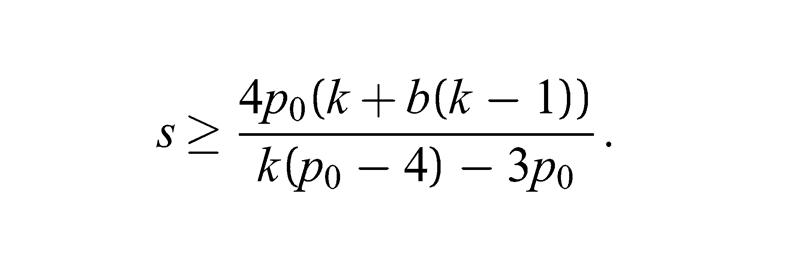
To compare volatility across the models, we need to make aid levels comparable. The variance in the full model is
Finally, we look at the welfare effects of stability-oriented aid. We already found that the ability of the government to increase extraction rates rises alongside donor valuations of stability. We therefore expect that equilibrium extraction rates are higher in the full model than the baseline model. To make the comparison, we set exogenous aid in the baseline model to equilibrium levels from the full model,

Under the conditions that lead to probabilistic conflict in both models, this difference is always positive. 29 The gap in extraction rates increases as the donor values stability more. 30
Summing up the analysis, we have four major insights. First, stability-oriented donors actively reduce the volatility of aid allocations and they keep the risk of conflict constant. Second, to ensure that sufficient funding reaches the recipient government, donors strategically overcommit aid to increase the expected payout. Third, recipient governments exploit donor preferences for stability to extract higher rents, in the process creating more domestic unrest. Fourth, because of this moral hazard problem, aid policies based on stability interests lead to a higher ex-ante probability of conflict in fairly broad circumstances. Only in countries where the government has little access to non-tax sources of revenue and the population is relatively strong does stability-oriented aid reduce the risk of conflict. In the following section we review some anecdotal evidence for these four predictions, and provide some suggestive statistical evidence.
Empirical observations
The goal of this section is to establish face validity for the discovered relationships. Here we are focusing on American aid practice. Beginning with volatility control, direct evidence of official deliberations about the effect of aid volatility on stability is hard to establish. Nonetheless, key documents reflect a recognition that policy-makers are aware of potential negative consequences of sudden aid withdrawals. For example, a Senate report for the Foreign Relations Committee explicitly highlights the dependence of the Afghan government on aid flows and emphasizes the destabilizing consequences that withdrawing this support would have. 31 The nexus between predictable aid and stability also appears in related policy debates. For example, Representative James McGovern argued in a 2011 debate about agricultural appropriations, that US food aid “promotes stability and goodwill” and that reductions in food aid would send the message that “the American people don’t care at all”, 32 the implication being that less aid would lead to destabilization.
To check whether US aid exhibits less volatility when stability interests are at stake, we run a simple ordinary least squares (OLS) analysis that regresses aid shortfalls onto US Official Development Aid (ODA) per capita, US military aid and the interaction between the two. We use data on 150 recipient countries that received US ODA between 1970 and 2009. 33 While US military aid is an imperfect measure, it taps into an essential dimension of US stability interests. 34 The expectation is that in the presence of US military aid ODA is less volatile, that is, the interaction term should be negative. Table 1 reports the results.
OLS, ODA per capita shortfall
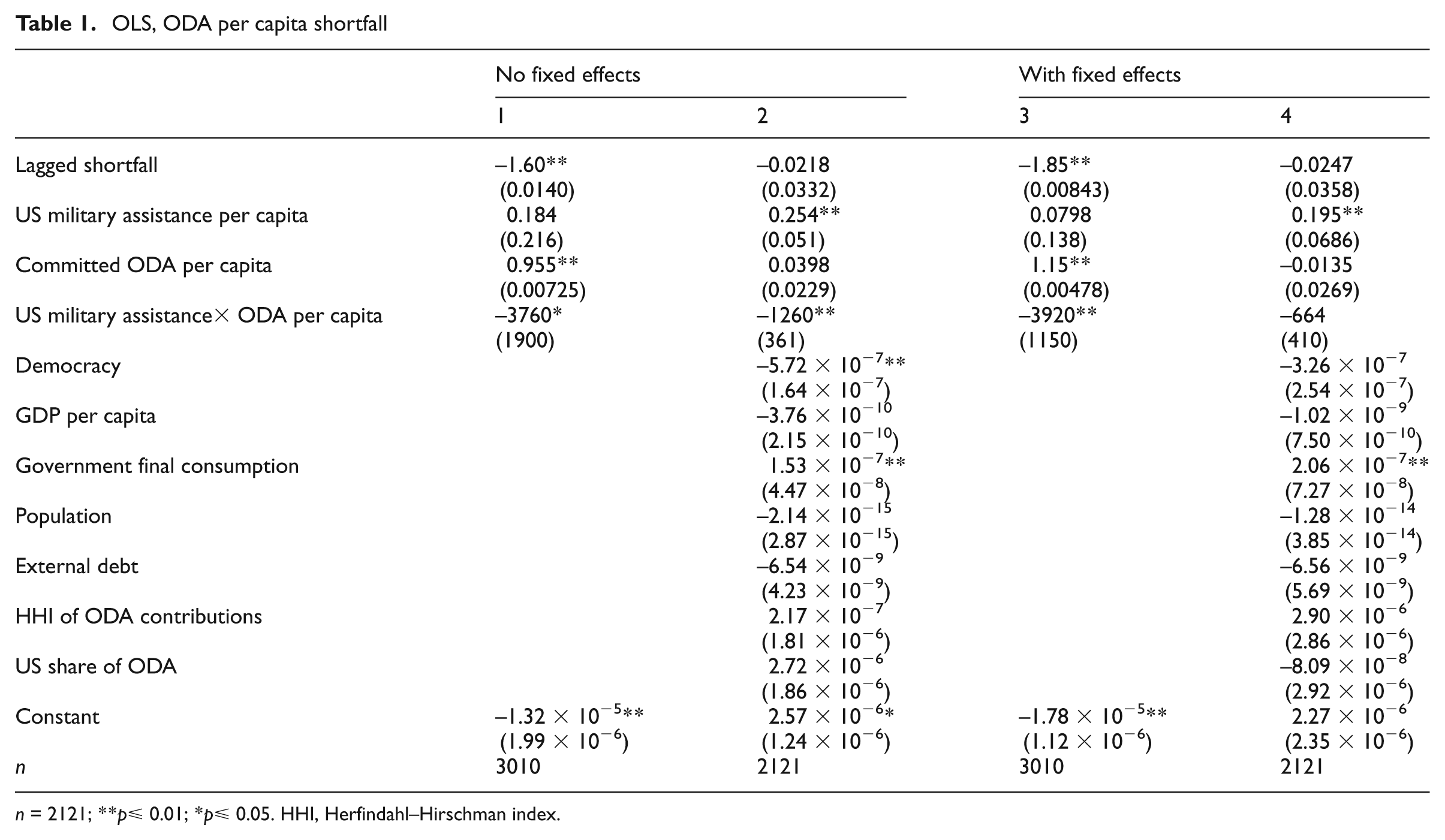
n = 2121; **p ⩽ 0.01; *p ⩽ 0.05. HHI, Herfindahl–Hirschman index.
In model 1 we only include the main variables and a lagged version of dependent variable. The results are as we expected. Most importantly, the interaction term is negative, indicating that increasing US military aid reduces the severity of negative shocks to ODA. Larger ODA allocations are associated with greater aid shocks if the USA does not provide military aid, but the relationship turns negative with increasing military aid. 35 In model 2 we include a number of control variables that have been identified as possible confounders (Desai and Kharas, 2010; Hudson and Mosley, 2008). We expect that the USA is sympathetic to democracies and favors relations with richer countries for economic reasons. Therefore, democracy and greater gross domestic product (GDP) per capita should serve to increase ODA commitments and reduce volatility. As measures of recipient needs we include government final consumption, population size and external debt. If US aid is sensitive to these needs, aid commitments should go up and volatility go down. Finally, we capture systemic properties of the foreign aid system. As aid allocations become more concentrated in the hands of fewer donors (as measured by the Herfindahl–Hirschman index), the impact of any single donor on aid volatility increases. A similar logic holds for the relative share of American ODA. Both variables potentially are correlated with US allocations of both ODA and military aid.
We find that including the control variables does not affect our main results. The interaction effect of US military aid and ODA commitments on aid drops is still negative and highly statistically significant, although the effect size decreases. Figure 3 illustrates the substantive effect of increasing aid allocations. The graph shows that even low levels of military aid mitigate the risk of aid shocks associated with higher ODA commitments. In countries that do not receive any military aid, each additional committed dollar in US development aid increases the size of the average shock by 4 cents. For military aid above US$31 per capita additional ODA does not contribute to the size of aid shocks anymore. 36 At higher levels of military aid, additional ODA dollars decrease the size of aid shocks by up to 8 cents to the dollar.
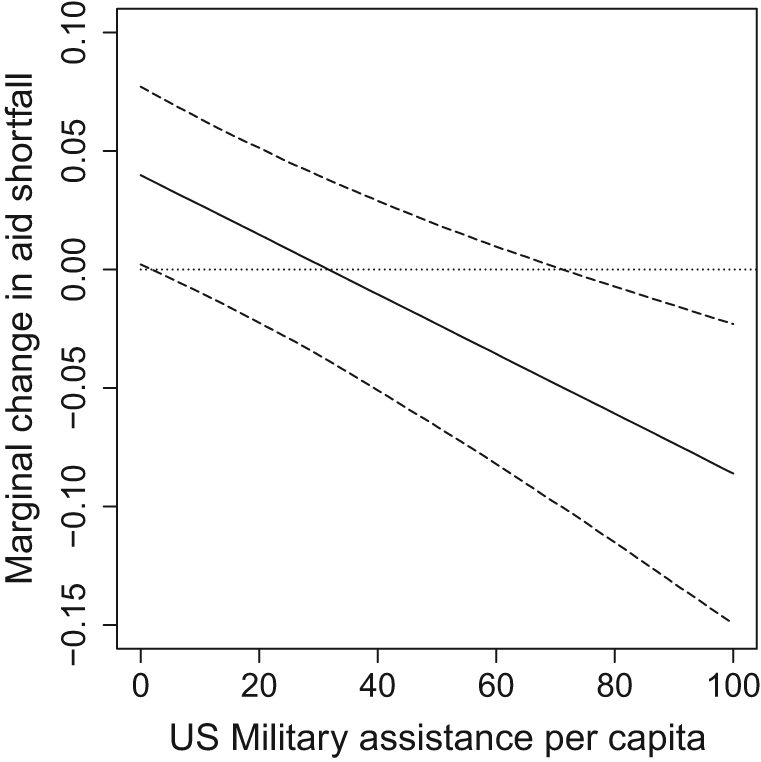
Marginal effect of ODA on aid shortfalls.
Of the control variables, democracy and government final consumption behave as expected in a statistically significant manner. The other control variables are not statistically significant.
As robustness checks, we rerun the analysis with recipient country fixed effects (models 3 and 4). Our findings remain substantively unchanged, although the interaction effect loses some of its statistical significance when including all controls (
We next turn to overcommitment of aid. This is a difficult topic to explore systematically, because our theoretical predictions lead to a counterfactual. The model shows that policy-makers promise more aid than they know they can deliver, factoring in likely shortfalls. Since we cannot observe aid commitment levels without such strategic considerations, there is no direct way to measure the extent of actual overcommitment.
Still, anecdotal evidence from current US aid practice supports the notion that sometimes aid commitments are designed to be much larger than what can reasonably be delivered. For example, the Kerry–Lugar bill commits massive increases of US aid to Pakistan, a key partner for regional stability. The package is worth US$1.5 billion per year in economic aid. However, limits to program implementation capacity on the ground translate into equally impressive funding shortfalls. Current and past shortfalls range between US$414 million (2011) and US$428 million (2013) (Epstein and Kronstadt, 2012).
Clearly, given the size of overcommitment, there is an enormous buffer that protects aid to Pakistan from funding cuts below what currently can be absorbed. More importantly, the bill consciously is cast in terms of establishing a long-term partnership. It sets a 10-year time horizon, and is intended to supplant a “tactically-driven set of short-term exercises in crisis-management”. 38 In other words, the new approach aims to make American aid to Pakistan more predictable, and the level of (over-)commitment is an important tool to generate expectations that are in line with this.
The next prediction of our theory concerns the relationship between stability-oriented aid and the ability of recipient governments to extract rents. Following Burnside and Dollar’s (2000) seminal piece on the importance of good governance for aid effectiveness, the role of aid in influencing institutional quality and corruption has received much attention. The existing empirical picture is inconclusive, but previous works suffer from endogeneity and measurement problems. In addition, they have not considered the effects of donor preferences for stability.
There are studies that find no effect of overall ODA on corruption (Ear, 2007), a reduction in corruption (Tavares, 2003) or a reduction effect that is limited to multilateral ODA (Okada and Samreth, 2012). In contrast, Charron (2011) presents evidence that bilateral aid tends to increase corruption, but only prior to 1997. Each of these findings potentially suffers from endogeneity as donors give aid to poor countries that also tend to have weak institutional environments (De la Croix and Delavallade, 2014). Although the authors use different types of instrumental variables to escape this problem, the quality of the used instruments is at least open to discussion. In addition, existing data, such as the widely used indexes by Transparency International, are based on surveys of perceived corruption practices, whereas our theory focuses on political rent extraction. The latter is difficult to measure because illicit graft goes unreported.
What can we learn from these inconclusive findings for the relationship between stability-oriented aid and rent extraction? Stability-oriented aid is not driven by concerns about aid effectiveness, with regard to either economic growth or human development indicators. Instead, political and strategic considerations are a primary driver. This suggests that Charron’s (2011) results provide some support for our prediction. During the Cold War, overall aid delivery was more sensitive to geostrategic consideration than after the 1990s (note that aid policies took some years to change after the fall of the Berlin Wall). In addition, his finding holds for bilateral aid, which is what our theory focuses on.
Less systematic but highly illustrative evidence comes from a number of prominent cases. In the Democratic Republic of Congo (DRC, at the time Zaire), Western donor countries supported President Mobutu during the Cold War because he was a staunch anti-communist. 39 Although accounts of widespread elite-level corruption in the DRC were public knowledge, including chartered shopping trips on the Concorde supersonic passenger plane, 40 OECD countries provided on average more than US$600 million in ODA per year between 1970 and 1990. 41 These aid inflows allowed Mobutu to embezzle upward of an estimated US$5 billion, making him the most notoriously venal dictator of Africa. 42
A similar dynamic can be observed in contemporary Afghanistan. Afghanistan receives multi-billion-dollar US aid, but it tied for last place in Transparency International’s worldwide public sector corruption ranking. 43 The Senate report for the Foreign Relations Committee emphasizes that it is the unconditional availability of US aid funds that promotes this corruption. The US government seeks to prevent graft and the “capture” of aid flows through political officials by extensive use of contractors. However, projects are frequently subcontracted to local companies, which in turn depend on political patronage of politically connected owners. The use of contractors is clearly insufficient to prevent high-level graft. For example, members of President Karzai’s immediate family are frequently named in the context of corruption investigations. 44
Taken together, the quantitative evidence presented by Charron (2011) and our anecdotes of stability-driven aid to Zaire and Afghanistan suggest that the theorized link between stability-oriented aid and rent extraction is plausible. A more systematic test of this relationship awaits progress in overcoming measurement problems and tackling endogeneity.
As a last prediction, we examine the relationship between shocks to stability-oriented aid and the onset of civil conflict. Our analysis showed that, compared with exogenous aid, stability-oriented aid increases the risk of conflict, except when the government has very little access to non-tax sources of funding and the population is relatively strong (low costs of fighting and high probability of prevailing). It is difficult to evaluate this claim on the basis of anecdotal evidence, but it is instructive to think about the conditions under which stability-oriented aid fails.
The government of a developing country typically has access to non-tax sources of revenue through either revenue from oil or raw material sales, or through borrowing from international financial markets. From this we can roughly outline groups of countries in which stability-oriented aid will have negative consequences. These include oil-producing countries, but also sub-Saharan countries where governments have relied on capturing rents from agricultural exports (Bates, 1981). In contrast, countries in the Horn of Africa, such as Ethiopia and Somalia, had very low agricultural exports and no raw materials, giving stability aid a chance to work.
Into which group does Afghanistan fall? Clearly, Afghanistan has no raw materials or (legal) agricultural commodities to export. Given its lack of economic development and pervasive political fragmentation, any Afghan government would also find it hard to borrow on international financial markets. Finally, arguably the bulk of aid inflows into Afghanistan is intended to stabilize the current political regime—very little aid was flowing to the government during the Afghan civil war in the 1990s and the Taliban regime was completely shunned by Western donors.
The question of what determines the population’s relative cost of fighting and the probability of prevailing in civil war is more complicated to answer. There is a good argument to be made that population strength depends on the ability to organize, which in turns is a function of basic public goods such as the freedom of assembly and access to communication networks (Bueno de Mesquita and Smith, 2009). However, by this token it is difficult to distinguish between different non-democratic regimes, all of which to some degree suppress their population’s ability to engage in collective action.
We believe that it is possible to gain leverage on this question when we consider the track record of conflict in a country. Civil conflict exposes individuals to experience with organized armed violence, and it generates group structures and puts weapons in the hands of individuals that can easily be used for renewed fighting. This suggests that stability-oriented aid can have beneficial effects in post-conflict societies, where the threat of easy rebel success will deter the government from exploiting donor preferences for stability. Evidence of this is the emphasis of most post-conflict agreements on disarming rebel groups or on integrating them into national military structures. 45
Together, the government’s lack of non-tax fiscal resources and a post-conflict situation imply a positive role for stability aid. Afghanistan and Somalia fit this bill. Other post-conflict societies, such as Côte d’Ivoire or Zimbabwe have governments that have monopolized revenue from agricultural exports. They are therefore in a better position to exploit donor preferences, and stability aid can have destabilizing side effects.
For our statistical analysis, we follow our argument above and code post-conflict societies as having a strong population. 46 As measure of non-tax sources of revenue, we use aid dependency and government consumption. The idea is that well-financed governments have relatively high consumption and do not have to rely on aid. 47 We label as “good” scenarios cases for which our theory predicts that stability aid can be effective in increasing stability. In the “bad” scenario the government has either high non-tax revenue and/or the population is weak, and our theory predicts a detrimental effect of stability aid. The dependent variable is conflict between the government and an organized group that results in at least 25 deaths in a given year. 48 We use the aid shortfalls variable from above as key independent variable and interact it with US military assistance.
We expect that stability interests moderate the effect of aid shocks on conflict downward (a negative interaction term) in the “good” scenario. In the “bad” scenario stability interests should intensify the risk of conflict associated with aid shocks (a positive interaction term). Table 2 reports results for the main variables. We employ a battery of other control variables, based on existing findings on the determinants of civil war (e.g. Fearon and Laitin, 2003). We report the full results in the Appendix. 49 The interaction term has the predicted sign in all four cases, although it fails to reach standard levels of statistical significance for the government consumption measure.
Logit, conflict onset
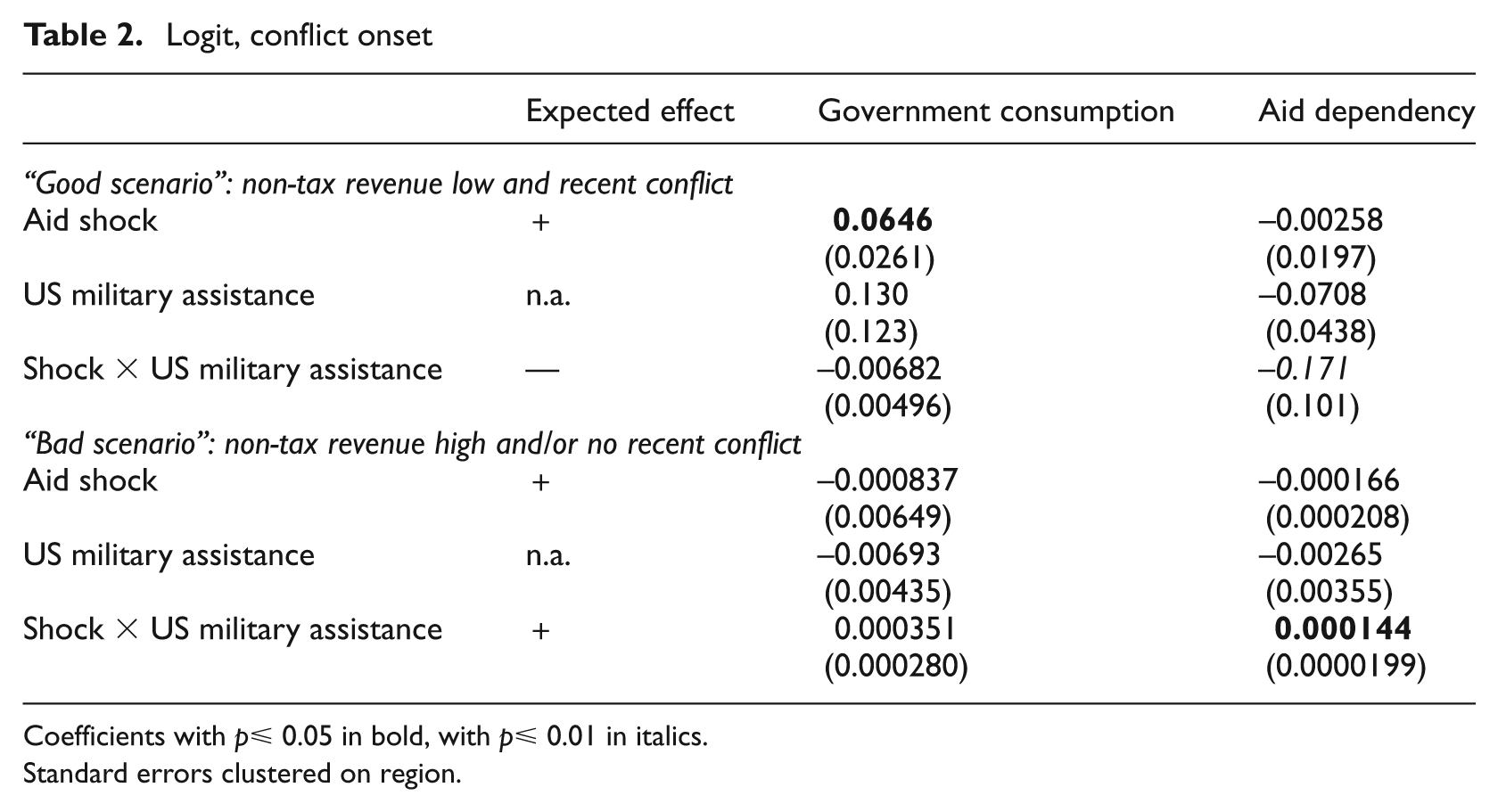
Coefficients with p ⩽ 0.05 in bold, with p ⩽ 0.01 in italics.
Standard errors clustered on region.
Figure 4 illustrates just how different the moderating influence of US stability interests is for the relationship between aid shocks and conflict onset. In the “good” scenario, if the USA does not provide any military assistance, each additional dollar shortfall of aid per capita increases the probability of conflict by 1.6 percentage points (given a baseline probability of conflict of 50%). As the USA takes a stability interest, the effect of aid shocks on conflict onset declines and disappears once US military aid reaches US$10 per capita. This is in sharp contrast to the “bad” scenario. The effect of aid shocks on conflict onset is not statistically distinguishable from zero in the absence of US stability interests. Almost as soon as US military aid flows in, shocks to ODA flows become associated with conflict onset. At average military aid levels (US$8 per capita), each additional dollar in ODA shortfalls increases the probability of conflict by 0.025 percentage points, not a large effect. However, for one standard deviation above the mean of military aid (US$90 per capita), a US$1 increase in the size of an aid shock is associated with a 0.31 percentage points higher probability of conflict. Together with the anecdotal evidence, this supports the notion that the moderating effect of US stability interests on the relationship between aid shocks and conflict is contingent on whether the US is dealing with a “good” or “bad” country.

Marginal effect of aid shocks on probability of conflict.
In this section we sought to establish the face validity of the four predictions from our theoretical analysis. Using anecdotal and statistical evidence, we saw that, in the case of US aid, each of the predictions finds plausible support in the empirical record.
Conclusion
The interest among Western donors in supporting the political stability of countries that are potential safe harbors for international terrorists generates a set of important challenges. Policy-makers need to understand under which circumstances aid can promote stability, and what potential dangers exist. In this paper, we have focused on volatility as a pervasive feature of aid that is also associated with political destabilization. We analyzed what happens when donors reduce the volatility of stability-oriented aid, accounting for the destabilizing effect of rent extraction, and the incentives that a stability-oriented donor provides to the recipient government to engage in this activity. We found that, despite donor efforts to reduce aid volatility, stability-oriented aid can end up increasing the risk of violent conflict.
In simple terms, this happens when the recipient government lets the donor community pick up the bill for rent-seeking policies that destabilize the country. We characterize the conditions under which this negative result occurs and provide some suggestive evidence of the causal mechanism at work in the real world. Stability-oriented aid can work only if recipient governments have little recourse to non-tax sources of revenue and the population is able to organize effective resistance against the government. We believe that the importance of this policy issue calls for a rigorous empirical research program to evaluate the effectiveness of stability-oriented aid.
The anecdotal evidence suggests that policy-makers are aware of some of the problems besetting aid for stability purposes. In the USA, there is an active debate about the corrupting effects of the massive aid inflows for public institutions in Afghanistan. There is a burgeoning understanding that long-term political stabilization requires a long-term aid commitment that reduces the risk of aid shocks. Our cursory statistical analysis showed that US flows of ODA are less volatile when a country also receives US military aid. A more systematic analysis would also consider other measures of stability interests and extend the scope to include other donor countries. This could add an important new aspect to the current debate on aid volatility. If stability interests prompt policy-makers to be more reliable aid providers, this could increase the effectiveness of aid for economic development.
Our findings contribute to the nascent literature that evaluates the role of foreign aid for political stability. Nielsen et al. (2011) were the first to identify the connection between aid shocks and political destabilization, and they provide evidence of the relationship in aggregate data. Moving beyond the macro picture, our analysis demonstrates that policy-makers who are concerned about political stability will try to counteract these negative effects of aid shocks. However, the endogeneity of the decision to provide aid limits their ability to succeed, as this causes moral hazard for recipient government behavior. Savun and Tirone (2012) argue that stability-oriented donors should consider using aid as a buffer against politically destabilizing economic shocks. However, to the extent that stability motivations can cause moral hazard problems, aid policy might not be a suitable tool to provide such a buffer. Future research into the stability effects of aid needs to develop a fuller account of the endogeneity of the decision to provide aid.
Finally, aid shocks are hardly the only source of political destabilization. The most prominent countries that receive aid for stability purposes have attracted a large number of donors, fueling concerns about a proliferation of aid programs and the fragmentation of aid delivery. This by itself can have eroding effects on government institutions and policy performance (Knack and Rahman, 2007). While shortcomings in any one donor’s aid program can have important consequences, we still know very little how the interactions between donors and the reality of fragmented aid delivery affect political stability. For example, having many donors could reduce the risk of a severe shock to aggregate aid when a single donor withdraws. We have just begun to understand how donors use policies to reduce aid volatility, and we know even less what an internationally coordinated answer to this problem could look like. We hope that our research contributes to and propels further efforts to answer these important questions.
Footnotes
Appendix
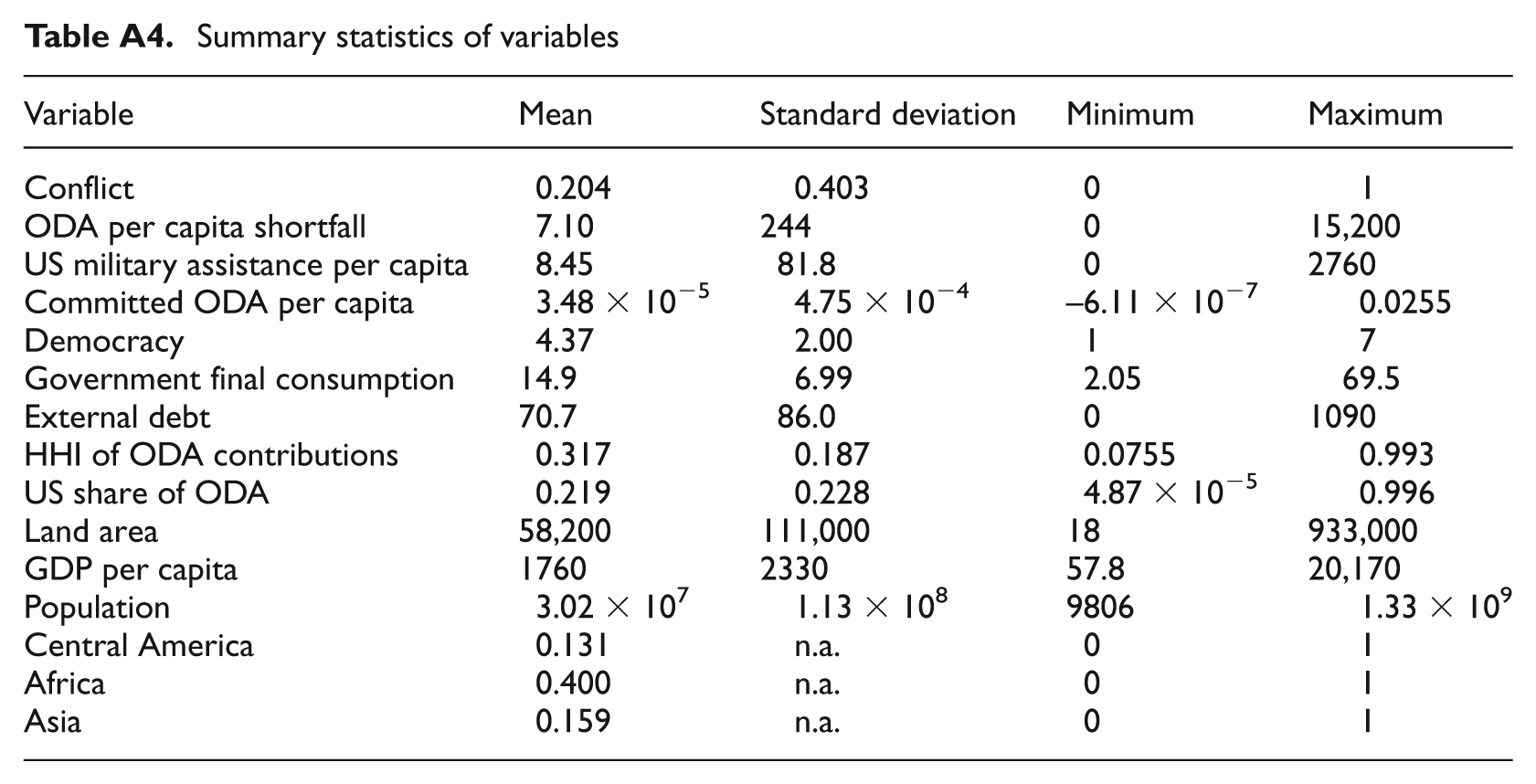
Summary statistics of variables
| Variable | Mean | Standard deviation | Minimum | Maximum |
|---|---|---|---|---|
| Conflict | 0.204 | 0.403 | 0 | 1 |
| ODA per capita shortfall | 7.10 | 244 | 0 | 15,200 |
| US military assistance per capita | 8.45 | 81.8 | 0 | 2760 |
| Committed ODA per capita | 3.48 × 10⁻⁵ | 4.75 × 10⁻⁴ | −6.11 × 10⁻⁷ | 0.0255 |
| Democracy | 4.37 | 2.00 | 1 | 7 |
| Government final consumption | 14.9 | 6.99 | 2.05 | 69.5 |
| External debt | 70.7 | 86.0 | 0 | 1090 |
| HHI of ODA contributions | 0.317 | 0.187 | 0.0755 | 0.993 |
| US share of ODA | 0.219 | 0.228 | 4.87 × 10⁻⁵ | 0.996 |
| Land area | 58,200 | 111,000 | 18 | 933,000 |
| GDP per capita | 1760 | 2330 | 57.8 | 20,170 |
| Population | 3.02 × 10⁷ | 1.13 × 10⁸ | 9806 | 1.33 × 10⁹ |
| Central America | 0.131 | n.a. | 0 | 1 |
| Africa | 0.400 | n.a. | 0 | 1 |
| Asia | 0.159 | n.a. | 0 | 1 |
Acknowledgements
I would like to thank Mark Fey, Hein Goemans, Alexandra Hennessy, Tasos Kalandrakis, Michael Peress, Curt Signorino, Randall Stone, three anonymous reviewers, the participants of the Watson Seminar and the Comparative Politics Workshop at the University of Rochester, as well as participants at the annual meetings of the Peace Science Society, Midwest Political Science Association and the American Political Science Association. Any mistakes are my own.
Funding
I gratefully acknowledge support from the W. Allen Wallis Institute of Political Economy.