



Abstract
The present study assessed support for an innovative model of the direct and indirect paths through which perceived peer norms regarding the prevalence and acceptability of sexual violence (SV) and relationship abuse (RA) may influence the decisional process leading to bystander intervention. Analyses included baseline and 6-month follow-up data collected from a large sample of high school students (N = 2,303) across 27 schools in the Northeastern United States. Path analyses were conducted to test a multiple mediation model of the direct and indirect associations among the sequential predictors of perceived descriptive and injunctive norms, personal attitudes, abuse perceptions, risk recognition, and dependent measures of bystander behaviors at baseline and 6-month follow-up. Higher perceptions of the prevalence (descriptive norms) and acceptability (injunctive norms) of SV and RA among peers were associated with more accepting personal attitudes toward SV and RA, which were associated with lower abuse perceptions and risk recognition. Furthermore, lower abuse perceptions and risk recognition were associated with decreases in bystander behaviors at both time points. Mediational analyses revealed several significant indirect paths through which higher perceptions of descriptive and injunctive norms contributed to decreases in bystander behavior. Findings provide novel evidence of the prospective influence of perceived norms on bystander intervention behavior in situations of SV and RA.
Keywords
The widespread incidence and harmful consequences of sexual violence (SV) and relationship abuse (RA) among adolescents and young adults has been documented across a wide array of studies underscoring their public health impact (Krebs et al., 2011). Recent surveys of college students suggest that SV and RA perpetration continue to occur at an alarming rate, and rates of victimization among women remain between 20 and 30%, reflecting little change over the past decade (Cantor et al., 2015; Turchik et al., 2010). Scientific and public awareness of this problem has spurred the proliferation of research on SV and RA prevention, as well as the dissemination of school-based intervention programs aimed at reducing SV and RA among young adults and adolescents. A major advancement in this body of work has been the application of socio-ecological models to address community-level processes associated that SV and RA, which has fostered increased attention toward the role of bystander attitudes and behaviors in facilitating or preventing perpetration.
Studies examining bystander approaches to SV and RA prevention have produced a growing body of evidence demonstrating the utility of interventions that aim to increase community members’ ability to recognize and intervene in high-risk situations for SV and RA perpetration (for reviews, see Banyard, 2015; Burn, 2009). The development of these programs has been heavily influenced by Latane and Darley’s (1968) situational model of bystander behavior, which describes five steps involved in the intrapersonal processes of deciding to take action: (a) noticing a problematic situation, (b) recognizing it as problematic and intervention appropriate, (c) taking responsibility to address it, (d) assessing one’s ability to intervene, and (e) choosing to take action.
Interventions deriving from the situational model employ a variety of components to promote prosocial changes (i.e., increasing awareness of the issue, motivation to act, and skills to effectively intervene) at different stages of the decisional process. However, the programming and efficacy of these interventions remains constrained by the current dearth of scientific knowledge of constructs that contextualize individuals’ perceptions and attitudes at different decisional stages and mediate their transition through them. Accordingly, the current study sought to advance the extant literature on SV and RA bystander intervention by integrating the situational model framework with social norms theory to describe and assess the predictive role of normative perceptions, and the mediating role of abuse perceptions and risk appraisals in the process leading to bystander action. In the sections below, we describe the empirical support for each association incorporated in the hypothesized conceptual model evaluated in our analyses.
The Role of Perceived Norms in Bystander Attitudes and Behaviors
A relatively new and promising line of research on bystander behaviors has begun to examine the influence of perceived social norms on bystander behaviors in situations involving SV and RA between others. Social norms are broadly defined as implicit or explicit standards of appropriate conduct held by a particular social group, and may include both the prevalence (descriptive norm) and acceptability (injunctive norm) of behaviors among group members (Cialdini et al., 1990; Sherif, 1936). Social norms theory suggests that individuals’ perceptions of descriptive and injunctive norms serve as an important heuristic for aligning their own behaviors and attitudes to match those of their group members (Cialdini et al., 1990; Sherif, 1936). Whereas accurate estimates of in-group norms for healthy or adaptive behaviors may encourage individuals to engage in those behaviors, inaccurately high estimates of the prevalence or acceptability for problematic or risky behaviors may also lead individuals to engage in those behaviors at an elevated frequency (Berkowitz, 2004; Sherif, 1936). This effect has been demonstrated in studies examining a wide range of health-risk behaviors, including sexual risk-taking (Miner et al., 2009), drinking (Lewis & Neighbors, 2004), and other substance use behaviors (Berkowitz, 2003).
Even when group members’ perceptions of norms do not have an impact on their personal participation in problem behaviors, they may nonetheless contribute to a climate that promotes or discourages its occurrence among others (Berkowitz, 2003). For instance, the perception that sexually aggressive behaviors are not regarded as serious or problematic among in-group members may lead individuals to become more complacent or accepting of those behaviors themselves (Baer et al., 1991). Similarly, individuals’ perceptions of the likelihood that peers would intervene in certain situations of SV and RA may influence their own decisions to do so in those situations (Miller & McFarland, 1991).
Support for these potential inhibiting and motivating effects of perceived norms on bystander behaviors in situations of SV and RA has been demonstrated by a growing body of literature. An examination of college students’ perceptions of peer norms regarding consent found that most men underestimated both the importance their peers placed on consent, and their peers’ willingness to intervene against SV (Fabiano et al., 2003). Furthermore, these perceptions were significantly associated with men’s personal willingness to adhere to consensual activity and act as women’s allies (Fabiano et al., 2003). Other research examining the predictive influence of normative perceptions on bystander attitudes among college students has also shown a positive correlation between men’s perceptions of their peers’ willingness to intervene against SV and their personal willingness to do so (Stein, 2007). Likewise, a study by Deitch-Stackhouse et al. (2015) found that the more individuals perceived others to be bothered by violence, the more likely they were to engage in prosocial intervention.
The Effects of Perceived Descriptive Versus Perceived Injunctive Norms
Bystander attitudes and behaviors have been reliably correlated with perceptions of norms in general. However, further work is needed to clarify the types of normative perceptions by which they are most heavily influenced. To date, very little work has compared the effects of perceived descriptive norms with perceived injunctive norms on bystander variables related to intervening against SV and RA. Social norms approaches to increasing prosocial bystander attitudes and behaviors have typically focused on correcting inaccurately low estimates of descriptive norms for peer attitudes and intervention behaviors (e.g., LaBrie et al., 2013; Lee et al., 2010; Neighbors et al., 2010). A handful of intervention studies have also focused on addressing the discrepancy between perceived and actual injunctive norms for SV and RA (e.g., Prince & Carey, 2010; Reid & Aiken, 2013). However, no studies thus far have directly compared the effectiveness of addressing perceptions of descriptive versus injunctive norms to increase prosocial bystander attitudes and behaviors in situations of SV and RA. Addressing this question may be conceptually useful in refining the scientific understanding of normative influence on bystander behaviors, and also pragmatically useful for prioritizing intervention targets in prevention programming.
Associations between perceived norms and personal attitudes
The ways in which perceived norms influence personal attitudes related to bystander intentions and behaviors in situations of SV and RA also remain unclear. Individuals’ personal attitudes regarding the acceptability of sexual aggression as well as their perceptions of those attitudes among peers have been reliably shown to influence their own bystander intentions and behaviors (Banyard, 2008; Murphy Austin et al., 2016; Stein, 2007). Studies comparing the relative importance of these variables in predicting individuals’ likelihood of intervening against SV and RA have found mixed results; whereas some have shown personal attitudes to be more predictive (Murphy Austin et al., 2016), others suggest that perceptions of peer attitudes and behaviors have a more salient influence (Fabiano et al., 2003; Stein, 2007).
A notable shortcoming of these analyses is that they have not accounted for the direct effects of perceived norms on personal attitudes. Furthermore, none has assessed the potential indirect effects of perceived norms on bystander intentions and behaviors through personal attitudes. Yet, there is evidence to suggest that personal attitudes may play a mediating role in the associations between perceived peer norms and bystander intentions and behaviors in situations of SV and RA. A longitudinal study by Murphy Austin et al. (2016) found that personal attitudes and perceived norms at baseline predicted bystander intentions to intervene at 4-month follow-up, but only personal attitudes at 4-month follow-up predicted actual bystander intervention behaviors at 7-month follow-up. In addition, a recent cross-sectional examination of the direct and indirect effects of perceived norms and personal attitudes on intimate partner violence by Mulla et al. (2017) found that personal attitudes partially mediated the influence of perceived injunctive and descriptive norms on perpetration behaviors among college students. The model supported by these findings provides a useful conceptual template for further examining the direct and indirect ways in which perceived norms and personal attitudes may influence bystander behaviors. Accordingly, the current study sought to determine whether the pattern of relationships observed by Mulla et al. (2017) could be replicated in the context of bystander intervention against SV and RA.
The Influence of Perceived Norms on Risk Appraisals
The majority of extant research documenting the role of perceived norms in bystander intervention has examined their influence on bystander intentions or willingness to intervene as a proxy for actual bystander behaviors. Although a number of theoretical frameworks have posited that intentions are highly predictive of behaviors (Ajzen, 1985), substantial empirical evidence has shown that people often fail to act in accordance with their intentions (Murphy Austin et al., 2016), suggesting they may not be a reliable indicator of individuals’ actual likelihood of intervening against SV and RA. These shortcomings underscore the need for further research elucidating additional modifiable mechanisms through which perceived norms influence bystander behaviors.
One important path through which perceptions of peer norms for SV and RA behaviors may affect bystanders’ likelihood of intervening against them is by influencing individuals’ appraisals of the seriousness and risk of those behaviors. The tendency of individuals to perceive problems they believe to be common among peers as less serious or threatening has been well documented in the health psychology literature on illness perceptions (Ditto & Jemmott, 1989; Mulla et al., 2017). Recent evidence suggests that this effect may also occur in the context of bystander perceptions of SV and RA. A study examining the influence of perceived norms on stages of the decisional process involved in bystander intervention showed that individuals who perceived violence to be more common were less likely to perceive it as bothersome (Deitch-Stackhouse et al., 2015). These results suggest that, in some cases, the perception that peers engage in, accept, or condone SV or RA behavior may lead individuals to become more personally accepting of them, view those behaviors as more “normal,” and in turn, be less likely to recognize them as problematic.
The mediating role of abuse perceptions and risk recognition
In the context of situational models of bystander behavior (Burn, 2009; Latane and Darley, 1968), the processes of abuse perceptions and risk recognition relate directly to the steps of noticing a situation and recognizing it as problematic. As such, both of these processes may serve as important mediating mechanisms through which perceptions of peer norms may influence bystander behaviors in situations of SV and RA. Whereas abuse perceptions may be an important target for increasing bystanders’ awareness and sensitivity to SV and RA behaviors, the ability of individuals to recognize the risk of those behaviors occurring among peers in real-world settings may likewise be critical to increasing their ability to take prosocial action. The current study aimed to assess support for this possibility by examining the extent to which the effects of perceived norms and personal attitudes on bystander behaviors were mediated through abuse perceptions and risk recognitions.
Gender differences in predictors of bystander behavior
Previous examinations of the associations between perceived norms and violence-related attitudes and behaviors suggest that they may differ between men and women (Berkowitz, 2011). Both violent and nonviolent men tend to overestimate other men’s acceptance of violence and endorsement of sexist attitudes and behaviors (Berkowitz, 2011). As a result, they may be especially likely to refrain from taking action against SV and RA due to the fear that it would go against what is “normal” for men, or elicit negative responses from male peers. Men are also more likely than women to endorse rape myths, or attitudes that downplay the seriousness of SV or RA and their consequences for victims (Suarez & Gadalla, 2010). These attitudes are more likely to decrease motivation to engage in bystander intervention among men, and less relevant to bystander behaviors in women, who hold healthier attitudes (Worthen, 2017) and are more likely to intervene against SV and RA in general (Amar et al., 2014).
The Current Study
The sections above identify two important issues in the extant literature on perceived norms and bystander behaviors. The first of these is the relative influence of different types of normative perceptions on bystander attitudes and perceptions. Further research comparing the effects of perceived descriptive and injunctive norms on downstream variables in the decisional process to intervene against SV and RA may help to inform prevention targets and optimize the efficacy of norm-based interventions. The second issue is the mediating role of these variables in the associations between perceived norms and bystander behaviors. Whereas research has demonstrated support for the individual associations between perceived norms, personal attitudes, abuse perceptions, risk recognition, and bystander behaviors (Deitch-Stackhouse et al., 2015; Mulla et al., 2017), no previous work has integrated and tested them within a mediational framework. However, this approach is consistent with situational models of bystander behavior, which suggest that these constructs are interactive components in the decisional process leading to bystander intervention. To address these issues, the current study employed a multiple mediation framework to evaluate support for the following hypotheses:
Higher perceptions of descriptive norms will be associated with higher perceptions of injunctive norms, and higher perceptions of both types of norms will be associated with more accepting personal attitudes toward SV and RA.
Higher perceptions of both types of norms and more accepting personal attitudes toward SV and RA will be associated with lower abuse perceptions and risk recognition.
Higher perceptions of both types of norms will indirectly decrease abuse perception and risk recognition by increasing personally accepting attitudes toward SV and RA.
Higher perceptions of both types of norms will indirectly decrease bystander behaviors through their negative associations with abuse perceptions and risk recognition.
Higher perceptions of both types of norms will be more strongly associated with more accepting personal attitudes toward SV and RA among men.
Method
Participants
The current study included baseline and 6-month follow-up data from a large sample of 10th grade students (Mage = 15.38, SD = .58), across 27 high schools in Rhode Island, which was collected as part of an ongoing randomized controlled trial (RCT) of a school-based sexual assault prevention program. The majority of participants identified as boy (46.1%) or girl (50.9%), and the remainder identified as transgender or did not provide information on their gender identity. Although participants’ race or ethnicity were not directly assessed, publicly available data on student demographics within each school suggest that approximately 31% of the students across study sites identified as racial/ethnic minorities students.
Given the potential impact that sexual assault prevention programming implemented as part of the ongoing RCT may have had on bystander behavior over the 6-month follow-up period, participants in the intervention condition were excluded from the current study. Only data collected from those in the control condition were used in our analyses. Furthermore, because the study aimed to examine gender differences in hypothesized associations, only participants who identified as boy or girl were included in the final sample (N = 2,303).
Measures
Descriptive norms (DN)
Participants’ perceptions of peer DN for SV and RA were assessed using four items that asked participants to indicate how many of their friends they thought had engaged in different forms of SV and RA toward a romantic partner (e.g., used physical force to solve fights with them, got them drunk to have sex with them) on a scale of 0 (0 of my friends) to 3 (6 or more of my friends). Items demonstrated good internal reliability in the current sample (Cronbach’s α = .82) and were summed to create a DN score.
Perceived injunctive norms (IN)
Participants’ perceptions of peer IN were assessed using seven items adapted from an abbreviated version of the Illinois Rape Myth Acceptance Scale (Cook-Craig et al., 2014). Each adapted item asked participants to indicate how much they agreed with different statements about sex and dating among students at their school (e.g., “Students at my school think that if a guy spends money on a date, the girl should have sex with him . . .”) on a scale of 0 (strongly disagree) to 3 (strongly agree). Consistent with previous research (Coker et al., 2011), items demonstrated strong internal reliability in the current sample (Cronbach’s α = .92) and were averaged to create a PN score.
Personal attitudes (PA)
Personal attitudes regarding the acceptability of SV/RA were assessed using seven items from Cook-Craig et al.’s (2014) adaptation of the Illinois Rape Myth Acceptance Scale. Each item asked participants how much they personally agreed with different statements about sex and dating on a scale of 0 (strongly disagree) to 3 (strongly agree). Consistent with previous research (Coker et al., 2011), items demonstrated good internal reliability in the current sample (Cronbach’s α = .83) and were averaged to create a PA score.
Abuse perceptions (AP)
Perceptions of abusive behaviors were assessed using 12 items developed and used in previous work (Miller et al., 2012; Rothman, Decker, & Silverman, 2006). Each item asked participants to indicate the extent to which they perceived a particular aggressive or violent behavior toward a girlfriend or boyfriend as abusive (e.g., “forcing a girlfriend or boyfriend to have sex,” “threatening to hit them”) on a 5-point Likert-type scale ranging from 0 (Not abusive) to 4 (Extremely abusive). Items demonstrated strong internal reliability in the current sample (Cronbach’s α = .93) and were averaged to create an AP score.
Risk recognition (RR)
Risk recognition was assessed by having participants read two vignettes and then indicate how problematic they thought each vignette was on a scale of 0 (not at all problematic) to 4 (extremely problematic). Vignettes were taken from Bennett and Banyard (2016) and described high-risk situations for SV/RA perpetration: Jesse and Rachael appear to be drinking. Jesse keeps grabbing Rachael’s butt and rubbing up against her. Rachael is laughing but you can also tell she is trying to pull away from Jesse. Rachael keeps removing his hands from her body and politely telling him to “cut it out.” Yet, Jesse continues to make advances.
Items demonstrated adequate internal reliability in the current sample (Cronbach’s α = .73) and were summed to create an RR score.
Bystander behaviors
Participants’ engagement in prosocial bystander behaviors at baseline (T1B) and 6-month follow-up (T2B) was assessed using seven items drawn from previous work by Cook-Craig et al. (2014). Each item asked participants to indicate how often in the past 6 months they had taken action to intervene against different forms of SV/RA or help the victim (e.g., “. . . get help for a friend because they had been forced to have sex or were physically hurt by a boyfriend/girlfriend?”). Participants responded on a 6-point Likert-type scale that was scored as follows: NA (I didn’t have the chance to do this in the past 6 months), 0 (I could have done this but didn’t), 1 (1–2 times), 2 (3–5 times), 3 (6–9 times), and 4 (10+ times). Items for which participants reported having no opportunity to intervene (NA) were treated as missing data, and items for which participants responded 0–4 were summed to create total scores for T1B and T2B. Participants who reported no opportunity to intervene for all items (T1: n = 613; T2: n = 1,720) were excluded from analyses. Items in both measures demonstrated strong internal reliability in the current sample (T1B: Cronbach’s α = .94; T2B: Cronbach’s α = .97).
Data Analysis Plan
To avoid potential confounding effects of exposure to prevention programming on follow-up measures of bystander behavior, only data from participants in the control group of the RCT were used in our analyses. Descriptive analyses were conducted in SPSS to assess the means, standard deviations, and basic correlations among the study variables and establish conditions for further modeling. The hypothesized direct and indirect associations among the study variables were then tested in Mplus (Muthén, Muthén & Asparouhov, 2017) using robust maximum likelihood (MLR) estimation methods. MLR provides an alternative method for potential heteroskedasticity and non-normality of data, and has been shown to produce parameter estimates and standard errors identical to those obtained in bootstrapping in simulation studies (Muthén, Muthén & Asparouhov, 2017).
We first tested a saturated multiple regression path model of associations among study variables using the overall sample, with gender included as a covariate, and school included as a cluster-level variable to account for non-independence of observations. Scores for Time 1 measures of perceived descriptive norms, perceived injunctive norms, personal attitudes, abuse perceptions, and risk recognition were entered sequentially as predictors of bystander behaviors at Time 1, and bystander behaviors at Time 2 (6-month follow-up) after controlling for bystander behaviors at Time 1. In addition, this approach allowed us to examine (a) the direct association between all variables, (b) the independent effects of each predictor variable on subsequent variables in the model after controlling for all other predictors, and (c) the indirect path(s) through which the effects of perceived descriptive and injunctive norms on abuse perceptions, risk recognition, and bystander behaviors were mediated.
Gender differences in structural parameters of the model were then examined using a multiple-group framework in which all path coefficients were estimated simultaneously for each group. Significant differences between associations of interest in the overall and gender-specific models were assessed using Wald chi-square tests to compare the maximum likelihood estimates of the specified parameters with the proposed null hypothesis value (0). Bias-corrected 95% confidence intervals (CIs) were used as a criterion for identifying significant parameters among the terms of the models (Williams & MacKinnon, 2008).
Results
Descriptive Statistics
The means, standard deviations, and bivariate correlations of the study variables were computed in SPSS, and are presented in Table 1. Mean differences across genders and significant correlations observed among the study measures generally trended in the predicted direction and were further evaluated in the primary analyses.
Means and Standard Deviations of Study Variables.
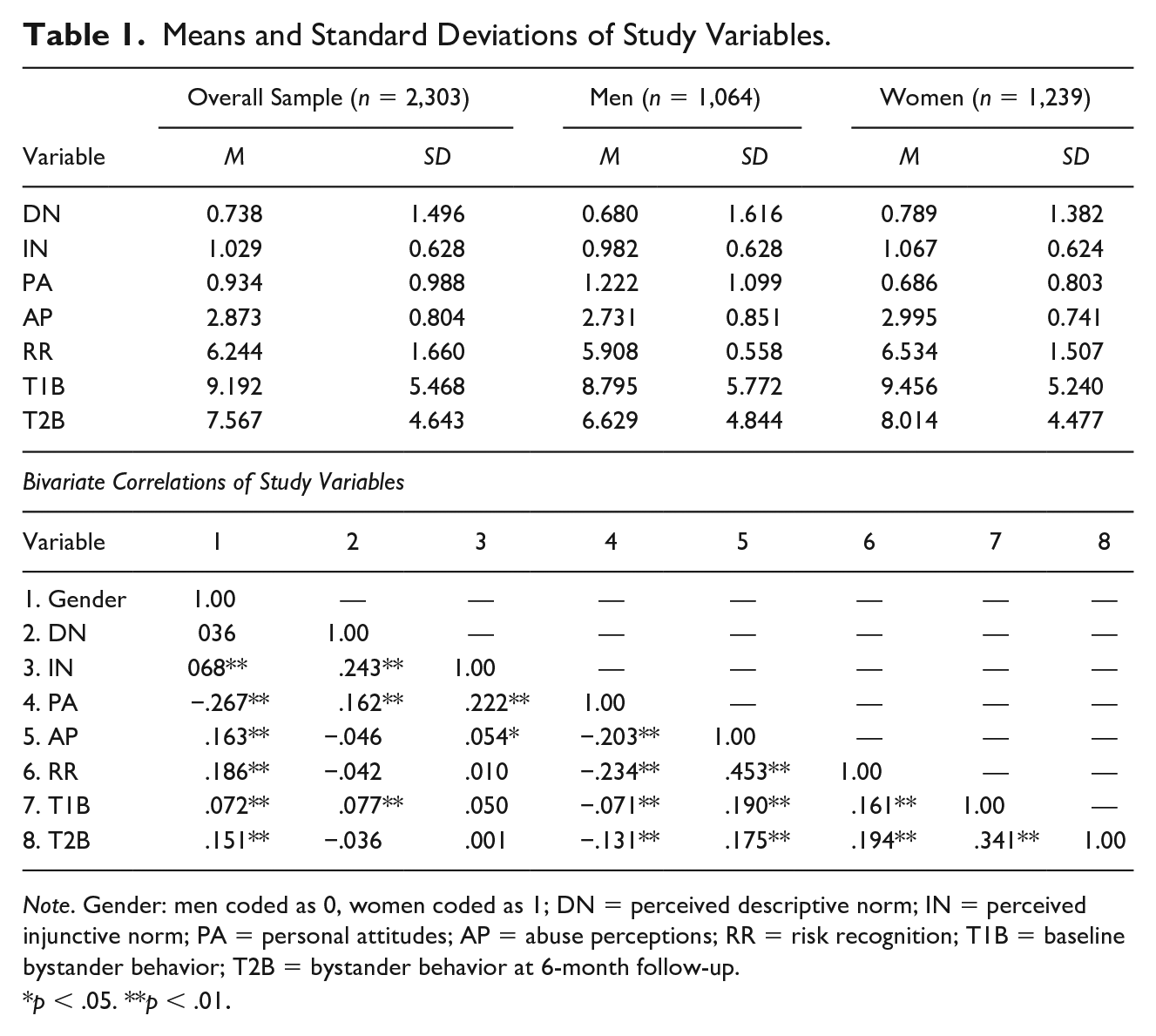
Note. Gender: men coded as 0, women coded as 1; DN = perceived descriptive norm; IN = perceived injunctive norm; PA = personal attitudes; AP = abuse perceptions; RR = risk recognition; T1B = baseline bystander behavior; T2B = bystander behavior at 6-month follow-up.
p < .05. **p < .01.
Direct Effects of Perceived Descriptive Versus Injunctive Norms
We first examined and compared direct paths in the overall model to evaluate the relative influence of perceived descriptive and injunctive norms on the mediating variables of personal attitudes, abuse perceptions, and risk recognition, and the dependent variables of bystander behaviors at baseline and 6-month follow-up. Standardized coefficients for significant paths are presented in Figure 1, and unstandardized coefficients and standard errors for specific parameters are reported in the sections below. Fit indices are not reported because all paths in the model were tested, ensuring model saturation (Kline, 2011).
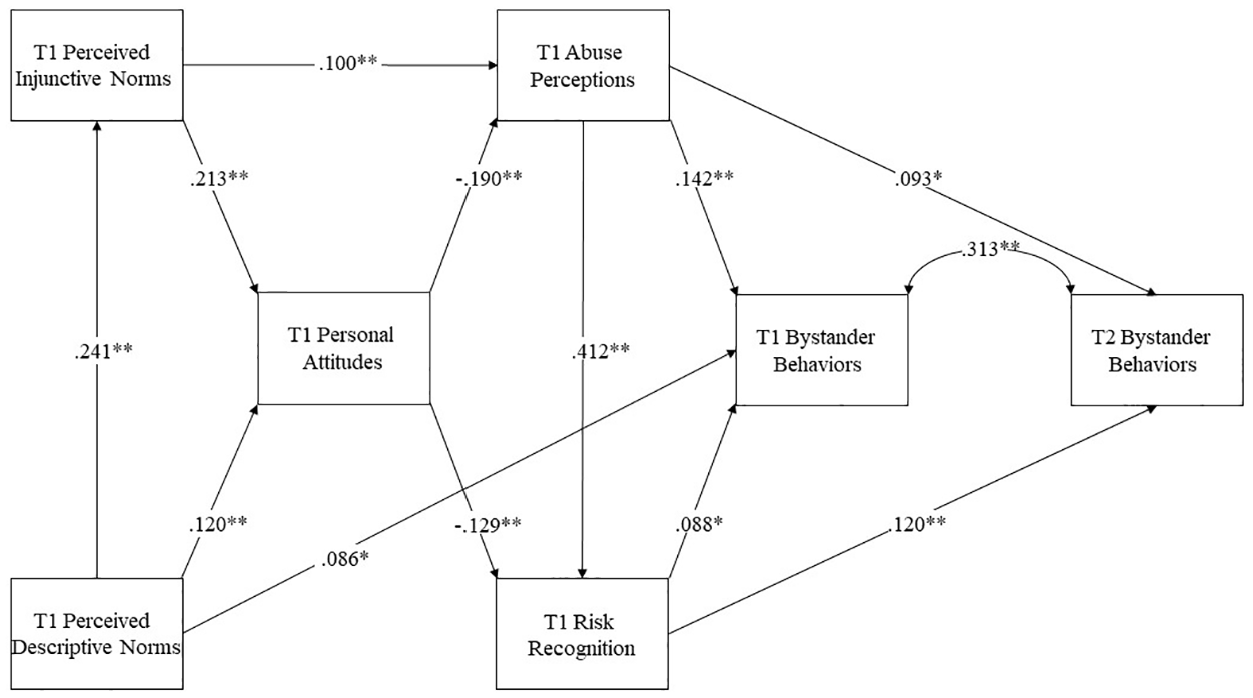
Multiple mediation model showing significant direct paths and corresponding standardized coefficients. Nonsignificant paths in saturated model are not displayed.
Personal attitudes
Analyses revealed a series of direct paths between perceived descriptive norms, perceived injunctive norms, and personal attitudes consistent with previous research on intimate partner violence (Mulla et al., 2017). As predicted, there was a significant positive correlation between perceived descriptive norms and perceived injunctive norms for SV and RA (B = .101, SE = .010, p < .001). Participants who reported higher estimates of the number of their peers who had perpetrated SV or RA also perceived students at their school to hold more condoning attitudes toward SV and RA. Both perceived descriptive norms (B = .079, SE = .021, p < .001), and perceived injunctive norms (B = .334, SE = .036, p < .001) were also significantly positively associated with personal acceptance of SV and RA, consistent with the predicted influence of normative perceptions on personal attitudes. Comparison of these effects using a Wald chi-square test indicated the difference between them was significant, χ2(1) = 31.846, p < .001, suggesting that for the overall sample, perceptions of injunctive norms had a stronger influence on personal attitudes than perceptions of descriptive norms.
Abuse perceptions and risk recognition
Based on previous research (Ditto & Jemmott, 1989), we hypothesized that perceptions of DN and IN for SV and RA behaviors would be negatively correlated with how abusive individuals perceived those behaviors to be, as well as their recognition of the risk of those behaviors being perpetrated. Contrary to these predictions, the direct effect of perceived DN on abuse perceptions was nonsignificant, and the direct effect of perceived IN on abuse perceptions was significant in the positive direction (B = .128, SE = .031, p < .001). Furthermore, neither perceived DN nor perceived IN had a significant direct effect on risk recognition.
Bystander behavior
Tests of direct associations between each type of perceived norm and baseline bystander behaviors after controlling for all other variables in the model revealed a positive association between perceived descriptive norms and baseline bystander behavior (B.= .317, SE = .101, p < .05). However, the independent effect of perceived injunctive norms on baseline bystander behavior did not reach significance, and neither type of perceived norm had a significant independent effect on bystander behavior at 6-month follow-up.
Associations Between Mediating Variables and Bystander Behaviors
Next, we examined the associations between personal attitudes, abuse perceptions, and risk recognition, and their influence on bystander behaviors at baseline and 6-month follow-up. We reasoned that individuals with more accepting personal attitudes toward SV and RA would perceive SV and RA behaviors to be less serious and likewise, be less likely to recognize high-risk situations for perpetration. Consistent with these predictions, personal acceptance of SV and RA was significantly negatively associated with both abuse perceptions (B = –.155, SE = .020, p < .001) and risk recognition (B = –.217, SE = .043, p < .001), and abuse perceptions were significantly positively correlated with risk recognition (B = .852, SE = .060, p < .001). Furthermore, both abuse perceptions (B = .970, SE = .191, p < .001) and risk recognition (B = .289, SE = .110, p < .05) were significantly positively associated with bystander behavior at baseline. Risk recognition also had a significant positive association with bystander behavior at 6-month follow-up after controlling for baseline bystander behavior and all other mediating and predictor variables in the model (B = .341, SE = .142, p < .05). No other variables had a significant direct effect on bystander behaviors at 6-month follow-up.
Indirect Effects of Perceived Norms on Abuse Perceptions and Risk Recognition
Another of our primary hypotheses was that perceiving DN or IN for SV and RA behaviors to be higher among peers may lead individuals to adopt more personally accepting attitudes toward those behaviors and in turn, lead them to perceive them as less abusive. Likewise, we expected that the influence of perceived norms on individuals’ personal attitudes and abuse perceptions would also indirectly influence their perception of high-risk third-party situations for SV and RA perpetration. Consistent with our predictions, results showed that both perceived DN (B = –.012, SE = .004, 95% CI = [–.019, –.005]) and perceived IN (B = –.052, SE = .009, 95% CI = [–.054, –.026]) had negative indirect effects on abuse perceptions through personal attitudes. A symmetrical pattern of indirect effects was found for risk recognition. Both perceived DN and perceived IN had negative indirect effects on risk recognition through personal attitudes (DN: B = –.017, SE = .005, 95% CI = [–.028, –.007]; IN: B = –.073, SE = .016, 95% CI = [–.104, –.041]), and through personal attitudes and abuse perceptions, respectively (DN: B = –.010, SE = .003, 95% CI = [–.017, –.004]; IN: B = –.044, SE = .008, 95% CI = [–.060, –.028]).
Indirect Effects of Perceived Norms on Bystander Behaviors
As predicted, both types of perceived norms had significant negative indirect effects on baseline bystander behaviors. These effects were mediated through personal attitudes in conjunction with abuse perceptions (DN: B = –.012, SE = .004, 95% CI = [–.021, –.003]; IN: B = –.050, SE = .014, 95% CI = [–.077, –.023]). In addition, perceived IN had a significant indirect effect on baseline bystander behaviors through personal attitudes and risk recognition (B = –.021, SE = .010, 95% CI = [–.040, –.002]), and through personal attitudes, abuse perceptions, and risk recognition, respectively (B = –.013, SE = .006, 95% CI = [–.024, –.002]). Finally, perceived IN also had a significant indirect effect on bystander behavior at 6-month follow-up, which was mediated through personal attitudes and risk recognition (B = –.025, SE = .012, 95% CI = [–.048, –.001]), and personal attitudes, abuse perceptions, and risk recognition, respectively (B = –.015, SE = .007, 95% CI = [–.029, –.001]). None of the indirect effects of perceived DN on bystander behavior at 6-month follow-up reached significance.
Gender Differences
Our last set of analyses sought to determine how the series of associations observed for the overall sample differed between genders. Thus, we retested the path model for men and women separately and conducted follow-up comparisons of paths found to be significant for both groups. Standardized coefficients for direct paths in each model and chi-square values for gender differences in significant paths are presented in Table 2. Results indicated a similar pattern of significant paths for men and women, with a few notable differences. For men, the predicted negative association between perceived descriptive norms and bystander behavior at 6-month follow-up was significant. For women, this association was nonsignificant, but there was a significant positive association between perceived descriptive norms and baseline bystander behavior, consistent with results of the overall model. There was also a significant direct negative association between personal attitudes and baseline bystander behaviors for women, but not for men. Finally, the direct effects of risk recognition on bystander behavior at baseline and 6-month follow-up were significant for men, but not for women.
Direct Effects by Gender.
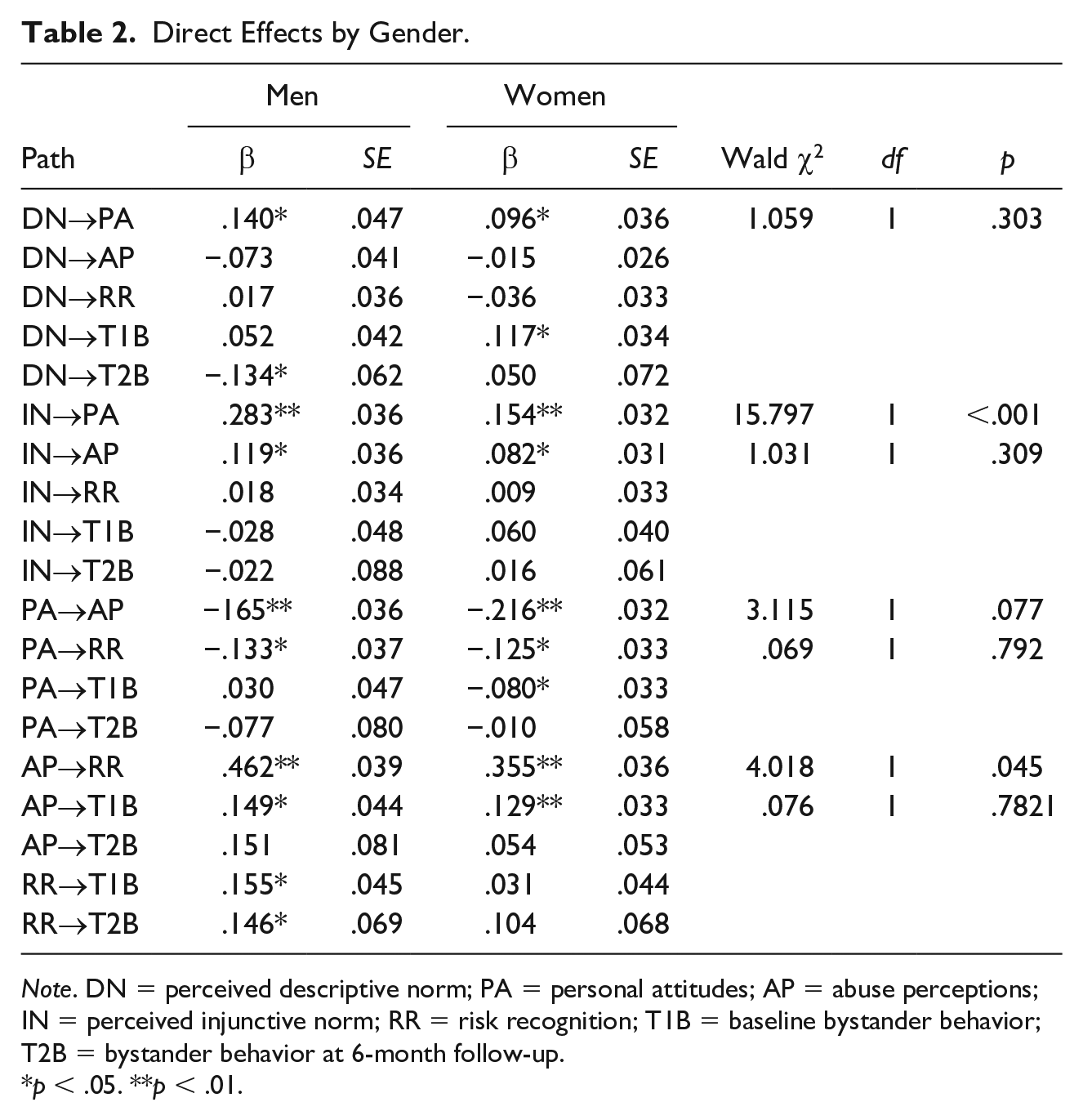
Note. DN = perceived descriptive norm; PA = personal attitudes; AP = abuse perceptions; IN = perceived injunctive norm; RR = risk recognition; T1B = baseline bystander behavior; T2B = bystander behavior at 6-month follow-up.
p < .05. **p < .01.
Discussion
The current study sought to evaluate a novel conceptual framework integrating previously established models of normative influence and bystander decision-making.
Much of the extant research on bystander intervention has been guided by the situational model of bystander behaviors (Latane & Darley, 1968). Accordingly, it has focused largely on the role of proximal, situational (e.g., number of bystanders, perceived level of risk), and individual-level (e.g., gender, personal attitudes) factors hypothesized to influence different stages in the decisional process leading to bystander action (Oh & Hazler, 2009). A growing number of studies have also applied social norms theory to examine the influence of broader, social contextual factors on bystander intervention, and have reliably shown that individuals’ perceptions of their peers’ attitudes and behaviors related to SV and RA perpetration may have a significant impact on their own motivation to engage in prosocial bystander behaviors (Berkowitz, 2003; Miller & McFarland, 1991).
The Effects of Perceived Descriptive Versus Perceived Injunctive Norms
To date, research in these areas has addressed specific components of the decisional process leading to bystander action, or normative perceptions related to bystander intentions and behaviors, in isolation from one another. The current study sought to synthesize and advance these lines of investigation by examining the impact of perceived descriptive and injunctive peer norms for SV and RA on three specific constructs hypothesized to play a role in the decisional process leading to bystander action: personal attitudes, abuse perceptions, and risk recognition.
Whereas the general associations between both types of perceived norms and personal attitudes and behaviors related to SV and RA have been reliably documented, our study was the first to incorporate perceptions of both descriptive and injunctive norms and compare their relative influence on other processes associated with bystander behavior within a single model.
Associations Between Perceived Norms and Personal Attitudes
Our analyses revealed a pattern of direct associations that replicated the findings of recent work showing perceptions of descriptive and injunctive norms to be positively correlated with personal attitudes regarding the acceptability of intimate partner violence (Duran et al., 2018; Mulla et al., 2017). Furthermore, follow-up comparisons of the direct effects indicated that participants’ perceptions of injunctive norms (i.e., believing that peers were accepting of SV) were significantly more strongly associated with their personal attitudes toward SV and RA.
The stronger positive association between injunctive versus descriptive norms and personal acceptance of SV and RA observed in the current study suggests that providing information about misperceptions of peers’ acceptance of violence, rather than misperceptions of how often peers actually engage in violence, may be a more effective strategy for eliciting positive changes in personal attitudes related to SV and RA. This notion is also consistent with the broader body of literature on the use of social norms approaches in violence prevention programs, which has demonstrated that misperception correction is effective in changing behavior (Orchowski, 2019).
Associations Between Perceived Norms, Personal Attitudes, and Risk Appraisals
A second hypothesis we tested was that both types of normative perceptions as well as personal attitudes would be independently negatively correlated with both abuse perceptions and risk recognition. As predicted, personal attitudes were negatively associated with both abuse perceptions and risk recognition, which were positively correlated with each other. This set of associations is consistent with previous work (Deitch-Stackhouse et al., 2015) showing that individuals who hold more accepting attitudes toward SV and RA may be less likely to recognize those behaviors as problematic and in turn, be less likely to recognize high-risk situations for their perpetration.
However, neither type of normative perception had a significant direct negative effect on risk recognition, and higher perceptions of injunctive norms were directly associated with greater recognition of violence as abusive, not less. This unanticipated effect may reflect a subset of individuals who perceived acceptance of SV and RA to be high among peers, but remained personally opposed to it and thus, maintained perceptions of abusive behaviors as serious and problematic. Also contrary to our hypothesis, perceptions that peers engaged in more SV (i.e., descriptive norm) related to increased bystander behavior at baseline. One possible reason for this effect is that individuals who reported more bystander behavior may have witnessed more situations in which peers engaged in SV or RA and therefore, were likely to have higher perceptions of SV and RA perpetration rates among peers. These findings suggest that the impact of perceived norms on bystander behaviors may differ across subgroups, consistent with research on social norms interventions demonstrating the importance of tailoring normative feedback to the specific audience receiving it (Orchowski, 2019).
Effects of Personal Attitudes and Risk Appraisals on Bystander Behaviors
A final set of direct associations we examined in the overall model were those between the personal attitudes, abuse perceptions, and risk recognition, and actual bystander behaviors at baseline and 6-month follow-up. Although personal attitudes were not significantly associated with either measures of bystander behavior, abuse perceptions and risk recognition were both significantly positively associated with bystander behavior at baseline and 6-month follow-up as predicted.
Indirect Effects of Perceived Norms on Risk Appraisals and Bystander Behaviors
Results of mediation analyses supported our third hypothesis—that higher perceptions of norms would indirectly decrease abuse perception and risk recognition by increasing personally accepting attitudes toward SV and RA. Furthermore, both types of perceived norms had significant indirect effects on baseline bystander behavior via multiple pathways involving personal attitudes, perceptions of abuse behaviors, and recognition of violence risk. However, only perceived injunctive norms had significant indirect effects on bystander behaviors at 6-month follow-up. This finding corroborates our analyses of direct effects indicating perceived injunctive norms to have a more salient influence on personal attitudes and abuse perceptions and likewise implies that they may be a more important intervention target than perceived descriptive norms. Collectively, these results suggest that the pattern of associations between perceptions of peer attitudes and behaviors and personal attitudes and behaviors established in social norms research on other problematic behaviors (Berkowitz, 2003; Lewis & Neighbors, 2004) also applies in the context of SV and RA.
Gender Differences
Comparisons of model parameters across men and women also revealed several interesting gender differences in direct associations between the mediating variables and measures of bystander behavior, which may have important implications for the delivery of prevention programs. For instance, risk recognition was uniquely predictive of bystander behavior at base and 6-month follow-up for men but not women. This difference was, in turn, reflected in significant negative indirect association between perceived descriptive norms and bystander behavior at 6-month follow-up for men but not women.
Furthermore, the significant positive association between perceived descriptive norms and baseline bystander behavior observed in the overall model was significant for women but not for men. This is consistent with research that women have more healthy attitudes, are less likely to believe in rape myths, and more likely to intervene (Worthen, 2017). Given the cross-sectional nature of this association, it is possible that women perceive the prevalence of SV and RA to be higher as a result of more frequently witnessing and intervening against it, as suggested by previous research (Amar et al., 2014). Taken together, these findings elucidate the differential ways in which certain constructs may influence the decisional process leading to bystander action in men versus women. Accordingly, they suggest that separate gender programs tailored to address these differences may be indicated more so (Orchowski, 2019).
Limitations
Results of the current study should be considered in the context of several limitations. One issue that may constrain the generalizability of our findings was the demographic homogeneity of the study sample. Because only a small portion of participants identified as sexual minorities, only those who identified as man or woman were included in our analyses.
Although information on participants’ racial backgrounds was not collected in our survey, estimates based on school-level data suggest that roughly one third of participants identified as racial minorities. Furthermore, the geographic range of recruitment was restricted to Rhode Island, which may have also limited variability in the demographic and cultural characteristics of participants in our sample.
Another shortcoming of the current study was that the measures of perceived norms, personal attitudes, abuse perceptions, and risk recognition included in our analyses were all collected at baseline. Whereas our findings provide cross-sectional support for one possible sequence of theoretical associations through which these variables influence bystander behavior, their temporal order could not be empirically assessed. Further work is needed to clarify the temporal order of associations between injunctive and descriptive norms, as well as the temporal sequence of effects through which they impact behavior.
In addition, the measure used to assess bystander behaviors asked students to estimate how often they engaged in prosocial bystander behaviors in situations where they had the opportunity to do so over the previous 6 months. While the length of this time period may have made it difficult for participants to provide accurate estimates, the retrospective nature of the measure may have further increased the risk of those estimates being influenced by cognitive or social biases. These issues could be addressed in future research using ecological momentary assessment methods to obtain more proximal and prospective assessments of factors that contextualize individuals’ bystander behaviors in specific situations of SV and RA.
Research Implications
The current study employed and tested an innovative conceptual model incorporating direct and indirect associations between perceived norms for SV and RA, personal attitudes, perceptions of abuse and abuse risk, and bystander behaviors. Our findings provide novel evidence of the impact perceived norms may have on early stages of the decisional process (e.g., noticing a risk event, identifying it as intervention appropriate) to take action, and complement previous work supporting the use of normative feedback in violence prevention programs (Orchowski, 2019).
Another contribution of the current study was its evaluation and comparison of the impact that different types of normative perceptions have on bystander attitudes, perceptions, and behaviors. Whereas previous studies have typically focused on perceived injunctive norms or perceived descriptive norms, our analytic approach allowed us to determine which type of perceived norm had the most salient influence on several hypothesized components of the decisional process leading to bystander behaviors. Results of path models we tested provide preliminary evidence suggesting that perceptions of injunctive norms may have a greater impact on personal attitudes and thus, indirect influence on perceptions of abuse and abuse risk. However, additional research is needed to determine the reliability of these associations.
The methodology used in our investigation also allowed us to improve upon previous work, the majority of which has relied on cross-sectional measures that have assessed bystander intentions as a proxy for behaviors, or assessed the frequency of participants’ bystander behaviors without accounting for the number of opportunities they had to intervene. The longitudinal methods and measures of bystander behaviors used in the current study addressed both of these issues, allowing us to more rigorously examine the prospective influence of perceived norms and other social cognitive constructs on adolescents’ engagement in prosocial bystander behaviors in situations of SV and RA. Results of our analyses build on previous work in this area (Banyard, 2015) by demonstrating the longitudinal associations between perceived norms and subsequent bystander intervention against SV and RA, and elucidating important modifiable mechanisms through which these associations are mediated.
Clinical Implications
The current study provides novel insight into the ways in which perceived norms may influence bystander attitudes and behaviors, and suggests that perceptions of injunctive norms may be an especially salient factor in early stages of the decisional process leading to bystander intervention. These findings elucidate an additional area of intervention that has not been formally incorporated into bystander training programs—the use of personalized normative feedback to correct harmful perceptions of peer acceptance of SV and RA. The mediating effects of personal attitudes, abuse perceptions, and risk recognition observed in our study suggest that addressing these constructs in conjunction with perceptions of peer attitudes and behaviors may optimize the efficacy of norms-based bystander interventions. Furthermore, gender differences in the effects of abuse perceptions and risk recognition on bystander behaviors revealed by our analyses suggest that the extent to which interventions target these constructs should be tailored according to participants’ gender. Finally, the use of a high school sample captures an age group at high risk for sexual and relationship violence. While most work investigating bystander intervention behavior has focused on college students, research focused on high school students is also essential, and may be particularly so, given that earlier interventions have the potential to prevent more primary victimizations of sexual or relationship violence (Hillebrand-Gun et al., 2010).
Footnotes
Declaration of Conflicting Interests
The author(s) declared no potential conflicts of interest with respect to the research, authorship, and/or publication of this article.
Funding
The author(s) disclosed receipt of the following financial support for the research, authorship, and/or publication of this article: This project was funded by award #1U01CE002531-01. The authors declare that they have no relevant financial interests related to the research presented in this manuscript, and warrant that it has not been published before and is not (nor will be) under consideration elsewhere while under review in the Journal of Interpersonal Violence.
