



Abstract
The accelerating concentration of CO2 emissions is attributed to human activities worldwide, leading to increased greenhouse gas emissions. There is an outcry for innovations to combat the environmental threat to even the existence of the human race. From this perspective, the current study aims to analyze the significance of technological innovation, tourism development, economic growth, and human development from the environmental perspective under the idea of carbon neutrality from 1996 to 2019. The study utilized dynamic ordinary least squares (DOLS) to estimate the relationship between the study variables and the panel vector error correction model to showcase the variables’ short and long-run connections. Results reveal that CO2 emissions positively affect technological innovations, which is evidence of the Porter hypothesis. The study showed that the gross domestic product, tourism, and human development index are good innovation indicators and supported the growth-led innovation hypothesis. This study supports the innovative Claudia curve theory between technology and CO2 emissions. Moreover, the study also investigated the Environmental Kuznets Curve (EKC) hypothesis during the study period. The causality analysis also supports the long-run results of DOLS. Based on the results, the study has implications for future researchers, policymakers, and regulatory bodies in developing countries to achieve carbon neutrality and Agenda 2030.
Keywords
Introduction
Climate change is considered the most lethal threat to the survival of the human race. The effect of climate change can be observed on the ecosystem, human health, food security (low agricultural production), and marine life. Based on its extreme effects on human life, ecosystems, and agricultural productivity, the United Nations (UN) has declared urgent action against the crises due to climate change as its 13th Goal. Under this goal, the UN urges countries to reduce greenhouse gases (GHGs) to meet the goals of the Paris Climate Agreement. On the one side, economies are trying hard to achieve higher growth rates and per capita income by producing more and more to feed the population and improve the standard of living. On the other hand, they are emitting GHGs into the atmosphere, leading to climate change, among the key threats to agricultural productivity. Therefore, sustainable development remains the prime objective of all countries worldwide to overcome these challenges and nightmares of climate change. It has become the main discussion and practical application topic for all nations, whether developed or developing. In this regard, macroeconomic shocks, low growth, and economic turmoil at the global level have attracted the world's consideration. Therefore, 17 sustainable development goals (SDGs) and 169 sub-goals were formulated to initiate the new
The debate regarding sustainable tourism evolved in the 1990s when the global community looked deeply into geopolitical, socio-economic, and politico-cultural aspects and environmental issues. In terms of the definition, there is a striking difference between sustainable development and sustainable tourism. In other words, sustainable tourism is “reckoning all the existing and forthcoming impacts of all the three dimensions, i.e., social, economic and environmental, while keeping in view the needs of visitors, host countries, industry, and environment”. 1 Therefore, tourism would be sustainable if it balances economic, environmental, and socio-cultural development aspects and is also among the key players in conserving biodiversity and the ecosystem. While “sustainable development is a way of living where the current population has to meet their needs while not compromising the chances and facilities of the coming generations to satisfy their needs.” More generally, it is the way of behavior of any society for its long-term existence.
Furthermore, endogenous growth theory demonstrates that technological change is one for global growth.2,3 In addition, the extending achievements in innovation, science, and technology, and the emergence of intellectual property laws have proved that technological innovation (TI) is the sine qua non for the country's economic growth and achieving greater results. 4 According to Klewitz and Hansen, 5 it is a new approach to finely using rare resources. Moreover, multiple actions would be required to achieve these goals, that is, maximizing and exploring TI's potential in all sectors. 6 The growth of input factors, the speed of innovation, and the efficiency of distribution of production factors are the main drivers of growth.7,8 In addition, it has been argued that heavily relying on traditional tools or methods, that is, labor and capital, for maintaining economic growth and then relying on such growth is not feasible and not a wise option. In this regard, the developed nations have transferred their traditional ways of growth toward TI. For instance, Singapore, Taiwan, and South Korea have embraced the most advanced production methods through TI. b In addition to their role in enhancing national competitiveness, information technology (IT) plays a crucial role in offering efficient solutions to the obstacles encountered in the pursuit of sustainable development. This leads to social advancement, environmental preservation, and economic expansion, which ultimately results in equitable distribution of wealth among communities and nations. Furthermore, the UN Industrial Development Organization argued that sustainable development’s three aspects could be integrated through innovation and technology. In addition, Dhahri and Omri 9 have considered that sustainable development comprises environmental, social, and economic goals. To achieve sustainable development, detailed and systematic innovation is needed. 10 Moreover, Omri 11 adds that corresponding global actions are required to encourage the reduction of carbon emissions and advances in environmentally friendly technology.
The COVID-19 pandemic has accentuated the critical significance of technology for sustainable tourism. Using technology support, tourism planners have a unique opportunity to consider the role of tourism in achieving the 2030 SDG to overcome the current crisis. UNWTO and UNDP 12 acknowledge the role of technology in building a sustainable future for tourism. To shield and preserve natural, economic, heritage, and socio-cultural environments, sustainable tourism for technologies provides businesses with opportunities for more practical information management, decision-making, and stakeholder engagement.13,14 Seventeen SDGs for tourism are divided into economic, environmental, socio-cultural, and governance. The utilization of technology has the potential to reveal market opportunities for communities and businesses that were previously inaccessible, while also prioritizing sustainable economic objectives. The provision of employment opportunities and job security enhances individuals’ resilience to health and financial risks and improves their living standards by promoting significant employment and business growth. To achieve SDG, technology development plays an essential role in increasing the effectiveness and efficiency of novel sustainable development approaches. New technologies that stimulate research and promote innovation should be developed through increased collaboration and knowledge sharing among stakeholders from national and international perspectives.
In light of the above discussion, this study's emphasis is to examine the ability to mitigate the climate change effects by preserving the ecosystem by promoting TI and sustainable tourism alongside gross domestic product (GDP), human development index (HDI), and CO2 emissions while targeting SDGs by decoupling emissions from economic activities for the first time to witness the presence of Porter hypothesis, innovation Claudia curve (ICC), and environmental Kuznets curve (EKC) hypothesis in the developing countries. Hence, to authenticate the present study goals, TI improves environmental quality and simultaneously promotes tourism, economic growth, and human development in developing countries from 1996 to 2019.
Since the SDGs were established by the UN in 2017, both wealthy and developing nations have become more interested in and concerned about achieving the SDGs. The three SDGs in particular, as well as the global SDG agenda in general, have compelled this research: the following three goals are particularly important in these developing countries: (a) ensuring that everyone has access to affordable, efficient, viable, and modern energy (Goal 7); (b) fostering sustained, comprehensive, and sustainable economic growth; and (c) taking urgent action to combat climate change and its effects (Goal 13). The current study offers significant new insights into the ongoing policy agenda for long-term growth for developing nations.
Theoretical and empirical literature
The role of modernizing technology in obtaining a sustainable economy has also been recognized by Smith 15 and Ricardo 16 before modern theorists. The diffusion of product innovations could promote economic growth significantly reported by Ornaghi. 17 Long-term, development-oriented specific innovations have always been a priority area for experiential research. 18 Modern researchers believe that technological advancement is a significant way to obtain long-term products and services sustainably. As a tool of socio-economic transformation, the importance of TI is not new in economic theory. Therefore, some research fields related to this topic have been identified.
TI and tourism nexus
Innovation is said to be critical to the endurance and progress of service providers. 19 Hjalager 20 reported that there could be many forms in which innovation could affect tourism, due to which the inherited features of this sector include unimaginable and indivisible. Organizations in the service field face challenges from an external environment that emphasizes innovation as one of their key competitive strategies.21,22 However, the same characteristics pose challenges in measuring innovation and ensuring intellectual property rights (IPR) protection. 23 Several current researchers pointed it to be amongst the best strategies businesses can adopt to overcome volatility and environmental challenges to businesses. 24
The growing incorporation of innovative techniques and technologies has led to the development of new tourism marketing models that are more efficient and well-managed, where the services are provided efficiently and entertainingly with the support of smart technologies.25–27 Similarly, prior research on tourism innovation has focused on smart experiences, smart ecosystems for business, 26 and attractive and smart destinations28,29 in smart tourism. In addition, the tourism industry has implemented technology management strategies by incorporating technologies into the decision-making process30,31 and information services related to tourism. 32 Nonetheless, further investigation is needed in the tourism industry regarding tourism innovation, as over-optimistic and overconfident trends in technological experimentation can lead to industry failure. 33 The present study aims to address these lapses by exploring the technological advancement of tourism and the significance of technological and management strategies adopted for tourism, focusing on a specific type of patent analysis of innovative technologies.
TI and CO2 nexus
According to the new growth theory, Weitzman 34 defines that technological change is crucial to solving environmental problems, that is, climate change and air pollution. Bruyn and Sander 35 argued that TI in reducing GHGs could be understood for several reasons, that is, using more effective energy-efficient manufacturing techniques, changing fuel mix, and installing are considered the most important end-of-line technologies. Likewise, Jones 36 claims that research and development investment and technological advancement are two major contributors to reducing environmental pollution.
In recent years, there has been significant interest in the empirical literature surrounding the relationship between TI and CO2 emissions. Research on the effects of TIs on CO2 emissions has been inactive for many years. However, the latest research studies have experimentally embarked on the implications of TI in reducing CO2 emissions.37,38 Yii and Geetha 39 inspected the interconnection between CO2 and TI in Malaysia from 1971 to 2013 and found that ecological innovations can reduce CO2. In addition to this, Fan and Hossain 40 found that from 1974 to 2016, TI reduced CO2 emissions in China and India. Mensah et al. 41 study uses the Organization for Economic Co-operation and Development (OECD) countries and reports that TECs contribute to CO2 suppression. Once more, with a focus on France, Solarin et al. 42 assert that TECs have the ability to decrease CO2 emissions. In addition, Kahouli 43 employed a generalized method of moments (GMM) approach to analyze the correlation between R&D investment and CO2 emissions in a group of Mediterranean economies spanning from 1990 to 2016. These findings provide strong support for implementing environmental policies that prioritize energy-saving technologies to effectively reduce environmental degradation. Thus, the role of technology is very decisive in mitigating environmental pollution. Furthermore, Lin and Zhu 44 report that TI helps reduce CO2 emissions in China. Ali et al.45,46 used datasets of G7 economies and took a closer look at the CO2 and TI relationship in 1990 and 2018. Their findings suggest that TI can reduce CO2 emissions in the short and long term. Besides this, Khan et al. 47 used data sets from Q1 1990 to Q4 2018 to determine that technology (TEC) contributes to reducing CO2 emissions in China. Also, Adebayo and Kirikkaleli 48 evaluated CO2 and TI interactions in the global economy. Their study recognized a negative affiliation between TI and CO2 emissions. In addition, Cheng et al. 38 observed an inverse relation between TEC and CO2 emissions, implying that TEC contributes to reducing CO2 emissions. Therefore, it is believed that previous research indicates that technological advancements have the potential to mitigate environmental pollution in developing nations.
TI and economic growth nexus
Economic growth was thought to depend upon capital and wealth accumulation, but with time, it is observed that growth can be derived from technological progress. The role of modern technology in achieving sustainable growth was realized by Smith in 1776 and Ricardo in 1817 when classical theorists did not declare it. The classical theorist Solow 49 observed that qualitative and quantitative methods show a positive relationship between TIs and economic growth. According to Romer, 50 the new economic growth theory connects technological advancement to economic growth. The previous researcher claims that TI results from individual actions motivated by the market; this contributes to the increase of wealth rather than random residuals such as Solow's 49 earlier exogenous view. Aghion and Howitt 51 argue that the workload devoted to innovation will increase technological progress, thereby increasing economic productivity. Besides this, Aghion and Howitt 51 and Howitt, 52 the neoclassical Schumpeterian growth theorists, proposed that knowledge accumulation, innovation, and R&D are essential in promoting economic growth. Furthermore, Coe and Helpman 53 found that investment in research and development is significantly increasing the total factor productivity (TFP) of the local/domestic economy. Besides this, Zachariadis 54 also examined that investment in research and development increases patents, leading to more technological development to promote economic growth.
This section covers three key literary approaches. The first approach is related to the literature that supports the hypothesis that economic growth is promoted with the help of TI.55,56 In the second approach, the inverse relationship is supported, and it is argued that economic growth is used as a driver of TI.57,58 The third approach highlights the bidirectional causal relationship between growth and TI, as supported by various studies.59–61 The mentioned studies addressed TI in the single equation model in their respective studies, but not all at once. Thus, the main objective of this study is to examine the impact of TI on the relationship between growth and the environment, using a simultaneous equations framework.
TI and HDI nexus
HDI is the elementary goal of each economy; therefore, every country is working hard to restore its HDI. To achieve this goal, it is necessary to answer questions about what affects HDI. In modern times, the factor of HDI has aroused great interest from scholars. Different illustrative variables, samples, and altered econometric techniques were used.62,63 In addition, numerous studies have highlighted the important role of TI as a driver of economic and human development under the “new growth theory.”50,64 Hartmann 65 argued that human capabilities can be transformed and expanded due to improvements in technology as it creates a dynamic environment. Sahay and Walsham 66 examined that in a country such as India, human development can be supported through information and communication technologies-based innovation. It is established and explicitly recognized in (SDG 9): “Build flexible infrastructure, sustainable industrialization, and promote innovation.” To this end, these developing countries are urged to boost sustainable innovation-based industrialization that promotes economic growth and human well-being, focusing on global access at reasonable prices. TI can increase income and productivity to improve well-being, education, and health by focusing on reasonable and equal opportunities. According to Omri, 67 TI is a tool to enhance human potential, which positively affects productivity, life expectancy, quality of goods and services, people's income, and profits.
The present study links the study variables as mentioned above of research. It aims to examine TI's ability to influence tourism development (TD) positively and simultaneously achieve the SDGs by targeting climate change and the ecosystem in developing countries. Therefore, this study aims to inspect the role of technological advancement and tourism in simultaneously and positively affecting economic growth (economic) and directly contributing to the improvement of environmental quality by reducing carbon emissions, improving the ecosystem (environmental), promoting improved quality of life, knowledge, and personal people's development (social).
Data and methodology
To consider the association between TI, environmental quality, TD, economic growth, and HDI and to witness the presence of the Porter hypothesis, ICC, and EKC hypothesis. This study followed the methodology Dhahri and Omri 9 and Omri 67 used. However, our models differ from the above two studies as this study inspects the presence of the above-said hypothesis, which is not investigated in the above studies. Moreover, the countries under investigation are developing countries. c Due to the availability of data, this study covers the period from 1996 to 2019. This study utilized the following abbreviations for variables. TI is the measure of TI, TD is TD, and CO2 is the measure of environmental quality. GDP measures economic growth, and HDI shows the impact of human capital. TI measures all patent applications (residents and non-residents).68,69 GDP is used to measure economic growth.
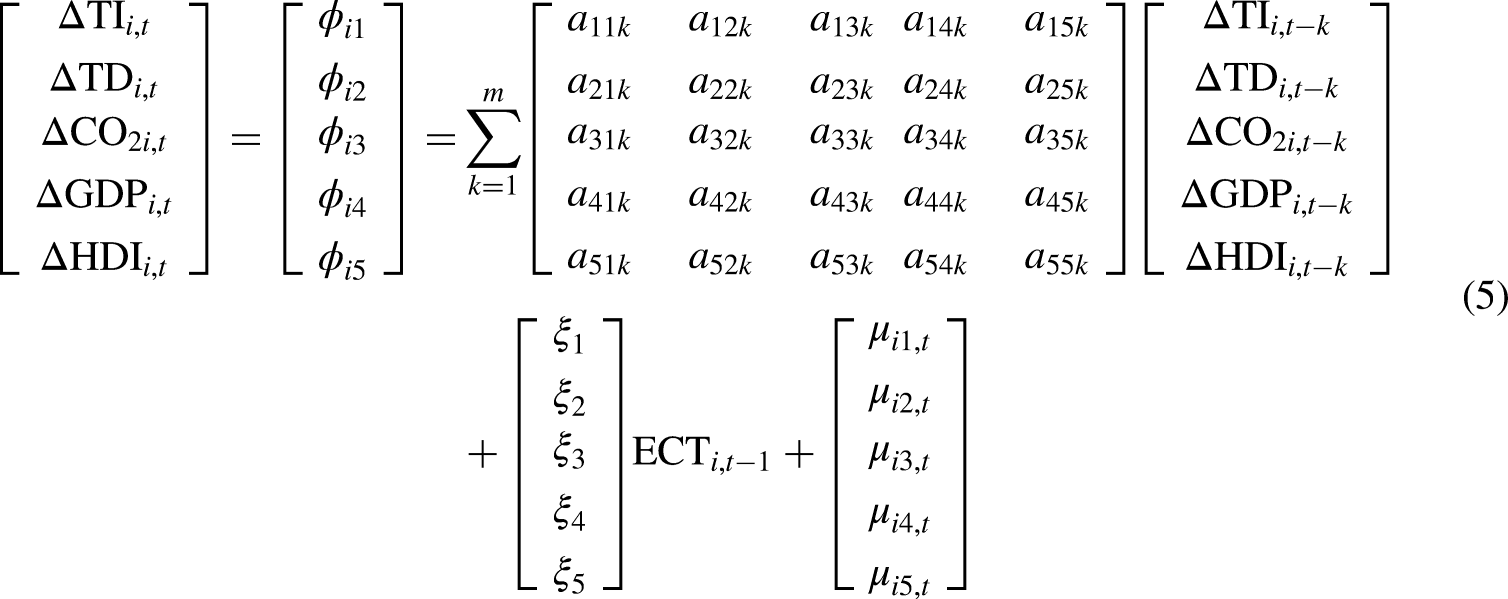
The present study's econometric models are:


The description and data sources of variables.
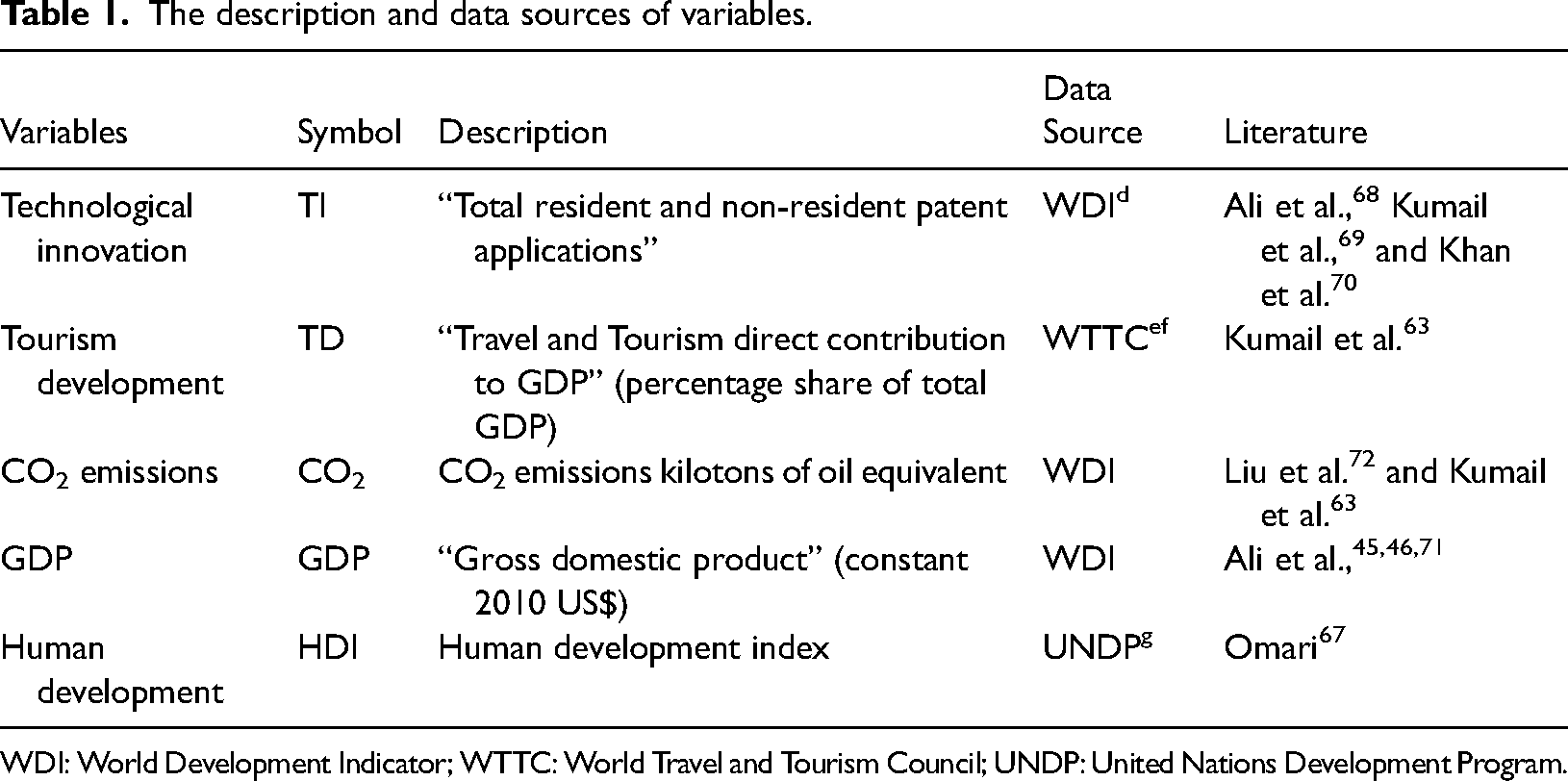
WDI: World Development Indicator; WTTC: World Travel and Tourism Council; UNDP: United Nations Development Program.
Econometric methodology
To determine the characteristics of TI, CO2 emissions, TD, economic growth, and human development, it is necessary to explore panel data features. The balanced panel dataset shows cross-referenced interrelations and influences. Therefore, using statistical tests such as Im Pesaran and Shin (IPS) and Levin, Lin and Chu (LLC) provides inconsistency and may produce spurious regression results and there is a need for more robust unit root tests to cover for the deficiencies in the above-said unit root tests. Using Pesaran's
73
cross-sectional dependency (CD) test, this investigation confirmed the cross-section link between the variables. The test may also be used to better understand the factors or residuals at play in a given intergroup relationship. According to Banerjee et al.,
74
if the CD test shows that the variables are dependent, then a unit root test of the second generation is preferable. In this research, CD was allowed in addition to the CD test to provide further confirmation of stationarity. The specialty of the second-generation unit root tests is that they are based on the heterogeneity principle. Based on the results of second-generation unit root tests, the subsequent step is to use75–77 cointegration test to inspect the presence of long-run association among the study variables. Furthermore, once all the variables are co-integrated, the next step is to examine the long-term equilibrium relationship between the variables under consideration. Therefore, various estimation methods can be utilized, such as ordinary least squares (OLS), GMM, dynamic OLS (DOLS), and fully modified OLS (FMOLS). This study emphasizes the use of the DOLS method to address the limitations of small sample size and endogeneity bias in the data set. It achieves this by incorporating leads and lags of the first differenced variables. In addition, the efficiency of the DOLS has been verified by Phillips and Hyungsik,
78
while Pedroni
79
has proposed an estimator in a specific form.

Results and discussion
Table 2 provides descriptive statistics and interrelationship matrix results. Results show that variables have near-normal distribution as their kurtosis value is close to 3. The results further indicate that TI positively correlates with its determining factors, such as TD, CO2, GDP, and HDI. It has to be noted that TI correlates with TD and CO2 emissions, albeit with a very low correlation with GDP and HDI. These results are similar to the work of Shahbaz et al. 80 Moreover, all the correlation values are in the acceptable range, and there is no problem with the data.
The descriptive statistics and correlation matrix.
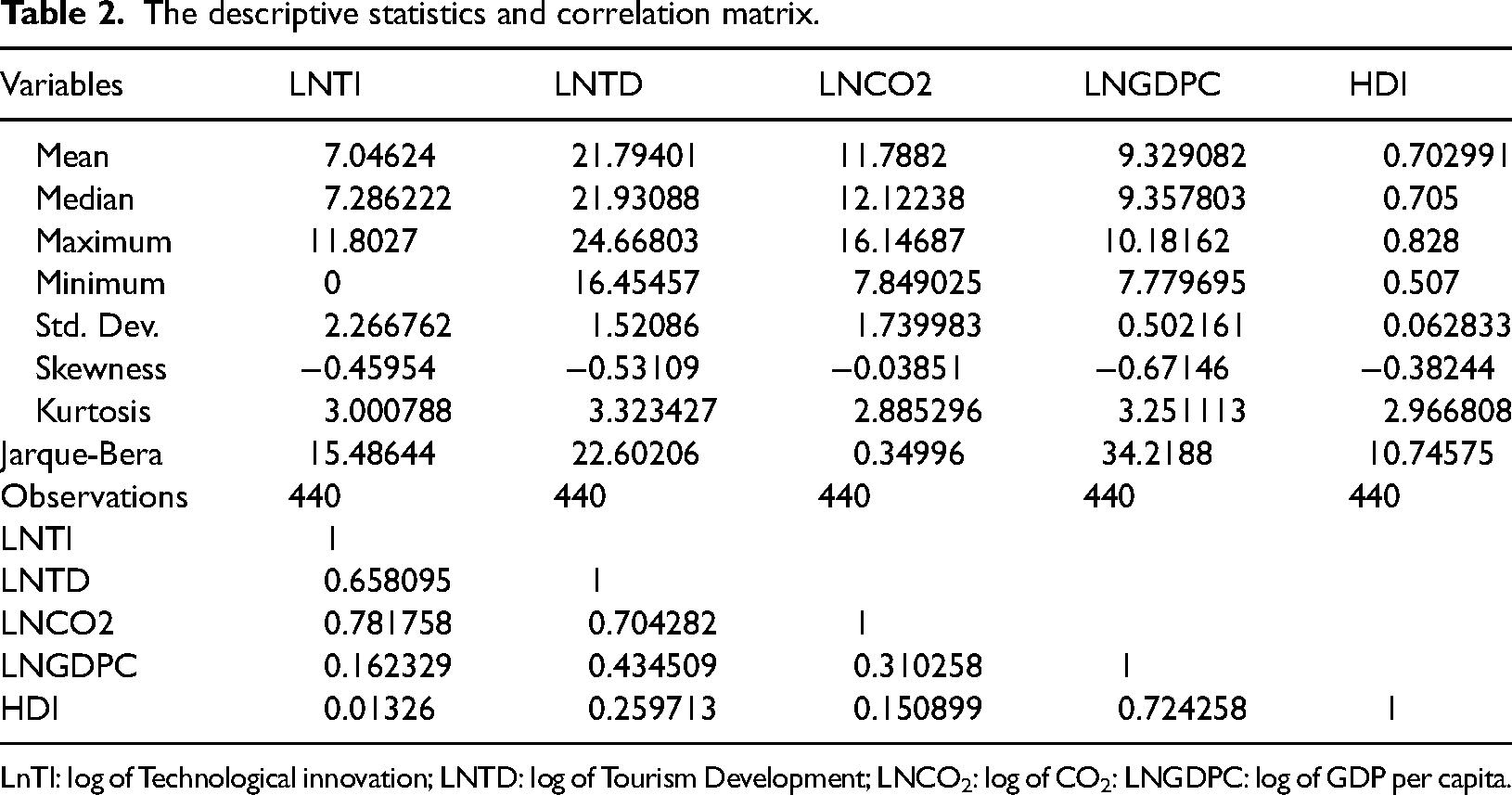
LnTI: log of Technological innovation; LNTD: log of Tourism Development; LNCO2: log of CO2: LNGDPC: log of GDP per capita.
Table 3 depicts the Pesaran 73 CD test and Cross-sectionally augmented Im-Pesaran-Shin (CIPS) unit root test results. The CD unit root test results indicate that the null hypothesis of cross-sectional independence is not established for all the variables in the whole sample and subsamples. Therefore, the CIPS unit root test has to be applied to affirm the cross-sectional dependence. The CIPS unit root test results depicted in Table 2 indicate the null hypothesis of the presence of the unit root for the whole. Still, they cannot be rejected for the variables at the level but only when they are in their first differences. After finding out the variables’ stationarity, the study estimated the cointegration between the variables by applying suitable tests.
Panel unit root and cross-sectional dependence tests.
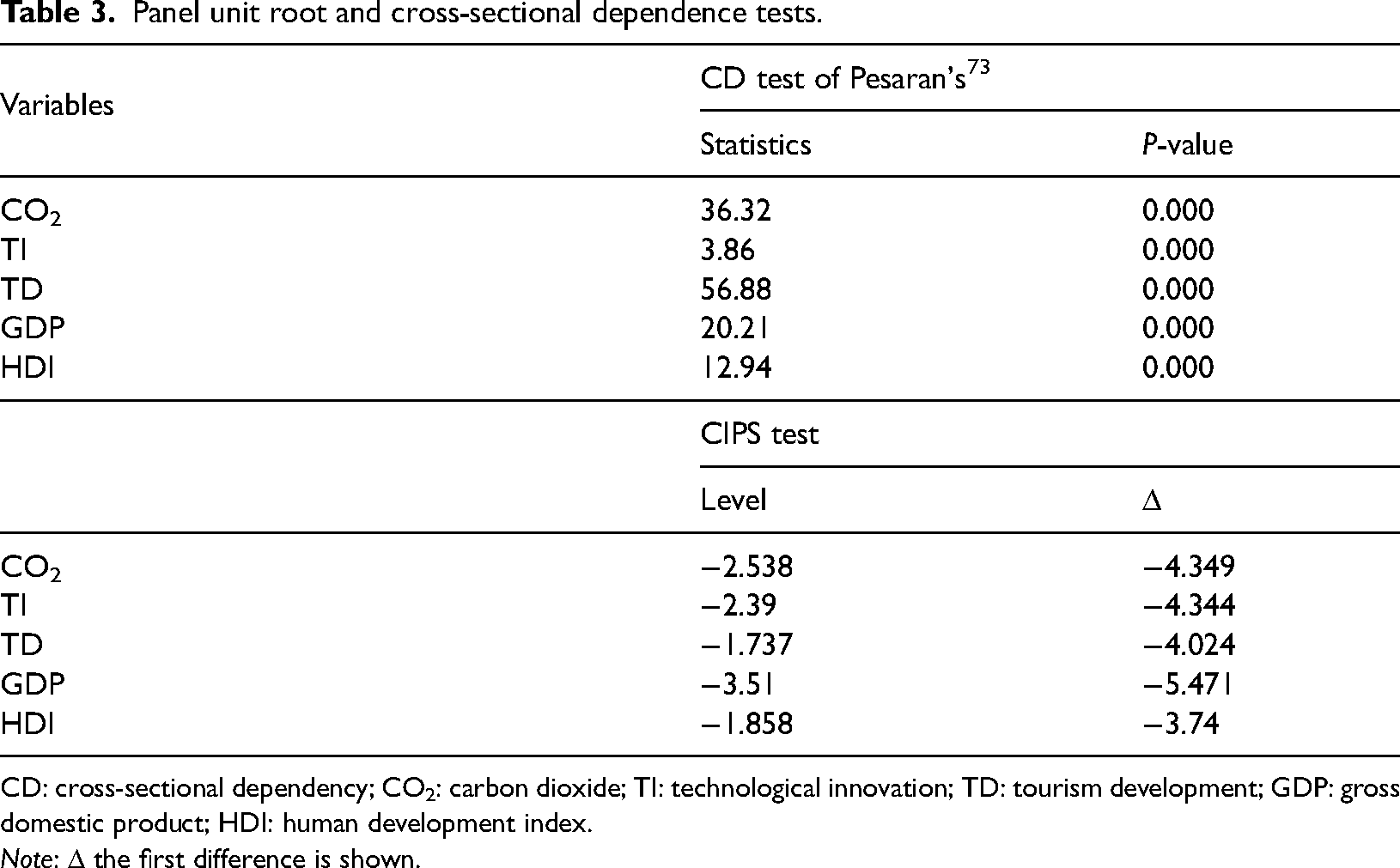
CD: cross-sectional dependency; CO2: carbon dioxide; TI: technological innovation; TD: tourism development; GDP: gross domestic product; HDI: human development index.
Note: Δ the first difference is shown.
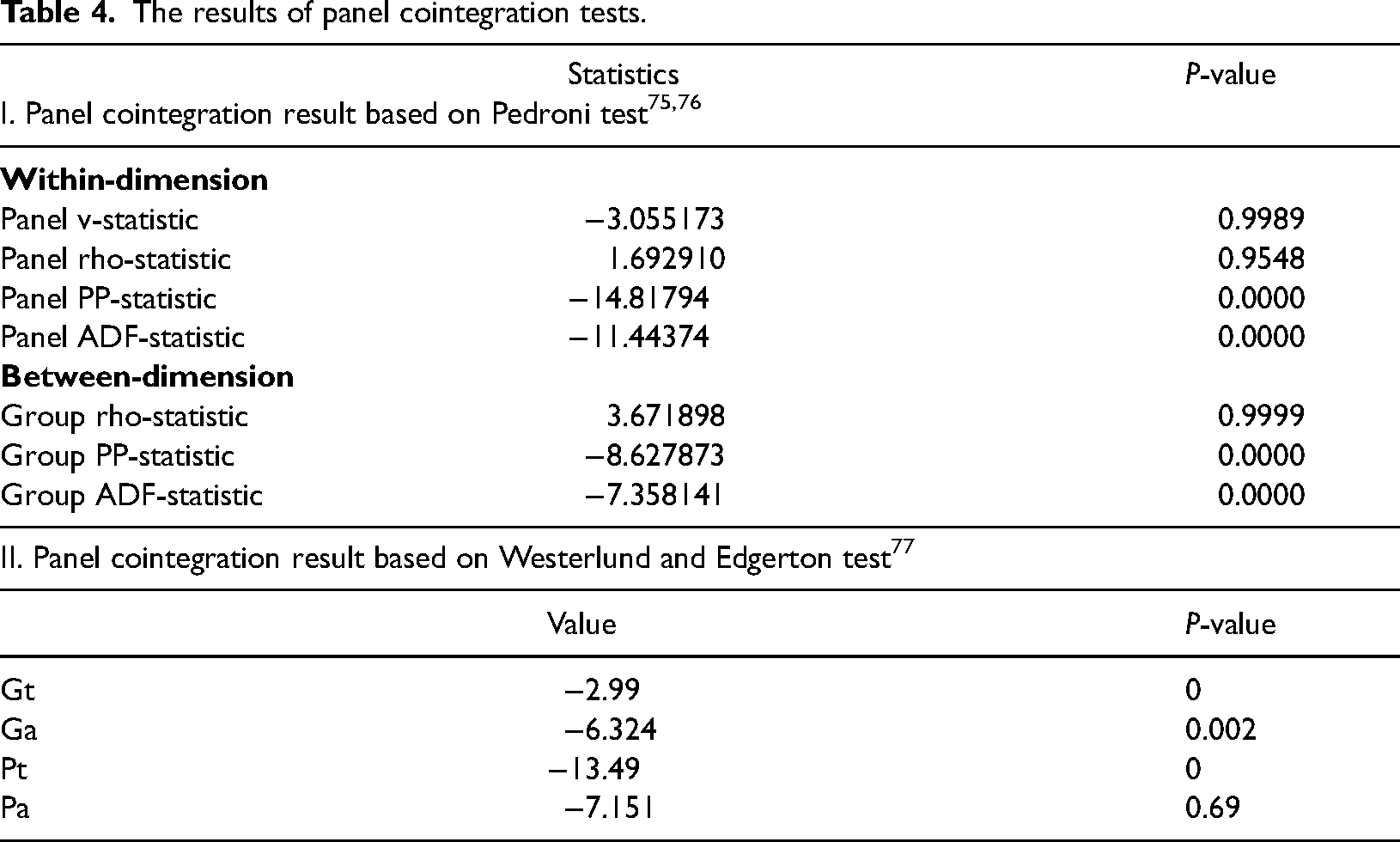
Table 4 shows the panel results of the Pedroni cointegration test75,76 and Westerlund and Edgerton test. 77 The result of Pedroni's75,76 panel cointegration test shows that out of a total of seven statistics, four support the presence of cointegration between the variables, while three statistics support the null hypothesis of no cointegration. Based on the rules and literature evidence, cointegration is present between the variables. Furthermore, the presence of cointegration is also confirmed by Westerlund and Edgerton’s 77 test of panel cointegration as the p-values of three tests under panel unit root are below 0.05%, thus rejecting the null hypothesis of no-cointegration.
The results of panel cointegration tests.
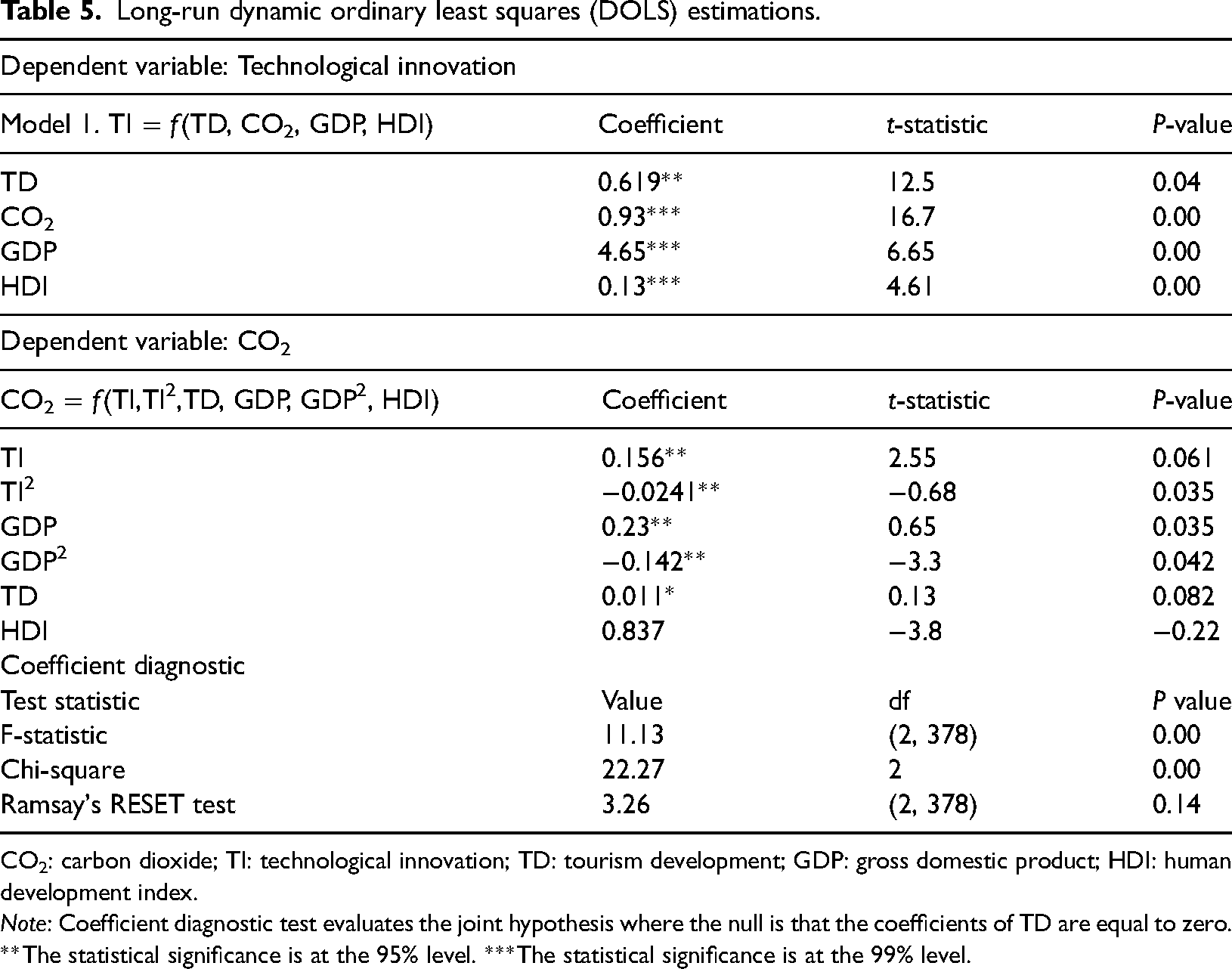
After the evidence from the panel cointegration test, the study opted for the long-run association between the study variables by adopting the suitable estimation technique as DOLS. In Table 5, the results indicate that TD significantly contributes to TI in developing countries. It has been argued that TD is seen as one of the factors contributing to innovation, as tourists from developed economies will be drawn to those technically their comfort zone, where different facilities will be offered. This outcome may also be because tourism could lead to the extra use of technology for booking hotels, searching the scenic areas around, for good food in tourist places, and other different facilities. This study outcome reveals the tourism-led innovation hypothesis as an increase in tourism-related activities leads to more use of technology. The development of tourism as one of the prominent sectors in the services sector needs to be digitalized based on modern technologies; therefore, any development in the tourism sector would lead to further use of technology. Results also reveal that CO2 emissions contribute positively to TI in the countries. A 1% increase in CO2 emissions will lead to an increase in the adoption of TI to produce more efficiently. This outcome is similar to the work of Kumail et al. 69 This study outcome is in favor of the famous Porter hypothesis presented by.81,82 The Porter hypothesis states that when there is an increase in environmental pollution due to economic and other activities, governments worldwide will impose strict environmental regulations to reduce pollution. The stringent but properly designed regulations could lead to innovation in the area as the firms would like to produce more to maximize their profit they would focus on innovative and efficient technologies and techniques of production rather than reducing the production. Thus, it could lead to an increase in TI. From the results, it can be said that in response to the deterioration of environmental quality due to CO2 emissions, TI can prove to help reduce environmental problems. Moreover, as economic activities increase, it releases more and more emissions, and without improvement in technology, it seems almost impossible to reduce the environmental pollution due to CO2 emissions.
Long-run dynamic ordinary least squares (DOLS) estimations.
CO2: carbon dioxide; TI: technological innovation; TD: tourism development; GDP: gross domestic product; HDI: human development index.
Note: Coefficient diagnostic test evaluates the joint hypothesis where the null is that the coefficients of TD are equal to zero. **The statistical significance is at the 95% level. ***The statistical significance is at the 99% level.
Further, growth in GDP per capita increases TI. Results show that an increase of 1% in the GDP of the panel countries may result in a more concentration on TI by 4.65%. This study's outcome reveals the same findings as Tomaszewski and Świadek. 83 They argued that countries’ economic situation leads to the adoption of innovative technologies by firms and industries, meaning that countries with higher GDP will adopt more innovative technologies and vice versa, thus supporting the growth-led innovation hypothesis. Similarly, results show that HDI leads to an improvement in TI. An increase of 1% in HDI measures of the countries may lead to an increase of 0.13% in TI. The work of this result supports this outcome by Xia et al., 84 who revealed that a copious amount of human capital is required to transform opportunities to the next level of TI. Further, they argued that “the innovative activities ultimately carried by people and all aspects of TI are inseparable from human capital.” Moreover, human capital could play a crucial role in developing and implementing innovation in industries as skilled workers will be required to carry on modern productive activities. Therefore, any investment in human capital might lead to an increase in TI. Still, as per the OECD 85 report, it is to be noted that the focus of this investment should be both acquiring skilled workers and training the researchers and on the research itself.
In model 2, TI has a positive but insignificant relationship with CO2 emissions as improvements in technologies in developing countries are not up to the mark and could not lead to efficient services and manufacturing sectors to reduce carbon emissions. The current result is in line with the previous work of Míguez et al., 86 Su and Moaniba, 87 and Wang et al. 88 Several further researchers have presented contrasting findings, suggesting that innovation has a positive impact on environmental quality.67,68,89–91 Their findings may vary as they rely on a single indicator, whereas this study considered a combination of both resident and nonresident patents. To inspect the presence of the ICC, the study also used the squared term of TI by exploring the complete features of the environment and innovation. The findings indicate a strong and negative correlation between CO2 emissions and innovations in developing countries. The outcome is aligned with the ICC theory. According to this theory, an increase in technology use and the creation of patents initially deteriorates environmental quality, however, after reaching a threshold level, further improvements in technology would lead to a decrease in emissions. The result of the study is backed by the research conducted by Khan et al. 70 This outcome could be explained as after the industrial revolution many of the technologies that emerged were using fossil fuels such as power stations, vehicles, factories, and mass agriculture among others causing environmental pollution due to huge emissions of GHGs as these processes are based on non-renewable energy resources such as coal power technology. Similarly, due more technologically oriented process of production there has been overuse of resources at a rate faster than it can be reloaded. Some of these resource depletions are mining, deforestation, soil erosion, and resource contamination among others. Moreover, due to the vast use of manufacturing technologies, there has been a huge amount of waste thrown in rivers and seas as well as many used electronics thrown out (i.e. techno trash).
In the case of tourism, it is argued that tourism could have positive and negative impacts on the quality of the environment. In the current study, tourism leads to a further increase in CO2 emissions. This outcome can be rationalized as TD includes the construction of infrastructure, roads, shops, resorts, marinas, airports, hotels, and golf courses, which can have a negative impact on the environmental quality of the destination countries. It has the potential to cause harm to the environment through various means, including solid waste and littering, air emissions, and soil erosion, which impact the species that are vanishing and may lead to the loss of natural habitats. The outcomes of the study are backed by prior research.92–94 Inspecting the impact of GDP on CO2 emissions, the study found a pervasive impact as an increase in GDP leads to contamination of environmental quality in developing countries. This outcome is very general; as economic activities involve extensive energy resources. Most of these resources are non-renewable and emit GHGs into the atmosphere, leading to a further rise in the concentration of CO2 emissions in the atmosphere. This outcome is similar to the previous work.62,72,95,96 To further investigate the potential occurrence of EKC between GDP and CO2 emissions, the research used the squared term of GDP. Results reveal that with the further increase in economic activities and growth reaching a threshold level, there occurs a decrease in CO2 emissions, thus leading to improvement in environmental quality. This outcome supports the EKC hypothesis similar to the previous studies in the growth-environment literature. Moreover, it is observed that improvement in the HDI has no significant impact on the concentration of CO2 emissions in the atmosphere. An increase in the literacy rate might reduce CO2 emissions to some level. Still, on the other hand, the improvement in lifestyle leads to the consumption of more and more energy resources, thus, increasing the emissions of GHGs in the atmosphere. Therefore, there is no significant impact observed in developing countries. This outcome of the study is supported by the work of Omri. 67 In other words, both the F-statistic and the Chi-square diagnostic tests show that we have sufficient data to reject the null hypothesis. As a result, the base model's fit is improved by including TD.
The study further conducted the robustness test to investigate if there is any important missing or omitted variable that should have been part of the study model. The study employed the Ramsay RESET test for this purpose. This test checks for the possible squared, cubic form of the variables or any interactive variables that are important for this analysis. The null hypothesis of the test is there are no omitted variables in the model tested. The result of the study stated that the probability value is >0.05%, so we are unable to reject the null hypothesis that there are no omitted variables in the model and the model is specified well.
Panel VECM Granger causality results
The short- and long-run causal relationship between the study variables is studied under the VECM Granger causality test panel in Table 6. In the case of model 1, where TI is the dependent variable, it is observed that all independent variables are unidirectionally causing TI in developing countries. In the case of tourism, it is observed that any increase in tourism activities might cause an upward movement in the adoption of new technology. In the case of CO2 emissions, it is observed that any increase in CO2 emissions in these countries will negatively affect TI. Regarding the GDP, it is observed that any increase in GDP causes TI to flourish. This outcome seems normal, as increasing production requires more efficient machinery and new technology to enhance the input–output ratio. It is further observed that HDI can unidirectionally cause an increase in TI.
Vector error correction model (VECM)-based panel Granger causality results.

CO2: carbon dioxide; TI: technological innovation; TD: tourism development; GDP: gross domestic product; HDI: human development index.
Note: Parentheses have the p-values and ***, **, and * show the level of significance at 10%, 5%, and 1%, respectively.
In model 2, technology and tourism have no causal impact on CO2 emissions in the short run. Further, any increase in GDP and HDI will cause a decline in environmental pollution. This means that human development and a rise in per capita income would result in environmentally friendly behavior, thus reducing emissions. In the long run, a bidirectional causal relationship is running between TI, economic growth, CO2 emissions, and tourism, meaning that any increase in TI will improve economic growth and tourism. At the same time, it will reduce environmental pollution by reducing emissions. Similarly, in response, all these variables will have the same causal effect running from them toward TI, and any improvement in per capita income and TD will increase TI.
Conclusions and recommendations
This study investigates the interrelationship between TI, tourism, GDP, CO2 emissions, and HDI in a group of developing countries. The research found that TD, GDP growth, CO2 emissions, and HDI all had a beneficial impact on TI. The study supported the growth-led innovation hypothesis and concluded that the higher the economic growth of these countries, the higher TI would be. Based on the study's results that CO2 and innovations are positively related, it is concluded that a further rise in CO2 emissions could lead to innovation in developing nations as per the Porter hypothesis. As per the Porter hypothesis, if environmental regulations exist in these countries, such as cap-and-trade policies and others, it might lead to incentivizing innovations as the firms in these countries have to comply with the regulations. Therefore, the “Lean and Green” would perfectly describe the Porter hypothesis that firms would abide by stringent regulations. The possible way out for countries would be to reduce the waste material, decrease the processing time to save the cost of energy, and alter the process to a greener and more efficient one to comply with standards. This would ultimately lead to reduced storage costs and increased worker safety due to reduced pollution, as per the basic economic principle of the substitution effect. This would also make the consumers of the product safer to use the product and they will ultimately be willing to pay higher prices for it. Thus, based on this conclusion, it is suggested that advanced and efficient technology should be utilized in the manufacturing sector in developing countries instead of conventional, inefficient, and outdated technologies to reduce pollution, thus favoring innovation and achieving the goals of Agenda 2030.
Based on the outcome of model 2, it is concluded that TI, tourism, and GDP significantly impact environmental quality. In the case of technology, there are two conclusions, that is, first, any increase in technology will increase pollution and later on, with more innovations, the level of CO2 emissions could be reduced. This conclusion is as per the innovative Claudia curve theory. As per the ICC theory, it is argued that developing countries should focus more on patents (innovations) related to CO2 mitigations, as initially, it might lead to more pollution. Still, ultimately it would reduce emissions with more efficient technology and processes due to the spillover effect of innovations. Therefore, it is suggested that developing countries should focus on eco-friendly, sustainable, and smart tourism to reduce its environmental consequences and to achieve the goals of Agenda 2030. It is further concluded that tourism and HDI are not environment-friendly in developing countries as they add to pollution. Therefore, it is suggested that the regulatory bodies focus on improving HDI and tourism-related activities to prevent further pollution. In the case of economic growth, the study supports the EKC hypothesis. Thus, developing countries should foster the process to achieve higher economic growth, focusing on less polluting processes.
The current research paper has the following contributions. First, this research concentrated on verifying the Porter hypothesis in the situation of developing nations, which is extremely seldom examined so far in the case of these countries, which is a definite contribution to the body of knowledge. This finding paves the path for scientists to rethink the long-held belief that rising CO2 levels will stifle technological advancement. Second, within the environmental–growth nexus, the study highlighted the growth-led-innovation theory as a need for emerging nations. Third, the study used the innovative Claudia curve theory, which contributes to the body of knowledge and literature by introducing a new line of inquiry and stimulating debate: even if technology causes pollution at first, it will eventually cause fewer emissions, so governments and businesses should prioritize innovations that help them reduce pollution and improve their environmental footprint. Last but not least, the study provided fresh evidence of the EKC relationship between growth and CO2 emissions in the case of developing countries, concluding that the process of growth should be carried out even if it is at the cost of pollution initially, as ultimately, it would reduce emissions if carried out on innovative ways. The scope of this study is limited to the use of TI especially in terms of patent applications. Future researchers can also explore the role of TIs in terms of IPR as a whole, research and development (R&D), high technology exports, or an index of all these indicators which will provide more in-depth results regarding the techno–environment relationship.
Footnotes
Declaration of conflicting interests
The authors declared no potential conflicts of interest with respect to the research, authorship, and/or publication of this article.
Funding
The authors disclosed receipt of the following financial support for the research, authorship, and/or publication of this article: This work was supported by a grant from the National High-level Foreign Expert Project (No. QN2022125003L) and the fundamental research funds for the Central Universities (No. 63232174).

Notes
Dr.
Dr.
Dr.
Dr.