



Abstract
The Gansu–Qinghai region lies in the key position for trans-Eurasian cultural exchange, and hence investigations of the history of agricultural development in this region are significant for understanding the spatiotemporal evolution of prehistoric crop dispersal in Eurasia. However, systematic archaeobotanical studies concerning the history of the development of prehistoric agriculture in this area are scarce. Here, based on archaeobotanical analysis and radiocarbon dating at the Jinchankou site, we investigated the history of agricultural development in the Datong River valley during the Qijia culture. Combined with previous archaeobotanical studies of the Gansu–Qinghai region, we explored the diachronic changes in the cropping patterns from the Late Neolithic to the Early Iron Age. The results suggest that millet remained the most important subsistence plant during 4100–3700 BP, while barley and wheat were first cultivated around 3900 BP at the Jinchankou site. Humans only cultivated foxtail and broomcorn millet in the Gansu–Qinghai region with a high level of agricultural management during 5900–4000 BP. Barley and wheat were added to the agricultural system in the area during 4000–3600 BP, although they played a subsidiary role compared with millet. During 3600–2100 BP, barley played an increasingly important role in the Gansu–Qinghai region but with evident differences among geomorphic units, and there was an obvious decrease in agricultural management level. It is likely that the transformation of cropping patterns and agricultural management levels in the Gansu–Qinghai region from 5900 to 2100 BP was primarily promoted by prehistoric trans-continental cultural exchange and secondly by climate change in the area.
Keywords
Introduction
There has been widespread scholarly interest in recent years in the history and processes of cultural exchange between the East and the West in Eurasia (Dong et al., 2018; Han, 2013; Jones et al., 2011; Liu and Jones, 2014; Roberts et al., 2009; Spengler et al., 2014; Warmuth et al., 2012). From the Late Neolithic to the Bronze Age, technological innovation and agricultural communication brought by trans-continental cultural exchange in Eurasia appeared and strengthened, which had an important impact on the history of the agricultural development of the areas along the line (Anthony, 2010; Dong et al., 2017; Kuzmina, 2008; Liu et al., 2019). The Gansu–Qinghai region has been a crucial link of various routes of cultural exchange between the East and the West, and is also sensitive to climate change (An et al., 2003; Chen et al., 2019; He and Liu, 2017; Yang, 2014; Zhou, 2009). Abundant archeological remains make the area an ideal place to investigate how prehistoric humans adjusted their cropping patterns to adapt to the changes in the climate and environment against a background of cultural communication between the East and the West (Bureau of National Cultural Relics, 1996, 2001; Xie, 2002). The exploration of the history of agricultural development in this region is also helpful for understanding the temporal and spatial evolution of prehistoric crop dispersal in Eurasia.
Driven by the powerful forces of cultural exchange in the prehistoric Eurasia, barley and wheat originating in Southwest Asia and millet from East Asia experienced extensive spread and exchange in Eurasia, and eventually they spread to the East and the West, respectively (D’Alpoim Guedes et al., 2015; Dong et al., 2017, 2018; Jones et al., 2011; Liu and Jones, 2014; Liu et al., 2017, 2019). Barley and wheat were initially domesticated in the Fertile Crescent about 10,500 BP (Riehlet al., 2013; Zeder, 2008) and spread to Europe and the west of Central Asia before 8000 BP and the east of Central Asia and the northwest of China between 4500 and 4000 BP (Costantini, 2008; Doumani et al., 2015; Harris et al., 1993; Hovsepyan and Willcox, 2008; Liu et al., 2016a; Spengler and Willcox, 2013; Spengler et al., 2014; Tengberg, 1999). Foxtail millet and common millet first originated in northern China around 10,000 BP (Qin, 2012; Zhao, 2008, 2011a), and diffused to the east of Central Asia between 4500 and 4000 BP and West Asia and European after 3500 BP (Doumani et al., 2015; Goyal et al., 2013; Motuzaite-Matuzeviciute et al., 2012; Spengler et al., 2014). During 4500–3500 BP, millet, barley, and wheat met and merged in the east of Central Asia and the Gansu–Qinghai region (Dong et al., 2017; Doumani et al., 2015; Lu et al., 2019; Spengler et al., 2014), and then spread to both sides of Eurasia. Furthermore, western cultural elements including cattle and sheep/goats also spread to the Gansu–Qinghai region as early as 4500–4000 BP following the development and intensification of cultural exchanges (Flad et al., 2007; Ren and Dong, 2016; Yuan, 2015).
With the deepening of archeological excavation and investigation, archaeobotanical study in the Gansu–Qinghai region has made great progress in recent decades (e.g. Chen et al., 2015a; Dong et al., 2018; Flad et al., 2010; Jia et al., 2013; Zhou et al., 2016). Vast quantities of millet seeds from the Late Neolithic period (5900–4000 BP) were unearthed at the Dadiwan site in the western part of the Loess Plateau (Barton et al., 2009; Zhang et al., 2010). Archaeobotanical evidence from the Shannashuzha site of the Majiayao culture in the south of Gansu Province showed that the crop assemblage consisted only of millets (Hu, 2015). Millet were also found at the Xichengyi and Mozuizi sites of the late Machang culture in the Hexi Corridor (Zhao, 2011b; Fan, 2017). In the Early Bronze Age (4000–3600 BP), in addition to foxtail millet and common millet, a small amount of barley and wheat were also discovered in the Lajia and Lijiaping sites of the Qijia culture in the Hehuang Valley (Zhang, 2013; Yang, 2014). In the Late Bronze Age and the Early Iron Age (3600–2100 BP), the proportion of barley and wheat obviously increased among the whole crop combination at the Xichengyi and Donghuishan sites in the Hexi Corridor (Fan, 2017; Flad et al., 2010; Jiang et al., 2017a, 2017b), while barley and wheat occupied an absolutely dominant position in the crop assemblage at the Fengtai site of the Kayue culture in the Hehuang Valley and the Mazongshan site of the Shanma culture in the Hexi Corridor (Yang, 2017; Zhao et al., 2004). In addition to these large-scale excavation sites, some regional archaeobotanical investigations were also carried out in the study area (Chen et al., 2015a; Dong et al., 2018; Jia et al., 2013; Zhou et al., 2016) to explore the agricultural planting patterns. Although archaeobotanical data suggest that the agricultural system in the Gansu–Qinghai region displayed evident spatial differences during 5900–2100 BP, the variation in spatial patterns of agricultural development before and after the introduction of exotic crops has not yet been discussed in detail. In addition, these studies focus only on the utilization of crops at a single site and lack attention to spatial-temporal development on a large spatial scale or to the factors influencing it.
Based on the flotation results of the Jinchankou site, this paper systematically combs the published archaeobotanical results derived from the Gansu–Qinghai region from the Late Neolithic to the Early Iron Age, trying to clarify the track of agricultural development history in the Gansu–Qinghai region and to figure out the transformation in patterns of the cropping patterns, as well as the influence on it of trans-Eurasian cultural exchange, climate change, and the local regional environment.
Study area
The Gansu–Qinghai region refers to a wide geographical area including the Hexi Corridor, the Hehuang Valley, the Qaidam Basin, and the western Loess Plateau, and is located in the transitional zone of the three natural regions of the humid area of Eastern China, the arid area of Northwest China, and the alpine region of the Tibetan Plateau, with a diversity of natural geographical environments and obvious differences in elevation (Figure 1). The Qaidam Basin has a high elevation of about 2600–3000 m above sea level (masl) and a typical continental plateau climate, with annual precipitation ranging from 200 mm to 15 mm and an average annual temperature of 5°C. The Hehuang Valley refers to the Yellow River and its tributaries in Gansu and Qinghai Provinces, with obvious differences in altitude between 1900 masl and 2400 masl. The average annual precipitation is between 240 and 600 mm, and the average annual temperature is 5.8°C. The Hexi Corridor adjoins the Tibetan Plateau in the south, the Mongolian plateau in the north, the Loess Plateau to the east, and the Tarim Basin and Tianshan Mountains to the west, and lies in the hub of cultural exchange between East and West. The corridor is a long and narrow basin, with undulating terrain and an elevation of 1000–1500 masl, with annual precipitation decreasing from the east to the west (40–200 mm) and an annual average temperature of 2–6°C. The western Loess Plateau refers to the part located to the west of Liupanshan Mountain, with an altitude of 1400–2200 masl. The climate changes from semi-humid to semi-arid, with an average annual temperature of 6–10°C and rainfall of 300–550 mm. Moreover, the region is a transitional zone between dry farming and animal husbandry areas. In history, the wars between the Central Plains Dynasty and the Western Minority Regimes caused the boundary between agriculture and animal husbandry to move many times, which greatly affected agricultural development in the study area (An et al., 2002).
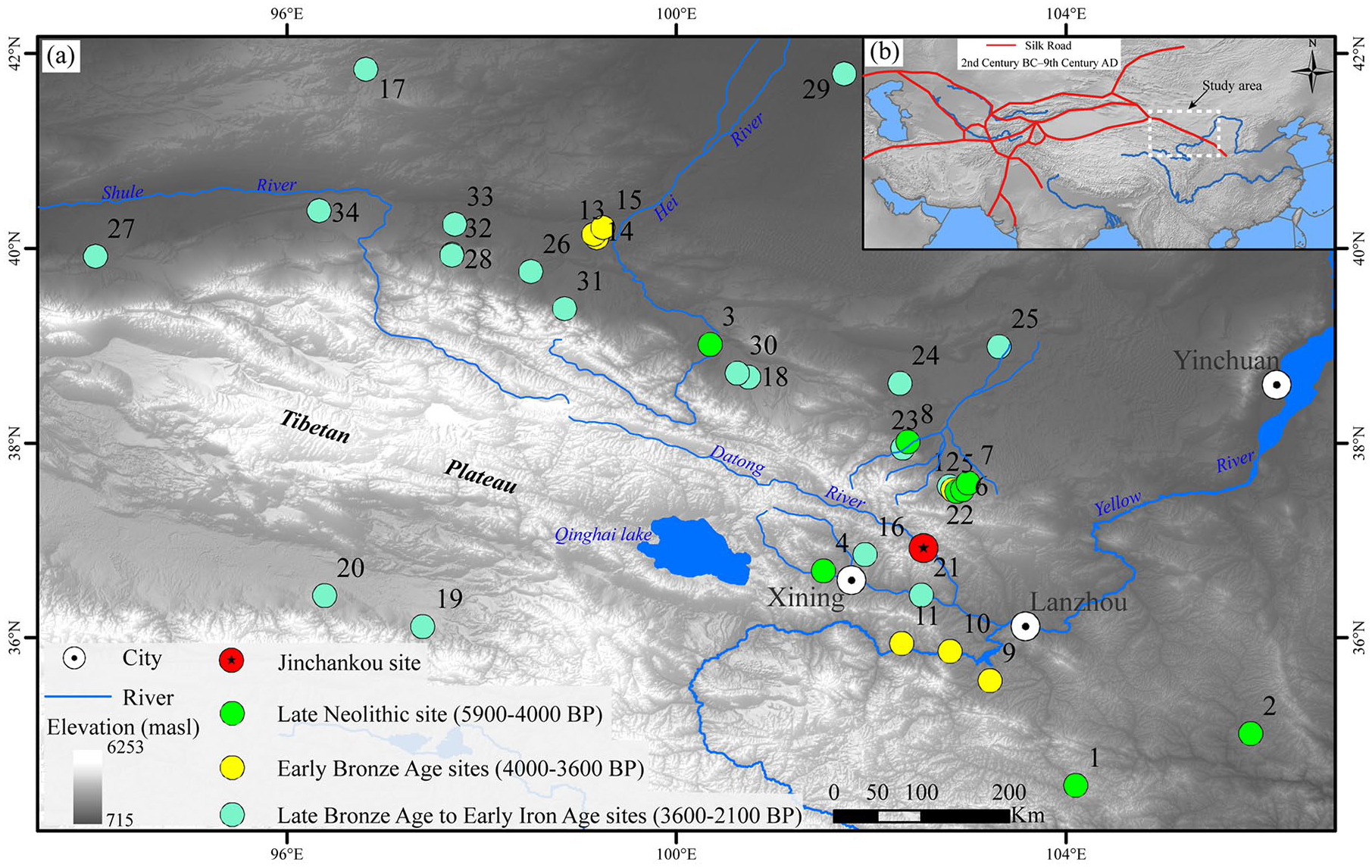
(a) Location of Jinchankou site and other sites in the study area referred to in this paper. 1. Shannashuzha; 2. Dadiwan; 3. Xichengyi; 4. Benbakou; 5. Xitai; 6. Shuikou; 7. Duojialiang; 8. Xizhai; 9. Lijiaping; 10. Lajia; 11. Gongshenjia; 12. Lijiageleng; 13. Yigediwonan; 14. Ganggangwa; 15. Huoshiliang; 16. Fengtai; 17. Mazongshan; 18. Donghuishan; 19. Tawentaliha; 20. Talitaliha; 21. Shuangerdongping; 22. Tuba; 23. Shichengshan; 24. Jinchangsanjiaocheng; 25. Minqinsanjiaocheng; 26. Zhaojiashuimo; 27. Gudongtan; 28. Huoshaogou; 29. Lvcheng; 30. Xihuishan; 31. Ganguya; 32. Dadunwan; 33. Shaguoliang; 34. Yingwoshu. (b) The route of Silk Road during Han and Tang Dynasty (2nd century BC–9th century AD), modified from Barisitz (2017).
The Jinchankou site (36.92°N, 102.54°E, 2309 masl) is located in the village of Jiatang, Huzhu County, northeast of Qinghai Province, about 400 m south of the Datong River, which is the second tributary of the Yellow River. The site is 100 m long from north to south, 80 m wide from east to west, and covers an area of about 8000 m2. Some scholars made a preliminary archeological investigation of Jinchankou and found some charred barley remains dated to around 3900 Cal yr BP (Chen et al., 2015a; Jia, 2012). However, due to the relatively small number of flotation samples collected from this investigation and insufficient dating data, it is difficult to explore how humans utilized crops at Jinchankou. To gain greater understanding of this problem, the Qinghai Provincial Institute of Cultural Relics and Archaeology organized a large-scale official excavation in 2012. The actual excavation area is over 285 m2 and comprises five 5 × 5 m trenches within which one tomb, two kilns, five house features and 18 ash pits were identified and large quantities of bone objects, lithics, pottery shards, and a small number of copper artefacts were also unearthed (Wang, 2013). These excavation materials show that Jinchankou is a pure Qijia culture site. During the excavation, we collected 77 flotation samples from different features.
Archeological culture and its definition have been widely debated in China (Liu and Chen, 2012; Shelach-Lavi, 2015; Zhang et al., 2019). The complete archeological cultural sequence in the Gansu–Qinghai region has been established, including in chronological order: phase I of Dadiwan culture (7800–7300 BP) (GPICRA, 2006), phase I of Shizhaocun culture (7300–6800BP) (IA CASS, 1999), Early Yangshao culture (7000–5900 BP), Middle Yangshao culture (6000–5500 BP), Late Yangshao culture (5500–4800 BP) (Dai, 1998; Zhang et al., 2013), Shilingxia type of Majiayao culture (5800–5200 BP), Majiayao type of Majiayao culture (5200–4600 BP) (Xie, 1981, 2002), Banshan and Machang types of Majiayao culture (4600–4000 BP) (Chen et al., 2014; Li, 1998), Qijia culture (4300–3500 BP) (Chen et al., 2012; Shui, 2001), Xichengyi culture (4000–3700 BP), Siba culture (3700–3300 BP) (Chen et al., 2014; Yang et al., 2019a), Kayue culture (3600–2500 BP), Xindian culture(3600–2600 BP), Siwa culture (3300–2500 BP), Nuomuhong culture (3400–2700 BP) (Shui, 2001; Xie, 2002), Shanma culture (2900–2100 BP), Shajing culture (2700–2100 BP) (Yang et al., 2019a). Given that well-developed agriculture in Gansu–Qinghai mainly started in the middle of the Yangshao culture, the time range discussed in this paper is limited to 5900–2100 BP.
Material and methods
In order to reconstruct more accurately the utilization of plant resources by ancient humans at the Jinchankou site, a diagnostic sampling strategy was used to obtain flotation samples during the site excavation. A total of 77 flotation samples were derived from housing features, ash pits, and cultural layers, amounting to 1213 L, with the average volume of each sample amounting to 15 L of soil. These samples were floated in situ with a froth-flotation device to extract plant remains. Dried seeds were identified under a 40× stereoscopic microscope. All charred plant remains were selected and sorted in the Environmental Archaeology Laboratory of Lanzhou University, and then all plant seeds were subsequently identified in the Paleoethnobotany Laboratory at the Institute of Archaeology, Chinese Academy of Social Sciences.
A total of 10 charred seeds from five cultural layers of four housing features (referred to as F) and two ash pits (referred to as H) in the Jinchankou site were selected for radiocarbon dating by accelerator mass spectrometry (AMS) at Peking University, Beijing, consisting of three foxtail millet seeds, one common millet seed, two wheat seeds, and four barley seeds. All chronological data were calibrated by Calib radiocarbon calibration programme (v.7.0.2) (Stuiver and Reimer, 1993) and the IntCal13 calibration curve (Reimer et al., 2013). All radiocarbon dating results were presented as “Cal yr BP,” relative to AD 1950.
Moreover, published archeobotanical data derived from Late Neolithic to Early Iron Age (5900–2100 BP) archeological sites in the Gansu–Qinghai region were also collected and analysed. In order to ensure that there were enough sites with archeobotanical study and that the data analysis was statistically significant, the paper chose 35 sites that yielded four or more flotation samples as objects for further analysis. Combined with the results in the Jinchankou site, the spatial and temporal differences of cropping patterns and field management level from the Late Neolithic to the Early Iron Age in the Gansu–Qinghai region were comprehensively examined.
Results
The 14C results of charred grains are presented in Table 1, with the oldest dated to 4060 ± 84 Cal yr BP (2σ) and the youngest to 3782 ± 78 Cal yr BP (2σ). To be specific, one broomcorn millet seed was dated to 3840 ± 115 Cal yr BP, and three foxtail millet seeds were dated to from around 4060 ± 84 to 3899 ± 63 Cal yr BP. The age of two wheat samples was 3911 ± 65 and 3782 ± 78 Cal yr BP, respectively, and that of four barley samples fell into the range from 3867 ± 90 to 3806 ± 85 Cal yr BP. Based on these data, it is noteworthy that the cultivation of millet was about two centuries earlier than that of wheat and barley at the Jinchankou site.
Calibrated radiocarbon dates from charred crop seeds at the Jinchankou site.

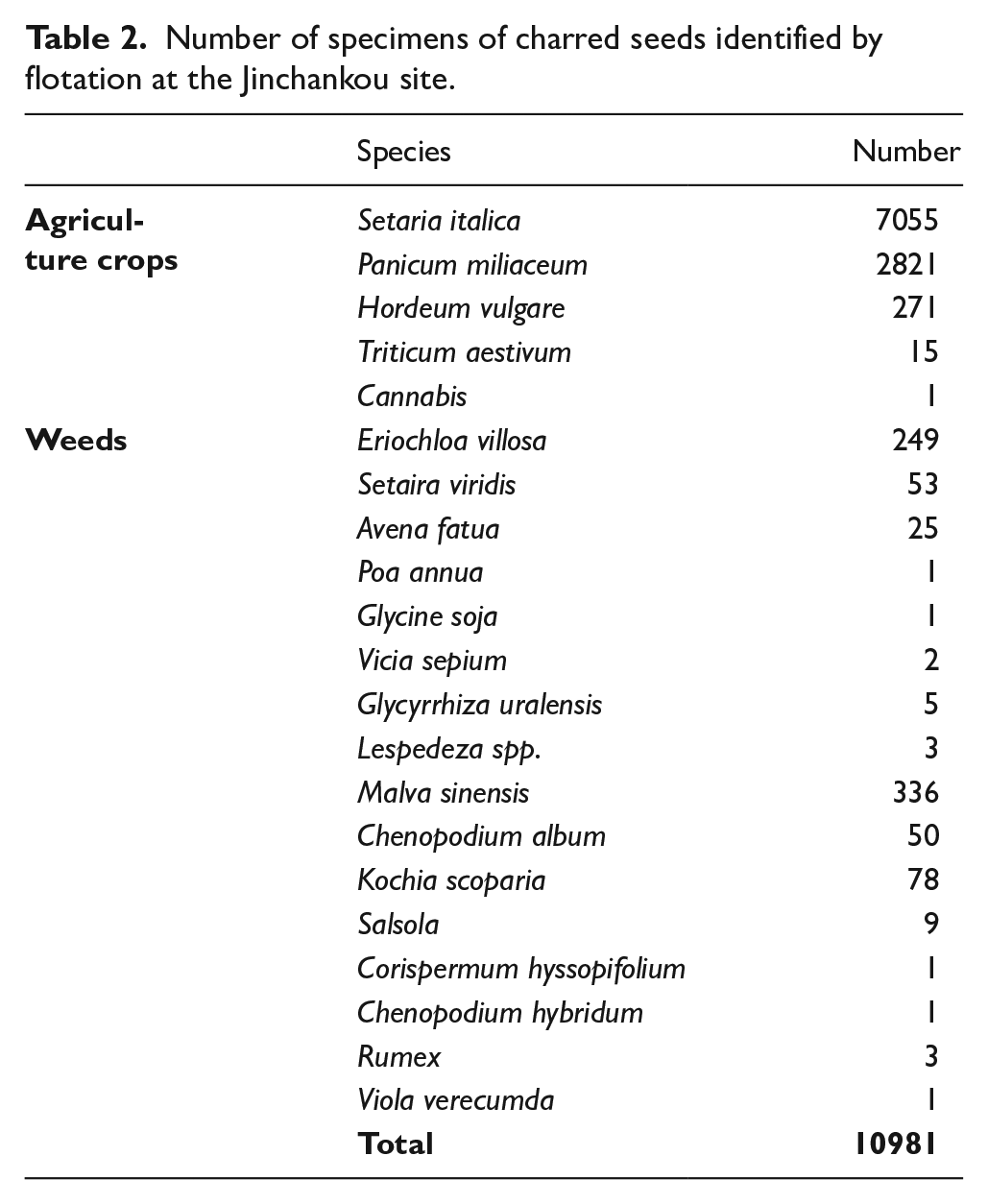
In all, there were 10,163 charred crop seeds and 818 weed seeds obtained by flotation at the Jinchankou site (Figure 2; Table 2). As for crop seeds, the assemblage was composed of 7055 foxtail millet (Setaria italica), 2821 common millet (Panicum miliaceum), 272 barley (Panicum miliaceum), 15 wheat (Triticum aestivum) and one marijuana (Cannabis) seed. The number and the proportion of millet seeds (9876, 97.2% of the crop assemblage) are obviously higher than those of wheat and barley (287, 2.8% of the crop assemblage). 336 Malvaceae and 328 Poaceae seeds were identified, making up most of the weed combination, followed by 139 Polygonaceae seeds. A small number of Leguminosae, Polygonaceae, and Violaceae seeds were also discovered at Jinchankou.
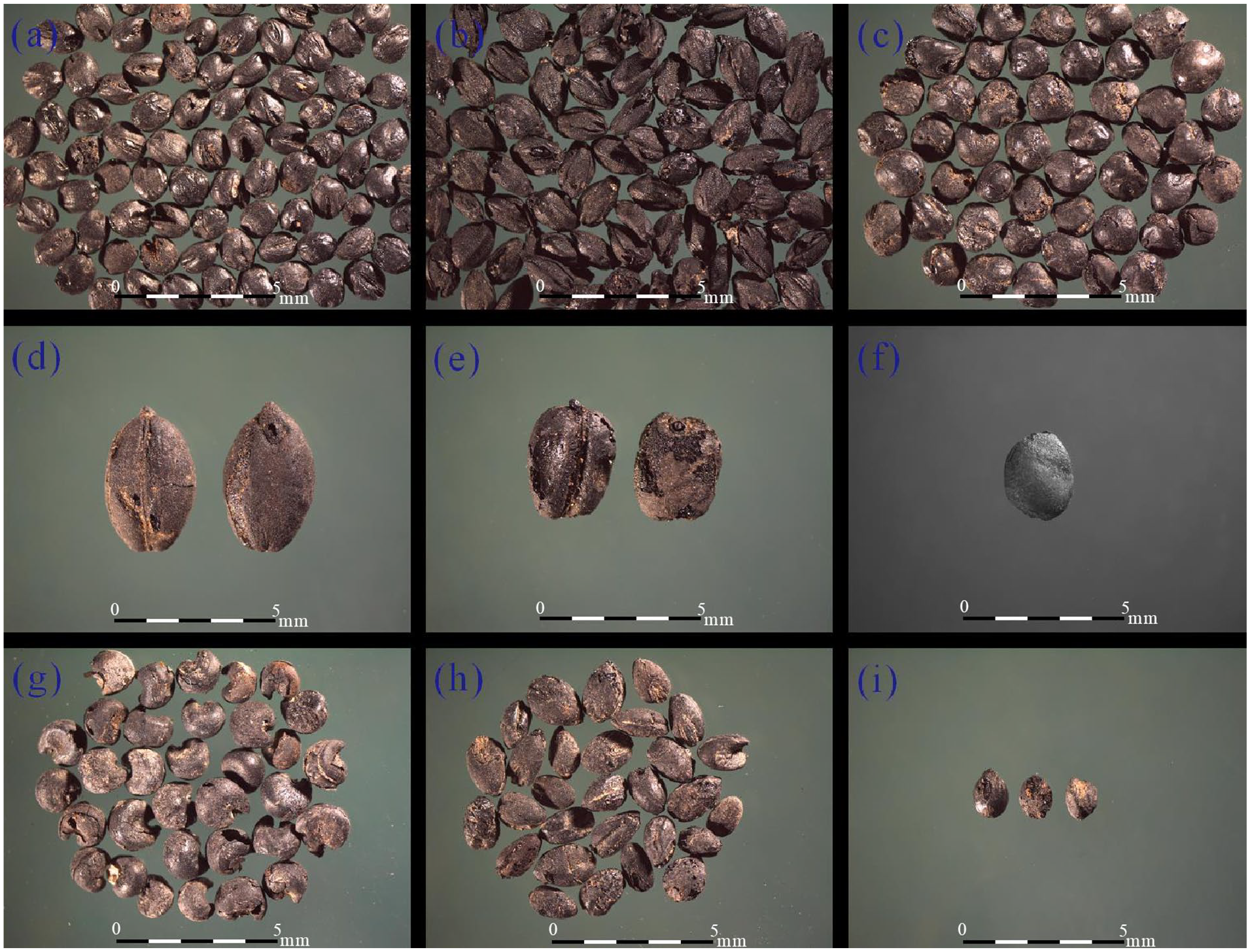
Photographs of charred plant remains recovered from the Jinchankou site, northwest China. (a) Setaria italic; (b) Setaria italic in the shell; (c) Panicum miliaceum; (d) Hordeum vulgar; (e) Triticum aestivum; (f) Cannabis sativa; (g) Malva sinensis; (h) Eriochloa villosa; (i) Setaira viridis.
Number of specimens of charred seeds identified by flotation at the Jinchankou site.
Discussion
The history of human utilization of plants and agriculture development at the Jinchankou site
Archaeobotanical flotation and radiocarbon dating results indicate that humans settled in Jinchankou during 4100–3700 Cal yr BP (Table 1), planting mainly foxtail millet, common millet, barley, and wheat. The absolute numbers of foxtail millet seeds and common millet seeds dominate the crop assemblage, with the proportion as high as 97.2% of all crop seeds (Table 2). Additionally, the ubiquity (number of samples in which it occurred) is another index reflecting the importance of this crop in ancient human life to some extent, and making up for the insufficiency of the frequency (proportion or percentage of the total crop remains) (Pearsall, 1989; Zhao, 2010). The charred millet seeds were identified in 56 flotation samples of a total of 77 flotation samples (i.e. the ubiquity is 72.7%), suggesting that millet-based agriculture had always been the main way of livelihood for the Jinchankou group. The archaeobotanical analysis from other Qijia cultural sites, such as the Lajia site in eastern Qinghai Province (Zhang, 2013; Zhao, 2003), the Buziping site in central Gansu Province (Jia et al., 2013), the Qiaocun site in eastern Gansu Province (Zhou et al., 2011) and some Qijia cultural sites in Qin’an and Lixian counties (An et al., 2010), also show that foxtail and common millets played an important role in economic life among the Qijia group.
Based on the flotation results of the Jinchankou site, 277 charred barley seeds and 15 charred wheat seeds were identified from 12 flotation samples (Table 2), accounting for a frequency of 2.8% of the whole crop assemblage, with a ubiquity of 15.6%. This indicated that barley and wheat had been introduced to the Gansu–Qinghai region in the middle and late period of the Qijia culture. Although the planting scale of barley and wheat in the study area is rather limited, it does indicate that the cultural exchange between East and West in Eurasia had affected the region during this period. Furthermore, we can infer that barley and wheat were not the main plant resources utilized by the Qijia group and that it may have taken a long time from the introduction of the exotic crops barley and wheat into the Qinghai-Gansu region to their being used as the main plant resources (Zhou et al., 2016), as indicated by the evidence of stable carbon and nitrogen isotopic data from human bones in west China (Liu et al., 2016a; Ma et al., 2016). In addition, the ratio of the number of weed seeds to that of crop seeds at Jinchankou is 0.08, suggesting that Qijia culture humans mastered a high level of field management to some extent.
At the Jinchankou site, the radiocarbon dating of millets ranged from 4100 to 3800 Cal yr BP, while the radiocarbon dating of barley and wheat are relatively late, about 3900–3700 Cal yr BP. This indicates that the Jinchankou site was initially occupied by millet farmers who moved into the study area from the west of the Loess Plateau and continued the traditional rain-fed agricultural planting pattern. With the strengthening of cultural exchanges between the East and the West (Dong et al., 2017; Jones et al., 2011; Liu et al., 2019), wheat and barley were added to the local agricultural cultivation system from about 3900 BP.
The spatial-temporal variation in prehistoric cropping patterns in the Gansu–Qinghai region
The study of prehistoric cropping patterns or cultivation systems by means of the combination of archeological plant remains has been widely used (Zhao, 2010, 2011a). Based on the identification and dating results of the plant remains at the Jinchankou site, combined with the published archaeobotanical and 14C dating data of prehistoric sites in the Gansu–Qinghai region, the history of agricultural development in the study area during the Late Neolithic to the Early Iron Age can be divided into three stages: millet planting (5900–4000 BP), mainly millets and supplementary wheat and barley planting (4000–3600 BP), dominant barley planting mixed with other crops (3600–2100 BP).
Phase I (5900–4000 BP). Millets planting
The Gansu–Qinghai region is generally considered to be one of the early dryland farming cultivation and domestication centres in northern China (Zhao, 2011a, 2014). The finding of a small number of common millet seeds in Dadiwan phase I culture (7800–7300 BP) at the Dadiwan site (Liu et al., 2004) indicated non-intensive and early agriculture during that time, which is consistent with the results of stable isotopes from human bones (Barton et al., 2009). Archaeobotanical and stable isotopic data show that intensive and full millets agriculture in the Gansu–Qinghai region seems to have appeared in Dadiwan phase III culture (5900–5500 BP, corresponding to the middle of Yangshao culture) at the Dadiwan site (Barton et al., 2009; Zhang et al., 2010), and the number of foxtail seeds unearthed was significantly greater than that of common millet (Figure 3). The flotation results of the Majiayao culture (5200–4600 BP) at the Shannashuzha site located in the south of Gansu Province showed that millets were usually cultivated crops, and common millet was favoured by farmers over foxtail millet because its growth characteristics were more suited to a cold environment with a high altitude (Hu, 2015). The charred crop combination unearthed from the late Machang culture (4100–4000 BP) Xichengyi site in the Hexi Corridor and the Majiayao culture Benbakou site in the Hehuang Valley only consisted of foxtail millet and common millet (Chen et al., 2015a; Fan, 2017), which is same as the results of investigations of other Machang culture sites in this area (Figure 3) (Dong et al., 2018). In addition, the paleodiet of humans and even that of pigs and dogs (which are closely related to that of humans) derived from the study area all presented a C4 signature during 5900–4000 BP, indicating that they consumed large quantities of C4 foodstuff (presumably millets and/or animals fed on millets) (Barton et al., 2009; Dong et al., 2016b; Ma et al., 2014).
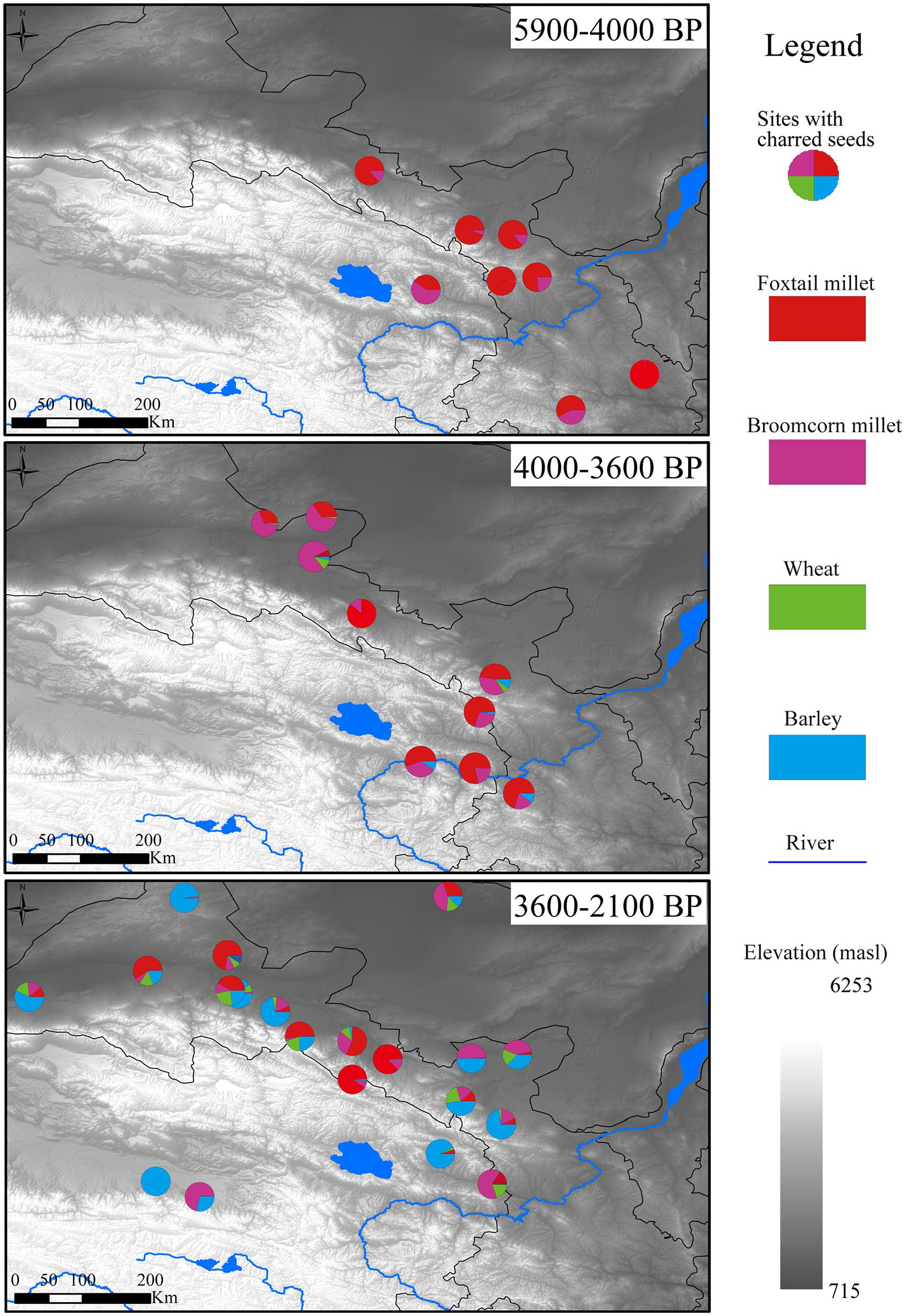
Cropping patters in Gansu–Qinghai region from the Late Neolithic to Early Iron Age.
During 5900–4000 BP, full millet agriculture had been established in the Gansu–Qinghai region. The crops planted by the human of different cultures were only foxtail and common millets, possibly with different planting proportions of foxtail and common millets in different environments. In addition to crop seeds, there were also a certain number of weed seeds unearthed in archeological sites. The ratio of weed seeds to crop seeds can indicate the level of field management, and it is also one of the important indexes to measure the level of regional agricultural development (Pearsall, 1989; Zhao, 2010). There was a low ratio of weed seeds to crop seeds in Late Neolithic sites (Figure 4), suggesting that the level of field management was high. Zooarchaeological studies indicate that domestic pig was the most important livestock during this period (Figure 4). Pigs are more common in sedentary agriculture societies probably due to the disadvantage of their poor mobility. This is consistent with larger settlement patterns (Shui, 2001) and the dominance of production tools for agricultural activities (Zhang, 2010) in Gansu-Qinghai region, indicating humans likely put a lot of labor into fields during that time.
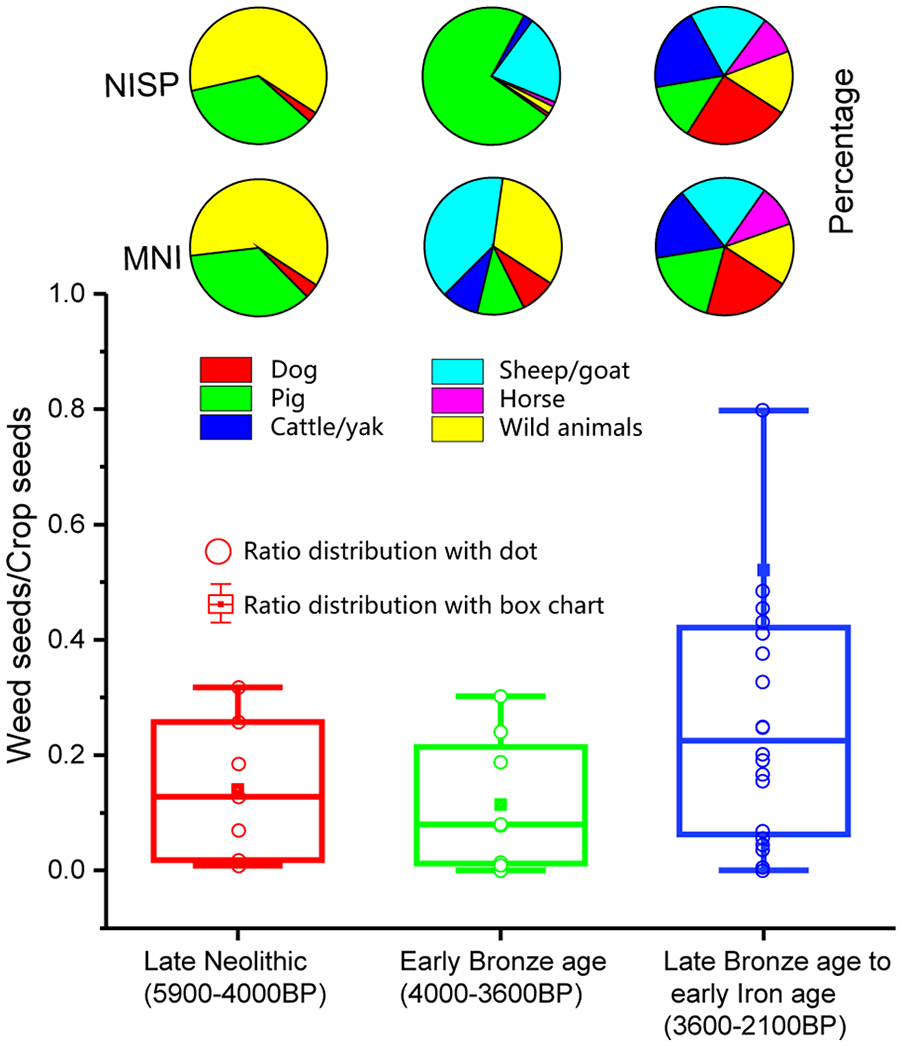
The possible relationship between field management and animal husbandry in the Gansu–Qinghai region from the Late Neolithic to the Early Iron Age.
Phase II (4000–3600 BP). Mainly millets and supplementary wheat and barley planting
The flotation results of the Qijia culture Lajia site (4300–3500 BP), which is located in the Hehuang Valley, demonstrated that the human inherited the early agricultural tradition of the Gansu–Qinghai region, and continued to plant millets, with the number of foxtail millet seeds being four times greater than that of common millet (Zhang, 2013). Stable carbon isotopic evidence from the Lajia and Qijiaping sites in this area also prove that humans ate C4 foodstuff as their staple food during the Qijia culture era (Ma et al., 2015; Zhang et al., 2016). It showed a similar situation to that of Lajia in the Xichengyi culture (4000–3700 BP) Xichengyi site, where only millets were discovered and foxtail millet made up most of the crop assemblage (Fan, 2017). However, the crop combination unearthed from the late Qijia culture Lijiaping site (3800–3500 BP) in the south of Gansu Province was obviously different from that in Lajia and Xichengyi. In addition to the existence of foxtail millet and common millet in its cropping patters, a certain amount of the exotic crops barley and wheat also appeared, accounting for about 10.38% of the total crops (Yang, 2014), which was similar to the situation at the Jinchankou site after 3900 BP. Besides, a series of Xichengyi cultural investigation sites in the Hexi Corridor also planted foxtail millet, common millet, barley, and wheat (Dodson et al., 2013; Dong et al., 2018; Zhou et al., 2016), but the number of common millet seeds is greater than that of foxtail millet seeds, possibly due to the small number of samples or to a change in the planting behaviour of human. Chen et al. (2019) examined the cropping patters of the Qijia culture in the Gansu–Qinghai area and found that in the early Qijia Culture (4300–4000 BP), the crops both in the eastern and western parts of the Gansu–Qinghai area was mainly foxtail millet, supplemented by common millet, which may be related to the high yield of foxtail millet and its high water use efficiency. However, in the mid-late Qijia Culture (4000–3500 BP), with the introduction of wheat and barley into the Gansu–Qinghai area, the cropping patters in the west of the region had changed into mainly millets, supplemented by barley and wheat, but the eastern part of the region still continued the single agricultural structure consisting of only millets in the early stage, which can be attributed to the different response of different regions to the cold and dry climate. Although the crops wheat and barley had been added to the agricultural system of the Gansu–Qinghai region (Liu et al., 2014), the stable carbon isotopic results demonstrate that human and domestic omnivorous animals’ diet in the study area during 4000–3600 BP consisted mainly of millet and/or animals fed on millet, and C3 cereals (such as wheat and barley) did not contribute significantly to their diet (Ma et al., 2015, 2016).
During 4000–3600 BP, human in the Gansu–Qinghai region continued to engage in the agricultural tradition of millet cultivation. At the same time, humans began to try the new crops barley and wheat, forming an agricultural structure with millets as the main crop and barley and wheat as the auxiliaries. Meanwhile, the ratio of weed seeds to crop seeds was slightly lower than that in the previous stage (Figure 4), indicating that the level of field management was still high, and the farmers invested enough farm labor.
Phase III (3600–2100 BP). Dominant barley planting mixed with millets and wheat
There were many branches of Bronze Age cultures after the Qijia culture in Gansu–Qinghai region, and the subsistence strategies of different cultural groups were significantly different (Xie, 2002; Zhang and Dong, 2017). The humans at the Xindian culture (3600–2600 BP) Shuangerdongping site in the Hehuang Valley mainly cultivated common millet, wheat, and foxtail millet, supplemented by barley (Jia, 2012). However, it was a totally different situation at the Kayue culture (3600–2500 BP) Fengtai site in the Hehuang Valley, where the number of wheat and barley seeds unearthed has far exceeded that of millets, making wheat and barley the main crops planted by the human (Zhao et al., 2004). Archaeobotanical analysis of several Nuomuhong cultural sites (3400–2700 BP) in the Qaidam Basin indicated that humans mainly planted common millet and barley, supplemented by wheat (Dong et al., 2016a). In the Hexi Corridor, the flotation results from Donghuishan and Xichengyi sites of the Siba culture (3700–3300 BP) showed that millets still accounted for the vast majority, while the unearthed wheat increased significantly (Fan, 2017; Flad et al., 2010). Archeological investigations of many Siba culture sites also suggested that wheat and barley played an increasing role in the agricultural production of the Siba culture group (Dong et al., 2018). In the Hexi Corridor, the main crops used by the human of the Shajing culture (2700–2100 BP) were barley, common millet, wheat, and foxtail millet, of which barley is the dominant one (Dong et al., 2018). Crop remains from Shanma culture (2900–2100 BP) sites showed that the cropping patters in this area was mainly barley, supplemented by common millet, wheat, and foxtail millet (Dong et al., 2018; Yang, 2017). In addition, the stable carbon isotopic evidence of human bones also shows that there was an obvious dietary shift from a C4 signal (probably millets and animals fed with C4 foods) to C3 and C4 mixed-signal (probably millets, wheat, barley, and animals fed with C3 and C4 foods) after 3600 BP in northwest China (Ma et al., 2016; Zhou and Garvie-Lok, 2015).
Although barley was the dominant crop during this stage, there were evident spatial differences in planting structure. This was likely due to the diversity of landscape types and the obvious differences in altitude in the Gansu–Qinghai region. The elevation of the Hexi Corridor (less than 2000 masl) and Hehuang Valley (<2500 masl) is relatively low, and the annual accumulated temperature can meet the requirements of the cultivation of drought-resistant and thermophilic millets (Huang, 1959). Therefore, foxtail and common millets accounted for a large proportion of the planting crops during the Siba and Xindian cultural periods. However, due to the decrease in annual accumulated temperature with the increase of altitude (especially higher than 2500 masl), where it is difficult to meet the growing needs of millets, humans were inclined to choose the cold-resistant barley and wheat as their main crops. For example, at the Kayue cultural sites distributed in Datong River Basin and Qinghai Lake Basin (with an altitude of higher than 2600 masl) and the Nuomuhong cultural sites distributed in Qaidam Basin (with an altitude of higher than 2800 masl) (Bureau of National Cultural Relics, 1996), barley cultivation was preferred. Barley played a more and more important role in the subsistence strategy of the Bronze Age human in the Tibetan Plateau as altitude increased (Figure 3).
During 3600–2100 BP, the importance of barley planting in the Gansu–Qinghai area had increased significantly, but varied from site to site. In the later stage of this period, a mixed cropping patters with barley as the dominant and common millet, wheat, and foxtail millet as supplements had been formed. At the same time, the ratio of weed seeds to crop seeds unearthed from different cultural sites was higher than that in 5900–3600 BP (Figure 4), suggesting that the level of field management had decreased. The importance of pig that is closely connected to settlement agriculture declined obviously, and the sheep, cattle and horse were most important livestock during this period (Figure 4). The area sizes of archeological sites in this period are much smaller than those of Majiayao, Qijia and Xichengyi sites, and the distribution of sites are obviously sporadic (Shui, 2001), suggesting the settlement pattern was semi-settled and human adopted a more mobile lifestyle. In addition, a decrease in the number of stone tools (Zhang, 2010) may indicate a decline in agricultural activity. This is likely to correspond with the decline in the intensity of crop planting.
Factors influencing the transformation of prehistoric cropping patterns in the Gansu–Qinghai region
From what has been discussed above, the cropping pattern in Gansu–Qinghai region has undergone changes twice. The first time occurred around 4000 BP, with the change from a single planting mode based on millets in the Late Neolithic period to a mode with millets as the main crops and wheat and barley as the auxiliaries in the Early Bronze Age. The second time occurred around 3600 BP, with the change from a mode with millets as the main crops and wheat and barley as the auxiliaries to another mode in which barley was predominant and foxtail millet, common millet, and wheat were supplementary.
Eurasian agricultural diffusion and cultural exchange between the East and the West appeared and strengthened during 4500–3500 BP (Dong et al., 2018; Jones et al., 2011; Liu et al., 2019). It promoted the introduction of cold-resistant barley and wheat that originated in Southwest Asia into the Hexi Corridor and the eastern part of Qinghai Province, making a contribution to the diversification of human livelihoods in this region around 4000 BP (Chen et al., 2015a; Dodson and Dong, 2016; Dodson et al., 2013; Flad et al., 2010; Yang, 2014; Zhao, 2015). This is directly reflected by the unearthing of charred wheat and barley seeds from several sites during 4000–3600 BP (Figure 3).
Another influential factor underlying this process may be climate change, as the climate conditions changed significantly around 4000 BP. The temperature and precipitation showed a continuous decline since the Early Bronze Age (Chen et al., 2015b; Marcott et al., 2013), resulting in a cold-dry climatic condition. Compared with wheat and barley, the growth of drought-resistant and thermophilic millets needs higher heat and more water; therefore, the deterioration of the climate likely led to the decline of agricultural productivity dominated by foxtail and common millets. In contrast, population growth forced people to move frequently compared with the previous period (Liu and Feng, 2012), resulting in a food supply that was at risk and could not feed the large population. As a result, the unitary agricultural system based on millets may not have been able to meet the food needs of humans, since an agricultural system based on one crop is vulnerable in a changing environment. Alternatively, barley and wheat not only have higher yields but can also adapt to relatively dry and cold climates (Páldi et al., 2001). The introduction of barley and wheat thus provided the foundation for the first transformation of the agricultural structure in the Gansu–Qinghai region.
The second transformation of cropping patterns occurred after 3600 BP and coincided with the increase in animal husbandry activity in the Gansu–Qinghai region. Domesticated cattle and sheep that had originated in West Asia were introduced to the Gansu–Qinghai region around 4000 BP (Atahan et al., 2011; Fu et al., 2009; Yuan, 2015; Zhang and Dong, 2017) and then utilized by local people. Zooarchaeological evidence (Figure 4) indicates that sheep, cattle, and horses became the major types of livestock in the area during 3600–2100 BP (e.g. Yang et al., 2019b). These herbivorous types of livestock can effectively utilize grass and leaves, which are usually not utilized as foods by human and are suitable for herding in grasslands. These pieces of evidence indicate that humans probably adopted a more mobile lifestyle as compared with previous periods, which corresponds well to the declining intensity of crop cultivation and management (Figure 4).
Climate change may have contributed to the adoption of cold-tolerant barley and the rise of animal husbandry during 3600–2100 BP. Global temperatures declined around 4000 BP and reached their minimum values around 3600 BP (Marcott et al., 2013). The pollen records of Qinghai Lake, Dalianhai Lake, and Gengahai Lake presented a relatively dry and cold climate, and large-scale grassland and desert grassland developed during this period in the Gansu–Qinghai region (Cheng et al., 2010; Liu et al., 2016b; Shen et al., 2005; Zhou et al., 2010, 2011). Climate deterioration might have caused the significant reduction in agricultural production, especially the cultivation of millet crops that are sensitive to low temperatures, leading humans to rely on the production of herbivorous livestock (Figure 4) in the open grassland. With the development of an animal husbandry economy, it was necessary for the human to dedicate a high proportion of the workforce to the herd’s management, which may have limited the labor input to farmland to a certain extent and thus led to the decline of agriculture in this area. A similar pattern has also been found in pastoral societies in Eurasian Steppes during the Bronze Age (e.g. Di Cosmo, 1994; Murphy et al., 2013).
Above all, multiple lines of evidence from the Late Bronze Age to the Early Iron Age in the Gansu–Qinghai region suggest that there were two obvious transformations in cropping patterns that occurred at 4000 BP and 3600 BP, respectively. The transformations were mainly influenced by factors such as trans-Eurasian cultural exchange, climate change, population pressure, and local social change. Trans-continental cultural exchanges brought technological innovations, including cold-tolerant barley, sheep, and cattle, which provided the material basis for the transformation of the agricultural structure in the Gansu–Qinghai region. Changes in the local natural environment caused by climate change, as well as increased human living pressure, likely led people to adopt these exotic things, thus affecting the process of the transformation of the cropping pattern.
Conclusion
Our radiocarbon dating and archaeobotanical analysis indicated that humans settled in Jinchankou for 400 years ranging from 4100 to 3700 BP. During 4100–3800 BP, humans mainly planted foxtail and common millets in Jinchankou. Barley and wheat joined the crop planting system in Jinchankou since 3900 BP, the earliest direct dating for wheat and barley seeds in the Hehuang valley. Integrating the new data and previous archaeobotanical studies from the Late Neolithic to the Early Iron Age in the Gansu–Qinghai region, we found that the evolution of prehistoric agriculture in the area can be divided into three stages: 5900–4000 BP, 4000–3600 BP, and 3600–2100 BP. During 5900–4000 BP, humans only cultivated foxtail and common millets and displayed a high level of field management. In 4000–3600 BP, humans mainly planted foxtail millet and common millet, supplemented by barley and wheat, and the level of field management was still high. Between 3600 BP and 2100 BP, the cropping patters was dominated by barley, with common millet, wheat, and foxtail millet playing subordinate roles, but this varied from site to site in a manner closely related to the unique topographic characteristics of the area. The level of field management at this stage was significantly low compared with previous periods, likely caused by the rise and development of animal husbandry in the area. Trans-continental cultural exchange and cold and dry climate change are the main factors that led to the two transformations of cropping pattern in the study area at 4000 BP and 3600 BP.
Footnotes
Funding
The author(s) disclosed receipt of the following financial support for the research, authorship, and/or publication of this article: This research was supported by the Second Tibetan Plateau Scientific Expedition and Research Program (STEP) (Grant No. 2019QZKK0601), National Key R&D Program of China (Grant 2018YFA0606402), the National Natural Science Foundation of China (Grant Nos. 41901089), the Fundamental Research Funds for the Central Universities (Grant Nos. 2019jbkyzy014), and the Strategic Priority Research Program of the Chinese Academy of Sciences, Pan-Third Pole Environment Study for a Green Silk Road (Pan-TPE) (Grant No. XDA2004010101).
