



Abstract
The Hexi Corridor of northwestern China was a principal axis of cultural interchange between eastern and western Eurasia during the prehistoric and historic epochs. Neolithic groups began dense settlements in Hexi Corridor after 4300 BP with millet crops and polychrome pottery from north China and bronze from Central Asia around 4000 BP accompanied by wheat, barley, and sheep. The impact of these activities on the environment during the late Neolithic and Bronze Age is not clearly understood. Therefore, we analyzed the Cu concentrations of samples collected within cultural layers of anthropogenic sediments from 17 Late Neolithic and Bronze Age sites located within the Hexi Corridor. The Cu content is reported in view of the archaeological and paleoclimatic research undertaken in the area. Our results enabled us to explore the variety of human impact on the environment before and after the introduction of bronze technology into Hexi Corridor. During 4300–4000 BP, Cu concentrations of the anthropogenic sediments were constrained within natural background values. However, from 4000 to 3400 BP, they increased substantially and far exceeded the natural background. The Cu concentrations then declined and remained above the natural background from 3000 to 2400 BP. Our work suggests that the introduction of copper melting technology led to human alteration of sediments’ chemical properties in their surrounding environments in Hexi Corridor since 4000 BP; its intensity was closely related to human settlement density, which was further affected by climate change and livelihood transition in the area during Bronze period.
Keywords
Introduction
The timing and impact of ancient human activities on their surrounding environments have become a focus since the proposal of the concept of the Anthropocene (Crutzen, 2002; Crutzen and Stoermer, 2000). The effect of human actions such as agriculture, mining, and industrialization on the atmosphere, oceans, biodiversity, and earth systems during the past centuries is now well documented (Lewis and Maslin, 2015; Steffen et al., 2007, 2015; Swindles et al., 2015; Waters et al., 2016; Zalasiewicz et al., 2015). However, other researchers believe humans made a growing contribution from the early Holocene (Fuller et al., 2011; Ruddiman, 2003, 2013). Agriculture originated around 10,000 BP in the different parts of the old world (Diamond, 2002; Lu et al., 2009; Smith, 1995; Zeder, 2008; Zohary et al., 2012) generating a rapid increase in population, bringing new technological innovations, and influencing cultural evolution. The development and expansion of prehistoric agriculture across Eurasia caused deforestation and discharge of methane in the atmosphere (Kaplan et al., 2009, 2011; Li et al., 2009; Nocete et al., 2005; Ruddiman and Ellis, 2009; Ruddiman and Thomson, 2001). The rise of metallurgy leads to chemical contamination of sediments and water sources at both local and global scales (Grattan et al., 2007; Kempter and Frenzel, 2000; Li et al., 2011, 2013).
The emergence and diffusion of smelting during the Neolithic and Bronze Age have been thoroughly investigated, significant repercussions on the evolution of Eurasian civilizations (Hanks and Doonan, 2009; Linduff, 2004; Yener, 2000; Zhang, 2013). Human began using native copper 10,000–9000 years ago in the Near East (Thornton and Lamberg-Karlovsky, 2004; Wertime, 1973). The earliest evidence of copper smelting is dated back to 7000 BP in Serbia (Radivojevic et al., 2010) and Iran (David and Thomas, 2012). The technology was so beneficial that it disseminated quickly throughout the Near East and Europe (Benjamin et al., 2009; Courcier, 2014). Bronze metallurgy appeared in Mesopotamia during the fifth millennium BP (Muhly, 1985) and then spread to Kazakhstan and the southern Ural mountains around 4200 BP (Chernykh, 1992; Hanks and Doonan, 2009). Bronze metallurgy entered northern China during the first half of the 4th millennium BP (Mei, 2003; Puett, 1998). The Hexi Corridor, Xinjiang Province, and Central Plains of China were considered as hubs of copper smelting and production during this period (Chen et al., 2014; Li, 2009, 2011; Mei and Colin, 1999).
The expansion of metallurgy in the old world during prehistory substantially modified the natural environment. Early copper smelting transformed the vegetal cover, brought soil and water pollution, and increased the rate of erosion; bringing an overall environmental degradation in Europe and the Near East (Nocete et al., 2005; Pyatt et al., 2000, 2002). These modifications can be detected by trace element analysis and paleoecological methods applied to geologic formations, such as Cu, As, and Pb analyses and examination of pollen assemblages in peat bogs, ice cores, and lake sediments (Breitenlechner et al., 2010; Monna et al., 2004; Zhou et al., 2012). However, human activities influenced their surrounding environments before and after the introduction of metal smelting technology; in relation to the changing human settlement intensity, subsistence transition and climate change during Bronze Age have not been a particular focus of investigation.
The Hexi Corridor is a key segment of the ancient Silk Road promoting cultural exchange between western and eastern Eurasia during prehistoric and historical periods. Archaeological evidence reveals that humans built numerous settlements within the Hexi Corridor around 4300 BP, sustained by the westward migration of the Majiayao culture (5300–4000 BP) people from the western Loess Plateau (Jia et al., 2013; Li, 2009). Bronze wares were probably imported to the area together with wheat and barley cultivated in the Near East around 4000 BP (Brown et al., 2009; Dodson et al., 2013; Lev-Yadun et al., 2000; Linduff and Mei, 2009). Though some scholars discussed the early Bronze smelting activities on environments in Hexi Corridor, these works focused on just a few Bronze sites (Dodson et al., 2009; Li et al., 2011, 2013; Zhou et al., 2012). In this article, we analyzed Cu concentrations of anthropogenic sediment samples collected from cultural layers provided from 17 sites spanning the late Neolithic and Bronze Age periods, as well as uncontaminated natural sediments exposed in the area were analyzed for Cu. We also assessed the results of archaeological and paleoclimatic investigations in the Hexi Corridor and surrounding areas to better understand the spatial and temporal variation of copper smelting activities on environments of the region. We aim to provide an improved understanding of the development of human–environment relationships in late Neolithic and Bronze Age, when climates fluctuated and Trans-Eurasian cultural exchange intensified.
Study area
The Hexi Corridor of northwestern China (Figure 1) extends from the Wushaoling Mountains to the east until it reaches the junction of the Gansu and Xinjiang provinces. The SE-NW-oriented elongated corridor is bounded by the South Mountains (including Qilian and A-erh-chin Mountains) and the North Mountains (including Mazong, Heli, and Longshou Mountain range). The Hexi Corridor is located from 92°21′E to 104°45′E longitude and from 37°15′N to 41°30′N latitude, covering a total area of 27.6 × 10⁴ km2. The corridor area is characterized by an arid continental climate, with mean annual temperatures varying from 5°C to 9°C. The annual precipitations range from 50 to 200 mm, and the annual evaporation exceeds 2000 mm. The highest precipitations occur in the eastern area and decrease westward. Three main river systems including the Shiyang, Shule, and Heihe rivers originate from snowmelt in the Qilian Mountain range supplying a reliable source of water in an otherwise arid environment.

Study area and investigated sites in Hexi Corridor: 1. Xihetan; 2. Mozuizi; 3. Shuikou; 4. Duojialiang; 5. Lijiageleng; 6. Huoshiliang; 7. Ganggangwa; 8. Xichengyi; 9. Dadunwan; 10. Yingwoshu; 11. Ganguya; 12. Xihuishan; 13. Gudongtan; 14. Zhaojiashuimo; 15. Sanjiaocheng; 16. Xitai; and 17. Huoshitan.
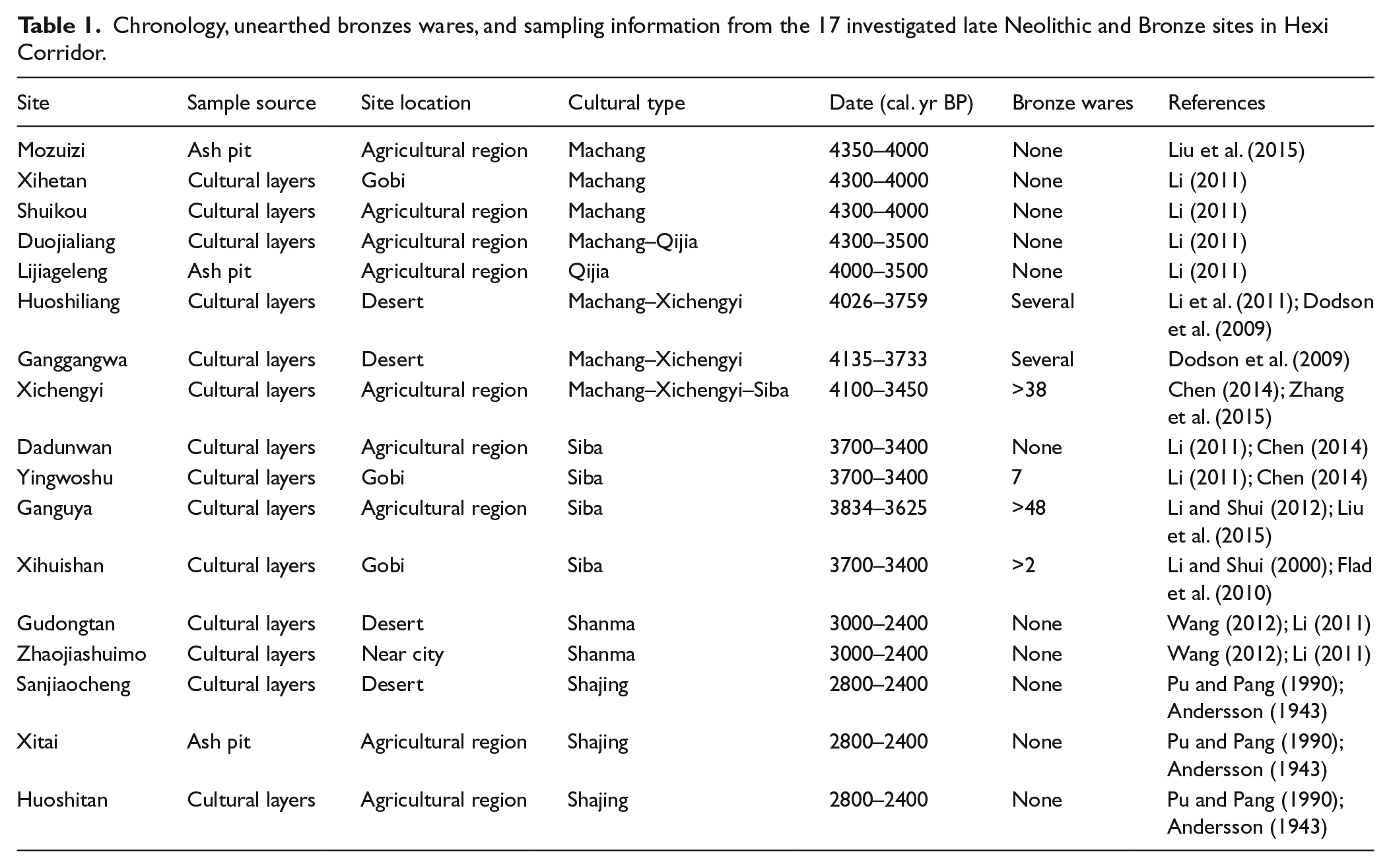
Neolithic and Bronze Age cultures present in the Hexi Corridor included the Majiayao (5000–4500 BP), Banshan (4500–4300 BP), Machang (4300–4000 BP), Qijia (4000–3500 BP), Xichengyi (4000–3700 BP), Siba (3700–3400 BP), Shajing (2800–2400 BP), and Shanma (3000–2400 BP) cultures (Li, 2009, 2011; Pu and Pang, 1990; Wang, 2012). Recent archaeological excavations have unearthed more than 300 pieces of bronze artifacts, including knife, awl, axe, earrings, and decorations, attributed to the Qijia, Xichengyi, and Siba cultures. Several copper smelting sites were discovered and copper slag, ore material, furnace wall, crucible fragments, nozzles, and molds were extracted (Dodson et al., 2009; Wang et al., 2015b; Figure 2).
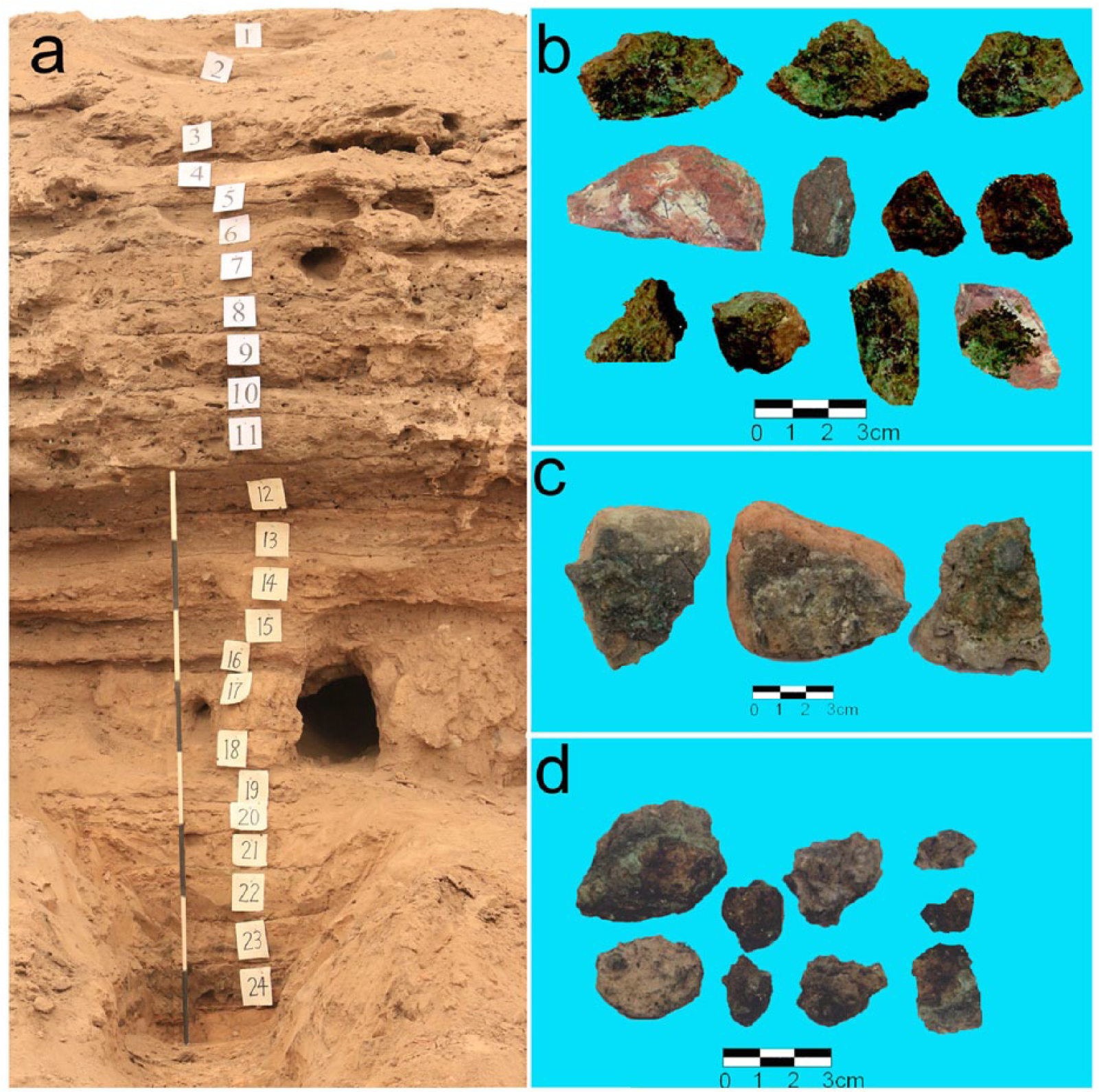
Sampling positions and metallurgical relics from late Neolithic and Bronze sites in Hexi Corridor: (a) culture layers of Xihuishan site; (b) collected ores in Ganggangwa, Huoshiliang, Shaguoliang, and Xichengyi sites; (c) excavated furnace wall in Xichengyi site; and (d) collected copper slag in Ganggangwa, Huoshiliang, Xihuishan, and Xichengyi sites.
Methods
In 2015, we investigated 25 Neolithic and Bronze Age sites lying in the Hexi Corridor. Samples from 17 sites (Table 1) were collected from exposed cultural layers or ash pits. A majority of the 17 sites are located a long distance from any modern industrial zone and sit in the Gobi desert or in agricultural regions. Each site was excavated to get a complete sedimentary profile (see Figure 2a) at a safe distance to prevent the disturbance and contamination of samples. All sampling areas are situated at a safe distance from hearths or metallurgical installations. In total, 331 samples were systematically collected considering the thickness of the sediment cultural layers at each site. For example, at the Xichengyi, Huoshiliang, Ganggangwa, and Xihuishan sites, samples were extracted from the entire vertical sedimentary profile at each 5 cm interval, which is reduced to 3 cm when encountering thin cultural layers. Organic material such as charcoal and plant remains was removed from the sample before analyzing for Cu and other trace elements. We also collected 51 natural sediment samples from areas surrounding the investigated sites.
Chronology, unearthed bronzes wares, and sampling information from the 17 investigated late Neolithic and Bronze sites in Hexi Corridor.
All collected samples were dried by air and pulverized into powder. A volume of 4 g of powdered material was pressed into a 4- to 6-mm-thick and 30-mm-diameter bead under 30 t/m2 of pressure. Cu elements were carried out with a Magix PW2403 Wavelength-Dispersive XRF Spectrometer with Rh Source in the MOE Key Laboratory of Western China’s Environmental System, Lanzhou University. We used the Certified Reference Materials (CRM) GBW07426 for calibrating purposes. Elemental concentrations ranging from 0.1 ppm to 100% can be measured by the Spectrometer.
Results
The test results show the sample Cu concentrations follow approximately a normal distribution and conform to the variance homogeneity. This meets the requirements of Student’s t test which is usually used for discrepancy detecting between two groups of samples. Therefore, the Student’s t test is carried out here to detect Cu concentration average disparities between cultural layers and uncontaminated sediments using SPSS 19.0.
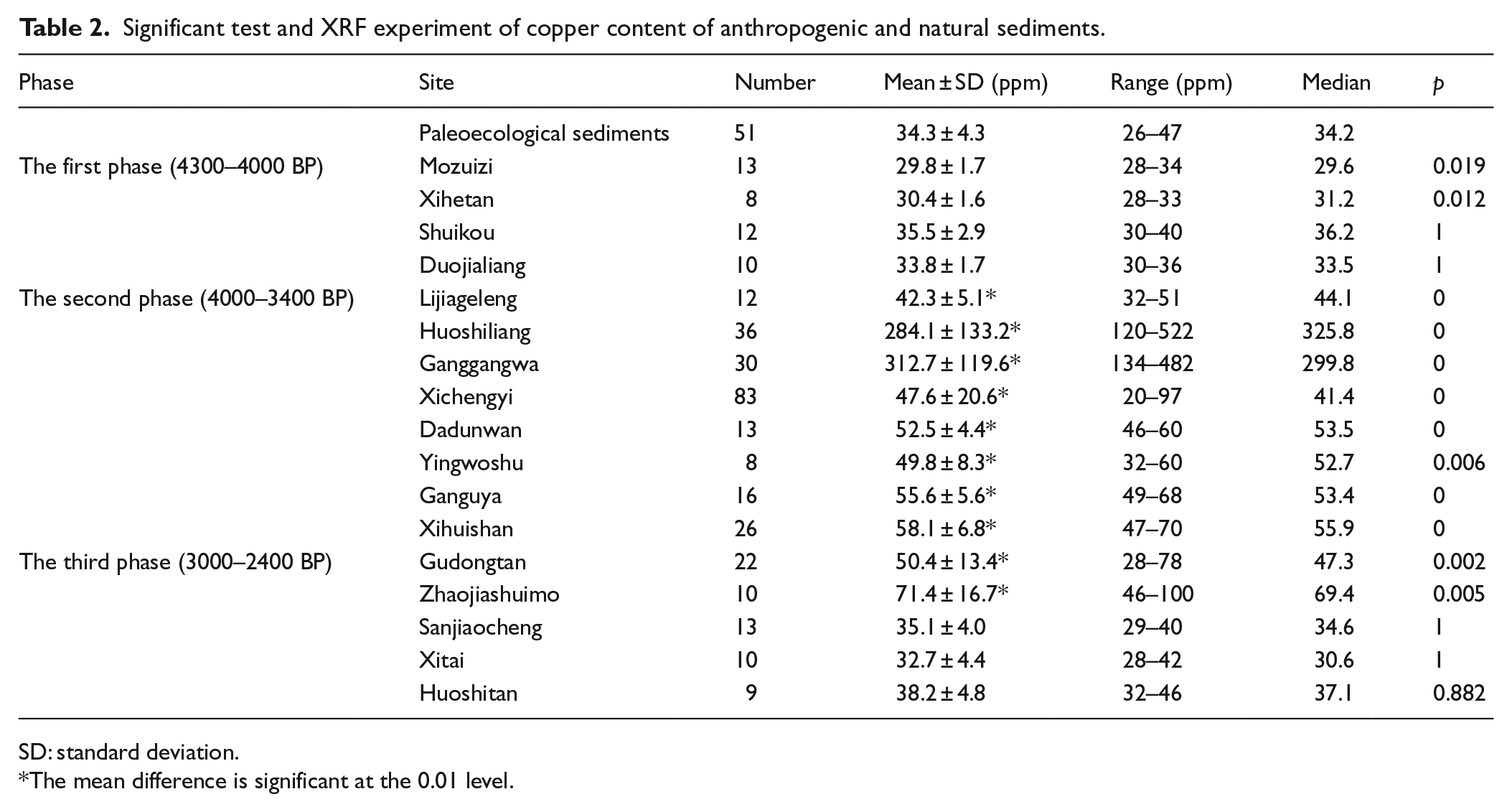
The Cu element results obtained by XRF are shown in box plots in Figure 3 determined by the BoxPlotR software. Three different phases can be distinguished for the 17 sites by their Cu concentrations. The detailed range and median values of copper concentrations from the three groups are presented in Table 2. The first phase includes samples collected from four sites, ranging in age from 4300 to 4000 BP, which includes Mozuizi, Xihetan, Shuikou, and Duojialiang (Figure 3, green boxes). The Cu concentrations from all samples range from 30 to 40 ppm and lie in the bracket defined by natural sediments (26–47 ppm). The second phase contains eight sites ranging in age from 4000 to 3400 BP. Their cultural layers display Cu concentrations significantly higher to that of associated natural sediments. Especially, the Huoshiliang and Ganggangwa sites present Cu concentrations varying from 200 to 500 ppm, 7× the content of natural sediments (Figure 3, red boxes). The third phase includes the Gudongtan and Zhaojiashuimo sites (3000–2400 BP) for which Cu concentrations range from 28 to 90 ppm and are still marginally higher to that of natural sediments. Three other sites in the third phase, Sanjiaocheng, Xitai, and Huoshitan, present Cu concentrations ranging from 28 to 40 ppm, which are similar to that of natural sediments and cultural layer samples from first phase (Figure 3, blue boxes).
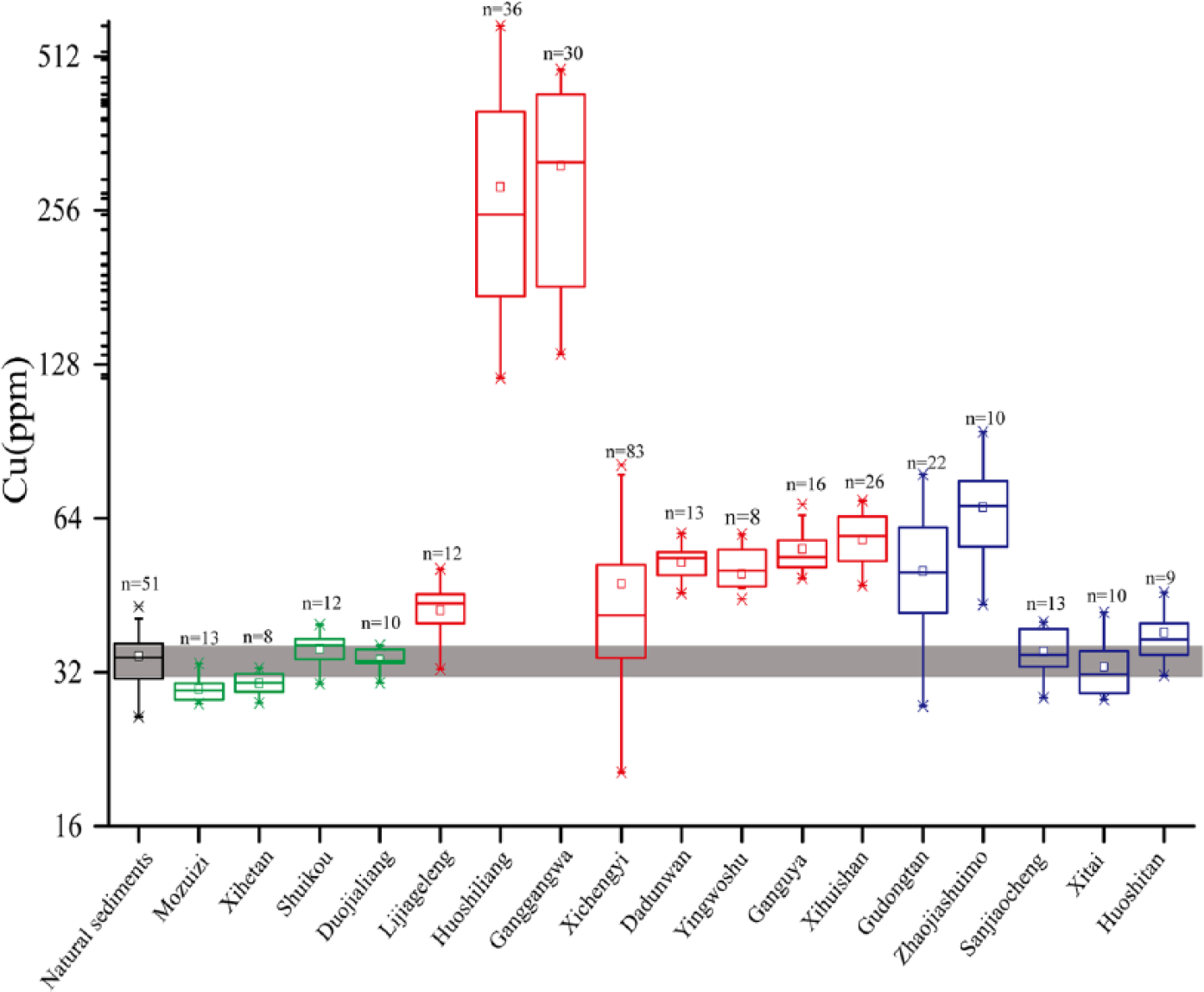
Copper content of anthropogenic and natural sediments from 17 late Neolithic and Bronze sites in Hexi Corridor. Boxes define lower and upper quartile (25% and 75%) and median values. The green, red, and blue boxes represent copper content of anthropogenic sediments from the sites of Machang, Qijia–Xichegyi–Siba, and Shajing–Shanma periods and the black box represents Cu content of natural sediments. The shaded area shows the main range of copper content in natural sediments.
Significant test and XRF experiment of copper content of anthropogenic and natural sediments.
SD: standard deviation.
The mean difference is significant at the 0.01 level.
The SST test results are provided in Table 2. Cu concentrations of cultural samples belonging to group 1 sites display no significant difference (p > 0.01) relative to Cu values of natural sediments. Cultural samples collected from sites representing group 2 possess high Cu concentrations and an average that are significantly different (p < 0.01) to those of group 1. Cu values from cultural samples collected from two sites forming group 3 are significantly different from the content of natural sediment samples, other three sites are not. The test result confirms the disparity of Cu concentration averages between cultural layers and natural sediments (Figure 3).
Discussion
The copper content of anthropogenic sediments in Hexi Corridor before and after the introduction of metal smelting technique
The Cu concentrations of samples collected from anthropogenic sediments from the late Neolithic and Bronze Age at various sites located in the Hexi Corridor defined three phases (Figures 3 and 4) that incorporate the Machang (4300–4000 BP); Qijia, Xichengyi, and Siba (4000–3400 BP); and the Shajing and Shanma periods (3000–2400 BP).

Spatial–temporal variety of the difference of copper content between anthropogenic sediments from late Neolithic and Bronze sites and natural sediments in Hexi Corridor: (a) 4300–4000 cal. yr BP, (b) 4000–3400 cal. yr BP, and (c) 3000–2400 cal. yr BP.
The Cu concentrations from cultural layer samples provided by the four Machang period sites (4300–4000 BP) overlap with that of natural sediments (Figure 3). This suggests human activities did not greatly influence the soil chemical properties during that period. Archaeological investigations and excavations indicated the Majiayao people probably expanded to Jiuquan in the western Hexi Corridor during 5000–4500 BP, while few Majiayao sites are known in the area (Bureau of National Cultural Relics, 2011; Li, 2011). During the Machang period, humans expanded to colonize the Hexi Corridor region and at least 63 sites have been investigated in the area. The density of prehistoric human settlements was the highest during this period. However, human activities did not cause an increase in the Cu content of anthropogenic sediments, probably because of the absence of copper smelting. There is no reliable evidence of metal smelting in northwestern China prior 4000 BP, although fragmentary bronze wares were discovered from Majiayao–Machang Neolithic sites, such as Linjia, Zhaobitan, and Gaomuxudi in the Gansu Province (Curated in Gansu Museum, 1984; Li, 2009). However, these findings are unreliable and need to be tested further. At the Ganggangwa and Huoshiliang sites, radiocarbon dating of wheat remains yields an upper age limit of 4135 cal. yr BP (Dodson et al., 2009), suggesting copper smelting might have been introduced to the central Hexi Corridor during the late Machang period. Most radiocarbon dates from these two sites range from 4000 to 3700 cal. yr BP (Dodson et al., 2009, 2013), but only few fragments of Machang potteries were scattered on the ground surface and a huge number of Xichengyi remains were found. These findings indicate the two sites were principally occupied during the Xichengyi period.
The copper concentrations of cultural layer samples provided from all eight sites of the second group are significantly higher relative to natural sediment values across the area (Table 2). They are characterized by Bronze Age smelting areas located nearby. The As, Zn, Ni, and Pb concentrations which correlate with Cu during smelting activities has display a similar increase, such as cultural layers in Huoshiliang and Ganggangwa site and natural sediments of Tiaohu lake (Dodson et al., 2009; Li et al., 2011), suggesting smelting was a source of pollution via the redistribution of slag and mining residues. At the Ganggangwa and Huoshiliang sites, the Cu concentrations of cultural layer are 7× higher to those of natural sediments, suggesting they were potentially smelting and mining centers. This is corroborated by archaeological studies undertaken at the Xichengyi site (Chen et al., 2014). The number of bronze artifacts excavated from the Hexi Corridor Bronze age sites proves copper smelting was extensive and reached a maximum during 4000–3400 BP (Li, 2009; Figure 4b). More than 300 pieces of bronze wares were recently unearthed at the Xichengyi and Siba sites (Chen et al., 2014; Li, 2009, 2011). Moreover, numerous archaeological remains associated with copper smelting, such as copper slag, ore material, crucibles, nozzles, and molds (Figure 2) were unearthed at the Xichengyi, Ganggangwa, and Donghuishan sites (Chen et al., 2014; Li, 2009). The discovery of Bronze Age copper with isotopic signatures indistinguishable to that of Baishantang mine indicates a local copper source was mined by the Xichengyi people (Dodson et al., 2009; Figure 4b). Furthermore, radiocarbon dating confirms copper smelting in the Hexi Corridor occurred during 4000–3400 BP. High-intensity copper smelting during the Qijia, Xichengyi, and Siba periods modified the chemical composition of cultural sedimentary layers. This is indicated by the comparison between the Cu content of cultural layers and natural sediments in this study and concentrations of metallic elements released by copper smelting (Cu, As, Pb, etc.) from sediments of Tiaohu lake in central Hexi Corridor (Li et al., 2011).
The copper concentrations of cultural layer samples collected from the third-phase sites (3000–2400 BP) decline relative to the concentrations of samples from the two previous period, but do remain statistically higher relative to the concentrations of natural sediments collected from the Gudongtan and Zhaojiashuimo sites (Table 2). The copper concentrations still overlap the natural sediments’ range obtained for the Sanjiaocheng, Xitai, and Huoshitan sites (Figure 3). The numbers of sites containing bronze artifacts diminished substantially relative to the second period (Figure 4b) and remained associated to copper smelting (such as copper slag and molds) unearthed from the Shajing and Shanma sites are also few (Li, 2009, Table 1), indicating reduced copper smelting during 3000–2400 BP. This might been explained by the relocation of copper wares production centers to other parts of China such as the Central and Chengdu plains (Chen, 2010; Lee et al., 2008; Zhang, 2013). From 3000 to 2400 BP, the Cu content of cultural layers showed spatial variations within the Hexi Corridor. In the western corridor, the Cu concentrations are higher relative to that of natural sediments, whereas they are within the natural background range in the eastern section (Figure 4c). These results imply the Shanma people still engaged in copper smelting in the western Hexi Corridor (Chen et al., 2015b), while bronze wares of the Shajing societies settled in the eastern Hexi Corridor were imported from other areas (Gansu Provincial Institute of Cultural Relics and Archaeology, 2001).
Influencing factors behind human copper smelting activities in Hexi Corridor during prehistoric periods
The copper contents of anthropogenically disturbed influenced within the Hexi Corridor are further related to the cultural development and exchange across Eurasia during late prehistory and on the effect of climate change.
The climate was relatively warm and wet in northwest China during 6000–5000 BP (An et al., 2006; Herzschuh et al., 2004; Ji et al., 2005; Thompson et al., 1997; Figure 5), and extensive millet cultivation emerged in the western Loess Plateau around 5900 BP (Barton et al., 2009), favoring a westward expansion of the Majiayao culture to the northeast Tibetan Plateau (Chen et al., 2015a) and a low occupation of the Hexi Corridor. The temperature and precipitation decrease during 5000–4500 BP in northwest China (Cai et al., 2010; Dong et al., 2012; Zhou et al., 2010) possibly drove the transition from the Majiayao to the Banshan and Machang cultures (Dong et al., 2013a, 2013b). The climate reverted to warm and wet conditions during 4300–4000 BP (Figure 5), which further promoted the extensive and intensive settlement of Machang societies in the Hexi Corridor. The Machang people subsisted primarily on the cultivation of millet (Chen et al., 2015a; Ma et al., 2014), whereas wheat, barley, and bronze vessels originating from western Asia did not spread northwest China as testified by current archaeological research.
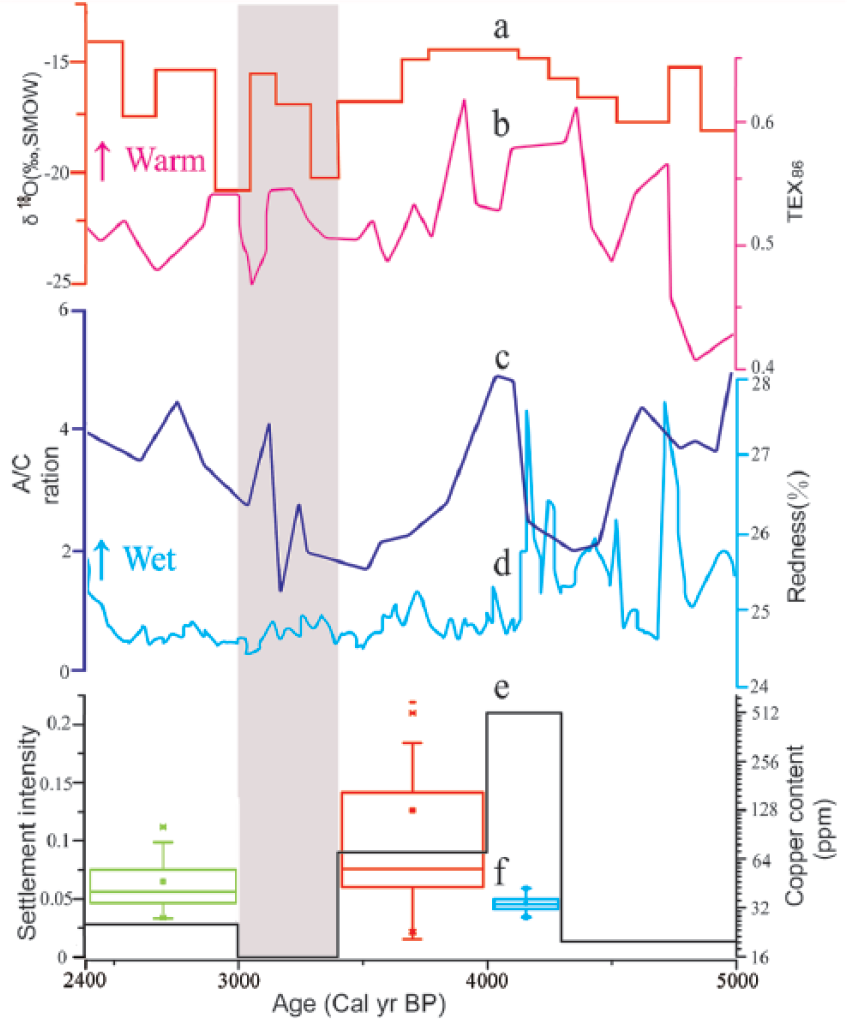
Climate change, human settlement intensity, and copper content of anthropogenic sediments during late Neolithic and Bronze periods in Hexi Corridor: (a) 18O isotope contents from Guliya ice core (Thompson et al., 1997); (b) TEX86 from Qinghai Lake (Wang et al., 2015a); (c) Artemisia/Chenopodiaceae ratio from Eastern Juyan paleolake (Herzschuh et al., 2004); (d) redness from Qinghai Lake (Ji et al., 2005); (e) settlement intensity of Hexi Corridor (Bureau of National Cultural Relics, 2011; Li, 2011); and (f) copper content of anthropogenic sediments in late Neolithic and Bronze sites in Hexi Corridor.
During 4000–3400 BP, the Trans-Eurasian cultural exchanges increased (Frachetti, 2012; Sherratt, 2006), while bronze wares, sheep, wheat, and barley were introduced to northwestern and central north China (Dodson et al., 2013; Gansu Provincial Institute of Cultural Relics and Archaeology and Jilin University Institute of North Archaeology, 1998; Linduff and Mei, 2009). Remains of wheat, barley, and millet crops were identified at the Begash and Tasbas sites in Kazakhstan (Doumani et al., 2015; Spengler et al., 2014a, 2014b), demonstrating the convergence of western and eastern Asian cultures can be traced back to at least 4400 BP. The western Asia ‘cultural package’ composed of wheat, sheep, and copper smelting has been introduced to the Hexi Corridor from Eurasia around 4000 BP. Adding millet cultivation and polychrome potteries to the cultural package produces the characteristic Neolithic culture of people settling the Loess Plateau. Remains were unearthed by excavating the Qijia, Xichengyi, and Siba sites; archaeobotanical and zooarchaeological analyses of these remains revealed a more diverse food resource relative to that prevailing during the Machang period (Dong et al., 2016; Flad et al., 2010; Liu et al., 2015), a finding supported by isotopic evidence (Atahan et al., 2011; Ma et al., 2014; Zhang et al., 2015). While the climatic conditions went cold and dry from 4000 to 3400 BP, human settlements remained relatively dense (Figure 5), probably because of a better adaptation of the population to the changing environment. Extensive land use and the increasing number of settlements forced the production of new tools through copper smelting (Zhou et al., 2012). As the windy conditions and cold and dry environment prevail in the Hexi Corridor during 4000–3400 cal ka BP, it is possible that copper deposition of the archaeological site was wind-brought as mine spoil and mineral processing waste. Intensive smelting and cold windy climate during the occupation by the Qijia, Xichengyi, and Siba cultures did cause higher copper contents in the corresponding archaeological strata.
The cultural evolution in the Hexi Corridor area presents a hiatus extending from 3400 to 3000 BP and corresponding to the continuation of the cold-dry climatic period (Figure 5) determined by several paleoclimatic studies (Herzschuh et al., 2004; Ji et al., 2005; Wang et al., 2015a). The climatic deterioration during 3400–3000 BP was much more severe and lasted longer than other cold-dry periods. This likely resulted in the exhaustion of the buffering capacity of human societies and led to the migration of human population to appropriate area, thus explaining the absence of human settlement and copper smelting in the Hexi Corridor. Centennial deterioration of climate is also suggested as an important trigger for disappearance of human settlements in some areas during both prehistoric and historic time (Kuper and Kröpelin, 2006; Zhang et al., 2007).
There is a growth in human settlements in the Hexi Corridor from 3000 to 2400 BP when the climate became warmer and wetter, however not as proper as the two other previous periods. The subsistence of the Shajing and Shanma people was also different from the Machang, Qijia, Xichengyi, and Siba culture people. A large number of horse, sheep, and cattle bone remains as well as leather clothes were unearthed from a Shajing culture cemetery located in the eastern Hexi Corridor (Gansu Provincial Institute of Cultural Relics and Archaeology, 2001; Pu and Pang, 1990), indicating a subsistence strategy transitory from agriculture to agro-pastoral production. Furthermore, the characteristics of the unearthed bronze and iron artifacts are consistent with the typical wares of the Eurasian steppe, such as daggers, animal-shaped ornaments, and copper knives. However, no smelting relics have been found at the Shajing sites, suggesting that the Shajing culture bronze wares could have been obtained from people occupying the northern steppe areas (Wang, 2012). Humans still might have used copper smelting during 3000–2400 BP. For example, fragments of ceramic crucibles employed for copper smelting were discovered at the Mazongshan site occupied by the Shanma people (Chen et al., 2015b).
Conclusion
The copper concentrations of late Neolithic and Bronze site cultural layer samples collected from the Hexi Corridor vary during different periods. Background copper values are obtained from cultural layers deposited during 4300–4000 BP; then, copper concentrations increased substantially during 4000–3400 BP to decline from 3000 to 2400 BP. These variations suggest the copper smelting activities varied markedly during different prehistoric episodes. Copper smelting was introduced to the Hexi Corridor around 4000 BP, when long distance cultural exchange across Eurasia was predominant. During the Bronze Age, copper smelting in the Hexi Corridor was closely related to human settlement intensity which in turn was influenced by climate change, transition of subsistence strategies, and cultural evolution in adjacent areas.
Footnotes
Acknowledgements
The authors thank Director Xu Wang and Jianhong Liang for helping us to collect samples during field work.
Funding
This research was supported by the National Social Science Foundation of China (Grant Nos 12&ZD151 and 12XKG006), the National Natural Science Foundation of China (Grant No 41271218), Fundamental Research Funds for the Central Universities (lzujbky-2015-k09), and the 111 Program (#B06026) of Chinese State Administration of Foreign Experts Affairs.