



Abstract
Many musicians deliver prosocial messages in their music and engage in charity events, but we know very little about how our reception of this music affects us. Following the General Learning Model by Buckley and Anderson, one possible explanation could be that the music affects us because we know about the engagement and the intentions of the musicians. In most cases this knowledge is received through media coverage. Two studies were conducted to investigate what influence media coverage about music with prosocial content has on participants’ appraisal of the music, and the effect of the music on participants. The first study (N = 145) altered the valence of the media coverage about a semi-fictional music charity project in a 3 × 1 between-subjects design. The second study (N = 157) used music by an unknown artist that had either prosocial or comparable neutral lyrics alongside positive or neutral media coverage about the artist in a 2 × 2 between-subjects design. Both studies tested the extent to which participants’ appraisal of the music they listened to, their empathy and associated prosocial behavior or prosocial behavioral intentions differed between experimental groups. Results of Study 1 indicate that media coverage influences our appraisal as negative media coverage of the charity project was found to negatively affect participants’ appraisal of that project and Study 2 yielded that neutral media coverage of the unknown artist led to the most positive appraisal of the artist’s music.
Keywords
Introduction
In recent days, when refugees seek help and safety in European countries, prominent actors, artists and musicians often speak out in support of causes that they deem to be worthy. Individual artists may deliver their own values and norms through their lyrics or by donating money raised through the sale of their music and some musicians dedicate themselves to charity projects; for example, artists like Bono (U2) and Michael Jackson have participated in musical charity productions (e.g., Band Aid in 1984, 1989, 2004, and 2014) and projects such as USA for Africa (in 1985) or Artists United Against Apartheid (in 1985) were popular and regularly covered in the media. Thus far, we know only little about the effects of music with prosocial content (a behavior is considered as prosocial when it benefits another person or society as a whole, e.g., songs with lyrics about helping, donating, or saving the environment). We know that music with prosocial lyrics has an impact on listeners, but there is a lack of research investigating the extent to which various aspects of the musical experience, the listener’s situation, or their personal dispositions trigger or influence this effect. The current study focuses on one special factor, namely the impact of media coverage regarding the music of interest.
When it comes to the effects of popular music, the negative effects of aggressive song lyrics and songs with violent content are often the focus of research (e.g., Anderson, Carnagey, & Eubanks, 2003; Gutscher, Schramm, & Wirth, 2011; Knobloch-Westerwick, Musto, & Shaw, 2008; Pieschl & Fegers, 2015) and musical genres like rap, heavy metal, and rock music have often been denounced by media and researched in many studies (e.g., Gowensmith & Bloom, 1997; LaMarre, Knobloch-Westerwick, & Hoplamazian, 2012; Mast & McAndrew, 2011). However, little is known about potential effects of music with prosocial content, like the music of charity projects or of socially engaged musicians. Some studies by Greitemeyer (2009a, 2009b, 2011a) have considered the possibility that music with prosocial lyrics is able to enhance empathy, altruism and decrease hostile feelings. More recently, Greitemeyer has shown that music with prosocial content can reduce risky driving behavior (Greitemeyer, 2013) and decrease prejudice or discriminating behavior (Greitemeyer & Schwab, 2014). Greitemeyer, Hollingdale, and Traut-Mattausch (2015) also found that music with prosocial content enhanced participants’ pro-equality attitudes and behavior toward women.
In these studies, the researchers could not fully explain which part of the music influences the process or if other factors like knowledge about the music play a role in the reception process. Based on the General Learning Model (GLM) by Buckley and Anderson (2006) research to date has not explained if the effects discovered after listening to certain types of music are caused by the music, lyrics or by personal traits and states. The GLM states that the learning encounter and the impact on a certain behavior depends at least partially on the knowledge, attitudes and information about the subject or situation a person is exposed to. We know that musicians like Bono care about the environment, poverty and freedom because of the media coverage. It is possible that the music (sound, arrangement, and instruments) itself influences the recipients or that it is mainly an effect of the lyrics, but there is also the possibility that songs affect recipients because of the knowledge they have about the songs, charity project or work of the musicians. Media coverage, especially pop journalism, is a very important source of knowledge about popular music and essential for popular culture (Toynbee, 1993). Thus, the primary purpose of this paper is to investigate the effects of prosocial music on recipients’ appraisal and behavior that can be explained through the information we receive through media coverage about the music.
Theoretical background
Following the approach by Greitemeyer (2009a), the processes underlying the effects of prosocial media are based on broader learning theories like the GLM. In comparison to the General Aggression Model (GAM, Anderson & Bushman, 2002), the GLM not only explains the effects of aggressive content, but also how an individual’s behavior can be affected by media and social learning scenarios in a general sense. The model predicts that any stimulus (including music) is posited to have short-term and long-term effects through a learning encounter or several learning mechanisms over a certain time. It describes a continuous cycle between the recipient and the environment and suggests that media content affects a person’s internal state by altering their cognition, affect or arousal (see Figure 1).

General Learning Model (adapted from Buckley & Anderson, 2006).
Following the GLM the learning process starts with personal and situational input variables. Personal variables include respondents’ attitudes, beliefs and goals, whereas situational variables are dependent on the environment surrounding the individual and include the presence of other persons or the setting of the current location.
The interaction of personal and situational input variables affects the way a certain input (e.g., playing a video game, listening to a song) activates cognitive routes like attributions, thoughts and learned scripts (Huesmann, 1986), the affective route (mood, emotions, empathy, etc.) or leads to arousal. These three routes influence each other and eventually determine the internal state. This internal state again influences how situation and input are appraised. Eventually, this appraising process leads to a shaping of a person’s decision in a certain encounter. If this decision leads to a satisfying or unrewarding result it initiates a learning encounter that eventually can contribute to the personal variables.
For example, if a person with high empathy skills (personal variable) listens to a song with prosocial lyrics, it is likely that a prosocial internal state is activated through prosocial thoughts (cognition), empathy (affect) and arousal, which most likely leads to a positive appraisal of the song’s content. If this person eventually has to make a decision on how to behave, for example whether he or she should help someone in need, the person is more likely to act in a prosocial way (for a more detailed overview of the GLM and positive media effects, see Greitemeyer, 2011b).
The GLM is a broad and simplified model for a very complex process. Especially when it comes to music reception, the model seems to bypass important factors. But when we take a look at a music reception model, for example the reciprocal feedback model of musical communication (Hargreaves, MacDonald, & Miell, 2005), we will find several overlaps. Hargreaves and his colleagues argue that there are three essential factors, namely personal, situational and musical variables that determine the listener’s response to the music. Examples of listeners’ personal variables include individual differences such as age or gender or more specific variables for music reception such as musical knowledge or preferences. Situational variables include everyday situations such as work or leisure and the presence or absence of others, whereas musical variables are collative variables like complexity and familiarity with the performance context. In their model the response consists of cognitive, affective and physiological components. The input variables are more detailed and specific for music than those in the GLM, while the theorized mechanisms of the response are comparable. The music-specific personal input variables from Hargreaves et al. (2005) are particularly relevant to the current studies because the empirical findings (as described before) suggest that a certain musical knowledge is important for the theorized process. With a look at the research on music with prosocial lyrics the GLM seems to be a useful, but broad, theoretical framework. Therefore, the music-specific variables provided by the reciprocal feedback model are taken into account for the following studies.
Literature review
So far there is only a limited amount of scientific literature regarding the effects of music with prosocial lyrics. The first evidence was provided in a series of studies on music with prosocial lyrics (Greitemeyer, 2009a, 2009b). In those experiments by Greitemeyer (2009a, 2009b), the participants were randomly assigned into two groups: while the experimental group listened to a song with prosocial lyrics (e.g., Bob Sinclair – “Love Generation”) the participants in the control group listened to a song with neutral lyrics (e.g., Bob Sinclair – “Rock This Party”). In one study the accessibility of prosocial thoughts was examined, in another one, the participants’ empathy, and in a third, helping behavior was examined. Results indicate that listening to songs with prosocial lyrics increases the availability of prosocial thoughts. Furthermore, it also led to more empathy (which is used as an indicator for prosocial feelings) and increased the helping behavior of the participants; for example, 53% of participants from the experimental group donated money for a non-profit organization whereas only 32% from the control group did. Another essential study is the one conducted by Jacob, Guéguen, and Boulbry (2010): in a field experiment they were able to show that participants who listened to a prosocial song in a restaurant were more generous in their tipping behavior than the ones who listened to songs with neutral lyrics. More recently the results by Jacob and colleagues were supported by Ruth (2017) who found that guests of a café who listened to music with prosocial lyrics showed more prosocial consumer behavior by buying fair trade products than guests who listened to comparable neutral music.
Other studies focused on more specific prosocial behavior or attitudes. For example, Greitemeyer et al. (2015) were able to show that those who listened to a song with lyrics about the equality of women showed a more positive attitude and behavior towards women than the people who heard a song with neutral lyrics. Bodner and Golboa (2009) found out that crisis songs were able to activate awareness for intergroup conflicts even though they were perceived outside the time of crisis. In a broader sense, the findings of Clark and Giacomantonio (2013, 2015) indicate how empathy affects prosocial behavior through certain music preferences of a person, which is especially true for male adolescents. The preferences seem to contribute to a higher empathy level.
The reception of prosocial songs was not only investigated towards prosocial but also antisocial effects. In five studies Greitemeyer (2011a) was able to show that listening to a prosocial song (e.g., The Beatles – “Help”) can reduce the accessibility of aggressive thoughts, hostile emotions and aggressive behavior. These findings are supported by the study of Böhm, Ruth, and Schramm (2016) who confirmed the positive influence of a prosocial song (Bruno Mars – “Count on Me”) on aggressive thoughts. Whereas Coyne and Padilla-Walker (2015) showed in a longitudinal study that especially the behaviors of adolescents seem not to be influenced by music with prosocial content but rather by music with aggressive and sexual content. So far there is only one contrary result, yielded by Niven (2015) who showed that music in general can decrease customer aggression, while no specific effects of music with prosocial lyrics were found. These results could be explained due to the field experiment setting in a call center where customers do not care about the music in the wait loop and therefore are only influenced by the pure presence of music.
The research as shown thus far has focused on behavioral outcome variables that indicate effects in a broader sense, or on the effects on cognition and affect. There is no research investigating the impact of specific input variables like knowledge or information a person has about the music with prosocial lyrics; however, there is research about the influence of media coverage on the reception of music in general. For example, Neguţ and Sârbescu (2014) showed that stereotypical priming with media coverage influenced listeners’ reactions towards two music genres. It seems likely that if we read about the music, musicians, and the musicians’ activities then the music we listen to will activate our internal state in another way than a person’s state who does not read about it. Usually media coverage is (besides, e.g., album booklets, or concert attendances) one important source of information about music and musicians and a possible factor that influences our perception of music (Shuker, 1994). Additionally, there are some studies about the effects of media coverage in general on prosocial behavior; for example, Carlyle, Orr, Savage, and Babin (2014) investigated the influence of news coverage on prosocial behavior for a certain topic, namely intimate partner violence, and showed that sympathy has an indirect effect through affective perspective taking on prosocial responses. Still, there is no research up to the present time that has examined how media coverage about prosocial music or prosocial projects by musicians influences the way listeners perceive and respond to music with prosocial lyrics.
In summary it can be said that the effects of songs with prosocial content are still poorly investigated. The current study focuses on how the knowledge and information that we have about music with prosocial content and charity projects in which celebrities speak and perform these kinds of songs influences the way we appraise the music and how the music affects us.
Hypotheses and research question
According to the GLM, appraisal of media content is crucial for the decision process and can lead to a certain behavior. If the information an individual has about the music through media coverage has positive, negative or neutral valence the appraisal process should be influenced. It seems most likely that media coverage that values the music in a positive or negative way should influence the appraisal of the music in an analogous positive or negative way, therefore the first hypothesis is:
H1: Positive media coverage on music with prosocial content leads to higher appraisal of the content than neutral or negative media coverage.
The appraisal leads to a thoughtful or impulsive action. When a person has sufficient recourses to appraise the content and approves it, it is more likely that the positive appraisal leads to a certain action that fits the intention of the media content. In terms of the prosocial content, it is likely that a person who approves the prosocial message acts prosocially when a decision has to be made. Thus, hypothesis 2 states:
H2: The more a person shows positive appraisal for music with prosocial content, the more prosocial the person’s behavior will be.
As Greitemeyer (2009b) showed in his studies, empathy mediates the effect of media reception on prosocial behavior. When people listened to music with prosocial lyrics they showed more prosocial behavior mediated by empathy than recipients of comparable neutral music. This effect is consistent with the GLM, which states that the internal affective route influences the internal states and in turn influences the eventual decision of a person, so the third hypothesis is:
H3: The more empathetic a person is, the more prosocial the person’s behavior will be.
The personal variables such as attitude towards and knowledge about the producers and the content of the music influence the whole appraisal and learning process. So there should be a difference between well-known and unknown music with a view to the hypotheses. If a very famous person that is known for his or her social engagement states that you should act in a prosocial way, you would probably approve the message more than when an unknown person calls for prosocial actions. Therefore, the research question is:
RQ1: Do recipients appraise media content by well-known persons differently to media content by unknown artists?
The three hypotheses will be tested using two individual studies but with the focus altered from well-known (Study 1) to unknown artists (Study 2) in order to answer the research question.
Study 1
This experimental study examined how people are influenced by media coverage for a media product with prosocial content, in this case a music charity product. The main goal was to test how the media coverage affects the appraisal of the music charity product and eventually leads to prosocial behavioral intentions. The initial idea was to manipulate the news about a charity project initiated by musicians, but it seemed likely that too many people already know about events like Live Aid or songs like “Do They Know It’s Christmas Time”. Hence, a semi-fictional project was invented: the musicians under the name “USA for Africa” who initially sang “We Are the World” under the leadership of Michael Jackson decided to produce a new version of the song in order to help the victims of the earthquakes in Nepal in 2015. Some of the initial musicians as well as some new musicians such as Lana Del Ray and Chris Martin (Coldplay) started the project under the name “USA for Nepal 2015” to collect money for the victims of the latest tragedy by selling the new version of the song. This was the cover story of the experiment and the independent variable was the media coverage about the project, musicians and the song.
Method
An experimental online survey with a 3 × 1 between-subjects design was conducted. The survey was hosted on the platform UniPark by Questback. A convenience sample of 145 German people participated in this study between 16 June and 14 July 2015; 71% (n = 102) were female and the average age was 28.68 years (SD = 13.72) ranging from 17 to 61 years. Participants were recruited via social media groups, emails and various online message boards. As most of the participants were students the sample is highly educated (67.6% with a general qualification for university entrance). The participants were assigned randomly to one of the three conditions: positive, negative (experimental groups) and neutral (control group) media coverage.
At the beginning of the survey participants read one version of the manipulated media coverage about “USA for Nepal” (see the results of the pilot study for further information) and watched a slightly shortened version (the credits after the music stops were eliminated) of the music video of “We Are the World” embedded in the media coverage afterwards. Following this, they had to answer a questionnaire containing items about appraisal, empathy, prosocial behavior and socio-demographics. Since the participants were told that the articles used were real, they were fully debriefed at the end of the study and thanked for their participation. As incentive, an Amazon voucher (worth 20 €) was raffled among all participants.
Pilot study
A pilot study was carried out to produce a stimulus of high internal and external validity for use in the main study. Five fictional news articles were written about the music project in German. Two briefed undergraduate students were instructed to write two versions that were positive (one more, one less) about the project and highlighted the benefits of it, while two versions should be critical (again one more, one less) about the whole project and point out that the musicians only joined the project for showmanship and profit. The last version should remain neutral about the project and song. A sample of undergraduate students (N = 36) rated the articles in a randomized order on 5-point Likert scales in terms of received valence, received seriousness of the news and whether the information they received was plausible (see Table 1 for a summary of results). Additionally, they were asked to name a blog, newspaper or magazine in which this article could be published. An ANOVA for repeated measures yielded significant differences in the appraisal of the articles, F(4, 140) = 85.05, p < .001, η2 = .71. An LSD post-hoc test indicates that this is true for the differences between all of the three articles. The positive article is appraised as more positive than the neutral one (p < .01) and the negative one (p < .001), while the neutral is appraised as more positive than the negative one (p < .001). The first positive article was rated as the most positive one, and as serious as well as plausible, while the second negative article was rated as the most negative one, whereas it was less serious and plausible than the first negative text. But since the differences were very small, the second negative article was used. The neutral article was received as neutral, serious and plausible; LSD post-hoc tests indicated that there are no differences between the positive and neutral articles, ns. Even if all the negative articles were not considered to be as serious (LSD post-hoc tests: all ps < 01.) and plausible (ps < .01) as the neutral and positive ones, the means are still acceptable for the purpose of this study. Therefore, the described articles were used as stimulus material for the main study. The publishing platform that was mentioned most often was a German online news blog (Spiegel Online), therefore the design of this blog was adapted for the stimulus material and presented as a blog showing the manipulated reports about the charity project.
Ratings of the media coverage in terms of valence, seriousness and plausibility in Study 1.
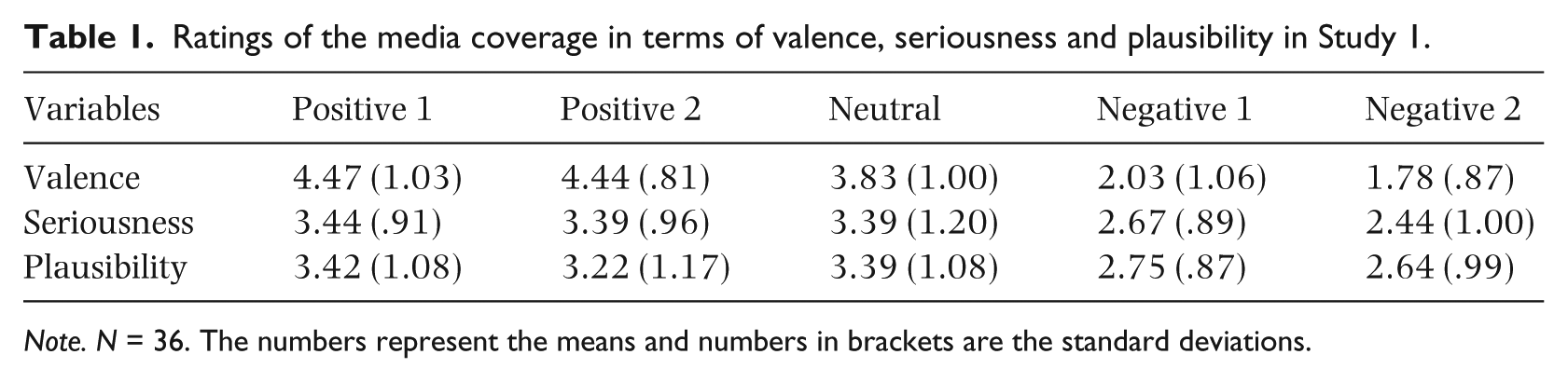
Note. N = 36. The numbers represent the means and numbers in brackets are the standard deviations.
Dependent variables
Appraisal
Initially 15 items were created that used the information from the articles and the valence that was represented in those. The items referred to the music charity project by “USA for Nepal 2015”. After a reliability analysis, three items were deleted and the remaining 12 items had a high reliability, α = .89. Items used were, for example, “The music project is a help for the victims of the earthquake in Nepal”, “Other members of the public can take a lesson from this project” or “I think this project is meaningful”. The items were measured on 5-point Likert scales with the end points labeled (1 = “I totally disagree” and 5 = “I totally agree”).
Empathy
The Basic Empathy Scale in Adults (BES-A) by Carré, Stefaniak, D’Ambrosio, Bensalah, and Besche-Richard (2013) was adapted in this study. The participants were asked to respond to the items referring to their recent feeling. The 20 items had a reasonable reliability, α = .85. Exemplary items are “My friends’ emotions don’t affect me much”, or “I tend to feel scared when I am with friends who are afraid”. Again items were measured on 5-point Likert scales (1 = “I totally disagree” and 5 = “I totally agree”).
Prosocial behavioral intentions
Since prosocial behavior is usually tested in a laboratory setting or in field studies where the behavioral actions can be observed, some items were created that referred to the helping or donating intentions that were measured in the study by Greitemeyer (2009a). The items again used the information from the stimulus material. Four items were used that had an acceptable reliability, α = .74. Items used were: “I will buy the new song in order to help the people in need” or “I will tell my friends and family about this project”. Again, 5-point Likert scales were used for these items (1 = “I totally disagree” and 5 = “I totally agree”). The reliabilities, means and standard deviations can be seen in Table 2, while the distributions between the groups can be seen in Table 3.
Means and standard deviations of the dependent variables in Study 1.
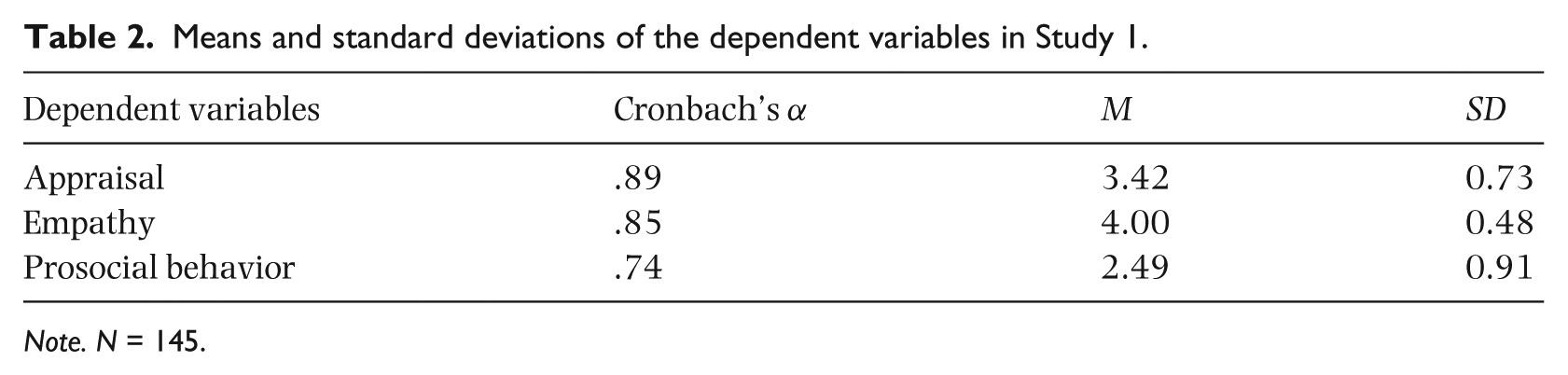
Note. N = 145.
Means and standard deviations of the dependent variables in the experimental groups of Study 1.
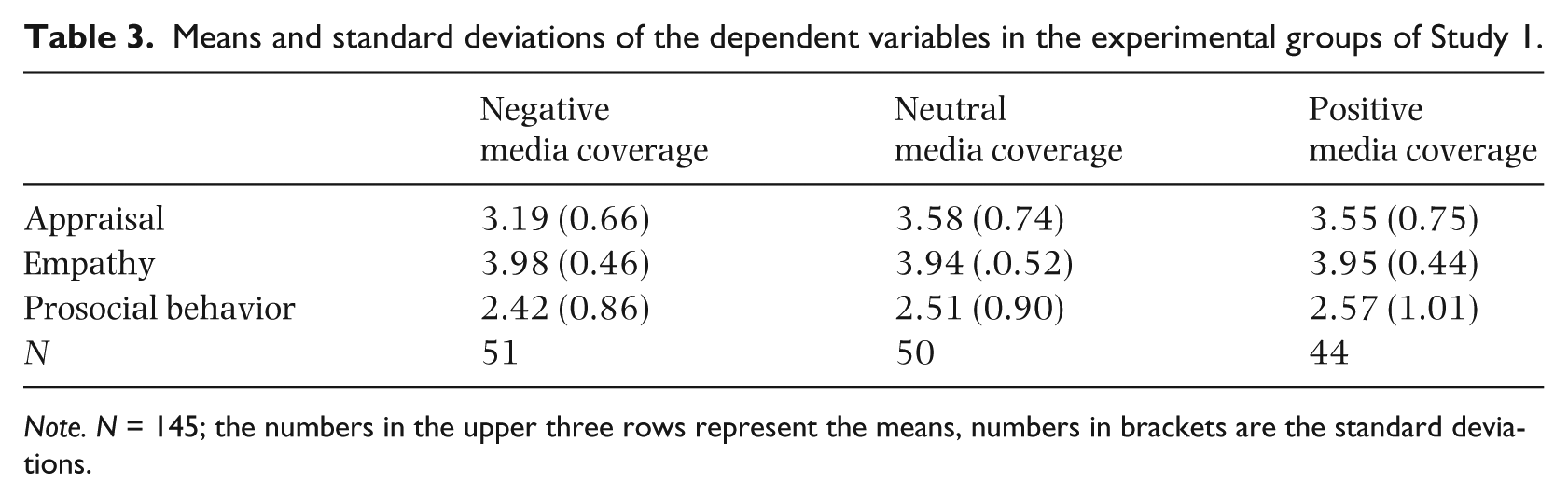
Note. N = 145; the numbers in the upper three rows represent the means, numbers in brackets are the standard deviations.
Results
To test the first hypothesis an ANOVA was conducted. The hypothesis proposes that the valence of the media coverage influences the recipients’ appraisal of the content. In this case the independent variable, namely the media coverage, is about the music charity project “USA for Nepal 2015”. This factor has three levels: negative, neutral and positive media coverage about the project. The dependent variable is the appraisal of the project. The analysis of variance reveals that there is a significant difference between the three groups, F(2, 142) = 4.64, p < .05, η2 = .06. A post-hoc test yielded that the recipients who read the positive (n = 44, M = 3.55, SD = 0.75) and those who read the neutral report (n = 50, M = 3.58, SD = 0.73) showed the most positive appraisal, while the group with the negative one (n = 51, M = 3.19, SD = 0.66) approved the project the least. Thus, hypothesis 1 can be accepted for the difference between positive and negative media coverage, while there is no significant difference between the appraisal of the positive and neutral media coverage.
Although the data could not be used to test hypotheses 2 and 3, a multiple regression was calculated with appraisal and empathy as predictor variables and prosocial behavior as the outcome variable, following the theorized process by the hypotheses. The results show a significant coherence for appraisal as well as for empathy. Following Cohen’s criteria, the multiple regression yields a medium-sized effect (R2 = .18). The results indicate that appraisal and empathetic skills predict how much prosocial behavioral intention a person shows (see Table 4).
Linear model of predictors of prosocial behavior.

Note. N = 145. CI = confidence interval. R2 = .18, ∆R2 = .17, F = 15.87.
p < .01.
Discussion
For hypothesis 1 it can be said that the means of appraisal of all three groups were slightly positive and varied only a bit, but still there was an influence of the media coverage on appraisal. Surprisingly, the neutral condition showed a positive appraisal of the music project, even slightly more positive than the positive condition. In contrast, the negative media coverage has a negative impact on the appraisal. This could be explained by looking at the content of the negative media coverage. It is possible that neutral and positive media coverage do not affect recipients’ appraisal that much and recipients rely on their own, probably positive or neutral attitude towards the music project. However, the negative media coverage gives new information about the project (i.e., musicians are only involved because of publicity and monetary reasons) and, following the GLM, this leads to a reappraisal of the situation because the information is unsatisfying (Buckley & Anderson, 2006).
The influence of appraisal on prosocial behavior is a rather new finding (Carlyle et al., 2014) that fits the assumptions of the GLM. The appraisal is the result of the decision process and is influenced by the internal states. The recipients who read a positive or neutral media coverage about the charity project showed significantly more positive appraisal of the music project and that appraisal led to more prosocial behavior. Even if we cannot assume causality, the results can be seen as a first evidence for the underlying mechanism.
Although, hypotheses 2 and 3 could not be tested in this study due to the design and measures, a multiple regression was conducted to show the influence of the appraisal of the media coverage in comparison to the empathic skills of the participants. Following the assumed effects from the two hypotheses, empathy and appraisal should significantly predict a prosocial behavior or, in this case, the intention to behave in a prosocial way. The empathy of the participants is rather high, which is not surprising in a post-reception survey, due to social desirability (Carré et al., 2013). Still, there is an effect that is in line with the findings by Greitemeyer (2009a, 2009b, 2011a). The middle-sized effect of the multiple regression indicates that the variables are very suitable to predict prosocial behavioral intention. The effect of empathy on prosocial behavioral intention is not a new finding, while the additional influence of appraisal seems interesting taking into account that it was affected by the media coverage. Still, this indirect effect needs further investigation.
However, the direction of the media coverage effect was not as expected. One explanation, as mentioned before, could be the pre-existing attitudes of the recipients towards the charity project. This supports the necessity of examining the research question. Thus, the second study focuses on the effect of the media coverage on the prosocial content of the music of an unknown artist.
Study 2
This experimental study was conducted to examine how people are influenced by media coverage of an unknown musician who is engaged in charity projects and writes music with prosocial lyrics. While looking at the first study it seemed impossible to find an existing music charity project that no one was aware of. So it was decided to find an unknown musician or band that is committed to a prosocial project. This musician should provide professional song productions with prosocial and comparable neutral lyrics. The music, and again the manipulated media coverage, was evaluated in another pilot study (see the next section). This time it was possible to use two different songs sung and played by the same musicians, so in addition to the manipulated media coverage a second factor was included, namely the music.
Method
An experimental online survey with a 2 × 2 between-subjects design was conducted for the second study. The study was online between 8 and 15 July 2015 and was hosted by the platform UniPark. A convenience sample consisting of 157 people from Germany was recruited through social media, personal messaging and online message boards; 73% (n = 115) were female and the average age was 24 years (SD = 7.94) ranging from 14 to 62 years. The sample is highly educated compared to the general population (76% with a general qualification for university entrance) as most of the participants were students. They were assigned randomly to one of the four conditions.
The participants of the online survey read a negative or a positive article about the musician and his social activities and listened to a prosocial or neutral song by the artist afterwards (see the results of the pilot study for further information). Following this, they answered a questionnaire containing items about appraisal, empathy, prosocial behavior and socio-demographics. Finally, the participants were fully debriefed since they were told that the manipulated articles were real and were thanked for their participation.
Pilot study
A pilot study was carried out to produce a stimulus with internal and external validity.
Two unknown musicians were preselected; one was a singer songwriter who is relatively successful in his area of origin and the second was a pop rock band comparably successful to the first musician. Both acts offered a prosocial and a neutral song that could be used for this study. These songs were rated by another sample of undergraduate students (N = 39) in terms of liking, arousal and prosocial content on 5-point Likert scales (1 is low, 5 is high). The songs by the pop rock band were chosen because they were comparable in terms of liking and arousal, but rated differently in terms of the degree of prosocial content. The results can be seen in Table 5.
Ratings of the music by the unknown band and singer in terms of liking, arousal and prosocial content.
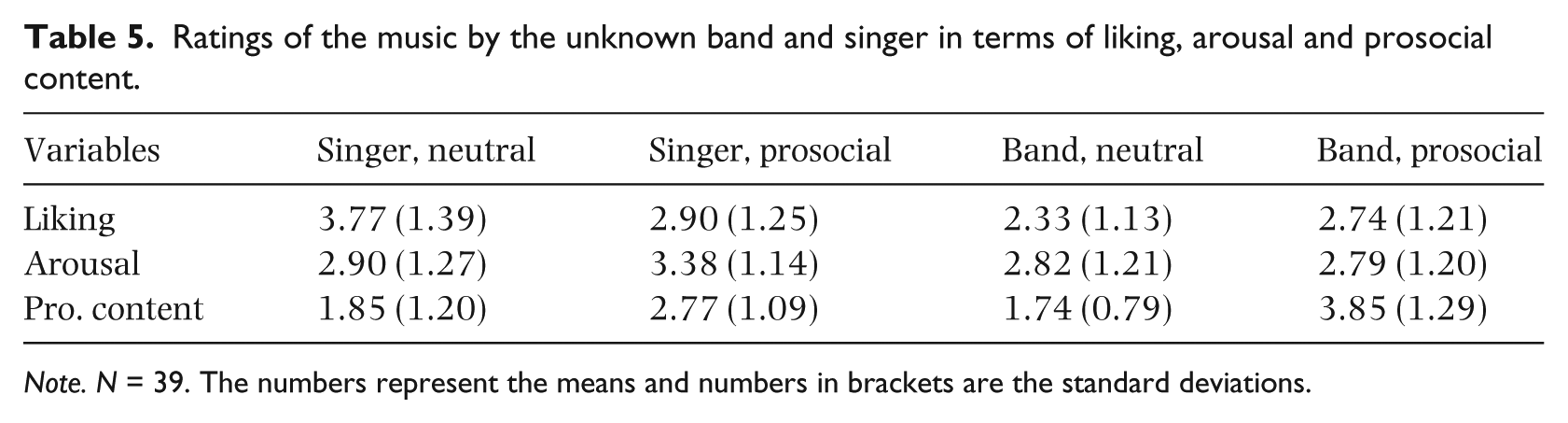
Note. N = 39. The numbers represent the means and numbers in brackets are the standard deviations.
In this pilot study four fictional news articles about the band, its social commitment and music were written in German. The authors were instructed to write two versions that were positive (one more, one less) about the band and their social work, for example about a concert for a social nonprofit organization, while two versions should be neutral about the band without mentioning the prosocial actions. A negative version was regarded as not plausible, because no magazine or blog would write in a negative way about a socially committed newcomer band; it seems more likely that they would not write about them at all.
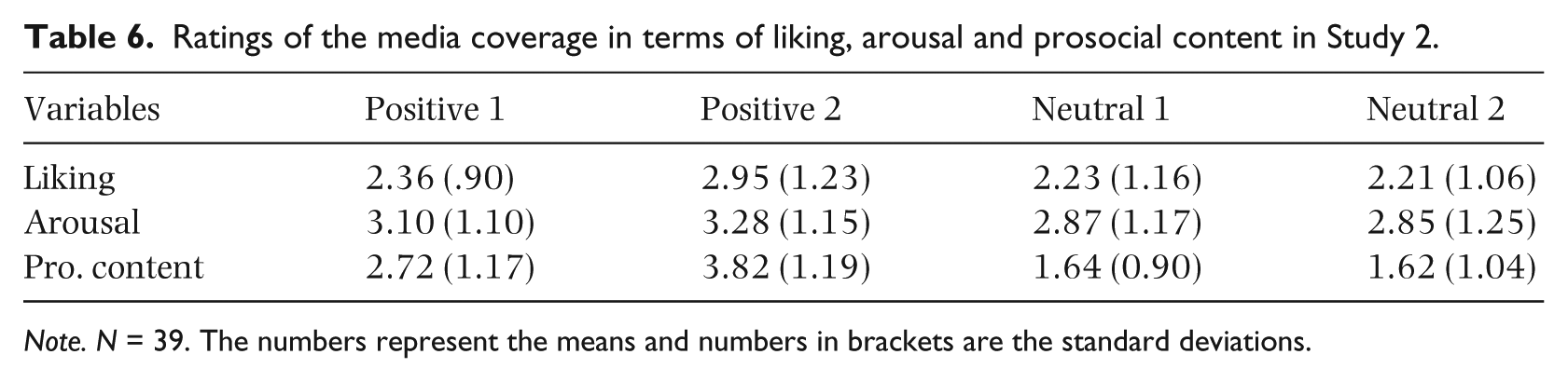
The participants of the pilot study rated the articles in a randomized order on 5-point Likert scales in terms of liking, arousal and if the article highlights prosocial activities by the artist (see Table 6 for results). The second positive article was rated highest for prosocial content but received similar levels of perceived arousal compared to the other articles. The second neutral article was rated lowest for prosocial content but, once again, received similar levels of perceived arousal compared to the other articles. The chosen articles were presented again as online blog articles.
Ratings of the media coverage in terms of liking, arousal and prosocial content in Study 2.
Note. N = 39. The numbers represent the means and numbers in brackets are the standard deviations.
Dependent variables
Appraisal
To a certain extent, the items used were comparable to those in Study 1. The items referred to the social activities of the band and the approval of their work, but they mentioned no charity project. After a reliability analysis, one item was deleted and the remaining 11 items had a good reliability, α = .80. Items used were, for example: “The band has a good concept to draw attention to the problems in the world”, “The band has the ability to solve the problems in the world to a certain extent” or “The band cares for other people”. In this study the items were measured on 4-point Likert scales with the end points labeled (1 = “I totally disagree” and 4 = “I totally agree”) so that participants had to decide for one direction.
Empathy
Different to Study 1, the media empathy scale by Früh and Wünsch (2009) was adapted in this study in order to access a situational empathy that relates to the music reception. This scale measures the cognitive and affective empathy that is experienced through a media character. The wordings of the items were adjusted to music listening and through the instruction participants were asked to state their feelings during the reception while answering the items. Nine items had a reasonable reliability, α = .76. Exemplary items are: “When I listen to music, I am not really sure what the singer feels” (reversed) or “I feel sad, when I listen to songs in which it comes to poverty”. The items were measured on 5-point Likert scales (1 = “I totally disagree” and 5 = “I totally agree”).
Prosocial behavior
Since measuring prosocial behavior is a challenging task, a different approach to that taken in Study 1 was chosen. Following the creative measurements of social psychology experiments (Greitemeyer 2009a, 2009b, 2011a), the participants were told that the researchers of the study cooperate with some nonprofit organizations and that those organizations are looking for new active members to donate money or help to realize social actions. The participants had the chance to sign up for information material about a membership for up to five organizations. Therefore actual prosocial behavior was not measured but behavior that indicates the willingness to behave in a prosocial way was measured. This measurement can only be seen as an indication for actual prosocial behavior. Nonetheless, it was regarded as a fitting measurement for the context of this study as it is comparable to the aforementioned studies by Greitemeyer. A sum index was calculated for this measurement (the value 5 indicates high prosocial behavior, while 0 means no prosocial behavior). The reliabilities, means and standard deviations can be seen in Table 7.
Means and standard deviations of the dependent variables in Study 1.

Note. N = 157.
Results
To test the first hypothesis a two factorial ANOVA was calculated. The hypothesis postulates that the media coverage has an influence on the appraisal of the media content. In this case there are two different contents in the songs, thus the second factor music was included. Therefore, the four groups were exposed to positive or neutral media coverage of the band, its music and activities, and a song with neutral or prosocial lyrics.
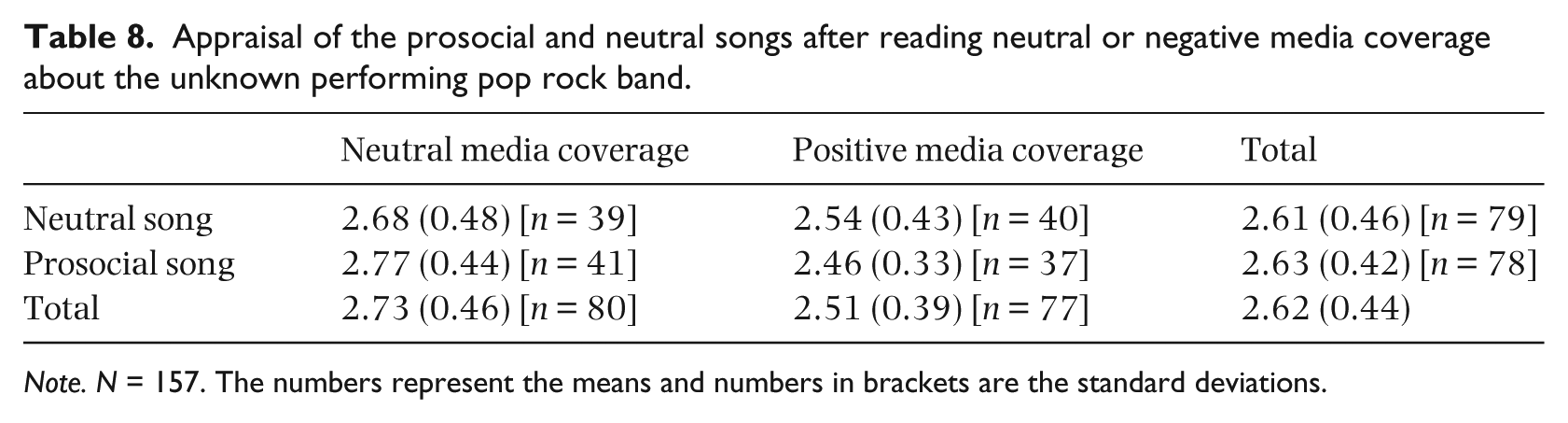
The analysis of variance reveals that there is a significant main effect for the media coverage, F(1, 153) = 10.81, p < .01, η2 = .07, but no effect for the music factor, F(1, 153) = .01, ns. There is no interaction effect, F(1, 153) = 1.60, ns. The results are reported in Table 8 and visualized in Figure 2. It can be seen that the effect of the media coverage is contrary to the expected direction. Participants who read the neutral article showed significantly more positive appraisal of the band and its music than participants who read the positive article. Thus, hypothesis 1 cannot be fully accepted.
Appraisal of the prosocial and neutral songs after reading neutral or negative media coverage about the unknown performing pop rock band.
Note. N = 157. The numbers represent the means and numbers in brackets are the standard deviations.
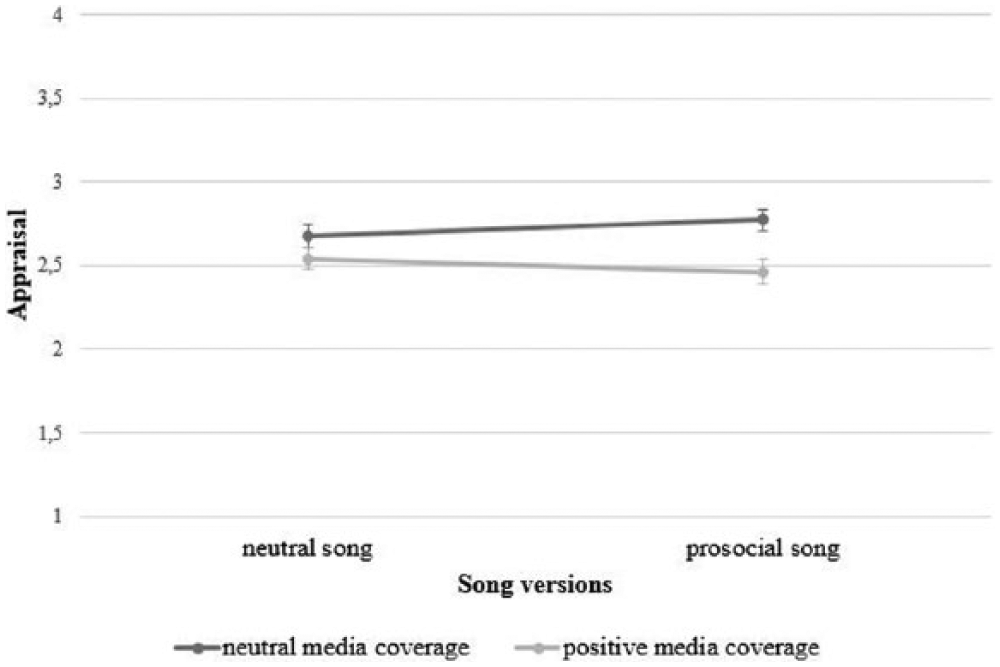
Appraisal of the band’s prosocial and neutral songs after reading corresponding neutral or negative media coverage (N = 157).
To test the second and third hypotheses for both factors two mediation analyses were conducted. The factors media coverage and music were used as independent variables and prosocial behavior as the outcome variable. Empathy and appraisal were included as mediating variables. The results can be seen in Figures 3 and 4, while the descriptive statistics can be seen in Tables 9 and 10. The only indirect effect that was revealed is from media coverage on prosocial behavior via empathy. The indirect effect of appraisal and the direct effect of the media coverage on prosocial behavior were not significant. Thus, only hypothesis 3 is supported by the results.

Direct and indirect effect of neutral and prosocial music on prosocial behavior mediated by appraisal and empathy.
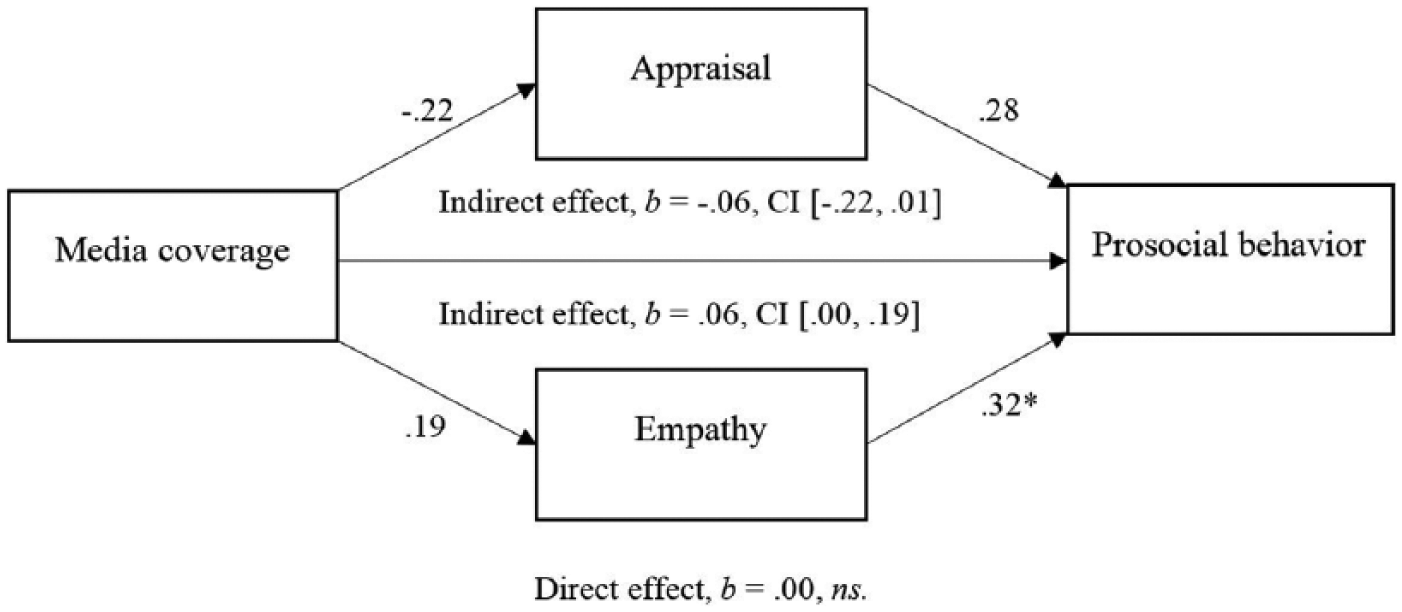
Direct and indirect effect of neutral and prosocial media coverage on prosocial behavior mediated by appraisal and empathy.
Feelings of empathy after reading neutral or negative media coverage about the unknown performing pop rock band and listening to their prosocial and neutral songs.
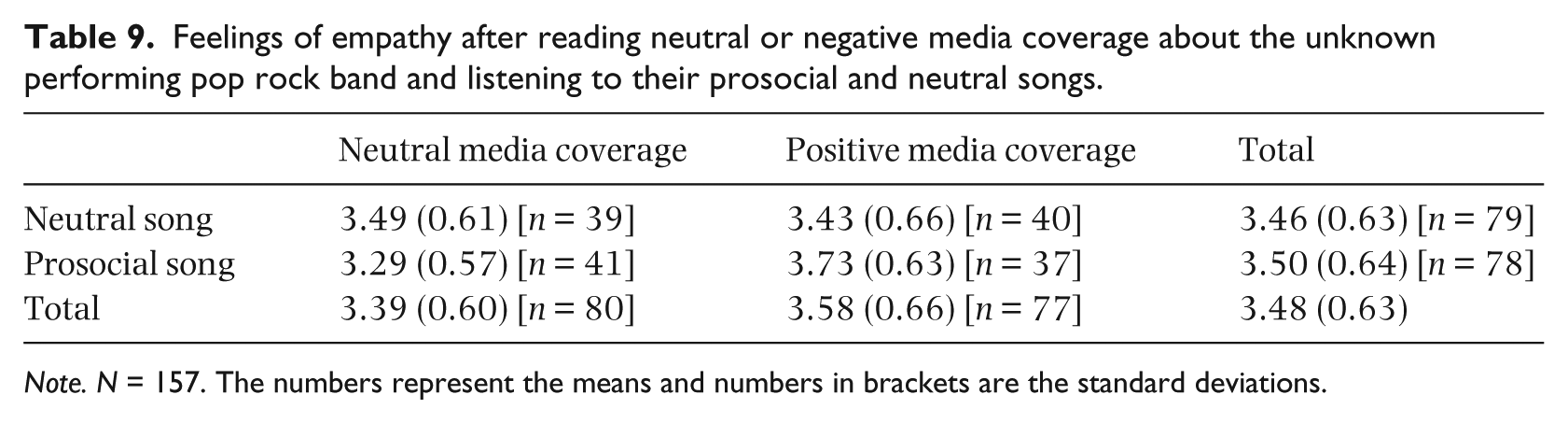
Note. N = 157. The numbers represent the means and numbers in brackets are the standard deviations.
Prosocial behavior after reading neutral or negative media coverage about the unknown performing pop rock band and listening to their prosocial and neutral songs.
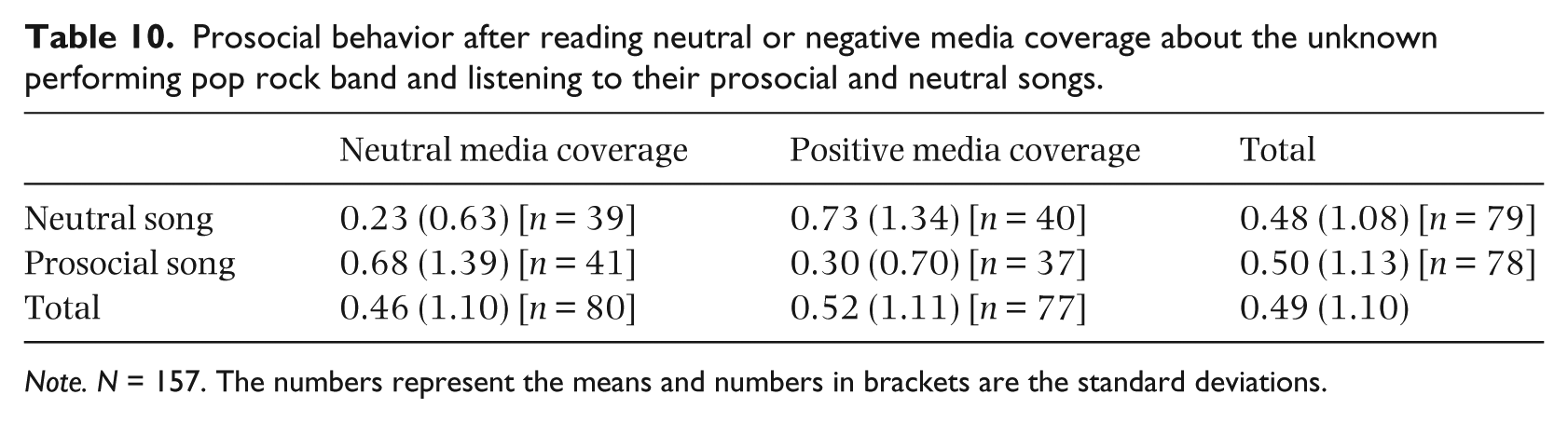
Note. N = 157. The numbers represent the means and numbers in brackets are the standard deviations.
Discussion
At the first view, the results may seem surprising and confusing, but there are several explanations for these findings. First of all, the only effect of the two factors on appraisal is the main effect of the media coverage. The participants who read the neutral article about the band showed a more positive appraisal than the readers of the article that highlighted the prosocial activities. This could be explained because of the missing credibility and authenticity of the band; for unknown and independent rock bands those attributes are essential (Hesmondhalgh, 1999). When we read about a band we do not know, we might tend to not believe the media coverage or the band and rely on pre-existing knowledge (Neguţ & Sârbescu, 2014). We do not know much about the musician and might expect that the social activity could be showmanship. On the contrary, famous musicians can be trusted because we have sufficient information about them which leads to a positive appraisal. Following the GLM, this is more likely to lead to a thoughtful or, in this case, prosocial action (Buckley & Anderson, 2006). The mistrust towards a source can be explained with source credibility, which is a major research field in communication studies (for an overview, see Kiousis, 2001). When we take a closer look at the group that approved the band and its work the least, it was the group that read the article about the prosocial actions and listened to the prosocial music. This combination could possibly be over the top for the recipients and lead to a mistrust towards the band, while a neutral coverage where the recipients can form their own attitudes regarding the band leads to the most positive appraisal of the song with or without prosocial lyrics. These thoughts remain hypothetical since the findings do not support these conclusions except for the effect of the media coverage, but they seem plausible with a look at the explanations and descriptive results of the second and first study.
In this study there was no impact of appraisal on prosocial behavior, not even as a mediator. This can be explained by the decision and appraisal process. There is not enough information and the outcome might not be important enough for a re-appraisal of the content, because the recipients do not know the band. This does not lead to a certain action and therefore to no prosocial behavior (Buckley & Anderson, 2006).
On the other hand, empathy proved to be a reliable mediator of the process (descriptive results for empathy can be seen in Table 9). The results support the mediation model that was stated by Greitemeyer (2009b): the reception of prosocial in contrast to neutral content leads to more empathy and therefore to more prosocial behavior. This evidence could only be found for the prosocial media coverage and not for the music, as in Greitemeyer’s studies. But that might be because the music and band were unfamiliar for the recipients and the scripts that are activated when listening to famous musicians and songs were not accessed in this case. The prosocial media coverage leads to more prosocial behavior through empathy than the neutral one, which is contrary to the main effect of the media coverage on appraisal. This could explain why there is no total effect of media coverage on prosocial behavior, t(155) = –.32, d = .05, ns (the descriptive results for prosocial behavior can be seen in Table 10). This means the media coverage led to viewer appraisal of the unknown band and their activities, but still affected the feeling of empathy of the recipients. It might be that the prosocial activities that were described seemed like showmanship and led to less appraisal, as explained before, but still the actions described may have touched the participants emotionally.
Again the scores on empathy were rather high even though the new measurement in Study 2 included a scale that was adapted for the music reception and measured a media empathy that should not suffer from social desirability like the basic empathy scale in Study 1.
Limitations
Both studies used a stimulus of high external validity. The layout of the media coverage was well designed and participants perceived the cover story about “USA for Nepal 2015” as serious and believable. Although the experimental design was well operationalized there are some limitations to the studies that have to be mentioned. First, the studies did not represent the process of the whole GLM with all the necessary factors. This research focused on manipulating input variables by handing them information about the media content via the media coverage and then testing the affective state as well as the appraisal of the media content since this was not well researched in the field of prosocial media. Other variables must be investigated to fully understand the underlying mechanisms, such as arousal, emotions and mood, as these factors play an important role in the appraisal process (Wirth & Schramm, 2005). Furthermore, there are a few important factors that cannot be controlled in an online experiment, such as the reception situation, and the loudness and quality of the media player. But the online questionnaire features some advantages in contrast to a laboratory setting or a field study, such as fast and widespread recruiting, real-life reception situations with personal media players and speakers or headphones, just to name a few.
Second, a major problem is how to measure prosocial behavior. In these studies, the dependent variable “prosocial behavior” is more to be seen as an intention of acting prosocially. Measuring items via a questionnaire is problematic due to social desirability and testing with a scenario (in this case subscribing for a nonprofit organization membership) is also difficult. It is possible that some participants were not convinced by the story about the organizations, are already a member of such organizations, or do not want to support the mentioned organizations because of personal reasons. This seems especially reasonable with a look at the results: only a few participants selected more than one organization. Researchers have introduced some innovative ways of measuring prosocial behavior in a laboratory setting or even in a field study (e.g., Jacob et al., 2010). In this paper two options for an online questionnaire were presented that worked well for this purpose, but still need further evaluation.
Third, the measurement of empathy and appraisal has to be discussed. Established scales were used for empathy, but there might be better options to measure the state empathy of an individual. In the second study empathy was used as a mediator and therefore has to be a state and not trait variable. The measurements by Greitemeyer (2009b) did not seem fitting for the purpose of the study, so a media empathy scale was adapted to measure the empathy that was induced by the media (in this case, music). Further studies should create new instruments to combine the approaches. The measurement of appraisal was highly reliable and both studies are comparable to a certain extent, but there are some features missing that are needed to depict the whole appraisal process, like meta-appraisal and emotions (Wirth & Schramm, 2005). These should be implemented in further studies.
Fourth, no manipulation checks were conducted in either of the main studies. This means the manipulation relies only on the results of the pilot studies. But since the samples in both pilot and main studies were respectively comparable in terms of the demographic parameters, it was assumed that the differences between the media coverage articles and songs were received as intended in both studies.
Lastly, like in most online-based studies, the sample is not representative of the general population. Participants in the samples were young, but they do represent the normal target audience of popular music and music charity projects. Research with a broader sample would be beneficial, but valuable conclusions can be drawn from the studies reported in this article.
Conclusions
The major focus of this study was to investigate the extent to which prosocial media content affects the behavior of the recipients in a positive way. This positive behavior is usually called prosocial behavior, a research field that is not well examined to date. The major focus regarding media is still on “negative” effects like aggression, sexual stereotypes, etc. In this article, two major media types that can influence prosocial behavior, namely media coverage and music, were used in two studies. Music is of major importance for children, adolescents and even adults and many people identify with popular sub-cultures and track the activities of musicians (North, Hargreaves, & O’Neill, 2000). A lot of the knowledge we have about artists, especially about their social engagement, is gained through the media (Neguţ & Sârbescu, 2014). So, if we learn a certain behavior from music it is most likely supported through the media coverage and the lyrics where the actual message is transported.
This study aimed to make a contribution to the research field by focusing on media coverage of prosocial music (projects). While previous research has indicated that music with prosocial lyrics has an effect on recipients (e.g., Jacob et al., 2010) it is not clear which factors influence the processes. It could be the music itself or even the key it is written in, the comprehensibility or plainness of the lyrics, the listening environment – there are probably major differences between a live concert or listening via a mobile device in the bus – or it could be because we read an interview, article or gossip report about the musician which influences our foreknowledge. This paper indicates that media coverage has an influence on our appraisal of music and that the effect differs when it is about well-known or relatively unknown music. Although the effects could not be compared between the studies, the results show different effects that demanded different explanations for these findings.
Furthermore, in contrast to other studies dealing with prosocial music (e.g., Greitemeyer, 2009a, 2009b, 2011a, 2013), which focused on the intrapersonal factors like thoughts, empathy and arousal, the current studies indicate that appraisal is an important factor for the examination of the underlying process of prosocial media and music on prosocial behavior. In Study 1, a direct influence of positive appraisal and empathy on prosocial behavior was found. Study 2 yielded a mediating effect of media coverage on prosocial behavior via empathy. Further research could investigate how interpersonal factors influence the appraisal and affective process. With a closer look at information given in these studies via media coverage a potential future research question could be: How much information about the music and artist is necessary to influence the appraising and re-appraising of the media content? The underlying mechanisms and factors of the GLM influence each other and the whole process is not yet totally comprehensible. The message from Michael Jackson (1995) that is eponymous for this article indicates that there is still a lot of work to do in prosocial activities as in research. But, we do care!
Footnotes
Acknowledgements
I would like to thank my undergraduate students Julia Bauer, Andrea Dobler, Annika Ebel, Laura Kempf, Elena Knorr, Hanna Krämer, Ina Regler and Elisabeth Zimmer for their help. Without their effort to work on the studies and the recruitment this manuscript would not have been possible.
Funding
This research received no specific grant from any funding agency in the public, commercial, or not-for-profit sectors.