



Abstract
Southeast Asian Americans have unique sociopolitical histories compared to other Asian American ethnic groups in the United States. These experiences may distinctly shape their academic experiences. Given the low academic attainment rates in this population, we tested a cultural and social cognitive model of academic satisfaction with a sample of 111 Southeast Asian American college students. Specifically, we examined the degree to which intergenerational family conflict and social cognitive factors (e.g., self-efficacy) related to academic satisfaction. We found that intergenerational family conflict was negatively related to family academic support. Contrary to expectations, family academic support and self-efficacy were not directly linked to academic satisfaction, family academic support was not directly linked to self-efficacy or outcome expectations, and outcome expectations was not linked to goal progress. Other social cognitive predictors were related directly and indirectly to academic satisfaction, consistent with prior research. Limitations and implications for future research and practice are addressed.
Keywords
A fundamental problem in the Asian American career development and educational outcomes literature is the tendency for researchers to aggregate data from diverse Asian American ethnic groups. Although this approach makes conceptual sense for some research questions (e.g., studying shared racial experiences of Asian ethnic groups in the United States), doing so may fail to capture the unique cultural and academic experiences within this diverse community. In fact, despite the growth and heterogeneity of the Asian American population in the United States, the educational struggles of the diverse Asian American population are frequently overlooked and understudied due to the mistaken belief in the model minority myth that portrays all Asian Americans as well-adjusted and academically successful (Sue & Okazaki, 1990). However, research has begun to dispel this myth and has found within-group disparities in educational and socioeconomic attainment within the Asian American community (Museus, Maramba, & Teranashi, 2013). Specifically, disaggregated data reveal significant disparities in the Southeast Asian American (SEAA) community regarding educational attainment. According to the 2010 American Community Survey from the U.S. Census Bureau, disaggregated national data on educational attainment rates reveal that Cambodian, Hmong, Laotian, and Vietnamese Americans have proportions of bachelor’s degree attainment rates of 15%, 14%, 12%, and 26%, respectively, which are significantly lower than the averages of the U.S. general population (28%) and Asian American general population (50%; Ogunwole, Drewery, & Rios-Vargas, 2012). SEAA populations include Vietnamese, Hmong, Cambodian, and Laotian ethnic groups who share common preimmigration trauma experiences and postimmigration experiences as refugees (Chung & Kagawa-Singer, 1993; Sakamoto & Woo, 2007). In fact, a large proportion of SEAAs have immigrated to the United States as refugees and therefore have a different sociopolitical history and experience in the United States compared to other Asian American ethnic groups. Ultimately, these experiences may distinctively shape their academic experiences.
Disaggregated data also reveal significant disparities in the SEAA community regarding acquisition of jobs in various professions, higher unemployment rates, and higher poverty rates compared to the national average (Museus et al., 2013). For example, a significant portion of SEAAs are from low-income families, with 27.3% of Hmong, 21.6% of Cambodian, 16.4% of Laotian, and 15.2% of Vietnamese Americans living in poverty compared to the rate of 15.3% in the general U.S. population (Southeast Asia Resource Action Center, 2011). Further, many SEAAs may be the first in their family to attend college and are from economically disadvantaged backgrounds and are therefore likely to face greater financial challenges compared to other Asian American ethnic groups (Museus et al., 2013). However, despite the staggering disparities in educational attainment rates, the representation of SEAAs in the academic outcomes literature is almost nonexistent. When SEAAs are represented, their data are generally aggregated with other Asian ethnic groups, and as a result, very little is known about the academic experiences of this population. As this underserved population may be at a higher risk of not completing postsecondary education, more research is needed to determine factors that may be particularly relevant in shaping their academic experiences and to advance current levels of understanding regarding how to effectively serve the educational needs of this community.
One approach to understanding these low educational attainment rates is to examine SEAA’s academic satisfaction, as students who are more satisfied with their academic life may be more likely to persist in their academic endeavors. For instance, one study with a diverse sample of Asian American participants—including Vietnamese Americans—found that those who reported having more environmental and social support were more likely to persist in college (Gloria & Ho, 2003). Another study of Asian American college students—including Vietnamese Americans—found that academic support was directly related to academic satisfaction (Hui, Lent, & Miller, 2013). Ultimately, students who have high environmental support may be more academically satisfied and in turn may be more likely to persist in college. For instance, other studies with a racially diverse sample of college students have found that social cognitive variables such as self-efficacy and outcome expectations have been linked to intended persistence and that academic satisfaction has been directly linked to intended persistence (Lent et al., 2015). Given the low academic attainment rates in this population, this study examined the utility of cultural and social cognitive predictors of SEAA’s academic satisfaction.
Social Cognitive Model of SEAA Academic Satisfaction
The few extant studies on the educational experiences of SEAAs have focused on descriptive factors thought to influence academic achievement and educational outcomes such as social class and language barriers (Garcia Coll et al., 2002; Hune & Takeuchi, 2008). We extend this literature by taking a theory-driven approach to examining academic satisfaction with SEAA college students. Lent’s (2004) social cognitive model of well-being, which incorporates both personal and environmental factors thought to influence academic satisfaction and has been tested with many college student populations, may provide a useful and unified approach in understanding the educational experiences of SEAAs.
Lent’s (2004) model hypothesizes that global life satisfaction is predicted by psychological, environmental, and behavioral factors to well-being and incorporates aspects of social cognitive career theory. In the model, domain-specific satisfaction and goal progress are hypothesized to predict overall life satisfaction. Goal progress, outcome expectations, self-efficacy, and environmental supports are hypothesized to predict domain-specific satisfaction. Outcome expectations, self-efficacy, and environmental supports are hypothesized to predict goal progress. Self-efficacy and environmental supports are hypothesized to predict outcome expectations. And lastly, environmental support is hypothesized to predict self-efficacy (see Figure 1 for full theoretical model).
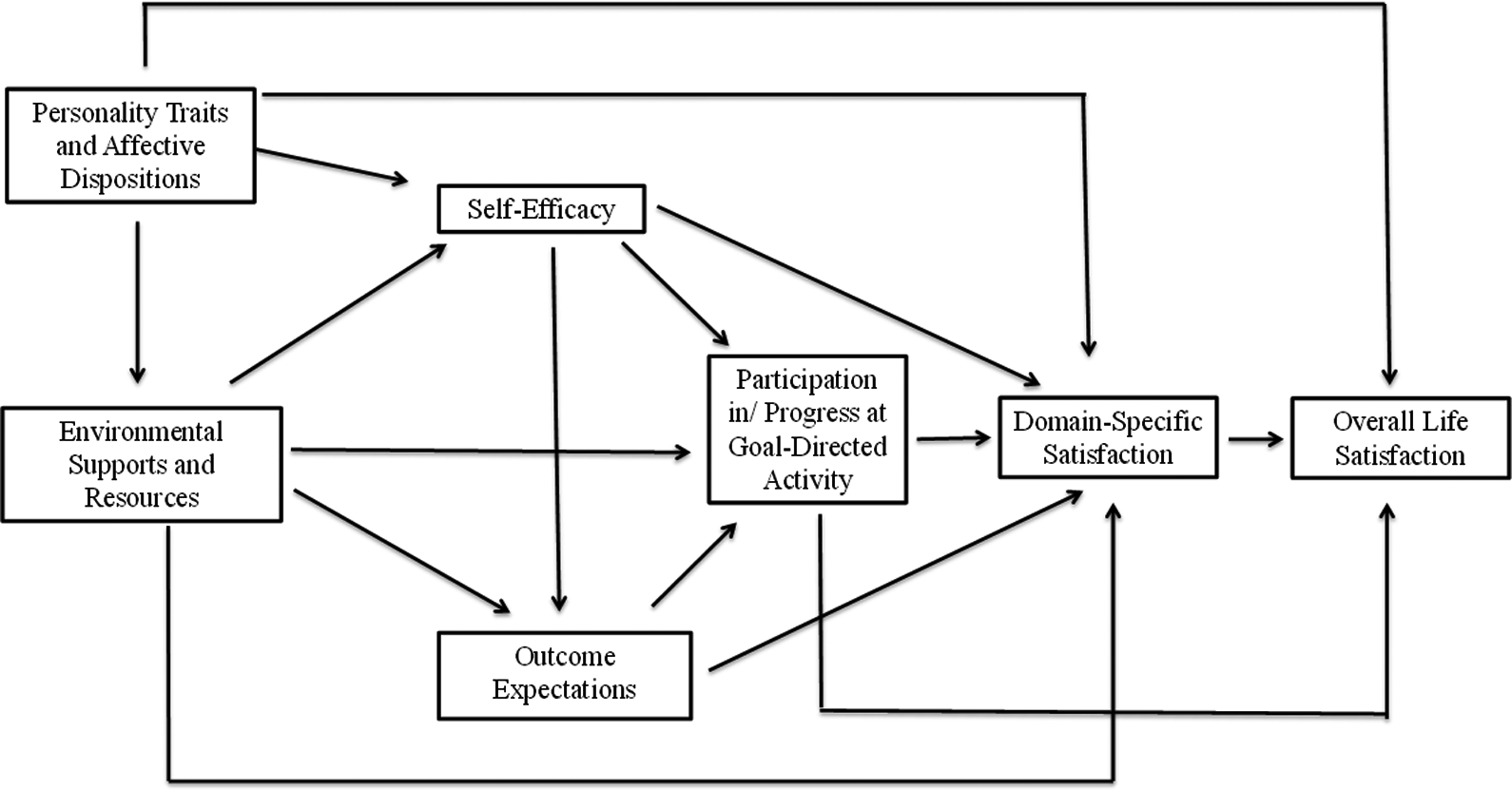
Proposed social cognitive model of well-being (Lent, 2004).
Lent’s (2004) social cognitive model of well-being offers a useful framework in understanding academic satisfaction with SEAA college students as it also accounts for contextual factors such as culture variables that may be incorporated into the model. Adding contextual factors have been found to improve the model’s explanatory power in understanding academic outcomes across diverse groups (Hui et al., 2013; Ojeda, Flores, & Navarro, 2011). For example, contextual cultural factors such as acculturation and enculturation have been found to indirectly relate to academic satisfaction through environmental support (Hui et al., 2013). Including contextual cultural factors such as intergenerational family conflict may further increase the utility of the model in understanding additional factors that may play a role in the educational experiences of SEAA college students.
Intergenerational Family Conflict as a Contextual Factor
One of the most critical postmigration issues facing the SEAA community is the experience of family conflict between parents and children due to differential rates of acculturation, the process in which an individual adapts to the mainstream culture’s values and behaviors (Ying & Han, 2007). Immigrant parents in the U.S. have been found to be slower in adjusting and adapting to the new culture compared to their children, and these differences in acculturation rates may result in intergenerational family conflict, conflict due to disagreements in adherence to family values, expectations, and traditions (Lee, Choe, Kim, & Ngo, 2000; Lee & Liu, 2001). This cultural conflict has been implicated to be greater for SEAA families (Su, Lee, & Vang, 2005; Ying & Han, 2007). Many SEAAs are involuntary migrants who have been forced to relocate due to war, persecution, and safety concerns and may be less prepared to move and may also be less willing to adapt to the majority culture. This may result in a greater likelihood and magnitude of intergenerational gaps in acculturation rates between parents and their children.
Intergenerational family conflict has been found to influence vocational development. For example, one study found that higher intergenerational family conflict prior to college was related to lower grade point average (GPA) for first-year Hmong, Vietnamese, and Chinese American college students (Bahrassa, Syed, Su, & Lee, 2011). As intergenerational family conflict has been linked to academic difficulties, it may be particularly useful in understanding how it may relate to academic outcomes through family support, which has been found to be an important factor in the career development of Asian Americans (cf. Tang, Fouad, & Smith, 1999). SEAAs may also be less likely to have high levels of family support. In a qualitative study of career development with SEAAs and other Asian Americans, individuals indicated the importance of family in influencing their career development (Fouad et al., 2008). For example, family social support such as encouragement from parents to do well and support in discussing career options influenced career decision-making and choice (Fouad et al., 2008). We hypothesized that intergenerational family conflict was related to lower perceptions of family academic support. According to Lent’s (2004) model, lower perceptions of academic support may result in lower self-efficacy and consequently lower levels of academic satisfaction. Further, other studies have found that Asian Americans who report having more environmental and social support were more likely to persist in college, suggesting the importance of examining how intergenerational family conflict may relate to SEAAs’ experiences of family academic support and indirectly to academic satisfaction (Gloria & Ho, 2003; Ying & Han, 2008).
Present Study
Given the limited research on SEAAs’ academic development and the alarming low rates of bachelor’s degree attainment in this population, the primary purpose of this study was to examine how contextual factors such as intergenerational family gap conflict related to the academic experiences of SEAA college students. Our study extends the literature by incorporating a social cognitive model of well-being as a framework for examining SEAA college students’ academic satisfaction. This descriptive and cross-sectional study used path modeling to test a priori hypotheses regarding the relatedness of intergenerational family conflict, family academic support, self-efficacy, outcome expectations, and goal progress to academic satisfaction (see Figure 2). Goal progress (Pathway a), self-efficacy (Pathway b), outcome expectations (Pathway c), and family academic support (Pathway d) were hypothesized to be directly and positively linked to academic satisfaction, congruent with Lent’s (2004) model and recent empirical tests (Lent et al., 2005). Thus, individuals who perceive positive perceptions of making progress toward academic goals, confidence in their ability to perform well academically, positive perceptions of the outcomes of performing well academically, and positive perceptions of family academic support are more likely than others (who don’t have positive perceptions) to be academically satisfied.
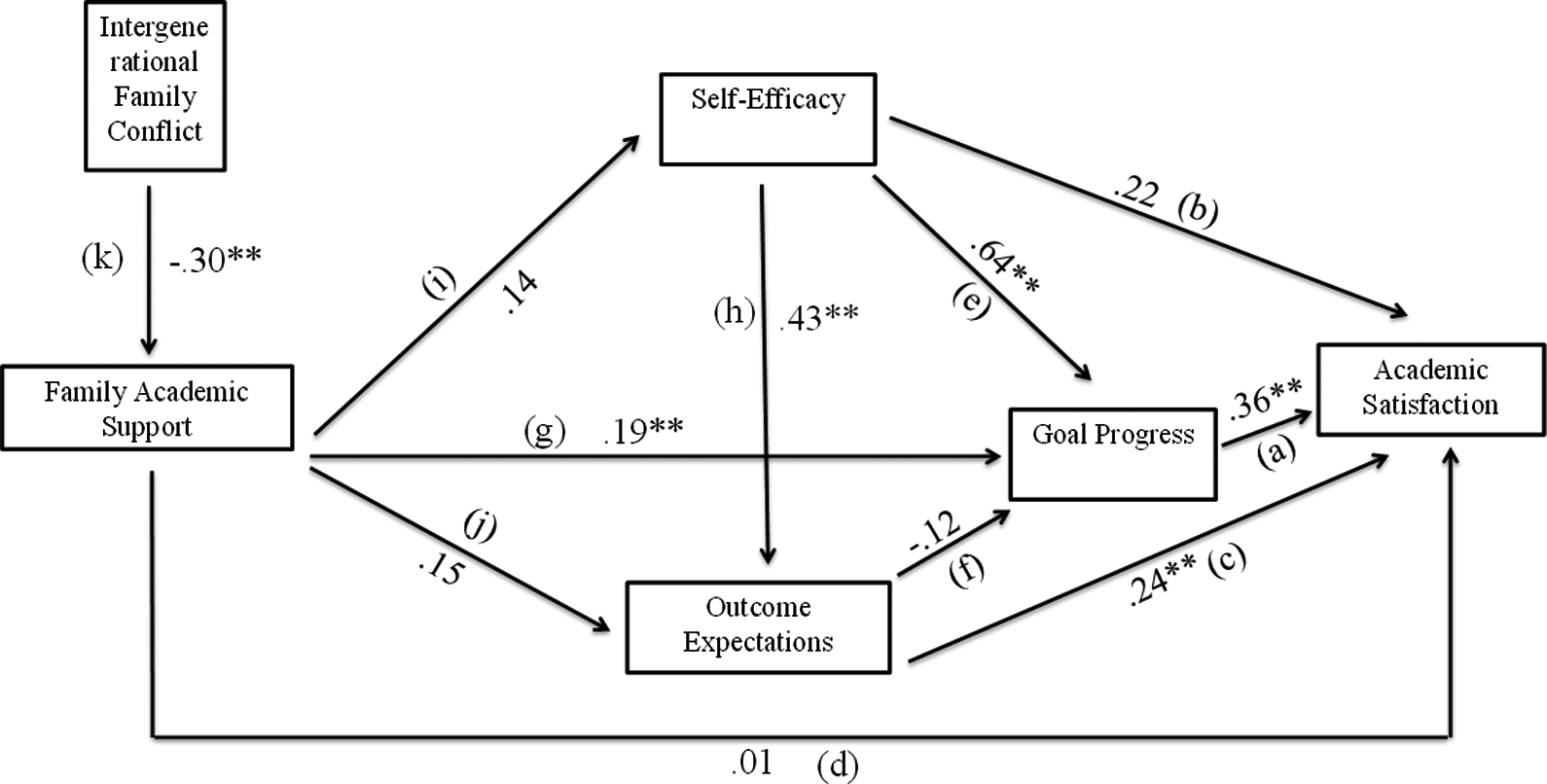
Cultural and social cognitive predictors of academic satisfaction with the Southeast Asian American sample (N = 111). Note that this model depicts the results of the final structural model (indirect effects of intergenerational family conflict on academic satisfaction). *p < .05. **p < .01.
In addition to being directly related to academic satisfaction, self-efficacy was also hypothesized to be indirectly related to academic satisfaction through goal progress (Pathway e) and outcome expectations (Pathway h). Individuals who perceive higher confidence in their ability to perform well academically will also perceive more positive perceptions on the progress they are making toward their goals and will also perceive more positive outcomes that result from obtaining an undergraduate degree. Outcome expectations was also predicted to be indirectly and positively linked to academic satisfaction through goal progress (Pathway f). Family academic support was predicted to be indirectly and positively linked to academic satisfaction through goal progress (Pathway g), self-efficacy (Pathway i), and outcome expectations (Pathway j), which is consistent with previous research (Hui et al., 2013; Ojeda et al., 2011). For example, individuals who perceive higher levels of family academic support will perceive higher levels of making progress toward their goals, higher levels of self-confidence, and more positive outcome expectations, which will be related to higher levels of academic satisfaction.
Intergenerational family conflict was hypothesized to relate to academic satisfaction indirectly and negatively through family academic support (Pathway k). Individuals who experience more family conflict may feel that they have less family academic support, which will indirectly relate to their level of academic satisfaction.
Method
Participants
Participants were 111 self-identified SEAA (approximately 12% Cambodian, 10% Hmong, 20% Laotian, 56% Vietnamese, and 2% more than one SEAA ethnic identity) college students from universities throughout the United States whose ages ranged from 18 to 33 years (M = 21.44, SD = 3.75). Approximately 60% of the participants identified as female, 37% as male, and 3% as other. Participants were recruited through e-mail and snowball sampling. Most of the participants identified as 2nd generation (79%), followed by 1.5 generation (14%) and 1st generation (5%). The remaining participants (2%) did not indicate generational status. The majority of the participants identified as full-time students (52%), followed by full-time students working part time (34%) and part-time students working full time (8%). The majority of the participants indicated that for maternal education level, most mothers completed high school or the equivalent (26%), followed by completed a bachelor’s degree from a 4-year college (15%), completed an associate’s degree from a 2-year college or technical school (12%), completed middle school or the equivalent (7%), and started but did not complete middle school (7%). Similarly, most fathers of participants completed high school or the equivalent (30%), followed by completed bachelor’s degree from a 4-year college (16%), completed an associate’s degree from a 2-year college or technical school (11%), started but did not complete high school (8%), and completed middle school or the equivalent (6%).
Procedure
Two primary methods were used to recruit participants. First, a random e-mail list of 5,467 self-identified Asian, Asian American, and Pacific Islander undergraduate students was generated by the university registrar’s office (the registrar was unable to target SEAA students and the exact number of SEAA students represented in the 5,467 is unknown). Students, who self-identified as SEAA, were invited to participate in a one-time online study of SEAAs’ college experiences. With the generated list, 21 e-mail addresses were not valid. Students were sent e-mails for a total of three times. Second, participants were also recruited through convenience sampling by contacting SEAA undergraduate college students from other universities and student organizations throughout the United States. A total of 46 e-mails were sent out to college students and student organizations from other universities. Participants were informed that the purpose of the study was to better understand SEAA’s academic experiences. However, given the nature of data collection and too many unknowns (e.g., whether all sent e-mails were received or read), we were unable to generate a meaningful response rate estimate. To be included in the study and data analyses, participants had to self-identify with a SEAA ethnic identity (Cambodian, Hmong, Laotian, and Vietnamese heritage). Biracial and multiracial Asians who also identified with an SEAA identity were retained in the data set. Data collected from students who identified as Asian American ethnicities other than SEAA descent (e.g., Indian) were omitted from data analysis. Participants also had to identify as a current student in order to participate and be included in the data analysis. Participants also had the choice to enter into a raffle to win a US $10 gift card as an incentive for participation at the end and were given an electronic debriefing form.
Measures
Family academic support
Family academic support was assessed using a modified version of the environmental academic support scale developed by Lent et al. (2005) to include a family academic support scale. Family academic support consisted of 5 items that asked participants to indicate how much they agreed on statements denoting available family academic support in their intended major using a 5-point Likert-type scale ranging from 1 = strongly disagree to 5 = strongly agree. A sample item was, “[I] feel support from my family for pursuing my intended major.” Scores were calculated by summing up the items and dividing by the total number of items to get a total score of family academic support. Higher scores indicated greater perceptions of support. The original version of this scale produced an α coefficient of .84 with a sample of engineering college students and .85 with Asian American college students (Hui et al., 2013; Lent, Singley, Sheu, Schmidt, & Schmidt, 2007). The α coefficient for the current study was .94.
Academic self-efficacy
Academic self-efficacy was assessed using Lent et al.’s (2005) scale for academic milestones of self-efficacy and coping with barriers self-efficacy from the Academic Experiences Questionnaire, a 12-item measure asking participants to indicate how confident they are in their abilities to successfully perform a variety of academic tasks in their academic major and confidence in their abilities to successfully cope with barriers in pursuing an undergraduate degree. A sample item of confidence was the ability to “excel in your intended major over the next semester” and a sample item for coping with barriers was “cope with a lack of support from professors or your advisor.” Items were measured using a 10-point scale ranging from 0 = no confidence to 9 = complete confidence. Higher scores indicated greater perceptions of academic self-efficacy. The academic self-efficacy scale produced an α coefficient of .93 with a sample of engineering college students and .89 with a sample of Asian American college students (Hui et al., 2013; Lent et al., 2007). For the current study, the α coefficient was .94.
Academic outcome expectations
Academic outcome expectations was assessed using Lent et al.’s (2005) scale for academic outcome expectations, a 10-item measure asking participants to indicate the extent to which they agree with statements on a variety of outcomes that could result from obtaining an undergraduate degree. A sample item was “go into a field with high employment demand.” Items were measured using a 10-point scale ranging from 0 = strongly disagree to 9 = strongly agree. Higher scores indicated greater perceptions of positive outcomes resulting from obtaining an undergraduate degree. Although this measure has not been used with Asian American college students, studies with engineering student samples have indicated good internal consistency with αs ranging from .89 to .91 (Lent et al., 2005). In another study with engineering college students, the α coefficient was .88 (Lent et al., 2007). In this current study, the α coefficient was .90.
Academic goal progress
Academic goal progress was assessed using Lent et al.’s (2005) scale for academic goal progress, a 7-item measure asking participants to indicate how much progress they are making toward various academic goals. A sample item was “excelling at your academic major.” Items were measured using a 5-point scale ranging from 1 = no progress at all to 5 = excellent progress. Higher scores indicated greater positive perceptions of academic goal progress. The α coefficient was .93 with a sample of Asian American college students and .90 with engineering college students (Hui et al., 2013; Lent et al., 2007). For the current study, the reliability coefficient was .90.
Academic satisfaction
Academic satisfaction was assessed using Lent et al.’s (2005) scale for academic satisfaction, a 7-item measure asking participants to indicate their degree of satisfaction with their academic experience. A sample item was “I am generally satisfied with my academic life.” Items were measured using a 5-point Likert-type scale ranging from 1 = strongly disagree to 5 = strongly agree. Higher scores indicated greater perceptions of academic satisfaction. Previous studies have reported adequate reliability coefficients of .90 with Asian American college students and .94 with engineering college students (Hui et al., 2013; Lent et al., 2007). In this current study, the reliability coefficient was .86.
Intergenerational family conflict
The Family Conflicts Scale-Likelihood (FCS-L; Lee et al., 2000) was used to assess intergenerational family conflict. The measure included 10 items that reflect parent–child situations that may occur in families written from the perspective of the child, reflecting disagreements in values and practices between U.S. raised children and their Asian immigrant parents. The scale asked participants to consider how likely each situation will occur in participants’ relationships with their parents. A sample item was “your parents tell you what to do with your life, but you want to make your own decisions.” Items were measured using a 5-point Likert-type scale with 1 = almost never and 5 = almost always. Items were summed and divided by the number of items. Higher scores indicated greater intergenerational family conflict. Construct validity has also been established through examining the relationship between the items on this measure with a measure of acculturative stress in addition to using goodness-of-fit tests to demonstrate that the measure matches well with the data, χ2(35, N = 178) = 56.48, p < .01, comparative fit index (CFI) = .97 (Lee et al., 2000). Criterion validity was also demonstrated through testing the acculturation gap hypothesis for family conflicts in addition to testing group differences on the FCS by generational status, ethnicity, and language (Lee et al., 2000). The FCS-L has yielded adequate reliability coefficients of .89 with Asian American college students (Lee et al., 2000). For the current study, the α coefficient was .94.
Demographics questionnaire
The demographics questionnaire asked about participant’s gender, age, self-identified Asian American ethnicity, generational status, highest level of education completed, parental levels of education completed, and current educational status.
Results
Data Screening and Preliminary Analyses
A total of 478 participants originally completed the online survey. However, 98 participants were removed due to having more than 10% missing data on items of each scale (e.g., FCS-L) or did not indicate self-identified Asian American ethnicity or current educational status. The Little’s Missing Completely at Random (MCAR) test obtained for this study’s data that included the items on all of the scales, indicated that the data were missing completely at random, χ2(8,581, N = 478) = 8,608.61, p = .42. The remaining missing data were imputed using expectation maximization. Of the remaining 380 participants, 268 participants did not self-identify as SEAA and were removed from the analysis. One participant was removed for not meeting the age requirements of the study. This resulted in the final sample of SEAAs (N = 111) used in the subsequent analyses. Table 1 contains the means, standard deviations, intercorrelations, and score reliability estimates of the variables in the SEAA sample (N = 111).
Means, Standard Deviations, Internal Consistency Estimates, and Correlations for Southeast Asian American Sample.
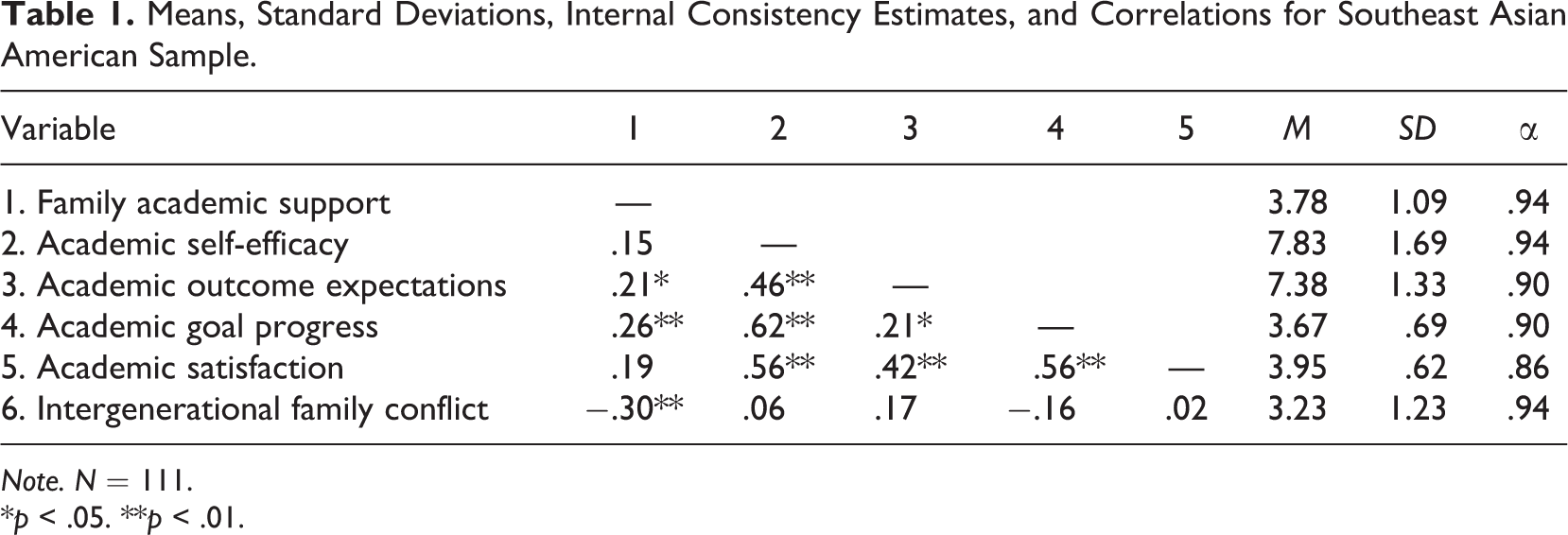
Note. N = 111.
*p < .05. **p < .01.
Path Analyses
Based on the extant literature (Lent et al., 2003), we identified a direct effects models, in which intergenerational family conflict related directly to academic satisfaction, and an indirect effects model, in which intergenerational family conflict related indirectly to academic satisfaction through family support. A path analysis was performed using MPlus 6.12 (Muthen & Muthen, 1998–2011) statistical package using robust maximum likelihood estimation to test the direct effects and indirect effects models. Kline (2011) has suggested that a sample size of 100 is acceptable for path analysis. We used bootstrapping with 95% bias-corrected confidence intervals to test indirect effects. Three primary indices were used to assess the adequacy of model data fit: the CFI, the standardized root mean square residual (SRMR), and the root mean square error of approximation (RMSEA). Hu and Bentler (1999) suggested that SRMR values close to .08 in combination with CFI values close to .95 or RMSEA values close to .06 imply good model data fit. However, acceptable levels of fit may be inferred from CFI values ≥.90 (Hoyle & Panter, 1995), RMSEA values ≤.08 (Browne & Cudeck, 1992), and SRMR values ≤.08 (Hu & Bentler, 1999), although higher levels of CFI (≥.95) and lower levels of RMSEA (≤.06) are preferable (Hu & Bentler, 1999).
Fit indices of the indirect effects model (Model 1; see Figure 2) revealed a mixed pattern of fit to the data, Satorra-Bentler (SB) χ2(4, N = 111) = 10.647, p = .03, CFI = .958, SRMR = .053, and RMSEA = .122 [.034, .214]. It is worth nothing, however, that although the RMSEA value suggested poor fit, the 90% confidence interval includes acceptable fit values. The model accounted for 43% of the variance in academic satisfaction. The direct effects model (Model 2; see Figure 3), which added direct paths from intergenerational family conflict to academic satisfaction, also demonstrated a mixed pattern of fit to the data, SB χ2(3, N = 111) = 10.49, p = .01, CFI = .953, SRMR = .052, and RMSEA = .150 (.058; .253). Although the RMSEA value suggested poor fit, the 90% confidence interval includes acceptable fit values. The direct effects model accounted for 43% of the variance in academic satisfaction. Likelihood ratio testing using the SB scaled χ2 difference test indicated that the addition of the direct path from intergenerational family conflict to academic satisfaction did not significantly improve model fit, SB Δχ2= 2.13, p > .05. Therefore, the more parsimonious indirect effects model was retained.

Cultural and social cognitive predictors of academic satisfaction with the Southeast Asian American sample (N = 111). Note that this model depicts the results of the direct structural model (direct effects of intergenerational family conflict on academic satisfaction). p < .05. **p < .01.
Intergenerational family conflict was significantly and negatively related to family support (see Figure 2). Family academic support was in turn related to academic satisfaction indirectly through goal progress. Consistent with our hypotheses, family academic support was significantly and directly related to goal progress, and self-efficacy was significantly and directly related to both outcome expectations and goal progress. Contrary to expectations, family academic support was not significantly related to self-efficacy, outcome expectations, or academic satisfaction, but the coefficient was in the expected positive direction. Also, contrary to expectations, self-efficacy was not directly related to academic satisfaction, but the coefficient was in the expected positive direction. Outcome expectations was not significantly related to goal progress. Only goal progress and outcome expectations were directly linked to academic satisfaction, providing partial support for the study’s hypotheses.
The statistical significance of specific indirect effects was tested using 10,000 bootstrap samples and 95% bias-corrected confidence intervals. Contrary to expectations, none of the eight specific indirect effects from intergenerational family conflict to academic satisfaction were significant. Family academic support was significantly related to academic satisfaction only through the goal progress indirect pathway. Self-efficacy was related to academic satisfaction indirectly through goal progress and outcome expectations indirect pathways (see Table 2 for the hypothesized indirect pathways and results).
Bootstrap Estimates of Standardized Indirect Effects on Academic Satisfaction.
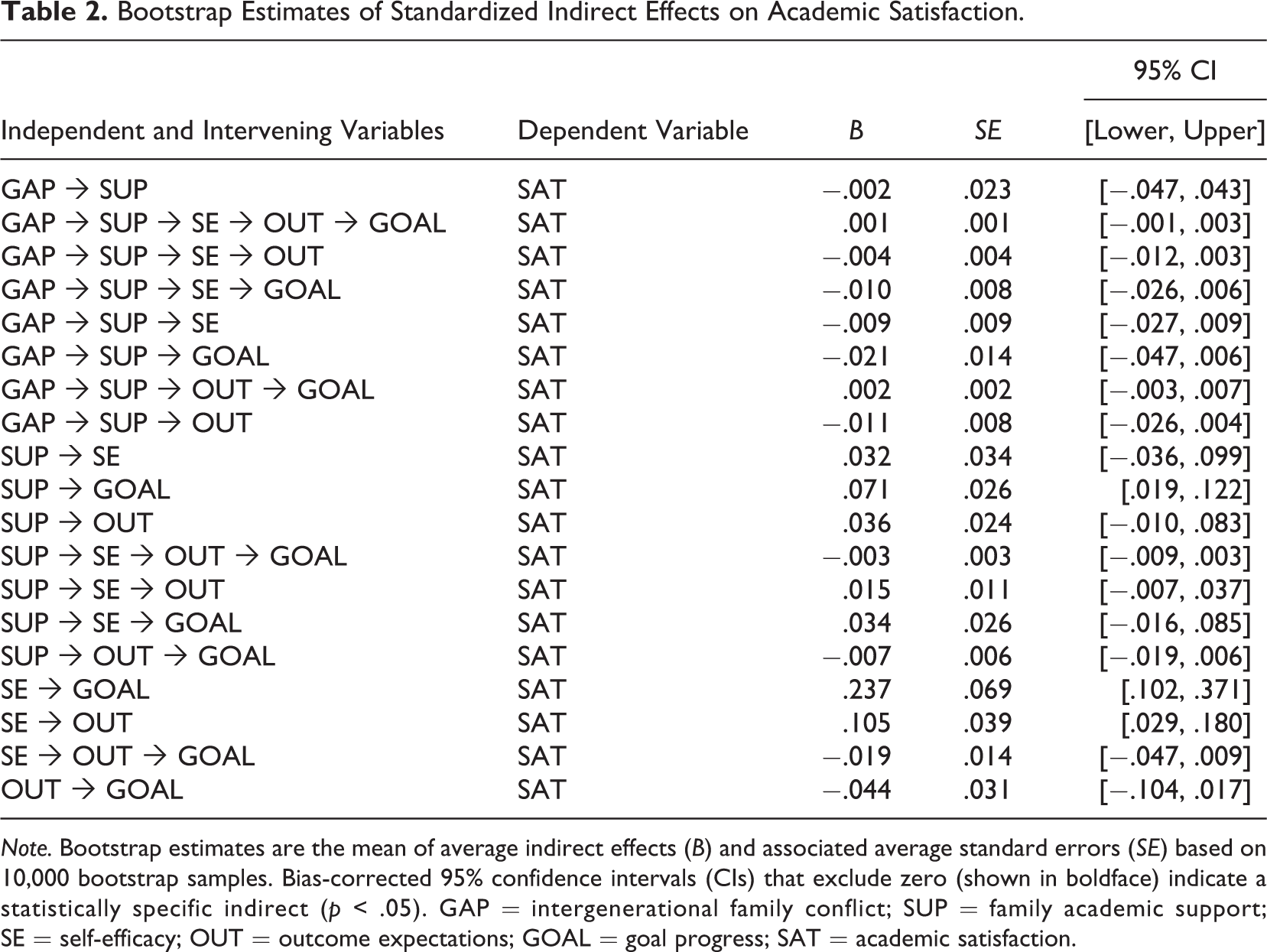
Note. Bootstrap estimates are the mean of average indirect effects (B) and associated average standard errors (SE) based on 10,000 bootstrap samples. Bias-corrected 95% confidence intervals (CIs) that exclude zero (shown in boldface) indicate a statistically specific indirect (p < .05). GAP = intergenerational family conflict; SUP = family academic support; SE = self-efficacy; OUT = outcome expectations; GOAL = goal progress; SAT = academic satisfaction.
Discussion
This study extends the literature on the academic outcomes of SEAA college students by examining the effect of intergenerational family conflict and its impact on family academic support in relation to academic satisfaction. Overall, the model fit the data adequately and accounted for a substantial proportion of the variance in academic satisfaction (43%). These findings are consistent with other studies that have applied the model of well-being to diverse college student samples (Lent, Taveira, Sheu, & Singley, 2009; Ojeda et al., 2011). As predicted, self-efficacy indirectly related to academic satisfaction both through goal progress and outcome expectations. Also as predicted and consistent with previous cross-sectional research with diverse samples of college students, family academic support was indirectly and positively linked to academic satisfaction via goal progress (Hui et al., 2013; Lent et al., 2005). Although intergenerational family conflict was not indirectly related to academic satisfaction, it was negatively related to family academic support with a moderate effect size. Therefore, it is worth noting that intergenerational family conflict may play an important role in affecting the amount of support students may perceive from their family. As other studies have found that higher intergenerational family conflict prior to college was related to lower GPA for first-year Asian American college students, future studies should continue to explore the effect of intergenerational family conflict in the context of academic development and well-being (Bahrassa et al., 2011). One interesting finding was that our SEAA sample in this study reported low levels of parental education. The level of parental education most frequently reported was high school or the equivalent for both parents. This suggests that many of the participants in the SEAA sample are likely first-generation college students. It may be that the personal meaning of what it is to be in college may differ for SEAAs. For example, outcome expectations related to obtaining an undergraduate degree, such as receive a good job, earn an attractive salary, and have a career valued by their families, may be more important for students who are the first in their family to go to college. In the current study, positive outcome expectations of earning an undergraduate degree was significantly and positively related to academic satisfaction. SEAA students in this sample may perceive intrinsic and extrinsic outcome expectations as being the first in their family to go to college and may appreciate being in college, given that their parents did not have the same opportunities.
Our theory-driven approach to examining the academic satisfaction of SEAA college students is also, to the best of our knowledge, the first study to test Lent’s (2004) model of well-being with SEAAs. Although our overall findings provide support for the use of the Lent’s model with SEAAs, there were findings that were inconsistent with theory or prior research. For example, although family academic support was related to academic satisfaction indirectly via goal progress, contrary to expectations and prior research, family academic support was not directly related to academic satisfaction. This was surprising given that prior research has found family academic support to be significantly related to academic satisfaction and other academic outcomes, with family support being particularly important for Asian Americans (Fouad et al., 2008; Hui et al., 2013). One tentative explanation for this unexpected finding might relate to the unique sociopolitical history of SEAAs. For instance, SEAAs have primarily immigrated to the United States as refugees, have been exposed to preimmigration trauma experiences, have experienced postmigration acculturative stressors, and may be the first to attend college, all which might affect the level of support students may perceive to have from parents who may be dealing with their own cultural adjustment and/or mental health. Another tentative explanation might be that the SEAAs in this sample may have used other sources of support (e.g., mentors, friends), which were unmeasured in the present study.
The hypothesis that goal progress, self-efficacy, outcome expectations, and family academic support would be directly related to academic satisfaction was partially supported. Specifically, only goal progress and outcome expectations were directly linked to academic satisfaction. The relationship between outcome expectations and academic satisfaction deviates from previous studies with general and engineering college students (Lent et al., 2005, 2007). However, this finding is consistent with previous research with Mexican American and first-generation college student populations, indicating that positive expectations for attending college may be an important predictor of academic satisfaction among underrepresented college students (Garriott, Hudyma, Keene, & Santiago, 2015; Ojeda et al., 2011).
Contrary to expectations, outcome expectations did not significantly predict academic goal progress and the coefficient was not in the hypothesized direction. This nonsignificant relationship replicates findings from the mixed cross-sectional studies in the literature regarding outcome expectations as a construct in relation to academic progress (Garriott et al., 2015; Lent et al., 2005). For instance, one study also found this relationship to be nonsignificant with a sample of Mexican American college students (Ojeda et al., 2011). Another study omitted outcome expectations from their model due to the inconsistent findings in the literature (Hui et al., 2013). One possible methodological explanation for this finding relates to the measurement of outcome expectations. Given that the outcome expectations measure reflected both extrinsic and intrinsic outcomes to earning a degree varied widely with items such as earning an attractive salary and finding work that is rewarding, it may be that these items may not reflect the outcome expectations that are salient for SEAA students and their progress in their academic goals.
Although the finding that self-efficacy was also not directly related to academic satisfaction was unexpected, this finding is consistent with cross-sectional and longitudinal studies with diverse college student populations that have found this relationship to be nonsignificant (Lent et al., 2009; Singley, Lent, & Sheu, 2010). One possible explanation for this unexpected nonsignificant result might relate to the relatively high and restricted range of scores on self-efficacy and academic satisfaction.
Limitations and Implications for Research and Practice
Although this study advances the research on the academic satisfaction of SEAA college students, there are several limitations. It should be noted that the sample size in this study was small relative to the complexity of the model, and as a result, it is possible that we were less likely to obtain parameter estimates that reflected population values. Therefore, the results of the study should be interpreted cautiously. Further, the study’s cross-sectional design does not allow for causal or directional inferences regarding the relationships among the variables. As intergenerational family conflict is not unique to only the SEAA experience, future studies should examine how this construct may play out in various Asian, Asian-American, and Pacific Islander populations as well as to continually explore unique variables that may be more relevant to specific populations such as parental trauma with SEAAs. Further, this study only focused on four SEAA ethnic groups with similar immigration histories (e.g., as refugees) and did not include other SEAA groups that may have also been directly affected by the Vietnam War such as individuals from Thailand. Future studies might include other SEAA groups to further test the generalizability of this model. Future studies might also explore the model with high school SEAA students who may be at an increased risk of dropping out. Unfortunately, we were unable to obtain GPA information on the participants in this study. It may be that the participants who responded to the survey may be more conscientious and academically orientated and may not be representative of the SEAA population as a whole. It may be helpful for future studies to collect additional information such as current GPA in examining academic outcomes. In addition to studying supports, future studies may also explore how other factors may relate to support such as personality traits as well as explore potential barriers to academic satisfaction. Future studies may also benefit from exploring the relationships in this theoretical framework longitudinally in diverse samples.
Future studies could employ different measurement approaches to incorporating contextual cultural variables into the model as well as the use of different measures of social cognitive predictors. For instance, it should also be noted that items in the family academic support measure did not capture the breadth of support relevant for SEAA populations such as the importance of encouragement and support from mentors and peers that SEAA students may relate to or other types of support such as emotional support or financial aid. In addition, the content of the outcome expectations measure assessed broader experiences, whereas the measure of academic progress was more specific. It would be useful for future research to consider the use of different measures and/or revise current measures to include conceptually relevant but absent content.
Given the number of positive relationships in the model such as family academic support to goal progress, counselors may consider focusing on how family academic support may facilitate SEAA students’ academic goal progress and in turn their academic satisfaction. As many of the SEAA college students were first-generation college students, counselors may also consider focusing on the availability of other sources of support that were not measured in the current study such as access to mentors and university supports and organizations. As outcome expectations appear to be an important construct to consider with SEAAs in relation to academic satisfaction, counselors may focus on providing psychoeducation to students on the potential positive outcome expectations and opportunities that may result from obtaining an undergraduate degree. Other points of intervention may be to normalize the experience of family gap conflict with clients/families and to explore ways to increase supports for students.
Footnotes
Acknowledgments
We thank Robert W. Lent and Jonathan J. Mohr for providing valuable feedback and insight that greatly improved the quality of this research and manuscript.
Declaration of Conflicting Interests
The author(s) declared no potential conflicts of interest with respect to the research, authorship, and/or publication of this article.
Funding
The author(s) received no financial support for the research, authorship, and/or publication of this article.