



Abstract
Over the past decade, the construction industry has undergone significant change due to technological advancements. Among these, Building Information Modeling (BIM) has been one of the pioneer technologies to impact this transformation. Projects using BIM reported increased productivity with expedited work of project stakeholders while maximizing their collaboration. While BIM has achieved remarkable success in developed countries, its adoption in developing countries remains limited. Studies showed that the acceptance of BIM technology is still very low in some countries. This study examines the status of BIM adoption including exploring the barriers as well as the factors that contribute to overcoming these barriers in adopting BIM in developing countries. BIM enablers in construction projects from the perspective of public clients were examined via a systematic review performed through the literature to identify these factors. Interviews were conducted with public clients to examine these factors. The average severity of each factor was ranked by clients. Notably, the study reveals that unfavorable economic conditions, high costs, and unclear project benefits as the significant barriers to BIM adoption. Clear advantages of BIM were reported as the ease of use, high analysis ability, positive attitude of the company, and demand/satisfaction of the clients.
Keywords
Introduction
Digitalization in Architecture, Engineering, and Construction (AEC) has developed rapidly in the last decade, which revealed innovative technologies to be used in construction projects. Building Information Modeling (BIM) has been a pioneer tool as construction companies have been using BIM to gain a competitive advantage over others. 1 BIM is defined as an innovative technology to virtually design and manage construction projects. 2 BIM has continued to improve ever since its introduction to the construction industry. 3 As a 3D modeling tool, BIM incorporates high-quality digital information for project success in terms of cost, time, and environmental impacts. 4 BIM has the capacity to increase building value and quality by delivering projects with shorter schedules, accurate cost estimates, and optimized facility management. 5 It has transformed the construction industry by decreasing inefficiencies, improving productivity, and increasing collaboration among project stakeholders. 6
Literature review shows that the development status of a country has a direct relationship with the size of construction industries and companies in that country. 7 This is understandable, as the construction industry is a significant contributor to the socio-economic development of a country by delivering productive infrastructure and facilities. 8 Despite its benefits, the BIM implementation rate has been slow in certain countries due to various barriers. 9 This study aims to reveal the barriers to BIM adoption in developing countries from public clients’ perspectives and assist in developing strategies for BIM adoption in developing countries.
Background
BIM adoption
BIM adoption is defined as the successful implementation of the BIM technology in a firm by following a readiness phase and crossing the ‘point of adoption’ into one of the BIM capability stages, such as modeling, collaboration, and integration. 10 BIM adoption has been increasing in developing countries over the past years. The United States (U.S.) has been a pioneer in promoting BIM implementation. 11 U.S. General Services Administration (GSA) launched an initiative to sustain systematic implementation of 3D and 4D BIM in major public projects in the U.S. United Kingdom (UK) had similar work towards BIM. They had a National BIM Report in 2017 to review the use of BIM and its standards in the UK, as well as unified as BIM in Europe. 12 Additional work was performed to identify barriers to BIM adoption in the UK. 13
The Scandinavian countries, Norway, Finland, and Denmark have been other leaders in BIM adoption. 11 Different countries have come up with their own standards in time. As an example, Singapore’s Construction and Real Estate Network (CORENET) provided various strategies for BIM adoption. 14 They focused on seamless integration of project information and sustaining interoperability among platforms by using BIM. Australian government created a National BIM Initiative to recommend full collaborative BIM based on open standards for information exchange (commonly referred to as Open BIM) for all government buildings. 15 European Commission recommended that its members utilize BIM technology in public projects. 16
BIM enablers and barriers
Similar to other technologies in AEC, BIM has had its own enablers and barriers. A recent study aimed to clarify the enablers of BIM adoption. 17 They reviewed eighty (80) selected studies to reveal twenty-seven (27) enablers. Enablers for BIM adoption at the organization level included “strategic initiatives, cultural readiness, learning capacity, knowledge capability, and IT leveragability, network relationships, process and performance management, and change management practices.” Amuda-Yusuf (2017), 18 has focused on the critical success factors (CSFs) for BIM adoption in the Nigerian construction industry and they ranked these factors to identify the relations among each other. They identified twenty-eight (28) factors from the literature review and prepared a questionnaire based on these factors. According to this study, standard platforms for integration and communication were the most important enablers for Nigerian construction companies. Additionally, good education and training and good communication between BIM objectives and top management support were other enablers for BIM adoption.
Another study also investigated both barriers and enablers for BIM adoption in Nigeria. 19 They utilized an online questionnaire for data collection. During the analysis step, they used reliability tests, descriptive statistics, and relative importance index methods. According to the results, the availability of trained professionals to handle the tools was the most important enabler that was identified. Proof of cost savings by its adoption and BIM software affordability were the other important enablers that affected the adoption of BIM in Nigeria. Another recent study aimed to identify CSFs for enhancing BIM implementation in Singapore. 20 They identified thirty-two (32) CSFs through a literature review and conducted a questionnaire survey which identified fifteen (15) final CSFs. Similarly, Olawumi and Chan (2019) 21 identified thirty-two (32) CSFs by means of a two-round Delphi survey. They found key drivers related to people-centric data and technology-centric interventions in the built environment.
Materials and methods
The materials and methods used in this study includes the steps shown in Figure 1. The literature review was one of the most significant phases of this research, as the pre-mentioned studies referred to barriers and enablers of BIM adoption in both developed and developing countries. This study used the results of the literature review as a base to move forward with case studies. Flowchart of the methodology.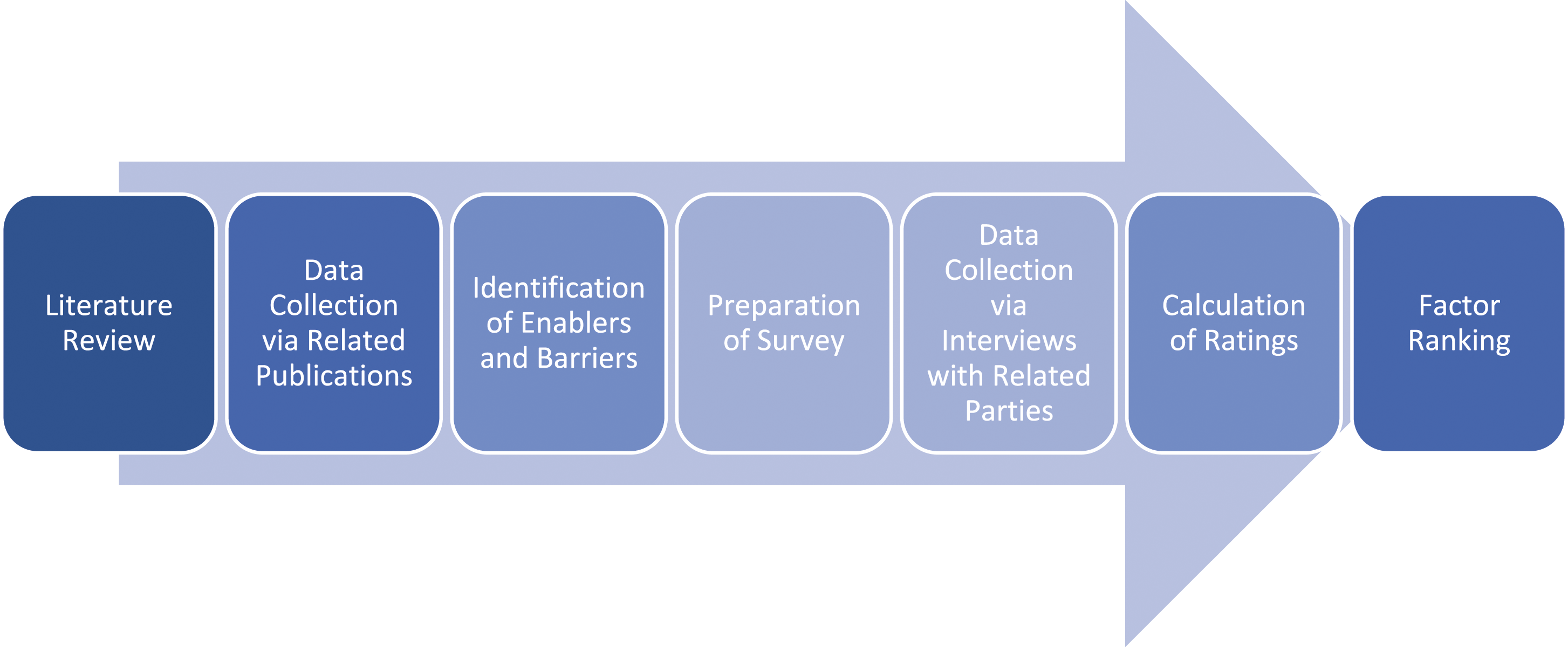
At the beginning of the process, related publications in BIM adoption were examined. The pre-evaluation phase was processed to identify papers that are directly related to BIM adoption from the perspective of public clients. Some publications were eliminated as, in some cases, BIM adoption was investigated from the perspective of contractors or architects. These might have misguided the findings of the research due to this research being focused on the client’s perspective. Each examined paper focused on different project types in different countries, including Norway, Iraq, China, Turkey, Libya, Finland, and Sweden.
Sample projects were used to identify a broad range of enablers and barriers to BIM adoption from the client’s perspective. Barriers were defined as the most common reasons not to adopt BIM from clients’ perspectives, while enablers were observed as techniques to overcome these barriers. The sections below detail the common enablers and barriers that were found in the literature.
Enablers
• Strategic initiative enablers: During the implementation, BIM should be supported by the top managers. Top managers should be involved actively in the implementation process. They should provide valuable resources for this process, such as time and human resources. Aims and objectives should be legitimized. Common vision and new responsibilities of employees should be conveyed to related people properly. Strategies for developing new systems should be identified clearly by the top managers. If there is resistance to change in the transition process to the BIM, this resistance should be analyzed by the top managers and find appropriate solutions for these problems. They also should prepare a work plan to identify strategic benefits, resources, costs, and risks. There should be a business model which shows required activities that tell the implementation efforts and reasons for investments. Business models make the implementation process easier.
22
• Cultural readiness enablers: Effective communication is very important for the successful implementation of BIM. Expectations may be different for each party in the construction projects because of this, expectations must be identified by related parties. Mid-level managers should announce the importance of BIM. Before the BIM implementation, it is essential to communicate objectives, activities, and updates to workers, ensuring that any subsequent changes are well understood and adopted. Business plans and how BIM is related to their jobs should be conveyed by effective communication. Effective communication can prevent resistance to change. If a communication program that tells what and how should be conveyed can be developed, the transition may be easier. After BIM implementation, results should be shared with the employee. This prevents the mistake that was experienced before. A person who is powerful in identifying the objectives and managing the transition process should lead.
23
• Knowledge and learning enablers: Knowledge sharing and effective communication reduce uncertainties and risks. Information technology can make the sharing process easier. Creating a learning environment is very important for successful BIM implementation. Thanks to this, employee can develop themselves and recognize their capabilities. If this environment can be offered to workers, they have no fear of failure and they are willing to take risks. BIM may become more efficient thanks to learning by experience.
24
• Network relationships enablers: Training is very important for the successful implication of BIM; however, it is not enough alone. During the implementation process, companies should investigate good examples and learn their techniques. The company that implements BIM should use consultancy, work with external vendors, or develop an R&D department.
25
• Change management enablers: When there are big changes in an organization, people in this organization are afraid of the unknowns, and they cannot recognize the requirement for changes. In some organizations, faults may not be tolerated, and employees have to hide their mistakes. However, BIM gives chances for mistakes and provides a very comfortable working environment. Changing agents should be used because they facilitate the BIM implementation, and in this way, the culture of the organization is strengthened, and the fear of the workers is eliminated. Users should be involved in the changing process and awarded. To make the environment safer, an education program should be developed. After the first implementation help desk should be developed to support the workers.
26
• Process management enabler: Companies that implement BIM should enhance their BIM performance and process. Maturity assessment tools may be useful to evaluate the performance of BIM usage. Additionally, measurement metrics may be used for comparison. In this way, the company may utilize the experience of other companies and the best practices.
27
Barriers
• Interoperability: This means the ability to data transfer between different BIM tools. If there is interoperability between different tools, users can transfer data from one tool to another without information loss. Interoperability problems cannot be solved completely because different BIM tools have been developed separately.
28
• High cost for training & software: There is a requirement for a high initial cost for setting up BIM tools. After BIM tools, the employee should be trained to use these tools. This is an additional cost for companies. Especially for small and medium-scale companies, these costs can be seen as a redundant expenditure.
29
• Unawareness of BIM benefits: Companies are not aware of the benefits of BIM and because of this reason, costs are considered redundant. Whereas if companies understand the benefits of BIM, they are willing to use BIM in their projects.
30
• Resistance to change: People cannot break routines easily, and they resist change. Traditional methods in construction have been used for many years, and they cannot quit using this traditional method. Because of this, the transition to BIM becomes more difficult.
29
• Lack of experience and best example: In some countries, the application of BIM has developed a lot; however, the maximum level of BIM implementation cannot be achieved all around the world. Because of this, there is no best use of BIM. Also, the implementation of BIM in the AEC industry is a relatively new concept. Because of this, companies still have not gained experience in this area.
29
• Lack of guidance: In addition to experience and best example, there is a requirement for complete guidance. Some countries have prepared their own guidance but still, they lack suitable guidance, and companies cannot apply the BIM implementation properly. As guidance is published by developed countries, BIM implementation increases.
31
• Lack of qualified personnel: Human is one of the most important resources of the companies for successful BIM implementation. On the other hand, BIM is a very new concept, and because of this, finding experienced personnel is very difficult.
32
• Lack of collaboration in the construction industry: The nature of the construction industry is fragmented because there are so many parties which are involved in the construction projects. BIM implementation should be interiorized by each of them for the implementation of BIM to project successfully. However, in our days this cannot be achieved completely.
32
• Lack of governmental support: In some countries, BIM implementation has become compulsory but the number of countries that mandate BIM implementation is very few. Because of this, companies are not willing to use BIM tools. As it becomes mandatory, the number of BIM-implemented projects increases.
33
Questionnaire and data collection
After identifying enablers and barriers from the literature, the case study method is utilized in this study. During the data collection process, interviews were performed with different participants. A questionnaire was used during these interviews, conducted with professionals from the industry. The questionnaire has three parts. The first part includes general information about participants, companies, and projects. These questions were asked to understand the structures of the companies and projects. Some information that was collected in the first part is listed below: • Participant’s profession • Experience of participants • Company’s expertise area • BIM experience of the company • Project’s type • Project’s ownership • Project’s construction area • Budget of projects • Project’s duration • The total amount of BIM Investment • Number of Employees Working in the Company and BIM Team
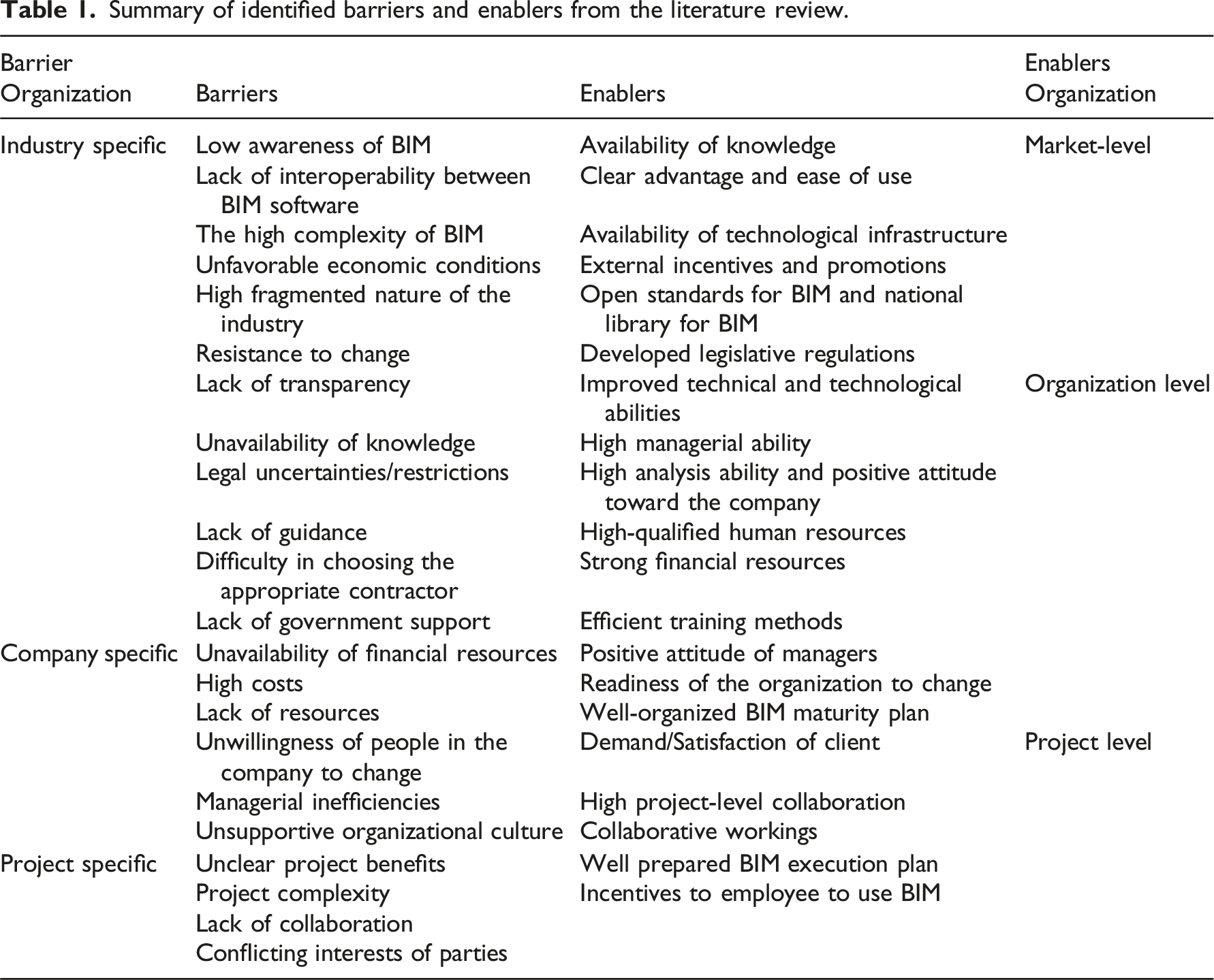
Summary of identified barriers and enablers from the literature review.
Findings
Participant and project findings
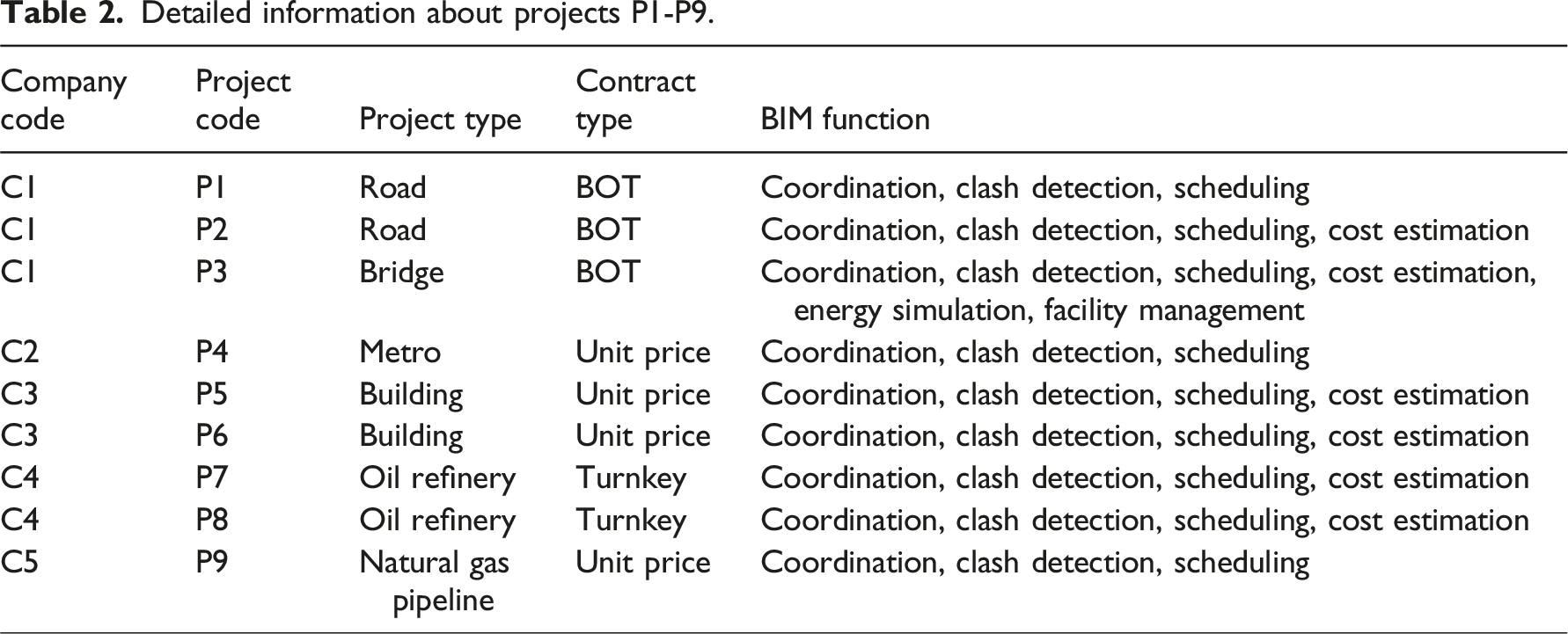
• Participant Profiles: During the selection of the participants, the authors focused on achieving a selection from different disciplines with the theory that if homogeneity of participants could be achieved, then the validity of the results would be significantly increased. During data collection, face-to-face interviews were conducted with thirty-one (31) professionals from ten (10) companies and eighteen (18) projects. The majority of the participants were civil engineers, whereas others included professionals from other disciplines, such as architects, electrical engineers, mechanical engineers, and survey engineers. The experience level of participants ranged from 0-5 years to more than 21 years, the majority of the experience level being in the 10-15-years range. • Company Profiles: Each company had a different number of employees, BIM usage, and specialty areas. As the field of operations of the companies were different, the case study data collected in this study have different types of projects. Overall, the data collection included two railroads, one airport, one bridge, one hospital, one subway, one natural gas pipeline, one refinery, and one building project. The variety of the types of projects is important for this study, as each project has had its own features and usage of BIM software that might affect the results to alternate from one project type to another. On the other hand, the number of employees is a significant indicator for understanding the company’s size. Company size ranges from small to large scale companies having between 140 to 23,000 employees. The companies that were selected for this research were all public clients. Many of these companies were operating for 50+ years, while there were newer companies among the list which were operating for less than 10 years. The maturity of the BIM application showed variety among companies as well. The number of completed projects per company also offered a wide range. Some companies completed 1-10 projects, while others successfully completed projects in the range of 11-50, 50-100, and even more than 100. The variance in the number of completed projects supports the idea of collecting a wide range of data for BIM adoption in this study. • Project Profiles: Thirty-one (31) professionals were interviewed about eighteen (18) projects for this research. Some projects were even older than when BIM was started to be used in developing countries. However, these projects were megastructures, and their planned durations were longer than typical commercial building projects. Details of nine (9) projects are presented in Table 2. Detailed information about projects P1-P9. • Software Used in Projects: There were various types of software applications that were used in the projects, such as Revit, Smartplant, Plaxis, Navisworks, or similar Every discipline uses different software according to its needs. For example, while geology engineers were using Face and Slide, plant engineers were using Smartplant. This variety brought in the considerations and issues related to interoperability. o Focusing directly on BIM software, Autodesk Revit was used by three companies in four projects. These were building and metro projects, where Revit provided improved collaboration between different parties in the projects and consecutively increased the efficiencies in these projects. As an example, one of the participants from Company C9 said that during the construction phase, processes had run flawlessly due to the use of Revit. Another participant from Company C9 told that they had used Revit in the architectural, mechanical, and structural design phases of Project P15. The control mechanism for coordination and clash detection was run successfully by using Revit in this project. o In refinery projects, Smartplant was widely used for maintaining the integrity of information through the life cycle of the plant. Through this tool, safety could be ensured, while projects could be delivered on time and sustainable production was maintained by the owners. A participant from Company C10 stated that they were using Smartplant to reduce the conflicts and planning all phases of the refinery. Another participant from Company C10 said that they designed all steps of Project P8 with Smartplant. In addition, the participant said that as the project progressed in time, Smartplant was successfully used by the engineering team to update its progress until the end of the project. o Autodesk Navisworks was used in three projects to achieve 4D and 5D BIM by integrating project schedules and cost estimates into the Revit model. According to a participant from Company C3, Navisworks provided collaboration and eliminated delays in the project due to a revision in the structural elements of the project. In this case, when structural elements were revised, other systems’ related elements were revised automatically while preventing potential clashes. By using the Revit-Navisworks duo, information was updated flawlessly, and accurate information on the changes was shared with the engineering and project management teams at the site.
Ranks of barriers from case studies
The barriers identified in the literature were divided into industry/market level, company/organizational level, and project level barriers (Table 1). Professionals evaluated these barriers regarding different types of projects, such as buildings, airports, dams, hospitals, and similar. • Market Level Barriers for BIM Adoption: These are the barriers related to the construction market and not to companies or projects. There are average ratings of the values that have been assigned by the professionals from the projects in which BIM was implemented (G1) and BIM was not implemented (G2). Among these market-level barriers, “unfavorable economic conditions” was selected as the most significant barrier, as it has the highest average of 3.8. After this barrier, “difficulty in choosing an appropriate contractor” was in the second rank with a rating of 3.6, and the third barrier was “resistance to change” with a rating of 3.5. The three least important barriers at the market level are “lack of transparency,” “high complexity of BIM,” and “highly fragmented nature according to the average ratings of all participants. • Organizational Level Barriers for BIM Adoption: During the interviews, participants evaluated barriers based on their organizations. As in the market level, there are average ratings of G1 and G2 projects in the organizational level barriers table. It can be seen that the average rating of “high costs” is 3.9 as the most impactful barrier among others. “Unsupportive organizational culture” is in second place with a rating of 3.3, and “unavailability of financial resources” is in third place with an average rating of 3.0. The least important organization-level barriers are “unwillingness of people in the company to change” and “managerial inefficiencies”. • Project Level Barriers for BIM Adoption: Some barriers are directly related to projects and the significance of these barriers might change in different project types. Minimizing and eliminating these barriers are easier than the others, as by taking smaller and project scale precautions, these barriers may be overcome. There are four identified barriers at the project level. If project-level barriers are investigated for all participants, “unclear project benefits” is the highest, with a 2.8 average rating. “Project complexity” is in second place with a rating of 2.7, and “conflicting interest of parties” is in third place with a rating of 2.6. On the contrary, “lack of collaboration” is evaluated as the least important barrier considering average results with its average rating of 2.4.
Ranks of enablers from case studies
As it is discussed in the previous sections, enablers can be defined as the accelerating and facilitating factors for BIM implementation. As in the barriers, enablers can also be evaluated in three main classes such as market level enablers, organizational level enablers, and project level enablers. • Market Level Enablers for BIM Adoption: Market level enablers cannot be affected by the companies’ decisions or project decisions. To develop these enablers, there should be bigger decisions and common effort coming from the industry. As effects of the market level enablers increases, companies have more chances to utilize these enablers. The minimum, maximum and average ratings of all projects in which BIM was enabled (G1) and was not enabled (G2) are observed. It can be observed from this table that “clear advantage and ease of use”, “availability of knowledge” and “availability of technological infrastructure” are the three most important market level enablers with ratings more than 4.0. While “open standards for BIM and national library for BIM” stays at medium importance, the three least important barriers are “external incentives and promotions” and “developed legislative regulations,” with a rating of 3.5. • Organization Level Enablers for BIM Adoption: Organization level enablers can be improved by the companies or organizations. To improve these enablers, organizations can make some decisions distinct from the market-level enablers. The minimum, maximum and average ratings which have been assigned by the participants for G1 and G2 projects are calculated. It can be seen that “high analysis ability and positive attitude of company” and “positive attitude of managers” are sharing the first place with their ratings of 4.4. While the “positive attitude of managers” can be defined as the high acceptance level of BIM by the stakeholders, managers, and supervisors, “high analysis ability” includes the improved capability of Cost-Benefit-Risk Analysis, ROI, and similar. In addition to this, both “efficient training methods” and “readiness of the organization to change” have 4.2 average ratings, and they share second place. On the contrary, the average of the rankings which are assigned for the “strong financial resources” is very low with respect to others with a rating of 3.4. • Project Level Enablers for BIM Adoption: The significance of project-specific enablers may be changed according to various project types and properties. “The demand or satisfaction of the client” is the most significant enabler for the successful implementation of BIM with a rating of 4.1. Another significant enabler is “well-prepared Project BIM execution plan” with an average ranking of 4.0, and it is in the second place among the Project level enablers for BIM implementation. Other enablers are “high project level collaboration” and “collaborative working” with a 3.9 rating. “High project level collaboration” means developed collaboration skills, cross functional cooperation, open communication and information sharing, and the willingness of project parties, such as project manager, architect, field engineer, subcontractor and similar, to work together. “Collaborative working” can be defined as early user involvement, integrated project delivery (IPD), and early contractor involvement, all of which support the mindset of BIM implementation. The lowest enabler in this category is “incentives to employees to use BIM” with a rating of 3.7.
Discussions
In this part of the study, case study findings were compared with the literature review results, and some details were introduced. While comparing these two statistics, two main items were considered: (1) how many times the related barrier or enabler was mentioned in literature and (2) what was the rating of the related barrier according to interviews. This process was repeated for both barriers and enablers.
Literature review results vs. case study findings for barriers
Literature Review Results vs. Case Study Rating for Market, Organization, and Project Level Barriers.
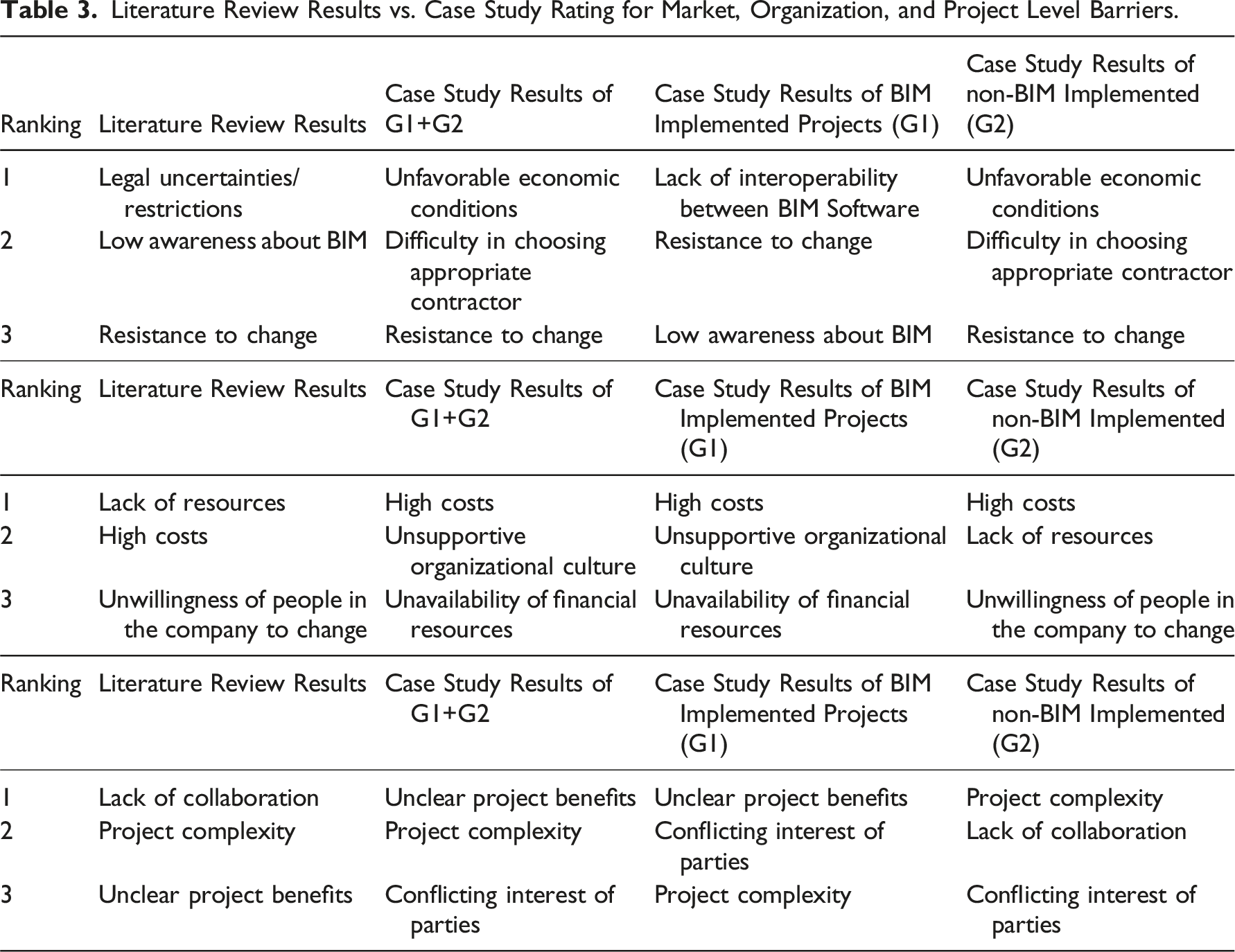
Unfavorable economic conditions are in the first place according to the average ratings of all participants and participants from G2 in which BIM was not enabled. On the other hand, according to experience of the participants who have enabled BIM in their projects, it is in fifth place among the others. So, it can be said that unfavorable economic conditions are more impactful for the projects in which BIM was not enabled yet. Regarding unfavorable economic conditions, participants from C9 said that they have enabled BIM into two projects and they have enabled it successfully. However, because of the economic conditions of our days, they have to postpone other projects and they have no chance to implement BIM to different projects. If the answers of participants from C8, which is one of the companies that enabled BIM in their projects, are examined, it can be seen that unfavorable conditions for this company are a very big problem, and the budget has to be shrunk. On the contrary, in the first place, there are legal uncertainties and restrictions, according to the literature review, while it is in seventh place, according to professionals from the industry. A recent study from Alotaibi et al. (2024) identified the lack of empirical insights on the contractual and legal aspects of BIM adoption as a potential barrier. 34 They developed a framework to analyze the regulatory and legal implications of BIM adoption in construction industry. While the participants of this study were evaluating the legal restrictions and uncertainties, some in G1 said that legal issues were not a considerable problem for the industry. However, licensing sometimes might be significant, so they looked for potential solutions. Some participants used cheaper software, and some bought software for multiple users to make sure more than one user could utilize the software. For example, in P1 of C1, there was only one license for 20 personnel.
Low awareness about BIM in the industry is in sixth place in this study, while it is in second place in the literature review results. If the results are investigated separately for G1 and G2, for the projects in which BIM was enabled, low awareness about BIM is one of the top three barriers according to the results of G1, meaning low awareness about BIM becomes more important for BIM-implemented projects. On the other hand, low awareness about BIM is not evaluated as important as in G1 compared to G2. This might be due to the fact that this barrier is not very impactful to prevent BIM implementation. Enshassi and AbuHamra (2017) 35 investigated BIM implementation for the Palestinian construction industry, and they found that “lack of awareness of BIM by stakeholders” is the most significant barrier. Although participants from P2 mentioned the low awareness about BIM and all of them have rated these barriers as “5”, these barriers take more importance in the literature review, and it is not considered as significant as in the literature for the professionals in the industry. This research investigates the barriers to BIM implementation from the client’s perspective. So, this barrier might be very important for the other parties in the AEC industry, but professionals from the industry said that there is not a considerable problem with the awareness of BIM, and the client’s side of the projects is aware of BIM and its importance.
Moving onto the organizational level, Table 3 shows the comparison of the case study results from G1 and G2 to literature sources. In the first place for the case study results, there are high costs. It is evaluated as the most important barrier according to both G1 and G2. It can be said that high costs for BIM affect both BIM-implemented projects and non-BIM-implemented projects, as these costs include investments for software, hardware, and updates, investment for BIM specialists, and training of another employee, which also require time for learning and applying BIM. Accordingly, this barrier is in second place among the results of the literature review. Elmualim and Gilder (2014) 36 showed that most of their research participants thought that the biggest barrier to BIM implementation was a lack of capital to invest in getting started to use BIM.
Unsupportive organizational culture is the second important barrier in the case study results, while it is in fourth place among the six literature review results. As in the general results, unsupportive organizational culture is in the second place according to answers of G1, which are the projects in which BIM was enabled. However, participants from G2 evaluated this barrier as one of the least important organization level barriers among others. One of the participants from G1 stated that the top managers accept what they want about BIM, however there is a requirement for too much time to convince them. In the long run, the idea of each top manager is going to change, and this barrier is going to be eliminated. The lack of tangible benefits was highlighted as organizations and their leaders did not want to change their process due to the uncertainty of the new system. 37 Siebelik et al. (2021) 38 identified the resistance to change as the core barrier for BIM implementation together with the lack of time for implementing or learning BIM.
The rankings of results of the case study according to G1 and G2 and the literature review at the project level can be seen again in Table 3. Unclear project benefits were ranked at the top for the combined case study results, mainly because this is an unknown parameter as it is not profitable and its ROI is low. This is considered as important by the professionals from G1 while it is not considered as important barriers according to literature review results and professionals from G2. In this case, there are two alternatives for this: this barrier might be more impactful for the BIM implementation process instead of the preparation process of BIM implementation, or companies from G2 may overcome this barrier. In a way, this factor is related to the mindset of top managers as the decision-makers. If their mind can be changed and they are convinced that BIM is profitable and decreases the cost of the projects, unclear project benefits are not going to be a barrier to BIM implementation anymore. Kiani et al. (2015) 39 conducted research on the construction industry, and they claimed that without providing clear benefits to managers and other decision-makers, shifting to BIM is almost impossible.
Another project-level barrier that is discussed in the context of this research is project complexity. According to participants from G2, project complexity is a very important barrier to this, while it is not considered a very important barrier for G1. It can be said that this barrier is the most impactful barrier for the preparation of the BIM implementation process. This is also in second place according to literature review results.
Literature review results vs. case study findings for enablers
Literature Review Results vs. Case Study Rating for Market, Organization, and Project- Level Enablers.
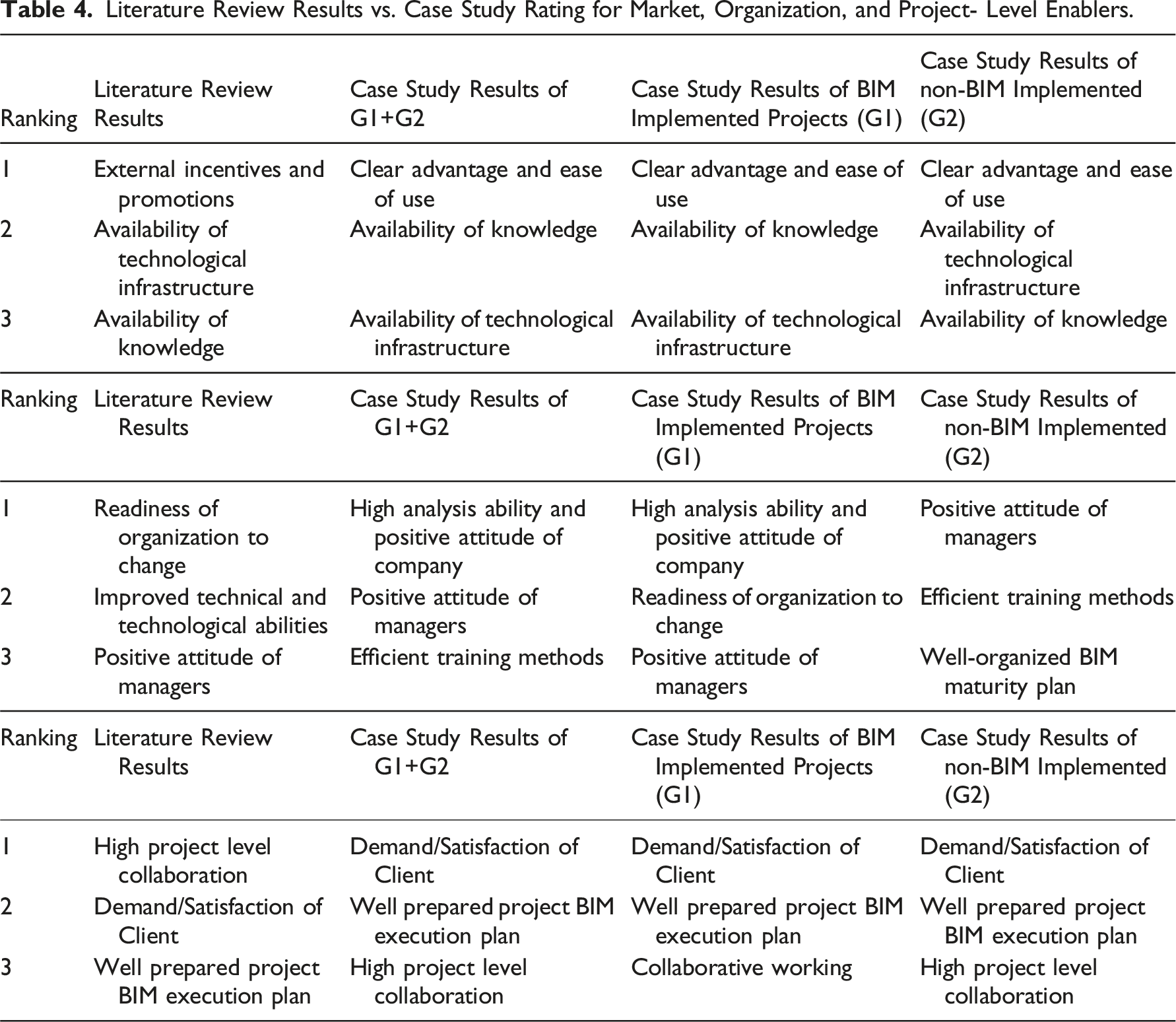
Clear advantage and ease of use were considered very important for both G1 and G2 while, interestingly, they were the least important enablers in the literature review results. This result shows that they are very impactful for both the BIM implementation process and the preparation of the BIM implementation process. For example, commands in the AutoCAD in some other software have not changed for years. This way, each user can bear these commands in their mind, and they have become efficient over time. This enables BIM implementation and makes the implementation process easier. In addition to this, there are some clear advantages of BIM implementation. Previous studies claimed that the motivation and will of the employee were directly related to their mindset about the technology and some variables could affect their perception such as “clear advantage of use” and “ease of use”. 40
The enablers at the organizational level are also evaluated by the participants. The ranking of these enablers according to case study average ratings and frequency in the literature review can be seen in Table 4. Participants from G1 have evaluated the enablers according to their experience with BIM, while participants from G2 have evaluated with respect to their perceptions of BIM implementation.
High analysis ability and positive attitude of the company were in the first place according to the evaluation of participants from G1, while it is in the seventh among the literature review results. This enabler was not considered as one of the most important enablers by the participants from G2 because it was in sixth place among others. This might be due to the fact that this enabler was not very impactful in starting the BIM implementation. Instead, the companies planning to implement BIM into their projects gave importance to other enablers. According to a recent study by Hallen et al. (2023), BIM technology was found insufficient by itself if BIM was not accepted by the company. They found BIM acceptance as a critical factor for BIM implementation. 41
In Table 4, the comparison between the results of the case study and literature review was performed at the project level. This table shows the rankings of project level enablers according to average ratings which are assigned by the participants and frequencies of enablers in the literature. The enablers that are placed in the first three alignments are ranked the same. Interestingly, the results of G1 and G2 are almost the same. If the rankings of other enablers and barriers are investigated, it can be said that there are some differences in the rankings of G1 and G2. Demand/satisfaction of clients is in the first place in the case study results, while it is in the second place in the literature review results. C1 made using BIM compulsory and thus, the number of BIM implementations was increased. In addition to this, some companies like C3 and C9 made some software for BIM compulsory, and they only accepted projects that were prepared by using this software. In this way, they had some kind of procedure to show how these projects should be designed and prepared. According to the results of Aladag et. al. (2016), 42 there were two important enablers and one of them was “demand and contract obligations” too. This research aimed to understand the perspectives of clients in the industry and they put an item that identified the required software for the projects in their agreement. This became binding for the contractor and to meet these requirements they have to use this software.
Conclusions
As the main objective of this study, barriers for the implementation of BIM from the perspective of public construction projects’ clients in developing countries were investigated and identified. Enablers were included in this research to help identify and complete barriers, as finding the enablers can be used for eliminating the adverse effects of these barriers for interested parties. The methodology included identifying factors from the literature, collecting case studies, and performing interviews with case study professionals from public clients. During the interviews, the perspectives of participants on the significance of the identified barriers and enablers were collected. Participants were divided into two groups: G1 represented the projects in which BIM was enabled and G2 represented the projects in which BIM was not enabled. G1 has answered the questions according to their experience with BIM, while G2 has evaluated the enablers according to their perceptions of BIM implementation. In this way, this study also worked for investigating the significance of barriers and enablers for during BIM implementation and for preparation process to start to implement BIM separately.
During the comparison between case study results and literature review’s results, there were similarities as well as significant discrepancies. For example, while a barrier might be the most important barrier according to the case study, it might be the least important in the literature review. On the contrary, the significance of some of the barriers or enablers is the same in both case study and literature.
The major barriers for the market level are identified as “lack of interoperability”, “resistance to change” and “low awareness about BIM” according to results of G1, while the first three barriers are “unfavorable economic conditions”, “difficulty in choosing appropriate contractor” and “resistance to change” according to the perception of participants from G2. The three most significant organization-level barriers in projects that belong to G1 are “high cost,” “unsupportive organizational culture,” and “unavailability of financial resources.” However, the first three organization-level barriers, according to G2, are “high costs,” “lack of resources,” and “unwillingness of people in the company to change,” in turn. If project level barriers are examined by utilizing the experience of G1, it can be seen that the first three barriers are “unclear project benefits”, “conflicting interests of parties” and “project complexity” while “project complexity”, “lack of collaboration”, “conflicting interests of parties” are in the first three places in the results of G2.
The top three market-level enablers are “clear advantage and ease of use,” “availability of knowledge,” and “availability of technological infrastructure” in G1, while the top three enablers are similar in the results of G2. There are “clear advantage and ease of use,” “availability of knowledge,” and “availability of technological infrastructure,” respectively. In organization-level enablers, according to G1, “high analysis ability and positive attitude of company toward BIM”, “readiness of organization to change” and “positive attitude of managers” are three most important enablers, while according to the perception of G2, three most important organization level enablers are “positive attitude of managers”, “efficient training methods” and “well-organized BIM maturity plan”. Lastly, for project-level enablers, the top two enablers are the same in the results of G1 and G2. These enablers are “demand/satisfaction of clients” and “well-prepared project BIM execution plan.”
It should be noted that this research has been conducted with public construction clients in a developing country. In this case, these results are more suitable to be used by public clients. However, the market level barriers were found valid for both public and private clients such as lack of interoperability between BIM software, high complexity of BIM, unavailability of knowledge, lack of guidance, and the lack of government. These barriers would be challenging for private clients developing countries as well. On the other hand, the organization level conditions for private clients were found different than the conditions of the public clients, as private clients are found to be more advantageous than the public clients in developing countries due to their access to additional resources. In this case, the economic conditions of the market and the availability of financial resources would be less challenging factors for them. In the project level, some barriers such as project complexity, conflicting interest of parties would be applicable for the private clients as well. A similar conclusion can be made for the enablers. For example, market level enablers such as availability of technologic infrastructure, external incentives and promotions, open standards for BIM would also be very important for private clients in developing countries’ construction industry. On the contrary, private clients in developing countries have advantages in terms of organization-level enablers. It should be noted that enablers are important for public clients and these make BIM implementation easier for them. However, private clients might utilize it from the organization level more. For instance, developing countries’ private clients may have better technological abilities, higher qualified human resources, and stronger financial resources compared to public clients. For instance, there are some hospital and building projects among the case studies that were constructed by private clients. In these hospital projects, BIM usage was more common because the employees of these clients had a better knowledge of BIM and made BIM implementation obligatory in these projects.
In the overall, this study contributes to the BIM body-of knowledge by identifying the barriers and enablers from public clients’ perspectives. Literature review lacks studies of BIM usage by clients, who are significant parties in decision-making of BIM implementation. As a secondary output of this study, the importance of understanding the advantages of BIM were evaluated through the rating of factors. If these advantages could be shown to clients as well as other stakeholders, the construction project parties would become willing to implement BIM in their projects and even they make BIM usage in projects obligatory. Considering this benefit, future research can include focusing on the clear advantages of BIM and trying to come up with measurable BIM advantage factors.
Footnotes
Declaration of conflicting interests
The author(s) declared no potential conflicts of interest with respect to the research, authorship, and/or publication of this article.
Funding
The author(s) received no financial support for the research, authorship, and/or publication of this article.
