



Abstract
Background:
Rhipicephalus microplus, a one-host tick species, serves as a principal vector of tick-borne diseases in agricultural ecosystems worldwide by harboring and transmitting various pathogens through blood-feeding. In China, the climatically suitable range of R. microplus has been gradually expanding. However, the climatic suitability of R. microplus under future climate change scenarios remains unclear.
Methods:
This study evaluates both current and projected climatic suitability of R. microplus by integrating climatic variables, thereby providing insight into shifts in climatic suitability under present and future climate conditions. The MaxEnt model was applied using 78 occurrence records of R. microplus collected from 1970 to 2023, along with 19 environmental variables obtained from WorldClim. By identifying the most influential environmental factors affecting the climatic suitability of R. microplus, we predicted future changes under three Shared Socioeconomic Pathways (SSP126, SSP245, SSP585) for three future periods (2021–2040, 2041–2060, and 2061–2080).
Results:
This study indicates that the current climatically suitable areas for R. microplus are mainly located in southern China, covering approximately 1,051,406 km2, which accounts for about 10.91% of China’s total land area. The minimum temperature of the coldest month (Bio06, 69.6%) and precipitation of the warmest quarter (Bio18, 20.1%) were identified as the most influential climatic variables. Under future climate scenarios, the suitable habitat for R. microplus is projected to expand and shift northward. By 2061–2080 under the SSP585, the suitable area could reach up to 2,994,700 km2, representing a 2.85-fold increase relative to its current extent.
Conclusions:
This study projects a significant northward expansion of climatic suitability for R. microplus in mainland China under future climate scenarios, driven primarily by rising minimum winter temperatures. These findings highlight an urgent need for proactive, climate-integrated surveillance and adaptive control strategies to mitigate the growing threat of this tick vector and its associated diseases in newly vulnerable regions.
Introduction
As a one-host tick mainly infesting cattle, Rhipicephalus microplus vectors Babesia bovis, B. bigemina, and Anaplasma marginale—the pathogens responsible for babesiosis and anaplasmosis. The resulting clinical manifestations, including decreased productivity, anemia, and impaired physiological function, can progress to livestock mortality in severe cases, leading to considerable economic losses (Zhang et al., 2022). These adverse effects are especially severe in regions with inadequate veterinary and public health infrastructure, where limited disease surveillance and restricted access to rural health services impede the timely detection and effective management of tick infestations and tick-borne diseases (Grace et al., 2012). This is exemplified by South America, where suboptimal public health conditions allow R. microplus to inflict some of the world’s highest economic losses. Brazil alone, for instance, incurs annual losses exceeding USD 3 billion due to this species (Grisi et al., 2014; Nari, 1995). Collectively, these challenges underscore the urgent need for proactive surveillance, early warning systems, and strengthened public health infrastructure in vulnerable regions.
The off-host life stages of R. microplus—fully engorged females, eggs, and unfed larvae—are particularly sensitive to climate conditions, especially temperature and humidity (Sales et al., 2024). Extreme conditions, such as low humidity or temperature, can sharply reduce survival and prolong development periods (Marques et al., 2020; Oshiro et al., 2021; Xiao et al., 2021). Consequently, the climatic suitability of R. microplus is predominantly confined to tropical and subtropical climates characterized by warmth and high humidity. Even minor climatic variations in temperature and rainfall can dramatically influence the tick’s life cycle, reproductive success, population density, and the extent of its suitable habitat (Marques et al., 2020).
Given these severe impacts and the climate sensitivity of R. micropluss, understanding how climate change may alter its future climatic suitability is crucial. Recent studies have indicated an expansion of climatically suitable habitats for R. microplus under future climate scenarios. For example, Xiao et al. (2021) projected a northward expansion of climatic suitability within China by 2070, driven by increased annual precipitation and milder winters (Xiao et al., 2021). Similarly, global modeling by Marques et al. (2020) and Yang et al. (2020) anticipated substantial increases in habitat suitability across various cattle-producing regions worldwide (Marques et al., 2020; Yang et al., 2020). While these previous studies have established a vital foundation, they primarily addressed broad distribution trends under earlier climate scenarios. Our study complements this work by incorporating occurrence data up to 2023 to capture the accelerating northward expansion and by utilizing the latest Shared Socioeconomic Pathway (SSP) scenarios to provide province-specific, actionable risk assessments necessary for informing regional quarantine and surveillance policies.
Building upon these previous studies, our research introduces notable methodological and analytical advancements. Specifically, we employ SSPs climate scenarios, which explicitly account for anthropogenic interventions, to model the future climatic suitability of R. microplus in China. Notably, we have updated species occurrence data to 2023, thereby improving the accuracy of our predictions. Furthermore, we provide province-specific forecasts, offering more granular and actionable insights than broader-scale global studies. This detailed, regional approach facilitates targeted surveillance and control strategies, directly supporting evidence-based policymaking.
As Species Distribution Models (SDMs) increasingly support the study of shifting biogeographies, their role in guiding evidence-based policy becomes paramount, particularly in identifying emerging hotspots of vulnerability that require immediate surveillance (Franklin, 2023). To address the urgent need for proactive management strategies in the context of climate change, this research employs the Maximum Entropy (MaxEnt) SDM, a reliable and widely used ecological tool that models climatic suitability by associating species occurrence data with environmental factors (Urbani et al., 2015). Previous successful applications of MaxEnt include predicting the distribution of invasive plant (Zhang et al., 2021), spatial-temporal patterns of invasive weeds (Yan et al., 2020), and the potential distribution of insect pests under climate change (Liu et al., 2024). Leveraging updated occurrence records and incorporating critical climatic variables, our study applies MaxEnt to predict current and future climatic suitability of R. microplus across China, thereby identifying provinces vulnerable to future risks and guiding region-specific interventions.
Methods
Species occurrence data
The species distribution data for R. microplus in China were obtained from the China National Knowledge Infrastructure (CNKI, https://www-cnki-net-443.web.bisu.edu.cn/) and PubMed (https://pubmed.ncbi.nlm.nih.gov/). A comprehensive search was conducted for all Chinese and English articles published between 1970 and 2023 related to “Boophilus(Rhipicephalus)microplus” and the Chinese equivalent of R. microplus. We acknowledge the taxonomic revision by Estrada-Peña et al. (2012), which established that specimens historically identified as R. microplus may actually represent distinct species, including R. australis (Estrada-Peña et al., 2012). Despite targeted searches, no records of R. australis were found in China during our study period. The rationale for focusing exclusively on occurrence data within China is twofold. First, R. microplus in China is known to constitute a species complex with potential lineage-specific environmental tolerances; therefore, using regional data ensures that the model reflects the specific ecological requirements of local populations. Second, this localized approach aligns with our objective to provide fine-scale, actionable predictions for regional veterinary surveillance and control strategies. A total of 5,126 raw occurrence records were initially compiled from published literature and subsequently georeferenced to precise latitude and longitude coordinates. Spatial filtering was performed using ArcGIS 10.2 (ESRI Inc., Redlands, CA, USA), with only one record retained per approximately 2.5 arc-minutes grid cell to reduce spatial clustering and sampling bias. After rigorous screening and thinning, the final valid dataset was refined to 78 representative occurrence points (Supplement 1).
Climate variables and data processing
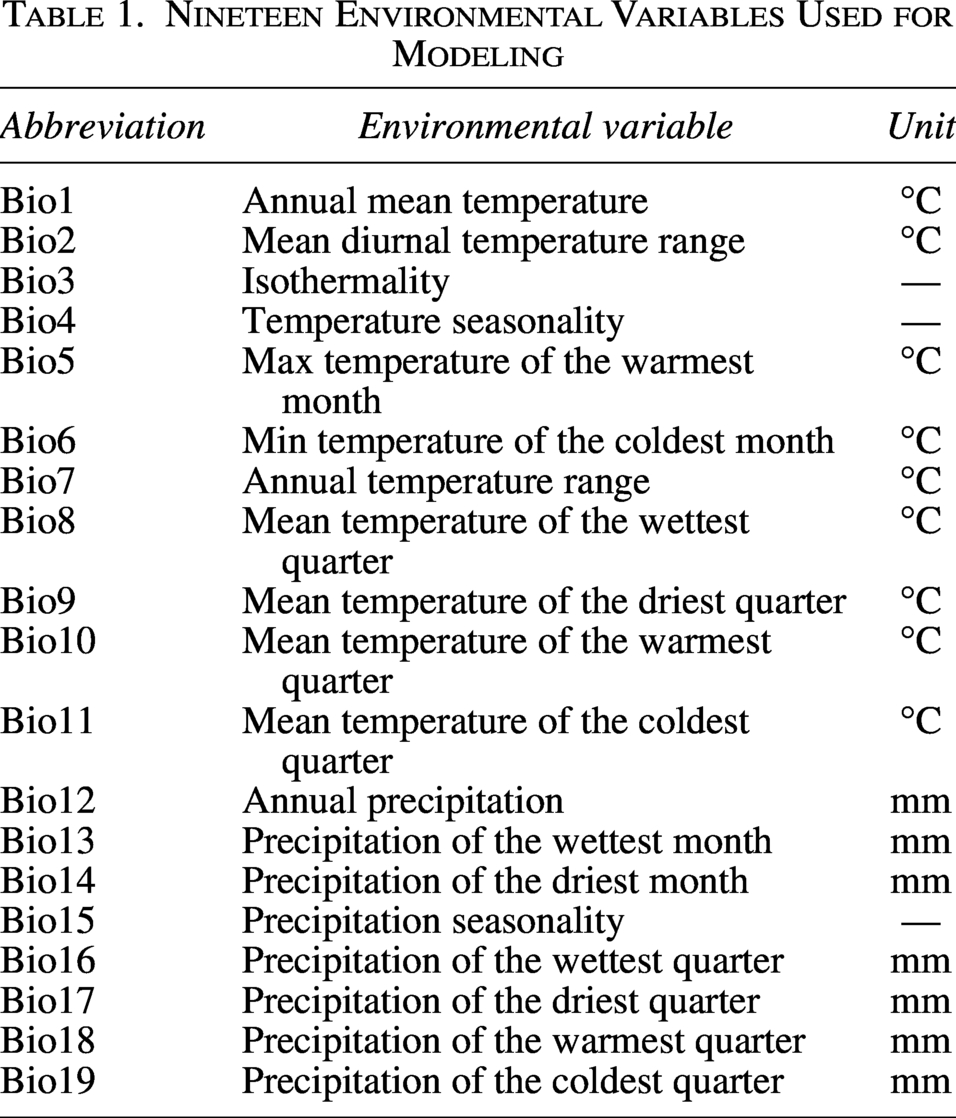
The occurrence data of R. microplus in China were modeled and analyzed using 19 bioclimatic variables from the WorldClim database (Brun et al., 2022) (Table 1). To predict the impacts of future climate change, we utilized data from the high-resolution Beijing Climate Center Climate System Model (BCC-CSM2-MR), which was developed as part of the sixth phase of the Coupled Model Intercomparison Project (CMIP6).
Nineteen Environmental Variables Used for Modeling
We selected the BCC-CSM2-MR model over other CMIP6 models included in WorldClim due to its demonstrated suitability for simulating climate change in China (Ma et al., 2021). The predictions generated by BCC-CSM2-MR were applied to different SSPs. Unlike Representative Concentration Pathways (RCPs), SSPs incorporate socioeconomic factors and land use when evaluating regional climate change (Li et al., 2021). The initial values of SSPs are generally higher, less extreme, and more reflective of actual conditions compared with those of RCPs.
Each SSP represents a different level of radiative forcing depending on societal decisions regarding greenhouse gas emission reductions. We selected three SSPs: SSP1-2.6 (SSP126), SSP2-4.5 (SSP245), and SSP5-8.5 (SSP585). SSP1, SSP2, and SSP5 correspond to sustainable development, moderate development, and extreme high-emission scenario, respectively. The numbers following the dash indicate the level of radiative forcing (W/m2).
For each SSP, we utilized climate data from three future periods: 2021–2040, 2041–2060, and 2061–2080, to predict changes in the climatic suitability of R. microplus. All analyses were conducted using ArcGIS 10.2.
The Pearson Correlation Coefficient (PCC) was used to analyze the correlation between climate data in the suitable areas for R. microplus. The “corrplot” package in RStudio was employed to calculate the PCC. Excessive similarity among environmental variables may reduce model accuracy; therefore, variance inflation factor (VIF) analysis was applied to eliminate highly correlated variables (Chen et al., 2019). When the VIF was greater than 10, multicollinearity was considered present (Liu et al., 2019). The “car” package in R was used to conduct the VIF analysis. Considering the ecological relationships between environmental variables and tick distribution, the final environmental variables included in the model were selected accordingly. All environmental variables were resampled in ArcGIS to a uniform resolution of 2.5 arc-minutes and masked using the administrative map of China prior to model incorporation.
Establishing SDMs
Occurrence data for R. microplus and the relevant environmental variables were imported into MaxEnt 3.4.1 for modeling and analysis. All occurrence records were randomly divided into a training set (75%) and a test set (25%) to build and evaluate the model, respectively. The run type was set to “bootstrap,” with a maximum of 1,000 iterations and 10 replicates for cross-validation. The MaxEnt model was used to generate the current distribution suitability index for R. microplus across regions of China. In species distribution modeling, binary models are widely employed to convert continuous suitability indices into presence/absence data. In this study, the continuous probability of habitat suitability was converted into binary outputs of suitable or unsuitable areas using the maximum training sensitivity plus specificity threshold. This approach is highly effective as it minimizes the mean of the error rate and provides a statistically robust and objective criterion for habitat classification (Chen et al., 2019). In addition, to further understand how environmental factors affect the climatic suitability of vector ticks, distribution probabilities were plotted against response curves for individual environmental factors (Wang et al., 2022). Receiver operating characteristic curves were used to validate model performance, with area under the curve (AUC) values interpreted as follows: 0.5–0.6 indicates failure; 0.6–0.7 indicates poor; 0.7–0.8 indicates fair; 0.8–0.9 indicates good; and 0.9–1.0 indicates excellent performance (Cao et al., 2023).
Results
Important variables
Figure 1 presents the PCC results, which indicate a high degree of correlation among several climate factors, suggesting that certain less significant variables should be excluded. To test for multicollinearity among the climate variables, VIF was employed. Based on the VIF analysis, Bio2, Bio3, Bio5, Bio6, Bio8, and Bio18 were ultimately selected for inclusion in the model.
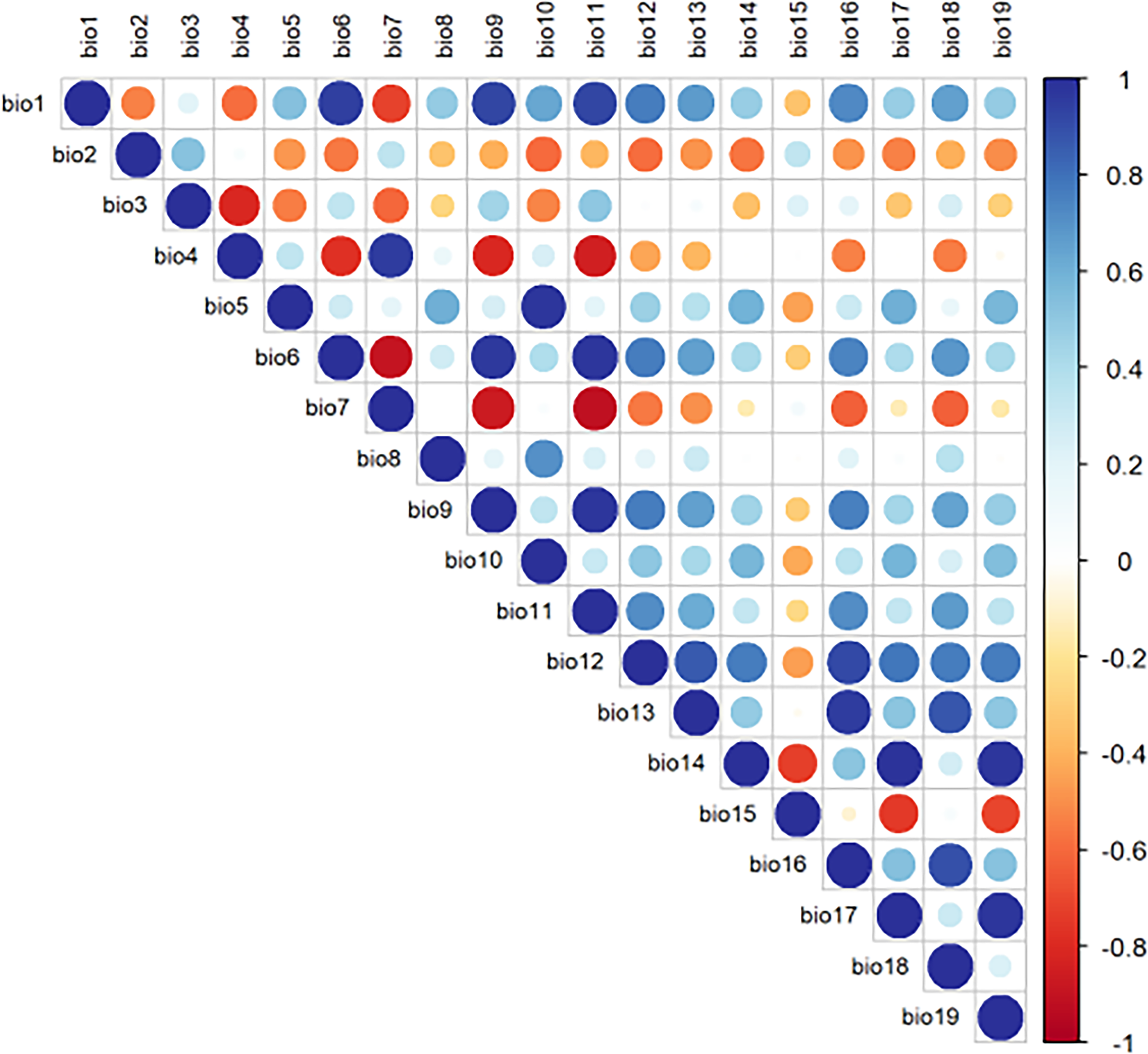
Correlation analysis results of bioclimatic variables about R. microplus (color intensity shows correlation strength and direction: blue (positive), white (none), red (negative). Circle size represents correlation magnitude.
Figure 2 illustrates the key environmental variables influencing the distribution of R. microplus. Compared with other variables, Bio06 (minimum temperature of the coldest month, 69.6%) and Bio18 (precipitation of the warmest quarter, 20.1%) had the greatest impact on the model, while Bio03 (isothermality, 1%) had the least influence. Bio02 (mean diurnal range, 3.3%), Bio05 (maximum temperature of the warmest month, 4.5%), and Bio08 (mean temperature of the wettest quarter, 1.5%) also contributed to the model, with a combined contribution of 9.3%.
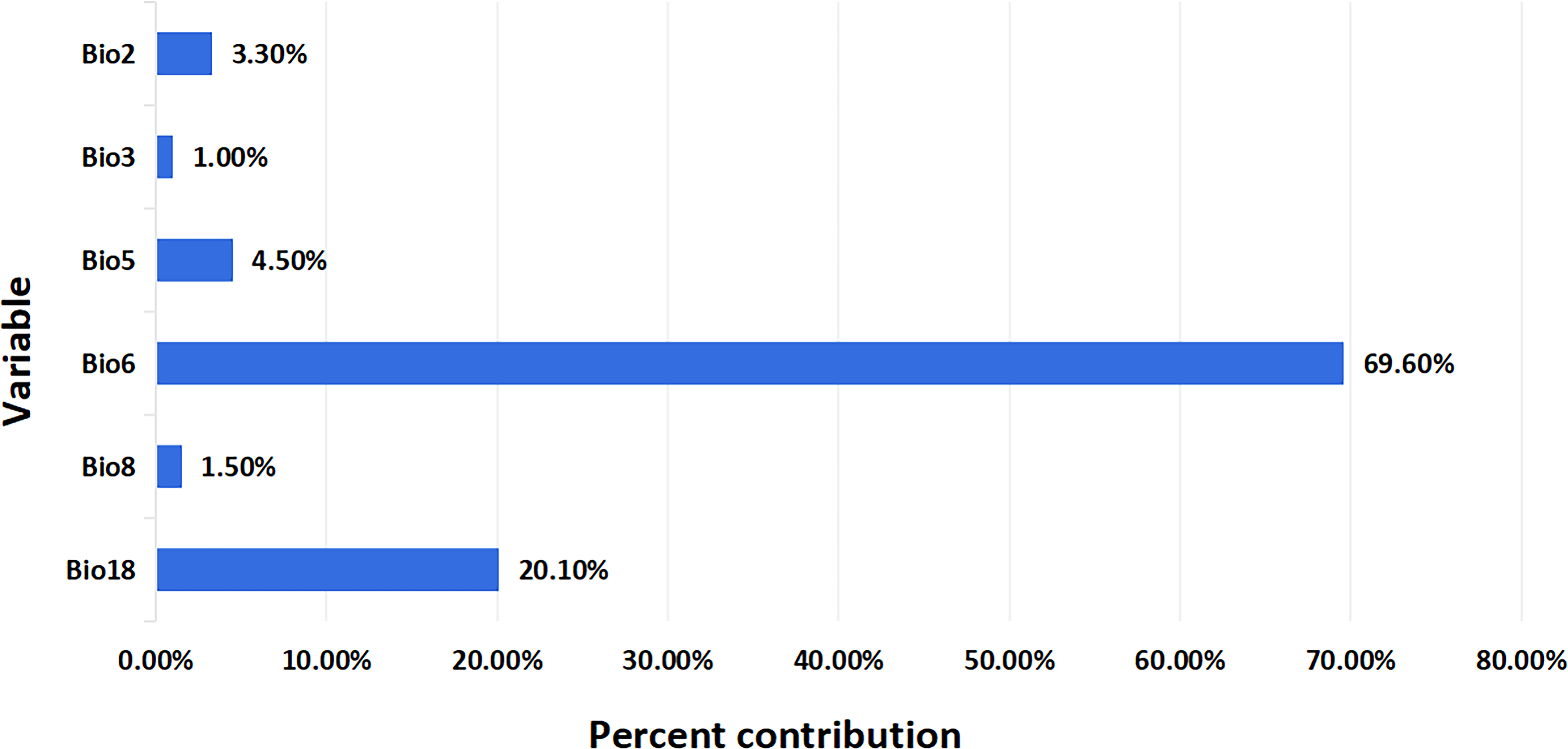
The percent contribution of the key environmental variables affecting the distribution of R. microplus.
Figure 3 demonstrates the influence of environmental variables on the probability of R. microplus presence. The optimal range for Bio02 was 3.85–18.14, and for Bio03, it was 16.17–54.06. The optimal range for Bio05 was 1.20–40.65. Increasing Bio06 was associated with an increasing probability of R. microplus presence, which then plateaued. When Bio08 exceeded –14.81, the likelihood of R. microplus survival increased. For Bio18 values greater than 10, the probability of presence initially increased and then decreased.
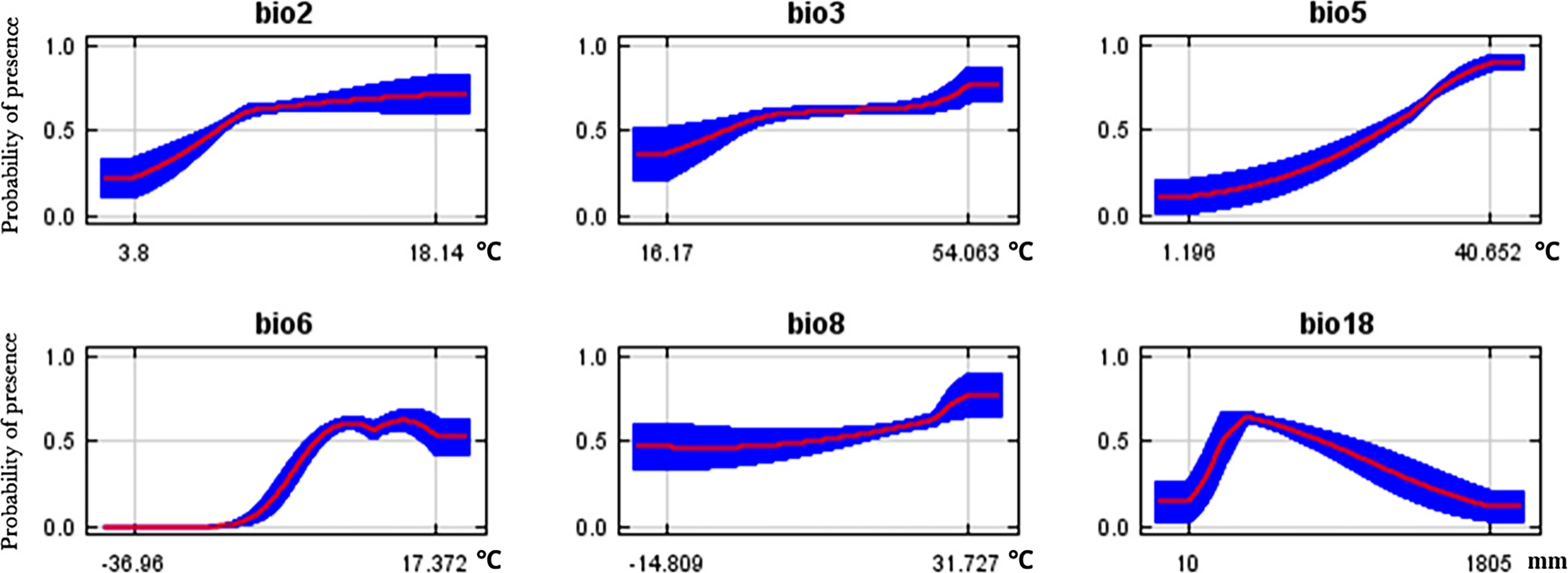
The vertical axis represents the probability of presence for R. microplus, and the horizontal axis represents the variation range of the corresponding variable (Bio 02: Mean diurnal temperature range (°C); Bio03: Isothermality (°C); Bio05: Max temperature of the warmest month (°C); Bio06: Min temperature of the coldest month (°C); Bio08: Mean temperature of the wettest quarter (°C); Bio18: Precipitation of the warmest quarter (mm).
Model evaluation
Figure 4 shows that the average test AUC for R. microplus was 0.888, with a standard deviation of 0.021. This indicates that the model performed significantly better than random, demonstrating good stability and excellent predictive performance for suitable distribution areas.
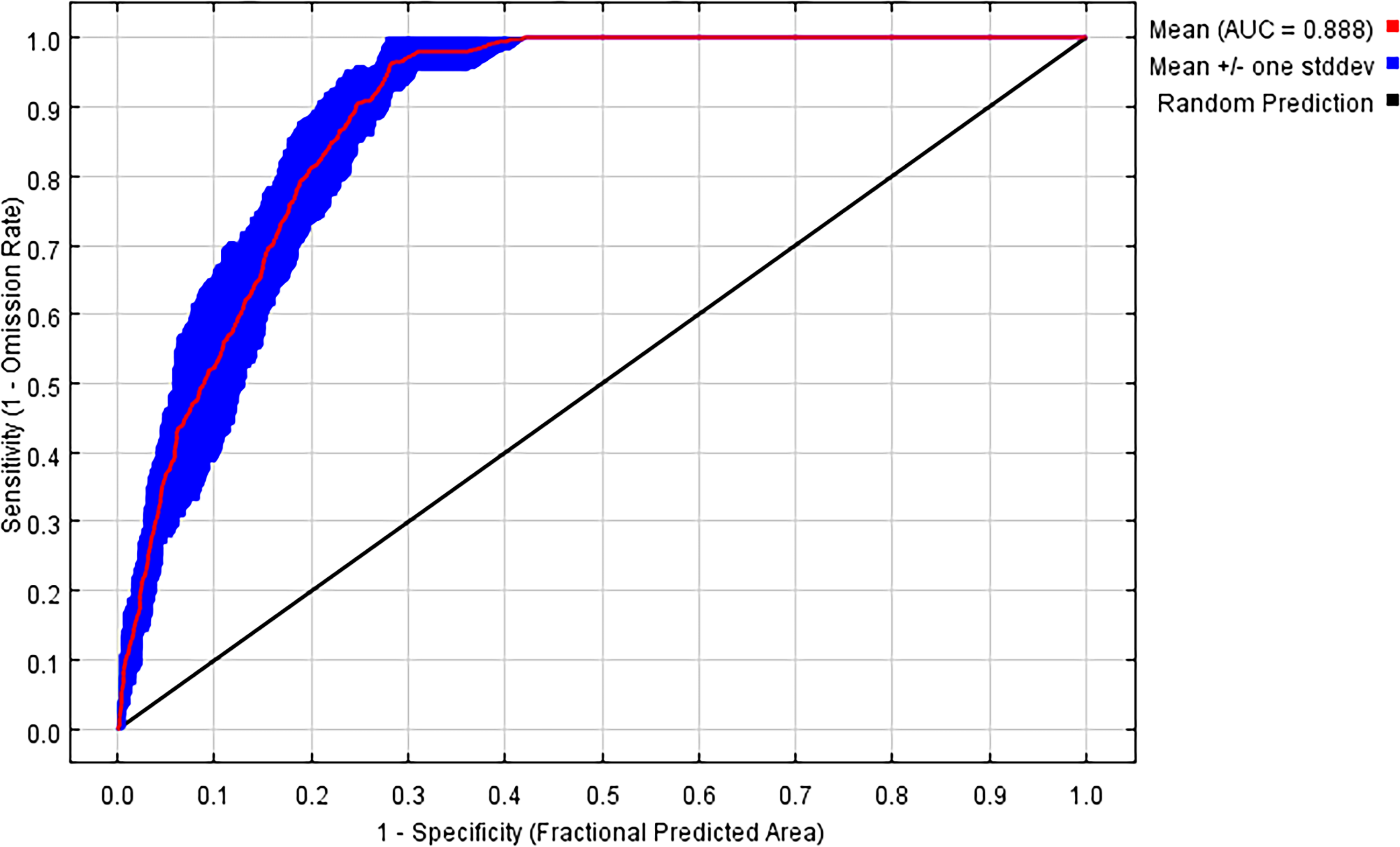
Mean ROC curves predicted for the distribution of R. microplus. ROC, receiver operating characteristic.
Climatic suitability of R. microplus in China
Figure 5 reveals that 19 provinces (including autonomous regions and municipalities) in China are at risk of R. microplus infestation. The suitable area already extends into Hebei Province in the north. According to current predictions, highly suitable areas for R. microplus are mainly located in southeastern China, such as Henan, Hubei, and Anhui provinces. These regions have a total suitable area of approximately 1,051,406 km2, accounting for 10.91% of China’s total land area.
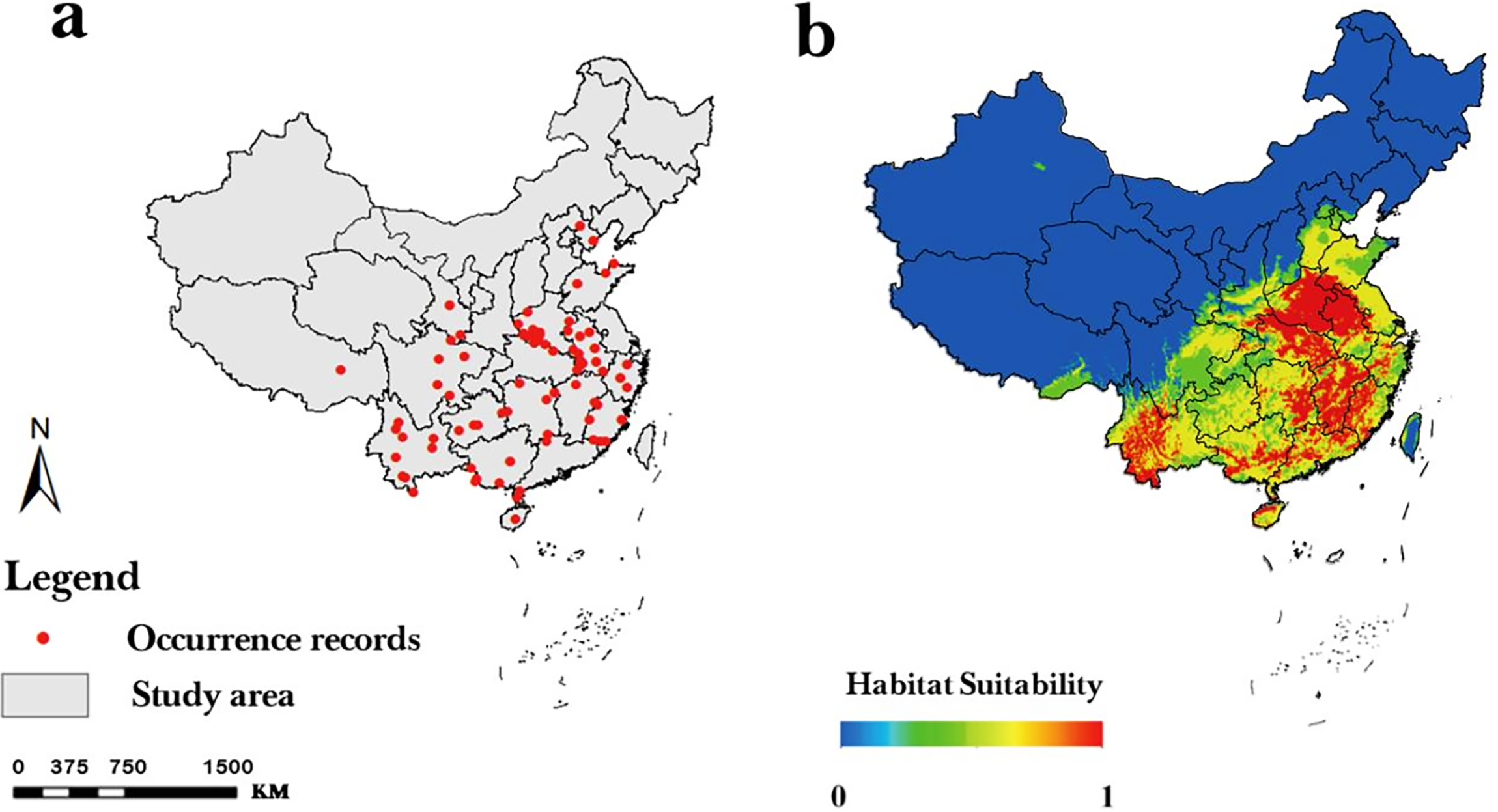
Prediction of climatic suitability of R. microplus under current conditions.
Future changes of climatic suitability of R. microplus in China
Figures 6, 7, and 8 present the predicted maps of climatically suitable areas, changes in suitable areas, and changes in the extent of suitable habitat for R. microplus under various periods and SSP scenarios. The predictions indicate a significant shift and expansion of suitable habitats, primarily concentrated in southern China, with a notable increase in suitable areas in these regions. The binary distribution model effectively demonstrates changes in the habitat environment for this species. Under the SSP126 scenario, eastern Gansu, northern Shaanxi, southern Shanxi, Beijing, Hebei, Tianjin, and eastern Shandong may experience an expansion of suitable habitat compared with current distributions. Over time, the area suitable for R. microplus is expected to grow. Predictions under SSP245 suggest a more extensive and rapid expansion of suitable areas compared with SSP126. By 2061–2080 under SSP245, new suitable habitats for R. microplus may emerge in southern Shanxi, southern Shaanxi, eastern Gansu, northern Hebei, Tianjin, Beijing, and eastern Shandong. In contrast, under the SSP585 scenario, the suitable area for R. microplus remains relatively stable across the periods 2021–2040, 2041–2060, and 2061–2080, with a gradual deceleration in the upward trend. Nonetheless, by 2061–2080, the suitable area is projected to exceed current levels, with a predominant trend of northward expansion during suitable periods, while the proportion of stable areas remains high. There is also an observed trend of expansion toward Liaoning.
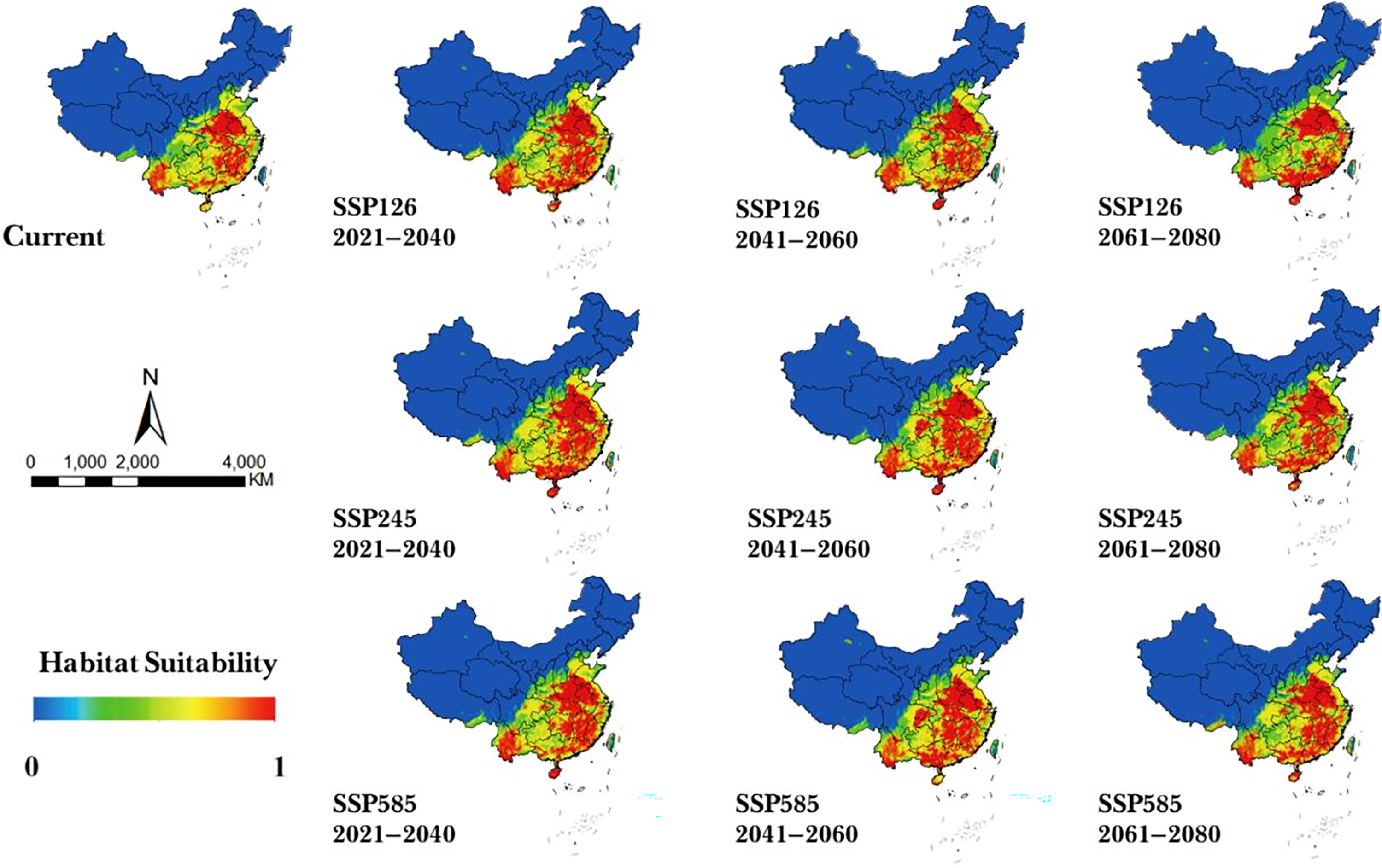
Prediction plots of climatically suitable areas for R. microplus under current and future climate change scenarios. Habitat suitability is represented on a scale from 0 (unsuitable, blue) to 1 (highly suitable, red).
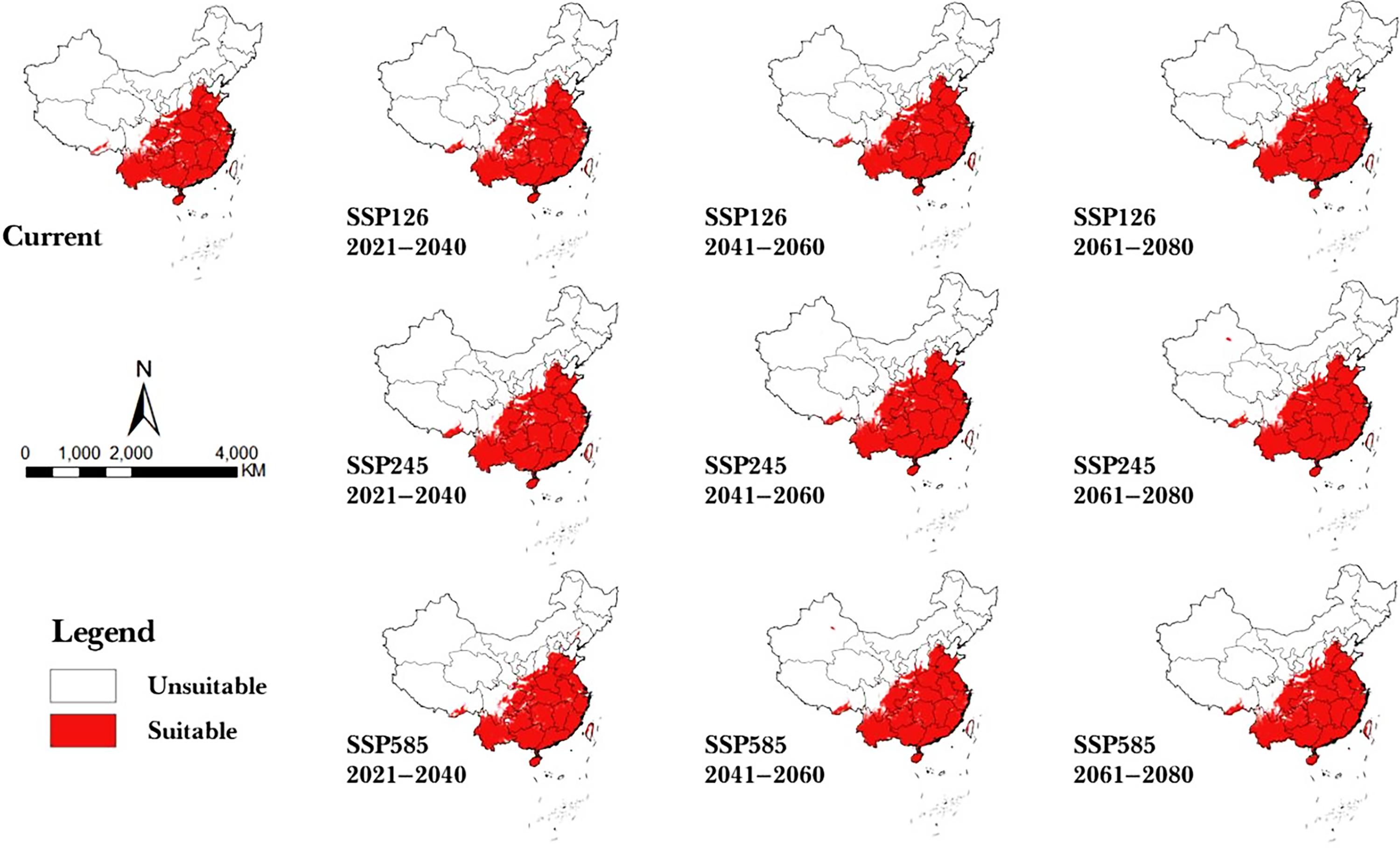
Changes to suitable habitats of R. microplus under future climate change predicted by the binary model with red areas indicating suitable habitats, while white areas represent unsuitable habitats.
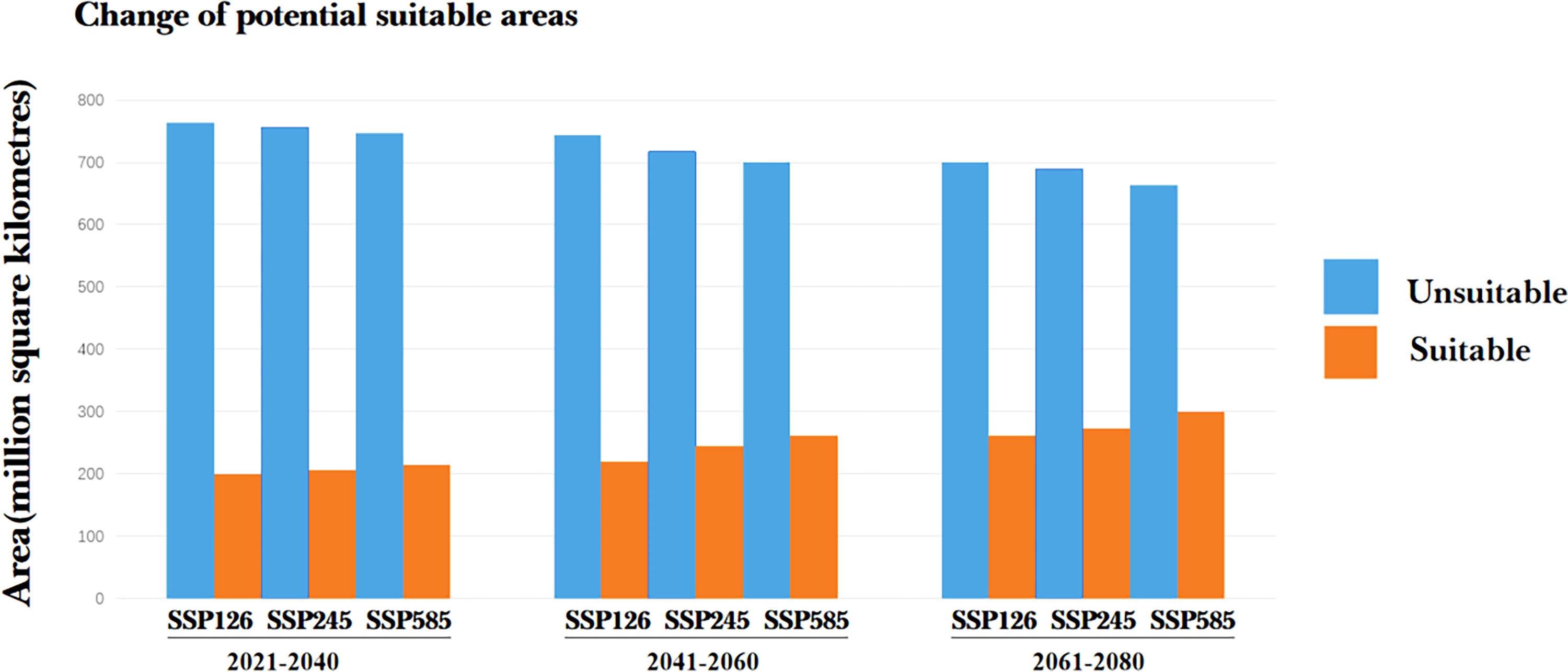
Estimated changes in suitable areas for R. microplus under future climate change and human activity scenarios in China for 2021–2040, 2041–2060, and 2061–2080. Blue areas indicate unsuitable habitat areas, while orange areas represent suitable habitat areas.
Currently, the suitable area for R. microplus is approximately 1,051,406 km2, representing about 10.91% of China’s total land area. Under various future climate scenarios, this suitable area is projected to increase gradually over time. Specifically, predictions indicate that under the SSP585 scenario for the period 2061–2080, the suitable area could reach a maximum of 2,994,700 km2, which is 2.85 times its current coverage.
Discussion
R. microplus, a host-specific parasite of considerable veterinary importance, poses significant threats to animal health, economic development, and local biodiversity (Grisi et al., 2014). It is estimated that R. microplus reduces dairy production by an average of 90.2 liters per cow annually, resulting in economic losses of approximately 922 million per year in the dairy industry (Rodrigues and Leite, 2013). In Brazil, a leading agricultural nation, annual losses attributed to R. microplus exceed $3 billion. Given China’s vast territory and diverse climatic conditions, encompassing all five major landform types, the potential for agricultural development is substantial. However, rising greenhouse gas concentrations and worsening global warming have significantly altered the population dynamics and distribution range of R. microplus. In addition, the transmission dynamics of tick-borne pathogens can be influenced by extrinsic factors such as temperature and humidity. These environmental conditions exert varying effects on tick vectors (and tick-borne pathogens such as filarial nematodes), shaping geographic distributions, seasonal patterns of tick activity, host-seeking behavior, development rates, and overall transmission efficiency (Ajileye et al., 2026). Therefore, analyzing the impact of climate change on the climatic suitability of R. microplus and associated diseases in China is essential for mitigating the spread of tick-borne diseases and preserving livestock health. This study developed a MaxEnt model to examine the influence of environmental variables on the suitable distribution areas of R. microplus. The results indicate that currently suitable areas are predominantly located in southern China, including regions such as Hainan, Henan, Anhui, Guangdong, Guangxi, Fujian, Zhejiang, Guizhou, Yunnan, Jiangxi, and Chongqing. Among these, Henan, Anhui, and Zhejiang exhibit particularly high suitability for this tick species, suggesting that detection and prevention measures should be prioritized in these areas. Furthermore, considering current trends in disease transmission, continued vigilance regarding future expansions of distribution areas is warranted. Response curves were utilized to assess the influence of different climatic variables on the probability of R. microplus presence. Bio06 (minimum temperature of the coldest month) and Bio18 (precipitation of the warmest quarter) emerged as the most significant contributors to the climate change model, together accounting for a total contribution rate of 89.7%. This underscores the critical role of temperature in shaping the distribution patterns of R. microplus (Estrada-Peña et al., 2012). The contribution rates of Bio03 (isothermality) and Bio08 (mean temperature of the wettest quarter) indicate that R. microplus can adapt to a wider range of temperatures. The climate change models revealed an expansion of suitable areas for R. microplus across all scenarios, with the most severe expansion predicted under the SSP585 scenario, followed by SSP245 and SSP126. Under the SSP585 scenario for 2061–2080, the suitable area is projected to reach approximately 2,994,723 km2, 2.85 times the current area. The suitable habitat for R. microplus is anticipated to expand northward, potentially reaching the northeastern part of Liaoning under the most severe climate scenario. This study acknowledges several uncertainties. The predictive performance of this study was assessed using the AUC; however, because AUC can be sensitive to spatial background extent and may overestimate accuracy, future assessments should incorporate more robust metrics such as the True Skill Statistic or the Boyce Index. Furthermore, as this study relied on a single Global Climate Model, it may not fully capture climatic uncertainties; transitioning to an ensemble modeling approach would mitigate individual model biases and enhance the reliability of long-term projections.
Beyond macroclimate, the omission of fine-scale environmental constraints—such as land-use, vegetation cover (NDVI), and topography—alongside the temporal mismatch between historical occurrence records (1970–2023) and the “current” climate baseline (1970–2000), may introduce minor uncertainties in habitat suitability at local scales. In addition, since R. microplus is a one-host tick, its dispersal is intrinsically linked to host movement and density. Consequently, the current findings represent potential climate-driven shifts rather than realized distributions; integrating explicit biotic interactions is essential for greater ecological realism. Finally, while this study relied on Chinese occurrence data to ensure regional precision, it is important to note that our findings characterize the realized climatic suitability within the study area rather than the “species” total global environmental tolerance. Given that R. microplus in China likely constitutes a species complex, future research should integrate global genetic and distribution data to further investigate lineage-specific environmental tolerances to provide more nuanced and comprehensive distribution models.
Conclusion
Based on updated occurrence records (1970–2023) and MaxEnt modeling under SSP scenarios, this study predicts that current suitable habitats for R. microplus in mainland China cover approximately 1.05 × 10⁶ km2 (10.91% of China’s land area), primarily in southern provinces. The minimum temperature of the coldest month (Bio06) and precipitation of the warmest quarter (Bio18) are identified as the dominant climatic drivers. Future projections indicate a persistent northward expansion under all SSP scenarios, most dramatically under SSP585 during 2061–2080, when the suitable area reaches 2.99 × 10⁶ km2—2.85 times the current extent—extending risk into northern regions including Hebei, Beijing, Tianjin, Shandong, and Liaoning. These findings provide a province-specific, climate-informed risk map, highlighting an urgent need for proactive, climate-adaptive surveillance and vector control strategies in currently low-risk northern areas. To curb the ongoing northward invasion and habitat expansion of R. microplus, it is imperative to formulate targeted surveillance and management frameworks by drawing on the mature prevention and control experience adopted in the southern United States. Accordingly, we recommend establishing targeted surveillance hotspots and buffer zones in high-risk border areas and along livestock transportation corridors. Such measures are of great significance in curbing the further spread of R. microplus and the pathogenic microorganisms it carries across China.
Authors’ Contributions
All authors made substantial contributions to the conception and design of the study. Data collection was conducted by Y.L., M.Y., and X.H.Z. Statistical analysis was carried out by R.W., Y.L., J.G., X.Z., and J.X. drafted the initial version of the article and critically revised it for important intellectual content. Fund acquisition by J.G. All authors read and approved the final article and agree to be accountable for all aspects of the work, ensuring the accuracy and integrity of its content.
Data Availability
All data generated or analyzed during this study are included in this published article and its supplementary information files.
Footnotes
Author Disclosure Statement
The authors declare no competing interests.
Funding Information
This research was supported by the Natural Science Foundation of Heilongjiang Province (LH2024C019) and the Heilongjiang Provincial Postdoctoral Science Foundation (LBH-Z22084).