



Abstract
Huntington's disease (HD) is classically characterized as a late-onset neurodegenerative disorder of adulthood caused by CAG expansion in the HTT gene. However, mounting evidence from both human and experimental studies suggests that both wild-type and mutant huntingtin play important roles during brain development. In this review, we examine the developmental functions of huntingtin, including its role in neuronal migration, synaptogenesis, suppression of apoptosis, mitotic spindle orientation, and transcriptional regulation. We also discuss how mutant HTT may act through both loss- and gain-of-function mechanisms during early brain development. Comparative evolutionary analysis suggests that HTT is highly conserved and that the emergence of the N-terminal polyglutamine tract may have conferred developmental advantages in organisms with more complex nervous systems. Interestingly, studies in pre-symptomatic human carriers and mouse models have identified potential early-life cognitive benefits associated with moderate CAG expansion, raising the possibility of antagonistic pleiotropy. Understanding huntingtin's dual function in neurodevelopment and degeneration is essential in gaining insights into the earliest stages of HD pathogenesis, long before clinical onset.
Plain Language Summary Abstract
Huntington's disease (HD) is a hereditary brain disorder caused by expansion of a repetitive DNA sequence in the gene that codes for huntingtin. Although HD is usually thought of as an adult disorder, growing evidence indicates that the huntingtin protein plays critical roles during brain development, well before disease symptoms appear. This review summarizes the developmental functions of huntingtin, including its involvement in the movement of maturing neurons to their final locations in the brain, formation of neural networks, and regulating which neurons survive and which do not. We also examine how the mutant form of huntingtin may interfere with these developmental processes through both loss- and gain-of-function mechanisms. Notably, recent studies in children and adolescents who carry the HD gene mutation suggest that moderate repeat expansions may be associated with early-life advantages in brain structure and cognition—a phenomenon known as antagonistic pleiotropy, where the same genetic trait has both beneficial and harmful effects across the lifespan. Understanding how huntingtin functions in early brain development may offer critical insights into the origins of HD and help identify opportunities for early diagnosis or intervention—well before the onset of clinical symptoms.
Keywords
Introduction
Huntington's disease (HD) is an autosomal dominant inherited disorder that is characterized by expansion of a CAG trinucleotide repeat in Exon 1 of the HTT gene, which codes for huntingtin. This results in expression of the huntingtin protein with an elongated N-terminus polyglutamine sequence, which leads to neurodegeneration and the classic phenotype of HD.1,2 Although the presence of more than 35 trinucleotide repeats causes toxicity, huntingtin appears to be necessary for the formation of the embryonic and fetal central nervous system, and multiple lines of evidence suggest that this process is disrupted in pre-manifesting HD carriers. Interestingly, work examining early expression of HD-huntingtin suggests that it may have beneficial effects in early life, suggesting that the adverse effects of trinucleotide expansion in adulthood may be counterbalanced by survival benefits earlier in life (i.e., antagonistic pleiotropism). This review examines the normal functions of huntingtin in neurodevelopment and investigates how early expression of mutant huntingtin during human development may contribute to the onset and progression of HD.
The role of WT Huntingtin during neurodevelopment
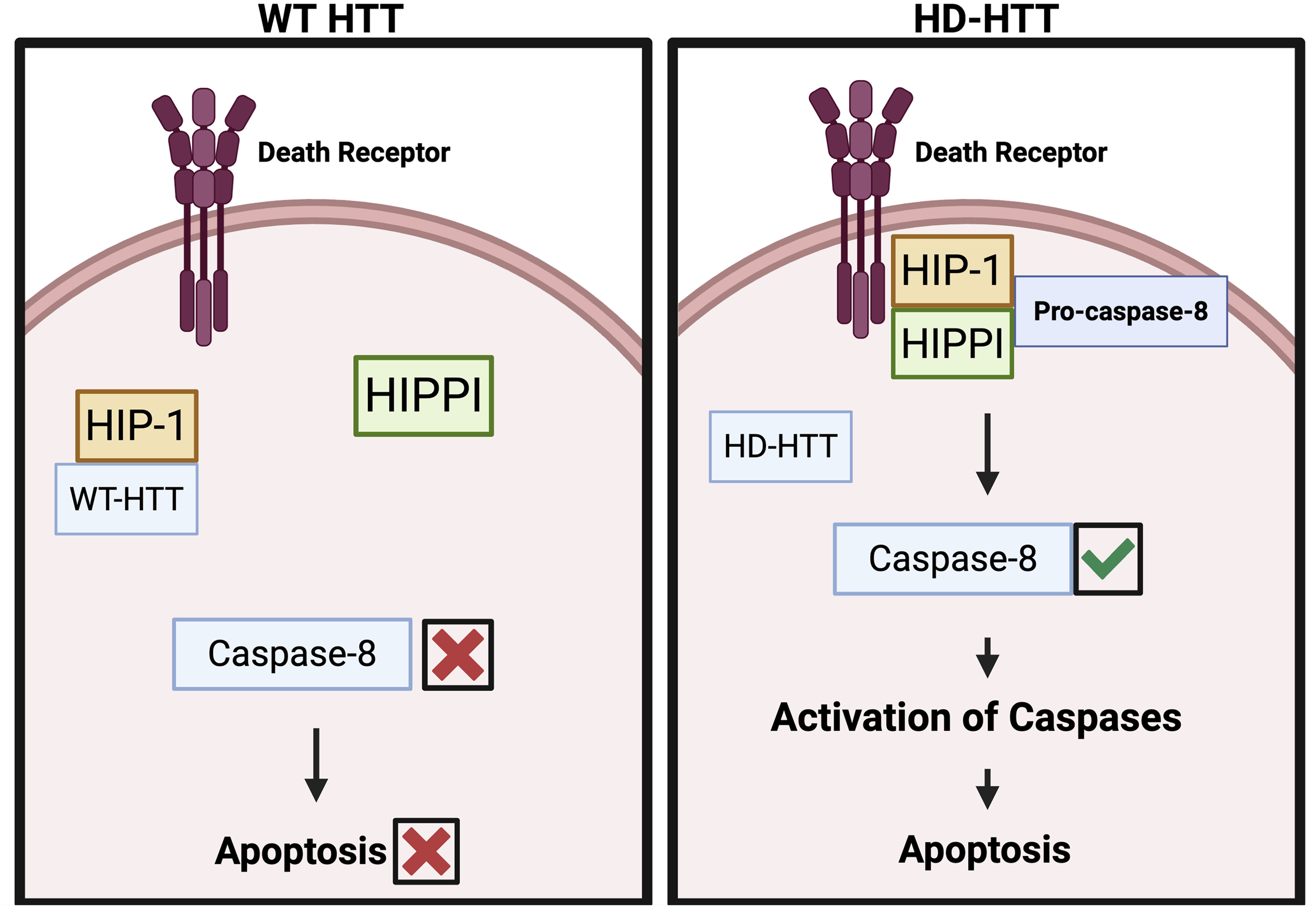
Although best known for its role in HD pathogenesis, multiple lines of evidence from human tissue, mouse models, and stem cell models suggest that it plays a necessary role in neurodevelopment via a wide range of mechanisms, the relative importance of which remains unclear (Table 1).
Tau expression and function in normal development.

Human data on HTT loss is more difficult to come by for obvious reasons. Recent studies in HTT-knockout iPSC lines have, however, shown deficits in neuronal maturation by gene expression, morphology, and electrophysiology, although the underlying mechanisms have not been systematically studied in iPSC models.12,13 The second line of evidence suggesting that HTT is necessary for normal human neurodevelopment comes from a rare genetic disorder known as Lopes-Maciel-Rodan (LOMAR) syndrome (OMIM #617435). These patients are compound heterozygotes for two distinct HTT mutations, resulting in a ∼90% decrease in HTT levels and pervasive developmental delay. Patients with only one mutation typically exhibit a 15%-40% reduction in HTT levels and remain phenotypically normal. The underlying mechanisms, however, remain unclear due to the rarity of the disease and lack of systematic neuroimaging or neuropathologic data.14,15

HTT and Mitotic Spindle Formation. WT huntingtin interacts with dynein, dynactin, and NuMa enabling correct formation and orientation of mitotic spindles in the cell. Knockdown HTT models present impaired localization of dynein, dynactin, and the P150Glued subunit of dynactin to the spindle, leading to spindle misorientation. Created in BioRender. Shin, M. (2025) https://BioRender.com/u4ind7y.
The presence of these glutamate residues is an evolutionary innovation specific to deuterostomes. The ancestral form of the HTT, which is preserved in protostomes such as arthropods and mollusks, lacks the N-terminal glutamine residues. 25 Within the deuterostome lineage, organisms with larger and/or more complex central nervous systems appear to have a higher number of glutamine repeats; however, comparative studies are limited due to the lack of data or variation between individuals of the same species. This data suggests that increased polyglutamine repeats may have facilitated the evolution of a complex nervous system, and the increased risk of HD was not selected against due to its limited impact on reproductive fitness. However, interestingly, the polyglutamine expansion is not necessarily required for the evolution of a complex central nervous system, since cephalopods, such as the California two-spot octopus (Octopus bimaculoides) or the Common octopus (Octopus vulgaris), have homologs of HTT with only a single N-terminus glutamine residue.26,27
Based on the available data, therefore, HTT appears to play a significant and multifaceted role in normal neurodevelopment, which is evolutionarily conserved across the animal kingdom.
Mutant HTT during neurodevelopment
Data on the neurodevelopmental effects of the HTT protein fall into two broad categories. Structural and mechanistic studies, including human neuroimaging, mouse, and stem cell data, show deleterious effects of mutant HTT on multiple developmental measures. Interestingly, however, human clinical data suggest that HD carriers, including those with repeat numbers immediately below the disease threshold, show significant beneficial effects on measures of depression, anxiety, and general intelligence (Table 2). The reasons for this remarkable dichotomy remain unclear.
Studies showing antagonistic pleiotropy in mut-HTT.

A set of intriguing studies by Barnet et al. showed that in both human fetal and mouse embryonic brain, expression of mutant HTT causes defects in neural progenitor cell polarity and differentiation, including deficits in mitosis and cell cycle progression. 5 This work represents one of the few systematic neuropathologic studies of neurodevelopment in the HTT-expanded human brain. Studies examining mutant HTT in mice have shown defects in axonogenesis in layer II/III cortical neurons due to defects in axonal growth cone mediated by downregulation of NUMA1. 30 Other research has shown that mutant HTT has effects similar to those seen in HTT knockout models (see above) with disruption of mitotic spindle orientation, defects in neuronal progenitor cell polarity and differentiation, and abnormal dendritic spine formation.31–33 Interestingly, transient expression of mutant human HTT in mice, ending on postnatal day 21, is by itself sufficient to cause HD-like phenotypes, even though there is no expression of mutant HTT after P21. 34
Brain organoids and neuronal cultures derived from human induced pluripotent stem cells (iPSCs) carrying HTT mutations show similar deficits in neuronal progenitor organization, mitotic spindle formation, neuronal maturation, and neuronal morphology.35–39 These findings suggest that mutant HTT, either via loss- or gain-of-function, disrupts the normal developmental roles of HTT. Although there is some overlap in phenotypes, the presence of mutant HTT has effects that are distinct from and more subtle than those seen in knockout animals. For example, the gross abnormalities of neuronal migration and neuronal heterotopias described in mice with reduced wildtype HTT expression are not seen in those carrying mutant HTT, suggesting that mutant HTT is sufficient to support most developmental functions.
Mutant HTT – antagonistic pleiotropy during development
The discussed molecular and cellular findings naturally raise the question of how these changes affect neurologic and cognitive development in pre-symptomatic children who are HD carriers. Retrospective studies using Kids-HD and Kids-JOHD cohorts showed no differences in the development of motor or verbal milestones, even when stratified by repeat number. 40 Intriguingly, however, it appears that in some cases, having increased numbers of CAG repeats may be beneficial earlier in life. In a study conducted by Nopoulos et al., pre-symptomatic HD carriers aged 6–18 showed a decrease in depression/anxiety scores, with carriers having lower rates of depression, anxiety, and an associated increase in striatal volume. 41 These findings raise the intriguing possibility that increased CAG repeat number may have beneficial effects earlier in life that offset deleterious effects in adulthood (antagonistic pleiotropy). Imaging and cognitive studies carried out by the same group suggest that early in life, pre-manifest gene expanded 6–21 year olds show larger cerebral volumes and significantly better scores on several behavioral and cognitive tests.42–44 In mouse models, the R6/2_50 mouse, which carries 50 CAG repeats, shows increased reproductive capacity and better performance on both rotarod and object discrimination tasks, highlighting the potentially beneficial effects of mutant HTT early in development. 45
The data on the developmental effects of mutant HTT therefore show a fundamental dichotomy where mechanistic studies show broadly deleterious effects, while behavioral data suggests potential early-life benefits, the mechanistic basis of which remains unclear.
Conclusion – future directions and open questions
The multifunctional role of HTT across development and disease highlights its evolutionary complexity and biological importance. While traditionally studies examining HTT are in the context of neurodegeneration, increasing evidence points to the essential role of the protein in early neurodevelopmental processes, including cell polarity, neuronal migration, and neurodevelopmental patterning. These insights, along with comparative evolutionary studies, raise important questions about the balance between HTT's beneficial functions in early life and its deleterious consequences later in life through the polyglutamine expansion (Table 2).
One of the most pressing open questions in this field is the apparent disconnect between the disruptive effects of mutant HTT on the molecular and cellular level, mostly based on studies in in vivo and in vitro experimental models, and the potentially beneficial cognitive and behavioral effects observed in clinical data. Mutant HTT may cause changes in neuronal connectivity, particularly of medium spiny neurons in the basal ganglia in ways that are difficult to appreciate with the methods that have thus far been applied to anatomic and molecular phenotyping of mutant HTT mice and human HD carriers. This challenge is compounded by the fact that most human HD brain tissue available for research comes from patients with clinically advanced disease. For obvious reasons, it is difficult to obtain brain tissue from presymptomatic individuals with high numbers of CAG repeats. However, it may be possible to identify individuals who have high repeat numbers just below the disease-causing threshold in existing cohorts, particularly those based on population-wide forensic studies.
While HTT's roles in mitotic spindle regulation and on ADAM10/N-cadherin signaling are relatively well characterized, their specific contributions to discrete stages of development remain unclear. Similarly, the role of HTT-REST interaction in regulating transcription of neurodevelopmental genes warrants further investigation. Addressing these fundamental questions is critical for understanding how both wild-type and mutant HTT influence early brain development. Definitive answers will likely require a combination of both in vitro studies using stem cells and in vivo animal model rescues studies using HTT constructs lacking specific functional domains (e.g., those required for ADAM10 interaction, spindle regulation, etc.). Since many domains responsible for HTT's developmental functions remain undefined—apart from the known interaction between the polyglutamine tract and ADAM10—mapping the HTT interactome and identifying the precise regions involved in these molecular interactions is the next critical step.
Footnotes
Acknowledgments
All figures were created using Biorender.

Ethical considerations
No human subjects or animal research is reported in this manuscript.
Consent to participate
Not applicable.
Consent for publication
Not applicable.
Author contributions
MMH and MRS shared in conception, literature review, and writing.
Funding
This work was supported by the NIH/NINDS (R01 NS136448 to MMH), the Roy J. Carver Foundation, and the Iowa Neuroscience Institute (both to MMH). Additional support was provided by the University of Iowa Graduate College to MRS.
Declaration of conflicting interests
The authors declared no potential conflicts of interest with respect to the research, authorship, and/or publication of this article.
Data availability statement
Data sharing not applicable to this article as no datasets were generated or analyzed during the current study.