




Abstract
Multimodal bioelectronic materials have emerged as a promising platform for synergistic neuromodulation, addressing the increasing clinical demand for precise and safe neural interventions. This review highlights recent advances in three pivotal classes of functional materials—liquid metals, magnetoelectric coupling materials, and high-entropy oxides—that offer unique physicochemical properties and versatile fabrication techniques tailored for neural interfaces. We first discuss the clinical significance and advantages of multimodal materials in neuromodulation, followed by an in-depth analysis of the structural characteristics, synthesis methods, and neurointerface applications of these materials. Integrating the latest theoretical models and experimental findings, we elucidate how these materials enable the synergistic application of electrical, magnetic, and mechanical stimuli to enhance neuromodulation efficacy. Despite their promising potential, challenges remain in optimizing biocompatibility, long-term stability, and functional integration. Finally, we provide a forward-looking perspective on the future directions and hurdles for the deployment of multimodal bioelectronic materials in neural disease therapies and intelligent neural interfaces. This review aims to foster a deeper understanding and inspire further innovation in the interdisciplinary field of neuromodulation.
Impact Statement
This review establishes a transformative framework for next-generation neural interfaces by strategically integrating liquid metals, magnetoelectric materials, and high-entropy oxides. It demonstrates how advanced interface engineering and micro/nanofabrication techniques enable synergistic multimodal neuromodulation—simultaneously leveraging electrical, magnetic, and chemical stimuli with high spatiotemporal precision. These materials and device innovations directly address critical challenges in treating neurodegenerative diseases, chronic pain, and neural rehabilitation, while laying the foundation for intelligent, closed-loop bioelectronic systems. By bridging materials science, neuroscience, and engineering, this work accelerates the development of personalized, adaptive neural therapies with profound implications for global neurological health.
Keywords
Introduction
Neuromodulation has established itself as an indispensable therapeutic approach for a range of neurological disorders, including Parkinson’s disease, chronic pain, and conditions requiring neural rehabilitation. Conventional strategies primarily rely on implantable devices that deliver electrical stimulation. However, these interfaces are often fabricated from rigid materials, leading to a significant mechanical mismatch with the soft, dynamic nature of neural tissue. This incompatibility can provoke inflammatory responses, fibrous encapsulation, and eventual device failure, limiting long-term efficacy and safety.1–3 Moreover, the pathophysiology of many neurological disorders is inherently complex and multifactorial, involving distributed neural circuits rather than isolated targets. For instance, managing chronic neuropathic pain or the diverse motor symptoms of Parkinson’s disease often demands interventions that can simultaneously modulate multiple neural pathways, a feat beyond the capability of single-modality devices.4–8
To address these critical limitations, the field is rapidly advancing toward the development of multimodal neuromodulation platforms. These next-generation bioelectronic systems integrate complementary stimulation modalities—such as optical, magnetic, and mechanical cues—with electrical signaling. Encased within flexible, stretchable, and often wireless architectures, these platforms aim to achieve synergistic therapeutic effects, superior biocompatibility, and the ability to adapt to the body’s natural movements.1–3 The transition from concept to viable device is fundamentally propelled by innovations in advanced functional materials.
Three pioneering classes of materials are central to this evolution: liquid metals (LMs), magnetoelectric (ME) coupling materials, and high-entropy oxides (HEOs). Each offers a unique set of properties that directly tackle the shortcomings of traditional interfaces. LMs, like Galinstan, combine metallic conductivity with fluidic deformability, enabling the creation of soft, self-healing electrodes that conform seamlessly to irregular neural surfaces. ME materials, such as composite ferrite-PZT layers, efficiently convert externally applied magnetic fields into localized electric potentials, permitting precise, tether-free deep brain stimulation (DBS). HEOs, defined by their entropy-stabilized multicationic structures, exhibit exceptional chemical robustness and a tunable cocktail of functional properties (e.g., electrocatalytic, piezoelectric), making them ideal for durable, multifunctional neural interfaces.3,9–12
While these three material classes offer distinct advantages, they represent part of a broader materials landscape for neural interfaces. Conducting polymers (e.g., PEDOT:PSS) have emerged as mainstream flexible electrode materials due to their exceptional mixed ionic-electronic conductivity and low interfacial impedance, though long-term electrochemical stability remains a concern.13,14 Carbon-based materials (carbon nanotubes, graphene) enable high-resolution recording through superior electrical conductivity and chemical inertness, yet hydrophobicity-induced poor cell adhesion and potential cytotoxicity require careful evaluation. 15 Conventional metallic electrodes (platinum, iridium, gold) benefit from established manufacturing and reliable performance, but mechanical mismatch and Faradaic corrosion limit chronic applications.16,17 Hydrogels offer tissue-matched mechanics and tunable chemical functionalities, though balancing conductivity with mechanical strength presents design trade-offs.18,19 Understanding this material’s diversity is essential for contextualizing the unique contributions of LMs, ME materials, and HEOs within the multimodal neuromodulation ecosystem.
This review systematically synthesizes recent advances in multimodal bioelectronic interfaces for neuromodulation, highlighting the emerging roles of LMs, ME materials, and HEOs. We will analyze their underlying mechanisms and highlight their potential for enabling synergistic neuromodulation. Finally, we discuss the prevailing translational challenges and outline future research directions necessary to harness these material innovations for effective clinical therapies against complex neurological diseases.
Multimodal Bioelectronic Materials
The concept and importance of multimodal bioelectronic materials
Multimodal stimulation refers to the application of multiple, complementary physical stimuli (e.g., electrical, magnetic, mechanical, chemical) to modulate neural activity. Each modality engages distinct biophysical mechanisms: electrical stimuli directly alter membrane potentials, magnetic fields induce currents via electromagnetic induction, mechanical forces act through mechanotransduction, and chemical agents influence synaptic dynamics. By integrating these modalities, multimodal strategies overcome limitations inherent to single-modal approaches, such as poor spatial specificity or limited penetration depth, and can produce synergistic therapeutic effects. Evidence shows that combining modalities, like electroencephalography (EEG) with eye-tracking for emotion classification, yields superior outcomes compared to unimodal methods, highlighting the advantage of engaging multiple neural pathways simultaneously.20,21
As illustrated in Figure 1, developing effective multimodal neural interfaces imposes stringent requirements on materials. These materials must ideally balance several key properties: high flexibility, excellent biocompatibility, long-term stability, and precise stimulation capabilities. The evolution from rigid to soft materials, including polymers, hydrogels, and conductive polymers like poly(3,4-ethylenedioxythiophene) polystyrene sulfonate (PEDOT:PSS), addresses the mechanical mismatch with neural tissue to reduce inflammation and improve chronic performance.13,22 Furthermore, the complex neural environment necessitates materials capable of multimodal sensing and modulation—capturing and influencing electrical, chemical, and optical signals—which is critical for advanced, closed-loop brain–computer interfaces. Nanostructured and hybrid nanomaterials are pivotal in providing these enhanced electrochemical and optical functionalities. 23
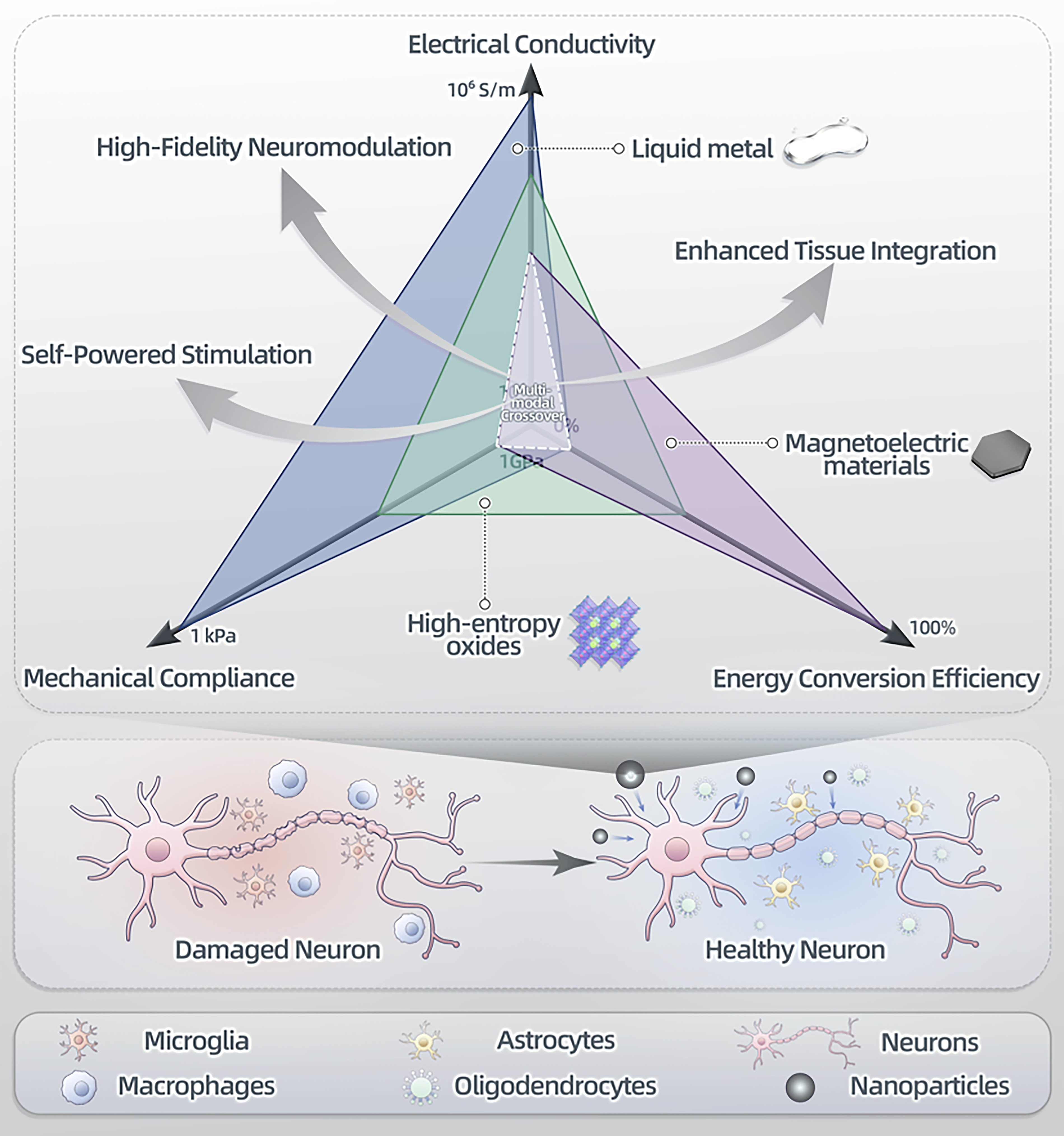
Schematic diagram of the synergistic repair of neuronal damage environment by multimodal bioelectronic materials (liquid metals, piezoelectric materials and high-entropy oxides).
The functionality of multimodal materials relies on sophisticated multiphysics interactions at the bioelectronic interface. One core mechanism is electromagnetic coupling, such as the magnetoelectric (ME) effect, where magnetic fields induce electrical polarization, enabling wireless neural stimulation. 24 Another key pathway is mechano-electrical conversion, where piezoelectric materials (e.g., certain hydrogels) transduce mechanical deformation into electrical or ionic signals for compliant integration.25,26 At the material–tissue interface, theoretical frameworks model charge transfer, ion-electron transduction, and adhesion dynamics, which are essential for high-fidelity signal exchange, as seen in advanced bioelectrodes.11,27 Surface engineering, such as oxidation in LMs, further governs interfacial stability.28–30 Additionally, atomic-scale design principles in materials like HEOs exploit lattice distortions and interfacial strain to enhance magnetoelectric coupling and achieve multifunctionality, offering tunable platforms for neuromodulation.31–34
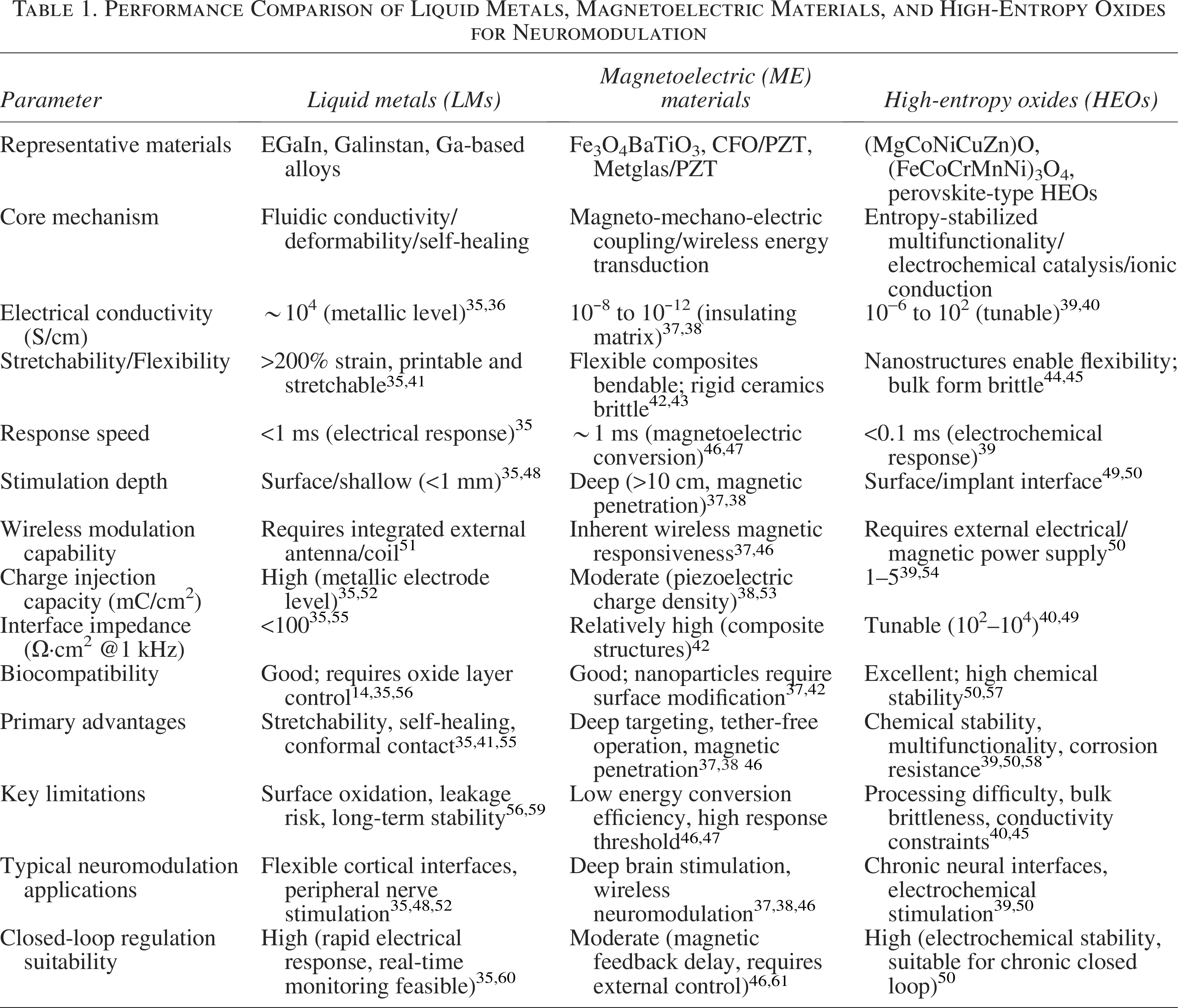
Given the distinct physicochemical properties of these three material classes, their suitability varies considerably across different neuromodulation scenarios. Table 1 provides a comprehensive performance comparison, highlighting the trade-offs between electrical conductivity, mechanical compliance, wireless capability, and closed-loop applicability that must be weighed in device design.
Performance Comparison of Liquid Metals, Magnetoelectric Materials, and High-Entropy Oxides for Neuromodulation
Applications of LMs in neural regulation
LMs, particularly gallium-based alloys like eutectic gallium–indium (EGaIn), 62 are prized in bioelectronics for their unique suite of properties: high electrical conductivity akin to solid metals, inherent fluidity at room temperature, and self-healing capabilities, which are visually summarized in Figure 2. These characteristics are fundamental for creating devices that can conform to and move with soft, dynamic neural tissues without failing. A pivotal aspect of their behavior is the spontaneous formation of a thin, passivating gallium oxide skin upon exposure to air or aqueous environments. This oxide layer critically modifies the material’s surface tension and wetting properties, enabling practical patterning and printing techniques crucial for fabrication. However, it can also introduce challenges like increased interfacial electrical resistance. Strategic surface engineering, such as encapsulation with polymers or graphene, is employed to stabilize LM particles and finely tune their interfacial properties for robust performance in biological systems.36,59,67,68
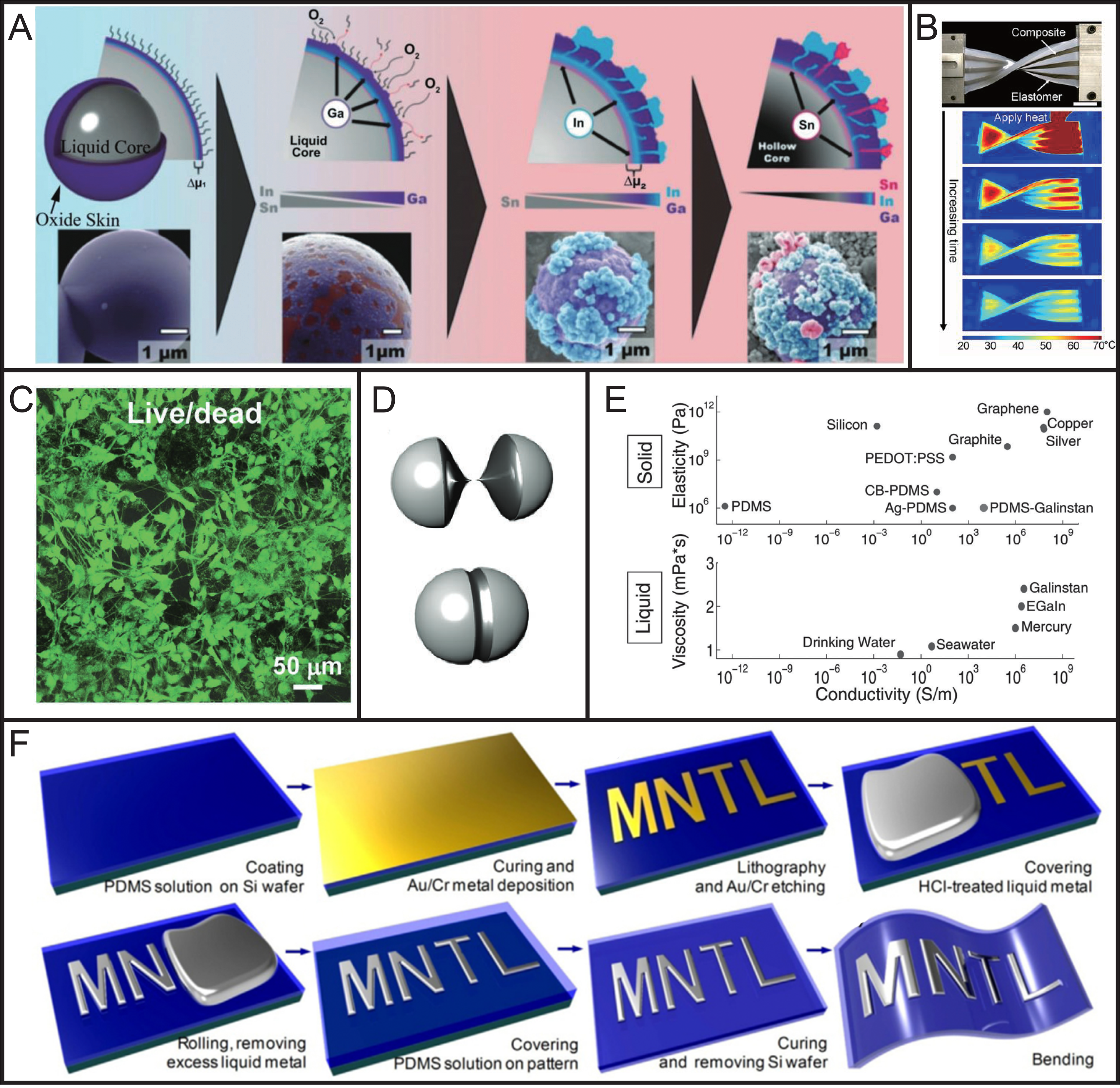
Basic properties of liquid metal.
The design of LM-based interfaces directly tackles the mechanical mismatch and instability of traditional rigid electrodes by leveraging LM’s flexibility, stretchability, and biocompatibility.69,70 Researchers have developed various innovative fabrication and design strategies. Dong et al. utilized screen printing to deposit LM circuits onto soft elastomeric substrates like PDMS, creating flexible electrode arrays with fine spatial resolution down to 50 µm, enabling high-density mapping of neural activity (Fig. 3A). 35 These devices maintain electrical functionality under strains as high as ∼108%, ensuring performance during brain motion. 41 Zhang et al. formulated a printable ink from EGaIn capsules dispersed in ethanol, which was laser-sintered to achieve conductivity. This interface was used to stimulate and monitor muscle signals in mice, with rigorous biocompatibility tests showing negligible cell death after 24 h of culture (Fig. 3C). 52 To enhance practical performance, Zhou et al. focused on improving LM adhesion and integration by engineering spatial wettability patterns and using porous substrates, which significantly boosted electrode robustness and signal-to-noise ratio for high-fidelity in vivo electrophysiological recordings. 55 Further expanding functionality, Wen et al. designed a multifunctional, flexible neural probe that cleverly utilizes the phase transition behavior of certain LMs near body temperature. This innovation allows the probe to be stiff for minimally invasive implantation and then become soft and compliant in situ, enhancing chronic stability and enabling additional capabilities like chemical sensing and delivery (Fig. 3E).48,71
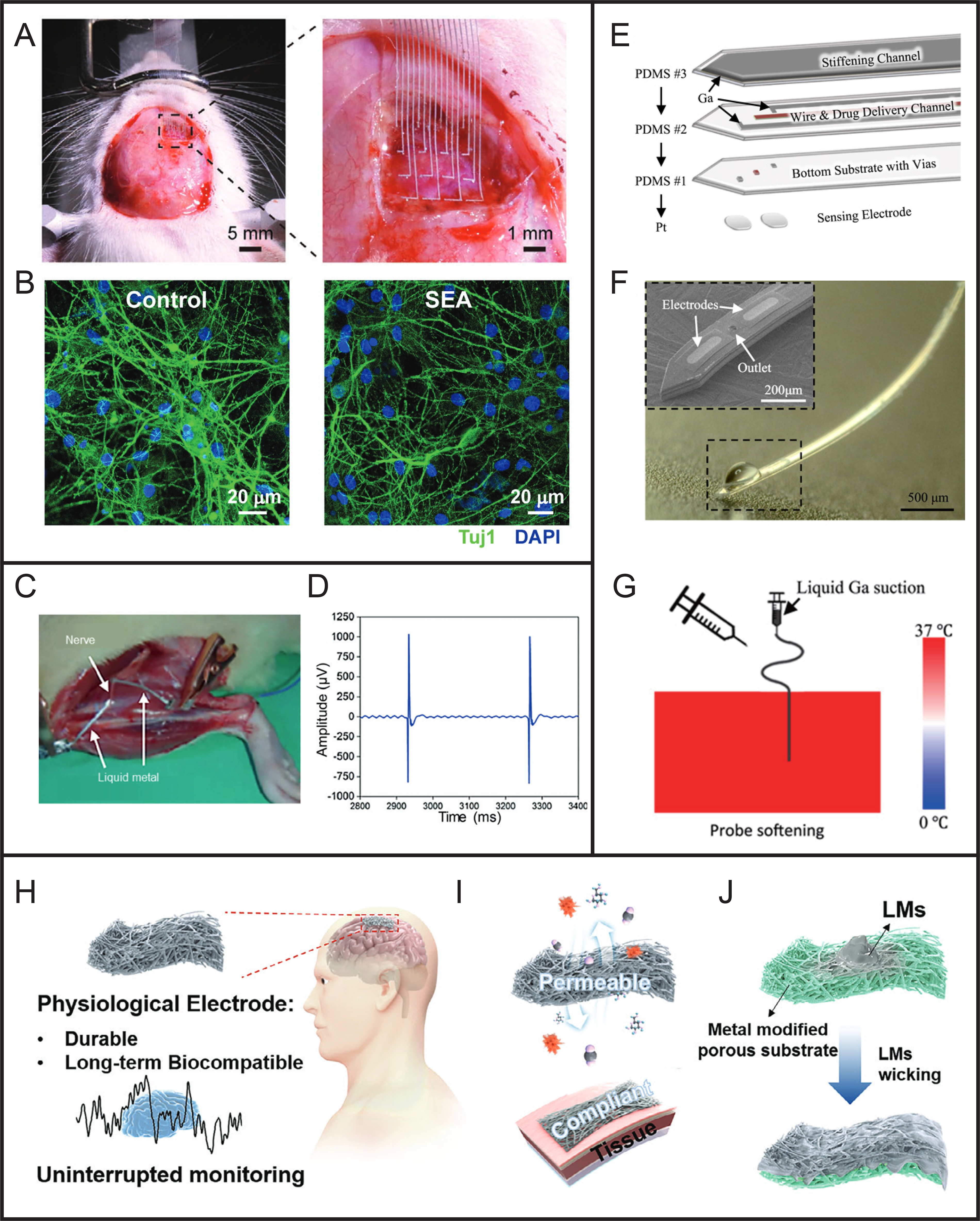
Design of a neural interface based on liquid metal.
The intrinsic properties of LMs open the door to synergistic, multimodal neural modulation. Their excellent conductivity allows for precise electrical stimulation and recording, while their fluidic mechanical compliance can be harnessed to deliver mechanical stimuli (e.g., pressure, deformation), enabling a dual electro-mechanical approach that can enhance neuromodulatory effects compared to electrical stimulation alone. 60 A particularly powerful advancement is the integration of LM-based electronics with microfluidic technologies. This convergence creates dynamic, adaptable platforms for closed-loop neural regulation. Microfluidic channels embedded with LMs can enable real-time, spatiotemporal control over electrical pathways and the delivery of biochemical agents in response to recorded neural activity. 48 This synergy allows for sophisticated multimodal stimulation paradigms—combining electrical, mechanical, and chemical cues—within a single, compact biocompatible device architecture. Such platforms represent a significant leap forward, offering the specificity and adaptability required to effectively interface with the complex, heterogeneous nature of neural circuits for both research and therapeutic applications.72,73
The neuroregulatory potential of magnetoelectric coupling materials
The magnetoelectric (ME) effect describes the interplay between magnetic and electric orders in materials, enabling mutual control (Fig. 4). It is primarily realized through strain-mediated or charge-mediated mechanisms at interfaces. In strain-mediated composites, mechanical coupling between ferromagnetic and ferroelectric phases induces polarization under a magnetic field. For instance, Dong et al. engineered Fe3O4/BaTiO3 nanopillars to minimize clamping effects, achieving strong coupling and a large ME coefficient. 74 Garten et al. used multicomponent strain engineering in an artificial heterostructure to set a record-high reverse ME coefficient at room temperature. 24 Charge-mediated coupling, as seen at the Ni/Hf0.5Zr0.5O2 interface, involves ferroelectric polarization directly modulating magnetic properties. 77 On a microscopic scale, spin-lattice and orbital interactions (e.g., in Swedenborgites) can amplify this coupling. 78 The effect is often maximized at engineered interfaces or in topological structures, guiding the design of materials like single-phase BiFeO3 or composite systems for advanced applications. 75
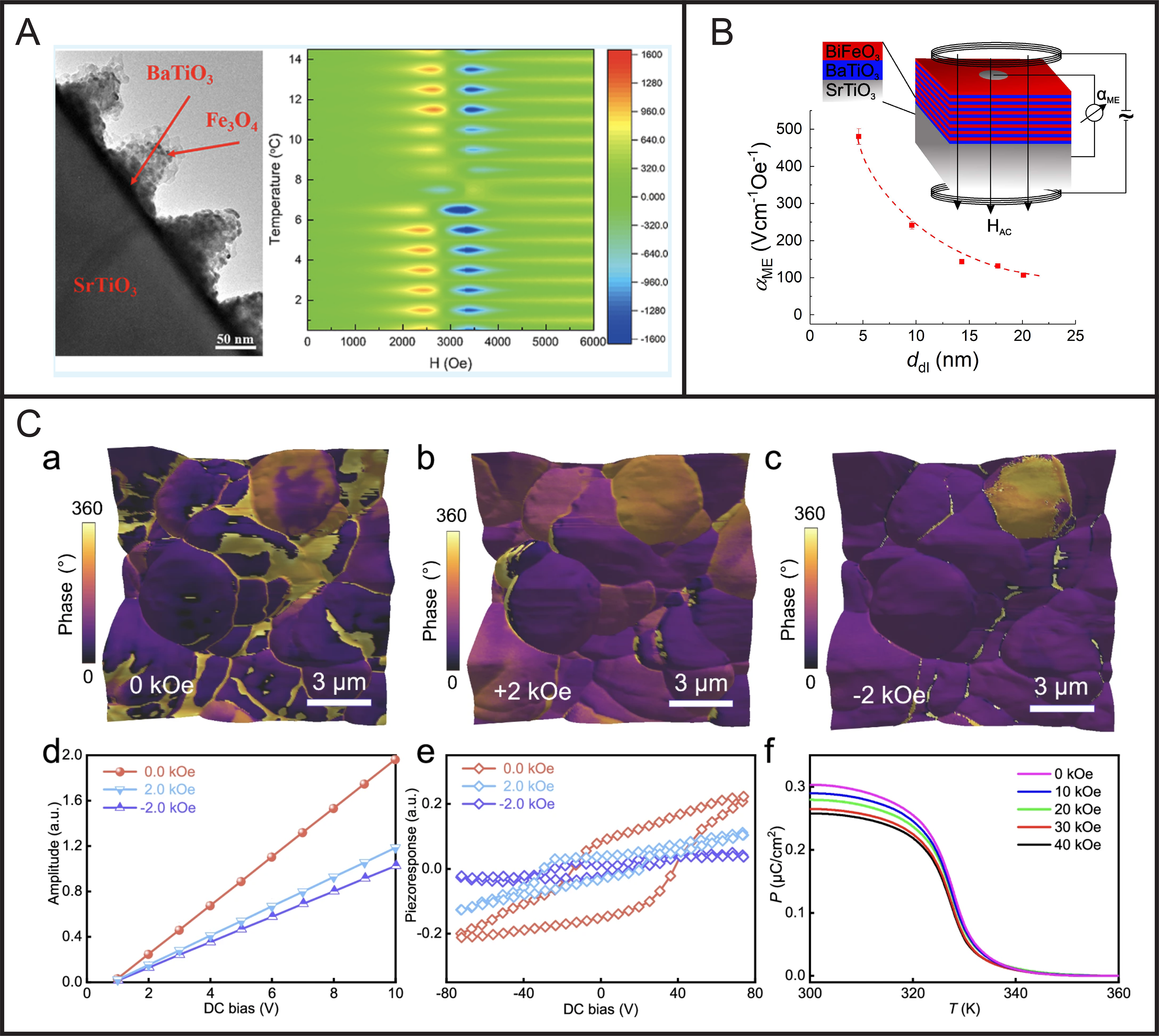
Various mediation mechanisms of magnetoelectric coupling effect.
ME materials are pivotal for wireless, noninvasive neural stimulation, converting external alternating magnetic fields into localized electric potentials to modulate neurons without implanted power sources.37,38 A central challenge is the frequency mismatch: efficient ME transduction often occurs at high mechanical resonance (>100 kHz), while neurons respond to low frequencies (<1 kHz). Two primary strategies address this. Off-resonance operation of magnetoelectric nanoparticles (MENPs) uses low-frequency fields (<200 Hz) but can suffer from weak coupling and delayed responses. 46 In contrast, rectification approaches integrate analog electronics or design self-rectifying metamaterials to convert high-frequency ME outputs into low-frequency stimuli, enabling precise, millisecond-latency neuromodulation.46,47 Translational devices like the MagnetoElectric BioImplanT (ME-BIT) demonstrate programmable, high-voltage stimulation for peripheral and cortical nerves.46,61
Interface compatibility is critical. Kozielski et al. developed injectable CoFe2O4/BaTiO3 core–shell MENPs, enabling wireless DBS and behavior modulation in freely moving animals without optogenetics. 37 Computational modeling helps predict stimulation thresholds and spatial selectivity at the nanoparticle–neuron interface.79,80 Zhang et al. showed that anisotropic particle shapes maximize the piezoelectric effect, enhancing modulation of neural firing patterns. 53 Beyond stimulation, ME composites can be structured into aligned hydrogel matrices that provide synergistic topographical and electrical cues, serving as regenerative scaffolds while delivering wireless stimulation (Fig. 5).42,43,81,82
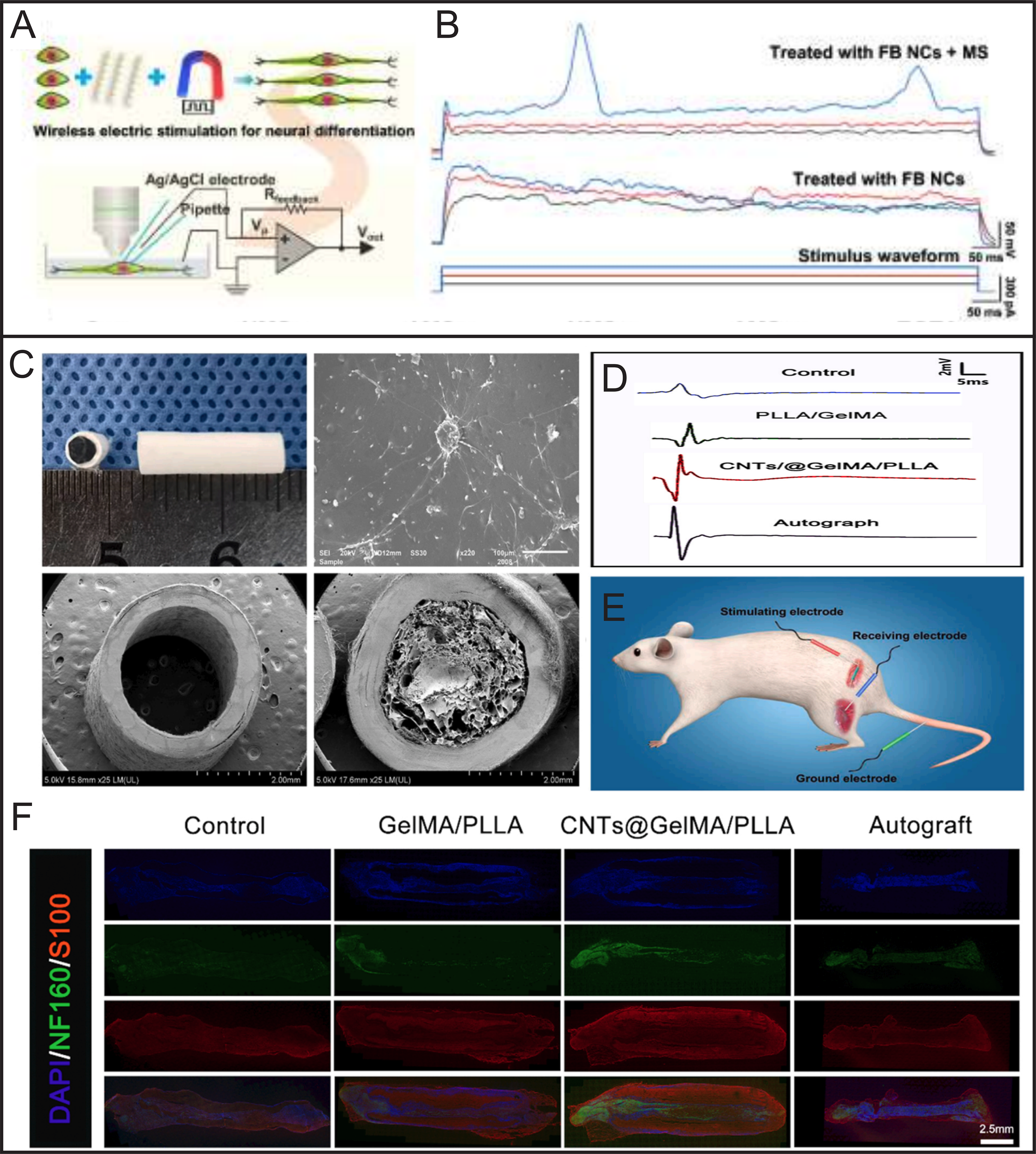
Application modes of magnetoelectric materials in neural stimulation.
Recent advancements focus on micro/nanoscale structural regulation to boost ME sensitivity and speed. Seo-Hyun Choi et al. nanomaterial-based magnetic gene regulation toolbox to selectively activate genetically encoded Piezo1 ion channels in target neuronal populations in vitro and in vivo through torque generated by nanomagnetic actuators. 83 Kim et al. synthesized magnetoelectric nanodisks with a core-bivalve Fe3O4–CoFe2O4–BatiO3 structure (250 nm in diameter and 50 nm in thickness) and injected them into the ventral tepal area or hypothalamic nucleus of genetically intact mice. 84 Remote control of reward or motor behavior was achieved, respectively. The development of digitally programmable implants with bidirectional wireless communication (e.g., using backscatter modulation) facilitates sophisticated closed-loop neuromodulation systems. 46 However, significant challenges persist. First, ensuring long-term stability and biocompatibility in the physiological environment is difficult; sensitivity to transmitter alignment can affect power delivery. Strategies include using robust wide-bandgap semiconductors and advanced encapsulation. Second, promoting biodegradability or safe clearance of implants is desirable to minimize chronic immune response. Innovations in porous soft bioelectronics and recyclable ionogels with covalent adaptable networks offer promising pathways.26,28,85 Third, the design, manufacturability, and scalability of complex, multimodal systems (integrating ME materials with hydrogels, LMs, etc.) remain barriers to clinical translation, despite progress in 3D printing and microfabrication.11,27,28,86 Overcoming these material and engineering hurdles is essential for realizing the next generation of stable, sensitive, and multifunctional neural interfaces.
Applications of HEOs in multimodal neural regulation
HEOs incorporate five or more principal cations in near-equimolar ratios into a single lattice, stabilized by high configurational entropy. This results in exceptional structural stability, resisting phase segregation and detrimental transitions, as shown in sodium-ion battery cathodes by Pang et al. and Wang et al.87,88 The severe lattice distortion inherent to HEOs enhances mechanical and thermal properties.44,89 Critically, this compositional complexity enables precise tuning of functional properties. Guo et al. demonstrated that heat treatment can regulate magnetic interactions in HEOs via lattice fluctuations. 90 Their multication synergy also optimizes electronic structures, leading to superior electrochemical and catalytic performance, such as enhanced oxygen evolution reaction activity.39,54 Katzbaer et al. achieved bandgap engineering in spinel HEOs to boost catalytic efficiency, 91 while Bhattacharya et al. showed that nanoscale chemical heterogeneity and epitaxial strain can finely adjust electrical conductivity and magnetic properties. 40 These multifunctional capabilities position HEOs as promising for advanced applications, including neural interfaces.
The performance of HEOs in applications like neural modulation is profoundly influenced by their synthesis, which controls phase purity, morphology, and nanostructure. Key methods include sol–gel processing: Enables molecular-level mixing for homogeneous products at lower temperatures. Anandkumar et al. prepared single-phase garnet HEO nanoparticles with excellent thermal stability using this method (Fig. 6A). 92 Yin et al. synthesized high-surface-area spinel HEOs for enhanced electrochemical capacitance. 94 Solid-state reactions, including mechanochemical ball milling, offer scalability. Ball milling provides a greener route to synthesize carbon-supported HEOs with high catalytic activity without high-temperature treatment (Fig. 6B). 93 Spray-based techniques (e.g., spray pyrolysis): Allow rapid fabrication of nanostructured HEOs. Chen et al. used spray pyrolysis to create porous HEO nanotubes with strong electrocatalytic activity due to multisite synergy. 31
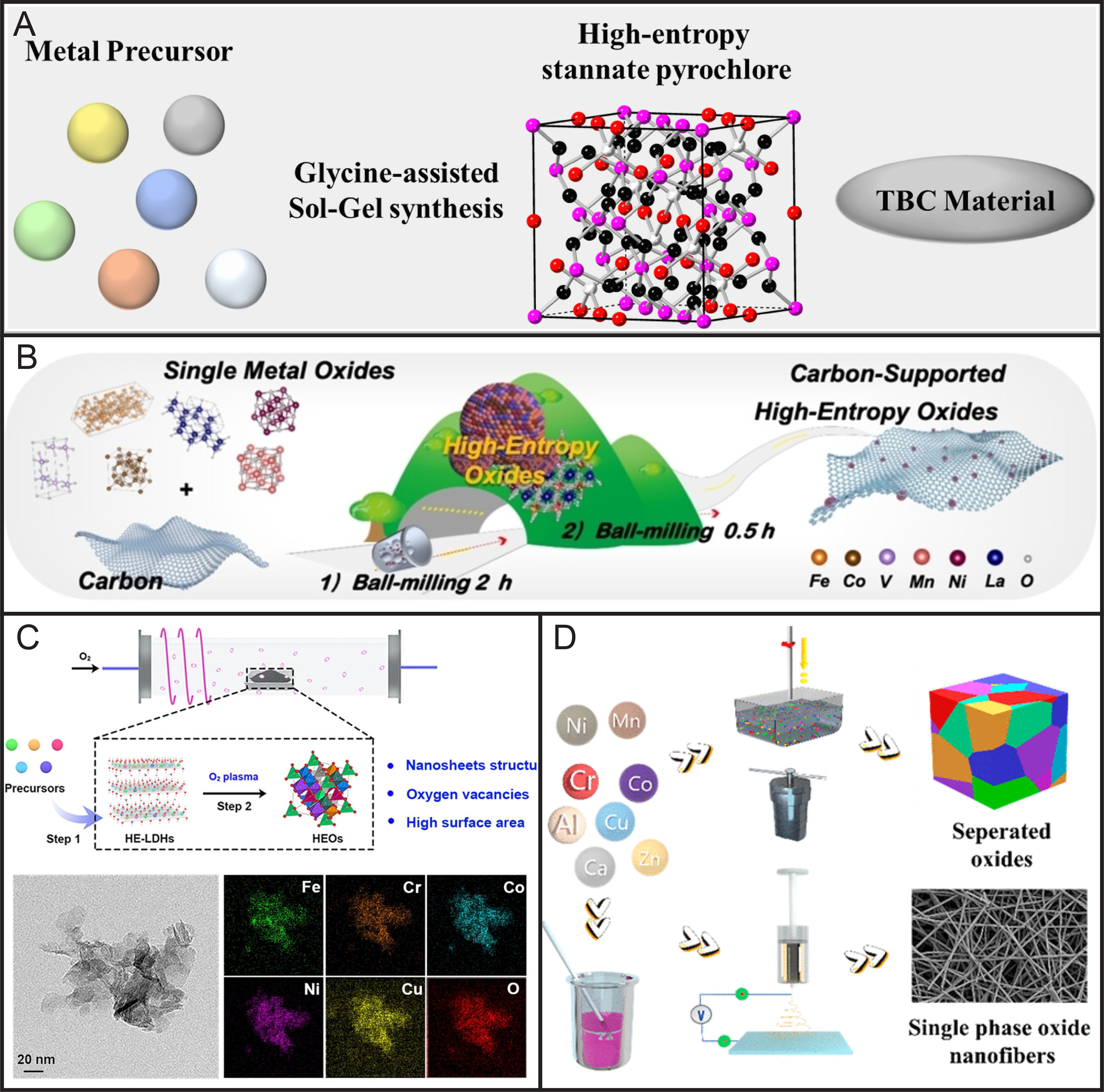
Technology for preparing high-entropy oxides.
Nanostructure regulation is crucial for neural interface performance. High surface area and defect-rich structures enhance charge transfer. Gu et al. prepared defect-abundant HEO nanosheets via a plasma strategy, improving electrocatalytic performance (Fig. 6C). 49 Zhang et al. used electrospinning to generate uniform HEO nanofibers with excellent catalytic stability (Fig. 6D). 45
HEOs show significant promise as neural electrode materials due to their tunable electrical conductivity and potential biocompatibility. Although direct neural interface studies are emerging, related biomedical applications highlight their potential. Choi et al. employed ultrasmall high-entropy alloy nanoenzymes to catalytically clear reactive oxygen and nitrogen species, demonstrating anti-inflammatory effects relevant to implant biocompatibility (Fig. 7). 50
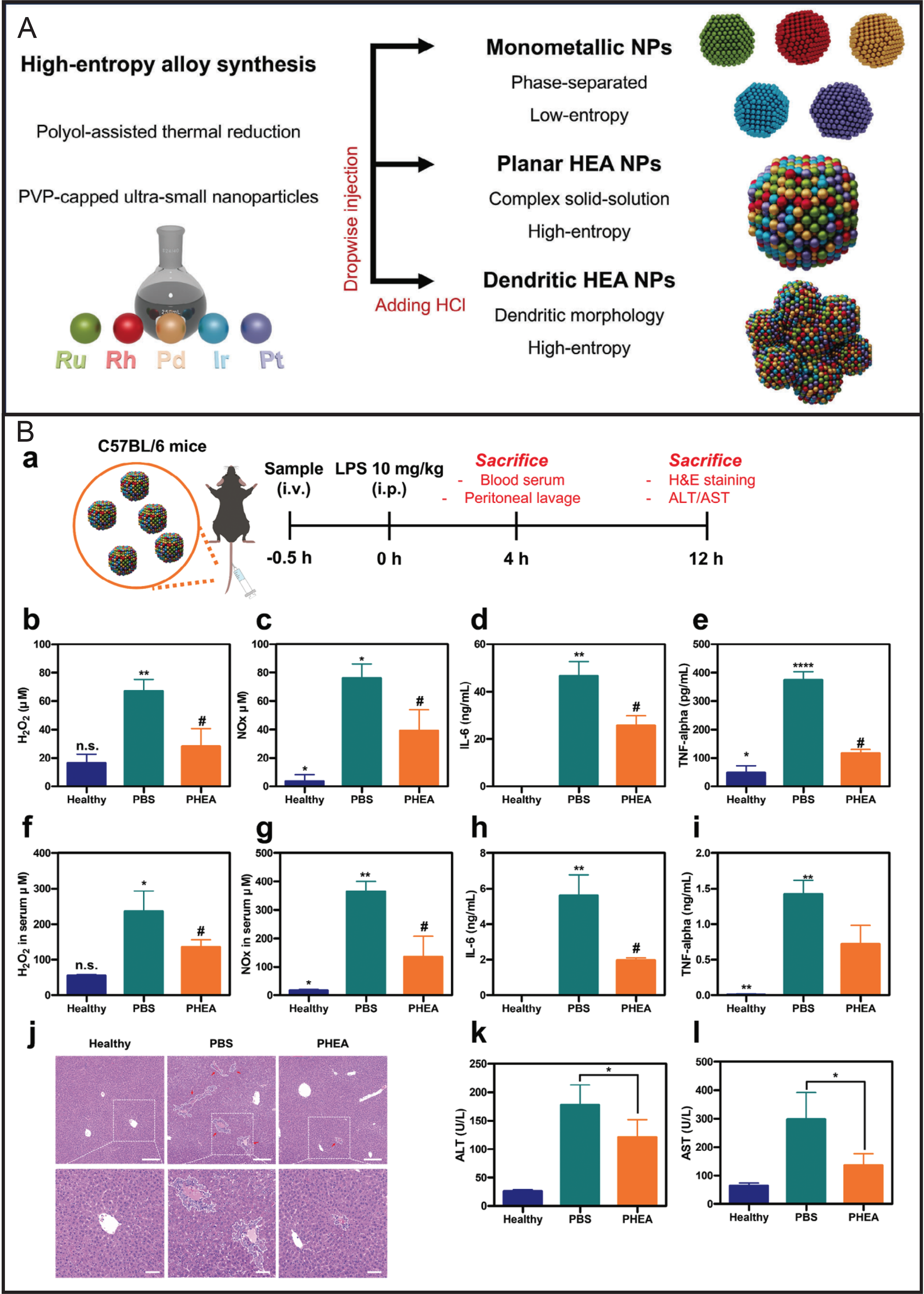
Biological applications of high-entropy oxides.
Computational tools like defect graph neural networks (dGNNs) accelerate the design of HEOs for bioelectronics by predicting defect formation energies, enabling the screening of compositions that maximize conductivity and physiological stability. 95
For multimodal neural regulation, HEOs’ tunable electronic/ionic conductivity supports combined electrical and chemical stimulation. Their complex matrix may also facilitate coupling effects (e.g., magnetoelectric) for less invasive control. Theoretical frameworks suggest HEO-based electrodes could outperform conventional materials by offering enhanced charge injection, improved signal-to-noise ratio, and reduced impedance, paving the way for advanced bioelectronic devices.31,32,96
Integration strategies and device design of multimodal materials
The composite design strategy integrating LMs, magnetoelectric (ME) materials, and HEOs relies on advanced interface engineering to synergistically enhance performance for neuromodulation. LMs, such as gallium-based alloys, provide exceptional electrical conductivity, fluidic deformability, and biocompatibility, serving as ideal conductive fillers or interfacial modifiers. However, their high surface tension and propensity to form a native oxide skin present challenges for achieving stable dispersion and robust interfacial bonding with solid-phase ME or HEO fillers. Song et al. and Wang et al. demonstrated that surface modification of LM droplets (e.g., using allyl disulfide or silane molecules) significantly improves their dispersion stability within polymer matrices and interfacial adhesion, enabling the formation of a continuous conductive network with enhanced mechanical flexibility and electrical properties (Fig. 8A).97,102 For ME materials and HEOs, constructing heterojunctions and epitaxial nanocomposites is pivotal for promoting strong interfacial coupling effects, such as enhanced strain transfer or charge–spin-lattice interactions.103,104 Xie et al. found that coating boron nitride fillers with LMs in a dielectric polymer composite improved its biaxial tensile strength and dielectric polarization performance. 105 Furthermore, molecular linkers like 3-chloropropyltriethoxysilane can act as thermal and diffusion barriers at LM-oxide interfaces, enhancing both thermal conductivity and composite stability. 102 The interfacial coupling effect is paramount for performance, governing electron/ion transport. Li et al. showed that creating atomic-level step interfaces in metallic glass composites generates catalytically active sites, 106 while Kim et al. highlighted that oxide nanolayers on battery electrode surfaces critically regulate wettability and interfacial resistance. 59 These strategies collectively enable the multifunctional integration of electrical conductivity, magnetoelectric coupling, and mechanical compliance, which is essential for advanced neuromodulation bioelectronics.
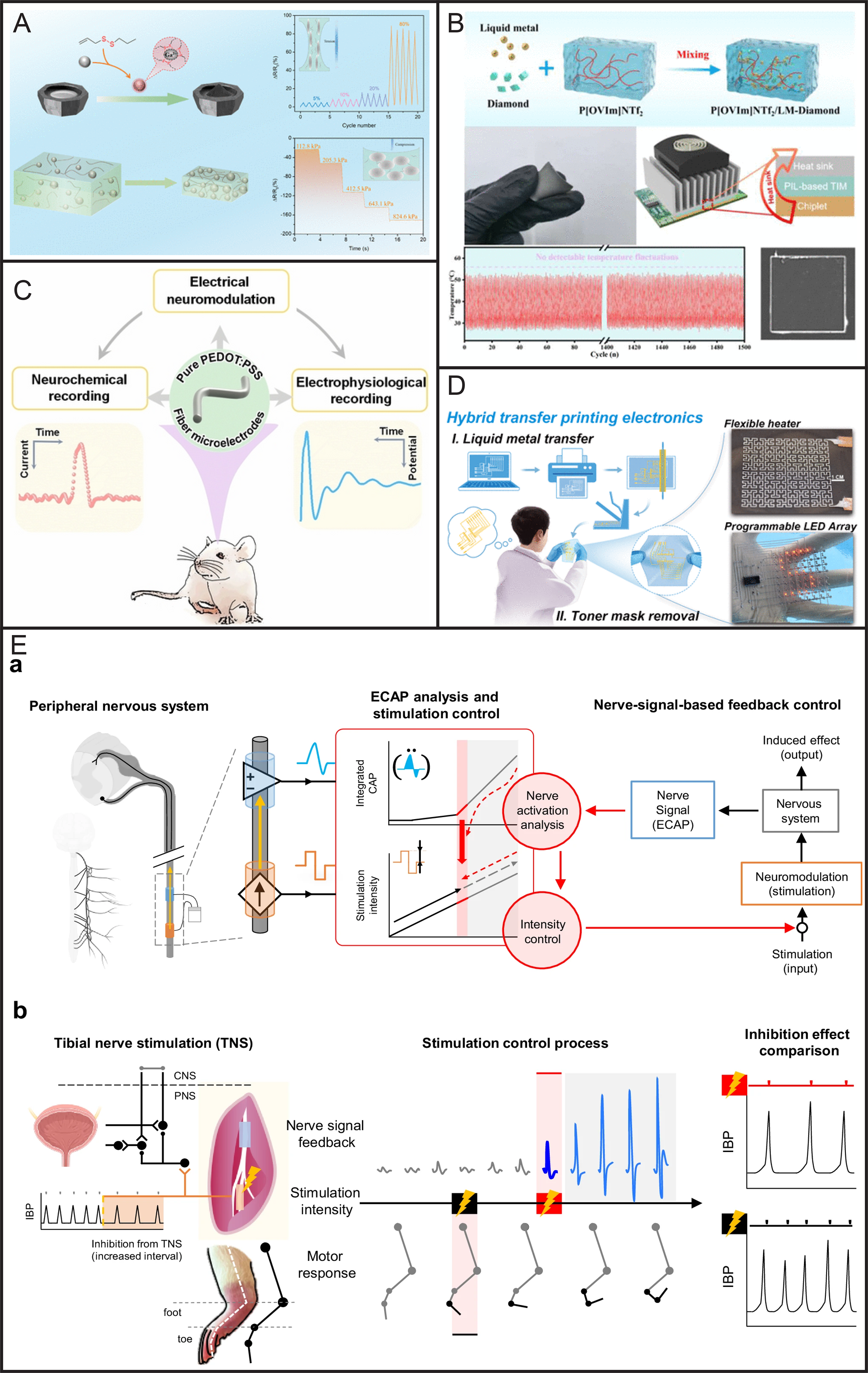
Integration strategies and device design of multimodal materials.
Advanced micro and nanofabrication technologies are fundamental for realizing complex, high-resolution multimodal neural interfaces. Polyimides, valued for their excellent thermal stability and mechanical strength, are prominent substrate materials for flexible microelectromechanical systems (MEMS). Dong et al. expanded the manufacturing capabilities for high-resolution flexible neural interfaces using techniques like laser-induced graphene generation and micropatterning of photosensitive polyimide. 107 Additive microfabrication methods, including localized electroplating and coaxial electrohydrodynamic printing, enable the direct writing of metallic microstructures onto flexible, insulating substrates with submicrometer resolution.108,109 The integration of LMs with these techniques combines excellent conductivity with mechanical compliance. Femtosecond laser microfabrication, by controlling the LM’s oxidation state and wettability, allows for high-resolution patterning (<50 µm) without traditional photolithography, facilitating the production of uniform and stable flexible electronic skins. 30 Laser printing and transfer techniques further advance the fabrication of 3D wiring and multilayer circuits on flexible substrates, enhancing scalability and complexity (Fig. 8D).100,110 To meet the dynamic mechanical demands of biological tissues, device designs incorporate serpentine geometries, 3D microstructures (e.g., via projection microstereolithography), and composite materials like polyimide/poly(ethylene glycol) blends or LM–hydrogel composites, ensuring mechanical compliance and stable electrical performance during deformation.111–114 Low-cost methods, such as desktop plotter cutting and screen printing, democratize the fabrication of wearable multifunctional electrophysiological sensors without cleanroom dependency.111,115 The development of self-rolled microfluidic stretchable electronics and multifunctional PEDOT:PSS fibers (Fig. 8C) further demonstrates the potential for creating highly conformable, biocompatible, and multifunctional neural interfaces.99,116
The integration of multimodal sensing and stimulation technologies into intelligent feedback and closed-loop systems represents a pivotal advancement, enabling real-time monitoring and precise adjustment of neural states. Multifunctional nanomaterials enhance neural interfaces by providing bidirectional communication capabilities, combining electrical, optical, and electrochemical modalities for richer neural state assessment essential for effective adaptive neuromodulation. 23 LM-based materials, engineered with tunable electrical and thermal properties, offer potential for self-feedback and adaptive control mechanisms translatable to neuroelectronics. 117 Biomimetic neural electronic skin systems exemplify this by combining various sensors (e.g., carbon nanotubes for pressure, LM e-skins for motion capture) to achieve real-time tactile feedback and autonomous decision-making. 118 The incorporation of artificial intelligence (AI) algorithms significantly enhances regulation precision. Huang et al. demonstrated the power of AI-driven, feedback-based optimization for managing complex dynamic systems, suggesting its potential for creating personalized neural stimulation schemes that respond in real-time to neural fluctuations. 119 Clinically, closed-loop DBS systems, which adapt stimulation parameters based on real-time neural feedback, have demonstrated superior efficacy in regulating pathological oscillations in Parkinson’s disease and major depressive disorder compared to open-loop approaches.120,121 Ma et al. combined functional electrical stimulation with an AI-driven brain–computer interface (BCI) for personalized motor rehabilitation poststroke, 122 while Lim et al. implemented a closed-loop peripheral nerve stimulation system using evoked compound action potential feedback to achieve effective therapy in a bladder dysfunction model (Fig. 8E). 101 These advances underscore the critical role of intelligent feedback systems, formed by the convergence of multimodal materials, AI, and real-time sensing, in achieving precise and adaptive neuromodulation.
Clinical application prospects of multimodal neural modulation
Multimodal bioelectronic materials show significant promise for treating neurodegenerative diseases like Alzheimer’s (AD) and Parkinson’s (PD). Metal ions, particularly Zn2+ and Ca2+, critically influence pathological protein phase separation (LLPS) and aggregation of tau and α-synuclein.123–125 Donno et al. further showed cadmium disrupts RNP granule LLPS, accelerating neurodegeneration. 126 Clinically, materials like magnetoelectric nanoparticles (MENPs) enable innovative therapies. Jang et al. demonstrated that MENPs decompose β-amyloid aggregates under low-frequency magnetic fields, reducing cytotoxicity in AD models (Fig. 9A, B). 127 Song et al. used magnetoelectric microbots for targeted cell delivery and differentiation via magnetic stimulation, 129 highlighting the potential for synergistic neuromodulation and neural repair.
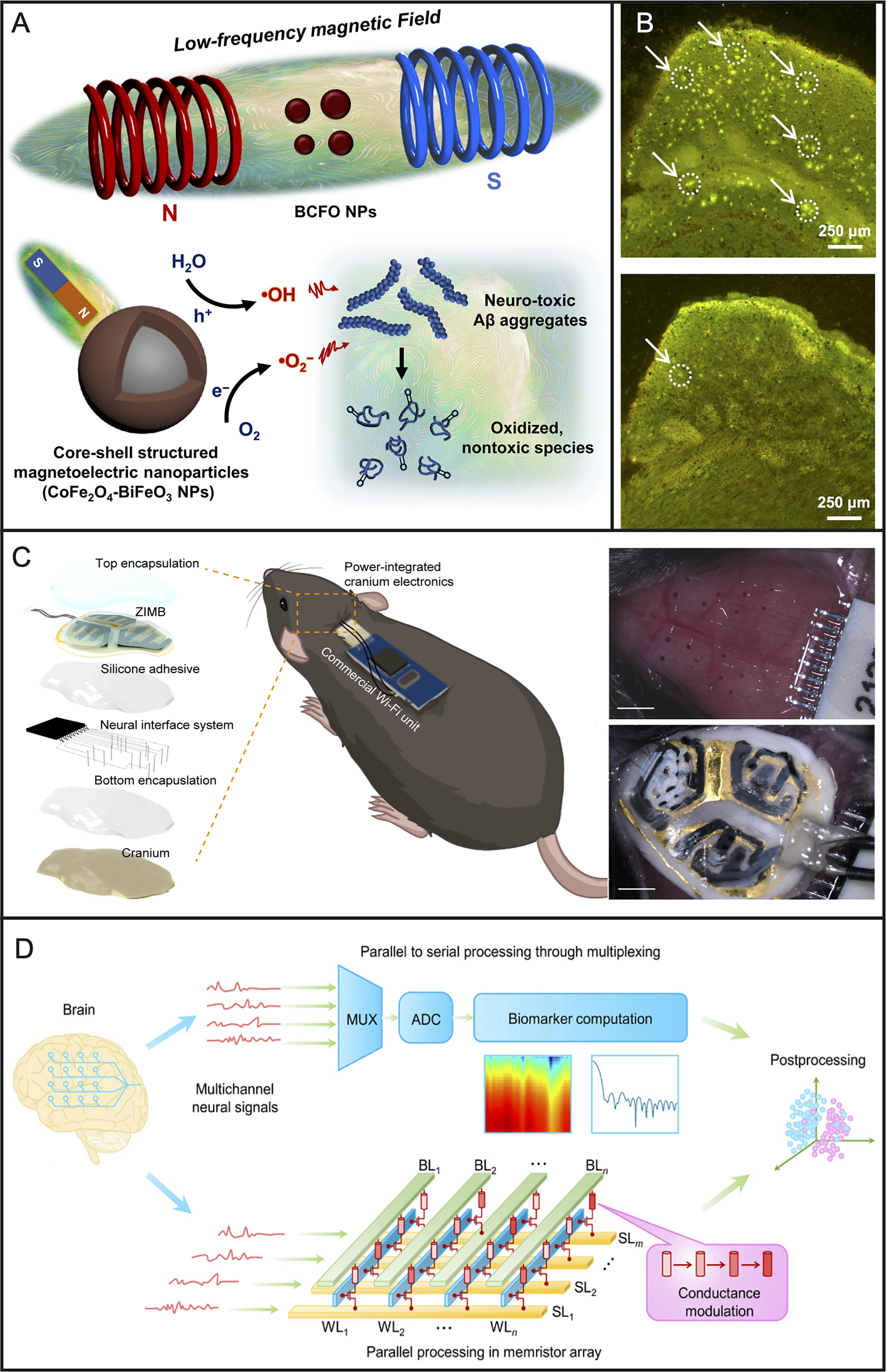
The application prospects of multimodal neural regulation.
Multimodal stimulation technologies offer superior solutions for chronic pain management and neural rehabilitation. By integrating electrical, magnetic, and thermal modalities, these approaches precisely target pain pathways, enhance analgesic outcomes, and allow for real-time, personalized treatment—reducing reliance on pharmaceuticals. In nerve injury recovery, combined stimulation strategies promote neuronal plasticity, guide cellular repair, and restore motor and sensory functions, significantly improving functional recovery and quality of life.
Future intelligent interfaces will merge wearable and implantable devices for personalized neuromodulation. LM-based electronics provide biocompatible, stretchable interfaces for high-fidelity recording.35,130 Multifunctional probes combining electrical, optical, and chemical modalities enhance spatiotemporal precision.131,132 Memristor arrays enable efficient on-device neural computation for brain–machine interfaces (BMIs) (Fig. 9D). 128 Integration with flexible, high-density arrays and wireless power sources (e.g., ultrasound-powered stimulators) advances miniaturization and autonomy,51,133 paving the way for adaptive, bidirectional neural prosthetics and cognitive augmentation.134,135
Future challenges and development trends
The clinical translation of multimodal bioelectronic devices hinges on long-term biocompatibility and safety. While materials like PEDOT:PSS and gallium-based LMs show promising conductivity, flexibility, and initial biocompatibility (e.g., minimal cytotoxicity with silicone rubber encapsulants),13,14,136 their long-term in vivo effects and potential accumulation require thorough toxicological investigation. 56 High-entropy alloys (HEAs) and perovskite oxides also exhibit excellent corrosion resistance and reduced inflammatory responses.57,137 Future efforts must prioritize comprehensive safety assessments, immune response modulation, and the development of biodegradable components (e.g., gelatin hydrogels, polydopamine coatings) to ensure chronic implantation safety.138,139
The seamless integration of sensing and stimulation functionalities poses significant engineering and biological challenges for implantable electrode systems in closed-loop neuromodulation. Realizing precise closed-loop control necessitates establishing a complete “sense-decide-intervene” feedback loop, with critical bottlenecks encompassing bidirectional electrophysiological interfaces (simultaneous high-fidelity microvolt-scale recording and precise stimulation with real-time artifact cancelation),140–142 long-term biocompatibility and interface stability (foreign body reaction-induced glial scar encapsulation and dynamic impedance evolution degrading signal quality),143–145 real-time signal processing and system integration (on-chip low-noise amplification and edge computing under bandwidth and power constraints),146,147 and intelligent algorithms with personalized control (embedded disease-specific biomarker detection and adaptive reinforcement learning strategies).120,148,149 These multifaceted challenges are intrinsically intertwined with multimodal material development, collectively determining the clinical translational prospects of closed-loop neuromodulation technologies.
Advancing multimodal neural interfaces requires refined theoretical models that capture the coupling of electrical, mechanical, chemical, and magnetic stimuli within biological environments. 11 Experimentally, biomimetic platforms (e.g., for validating electronic dura mater) and advanced data fusion techniques (e.g., graph-based characterization of EEG/fNIRS) are crucial for elucidating dynamic cell–material interactions and decoding complex neural responses under physiological conditions.150,151 Deep learning frameworks further aid in decomposing the redundant, unique, and synergistic components of biological signals, refining our understanding of multimodal interactions at cellular and system levels. 152
Reproducible, standardized fabrication protocols are essential to overcome batch-to-batch variability in material properties (e.g., of LMs, ME materials, HEOs) that affect device reliability. 153 Scaling production from lab to industry demands cost-effective, high-throughput, and environmentally sustainable processes, potentially leveraging automation and integrated process monitoring—similar to advancements in biopharmaceutical purification. 154 Maintaining critical functional properties (conductivity, magnetic responsiveness) during scale-up is paramount for commercialization and clinical deployment.
The field necessitates deep integration of materials science (providing compliant, multifunctional substrates like HEOs and hydrogels),25,28,155 neuroscience (guiding interface design based on neural electrophysiology), 11 and electronic engineering (enabling scalable fabrication via microfabrication and 3D printing).27,86,150 AI and big data analytics are transformative, enhancing signal processing, enabling adaptive stimulation strategies through machine learning, and accelerating material discovery via data-driven design (Fig. 10).156,157 This convergence is pivotal for developing next-generation, minimally invasive neural interfaces.
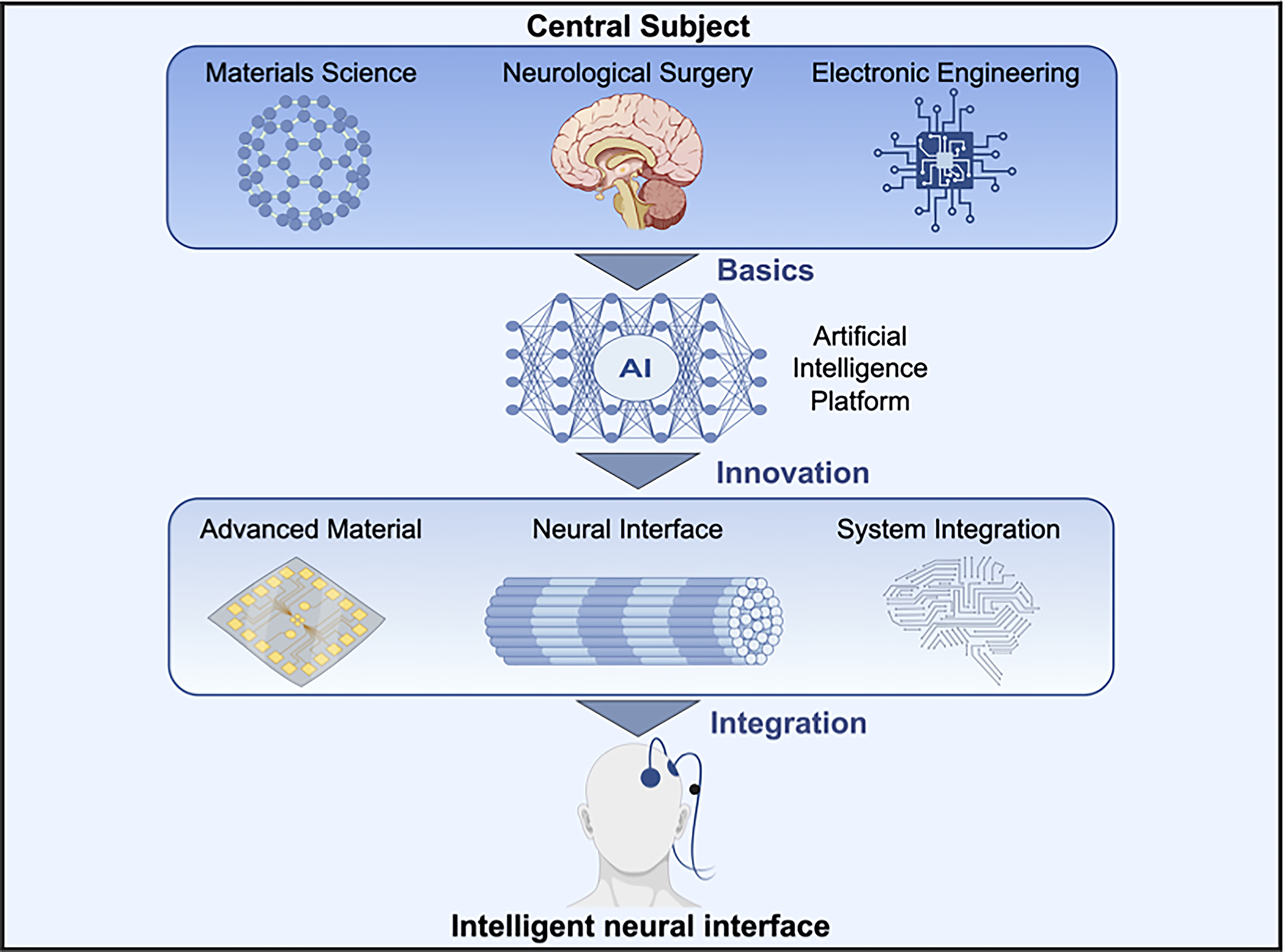
Schematic diagram of interdisciplinary collaboration and technology integration of Multimodal Bioelectronic Materials. By Figdraw 2.0.
Conclusion
Multimodal bioelectronic materials, integrating LMs, ME materials, and HEOs, represent a transformative advancement in neural modulation. By synergistically combining flexibility, energy conversion, and multifunctional stability, these materials enable precise electrical, magnetic, and chemical stimulation for enhanced neural interface performance. This approach offers promising therapeutic potential for neurological disorders, chronic pain, and neuroprosthetics, surpassing traditional single-mode strategies.
However, clinical translation faces challenges in biocompatibility, long-term stability, and scalable fabrication. Addressing these hurdles requires interdisciplinary collaboration across materials science, neuroscience, and engineering, alongside innovations in surface modification and device design. Embracing these challenges while leveraging technological convergence will accelerate the development of intelligent, adaptive neural interfaces, ultimately improving neurological health outcomes globally.
Authors’ Contributions
Conceptualization: B.L., X.W., and Z.W. Methodology: J.C. and K.S. Investigation: R.G., J.D., X.W. Visualization: Z.T., Y.W. Writing—original draft: B.L., Y.W., and K.M. Writing—review and editing: X.W., B.W. Project administration and funding acquisition: Z.W.
Footnotes
Acknowledgements
Author Disclosure Statement
All authors certify that they have no affiliations with or involvement in any organization or entity with any financial interest or nonfinancial interest in the subject matter or materials discussed in this article.
Funding Information
The authors acknowledge the funding support from the National Natural Science Foundation of China (82372499 and 82572707) and the Natural Science Foundation of Beijing (L244017).