



Abstract
After the withdrawal of agrarian capital from financing agriculture in the context of a backlash following the implementation radical land redistribution and tenure reforms since 2000, the fiscally constrained Zimbabwean state assumed an enlarged role in funding production, especially of food grains. Various input subsidy programs were initiated by state and donor agencies to plug the challenges faced by farmers in accessing expensive agricultural inputs, such as seeds and fertilizer on the open markets. Notwithstanding these interventions, the country’s national production has been short of domestic demand for grains, among other key food items, and the recurrent deficits have been increasingly met with a ballooning food import bill. Against this background, in 2016, the Zimbabwe government initiated the Special Maize Import Substitution Programme to enhance domestic production and reduce food imports. Commonly referred to as the Targeted Command Agriculture Programme (TCAP), it is akin to a contract-farming scheme enlisting both the peasantries and the new small-scale capitalist farms, with funding support from domestic capital. Contract farming in Zimbabwe has largely been driven by domestic and international agribusiness and focused on export commodities such as cotton, tobacco and horticulture. In this respect, the TCAP represents a relatively novel, if not innovative, approach by the state to finance food production through contract farming geared to serve the home market. This article examines the effectiveness of this state-driven model of financing agriculture, drawing from research conducted in Zvimba district, in Mashonaland West Province.
Introduction
The Fast Track Land Reform Programme (FTLRP) implemented from the year 2000 resulted in a significant transfer of land to the indigenous populace (Moyo, 2013; Scoones et al., 2010). Prior to the land reform, the state supported agriculture through subsided loans channelled through the Agricultural Finance of Zimbabwe (AFZ), targeting mainly peasant farmers, while large-scale commercial farmers received support through a combination of private commercial banks and state loans (Chimedza, 1994; Moyo, 1995). However, the FTLRP reconfigured agrarian relations, by replacing about 4,500 large-scale white commercial farmers with approximately 130,000 peasant households (Moyo, 2013; Moyo & Yeros, 2005). This also resulted in ‘capital flight’ and the withdrawal of private financial support, precipitated by a number of factors, chiefly among which was the strong opposition to the FTLRP by the United States, the United Kingdom, the International Monetary Fund (IMF), and the World Bank.
Against the opposition, and under an ongoing process of radicalization, the Government of Zimbabwe (GoZ) came up with heterodox economic policies which were extended to the agricultural sector (Moyo & Yeros, 2007). This entailed the introduction of a number of initiatives to boost agricultural production, improve food security and, more importantly, bolster its political support among its majority supporters and land-reform beneficiaries in the countryside. Food security in most countries remains intricately linked to politics and its insecurity results in the waning of political fortunes for governments (Chinsinga, 2010). On the other hand, the GoZ also wooed international capital under the ‘Look East’ policy and relaxed foreign-exchange regulations to revive the tobacco and cotton sectors through contract farming (Binswanger-Mkhize & Moyo, 2012; Moyo & Nyoni, 2013; Mukwereza, 2015). The policy of relaxing foreign-exchange regulations was partially implemented in 2006 for cotton, tobacco and horticultural crops, and then extended to all sectors of the economy in 2009. The ‘Look East’ policy was a result of the international isolation and meant to attract capital in all sectors of the economy (Binswanger-Mkhize & Moyo, 2012). This led to a ‘tobacco boom’ characterized by massive growth in tobacco contract farming (Sachikonye, 2016) and also a revival of cotton contract farming (Masuka, 2012). The tobacco boom was characterized by massive interest of Chinese, European and US capital in two forms, as contract companies and as tobacco leaf buyers (TIMB, 2016). Apart from tobacco and cotton, other crops which received renewed interest from agribusiness firms through contract farming were sugarcane (grown in the South-Eastern lowveld) and some horticultural crops funded by development partners (Binswanger-Mkhize & Moyo, 2012).
The production of cereals, particularly maize, was not supported by private capital, and also faced a number of challenges ranging from droughts, unavailability of inputs on the market and a shift by farmers towards contract export crops, thus precipitating declines in cereal outputs (Binswanger-Mkhize & Moyo, 2012). By the 2007–2008 agricultural season, maize production had declined by 65.8 per cent, wheat by 69.8 per cent, small grains by 44.2 per cent, with tobacco output decreasing by 64.7 per cent in comparison to the 1990s’ averages (Moyo & Nyoni, 2013). The production of maize below the national requirement in Zimbabwe has meant that the country had to rely on imports to overcome the national food requirements. The lack of support for cereals production by private capital in Zimbabwe, compared to the West’s policy of subsidizing its own farmers and dumping cereals on the world market, further complicated the situation of staple cereal farmers in Zimbabwe (Amin, 2015; Binswanger-Mkhize & Moyo, 2012; Patnaik, 2011). This scenario posed threats to food security and political stability, which led the GoZ to embark on maize contract farming. The project was termed the Targeted Command Agriculture Programme (TCAP), involving a private Company, Sakunda, and the Grain Marketing Board (GMB), a parastatal, plus private companies tasked with supplying inputs to GMB for allocation to the farmers through its countrywide depot network.
The present article examines the effectiveness of Command Agriculture in stimulating agricultural growth and food security, at both national and household levels. The study also examines the nature of contracts in Command Agriculture, as well as selectivity bias, or lack thereof, in the recruitment process. Key questions addressed refer to the actors involved, the beneficiaries of the program, and the overall benefits. The research has focused on the experience of Zvimba district, during two agricultural seasons, 2016–2017 and 2017–2018, and has utilized a mixed method approach. A purposive sample of 75 farmers was chosen for the study, that is, 25 resettled peasant (A1) farmers, 20 resettled large-scale capitalist (A2) farmers and 25 Communal Area (CA) peasant farmers (in non-resettlement areas). A household survey, in-depth interviews and focus group discussions were conducted with the farmers. Key informant interviews were undertaken with stakeholders, such as government personnel, farmers’ associations and GMB staff. Secondary data were also collected from government reports and journal and newspaper articles. The data obtained from the household survey were analyzed using SPSS, and the qualitative data were analyzed using thematic coding.
Since the publication of the World Bank Report on Agriculture (2008), contract farming has re-emerged as a strategy of integrating agricultural producers to local and global markets in policy and academic circles (Oya, 2012). The World Bank encouraged the private sector to step up and fill the gaps within the government’s Structural Adjustment Programmes (SAPs) with respect to the financing and marketing of agriculture in Africa, Latin America and some parts of Asia, which resulted in rolling back the state (The World Bank, 2007). In this context, Command Agriculture has been a direct challenge to World Bank policy recommendations and Western think tanks, which see no role for the state in agricultural financing and marketing, save for the provision of infrastructural development (The World Bank, 2007).
Various definitions of contract farming have been put forward. One common understanding is that contract farming is a relationship between farmers and processing firms on the production and marketing of commodities outlining the quality and quantity (Eaton & Shepherd, 2001; Little & Watts, 1994; Singh, 2002). This paper follows the definition of the FAO (2012), by which contract farming is an agricultural production system based on an agreement between buyers and farmers and which establishes conditions for the production and marketing of farm products. This definition is preferred for being more inclusive and not restricted to private firms, as most contract farming arrangements in Africa have previously involved the state and farmers (Ochieng, 2010; Sachikonye, 2016).
Eaton and Shepherd (2001) have also identified a broad range of models, namely the centralized model, nucleus-estate model and the tripartite model. Under the centralized model, which usually applies to commodities requiring quick processing like tobacco, milk and poultry, the contractor engages a large number of smallholders before the beginning of the agricultural season. The nucleus-estate model, which has been operated in Africa since colonial days and has intensified under neoliberalism, is mostly dominant in commodities such as sugar, coffee, tea and palm oil, and involves capital or public enterprises engaging in direct production while also outsourcing some of the produce from independent growers (Amanor, 2009; Konings, 1998). The tripartite model, which in Africa was common in Kenya, in the sugar and tea industries, brings the state and private capital together in extending agronomic, financial and input support to the peasantry (Ochieng, 2010; Kitching, 1980).
This paper identifies two typologies of contract farming, private- and state-led contract farming, to make a clear distinction between the dominant, private-led farming practiced worldwide and the Command Agriculture program as implemented in Zimbabwe. Yet, it takes into account debates on the selectivity bias of contract farming generally. Little (2014), Singh (2002), and McMichael (2013) have claimed that in contract farming there is a selectivity bias regarding participation and allocation of inputs in favor of large-scale farmers, while Korovkin (1992) and Moyo (2011) have also posited that buyers are more likely to rely on peasants as they are seen to be more vulnerable than large-scale farmers. This study, finally, also locates the importance of variables such as asset ownership and land sizes under Command Agriculture in the broader contract farming debates (Boughton et al., 2007; Warning & Key, 2002).
The Targeted Command Agriculture Program
The Evolution of Post-FTLRP Agricultural Support Schemes
The FTLRP marked the return of the state in the provisioning of public finance for various agricultural programs after a decade of SAPs in the 1990s (Murisa & Mujeyi, 2015). The government initiated a number of support schemes which were a combination of subsidy programs and contract arrangements, introduced from 2004 by the Reserve Bank of Zimbabwe (RBZ), the GMB and the Agricultural Development Bank of Zimbabwe (Agribank), as well as the Ministry of Finance (Moyo, Chambati, & Siziba, 2014). Subsidy programs targeting farmers were implemented by the GoZ from the mid-2000s, including the Champion Farmer Scheme for highly productive farmers; Operation Maguta/Inala, meant to increase food security; the Presidential Well-Wishers Special Agricultural Inputs Scheme and the Agricultural Sector Productive Enhancement Facility (ASPEF) (Pazvakavambwa, 2009).
Alongside the focus on the most productive farmers, Operation Inala/Maguta (also known as ‘Command Agriculture’) was implemented in September 2005 to boost cereal production, which was all time low, and whose major beneficiaries were peasant farmers. The program involved several stakeholders, such as the RBZ, the Ministry of Agriculture and the military. A total of US$40.5 million was directed towards Operation Maguta/Inala, while the program faced challenges related to side-marketing before abandonment in February 2008 (Pazvakavambwa, 2009). Also targeting peasant farmers in the provisioning of support was the Presidential Well-Wishers Special Agricultural Inputs Scheme launched in 2010 and which is still operational to date. Though hampered by inadequate funding, the broad objective of the program is to support peasant production through the provision of seed and fertilizer packs for the attainment of household food self-sufficiency (Moyo et al, 2014). The ASPEF facility aimed to provide affordable finance to farmers for improving food security and also offered support for irrigation rehabilitation and crop, horticulture and livestock production, yet faced challenges of poor targeting of farmers as well as non-repayment of loans (Moyo & Nyoni, 2013; Pazvakavambwa, 2009).
The failure to address national food sufficiency has led to the adoption of the Command Agriculture with the aim of reducing the food import bill in the 2016–2017 agricultural season. It also important to highlight that various post-land reform schemes were also affected by constrained fiscal capacity on the part of government and also because of the poor coordination of the projects (Murisa & Mujeyi 2015). As discussed in the next section, the recently introduced command agriculture now also incorporates private capital.
Introduction of TCAP
The government of Zimbabwe initiated the TCAP (also known as the Special Maize Programme for Import Substitution, as well as Command Agriculture) in 2016–2017, in order to stimulate the production of maize. The aim of the program has been to ensure food security and concurrently substitute maize imports. Production of sufficient maize for the country reduces the agricultural imports. The introduction of the state-led TCAP program has aimed to cover the shortfall in the financing of production of cereal crops, as private contractors, who are mostly involved in financing export crops like tobacco, sugar, cotton and other horticultural crops, and do not focus much on cereals. The TCAP involves a number of actors including the state which is represented by various organs, such as the Ministry of Agriculture, Lands and Rural Development, the Zimbabwe Defence Forces and a Cabinet Committee on Food Security and Nutrition. Other key players are the state-controlled GMB, Sakunda Holdings, which is a private-owned petroleum firm, and other private seed, fertilizer and agrochemicals companies. The involvement of private firms brings a new dimension to the program when compared to the previous ‘command agriculture’ program implemented soon after the implementation of FTLRP. Institutional arrangements akin to ‘tripartite structures’ have been set up for implementing this program.
The implementation model used in Command Agriculture corresponds to views raised by some political economists that private firms are willing to engage farmers in contract farming as a strategy to extract value from host governments for their operations (Buur, Mondlane, & Baloi, 2011; Korovkin, 1992, Sachikonye, 1989). In this case, Sakunda Holdings, which is key in implementing the program, was issued Treasury Bills by the state, demonstrating that private capital in this case relies on state loans. Also, with the 2007–2008 global food and energy crises, there have been concerns raised that corporates and companies diversify into other operations and economic activities ostensibly to spread risks (Chambati, Mazwi, & Mberi, 2018; Shivji, 2011). Sakunda Holdings is a firm whose primary business interests are energy and its entrance into the agricultural sector should be subjected to scrutiny. Concerns have been raised in some quarters that the interest rates were too high and could potentially cripple the government’s fiscal capacity in the next few years if left unchecked. 1
The implementation of the program is presented in Figure 1. The state, through the Office of the President and Cabinet and the Cabinet Committee on Food and Security, provides policy guidance and also acts as an enabler in marshalling human and financial resources. The Zimbabwe National Army provides political support for the implementation of the program, mindful of the fact that food insecurity might have dire political consequences for the sitting government. As mentioned earlier, it is difficult to separate food security issues from politics, and, hence, there is a desire by many governments in Africa to ensure that farmers have adequate inputs (Chinsinga, 2010). Input schemes provide the much-needed political mobilization of fragmented classes (Pérez Niño, 2016). The state averred the much-needed mobilization in the newspapers, the national broadcaster Zimbabwe Broadcasting Corporation and the inter-ministerial coordination committees. Additionally, it was the primary source of finance through the issuing of Treasury Bills.
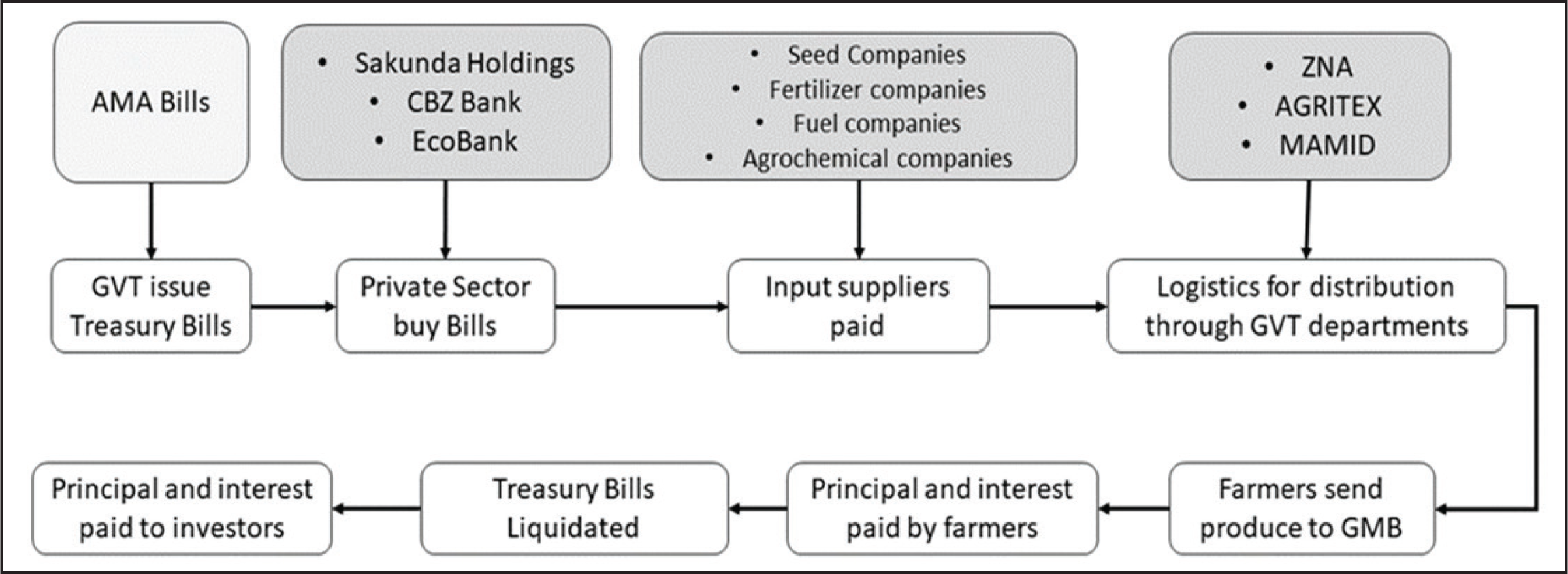
For accumulation by the state and private capital, there must be effec-tive monitoring and supervision machinery (Clapp, 1994). For the TCAP, this was achieved through the use of the Ministry of Agriculture’s Department of Extension Service known as Agritex. This department was tasked with the physical mobilization of farmers, where each officer is asked to serve 500 households. Agritex officers reside in their work areas and are equipped with motorbikes for mobility, and report to the District Agritex officer. The extension officers are also responsible for vetting farmers in terms of their suitability for the program. After vetting the farmers, they notify the farmers when the inputs will become available and ready for distribution (Interview with Extension Officer, June 2018). At the commencing of the crop planting through top harvesting, the extension officers provide agronomic advice to ensure that losses are minimal. The private company, Sakunda, does not hire its own extension officers, unlike in cotton where contractors hire their own (Chambati, Mazwi, & Mudumu, forthcoming). The Agritex officers also provide advice to the district office when the crop is ready for harvest, thus acting also to curtail side-marketing, as in most contract arrangements, where contracting companies put in place their eyes and ears on the ground to minimize loss (Dzingirai, 2003). In addition, Agritex officers are also mandated to disqualify farmers that do not meet contract requirements.
The Zimbabwe National Army and Air Force have been involved in some development and community relief projects, such as building rural schools, constructing bridges and evacuating cyclone victims. It is within this developmental role that the military is recognized for its efficiency. In the TCAP, the military was tasked with the logistical aspect and some parts of the administration of the program. While this is a noble idea, some interviewees remarked that the army may have been used to show the seriousness of the state and pre-empt defaulting, due to the fact that the rural dwellers are frightened of the army and a potential heavy-handed response in case of default. At the same time, Zimbabwe’s Army is somehow obliged to participate in the food security endeavors because the Food and Nutrition Council is an inter-governmental platform that affords the defense forces a chance to take part in Command Agriculture. Also involved in the implementation of the TCAP is the GMB, the parastatal tasked with the buying of maize, small grains, and sugar and soya beans from farmers and reselling to millers. It maintains the national food reserve, also mills and trades mealie meal like any other private retailer. Its role also includes receiving inputs from agro-dealers and distributing them to farmers, taking deliveries of maize, making payments to the farmers and initiating the stop order facility. The latter enables contractors to get a repayment on their loans to the farmers. It is important to note that the operations of the GMB are heavily subsidized by the state, in the context of a heterodox economic policy which has prevailed since the early 2000s.
Production Challenges
There is a difference between policy formulation and implementation, which means also between the perceived and actual benefits, as shown by the impact of the program (Chinsinga, 2010). A larger proportion of CA farmers (92%) and A1 farmers (100%) indicated that one of the major benefits under the program had been that of assured markets, while a smaller proportion of A2 farmers (20%) highlighted that the issue of markets had been a major benefit. Additionally, large-scale farmers found growing maize under contract to be unprofitable, with 48 per cent stating that Command Agriculture had largely been unprofitable. On the other hand, the CA farmers (92%) and A1 farmers (100%) found it to be profitable. The major benefit stated by large-scale farmers under Command Agriculture was that the commodity is easier to grow when compared to other crops such as tobacco and soya beans, with 52 per cent of them citing this as a benefit. Indeed, when compared to other crops, such as tobacco, maize production is economical to grow, especially if one considers labor costs and the limited amount of time the crop takes before reaching maturity.
Maize production under Command Agriculture also faced some problems. One of the major challenges particularly among CA farmers was that of low yields, which affected 72 per cent of CA farmers. Another challenge faced by CA farmers was related to pest attack and weeds, affecting at 92 per cent and 100 per cent of the households, respectively. A major challenge across the board was late access to inputs. This severely affected 92 per cent of the farmers from the A2 category, who reported late receipt of inputs, while 60 per cent of A1 and 16 per cent CA farmers reported the same. Late input distribution by government was due to logistical challenges at national and district levels. On a minor level, shortage of stationary also delayed the processing of applications as indicated by one key informant: ‘sometimes we had to wait for stationary for many days’. Late input delivery affects productivity in the sense that farmers end up storing the inputs for future cropping seasons, and also exacerbates defaulting on loan repayments and withdrawal from the contract scheme.
In terms of production challenges, labor shortages were reported to be high among A1 farmers (84%), followed by CA farmers (28%). There were no labor shortages recorded among A2 farmers. The A2 farmers hire in labor, whereas the A1 and CA farmers utilize mostly household labor, with minimal hiring of extra labor (Moyo, 2011). Another key challenge was water scarcity, which was high among the smallholder farmers who lack irrigation infrastructure and rely on rain fed agriculture, while A2 farmers have access to irrigation given that they acquired farms with infrastructure during the FTLRP.
Farmers reported that inputs were insufficient. Inputs insufficiency was high among the A2 farmers (96%), followed by CA farmers (63%) and A1 farmers (33%). This was caused by the failure of the contractor to supply the required inputs package, which can be attributed to inadequate funding or profit maximization strategies by the contracting partners. Interestingly, the government had stipulated that CA and A1 farmers had to have a maximum of 2.6 and 3 hectares, respectively, yet the state failed to fully fund this stipulated hectarage. It has been argued that the shortage of inputs is sometimes a result of commercial and political interests that take precedence over technical issues (Chinsinga, 2010). In this case, the state and its partners recruited a number of farmers above its resource capacity, which may have a political logic. Additionally, in the event of contracting companies defaulting on their part, there is no clause of what happens to the contracting company (Singh, 2002).
Nature of Contracts and Power Relations Under TCAP
A series of documents were completed as part of the suitability checking. The core documents for the farmer assessment process included the (a) asset checklist/declaration form, (b) addendum, (c) contract and (d) stop order. According to the contract document, the state, through the Ministry of Agriculture, Lands and Rural Development, has an obligation to provide inputs like seeds, fertilizers, protection chemicals and extension services, while the farmer is expected to deliver 5 tons per hectare. Moreover, the inputs provided by the state are to be deducted from the maize delivered, being that the farmer is to be paid the balance on the loan.
However, unequal power relations in the contract are reflected in the fact that, while the contract specifies the production requirements of the state, it is silent on the price to be earned by the farmer, and this has the potential of prejudicing the farmer in circumstances when there is grain surplus. This is comparable to other contact farming experiences, whereby farmers get poor prices, and to some extent non-purchase of crop outputs, during seasons in which the contractor is able to meet production targets (Martiniello, 2016, p. 16). Moreover, the contract contains clauses that penalize farmers in the event of default on repayment of the input loan, while similar penalties for the state do not apply in the event of failing to meet contractual obligations, such as provision or purchase of outputs. This again is comparable to other cases between farmers and contractors (Clapp, 1988; Martiniello, 2016). Also, the TCAP contract document is crafted in such a manner as to give the Ministry of Agriculture, Lands and Rural Resettlement, through its extension workers, and members of the Defence Forces deployed into task teams ‘unlimited right to inspect land where maize is grown and also giving instructions to the farmer’; the contract goes further to state that ‘[a]ll the instructions and guidance given during such inspections shall be religiously followed by the farmer’. This implies a loss of autonomy on the part of farmers due to a stringent supervision regime, which, as in other comparable cases (Little & Watts, 1994; Clapp, 1994), limits the ability of peasant farmers to engage in other agricultural activities.
On the other hand, positive aspects are also notable in Command Agriculture contract document. The contract is renewable for a period of three years, subject to annual reviews. A three-year contract may be beneficial to all parties to the agreement for purposes of planning, albeit the conditions imposed through ‘annual reviews’ are determined by the state alone without the involvement of the farmer. Nonetheless, the phenomenon of attaching of assets by the contractor in the event of default has not been reported in the two seasons the TCAP has been in operation, which reflects how the state-led contract farming is far better when compared to private-led contract farming. Interestingly, in June 2018, the Ministry of Agriculture, Lands and Rural Resettlement tried to push in Parliament a clause that would have criminalized default in repaying TCAP inputs, but the move was vigorously resisted by the legislature, which is largely composed of A2 farmers. Criminalization would have meant that defaulting large-scale farmers would face jail terms and impounding of their assets pledged as collateral. Also important to note is that the interest rates under Command Agriculture were much lower than those charged by private-owned contract farming companies and commercial banks. The gazetted interest rates for the program are 5 per cent, below the 18–25 per cent private and open loan facilities in the Zimbabwean market. For tobacco contract farming, interest rates range from 10 to 12 per cent, which renders Command Agriculture more favorable to farmers (Mazwi, Chambati, & Mudimu, forthcoming).
Contracted Farmers and Gender Dynamics
Farmer Recruitment and Mobilization into Command Agriculture
Farmers were recruited into the TCAP through different methods, namely agriculture extension workers and state agencies like the Ministry of Local Government, a drive on electronic media, and local networks among neighbors. The majority of A1 and A2 farmers, 96 and 100 per cent, respectively, were recruited through extension workers. 2 CA farmers were recruited mainly through state agencies (79%), but also through electronic media (17%), as well as neighbors (4%), which is explained by the more substantial kinship ties among communal farmers, differently from farmers in resettled areas, who are drawn from diverse backgrounds, especially A2 farmers who are more limited in their social interactions (Marongwe, 2011; Moyo, 2004; Moyo et al., 2009; Murisa, 2011).
The farmers’ suitability for the TCAP was ascertained by agricultural extension officers. Each farmer was assessed based on production history, proof of land ownership and asset ownership. Proof of land ownership was one of the key requisites for participation in Command Agriculture. Without such proof, either in the form of land permits, 99-year leases, offer letters or freehold title, the government would accept land affidavits proving that a joint venture was in existence between a land owner and a landless person intending to participate in Command Agriculture (Interview with Extension Officer, July 2018). Yet, in some cases, well-connected farmers who had been disqualified by Agritex officers secured inputs directly from the GMB, in Harare, through patronage networks, making it difficult for the local Agritex officers to monitor and supervise their production activities.
Land Size Stipulations
The minimum and maximum land stipulation was applied mainly to communal farmers (88%), compared to A1 and A2 famers (4%and none, respectively). The application of land size stipulations on CA farmers may be explained by the fact that the state has more Agritex officers in the CAs and also exercises more control through traditional leaders, besides enduring preconceptions regarding the low productivity of peasants requiring monitoring and control. The minimum land size was 1 hectare, while the maximum was 3 hectares for A1 farmers and 2.6 ha for CA farmers. Overall, the average area under TCAP maize was 6 hectares for A2 farmers, followed by CA and A1 farmers at 1.6 ha and 1.4 ha, respectively.
While the TCAP, at its inception, targeted mainly resource-endowed A2 farmers with irrigation equipment and better access to information, this survey revealed that Command Agriculture has since been democratized, as there are now more A1 and CA farmers involved. There were more farmers contracted in the CAs, accounting for 38.6 per cent, followed by A1 farmers at 33.3 per cent and A2 farmers at 28.1 per cent. This is consistent with the fact that there are more CA farmers in maize production, than A1 and A2 farmers (Moyo, 2014). During the first season of TCAP implementation, the government relaxed conditions related to irrigation equipment, thus expanding targeted farmers, and also allowed peasant farmers to work in groups so as to access inputs. Yet, the average area utilized by peasant farmers (A1 and CA) was two hectares, remaining lower than A2 farmers, largely because of the ceiling imposed by the state.
In terms of gender composition, there were more male farmers engaged in Command Agriculture, at 84 per cent, while women accounted for 16 per cent, reflecting the skewed land ownership and redistribution pattern prevailing in the countryside. Although the FTLRP increased female ownership, it remains low at approximately 20 per cent, and is consistent with the patriarchal relations governing land access on the continent (Amanor, 2011; Tsikata 2015). Among A2 and A1 farmers, more men signed contracts, at 88 and 92 per cent, respectively, in contrast to CA farmers, among which women signed 54 per cent of the contracts. The higher number of women involved in the program in the CAs may be explained by labor migration patterns among CA households, characterized mainly by male migration to urban areas (Gaidzanwa, 2012).
National Agricultural and Household Production Outcomes
Production Outcomes at National Level
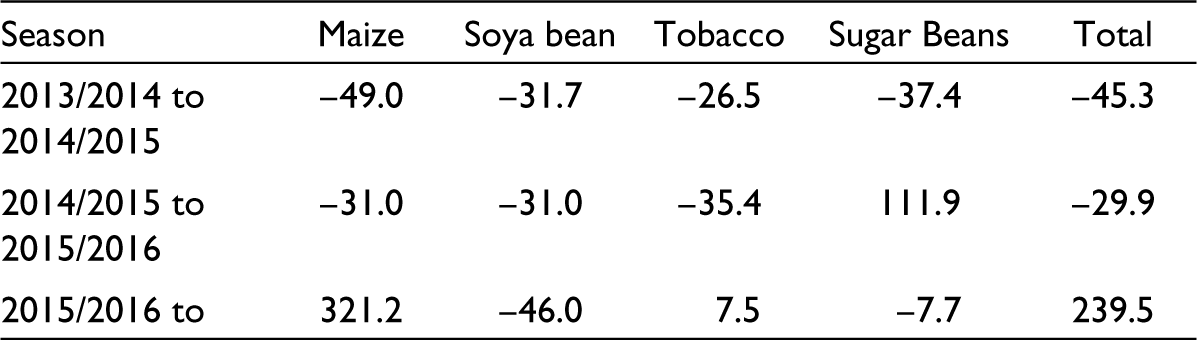
The TCAP was specific to maize production, with various support avenues being provided to other commercial and food crops through various channels. It is worth noting that the TCAP was not the only support for maize production, as there was NGO support and the Presidential inputs support program. In comparison to other commercial crops outside the scope of TCAP, maize production increased by 321 per cent in one year, while production of soya and sugar beans decreased in the same period (Table 1). This was against the backdrop of consecutive decreases in maize production in the previous years.
Percentage Change from Previous Season for All Commercial Grain Crops Considering that Command Was Only for Maize
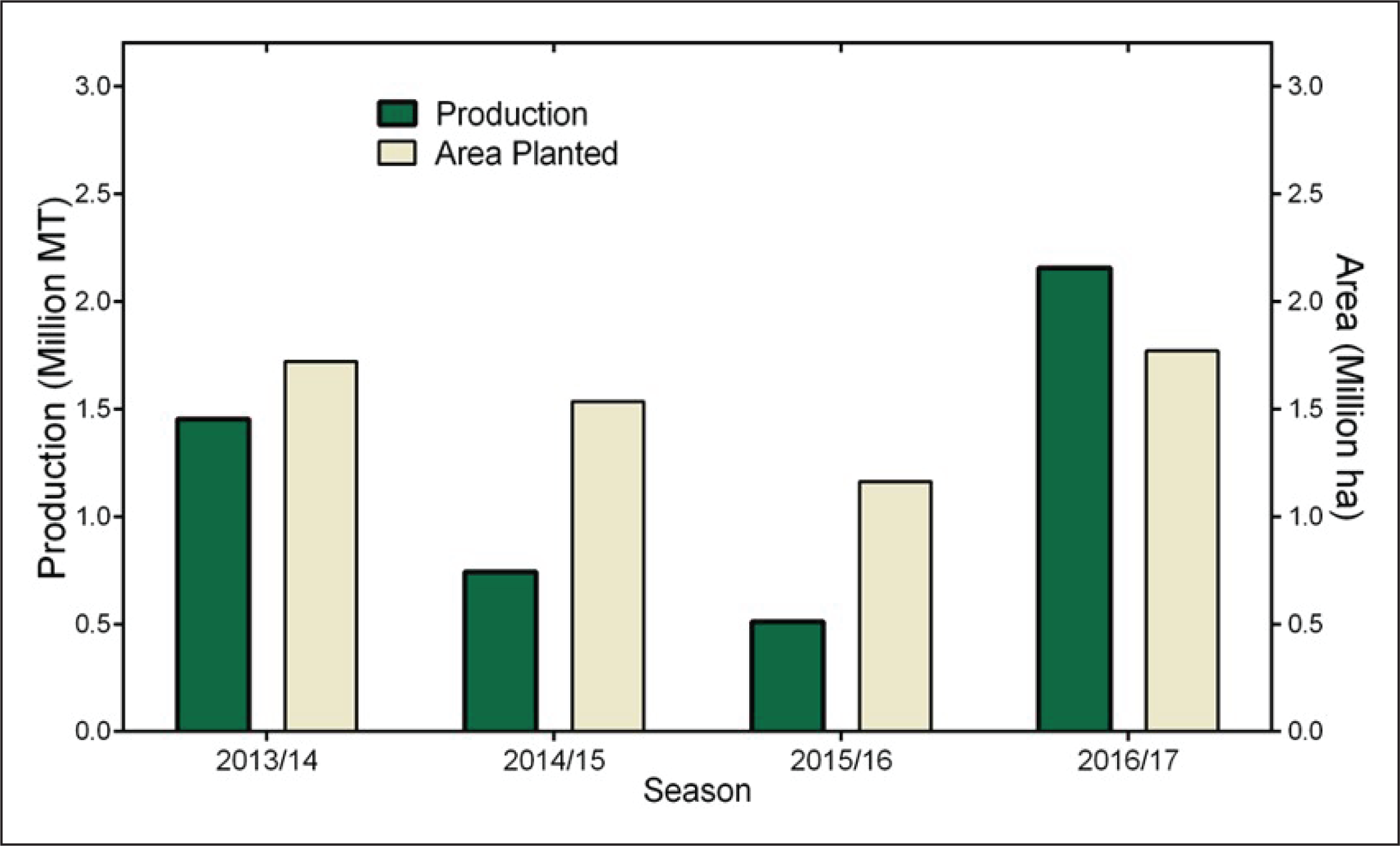
A total of 168,666 ha of maize were planted under Command Agriculture, against a target of 400,000 ha. This represented 9.5 per cent of the national area put under maize in the 2016–2017 agricultural season. The contribution of the TCAP program to total area and overall production varied between provinces. For example, in Mashonaland Central Province, a total of 30,071 ha were planted under TCAP, representing 14.5 per cent of the area under maize in the province. The 2016–2017 agricultural season had the highest planted area under maize, 1.7 million ha, which exceeded the total area under maize in the past 10 years (Figure 2). Midlands Province contributed to over 20 per cent of the national hectarage under maize, followed by Mashonaland West. All provinces increased the area under maize production compared to the previous season. For example, Masvingo and Matabeleland South almost doubled the area under maize in 2016–2017 compared to 2015–2016. At national level, the area under maize increased by over 600,000 ha, a 52 per cent increase from the previous season. Over half of the area under maize was planted in December. About 34.2 per cent of households reported that they received crop input support in the 2016–2017 season, with over 75 per cent of households having received general support from government.
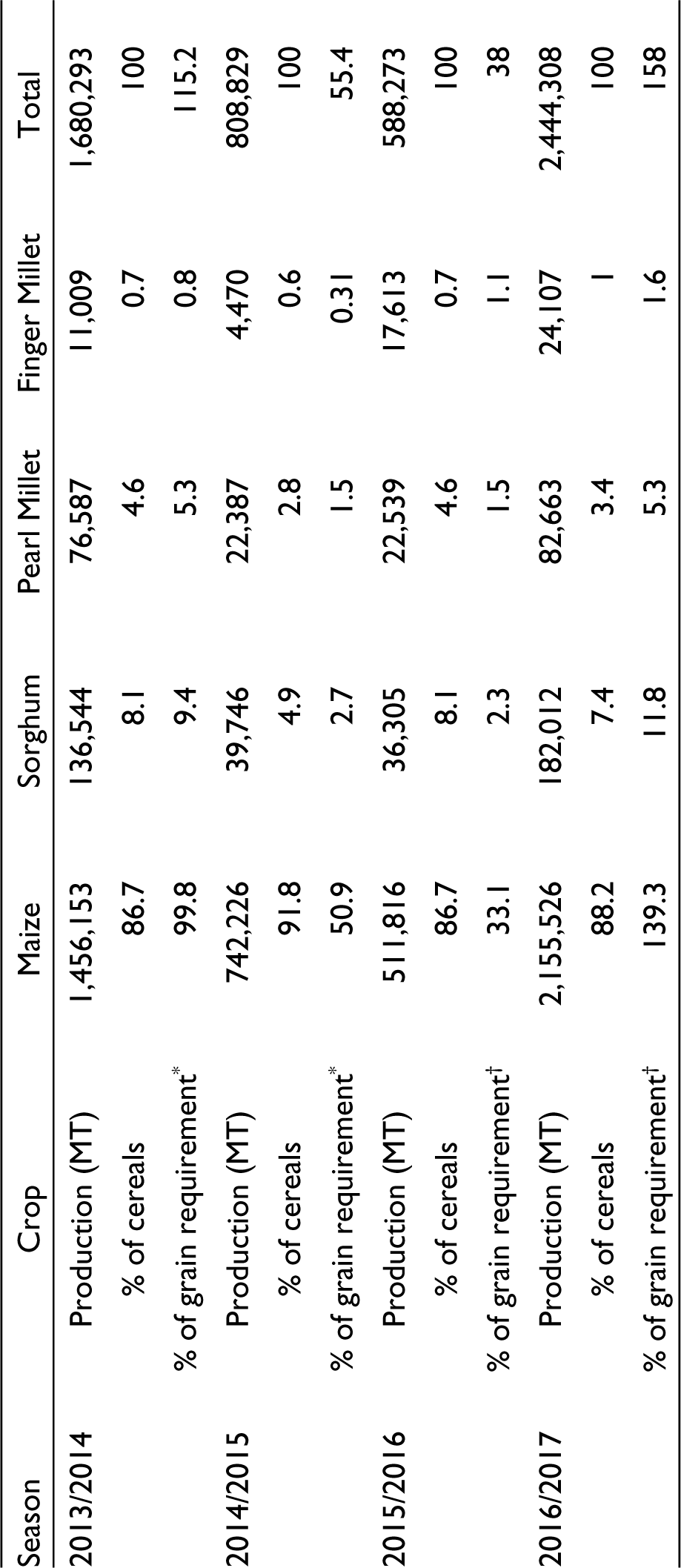
Maize yields were also high, surpassing the national maize requirement for the first time in many years. Maize contributed the greatest proportion to total national cereal production, as 88.2 per cent of the cereal produced was maize (Table 2). The maize produced surpassed the national grain requirement for human consumption by 139 per cent and the requirements for both human and livestock by 119 per cent, a feat that had become difficult to achieve in the recent past. The contribution of small grains to national cereal production decreased compared to the previous season, positioning maize as the most significant source of starch requirement.
Maize, Sorghum, Finger Millet and Peal Millet Production in the Past Three Seasons and the Contribution of Each to Percentage Cereal Production and National Requirement
Production Outcomes at Household Level
In terms of production, A1 farmers produced an average of 2.83 tons/ha, followed by CA farmers at 2.19 tons/ha, and A2 farmers at 1.37 tons/ha. When compared to previous productivity outcomes in CAs averaging 0.8 tons/ha, Command Agriculture increased productivity by more than 200 per cent, thus highlighting how progressive the program has been at both household and national levels. Across the three land tenure models, 20 per cent of A1 and CA farmers were able to produce more than the required 5 tons per hectare, while only 16.7 per cent of the A2 farmers were able to produce 5 tons and above per hectare. For all the classes of farmers, the production levels fell below the expected of 5 tons/ha. However, the yields demonstrate that smallholder farmers are capable of greater production if given the necessary support and can attain a country’s food security (Moyo, 2004; Van der Ploeg, 2008, 2018). One key informant remarked that:
[t]he low productivity among A2 farmers can be attributed to the fact that A2 farmer overstrain their farm management. They cultivate larger pieces of land even if they do not have adequate management. Additionally, A2 farmers do not make consistent use of agricultural extension services, because the extension services are offered in group method due to shortage of resources. The group extension platforms are widely accepted by smallholders and shunned by large-scale farmers. (Interview with extension Officer, 15 July 2018)
The inability to meet the required 5 tons/ha by the majority of farmers is a result of a combination of factors which include, but are not limited to, late input supply, provision of inadequate inputs by the contractor, and seed varieties which are not suitable for some agro-ecological reasons. According to a key informant, side-marketing is rife among farmers who are contracted under Command Agriculture, and this is largely driven by low yields. To engage in side-marketing, contracted farmers give their relatives or other family members their output for them to sell the crop to the state-controlled marketing board. This study reveals that both parties were unable to meet contractual obligations: the contractor failed to supply adequate inputs on time, a factor which might have contributed to low yields, while some farmers engaged in side-marketing with others who were unable to produce the required outputs.
Reasons Why Farmers Joined the TCAP
A majority of surveyed households indicated that they joined Command Agriculture mainly to benefit from assured agricultural markets. Previous surveys conducted by the Sam Moyo African Institute for Agrarian Studies (SMAIAS) have indeed shown that farmers faced challenges related to lack of guaranteed output markets (Moyo et al., 2009). The share of farmers who were motivated to enter contract farming to access markets under Command Agriculture was 100 per cent for A1 households, 96 per cent for CA farmers, and 28 per cent for A2 farmers. A survey conducted in 2013–2014 highlighted that although the GMB is notorious for making late payments for the grain supplied, the majority of the farmers still prefer to market their maize with the state marketing board ahead of middlemen (Moyo et al., forthcoming). This study highlights that A2 farmers are less motivated by access to guaranteed markets when compared to peasant farmers, and this is largely due to the fact that A2 farmers also participate in other high value export-oriented crops, such as tobacco and horticulture, based on their access to other forms of agricultural finance (Moyo, 2011). Maize constitutes the largest crop in terms of area cultivated by peasants in Zimbabwe and, furthermore, the crop is not for export, which leaves farmers with the only option of waiting for the government to announce the producer price. Also, farmers have few alternative crops to grow and they find maize growing easier due to past land uses. According to a study by Chemura, Chambati, and Mazwi (2018), farmers confirmed that their participation in Command Agriculture was largely driven by the assurance of markets.
Furthermore, the expectation of better income from sale of agricultural produce was a key motivating factor in engaging in Command Agriculture. This view was expressed by 100 per cent of A1 and CA farmers, compared to only 40 per cent of A2 farmers. Indeed, when compared to previous marketing seasons before 2016–2017, when a ton of maize would fetch an average of USD 180, many farmers indicated that the output prices offered by the state through Command Agriculture of USD 390 were enough to motivate them to engage in maize production. Apart from issues of income and assurance of markets, a significant proportion of farmers in all the three land tenure schemes cited lack of capital to purchase inputs as another key reason for choosing to participate in the state-led TCAP. This was stated by 100 per cent of A1 farmers, 96 per cent of A2 farmers, and 100 per cent of CA farmers, and is largely as a result of declines in levels of private and public agricultural credit since the country embarked on FTLRP.
It is also critical to highlight how a number of farmers shifted land use patterns to abandon tobacco and soya bean production in favour of maize (Chemura, Chambati, & Mazwi, 2018). The Tobacco Industry and Marketing Board (TIMB) report shows some declines in the number of A1 and A2 farmers who produced tobacco in 2017. Further declines in the number of tobacco growers among A1 and A2 farmers is anticipated in future years, if the Command Agriculture program continues to receive support. A number of factors contribute to the shifting land use patterns, namely better incomes, access to inputs under the TCAP and the labor intensity of tobacco production, as well as the volatility of global tobacco markets which tend to affect output prices. Farmers also entered into contract because they expected extension services, particularly the smallholders. Interestingly, no A2 farmer entered into contract with the expectation of extension service. This can be attributed to the fact that most A2 farmers are able to hire labor, particularly skilled labor, that used to work for former white commercial farmers (Chambati, 2007).
Access to Inputs
The issue of adequacy and timely supply of inputs is central to the success of contract farming and has on many occasions acted as an impediment for the full realization of maximum yields (Mazwi, Chambati, & Mutodi, 2018). In some contract arrangements, there have been complaints levelled against contracting firms regarding the failure to deliver inputs on time and the inadequacy of input supply, rendering contract farming an asymmetric power arrangement (Smalley, 2013). In terms of the input package, most farmers across the program managed to receive fertilizer, with the highest being 100 per cent of farmers in A1, followed by A2 and CA farmers at 96 per cent. Shortages were recorded in the supply of seeds, with the highest among CA farmers at 52 per cent and the least among A2 farmers at 20 per cent. This, therefore, shows that despite their limited land size devoted to the TCAP, smallholder farmers received the least amount of fertilizer. There is a tendency by contracting companies to provide inadequate resources and expect the best quality in terms of output. By and large, this explains the exploitative nature of the contract, in the sense that contracting companies strive to maintain a maximum control over the minimum costs of production.
Marketing
Farmers contracted under the TCAP are supposed to supply all of their maize output to the GMB. In practice, however, this is not the case. CA farmers marketed 56.67 per cent of their total produce through GMB, followed by A1 farmers who sold 56.12 per cent and A2 farmers who sold only 49.29 per cent. This scenario indicates that peasant farmers are more contract-compliant compared to A2 farmers, and therefore more resources must be channelled towards the peasantry for the sustainability of the program. Smallholders marketed more of their maize through GMB because they were more comfortable with the prices offered by GMB (USD 390 per ton) and also they were cautious of defaulting on the loans. In the TCAP, as mentioned above, the contractor does not place emphasis on the assets of the farmers, but to ensure that farmers are compliant, the state imposes sanctions such as blacklisting farmers from participating in future programs. The presence of the military in command agriculture operations has also forced many farmers to be contract compliant, as they are unsure of what might happen to them should they fail to meet contractual obligations (Interview with Extension Officer, July 2018).
Late payment for maize delivered to GMB was a major marketing challenge, especially for smallholders. Late payment was reported by 36 per cent and 56 per cent of CA and A1 farmers, respectively, and only by 4 per cent of A2 farmers. Late payments induce side-marketing by smallholder farmers, as they try to meet their daily livelihoods requirements. In other instances, they may shift to other contract crops, such as cotton and tobacco, which are paid spot cash after selling their crops (Mazwi, Chambati and Mudimu, forthcoming). The prescribed procedure is that, after delivery, farmers must receive payment at least within a fortnight. An interviewee remarked that ‘at times farmers end up giving up on collecting their dues from GMB, they travel several times to the GMB deport and are given several excuses that payment will be arranged but to no avail’. The cost of travelling becomes unbearable on the farmers and they end up dropping out of future contracts. On the other hand, A2 farmers seem to be accessing their payments on time, and this mirrors the power dynamics that are inherent in contracts. Alternatively, one can argue that the A2 farmers are well connected and to some extent have influence on how, what and when the payment can be made (Mkodzongi, 2013; Zamchiya, 2011).
Moisture in maize output largely affected CA farmers, for they lack post-harvest infrastructure. Sixty per cent of CA farmers reported to have been turned down by GMB officials due to moisture content above the recommended 12 per cent. Faced with this predicament, farmers have limited options, for they cannot afford to haul the maize back to their homes for further drying. Some farmers exercise their agency by taking smaller quantities of the maize for moisture content testing. If the moisture content is within the required limits, they will then haul the whole lot to GMB. On the other hand, those whose maize was turned down ended up selling it to middlemen at a lower price, usually around USD 280. The middlemen then later resell the maize to GMB at USD 390 and pocket the difference of USD 110. While there seems to be no problem with the entrepreneurial flair of middlemen, the key challenge is that the farmers end up incurring deficits by selling below the gazetted price and in debt. This debt will force the farmer to enter perpetually into maize contracts even if they do not reward well. In addition, high maize rejection on the basis of moisture content raises questions as to the legitimacy of the GMB’s maize vetting process, given the fact that this is the same maize that GMB accepts from the middlemen even without further drying.
Impact on Profitability of Maize Production
The general cost of producing maize per hectare under the TCAP was USD 1,022 for long-season varieties and USD 999.50 for short-season varieties. Thus, at GMB farm gate prices of USD 390/ton, a farmer would make a profit of USD 148/ha for long-season maize varieties and USD 170 for short-season maize varieties. The TCAP contract arrangement has been operational since 2015, and some farmers have dropped out; of those who dropped out, 89 per cent had failed to meet production targets and 11 per cent had failed to repay loans. Failure to repay the loans was higher among the A2 farmers (44%), followed by CA farmers (12%) and the A1 farmers (4%). The failure of A2 farmers to pay for the huge sum of inputs advanced raises questions on whether the TCAP should focus on smallholders or large-scale farmers. Overall, the scheme seems to have the support of many farmers, despite the challenges faced: only 4 per cent of A2 famers are unwilling to continue with the scheme, whereas all the smallholders are willing to continue.
Conclusion
This study attempted to dissect the evolution of the TCAP as an alternative state-led contract-farming scheme, with specific focus on the actors involved, the implementation process, production and productivity outcomes, benefits and challenges. Command Agriculture provided the much-needed inputs to CA, A1 and A2 farmers, albeit in varying quantities and with inadequate supply of inputs and late input distribution. The Command Agriculture program also provided a ready market for the maize, favorable prices and much-needed extension services to farmers in Zvimba district.
In terms of marketing through GMB, farmers marketed at the rate of around 50 per cent—led by CA and A1 farmers at 56.67 per cent and 56.12 per cent, respectively, and followed by A2 farmers at 49.29. This shows that smallholder farmers have higher contract compliance compared to the larger capitalist farmers. The state exercised more control on smallholder (CA and A1) farmers through maximum land stipulations of 2.6 to 3ha, although without attaching assets or imposing the penalties on defaulting farmers, such as those that apply to private-led contract farming arrangements. On the other hand, CA and A1 farmers faced challenges of late payments after delivering their maize to GMB, despite the fact that they service their loans more than A2 farmers. Importantly, smallholder farmers achieved higher production levels, with an average yield of 2.83 tons/ha for A1 farmers and 2.19 tons/ha for CA farmers, in contrast to A2 farmers whose average level was lower, at 1.83 tons/ha, while national production also witnessed an impressive rise of 321 per cent in one year.
Overall, the Command Agriculture program points to the possibility of state-led contract farming, albeit with much-needed efforts to over-come its various biases and contradictions.
Footnotes
Declaration of Conflicting Interests
The authors declared no potential conflicts of interest with respect to the research, authorship and/or publication of this article.
Funding
The authors received no financial support for the research, authorship and/or publication of this article.