



Abstract
With the development and progress of various sensors, the Internet of Things technology has continued to penetrate into people’s lives. Successful application cases of the Internet of Things technology have been seen in various industries. Some scholars have begun to try to apply the Internet of Things technology to the management of various industries. Deep learning technology belongs to the category of artificial intelligence technology. Its main goal is to combine a large number of training samples to train the trained object into an object that can learn sample patterns independently. At present, deep learning has a large number of applications in various intelligent operations and key intelligent recognition fields. Due to the characteristics of its learnable training set, deep learning techniques are often used in the direction of decision analysis. The research adopts a combination of questionnaire survey and modeling analysis to explore the construction of in-depth learning methods for enterprise management intelligent decision-making in the context of the Internet of Things. The research was conducted by telephone interview and online questionnaire, and was supported by nearly 100 technical backbone personnel from 25 large enterprises. The research finds that applying the Internet of Things and deep learning technology to enterprise intelligent management decisions can improve the decision-making accuracy of enterprises, and also provide enterprises with more significant decision-making analysis advantages in the industry competition. This paper first describes the concepts of the Internet of Things, deep learning and intelligent decision-making of enterprise management. Then, in order to sort out the problems existing in the current intelligent decision-making of enterprise management, the author conducted interviews and questionnaires. Through the analysis of the questionnaire data, he found the problems existing in the current intelligent decision-making of enterprise management. Finally, he designed a new strategy of intelligent decision-making of enterprise management based on the Internet of Things and deep learning technology, through the simulation and subsequent investigation and analysis of the newly designed strategy. It is found that the enterprise management intelligent decision-making method designed by combining the Internet of Things and deep learning technology is superior to the traditional enterprise decision-making method in all aspects. The design of the system has been reformed mainly from the aspects of human resource management, digital file management and real-time monitoring of production and operation, so that the popularity of the enterprise’s comprehensive information management has reached 84.2%, the efficiency of intelligent decision-making increased by 28.7% on average. The achievements of the research not only prove the role of IoT technology in promoting enterprises’ in-depth learning, but also put forward new ideas for enterprises’ scientific decision-making.
Introduction
With the rapid development of citizens’ demands for various smart items. The application in industry, agriculture, environment, transportation, logistics, security and other infrastructure fields has effectively promoted the intelligent development of these aspects and improved the efficiency of resource use. In the life field, the Internet of Things has also changed the traditional service scope, service mode and service quality; In the field of national defense and military affairs, from satellite, missile and other equipment systems to individual combat equipment, the embedding of Internet of Things technology has effectively improved military intelligence and informatization, greatly improving military combat effectiveness. IoT technology is mainly based on sensors and combined with servers to manage and analyze the data collected by IoT devices. The Internet of Things is usually divided into device layer, network layer and storage layer. The device layer is mainly a contact identification layer composed of various IoT hardware devices, mainly composed of various sensors and RFID tags and other devices [1]. The network layer organizes and transmits the data collected by the device layer through various IoT gateways. There are three common algorithms for deep learning: convolutional neural network, cyclic neural network, and generated countermeasure network. Convolutional Neural Networks (CNN) refers to the feedforward neural networks (Feedforward Neural Networks) based on convolution computation and with deep structure, which is the most representative algorithm of deep learning. Recurrent Neural Network (RNN) is a kind of recurrent neural network that takes sequence data as input, recurses in the evolution direction of the sequence, and all nodes (cyclic units) are linked in a chain. GAN (Generic Adversary Networks) is used to generate the model of specified distribution data. Its role is to capture the distribution of sample data, and transform the distribution of original input information into samples of specified distribution through the transformation of parameters in maximum likelihood estimation [2]. The principle is to push the data obtained from the sensor to the server through the preset server address in the gateway [3]. The network layer usually transmits data through Bluetooth, WIFI, RS485 and LORA. Finally, the storage layer stores and processes the data collected by the IoT devices within a certain range through the IoT central server, which involves encoding and decoding operations [4]. At present, the Internet of Things technology has been widely used in street smart street lights, home smart homes, school smart classrooms, and enterprise factory intelligent production [5]. The Internet of Things technology can connect various transactions and collect data. At this stage, the Internet of Things is being gradually introduced into enterprises, thus laying a technical foundation for enterprises to carry out in-depth learning, and further improving the scientific nature of enterprise decision-making management. The characteristics of enterprise management can be used for enterprises data collection and analysis provide beneficial assistance [6]. Institutions predict the development trend of IoT technology as shown in Fig. 1.
The development trend of IoT technology.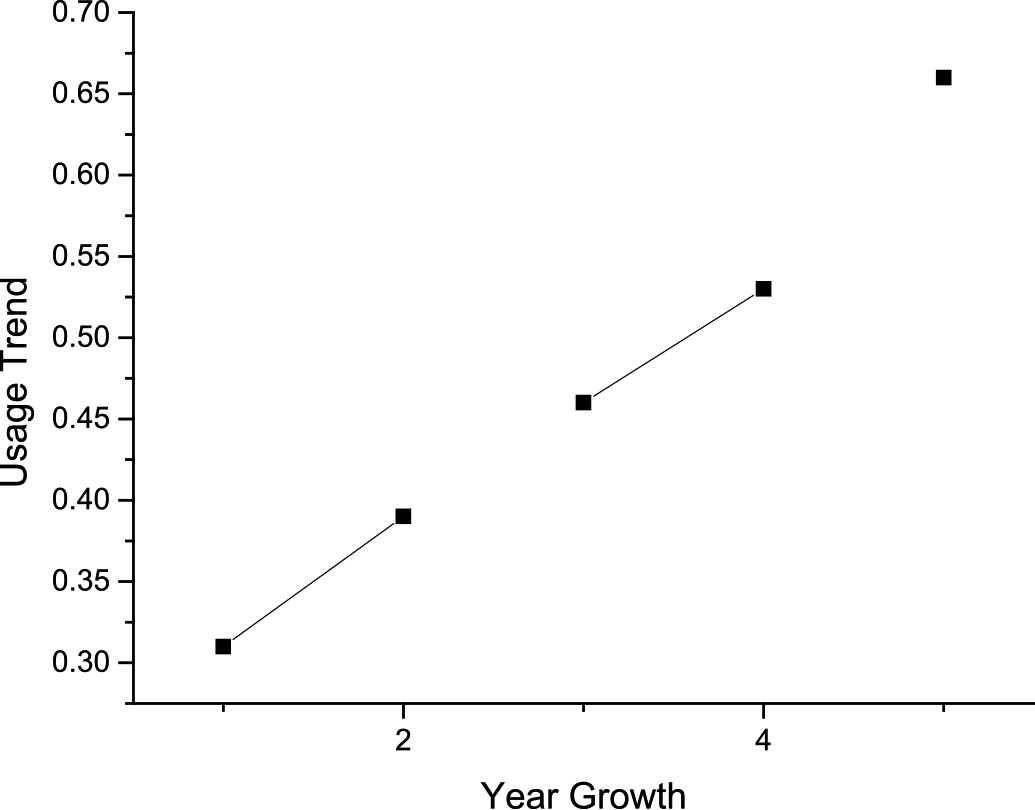
As can be seen from Fig. 1, relevant institutions are very optimistic about the development trend of the Internet of Things in recent years. In recent years, with the development of computer software technology, machine learning has been paid more and more attention by scholars [7]. It mainly refers to the machine with the ability to process data to optimize its own situation by continuously learning the training set, and after learning, it can carry out the development rules of similar samples. It is estimated that the ultimate goal of machine learning is to enable machines to have the same learning ability as humans [8]. It mainly involves programs defined by algorithms such as byes, clustering, logistic regression, and decision trees. Deep learning and machine learning are homologous, and this type of learning arises from further research into neural networks [9]. Typical deep learning includes network structures such as CNN, RNN, and LSTM. The feature that deep learning can learn from multiple sample sets can be combined with enterprise management decision-making, so that auxiliary tools can be added to enterprise management decision-making [10]. Institutions predict the application trend of deep learning technology as shown in Fig. 2.
Application trends of deep learning technology.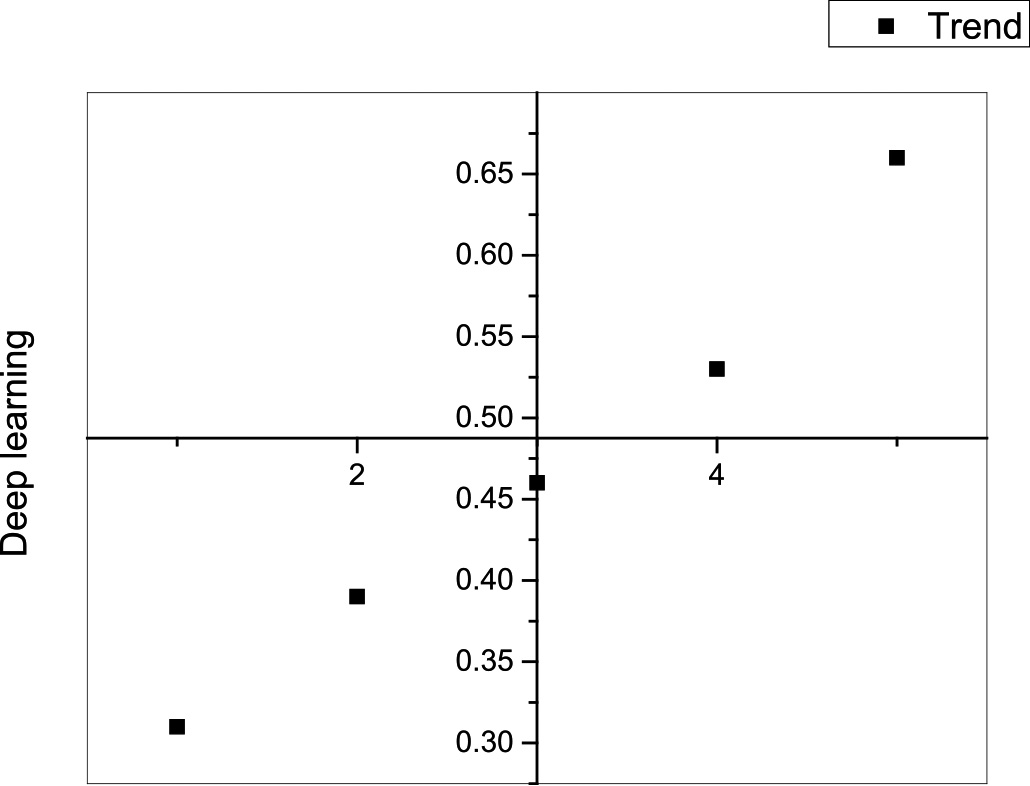
The factors involved in enterprise intelligent management decision mainly include the following: data warehouse of intelligent system, data depth adopted and online analytical processing technology. Before the popularization of computer technology, enterprise management decisions were all made by the management of the enterprise or the chairman of the enterprise or several people. These decisions involve the formulation of the articles of association of the enterprise, the expansion of the business scope of the enterprise, the selection of the enterprise’s partners, and the office building of the enterprise [11]. Due to the limitation of human wisdom and ability by some factors, enterprise management decisions made by one person or several people will always have errors in judgment, so some large enterprises have begun to borrow Data processing technology intelligently defines enterprise management decisions [12]. At present, many enterprises rely on big data to analyze the feasibility of expanding the business scope of the enterprise, or use special algorithms to comprehensively evaluate the situation of candidates in the talent recruitment process to decide whether to recruit [13]. In short, intelligent decision-making in enterprise management refers to the use of science and technology to support enterprise management decisions. The application scope of enterprise management intelligent decision-making technology is shown in Fig. 3.
The emergence of the Internet of Things makes the scope of information exchange wider. The object of information communication is no longer limited to people, and the communication between people and things and between things becomes frequent [14]. Deep learning is a method of machine learning, mainly for the realization of enterprise intelligent service. In the application of Internet of Things and deep learning within enterprises, managers can transfer most of their management responsibilities to intelligent decision-making teams through network information exchange, and they are only responsible for core intelligent decision-making [15].
In order to understand the problems existing in the current intelligent decision-making of enterprise management, the author selected 30 enterprises from large, medium and small enterprises for investigation, and conducted interviews and questionnaires on the technical leaders of these 30 enterprises. Among them, 43 people were interviewed by telephone, 120 questionnaires were distributed, and 108 of them were effective answers. The main content of the questionnaire is to understand the accuracy of business management decisions and the types of technologies used in current business management decisions. Among them, the content involved in enterprise management decision-making is the basis for deciding whether an enterprise needs to ensure the accuracy of decision-making, and the leader of enterprise decision-making is actually the participant of enterprise decision-making. The number of participants and decision-making methods will determine the actual role of decision-making. In addition, the accuracy of enterprise management decisions will directly determine the future development of enterprises. Whether the technology used in the current enterprise management decision-making is sufficiently advanced can also determine the accuracy of enterprise management decision-making.
Contents involved in enterprise management decisions
Contents involved in enterprise management decisions
Application scope of intelligent decision-making technology in enterprise management.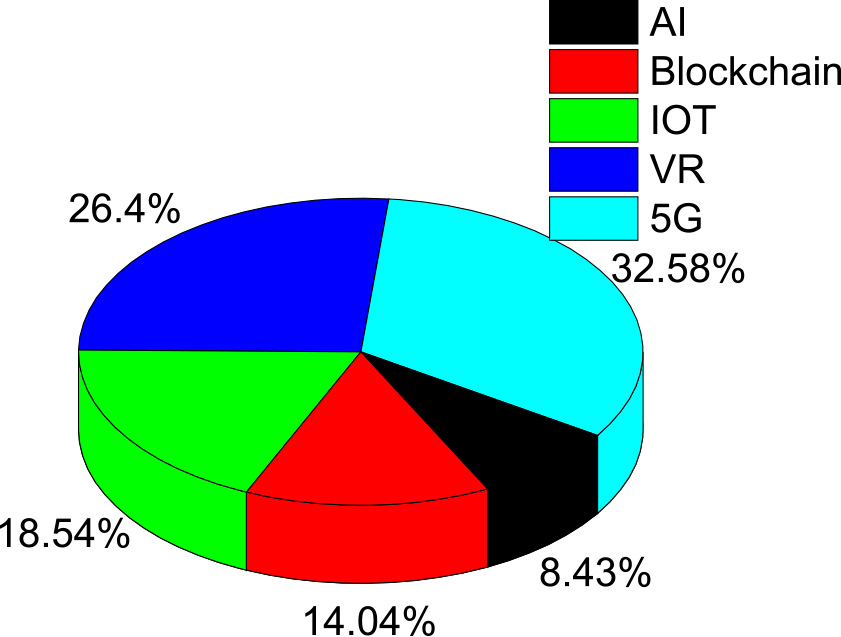
From the data in Table 1, it can be seen that the management decisions of the surveyed companies A, B and C mainly involve finance, business and personnel management. The proportion of decisions involving business expansion is 0.33. According to changes in the actual situation of the enterprise, it occupies the highest proportion of decision-making, less demand for financial investment management decisions, and less proportion of management decisions, but the importance of management decisions when it comes to financial investment ranks highest.
Leaders of enterprise management decisions
From the data in Table 2, it can be seen that the current decision-makers in the surveyed companies are mainly divided into three types, but in general, the final decisions are made by a few people. The company cannot allow everyone to participate in management decisions. This also shows that the concentration of power in current enterprise management decision-making is too high, and the validity and correctness of its decision-making are questionable.
Accuracy of enterprise management decisions
From the data in Table 3, it can be seen that the accuracy of current enterprise management decision-making does not exceed 0.5, of which the management decision-making accuracy of company A is only 0.35, and the decision-making accuracy of company B is only 0.46, which means that the decision-making results of the current enterprise are all If it is not accurate enough, subsequent enterprises may have various operational problems due to decision-making problems.
Types of technologies used in enterprise management decisions
From the data in Table 4, it can be seen that there are many types of technologies used in the current enterprise management decision-making, and the types of technologies are relatively rich, but their proportion is too low, especially the big data technology and blockchain technology in the enterprise management decision-making. In fact, the above two technologies have practical value in enterprise management [9]. At present, various body area network technologies continue to develop, but enterprises do not use this technology for management decision-making. It can be seen that the current management decision-making of enterprises. The freshness of the technology is not enough to integrate with the actual development of science and technology.
The degree of employee data acquisition in enterprise management decision-making
From the data in Table 5, it can be seen that in the current management decision-making of enterprises, the understanding of employees is actually low, because the data acquisition rate of the three enterprises does not exceed 0.2, while the data acquisition rate of company A is only 0.11. The current enterprise employees’ access to data needs to be improved.
In summary, the decision-making mode of enterprises still stays in the artificial decision-making stage, and the Internet of Things and deep learning are not widely involved in the decision-making of enterprises. But now enterprises have the trend of developing technology-aided decision-making.
It can be seen from the data of the questionnaire that there are many kinds of technologies involved in the current enterprise management decisions, but the proportion of technology decisions is actually small. At present, there are many types of technologies involved in enterprise management decision-making, but in fact, the proportion of technological decision-making is small. The data show that enterprises do not pay enough attention to technology-assisted enterprise decision-making. In particular, the types of technologies used in current enterprise management decision-making do not involve deep learning and Internet of Things technology [16]. These two technologies have been fully applied in the learning community.
The accuracy of generally Enterprise management decision-making is not high. It can be seen from the data that the accuracy of the current enterprise management decision is less than half, which represents that the actual results of the current enterprise management decision may have a large deviation. This is because the current decision of the enterprise is still determined by the CEO or a few members of the board of directors, and the different perspectives of individual thinking may not be considered comprehensively enough. The insufficient acquisition of employee data and enterprise business data is also the main problem. The data acquisition rate of the three typical enterprises surveyed is less than 20% [17]. Through this data, it can be found that the enterprise management may have the fact that the actual situation of the enterprise is not well understood. It can also be found from Table 2 that the decision-making of most enterprises still depends only on a small number of leaders, which is easy to produce some dictatorial situations, leading to some inaccurate problems in the final decision-making of enterprises. In fact, the decision-making power of enterprises still needs to be mastered by a small number of people from the perspective of management, so the current enterprise decision-making needs to be further updated by other auxiliary methods.
The application scope of Internet of Things technology is narrow, and its role is limited. Some enterprises choose to solve the problems existing in the current enterprise management decision-making through the Internet of Things technology, but its technical utilization rate is too low, and the Internet of Things technology is only simply used in the knowledge training of employees in enterprise management, and it is not applied in the final link of enterprise decision-making. Some enterprises use AI technology for intelligent analysis of enterprise management decision-making. However, due to the relatively basic or insufficient complexity of the AI algorithm used, and the incomplete decision-making factors considered, the final degree of intelligent decision-making of enterprises is poor. In general, there is no effective algorithm to achieve intelligent decision-making in the current enterprise management decision-making, and there is also a lack of effective technology to assist intelligent decision-making.
To sum up, enterprises still have problems in the field of intelligent decision-making, such as less application of intelligent technology, low accuracy of decision-making and low application of the Internet of Things.
Improved deep learning algorithm based on intelligent decision-making requirements
Because the current enterprise has no intelligent decision-making algorithm or the intelligent decision-making algorithm used is relatively simple, and the decision-making factors considered are not sufficient, so this paper combines the characteristics of the CNN, RNN and LSTM algorithms to design a new improved algorithm that combines the three algorithms. Among them, CNN mainly uses part of the content of enterprise decision-making to perform feature extraction and mapping [18, 19]. This algorithm can realize the deviation between current decision-making and historical decision-making. The RNN algorithm is called a recurrent neural network, which can use the internal historical decision-making data to follow the definition. To output new decision results, the text and speech recognition directions used for decision-making are more suitable. The structure of the recurrent neural network is more in line with the needs of enterprise intelligent decision-making, mainly because its chain structure is in line with the various decision-making factors involved in enterprise decision-making. The LSTM long-term memory network is mainly used to process the long-term decision-making interval of enterprises in history, and to predict the effect that this decision can bring [20]. It is evolved from a special RNN after processing. Good combination performance meets the needs of enterprise decision-making. The key to LSTM is also the cell state, and the forgetting, input and output gates involved can work well with the corresponding structures of CNN and RNN. Its final data situation is shown as Eqs (1)–(4).
After simulation tests, it is found that the improved deep learning algorithm is more efficient for intelligent decision-making. The specific situation is shown in Fig. 4.
Improved deep learning algorithm efficiency.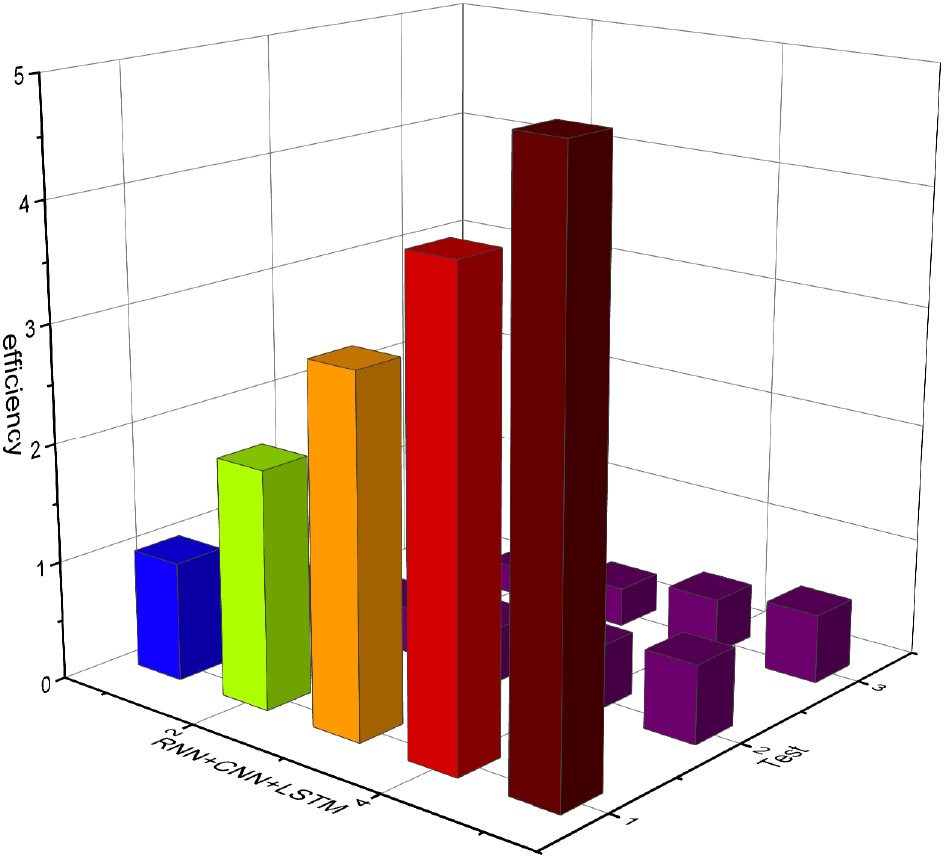
In Fig. 4, each cube represents each field of enterprise management, the first row represents the key fields involved in this system, and the height of the cube represents the improvement level of work efficiency. Among them, the highest level of improvement is human resource management, with an improvement efficiency of 56.3%. The lowest level of improvement is enterprise production real-time monitoring, with an improvement efficiency of 11.5%, and the average improvement rate of five items is 28.7%.
IoT-based enterprise data collection strategy
The Internet of Things technology contains many kinds of sensors, and its sensor technology is also suitable for almost all enterprises. The Internet of Things technology with RFID tags and sensors can truly realize the interconnection of everything in the enterprise, which mainly represents the management of employees within the enterprise. As well as the interconnection of external business management of the enterprise, the main implementation method relies on the placement of radio frequency identification tags for employees’ workstations to monitor employees’ attendance and work conscientiousness, or attaching positioning devices to the fixed assets of the enterprise to facilitate the enterprise to track fixed assets. Equipped with sensor equipment in the car of the enterprise car or on the assembly line belt of the enterprise factory to monitor the business status of the enterprise. These data are the basics of enterprise management and decision-making. For example, an enterprise can formulate a new attendance system based on the current employee punch-in attendance data. The attendance data mainly relies on RFID tags to be transmitted to the reader and then integrated into the server for processing [21, 22]. In addition, enterprises can also analyze the data transmitted by the sensor equipment on the assembly line, and analyze the possible reform direction of the current enterprise business when the production demand is not large. Some sensing devices can also monitor data such as walls, water levels, and weather. These data are extremely important for some safety monitoring companies. With these data, companies can make correct decisions based on data early warning [23]. The future is an era of body wearable devices, and most of the body wearable devices belong to the Internet of Things, data acquisition for needs such as talent recruitment will also be easier.
Enterprise intelligent management decision-making method based on deep learning
Various methods are involved in deep learning. Due to the different applicability of their methods, this time, the typical deep learning method RNN
Enterprise intelligent management decision-making performance after combining IOT and deep learning.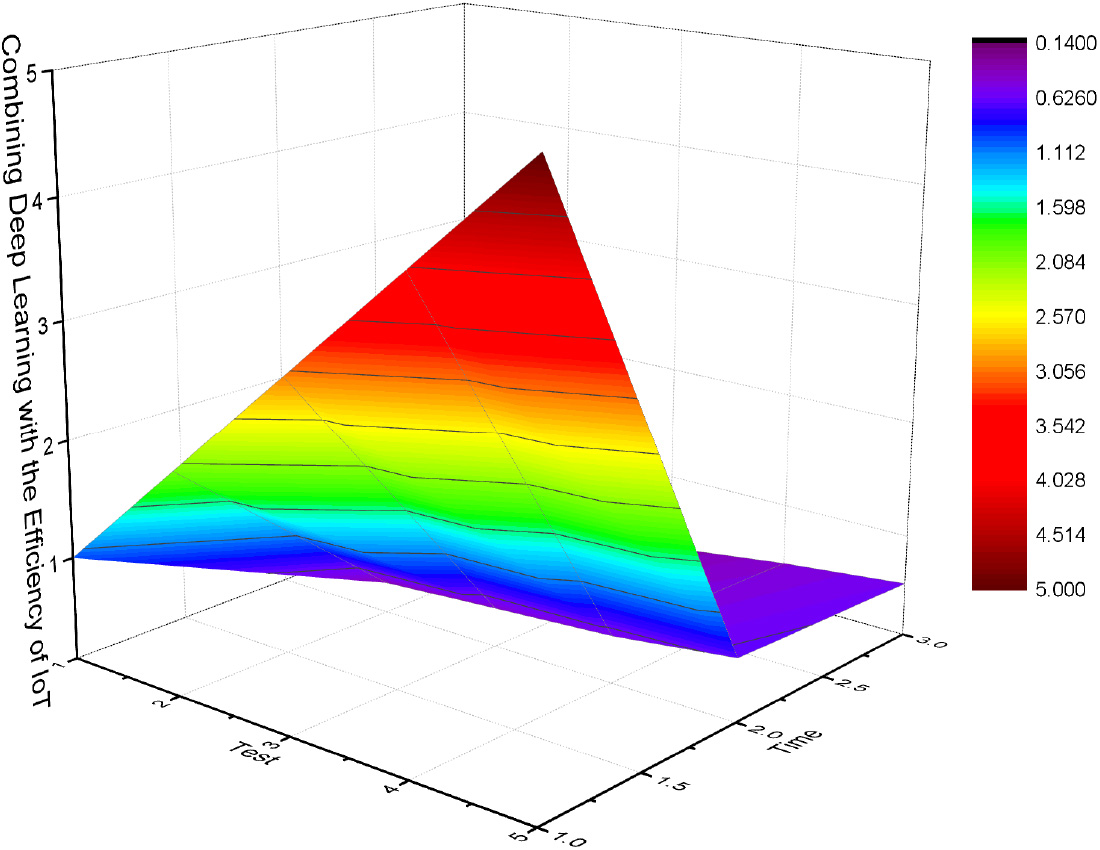
As shown in Fig. 5, after the final simulation, it is found that the enterprise intelligent management decision-making performance after combining IOT and deep learning is better [29, 30, 31]. In summary, the Internet of Things can help enterprises collect data and build a networked management network. Deep learning gives the robot learning ability, through continuous learning to achieve intelligent decision-making, and ultimately reduce the burden of people. The combination of Internet of Things and deep learning can help enterprises build intelligent decision networks. In the process of enterprise logistics, capital chain, information flow and other flows, it is not necessary to wait for orders, and can make decisions by virtue of intelligent decision-making system, which greatly accelerates the efficiency of enterprise operation, but the final decision-making power is still in the management.
Through research model calculation, the highest level of improvement is human resource management, with an improvement efficiency of 56.3%. The lowest level of improvement is enterprise production real-time monitoring, with an improvement efficiency of 11.5%, and the average improvement rate of five items is 28.7%. Research shows that the combination of the Internet of Things and big data can build an intelligent decision-making system, liberate management, and speed up enterprise operation efficiency. These measures are helpful for improving the economic efficiency and core competitiveness of enterprises. The study obtained a solid data base through telephone interviews and questionnaires. However, due to the incomplete coverage of enterprise types and the fact that enterprises cannot be inspected on the spot due to the impact of the epidemic, many specific measures of the countermeasure system cannot be observed. In the following research, the researchers will try their best to go deep into the enterprise, personally participate in the construction of the intelligent decision-making work system of the enterprise, find out the advantages and disadvantages in the actual work, and further improve the operability of the intelligent system.