



Abstract
With the rapid development of information technology, the Internet of Things (IoT) and big data have gradually become the core tools of modern enterprise management and decision-making. This study explores the application and potential value of IoT and big data in the field of enterprise assets and accounting. Through strategic questionnaire design and multi-channel data collection, a corresponding data model is constructed, and the effectiveness of the model is further verified. The results show that these technologies can not only improve the management efficiency of enterprises, but also provide more accurate and timely data support for corporate decision-making. However, in practical applications, enterprises also need to face data integrity, technology updates, and a host of other challenges. This study not only provides enterprises with an opportunity to gain an in-depth understanding of these technologies, but also provides valuable implications for future research and applications.
Introduction
With the rapid development of science and technology, the Internet of Things (IoT) and big data have become the core technologies to promote the progress of modern society, and have a profound impact on various industries and fields. Through the interconnection of smart devices, the Internet of Things not only realizes the efficient acquisition of real-time data, but also provides unprecedented support for automation and intelligent decision-making. This technology is particularly important in modern business management, as it enables real-time monitoring of enterprise assets, improving operational efficiency and reducing risk. For example, through IoT technology, businesses are able to track inventory levels in real time and optimize supply chain management, thereby reducing costs and improving customer satisfaction.
At the same time, the rise of big data technology allows businesses to extract valuable information from an unprecedented sea of data. In the field of enterprise asset management and accounting, this means that large amounts of financial transaction and operational data can be analyzed in depth to identify potential cost savings and efficiency opportunities. By analyzing this data, companies will not only be able to better understand market trends and customer needs, but will also be able to predict future market changes and make more informed strategic decisions.
Therefore, the Internet of Things and big Data play a crucial role in modern business management. Not only are they changing the way companies collect and process information, they are also revolutionizing corporate asset management and accounting. In this context, enterprise asset management and accounting are facing the pressure of transformation, and traditional methods and means are no longer enough to meet the needs of modern enterprises for real-time and accurate management and decision-making. Therefore, how to effectively integrate the Internet of Things and big data technology to serve enterprise asset management and accounting has become a hot issue of common concern in academia and industry.
Moreover, from the perspective of the global economy, the digital transformation of enterprises is becoming a key driver of growth and competitiveness. In this process, the modernization of asset management and accounting can not only improve the efficiency of business operations, but also provide more transparent and reliable information to shareholders, investors and other stakeholders, thus providing a solid foundation for sustainable development and long-term strategy.
In recent years, the combination of information technology with enterprise assets and accounting has received extensive attention. Serrano-Cinca et al. [1] studied the use of accounting anomaly metrics to predict the likelihood of business failure, providing valuable insights into how accounting data can be used to assess the health of a business. This combination is also reflected in the construction of accounting information system. Li and Fang [2] proposed a “process-aware accounting information system” based on business process management, emphasizing the importance of integrating business process and accounting data.
In the study on the relationship between systemic risk and accounting basis, Ogneva et al. [3] revealed the failure rate of enterprises in the economic cycle by studying the relationship between accounting fundamentals and systemic risk. This shows the close relationship between macroeconomic factors and corporate accounting data. In terms of the integration of technology and accounting information system, Bai et al. [4] proposed an enhanced ontological based XBRL model to integrate enterprise accounting data, which provides a new method for internal and external data integration of enterprises.
With the development of technology, the effectiveness evaluation of accounting business process reengineering becomes particularly important. Yang [5] evaluated the performance of accounting business process reengineering based on the DEA model optimized by AHP, and provided a new method to evaluate accounting process by combining qualitative and quantitative methods. Madanizadeh et al. [6] discussed trade barriers from the perspective of business cycle accounting and emphasized the importance of accounting information in a specific macroeconomic context.
The application of information technologies such as business intelligence and analytical tools in management accounting research has also been extensively studied. Rikhardsson and Yigitbasioglu [7] summarized the current and future trends of the application of business intelligence and analytical tools in management accounting research. Their research provides directions for the integration of management accounting with emerging technologies.
When considering the relationship between accounting and enterprise assets, Shi [8] discussed the method of using cloud computing and strategic management accounting to analyze enterprise asset structure and profitability, providing a new perspective for enterprise asset management. Evans and Price [9] further studied the overall model of enterprise information asset management, highlighting the core position of information asset in enterprise asset management.
To sum up, the combination of modern information technology with accounting and enterprise assets provides enterprises with more efficient and accurate management and decision-making tools. This combination not only enhances the competitiveness of enterprises, but also provides rich research fields for accounting and enterprise management.
In the face of the wide application of IoT and big data technology in various industries, this study aims to deeply explore how these two technologies are combined with enterprise asset management and accounting, and the innovation and change brought about by this combination. Through detailed analysis and research, we hope to find out the best practice methods of these technologies in the field of asset management and accounting, and provide strong theoretical support and suggestions for practical application.
From an academic point of view, although the Internet of Things and big data have been widely studied, their specific application and value in enterprise asset management and accounting is still a relatively new field. Therefore, in-depth discussion of this topic can not only fill the gaps in the existing literature, but also provide new research perspectives and directions for related disciplines.
For enterprise practice, understanding the specific application of IoT and big data in asset management and accounting can help enterprises better grasp the opportunities of digital transformation, improve management efficiency and decision-making quality. In addition, this understanding can also lead to greater transparency and trust for companies, which can enhance cooperation and communication with investors and other stakeholders.
This study will deeply explore the specific application and practice of Internet of Things and big data technology in the field of enterprise asset management and accounting. The study will systematically introduce the definition, structure and function of the Internet of Things, analyze the core concepts and technologies of big data, and study how these technologies are deeply integrated and jointly bring innovation and change to enterprise asset management and accounting. An important part of the research will be questionnaire design and data collection, through which we hope to understand the actual experience and effects of various enterprises after the introduction of these technologies, as well as possible challenges and problems. This will provide valuable first-hand data to help research more accurately assess the real value and potential of IoT and big Data in this area. The next step is to build a data-driven model based on the collected data, which aims to set the application scenarios of IoT and big data in asset management and accounting. Through the construction, training and validation of the model, the research will evaluate the effects of various practical strategies and provide more instructive recommendations for enterprises. Finally, this study will conduct a detailed analysis of the questionnaire feedback and the results of the model operation, dig out the enlightenment and lessons, and then summarize a set of best practices on how to effectively use the Internet of Things and big data technology in enterprise asset management and accounting.
Role and potential of IoT and big data
Internet of Things: Definition, structure and function
The Internet of Things, often referred to simply as IoT (Internet of Things), refers to a variety of physical devices, vehicles, household appliances and other items that are connected through a network and have the ability to collect and exchange data [10]. The Internet of Things enables these “things” to sense, interact, and share information through embedded systems, enabling more intelligent decision-making and control.
The structure of IoT generally consists of four main components: the perception layer, the network layer, the processing layer, and the application layer [11]. The perception layer, which acts as the “eyes” and “ears” of IoT, is responsible for collecting information from various sensors; The network layer provides a transmission channel for the information, ensuring that the data is transmitted safely and quickly from the perception layer to the processing layer. The processing layer is responsible for the processing, storage and analysis of these data; The application layer provides specific applications and services to end users based on the processed data.
The core function of the Internet of Things lies in its ability to connect an unprecedented number of devices and systems, enabling large-scale data exchange and analysis. This opens up unparalleled opportunities for real-time monitoring, automated control, optimized decision making, and more [12, 13]. In the context of enterprise asset management and accounting, Internet of Things technology can realize real-time monitoring of equipment, remote management of assets, and more accurate accounting based on massive data analysis.
In general, the Internet of Things has brought a highly connected and intelligent new era to modern society, and its potential value and application prospects are expected, especially in the field of enterprise asset management and accounting, Internet of Things technology has great potential to bring innovation and change.
Concepts and core technologies of big data
Big data refers to a large amount of multi-type, rapidly generated data that is processed beyond the capabilities of traditional data processing methods. The main characteristics of big data are often described as the five Vs: Volume, Velocity, Variety, Veracity, and Value. As technology advances, the challenge of processing and analyzing big data has prompted a range of innovative solutions [14, 15].
Distributed storage and computing technology is the core of big data processing. Hadoop, for example, is an open source distributed storage and compute framework whose MapReduce programming model provides an efficient way to process large amounts of data in parallel. This technology is especially suitable for processing massive data in enterprises, such as customer transaction records and market trend analysis, and can efficiently process and store these data to support enterprise decision-making [9].
In order to handle the continuous flow of real-time data, technologies such as Apache Kafka and Apache Storm have received a lot of attention and application. These technologies enable enterprises to capture, process and respond to big data in real time, providing the foundation for real-time business decisions. For example, in the retail industry, these technologies can analyze customer shopping behavior and inventory changes in real time to adjust sales strategies and inventory management in a timely manner.
In terms of data storage, non-relational databases such as MongoDB, Cassandra, and Couchbase meet the need for data diversity and speed with their scalability and high performance [16]. These databases are capable of storing structured, semi-structured, and even unstructured data for a variety of business scenarios, such as customer relationship management and supply chain optimization.
Furthermore, in order to extract valuable insights from massive amounts of data, advanced data analysis methods and tools have become essential. Machine learning and deep learning algorithms provide powerful support for pattern recognition, classification and prediction of data, enabling enterprises to discover potential market trends and customer needs from big data and optimize products and services.
In summary, big data is not only about the processing of the volume of data, but also about how to extract meaningful information from that data to drive better decision making and business optimization. Advances in core technologies ensure efficient storage, processing and analysis of data, providing deeper and more comprehensive insights into enterprise asset management and accounting.
Innovative potential of connected technology for enterprise assets and accounting
Connected technologies such as the Internet of Things and big data have a profound impact and great innovation potential in the field of enterprise assets and accounting. These technologies not only provide unprecedented data access and analysis capabilities, but also show great potential to optimize decision making, increase efficiency, and reduce risk [17, 18].
IoT technology significantly improves asset utilization and service life by monitoring asset status and performance in real time. In manufacturing, for example, by installing sensors on machines, companies can monitor the health of equipment in real time, predict and prevent failures, thereby reducing unplanned downtime and maintenance costs while extending equipment life. The application of this technology not only improves operational efficiency, but also provides data support for enterprise strategic planning, enabling enterprises to optimize their long-term asset allocation based on equipment performance and usage.
The application of big data technology in the accounting field has improved the efficiency and accuracy of financial report preparation. For example, by analyzing large amounts of financial transaction data, big data technology can help accountants quickly identify abnormal transactions and improve audit quality. At the same time, in-depth financial analysis, such as cash flow forecasting and profitability analysis, enables decision makers to make more informed strategic decisions based on more comprehensive data [19].
Combined with IoT and big data technologies, businesses can more accurately assess the value and depreciation of their assets. For example, in the retail industry, by analyzing real-time inventory data from sensors, companies can more accurately manage inventory, optimize inventory levels, reduce capital usage, and improve the efficiency of capital use.
Overall, connected technologies not only promote innovation in enterprise asset management and accounting, but also enhance the competitive advantage of enterprises in a complex and changing business environment by improving the efficiency and accuracy of decision making. The application cases of these technologies show that they can effectively support the strategic planning and daily operation of enterprises, and provide enterprises with continuous innovation momentum and lasting market competitiveness.
Questionnaire design and data collection
Strategic questionnaire design
Directional sample selection and scope
In order to fully understand the practical application and impact of IoT and big data in the field of enterprise asset management and accounting, this study employed a strategic and targeted questionnaire design. The questionnaire is designed to capture key questions directly related to the research topic, ensuring the relevance and accuracy of the data collected.
The logical basis for sample selection is to cover the perspectives and experiences of different actors within the enterprise, thus ensuring the comprehensiveness and depth of the survey results. In order to ensure the representativeness and accuracy of the data, several sample groups were selected for the study, as shown in Table 1.
Must be directed to sample selection with range
Must be directed to sample selection with range
This sample selection strategy ensures a comprehensive understanding of the application of IoT and big data in enterprise asset management and accounting at every level from macro to micro. Business executives provide a macro view of corporate strategy and policy, while accountants, auditors and middle managers reveal the details of day-to-day operations and challenges. IT and data experts provide valuable insights into technology applications, challenges, and optimization directions.
Through this targeted and scientific sample selection and investigation scope setting, we hope to get comprehensive, in-depth and accurate data feedback, providing a solid foundation for subsequent model construction and analysis.
In conceiving and designing the core questions of the questionnaire, the research aims to cover all aspects related to the application of IoT and big data in enterprise asset management and accounting. The core issues are divided into several main areas to ensure that data is collected from different perspectives.
An overview of the core question design of the questionnaire is shown in Table 2.
Design of core issues
Design of core issues
These core questions are designed to gather information from the key dimensions of technology application, technology difficulties, benefits and value, and future development. In addition, the five-point scale, multiple choice questions and open questions can be combined to obtain the views and feedback of respondents in a more comprehensive way, providing rich input for subsequent data analysis and model construction.
In order to ensure the diversity and comprehensiveness of data, this study adopts a multi-channel data collection method. The data collection channels are selected to ensure that information is captured from different perspectives and levels, thereby deepening the understanding of the application of IoT and big data in enterprise asset management and accounting. The main data collection channels selected and their related descriptions are shown in Table 3.
Data collection information
Data collection information
Online surveys provide a wide range of views, offline interviews delve into the views of industry experts, internal data collaborations reveal practical application cases, industry reports and research increase understanding of theories and trends, and social media and forum monitoring reflects market and user needs. Together, these methods ensure the richness and usefulness of data.
Through these multi-channel data collection methods, this study aims to collect data related to the application of IoT and big data in enterprise asset management and accounting from a broad perspective. Among them, quantitative data provides the basis for statistical analysis, while text data helps to deeply understand and mine the respondents’ real thoughts and opinions. This multi-channel data collection strategy aims to ensure the comprehensiveness and depth of the research results, while providing strong data support to lay a solid foundation for subsequent analysis and conclusions.
To ensure the integrity and reliability of the collected data, the following strategies were developed:
Data verification technology: In the online questionnaire, advanced data validation techniques will be applied to ensure that the data provided by respondents is both reasonable and consistent. For example, for scale questions (such as 1–10 ratings), the system will automatically verify that the answer is within a reasonable numerical range. Logical consistency check: For issues involving related dependencies, strict logical consistency checks are performed. For example, for businesses that claim to have used IoT technology, if they show no knowledge of IoT in subsequent questions, those answers will be flagged as logical inconsistencies for further review. Random sampling review: A detailed manual review of a random percentage (e.g. 10%) of the collected questionnaires is planned to assess the general accuracy and consistency of the data. Reliability verification of data sources: For data from internal enterprises, industry reports and research, the reliability of the data source will be strictly verified to ensure that the information source is recognized, authoritative and has a high degree of credibility. Feedback mechanism: The study will set up a feedback mechanism to allow respondents to provide feedback on the content or format of the questionnaire after completion, which will help to identify and correct any potential problems or misunderstandings in a timely manner. Data cleaning: After data collection is complete, a thorough data cleaning process is performed to identify and deal with missing values, outliers and duplicates, ensuring the quality and consistency of the final data set for analysis.
By implementing these strategies, this study aims to ensure a high degree of integrity and reliability of the collected data, provide a solid foundation for subsequent data analysis and model building, and effectively support in-depth research on the application of IoT and big data in enterprise asset management and accounting.
Model selection for data matching
Given that the purpose of this study was to assess the impact of IoT and big data on enterprise asset management and accounting, the analytical model selected needed to be able to handle large scale data and accurately reflect the relationship between variables. With this goal in mind, it is appropriate to choose a multiple linear regression model for analysis because it is widely used in statistics to identify and explain relationships between multiple predictors and response variables.
Specifically, a model will be built, as shown in Eq. (1) below:
Where:
In order to select the right variables and understand their importance, a detailed description of each variable is shown in Table 4.
Description of variables
Multiple linear regression models are chosen based on their strong ability to reveal the interrelationships between variables, especially when working with economic and business data involving multiple predictors. This makes the model particularly suitable for this study, which aims to quantify the specific impact of IoT and big data technologies on enterprise asset management and accounting, and provide strategic recommendations for practical applications.
In order to ensure the accuracy and reliability of the model, a series of steps are taken to train the model and adjust the parameters. Here is the detailed process:
Data preprocessing: Before training the model, the data is preprocessed first, including null value processing, outlier detection and normalization processing. Especially for the data generated by big data and the Internet of Things, normalization is very necessary to ensure that the data is on the same dimension. Normalization is performed using the formula, as shown in the following Eq. (2):
Divide the data set: Dividing the data set into training and test sets, the general practice is to use 70% of the data as the training set and 30% as the test set to ensure that the model has enough data to learn, while leaving a portion of the data to test the model’s generalization ability. Model training: Multiple linear regression models are trained using training sets to solve the model parameters. The advantage of choosing a multiple linear regression model is its simplicity and explanatory power, which can intuitively show the influence of different variables on the response variables. Use the training set to train the multiple linear regression model and solve the parameter Cross-validation: In order to prevent model overfitting and find the best model parameters, cross-validation is adopted in this study. Specifically, the training data set is divided into several subsets, one subset is selected as the validation set, and the other subsets are selected as the training set. Through cross-validation, multiple sets of model parameters can be obtained, and the group with the best performance is selected as the final model parameters. Parameter adjustment and optimization: According to the cross-validation results, the model parameters are adjusted and optimized. This study focuses on the coefficients and their statistical significance before the respective variables to ensure the accuracy and reliability of the model predictions.
The model parameter results obtained through cross-validation are shown in Table 5.
Cross-validation results
Combining the above processes and results, the study results in an optimized and adjusted model that more accurately reflects the impact of IoT and big Data on enterprise asset management and accounting.
Verifying the effectiveness of the model is a key step to ensure that the model has predictive power for real scenarios. In this study, several different methods were used to verify the effectiveness of the model.
(1) Residual analysis: By observing the residual of the model, it is possible to check whether the assumptions of the model are satisfied. The ideal residuals should be normally distributed, and their values should be distributed around 0. The following Eq. (3) is shown:
Where
(2) Coefficient of determination (
(3) Mean square error (MSE): MSE represents the average difference between the model’s predicted value and the true value. The following Eq. (5) is shown:
Where n is the total number of observations.
Based on the above verification methods, the study conducted model effectiveness verification, and the results were obtained, as shown in Fig. 1.
Results of model effectiveness verification.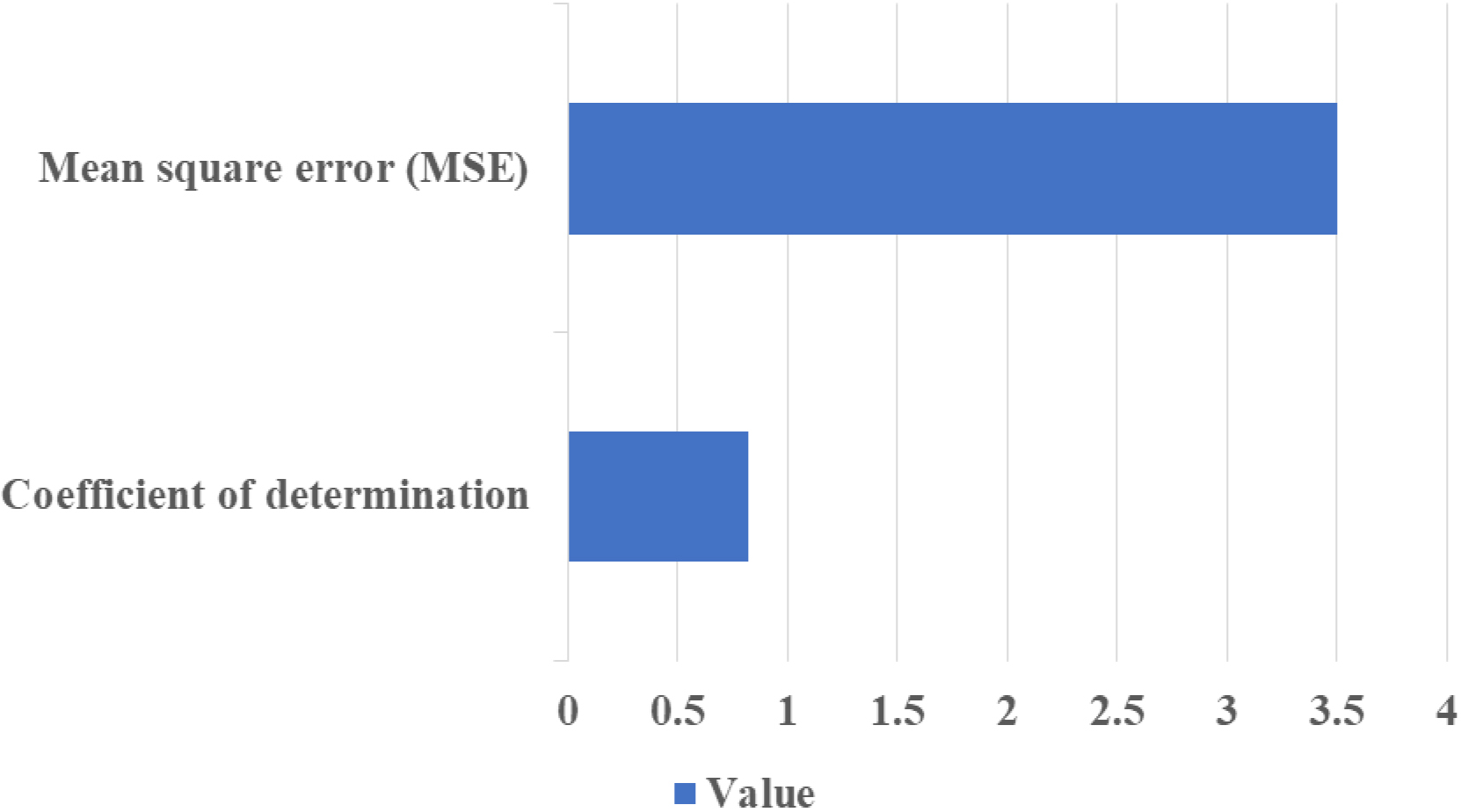
As can be seen from the data in the figure above, the model can explain 82% of the variable changes, indicating that the model has good explanatory ability, and the average error is 3.5, which is a relatively low value, indicating that the model has strong predictive ability. Combined with the results of efficiency verification, it can be seen that the model in this study has strong forecasting ability and good robustness, which provides strong data support for subsequent asset management and accounting decisions.
Interpreting questionnaire feedback
In order to understand the application of IoT and big data in asset management and accounting, the study designed a series of questionnaires. The following are the key questions of the questionnaire and the statistics of the responses.
Key question: How often are IoT and big data technologies used in asset management and accounting in your organization?
The feedback statistics are shown in Fig. 2.
Feedback statistics of key questions in the questionnaire.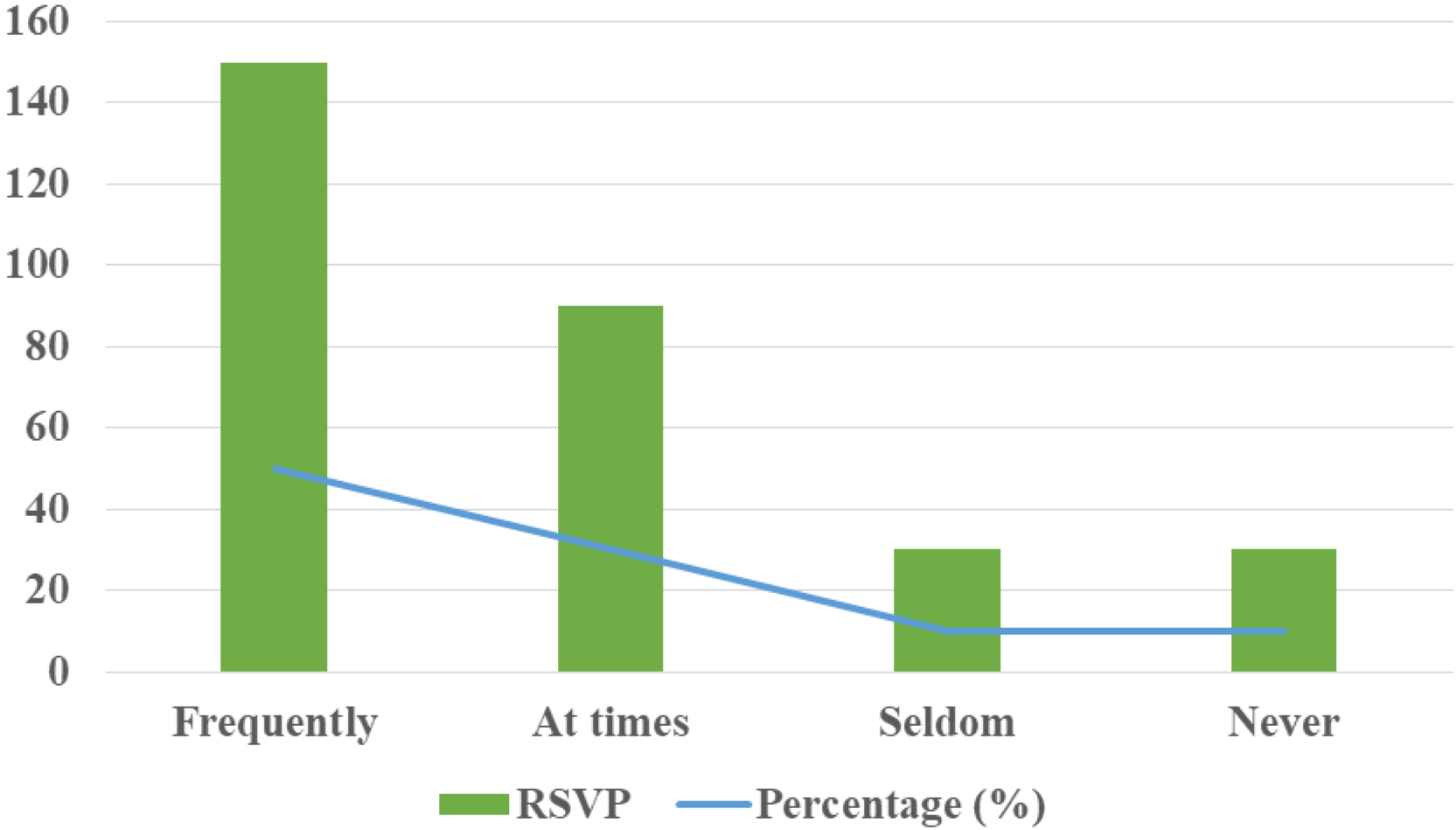
Based on the above data, the following formula can be derived to represent the proportion of enterprises that regularly use IoT and big data technologies:
Where
According to the above data analysis, 50 percent of enterprises regularly use IoT and big data technologies for asset management and accounting, while 30 percent use them occasionally. This result not only shows the widespread application of IoT and big data technologies in the current business environment, but also reflects the importance of these technologies to improve enterprise asset management and accounting efficiency.
In addition, through the analysis of other relevant questions in the questionnaire, this study reveals the main challenges faced by enterprises when applying IoT and big data technologies, such as data security and technology integration difficulty. At the same time, the study also pointed out the key issues that companies hope to solve with these technologies, such as improving the speed and accuracy of data processing and optimizing the decision-making process. These findings corroborate the results of our model, demonstrating the importance of IoT and big data technologies in modern business management and providing insights for subsequent research.
After establishing a data-driven model, the study feeds the data collected in the questionnaire into the model to predict whether enterprises will more widely adopt IoT and big data technologies for asset management and accounting in the future. The results predicted by the model and the comparison with the actual questionnaire feedback are shown in Fig. 3.
Comparison between model prediction and reality.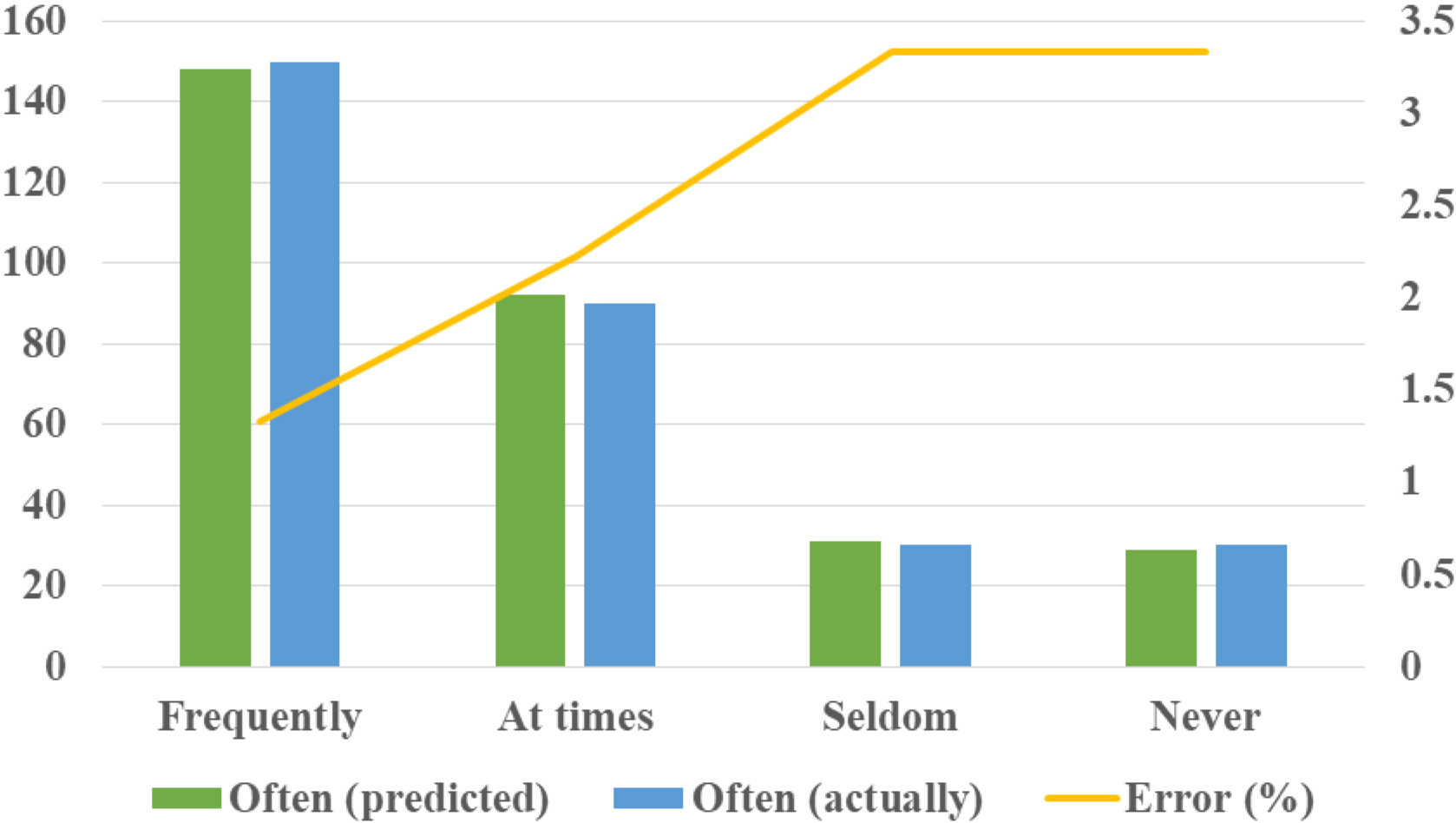
Error calculation is shown in the following Eq. (6):
Where
Compared with the actual feedback, it can be seen that the model has a high accuracy in predicting the application frequency of IoT and big data technology in asset management and accounting, and the error is less than 3.33%. This shows that the research model has well captured the main factors affecting the adoption of these technologies and can provide strategic recommendations on how to better use these technologies.
Although the model in this study shows high accuracy in forecasting, it may still encounter some problems and challenges in practical application. The following are some of the key issues identified by the research and the corresponding in-depth discussions.
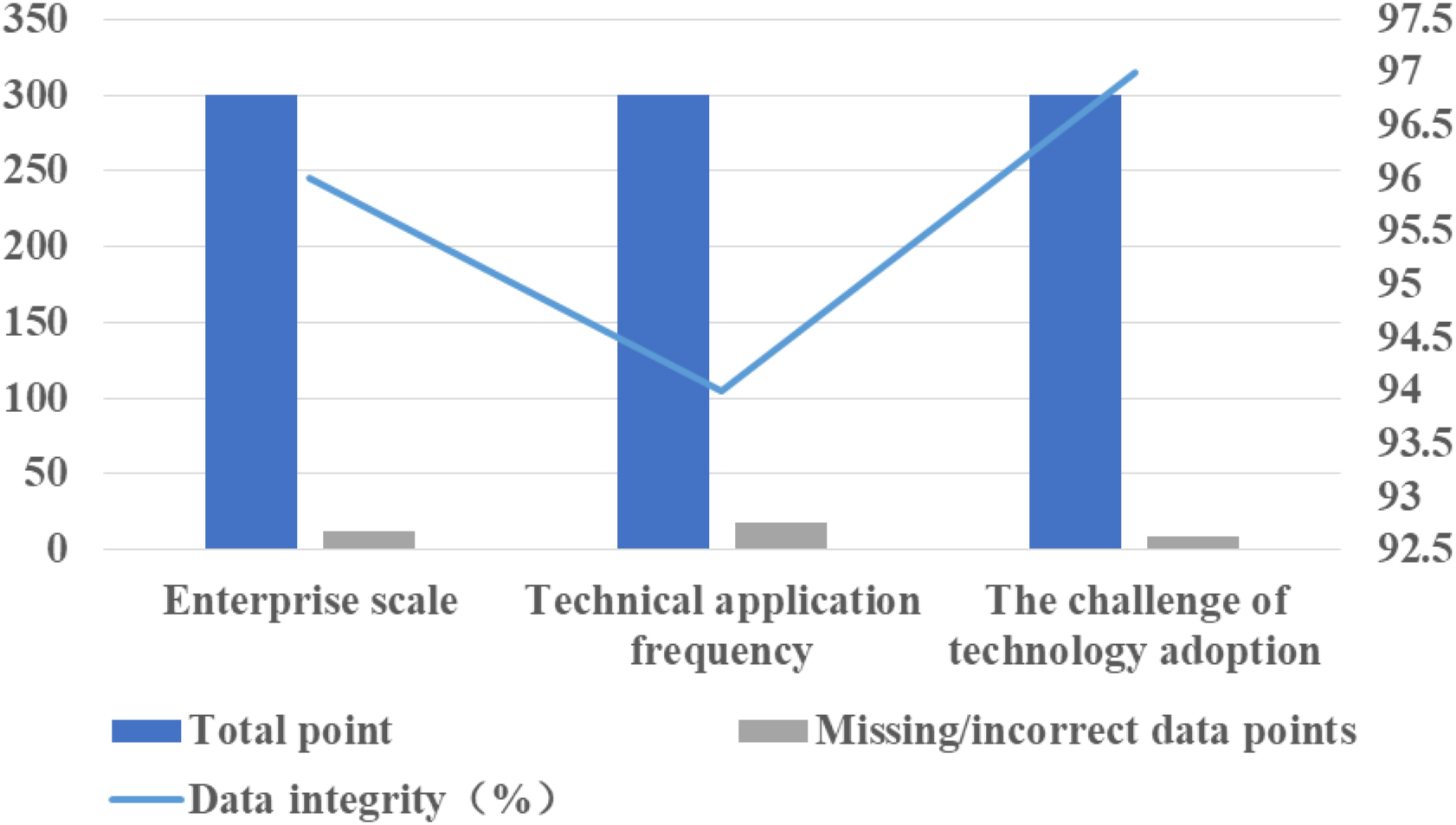
Data integrity and quality issues Based on data collection, 5% of the data may have incomplete or quality issues. The following Eq. (7) is shown:
Where As shown in Fig. 4.
Data integrity and quality issues. Challenges of model hyperparameters Model training and parameter adjustment are discussed in this study, but in the actual scenario, the selection of appropriate hyperparameters may affect the prediction effect of the model. For example, if the learning rate is set too high or too low, the model may not converge well. Variables in practical applications While many variables are considered in this model, there may be many more, unconsidered factors in a real-world enterprise environment that could impact the use of IoT and big data technologies in asset management and accounting. Technology iteration and update The Internet of Things and big data technology are both rapidly developing fields. When enterprises adopt these technologies, they may need to face the challenges brought by technology iteration, such as the speed of technology update, personnel training needs, and so on.
To sum up, while the models in this study provide valuable insights for businesses on how to adopt IoT and big data technologies, there are still various challenges and issues that businesses need to consider when it comes to practical applications. This requires enterprises to make decisions not only by referring to the predictions of the model, but also by considering the various problems that may arise in the actual situation and environment.
Summarize core findings
After in-depth data collection and model analysis, the following core conclusions are drawn from this study:
IoT and big data technologies have significant potential value in the field of enterprise asset management and accounting, which can effectively improve the efficiency of asset management and optimize the decision-making process, thereby improving the profitability of enterprises.
While these technologies offer many opportunities, they also face challenges in real-world applications such as data integrity, model hyperparameter selection, variable identification in real-world applications, and technology iteration and updating.
Practical contribution and value of the research
This study provides enterprises with a comprehensive and in-depth perspective on the application of IoT and big data technology, revealing its potential and value in the field of asset management and accounting. In addition, the proposed research model and questionnaire design provide a practical tool for enterprises to assess the status quo and potential challenges of technology adoption, which helps to better formulate relevant strategies and decisions.
Suggestions and directions for future exploration
Although this study provides valuable insights, there are still some limitations that future research can deepen in the following areas:
Deepening of technical analysis: As the Internet of Things and big data technologies continue to advance, future research should delve into the characteristics and wider application potential of new technologies.
Interdisciplinary research: In addition to asset management and accounting, explore the application value of these technologies in other fields such as supply chain, marketing, and more.
International perspectives: Given the differences in cultural, legal and economic environments in different countries and regions, future research should explore the applications and challenges of these technologies from a broader international perspective.
In short, the Internet of Things and big data technologies have brought unprecedented opportunities for enterprises, but also a series of challenges. The conclusions and findings of this study are intended to provide valuable guidance for businesses and inspire more research and exploration in the future.