



Abstract
Three new supramolecular polymers based on Cu(X) (X = Br, I, SCN) and BPMB·2Br (BLMB = 1, 4-bis [(4-picoline)-N-methylene] benzene) have been synthesized via the self-assembly reaction in solution. 1–3 were characterized by X-ray crystal structure, TG, IR, elemental analysis UV-Vis, and XRD. These compounds exhibit mononuclear, tetranuclear cubane-like clusteric oligomer and 1D chain structure, respectively. We investigated the photocatalytic degradation properties and the optical band gap of them. Moreover, fluorescence spectrum indicates that they are probe for sensing Fe3+, resulting in Fe (III)-selective fluorescence quenching in water even in the presence of other metal ions.
Introduction
When it comes to the development of supramolecular chemistry, it is necessary to refer to Cram (the concept of host guest chemistry), Lehn (the concept of supramolecular chemistry) and Pedersen (find and study crown ethers) three scientists. They pioneered the theory of supramolecular chemistry and developed it, therefore won the 87th Nobel Chemical Awards [1–3]. Technology is progressing, supramolecular chemistry is also developing, and more and more people have paid attention to synthesizing the supramolecular polymers, which have some functions instead of exploring the structure of them. There have been many research groups devoted to the potential applications of inorganic organic hybrid materials in the fields of molecular recognition, nonlinear optics, semiconductor and so on [4, 5]. For example, Yun long Fu, Professor of Shanxi Normal University, studied the low temperature reversible thermochromic properties of supramolecular hybrid materials [6]. In recent decades, our team has been committed to the synthesis of fascinating supramolecular structures as well as to explore their effects on the photodegradation of methyl orange (MO), methylene blue (MB) and Rhodamine B (RhB) and the potential of semiconductor materials [7–9]. Water pollution is one of the ten major pollutions in the world. As China’s per capita fresh water resources is so scarce that wastewater treatment and re-use is necessary. While compounds
Metal ion fluorimetric analysis of iron has nowadays attracted a great deal of attention due to its important role in the fields of environmental monitoring and biological science [10]. As is well known, iron ion is one of the essential ions in living organisms, and the biological and chemical processes of many cell levels require the participation of iron ions. Iron is a trace element of the human body, if too much can cause some harm to the body [11, 12]. Therefore, the identification of iron content is essential [13]. Although fluorescent probes for the detection of Fe3+ have been reported, but most iron recognition is performed in organic solvents or mixed solvents [14–19], and the synthesis methods of the probes reported in the literature is quite complicated. However, little work has been devoted to the development of fluorescent probes that are sensitive to Fe3+ ions. In this paper, the fluorescence of the three supramolecules can be quenched in water by Fe (III), and the synthesis method (solvent evaporation at room temperature) is simple and yields is high.
Experimental: Materials and methods
According to the reported literature method, the organic cationic template 1, 4-bis [(4-picoline)-N-methylene] benzene bromides [BPMB·2Br (Scheme 1)] was synthesized [20]. All reagents are used as received from commercial sources without further purification.

The cationic template BPMB·2Br.
Luminescent measurements of compounds
{(BPMB) [CuBr3]} n (1 )
Compounds 1, 2 and 3 were prepared by evaporation of the solvent in air. Dissolve BPMB·Br2 0.023 g (0.05 mmol) in 4.5 ml MeOH. 0.007 g (0.05 mmol) CuBr and 0.024 g (0.2 mmol) KBr were dissolved in 1.5 mL dimethylformamide (DMF), and the former was added dropwise to the latter, and stirred to allow the two solutions to mix well and then filtered. The filtrate is left in the air, allowing the solvent to evaporate naturally. The deep yellow block crystals of 1 suitable for X-ray analysis were obtained after 1 days in about 32.9% yield.. IR (KBr, cm-1): 3020(C—H), 1637(C = N), 1567, 1472(C = C), 1168(C—N), 817(C—H), 492(C—C); Anal.Calc: C, 40.46; H, 3.74; N, 4.72 %; Found: C, 40.37; H, 3.69; N, 4.64%.
{(BPMB) [Cu2I4]} n (2 )
Dissolve BPMB·Br2 0.023 g (0.05 mmol) in 4 ml MeOH. CuI 0.010 g (0.05 mmol) and KI 0.033 g (0.2 mmol) were dissolved in 3 mL DMF, and the former was added dropwise to the latter, and stirred to allow the two solutions to mix well and then filtered. The filtrate is left in the air to cause the solvent to evaporate naturally. The yellow block crystals of
{(BPMB) 0.5[Cu (SCN) 2]} n (3 )
Dissolve BPMB·Br2 0.023 g (0.05 mmol) in 1.5 mL H2O. CuSCN 0.006 g (0.05 mmol) and KSCN 0.020 g (0.05 mmol) were dissolved in 4.5 mL DMF, and the former was added dropwise to the latter, and stirred to allow the two solutions to mix well and then filtered. The filtrate is placed in the air to cause the solvent to evaporate naturally. The yellow-green flaky crystals of
X-ray structural analysis
Crystallographic data for the three compounds were collected at 293(2) K on a Bruker APEX-II area-detector diffractometer equipped with graphite-monochromatized Mo-Ka radiation (λ= 0.71073Å). Their structures were solved by direct method and expanded using Fourier techniques. The non-hydrogen atoms were refined with anisotropic thermal parameters. The hydrogen atoms were assigned with common isotropic displacement factors and included in the final refinement by using geometrical constraint. The structures were refined with full-matrix least-squares techniques on F2 using the OLEX-2 program package [21]. Table 1 describes the crystal data of compound 1-3 in detail. Some of the major bond lengths and bond angles of compound
Crystal data and structure refinement details for 1–3
Crystal data and structure refinement details for
Selected bond lengths (Å) and angles (∘) for
Structural description
Crystal structure of {(BPMB) [CuBr3]} n (1 )
Single-crystal X-ray diffraction analysis reveals that complex 1 crystallizes in the monoclinic crystal system with space group C2/c. In the asymmetric unit of 1, there is a mononuclear structure formed by the reaction of BPMB2+ cation and inorganic metal salt CuBr. As shown in Fig. 1(a), the minimum anion repeat unit of compound

(a) The simplified repeated unit composed of [
Complex 2 belongs to monoclinic system with C2/c space group. As shown in Fig. 2(a), compound
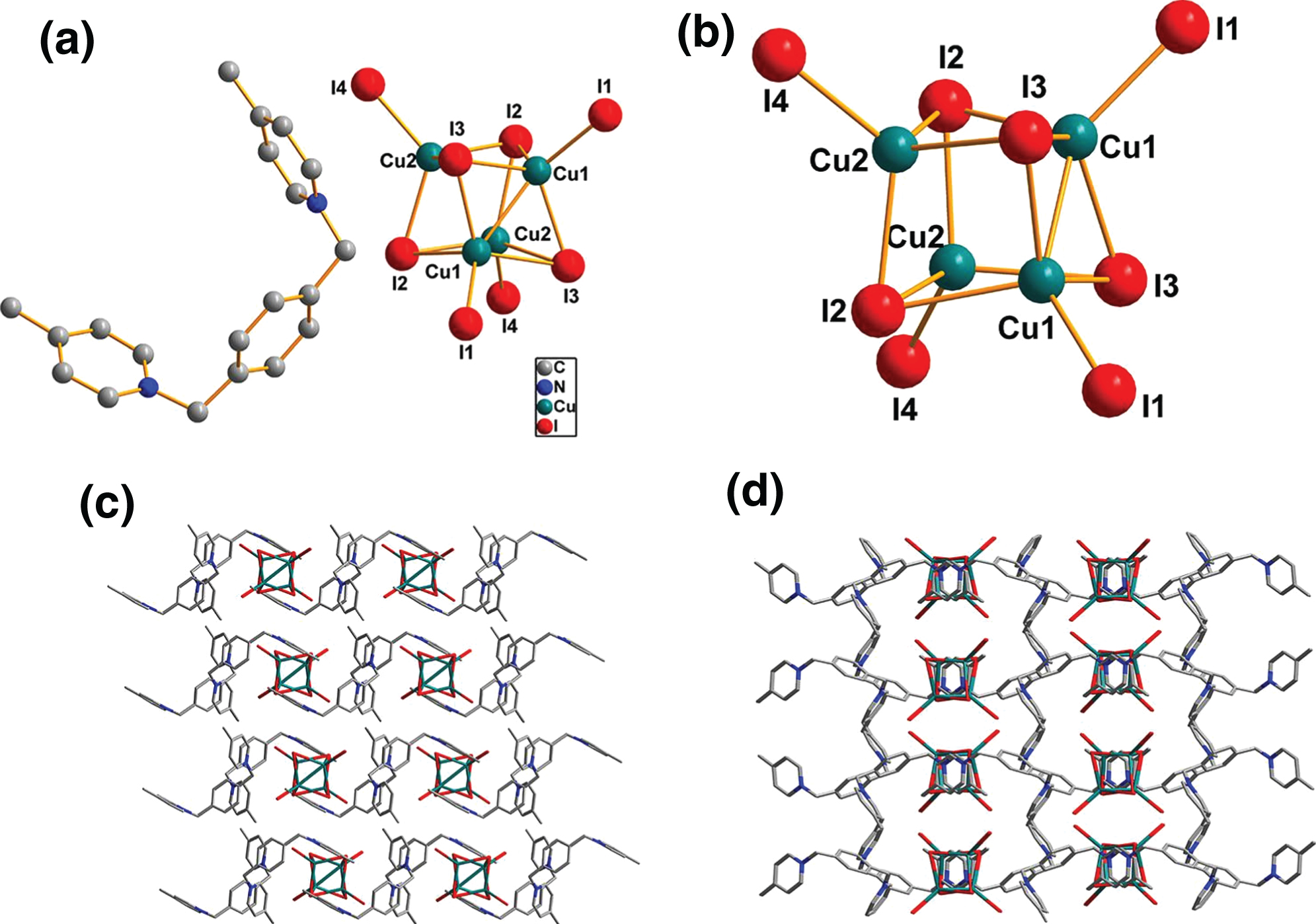
(a) Chemical view of the basic building blocks that composed of [BPMB] and [Cu4I8] in
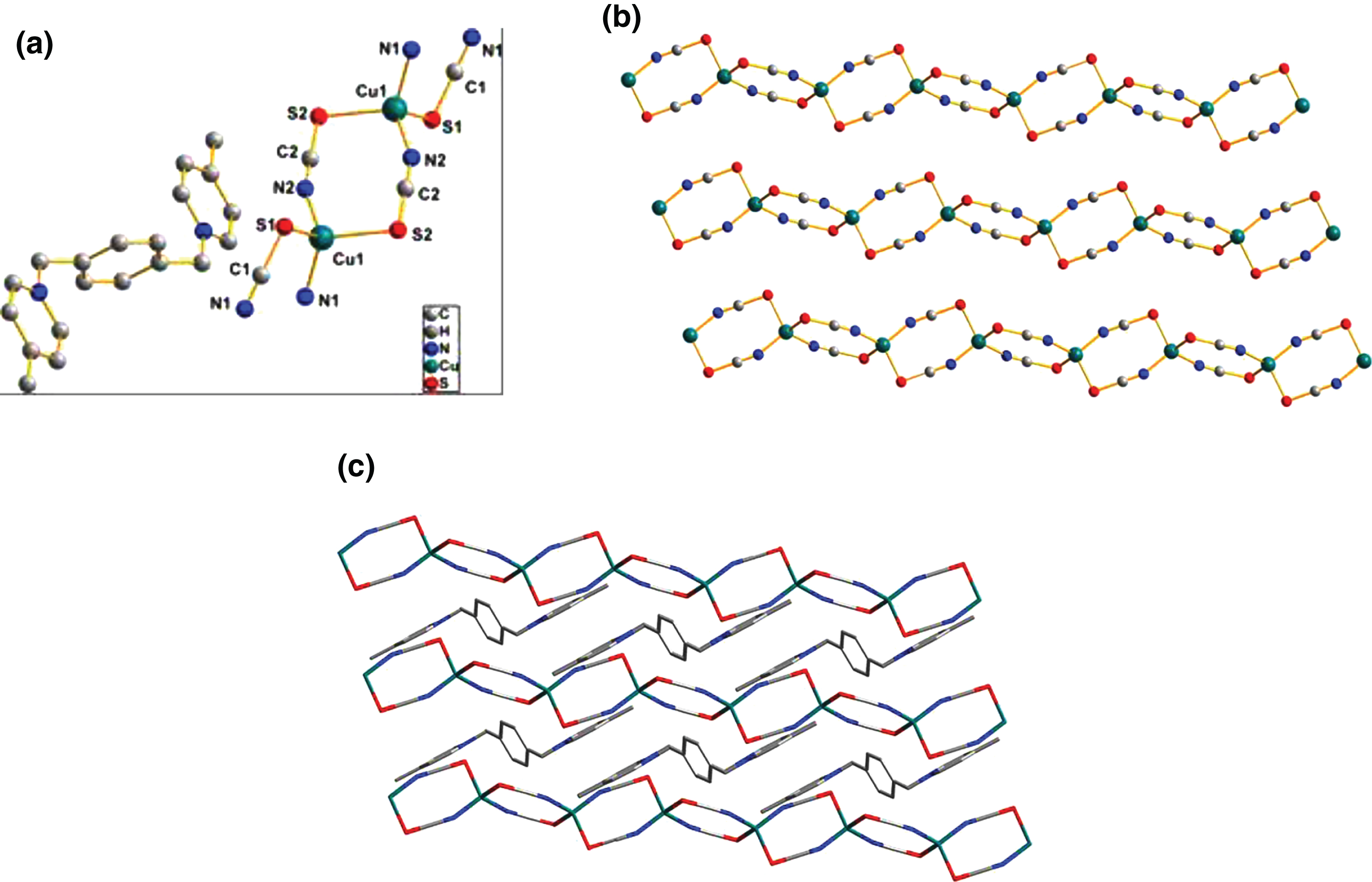
(a) The simplified repeated unit plot of compound
Compound
Other characterizations
The TG, and corresponding PXRD with different heat treatment have been carried out on the as-synthesized powder samples. As shown in Fig. 4, the experimental spectrum of
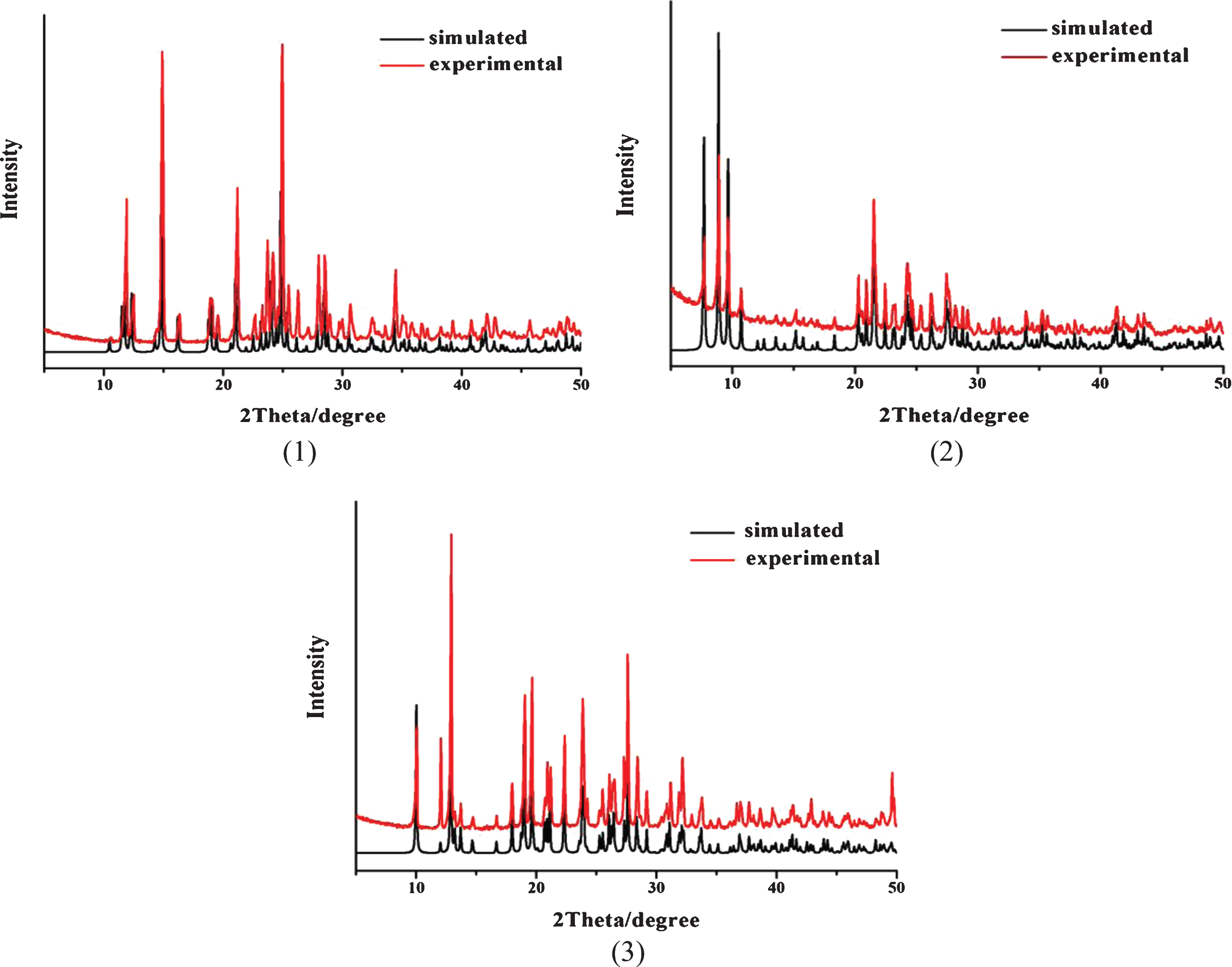
X-ray powder diffraction pattern of complexes

The TG curves of 1–3.
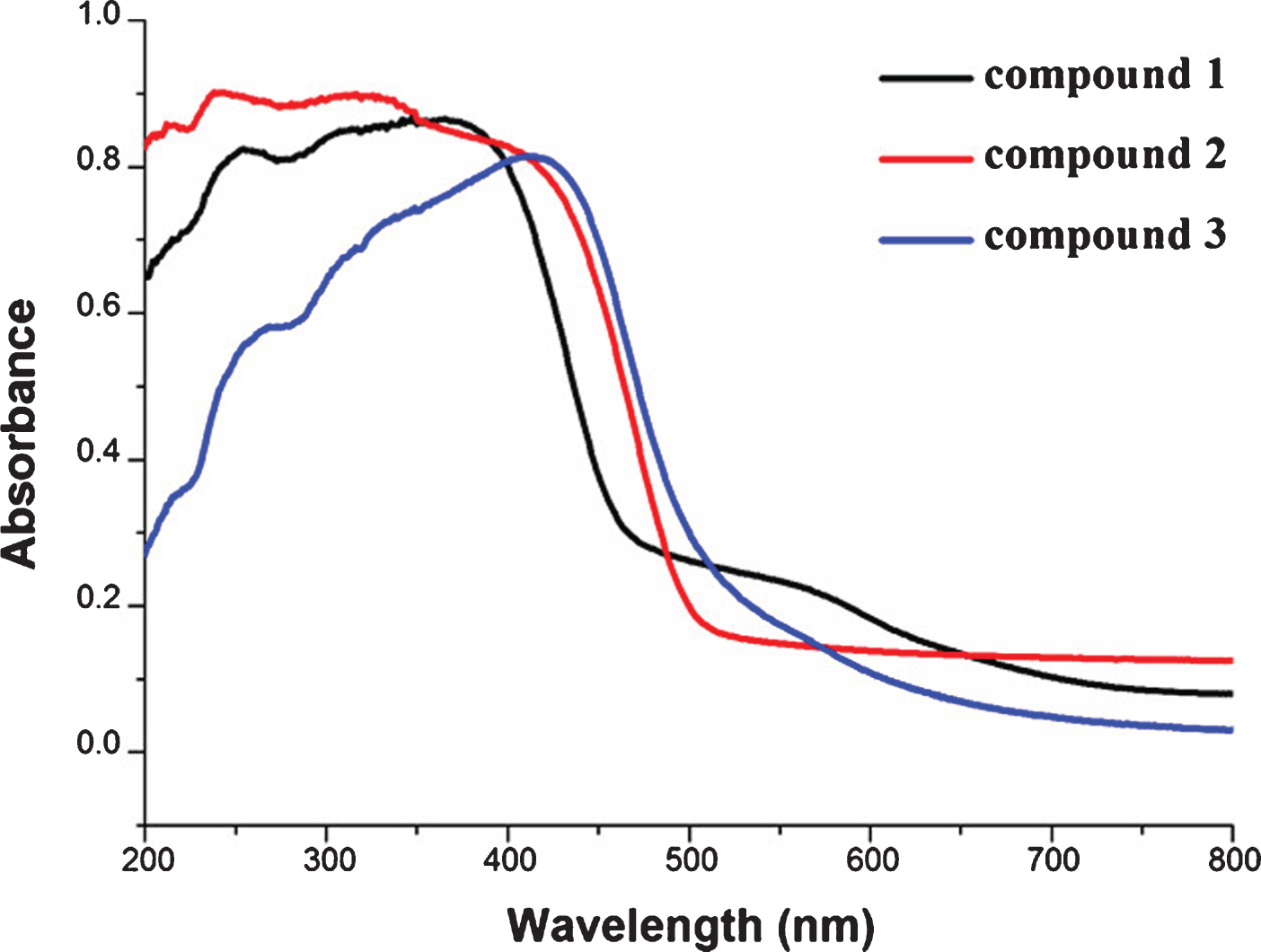
The UV–Vis spectra in solid of

Diffuse reflectance UV-vis-NIR spectra, K–M functions vs. energy (eV) for
In order to investigate the removal of organic dyes, such as methylene blue (MB) from water,

Absorption spectra of the MB solution during the decomposition reaction under Xe light irradiation dealt with 1–3 and blank.
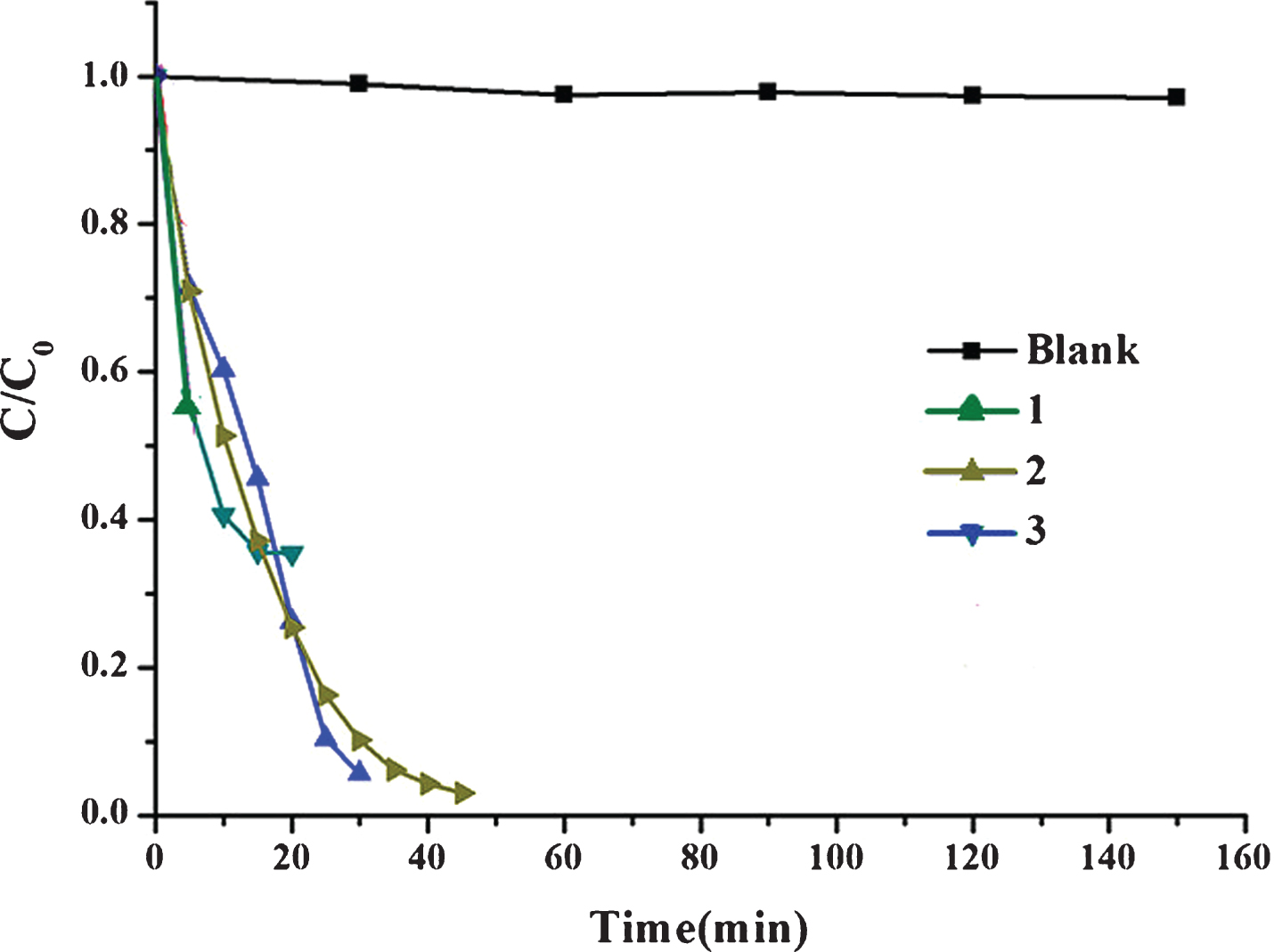
Photocatalytic degradation of MB solution under UV light irradiation with the use of compounds
At ambient temperature, the solid-state powder samples of compounds 1–3 and cation BPMB • 2Br show distinct photoluminescence by using UV light, which can be easily observed by the naked eye. They all send out orange yellow fluorescence. In order to further explore whether they have fluorescence properties, we measured their solid fluorescence spectra. The solid-state fluorescence spectra of 1–3 and BPMB·2Br at room temperature are illustrated in Fig. 10. On the basis of the photoluminescence of ligand BPMB • 2Br, the emissions of
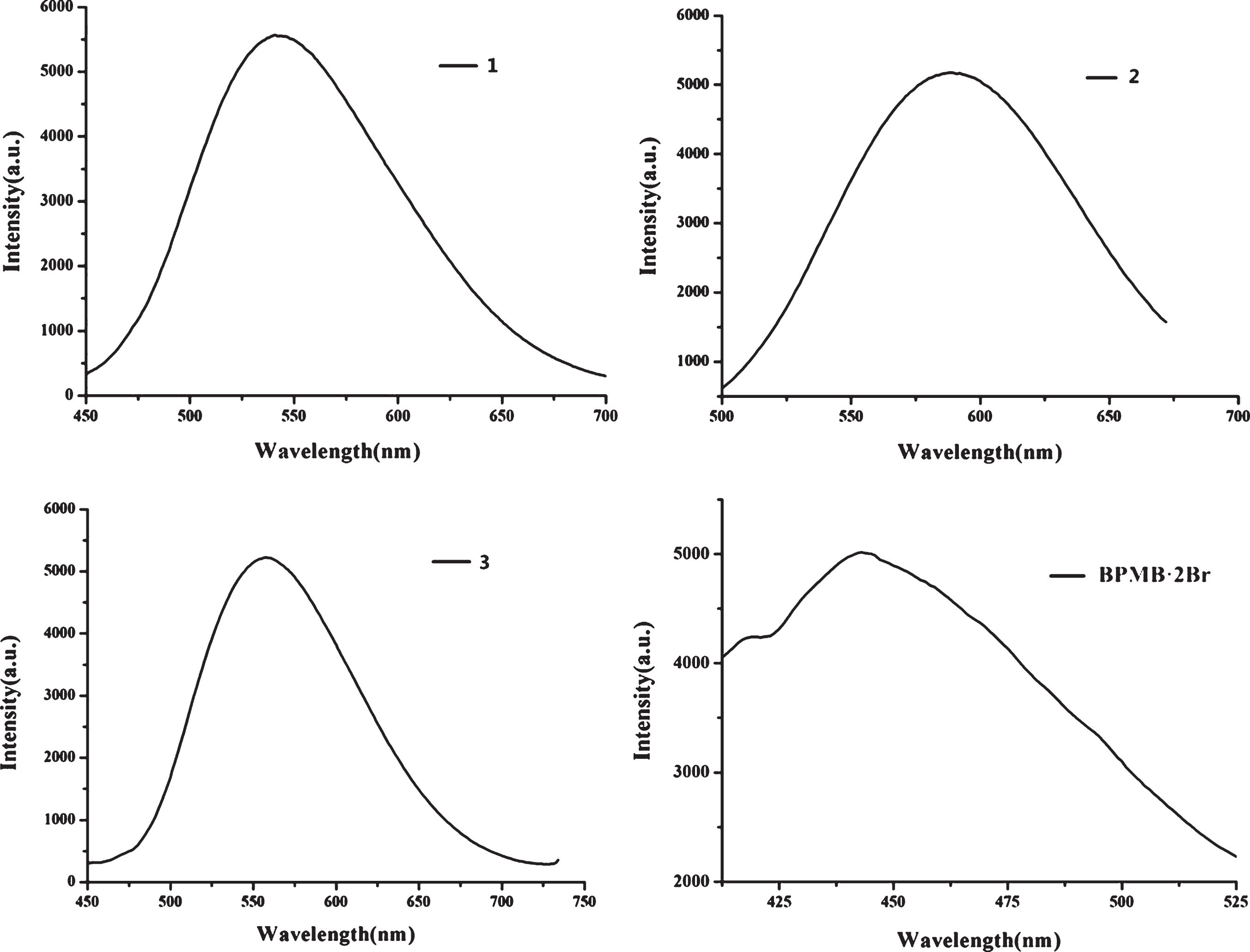
The solid-state fluorescence spectra of 1–3 and BPMB•2Br.
Based on the fluorescence of 1–3 in the solid state, we examined the fluorescence response of 1–3 to metal ions. Since the fluorescent properties of the compounds are affected in the organic solvent, they are not affected when they are dispersed in water. In order to ensure their fluorescence properties, 1–3 were dispersed in different aqueous solutions of metal ions to form suspensions, respectively. And then measured its fluorescence emission spectrum. The luminescent responses of
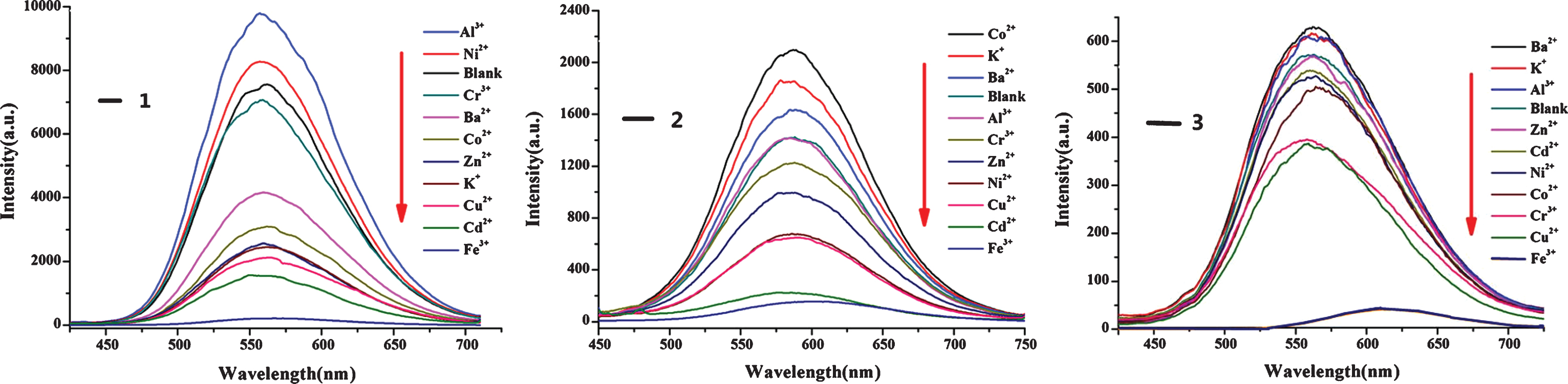
Fluorescence emission spectra of 1–3 (20 mg) in different metal ions (0.01 M).
The metal cations show slight influence on the emission intensity of
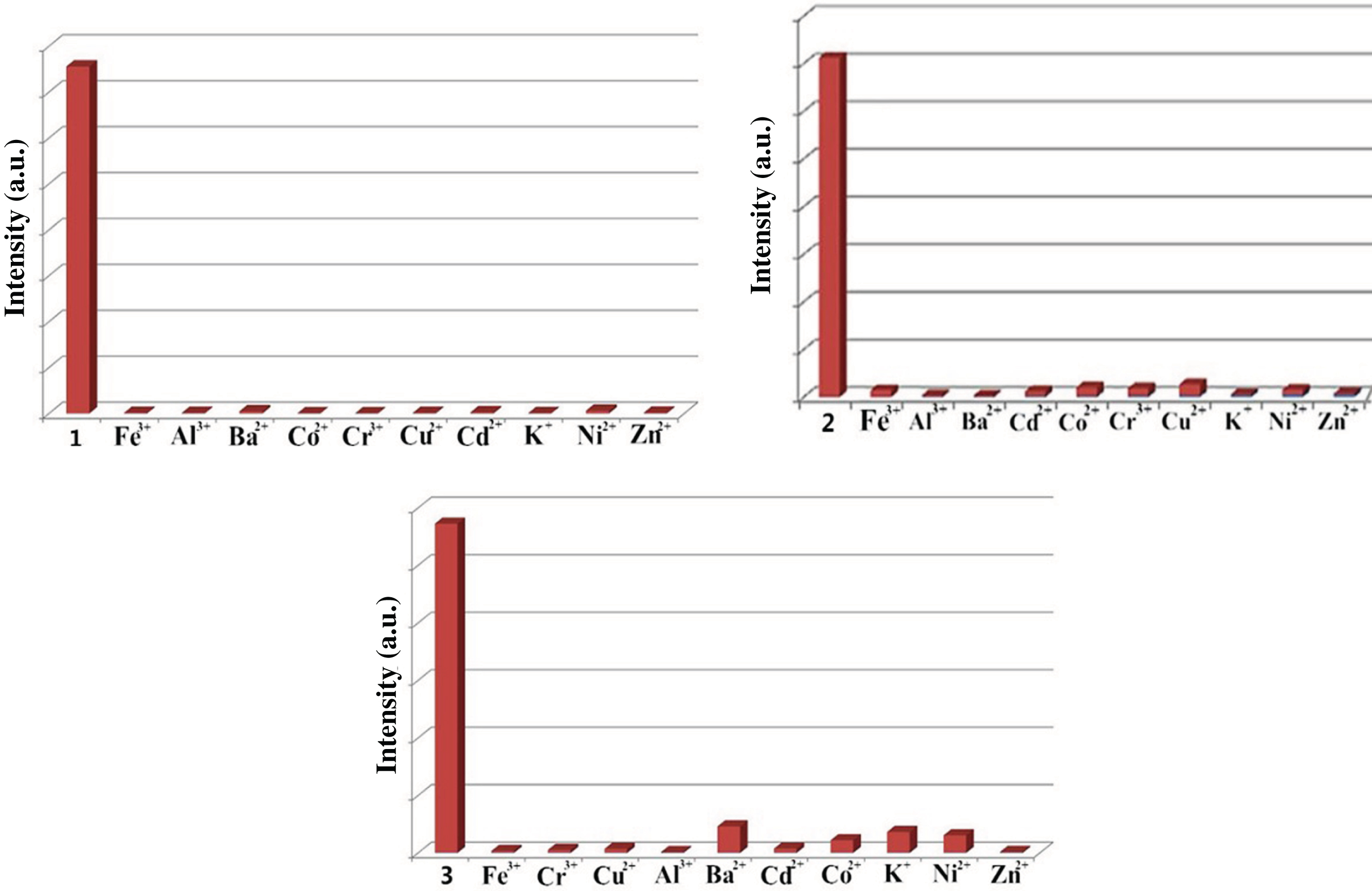
Luminescence intensity of
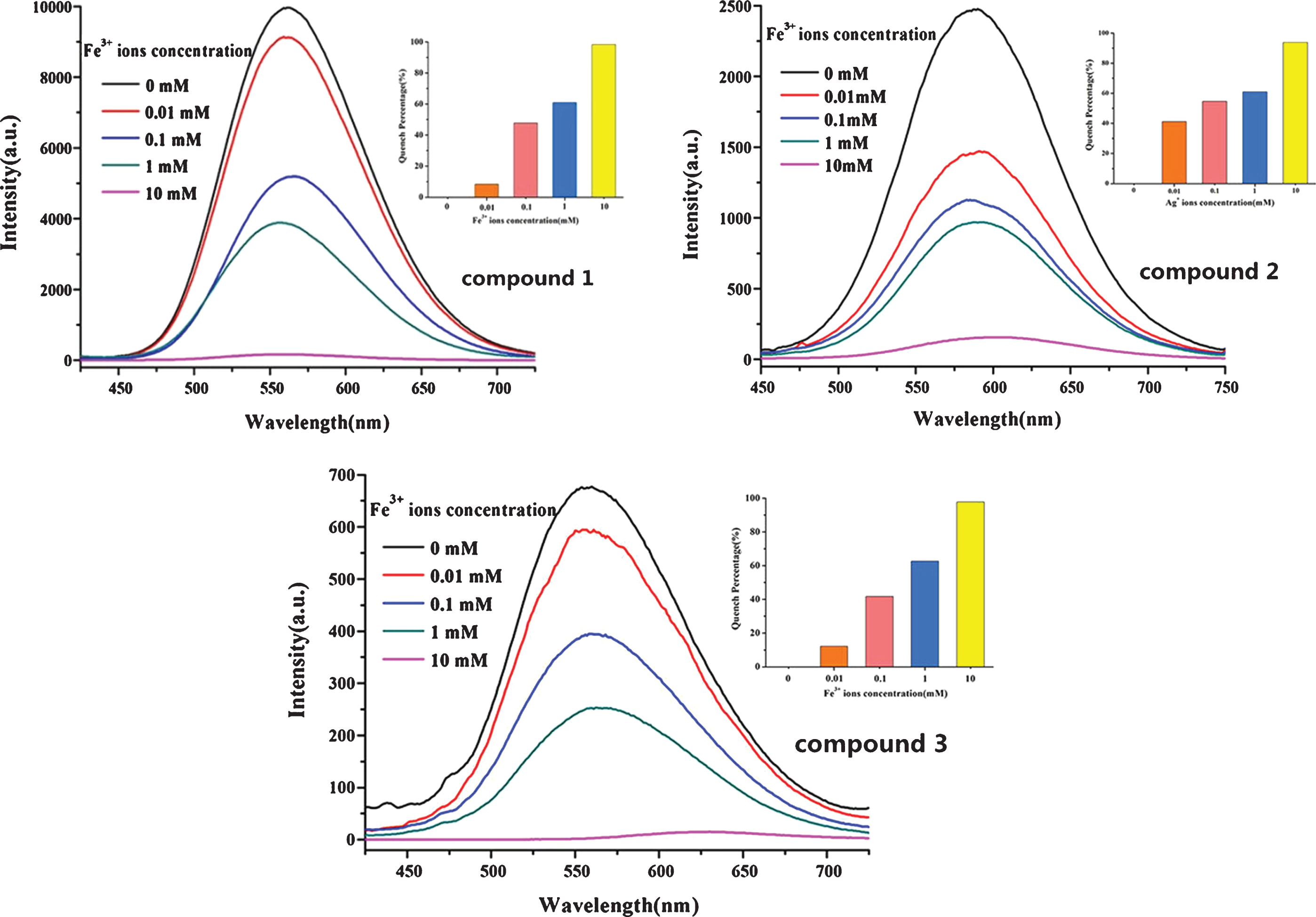
Emissive spectra of
In order to investigate the possible fluorescence quenching mechanism, the UV Vis spectra and fluorescence excitation spectra of aqueous solutions of 1–3 of different metal ions were measured, as shown in Fig. 14. The UV-visible absorption spectra generated by the d-d transition of Fe3+ ions and the fluorescence spectra of 1–3 display a large area overlap. While other metal ions do not appear this phenomenon. It can be concluded that the Fe3+ ion aqueous solution and the 1–3 competitively absorbing the excitation light lead to the occurrence of fluorescence quenching [30, 31].

The UV Vis spectra and fluorescence excitation spectra of aqueous solutions of 1–3 of different metal ions.
This study reports on the synthesis, structural characterization, photoluminescence and photocatalytic properties investigation of three new copper(I) halide clusters templated by different organic cations, by solvent evaporation at room temperature. They are {(BPMB) [CuBr3]} n, {(BPMB) [Cu2I4]} n and {(BPMB) 0.5[Cu (SCN) 2]} n, respectively. The three compounds were fully characterized (XRD, TG, Elemental analyses, and so on). We focused on the study of the photocatalytic activity of 1–3 on organic dye MB under visible light irradiation and selective response of 1–3 as metal ion fluorescent probe to metal ions. The photocatalytic performance results suggest that 1–3 could function as a visible light photocatalysis in the degradation of organic matter, and 1–3 can be used as a fluorescent probe for selective detection of Fe3+.
Footnotes
Acknowledgments
Research efforts in the Niu group are supported by the National Science Foundation of China (No. 21671177).