



Abstract
BACKGROUND:
The future of work in Germany is shaped by megatrends like globalization, automatization, digitization, and the demographic change. Furthermore, mass customization and the increasing usage of AI even in manual assembly offers new opportunities as well as it creates new challenges.
OBJECTIVE:
The trend towards mass customization in turn leads to increased complexity in production, which results in additional mental workload. This effect will continue in the foreseeable future.
METHOD:
Especially for small and medium sized companies, the backbone of Germany’s economy, automatization and Human-Robot-Collaboration will take time to develop. Information assistance systems are and will be a bridging technology to help organizations to manage increasing complexity and the mental workload of their employees to not only boost productivity but also keep their workforce healthy. The ongoing demographic change further underlines the need to use information assistance systems to compensate possible age-associated deficits, but also keep older employees committed to their work and avoid effects of disengagement or disenfranchisement through participatory ergonomics.
RESULTS:
Information assistance systems can only develop their inherent potential if they are designed to support employees of varying age, competence levels, and affinity for technology. Participatory development and early engagement are key factors for an increased acceptance and usage of the systems as well as the individualization to make it suitable for each individual employee.
CONCLUSION:
Expanding the functionalities to an adaptive assistance system, using physiological correlates of mental workload as an input, is conceivable in the future.
The future of (assembly) work in Germany –between megatrends and assistance systems
Work itself, the workplace, work processes, and socioeconomic aspects of work underwent constant changes during the last century, with increasing acceleration during the last decades. Thus, a concrete prediction of the future work in Germany is nearly impossible, but taking current developments and megatrends into account at least some appro-ximations and forecasts are possible. Synoptically, the future of work will be data-driven, influenced by rapidly changing (product) developments, customization, increasing digitization and (international) collaboration, as well as be affected by social challenges like the ongoing demographical change. With a focus on changes for small and medium sized manufacturing companies in Germany and in particular their manual assembly processes, effects of these anticipated (mega-) trends will be outlined below, highlighting their effect on the individual employee, and showing tools to overcome negative effects of these changes. A multidisciplinary approach is chosen to include on a conceptual level aspects of (neuro-) ergonomics, industrial engineering, and (geronto-) psychology to cover most facets of these ongoing and predicted developments and their interplay.
Based on data alone, and not on the resulting effects, the demographic change will be the most predictable influential factor for the future of work in Germany. For the near future an ongoing trend towards a higher percentage of workers over 55 years and a decreasing number of workers below 35 years [1, 2], with a steady increase of workers 64 + [3] is foreseeable. In parallel, the old-age to working-age dependency ratio will shift up to 43 to 57 people at old age per 100 people at working age (20–66) in 2060 [4]. Preventive measures are not only advised, but necessary to keep an aging workforce active at the workplace and able to age healthily while keeping their efficacy high. Information assistance systems (IAS) can be one puzzle piece to support this process.
The future of work in Germany will be influenced by ongoing megatrends like globalization, automatization, and digitization with an increased usage of artificial intelligence (AI) to improve systems and processes. Digitization enables to access, process, and analyze new data streams, even in manual assembly. With increasing technology miniaturization and modern neurophysiological approaches like the brain-computer-interface (BCI) the integration of physiological data into AI work models becomes possible. Workers increased tendency to optimize themselves using wearables [5, 6] already highlights their acceptance of such technologies and might path the way for a usage of such technologies on-the-job. To further support such data driven approaches, IAS will become an additional data source for internal processes, individual performances, and the overall workflow. Being part of a global market, product life span decreases, while product range and variety increase [7]. Thus, it is necessary for employees to keep constantly adapting to new circumstances and to learn on the job [8].
The described trends on the one hand increase the pressure to adapt on an organizational and individual level, but on the other hand also offer possibilities for economic growth. A successful integration of IAS will be able to a) prevent states of mental over- or underload, b) facilitate life-long-learning on-the-job, and c) to increase the overall work process efficiency. IAS thus can be seen as buffers between external and organizational demands and the limited cognitive capabilities of the workforce.
Manual assembly underwent several paradigmatic shifts and developmental stages since the early onset of industrialization till now, and will continue to change in the future. From craft production over mass and lean production (or mixed-model serial assembly) [9] it went up to mass customization [10, 11] the importance of which will further increase in the future. The most predictable trends in manual assembly will be: An ongoing shift towards mass customization or even mass individualization. Customers infl-uence and participation will increase, leading to an increase in product variety on the individual working place. Following this development, the main strategy to handle the increasing work complexity will no longer be a complexity reductional approach, it will be a complexity mastering one. For the individual worker, and for the ergo-nomical design of workplaces, a shift from energetical work towards informational work will be noticeable [12]. This trend is accompanied by the accomplishments of the former physical based ergonomics like the usage of exoskeletons or increase Human-Robot-Collaboration. Making physical work already manageable and informational work the new topic of ergonomics.
The proclaimed trends, their prerequisites and their consequences will be discussed in the following paragraphs.
Mastering complexity in manual mixed model assembly
The trend towards market globalization and an intensification of competition inherits that customers expect to be able to configure products –for example, machines or devices - on eCommerce platforms. Those products should be highly individual and be provided in a short time. This high degree of customer orientation can only succeed if all business processes are digitized and the employees’ needs are taken into account. For manual (mixed-model) assembly these requirements imply that order and product information (e.g. derived from ERP and PLM systems) must be made available and displayed in the best possible way. Preparing this information, the individual employees experience and special requirements must be taken into account.
Information thus becomes the decisive medium. Upcoming central business models or at least central components of conventional business models will become machine learning to process information, platforms and cloud services to increase connectivity, and the used power and knowledge of the crowd, customers, and workers [13]. Although at the operational level there is certainly no general pattern of how customization, networking, and digitization will ultimately affect the final ramifications of an assembly production. It could be a trend to automate as much as possible in the assembly process, but to continue to rely on manual assembly during final production (automatizing highly standardized tasks, keeping manual work for components with higher degrees of individualization). However, to remain competitive in the global market, companies will have to manage increasing complexity, product variety, and order flexibility. The traditionally rigid corset, which gives security and predictability, has become obsolete and the correlatively consolidated mental model of stable work organization and repetitive production processes is outdated. Such a change of mindset is already evident in the increasing orientation of industrial companies towards concepts such as agility, technological reconfigurability [14–16], or permanent learning on the job [17, 18]. Such measures, which Brynjolfsson and McAfee [19] associate with the keyword bounty, serve to push variety, quality, and volume, but also to avoid spread, e.g. to prevent health impairments or even exclusion of specific groups of workers such as the aging workforce or semi-skilled workers. IAS will make a significant contribution to this.
Changing the way to think about ergonomics from a biomechanically to a cognitive way requires a reorientation of corporate complexity management. For decades the modus operandi was avoidance or reduction, while nowadays mastery of complexity is focused (Fig. 1).
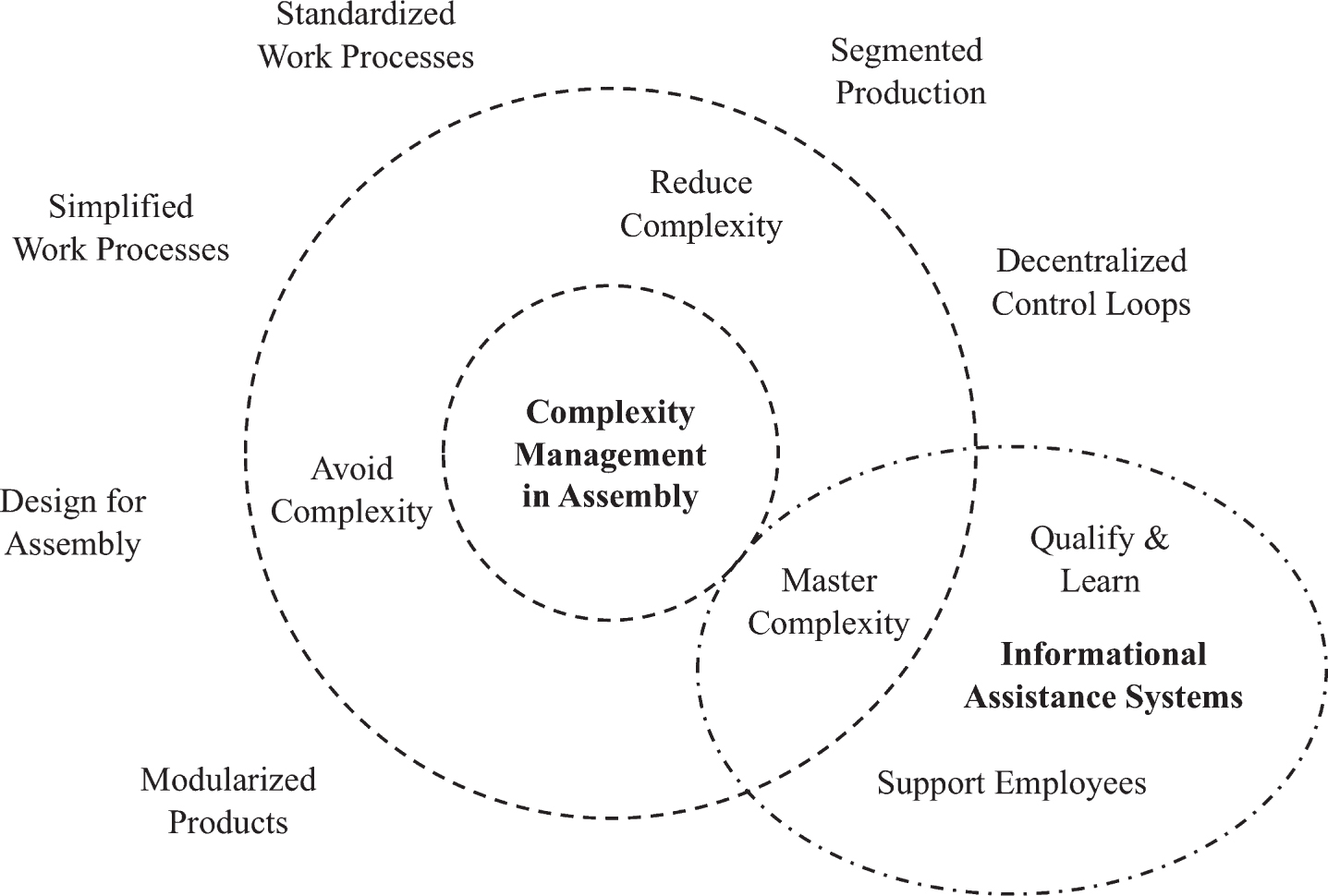
Information assistance systems as a tool to master assembly complexity.
Avoidance and reductional approaches can be summarized as approaches of simplification and standardization and are often used combined with strategies of design for assembly. Creating routines through high number of repetitions leads to reduced search- and orientation times as well as increasing the overall employee efficiency [20]. Furthermore, the consideration of design principles for manufacturing and assembly (e.g. minimizing number of assembly parts, usage of functional elements of self-centering) decreases assembly complexity by reducing the assembly process to as few and simple pick-up and placement motions as possible [21]. But complexity is also seen as system inherent. Mastering the remaining complexity becomes possible through qualification and learning. In addition, decentralized control loops such as Kanban can help to master multi-variant assembly’s complexity [22, 23].
In the future, complexity and variety have to be explicitly admitted, complexity drivers identified, and informational measurements have to be initiated to master them [24]. IAS are able to support the employee during the assembly process by providing additional information in an intuitive way, to safely master the growing product variety [25].
Assistance systems support employees in dependence of their own individual needs and abilities and meet the increasing demand for flexibility in the work process. An essential factor of success thereby is to achieve a high (cognitive) compatibility between the technological system and the individual assembly employees’ demands [26]. Cognitive compatibility is understood as the fit between externally presented information, its internal processing, and the subsequently initiated work action. However, the more complex the system, the more likely it is that incompatibility will occur, leading to time losses, errors, and thus low performance. IAS help reduce these incompatibilities by providing workers with the right information at the right time in the right form.
Mass individualized assembly –in contrast to mass assembly –cannot be carried out in a highly labor-divided manner due to the constantly changing requirements, thus the overall operator choice complexity [27] and employee’s mental workload (MWL) increase. Higher product and variant variety at one assembly station, shorter product life cycles [28], and additional special processes (e.g., uploading firmware, labeling products) [29] require constant learning and cognitive alertness and thus, increasing the workers overall MWL. The increased number of selection and decision-making processes lead to an increased risk that incorrect or search actions will be evoked and that product quality and productivity will develop negatively. Therefore, the importance of information management grows significantly with the tendency to mass individualization.
Increasing complexity, especially operator choice complexity, marks a problem in modern and future mixed-model assembly. The approach to handle this problem has high influence on the resulting employee’s MWL. Choosing complexity reduction or avoidance strategies as stand-alone solutions might lead to potential boreout, with effects similar to mental overload (increased error probability and declined efficiency). Mastering complexity through the use of IAS keeps employees in an optimal state of mind while reducing the number of errors and potential health damages.
As a result of the increasing complexity manual assembly becomes less predictable for the individual employee. Overall information and choice density increase, keeping the employee in a constant state of alertness. A main aim of modern (neuro-) ergonomics, with the focus on the more mental aspects of work, is to keep employees in a balanced, optimal state of workload, avoiding states of under- as well as overload (also characterized as hypo- and hyperstress [30]).
While a consistent theory of MWL is still missing [31], theoretical models like the red-zone model of mental workload [32] (Fig. 2) or the dynamic model of stress and sustained attention [33] assume that depending on the balance between individual resources and external demands an employee’s MWL can either be too low, too high, or in an optimal state. These MWL models try to simplify the complex process of human information processing and the situation-dependent choice of an (more or less) adequate (motor) reaction pattern. Due to the high situation-dependency, momentary MWL is constantly changing. If external demands exceed the worker’s internal resources, MWL balance tilts to the area of overload. It has to be assumed, that this process does not necessarily lead to health impairments, a loss in efficiency, and errors, but at least it can lead to a critical state, which should be monitored. Longer lasting excess increases the probability of the mentioned side effects drastically. The state of mental underload should be viewed similarly critical and be avoided as far as possible [32, 34].
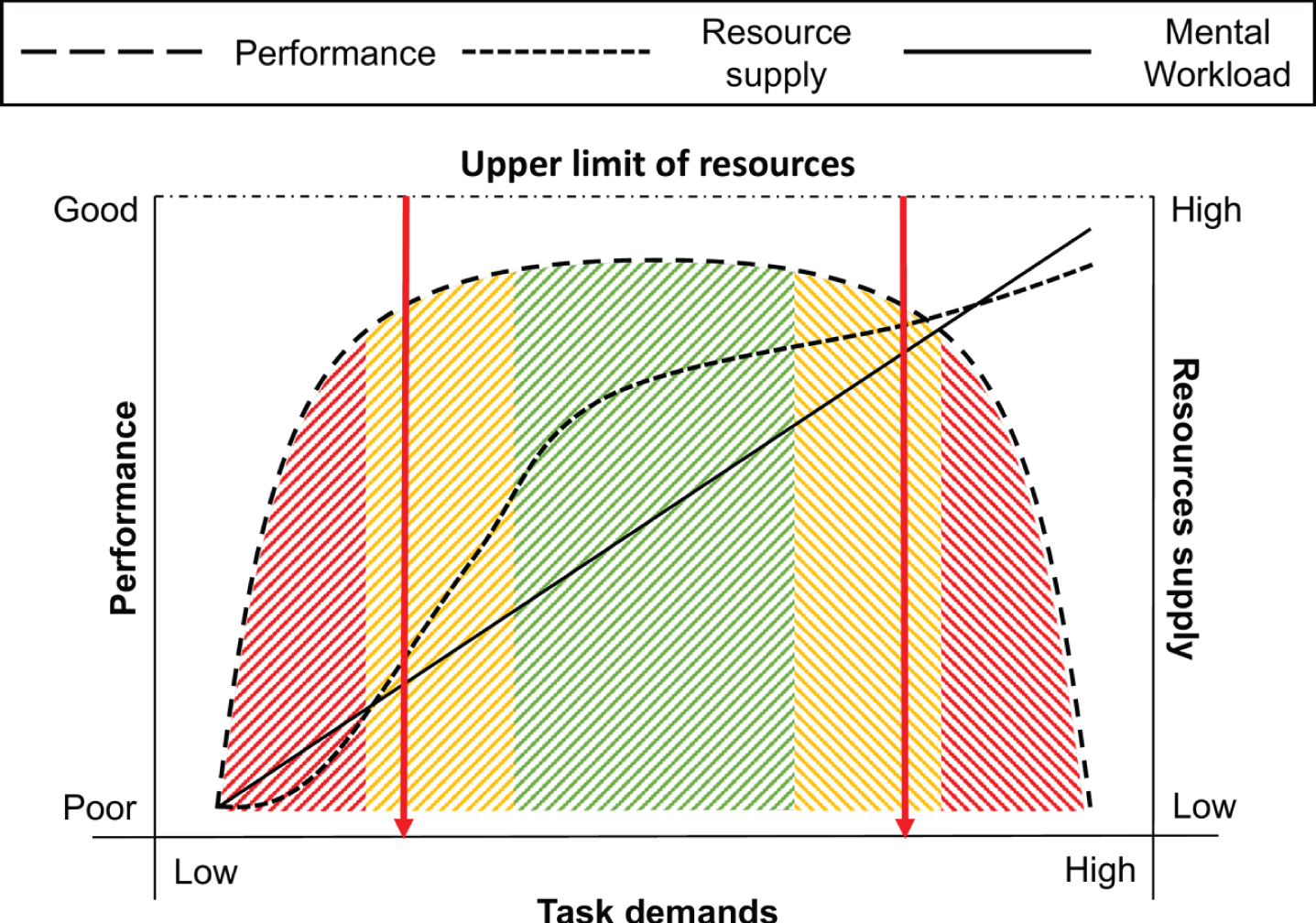
Adapted Redline-Model of Mental Workload [32] highlighting corridors of either normative (green - center area), critical (yellow), or threatening (red - outer areas) workload.
IAS (especially adaptive and individualized ones) can help to reduce MWL fluctuations, keeping employees in an optimal state of mind. To achieve this goal, it is necessary to be able to measure MWL changes while they occur. While MWL re-mains hard to be operationalized, valid measurement techniques and approaches are already applicable [35]. Besides subjective ratings and performance/observation based methods, the measurement of physiological correlates of MWL becomes a highly valid way to attain insight into just-in-time changes of workload [36, 37]. Progress in neurophysiological measurement techniques, like miniaturization (as a consequence increased mobility), improved memory capacity and sampling frequency, as well as enhanced AI based evaluation algorithms, enables an insight into brain processes during work [38, 39], a trend that will continue in the future to even get insight into activities of a single neuron.
Physiological basis of this measurable change is the human’s inner physiological striving for balance. This balance is disrupted by environmental changes, e.g. through changing work stimuli and conditions. The human body adapts to those changing conditions using various physiological regulation mechanisms to reach a homeostatic state [40]. Physiological indicators with a close connection to MWL are for example ECG derivates, heart rate and heart rate variability [41–43], eye tracking and gaze behavior [44–46], skin response [47, 48], EEG [49–51], and even fNIRS [52–54]. Those indicators are often used in multi-modal measurement approaches [36, 37].
To build an adaptive IAS that is able to automatically initiate countermeasures if a state of over- or underload is reached, a valid assessment, analysis and interpretation of physiological reaction patterns is necessary [55]. At the present time, several restricting factors exist that will be overcome in the future, making adaptively reacting IAS possible: Improvement of measurement techniques: Two main technological development paths will lead to an improvement of the physiological measurement site in the future. Current developments in measurement technique are already showing that it might be possible to contactless assess physiological parameters like heart rate or even heart rate variability (which requires a more precise detection of the R-Peak) using ultrasound waves [56], or to integrate EXG-sensorics into workwear and safety clothing. With increasing ease of use and non-invasiveness, the acceptance for the usage of such technologies at the work place will increase too. But even in the field of neurophysiology new trends will enable better MWL detection. The usage of BCIs in ergonomics is already discussed [57–59] and possible application scenarios will be added continuously. Improvement of available data: Building not only an adaptive, but a self-learning IAS implies the chance to predict a potential over- or underload before it appears. To do so additional process data can help to improve the system. The continuous trend to digitalize assembly processes and to create an Internet-of-Things (IoT) framework at work will help to improve the countermeasurement quality of the IAS. Improvement of AI and capacity for analysis: Machine learning algorithms will need further improvement to just-in-time calculate an MWL index, combining multiple (in their latency different) physiological parameters in a meaningful way. To support those approaches, quantum computing will offer chances for data analysis that we cannot yet imagine today [60, 61].
IAS are information machines individualized in two ways: for a specific work station and for a specific worker. There is no one size fits all solution. The best and most used IAS are those which are able to solve a specific problem and are adaptable for the needs of an individual user. IAS act as transducers and processors of data that have so far mostly been controlled by upstream areas of the company (such as construction). In the future, however, they will increasingly work self-controlled via algorithms and ML and enable flexibility. IAS display information about what needs to be done, what has been done and how work should be better designed in the face of mental stress in various ways. Through systematic feedback, they also provide information on what should be done in the future in the ergonomic sense, e. g. in terms of improved organization or additional teaching of skills. IAS should always be a well-integrated part of the company wide IT system. Stand-alone solutions without integration have no future in the networked world. Networking no longer ends at the boundaries of the production hall, but includes a wide variety of internal customers from purchasing to logistics, design, and distribution.
Information assistance systems must provide support
Work requires information. Every task implies information processes. In this sense, IAS complement, support, or replace existing analog information systems. The best support is provided when the assistance systems automatically adapt to the individual circumstances of information demand and information processing [29]. In the future, a high degree of attention will be paid to self-X functionalities (diagnosis, configuration, optimization) required for this purpose.
IAS must support the assembly worker, especially in complex situations, and relieve him of highly demanding activities. Despite increasing information, IAS must facilitate information up-take and processing, e.g. by making it easier to identify tools or components through light signals or by speeding up decisions through chunking techniques. However, the additional effort of an IAS must not be greater than the benefit of the technological support [62]. The aim is to enable workers to cope more easily with more information to be processed, for example by guiding attention through signs, signals or preventing confusion through known symbols [25]. The goal is to master the operator choice complexity with the help of IAS. This complexity should only be reduced, where cognitive functions will reach their limits despite IAS use or where a recognizable sensory or cognitive deficiency has to be compensated.
Information assistance systems must be integrated into individual workplace systems
IAS are part of the comprehensive human-mac-hine interaction at modern workplaces. Interaction between person and assistance takes place primarily in the sense of instruction. Increasingly, however, other functions are also being taken over by IAS, for example in the areas of documentation, occupational safety, and ergonomic design. IAS offers an opportunity to objectively and quickly recognize the current state of mind of the employee and also make a quick proposal for corrective measures without interrupting the assembly process. For management and monitoring activities, IAS can be an additional data source to provide objective parameters of the work process.
IAS must be integrated into the employee’s technical environment. With a focus on cognitive functions in the individual assembly activity, IAS should work on the basis of four models: External requirements that have to be met, the user’s physical conditions and cognitive abilities, environmental conditions of the workplace, and the concrete interaction of external requirements and user’s internal capabilities.
External requirements: At its core, they describe the task and the associated work activities across the varied assembly process. In the future, it will be increasingly important to determine which cognitive functions are linked to which concrete activity itself and, above all, to the necessary cognitive flexibility. The identified functions must be supported when deficits arise, for example in the identification of the assembly object, the decision between alternative tools, parts, and assembly locations, or the targeted avoidance of confusion. Hollnagel et al.’s [63] CREAM approach provides methods to analyze critical cognitive functionalities included in different tasks.
Users’ internal conditions: The successful task completion is tied to learning, practicing, and gaining experience. In the cognitive sense, it is important to develop an adequate internal model of work activity with the corresponding variations. Therefore, it is important to determine individual capacities of IAS users or at least to determine special user groups like unexperienced workers and their cognitive profiles, including strengths and weaknesses. From this data, the individual support needs are derived. However, whether such support is accepted and used profitably also depends on the usability of the IAS and on the extent to which users have been involved in the conception and implementation of the IAS. Here, models for participatory ergonomics or crowd sourced innovation can provide promising indications [13, 64].
Environmental conditions: These consist of all sensorially perceptible conditions in the workplace, which in particular can promote or impair cognitive functionalities. Most prominent are light and noise conditions, but also the arrangement of displays at the workplace and the resulting view and angle conditions [65]. The IAS can be used to control or supervise adjustments to the given conditions that directly influence the instructional presentation.
Interaction of external requirements and user’s internal capabilities: Requirements must be commu-nicated and cognitively processed on the basis of internal models and implemented in work activity. This process can be more or less successful, depending on how much and in what way information is to be processed and how strongly requirements and available cognitive abilities fit together and are (cognitively) compatible [26]. With high information requirements, it is important to control the cognitive functionalities via the assembly process in a timely and coordinated manner for the receiver [66] and to avoid permanent overloads or exceedances of the capacity limits. The aim is to keep information processing in a comfort zone and to avoid mental under- and overload [32, 33].
A future challenge is the design of automated and adaptational IAS to respond to the user’s current MWL to handle the increasing complexity of manual assembly. IAS must be able to objectively record experienced MWL and to propose ergonomical readjustments in the event of health-endangering incompatibilities. This requires mobile sensor technology and continuous, non-interruptive measurement solutions. Above all, it is important to develop an objective and sensitive stress indicator. Depending on the degree of danger, a gradient of solutions such as continuous feedback of MWL, displayed warnings, behavioral recommendations can be proposed. If the user does not respond to any of the previous displayed countermeasures, even an automatically controlled taking over from automates or robots is possible [31].
Functionalities of information assistance systems
From an ergonomic point of view, assistance systems are generally recommended where a recognizable defect has to be compensated (like lacking experience), where a function needs to be strengthened (e.g. better, faster, and safer recognition of required equipment), where too much information has to be processed, or where critical information can be forgotten.
However, IAS can take on diverse functions, which are often interconnected. Figure 3 offers a non-exhaustive list of possible IAS functionalities. Probably, no assistance system will offer all, but only a subset of these possibilities. Each IAS must be tailored to operational needs, be integrated into a system of networked databases, and also allow to dynamically adapt to individual users.
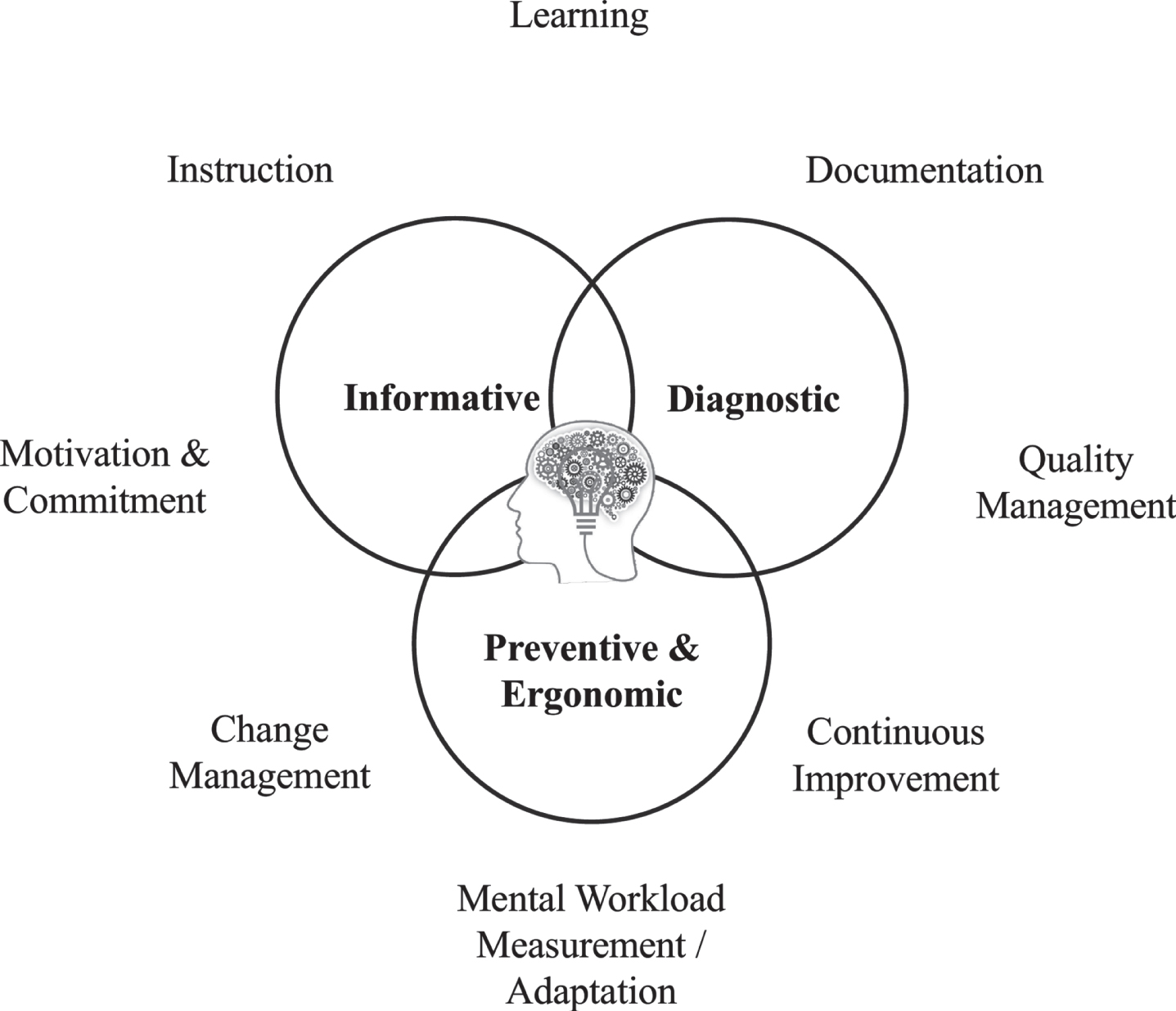
Support functionality classification for information assistance systems.
It can be seen that IAS can provide three types of support in particular: Informative support implies what should be done: It is realized by comprehensive instructions, by motivational incentives like gamification, and by feedback. Diagnostic support implies collecting information concerning what has been done. Documentation of processes and failures are the basis for further countermeasures of quality management. Preventive and ergonomic support implies measurement of physiological states and, if necessary, countermeasures that should be taken. Main states concern mental overload and a corresponding series of health relevant recommendations. Gathered data can also be used for continuous improvement or change management measures like learning on the job or systematic improvement of work conditions (including even new/improved IAS).
IAS are primarily used to support the worker, but they also provide a wide range of information for managers, for work design, or industrial engineering. From management view important IAS functions are: quality control, process management, change management, and preventive functionalities protecting workers from health impairments. Offering a broad range of data IAS can be used to factual change concrete work behavior or divide work processes between humans and machines. But ultimately the final decision is up to the human operator or the management level. IAS should always just serve as support tools –supporting either in the concrete work process or in the overall improvement of this process. No machine, not even IAS, should automatically make decisions and changes in manual assembly without human consent and, for example lead to an automatic taking over of human functions by machines, as is already discussed in the field of automatic driving or flying of civil and military aircraft [35].
A final point about the implementation of IAS concerns sustainability, which has only received marginal attention as a trend here. The increased use of networked machines, information platforms, or increasingly cross-company connectivity with external stakeholders is already associated with high energy consumption, and thus considerable sustainability costs. The demand for electrical energy will increase significantly in the course of digitization. For this reason, in the future it will be increasingly important to pay more attention to the tradeoff between the use of information and communication technologies and the energy costs of these technologies. It can therefore be assumed that there are economic and ecological limits to digital networking and processing with its current energy demands.
With the demographic change and increasing retirement ages in the future, the aging workforce will become more and more important and needs to be considered in the context of IAS. The relationship between working and aging is still seen as a negative, deficient one, although scientific research shows contradictory effects [67, 68]. IAS can be used to cover potential negative (health or efficiency wise) signs of aging.
The preventive use of IAS should not only serve to prevent illness, but also to maintain work ability. According to Ilmarinen and Rantanen work ability consists of physical, mental, and social capacities [69]. Those individual capacities must be in a balanced ratio to the momentary work demands, leaving remaining reserve capacities. Clear overlaps with the MWL concept are recognizable. Individual capacity in excess of the currently required resources are referred to as reserve capacity. Assuming constant physical or mental work demands, increasing age or declining health can claim and substantially reduce reserve capacities [70]. In these cases, more physical, mental, or social resources are needed to fulfill the work task, leading to possible health problems [71]. Using ergonomic measures, improvements in two directions can be made: lowering the work task demands using either physical or informational assistance or improving the employee’s abilities to maintain the individual work performance independent of aging effects. By applying ergonomic measures at the workplace the overall quality of life, not only for the aging workforce, can be improved [72].
Aging is a highly individual process with heterogeneous physiological and psychological effects that contribute to increasing interindividual differences in later life [73]. For ergonomic measures and considerations targeting the aging workforce it is important to recognize, value, and design-wise consider indicating their demands and perspectives [74]. In addition, surveys like the “German Ageing Survey”[75] or the “Employment after retirement”[76] survey already indicate differences in individuals’ attitudes towards retiring with 67 years. Many individuals do not want to work up to the age of 67 years, however, retirement plans strongly depend on their individual economic status, educational level, and professional position [77, 78]. With a rising retirement age, those differences should be further considered and countermeasures need to be performed to keep aging workers motivated and committed to their work [79].
Physical aspects of aging
Age-related performance changes, especially in the workforce 55+, are undeniable but show a high heterogeneity. Findings from the Survey of Health, Ageing and Retirement in Europe (SHARE) indicate, that even in the age group 75 + around 30% of the participants were still working and showed overall better health and cognitive abilities compared to their retired counterparts [80]. Even with some biological determinants (e.g. decreasing muscle strength, the resulting influence of different work positions on physical workload, or maximal oxygen saturation which can have an influence on endurance [81, 82]), physiological changes are not completely irreversible [72, 83]. Training and early physiological support can reduce those effects and enable healthy aging even at workplaces with a higher physical workload. The current state of classical biophysical ergonomics already focuses on health problems in close relation to physical workload –exoskeletal support reduces forces on lower back, wrist, or neck during different work positions and the increasing Human-Robot-Collaboration further reduces necessary human strength, e.g. during load carriage, reducing the overall risk of musculoskeletal diseases [84]. Ergonomic measures should focus on the reduction of extreme joint movement, extreme pressure, and repetitive tasks [85]. While physical systems, like exoskeletons or robots, can be used to actively reduce physical workload, IAS can help on an organizational level, suggesting task changes (coordinated job rot-ation), monitoring workers competencies and accordingly assigning assembly process models.
Mental or informational aspects of aging
Thus, physical load might not be the biggest ergo-nomic problem for the future of work in manual assembly. Increasing complexity, along with an increased information density, confronts employees with new challenges. Even the usage of Human-Robot-Collaboration can increase the amount of information to be processed.
Research on aging and cognition reveals decreasing effects for different cognitive functionalities, e.g. memory span or reasoning abilities [86, 87]. Effects of aging on cognition tend to show an even broader span compared to those on the physiological site [88]. In general, it can be seen, that fluid cognitive functions are earlier affected by aging than crystalline ones [89], indicating increasing problems during the processing of information while performing tasks compared to actions cumulatively resulting from earlier processing stages [88].
Recent studies comparing productivity in assembly lines over various age-groups showed no changes in productivity between them up to the age of 60 [90]. Equal task performance might indicate, that MWL is not changing during aging, but most tasks do not require to work on full capacity (even for aged employees), although the chance increases that aged employees are closer to their cognitive limits, compared to younger ones. In addition, a complex relationship between age-related losses and individual expertise enables to use age stable strategies to cope with work task demands [91, 92]. Due to increasing experience and knowledge, occurring physical or mental impairments can be coped using strategies of selection, optimization, or compensation (SOC) [93, 94]. IAS and their functionalities can be chosen and designed to support SOC strategies (Fig. 4). Using individualized profiles and performance data selection processes can be supported, while functionalities to reduce informational load (e.g. increasing instructional steps to reduce information per step, or improve informational flow through visual guidance) support compensation strategies. For optimization strategies central processes can be seen in acquiring new and practicing known skills. IAS are able to support both processes by enabling learning on the job. Individualized IAS configurations can further help to optimize the personal workflow and reduce cognitive demands.
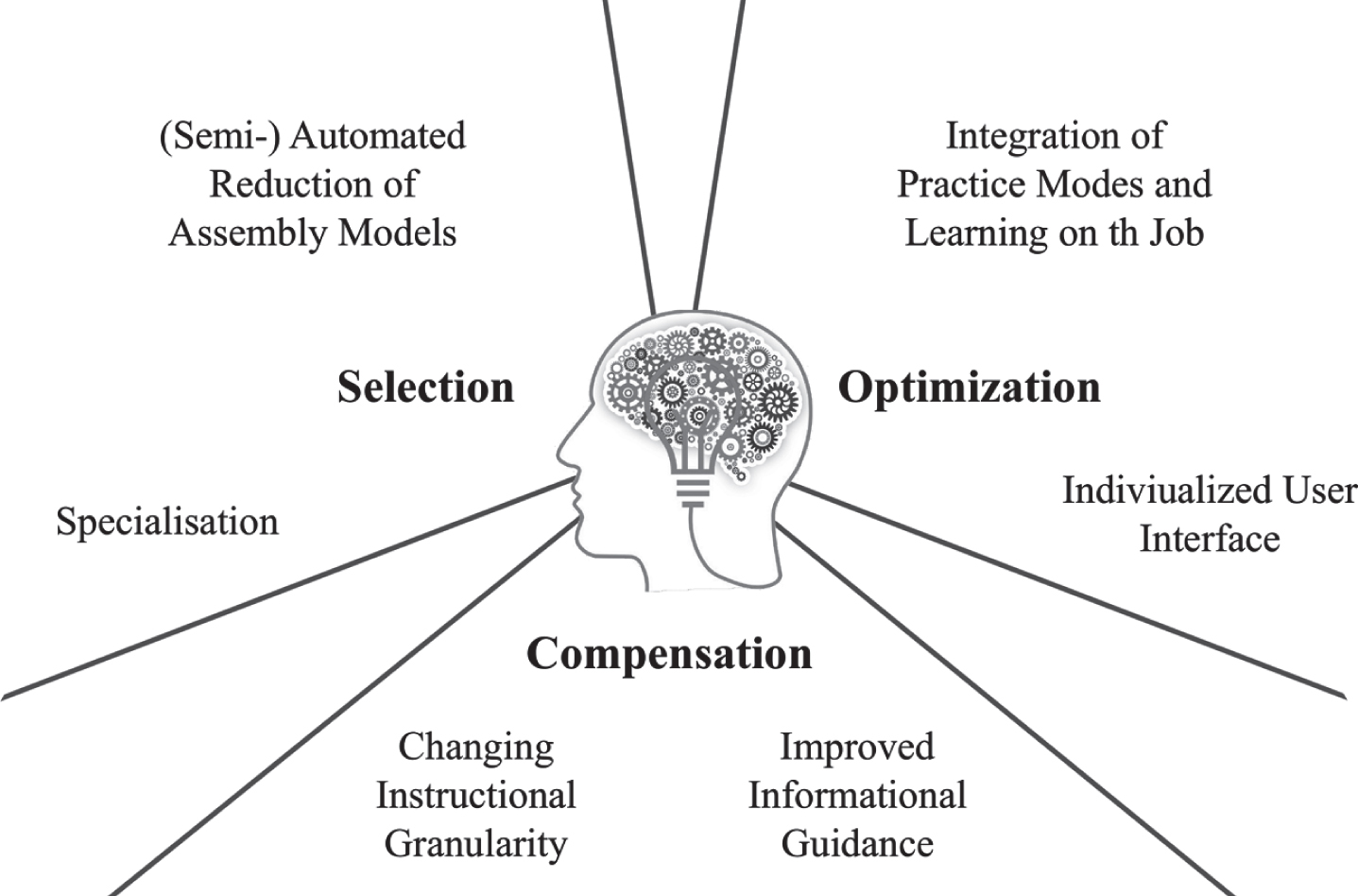
Application of the SOC model to information assistance systems in manual assembly.
Approaches to support the selection strategy might include an (semi-) automated, skill- and knowledge based, reduction of the to be assembled models. Closely connected is the idea of using machine based/controlled suggestions or gamification approaches to nudge workers to specialize on specific model groups. To fully implement such an automated selection approach changes and increasing flexibilization in work organization become necessary. Such selection processes always require managemental control and a perfect integration of the IAS in the companywide IT infrastructure.
The ability to individualize or customize the IAS will have a big impact on most strategies and the overall usability and acceptance, but the biggest influence will be seen for compensational strategies. Being able to change fonts, font sizes and contrasts might be an easy way to cope with perceptional problems. The integration of some kind of practice mode or on demand learning environment will offer the ability to reduce insecurities and help to support a life-long-learning perspective on the job.
The best-case scenario for compensational strategies would be the implementation of physiological based MWL measurement. An automated adjustment of the shown instructional steps (reducing informational load by showing multiple sub-steps instead of a single larger one) can help to reduce the overall workload. Additionally, better informational guidance, e.g. using a pick-by-light approach, can help to reduce search times and not only increase efficiency but also lower the informational load.
Using participatory ergonomics or participatory approaches to develop IAS, age-related changes can be taken into account through the early involvement of an age-diverse team [72, 74]. A continuous integration in change management and improvement processes combined with appreciation of the knowledge of the aging workforce can help to overcome occurring effects of disengagement or disenfranchisement [95]. Using a universal technique design approach might further help to design an IAS that can be used by all ages. Although age-related MWL differences may exist in the workforce, an IAS should be able to compensate for these, with similar techniques to those that would help less experienced, younger, or distracted colleague.
The overall picture for manual assembly in small and medium sized companies in Germany for the near future seems to be a positive one. Even with an ongoing digitization, occurring demographic changes, and a necessary diversification of their product portfolio to compete in global markets, IAS seem to offer a, comparatively, low budget solution to handle the increasing complexity by supporting employees with individual experiences, competencies, and mental workload limits. From our point of view, especially the integration of physiological based MWL measurement to control the IAS is a reasonable way to fit and control the informational support to the individual’s momentary, not necessarily salient, demands. For a successful conceptualization and design of such MWL based IAS solutions several aspects have to be addressed and further research is needed in the fields of sensory development for brain-based neuroergonomic research methodology, occurring privacy concerns, user acceptance of both the IAS itself as well as the measurement methodology, and a sufficient improvement of the theoretical basis of MWL.
Technology-wise the development of new sensors seems to be unpredictable. With the biggest global players already engaging in AR and BCI development it remains unclear where this will actually lead, but it will definitely help to get employees used to wear and applicate sensors. As normal as it is nowadays to wear a smartwatch, it will probably become to wear a device that is able to measure brain activity even at work. The broader the spectrum of users becomes, the more arises the question of privacy issue beside ease of use and usefulness of the device [96–98]. Especially in the context of work, it becomes necessary to deploy data privacy concepts that guarantee, that the data is only used to control the IAS but not to surveil the employees.
To guarantee the usage of an IAS it is important to reach a high user acceptance. Thus, participatory product development as well as the usage of focus groups and key users should improve the perceived usefulness of the IAS, the task-technology-fit, as well as the ease of use, key aspects for the usage of technological devices as well as software [99, 100].
While the usage of future measurement technologies from a sensory and user acceptance point of view might be a surmountable challenge, the concrete interpretation and derivation of measures within the framework of a neuroergonomic-theoretical model remains problematic. Neuroergonomics is closely connected to the work of Raja Parasuraman [39, 102]. This approach stresses neurophysiological methods and miniaturized and mobile measurement techniques. Central is the idea of brain-based metrics, which could be applied to brain processes and causally connected to different outcomes of performance. With the help of technically sophisticated measuring instruments and tools of data analysis a non-invasive and non-interruptive continuous measurement at the workplace will become possible. This implies high temporal and spatial resolution of the resulting brain activity data. The main practical promise is that states and changes of mental load of specified areas of the brain can be quantified on a rational level and even be prevented by early triggering of cognitive countermeasures. Theoretically this approach emphasizes “a shift from limited cognitive resources to characterize impaired human performance and associated states with respect to neurobiological mechanisms” [31]. This program implies a general departure from the use of dispositional constructs (like cognitive resource or mental load), it suggests to get absolute measures of states (where in psychology so far only comparative judgments are possible) and a determination of exact limit values (which has not yet been achieved in physiological psychology) and ultimately a turn to the biophysical and biochemical view of the brain and motor activities and a corresponding theoretical language. The complete realization of such a theoretical approach currently seems to be hardly possible in the short term, as well as to predict the effects of such a shift on the practice of ergonomics.
Conclusion
Let us start with a warning. In complex systems, any prediction of future conditions is extremely difficult. The interplay of interdependent trends is currently difficult to analyze and thus hardly predictable in the longer term. When completing such a task, people therefore like to resort to so-called heuristics, which allow one to replace a difficult task based on thorough analysis with a lighter one based on intuition [103]. This could mean, for example, that currently discussed technical developments are simply projected into the future. Prediction becomes projection. People seem to assume, that what has so far become recognizable (e.g. automation) or what is currently much talked about (digitization, Industry 4.0, or AI) will continue to develop linearly. Any possible so-called regression to the mean, i.e. a departure from an expected linear trend towards an ever better or worse performance in the future, is hardly eyed even as a possibility. People believe in stability.
Modern, as well as future, assembly work is no longer manageable relying only on worker’s intuition and routine. This has its reason in digitization: It not only enables globalization, but also an increasingly sophisticated production of finely differentiated products and product variants. The IoT makes it possible to handle ever larger amounts of information in ever faster time and to integrate it into more productive and highly flexible workflows. Thus, informational complexity of assembly work will increase continuously, probably even in an exponential manner. Additionally, the organization of operational infrastructure has to be adapted to increasing informational affordances, in order to realize necessary increases of economic efficiency. This twofold development represents an enormous challenge for employees‘ competencies, cognitive resources, and regulation of mental work load especially in the multi-variant manual assembly industry.
This development often triggers fear. However, digitization will not only path the way for a higher economic efficiency, but also enables improved pre-vention and ergonomics, e.g. by facilitating increasing information processing and simultaneously avoiding impending states of mental overload. For this purpose, IAS can be implemented, which use data from various sources on the basis of a networked infrastructure in order to control and document the interaction of order and execution of work under aspects of health and health maintenance. However, such systems are only accepted and used if they are able to take into account the individual cognitive capabilities of the workers [26]. Due to increasing assembly complexity more and more decisions, selections and executional differentiations are required, making it impossible for the worker to solely rely on intuition and routine. In these cases, IAS provide information that helps to avoid more complex and time-consuming cognitive processes of information analysis. As a result, mental overload can be avoided in the future despite increasing flexibility.
Such improved prevention is only possible because digitization also creates new opportunities for occupational health and safety. These are based on improved measurement technology and data analysis. In the future, science will continuously elaborate the ability to record and evaluate mental states during work via non-interruptive instruments. From this data, short-term countermeasures can then be initiated in real time, ranging from warnings to simple tips for behavioral prevention. Of course, this data can then also be used for longer-term structural prevention. It is to be expected that such diagnostic functionalities can still be refined if complex psycho- and neurophysiological data patterns are analyzed and evaluated via machine learning algorithms. Digitization will thus serve productivity as well as occupational safety in the same way, but it will also prompt politicians to think more about the limits of the use of digital control technologies [39].
Ethical approval
Not applicable.
Informed consent
Not applicable.
Conflict of interest
The authors declare that they have no conflict of interest.
Footnotes
Acknowledgements
The authors have no acknowledgments.
Funding
The authors acknowledge the financial support by the Federal Ministry of Education and Research of Germany in the project Montexas4.0 (FKZ 02L15A261).