



Abstract
BACKGROUND:
Small-scale industries (SSI) are the global economy’s backbone since most industrial workers are connected. Most of these workers are contractual and temporary without appropriate training. Also, the SSI does not have a standard workplace with an appropriate layout and infrastructure, as they manage with minimum resources. Therefore, the work hazards, i.e., musculoskeletal disorders and fatigue, often go unnoticed as holistic postural risk methodology is still scarce for identifying the awkward postures in SSI.
OBJECTIVE:
The present study proposes a novel holistic methodology to track and mitigate awkward postural risks in human-physical activities in SSI. To determine the effectiveness of the proposed methodology, a case study is presented in the South Indian Pump industry, wherein a critical workstation with a complex ergonomic work environment is employed.
METHODS:
An ergonomic evaluation was conducted empirically and numerically in the workplaces using Digital Human Models. In numerical evaluation, three virtual workspaces have been created to redesign the identified crucial workstation, focusing on ergonomics and workflow.
RESULTS:
The results obtained from the case study are encouraging for to use of the novel methodology in SSI. The case study reports that the proposed design significantly reduced the REBA score and WISHA lifting index by 6 and 1.20, respectively, without significant investment.
CONCLUSION:
The proposed methodology could encourage research to identify awkward posture in SSI.
Keywords
Introduction
Small-scale industries (SSI) are essential in the global economy as they contribute to economic growth, livelihood, and local development opportunities. For example, in the SSI segment, the global submersible pump market is projected to exceed US$ 14.45 billion by 2031 [1]. Furthermore, its contributions towards economic diversification and innovation are also critical. It can be noted that SSI has unique and non-standard workplaces, which range from traditional, family-run businesses to current technology-driven operations [2]. Often in these workplaces, workers perform their daily operations in a small, congested space with limited resources. The non-standard and congested workplace can impact workers’ physical and mental health, depending on the situation and context. Notably, its impact is evident regarding work hazards, absenteeism, fatigue, and product quality [3]. Furthermore, it is noteworthy that SSI primarily operates with contractual workers that lack appropriate job training resulting in the magnification of work hazards. Maintaining proper work postures in SSI is extremely important during the required work otherwise, the workers are prone to musculoskeletal disorders (MSDs) [4]. A holistic methodology is required to assess the proper work posture, particularly for SSI, wherein non-standard workplaces and contractual workers dominate.
Multiple studies on ergonomic investigations were conducted using the operator’s abilities and limitations [5]. Sitting, standing, lifting, pulling, and pushing are examples of activities associated with ergonomic design [6]. The major part of ergonomic design involves the study of arranging or developing workplaces, products, and systems to suit the needs of the operators involved [7]. The significance of the operator’s body posture and motion is critical during ergonomic assessment [8]. Matching the job’s requirements to an operator’s ability is the most effective way to lessen the risk of MSDs. An operator’s posture during work can influence the level of fatigue experienced by the individual [9]. As a result, operators must maintain a suitable posture in the workplace. There have been few investigations on applying ergonomic principles in SSI, particularly in submersible motor assembly lines. Normal time, work posture frequency, heart rate, level of postural risks, noise level, lighting intensity, rest period, and apparent workload level are the criteria to be considered during the assessment. Intrinsic motivation can mediate between organizational support and occupational fatigue, suggesting that augmenting motivation may effectively combat action fatigue [10]. Intrinsically motivated workers may be better equipped to handle the demands of their occupation and may experience lower fatigue levels. Thus, focusing on strategies to increase intrinsic motivation may be a beneficial avenue for reducing occupational fatigue. The three simulation software tools employed in a design team to interpret ergonomic principles were evaluated with respect to physical, cognitive, and organizational Human Factors and Ergonomics (HFE) indicators. To bridge the gap between these software tools and enhance the perspective of job sequences in a virtual environment, the research suggested a physical illustration of a Virtual Reality (VR) platform is beneficial [11]. Designers should consider the needs of all age groups when designing for ergonomics [12]. The researchers investigated the postural control of lower limb exoskeletons while the subjects reached for a 3 Kg dumbbell. Results reported that exoskeleton-induced postural control impairments might be unsuitable when reaching for objects of similar weight [13]. The exploration of fluoride exposure on MSDs in the metal smelting industry shows that compared to other predictors, viz. Job nature, posture at work, and worker age, fluoride exposure plays an essential role in MSDs [14]. Human factors and ergonomics research can potentially improve the efficiency and safety of submersible motor production lines [15]. Human muscle offers limited power. Thus, human-powered equipment must be designed with ergonomic principles [16]. Automatable assembly operations can lead to operator fatigue and MSDs without ergonomic considerations. Biomechanical factors may also influence behavioral determinants, causing humans to adopt incorrect postures, resulting in MSDs [17]. The implementation of ergonomics in SSI demands a delicate balance between optimal resource implementation and human comfort in the workplace [18].
The methodology has gained recognition as an effective tool for evaluating and mitigating musculoskeletal disorder risks in various occupational settings. Nagaraj et al. [19] evaluated the working conditions of machine workers while performing sewing machines. They applied Rapid Entire Body Assessment (REBA) to assess postural risk factors in lower joints. Madani and Dababneh [20] reviewed REBA regarding its applications and signified the importance of industrial health. Kee [21] compared REBA, Rapid Upper Limb Assessment (RULA), and Ovako Working Posture Analysing System (OWAS) and noted that RULA is the best for postural loads. Similarly, Cremasco et al. [22] found RULA to be an exemplary method. Hita-Gutiérrez et al. [23] reported that the REBA popularity is caused by digitization. Additionally, Daneshmandi et al. [24] examined the validity of RULA in the context of assembly line work. They collectively affirm the effectiveness of RULA as a valuable tool for ergonomic risk assessment in various workplace scenarios. Nelson and Hughes [25] conducted a comprehensive validation study of the Washington State Department of Labor and Industries’ WISHA Lifting Index across different industries. Rezaei et al. [26] applied the index to assess the risk of low back pain among nursing home workers, while Lu et al. [27] utilized it to evaluate lifting tasks in the construction industry. These studies collectively demonstrate the utility of the WISHA Lifting Index in quantifying and mitigating the risks associated with manual lifting activities.
From the above discussion, it can be concluded that the following questions still need to be resolved: (a) How is the risk assessment mainly conducted in small-scale industries? (b) Can risk assessment be related to financial resources and time, (c) How South-Indian small scale, i.e., the pump industry, implement ergonomic risk assessment and improve worker’s postures? In order to answer the questions mentioned above, the current study proposed a novel, holistic methodology designed to run thorough exploratory and empirical research and address the issues regarding risk-mediated postures.
Methodology
The present study proposed a novel and holistic methodology assessing the risk associated with work postures. It has four levels: input level, verification level, ergonomic risk assessment level, and validation level. The input level provides an indication or reveals the presence of pre-existing problems. Verification level checks whether the problem needs further investigation or not. At the risk assessment level, posture, external factors, cognitive, psycho-physiological, and macro analyses are performed based on context. Lastly, the Validation level is performed using postural correction, redesigning the existing environment, data corroboration, and recommendation for implementation. The detailed risk methodology levels are presented in the subsequent sections.
Input Level
The input level comprised operators, middle-level, and higher-order management. Moreover, the input level decision can be further extended based on the industry types. In SSI, the operator belongs to low-level management. They perform various physical activities to complete work. The primary job of an operator is to monitor and adjust production parameters by ensuring that products meet established quality standards. The work orders would be interpreted to determine product specifications. The operator’s responsibilities majorly include the task of ensuring the safety regulations at the workplace, monitoring the production equipment performance, troubleshooting and repairing equipment malfunctions, tracking and recording production data, training new operators on machine operation and safety procedures, participating in the maintenance and development of production processes, maintain a clean and organized work area, and assist in other areas of the production process as needed. Operators are frontline workers prone to physical fatigue and postural complaints due to the nature of their work. Operators are responsible for the input of data and the operation of machinery and can become physically strained from repeated motions. Operators would mention their postural problems in terms of fatigue and overload.
As per hierarchal order, operators communicate their physical fatigue and postural complaints to the middle-level management to ensure their safety and comfort while performing their job. Middle-level management would listen to the operator’s complaints to adjust their workload and environment. Operators may experience physical fatigue due to multiple reasons. For instance, repetitive motions, such as lifting, operating machinery, and sitting in a static position for extended periods, cause fatigue. Operators may also experience postural complaints due to poorly designed workplaces, uncomfortable chairs, and inadequate lighting. Middle-level management must recognize and address the operator’s physical fatigue and postural complaints to ensure safety and comfort. Middle-level management must proactively provide operators with ergonomic workstations, comfortable chairs, and adequate lighting to reduce physical fatigue and postural complaints. Operators should also be encouraged to take regular breaks and stretch throughout the work. Middle management would register postural complaints regarding operators not working, low productivity, and low-quality products.
High-level management has been aware of the postural complaints from process managers regarding operator inputs and physical fatigue. The process managers have reported multiple issues, such as operators having to perform repetitive tasks, sitting for prolonged periods, and using awkward postures. High-level management has considered these complaints and is looking into ways to improve workplace ergonomics. They want to implement a new risk assessment process to identify potential risks to the operator’s health and safety. This process includes an evaluation of the working environment, the use of proper body mechanics, and the provision of appropriate equipment. High-level management has also looked into reducing the physical strain on operators, such as introducing flexible working hours and job rotation. They wanted to improve the workplace design and layout to ensure operators are not required to perform awkward postures or reach for objects too far away. High-level management can also set up programs to provide better education and training to operators on using tools and equipment safely and efficiently. In addition, they wanted to implement policies to ensure the operator’s safety at work. High-level management can register ergonomic problems in terms of operator absenteeism, statistics of rework, and machine hour usage.
Verification level
The verification level checks whether there is a requirement for ergonomic study by a preliminary study. The study of fatigue measurement aims to investigate the physical fatigue of operators and their postural complaints to process managers in the workplace. The study would survey operators to assess the fatigue they experience in their work environment. The survey would include questions related to operator fatigue, including time spent on tasks, the number of rest or breaks taken, and the type of physical activity performed. Additionally, the survey would collect data related to postural complaints from process managers, such as the difficulty of tasks, the comfort level of performing the task, and the availability of resources to complete the task. Moreover, the study would also measure the physical fatigue of operators by collecting data on the amount of time operators spend in a given workstation and their posture during work. Furthermore, it would assess the effects of operator fatigue on their performance and overall satisfaction with the process. In addition, it also measures the impact of postural complaints on the process’s efficiency and the operators’ satisfaction. The data collected in the study would be analyzed to identify areas of improvement and develop strategies to reduce fatigue and improve ergonomics. The data would also be used to evaluate the efficiency of the process.
Risk assessment level
Risk assessment (RA) evaluates the physical working environment to identify potential risks that could cause MSDs or other health issues. It involves assessing the workplace for any factors that could increase workers’ risk of injury or discomfort, such as incorrect posture and repetitive motion. A risk assessment should be conducted regularly to identify and address potential hazards. Risk assessments are conducted at various levels, from simple self-assessments to more detailed assessments by a professional ergonomist. The level of assessment is based on the complexity of tasks being performed, the number of employees involved, and the potential risks associated with the workplace.
A. Posture analysis based on anthropometric data
Posture analysis is used to identify and analyze body posture from anthropometric data. It is typically used to assess the body’s alignment with gravity and to determine any asymmetries or misalignments in the body. Anthropometric data is collected from various sources, including body shape and size measurements, joint angles, and joint range of motion. Posture analysis studies can evaluate the effects of physical activity, injury, or disease on the body and assess the effectiveness of different treatments. It can also be used to provide insight into the body’s biomechanics and improve the ergonomic design of equipment and environments. Anthropometric data serves various purposes, such as health assessment and identifying potential health risks. It is essential to highlight that the collected anthropometric data from the workers was utilized to create precise virtual environments containing digital human models. This approach significantly enhances postural analysis accuracy.
B. External ergonomic analysis based on sensors
External ergonomic analysis based on sensors involves determining the physical risk factors of a given environment by measuring its temperature, humidity, air velocity, and air quality. Sensors used in the analysis can measure various parameters such as body temperature, posture, heart rate, and skin temperature. This analysis is often used in healthcare and industrial settings to identify potential postural hazards and help prevent MSDs. By using sensors to measure the physical environment, it is possible to detect potential risks before they become a problem for the user. External ergonomic analysis based on sensors can also detect environmental changes that may increase the risk of injury or illness for the user.
C. Cognitive analysis
The cognitive ergonomic analysis evaluates the mental processes involved in a task to identify any potential sources of human errors. This analysis uses a combination of cognitive psychology, ergonomics, and human-computer interaction to create a detailed understanding of the cognitive processes involved in task completion. It seeks to identify any potential sources of human errors and make recommendations for improvement in the design or performance of a task. This analysis can identify potential problems with both physical and mental aspects of task performance, such as fatigue, lack of concentration, and mental load. It is essential for improving user experience and task performance in various applications, from medical equipment to software development.
D. Psycho-physiological analysis
Psycho-physiological analysis is an approach to understanding the relationship between physical and psychological characteristics. It explores how the mind and body interact to create an individual’s behavior and mental processes. It is an interdisciplinary field that combines psychology, physiology, and neuroscience to study the relationship between the body and the mind. It aims to identify the link between mental and physiological states and how they influence one another. This approach provides insight into the biological, psychological, and social factors contributing to an individual’s behavior, emotion, and cognition.
E. Macro analysis
Macro analysis in ergonomics is a process of examining the relationship between humans and their work environment. It is used to identify job tasks, equipment, and physical working conditions that can cause stress and fatigue. It also helps to identify postural risks at the system level before they result in injury or illness. It involves observation, data collection, and work environment analysis to identify potential hazards. It aims to provide recommendations to improve the overall ergonomic design of the workplace.
Validation level
The validation level consists of posture correction, work environment redesign, data corroboration, and implementation recommendations, as discussed in the subsequent section.
A. Posture correction
Posture correction is changing a person’s posture to improve their overall physical health [8, 9]. It leads to several physical issues, including back and neck pain, headaches, poor circulation, and respiratory problems. It involves various methods, such as stretching, strengthening, and postural awareness. It can benefit an individual’s physical and mental health, reducing pain, improving circulation, and improving mood and self-confidence.
B. Redesign of the work environment
The redesign of the work environment according to posture correction encourages employees to sit up straight and maintain good posture at their desks. Adjustable chairs and ergonomic principles can be installed to promote a comfortable work environment and reduce the risk of back and neck pain. Using standing desks allows employees to move around and stretch periodically throughout the day while being productive. Adding footrests and armrests can provide extra support and comfort while sitting. Employers may also consider adding treadmill desks, which allow employees to walk while working. It can help to reduce stress and fatigue while increasing concentration and productivity.
C. Data corroboration
Data corroboration in ergonomics uses observations and measurements to validate data accuracy. This process ensures that the data collected is reliable and can be used to make accurate decisions. It helps identify errors, such as incorrect calculations, formulas, and assumptions. It can also be used to identify potential safety hazards and design issues. It is essential for ergonomic research to ensure data accuracy and improve the workplace’s overall safety and comfort.
D. Recommendation and implementation
Recommendation and implementation of ergonomics are essential for any workplace to ensure employees’ comfort and safety. Implementing ergonomic recommendations and interventions can help reduce the risk of injury or illness, increase efficiency and productivity, and improve employee’s overall health and well-being.
Case study
The present study focuses on the south Indian pump industry in Coimbatore, India, with an emphasis on operator productivity and ergonomic considerations. It is observed that many industries prioritize operator productivity but fail to assess work using ergonomic metrics. The assembly line, which is central to submersible motor production, significantly impacts operator productivity. Factors such as repetitive tasks, improper workstation arrangements, and outdated tooling methods can lead to decreased productivity. The repetitive nature of assembling submersible motors also poses a risk of musculoskeletal disorders (MSDs). In light of these concerns, a work study was conducted to examine the existing assembly line and understand its current setup. Figure 1 provides an overview of the proposed methodology. Borewell submersible pumps play a critical role in the agriculture industry for groundwater pumping, with a significant number being produced in small-scale pump manufacturing facilities. Operators often express fatigue and complain to management about the strain caused by repetitive tasks. These complaints arise due to the lack of standardized frameworks and ergonomic requirements in operational procedures within small-scale industries. Creating a fatigue-free work environment is crucial for protecting the health and well-being of operators.
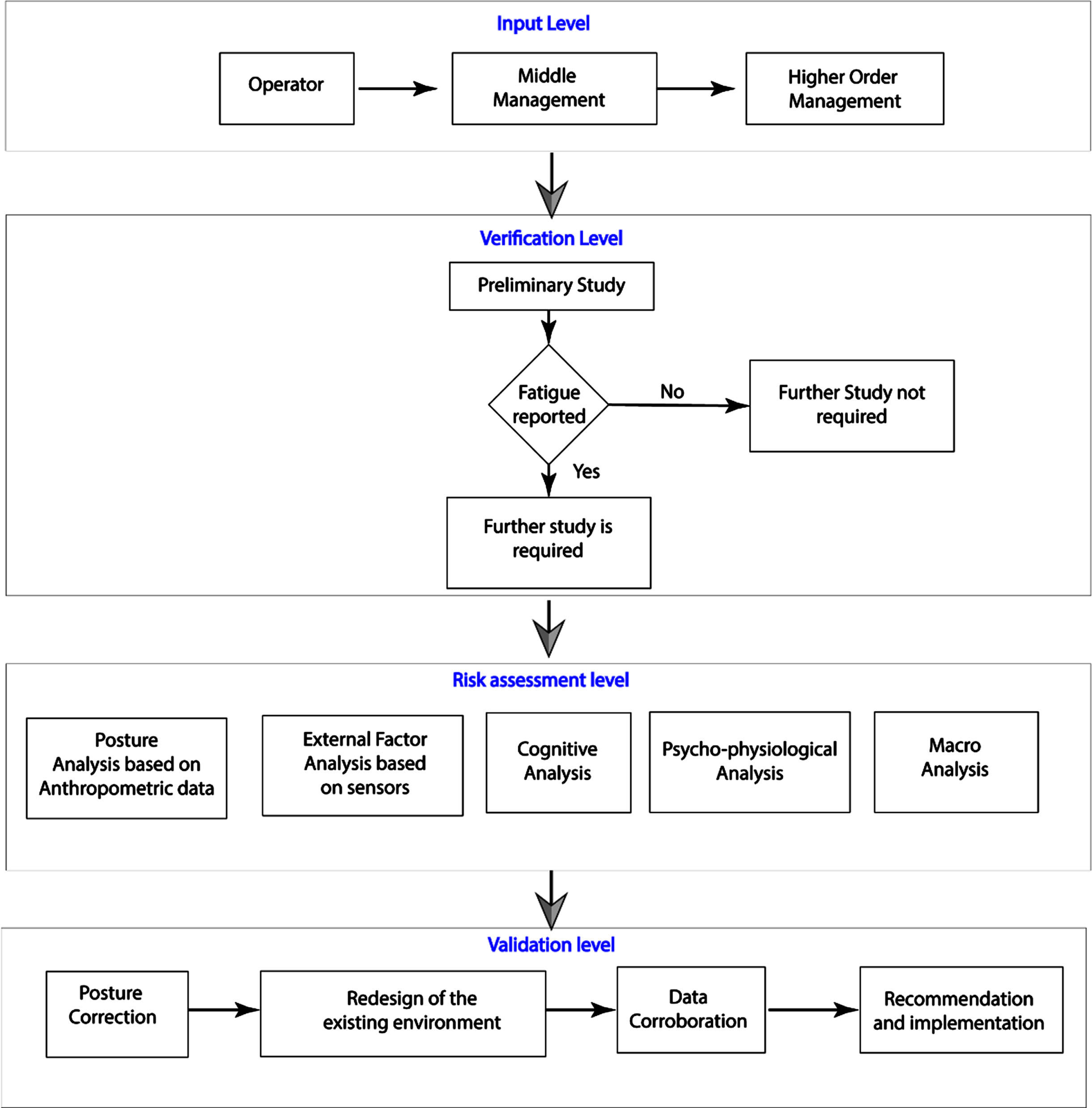
Risk assessment methodology.
Input level: Pump industry
In Coimbatore’s SSI pump production unit, the operators performed various physical movements involving assembly operations during the pump production. The workers complained to the middle management about their physical fatigue, which was later passed on to the top management. The top-level management was also very much concerned about the worker’s health on human grounds. Additionally, the absence of a skilled operator due to ill health directly affects productivity.
Verification level: Pump industry
Per the top-level management’s request, a preliminary study was conducted among the assembly line operators, middle-level management, and human resource personnel. In the preliminary observational study, the operators were asked with a questionnaire to understand their work culture, like the heavyweights handled by them, vibrations, if any, during the work, break between the assigned works, and pain points. Further, the assembly line process managers were examined about the usage of safety gears during the assembly operation, approximate downtime of the line, and productivity. Finally, as top management representatives, human resource managers were interviewed about the illness reported by the operators, average leave per month, and physical injuries reported in the assembly line. The manual assessment was done for the operator’s sitting and standing postures. Later, the below questions were used as a questionnaire at this initial stage for better observation. Whether the spine is neutrally aligned with the axis? Do shoulders and elbows relax while performing the task? Is the wrist neutral aligned? Are the legs supported? Are the feet aligned correctly in the ground?
From this input level investigation, the conclusion is fatigue is reported, and it was suggested to examine the operator’s physical movement and work fatigue to observe further in detail.
RA Level: Pump industry
With this input, a work study was conducted in the assembly line as a part of the work measurement. Figure 2 depicts the existing setup’s layout structure.
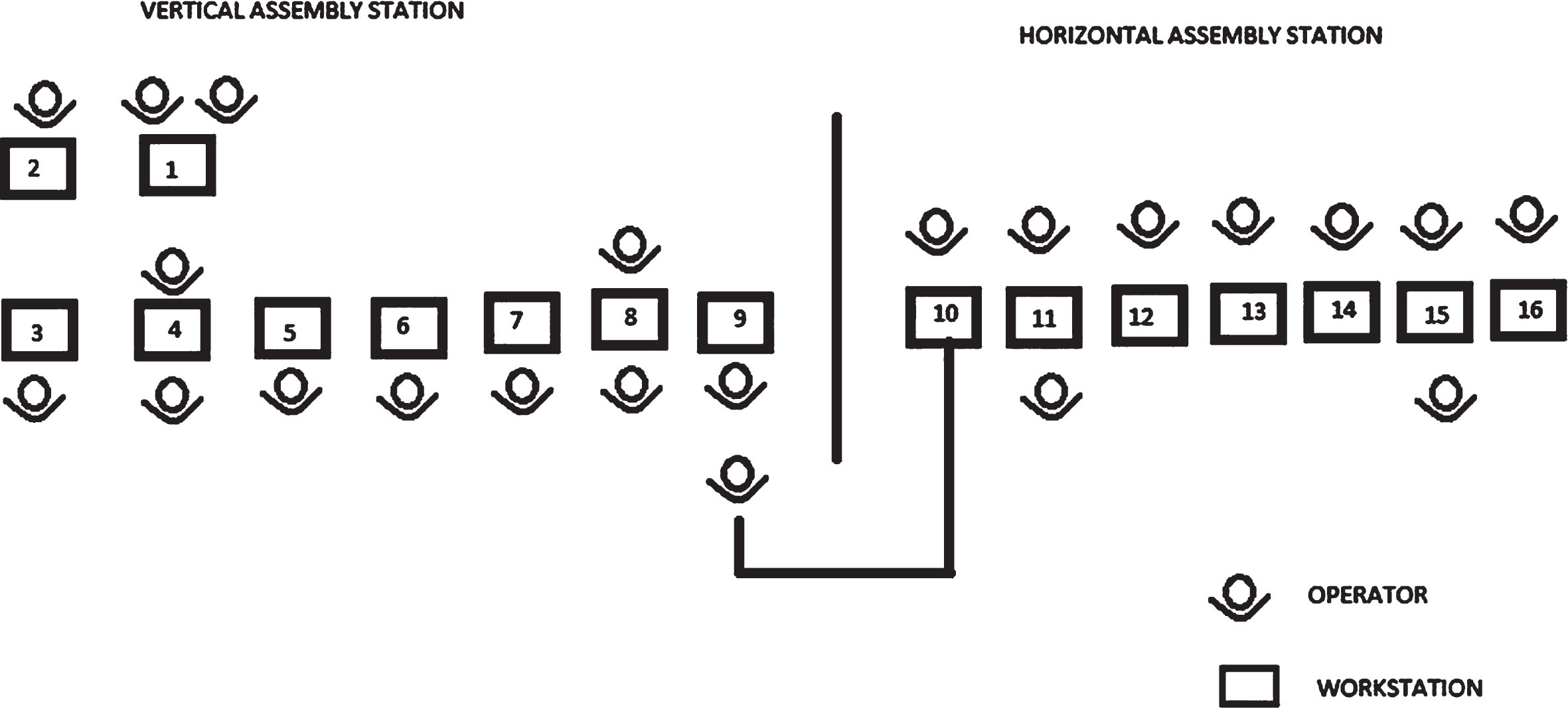
Layout of the Existing Submersible Pump Assembly Line.
The procedures were informed to obtain the consent of the operators. The physical activities were video graphed using a digital camera. The present study considered an RGB camera, Canon PowerShot Pro Series S5 IS, Japan). The subject (human) was video graphed from 3 latitudes and 8 longitudes (i.e., –45 degrees to +45 degrees) coordinated simultaneously such that every motion of the subject can be captured at different angles. The spinal movement is then tracked from images (frame by frame) from the captured video footage. Thereafter, the scores are generated based on images. The photos are taken in frame from the same camera. The postural angles were categorized from the images extracted from the video captured. The maximum value of postural angles was considered while applying the ergonomic assessment. During work performance, postures were taken to examine the data gathered from workstations 1 to 16. The photograph was shot when the work-study was carried out at the first workstation and is shown in Fig. 3.
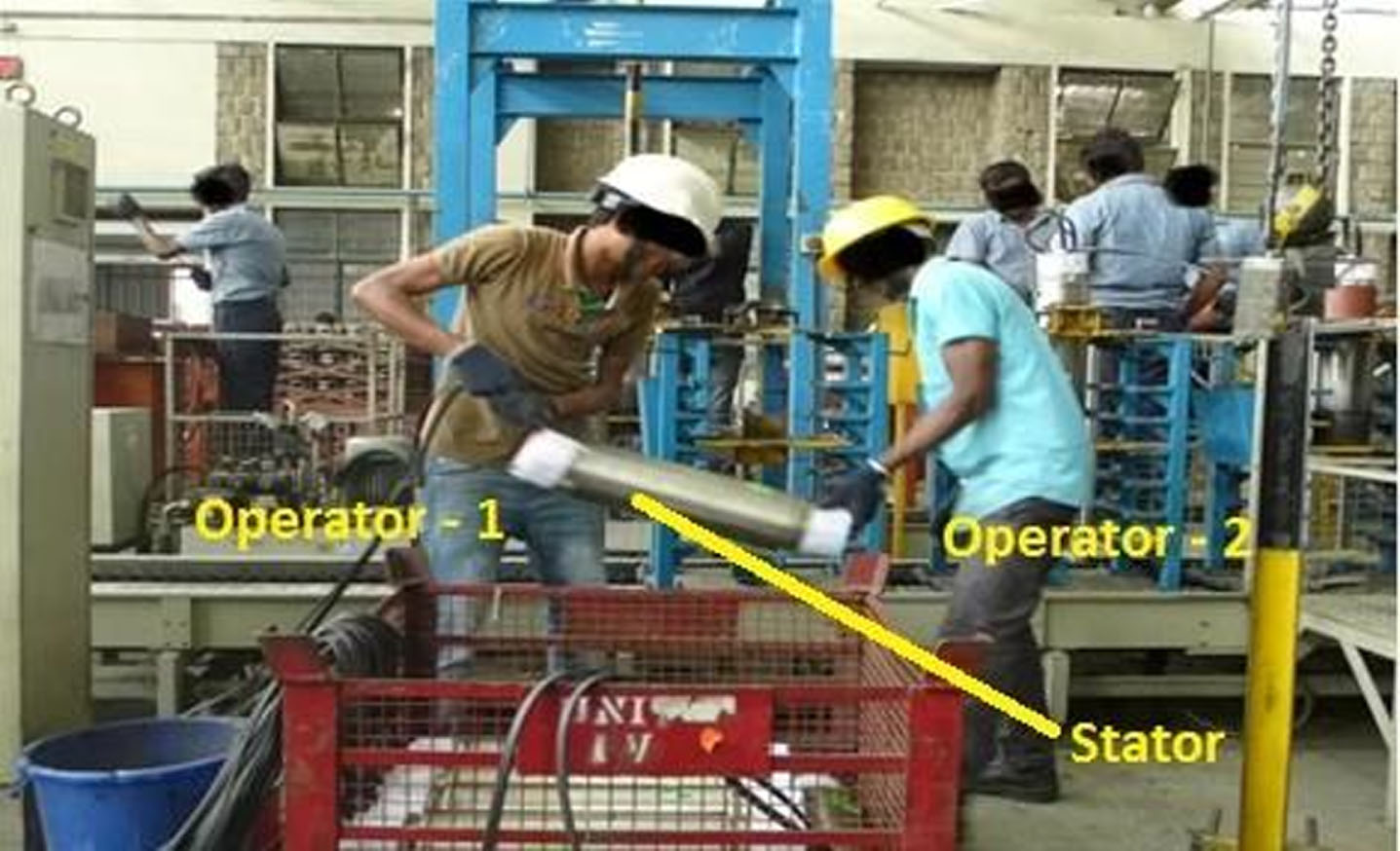
Ergonomic activities being carried out at workstation 1.
In order to carry out the analysis effectively, the recorded video was further split into minor elements. The activities were categorized based on the operator’s motion. The simultaneous movements of both hands were documented using Therbligs notations in a two-handed chart, as illustrated in Table 1.
Simultaneous motion study data gathered by observing station number - 1
As noted in Table 1, the two-handed chart includes information on the work aspects and the time required to complete the task, which was documented using a stopwatch. The data from the work-study was referred to identify a particular fatigue-prone workstation among the available 16 workstations. The work environment was examined for the stresses created by thermal stresses, viz., fire hazards and optimal temperature for working. Also, the creation of noise stress and eye stress due to improper luminous intensity was assessed with suitable aids. It was observed that no thermal, noise, or luminous-influenced stress was present. Subsequently, physical working posture was photographed during the assembly workstation activities. The postures were modeled using Digital Human Model (DHM) in a virtual environment. DHMs were closely examined in a virtual environment to evaluate operator fatigue using RULA and REBA scores while pursuing the research reported in the present study.
The scores are shown in Fig. 4 using DHMs. As shown, out of sixteen workstations, the RULA and REBA scores were determined in the first eight workstations to be high. Afterward, operators at the first eight stations were observed working in their primary, secondary, and tertiary zones. A sample of observed motion study for operator one working in workstation number 1 has been shown by a two-handed chart (refer to Table 1). Furthermore, other observed motion study data are presented in the Appendix. Due to their work orientation, all existing stations numbered 1 to 8 have been classified as vertical assembly stations. The stator module was mounted vertically to the central axis of a pallet in station number one. All other components during assembly would be using the stator module as a reference point. Forward bending posture, body twisting, and heavy-load lifting have all been part of the process at workstation number one. Two operators in station 1 manually handle and load a stator assembly from a bin to a fixture. Operator 1 pulls the stator’s strangled wires from the bin and assists in assembling a protective casing and positioning the stator in a crane. Operator 2 uses a crane to assemble the protective shell at the bottom of the stator winding and mounts it on the fixture. The cycle time of completing the ‘Stator mounting assembly’ at station number one was 47.51 seconds. A semi-automatic conveyor system was employed in vertical assembly lines to assemble the components in the proper sequence.
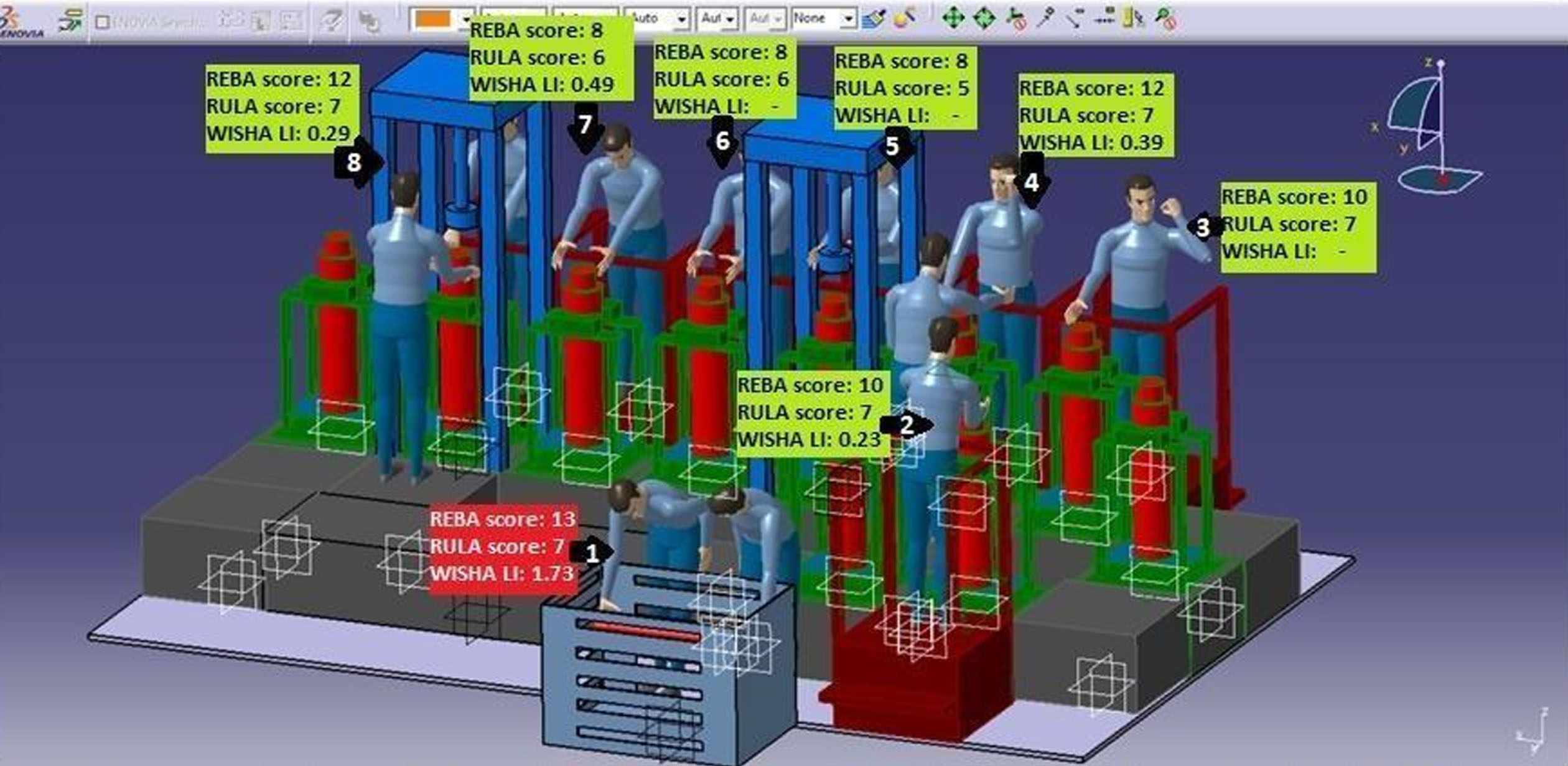
Digital Human Models Virtually Assessed for RULA and REBA Score.
RULA and REBA assessment ratings were obtained concurrently using photographs from selected workstations. Each experiment was repeated thrice to confirm the values and determine the maximum and minimum ergonomic work postural evaluation scores. The observation’s maximum value was considered the worst case for evaluation purposes. Table 2 shows a comparison of the obtained assessment data.
Comparison of obtained ergonomically assessed data
From work measurement, handling the stator by the operators at Station 1 is a critical task. As a result, stator weight must be considered a primary factor when redesigning a concept. With a WISHA lifting index of 1.73, the maximum weight limit was 25.50 lbs (11.57 kilograms) for each worker. As a result, the weight has been determined to be hazardous because the lifting index is more than 1. According to this observation, the working zone of operators in station number 1 rapidly changes from primary to tertiary zone with high repetition. The results of the REBA, RULA, and WISHA assessment methodologies strongly suggest that the current design is fatigue-prone and contributes to operator MSDs. The motion study data indicates that station 1 is the most critical workstation. As a result, it was decided to redesign station number one to eliminate the postural challenges.
DHM and computer-aided design (CAD) offer unique opportunities to include human factors indulgence throughout the design of workplaces, products, and systems. The created DHM was used in a CAD environment for virtual postural assessment. The design is compared with the CAD model analysis.
A.Redesign of the existing work environment
The DHMs and the existing work setup were digitally built and assessed. The anthropometric data stature function as height (s), waist height (w), and hand length (h) of the operators was obtained. During work, the weight to be lifted by the operator, frequency of lifting, duration of holding the weight, and angle of twist of the body were considered while building the DHM. A regression equation was formulated from the obtained data based on the operator’s anthropometric data of sample size 36 owing to small-scale industries with few human resources. The 95th percentile population was considered to incorporate the anthropometric data of operators who fell within the 95th percentile range of the collected measurements. New designs related to the first workstation were modeled, examined, and compared with the old setup using the proposed novel methodology. The proposed work environment design model reduces the actions the body parts perform. Ergonomic assessment procedures such as REBA, RULA, and the WISHA provide information on risk levels. WISHA’s lifting calculator evaluates manual material handling jobs. Design 1 - Roller-slope conceptual design:
The first alternative was termed as “roller-slope” concept design. The stator carrying bin in the first alternate work environment design has an opening on one side and is latched on the other. Figure 5(a) shows a carrying bin with a stator assembly placed in a hydraulic scissor lift. An inclined slope is provided to transfer the stator assembly to the fastening. For ease of movement, rollers are attached to the slope. The operator would slide the stator over the rollers until it reached the bottom of the slope. While carrying out the virtual assessment trials, the slope’s inclination angle was kept at 10 degrees to allow for manual pushing and halting. The adjustable height of the scissor lift’s carrying bin would make it easier for the operator to move the stator body through the transferring slope. When the stator assembly reaches the bottom of the slope, it would be easily guided into the fixture. Low-rolling nylon rollers would ensure the heavy stator body would start moving without damage. Nylon rollers have a high life expectancy because they resist wearing, tear, and impact. As a result, the roller-slope idea design would eliminate the operator’s bending, lifting, and body twisting. Design 2 –Clamp fixture conceptual design:

Digital human models of developed conceptual redesigns.
The second alternative is called a clamp fixture concept design. This design is shown in Fig. 5(b). This figure illustrates that the stator assembly is positioned vertically in the carrying bin and locked with a special clamp during preprocessing. A roller base would drag the preprocessed stator assembly out of the carrying bin. The hydraulic scissor lifts position the carrying bin with preprocessed assembly. A unique feature was added to the side of the fixture. The unique feature would be a wheel to position and roll over on the inclined connecting rod design. A rotating hand wheel would be used to vary stator orientation as needed by the operator, who clamps the latch lock. As a result, the procedure could be completed with minimal manual work. According to the virtual assessment, the clamp fixture conceptual design would significantly reduce human handling effort. However, it also demonstrates that the stator carrying bin necessitates a customized design, further decreasing the carrying capacity. The assembly line requires frequent replacement of the carrying bin due to reduced bin carrying capacity. As a result, internal logistics and material mobility would be improved. Pre- and post-processing activity is also enhanced due to carrying bin design customization. These design interpretations would add to the lead time, investment cost, and productivity loss, which acts as a significant disadvantage, and therefore, the present study does not recommend design 2. Design 3 –Guiding rod conceptual design:
In the third alternate work environment design, they are referred to as the “Guiding rod” conceptual design, stator assemblies are placed in a carrying bin. A scissor lift would be used to hoist the carrying bin. As shown in Fig. 5(c), an inclined setup with guiding rods is presented. The stator assembly would be dragged from the bin and aligned with the guiding rod. The stator would be guided by the guiding rods to fasten. The stator assembly would be subsequently sent to the assembly station, along with the guiding rod. The stator assembly can be moved easily due to the nylon rollers embedded in the guide rods. The stator would be physically lifted and positioned on the vertical axis once it reached the slope’s end. The carrying bin at that point restricts the movement of the stator assembly by gently locking it. The design concept would decrease bending and body twisting while improving the operator’s load-carrying ability. However, the design, like the conceptual clamp fixture, has practical issues during implementation. The conceptual design of the guiding rod could not be implemented with the existing carrying bins. The currently used carrying bins must be replaced with customized carrying bins, which adds cost and time.
Three alternative work environment conceptual designs have been proposed to redesign the existing workstation 1. All three presented alternate work environment design concepts were selected, ranked, and evaluated using the PUGH matrix, as shown in Table 3. Cost, operator safety, dependability, simplicity, maintenance, fatigue, cycle time, preprocessing, the number of people involved, working space, line exchangeability, and product damage are studied during concept evaluation. The datum has been incorporated into the existing design. The best and optimal method for station number 1 was selected upon evaluating the developed conceptual designs. The results of the PUGH matrix assessment (refer to Table 3). To ensure the internal reliability, the obtained outcome was evaluated using Cronbach’s Alpha. The value of alpha was observed to be 0.82. Roller-slope conceptual design, clamp fixture conceptual design, and guiding rod conceptual design obtained an average score of 3, –2, and 0 on the PUGH matrix. As a result, the Roller-slope conceptual design was chosen for further investigation since it has the highest PUGH score. Table 4 shows the outcomes of the generated alternate work environment design conceptual design assessment. Further, the developed conceptual designs were virtually assessed using digital human models. The previously employed ergonomic evaluation procedures were used to evaluate the newly developed alternate work environment design concepts for station number one. WISHA load assessments were carried out to assess the roller-slope conceptual design and the guiding rod conceptual design. Since the clamp fixture conceptual design does not involve weight lifting, it was excluded from the WISHA assessment. Figure 6(a) and 6(b) illustrate the WISHA assessment results for the Roller-slope and guiding rod conceptual designs, respectively.
Pugh concept selection chart
Comparison of conceptual redesign assessment of DHMs

WISHA assessments of developed conceptual design.
All three alternatives for this work environment design were evaluated. The roller-slope conceptual design was chosen carefully because of its feasibility and resource-free practical application. Since the operator’s entire body is involved in the first station activity, the REBA score is more meaningful in ergonomic assessment, as referred in the methods section. The initial REBA score discovered for existing station number 1 was 13. The newly produced Roller-slope conceptual design achieved a REBA score of 7 and was found to be economical. Similarly, the WISHA lifting index for the Roller-slope conceptual design was 0.53. As a result, the risk has been lowered compared to the conventional workstation. To be more specific, the comparison of the REBA score for the proposed alternate work environment design model is lower than the current system. In contrast to the other two designs, it was found that the roller-slope conceptual design does have certain advantages. The submersible motor’s horsepower determines the height of a stator body. The proposed roller-slope conceptual design would make it easier to handle the difference in stator body height by using the same carrying bins. If the stator height varies, the other two conceptual designs require adjustment in the carrying bins. The clamp fixture conceptual design demands extensive preprocessing processes to adopt the movement of the stator body. The design requires a separate infrastructure to meet the preprocessing requirements. Also, the stator body transfer is limited in the guiding rod conceptual design due to the fixed curve of the slope. The feature also limits the bin’s carrying capacity, which adds to the lead time and cost. On the other hand, the developed Roller-slope conceptual design requires minimal modifications to the existing process and is thus robust and cost-effective. It is also modular, with rollers, scissor lifts, ground blocks, and other components, providing improved ergonomic conditions. Furthermore, the roller-slope conceptual design is more reliable due to using fewer standard engineering components. As a result, the expenses of implementation and maintenance would be reduced. The concept of a roller-slope design allows for the adoption of various size ranges with flat slope regions. Also, the proposed design has obtained the highest PUGH score out of all the other concepts. This score demonstrates that the proposed design is better than the existing design by a score of 3. This reduction indicates the benefits of applying ergonomic principles in the working environment while increasing the assembly line’s efficiency. The study concentrates solely on the pump industry within South Indian small-scale industries, limiting the applicability of the results to other industries. Moreover, the study relies on anthropometric data specific to South India, potentially affecting the availability and representativeness of the data.
Conclusion
The present study proposed a novel and holistic methodology for identifying awkward work postures in SSI located in south India. Followed by methodology, the current study describes a case study wherein the primary focus was identifying awkward work postures and taking postural corrections using the application of ergonomic principles empirically and numerically. In the case study, the working environments of a submersible motor assembly line were investigated at a small-sized manufacturing factory. SIMO study was also conducted as a part of the work-study to understand the job flow at the verification level. Using ergonomic assessment methods, the work conditions were analyzed and evaluated using RULA, REBA, and the WISHA lifting index. Moreover, the conceptual evaluation technique PUGH matrix and digital human model were used. Three work environment conceptual designs were developed and compared for the most ergonomically effective workstation.
The holistic methodology is devised and implemented in small-scale industries positively. RULA and REBA highlighted the causes of discomfort felt by operators, i.e., backbone twisting, bending, and weight lifting. Out of the 16 workstations, workstation one was found to be critical and bottleneck as it contains maximum awkward postures. Based on ergonomic assessment and evaluation, a work environment ‘Roller-slope’ conceptual framework was selected for implementation. The proposed design significantly reduces the REBA score (6) with respect to an existing design, considering the 95th percentile population based on the operator’s anthropometric data. Moreover, WISHA also shows a reduction of 1.2 score meeting lifting index standards. Furthermore, the proposed solution is economical as it does not impair significant resources. A reduction in postural evaluations score was obtained that confirms the proposed methodology.
Footnotes
Acknowledgments
The authors thank the PSG management and principal for supporting the facilities at the Ergonomics Laboratory, Department of Production Engineering, Coimbatore. Special mention to the UG students Mr. Prabu P, Mr. Narendran V, Mr. Vijayakumar M, and Ms. Thangamani S for their support during the case study’s data collection. Also, the authors express their gratitude to the participants and anonymous reviewers for their time and support.
Conflict of interest
The authors declare that they have no conflict of interest.
Availability of data and materials
Statement data and software code are available from the corresponding author upon reasonable request.
Funding
This research received no specific grant from funding agencies in the public, commercial, or not-for-profit sectors.
Ethical approval
This research followed the American Psychological Association Code of Ethics.
Informed consent
All experimental procedures were explained prior to enrollment. The consent to participate in this study was obtained from the operators.
