



Abstract
This work aims to address the evolving demands of logistics development by proposing an innovative solution: the Intelligent Cloud-based Logistics Service Platform (LSP), which seamlessly integrates Cloud Computing (CC) and the Internet of Things (IoT). The primary objective is to enhance the efficiency and effectiveness of logistics operations through advanced technology integration. Then, short-term logistics Demand Forecasting Model (DFM) and real-time Information Tracking System (ITS) are designed based on the proposed Cloud-based LSP. Specifically, based on Deep Learning, Ensemble Empirical Mode Decomposition (EEMD), and Local Mean Decomposition (LMD), the EEMD-LMD is employed for the logistics DFM. Simultaneously, the proposed real-time logistics ITS is optimized by updating its hardware equipment through the wireless sensor. Then, the Kalman filter is employed for data processing. This work contributes to the ongoing transformation of logistics management, offering practical solutions to meet the dynamic challenges of modern supply chain management.
Keywords
Introduction
The introduction provides a general overview of the importance of efficient logistics in the e-commerce industry. However, it would benefit from a more detailed discussion of the specific challenges faced by e-commerce logistics and how the proposed platform addresses these challenges effectively.
Thanks to booming socio-economic advancement, China’s logistics industry has maintained rapid growth. In order to improve the efficiency of the whole logistics industry and reduce the time and space costs in different links, large logistics industrial parks have sprung up [1]. Since the 1980s, the domestic logistics distribution business has developed healthily. Logistics distribution has developed to today’s public distribution from self-operated to joint distribution. The Logistics Service Platform (LSP) has been gradually improved and optimized [2, 3]. However, many problems are still exposed under huge business pressure and personnel mobility. Therefore, the general trend is to build a Cloud-based LSP integrating the Internet of Things (IoT) for e-commerce logistics [4, 5].
In essence, intelligent logistics is to make rational and full use of information and intellectual resources, to realize multi-dimensional supply, demand, and matching in the logistics system [6]. Ghobaei-Arani et al. believed that Cloud-based logistics was an intensive management platform. It integrated the service functions of transportation, packaging and processing, warehousing, loading and unloading, and information processing. It could provide logistics services or planning suggestions with strong professionalism and high comprehensive reference value [7]. Liu and Li proposed that Cloud-based logistics was a networked, intelligent, low-cost, highly reliable, and highly scalable logistics service model based on new Information Technology (IT). By integrating Cloud Computing (CC), IoT, and the Embedded System (ES), Cloud-based logistics virtualized and served all kinds of logistics resources and capabilities to realize unified, centralized, and intelligent management and operation. Ultimately, it would achieve synergy and win-win results [8]. Against the logistics task allocation of the third-party logistics alliance, Yang established a multi-objective optimization model guided by the optimal scheduling of logistics service resources. The research took the minimum logistics cost and the shortest logistics time as the objective function and considered the time cost and logistics cost [9]. Li et al. elaborated on the self-operated distribution mode. He stated that the self-operated logistics mode meant that e-commerce enterprises established a logistics distribution center within the enterprises. This was mainly conducive to the enterprise’s internal control and helped send the customer orders to the specified place according to the specified time and method [10]. Huang et al. researched e-commerce logistics and community supply and demand. They analyzed the impact of changes in the retail industry and community services on end logistics and various forms of end logistics distribution modes. Finally, possible cooperation modes were proposed to help managers make distribution Decision-Making (DM) under the supply, demand, and vertical integration [11]. Compared with the above research, this work applies the Deep Learning technique, wireless sensor, and Global Positioning System (GPS) to construct the Cloud-based LSP from the perspective of communication technology. It has certain technical significance and practicability. The specific evaluation tools and technologies used are shown in Table 1.
Subsequently, this study introduces a Deep Learning model termed Embedded Empirical Mode Decomposition (EEMD)-Local Mean Decision (LMD), aiming to minimize forecast errors in short-term logistics demand. Additionally, the hardware setup opts for wireless sensors, while the utilization of the Kalman filter optimizes the real-time Information Tracking System (ITS). Ultimately, logistics data is gathered and filtered via GPS. The overarching research objective is to investigate the implementation of an intelligent Cloud-based Logistics Service Platform (LSP) tailored to the evolving needs of the e-commerce industry within the context of China’s market dynamics.
Logistics DFM and real-time ITS on the Cloud-based LSP
Cloud-based LSP architecture
(1) Cloud-based LSP’s technical architecture
The techniques and evaluation tools used in this work
The techniques and evaluation tools used in this work
The Cloud-based LSP architecture is based on information standardization and security, resource integration, dynamic data mining, and CC. It aims to realize resource and information sharing and monitor and optimize logistics path scheduling [12, 13]. Here, the Cloud-based LSP is divided into four levels: logistics enterprises, distribution platform, cooperation, and function, as specified in Fig. 1.
Component interaction in the Cloud-based LSP.
The system architecture of Cloud-based LSP.
In Fig. 1, the Cloud-based LSP takes logistics enterprises as the basis, Cloud servers as the carrier, integrates logistics resources and realizes the efficient and accurate matching of demand and service. The construction of the Cloud-based LSP is shown in Fig. 2.
According to Fig. 2, the Cloud-based LSP’s basic technological principle is the standardization and security of logistics information. The technical architecture is refined into the facility, platform, application, and terminal layers. The facility layer uses servers, databases, CC equipment, and network facilities to integrate order information, road conditions, weather conditions, and resource reserves [14]. In particular, the facilities layer depends on the virtualization of information resources and distribution capacity index fitting to establish a repository. The platform layer can use the facility layer to integrate the reserved resources for access and processing. Business-specific software can be developed and matched with business demands on the platform layer. Thirdly, the application layer is the technical layer directly connected to the platform layer. Its main responsibility is to utilize the resources and the platform layer [15] to model the business process, including path scheduling optimization and reserve management. Lastly, the terminal layer is responsible for terminal access, such as computers, mobile phones, vehicle equipment, and sensors. The four-layer technical architecture is demonstrated in Figs 3–5.
The technical architecture of the facility layer.
Platform layer technology architecture.
Application layer and terminal layer technical architecture.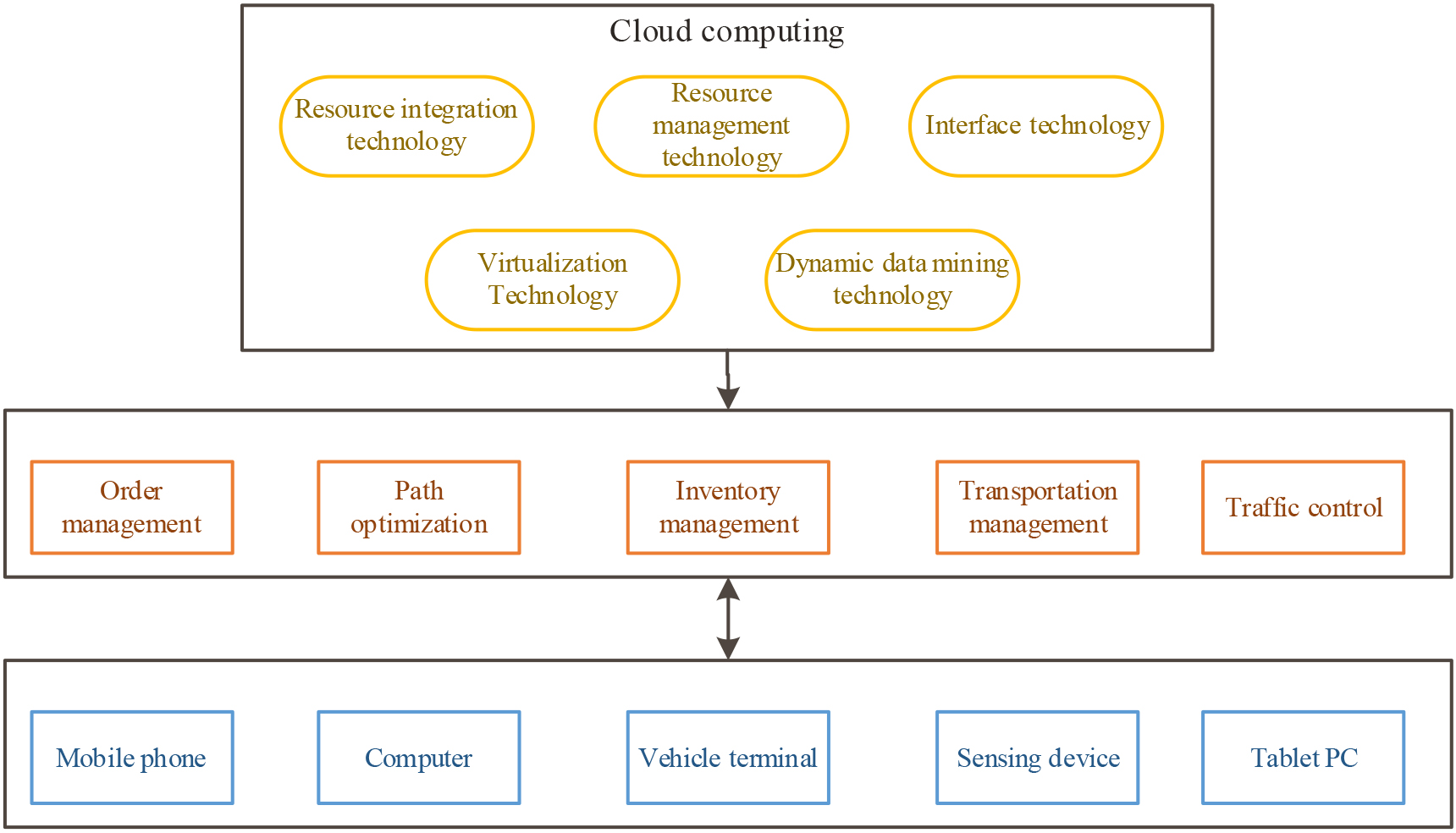
(2) Path optimization through Cloud-based LSP
Coordinating (matching) logistics distribution tasks and objects are the key to the Cloud-based LSP. For effective matching, the primary concern is the distribution requirements and resource storage. For example, information lag and distortion must be fully considered to grasp the distribution demand in real-time [16, 17]. Additionally, the centralized management of storage, objects, equipment, and personnel can help establish resource pools [18]. The Cloud-based LSP can match objects and tasks more effectively by matching decentralized tasks for centralized objects. The decentralized operations must satisfy three necessary conditions [19].
First: demand forecasting and management. Orders link the planning, operation, and management functions of Cloud-based LSP. This relationship is coordinated around generated orders, usually targeting reasonable costs and service completion. Additionally, completing an order involves transportation and coordinating storage, supply, cost, human resources, and other elements. Thus, a reasonable and accurate forecast of transport requirements before the operation is needed to ensure system stability [20].
Second, inventory control in Cloud-based LSP is vital. The inventory control is carried out around the platform, and the information and resources are shared among member enterprises [21, 22]. After logistics demand to forecast, the Cloud-based LSP can reasonably allocate inventory locations and transportation routes to facilitate resource allocation and reduce the overall logistics cost. Distribution coordination is generally divided into inventory content, level, and target [23]. Inventory refers to the structure of equipment and personnel. A resource pool can increase the convenience of inventory resource selection and improve resource coordination [24]. The inventory level is divided into operation, organization, and management that are interrelated and coordinated to maximize profits. The core enterprises need centralized coordination of goods within the system, including scheduling transport vehicles, logistics path planning and coordination, and planning and control of logistics resources [25]. Other members cooperate with the core enterprises to improve work efficiency and simplify operations. Unlike the traditional inventory management mode, the organizational level needs to build the resource integration and sharing mechanism on warehouses, objects, and transportation information. Additionally, it is necessary to coordinate resource allocation, improve the inventory screening strategy, and coordinate the planning cycle, location, and turnover to reduce the system inventory cost.
Third, Cloud-based LSP optimization is an important means to improve logistics efficiency. Once the logistics forecast is estimated, the system integrates, analyzes, and matches the received tasks through the clustering method. Additionally, the Cloud-based LSP is optimized according to the characteristics of customers and logistics, using real-time objective data and environmental conditions. Then, the optimized distribution scheme is used for task assignment. The Cloud-based LSP optimization process is unfolded in Fig. 6.
The Cloud-based LSP optimization process.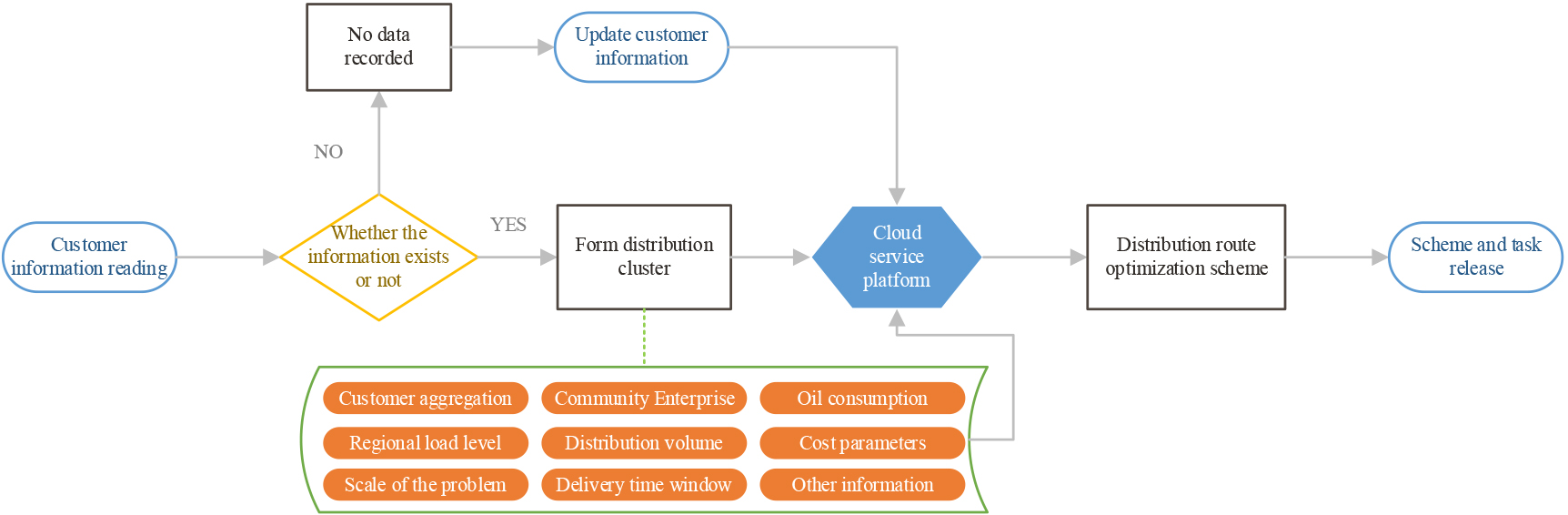
LMD, the local mean decomposition method, is a data decomposition method. LMD has strong adaptability and can decompose a complex, unstable signal into Product Function (PF) components with physical significance. Then, it combines the temporal frequency and amplitude of PF components to obtain the complete information distribution of the original signal [26]. Generally, suppose the time series factors are constant. In that case, the LMD algorithm can better describe the temporal evolution of the data. LMD is the basis of extracting the evolution law information inside the data. LMD can solve the non-stationary and nonlinear problems of time series and combine local mean decomposition and singular value decomposition to reduce noise. Afterward, this work also introduces the Ensemble Empirical Mode Decomposition (EEMD) algorithm to ensure the stability and accuracy of the model prediction results. EEMD is a new algorithm for noise-assisted data analysis to solve the mode aliasing problem [27]. The prediction model can reflect the law of input and output and can easily ignore the information in the sequence and hidden information. In particular, the Cloud-based LSP’s Demand Forecasting Model (DFM) should deal with non-stationary and strong randomness characteristics. Therefore, this work establishes the EEMD-LMD forecasting model and uses signal decomposition to mine the data features deeply. Thus, the proposed EEMD-LMD model reduces the prediction error caused by non-stationary and strong randomness of short-time logistics demand and avoids the modal aliasing and endpoint effect of EMD. Specifically, this work decomposes the original logistics demand data through EEMD and LMD: it reduces the endpoint effect of EEMD through LMD. It solves the excessive smoothing of LMD through EEMD. As a result, n Intrinsic Model Function (IMF) components and k PF components are obtained by decomposition. The proposed EMD-LMD forecast model is depicted in Fig. 7.
EEMD-LMD prediction model framework.
Short-term logistics demands have non-stationary and strong random features, which require advanced EEMD decomposition. X is defined as the sequence of short-term logistics demand.
Then, EMD is used to divide the data with White Gaussian Noise, and the IMF component is obtained.
Finally, the number of
The LMD iterative algorithm extracts the pure frequency modulation signal, and the envelope signal from the demand sequence X. These two elements are multiplied to obtain the PF component. After several iterations, the last constant or monotonic signal is the time-frequency distribution. The time is defined as
The short-term logistics demand will change in practice, including non-time steady rise, steady decline, sudden rise, and sudden decline. The steady rise and steady decline are non-local abrupt changes, and the inertia of the time series does not enlarge the forecasting error. Sudden rise and fall are local mutations that increase the forecasting error. For a more accurate forecast, suppose the two moments before and after the forecast are
When the demand point at time
(1) Hardware equipment
At present, most logistics companies have not implemented and popularized real-time ITS. An ITS can analyze the market and respond promptly, improving corporate benefits and work efficiency. Therefore, the Cloud-based LSP’s ITS plays a crucial role. In particular, this work chooses the wireless sensor as the carrier of the real-time ITS. The sensor node can identify the environment of the shipment through the detection function and obtain the environmental parameters. Sensors control logistics’ target decisions and transportation and realize automatic tracking. The functional framework of the wireless sensor is explained in Fig. 8.
Wireless sensor framework.
The main module of the sensor is a Finite State Machine (FSM) that can ensure the normal information and state during tracking and get the best function state. The main function of the framework in Fig. 8 is the transportation process. Wireless sensor protects the information and privacy of objects while tracking information and can control the FSM, so it is the core module. Also, behavior tracking needs to deal with the information difference.
Kalman filter is selected for data processing. Kalman filter can define the model as an equation. The real state is defined as
Suppose the average detected sound in the scheme is 0,
Define
(2) Software design
Here, the logistics information is mainly collected from transport vehicles through Global Positioning System (GPS). GPS can realize the logistics information scheduling over the network. The vehicle information can be identified through GPS data and identification code. A geographic Information System (GIS) can visualize the object trajectories. It refines the information into points, provides feedback to the Internet, finds the vehicle through the identification code, and automatically associates the server. The vehicle information found through the Internet needs to be input into the logistics system. The information structure includes the state of the transport vehicle, the distance between roads, and the logistics-related prediction, which is the basis for a user query. Meanwhile, the Internet map of GIS must reflect the logistics network. In this way, accurate and intuitive logistics information can be expressed point-to-point, and user retrieval needs are met. During information collection, the trajectory of transport vehicles must be processed and analyzed to provide logistics lines for the map generation and query contents. This process allows users to locate the object in real-time through authentication and save operations.
In target tracking, logistics information screening is vital. Logistics information should be filtered and provided as the company data in the supply chain. Specifically, filtering is to eliminate redundant and irrelevant information. An information integration check can generate a warning for relevant personnel to submit relevant information to the database. Then, the database checks for errors or redundancies to ensure data effectiveness and integrity. The pre-integrated norms or standards of the supply chain should be determined after information filtering in each node. Specific standards judge the filtered information. It is sent to the integration center for locating the node company on the supply chain if the standard is met. The substandard filtered information cannot be used to locate the node company. Then, a feedback notification is generated, describing some details about the standard, and sent to the original company.
The logistics tracking authority must be guaranteed by strict procurement quantity and processing requirements. The software design should consider data access passwords to ensure security. Maloperations can lead to privacy disclosure, so the data storage is encrypted to establish security authentication mechanism and database permissions. Meanwhile, users can also hold multiple identities, and information tracking needs to control their permissions. When users use one identity to access the system, the corresponding submenu will be activated to control user privileges and operations only under permissions. Based on the above theory and IoT, the Cloud-based LSP’s real-time ITS is constructed in Fig. 9.
In Fig. 8, the Cloud-based ISP’s real-time ITS can provide a simple operation interface for users to input the project information to be tracked. In the Cloud-based ISP, all project content and tracking information are saved. Users need to log in and subscribe to obtain specific tracking content and logistics details. The user must complete the registration before the query. This design ensures the security and confidentiality of the database and user information.
In order to verify the effectiveness of the EEMD-LMD prediction model, all logistics orders of B Enterprise from May 1 to October 31, 2020, were selected as original samples, a total of 100,000 order samples. Due to the discreteness of the original data, a 12-hour interval statistical method was selected, resulting in a total of 377 logistics data. Here, Root Mean Squared Error (RMSE), Mean Absolute Error (MAE), Mean Absolute Percentage Error (MAPE), and Adjusted Coefficient of Determination (
In order to get more accurate QS results, Kaiser Meyer Olkin (KMO) is used for the validity test. The specific calculation method reads:
In Eq. (10),
KMO test standard
Cloud-based ISP’s real-time ITS using IoT.
Based on Eq. (10), the validity of the survey data is analyzed by SPSS25.0 software. KMO value is 0.869, between 0.8 and 0.9, and (
Next, the reliability of the survey data is tested. The specific calculation method reads:
In Eq. (11),
Meanwhile, the Black Box is adopted for verifying the feasibility and accuracy of the proposed Cloud-based LSP’s real-time ITS. In other words, the software functions are hidden from users during verification. The system interface functions are checked one by one test to ensure a normal operation and the feasibility of the software. Finally, the comprehensive test and pressure test are performed for all functions.
According to different research purposes of logistics time consumption, the time consumption of cloud service platform can be divided into two categories: moving and static. In sports time, the external route transportation can be divided into two categories: the route transportation of purchased goods and the route transportation of sold goods. In the static time, inventory time accounts for the vast majority. It has three forms: raw material inventory, WIP inventory, and commodity inventory. The commodity inventory is relatively complex, which may exist in the manufacturer’s warehouse, agent’s warehouse, and retailer’s warehouse before it is finally consumed. In the facility layer, servers, databases, cloud computing device storage, and network facilities are mainly used to integrate information content such as orders, road conditions, weather and resource reserves. Moreover, the virtualization methods are utilized to fit information resources with the ability index of distribution, thus establishing a resource database. In addition, the cloud service platform system adds the prediction and management of logistics demand, with orders as the link. Therefore, the designed logistics cloud service platform system can reduce the loss of time to a certain extent.
Model fitting and analysis of test results of Cloud-based LSP
LMD model test
The EEMD and LMD methods decompose the collected data, resulting in seven Intrinsic Mode Function (IMF) components along with a residual component, and six Primary Frequency (PF) components along with one residual component, respectively. The obtained components are predicted and corrected, respectively, and the performance prediction indexes are obtained in Fig. 10.
EEMD-LMD evaluation score.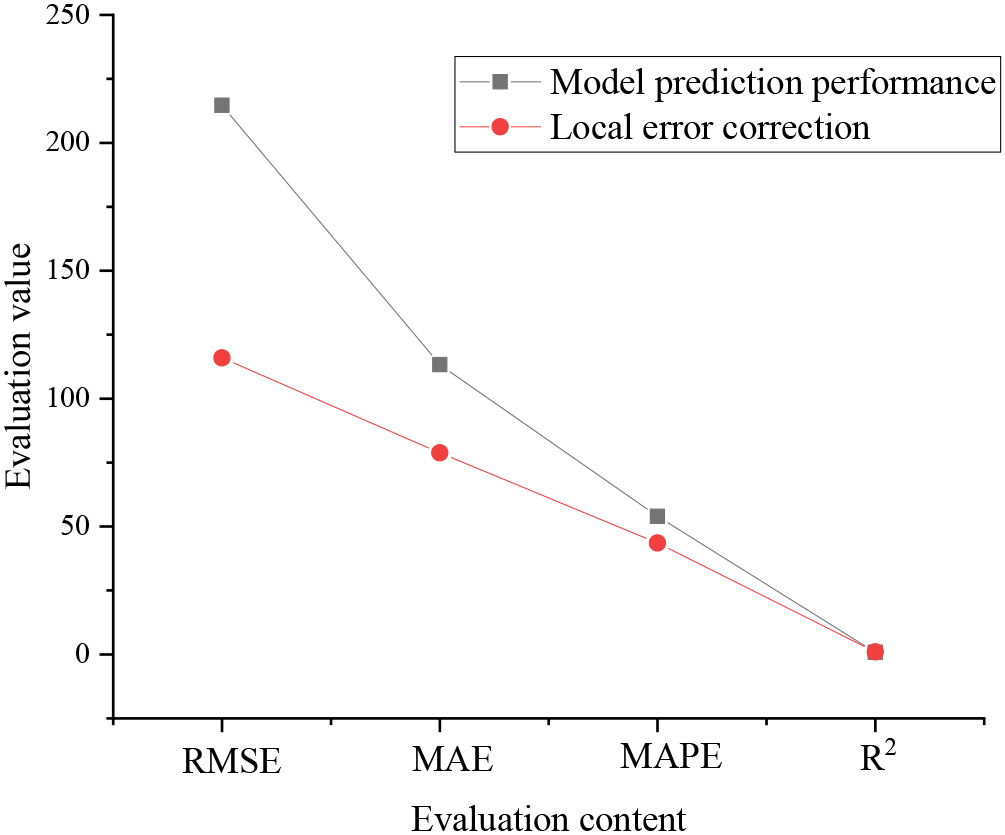
According to Fig. 10, the overall trend between the real and predicted values is consistent. However, the peak and mutation points will reduce prediction performance. In the subsequent error correction, the local error has been better corrected.
Model comparison evaluation.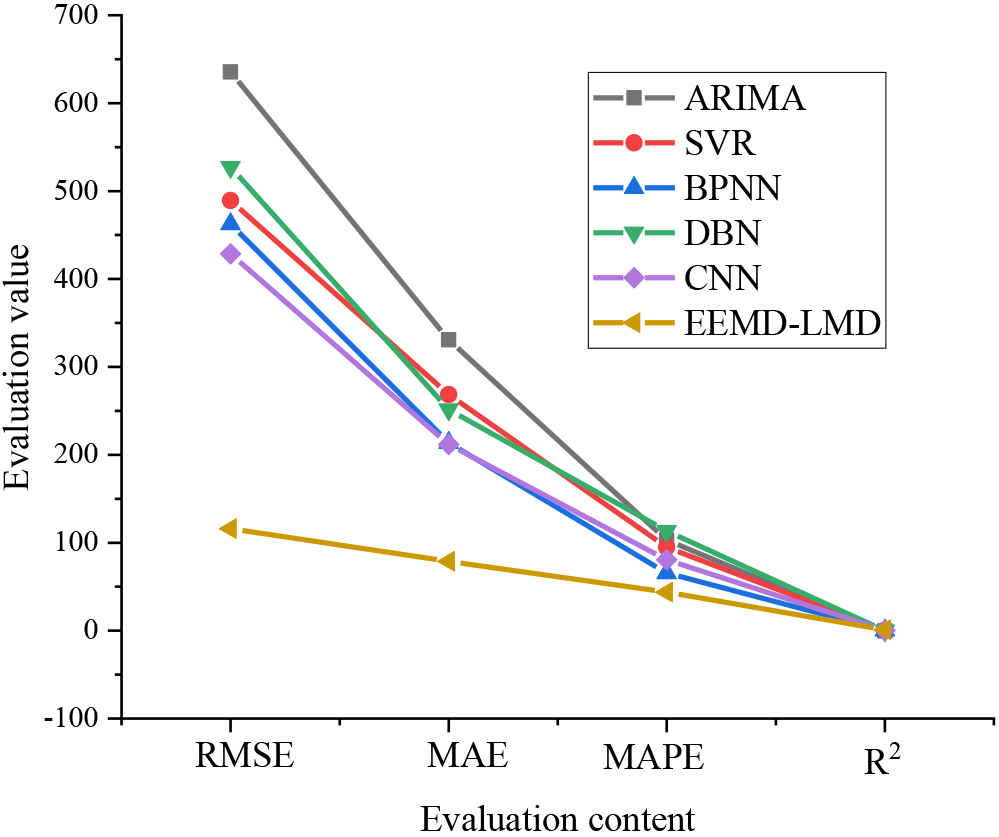
According to Fig. 11, the proposed EEMD-LMD model outperforms the other five models in four indexes: RMSE, MAE, MAPE, and
For model generalization, the mutation threshold of the collected sample data is optimized. The model prediction results under different parameters
Model prediction results under different parameters 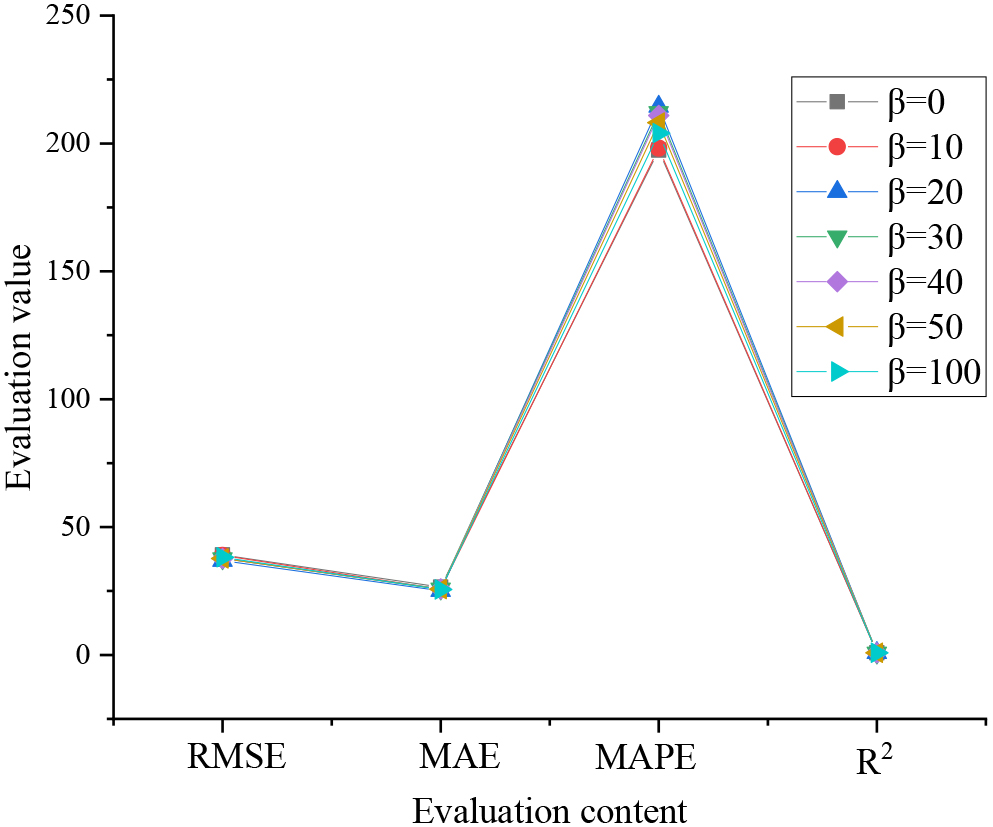
In Fig. 12, when
Different model performance comparison under parametric 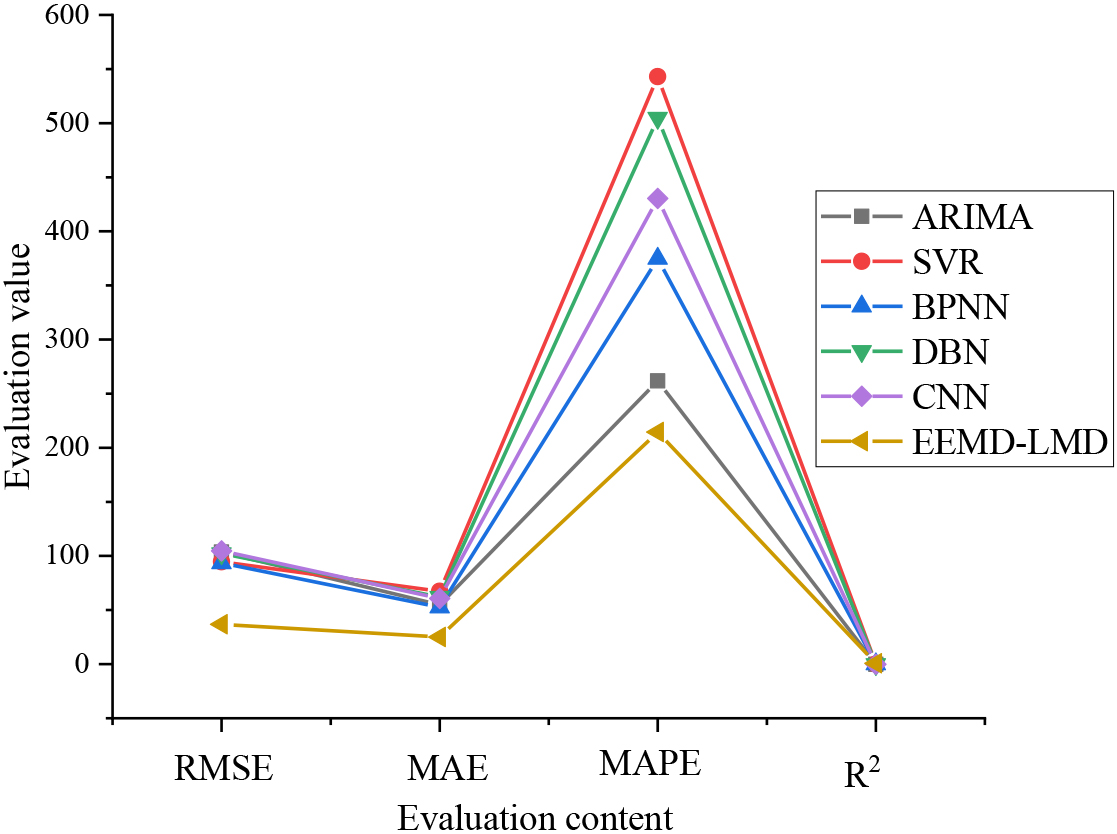
According to Fig. 13, the proposed EEMD-LMD model obtains the optimal short-term logistics demand forecasting under different parameters
Subsequently, the Cloud-based LSP’s real-time ITS feasibility and performance are tested through experiments. Here, the outbound and inbound objects’ success rates are considered. The specific results are manifested in Fig. 14.
Performance evaluation of real-time ITS.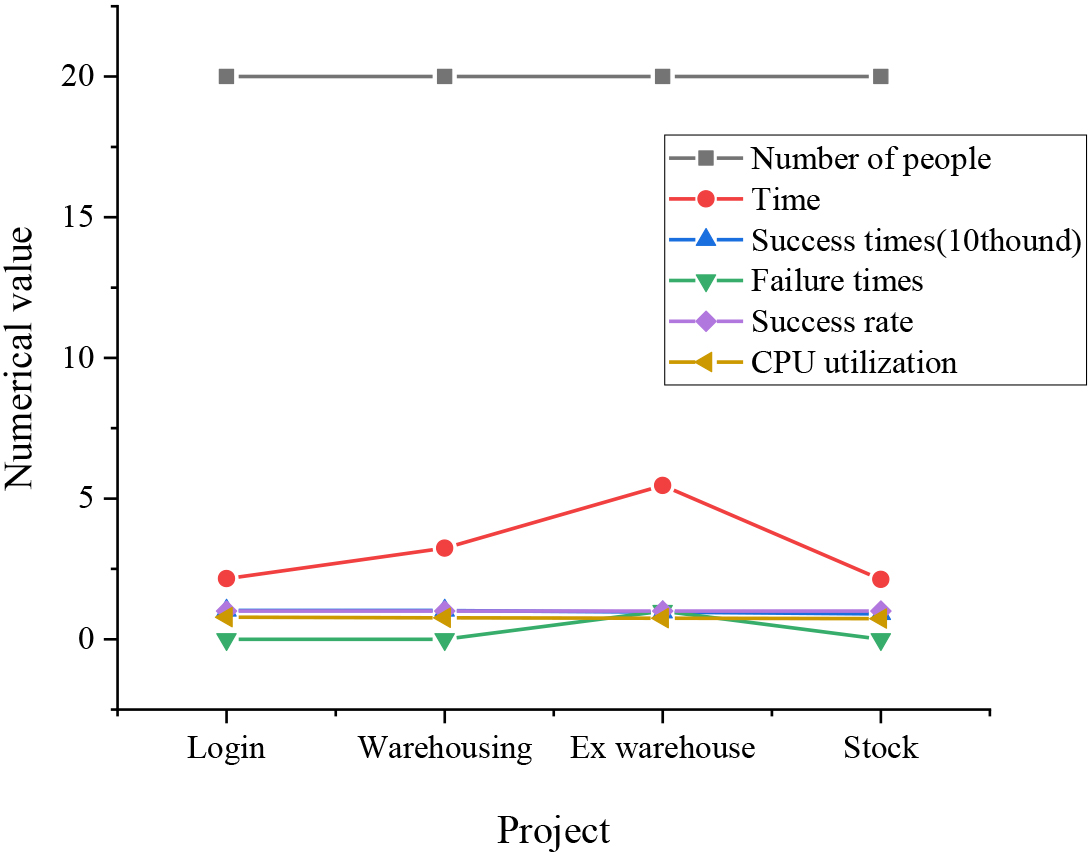
Figure 14 suggests that the real-time ITS’s access time and resource utilization rate are excellent, proving its feasibility and effectiveness. Experiments have failed once, which may be caused by signal strength fluctuation and can thus be ignored. In addition, each function of the ITS can operate normally without feeding back fatal errors. Hence, the results can meet the application requirements of real-time tracking of logistics information in practice.
Integration of Cloud Computing and IoT: The proposed platform represents a significant departure from traditional logistics systems by integrating Cloud Computing (CC) and the Internet of Things (IoT). This integration enables seamless data exchange, real-time monitoring, and remote access to logistics information, enhancing overall operational efficiency and agility. Advanced Demand Forecasting Model (DFM): Unlike traditional logistics systems that rely on simplistic forecasting techniques, the proposed platform utilizes cutting-edge methodologies such as Deep Learning, Ensemble Empirical Mode Decomposition (EEMD), and Local Mean Decomposition (LMD) for demand forecasting. This results in more accurate predictions, enabling logistics providers to optimize inventory management and resource allocation effectively. Real-Time Information Tracking System (ITS): The platform features a sophisticated ITS that provides end-to-end visibility and control over the logistics process in real-time. Leveraging IoT technologies such as wireless sensors, the ITS continuously monitors the status and location of goods in transit, allowing for proactive decision-making, route optimization, and timely response to unexpected events.
Real-Time Tracking: IoT technologies enable real-time tracking of goods throughout the supply chain, from warehouse to doorstep. This level of visibility allows logistics providers to monitor shipments’ progress, identify potential bottlenecks or delays, and take corrective actions promptly, ensuring on-time delivery and customer satisfaction.
Optimization: By collecting and analyzing vast amounts of data in real-time, IoT-enabled logistics systems facilitate optimization of various processes, including inventory management, route planning, and resource allocation. This optimization leads to increased operational efficiency, reduced costs, and improved overall performance.
Customer Satisfaction: IoT technologies empower logistics providers to offer enhanced customer experiences by providing accurate, transparent, and timely information about order status, shipment tracking, and delivery updates. Customers appreciate the convenience and reliability of real-time tracking, leading to higher satisfaction levels and increased loyalty.
Proactive Maintenance: IoT sensors can also be deployed to monitor the condition and performance of logistics assets such as vehicles, machinery, and equipment in real-time. By detecting potential issues early, logistics providers can schedule proactive maintenance activities, minimize downtime, and ensure uninterrupted service delivery.
In summary, the proposed platform’s integration of Cloud Computing and IoT technologies introduces novel features and improvements compared to traditional logistics systems in the e-commerce industry. Leveraging IoT technologies offers numerous advantages, including real-time tracking, optimization, proactive maintenance, and enhanced customer satisfaction, thereby driving significant advancements in logistics operations and service quality.
Conclusion
This work constructs a Cloud-based LSP through centralized management of decentralized resources and services. A real-time logistics ITS and a logistics DFM are specifically designed for the proposed Cloud-based LSP. Specifically, the EEMD-LMD prediction model is proposed for the logistics DFM. The proposed EEMD-LMD model combines the characteristics of non-stationary and strong randomness to forecast the short-term logistics demand. The original data are decomposed to improve information resources and reduce model errors. Simultaneously, to meet the timeliness and accuracy of services, the logistics ITS is implemented on the IoT. The experimental results show that the proposed EEMD-LMD model shows a higher